
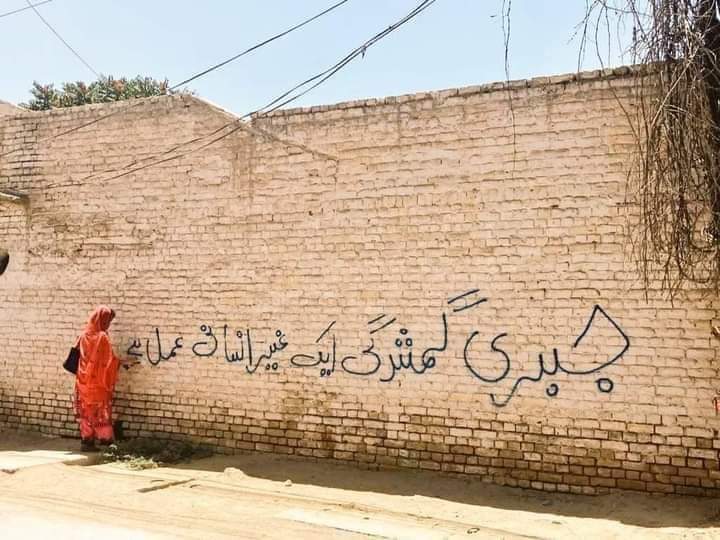
On August 30– the International Day of the Victims of Enforced Disappearances– the entire Sindh mourned with the families whose hearts are torn by unrelenting terror of Pakistan’s rogue agencies, the Inter-Services Intelligence (ISI), Military Intelligence (MI), and the Counter-Terrorism Department (CTD). These forces have orchestrated a campaign of state-sponsored brutality, abducting, torturing, and killing Sindhi nationalists to crush the Sindhudesh movement. Since Pakistan’s occupation of Sindh in 1947, this systematic assault has aimed to obliterate a civilization older than the Indus itself, silencing its ancient language, suffocating its vibrant culture, and erasing its identity through enforced disappearances, extrajudicial killings, and political persecutions. These atrocities, cloaked as ‘counterterrorism’, violate the Rome Statute on war crimes and the International Convention for the Protection of All Persons from Enforced Disappearance, signed by Pakistan in 2010 but blatantly disregarded.
Picture a mother clutching her son’s worn-out photograph, its edges frayed from years of desperate hope, or a child staring at an empty chair where a father once sat, stolen by a midnight raid. This is the soul-crushing reality for countless Sindhi families, where enforced disappearances leave scars that time cannot heal. The Sindhudesh movement, ignited by the intellectual giant revered Saeen GM Syed—challenged Pakistan’s colonial grip. Rejecting its electoral charade, Saeen GM Syed’s vision for a sovereign Sindh inspired millions, though he paid with house arrest until his death in 1995. His legacy birthed parties like Jeay Sindh Qaumi Mahaz (JSQM) and Jeay Sindh Muttahida Mahaz (JSMM), but Pakistan’s deep state answered with terror, turning peaceful protests into graves. Even students demanding clean water in Sindh’s universities face sedition charges from ISI, MI, Rangers, and CTD, labeled terrorists to justify their erasure.

Sindh’s crisis is nowhere reflected in the official numbers released by Pakistan. The Commission of Inquiry on Enforced Disappearances reported 125 new cases nationwide in early 2025, but groups like Paank documented 785 disappearances and 121 killings, where Sindhis were disproportionately targeted. Amnesty International’s 2024 report notes 2,332 enforced disappearances, with victims returning shattered and broken or never at all. Human Rights Watch’s 2025 World Report details escalating attacks on minorities and activists in Sindh, where impunity thrives. Dawn and The News International have several times exposed the dumped mutilated bodies of nationalists, as with Muzaffar Bhutto in 2012. The US State Department’s 2024 Human Rights Report confirms state-sponsored disappearances hitting Sindh hardest. X posts under the hashtag #EndEnforcedDisappearancesInSindh reveal families’ anguish, sharing videos of empty homes and tear-soaked pleas.
Have a look at the gravest atrocities committed in Sindh, the extrajudicial killings after disappearances, where dreams dissolve into despair. Samiullah Kalhoro, a senior JSMM leader, was abducted in the early 2000s during a nationalist crackdown. Tortured in ISI cells until his kidneys failed, his bullet-riddled body was dumped in March 2005—a stark message to dissenters. Dawn reported his custodial killing, leaving his widow to raise children alone, haunted by loss. Amnesty’s 2008 report “Denying the Undeniable” documented the case.
Syed Asghar Shah, a Sindhi nationalist, was reportedly abducted in February 2005, kept for months in torture cells and faced years in political persecution, reflecting the broader pattern of state targeting of Sindhi activists.
Muzaffar Bhutto’s was abducted on February 25, 2011, near Saeedabad. This was the second time he was being abducted and this the JSMM secretary-general vanished for over a year. His tortured body surfaced on May 22, 2012, near Hyderabad, riddled with bullets and marked by unspeakable cruelty. Amnesty International demanded investigations, but impunity prevailed. His widow, Saima, told The Express Tribune of sleepless nights and fatherless children, living under constant threats.
Afzal Panhwar, a student leader, was killed in a staged encounter on August 15, 2013, in Kotri, Sindh, a date mocking Pakistan’s Independence Day. A leaked video exposed the fabricated operation, sparking outrage. UNPO and AHRC reported his family’s devastation, his mother collapsing at his grave. Sajan Malookhani, a law student at Sindh University, was abducted on September 1, 2023, from Hyderabad. After a year of his family’s futile court petitions, he was killed in a fake encounter on October 6, 2024, in Rahim Yar Khan, Punjab, with friends Sarmad Bhayo and Vinesh, labeled “terrorists.” Voicepk.net captured his mother’s wail: “He was my light, stolen in darkness.”
Niaz Lashari, a veteran JSQM activist, was abducted in April 2019 from Karachi, having survived earlier kidnappings. His tortured body was dumped outside Jinnah Hospital on June 16, 2020, prompting protests, as reported by Dawn and the World Sindhi Congress.
Long-term disappearances—six to ten years or more—are a living nightmare in Sindh. Safdar Sarki, a prominent leader of Jeay Sindh Tehreek, was abducted in 2005 and reported missing for two years by 2006, as noted in reports from the time. His disappearance, alongside other Sindhi nationalists, fueled protests and highlighted the state’s targeting of activists, with no resolution despite family pleas. Asif Baladi, a JSQM leader advocating non-violent struggle, vanished in 2006, his fate unknown, leaving his family in anguish, as documented by The News International. Allah Wadhayo Mahar, an 11th-class student, was kidnapped in 2014 from Malir, Karachi, by ISI agents, and his aspirations were snuffed out. His mother spoke of endless searches despite her failing health. Mohan Meghwar, a student, vanished in 2013, his fate unknown despite family pleas. Suhail Raza Bhatti around 2015, Ayub Kandhro disappeared in April 2017 from Khairpur; Aijaz Gaho, Murtaza Junejo, and Insaf Dayo in May 2017 from Larkana; Pathan Khan Zuhrani in November 2019 from Karachi (It was his second such abduction) and Kashif Tagar, a young government primary school teacher in 2018—all remain missing, their families harassed, as per OHCHR submissions. Human Rights Watch’s 2014 report noted Sindhi nationalists’ disappearances, a pattern persisting. Every third Sindhi family bears this burden, far beyond reported figures.

In 2025, the terror surged, particularly in August’s annual crackdowns. Advocate Aamir Umrani Adv, a former central committee member of Jeay Sindh Mahaz, former student leader, and practicing lawyer, was abducted from his home in Sakrand, Sindh on February 21, 2025, and tortured in a secret cell. Released on February 27 after Sindh-wide protests by students, nationalists, and advocates, his ordeal—amplified by Facebook campaigns and YouTube videos—exposed Pakistan’s Counter Terrorism Department’s (CTD) brutality. The Express Tribune reported Jeay Sindh Mahaz’s highway blockade in Shaheed Benazirabad, demanding his release. August 26th saw Sajad Babar vanish from Karachi; Saqlain Sindhi, a student, abducted then prosecuted; Arbab Bheel, Sikandar Arijo, Basit Cholyani, and Bilawal Shar sentenced to over 20 years. X posts under #ReleaseAllMissingPersonsofSindh show families’ anguish, with videos of empty homes and desperate pleas.
Pakistan’s ISI, MI, and CTD operate unchecked, using anti-terror laws to raid homes, torture in black sites, and stage “encounters.” The UN Working Group on Enforced Disappearances reviewed hundreds of cases in 2025, demanding accountability, yet impunity persists. This fuels radicalization, closing paths to peace.
The Sindhudesh movement’s call for sovereignty is justified by this oppression. Pakistan plunders Sindh’s resources—diverting Indus waters to Punjab while local Sindhis remain thirsty—eroding identity through forced conversions and land grabs. GM Syed’s non-violence met with bullets, yet his vision endures in the fighters for Sindhudesh. Sindhudesh is a cry for self-determination, echoing global indigenous struggles.
Sindhudesh beseeches Amnesty International, Human Rights Watch, UN Human Rights Council, and the International Commission of Jurists to act. Investigate these crimes, impose sanctions, and enforce convention ratification. Prosecute ISI, MI, CTD, and their enablers. Let not another mother bury her child in silence—the world must heed to Sindh’s blood-soaked pleas for justice.