Home Blog Page 136

Baloch victim shares her story of Tootak Operation by oppressive Pak Army in POB

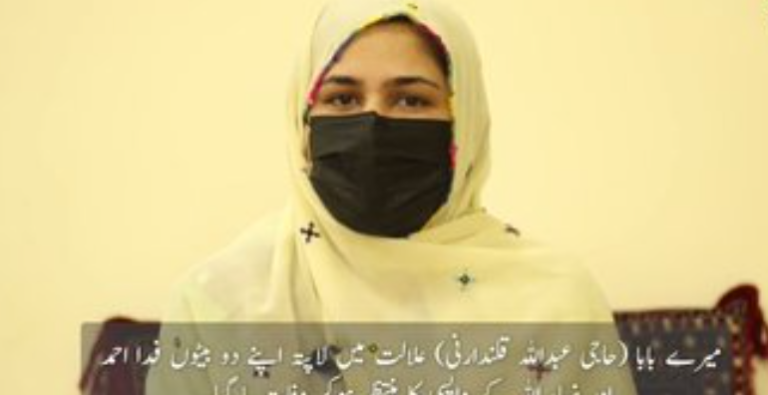
Recently, a victim of the Tootak operation in Pak-occupied Balochistan has come forward to share her narrowing tale and shed light on the atrocities inflicted by the oppressive Pak Army upon the innocent Baloch civilians thirteen years ago.

In the video she talks about the horrific incident that occurred 13 years ago on February 18, 2011, an operation by the Pak Army and a group called “Death Squads” occurred in the Tootak area of the Khuzdar district of Pak-occupied Balochistan. Later, the aforementioned area fell under the control of Shafiq Mengal, who was the head of the Death Squads. During this operation, the Pak Army raided every house present in the area, inflicted atrocities on the people and took many Baloch citizens in their custody.

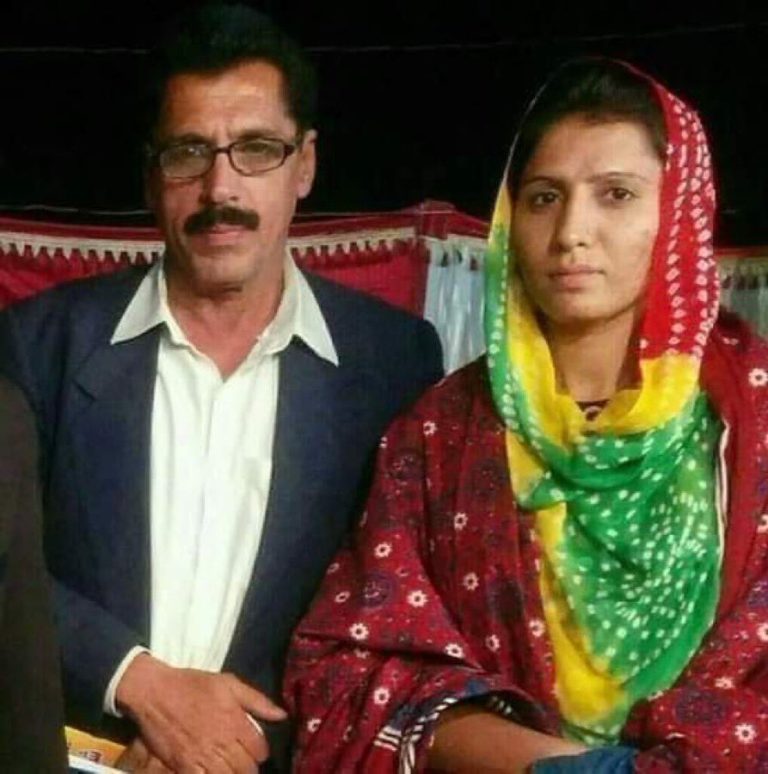
Two years after the Tootak operation, the discovery of mass graves was made in the area. During this operation, several individuals forcibly disappeared, including Muhammad Rahim Qalandrani and 16 members of his family who are still missing to this day without a single trace. The pain and suffering of the families of the victims are unimaginable.

Since the forcible occupation of Balochistan by the Pak Army on March 27, 1948, the people of Balochistan under the control of the Pak Army have endured a persistent struggle against the atrocities and genocide perpetrated by the Pak Army. These egregious acts include frequent home invasions, disappearances, staged encounters, target killings, torture, embarrassment at checkpoints, and kidnappings for ransom.

Rawalpindi Commissioner confesses to election rigging

Recently, a senior bureaucrat in Pakistan has accepted his involvement in the rigging of the recent general elections in Pakistan. Commissioner of the garrison city of Rawalpindi, Liaqat Ali Chattha, said he would resign from his office and turn himself into the police.

He told reporters, ” We converted the losers into winners, reversing margins of 70,000 votes in 13 national assembly seats.” Also implicates the head of the election commission and the country’s top judge.

According to Al Jazeera, the commissioner stated that he was deeply involved in serious crimes like mega-election rigging in 2024 and said betraying his own country did allow him to sleep peacefully. “I should be punished for the injustice I have done and others who were involved in this injustice should also be punished,” he added.

Pakistan election commission has rejected Chattha’s allegations and said to hold an inquiry. The Human Rights Commission of Pakistan has claimed that this confession demonstrated how the state bureaucracy’s involvement in rigging in Pakistan is beginning to be exposed.

The confession along with various reports and videos flooded the social media which showcased the malpractices that occurred during and after the election. Booth rigging, and tampering with ballot boxes, as bags full of stamped ballot papers were found in the Mand area.

This shows how Rawalpindi’s ability to continuously select and puppet the facade of civilian authority through the ballot is nothing more than a barbaric display of power.

Pakistan Army clears historical oak trees in upper Waziristan in the name of security

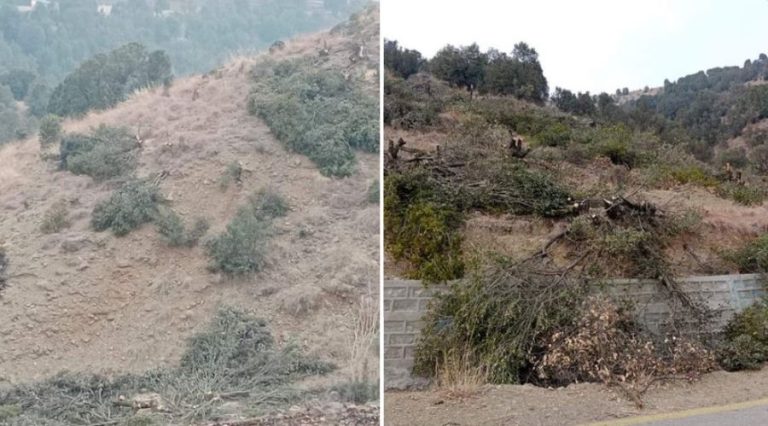
The historical oak trees in Upper Waziristan are being indiscriminately cut, even up to 200 meters away from roads by the military in the name of security. The actions are drawing criticism, as Pakistan Army has, at first, depopulated the region and is now contributing to environmental degradation.

While countries around the world focus on preserving their natural and scenic wealth, concerns are rising over the deforestation activities in Upper Waziristan. Apparently, under the guise of security, the Pakistan Army is not only jeopardizing the region’s ecological balance but also impacting the livelihoods and well-being of the local population.

The Pakistani establishment has defended cutting oak trees, citing security concerns as the primary motivation. However, security pretext has been a familiar modus operandi employed by the authorities. The irony is underscored by the fact that, despite claims of enhancing security, the native population of the region remains insecure, echoing earlier instances in Pakistan-occupied Balochistan, Pakistan-occupied Jammu and Kashmir (POJK), and Pakistan-occupied Gilgit Baltistan (POGB).

Evidently, deforestation is less about security and more about resource exploitation, further filling the establishment’s coffers. The situation is drawing parallels to previous acts in other disputed regions.

Notably, there has been a lack of vocal opposition from environmental protection NGOs or climate activists or may be authoritarian nature of the Pakistani establishment may be discouraging individuals and organizations from challenging these actions. The silence has led to growing concerns about the audacity and ability of environmental advocates to confront such environmentally damaging practices.

Nevertheless, the current deforestation order by the establishment is going to pose a significant dent on the ecological balance of the region, consequence of which, unfortunately, will be heard only by the people of the region and not the authorities.

J&K to get subsidised seaplane service between Dal lake and Manasbal

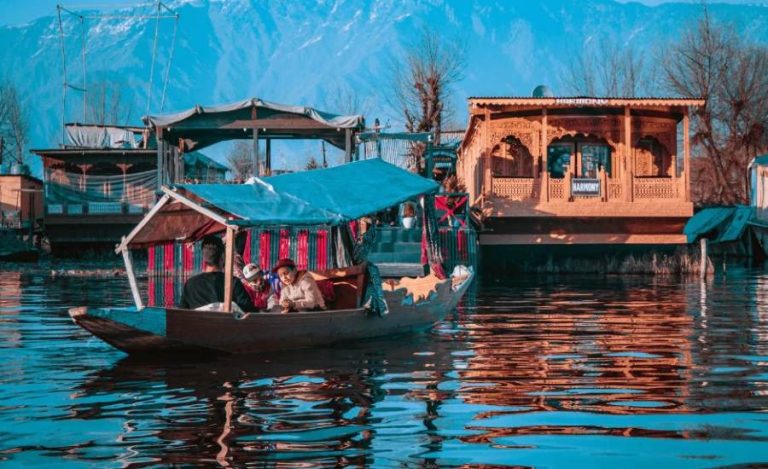
In a bid to enhance connectivity and promote tourism, the government of Jammu & Kashmir Union Territory in India is progressing with plans to establish a subsidized seaplane service between Dal Lake in Srinagar and Manasbal. The Mumbai-based operator Mehair is poised to take on the role of the operator for this ambitious project.

Mohammad Aijaz Asad, the Secretary of the local Civil Aviation Department, has urged officials to expedite the final approvals, particularly concerning the impact on irrigation and flood control. Security aspects are also currently under review. The envisioned direct link between Dal Lake and Manasbal is anticipated to further stimulate tourism in the region, which has already been experiencing steady growth.

Reportedly, Mehair has not disclosed a potential launch date for the new seaplane service. The regional carrier, currently dormant, recently announced plans to acquire its first Cessna C208 Grand Caravan in May 2024, with a goal of having ten planes in its fleet by the end of the year. Two of these aircraft are expected to be outfitted with floats, catering specifically to seaplane operations.

The Indian government is aligning its plans to include dedicated seaplane routes under the upcoming UDAN 5.3 subsidization scheme. This marks the first time the program explicitly targets the seaplane market segment. Seaplane operators will also have the opportunity to bid in the UDAN 5.2 round. India currently lacks commercial seaplane services, despite having numerous suitable waterways and underserved regions.

As the Jammu & Kashmir government moves forward with its seaplane plans, it signals a significant step towards enhancing regional connectivity and tourism, with potential implications for the broader Indian aviation sector. The success of this venture may set a precedent for the inclusion of seaplanes in future aviation development programs across the country.

School students protest against shortage of teachers in Pak-occupied Gilgit

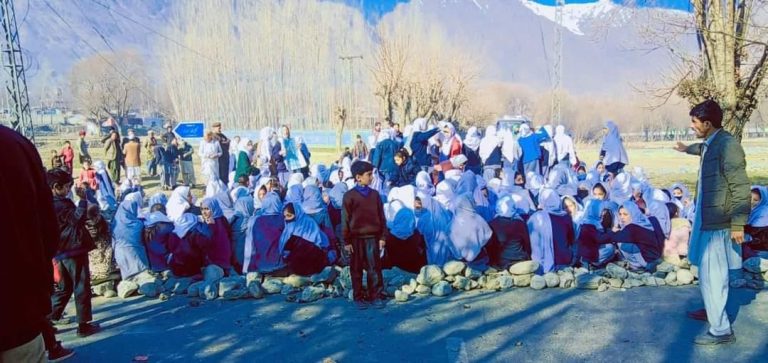
Tensions boiled over in Ghizer as students from Girls Middle School staged a protest, disrupting normalcy by blocking Ghizer Road near Basin Khari Park. The demonstration, fueled by an acute shortage of teachers and frequent student transfers, has paralyzed daily activities.

The students, facing the brunt of an inadequate education system, are demanding fundamental improvements. However, their frustration resonates with the local community, which is now echoing discontent against the occupied government of Pakistan-occupied Gilgit-Baltistan (POGB).

Critics are pointing fingers at the authorities for their failure to address basic educational needs. The sentiment on the ground is that if the government cannot provide a basic education system, expectations for significant improvements seem increasingly unrealistic.

This protest adds to a growing list of student demonstrations in the region. Previously, students at Karakoram International University protested against insufficient facilities and arbitrary fee hikes. The latest unrest exposes the paradox of the occupying government unable to meet essential educational requirements while burdening students with soaring fees.

This clearly is the result of about 77 years of coloniality that people of POGB are subjugated to. While they and their resources are being exploited by Pakistan on a daily basis, they get no royalty or compensation. To the worse, they dont even have a constitutional right to make their voice heard in Islamabad.

Assassinated Sindhi nationalist’s daughter slams Pakistan Army for her father’s death

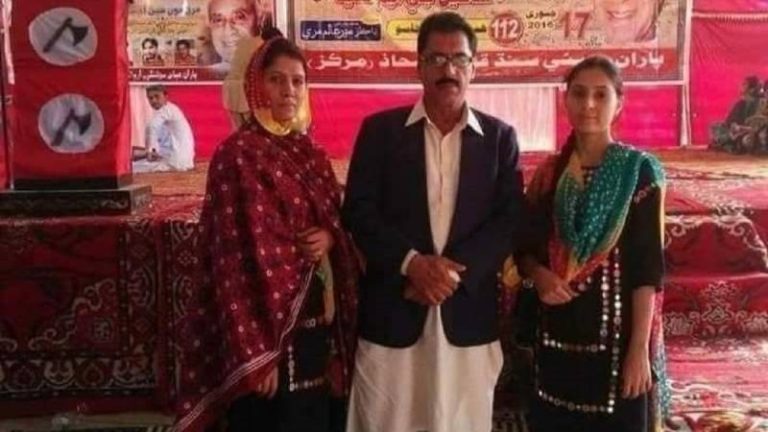
Strong agitations were witnessed after Sindhi nationalist leader, a schoolteacher and a vocal critic of enforced disappearances, Hidayat Lohar was fatally shot to death on February 16. Hidayat Lohar was persistently under the threat posed by Pakistan Army and its assailant. After his brutal killing, his daughter Sasui Lohar, who is also an activist raising voice against Pak-sponsored enforced disappearance slammed Pakistan Army and its puppet administration for not registering an FIR regarding her father’s murder.

She said that in 2017, when his father was abducted on his way to school, at that time he entered into a scuffle with the perpetrators. As a result, some identity revealing documents of the perpetrators, like IDs fell off the ground. She was asked to keep quiet or her father would be killed.

And now when her father has been killed, she has reached out to the police to expose them as Pakistan Army got her father killed despite her keeping quiet. But the police which is under the thumb of Pakistan Army is refraining from even registering an FIR. Sasui says that since the last few weeks, the death threats to his father had increased and was ultimately killed near his school.

She agonises accusing Pakistan Army saying that they had her father killed. She says that she has every evidence but the police is not giving an ear to their complaints and pleas. All she is getting is ignorance on her father’s brutal broad daylight killing. Notably, the killing of Hidayat Lohar yet again highlights the oppression of Sindhi community at the hands of authoritarian Pakistani regime.

Baloch freedom fighters launch attacks on Pakistan Army across Pak-occupied Balochistan

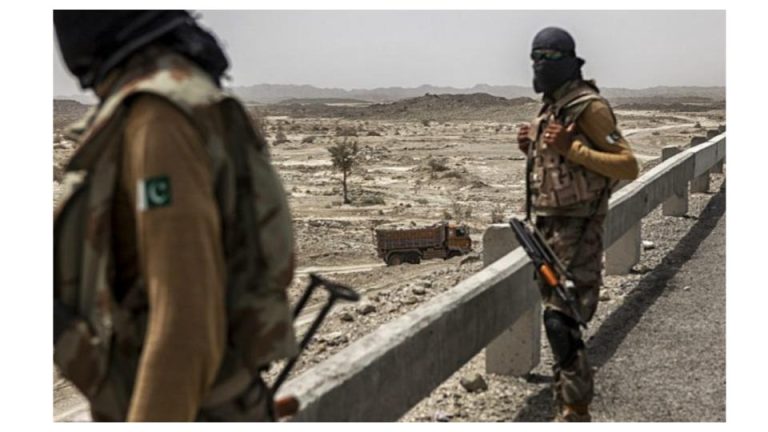
In recent developments, two prominent pro-independence groups executed three separate attacks on the Pakistan Army in various areas of Pak-occupied-Balochistan, resulting in multiple casualties. The Balochistan Liberation Front (BLF) claimed responsibility for two of these attacks.

According to a press release issued on Friday by BLF spokesperson Major Gwahram Baloch, Sarmachars targeted a Pakistan Army personnel in a sniper attack in Gwadar district. The incident occurred at 4:30 p.m .on February 14, when a BLF sniper shot and killed an officer standing outside a checkpoint in the Bagani Kaur area of Gwadar.

BLF also launched another attack on a Pakistan Army picket located on Sorap Bridge in the Turbat Gokdan area of Kech district. Major Gwahram further explained that this assault, executed with automatic weapons, resulted in the immediate death of one officer and the injury of another. The spokesperson mentioned that their fighters had strategically ambushed the area, launching the attack as soon as the officers entered the post.

Attack on Pakistan Army

Simultaneously, the Baloch Liberation Army (BLA) announced in a press release on Friday that their fighters targeted a Pakistan Army post in Sibi during an attack on Thursday night. BLA spokesperson Jeeyand Baloch reported that their fighters used automatic weapons to attack the Army post near the railway station in the suburbs of Dhadar. The assault resulted in the immediate death of two personnel and injuries to several others.

As of now, the Pakistan armed forces have not issued any comments regarding the claims made by the Baloch freedom groups. Both the BLF and BLA have expressed their determination to continue these attacks on the Pakistan Army until achieving the independence of Balochistan.

Pak-occupied Balochistan is enduring violence for decades under the Pak Army. Baloch community is indiscriminately shot, abducted and extrajudicially killed. Once a resource rich province, now lies in the ruins because of bullets from the Army.

Putin’s foe, Russian opposition leader, Navalny dies in prison

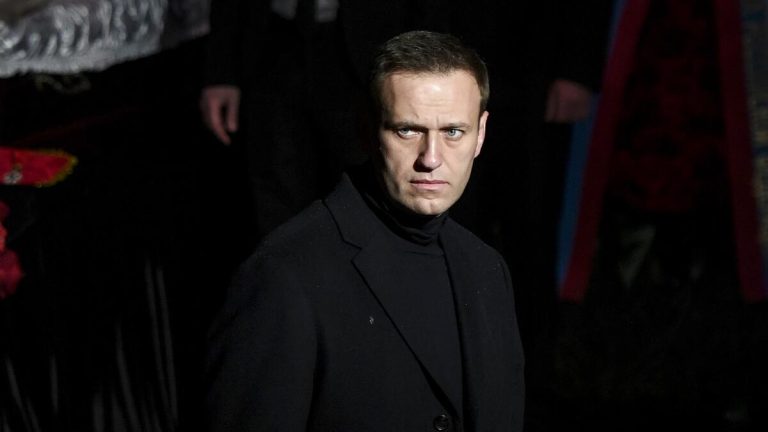
On friday (16 Feb), Russian opposition leader Alexei Navalny, who was imprisoned, passed away in the prison service of the Yamalo-Nenets region. The Federal Penitentiary Service of the Yamalo-Nenets Autonomous District reported on its website that Navalny experienced feeling unwell after a walk and almost immediately lost consciousness.

Despite medical staff’s efforts, they were unable to resuscitate him, and the cause of death is still under investigation. Navalny’s team, however, has not confirmed his death, as stated by his former deputy, Leonid Volkov, on X. It is said that Navalny’s lawyer is en route to Kharp, the location of Navalny’s penal colony, for further clarification.

Navalny has been in prison since January 2021, following his return to Moscow after recovering in Germany from nerve agent poisoning.

The Kremlin said President Putin had been informed of his death.

The 47-year-old opposition leader, a prominent figure among Russia’s fragmented opposition, gained international attention for his anti-corruption campaigns and critique of the Russian elite. He participated in Russian nationalist marches in the 2000s. Supporters saw him as a Russian counterpart to Nelson Mandela, anticipating his release to lead the country.

Poisoning

In August 2020, Navalny fell ill on a flight from Tomsk, in Siberia, to Moscow. The pilot made an emergency landing and Navalny was flown to Berlin, where he was treated for the effects of a neurotoxin that German military tests showed to be Novichok, a poison developed in the Soviet Union.

Putin dismissed a joint media investigation that said it had identified a team of assassins from Russia’s FSB security service. “If someone had wanted to poison him, they would have finished him off,” he said.

Navalny voluntarily returned to Russia in 2021 after undergoing treatment in Germany. He exposed corruption in the Russian elite and participated in protests against President Vladimir Putin. However, the Kremlin dismissed his allegations of corruption and Putin’s wealth.

The Kremlin

Russian officials cast Navalny as an extremist who was a puppet of the U.S. CIA intelligence agency which they say is intent on trying to sow the seeds of revolution to weaken Russia and make it a client state of the West.

Navalny was detained countless times for organising public rallies, and prosecuted repeatedly on charges including corruption, embezzlement and fraud. He said the accusations and convictions were politically motivated.

Navalny had an extra 19 years in a maximum security penal colony added to his jail term in 2023 in a criminal case that he said was designed to bully the Russian people into political submission.

International Reaction

International reactions poured in, with the U.S. Secretary of State Antony Blinken expressing condolences and emphasizing Russia’s responsibility. German Chancellor Olaf Scholz highlighted Navalny’s courage and called it a tragic loss for a free and democratic Russia.

Ukrainian President Volodymyr Zelenskiy accused Putin of being responsible for Navalny’s death, condemning Putin’s disregard for human lives. British Prime Minister Rishi Sunak and Foreign Minister David Cameron called for accountability, with Cameron insisting on holding Putin responsible.

French Foreign Minister Stephane Sejourne and European Commission President Ursula von der Leyen both mourned Navalny’s death, emphasizing the grim reality of Putin’s regime and the need to unite against autocracy.

NATO Secretary-General Jens Stoltenberg expressed deep sadness and called for a thorough investigation into the circumstances surrounding Navalny’s death. Navalny is survived by his wife Yulia, their daughter Darya, and their son Zakhar.

Yulia, addressed her husband’s demise at the Munich Security Conference, asserting that if the reported death by Russian state media proves true, Putin will not escape consequences for her husband’s demise.

“This regime and Vladimir Putin must be held personally responsible for all the terrible things that they have been doing to my country, to our country Russia, in recent years”, Navalnaya said.

Pakistan elections: Yet once again Rawalpindi wins

The Kingmakers

While Rawalpindi will outrightly reject the popular quip that while it has never won a war, the Pakistan Army has never ever lost an election, but Pakistan’s recent election results has univocally endorsed this unflattering observation yet once again. So, instead of dwelling on the Pakistan Army’s poor war record, it’s time to celebrate Rawalpindi’s innate ability to continuously ‘select’ prime ministers through the ballot-a feat that no other army in any democracy has been able to achieve.

The fact that none of the 22 Pakistani prime ministers in 75 years of the country’s existence have ever completed his/her stipulated five year tenure clearly indicates rampant manipulation of the legislature by Pakistan’s powerful Army. And the Pakistan Army chief’s unparalleled control over national affairs can be gauged by an unnamed “former top US diplomat in Islamabad” who recently told Time magazine that “When we had a [crisis], we didn’t call the prime minister—we called the Chief of Army Staff.”

Reinventing Democracy

Former army officer Maj Gen Iskander Mirza who replaced Ghulam Muhammad as Pakistan’s fourth Governor General in 1956 and later became the country’s first President, ushered-in the concept of ‘controlled democracy’. This was nothing but a hybrid system based on the perverse premise that governance is too important a matter to be left to politicians and as such they were required to work under the Army’s supervision.

Gen [later Field Marshal] Ayub Khan who ousted Mirza through a coup went on to legitimise his dictatorship, by introducing ‘Basic Democracies’. This entailed 80,000 elected ‘Basic Democrats’ participating in a referendum that [expectedly] allowed the dictator to “continue in office as President and to have the authority to frame the future constitution of Pakistan.”

And the Pakistan Army has never looked back since then!

Disrupting Democracy

That Rawalpindi is responsible for frequently disrupting democratic process in Pakistan is no secret. Besides direct intervention through coups, the Pakistan Army has also been actively involved in behind-the-scenes manipulations. In fact, since Rawalpindi practically runs the country, the two century old aphorism “Prussia is not a country with an army but an army with a country” accurately describes the state of affairs in Pakistan.

Besides coups by Gens Ayub Khan, Zia ul Haq and Pervez Musharraf that overthrew elected governments, Pakistan Army’s notorious spy agency Inter Services Intelligence [ISI] has also been actively involved in covert operations to sabotage democracy. Readers may recall that in 1990, the then Pakistan Army chief Gen Aslam Beg and ISI chief Lt Gen Asad Durrani surreptitiously withdrew a princely sum of at least USD 1 million from state owned Mehran Bank to overthrow the Benazir Bhutto government.

Lt Gen Durrani later testified that Gen Beg had asked him to distribute cash to politicians belonging to an anti-Bhutto alliance created by the military establishment. Senior Mehran Bank manager Yunus Habib also testified that he had doled out an equivalent of USD 1.5 million on orders of the Army chief and President Ghulam Ishaq Khan. The fact that neither Gen Beg nor his ISI chief have been taken to task for this serious criminal act indicates the power and authority that Rawalpindi wields!

Current Elections

The day PTI chief Imran Khan crossed swords with the Pakistan Army, had himself signed the death warrant of his own political career and it became absolutely clear that come what may, he would somehow be prevented from participating in the 2024 electoral process. Khan had probably thought that his immense popularity amongst the masses would provide him complete immunity against any rash move by the military was a humongous error of judgment, because Rawalpindi is law unto itself.

In a repeat performance that had precipitated the contentious dismissal of former Prime Minister Nawaz Sharif in 2018, orchestrated by Rawalpindi through court conviction, the cricketer turned politician too suffered a similar fate. As per Times magazine, more than 180 charges have been slapped on Khan, which indicates Rawalpindi’s heightened state of paranoia.

Not wanting to take any chances, the wily Pakistan Army chief Gen Syed Asim Munir has politically emasculated Khan with military precision. On the one hand, while thousands of PTI workers were arrested in the run up to elections, several of its leaders were either coerced or cajoled into quitting PTI. Khan’s own nomination papers were rejected and PTI’s signature bat logo has been frozen.

Simultaneously, by prodding the courts to quash the conviction of former Prime Minister Nawaz Sharif in corruption cases and withdrawing his life time ban from politics, Gen Munir facilitated the three-time prime minister’s return to Pakistan and by making him eligible to contest elections, provided the electorate an alternative to Khan.

The Winner

In its recently released 2023 Democracy Index, the Economic Intelligence Unit has downgraded Pakistan from ‘hybrid regime’ to ‘authoritarian regime’, which is the lowest category grading on its scale. However, despite being largely responsible for this sorry state of affairs, Rawalpindi remains unfazed as it knows that such negative assessments don’t have any material impact on foreign relations.

While international organisations, foreign observers, political parties and civil society members have all accused the establishment of using unfair means used during the February 8 elections in Pakistan, there’s no cause for concern as the results suit the military, and that’s what matters. While the hectic post poll political alignments may impress a novice but Pakistan watchers know that it’s just a charade for public consumption- the die has already been cast!

With Khan out of the way, it matters little whether it’s the Sharifs, Bhuttos, or for that matter anyone else who’s able to successfully cobble together the next government, because at the end of the day it’s Gen Munir who has won hands down. The nagging fear however is whether the next prime minister will be able to break the jinx of a truncated tenure and serve out his full term? The answer is simple- if the incumbent toes Rawalpindi’s line, it’s ‘Yes’ and if not then it’s definitely a big ‘No-no’!

Pakistan Army assassinates senior Sindhi leader Hidayat Lohar

Sindhi nationalist and human rights activist Hidayat Lohar was brutally assassinated today in Naseerabad, in what appears to be a targeted attack. Hidayat Lohar, leader of the Voice for Missing Persons of Sindh (VMPS), had previously been a victim of enforced disappearance by the Pakistan Army from April 17, 2017, to July 2019.

The incident unfolded as Lohar was en route to the school where he served as a teacher. Two assailants on a motorcycle ambushed him, firing three fatal shots. The killing is met with widespread condemnation, with concerns raised over the apparent targeting of individuals advocating for human rights and Sindhi nationalism.

Hidayat Lohar’s daughters, Sorath Lohar and Sasai Lohar, both human rights activists and VMPS members, are now left mourning the loss of their father along with a dedication to defend human rights.

Meanwhile, human rights activists and Sindhi nationalists from across Pakistan have decried the assassination, labelling it a “state-sponsored murder.” Accordingly, the incident has reignited a call for unity among Sindhi and Baloch activists against what they perceive as systemic oppression by the Pakistani establishment.

Dr. Mahrang Baloch, a prominent Baloch rights activist, expressed shock and sadness over Lohar’s killing, emphasizing the need for collective action against Pakistani oppression. She called for those responsible for the crime to be held accountable.

The Jeay Sindh Freedom Movement (JSFM), a Sindhi nationalist organization, has condemned the brutal murder, extending support to Lohar’s family. JSFM has announced a 10-day mourning period to honour Hidayat Lohar’s memory.