Home Blog Page 147

Pak regime represses Baloch Long Marchers, denies food offered by PTM members

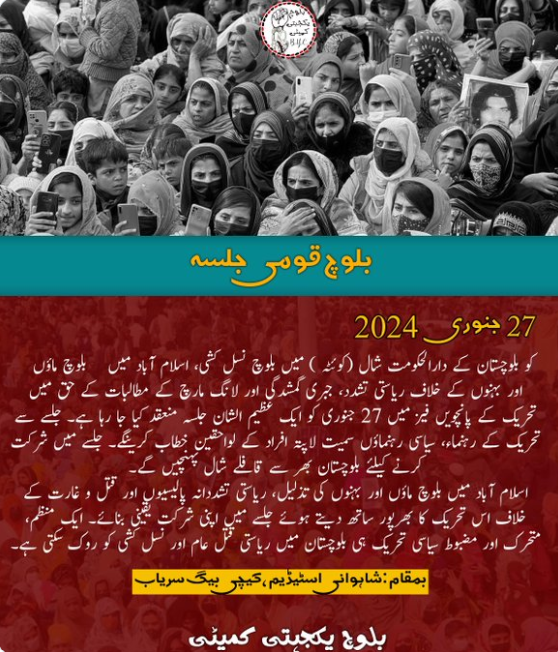
After more than two months of protesting against the Baloch genocide, the Baloch long marchers are finally returning to Balochistan from Islamabad without any redressal of their demands, which include stopping extrajudicial killings and enforced disappearance cases, among others. Upon their return, in accordance with Pashtun traditions, PTM unit in Zhob organized a dinner for the Baloch Long March convoy led by Dr. Mahrang Baloch on the night of January 24.

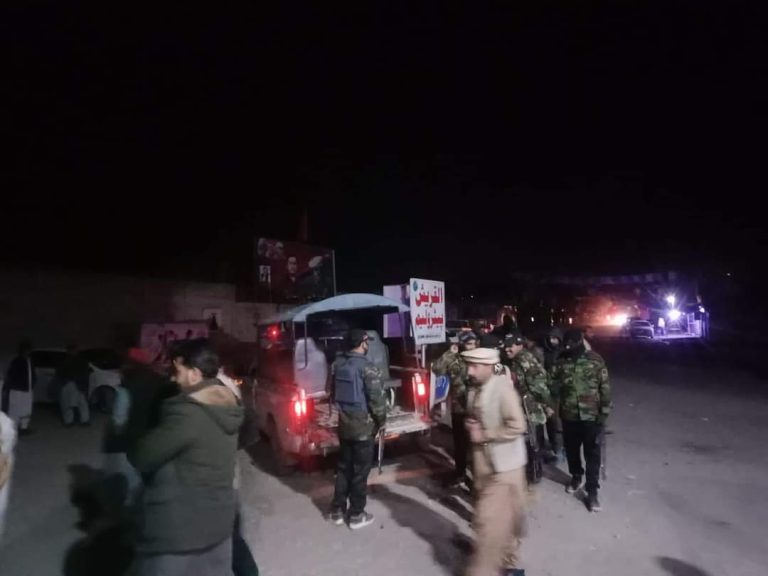
However, officials from the Pakistani establishment and Pakistan Army, dressed in civilian clothes, prevented the youth, women, elderly, and children of the Baloch March from stopping for the food provided by PTM Zhob. They insisted that the marchers should pass directly without pausing.

A substantial police force was also deployed, and the administration threatened PTM Zhob not to provide food and other support to the Baloch long marchers. Reports have also surfaced that PTM Zhob activists received an unknown WhatsApp message from the establishment instructing them not to facilitate the long marchers.

Inhumane punishment out of nervousness

It’s worth noting that the Baloch Long March commenced from Turbat after days of protesting against the extrajudicial killings of Baloch youth by the so-called Counter Terrorism Department (CTD). After reaching Islamabad Press Club and initiating a protest there, the marchers faced brutality from the Pakistani regime. Despite this, their resolve remained steadfast. Disheartened by the regime’s blatant disregard for people’s rights and realizing that the establishment was not going to heed their peaceful protests, they returned disappointed. Even more disheartening is the fact that the regime does not allow the Baloch long marchers to have dinner on their way back home.

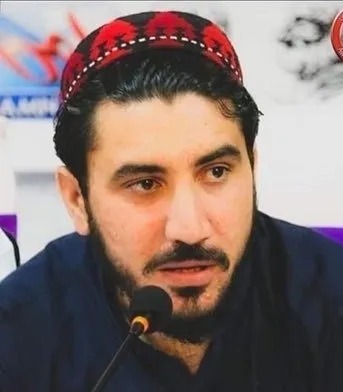
Unfortunately, this situation serves as a form of punishment for those raising their voices for rights in Pakistan. Apparently, one of the other reason for such an atrocious act by Pakistan is to keep PTM away from the Baloch cause. It has been evident since day one. Even PTM’s leader Manzoor Pashteen was abducted while he was enroute to participate in the Turbat protest, from where the long march started. Of late, Baloch and Pashtuns have been contemplating to unify their struggle against the brutal Pakistani regime as both the communities are oppressed and have made it sure that without the collective fight, their rights oriented movement would wither away. So, an action like this clearly indicates towards the nervousness of the Pakistan Army and its puppet regime in Islamabad.

Pak-occupied Gilgit-Baltistan police attacks protesting contractors

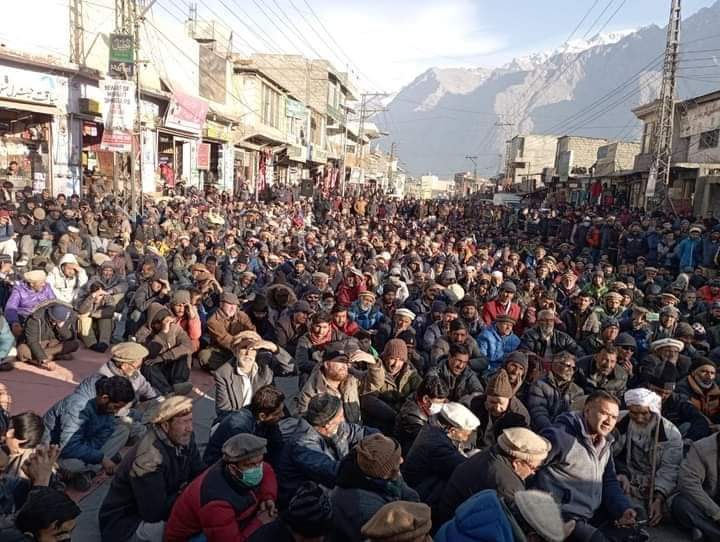
While Pakistan-occupied Gilgit Baltistan (POGB) is witnessing one of the biggest and unprecedented protests in its history, people from all walks of life are contributing to the public cause. In the latest development, the Contractors Association initiated protests for its ten-point demands since yesterday [January 23rd]. However, the oppressive regime showed its brutal face by attacking the protestors of the Contractors Association.

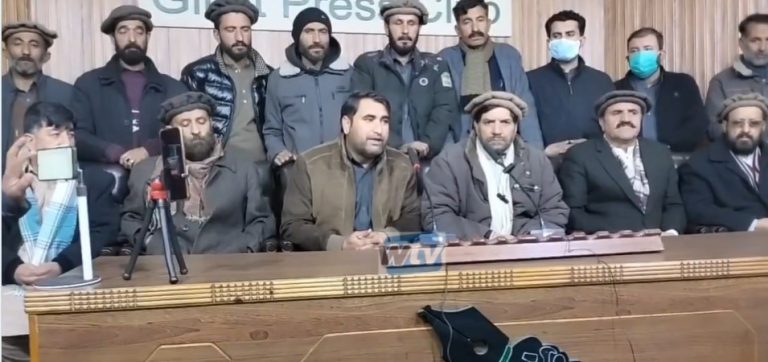
After clashes between the protestors and occupying police in Gilgit, the office bearers of the Contractors Association held a press conference at the Gilgit Press Club, expressing grave concerns over the brutal actions. According to their statement, the Contractors Association presented its ten-point demands of utmost importance to the contractors in Gilgit Baltistan. Their plan of action was to hold a short march from the PWD headquarters to the Chief Secretary’s Office. Upon reaching there, they planned to conduct a short sit-in demonstration before concluding the protest. However, as the short march started from the PWD headquarters, the police barricaded the road to stop the protest. As stated in the press conference, the protestors were attempting to hold a peaceful protest but were instead attacked by the police using tear gas and baton charges.

Contractors Association questions Finance Secretary

Later, the protestors returned to headquarters and began a sit-in there. Criticizing the Islamabad-imposed Finance Secretary Aziz Ahmad Jamali, the protestors claimed that he aims to make Gilgit Baltistan the new Balochistan by oppressing the people. They also demanded the suspension of police officials.

The protest by the Contractors Association is sufficient to illustrate the precarious condition of every individual in Pakistan-occupied Gilgit Baltistan. While the common man is demanding the right to the most basic human necessity – wheat, the working class is demanding their rights to work in a development-oriented environment. Unfortunately, the occupying regime and its puppet government have only engaged in mocking the people’s interests and rights, rather than upholding them.

Islamabad: Mahrang Baloch addresses International Conference Of Oppressed People

Recently, activist Mahrang Baloch addressed the International Oppressed Peoples Conference in Islamabad. According to the Baloch Yakjehti Committee (BYC), this conference highlights the plight of Balochistan in the global struggle against injustices. In the conference, Dr. Mahrang passionately discussed the serious human rights abuses and violence that the Baloch people and other oppressed peoples have been facing by the Pak establishment. She stated “Our gathering underscores a shared concern – the violation of fundamental human rights and the prevalence of Pak Army violence worldwide. While our focal point involves the challenges faced by the Baloch people, it also extends to a broader context, encapsulating all individuals who find themselves subject to oppression and brutality.”

She added that there has been continuous fighting in Balochistan for the past 75 years. Unfortunately, the resolution of political disputes has frequently been overshadowed by coercive actions like military interventions, enforced disappearances, extrajudicial killings, forced relocation, collective punishments, and restrictions on the right to free speech. Almost all of Balochistan’s citizens have been negatively impacted by this ongoing use of force and violence.

Under Dr. Mahrang’s leadership, the BYC has led a movement that cuts across geographical borders. For the Baloch people, this movement represents hope, and it serves as an example for all the oppressed countries in the region.

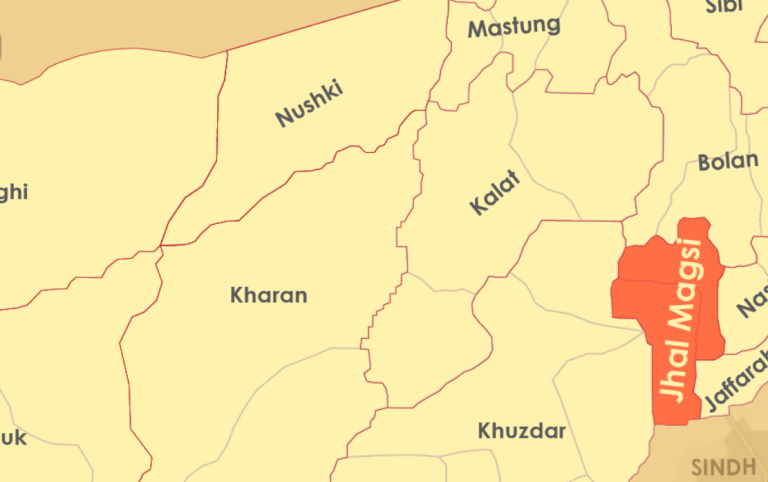
Her speech covered significant instances of oppression in Balochistan, such as the 2014 discovery of mass graves in the Totak area of Khuzdar district. Dr Mahrang urged the international community to acknowledge the seriousness of the atrocities as a form of genocide as she passionately described the dire circumstances facing the Baloch nation.

The forcible displacement of numerous families from their hometowns in Balochistan was an additional crucial matter that Dr. Mahrang addressed. She emphasized the lack of adequate response from the human rights organisation and the critical need to address the issue of these impacted individuals.

The conference also presented the testimonies of families who have lost loved ones to extrajudicial killings and enforced disappearances by the Pak Army. Dr Mahrang discussed the difficulties these families have to deal with, highlighting the suffering that is experienced by all when someone is taken from them against their will. She mentioned that there are people in this conference whose loved ones were killed without cause. Famous people like Mama Qadir Baloch, a prominent human rights advocate, witnessed his son Jalil Rehki’s extrajudicial death following his forced disappearance. Balach Baloch, the brother of Najma Baloch, met a similar end when he was extrajudicially killed following his forced disappearance, even after being presented in court.  “I received the mutilated body of my father, Ghaffar Langov, after two years of his enforced disappearance,” Dr Mahrang said.

She also mentioned Manzoor Pashteen, a detained Pashtun leader of Pashtun Tahafuz Movement who has been unlawfully and continuously detained for the past two months for his advocacy of Pashtun rights.

Dr Mahrang brought attention to the suffering of other minorities, pointing out that the Hazara community has been subjected to mass murders because of their religious identity for the previous 20 years. In addition, there are extrajudicial killings and forced disappearances of Shia, Sindhis, and Muhajirs. The religious identities of Hindu and Christian communities have been the source of oppression for decades. Furthermore, even in Punjab (Pakistan) today, political activists and journalists have forcibly disappeared based on their political affiliations and freedom of expression.

“Yet, today, we stand united with all the ongoing people’s struggles in this region, whether it be the ongoing sit-in in Chaman or the ongoing protest in Gilgit-Baltistan. We stand in solidarity with Muhajirs, Sindhis, Hazaras, Pashtuns, Shias, Hindus, Christians, and all oppressed communities and support their struggle. Moreover, the people of Kurdistan, Palestine, Afghanistan, and many other oppressed communities in the world”, Dr Mahrang added.

Dr. Mahrang praised and acknowledged the role of women in the movements of oppressed nations. She emphasized the historical role played by Baloch women in the ongoing fight against the “genocide in Balochistan,” underscoring the need for women from all oppressed countries to work together in this struggle.

Dr. Mahrang expressed gratitude to journalists and human rights advocates for their valuable contributions to the movement as she concluded her speech. She urged these people and groups to support the struggles of oppressed peoples around the world, including the Baloch nation.

The International Conference of Oppressed Peoples sought to provide a forum for the global oppressed peoples to unite and support one another in their struggles. In the name of the Baloch Yakjehti Committee, Dr. Mahrang conveyed his sincere appreciation to all participants for their invaluable contributions to the success of the conference.

Explosive blast and shooting in Pak-occupied Balochistan injures 3

In a series of unsettling incidents in Pak-occupied Balochistan, at least three individuals were reportedly injured and a building collapsed in three separate attacks in Naseerabad and Kharan district on Tuesday.

Reportedly, a mysterious heavy explosion occurred that demolished a building in the Dera Murad Jamali area, at the former UBL Bank DC Chowk. However, no casualties were reported due to the explosion. The motive remains unclear and authorities have launched an investigation to actively probe the incident.

Simultaneously, in a separate incident that occurred in the Kharan district, where unknown assailants opened fire in the market leaving three individuals critically injured. The victims are identified as Abdul Ghafoor Yalanzai resident of Gwash, Mohammad Yusuf Syapad, a resident of Shadizai, and Jawad Ahmad Mullazai, a resident of Kharan City.

Another incident in Kharan involved an unknown person using a hand grenade to attack the former Election Commission office. However, there were no reported casualties from the incident. Notably, Kharan City experienced its second blast incident in a week. The explosion happened earlier while the officers were being trained for the elections.

However, it is expected that these events might be because Baloch sarmachars have been opposing the Pakistan Army and their fake & rigged attempt to hold elections. They have been urging the public to abstain from election campaigns since the lead-up to the most recent elections.

Since March 27, 1948, the Baloch people have faced regular home invasions, kidnappings for ransom, target killings, forced disappearances, and torture. Exploitation has been directed towards the resource-rich provinces of Pakistan-occupied Balochistan, where the Pak Army is executing an evil plan to loot the region’s wealth.

POJK, POGB Kashmiris to observe 5 February 2024 as First Black Day against Islamabad

For the past thirty years, Pakistan, including the occupied regions of Jammu and Kashmir (POJK) and Gilgit-Baltistan (POGB), has been observing Kashmir Solidarity Day on 5 February each year. On this day, official ceremonies are held, and the government declares a public holiday.

Throughout Pakistan, including the self-governing territories of Azaad Jammu and Kashmir and Gilgit-Baltistan, both governmental and non-governmental events were traditionally organized in all major cities on this occasion.

While abroad the diaspora and Pakistani citizens residing in foreign lands used to protest against India outside Indias embassies. So much so that in the 1990s, during the height of insurgency in Srinagar, leaders of the Hurriyat Conference were hailed as heroes in the Pakistani media, portraying the Indian government and military as oppressors.When it came to 5 February, a public holiday was declared to commemorate the demands of the late Qazi Hussain Ahmed, the leader of the Jamaat-e-lslami, the Pakistan’s jihadist partner during the 1990s when proxy warfare was ongoing in Srinagar under the banner of jihad.

During this period, social media was non existent, so the general public in Pakistan-occupied Jammu and Kashmir and Pakistan-occupied Gilgit-Baltistan relied on state-controlled television channels to watch Kashmir files and read controlled newspapers. In those times, Islamabadians, Muzaffarabadis, and Gilgit residents considered themselves to be living in a paradise, while they perceived Srinagar as hell.

Over time, circumstances changed and with the advent of social media, the reality unfolded. People in the region began to understand that Srinagar was progressing more than Muzaffarabad, and Delhi was a better place than Islamabad.

Protestors in Pak-occupied Gilgit Baltistan threaten to march to Kargil if the Pakistani establishment continues to turn a deaf ear (Cartoon: News Intervention)

Slowly but steadily, the significance of 5 February diminished. In the entire 2023, the non-state Azaad Jammu and Kashmir movement continued with protests against electricity bills, flour prices, taxes, and subsidies throughout the region. The historical protest lasted for a year.

Women protesting in Hunza, Pak-occupied Gilgit-Baltistan against increase in wheat prices (Photo: Social Media)

In January meeting, the Joint Action Committee announced a shutdown and wheel-jam strike in Pakistan-occupied Jammu and Kashmir from Neelum to Bhimber on 5 February. This decision shocked the Pakistani establishment.

Pakistan had never anticipated such a turn of events. For years, with the participation of Kashmiri people, Pakistan observed 5 February as a Black Day against India. However, this time 5 February 2024, instead of observing it against Delhi, the Kashmiris have decided to observe it against Islamabad. Times are changing, and everything is evolving.

The anticipated global-scale protests on 5 February 2024 will be directed against Pakistan. The faces of Pakistan, accustomed to deceiving people for thirty years, will shed their mask of sympathy, and Pakistan will be exposed before the world.

The protests in Pakistan-occupied Jammu and Kashmir are intensifying. People have not paid electricity bills for eight months. Protests are ongoing in every city. Hatred towards Pakistan is growing. Today, the non-state Azad Jammu and Kashmir movement is demanding facilities similar to those in Srinagar. Whether one understands it or not, this is Pakistanis worst defeat.

Pakistan at it’s wits’ end after Iran carries out deadly attack on Pakistan (Cartoon: News Intervention)

Iran-Pakistan cross border strikes exposes Washington’s hypocrisy

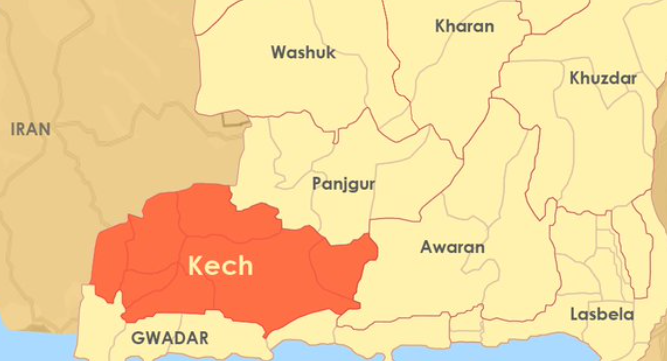
Washington univocally condemned Tehran’s cross border strike against alleged bases of anti-Iranian Sunni terrorist group Jaish al-Adl [JuA] in the Panjgur district of Balochistan as it violated the sovereign borders of Pakistan and one had expected a similar response from the US on Pakistan’s retaliatory strike inside Iran. But it wasn’t so and instead, US President Joe Biden indirectly appears to have justified Pakistan’s attack by saying, “Iran is not particularly well liked in the region.”

Just like many of Biden’s other utterances this conclusion of his remains a mystery.

If cross border strikes are indeed accurate indicators of a country’s regional popularity as Biden seems to believe, then it’s Islamabad and not Tehran that meets this bizarre criterion better. After all, in addition to Iran, haven’t the US and India targeted key terrorists like Osama Bin Laden [OBL] and terrorist infrastructure on Pakistani soil in the past? Nevertheless, given its known adherence to the “Amicus meus, inimicus inimici mei” [the enemy of my enemy is my friend] philosophy, Washington’s ludicrous logic of taking Pakistan’s retaliatory strike inside Iran as a sign of Tehran’s unpopularity comes as no big surprise!

Both Iran and Pakistan are stoutly defending their respective actions by invoking the international tenets of right to self defence and their proclaimed ‘zero tolerance’ for terrorism; emphasising that they have only targeted terrorist groups [JuA and Balochistan Liberation Army or BLA respectively]. So, if Iran and Pakistan are really telling the truth, it’s clear that both these countries are providing safe sanctuaries to terrorist groups. Such perverse patronage upholds British politician and writer George Galloway’s observation that “one man’s terrorist is another man’s freedom fighter,” which is not only unfortunate but downright pathetic.

Whereas Tehran is definitely guilty of sponsoring several terrorist groups, but so is Pakistan- a fact that has been officially acknowledged by Washington many times. Readers may recall that just last year, the joint statement issued by White House on the conclusion of Indian Prime Minister Narendra Modi’s US visit had “strongly condemned cross-border terrorism, the use of terrorist proxies and called on Pakistan to take immediate action to ensure that no territory under its control is used for launching terrorist attacks.” [Emphasis added]. However, while the US continues demonising Iran by referring to it as part of the global ‘axis of evil’ and blaming it for creating “regional instability,” Washington finds no fault with Pakistan, its “major non-NATO ally.”  

Islamabad’s close association with designated foreign terrorists is no secret. Islamabad may claim to have no knowledge of Al Qaeda founder Osama Bin Laden [OBL] staying in Abbottabad, but even an ignoramus wouldn’t buy the incredulous story of the world’s most wanted terrorist living undetected along with his entire family just a stone’s throw away from the Pakistan Military Academy. And the very fact that Washington chose not to inform Islamabad about Operation Neptune Spear [its plan to fly-in Navy Sea, Air and Land (SEAL) teams to take down the Al Qaeda chief] clearly indicates that it was fully aware that it was Rawalpindi that had secreted OBL in Abbottabad.

The cross border strikes by Iran and Pakistan raises questions about the latter’s claims regarding sponsorship of armed Baloch groups. If Islamabad’s assertion that BLA is being patronised by Iran is true, then why is it accusing India for the same? Additionally, its unsubstantiated claim implies that armed anti Pakistan Baloch groups are being jointly sponsored by India-and Iran. If this is the case, then Islamabad needs to explain why it hasn’t ever spoken about this unholy Indo-Iran nexus that is facilitating terrorist activities of these groups?

Most importantly, this incident has yet once again exposed Washington’s duplicity when it comes to taking decisive action against state sponsorship of terrorism. Hence New Delhi needs to realise that it’s futile to expect the US to act against or compel its “major non-NATO ally” Pakistan to cease sponsoring terrorist activities in J&K. By attacking America’s most hated enemy Iran, Islamabad has earned Uncle Sam’s goodwill and so Washington will definitely turn a Nelson’s eye on Rawalpindi’s ongoing proxy war in J&K or at best give it a mild rap on the knuckles. New Delhi therefore has no other option but to work out an effective strategy to deal with Pakistan sponsored terrorism on its own.

Kargil Highway to be blocked, complete shutdown on 26 as wheat protest intensifies in POGB

Shabbir Mayar, the head of Gilgit Baltistan United Movement (GBUM), has announced to take recourse of Plan B. He announced that on January 24th there will be a protest on the Kargil Highway in Kharmang Khas. The protest will start from 8 a.m. in the morning and would conclude at 4 p.m. in the evening. Mayar elucidated that the people from across Madhupur to Palpaldo will join the protest in Kharmang Khas Union.

Accordingly, he urged the transporters and truck drivers to shut down the movement for the aforesaid period. Furthermore, he extended invitations to religious and social leaders to join the protest. Shabbir Mayar outlined that the future course of action would be decided after tomorrow’s protest at Kargil Highway.

Meanwhile, the Awami Action Committee in Pakistan-occupied Gilgit Baltistan (POGB) has also called for a complete shutdown protest on the upcoming January 26 and 27 against the abolition of wheat subsidy and health cards.

It is worth noting that people across POGB are consistently protesting for 28 days following sporadic protests and shutdowns. They are demanding to restore the wheat subsidy abolition of which has burdened them with an extra Rs. 28.50 per kg. Along with that the health cards have also been abolished and an atrocious Finance Act 2023 has been imposed to appropriate indiscriminate tax from the people.

Despite strong protests involving women and children in chilling winters, Islamabad controlled occupying government in POGB has refrained from taking any constructive action. On the contrary it resorted to coercive measure to curb the protests. The protest which started on December 26 is nearing the completion of a month and hence the Awami Action Committee is preparing for Plan B which, obviously, is going to be fiercer.

Son of Pak-occupied Gilgit-Baltistan officer abducts elderly man, demands land as ransom

In a brazen incident on January 21 at 1:30 p.m, armed individuals forcibly abducted Amir Altaf Shah, a resident of Zulfiqar Abad, Pak-occupied Gilgit in his late 70s, after knocking on his door. The family and neighbors, who were witnesses to the event, saw Shah being coerced into a car and taken away at gunpoint, as detailed in the FIR. Land grab is suspected to be the cause of abduction

Despite 24 hours passing since the abduction, Amir Altaf Shah remains missing. The FIR contains information about the kidnappers, but authorities have yet to locate the elderly man. In response to the kidnapping, outraged neighbors and community members have blocked Zulfiqar Abad Road, demanding the swift recovery of the elderly gentleman and the overall safety of Pak-occupied Gilgit-Baltistan citizens.

FIR copy regarding abduction of Amir Altaf Shah (Photo: Social Media)

Meanwhile, Hasan Ali Shah, the son of the victim, took to Twitter to identify the alleged kidnapper, Naseem, who happens to be the son of DIG retd Wasal Khan from Darel. Hasan revealed, ‘They are demanding land as ransom to release my father.’ This disturbing abduction and its subsequent developments point to malicious actions in the valley, where the land of local Kashmiris is being forcefully taken away.

Abductor mocking law and order machinery

Hasan also shared a screenshot, a social media post by the perpetrator, where he purportedly mocks the legal system and threatens to abduct Hasan’s mother as well. The perpetrator claims that anyone attempting to reclaim their land will face consequences.

Despite 48 hours passing since the abduction and the identification of the alleged perpetrator, no action has been taken, and the victim remains unrecovered.

Notably, a primary concern for native Kashmiris in Pak occupied Gilgit-Baltistan (POGB) has been the encroachment and seizure of their land. Mafias, colluding with the occupying police and administration, persistently encroach upon the lands of Kashmiris, leaving them vulnerable. All of this unfolds at the behest of the Pakistan Army, which seems intent on keeping the region embroiled in existential problems, allowing them to control the area and exploit its resources.

Native Kashmiri exposes Paki oppression in Pakistan-Occupied Jammu & Kashmir

People of Pakistan occupied Jammu and Kashmir (POJK) are facing the worst type of oppression. Even their small issues are not being addressed to remedy. It once again became apparent while Deputy Commissioner of occupied Poonch Rawalakot held an open court in Thorar to listen to the problems of local Kashmiris.

A local Kashmiri vocally spoke over the issues faced by the people and exposed the persecution by Islamabad imposed administration in POJK. While talking about the problems, one of the individuals stated that their forests have been encroached upon by the mafias, the burial grounds are being captured and partitioned into plots for residential blocs. To the worse, the occupying police has failed miserably in dealing with the theft cases. He said that no theft case has been solved by the police in Thorar, while there have been multiple cases with the amount as huge as Rs. 8 lakhs.

Moreover, he also raised a question on the unavailability of doctors in Thorar. He stated that despite being the sub-district headquarters, no doctor has been posted in Thorar. For quite some time, they have been demanding a doctor, but their demands are still not met. There are thousands of people living in Thorar who trusted the administration and that the administration should be ashamed of the fact that they have failed to fulfil the aspirations of the people.

No doctor, power cuts, indiscriminate tax

Taking on the DC, he said that he should be ashamed that he is using vehicles worth crores in the name of protocol while the common women and girls are forced to walk barefooted. Meanwhile, the other Kashmiris present chanted “shame! shame!”

The individual exposed the DC by saying that the DC should have come there after having posted a doctor for 24 hours service. He outrightly denied the payment of electricity bills saying that whether they provide electricity or not, no Kashmiri will pay the electricity bills.

Citing the occupying government’s tax as “gunda tax” (goon’s tax) he, on behalf of Kashmiris said that their ancestors have sacrificed their lives for Kashmir and they would never pay this “gunda tax” and warned that if the electricity supply would be cut off in the name of load shedding, the Neelam-Jhelum transmission line would pass through their dead bodies.

Exposing Pakistan’s policies of governing from above and wrong propaganda of so-called Azad Kashmir, the vocal Kashmiri man asked the DC about why an officer is always sent from Pakistan while the region also has educated and capable youth. He stated that Kashmiris don’t consider the police as theirs.

He also lambasted DC for his earlier statement that POJK is filled with terrorists. The individual claimed that Pak occupied Jammu and Kashmir is filled with people demanding their rights, who are persecuted not the terrorists. He stated that Kashmiris has the first right on the resources of the region and asked how is it sane to call the ones fighting for their rights as terrorists.

Kashmiri accepting reality

Notably, Pakistan has always tried to set a narrative that the part of Kashmir under their illegal occupation is free and is on the path of prosperity, however the fearless and righteous voice in front of a Deputy Commissioner in Pak occupied Jammu and Kashmir conspicuously defied Pakistan’s propaganda. While the people of POJK have now accepted the reality, it is only the international organisations that needs to see this reality and come out of the Pakistani policy of fake PR.

Vehicle overpowered by 3 suspects goes missing, Jammu on high alert

The police in Jammu is on high alert after the report of a vehicle being overpowered by three suspects who entered Jammu region.

Reportedly, the incident was reported on January 20, when the driver started his journey from a taxi stand in Anantnag to Srinagar. At the Arwani underpass on National Highway 44, three individuals boarded the car. Afterwards, the intended destination changed from Pantha Chowk to Summer Bugh Lasjan, only to eventually shift again to Tangan Bypass near Pampore.

At Tangan Bypass, all the three passengers overpowered the vehicle after the driver denied their request to move towards Jammu. The driver reported the incident to the police which in turn took no time to register a case at Nowgam Police station. Afte an hour later of passengers taking control of the car, they crossed Kaichachkoot toll plaza on the way to Srinagar.

However, the media reports based on the information from senior J&K police official state that the vehicle crossed Nashri Tunnel near Udhampur at midnight of the same day and has been untraceable since then. While the authorities are taking efforts to locate the vehicle, a high alert has been issued in the Jammu region.

Although, J&K is already on high alert considering the upcoming Republic Day, the vehicle going missing with no background of suspects has added to the alertness.