Home Blog Page 148

Ali Wazir exposes election interference and selective targeting by Paki regime

In a pursuit to ensure the victory of the establishment chosen candidate, others are being targeted by the authoritarian Pakistan regime by registering fake cases against them. In the latest development, Ali Wazir, the former member of National Assembly and PTM activist has taken it to twitter to raise the concern over the undemocratic and authoritarian actions of the establishment, working under the commands of Pakistan Army, regarding the upcoming general election.

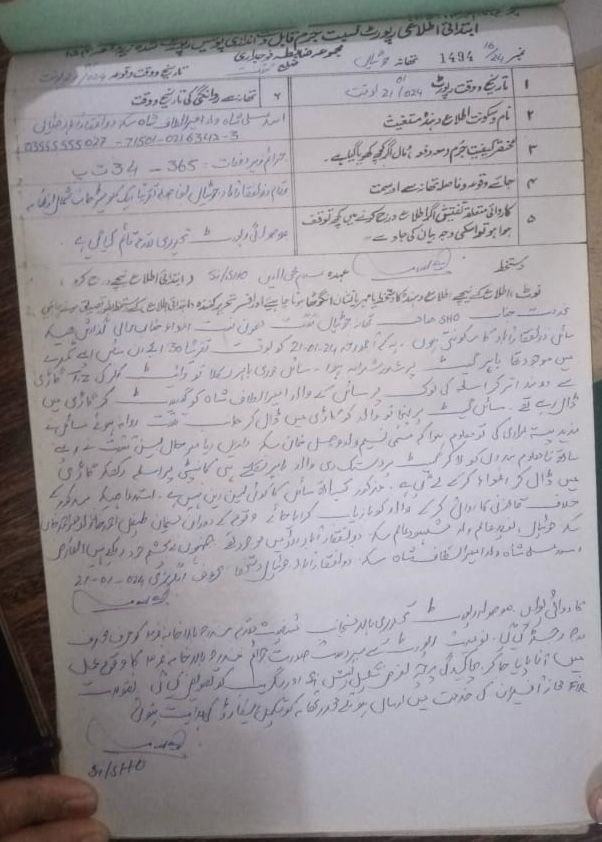
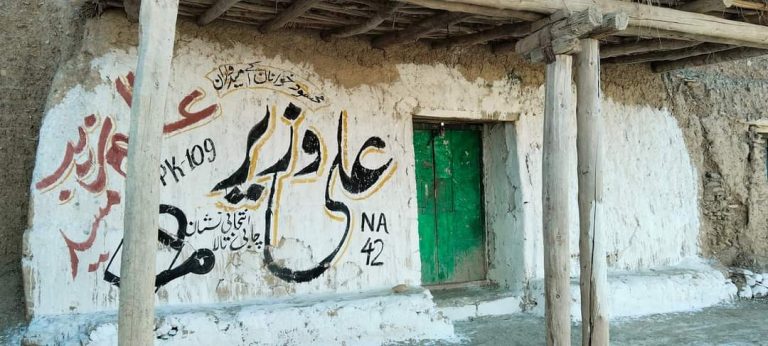
He said that other than the specific candidates, the others are being targeted, their offices are being closed and banners are being taken down. Highlighting the case in Upper Waziristan, he said that his and Alamzaib’s office in Miranshah, Khaisor, and Chaghmalai have been targeted in a similar way and the FIR has been registered.  

It is no hidden fact that elections in Pakistan are not a democratic way to select a candidate but a process to establish a military chosen candidate in a democratic looking way. Ali Wazir has been a member of National Assembly and targeting him like this speaks volume about the democratic and transparent elections. The only reason that he and people of similar caliber are targeted is because they challenge the hegemonic and totalitarian control of the Pakistan Army and have a dissenting voice. As Pakistan Army thrives on the precarious conditions of its own people, it is impossible for any development-oriented, rights-oriented and eventually people-oriented representatives to be on the same page. And as they align with the cause of people, Pakistan Army feels the nerves with their candidature that could potentially alter the outcomes of their scripted election façade.

Massive protest erupts in Pak-occupied Balochistan against Pak genocide of Baloch

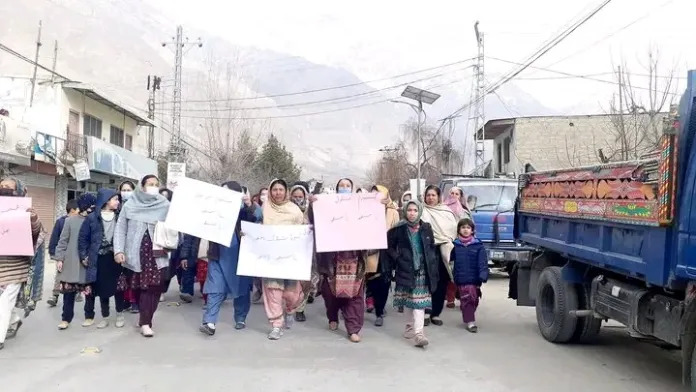
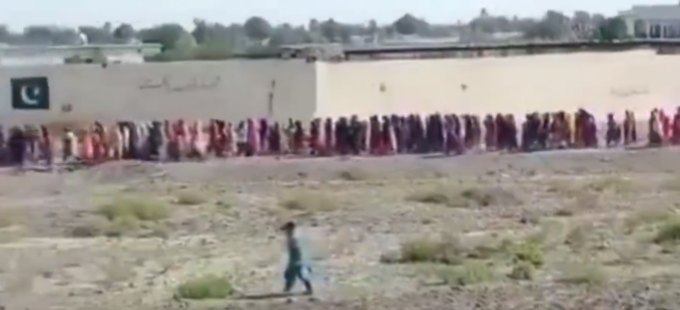
In a remarkable display of solidarity, a massive public protest erupted in Bulandshahr Pak-occupied Balochistan in support of the ongoing Baloch Genocide movement. The involvement of thousands of women is not only a significant achievement but also plays a crucial role in the progress of the Baloch genocide movement. Activist Mahrang Baloch stated that this public support and strength became the pillars of their movement and the defeat of the oppressors.

Additionally, this past weekend marked the first time in Ornach’s history that women and children took part in the protest. This was in response to the Baloch Yakjehti Committee’s (BYC) request to show support for the Baloch demonstrators in Islamabad. Also, BYC has organized and led many protests in various locations. Recently, for instance, tens of thousands of people, including women and children, rallied in Gwadar, a large-scale protest occurred in Tump, and similar protests were held in Gresha, Karkh, Dhadar, and Khuzdar. These large-scale demonstrations help the Baloch community raise their voices and promote unity and solidarity.

Since March 27, 1948, the Baloch people have faced regular home invasions, kidnappings for ransom, target killings, forced disappearances, and torture. Exploitation has been directed towards the resource-rich provinces of Pakistan-occupied Balochistan, where the Pak Army is executing an evil plan to loot the region’s wealth.
PTM leader addresses BYC conference in Islamabad, highlights atrocities against Pashtun

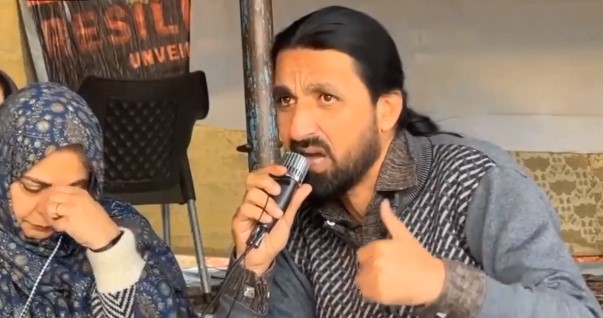
In the midst of ongoing protests against the extrajudicial killing of Baloch youth and a march condemning the Baloch genocide, the Baloch Solidarity Committee (BYC) recently convened a conference in Islamabad. Zubair Shah Agha, a central committee member of the Pashtun Tahaffuz Movement (PTM), delivered a fiery speech condemning the Pakistani establishment’s stance on key figures and expressing concerns over the human toll of the so-called “war on terror.”

Addressing a rally session, Agha sarcastically remarked on the Pakistani establishment’s labelling of various figures as traitors, including Bacha Khan, Manzoor Pashteen, Ali Wazir, Mehmood Khan, Samad Khan Achakzai, Akhtar Mengal, Attaullah Mengal, Mahrang Baloch, and Sammi Deen Baloch. He humorously added, “I think Mama Qadeer Baloch has been a traitor for at least 15 years,” highlighting the establishment’s tendency to dismiss dissenting voices.

Agha criticized the Pakistani establishment, asserting that it operates with a mindset dominated by generals adorned with stars on their shoulders. He argued that any dissenting voice is swiftly labeled as anti-constitutional and traitorous, emphasizing the absence of a true constitutional framework in the country.

BYC Conference: Agha speaks with facts

Agha asserted that Pakistan’s economy intricately ties itself to the “war on terror,” relying notably on external aid. He accused both terrorists and the Pakistan Army of contributing to the massacre of Pashtuns. Agha challenged official figures, claiming that the actual number of Pashtuns who have lost their lives in the conflict surpasses the reported 80,000 and could exceed one lakh.

Moreover, Agha raised concerns over the disappearance of 20,000 youth, with PTM confirming 8,000 cases. He questioned the whereabouts of these missing individuals, citing instances where construction activities revealed the remains of young people beneath the ground. Agha expressed skepticism about the establishment’s commitment to resolving these issues, accusing them of prioritizing violence to maintain their financial interests.

In conclusion, Agha highlighted the economic underpinnings of the ongoing conflict, stating that if the “war on terror” were to end, those in power would struggle to maintain their luxurious lifestyles abroad due to a lack of financial support. The Baloch Solidarity Committee’s conference in Islamabad sought to shed light on these pressing issues and call for justice and accountability in the face of alleged human rights violations.

Celebrations continue in Ayodhya after Ram Temple Pran Pratishtha

The much awaited consecration of Ram Lalla’s idol took place today in Ayodhya’s Ram temple. January 22, 2024, marks a monumental moment in Indian history as Prime Minister Narendra Modi performed the puja along with aarti, joined by RSS chief Dr. Mohan Bhagwat, Uttar Pradesh Governor Anandiben Patel, and Chief Minister Yogi Adityanath.

Ram Lalla’s birth occurred during the auspicious Abhijit Muhurta, under the Mrigashirsha Nakshatra, Amrit Siddhi Yoga, and Sarvaarth Siddhi Yoga. These favorable combinations reoccurred on January 22, 2024. The sculptor Arun Yogi Raj from Karnataka crafted the Ram Lalla’s idol. Chanting of mantras awakened Ram Lalla, followed by Vedic chants and a grand consecration ceremony with over 50 musical instruments. The main consecration ritual took only for 84 seconds, marking the end of Ayodhya’s anticipation.In the preceding seven days, the city echoed with chants of five lakh mantras. Vedic rituals and auspicious ceremonies began on 16 January, performed by 121 Vedic ritual specialists from Kashi. Between chants and the sound of conch shells, PM Modi consecrated Ram Lalla’s idol, ending a wait of nearly 500 years.

Post-consecration,  Ram Lalla’s eyes were unveiled, and PM Modi applied kajal to the deity. The Prime Minister then showed Ram Lala his reflection in a mirror, followed by offering bhog. In the auspicious moment, PM Modi consecrated Ram Lalla’s idol, resonating with the chants of “Jai Shri Ram” in Ayodhya. Helicopters showered flowers on the Ram Temple premises, marking a historic date—January 22, 2024. Vedic scholars performed the consecration ceremony following traditional procedures, guided by Prime Minister Narendra Modi. A huge group of actors and celebrities  graced the historic event. Saryu ghat has been illuminated with thousands of diyas and the city chants “Jai Shree . Ram”. P.M. Modi stated that today is not just a day of triumph but of humility too.

Pak-occupied J&K Kashmiris to observe First Black Day on 5 Feb

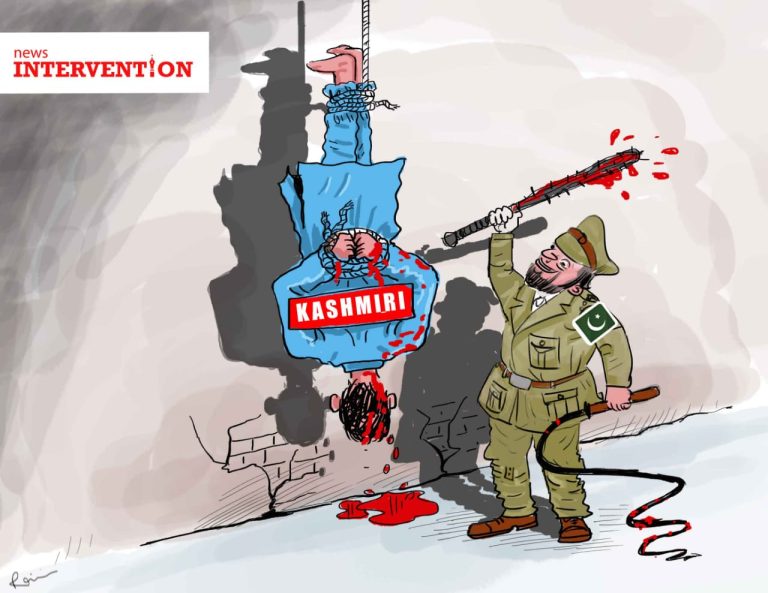
For the past thirty years, every year on 5 February, Pakistan occupied Jammu and Kashmir (POJK) and Pakistan occupied Gilgit-Baltistan (POGB), observed a day of solidarity with Kashmir, referring to it as “Kashmir Day.” On this day, government offices remain closed, and both official and unofficial events are held in all major cities of Pakistan, POJK, and POGB. The Kashmiris from POJK, who were living abroad also protested against India in front of Indian embassies, portraying leaders of the freedom conference as heroes while condemning their own Indian government and military as oppressors.

One of the main reason for this was the lack of awareness among the Kashmiris of POJK and POGB. Also, the propaganda of Pakistan played a key role in keeping them alienated. In the nineties, during the ongoing conflict in Sri Nagar under the banner of jihad, the Jamaat-e-Islami, a jihadist partner of the Pakistani establishment, led by Qazi Hussain Ahmed, declared 5 February as a Black Day on the official calendar, aligning with their demands. In the nineties, without the presence of social media, the people of POJK and POGB relied on Pakistan-controlled television to understand the Kashmir conflict.

The narratives presented on controlled media portrayed Islamabad as heaven, Muzaffarabad and Gilgit as paradise, while Srinagar as hell. Over time, with the advent of social media, perceptions shifted, and common people in Pak controlled territories, began to understand that Sri Nagar was progressing more than Muzaffarabad, and Delhi was considered a better place than Islamabad. Slowly, the hollow significance of the 5th of February began to fade.

How perceptions evolved in POJK regarding 5 February

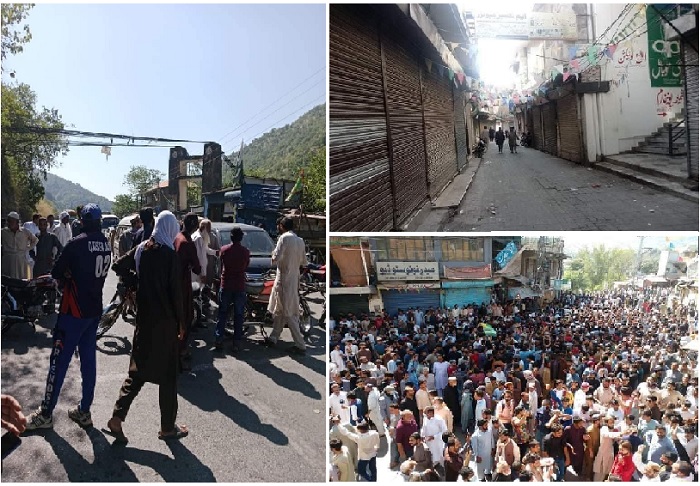
This notion became more fervent in 2023. Throughout the year, 2023 the non-governmental organization in POJK protested against electricity bills, increased wheat flour prices, taxes, and abolition of subsidies. The historical protest continued for a year. Seeing no redressal of their demands, the Joint Action Committee, in its latest meeting this month, announced a complete shutdown and wheel jam strike from Nilam to Bhimber on the 5th of February. This announcement posed a significant challenge to the Pakistani establishment. Pakistan never thought it would witness such a day. For years, on the 5th of February, people carried away with the emotions of Kashmiri Jihad, observed a Black Day against India. However, this time, Kashmiris chose to observe a Black Day against Islamabad instead of Delhi. Times are changing, and perceptions are evolving.

Apparently, the expected protest on the 5th of February is likely to resonate globally against Pakistan. Accordingly, those who have been lying to people for years will now have their mask of empathy removed, and Pakistan will be exposed to the world.

Protests are intensifying in Pakistan-occupied Jammu and Kashmir. People have been withholding electricity bill payments for eight months. Sit-ins are ongoing in various cities. Hatred against Pakistan is escalating. Today, the non-governmental Azadi group from Pak occupied Jammu and Kashmir is demanding facilities similar to those in Srinagar. Whether understood or not, this is Pakistan’s worst defeat.

Now, Kashmiris have realized the reality of Pakistan. The connection between Pakistan and the people of Kashmir is weakening. Those who once considered Muzaffarabad as paradise and Sri Nagar as hell are now demanding facilities similar to those in Sri Nagar for Muzaffarabad.

Baloch teen returns home after 17 months of abduction by Pak Army

In an expectational circumstance, a young man named Shahid Hussain who was a victim of enforced disappearance in Mastung by the oppressive Pak Army was recovered and returned to his home on 20 January 2024 which is nearly seventeen months after his disappearance.

While the return of some of the victims of forcibly disappeared individuals in Pak-occupied Balochistan is made, on the other hand, many individuals are reported missing, such as another young man who was taken into custody by the CTDC on January 19 in the Jafarabad district of Balochistan and has not been seen in public since. The chain of enforced disappearances only continues to grow in various regions of Pak-occupied Balochistan, including incidents reported in Quetta, Gwadar, Kech and Awaran alone in January of the current year.


Since March 27, 1948, Balochistan has been forcibly occupied and subjected to a systematic assault on humanity by the oppressive Pak Army. Since then, the Baloch people have faced frequent home invasions, torture, enforced disappearances, kidnappings for ransom and target killings.

Islamabad police manhandles Baloch Yakjehti conference participants

Islamabad, Pakistan: A peaceful conference organized by the Baloch Yakjehti Committee (BYC) was disrupted by Islamabad Police, leading to the detention and injury of several participants. The “International Conference of the Oppressed” aimed to discuss human rights issues faced by various groups, including the Baloch people.

Reportedly, Police, under the influence of Pakistan Army, hindered the event in various ways, including:

  • Confiscation of equipment: Speakers, chairs, tables, and other essential items were taken away before the conference.
  • Restricted entry: Attendees were denied entry, preventing full participation.
  • Physical altercations: Participants, including speakers like Professor Manzoor Baloch and Advocate Imran, were allegedly manhandled and subjected to physical force.
  • Blockades and security restrictions: Roads were blocked and the event venue surrounded by barbed wire, further limiting access and movement.

Baloch conference

Reportedly, upon returning from the lunch break, participants of the Conference were met with police violence, adding another layer of brutality to the situation. The BYC condemned the police actions, calling them “a blatant attempt to silence dissent.”

Dr. Naseem Baluch, Chairman of BNM, strongly condemned the behavior of Islamabad police towards Professor Manzoor Baloch, Advocate Imran, and others. He emphasized the absurdity of a 4th-grade police officer treating a professor in such a deplorable manner, calling it the real face of colonialism. Dr. Baluch urged collective condemnation of such actions and appealed to the international community to hold Pakistan accountable.

Dr. Naseem Baluch stated, “This behavior towards professors and advocates is unacceptable. It exposes the true face of oppression in Pakistan.”

Despite these challenges, the BYC managed to conduct the conference. Dr. Mahrang Baloch, leader of the BYC, declared, “Despite these disruptions, we consider this a victory. We stand firm against oppression, and our voices will not be silenced.” The conference aimed to raise awareness about the plight of oppressed Baloch communities and sought support from the international community.

The Baloch Yakjehti Committee urges the world to amplify their voices against the ongoing challenges faced by the Baloch people from March 27, 1948 when Pak Army forcefully occupied the resource rich region Balochistan.

Since then, innocent Baloch civilians have been subjected to grave injustices such as daily home invasions, kidnappings and abductions for ransom, enforced disappearances, staged encounters, torture, and humiliation at checkpoints.

Radical clerics issues fatwa for voting Hindu candidate in Sindh elections

In a disconcerting development, the Darul Ifta at Jamia Uloom Islamia Banauri town has issued a fatwa against voting for Hindu candidate in the upcoming general elections, citing an inability to fulfill Islamic law requirements. The fatwa specifically addresses the candidacy of Hari Ram Kishori Lal in Mirpurkhas, Sindh, and advises Muslims not to vote for a Hindu candidate. Notably, Hari Ram Kishori Lal is a PPP candidate for the Provincial Assembly from PS-45 (Mirpurkhas-I). 

This raises profound concerns as it challenges the democratic rights of individuals in a country with a Muslim majority. Such religious edicts not only undermine the principles of democracy but also reveal the deep-seated bigotry within radical clerics in Pakistan. What is particularly striking is the selective application of these fatwas, as these so-called religious experts conveniently remain silent on the matter of accepting votes from non-Muslims.

It is ironic that while these clerics advocate for political participation by individuals from religious minorities, they deny reciprocity by discouraging Muslim voters from supporting minority candidates. This hypocritical stance exposes the underlying bias and raises questions about the true essence of inclusivity and democratic values within certain segments of Pakistan’s religious leadership.

This discriminatory mindset is not only a disservice to the principles of equality and freedom but also perpetuates a cycle of religious intolerance that hampers the harmonious coexistence of diverse communities.