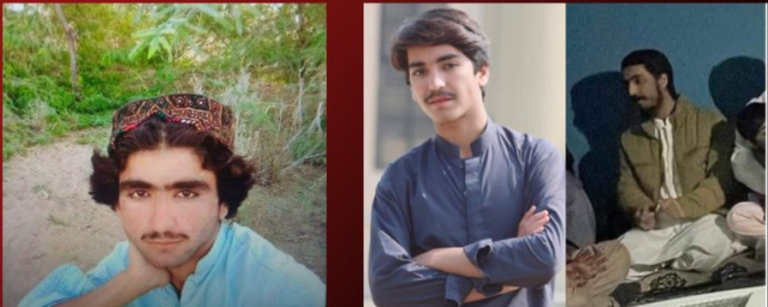
In an expectational circumstance, a young man named Shahid Hussain who was a victim of enforced disappearance in Mastung by the oppressive Pak Army was recovered and returned to his home on 20 January 2024 which is nearly seventeen months after his disappearance.
While the return of some of the victims of forcibly disappeared individuals in Pak-occupied Balochistan is made, on the other hand, many individuals are reported missing, such as another young man who was taken into custody by the CTDC on January 19 in the Jafarabad district of Balochistan and has not been seen in public since. The chain of enforced disappearances only continues to grow in various regions of Pak-occupied Balochistan, including incidents reported in Quetta, Gwadar, Kech and Awaran alone in January of the current year.
Since March 27, 1948, Balochistan has been forcibly occupied and subjected to a systematic assault on humanity by the oppressive Pak Army. Since then, the Baloch people have faced frequent home invasions, torture, enforced disappearances, kidnappings for ransom and target killings.
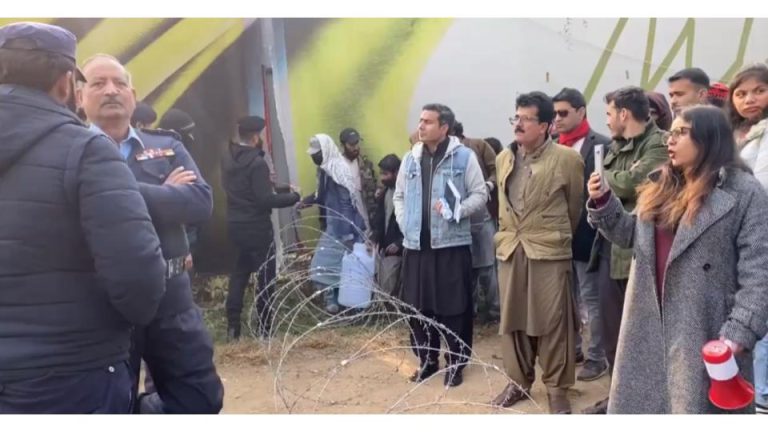
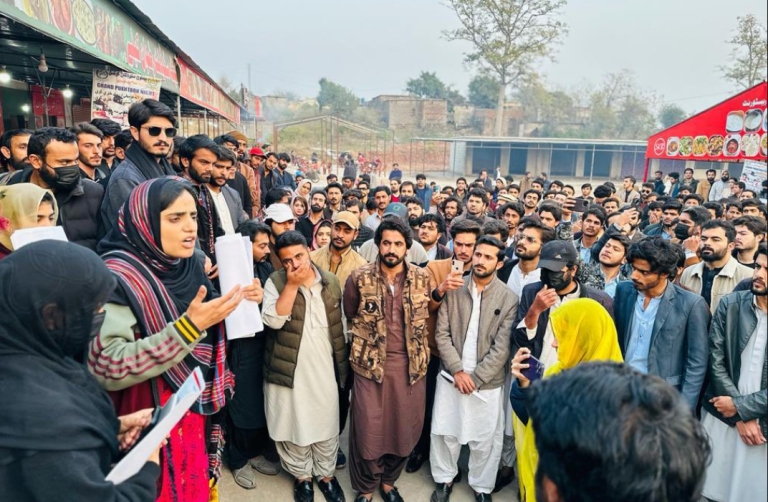
Islamabad, Pakistan: A peaceful conference organized by the Baloch Yakjehti Committee (BYC) was disrupted by Islamabad Police, leading to the detention and injury of several participants. The “International Conference of the Oppressed” aimed to discuss human rights issues faced by various groups, including the Baloch people.
Reportedly, Police, under the influence of Pakistan Army, hindered the event in various ways, including:
Confiscation of equipment: Speakers, chairs, tables, and other essential items were taken away before the conference.
Restricted entry: Attendees were denied entry, preventing full participation.
Physical altercations: Participants, including speakers like Professor Manzoor Baloch and Advocate Imran, were allegedly manhandled and subjected to physical force.
Blockades and security restrictions: Roads were blocked and the event venue surrounded by barbed wire, further limiting access and movement.
Islamabad Police have manhandled participants and speakers at a seminar organised by the Baloch Yakjehti Committee. Numerous attendees were denied entry to the event, while others experienced physical altercations. pic.twitter.com/zrvNJCsPLW
Reportedly, upon returning from the lunch break, participants of the Conference were met with police violence, adding another layer of brutality to the situation. The BYC condemned the police actions, calling them “a blatant attempt to silence dissent.”
Dr. Naseem Baluch, Chairman of BNM, strongly condemned the behavior of Islamabad police towards Professor Manzoor Baloch, Advocate Imran, and others. He emphasized the absurdity of a 4th-grade police officer treating a professor in such a deplorable manner, calling it the real face of colonialism. Dr. Baluch urged collective condemnation of such actions and appealed to the international community to hold Pakistan accountable.
The behavior of Islamabad police to Professor Manzoor Baloch, Imran Advocate and others, is highly condemnable. They were prevented from participating in a conference, they faced insults and forceful treatment. It's real face of colonialism; a 4th-grade police officer treats a… https://t.co/uGfmA8GmZapic.twitter.com/WNpbKI7U1x
Dr. Naseem Baluch stated, “This behavior towards professors and advocates is unacceptable. It exposes the true face of oppression in Pakistan.”
Despite these challenges, the BYC managed to conduct the conference. Dr. Mahrang Baloch, leader of the BYC, declared, “Despite these disruptions, we consider this a victory. We stand firm against oppression, and our voices will not be silenced.” The conference aimed to raise awareness about the plight of oppressed Baloch communities and sought support from the international community.
The Baloch Yakjehti Committee urges the world to amplify their voices against the ongoing challenges faced by the Baloch people from March 27, 1948 when Pak Army forcefully occupied the resource rich region Balochistan.
Since then, innocent Baloch civilians have been subjected to grave injustices such as daily home invasions, kidnappings and abductions for ransom, enforced disappearances, staged encounters, torture, and humiliation at checkpoints.
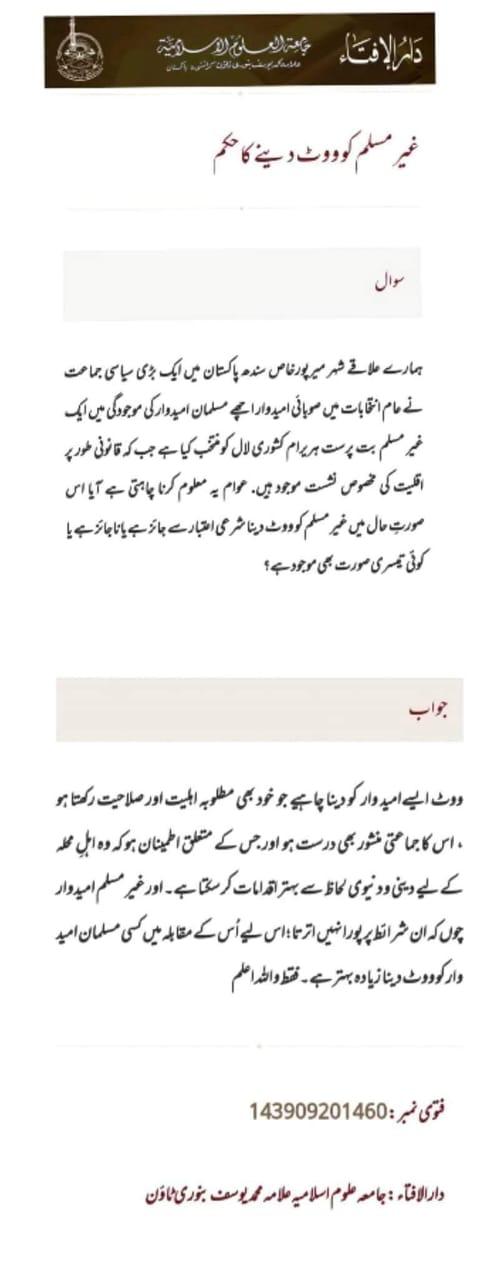
In a disconcerting development, the Darul Ifta at Jamia Uloom Islamia Banauri town has issued a fatwa against voting for Hindu candidate in the upcoming general elections, citing an inability to fulfill Islamic law requirements. The fatwa specifically addresses the candidacy of Hari Ram Kishori Lal in Mirpurkhas, Sindh, and advises Muslims not to vote for a Hindu candidate. Notably, Hari Ram Kishori Lal is a PPP candidate for the Provincial Assembly from PS-45 (Mirpurkhas-I).
This raises profound concerns as it challenges the democratic rights of individuals in a country with a Muslim majority. Such religious edicts not only undermine the principles of democracy but also reveal the deep-seated bigotry within radical clerics in Pakistan. What is particularly striking is the selective application of these fatwas, as these so-called religious experts conveniently remain silent on the matter of accepting votes from non-Muslims.
It is ironic that while these clerics advocate for political participation by individuals from religious minorities, they deny reciprocity by discouraging Muslim voters from supporting minority candidates. This hypocritical stance exposes the underlying bias and raises questions about the true essence of inclusivity and democratic values within certain segments of Pakistan’s religious leadership.
This discriminatory mindset is not only a disservice to the principles of equality and freedom but also perpetuates a cycle of religious intolerance that hampers the harmonious coexistence of diverse communities.
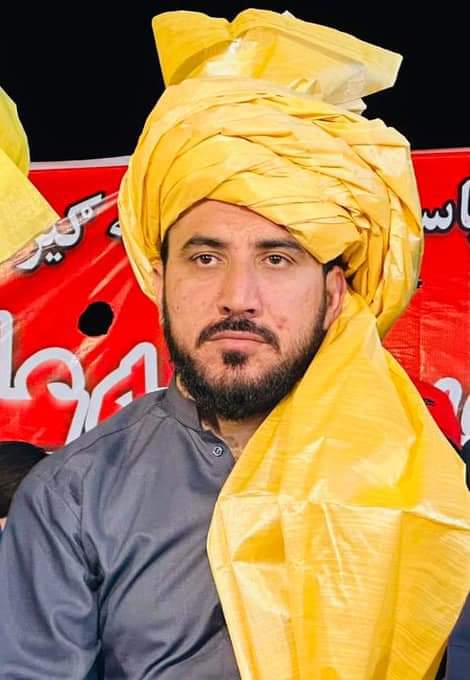
Manzoor Pashteen has once again been implicated in a controversial 3MPO (Maintenance of Public Order) case leading him to further incarceration after recurring arrests.On January 19, DC of Chakwal detained Manzoor Pashteen for 14 days.
Notably, after facing two consecutive arrests in fake cases registered against him by Islamabad police, PTM Chief Manzoor Pashteen was granted bail on January 5. While he was being released, Jhelum Police abducted him from the gates of Adiala prison.
The arrest was illegal as no reason for detainment was conveyed to Pashteen or his organisation waiting for him outside the jail. He was implicated in a 3MPO case in Jhelum, under which he was arrested on remand of 14 days. Now when the 14-day remand of Pashteen ended on January 19, he has again been charged with fresh 3MPO case by DC Chakwal. Interestingly, 3MPO has been vehemently used by the Pakistan Army and the police in Pakistan to suppress the voice of dissent.
Pakistani establishment exploiting 3MPO
It must be noted that since day one of the arrest of PTM Chief Manzoor Pashteen, the Pakistani establishment has exploited the legal machinery to keep him away from the masses. In each case he is implicated in a way that he is kept arrested. Post utilisation of every provision, a fresh case is laid upon him to repeat the same procedure. This process is being carried out on the dictates of Pakistan Army, which is using its strong hold over the law enforcement machinery. After Islamabad Police, Manzoor Pashteen’s case is being picked up by the Punjab Police.
Nonetheless, Pashteen has again been arrested for 14 more days. And the way Pakistan’s mockery of legal provisions is happening, it doesn’t seem easy for Pashteen to ultimately get released in the short term. To the worse, despite persistent efforts and demands of Pashtun Tahafuz Movement, no human rights organisation has taken cognizance of this absolute violation of human rights and persecution of Pashtuns.
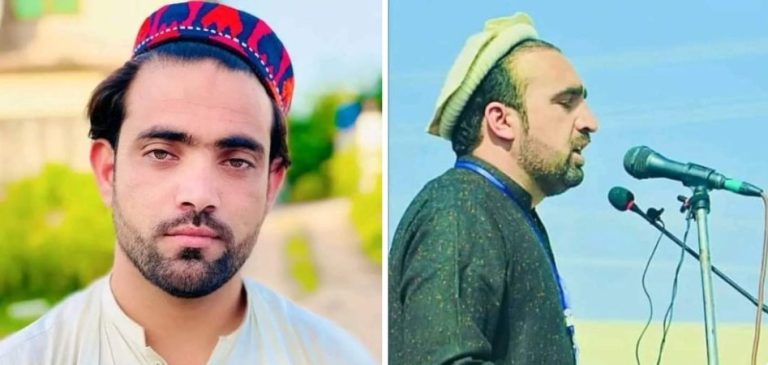
Eid-ul-Rehman Wazir and Zakeem Wazir, both the activists of Pashtun Tahafuz Movement (PTM), have been released from Bannu Central Jail after being among those arrested in October of the previous year. Alongside them, Geelaman Wazir was also detained during the same period. However, despite their release, Geelaman and another PTM member, Noorullah Tareen, continue to remain in custody.
Noorullah Tareen, serving as the Provincial head of PTM in Sindh, was arrested by the police from Sindh shortly after the detention of Eid-ul-Rehman, Zakeem, and Geelaman. These arrests took place during a period when the PTM activists raised their voices against the alleged illegal crackdown on Afghan refugees in October.
As Eid-ul-Rehman and Zakeem Wazir regain their freedom, the fate of Geelaman and Noorullah Tareen remains uncertain, awaiting their release from detention. The arrests drew attention due to the activists’ vocal advocacy against the mistreatment of Afghan refugees, emphasizing ongoing concerns related to human rights and freedom of expression in Pakistan.
In a bold move against the Baloch genocide, Mahrang Baloch and fellow activists in the fourth phase of the movement aim to raise awareness nationally and internationally against the ongoing rights abuses, enforced disappearances, and extrajudicial killings by the Pak Army in Pak-occupied Balochistan. For this movement, several initiatives are being undertaken, and one such initiative is organizing a conference beyond borders for oppressed people and launching various awareness campaigns in universities and colleges.
In the recent post by Mahrang Baloch, it can be seen that Mahrang Baloch and other activists are actively interacting with students in universities and colleges and raising awareness campaigns. It aims to educate people nationally and internationally about the ongoing Baloch genocide.
In the current fourth phase of our movement, we aim to raise awareness nationally and internationally against ongoing rights abuses, enforced disappearances, and extrajudicial killings in Balochistan.
The group passionately appeals to the global community, especially the youth of Pakistan and worldwide, to support the campaign against Baloch genocide and encourage the spirit of Baloch women by supporting them and raising a collective voice for every victim of the atrocities by the Pak Army.
This ongoing conflict in the Balochistan region has claimed many innocent lives till now, and the list only continues to grow. The urgency of this situation cannot be overestimated. Balochistan has been forcibly occupied by the oppressive Pak Army since March 27, 1948. Since then, innocent Baloch civilians have been subjected to grave injustices such as daily home invasions, kidnappings and abductions for ransom, enforced disappearances, staged encounters, torture, and humiliation at checkpoints.
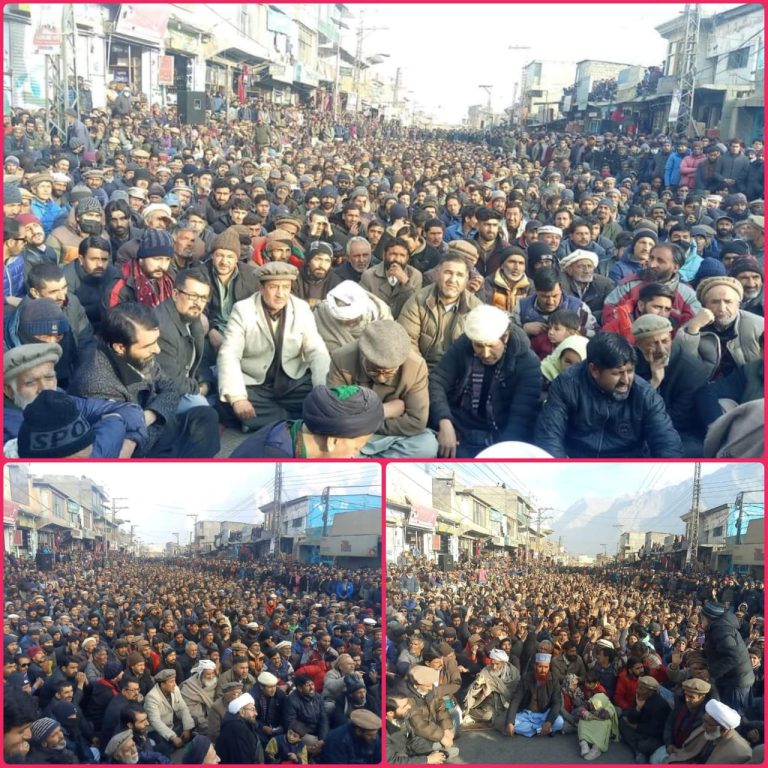
Amidst the ongoing massive protest of the Awami Action Committee against the abolition of wheat subsidy in Pakistan-occupied Gilgit Baltistan (POGB), the POGB council has reached out to the Prime Minister of Pakistan, who also happens to be the Chairman of POGB Council. They have demanded that the earlier price of wheat should be reinstated as the abolition of wheat subsidy has put financial burden over the region, making the condition of native populace worse. However, they have opinionated to defer the increase till February 8 general elections.
The letter also highlighted the unjust wheat price increase from Rs. 7.5/kg to Rs. 36/kg. The council argued that POGB is a far-flung area with no production of wheat. The region is facing massive unemployment and lacks basic amenities. And hence, the people of POGB are incapable of purchasing the costly wheat. Accordingly, the Council has demanded to revisit the wheat policy and defer the increased wheat price till the upcoming elections.
POGB Council letter to the caretaker PM of Pakistan (Photo: Social Media)
The POGB council’s letter comes after it extended support to the ongoing protests against removal of wheat subsidy, abolition of health card, increased taxes among others. While extending the support, POGB council affirmed to submit a summary to the caretaker PM recommending the continuous inflow of subsidized wheat into POGB.
Notably, the serious efforts by the local leaders and the POGB council started only after the strict warning of the protestors, demanding their rights while sitting on the streets of POGB in bone chilling winters, with the temperature as low as -50C.
Sinister interest of political leaders
However, the approach of POGB council which is headed by the PM of Pakistan seems no different than the puppet assembly and its leaders. Each of them is trying to diffuse the escalation of conflict till the upcoming general elections.
At first, POGB Assembly member Fathullah Khan negotiated with the protestors on Monday to end the protest till the upcoming February 8 general election, with a promise of raising the wheat subsidy issue with the newly formed occupying government. To which protestors denied vehemently.
After the protestors strongly stood their ground, the POGB council, which extended support to the protest and their demands ranging from wheat subsidy to health card, also recommended to the caretaker PM of Pakistan to continue subsidy only till February 8. Simply put, after extending unconditional support and promising to raise the issue, POGB council reached out to the caretaker PM of Pakistan only for the wheat issue and that too to postpone the increase in price till February 8.
It simply means that the only motive of the POGB council and other political leaders is to diffuse the conflict so the question of wheat subsidy could not cast a shadow over the elections. Because if, wheat issue takes central importance, which it will take, the local leaders would neither be able to solve the issue, nor would they be able to show a red eye to their masters in Islamabad.
So there may be a chance that the subsidy is reinstated prior to the general elections, but that would only be to mislead the captivated population of POGB.
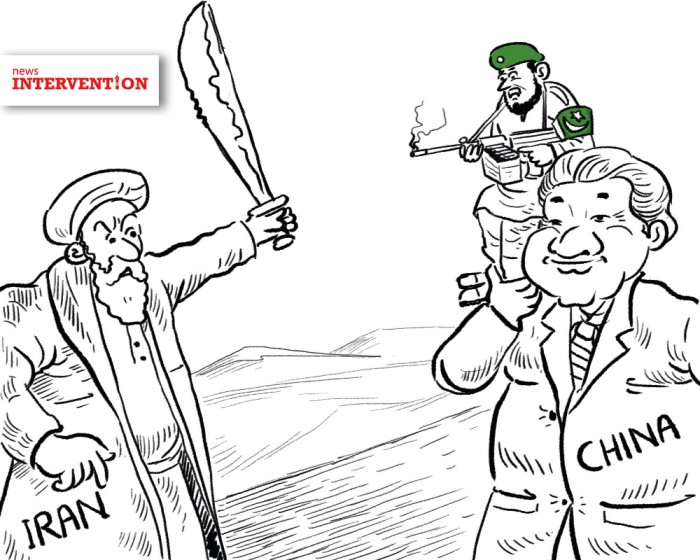
In a response to recent claims, the Baloch Liberation Army (BLA) has vehemently denied the existence of any sanctuaries in Iranian Balochistan. The BLA emphasized its unwavering commitment to not seeking assistance from Iran, the very occupant it opposes while fighting against the occupation in Pakistan.
Meanwhile, the Balochistan Liberation Front (BLF) has also issued a strong statement rejecting Pak Army’s claims. They asserted that the BLF has no bases in Iran, vehemently challenging the narrative put forth by Pakistan Army. Major Gwahram, a spokesperson of Baloch Liberation Front (BLF), rebuked reports of BLF comrades’ martyrdom in an alleged Pakistan attack.
He declared that there are no bases of the Baloch Liberation Front in Iran, debunking the false news circulating about the organization’s losses. Adding fuel to the fire, Major Gwahram pointed out that statements circulating were misleading. He clarified that there is no Balochistan Liberation Front presence in Iran, and none of its commanders had fallen victim to recent attacks in Pakistan.
Expressing concern, Major Gwahram highlighted the manipulation of BLF’s media statement by altering and branding it as a deliberate attempt to spread fake news. He raised questions about the authenticity of the edited statement.
Jaish al-Adl
In a separate development, a representative linked with the Jaish al-Adl, spoke to the German news agency DW. They also boldly refuted all claims made by the Iranian government about the organization in Eastern Balochistan, firmly stating that such allegations are baseless.
The Jaish al-Adl representative accused the Iranian government of consistently distorting facts to serve its interests. They criticized the position taken by the Iranian government regarding Jaish al-Adl.
Challenging the Revolutionary Guards, the Jaish al-Adl representative urged them to acknowledge that they are present on Iranian soil instead of searching for them in Eastern Balochistan. They emphasized Jaish al-Adl’s active advocacy for the rights of oppressed Baloch people in Iran, vehemently denying any affiliation with Pakistan.
The representative revealed that during recent operations by Iranian forces in Western Balochistan, no member of Jaish al-Adl suffered harm. They argued that the Revolutionary Guards’ actions, based on flawed information about the presence of organizational members, led to casualties in neighboring areas due to missiles fired in the wrong direction.
However, the representative clarified that Jaish al-Adl had accepted responsibility for the recent incident near Zahedan, where local deputy commander Colonel Hussain Ali Javidanfar and two guards lost their lives. This exchange of statements highlights the ongoing challenges faced by Baloch freedom fighters, who continue to defy Pakistan’s narrative regarding their presence in Western Balochistan.
We use cookies on our website to give you the most relevant experience by remembering your preferences and repeat visits. By clicking “Accept All”, you consent to the use of ALL the cookies. However, you may visit "Cookie Settings" to provide a controlled consent.
This website uses cookies to improve your experience while you navigate through the website. Out of these, the cookies that are categorized as necessary are stored on your browser as they are essential for the working of basic functionalities of the website. We also use third-party cookies that help us analyze and understand how you use this website. These cookies will be stored in your browser only with your consent. You also have the option to opt-out of these cookies. But opting out of some of these cookies may affect your browsing experience.
Functional cookies help to perform certain functionalities like sharing the content of the website on social media platforms, collect feedbacks, and other third-party features.
Performance cookies are used to understand and analyze the key performance indexes of the website which helps in delivering a better user experience for the visitors.
Analytical cookies are used to understand how visitors interact with the website. These cookies help provide information on metrics the number of visitors, bounce rate, traffic source, etc.
Advertisement cookies are used to provide visitors with relevant ads and marketing campaigns. These cookies track visitors across websites and collect information to provide customized ads.
Necessary cookies are absolutely essential for the website to function properly. These cookies ensure basic functionalities and security features of the website, anonymously.
Cookie
Duration
Description
cookielawinfo-checkbox-analytics
11 months
This cookie is set by GDPR Cookie Consent plugin. The cookie is used to store the user consent for the cookies in the category "Analytics".
cookielawinfo-checkbox-functional
11 months
The cookie is set by GDPR cookie consent to record the user consent for the cookies in the category "Functional".
cookielawinfo-checkbox-necessary
11 months
This cookie is set by GDPR Cookie Consent plugin. The cookies is used to store the user consent for the cookies in the category "Necessary".
cookielawinfo-checkbox-others
11 months
This cookie is set by GDPR Cookie Consent plugin. The cookie is used to store the user consent for the cookies in the category "Other.
cookielawinfo-checkbox-performance
11 months
This cookie is set by GDPR Cookie Consent plugin. The cookie is used to store the user consent for the cookies in the category "Performance".
viewed_cookie_policy
11 months
The cookie is set by the GDPR Cookie Consent plugin and is used to store whether or not user has consented to the use of cookies. It does not store any personal data.