Home Blog Page 156

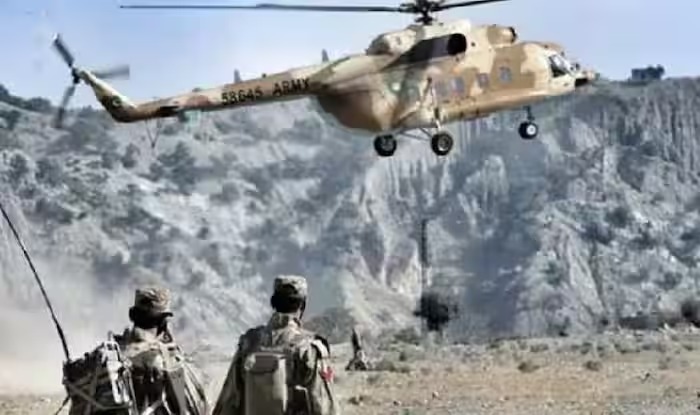
Pak Army releases Baloch Long March protesters after 8 days of illegal confinement

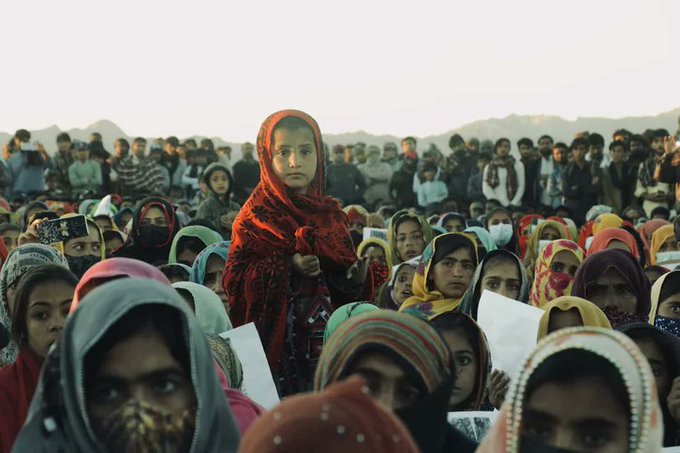
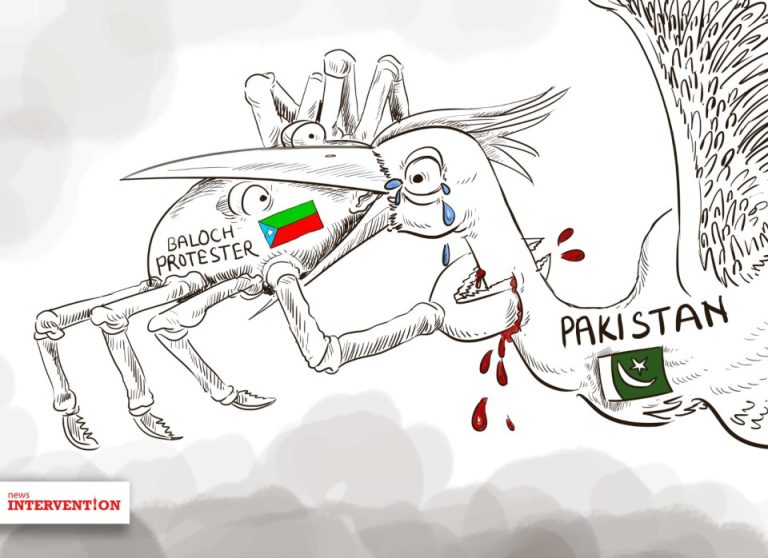
In a triumphant turn of events, the resilient spirit of the Baloch people prevails as the Pakistan Army finally releases the remaining 34 protesters after enduring 8 days of unlawful imprisonment. The unjust arrests were orchestrated by the Islamabad police, marking a blatant violation of the right to peaceful protest.

This historic protest, initiated from Turbat against the Baloch genocide, faced a brutal crackdown by the Pakistan Army under the guise of maintaining order. The movement’s leader, Mahrang Baloch, vehemently denounces the oppressive actions and calls attention to the sinister mechanisms employed to suppress the voices of the Baloch people.

The Islamabad Police initially denied any wrongdoing, falsely claiming to have released all detainees. Such deceptive practices have become a recurring pattern within the institutions under the influence of the Army.

Mahrang Baloch, standing at the forefront of the movement, passionately appeals to educators to understand that many student participants have missed exams due to their commitment to the cause. She emphasizes that the movement is not merely a solitary outcry but resonates as the collective voice of Balochistan, one that refuses to be silenced.

Expressing grave concerns, Mahrang exposes the malevolent tactics employed by the Army, revealing over 300 fabricated FIRs filed by the Islamabad Police. Demanding justice, she calls for the immediate dismissal of these baseless charges, echoing the sentiments of a movement that seeks education, not a courtroom battle for its participants.

Earlier, the release of Dr. Zaheer Baloch, who was mysteriously shifted to an undisclosed location, raises further questions about the extent of Army-led suppression. The march, ignited by the extrajudicial killing of Balaach Mola Bakhsh, stands firm in its demands for the release of missing persons, the disarmament of the Counter Terrorism Department (CTD), and accountability for the Army’s transgressions.

The provinces of Pak-occupied-Balochistan, rich in resources, have become a focal point of exploitation, with the Pak Army orchestrating a sinister plan to plunder the region’s wealth. Since March 27, 1948, the Baloch people have faced relentless oppression through daily home raids, disappearances, staged encounters, target killings, torture, and kidnappings for ransom.

As the Baloch people bravely resist, the world watches, and the call for justice echoes beyond the confines of Balochistan—a call that refuses to be silenced until the oppressive grip of the Army is loosened, and the voices of the Baloch people are heard and respected.

Pakistan Army forcefully abducts Baloch student in broad daylight

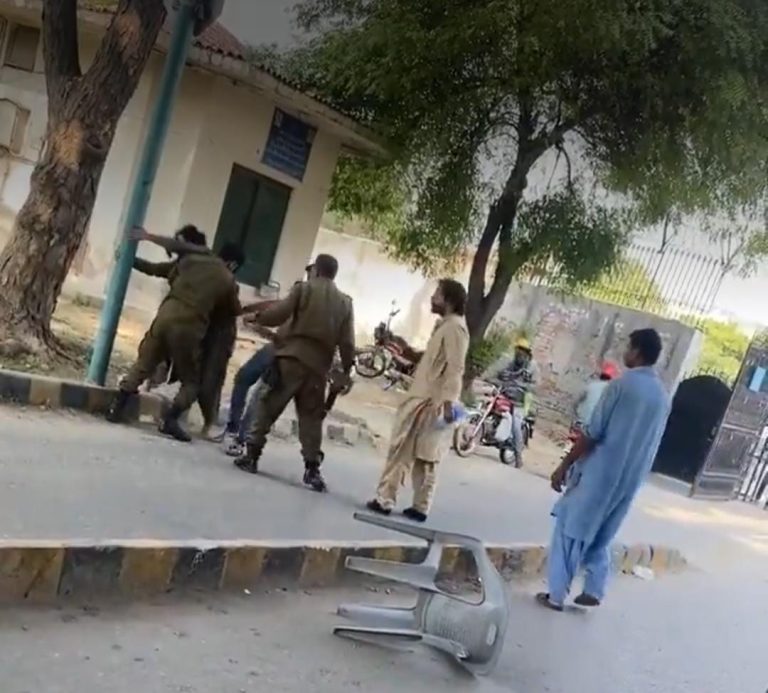
In a shocking incident that underscores the pervasive issue of enforced disappearances, Fareed Baloch, a student at Punjab University LHR, was violently abducted by the Pakistan Army in plain clothes, right in front of university guards and cameras. The distressing scene unfolded as Fareed, in clear distress, pleaded for help, but no one came to his aid, exposing the harsh reality of the ongoing crisis.

This incident has fueled a passionate response, bringing attention to the longstanding problem of disappearances in the region. Even though the exact numbers are unclear, human rights groups estimate that thousands of Baloch activists and civilians have gone missing due to the actions of the Army.

https://twitter.com/IFazilaBaloch/status/1740514231349612786

The ongoing Baloch Long March is a heartfelt call for justice and basic human rights. It resonates with the idea that every community should safeguard the well-being and dignity of its people. However, Fareed’s abduction reveals the brutal challenges faced by the Baloch people, highlighting the Army’s disregard for individual lives and basic human rights.

As the Baloch community persistently fights for justice, there’s a plea to the world to hear the cries of Fareed and others abducted without reason. The pain experienced by Fareed’s family adds to the growing list of victims, emphasizing the urgent need for global attention and action to address the widespread human rights violations in Balochistan.

Mass protest erupts in Pak-occupied Gilgit-Baltistan against soaring wheat price

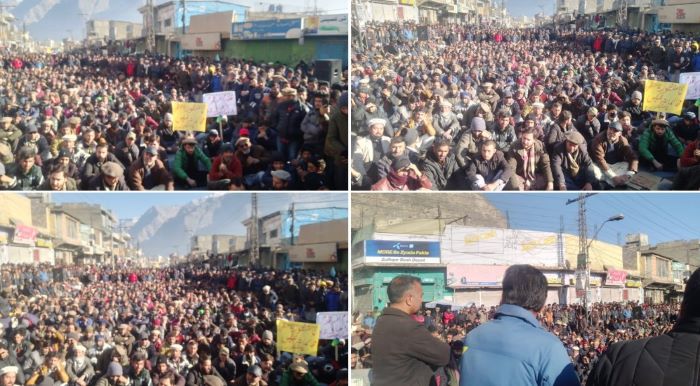
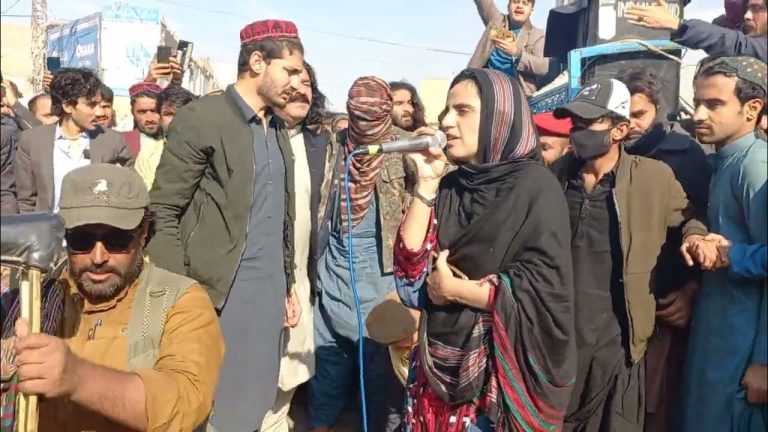
Against the indiscriminate hike in wheat prices, the Awami Action Committee is protesting at Shahid Yadgar Chowk in Skardu, POGB. The protest has entered its fourth day today and the Awami Action Committee is demanding the immediate revocation of the increase and the reinstatement of the subsidized price. The protest is getting unprecedented support from people as the protest saw participation from thousands of people.

Fierce protest ahead

For quite some time, the occupying government was planning to increase wheat prices to Rs. 36 per k.g., which the committee warned against by threatening to start a protest. Despite being aware of people’s sentiments, on December 26, the occupying government released a notification regarding the price hike. Since then, thousands of people, under the aegis of the Awami Action Committee, have been protesting against the ignorant establishment in Skardu.

Meanwhile, the committee has also announced widespread protests across Pakistan-occupied Gilgit Baltistan from January 1, the same day when the new prices would apply.

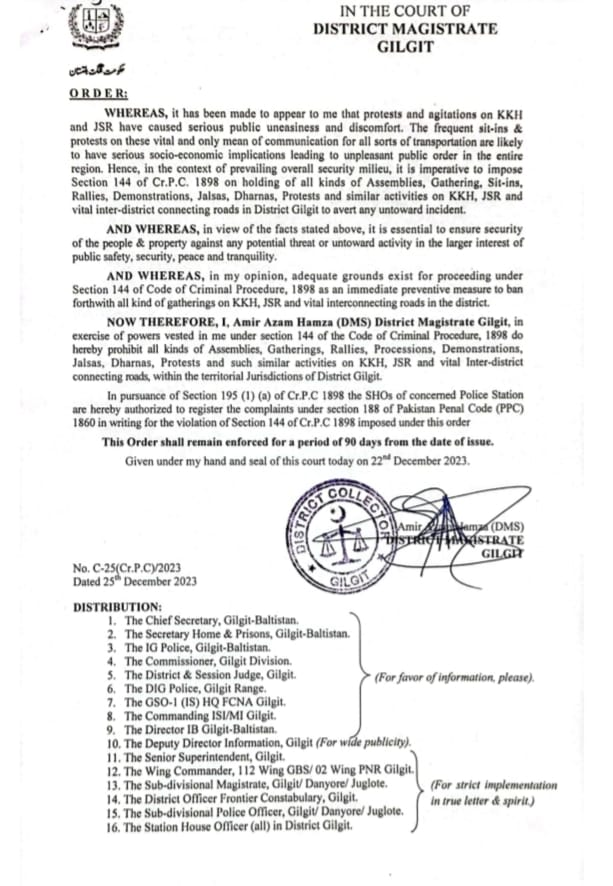
As the committee had already warned of protests, the occupying government apparently knew that the protest could turn into a mass movement and hence, beforehand imposed Section 144, banning every type of protest at Karakoram Highway and Baltistan Highway on December 25.

Copy Of Order Imposing Section 144 (Photo: Social Media)

Increase in Wheat Price

The hike in wheat prices has been a bone of contention between the people of Pak-occupied Gilgit Baltistan and their occupying government. Earlier, the price of wheat was Rs. 20 per k.g, which has now been unprecedentedly increased by 80% to Rs. 36 per k.g. The Awami Action Committee, representing the people, has argued that since Pakistan-occupied Gilgit Baltistan (POGB) is a disputed territory under the control of Pakistan, it is entitled to receive subsidized wheat and other basic amenities based on UN regulations. The people are enraged to see that while their resources, land, among others, are exploited indiscriminately by Pakistan, they barely reap the fruits of their own resources.

Against this brutal and oppressive regime, Shahid Yadgar Chowk in Skardu is currently echoing the voices of protest, consistently warning Pakistan and its puppet occupying government in the region to refrain from testing the patience of the people.

Pakistan Army arbitrarily arrests two PTM activists amidst increasing hostility between the two

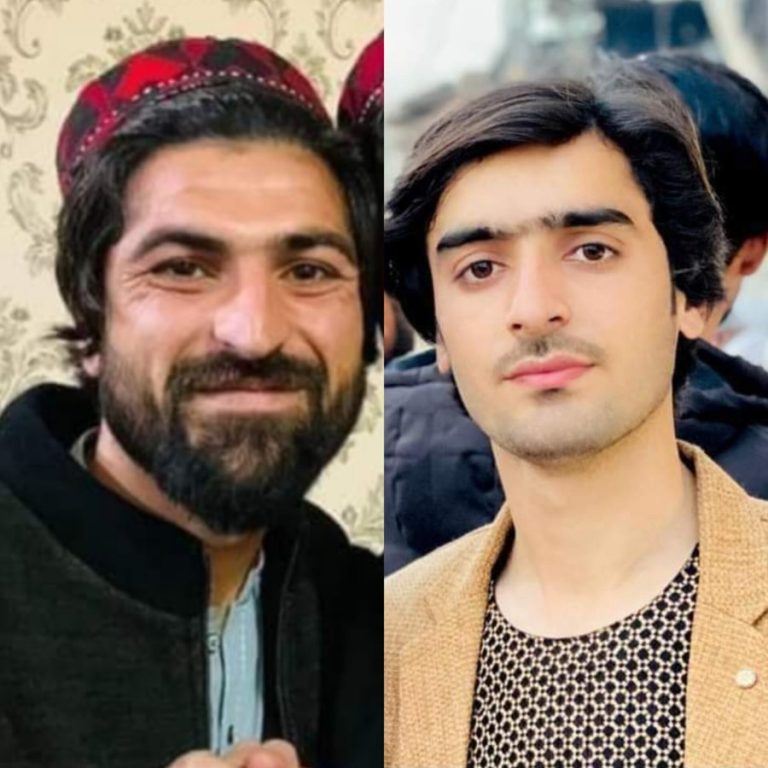
Pakistan Army has once again arrested PTM activists amid the escalating tensions between PTM and the Army over Manzoor Pashteen’s arrest. The recent arrest of Adnan Waziri, a student and PTM activist from Bannu on December 28, has raised serious concerns. In the meantime, another PTM activist Muqib Afridi was also picked up by the Army. Both have been implicated in false FIRs, reflecting a worrying trend of arbitrary arrests by Pakistani totalitarian apparatus.

It is worth mentioning that Adnan Waziri is a PTM worker form North Waziristan while he studies in Peshawar University. After his arrest, he was sent to judicial remand on December 29. On the other hand, Muqib Afridi is PTM’s district coordinator of Khyber district hailing from Bannu town. As of now, his whereabouts still remains unknown.

This development unfolds amidst the ongoing agitation by the Pashtun Tahafuz Movement (PTM) following the illegal arrest of its leader, Manzoor Pashteen. Simultaneously, PTM is actively supporting the Baloch Long March to Islamabad, events that have unsettled the Pakistani establishment.

Pakistan’s apprehension is evident in its arbitrary targeting of PTM activists who possess the potential to challenge the Pakistan Army sponsored persecution.

The arrests of Waziri and Afridi underscore a pattern of suppressing dissent and stifling voices that dare to question the establishment’s policies. This approach not only violates fundamental rights but also expose the undemocratic nature of the de-facto rule of military.

The Pakistan Army’s nervous reaction to these movements signifies its discomfort with dissenting voices and its fear of losing control over the narrative. It’s imperative to recognize and condemn these arbitrary arrests, advocating for the protection of fundamental freedoms and the right to dissent in Pakistan.

Surge in wheat price is a suicidal attack on the impoverished people of POGB: Awami Action Committee

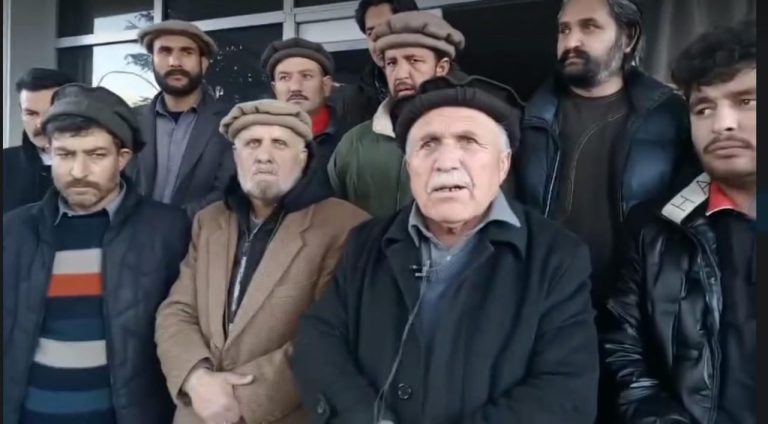
An emergency meeting convened by the Awami Action Committee of Pakistan-occupied Gilgit-Baltistan (POGB), under the leadership of Chief Coordinator Ehsan Ali Advocate, took place in Gilgit. The meeting was attended by members of the committee’s core team and esteemed senior leaders. During the meeting, members of the committee voiced concerns, sorrow, and indignation in response to the occupying government’s notification on the surge in wheat prices. A resolute declaration to launch robust public opposition against the occupying government’s injustice was made.

Furthermore, key leaders issued immediate directives for protest mobilization across all districts and administrative divisions in response to the latest orders of the occupying government.

80% increase in wheat prices in one stroke

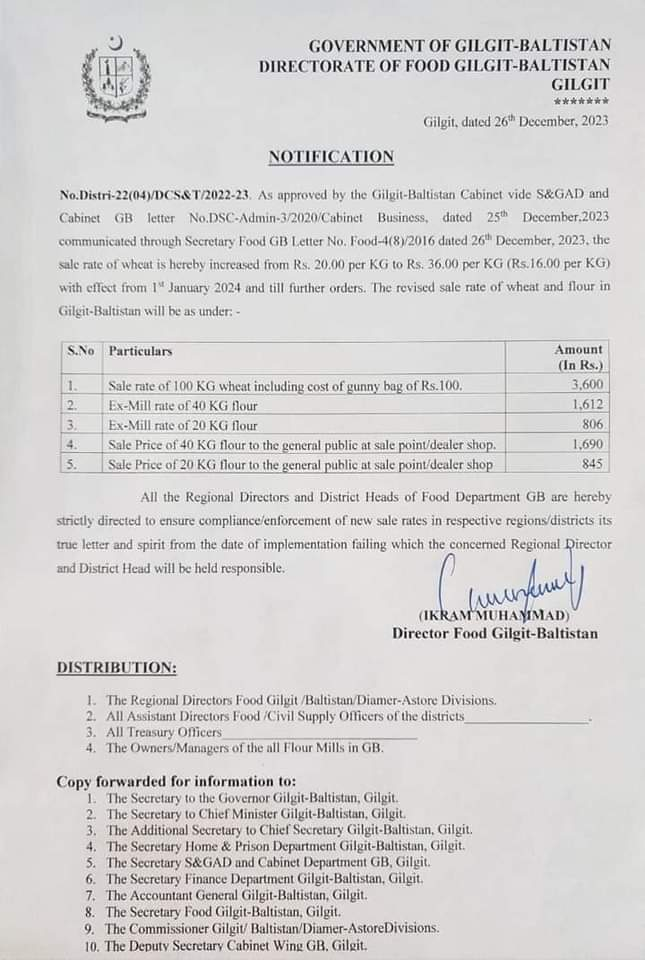
Notably, on December 26, the occupying government issued a notification that increased the wheat prices by Rs. 16. Earlier, the price of wheat was Rs. 20, which is now been increased to Rs. 36, with effect from January 1, 2024. More disturbing is the fact that a one shot heavy surge of 80 % in prices comes at a point when the native Kashmiris are already protesting against the hike for past many months. Therefore, the recent notification echoes the concerns of people in the region that their voice is going unheard on the ears of occupying authoritarian regime.

Copy Of Wheat Price Hike Notification (Photo: News Intervention)

Nevertheless, categorically denouncing the occupying government’s measures as a suicidal attack on the people of Pakistan occupied Gilgit-Baltistan (POGB), the committee urged the public to vehemently oppose this mistreatment, stressing the necessity for public mobilization in defence of their rights. They emphasised that it was incumbent upon the populace to step out of their houses to assert their rights. Failure to do so, they cautioned, would result in the Pakistani establishment exploiting the wheat crisis through the imposition of unjust levels.

The committee is slated to unveil an action plan on December 31, leaving no refuge for ineffectual authorities. Encouraging unity and solidarity, they vowed the people’s unwavering support alongside the Awami Action Committee in their pursuit of justice.

Islamabad Police tries to confiscate Baloch protesters’ speaker

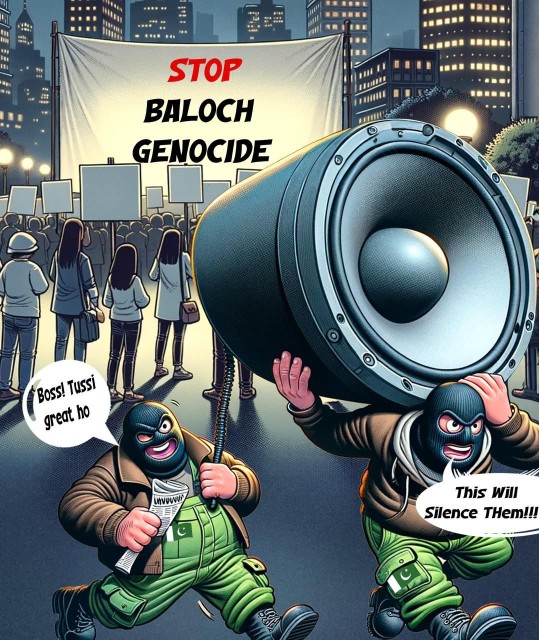
Recently, the Islamabad Police made an attempt to seize the speaker used by Baloch protesters during a seminar at the protest site. The incident unfolded as law enforcement officers sought control over the audio equipment employed by demonstrators to amplify their voices.

Despite police efforts, the Baloch protesters, led by Dr. Mah Rang and others, vehemently resisted the confiscation attempt. In a display of resilience, they successfully prevented the authorities from taking possession of the speaker.

The situation unfolded during a scheduled seminar at the protest site, where police personnel arrived and endeavored to take control of the equipment utilized by demonstrators for communication. Dr. Mah Rang and fellow activists confronted the police, managing to reclaim the speaker in the process.

Video footage shared on various social media platforms captured Dr. Mah Rang addressing the Baloch police, asserting that confiscating the speaker would not silence their voices. She emphasized the significance of the speaker in bringing attention to the grievances of Baloch people, stating that it symbolizes the cries of mothers and the plight of the oppressed.

During the incident, a police officer was reported to have remarked that their presence was merely to observe the situation.

Reacting to the police action, a civilian at the scene questioned the officers, asking, “Who are you to enjoy watching and making such comments? Would you say the same if your children were missing?”

This incident follows a pattern, with Sammi Deen, Vice Chair for Baloch Missing Persons, noting that it’s perplexing how law enforcement consistently takes issue with their sound system. The latest episode saw the police forcefully confiscating the speaker from the ongoing protest camp in Islamabad. The Baloch activists maintain their stance, asserting their right to peaceful expression and highlighting their struggle through various means, including public seminars.

The march began in response to the extrajudicial killing of Balach Mola Bakhsh by the Pak Army, sparking concerns about enforced disappearances and human rights abuses in Pak-occupied-Balochistan

Baloch United Front sets deadline for Pak Army to meet Baloch Long March protesters’ demands

Islamabad : On 28 Dec, leaders of the Baloch United Front (BUF) held a press conference at their protest camp in front of the Press Club in Islamabad. They condemned the Pakistan Army’s use of force against the Baloch Long March, which has been ongoing for the past week. The march began in response to the extrajudicial killing of Balach Mola Bakhsh by the Pak Army.

The BUF leaders said that the Army has used violence, baton charges, water cannons, jail, humiliation, and other means to try to sabotage the march. They pointed to the attacks on Baloch women and children, the arbitrary arrests and enforced disappearances of hundreds of Baloch students and youth who had gathered to welcome the long march participants, and the harassment of women who were sleeping at night.

Baloch United Front Calls

The BUF leaders stated that, when these tactics failed to halt the march, the Army resorted to employing journalists disguised as officials to torment the participants. They mentioned that many of these journalists were dispatched with the intent of crafting a false narrative about the long march participants. Furthermore, the Army exerted pressure on the families of victims of enforced disappearances and other political activists to propagate their narrative, aiming to divert attention from terrorism, murder, and enforced disappearances.

The BUF leaders emphasized that the Army’s sincerity and commitment to negotiations are questionable. On one hand, it claims to be willing to negotiate with the protesters to address the issues, while on the other hand, it persists in arresting, kidnapping, detaining, torturing, and harassing protesters. They highlighted the misleading information presented to the Supreme Court of Pakistan, noting that two days ago, the Islamabad Police falsely reported that all the students had been released.

Protesters Demand Rights

The BUF leaders said that the families of victims of enforced disappearances, people who have been subjected to Army repression, and political activists have come to Islamabad from thousands of miles away in search of justice. However, they stated that the Army’s behavior has been anything but that of an army dealing with its citizens. Instead, it has been the behavior of a master dealing with its slaves.

The BUF leaders stated that they have given the Army a seven-day ultimatum to negotiate on the following demands:

  • A fact-finding mission, led by the United Nations Working Group on Human Rights, should be dispatched to Pak-occupied-Balochistan to investigate human rights violations.
  • A treaty aimed at ending enforced disappearances and extrajudicial killings in Pak-occupied-Balochistan should be signed in the presence of the United Nations Working Group.
  • All Baloch individuals who have been forcibly disappeared, especially those whose families are involved in the protest, should be released immediately.
  • The Counter-Terrorism Department (CTD), the agency responsible for extrajudicial killings in Pak-occupied-Balochistan, should be banned, and death squads operated by the Army should be disbanded. A written statement to this effect should be issued.
  • The Army should acknowledge its involvement in the killing of forcibly disappeared individuals in fake encounters. In this regard, a letter of confession should be issued by the Ministry of Interior, and a press conference should be conducted, including the names of all the victims.
  • Additionally, all fake First Information Reports (FIRs) filed against peaceful protesters should be withdrawn.

Baloch Families Seek Justice

The BUF leaders have stated that if the Army does not engage in serious negotiations on these demands and persists on behaving as it has over the past week, the BUF will express its disappointment to the Army’s institutions and present its case to the Baloch people. The people will then make a decision.

The BUF leaders emphasized that the Army has one week to demonstrate to the Baloch people its sincerity in ending the genocide of the Baloch population. All forms of human rights abuses and illegal actions, including enforced disappearances, extrajudicial killings, and other forms of repression, must be halted immediately. If the Army is unwilling to change its colonial mindset, then the decision will rest with the Baloch people’s court.

Attack on Hindu temple President’s residence rattles community in Canada

The Surrey Royal Canadian Mounted Police (RCMP) is actively investigating an alarming incident after gunfire targeted the residence of a prominent Hindu businessman. The incident, occurring on December 27 at approximately 8:03 a.m. in the 14900 block of 80 Avenue, has raised concerns within the community. According to a statement by Surrey RCMP, the targeted home belongs to the son of Satish Kumar, president of the Lakshmi Narayan Mandir in Surrey. At least 14 rounds were reportedly fired at the house, as confirmed by Kumar.

The motive behind the attack remains unclear, with Kumar stating, “I can’t say whether [the attack] was by Khalistanis or some extortionist. Police is investigating the case.” Previous incidents of alleged targeting of the temple by Khalistani activists were also mentioned by Kumar.

Although no injuries were reported, the house showed damage consistent with bullet holes. Police conducted a thorough investigation at the scene, gathering evidence and seeking potential witnesses or CCTV footage from the area.

The Surrey RCMP General Investigation Unit has taken charge of the case, aiming to determine the motive behind the attack.

Increased vandalism of Hindu temples

This incident adds to the concerns within Hindu communities in Canada, coinciding with increased vandalism and attacks on temples. Community leaders urge law enforcement to treat these incidents as potential hate crimes and calls for enhanced security measures for temples.

Previously in November, Canadian MP Chandra Arya shared a video allegedly depicting pro Khalistani supporters in Surrey, hinting at disruptions at the Hindu Lakshmi Narayan Mandir.

Recent episodes include temple vandalism in Surrey and the defacement of temples in Brampton and the Greater Toronto area with anti-India graffiti. These occurrences align with a surge in pro-Khalistan activities and online rhetoric advocating for a separate Sikh state.

Community leaders emphasize the need for law enforcement to probe these incidents as potential hate crimes and allocate resources for temple security. The Canadian government has denounced the attacks and pledged support for affected communities.

Despite assurances, apprehension lingers within the Hindu community. India has also raised concerns regarding defaced Hindu temples in Canada on multiple occasions.