Home Blog Page 160

Kashmiris understand Pakistan is their real enemy

0

In his 2019 UNGA address, the then Prime Minister of Pakistan Imran Khan had snidely remarked, You think Kashmiris will accept a new status quo under revocation of Article 370” and went on to prognose, “I fear there will be a bloodbath.” While this may appear to be just an innocuous observation, Kashmir watchers would agree that it was a brazen instigation in disguise.

 Coming in the wake of the then Pakistan Army chief Gen Qamar Javed Bajwa’s declaration that “Pakistan army firmly stands by the Kashmiris in their just [sic] struggle to the very end; we are prepared and shall go to any extent to fulfil our obligations in this regard [Emphasis added], Khan’s insidious statement leaves no room for doubt that Pakistan wanted to see Kashmir Valley going up in flames.

However, to the bad luck of the cricketer turned politician, the doomsday scenario that he so confidently predicted never came to pass. And after precautionary restrictions imposed to prevent the pro-Pakistan camp in Kashmir from fomenting unrest were lifted, the situation remained calm and peaceful. This must have come as a big shock to both Khan and Gen Bajwa.

Paradoxically, the only violence that Kashmir Valley experienced after restrictions were lifted was the targeted killing of innocent migrant workers and minority community members by hitherto fore unknown groups like The Resistance Front [TRF], which is nothing but a shadow organisation of Lashkar-e-Taiba [LeT] terrorist group. This was Pakistan Army’s puerile attempt to project that new armed groups opposing Article 370 abrogation had emerged that were creating mayhem in Kashmir.

Having suffered for more than three decades due to cross border terrorism, the people of Kashmir have seen through this sinister plan and realised that Pakistan is more concerned about creating unrest and making their lives miserable solely to create an impression that normalcy continues to elude Kashmir. Thus, the fact that Pakistan is only interested in Kashmir’s real estate and the concern that it exhibits for Kashmiris is a mere farce has yet once again been exposed.

So, while Pakistan’s proxies continue their efforts to create an atmosphere through violence, the proactive actions of security forces and law enforcement agencies to simultaneously take action against the entire terrorist ecosystem has severely restricted the terrorists’ ability to do so. These efforts have yielded positive results thanks to active cooperation from the people of Kashmir Valley who are voluntarily providing information regarding terrorists, their facilitators and sympathisers to the security forces.

While those on the payroll of Pakistan Army’s notorious spy agency Inter Services Intelligence [ISI] continue to parrot Rawalpindi’s secessionist narrative, the public that once responded to All Parties Hurriyat Conference [APHC] protest calls by taking to the streets in great numbers is today much wiser. Consequently, shutdowns and protests have now become a thing of the past and locals today have no apprehensions in reiterating that they are Indians.

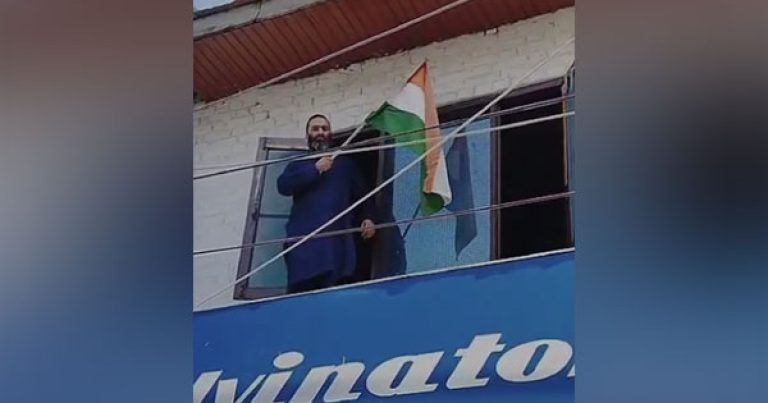
Even the kith and kin of many terrorists have publicly rejected the absurd Pakistan coined slogan “Kashmir banega Pakistan” [Kashmir will become part of Pakistan]. In 2021, Muzaffar Wani, the father of slain Hizbul Mujahideen terrorist and Pakistan’s poster boy Burhan Wani, hoisted the national flag at a school in J&K’s Pulwama district on Independence Day. On India’s Independence Day this year, while Bashir Ahmad, the brother of Hizbul Mujahideen [HM] terrorist Irshad Ahmad raised the Indian tricolour in J&K’s Doda district and announced “Hum Hindustani hain” [We are Indians],

Similarly, in Sopore, Rayees Mattoo, brother of active HM terrorist Javid Mattoo too waved the tricolour and his Twitter post reads “I waved the Tiranga [Tricolour] from my heart. There was no pressure from anyone”[Emphasis added] and ironically includes the quote “Saare jahaan se achha Hindustan humara, hum bulbule hain iske ye gulistan hamara” [our India is best in the world;we are its nightingales and this garden is ours] of Mohammad Iqbal, who is considered the ideological father of Pakistan.

And in what could metaphorically be called a resounding slap on Pakistan’s face, Rayees added, The situation has changed [and] Pakistan can’t do anything…Hum Hindustani theh, hain, aur rahenge.” [We always were, are and will remain Indians].” [Emphasis added].

Just last week, social media was abuzz with a rap song titled ‘Badalta Kashmir’ [changing Kashmir] rendered by a Kashmiri duo-21 year old Rasik Ahmed Sheikh and 14 year old Humaira Jan inspired by ongoing development and improved security situation in Kashmir. The starting line of this viral song goes thus- “Na koi begunah mar raha, khoon na hai beh raha” [No innocent is being killed, there is no bloodshed] and serves as an appropriate obituary for the so called “armed struggle” being sponsored by Pakistan army in J&K!

Tailpiece: More than one and a half decade ago, APHC chairman Mirwaiz Umar Farook admitted that “We have already seen the results of our fight on the political, diplomatic and military fronts which have not achieved anything other than creating more graveyards . . . ” Five years later, HM chief Syed Salahuddin who also heads the ISI created terrorist conglomerate United Jihad Council [UJC] himself exposed Rawalpindi’s dirty game in J&K by admitting that “We are fighting Pakistan’s war in Kashmir” [Emphasis added].

So, with both the UJC chief and APHC chairman admitting that Kashmiris are being used as ‘cannon fodder’ by Rawalpindi, isn’t it obvious that Pakistan is the biggest enemy of the Kashmiri people?

Another Hindu temple desecrated in Pakistan by radical Islamists

Religious hatred against minorities and bigotry runs deep inside Pakistani society. In a latest development, a historic Hindu temple situated in Ahmadpur Sial, Pakistan has been desecrated and converted into a chicken shop. The Sita-Ram temple carried immense historical and cultural significance as it was built over a century ago and served as a place of worship for the Hindus in the region. The architecture, embellished with detailed carvings as well as revered symbols, depicted a narrative of a vibrant cultural heritage that extended beyond religious divides. The conversion of the temple into a chicken shop is not merely an act of vandalism, but a clear attack on religious sentiments of minority Hindus and violation of the right to freedom of religion as it violates the sanctity of the Hindu temple where these things are banned by religious scriptures.

Additionally, the unfortunate conversion of the Sita-Ram temple is not an isolated incident. Reports of Hindu temple being desecrated in Pakistan are more often. The temples are converted into mosque, madrasa and even toilets. These incidents clearly highlight that Islamic Republic of Pakistan is a worst place where a religious minority could survive. Apart from religious persecution, the places of worship and every religious symbol is attacked at the behest of promoting radicalised form of Islam.

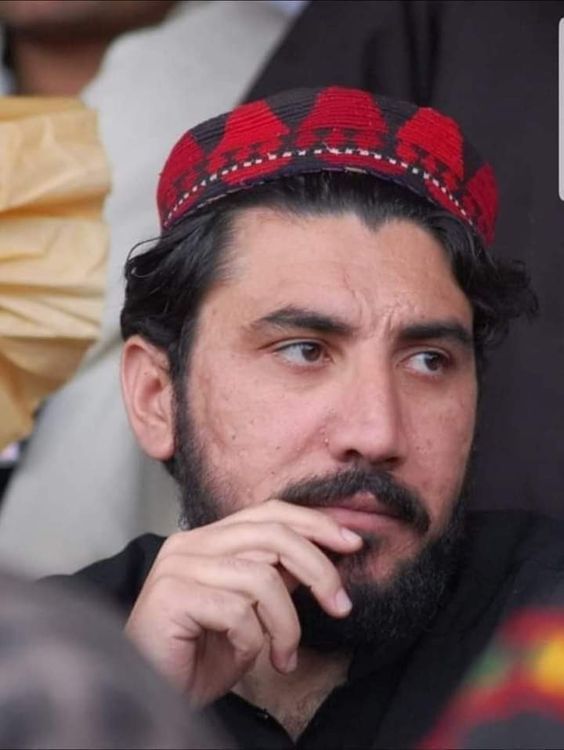
Pashtun Chief Manzoor Pashteen sent to Adiala jail

PTM leader Manzoor Pashteen was sent to judicial remand by An­ti-Terrorism Court Judge Abual Hasnaat Zulqarnain on Thurs­day after completion of his 7-day physical remand. Man­zoor Pashteen was arrested after indiscriminate firing on his convoy on December 5 from Cha­man, Pakistan occupied Balochistan. Later he was taken to Islamabad.

The Police captivated him for three days without any legal representation, mocking the legal rights of a free person. After three days he was presented to the court and sent to 7-day physical remand.

Now that his physical remand is over, Prosecutor Tahir Kazim pleaded in the court for physical remand to recover cell phone of Pashteen and also passwords of his social media accounts. He requested again for physical remand to which the Judge remarked that they have already given 7-day phys­ical remand of the accused . He has been sent to Adiala Jail.

While, he was taken out of the court handcuffed, Pashteen talked to the media and said that the arrest is unconstitutional. On the question of tough investigation, Pashteen said, “If I was put on the atomic bomb, I would stand by my position.”

He also urged his followers and PTM activists to continue the resistance and fight for the rights of Pashtuns.

Tibetan filmmaker exposes Chinese oppression in occupied Tibet

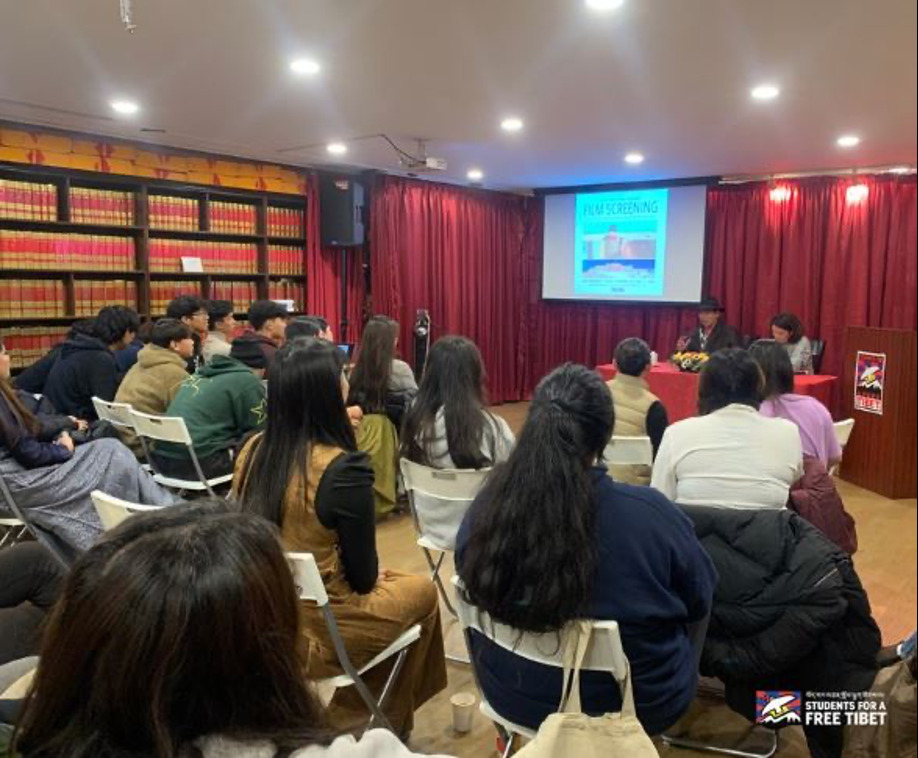
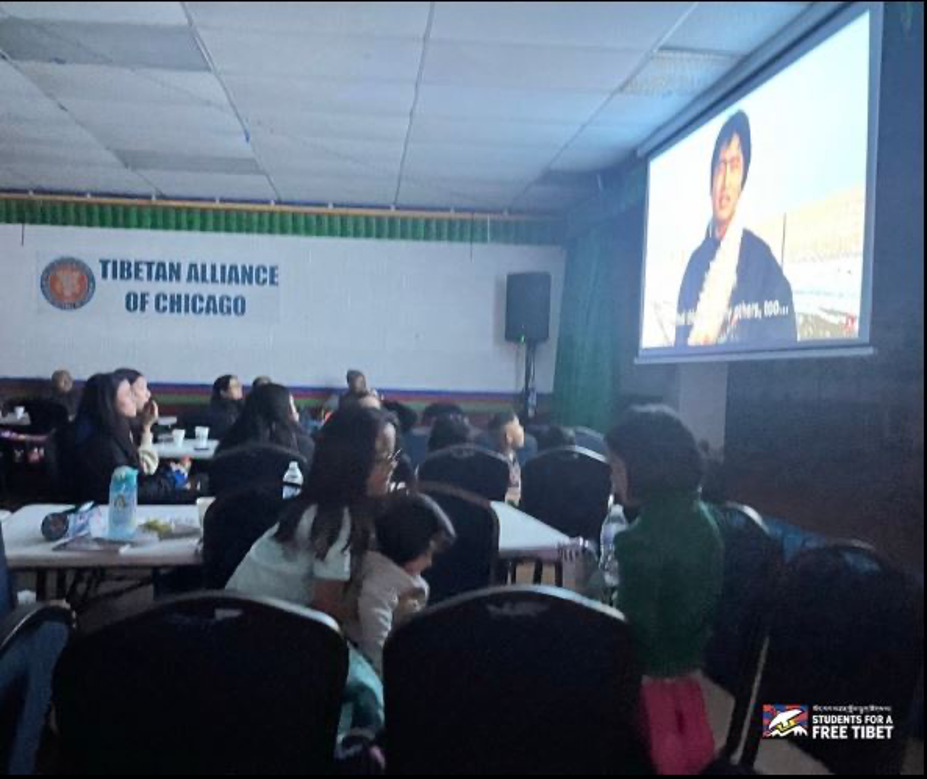
On International Human Rights Day (10 December), Students For a Free Tibet held a screening of the documentary – “Leaving Fear Behind – Risking Everything, Tibetans Inside Tibet Speak Out” – by Tibetan filmmaker Dhondup Wangchen, in his presence. The SFT has been holding many more such screenings over the week in various US states to draw attention to Chinese repression in China-occupied Tibet.

(Image Courtesy – Students For a Free Tibet Facebook page)

Wangchen spent 6 years in Chinese prison under the charges of “state subversion” for documenting the plight of Tibetans on camera and smuggling the footage out of China in the lead-up to the 2008 Beijing Summer Olympics.

After being released from a Chinese prison on 5th June 2014, he was placed under surveillance by the Chinese authorities and was not allowed to travel outside of China to reunite with his family. However, in December 2017, he managed to flee to the US and has since been working to raise awareness about the Tibetan cause and the freedom movement of Tibet.

The screening commemorated the 15th anniversary of the documentary and the ongoing hardships faced by Tibetans inside occupied-Tibet. It was followed by a Q&A session where Wangchen shared his experiences encountered while filming the documentary, the motivation behind risking his family and livelihood to capture the voices of Tibetans inside Tibet, and the need to preserve the Tibetan language to safeguard their identity, which is facing a concerted extermination attempt from the Chinese regime.

Leaving Fear Behind

The 25 minute documentary details the plight of Tibetans, their hopes, aspirations, and fears in the lead-up to the 2008 Beijing Olympics. The solemn background score captures the raw emotions of Tibetans, the extent of Chinese oppression in the region, and their tenacity in the face of unending disdain. 

For five months in 2007-2008, Wangchen travelled through Tibet to document the perspectives of Tibetans on the Beijing Olympics of that year.

It is based on 40 hours of raw footage from 108 interviews conducted in Amdo, a traditional Tibetan province, in 2008, despite significant risks from the Chinese administration. On 10 March 2008, he handed over the tapes to Dechen Pemba, a British citizen in Xi’an, China. On the same day, a violent protest erupted in Tibet’s capital, Lhasa in which 18 people lost their lives and most of them were Han Chinese.

Dhondup Wangchen and Golog Jigme, the Tibetan monk who assisted him in the project, were arrested a few days after finishing their filming. Nonetheless, on the eve of the Beijing Olympics (6 August 2008), the documentary was secretively screened to foreign media in Beijing.

After the film’s release, Dhondup Wangchen received a six-year prison sentence on charges of ‘inciting separatism’. He endured forced manual labor and spent six months in solitary confinement. While his assistant, Jigme fled to India in 2014 and a year later, he was granted political asylum in Switzerland.

Wangchen’s documentary has earned him multiple international accolades, including the 2012 International Press Freedom Award from the Committee to Protect Journalists and the 2014 Václav Havel International Prize for Creative Dissent. It had been screened at various film festivals around the world.

(Image courtesy – Students For a Free Tibet Facebook page)

Major takeaways of the documentary and live event

The major focus of the documentary and the remarks at these recurrent screenings has been on the need for the preservation of the Tibetan language which is the foundational footing to keep the existence of Tibetan culture and mindset alive. However, on several occasions, Wangchen points out that there has been a generational gap and bridge in relaying the Tibetan language and culture to the next generations. 

Regarding this, Wangchen during the session emphasised on the preservation of the Tibetan language as the Chinese govt is on a mission to eradicate the Tibetan language which is to eradicate the Tibetan identity.

He said that “in 1993, young Tibetans despite knowing Chinese [sic] refused to speak Chinese [sic] because that’s the language of colonisers and oppressors”.

Although he never met his mother again and remained away from his kids for a decade and noted that he was almost a stranger to his kids, he stressed that he left India “knowingly” to film this documentary as there were no other options. He added that he was undertaking a huge risk as several uprisings had taken place in China around that time.

“This film is about the plight of the Tibetan people – helpless and frustrated. Therefore I hope that everyone will pay special attention and support it. That’s my biggest hope”.

Meanwhile, despite being given the choice to conceal their identities, the majority of the interviewees opted to come on camera uncloaked and expressed concerns about the Sinicization of Tibetan culture and large-scale Han Chinese migration into the Tibetan region.

It is important to note that Tibetans face persecution for as basic human rights as possessing pictures of the Dalai Lama.

Regarding this, one man in the documentary notes, “We’re not free to possess photos of the Dalai Lama so we have to hide them. If the government finds them they confiscate them. A while ago we were told that these kinds of photos were not allowed so we have to keep them secret. Otherwise, they will be taken away.”

In the documentary, Wangchen explains how the Chinese do the exact opposite of what they preach on the global stage. 

Wangchen notes, “ Nowadays, what China is saying is that they are preserving and improving Tibetan culture and language. That’s what they are telling the world. Many organisations and offices have been set up for these things. What they say and what they do are totally different, opposites. If they really want to preserve and improve Tibetan culture and language, they should withdraw all the Chinese people living in Tibetan areas. Tibetan culture and language have to be practiced in all Tibetan areas. If it’s not practiced, how can it be preserved? It can’t.”

He adds, “The situation in Tibet, instead of improving is getting worse and worse every year.”

However, an old Tibetan man in the documentary encapsulated Tibetan’s apprehensions against the Chinese in the wake of their brutal repression by the Chinese regime. The old man remarked, “I don’t trust the Chinese at all. Not one bit.”

Two successive terrorist attacks rock Khyber-Pakhtunkhwa; 4 dead, 10 injured

In a distressing sequence of events, Khyber-Pakhtunkhwa province has been rocked by a string of terrorist attacks, escalating tensions and leaving a trail of casualties. The latest assaults, occurring within days of each other, have not only claimed the lives of Police personnel but have also heightened concerns about the region’s security and stability.

On Friday, two separate attacks targeted Police in Khyber-Pakhtunkhwa. At the Nala Joint Post, terrorists unleashed a barrage of heavy weapons, including hand grenades, resulting in the death of two police personnel. Seven others sustained injuries in the assault but were swiftly moved to medical facilities, where their condition is reported to be stable.

Simultaneously, another attack in the Tank district claimed the lives of two policemen, while three others sustained injuries. The assailants engaged in a confrontation with the police, leading to the death of one terrorist. As authorities initiate a search operation in the area, a little-known militant group named Ansarul Islam purportedly claimed responsibility for this attack, although the claim’s authenticity remains unverified by the police.

Earlier attack in Khyber-Pakhtunkhwa

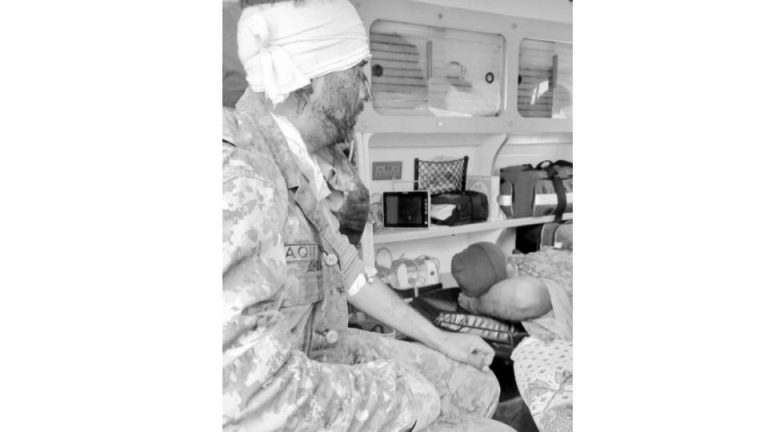
These recent assaults follow closely on the heels of a devastating suicide bombing earlier in the week in Dera Ismail Khan. This attack resulted in the tragic loss of 23 army personnel, marking one of the deadliest strikes against Pakistan military this year. Tehreek-e-Jihad (TJP), affiliated with Tehreek-e-Taliban (TTP), claimed responsibility for this attack, further exacerbating security concerns in the region.

In response to the TJP attack, Pakistan had called upon Afghanistan, specifically summoning the Chargé d’Affaires in Islamabad, to strongly address the matter. Foreign Secretary Syrus Sajjad Qazi emphasized the need for swift action and investigation by the Taliban government in Afghanistan. The Afghan Taliban government, in turn, had promised an inquiry into the attack, urging Pakistan to avoid implicating Kabul for all issues while emphasizing the need for enhanced security measures.

Jamal Baloch exposes the plight of conflict & climate-ravaged Balochistan in COP28

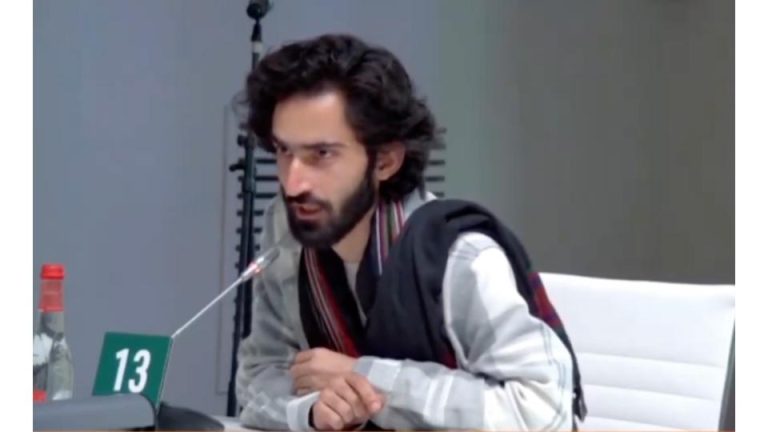
The COP28 climate summit in Dubai has concluded. Some describe it more or less as a failure, but that part is up for another debate. In the midst of all the chaos—counting achievements and failures of the organization—an important voice was missed: Jamal Baloch, the representative of Balochistan. Jamal Baloch voiced his concerns and raised the issue of Pak-occupied Balochistan at the global platform.

Pak-occupied Balochistan is on the frontline of climate disaster. When given the stage, Jamal said a paradoxical proverb of Pak-occupied-Balochistan—rain. He said, “In Balochistan, we have a saying: Rain is what we strive for, and rain is what we are afraid of.” This duality reflects the stark reality. Balochistan desperately needs rain to break the cycle of drought, but heavy rainfall brings devastating floods.

Emergency-like situation

To give you a little context, Muhammad Tahir Khan, a climate change expert, said, “It is an emergency-like situation, worse than any other province due to Balochistan’s geographical situation and huge landmass.” He further added, “Balochistan has been witnessing the effects of climate change since the late 1990s. Now the threat has metastasized, and people are on the receiving end.”

Khan also noted that the threat of climate change in Balochistan has diversified from 2015 to 2018. Pak-occupied-Balochistan is almost half of Pakistan; therefore, it is hugely diversified. The northern part receives heavy snow and torrential rains, whereas the central and eastern regions face flooding over and over again. The remaining Makran and Rakhshan divisions face drought.

As climate change worsens, innocent Baloch residents are migrating. From drought-hit parts, they are compelled to leave for a better place with their livestock. Those who stay behind face a different struggle. They employ other means, such as extracting water from the tube wells using solar power. However, they are unaware of the alarming reality that the water table is depleting due to this extraction.

Role of international community

As if this emergency-like situation was not dire enough, the Pak Army has even failed to employ a proper mechanism. The Army didn’t care in the past, nor does it care now.

When the establishment in power fails to help its people, then comes the role of another stakeholder, the international community. At COP28, Jamal expressed his gratitude to the international community for their support and relief. However, he highlighted the pressing issue of monitoring the funds that are being provided for relief. The Pak “establishment” is not only monitoring the relief aids but also exploiting them.

The dire circumstances and lack of support have left the Baloch people dependent on support of funds. However, this glimmer of hope is also lost when it is being exploited and diverted by the Pak Army for its own vested interest.

Pak Army’s brutal grip 

Since March 1948, the Pak Army has not only forcefully occupied Balochistan but also ruled it with an iron fist. It has inflicted inhumane conditions and torture on Baloch lives. The Army employs its brutal kill-and-dump policy, daily home raids, enforced disappearances, staged encounters, target killings, torture, humiliation at checkpoints, kidnappings for ransom, and uses the CTD & police as tools of oppression.

Even though it feels unreal, the reality of Pak-occupied-Balochistan in 21st century is both shocking and heartbreaking. We need voices like Jamal to speak up against the atrocities of the Pak Army and highlight the concerning issue of human rights violations in Pak-occupied-Balochistan. Jamal Baloch’s voice at COP28 shone a light on the climate crisis’s disproportionate impact on Pak-occupied-Balochistan and the urgent need for international attention to both the environmental and human rights challenges faced by the region.

Tehreek-e-Jihad kills Pak Army soldiers in Dera Ismail Khan, ISPR lies to hide shame

The Attack

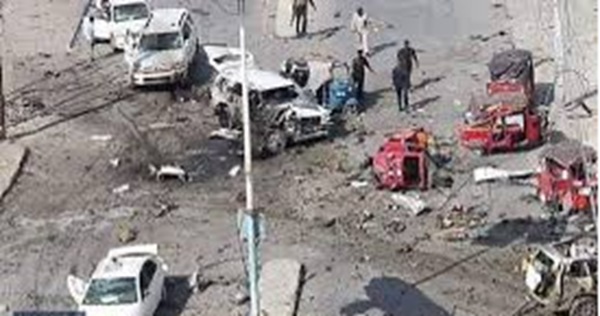
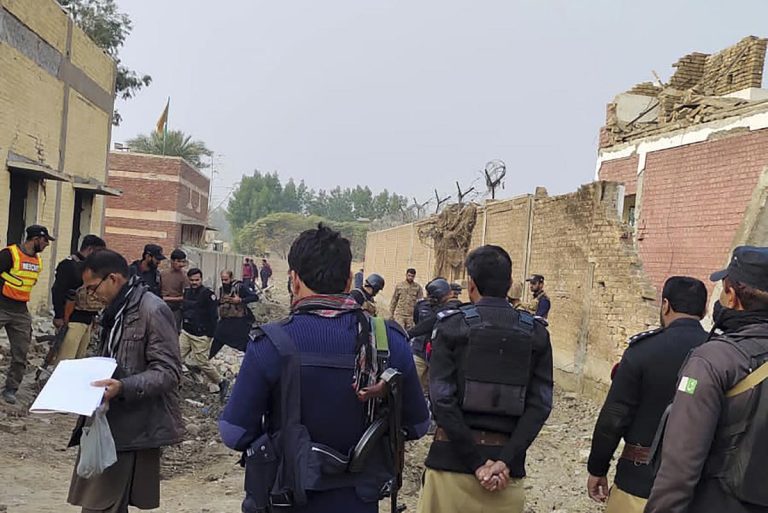
Barely one month after the brazen suicide terrorist attack on the Pakistan Air Force [PAF] air base at Mianwali in which three ‘non-operational’ were damaged, the 10 month old Tehreek-e-Jihad [TJP] has targeted an army ‘base camp’ in the Darban area of Dera Ismail Khan district in Khyber-Paktunkhwa’s [KP] killing 23 Pakistan Army soldiers.

In this horrific incident, TJP reportedly used an explosive laden vehicle alongwith a group of six terrorists, all of whom were [in the words of Pakistan Army’s media wing Inter Services Public Relations [ISPR] were “effectively engaged and sent to Hell.”

ISPR’s Narrative

As per ISPR, a group of six terrorists tried to storm the base camp but “The attempt to enter the post was effectively thwarted, which forced the terrorists to ram an explosive-laden vehicle into the post, followed by a suicide bombing attack.” ISPR’s account goes on to state that “The resulting blasts led to the collapse of the building, causing multiple casualties; 23 brave soldiers embraced ‘Shahadat’ [martyrdom].”

From ISPR’s account one gathers that on not being able to gain entry into the Pakistan Army post, instead of abandoning their attempt, the terrorists’ called their planners for assistance and a vehicle packed with enough explosives to demolish a building reached the spot pronto.

Questions Arise

While there should have been no reasons to doubt ISPR’s account, its narrative raises several questions. Firstly, if the terrorists had an explosive laden vehicle so handy, then why didn’t they use it for this attack in the first place? Secondly, since terrorists engage in ‘hit and run’ attacks, keeping an explosive laden vehicle as ‘backup’ doesn’t make sense.

Lastly, unlike the armed forces and law enforcement agencies which follow a policy of ‘graduated response’, terrorists the world over believe in ensuring ‘overkill’ by applying maximum force ab initio. Hence, ISPR’s claim that terrorists used an explosive-laden vehicle to facilitate entry of the suicide squad into the post when their attempt to do so was “effectively thwarted” isn’t compelling enough.

Damage Assessment

The Express Tribune has posted a 1 min 45 sec long post-attack video of the building purportedly targeted by the explosive laden vehicle [https://tribune.com.pk/story/2449762/at-least-23-soldiers-martyred-in-di-khan-attack-ispr]. In this video a large cavity in the wall and blown out windows is visible which supports the claim of an explosive laden vehicle being used. However, after seeing the video it’s apparent that ISPR’s contention of the building having collapsed due to the blast killing 23 soldiers is completely untrue.

Firstly, in the video it can be clearly seen that except for the damaged windows and a large hole in wall, the building is intact. Secondly, an overhead tank on top of the building that supposedly collapsed is clearly visible and intact- which would not have been the case had the roof collapsed. Lastly, had the roof of the building really collapsed, its interiors would be flushed with sunlight just like its surroundings. However, what one sees through five windows and one large opening are dark interiors which clearly indicate that the roof of this building is intact.

Damage Control?

ISPR has only given information regarding fatal casualties. However, The Express Tribune has quoted a state-run rescue service official named Aizaz Mehmood saying that several people were wounded and in critical condition and this puts a big question mark on ISPR’s pompous “all six terrorists were effectively engaged and sent to hell” claim. So, it’s obvious that ISPR is trying to play down the inordinately high fatalities due to terrorist action by peddling the building collapse story to cover up the reality.

This is not the first time the Pakistan Army’s media wing has been economical with the truth. Just last month it claimed that only “non-operational” aircraft were damaged by TJP terrorists during the Mianwali airbase suicide attack and the security forces suffered no casualties. If true, then this rare occurrence should certainly make it to Ripley’s ‘Believe it or Not’!

Similarly, in February 2022, while ISPR claimed that all Baloch Liberation Army fighters who had forced their way into the Frontier Corps camp in Panjgur had been eliminated, Pakistan’s then Interior Minister Sheikh Rashid admitted on TV that 4-5 attackers were still alive and engaging Pakistani security forces.

And who can ever forget the then ISPR chief Maj Gen Asif Ghafoor claim after the February 27, 2019 air combat that Pakistan had taken two Indian Air Force [IAF] pilots into custody. While Wg Cdr Abhinandan was produced before the media, DG ISPR maintained that the other IAF pilot was undergoing treatment in a Combined Military Hospital, but backtracked within just a few hours.  

Respecting Fallen Soldiers

In combat situations it’s the wish of every soldier that if death comes, it should be from the enemy’s bullet and not due to an accident like his vehicle falling into a gorge or a building or roof falling on him. So, soldiers killed by TJP terrorists being shown as having died as the result of a roof collapse just to downplay the incident and save the Pakistan Army’s top brass from embarrassment, is to say the least, an unpardonable and downright disgusting act.

But for an army that refused to accept the mortal remains of its own soldiers killed in combat during the 1999 Kargil War, disregarding sentiments of the near and dear ones of deceased soldiers is no big deal. Nevertheless, Rawalpindi must not forget that while a soldier’s death in fighting terrorists can conveniently be attributed to roof collapse, truth cannot be buried indefinitely.

Dead soldiers do deserve respect.

Sharda Peeth set for repairs after Amit Shah reiterates ‘PoK Hamara Hai’

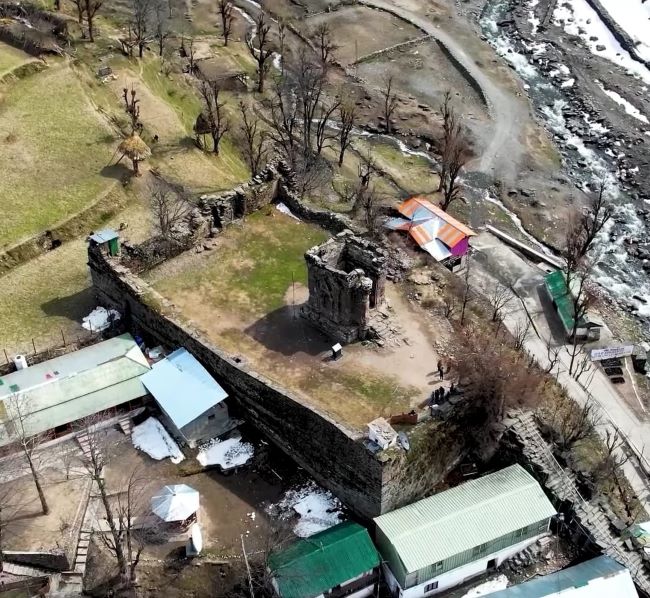
Authorities in Pakistan-Occupied Jammu & Kashmir (PoJK) have initiated the repair of the damaged boundary wall of Sharda Peeth, a day after India’s Home Minister, Amit Shah, emphasized India’s claim over PoJK. The temple, located in the Neelam Valley of PoJK, holds immense historical significance as an ancient seat of learning dedicated to the Hindu goddess of learning, Maa Saraswati.

Sharda Peeth served as a prominent temple university between the 6th and 12th centuries CE. However, recent years have witnessed encroachments on the temple’s land, facilitated by the Pakistan Army, leading to damage of the temple premises. Notably, the boundary wall of the revered site was vandalised and a coffee house was recently constructed by Pakistan Army in the premises.

The Save Sharda Committee, comprising members from both sides of the Line of Control (LoC), has actively advocated for the temple’s protection and the removal of encroachments. According to revenue records, the temple initially possessed 73 kanals of land, but currently only retains 10 kanals, with the rest encroached upon.

Kashmiri Pandits, along with other Kashmiris have long been demanding access to the temple premises to safeguard its sanctity. Home Minister Amit Shah, while addressing the Lok Sabha, reiterated India’s claim over PoJK and announced the reservation of 24 assembly seats for the region, further intensifying discussions surrounding the illegal occupation of Pakistan.

Israel-Hamas war: Israel continues to attack Gaza defying international pressure

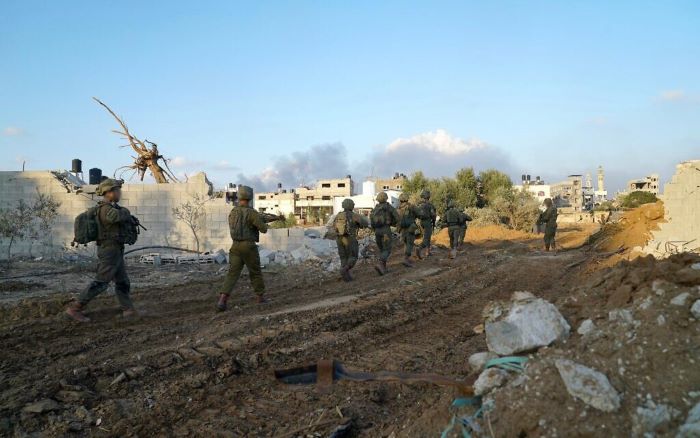
Israel faced its most severe combat losses in over a month on Wednesday, after an ambush in Gaza City’s ruins and faced increased diplomatic isolation as civilian casualties grew, and the humanitarian crisis worsened. Intense fighting persisted in both northern and southern Gaza, following the United Nations’ call for an immediate humanitarian ceasefire. Israel’s global influence is also at stake as U.S. President Joe Biden criticized Israel’s indiscriminate bombing of civilians, noting its negative impact on international support.

Meanwhile, an Israeli minister declared that the war would continue ‘with or without’ international support. Israeli warplanes conducted further bombings across Gaza, aggravating conditions for hundreds of thousands living in makeshift tents amid winter rain. The majority of Gaza’s 2.3 million population has been displaced so far.

Initially receiving global sympathy, Israel launched a campaign to eradicate the Hamas militant group controlling Gaza after an incursion on Oct. 7 which resulted in the deaths of approximately 1,200 Israelis, mostly civilians, and the capture of 240 hostages.

However, since then, Israel has blockaded Gaza and caused extensive destruction. Gaza’s health ministry reported over 18,600 fatalities and 50,600 injuries due to Israeli strikes since Oct. 7, with many more potentially trapped in debris or inaccessible to ambulances.

In Rafah, southern Gaza, where hundreds of thousands sought refuge, a family killed in an overnight airstrike, including several young children, lay covered in blood-soaked shrouds in the rain. One child, the size of a newborn, was wrapped in a pink blanket.

Moreover, Israel’s military continued raids in Jenin, West Bank, for a third consecutive day, which has further complicated situations for Israel at the international level. It resulted in the deaths of 11 civilians and injuring 10. Amidst all of this, pro-Palestinian hackers breached the Israeli army’s website earlier today.

Recent reports suggest that IDF has launched an attack on Hezbollah sites in southern Lebanon that has killed one terrorist. It comes a couple of days after the terrorist group attacked northern Israel with 12 lethal attacks in merely 24 hours. The tense situation underscores that peace is still a long way ahead and the crisis potentially can become protracted.

Baloch Liberation Army attacks Pakistan Army post in occupied Balochistan

In a brave act of defiance, the freedom fighters of Baloch Liberation Army (BLA) launched a targeted assault on a post of Pakistan Army, resulting in the death of three Army personnel. The attack took place in the Sadiq area of Zamaran, where BLA commanders orchestrated a meticulously planned assault on a position held by the Pakistan Army. The fighters used rockets and other heavy weaponry in their offensive, aiming at a strategic post held by the Army in the resource-rich province of Pak-occupied-Balochistan.

As a consequence of the attack, at least three personnel of Pakistan Army lost their lives, and three others sustained injuries. The Baloch Liberation Army, in a statement, acknowledged its involvement in the attack and reiterated its steadfast commitment to its cause. The group expressed its determination to continue its operations until the complete withdrawal of the Pakistan Army from Balochistan is achieved.

Since 27 March 1948, the Pakistan Army has, forcefully occupied the resource rich region Balochistan, oppressing Baloch community through daily home raids, disappearances, staged encounters, target killings, torture, humiliation at checkpoints, and kidnappings for ransom.

The Baloch people have a distinct language and culture, and they have long chafed under Pak “establishment”. The Pakistan Army is targeting and monitoring Baloch people, and anyone who has the potential to raise questions is either killed or abducted. In the face of little willingness from the international community to address the concerns of the Baloch people, the BLA remains resolute and has vowed to continue its fight for independence.