Home Blog Page 164

PTM protests against the arrest of Manzoor Pashteen in Quetta

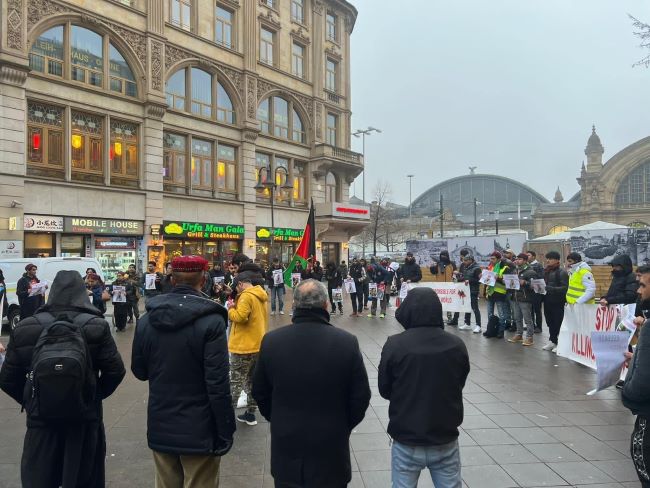
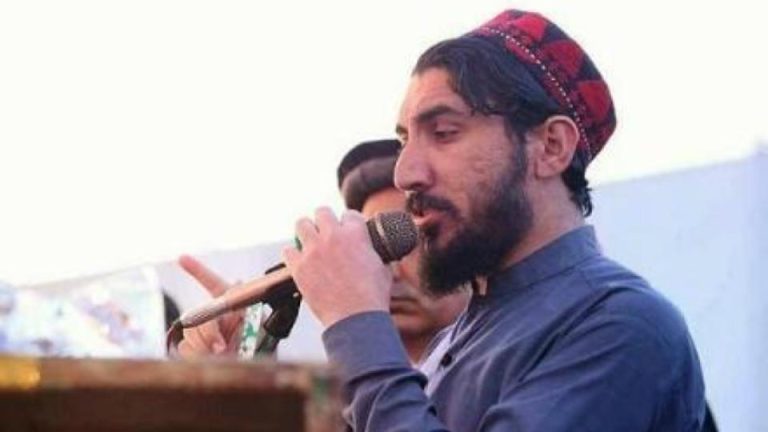
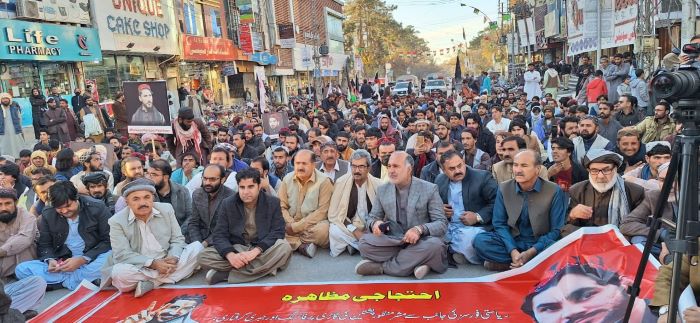
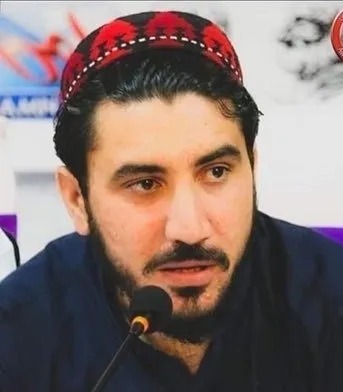
In a gathering at Quetta’s Manan Shaheed Chowk, the Pashtun Tahafuz Movement (PTM), alongside political allies ANP, PNAP, and NDM, voiced strong dissent over the arrest of PTM Chief Manzoor Pashteen. The PTM protest started in reaction to the absolute impunity of Pakistan Army and its puppet security forces. Recently Pakistan Army opened fire at Pashteen’s convoy, leading to his subsequent arrest.

Notably, PTM has been protesting in Chaman against the new rule of mandatory passport for border crossing since 21 October, which has hurt the innocent traders who traded across border and local peoples who have relatives on either side of the border. Meanwhile the tragic demise of four Baloch youth in an extra judicial encounter by the so-called Counter Terrorism Department (CTD), led to a protest in Turbat where huge number of Baloch participated in sit-in.

After extending full support to the Turbat protest from the plank of Chaman protest site, Pashteen announced to visit the Turbat protest in person. While he was on the move, Pakistan Amry opened indiscriminate fire at his convoy. The ambush culminated in the arrest of Manzoor Pashteen. They later took him to Islamabad.

This turn of events has incited heightened resentment among the Pashtun community against the Pakistan Army and its leadership. The arrest of Pashteen has fueled existing grievances, intensifying calls for accountability and fair treatment within the democratic framework.

BNM condemns attack on Pashtun leader Manzoor Pashteen’s convoy

The central spokesperson of the Baloch National Movement (BNM) conveyed congratulations to Manzoor Pashteen, a key figure in the Pashtun Tahafuz Movement, lauding his leadership in championing the rights of the Pashtun community. Emphasizing unity among oppressed communities, the spokesperson highlighted the shared struggles of the Baloch, Pashtun, and other marginalized groups within Pakistan.

In a demonstration of solidarity, the spokesperson emphasized the urgent need for a collective effort grounded in the acknowledgment of their historical and national identities. “The key to dignified lives for oppressed communities lies in a unified stance, mutual acknowledgment of suffering, and collaborative endeavours for justice,” the spokesperson emphasized.

Outlining Pakistan’s constraints on marginalised factions, the spokesperson likened the nation to a confining prison where freedom of movement is severely curtailed. Addressing recent events involving Manzoor Pashteen, the spokesperson condemned the firing at his convoy, signalling Pakistan’s unease toward potential joint resistance from marginalized communities.

The spokesperson shed light on the dominion of the Punjabi Army and the suppression faced by non-Punjabi ethnicities, highlighting restrictions imposed on the development of language and culture. Instances of curtailed academic activities and the forceful cancellation of events portrayed a consistent suppression of voices from marginalized regions.

Expressing profound concern over the recent attack on the Pashtun community, the spokesperson vehemently denounced the actions of the establishment. Reiterating the ongoing challenges faced by Baloch and Pashtun communities, the spokesperson emphasized their shared struggle against the Pakistani establishment’s attempts to erase their national identities.

POJK Council Secretariat employees lock secretariat building,demand salary restoration

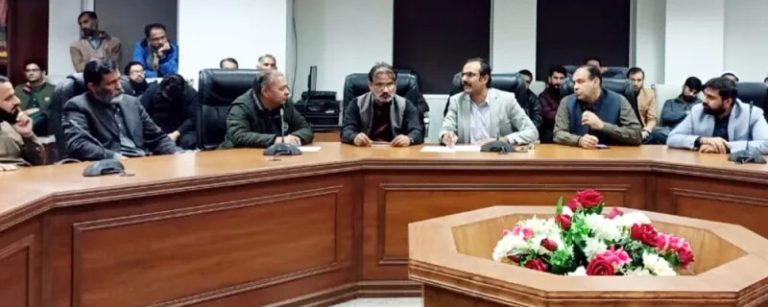
In a resolute display of unity and determination, employees of the Pakistan-occupied Jammu and Kashmir Council Secretariat situated in Islamabad staged a peaceful protest after enduring five months without receiving their salaries. The move, encompassing all employees from Grade 1 to 20, was a poignant plea for the restoration of their overdue payments.

Under the leadership of the Federal Employees Association President, Rahman Ali Bajwa, the employees locked down the Secretariat building, amplifying their demands for immediate action. Their protest, aimed at addressing a singular but critical point – the restoration of their salaries, garnered significant attention.

During the peaceful demonstration, the Secretary Admin and Section Officer General, alongside certain deputation employees, were barred from entering the premises by the participating employees. The collective effort was fueled by the solidarity displayed, with Rahman Ali Bajwa reaffirming unwavering support for their cause.

Unity amidst worsening condition

Expressing solidarity with the aggrieved Pak-occupied Jammu and Kashmir Council employees, Bajwa voiced his commitment to tirelessly advocate for their rights, emphasizing that their struggle resonated deeply with him. His impassioned speech delivered a clear message to both the Pakistani establishment and the POJK occupying government, urging immediate action to restore the withheld salaries of the POJK council employees.

Amidst the protest, distressing news emerged from the household of a senior council employee, where their landlord reportedly evicted their belongings and children onto the streets due to the non-payment of rent. The gravity of the situation took a toll on the employee’s health, necessitating immediate medical attention. In a heartening display of compassion, office employees rallied to support the affected family, providing care for the children while the employee received medical aid at the nearest hospital.

Subsequently, Rahman Ali Bajwa underscored the urgency of the situation, setting a three-day deadline for the restoration of salaries. Should their demands remain unmet, he announced plans to escalate the protest, potentially staging a demonstration in front of the Prime Minister Pakistan Secretariat. The Federal Employees Association pledged full participation in this intensified effort to secure the rights and salaries of the affected employees.

Nevertheless, Kashmiris have always endured persecution by the Pakistani establishment. The conditioned has only worsened with passing time. As of now, the basic amenities are being snatched from them. And any one related to POJK is being targeted. Few days ago, the staff of Muzaffarabad University carried out a protest rally for pending salary increment and now the council secretariat staff is protesting. This shows that Pakistani establishment is only working to somehow create tensions related to POJK.

IED blast in Peshawar injures 7, including children

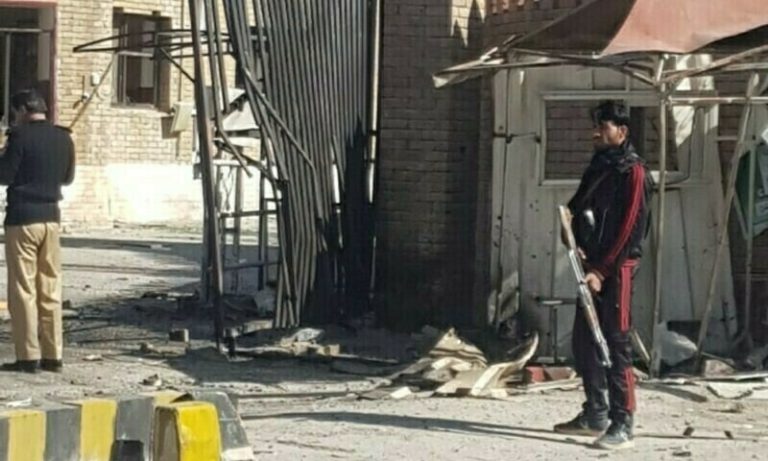
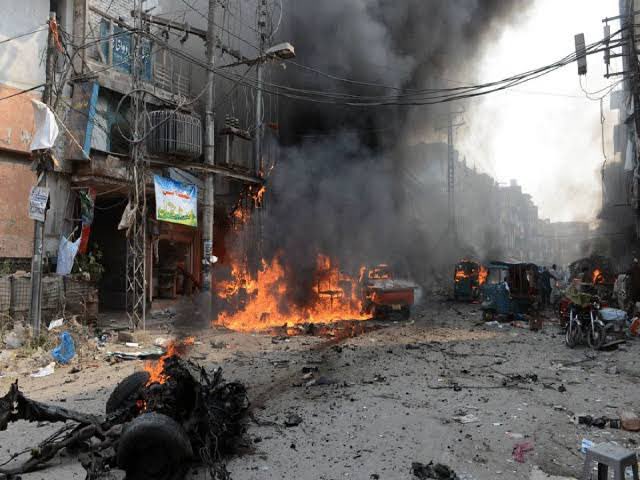
In a devastating incident an IED blast in Peshawar injured 7 individuals, including 3 children. The blast took place at Warsak Road this morning. According to reports, the blast occurred close to Peshawar Public School around 9:10 am.

Warsak Superintendent of Police Arshad Khan revealed that the explosive, weighing four kilograms and concealed within a cemented block at the roadside, caused the destructive explosion. Disturbingly, those injured in the blast are reported to be between the ages of 11 and 23, none of them wearing school uniforms.

Law enforcement promptly cordoned off the area, initiating a thorough investigation into the alarming IED blast. Updates on this developing story will follow as the investigation progresses. As of now, no terrorist organisation has taken responsibility of attack neither it is clear who the target was.

Home Minister Amit Shah proposes amendments to J&K Reservation and Reorganisation Acts

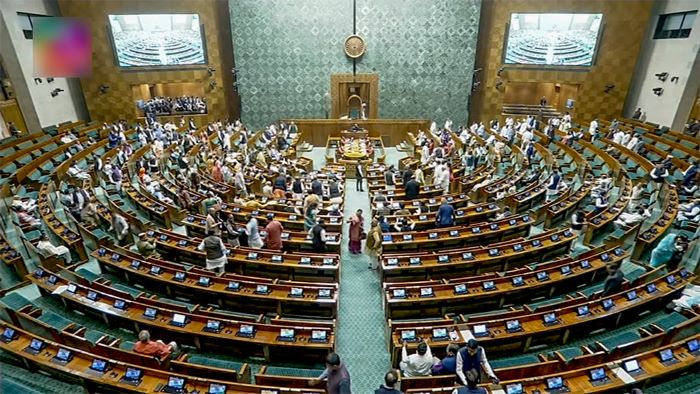
In a significant development, Home Minister Amit Shah has presented a bill in the Lok Sabha seeking amendments to both the Jammu and Kashmir Reservation Act of 2004 and the Jammu and Kashmir Reorganisation Act of 2019, signaling a critical juncture in regional governance and representation.

Jammu and Kashmir Reservation Act: The proposed amendments to the Jammu and Kashmir Reservation Act aim to broaden reservations in government positions and educational institutions. Notably, the bill introduces economic reservations for the economically weaker sections in commercial entities, emphasizing a more inclusive approach.

Reorganization Act: The suggested amendments propose an increase in seats within the Jammu and Kashmir Legislative Assembly from 83 to 90, along with specific allocations for Scheduled Castes and Scheduled Tribes to ensure better representation.

Among the notable highlights of these proposed amendments is the empowerment of the Governor to nominate members from displaced persons of Pakistan-occupied Jammu and Kashmir, emphasizing their inclusion in the Legislative Assembly. Additionally, the bill allows for the nomination of two members, including one woman, from Kashmiri migrants, aiming to safeguard their political and social rights while ensuring their adequate representation.

The term ‘migrant’ aligns with the Jammu and Kashmir Migrant Immovable Property Act of 1997, ensuring a clear and structured selection process.

Crucially, the Reorganization (Amendment) Bill proposes to reserve one-third of the total seats in the Jammu and Kashmir Legislative Assembly for women. The suggested changes are in harmony with the larger movement advocating for women’s representation in legislative bodies, akin to the Constitutional (106th Amendment) Bill, which aims for a 33% reservation for women in both the Lok Sabha and state legislatures.

London: Retired Pakistan Army Major, Adil Raja, taken into custody

Retired Major of Pak Army Adil Raja, a vocal critic of the Pakistan Army and “establishment” on social media, has been arrested in London. The arrest was confirmed by British authorities, but the specific charges remain unclear.

Reportedly, Raja was summoned for questioning by the London police on Monday (4 Dec), and subsequently taken into custody. It is reported that he faces charges of inciting hatred against the Pakistan Army. Raja has been an active critic of the Pakistan Army on social media, frequently sharing content that is considered provocative and anti-establishment. His arrest has sparked concerns about the potential for further legal action against him.

As of now, there has been no official confirmation or denial of the arrest from diplomatic sources of Pakistan, Raja’s lawyer, or his family. Raja’s arrest comes amid a broader crackdown on dissent in Pakistan, where the military wields significant power. In recent years, there has been an increase in cases of journalists, activists, and social media users being arrested and charged with sedition and other offenses.

The arrest of Raja has raised concerns about the freedom of speech and expression in Pakistan, particularly in the realm of social media. Observers fear that this could have a chilling effect on online discourse and further limit the space for open debate and criticism.

This incident adds another layer to the complex dynamics of individuals using social media platforms to express dissent and criticism against their home countries, raising questions about the extent to which such activities can lead to legal consequences on an international scale.

Father of missing Baloch student denies Pak Army’s false report of son’s recovery

In a statement, the father of a missing Baloch student, Farooq Ahmed, denied reports of his son’s recovery. He said that his son was forcibly abducted from the Air University in Rawalpindi on May 11, 2022. After more than one and a half years, there is still no news of his whereabouts.

He said that on November 29, 2023, the Attorney General filed a report in court of the recovery of 22 students, including Farooq Ahmed, who had returned home. This is completely false, he said. He is still missing.

He appealed to the authorities to recover his son, if he is in any institution, and hand him over to him safely and unharmed. If he has committed any crime, he should be presented in court. The mother of Farooq is in a lot of pain.

The father of Farooq Ahmed, Noor Bakhsh, said that his son was a bright student and had no involvement in any political activity. He said that he was abducted by unknown men in plain clothes. He has been searching for his son for over a year and a half, but has not been able to find him.

The father of Farooq Ahmed is not the only one who has been affected by the forced disappearances in Pakistan. There are thousands of families who have been left without their loved ones. The case of Farooq Ahmed is a reminder of the urgency of the issue of forced disappearances in Pakistan. Since 27 March 1948, the Pakistan Army has been oppressing Baloch through daily home raids, disappearances, staged encounters, target killings, torture, humiliation at checkpoints, and kidnappings for ransom. The Pakistan Army is targeting and monitoring Baloch people, and anyone who has the potential to raise questions is either killed or abducted.

Pak Army fires at convoy of PTM Chief Manzoor Pashteen & arrests him

Pakistan Army opened fire on PTM Chief Manzoor Pashteen and subsequently arrested him in Chaman.

Manzoor Pashteen, at the forefront of the fight for Pashtun and Afghan rights,has been attacked by the Frontier Corps of the Pakistan military while en route to join protests in Turbat. Recently, the CTD referred to four innocent Baloch youth as terrorists, reporting their death in an encounter. However, it soon emerged that this information was false and that it was an extrajudicial killing by CTD. These individuals had been in the custody of CTD for weeks, and their killing was merciless. Subsequently, families of the deceased and numerous Baloch people started protesting against CTD. The PTM Chief, supporting these protests, planned to visit Turbat and address the situation.

Reportedly, while en route to Turbat, the Pakistan Army fired indiscriminately on his convoy in Chaman. After the shooting, he has been arrested by the Army. Additionally, PTM is also staging protests at the Chaman border against the mandatory passport ruling for border crossings, which has adversely impacted a large number of Pashtun traders. As of now, PTM has announced that soon the plan of action will be decided by the central committee.

Various regions in Pakistan continue to experience oppression under the authoritarian regime. As a result, people from across these regions are uniting to voice their opposition against the oppressive establishment. In response to this unified resistance, the Pakistan Army is acting nervously. The assault on Manzoor Pashteen underscores Pakistan as a rogue nation that disregards law and order, neglects addressing people’s grievances, and instead, seeks to silence voices of dissent. The legitimate demands of the people are brutally suppressed to maintain absolute control over the populace.

Pakistan CTD arrests Latif Baloch earlier abducted by Pak Army from Sindh

In a disturbing case, Pakistan counter-terrorism forces have arrested a man abducted from Sindh, accusing him of being a member of a separatist group and possessing explosives.

Latif, son of Bacha, a resident of Sibi Lahari in Pak-occupied Balochistan, was taken by Pakistan Army on November 29 from Larkana in Sindh. His family vehemently denies any affiliation with any armed group and claims he was just a laborer seeking work in Sindh.

However, the Counter-Terrorism Department (CTD) paints a different picture. In a statement released today, the CTD claims Latif was a member of the Baloch Republican Guard (BRG), a armed organization known for its actions against the Pakistan Army.

“Latif was apprehended with explosive materials and identified as a BRG member who planned to target prominent figures in Sindh,” the CTD statement declared. This includes politicians, military personnel, and journalists, according to the CTD.

The arrest comes amidst growing anger in Balochistan over forced disappearances. Human rights groups estimate over 2,000 Baloch people are currently missing, allegedly abducted by Pakistani forces. This has fueled protests across the province, with Turbat witnessing its 10th consecutive day of demonstrations against these disappearances and the alleged killing of missing persons in staged encounters.

Islamabad, the Pakistani capital, also hosts a protest camp led by the families of missing persons, including Rashid Hussain Baloch. This camp enters its 6th day today, demanding answers and accountability from the Pakistani government.

Latif’s family remains unconvinced by the CTD’s narrative. They believe this is a fabricated story to silence dissent and justify the ongoing crackdown on Baloch activists. The CTD has faced accusations of framing Baloch activists in the past, further fueling the family’s skepticism.

The case of Latif has become a microcosm of the larger struggle in Balochistan. It highlights the complex interplay between security concerns, separatist movements, and allegations of human rights violations. As tensions escalate, Latif’s fate hangs in the balance, and the future of countless others who remain missing remains shrouded in uncertainty.

Conversion of 400 yrs old Hindu temple into cattle farm in Pakistan

In a disheartening turn of events, a 400-year-old Hindu temple in Ahmedpur Lamma city, Punjab, Pakistan, has been converted into a cattle farm, highlighting the concerning challenges faced by religious minorities in the region.

The ancient temple, shrouded in a history spanning four centuries, has succumbed to neglect and misuse. Currently under the ownership of an individual who is using the sacred space into a cattle farm, the temple’s transformation has left its identity in ambiguity, with no confirmation regarding the deity to whom it was dedicated.

Unraveling the History

The son of the current owner sheds light on the temple’s past and desecration. It was originally constructed by Mohan Bhagat, a wealthy man in the whole city, he owned haveli, extensive land and property.

Mohan Bhagat chose not to leave the temple and his properties during the partition. However, his decision proved fatal as local Islamists killed him and confiscated his entire assets. The temple fell into the hands of the owner’s father, only to face further desecration, eventually leading to its current state of ruins.

Religious Minorities at Risk

Earlier as well, in Ahmed Pur, Pakistan, a temple that once stood with Shri Krishna as deity in sanctum was forcefully converted into a mosque. This significant alteration shed light on the erasure of Hindu identity persisting in Pakistan. And now, the conversion of the 400-year-old Hindu temple to a cattle farm reflects a distressing reality for religious minorities in Pakistan. Beyond the physical transformation, it symbolizes the erosion of cultural heritage and the urgent need for safeguarding religious sites of minority communities.

The story of this temple is a microcosm of the larger story of religious minorities in Pakistan. Hindus, who make up about 2% of the country’s population, have faced discrimination and violence for decades. The recent conversion of the temple into a cattle farm is just one example of the challenges they face.