Home Blog Page 300

Indian Army’s helping hand in Kashmir

The Indian army in Kashmir is only associated with anti-terrorist operations by some people and there’s nothing wrong in this as our soldiers are in the thick of a proxy war unleashed by Pakistan in this region. Even though many are aware of the wide-ranging assistance being provided by the army to empower locals and improve their quality of life under Project Sadbhavna [Goodwill], not many know about the sterling role the Indian army is playing in providing humanitarian assistance at grassroot levels to the needy inhabitants of J&K. This is because of two reasons- one, since they are devoid of sensationalism, such incidents seldom make it to the national news, and second, the Indian army doesn’t quite believe in blowing its own trumpet!

Rescue at 11,000 feet

Last week, a man named Bashir Ahmed, decided to go from Kathua, which is situated in the lower reaches of J&K, to Marwah Valley alongwith his wife and three children. Even though this trek entailed an arduous walk involving an ascent of 11,000 ft while negotiating the Naginsur ridge, he wasn’t perturbed, as being from the bakarwal [nomad] community, he and his family members were quite accustomed to such journeys while grazing sheep. Furthermore, he alongwith his family had walked this route many a times during seasonal migration and since the weather during this time of the year remained clear, there was no reason for him to worry. However, metrological conditions in mountains can be very unpredictable- as the seasoned nomad Ahmed would soon realise!

While this family was enroute, tragedy struck in the form of a freak blizzard accentuated by heavy snowfall. Fearing that they might get trapped and being ill-equipped to protect themselves from high velocity winds and snow, or run the risk of losing life or limb, Ahmed’s friends approached the nearest Indian army post at Chingam for assistance. The thumb rule of rescue operations in snow covered mountainous terrain is to wait for weather conditions to improve so that the rescuers themselves don’t get trapped due to adverse climatic conditions and further complicate the situation. This is all the more necessary when the rescue team has to go into an unfamiliar area and this was true in this case.   

However, since Ahmed family wasn’t carrying sufficient warm clothing to ward off extreme cold or food to sustain themselves, there was no way they could protect themselves from hypothermia [extreme exposure], which could prove fatal. Realising the criticality of the situation, the army post commander decided to take the risk of launching the rescue mission in inclement weather. After a 24 hours grueling trudge in the snow, the rescue patrol succeeded in locating the Ahmed family and provide them with the much-needed medical aid and succor. For Ahmed this was really a blessing in disguise as one of his children had become ill and things would have become serious had the army men not arrived.

Saving a Bear Attack Victim

On 14 May, a group of bakarwals were moving from Kalakote area of Rajouri district to Kupwara in north Kashmir in search of greener pastures. While traversing the densely forested jungles in Poonch district, a wild bear attacked a 19-year-old member of this group named Mohammad Sharif, badly mauling him in the face and head. His hapless associates approached an Indian army post in Poonch district for assistance.

The army immediately rushed out a Quick Reaction Medical Team to attend to and provide medical assistance to the bear attack victim. While this team was able to arrest the flow of blood and provide immediate medication to stabilise the patient, the nature of injuries was serious and required immediate hospitalisation. Realising that he required more advanced medical attention immediately, the army men evacuated Sharif on a stretcher to the Primary Health Centre at Saujiyan, located more than 2 km from the site of the incident. Due to the timely intervention and speedy evacuation of the victim by the army the man was rescued.

Extrication from River in Spate

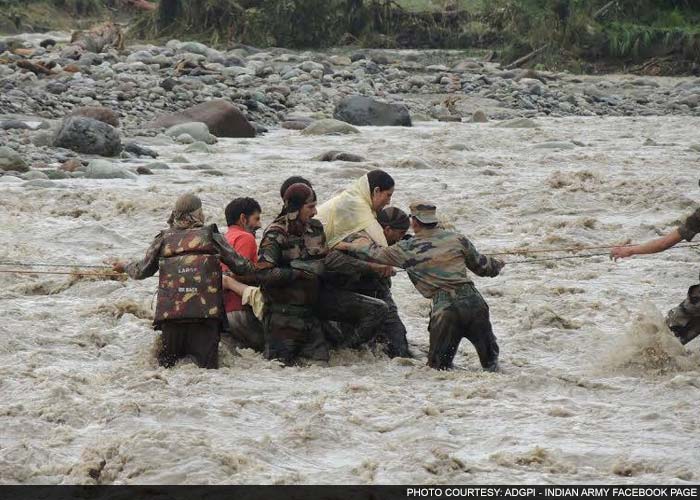
On 18 May, Sajid Ahmad Mir, hailing from Anantnag, and Mushtaq Ahmad, a resident of Ramban, were working on the banks of River Marua near Nawapachi village in Marwah Valley of Kishtwar district when the JCB in which they were seated accidentally plunged into the fast-flowing river. The current was so strong that it even washed away a heavy vehicle like JCB for a distance of half a kilometre. As the JCB got submerged, its trapped occupants were stuck and were in imminent danger of drowning.

Locals approached the army post at Nawapachi, which immediately dispatched a rescue column to rescue the trapped JCB crew. However, there was a problem. The rescue operation entailed securing ropes to the JCB, which would facilitate safe extrication of the stranded duo and to do so, someone would have to enter the river and fix ropes to the JCB. Since the JCB could topple due to the fast current and shifting sand below, time was at a premium and the army men rose to the occasion by plunging into the river and fixing ropes.

After more than an hour and a half of superhuman efforts, the Indian army rescue team succeeded in bringing the trapped men to safety. In this rescue operation, the army was wholeheartedly assisted by J&K police and locals- a wonderful example of the exemplary coordination that exists between the army and police as well as their excellent rapport with civilians.

Demystifying Army’s Extraordinary Outreach

The above-mentioned incidents are but a few of the numerous instances of the Indian army in J&K extending a helping hand to locals even when it is fraught with the risk of bodily harm, and this praiseworthy attribute of remarkable bonhomie merits attention. The first thing that strikes the mind is, what makes the rank and file of the Indian army so forthcoming in helping civilians who are victims of unfortunate accidents? The answer lies in the time honoured army tradition of reaching out to their brethren in need of assistance, even if it involves putting men in uniform in grave danger and one such shining example is that of Col M.N. Rai.

In January 2015, the father and brother of a local terrorist who had been trapped in a house alongwith another terrorist approached and told Col Rai that they would convince him to surrender. Touched by the old man’s appeal and wanting to save the life of a misled youth, Col Rai acceded to this request and went near the house with the father-son duo to convince the trapped terrorist that he would come to no harm if he surrendered. However, instead of surrendering, the holed-up terrorists opened fire which caused the death of Col Rai. Can there be any other parallel of such great concern for a civilian’s life?

So, while All Parties Hurriyat Conference and the pro-Pakistan lobby may try their best to demonise Indian army, the people of J&K are with them- a fact vindicated by timely and specific information being provided by locals regarding the location of terrorists- be it Burhan Wani or Riyaz Naikoo!
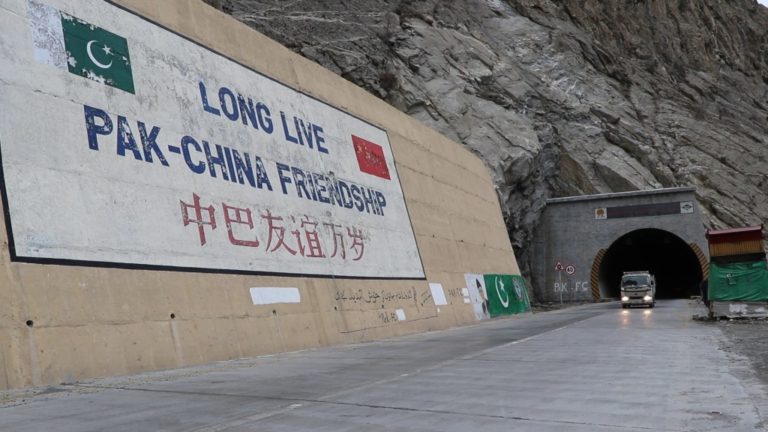
Pakistan’s economic crisis and the future of Sino-Pak relations

The good news is that in its Global Trends 2021 report published every four years, the US National Intelligence Council has assessed that in the next two decades, Pakistan’s gross domestic product [GDP] would jump 17 slots and make it the world’s 23rd largest economy. The bad news is that the way things are panning out doesn’t inspire much confidence that for Pakistan the present or immediate future would be bright. Although, the COVID pandemic has played rogue in Pakistan’s march into progress, but there are many other ‘villains’ that have since long been compounding the country’s economic woes.

Just last month, Special Assistant to Pakistan’s Prime Minister on Power and Petroleum Tabish Gauhar made a startling disclosure regarding the precarious position of the country’s ‘circular debt stock’ [money that government owes to independent power producers [IPP] to meet the shortfall on account of subsidised electric tariff that it provides to consumers]. He revealed that in case no remedial steps were taken, the country’s current circular debt stock, [which currently stands at Rs 2.3 trillion] could double to Rs. 4.6 trillion in just two years.

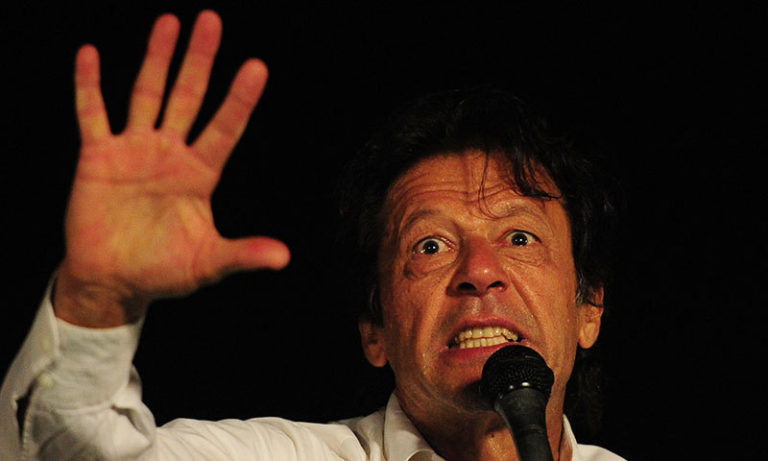
What makes this revelation disquieting is the fact that despite Prime Minister Imran Khan’s repeated claims of having controlled Pakistan’s debt crisis, the circular debt stock [which stood at 1.1 trillion under PML-N government] has more than doubled to 2.3 trillion in just two-and-a-half years of the PTI government’s rule. Moreover, with Pakistan’s Finance Minister Shaukat Tarin’s announcing that International Monetary Fund [IMF] had been informed that Islamabad would not raise tariffs, the circular debt crisis is bound to get even more acute- not a very encouraging proposition as far as making Pakistan the world’s 23rd largest economy is concerned!  

Pakistan’s financial misery can be attributed to two main reasons. One, it has always been heavily dependent on foreign aid and to achieve this it readily became Washington’s frontline state, first, through the cold war, thereafter during Soviet occupation of Afghanistan and after 9/11, by joining America’s war on terror. Plush with foreign aid and with Generals running the country for most of the time, little was done to reinvigorate the country’s sagging economy. The second reason for Pakistan’s financial woes is Rawalpindi’s over-obsession of achieving militarily parity with India, for which the armed forces of Pakistan pocket a lion’s share of the country’s GDP.

Pakistan’s military fixation stood out like a sore thumb even during the outbreak of covid pandemic last year (2020). On the one hand, Prime Minister Imran Khan made passionate appeals to the international community for loan waiver pleading that “We don’t have the money to spend on already  overstretched health services and to stop people from dying of hunger”. Nonetheless, despite humungous financial crisis due to covid pandemic, Islamabad still approved a whopping 11.9 per cent increase in the country’s defence budget. Similarly, even though Pakistan got the benefit from the G-20 Debt Service Suspension Initiative [DSSI] relief, plus a $1.4 billion emergency funding from IMF for fighting the COVID pandemic, it’s vaccination programme ranks amongst the lowest in the region. Yet, despite being unable to find the money to vaccinate its people against the COVID pandemic, Pakistan Army has no qualms in negotiating a 2018 deal worth $1.5 billion for buying 30 attack helicopters from Turkey!

Islamabad has repeatedly been warned by the international community and IMF against taking “excessive loans” from Beijing and resultantly falling into debt trap, but to no avail. Au contraire, Islamabad has gone to the extent of not only taking enormous loans for the China-Pakistan Economic Corridor [CPEC] and Belt and Road Initiative [BRI], but has even borrowed money at undisclosed rates of interest to repay its outstanding loans to Saudi Arabia- a novel [but economically debilitating] strategy that could be aptly phrased as ‘borrowing from Xi Jinping to Pay Mohammed bin Salman! However, latest developments related to financing of Main Line 1[ML1] railway project, which is the largest CPEC project, indicates that Beijing’s unbounded munificence towards its “all weather friend” Islamabad seems to be wearing out.

In December last year, media reports quoted unnamed Pakistani officials saying that in view of the terms and conditions of the G-20 DSSI availed by Pakistan, China was seeking additional guarantees from Islamabad prior to releasing a $6 billion loan for ML-1 railway line project. It was also reported that while Islamabad had requested this loan at concessional rates of interest, Beijing wanted to give it at both concessional and commercial interest rates. However, since Chinese Foreign Ministry spokesman Zhao Lijian not only rejected this claim but even said that Chinese inputs in CPEC had “increased against the odds”, this news soon became a non-issue.

However, just the other day, media was once again abuzz with news of some disagreements on the ML-1 railway project loan issue, and this time the media cited records of a meeting held between Chinese and Pakistani officials and also quoted senior Pakistani officials by name. The Express Tribune mentioned Deputy Chairman Planning Commission Dr Jehanzeb Khan saying that “The Chinese side have sought clarification regarding the possibility of raising further debt by Pakistan during currency of the IMF programme”. A written communication between Beijing and Islamabad purportedly mentions that “The Chinese side expressed concerns about Pakistan’s debts, including IMF’s requirements for the Pakistani government to avail loans and about the impact of restrictions under the G-20 DSSI on the financing of the ML-1 project”.

From information available, the deadlock on financing the ML-1 project appears to be rather serious as Beijing has adopted a not-so-benign stance, such as:

  • Refusal to accept Islamabad’s request for loan as a mix of US dollars as well as RMB [Chinese currency] and instead insisting that the entire loan should be paid in RMB.
  • Not accepting Islamabad’s request for release of entire loan amount at concessional rates.
  • Rejecting Pakistan’s request for scheduling a repayment over 25-years with a 10-year grace period, and instead, insisting on a 15-20-year loan repayment period with a grace period of only five years.

It’s time Prime Minister Imran Khan woke up and smelt the coffee, because while domestic audiences may believe that the miracle called ‘Naya [New] Pakistan’ would happen-but Beijing doesn’t, and for good reasons. Pakistan’s public debt which stood at 72.5 per cent of its GDP when Khan came into office has shot up to a stupendous 87.2 per cent in the last fiscal year, and as mentioned above, the country’s circular debt which was Rs. 1.1 trillion under the previous government, has more than doubled and is touching an astounding Rs. 2.3 trillion. Since Pakistan’s accumulated loans are in far excess of its repayment capacity, it is but natural for Beijing to be fiscally more cautious while committing additional funds on CPEC projects.

Beijing’s hesitation in extending loans to Islamabad is evident from the fact that the ML-1 railway project continues to languish in suspended animation for the last three years- a far cry from Beijing’s recent claim of having speeded up work on CPEC projects. However, the most damning indication of China’s tardiness on financing the ML-1 project comes from the fact that three years after its approval, Beijing has now suddenly realised that extending the $6 billion loan for ML-1 project was difficult as this debt could not be taken on its books due to the decrepit financial condition of Pakistan Railways!

Islamabad has been touting CPEC and BRI as a “game changer” that will permanently end Pakistan’s economic crisis. While financial benefits for Pakistan from these projects are yet to accrue, the CPEC ML-1 railway project has certainly proved to be a ‘game changer’ as it has successfully created perceptible differences between two countries that keep singing paeans about their all-weather friendship that is higher than mountains, deeper than oceans, stronger than steel and sweeter than honey”!

It seems that American writer Patrick James Rothfuss was right when he said, “There are two sure ways to lose a friend, one is to borrow, the other is to lend”.

Tailpiece: Former Pakistan President Ayub Khan gave his autobiography the cryptic title of ‘Friends not Masters’– perhaps to record for posterity, his utter disenchantment on Washington’s ‘betrayal’ in not standing by it’s cold war ally Pakistan during its 1965 conflict with India. However, with Beijing slowly becoming more and more assertive on financial issues concerning CPEC and BRI, could Ayub Khan’s enigmatic phrase regain relevance in Sino-Pak context in the days to come?

India needs to aggressively challenge Pak’s fake propaganda

Pakistan, with its abrasive postures toward all the major crises that the world is grappling with, is walking on a thin line. The country is indulging in negative and unsubstantiated propaganda and taking sides in international conflicts in a manner that gives rise to passions rather than diffusing the situation. It is going against the international thought process in too many such cases. 

India is fighting courageously against an unprecedented spike in COVID and the entire world has come forward in her support, Pakistan however is resorting to divisive innuendoes that can trigger internal unrest in India. “India has failed its people because of five major factors: Poor governance, a disregard of lower classes, a confused and fake leadership, bankruptcy of morality, and hiding of health data. These are covered in detail here,” says Adeela Naureen, a Pakistani journalist in The Express Tribune, while giving a detailed exposition of mismanagement and poor governance. The article does not quote any facts, figures and instances to substantiate the allegations being made.

The narrative that Pakistan is peddling is blatantly propagandist in nature. It is directed towards creating doubts in the minds of the poorer sections of the Indian society with regard to seriousness of the Indian government in looking after their interest. The intention, very obviously, is to instigate the poorer sections of the Muslim population.

The second propaganda offensive of Pakistan is directed towards the state of Israel. While the rest of the world is working 24/7 to bring about a rapprochement and ceasefire, Pakistan is busy spouting anti-Zionist venom. Even as the news of a ceasefire came by, Pakistan continued with calls for Jihad against Israel. In an address to the Pakistan Parliament, Asma Qadeer, a member of the National Assembly of Pakistan claimed that Israel has been ‘torturing women and children’ and in the fight back the first step should be to wage ‘Jihad’ against the Zionists. “Palestine Day” demonstrations have been held across Pakistan and the country’s foreign minister has been accused of “anti-Semitism” during a US television appearance. “The people of Pakistan and the government of Pakistan stand by the people of Palestine and … we strongly condemn Israeli aggression against innocent Palestinians and also the (raiding) of Al-Aqsa Mosque,” said Pakistani Information Minister Fawad Chaudhry. Such statements leave no doubt about the posture adopted by the country.

Internally, Pakistan is going more and more into the hands of fundamentalist organisations like the Tehreek-e-Labbaik Pakistan (TLP) that has been orchestrating massive demonstrations and agitations across the country. It insisted on the expulsion of the French Ambassador, due to the crackdown ordered by the French President on the fundamentalist Muslim organizations in France that are of fomenting terrorist violence. Its posture and demands are causing serious diplomatic fissures between the country and Europe.

The Tehreek-e-Labbaik Pakistan (TLP) has complete support of militant organisations like Lashkar-e-Toiba (LeT), Jaish-e-Mohammad (JeM) and Tehreek-e-Taliban Pakistan (TTP) among others. While maintaining its political mask the TLP is also a feeder of radical volunteers for the militant groups. It has given a new impetus to the militant war lords in Pakistan who are now looking towards seizing complete political power while continuing with the build up of huge and lethal personal armies. It can do so since there is no dearth in Pakistan of weapons and war like stores or of political support to such disruptive activity.

With the Tehreek-e-Labbaik gaining dominance the possibility of Pakistan adopting even more stringent postures on world affairs and especially so against India is becoming more intense. It would be a part of the country’s policy to attain a dominant position in the global Islamic affairs now that many other Muslim countries like Saudi Arabia are veering towards a more moderate stand. It wishes to create strong bonds with the obscurantist Sunni elements worldwide. In the core of this attempt is the aspiration to keep the Kashmir issue alive among more radicalised elements of the Muslim world. In this attempt Pakistan has the complete support of Turkey under its fundamentalist President Recep Tayyip Erdoğan. Its second big ally in this malevolent plan is China that always remains content when Pakistan is brewing trouble across the world over as its proxy.

While veering recklessly on the aforementioned collision course Pakistan seems to be quite oblivious of its tottering economy and the terrible deprivation being faced by its people reeling under unfettered inflation with shortage of just about everything. The country is incapable of running its government if it does not get financial support from a few friends who are also fast decreasing in number. Very soon it will, once again, come under the scrutiny of the Financial Action Task Force (FATF) where it has been on the Grey List for a long time now. With the stringent stands taken in recent times, its downgrading to the “Black List” is very much feasible. This would be the final blow to its tottering economy.

India needs to revisit her policy of dealing with Pakistan. The country cannot be allowed to peddle its falsity that shows India in a bad light internationally. India is recognised as the largest and most vibrant democracies in the world and for it to be denigrated by a failed state is simply not acceptable. Also not acceptable is Pakistan’s attempt to position itself as the world leader of radical Islam since such a position would bring turmoil and insecurity to our very doorstep.

It is time for the Indian Ministry of Foreign Affairs (MEA) to contest not only Pakistan’s incorrect Kashmir narrative but also all other propagandist activities however small and reprehensible they may be. This includes the ongoing propaganda on the COVID situation in India. By maintaining what India looks upon as a dignified silence the neighbouring country is being given a free run for its evil machinations. The world needs to be sensitised about the danger that Pakistan is posing to work peace and security and this duty falls upon India.

Pakistan Army occupies another girls’ school in Kech, occupied Balochistan

Pakistan Army occupied yet another girls’ school and set up new checkpoints to intimidate school children in Kech district of occupied Balochistan. Earlier too, at Kashaap in district Kech the Pakistan Army had seized a girls’ school during the holy month of Ramadan and set up a checkpoint on its roof, which remains a bone of contention among the people of the village.

Local Baloch people said that there is plenty of space for the soldiers of Pakistan Army to stay and yet the Pakistani forces choose to occupy girls’ schools. “This is only school for girls in the whole village which the Pakistan Army has now occupied. We cannot send our children to study in the presence of Pakistani soldiers … we are concerned about the future of our girls in the district,” a local Baloch said.

It should be noted that Pakistan Army has taken over most of the schools in occupied Balochistan and turned them into military camps. In April 2021, Pakistan Army occupied a school and set up eight new outposts within few yards in the confined area. It has also been reported that many schools’ teachers, including girl students, have been sexually abused in occupied Balochistan.

Last year a teacher was sexually abused at a girls’ school in occupied Balochistan’s district Awaran. However, due to media’s apathy most of such cases, which happen almost on a daily basis, go unreported and the world doesn’t know about them. A delegation of the local residents from the area met with Pakistani military officials on the issue and requested them to vacate their checkpoints from the girls’ schools. The military officials flatly denied and lied that they had set up checkposts at the girls’ schools.

A local resident of Kashaap in the Kech district told media on conditions of anonymity that the presence of Pakistani military personnel has adversely affected Baloch people’s social life and the people are now scared. “Military personnel have banned people from leaving their homes at night and have warned the residents that if anyone leaves the house at night without their notice will be responsible for all wrongs with their family.”

April 2021: BLF continues to target Pakistani forces

Balochistan Liberation Front (BLF) activities Published by “Ashoob” from the statements of BLF spokesperson Major Gwahram Baloch issued in Electronic and Print Media.

During the month of April 2021, the Balochistan Liberation Front )BLF) carried out twenty lethal attacks against the Pakistani forces and their facilitators. More than eighteen Pakistani soldiers were killed and dozens were injured. BLF targeted and killed two members of the Pakistan-backed Death Squads. BLF also attacked and set fire to the machinery of a Chinese Telecommunication Company (Zong).

2nd April 2021: BLF fighters fired two BM12 rockets at the new International Airport under construction in the Gurandani area of district ​​Gwadar, Balochistan that landed at the exact construction site. The timing of the attack at six o’clock was chosen because all the workers and security personnel get ready to go back to the quarters together at that time.

The occupying imperialist forces suffered heavy casualties in this attack. These projects are part of the China Pakistan Economic Corridor (CPEC) project. Balochistan Liberation Front (BLF) will continue its operations against such projects that are being carried out without the consent of the Baloch nation.

On 2nd April 2021, the BLF fighters planted a landmine at the Sangar of the occupying army in Toba area of ​​Gichk. This Sangar is used during military patrols. Three Pakistani soldiers were killed after stepping on it.

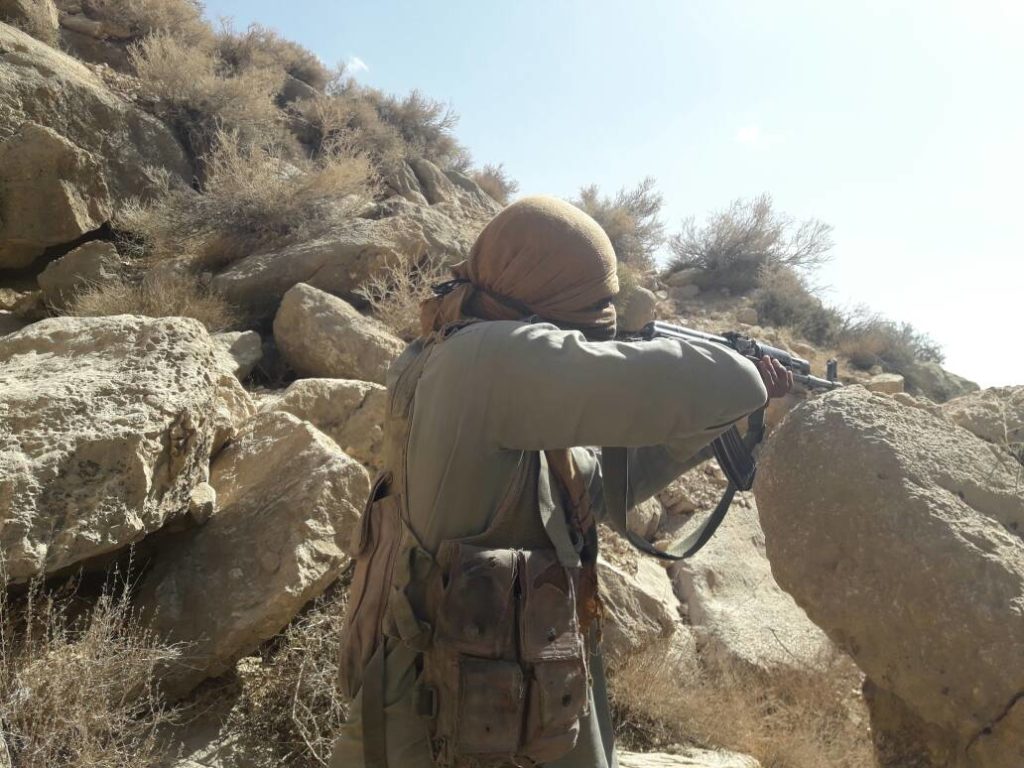
A freedom fighter of the Balochistan Liberation Front (BLF). The BLF strives to free Balochistan from Pakistan's illegal occupation. (Representative Photo: News Intervention)
A freedom fighter of the Balochistan Liberation Front (BLF). The BLF strives to free Balochistan from Pakistan’s illegal occupation. (Representative Photo: News Intervention)

3rd April  2021:BLF fighters targeted the Kharan Levies police station with a grenade. “For a long time, Kharan Levies operatives have been directly involved in operations against Baloch civilians with the Pakistani military. We warn them one last time to refrain from supporting the occupying state army or they will be treated the same way as the occupying army is treated,” said BLF spokesperson Major Gwahram Baloch.

0n 3rd April 2021, a tower of Zong, a Chinese mobile phone company located in Hochat, Dasht area of District Kech, Balochistan, was targeted and set on fire by the BLF sarmachaars (freedom fighters). “Zong and other companies are installing mobile towers to protect the occupying state forces on the CPEC route so that they can succeed in their imperialist plans, but we will never allow the occupying army to succeed in their evil ambitions,” said Major Gwahram Baloch, spokesperson BLF.

11th April 2021: BLF fighters carried out a grenade attack on the hideout of state agent Sameer Sabzal in Turbat area of district Kech, Balochistan. “Sameer Sabzal and his gang members are committing several social crimes under the auspices of the state. But in exchange for working with the occupying state, he has been exempted from all sorts of crimes, including theft and robbery. In many cases, despite solid evidence against Sameer and his accomplices and the seizure of weapons from them, he is acquitted by the courts and released from prison,” said BLF spokesperson.

Sameer Sabzal was also the main accused in the senseless murder of Malik Naz Baloch in Turbat last year and injuring her innocent child Bramsh but due to state patronage he was acquitted in the case.

“Sameer Sabzal and all his associates and supporters are on our target. We can target them at any time. Therefore, we appeal to the Baloch nation to stay away from these elements,” said Major Gwahram Baloch.

14th April 2021:The BLF sarmachaar (freedom fighter) attacked and killed one Pakistani military personnel with a sniper rifle at Atta Muhammad Godh Bazaar in Jhal area of Jahoo, district Awaran, Balochistan.

15th April 2021: After the attack in Jhal Jaho, the occupying army turned towards the mountains in a daze and tried to chase and target the BLF sarmachaars (freedom fighters). Previously positioned BLF fighters ambushed the Pakistan Army. Two motorcycles in the convoy came under heavy attack, thereby killing the two motorcyclists and injuring two others.

On 15th April 2021, BLF sarmachaars (freedom fighters) killed two Pakistani military personnel in a sniper and heavy weapon attack on a newly constructed outpost in Bansar area of ​​Mand, district Kech, Balochistan.

16th April 2021:BLF fighters hurled a hand grenade at a Pakistani military check post at Nazar Chowrangi in Hub city. The grenade fell inside the military check post, killing one Pakistani military personnel.

17th April 2021: BLF sarmchaars (freedom fighters) targeted two Sangars of a military post in Tuba area of district ​​Washuk, Balochistan with rockets and heavy weapons. The attack completely destroyed both Sangars on the hill and killed and injured all the military personnel present.

19th April 2021: Shot and killed Muzammil alias Mazzo at the cricket ground of Kauda Yusuf Bazaar in Absar area of district Kech, Balochistan. Being a state informant, Muzammil was playing a key role in the state-formed local armed Death Squad against the Baloch independence movement. “Along with Pakistani security forces all those who are supporters of the occupying state against the national liberation struggle are on our target. We have continuously been appealing to the people to stay away from the forces and local state agents and we still appeal not to collaborate with Pakistan forces,” said Major Gwahram Baloch.

21st April 2021:The BLF sarmachaar attacked and killed one Pakistani military personnel with a sniper rifle at Shaheed Salim-Koh in Mand area of district Kech, Balochistan.

22nd April 2021:In Balgatar, the BLF sarmchaars (freedom fighters) fired rockets and attacked a Pakistani military post with heavy weapons from two sides. The military post was badly damaged, killing and injuring a number of Pakistani military personnel. It was a new check post that was constructed a month ago where passerby and locals were harassed and humiliated under the guise of search.

25th April 2021: BLF sarmachaars attacked six Pakistani soldiers at Kahir Kaur in Dasht-e-Sindaan area of district Kech, Balochistan as they were leaving their check post and heading towards the river to fetch water. Three of the six soldiers were killed on the spot and the other three fled to the outpost.

26th April 2021: BLF sarmachaars attacked a military post at Gatti Kaur area of Hochat, Dasth, district Kech, Balochistan with snipers and other automatic and heavy weapons. Two Pakistani military personnel were killed and several others were injured in this attack.

27th April 2021: BLF sarmachaars (freedom fighters) hurled a grenade at a military post at Cinema Chowk in Turbat, the capital of district Kech, Balochistan, causing heavy casualties to the Pakistan Army. We once again appeal to the nation to stay away from military posts, camps and military convoys.

28th April 2021: BLF sarmchaar attacked and killed one Pakistani military personnel with a sniper rifle in a Pakistan military check-post in Patuk area of district Kech, Balochistan.

29th April 2021: BLF sarmachaars (freedom fighters) attacked a military post at Braat Kaur area of Tump, district Kech, Balochistan with snipers and other automatic and heavy weapons. Two Pakistani military personnel were killed and several others were injured in the attack.

On 29th April 2021, the BLF freedom fighters hurled a grenade at an occupying Pakistani military post at a hospital in Sangani Sar area of district Kech, Balochistan. The hand grenade fell inside the military checkpoint, killing and wounding personnel inside the checkpoint.

30th April 2021: BLF sarmchaars (freedom fighters) attacked a convoy of occupying Pakistani forces consisting of three motorcycles with rockets, snipers and heavy weapons at Jawan Taak area of Gichk, district ​​Panjgoor, Balochistan. The military vehicle was badly damaged in the attack and all the Pakistani military personnel were killed while the military motorcyclists also came under attack and fled with injuries.

Noor Jan sacrificed his life to avoid his daughter’s humiliation by Pakistan Army: BNM

Pakistan Army is openly playing with the dignity and honor of the Baloch nation, said central spokesperson of Baloch National Movement (BNM) on Friday. “The Pakistan Army had been intervening in every step of life. Now the situation had reached a point where Baloch are left with no choice to even be able to decide the marriage of their children,” said the BNM spokesperson. The BNM’s outburst came in response to the incident at Harooni Dann area of Awaran, where the Pakistan Army had called Noor Jan Baloch to a military camp and threatened him to hand over his daughter to the army. Noor Jan instead committed suicide sacrificing his life for his honor and dignity but did not allow his honor to be violated.

“We salute him for this sacrifice,” said the BNM spokesperson venerating the sacrifice of Noor Jan. BNM explained that Noor Jan’s crime was that he married his daughter to a Baloch activist despite threats of dire consequences. In the eyes of Pakistan, this was an ‘unforgivable crime’. The Pakistan Army detained Noor Jaan along with his son and other close relatives and later transferred them to a military camp. They were brutally tortured. As a result of these tortures, Noor Jan’s kidneys failed. After this inhuman torture the Pakistan Army released Noor Jan Baloch from the camp on the condition that he would present his daughter in the military camp, otherwise he would be once again punished along with his children.

The spokesman said that Noor Jan being a proud Baloch sacrificed his life to avoid the humiliation of bringing his daughter to the occupying army.

“We have no hope from the Pakistani media, civil society and so-called parliamentarians but it is the fundamental duty of every individual of Baloch nation to raise their voice on this tragic incident and prove that Pakistan can take our lives but cannot disgrace and trample our honor and dignity in front of our eyes.”

The spokesperson of Baloch National Movement asserted, “We will strongly resist such acts. The ongoing struggle is for the protection of Baloch people’s honor and dignity, which is possible only in an independent homeland.”

Governor Jagmohan’s letter to VP Singh that was never delivered

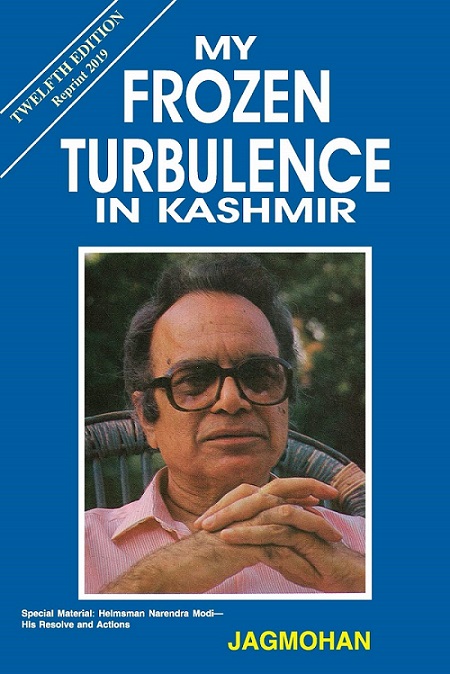
Shri Jagmohan has included the draft of a letter which he had written in his hand to be sent to Prime Minister V P Singh but which was never sent. (The text of this letter is to be found on page 471 of his book My Frozen Turbulence ….) In the endnote to the letter, Shri Jagmohan writes, “I scribbled this letter, late in the evening, in my hand and put it in my briefcase to get it typed the following day by my private secretary. But by the morning, the surging turbulence within me had frozen in my mind. The long walk around the Raj Bhavan garden strengthened the encasing around this turbulence. The cool, crisp and gentle breeze had done the trick. The letter was neither typed nor posted.”

It is not a longish letter, just three small but compact paragraphs. Jagmohan succinctly alludes to certain measure he had taken that gave his administration an upper hand at a crucial time when armed insurgency was climbing to its peak. He was regularly sending the reports of how his administration was establishing control over the situation and elements that were working to frustrate the will of the executive.

Jagmohan’s book “My Frozen Turbulence”

After briefly expressing the course of events, Jagmohan bluntly writes to the PM that inducting George Fernandes as Kashmir Affairs Minister had created a piquant situation because how George began to move and handle the situation on the ground was done at his level without asking for coordination with the Governor’s administration and policy. In the letter, Jagmohan has not described the strange ways of George Fernandes behaviour in Kashmir as Kashmir Affairs Minster but tells the PM “if you think George Fernandes can perform this task better, I would be happy to step down at a few minutes’ notice.”

Concluding his letter Jagmohan writes to the PM: “I mean no offence to anyone. But I would not hesitate to say that the whirlpools of confusion and contradictions that are being created around me and the new fronts that are being opened for me to attend to and the thunderbolts of disinformation that are being regularly hurled through cleverly planned stories and statements in the press would result in the total undoing of what has been done so far after so much of pain, labour and risk.”

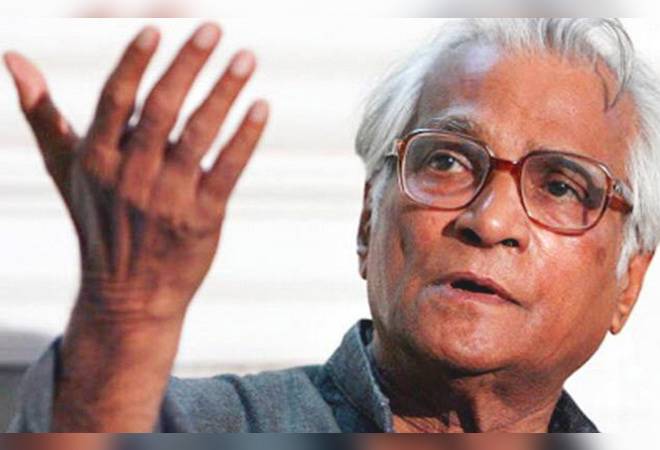
George Fernandes was inducted as the Kashmir Affairs Minister in VP Singh’s cabinet.

The preceding paragraph clearly explains why Jagmohan did not send the letter. He had invested enormous planning, risk and tactical initiative in meeting the grave situation that had arisen and was looking straight into his eyeball. His planning had begun to yield dividends and if he were allowed the freedom of operating according to his plan, the situation in Kashmir would have been arrested from slipping out of hands. He was confident that George Fernandes had no knowledge of the background of the Kashmir uprising nor did he understand the psyche of the Kashmiri leadership. Thus, if allowed to have his way, he would drag Kashmir to the abyss of destruction without the ability to control its downslide. Therefore, responding to his inner voice and the moral responsibility which his official position dictated, he changed his mind and instead of running away from the battlefield as Farooq Abdullah and his Congress coalitionists had done in January 1990, leaving the hapless Pandit minority to the mercy of the hungry wolves, he pursued his mission with reinforced will and determination.

In three preceding pages to the letter in question, Jagmohan has very vividly and pathetically detailed how the Centre was blind and clueless about the ground situation and instead was misguided by a clique with self-aggrandizement. In particular, VP Singh believed that George’s close friendship with Farooq Abdullah could help break the impasse in Kashmir.

VP Singh, former Prime Minister of India

Jagmohan had respect for former PM VP Singh but he laments Singh’s lack of in-depth understanding of the Kashmir issue and its ramifications. He also says that though Mufti Muhammad Sayeed, the then Home Minister, also did not like that Kashmir Affairs Minister was unavoidable to be appointed, but perhaps other forces namely Rajiv Gandhi and Farooq Abdullah were at work. They were engaged in building an edifice of canards and falsehoods to support their policy.

Jagmohan writes that under Article 192 of the Constitution of J&K, the Governor of J&K, when Governor’s rules are promulgated, is completely free to run the administration of the State seeking guidance from none but the President of India. He is neither bound to seek the consent of the PM nor the Home Minister in administering the State. As such the appointment of a Minister of Kashmir Affairs by the Cabinet without the consent or approval of the Governor of J&K (which indirectly meant from the President of India) was constitutionally, morally and administratively untenable.

There are clear hints in these pages which suggest that despite the constitutional flaw in the appointment of George as Kashmir Affairs Minister, Governor Jagmohan, the epitome of power and authority in the State at the point of time was still prepared to cooperate and run the administration efficiently and effectively only if George Fernandes had not behaved in curious and in an undiplomatic manner only to appease Farooq Abdullah and some of his cronies.

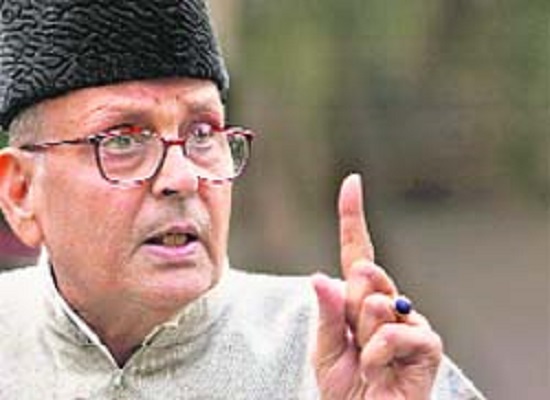
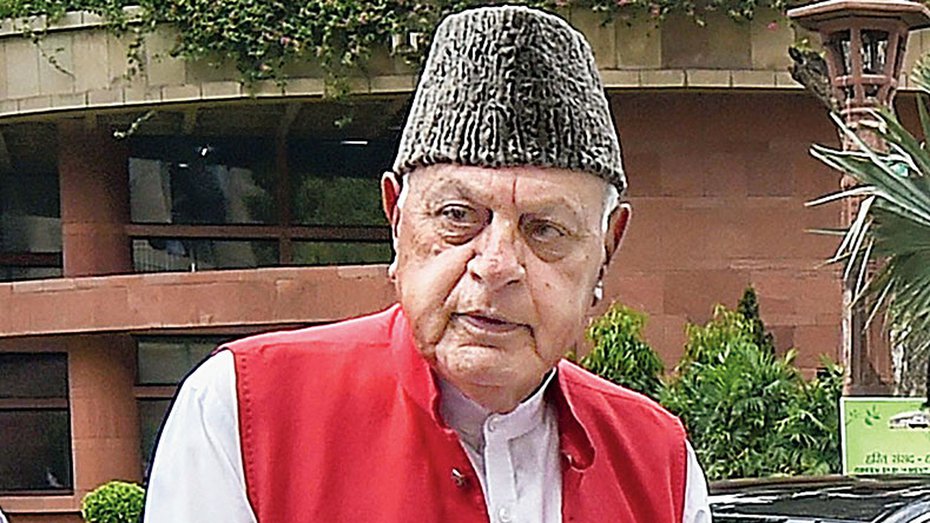
Farooq Abdullah, National Conference President. (Photo: PTI)

Let us now examine how the unsolicited interference and illogical actions of George Fernandes, the newly appointed Kashmir Affairs Minister, put a spike in the effective administration of Governor Jagmohan. What the Union government did was to create a parallel and overlapping organization that was “administratively unsound, legally unsustainable and morally indefensible. Was I needed only for the unpleasant task? Or did the Government have no clear perception of the reality, no idea about its direction or purpose?” writes Jagmohan (p 470).

Contrary to what was stated by the Prime Minister in the Parliament, George Fernandes set up a parallel organization. A whole-time Secretary of Kashmir Affairs, Bhaskar Ghosh, was appointed. Two joint secretaries, Syed Rizvi and B.R. Singh IAS Officers of J&K Cadres, were also appointed. B.R. Singh was believed to be close to Dr Farooq Abdullah. His unusual actions, taken at the behest of the chief minister, were the main causes of the resignation of R.S Chib, a well-meaning minister in Fargo’s cabinet. George created a nucleus of his own in the higher services of the State through Ashok Jaitley, an IAS Officer in who he always evinced keen interest. When George was a minister in the Janata government, he had appointed Jaitely as his Special Assistant and now insisted on me take him as Chief Secretary. But Mufti saved the situation.

The ISI of Pakistan and the local fundamentalists and the fanatics were not playing an ordinary game. They had undertaken a ruthless venture and they had almost succeeded. Their deep penetration into the organs of power structure before January 19, 1990, had given them a sense of confidence and also wherewithal to know who was doing what. The premature political process could do nothing but harm. It allowed the hardcore pro-Pakistan terrorist organizations like Hizbul Mujahidin to eliminate those who could be of real help at the later stage, when the public in general and those occupying the seats of power in the local police and other services, at the operational level in particular, were left in doubt about the complete ascendency of the state ministration and para-military forces.

Jagmohan writes, “How George Fernandes proceeded was still more damaging. He would frequently come to Srinagar without taking me in confidence, talk to a few persons on phone with the help of some BSF or CRP officials, seek interviews with un-responsive elements such as Dr A A Guru, advocate Mian Qoyyum and Jamaat-i-Islami’s Abdul Ghani Bhat, and then go back to New Delhi and clam, through inspired press reports, the success of his mission in establishing contacts. His modus operandi not only resulted in misleading the public opinion at the national level about the nature and efficacy of the so-called political process but also made the pro-Pakistani terrorist organizations extra inquisitive about the persons whom George Fernandes spoke or met. It was his premature action and talk of having established contacts that, in part, was responsible for the assassinations of Mir Mustafa, former MLA and Mirwaiz Maulavi Farooq.” (p 466)

One wonders how George behaved naively in matters of great seriousness at that time. He did not see the contradiction in what he was doing. On the one hand, he was working as a friend of Farooq Abdullah, on the other he was trying to cultivate those elements whose suspicions were aroused by the very mention of the name of Farooq Abdullah. These elements entertained deep suspicions about the attitude of the New Delhi towards Farooq Abdullah. They thought that he would somehow be brought back again as chief minister. Frequent talks about the revival of the State Assembly strengthened their suspicion.

This analysis makes a few things very clear to us. In 1990, when the VP Singh government was in the Centre, there was no clear Kashmir policy of the government nor was any minister aware of the nature and roots of armed insurgency in Kashmir. Cheap political leaders in New Delhi were indulging in cheap politicking of Kashmir issue and all that happened was the minister in charge of Kashmir issue was projecting his achievements which were not only zero in reality but false and fabricated. Whom were they deceiving?

This sordid state of affairs should clear the doubts in the minds of the Kashmir displaced Pandits that anybody cared for them or would care for them in future. The Union government has been treating Kashmir as nothing more and nothing less than a colony and a political platform from where they can build their constituencies.

Our future generations should read Jagmohan’s monumental work My Frozen Turbulence as an eye-opener on the ground situation in Kashmir. After Kalhan Pandit’s Rajatarangini, Jagmohan’s book attains immortality for the Kashmiri Pandits. Those who read it between the lines will never ask the question of whether the Pandits will return to Wahhabized Kashmir.

Who wanted the Narada sting to happen?

A television journalist, whose sting camera videos almost threw the BJP-led NDA government out of power two decades ago, is back in eye-catching headlines, this time his videos triggering a veritable constitutional crisis in politically sensitive West Bengal.

On Monday, May 17, 2021, the CBI arrested Bengal Transport and Housing Minister Firhad Hakim, Bengal Panchayat Minister Subrata Mukherjee, legislator and former minister Madan Mitra and former Kolkata Mayor Sovan Chatterjee. 

Interestingly, the CBI action took place on a day when BJP West Bengal president Dilip Ghosh filed an FIR against CM Mamata Banerjee in a police station in Medinipur. Ghosh blamed Banerjee for instigating communal violence in the state post the recent assembly elections. This reporter has seen a copy of the FIR.

The CBI arrests triggered violence throughout the city, raising two important questions. First, should the country’s premier investigating agency make some arrests in the middle of a pandemic in a case which is almost five years old?

And secondly, and probably more importantly, the arrests brought into limelight the issue of open defiance by a state government of a Central agency. This is not the first time the Bengal CM had rushed in to protest arrests by the CBI, she did it earlier when former Kolkata Police Commissioner Rajeev Kumar was to be questioned in the Saradha Chit Fund scam.

The dustup aside, political cognoscenti felt the arrests could actually be counter productive, both politically and economically, worsening the already frayed political relationship between West Bengal and the Centre. Worse, many felt the timing of the arrests were wrong, especially because India is faced with a pandemic and political parties need to work with each other with both trust and belief. It needs to be mentioned here that Hakim was in charge of the Covid-19 operations in the state.

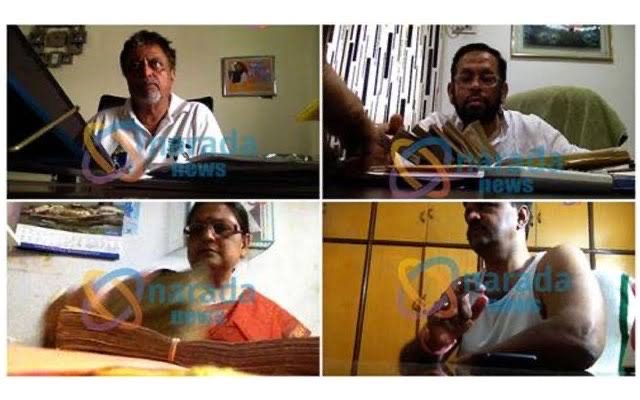
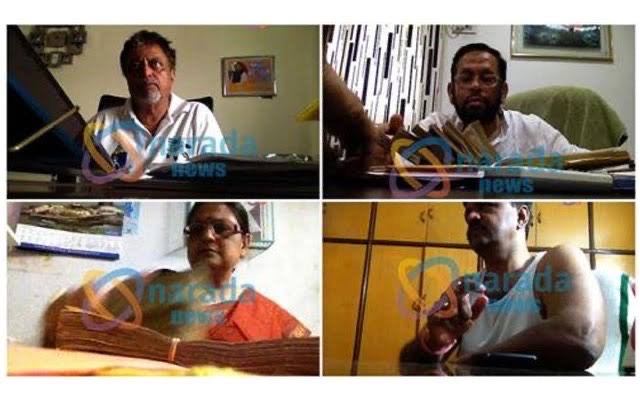
TMC leaders caught on Narada tapes taking cash.

Secondly, the incidents that followed the arrests raised serious issues of law and order in the state where Banerjee demanded immediate release of those arrested. Worse, her riotous supporters turned brutal outside the Nizam Palace and the Raj Bhawan. Bengal law minister Moloy Ghatak and his supporters staged another brute show of force at the CBI court, where the bail petitions of the four arrested Trinamool leaders were heard. 

This was not all. 

Chandrima Bhattacharya, president of the West Bengal Trinamool Mahila Congress asked the Kolkata Police commissioner to take action against the CBI officers and prevent them from arresting the TMC leaders. “I firmly believe PM Narendra Modi and Home Minister Amit Shah are behind the entire show,” Bhattacharya wrote in a letter, a copy of which is with this reporter.

Chandrima Bhattacharya, president of the West Bengal Trinamool Mahila Congress’s letter to Kolkata Police commissioner to take action against the CBI officers and prevent them from arresting the TMC leaders.

Amidst increasing Kolkata-New Delhi tensions, a High Court bench headed by acting Chief Justice Rajesh Bindal and comprising Justice Arijit Banerjee cancelled the bail of the four arrested and sent them to judicial custody solely because of the unlawful actions of Mamata Banerjee and her law minister.

The High Court, in its order cancelling the bail granted to the four, noted the submissions made by Solicitor General of India, Tushar Mehta, that while inside the CBI office, Banerjee demanded the ‘unconditional release’ of the four arrested. The court also took exception to the fact that the law minister, along with TMC supporters and functionaries, mobbed the lower court where the four arrested were to have been produced. The law minister, the High Court, noted, was present in the court till the arguments by the counsels on behalf of the CBI and the arrested were heard.

The Calcutta HC bench, in its order issued late Monday night, noted: “Confidence of the people in the justice system will be eroded in case such types of incidents are allowed to happen in the matters where political leaders are arrested and are to be produced in Court. Public trust and confidence in the judicial system is more important, it being the last resort. They (the public) may have a feeling that it is not the rule of the law which prevails but it is a mob which has an upper hand and especially in a case where it is led by the Chief Minister of the State in the office of the CBI and by the Law Minister of the State in the Court Complex. If the parties to a litigation believe in the rule of law, such a system is not followed.” The High Court also stated in its order that there are sufficient grounds to consider the request of the Solicitor General of India for transferring the trial of the case out of Bengal.

So what triggered the Narada scandal?

It was in 2014 Mathew Samuel, former editor of Tehelka, posed as a businessman keen to invest in West Bengal and offered cash to a handful of Trinamool Congress leaders, some ministers and MPs.  He recorded the meetings in his specially-fitted camera. The tapes were released just before West Bengal went for its assembly elections in 2016. 

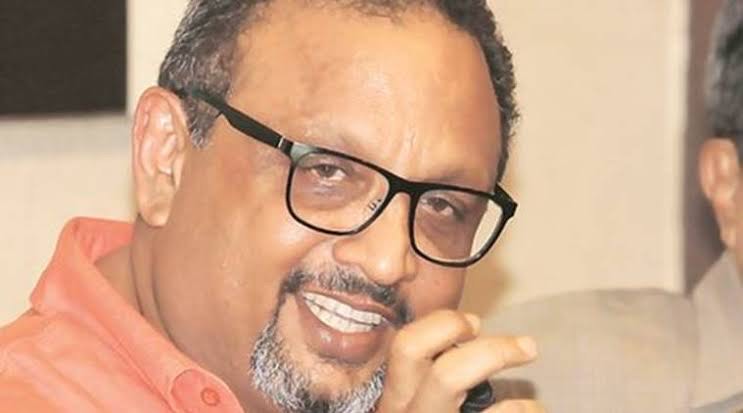
Mathew Samuel, former Tehelka editor, offered cash to select TMC leaders in the Narada sting operation.

Strangely, nothing worthwhile happened after the TMC swept to power. Samuel worked with a Rs 81 lakh budget from Tehelka publisher KD Singh, then a TMC Rajya Sabha MP. Samuel told News Intervention he did the assignment to boost Tehelka’s circulation but had to publish the tapes in a newly created portal, Narada News, because Singh backed out at the last moment. Singh, who was questioned by both CBI and the ED for his alleged involvement in funding the Narada sting operation, had denied he funded the same.

This was not all. Around the time the sting operation hit the headlines, there was a widespread feeling within the TMC that someone from within the party had asked Samuel to do the investigation so that some leaders could be named and shamed. Singh’s proximity with Abhishek is widely known within the TMC. Dinesh Trivedi, then an influential leader of TMC, had urged the CM to investigate the case and put those seen in the tapes named in the tapes away from party work. But the CM did not oblige.

But many in Bengal felt TMC’s morality plank was over with the Narada sting, the sheen lost. Everyone was saying the TMC was just like the one before, the Left Front. Like Saradha and Rose Valley chit fund scams, people remembered the Narada sting. Thousands watched the show on television, wondering there must be more money later and that the first money must be token money. As it was in the Tehelka tapes.

Interestingly, Rashtriya Swayamsevak Sangh (RSS), the powerful think tank of the BJP, has an annual award for journalists titled Narada Samman. The awards are named after Narad, a mythical, god-sage character popular in Hindu traditions as a wandering storyteller who carried news.

Samuel said he did this to highlight corruption and expose corrupt politicians. “I have done my job and have moved on. Kolkata Police interrogated me  (in 2017) for long hours, asked the same set of questions and caused mental harassment. Now I cannot say why the CBI is doing selective arrests.” 

Kolkata Police, for the records, had lodged a case against Samuel for allegedly asking a former Bihar MP to pay Rs 5 crore as bribe. The extortion call, claimed Kolkata Police, was made from a hotel in South Kolkata’s Muchipara neighbourhood.

Samuel said a number of cases were filed against him by Kolkata Police, allegedly at the behest of those people who featured in the sting operation. Samuel was summoned by the CBI more than 40 times to answer questions about the sting and he said he had cooperated with the agency. “Many officers told me it was a politically sensitive case.”

Samuel said he met Suvendu Adhikari in his office and gave him Rs. 5 lakh. Adhikari, who defeated Mamata Banerjee from Nandigram, is the leader of the opposition in the assembly. Samuel said he met Mukul Roy — now with the BJP — who did not accept cash directly but told him to give the cash to Mirza (a suspended IPS officer arrested in the Narada case in 2019). He gave Firhad Hakim, Subrata Mukherjee and Madan Mitra Rs 5 lakh each.

A total of 52 hours of footage was submitted by Samuel to the CBI. Others who featured in the tape included Saugata Roy, Kakoli Ghosh Dastidar, Prasun Banerjee, Iqbal Ahmad and Sultan Ahmad. Another person, Sujay Bhadra, nicknamed Shantu, the then personal assistant of Abhishek Banerjee, MP, and nephew of Mamata Banerjee, was seen in the video with Karan Sharma, a close aide of Abhishek Banerjee and secretary general of TMC Yuva. 

What was strange was that the names of Roy and Adhikari did not appear in the chargesheet or the list of sanctions for prosecution given by the Governor. Roy, who was among the first to switch over from TMC in 2017, and is Accused No.1 in the agency’s FIR.

Dilip Ghosh’s FIR against Mamata Banerjee.

Left Front leader and seasoned lawyer Bikash Ranjan Bhattacharya said the dustup was totally unnecessary because the CBI had taken permission from the state governor and that there was no need to seek a second permission from the Speaker of the assembly. “It was a totally, unwarranted panic reaction, expectedly the mobs emerged from nowhere.”  

Bhattacharya, former Kolkata mayor, said he went to the courts to push for the hearings to take place in the Narada sting. He said convictions in corruption cases have rarely diminished the popularity of politicians in India. “I have my doubts if Mamata Banerjee’s image will be dented because of Narada tapes but there has been a considerable delay in the case.”

Crowds, meanwhile, are swelling outside the Presidency Jail, which once housed Subhas Chandra Bose, India’s most enigmatic nationalist hero, and is now home for the politicians arrested by the CBI. Among the crowds is Baishaki Banerjee, Sovon’s long time partner and friend. Every now and then, she is breaking down into a paroxysm of sobbing. Sometimes, she gets up and touches the walls of the imposing prison.

Probably she wants to send good vibes to her friend, Kolkata’s former mayor Sovon Chatterjee, who is lodged in a cell inside the 18th century prison.

The Narada sting case is going to be a long drawn affair.

Pashtunistan and the cunning games of Pakistan Army

The Pashtun nation (Pashtunistan) is now raising its voice for national identity after a long break of silence and state’s religious oppression. Obviously, this is not easy because Pashtuns have so far been the billy goat in the name of religion. In 2018, in the Sindh province of Pakistan, Pashtun youth Naqibullah Masood was targeted by Pakistani police in a fake encounter.

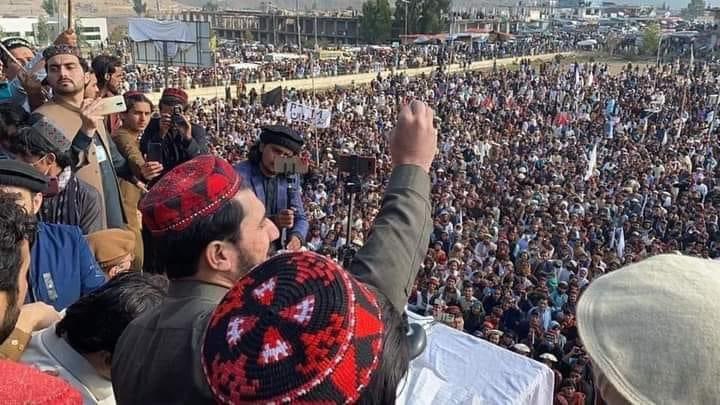
The Pashtun Tahafuz Movement (PTM) came to the public at the national level and the Pashtun nation found a platform against state repression and it’s fake encounters. The issue of “missing persons” was raised and a new spirit blew in the Pashtun nation leading to their demands that landmines laid by Pakistan Army and Taliban be cleared immediately and the duplicitous policy of good and bad Taliban must be stopped. Pashtuns demanded the withdrawal of Pakistan Army and Taliban from Pashtun areas and asked that useless check posts should be abolished.

Today Pashtun nationalists want the same status from Pakistan that a dominant ethnic group in Punjabis have it, but as usual it is not approved by the military establishment for the Pashtunistan in any way. The barbarism continues every day across Pashtunistan and Rawalpindi’s military establishment tries to temporarily silence Pashtuns in the name of committees and negotiations. But it’s no longer so easy to fool the Pashtun people in the era of modern technology and social media.

Pashtun Tahafuz Movement (PTM)
The two PTM leaders, Ali Wazir and Mohsin Dawar are members of Pakistan’s largest Constituent Assembly– the National Assembly. They are elected by a large number of people of Pashtunistan. Yet, Ali Wazir is in the lockup for speaking out against Pakistani intelligence agency the ISI and fake cases have been lodged against him. Mohsin Dawar, also a member of the National Assembly, has been arrested several times. Several attempts to assassinate Pashtun leader and PTM founder Manzoor Pashteen have been made by Rawalpindi.

Pashtunistan is still struggling for its universal and human rights today. The evil Pakistan Army is once again organizing its puppet Taliban in Waziristan so that the Pashtuns are killed in the name of Islamic extremism and the uniformed men of Pakistan Army are able to make money by playing with the lives of Pashtun youth in Waziristan.

Today, the Pashtun movement is expanding for the first time such that Pashtunistan’s mutual relations have been established with the Pashtuns in Afghanistan and they have recognized their common enemy, which is certainly a good omen for the Pashtuns. On March 20, bullet ridden bodies of four Pashtun youth aged between 13 to 17 years were found behind the Pakistan Army camp. According to local sources the Pakistani soldiers had sexually abused these four Pashtun children in their camps and eventually killed them and dumped their bodies. Pashtuns protested against this fascism and demanded justice but the infamous ISI then played the game in the name of so-called committee and inquiry.

In April, two mutilated bodies were again found in Waziristan near the military cantonment. Pashtunistan is aware of its enemy. However, the Pashtun leaders do not seem to be in a position to take the path of resistance like Baloch resistance. The PTM leaders, demanded an FIR against Wing Commander Colonel Raheel Hussain, Captain Bilal, the provincial Major Ghani Khattak, and yet the Pakistani establishment couldn’t file an FIR against its own uniformed terrorists the Pakistan military personnel.

Similarly, on April 26, Pakistani security personnel opened fire on a shop in South Waziristan killing two young men and injuring one PTM member. Pashtuns staged a fierce protest against this terrorism and brutal violence they face at the hands of Pakistani forces.

These so-called ‘incidents’ of state repression against the Pashtun nation have not diminished. Whenever people protest against state atrocities, they are targeted in some way. During 2019, the security personnel opened fire in northern Waziristan peace demonstrations that killed 13 people and injured more than 30 people. This incident is still fresh in the minds of Pashtunistan and hatred has increased dramatically since this state invasion.

In the current era, Pakistani intelligence agency ISI is once again organizing the Taliban to crush Pashtun nationalism in Waziristan. According to reports from Waziristan, the Pakistan Army in South Waziristan has given the Taliban a place in their cantonment and reorganized regular Taliban patrol markets, including weapons.

Pashtun youth are also running a campaign on social media to bring Pakistan to justice against the organized genocide across Pashtunistan and put pressure on Pakistan to stop the Pashtun genocide. The Pakistani military and the ISI have pursued a policy of maintaining and spreading unrest in the Pashtun tribal areas so that they can use Islamic extremist ideologies on the hapless Pashtuns and turn them into suicide machines.

Pashtun nation (Pashtunistan) have been used as a weapon of Pakistani proxy war, it has always been used by the (ISI) and the Pakistani military as an important tool of Islamic extremism. Only time will be able to answer the question of how they can counter Pakistan’s dangerous policy of destroying Pashtunistan and save the future of their future generations.

(Urdu to English translation: Gafoor Ahmed)

Pak Army the ‘Biggest Land Grabber’ of Pakistan

Pakistan Army’s insatiable hunger for land is no secret. Au contraire, it’s so pronounced that it even found prominence during the 2007 lawyers’ protest against Gen Pervez Musharraf’s decision to remove Chief Justice Iftikhar Muhammad Chaudhry, when protesters carried banners proclaiming Ae watan ke sajeele Genrailo; saaray ruqbey tumhare liye hain’ [O’ handsome Generals of the country, all plots of land are just for you].” Nine years later, in an article titled article Lust for Land’ [published in ‘Dawn’, on 27 August 2016], former civil servant and respected freelance Pakistani columnist Irfan Husain lamented how “The military has long been expanding its footprint across Pakistan’s cities through its multiplying defence societies.”

There’s nothing wrong in armed forces creating ‘defence housing societies’ [DHA] for welfare of its rank and file. However, Husain’s damning revelation that “Land is acquired [by DHAs] at nominal rates from provincial governments, and developed with money taken as advance payments for residential and commercial plots from officers,” is disquieting. However, even more disparaging is his assertion that “Allotment letters are then sold to civilians at several multiples of the price they paid,” as it’s undoubtedly a brazen misuse of privilege by Pakistan army. The fact that army’s media wing Inter Services Public Relations [ISPR] didn’t rebut these pejorative accusations proves that Husain obviously knew his beans!

In another comprehensive news-report [‘Qayyumabad’s long battle against DHA,’ published in ‘Dawn’ on 22 August 2016], Fahim Zaman and Naziha Syed Ali have revealed that “Through the years, the residents of Qayyumabad have consistently maintained that DHA has unlawfully grabbed 53.22 acres that are part of their locality, including 30.32 acres earmarked as amenity areas to serve their needs. However, their negligible political and financial clout puts them at a huge disadvantage in trying to establish their claim.” The authors have rightly pointed out that locals “are, after all, up against DHA, the country’s most powerful land authority that provides real estate windfalls to the men in uniform while catering to the residential and commercial aspirations of the super-rich.”

In her well researched book ‘Military Inc: Inside Pakistan’s Military Economy’, leading defence analyst Ms Ayesha Siddiqa also provides an insight into Rawalpindi’s humungous greed for land. She reveals that Pakistan Army possesses 12% of the country’s land, out of which two-thirds are owned by senior military officers. So, while there was a furore when news of outgoing Pakistan Army chief Gen Raheel Sharif being gifted 90 acres of land leaked out, yet this long continuing illegal practice wasn’t rescinded- a clear proof that in Pakistan, the armed forces are law unto themselves!

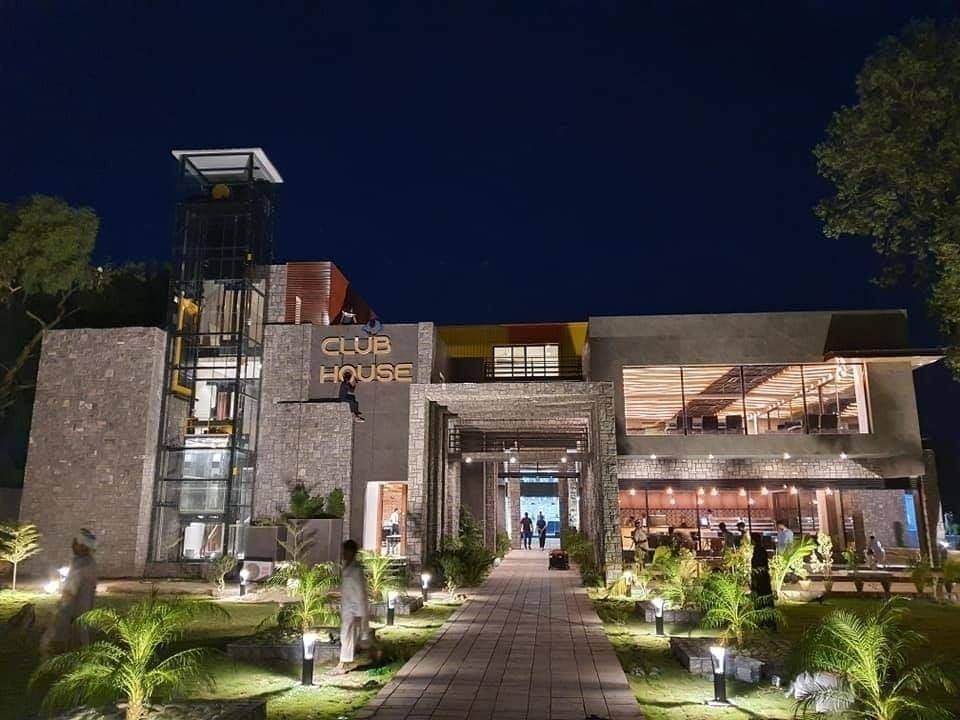
Two years later, in another scathing attack on Pakistan Army’s monstrous greed for land, Supreme Court Judge Justice Gulzar Ahmed observed that “DHA of Karachi have encroached so far into the sea. If they had their way, they would build a city on the sea. The owners of DHA [Pakistan army] would encroach on the entire sea all the way to America and then plant their flags there. The owners of DHA are wondering how they can make inroads into India!”  The very next year, Chief Justice Athar Minallah of Islamabad High Court ordered sealing of Rawal Lake Club, which had been illegally constructed by Pakistan Navy without prior clearance from Pakistan Environment Protection Agency or approval from Capital Defence Authority.

Pakistan Navy Sailing Club at the Rawal Lake Islamabad. This club was Inaugurated by Admiral Zafar Mahmood Abbasi on July 10, 2020.

Just three months thereafter, Supreme Court Judge Justice Qazi Faez Isa observed that “The laws governing civil and armed forces personnel do not entitle them to receive residential plots, commercial plots or agricultural land. If lands are given to only one category like the members of the armed forces and the civilians in the service of Pakistan are disregarded, it constitutes discrimination and offends the fundamental right of equality.” He also lamented that “Nevertheless, senior members of the armed forces get plots and agricultural lands and continue to be given additional plots and agricultural lands as they rise up the ranks.” This observation exposes the deep rot that exists within Pakistan’s armed forces.

However, despite public criticism and repeated admonitions by courts, Rawalpindi remains unfazed and just the other day, it was once again in the news for being involved in yet another land-grab incident. While hearing this case filed in Lahore High Court [LHC], Chief Justice Mohammad Qasim Khan went on record to say that “The Army seems to have become the biggest land grabber in the country” and in a clear reference to its cavalier attitude, said that “The uniform of the Army is for service and not to rule as a king.” Justice Khan has good reasons for being perturbed- because besides being accused of grabbing land belonging to civilians, DHA hasn’t even spared land owned by LHC!

Despite having failed to annex Kashmir twice [in 1947 and 1965] as well as losing the country’s Eastern wing in 1971, the armed forces of Pakistan have been enjoying a host of princely perks and privileges by projecting themselves as the country’s sole defenders and the only genuine patriots. However, with passage of time this emotional ruse has lost its appeal and people of Pakistan are rightly questioning [and even resenting] the extra-constitutional powers, perks and privileges being enjoyed by the armed forces.

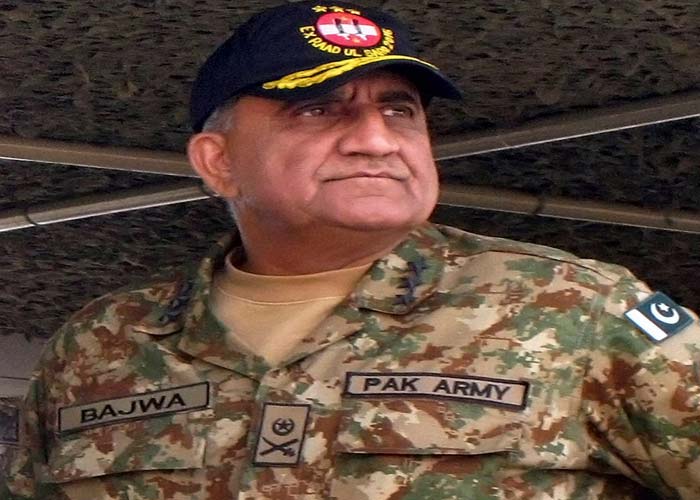
For the sake of Pakistan Army’s image, Gen Qamar Javed Bajwa needs to come out clean on the court’s observation about army being the “biggest land-grabber” in Pakistan!

Tailpiece: The recently passed Criminal Law [Amendment] Bill 2020 that proscribes ridiculing, bringing into disrepute or defaming Pakistan’s armed forces or its members may muzzle public dissent. However, despite orchestrating dismissal of an upright judge like Justice Shaukat Aziz Siddiqui [who exposed how Pakistan Army’s spy agency ISI manipulates judicial proceedings to get favourable decisions] Rawalpindi has failed to intimidate the judiciary, as Justices Isa and Khan have proved. Consequently, despite having a “selected” Prime Minister at his back and call plus a three-year service extension, it’ll be difficult for Gen Bajwa “to rule as a king”!