Home Blog Page 317

Farmers’ protest is more about the bigger political agenda

The recent protests by sections of Punjab-Haryana farmers is by far a regional strike, despite efforts by political vested interests to give it a national colour. Unfortunately, under the guise of farmers’ protest, these political parties are trying to challenge the sovereignty of the Parliament. It is politics of disruption and not of nation building. However, notwithstanding its geophysical aspects, we should not shy away from making a dispassionate analysis of the upsurge because for more than one reason it is a notable event in the contemporary political history of India.

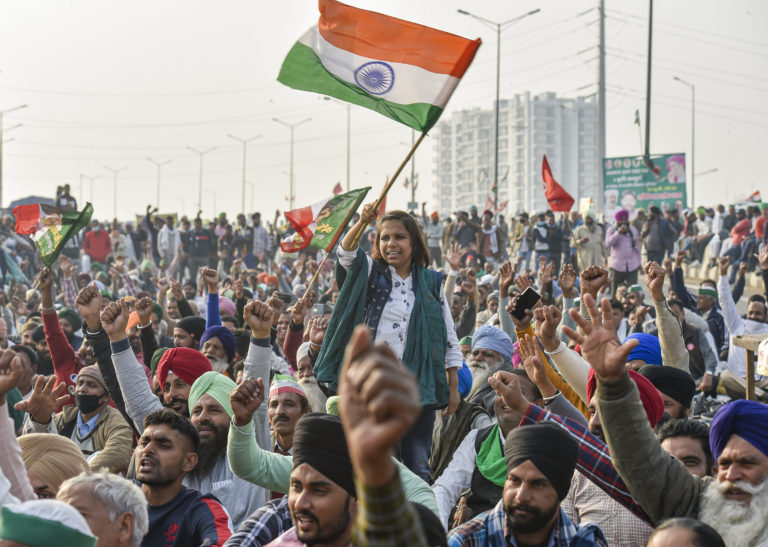
In order to bring pressure on the Modi government, thousands of farmers from the states of Punjab and Haryana blocked the main entry and exit routes to the capital city of Delhi and paralyzed the entire transport system. They refused to assemble at a specific open space in the town, where the Home Ministry was prepared to provide them with logistic facilities, so that normal traffic was not disrupted. Most of the farmers came on their tractors, trucks, wagons and cars purposefully to strengthen the siege of the highways. They carried with them eatables, furnishing and bedding etc. and some unidentified organizations provided them with freshly- cooked food. The protesting crowds refused food and tea arranged by the government as a gesture of courtesy. This indicates that the bandh was meticulously planned and it is not a fitful reaction to the new laws.

Politically-oriented anti-government and anti-Modi slogans were raised frequently. It showed that the protestors designed to score a political victory by ousting Modi government and not get their grievances redressed. The dharna reminded one of Shaheen Bagh episode. Political undertones of the dharna were conspicuously eloquent.

The activists of opposition parties grabbed the opportunity and almost hijacked the protest rally. In the garb of protesting farmers, they began delivering threats to the government from the farmers’ platform. The Home Minister addressed the media channels that the welfare and safeguarding the interests of farmers was the foremost priority with Modi government and the new laws passed by the parliament were strictly in their interest. He added that in the past dissenting political parties had demanded passing of these laws. The Modi government took the initiative and brought to completion a task, which his predecessors had once mulled over. He assured that the government was prepared to talk to the representatives of the farmers on the issue. This assurance was given by the Home Minister publicly.

Several rounds of talks were held but with no concrete result. As the interaction proceeded, the disgruntled farmers continued their hostility, raising provocative slogans. The norms of addressing the government or the Prime Minister were thrown to the wind. One got the impression that the farmers had not come to get their problems solved but wanted to vent their frustration against the government. All opposition parties came out in support of the protesting farmers.

In such a situation, any responsible opposition is expected to play a mature role to de-escalate tensions and normalize the atmosphere. It is expected to lend its helping hand in bringing about an amicable settlement of the issues involved. But unfortunately, the opposition parties, whether national or regional parties, began acting like hungry wolves to seek their pound of flesh. They are unitedly acting to bring about the downfall of the government, redressing the grievances of the farmers is the least on their agenda.

The recent protests clearly points out that despite 73 years of democracy, our nationalist sentiment is frail and vulnerable to the claptrap of political rant. Secondly, it shows that only a very thin line separates self-aggrandizement from nationalist predilection. Party workers can go to any length in removing the elected government instead of removing the hardships facing people or those in the way of a sincere elected government in alleviating the grievances of the people.

When dialogue between the government and the farmers did not make headway, the Congress President, playing the politics of vendetta, gave a call for Bharat bundh. Don’t forget that the culture of Bharat bandh is closely associated with the Congress, tracing its history to the days of the freedom movement. But curiously, shorn of its traditional popularity and bereft of its spatial dimension, the present Congress remains unfazed by a call it gave with no takers.

Who are the ring leaders of the protest dramatics and what is their motivation, is a very pertinent question? According to sources, a variety of stakeholders have jumped on the bandwagon and the entire show is almost a replication of the Shaheen Bagh episode. Most of the ring leaders from Punjab are well-known affluent Leftists with a clout in the Punjab peasantry. Besides them, there are Khalistanis and Congress loyalists as well. The fact that the slogan of Khalistan Zindabad was also raised by a section of the protesting crowds during Delhi bandh, is a case in point. The Congress came out in open to oppose the government proving that they are pursuing political vendetta and not the debilities in new agrarian rules.

The Congress, after its defeat in two successive parliamentary elections, has abandoned the standard role of genuine opposition in and outside the parliament and taken a hostile and antagonistic role bordering on a personal vendetta. Disrupting the sessions of the Parliament, opposing every bill brought by the ruling party irrespective of its merits and demerits, contradicting all facts and figures provided officially by the government to the parliament, undermining the mega developmental projects envisaged by the government and criticizing the government for its domestic as well as foreign policy without understanding the nuances is the stand adopted by the party now at the backbenches in the parliament.

Moreover, the Congress loyalists and the beneficiaries of expatriate Indians, especially in the UK and USA, have embarked on a massive anti-Modi mission and are whipping up class, sectarian and communal passions among the broad sections of Indian society by manipulating media and other sources of public information. The Khalistanis are working hand in glove with the Pakistanis in foreign capitals in encouraging anti-India protest rallies, whipping up sectarian passions by publicizing fake and false stories or visuals to malign the government. Close studies of their activities reveal that there is only the personal vendetta against Modi, and no word about the so-called stifling of the farmers.

It is to be noted that under the new law, farmers have the freedom of selling their products to any buyer, private or public, without any hindrance. The need to introduce the new law arose because some middlemen were not only amassing mountains of wealth by way of commission from the government and favours from the farmers but were reported to be misusing the enormous amounts in various activities that were not at all desirable as far as the national security is concerned. The middlemen have created a mafia that would want to prevent the farmers from selling the crops to a buyer ready to pay a higher price to the benefit of the farmers. It is this mafia, which has given space to terrorists, anti-national elements, moles of international terrorism and drug trafficking.

This is a battle between the forces with vested interests and self-aggrandizement on the one hand and those of nationalists supporting the uniform distribution of wealth to the benefit of entire Indian society. The former has unleashed a vicious international disinformation campaign to malign the Modi government. Their problem is a simple one. The source of loot and vandalizing of public property has been brought under check by the new agricultural laws passed by the Parliament. This law disallows the concentration of capital outside the public domain. It is a death knell to the monopolization of sources of production.
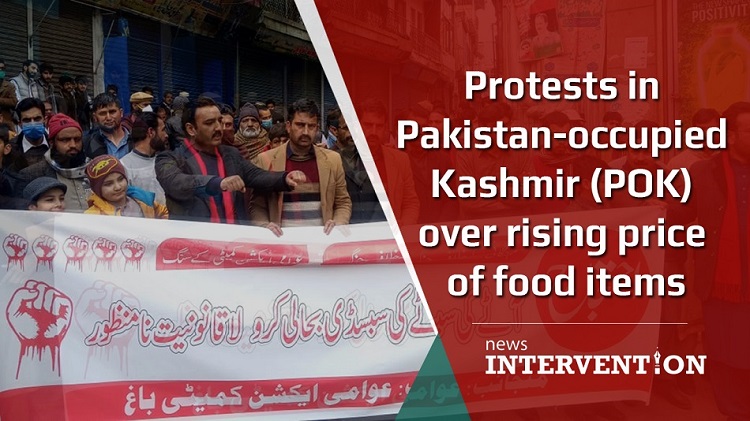
Kashmiris protest in POK over rising price of food items

The price of all essential food items such as flour, rice and vegetables have skyrocketed in POK (Pakistan-occupied Kashmir) as compared to the Punjab province in Pakistan. The Kashmiris in POK (Pakistan-occupied Kashmir) are now protesting against the rising price of food items.
Click on the YouTube link below to watch the video news report.

Click on the YouTube link to watch our video news report

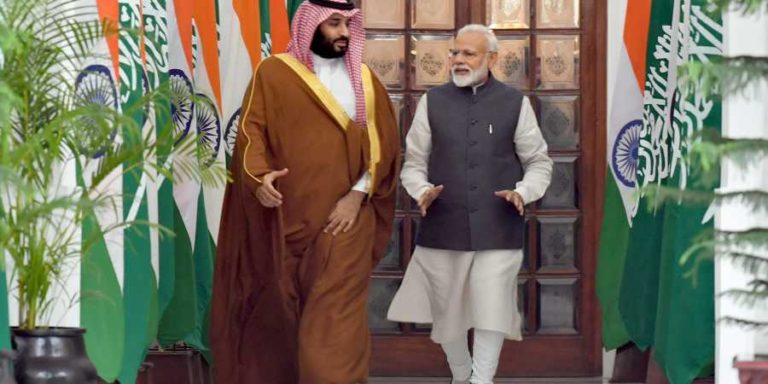
A New Chapter in India-Saudi Arabia Relations

In his six-day-long (9 – 14 December 2020) visit to the UAE and the Kingdom of Saudi Arabia, Army Chief, General MM Naravane was given a red carpet reception by the hosts as it was the first visit of any Indian Army Chief to the two strategically important countries in the Gulf region. In both countries, the Indian Army Chief met and interacted with his counterparts and other top military and civilian brass besides visiting some of their prestigious defence establishments. The itinerary of the General’s engagements in the two countries shows the importance attached to the visit.

General Naravane is reported to have discussed during his first leg, the enhancing of India-UAE defence relations with senior military officials of the host country. He is also said to have taken forward the “excellent defence cooperation between the Kingdom of Saudi Arabia and India through multiple meetings with senior functionaries of the security establishment and exchange views on various defence-related issues,” said the Indian Army in a note. These include the Headquarters of Royal Saudi Land Force, the Joint Force Command Headquarters and King Abdulaziz War College. The Chief of the Army Staff also addressed the students and faculty at the National Defence University. All this explains the importance given by the hosts to the rare visit of the top brass of Indian Army.

By and large, national print media did not go beyond defining the visit a super courtesy call. But seemingly, there is something more than what meets the eye, particularly in the wake of two related events taken up together in this context. One is that days ahead of the General’s visit, our Minister of External Affairs had concluded his two-day visit to Bahrain and the UAE where he interacted with his counterparts and top echelons. The other is the fast-changing political scenario in the region which has thrown up political issues with security ramifications. It is likely to unfold the prospect of new and unprecedented re-alignment among the Littoral and regional states with a stake.

The Gulf states interacting with India in various fields seem to have understood the significance of Modi government trying to expand and deepen bilateral and even multilateral relations with the Littoral states based on their economic and strategic importance. They are also aware of India’s naval and maritime outreach in the Indian Ocean including the Arabian Gulf.

The entire Muslim world is in a state of suspense and the shadow of polarization is looming large over it. Some non-Arab Muslim states are making no secret of their aversion to Saudi Arabia, the bastion of traditional Islam, with its satellite state of UAE, poised for pulling out their societies from the steel-frame of orthodoxy and gradually opening to a modernized egalitarian structure under the reformative policy of Crown Prince Muhammad bin Salman, generally nicknamed MBS. The agenda conspicuously favours updated relations with the US, normalization of relations with Israel and shifting of state emphasis from ecclesiastics to the economy in the Muslim countries.

To some radical old guard Islamic states where political interests are made subservient to religion, the reformative agenda sounds outlandish, being a deviation from the traditional policy of the ruling House of Shah Saud.

Relaxation in the observance of strict conservative code and conduct of Islamic life allowed by MBS is not as much repugnant to them as his liberalized foreign policy, particularly towards Israel. A realization has dawned upon the Gulf states that continued animosity against Israel not only upsets relations with the US but also provides space to Shia Iran to inch towards the leadership of the Islamic ummah on a wrong premise.  In addition to this, Iran’s relentless effort to achieve nuclear capability is a potent threat to the Saudi monarchy. Way back in 1979, Ayatollah Khomeini, the father of the Islamic Revolution of Iran had pronounced Saudi monarchy as illegal and hence anti–Islam. The attack of Iranians in Ka’aba had resulted in the massacre of nearly 500 insurgents. This threat is at the root of US-Iran nuclear spat.

The threat to the person and power of MBS cannot be ruled out for more than one reason. The royal house is a den of intrigues and we should not forget that rivalries in the royal dynasty have led to brutal murders at times. In a scenario in which Iranian belligerence coupled with her frantic pursuit of nuclear technology persists, Saudi Kingdom and its satellite state the UAE are vulnerable. This could have been the catalyst to recent UAE-Israel coming together, a prospect that is likely to be emulated by other Littoral states as well. Short of formal recognition, Saudi-Israel bilateral relations are doing well.

The machination of three non-Arab Islamic states, namely Turkey, Pakistan and Malaysia trying to wrest the leadership of the Islamic world and the OIC (Organisation of Islamic Cooperation) from the hands of the Saudis have their narrow individual interests rather than that of the ummah. President Erdogan is dreaming the faded glory of the Ottoman Empire, Malaysian Mahathir hopes Islamic slogan is the only option to reinforce his political survival and Pakistan feels that the Saudis are impeding her designs in Kashmir.

These machinations have backfired. UAE and Saudi both want Pakistani labour force to quit and issuance of visa to Pakistani nationals has been suspended. Pakistan’s stand in the inter-Arab conflict in the Middle East and the Gulf has become doubtful in the eyes of Riyadh and there is serious thinking in the ruling circles on how the Pakistani Brigade stationed in Riyadh as bodyguards to the royal house would behave. We know that MBS had summoned Pakistani Prime Minister and admonished him to desist from joining the bandwagon of Malaysian Mahathir Muhammad. Unable to withstand the pressure from Riyadh, premier Imran Khan gave in and the Islamic Summit ended in a fiasco. It has undone the scheme of things planned by the Pakistan Army and ISI, and the hawks would not want to lie low. They made their foreign minister as their spokesman who exuded angst against Riyadh only to receive a blow below the belt.

In all probability, there is serious thinking in Riyadh of re-assessing the security structure of the state and the guard of the royal house, overhaul the entire Saudi defence build up to make it independent, a pro-nationalist and professional force which draws inspiration from Arab rather than Islamic identity. It is India alone that fulfils the criteria set forth by MBS in tandem with UAE and some more littoral states that can plan and execute the restructuring based on the trust built by close friendship of the two leaders Crown Prince MBS and PM Modi. General Narvane’s visit has to be assessed in this background also.

The visit of the Indian Army Chief to the two important Gulf States has immensely frustrated Islamabad which is trying all the tricks in the kitty of ISI to undo it so much so that they have floated rumours that India is going to sell anti-missile system and Brahmos missiles to Saudi Arabia and that the Pakistani Brigade in Riyadh is going to be replaced by the Indian Brigade and that General Raheel Sharif had been forced to resign and return home etc. This explains the frustration.

Prime Minister Modi has very deftly played the Middle East and Littoral States card, winning the highest civilian award of the twin countries of Saudi Arabia and UAE as the leader of a dependable and friendly country. The Saudis will be investing in a mega oil refinery plant worth billions of dollars in India. Trade with Arab countries will scale new and unprecedented heights and Modi has invited Arab entrepreneurs to invest in India.

ORF of June 2020 has made a balanced summation of the new prospect of India-Gulf States relationship. It wrote, “The ferment and churning in the Middle East, including the conflicts in Yemen and Syria, severance of ties by Saudi Arabia and some Arab countries with Qatar etc. are likely to have significant implications for India, given that its citizens make up the largest expatriate group in Saudi Arabia (3 million) as well as the region (7-8 million. Prime Minister Narendra Modi’s government has strengthened India’s ties with Saudi Arabia, Iran, UAE, Qatar and Israel. This demonstrates a more self-assured approach by India in handling the growing opportunities and challenges in the region.

Due to the large number of workers of Indian origin working in the Middle East, security and stability in the region are of paramount importance for it. Further, the Indian diasporas in the region remit around $35 billion a year. These funds are immensely valuable as they help India manage its current account deficit. Energy is another critical area of engagement. A fifth of India’s oil, and about 65% of gas imports come from countries of the Middle East including Iran, Qatar, Iraq, Saudi Arabia and others.

Uncertainty and volatility in the Middle East region could result in increased insecurity reduced economic activity and stress on the 50% or so of the total inward remittances that India receives from the Gulf.

Any confrontation or uncertainty in the wider Gulf region due to recent developments, including elevation of Mohammad bin Salman as Crown Prince, could engender serious adverse implications for India. Beyond a point, India cannot stay aloof. Given the range, expanse and depth of India’s interests and its rapidly expanding political, economic and strategic profile, sooner or later India will have to get more vigorously engaged in dealing with developments in this crucial region. In the coming years, India will have to adopt a more hands-on policy in any security crisis or economic upheaval that may strike the region because its security, economic well-being and energy needs are closely interlinked with this region. India enjoys good relations with all countries in the region. That should facilitate India playing a more agile and vigorous role in the region.”

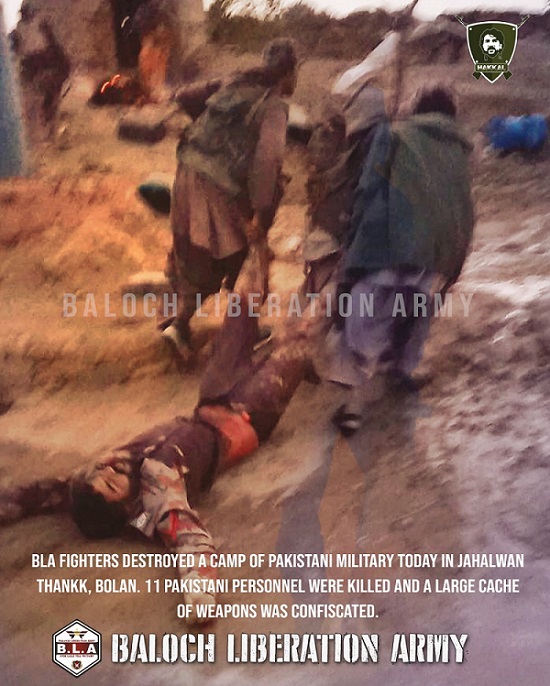
BLA attacks Pak Army post in Bolan, kills 11 personnel

Freedom fighters (sarmachaars) of the Baloch Liberation Army (BLA) on Saturday attacked the outposts of Pakistani military in Jhalawan Thankk area of Shahrag at Bolan and killed 11 personnel of Pakistan Army. The Pakistani outposts were completely captured in this attack. BLA has accepted responsibility for this attack.

“The freedom fighters (sarmachaars) of Baloch Liberation Army (BLA), under an organised plan attacked and subsequently captured the outposts of Pakistani military in Bolan on Saturday. At least 11 personnel of Pakistani military were killed in the attack, whereas, multiple others fled leaving behind their weapons and dead bodies. The outposts were under the control of BLA for more than two hours and the weapons and belongings of the enemy forces were confiscated,” said Jeeyand Baloch, spokesman for the Baloch Liberation Army (BLA) in a statement.

The uncivilised occupying forces of Pakistan have been completely defeated by Baloch freedom fighters on all fronts. Therefore, they have resorted to violence on innocent civilians, particularly women and children, and non-combatant political workers. Now their cunning acts are not limited to Balochistan and they have begun targeting Baloch refugees and journalists in foreign countries too, explained Jeeyand Baloch.

Pakistan had forcibly occupied Balochistan in 1948 and has been committing atrocities on Baloch people since the last seven decades. Over the last two decades Pakistan Army’s notorious “kill and dump” policy has led to the death of thousands of innocent Baloch people while over 30,000 Baloch people remain “missing”. Last week Pakistan’s intelligence agency ISI abducted and murdered prominent Baloch activist Karima Baloch in Toronto, Canada. Entire Balochistan has been seething with anger over the cold blooded murder of Karima Baloch.

Baloch Liberation Army (BLA) considers the defence and liberation of Baloch nation its utmost responsibility. “We cannot allow the enemy forces to run rampage against innocent civilians, women and children. Today’s attack was only a short trailer. If innocent Baloch civilians, women and children are not safe and continue to be targeted in Balochistan or abroad then the non-combatant citizens of the enemy state will also not find refuge. We have full capability of starting a similar war in Punjab that the enemy is trying to impose on Baloch nation in Balochistan and other countries,” said Jeeyand Baloch in his statement.

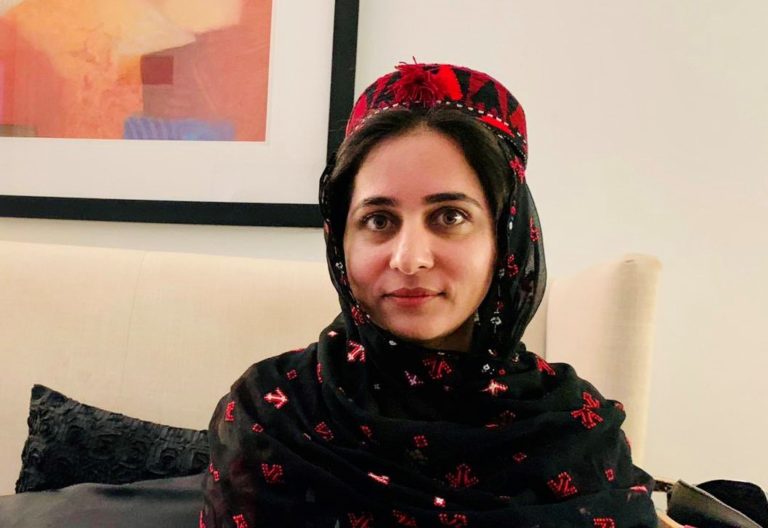
Karima Baloch, an inspirational woman

Role of a woman in a struggle is important to bring about the much needed change. Anywhere in the history of revolutions women have played a crucial role. As the saying goes “Behind every successful man there’s a woman”, she can be in the form of a mother, sister, wife, or daughter. If we take the example of Baloch freedom struggle, the Baloch freedom fighters have had the full support of their families, especially women. From a young age the mothers sing lullabies to make them brave and fight for justice against any oppression and occupiers.

The story of inspirational and historical woman Banuk Karima Baloch starts from the day she joined BSO-Azad in 2005. It was the time when the founder of BSO-Azad Dr. Allah Nazar Baloch was abducted by Pakistani intelligence agencies along with his colleagues and younger brother. Karima Baloch started working from that day wearing a veil (niqab). But no one knew that she will become a leader and an inspirational figure for Baloch all over the world.

Karima Baloch couldn’t get the Nobel Peace Prize because she was a Baloch. If she were in an independent country she would have certainly won it. Malala won it because she had the support of the state.

I never heard Malala Yousafzai speak about the rights of women and education in Balochistan. Girls’ college in Mashkai Gajjar and schools around Balochistan were turned into an army camp and torture cell but Malala never spoke a word about it. Karima Baloch and other Baloch activists struggled for their rights not only for the Baloch nation but also for Pashtuns and other subjugated nations of the region. The people who favor no one but stand for truth deserve the Nobel Peace Prize.

Karima Baloch soon appeared all over Balochistan in rallies, press clubs and protests. She soon became an active political member of Balochistan. Because of her activities and hard work in 2006, she became a central committee member of BSO-Azad. In 2009 when Zakir Majeed was abducted she took his position of senior Vice Chairman. She became chairperson when Zahid Baloch was abducted on March 18, 2014. Karima was the first woman chairperson in the history of the Baloch Students Organization (BSO).

As a female leader, Karima Baloch’s role in BSO-Azad is greatly admirable because at that time many members of the organization were abducted and killed, especially the senior leadership. Karima filled the vacuum left by her comrades and led all protests, rallies and press conferences and guiding the younger generation of students. In 2013 when the government of Pakistan banned the Baloch Student’s Organization (BSO) Azad many more members were abducted and killed.

In 2016 she left Balochistan and went to Canada because the Pakistani authorities threatened her that she would face the same consequences as her comrades. After reaching Canada Karima took political asylum. She thought she was safe in this country and removed her veil and showed her face, but it’s a shame that Canada failed to protect her from her enemies.

After reaching Canada, Karima was named among the 100 most influential women by BBC. She started her education which she couldn’t continue in Pakistan. Along with her education she also continued her political activities. She spoke and participated in the rallies of Baloch, Sindhi, and Pashtuns against the ongoing aggression by Pakistani state. The last time I saw her, she was speaking in a webinar on YouTube on November 13. Karima was speaking about Baloch martyrs but I didn’t expect that she would leave soon and become a martyr herself.

The news about her martyrdom has left us shocked, but her martyrdom will motivate many more people, especially the women into our struggle. After Karima’s martyrdom a lot of women have come out to protest for her. The land of Balochistan has thousands of Karimas. Every home has a Karima. How many will Pakistan kill?

There’s a kind of hush over NSE’s colocation scam

Can SEBI gloss over a broad daylight robbery?

Market regulator Securities and Exchange Board of India (SEBI) is contemplating setting up a virtual museum of the securities market to highlight achievement and milestones. It would do well if it creates a list of failures. There are many which the market regulator saw but did nothing to stem the rot, the colocation scam at the National Stock Exchange (NSE) being one of them.

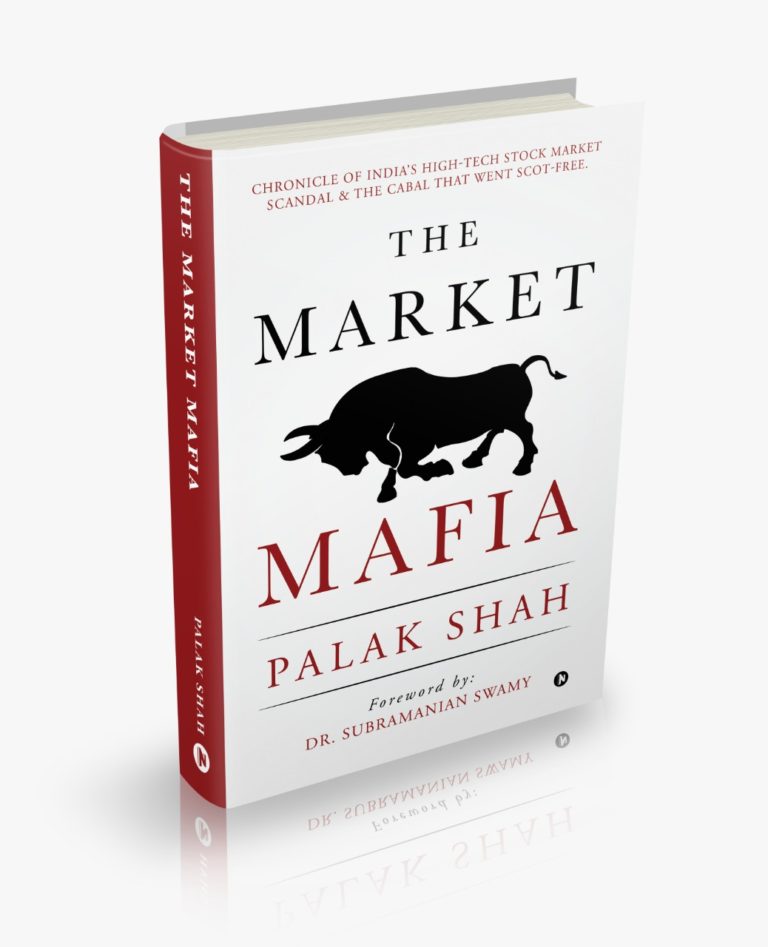
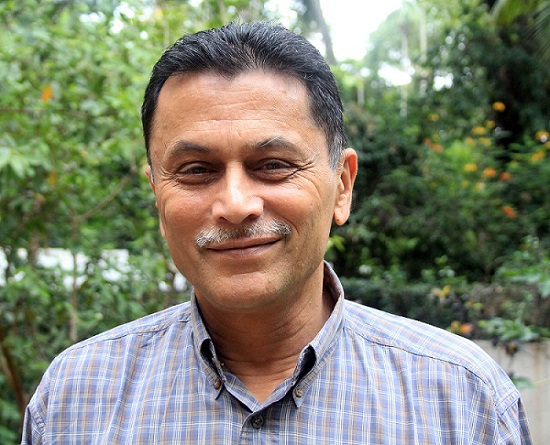
Seasoned journalist and market tracker Palak Shah’s freshly minted book, The Market Mafia offers an insider view of the workings in India’s stock exchange ecosystem. He has probed the colocation scam that took place at the NSE and how the market regulator glossed over the huge insider manipulation that was conducted by the master of orchestra, a senior minister in the previous UPA government.

The news of this colocation scandal has, in some words or more, appeared all over the media in India, and parts of Asia. But then, the NSE is not the economy, in many ways it is the graph of rich people’s feelings in India, and some NRIs abroad. So what does the colocation scam tell us, what does it imply about the way the exchanges work in India? Palak offers some excellent answers in the book that also has a foreword by Subramanian Swamy, BJP MP whose brilliance in unearthing corruption is unputdownable.

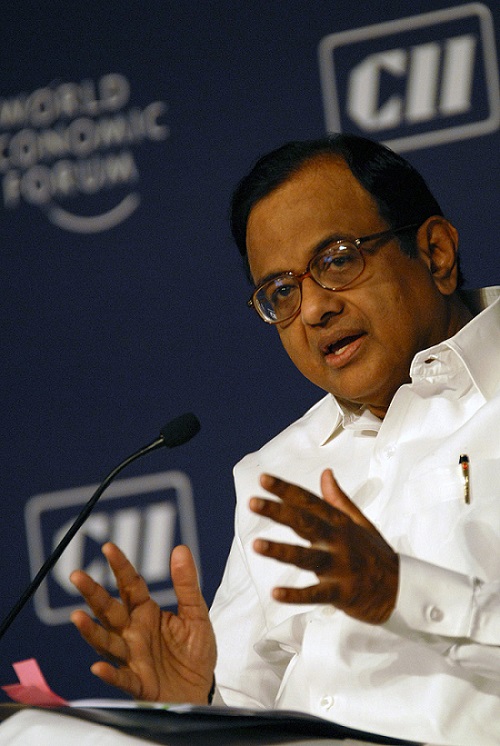
So Palak is clear that the stock exchange is inherently amoral and rarely cares about rules which should be the same for everyone. But it did not happen in NSE. It is like an exchange which, encouraged by an influential politician, former Finance Minister, P Chidambaram in this case, did not care about the health of the brokers, it did what it was told. 

The NSE, as Palak explains, had a peculiar function: It may sound a bit wonky but the idea to help one set of brokers, and fool another set of brokers. It is like offering question papers to students an hour in advance of the examination while others stand outside the class.

For many, it was deeply uncomfortable to watch the NSE colocation party wherein the exchange got away with almost anything and everything, all SEBI could push through is a handful of fines that look like breadcrumbs when actually it should have been giant pieces of bread loaves. The band of brothers at NSE charged into the market by manipulating the system to their benefit, they did not care that other brokers were going to get played. Palak Shah’s investigation shows the colocation scam at the exchange was one big party where many suffered losses and the total could be way beyond – this is my calculation – ₹50,000 crore. Sadly the market regulator saw this as merely some economic faux pas. There were no self-enforcing methods installed at the NSE to clean up the inequality in the system.

What was both sad and unfortunate was the distortions were obvious and provable but remained uncorrected. SEBI remained silent, says Palak in his very authentic account of the Algo Trading Scandal, data theft at the NSE and the Multi Commodities Exchange (MCX). Chapter after chapter, he not only explains the fraud, he also cements with enough proof and data how questionable activities were institutionalised in the Indian financial markets. 

Palak calls them the new age Harshad Mehta, the new age Big Bulls. Harshad Mehta worked with his band of brothers, and is a dead man now. There is a movie to his name. But this one is a deadly cabal of influential bureaucrats, executives from various stock exchanges, SEBI officials and stock brokers who carry high political patronage on their sleeves, and do not blink their eyelids before taking cash out of the purses of gullible retail investors. 

The problem of Indian exchanges and Indian markets is simple: There is no awareness, there is no alertness. Those who run it will tell you this is the best on offer, and those who invest eventually land up as hapless investors.

The Market Mafia explains how and why Chandrashekhar Bhasker Bhave remained a mute spectator when the markets were undergoing changes. It was around 2008 when machines replaced man-made operations at the bourse, High-Frequency Trading (HFT) driven Algorithms (Algos) were pushing quick buy and sales of stocks. There were radical alterations in India’s high-voltage equity trading game.

“Securities and Exchange Board of India (SEBI), the ‘super-cop’ responsible for policing it, was at a nadir in following its Dharma of ensuring ‘fair market access’ to all participants when HFT-guided Algos came into play. Bhave, the then SEBI chairman, was apparently busy fighting his own battles.”

“As a sacred rule, no trader can have preferential access to a stock exchange platform. And the ethics demand that no tool, order type or service can be obtained exclusively by a few from the exchange by whatever means, even as the rest remain forbidden from it. But technology changed everything; it turned the stock markets into an ‘Animal Farm’. The elite few with their tech tools became ‘more equal’ than the rest.”

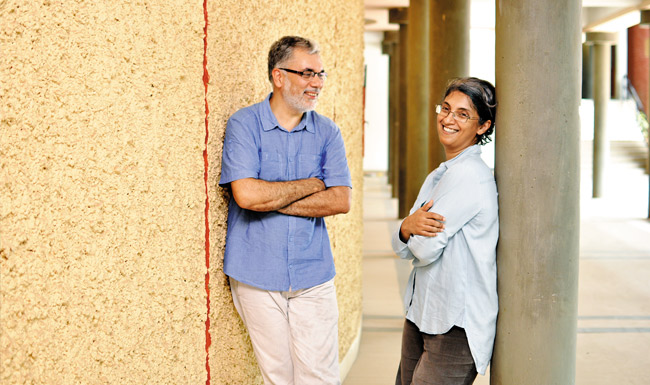
Ajay Shah and Susan Thomas, the two Mumbai-based professors who were celebrities in the realm of capital market research, had spun a flourishing family enterprise at the NSE.

“Only a few brokers who used NSE’s COLO grid knew the nuts and bolts of the technology that was driving the markets, while the outside world remained in pitch-darkness on the insides of the space-age like tech platform. But that invoked no conflict from Bhave’s point of view. He allowed the most disruptive changes including HFT driven Algos and COLO operations to seep into the stock market trading microstructure by NSE without a deeper scrutiny. He turned into a recluse when someone told him that NSE was sharing TBT data exclusively.

“Ajay Shah and Susan Thomas, the two Mumbai-based professors who were celebrities in the realm of capital market research, had spun a flourishing family enterprise at the NSE, writes Palak in his brilliantly-researched book.

P Chidambaram, former Finance Minister of India.

Ajay and Susan were captivated by Algo trading. As PhD scholars from the University of Southern California (USC), they behaved more like modern-day Utopians, idealistic reformers in shaping the policy narrative for NSE. Both were hardened advocates of derivatives trading and wrote papers, blogs and newspaper columns churning out pompous theories to showcase its traits. NSE zealously guarded its higher volume churn in the F&O from rivals like the BSE.”

SEBI’s investigation that followed a whistleblower letter in 2015 about Algo trading scam at NSE revealed how Ajay got crucial data from the exchange for years without any formality. What and how much data did NSE share with Ajay and Susan? This is simply not traceable. SEBI too is clueless. Later, it came to light that the couple with their family enterprise had devised a lucrative business model of Algo trading software and even sold it to clients. “So how did this all happen?”

It all happened during Bhave’s second stint at SEBI, which happened only because the then Finance Minister (FM) Palaniappan Chidambaram lobbied for Bhave. Chidambaram knew the markets. “His cheeky, off the cuff statements often moved Sensex and Nifty, so much so that the two benchmark share indices of BSE and NSE had come to be known as the barometer of Chidambaram’s announcements.

CB Bhave, former SEBI Chief.

“Before Bhave’s ouster as SEBI chief, the high-tech trading game was all set at NSE with all advanced tech tools fully in operation. Gopal’s letter was a stark picture of why SEBI under Bhave allowed NSE to do what it wanted to. As NSE, the largest promoter of NSDL, had let Bhave do what he wanted to at the depository. NSE had raised no finger at Bhave even when the SEBI probe under Damodaran highlighted the then NSDL chief’s laxity in the fake demat accounts scam.”

Palak continues in his book that reads like a James Hadley Chase thriller. 

He explains why Chidambaram pushed Participatory Notes investments and how PN holding by FIIs in stocks and derivatives combined jumped to a colossal ₹3,53,484 crores (51.6 percent of FII assets under custody) by August 2007. Now remember, when Chidambaram became the Finance Minister in March 2004, P-Note holding of FIIs stood at ₹31,875 crores (20 percent of assets under custody).

Did the SEBI care? Did it act like a watchdog, a market regulator?

Writes Palak in his book: “An informal clique of current and serving bureaucrats, SEBI officials, lawyers and corporate interests orchestrated this subversion of the due process of law. They illegally interfered with independent SEBI adjudication, manipulated legal opinions, suppressed and misrepresented facts and misled the SEBI Board and Government officials about the legality of the Orders. Law, regulations and established precedent were violated.”

“Those handful people, occupying the upper echelons of NSE, were letting down the very institution where they were employed for a long time. This cabal with no regard for rules or fear of law were embodied in abuse of power with impunity.”

“It was only when Enron dragged India to the International Court of Justice (ICJ), Chidambaram relinquished his position as its legal adviser at the time when he was made the FM by Sonia Gandhi. Ironically, the Congress-led government in which Chidambaram virtually held the number 2 ranking, engaged a Pakistani-origin lawyer named Khawar Qureshi to present the Indian side at ICJ. Pakistan has the status as India’s enemy and the dimwit lawyer lost the ICJ case in months. Harish Salve was fighting the case for India at ICJ before UPA came to power. Nobody knows why the erudite legal expert was replaced by an enemy country’s inefficient lawyer.”

“Interestingly, the lawyer who argued for Chidambaram in the case was another prominent lawyer-cum-politician and BJP leader, Arun Jaitley. Both Chidambaram and Jaitley took turns at becoming India’s successive FMs, albeit from different political parties and governments. But the grapevine goes that they were brothers in arms and often came to the rescue of each other. But that is a different story.”

The big data theft at NSE was conducted by a handful of people who were backed by influential ministers in the corridors of power in the Indian Capital. 

The cabal still exists. Grab a copy, and read through. You will know a lot about modern day bandits who continue to be protected by some of the top institutions in the country.

Afghan Activist Freshta Kohistani shot dead along with her brother

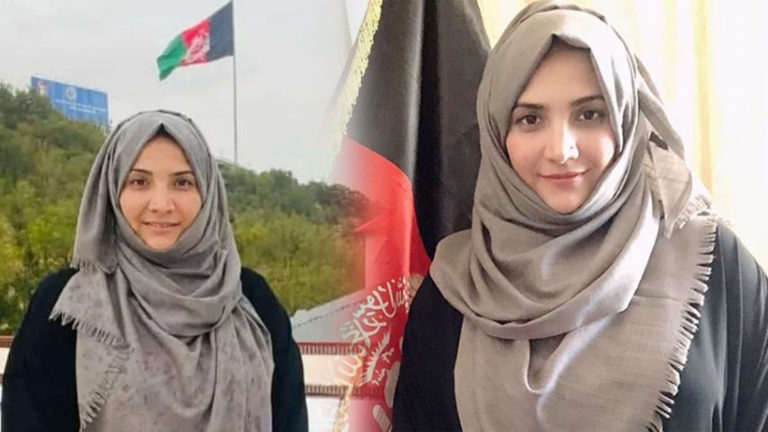
Leading Afghan women’s rights activist Freshta Kohistani was shot dead along with her brother by unidentified gunmen on a bike in the Kohistan district of Kapisa province on Thursday, officials said.

“Unknown gunmen on motorbike assassinated Freshta Kohistani in Kohistan district of Kapisa province,” interior ministry spokesperson Tariq Arian told the reporters.

Abdul Latif Murad, governor of the Kapisa province, told media that the shooting took place near the activist’s home and that her brother was also killed in the attack. Kohistani, 29, is the second activist to be killed within the span of two days. Muhammad Yousuf Rasheed, a prominent pro-democracy advocate was shot dead on in Afghan capital Kabul on Wednesday.

No group has claimed responsibility for the attack, but the Islamic State has claimed responsibility for multiple attacks in Kabul, including an attack that killed 50 people, most of them students.

The aforesaid two killings have followed a similar pattern that has emerged in the past few weeks in which prominent Afghans have been assassinated in broad daylight, most of them in Kabul.

Freshta Kohistani was an activist of international stature and had accumulated a considerable following on social media and actively organized and participated in social events calling for women’s rights in Kabul.

Days before her death, she wrote on Facebook that she had received life threats and asked for protection. “Afghanistan is not a place to live in. There is no hope for peace. Tell the tailor to take your measurement [for a funeral shroud], tomorrow it could be your turn”, she tweeted in November.

She also condemned the ongoing series of assassinations of journalists and other prominent figures.

Despite the ostensible peace talks between the Afghan government and the Taliban, journalists, prominent politicians and activists have been killed in the past few months.

On Wednesday, Muhammad Yousuf Rasheed, who led a non-governmental election monitoring organization, was ambushed and shot dead along with his driver in the capital.

A day before him, on Tuesday, five people – including two doctors working for a prison – were killed in a car bomb blast.

A leading Afghan journalist was also gunned down while on his way to a mosque in the eastern city of Ghazni.

Demonstrations held in Lahore, Karachi, Turbat against the murder of Karima Baloch

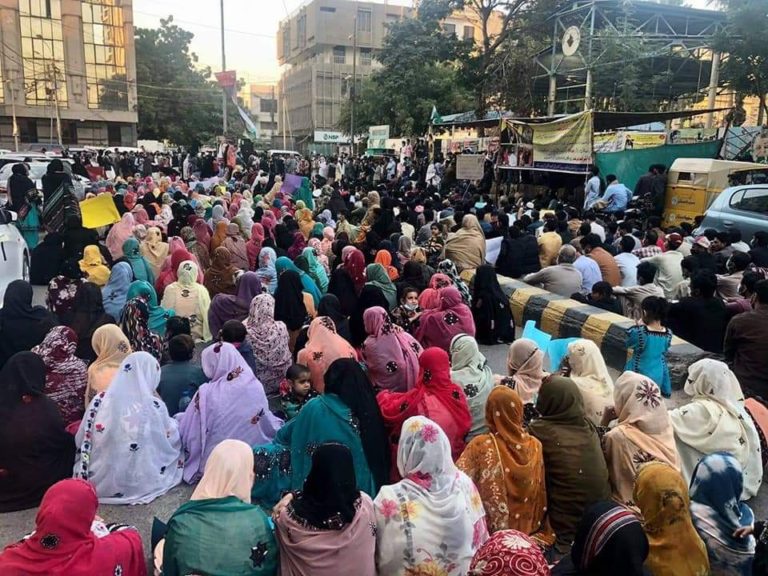
Demonstrations were held in Karachi and Lahore against the alleged murder of the rights activist Karima Baloch on Thursday.

Friday demonstrations were held in Turbat also. Scores of participants took to the streets, carrying placards and banners that bore messages of justice for the Baloch activist in English, Urdu and Balochi.

After the thousands-strong gatherings in Quetta and Hub Chowki, the Baloch Solidarity Committee organized a demonstration in Karachi. The rally was attended by hundreds of participants, majority of which were women. Sindhi and Pashtun political workers, members of human rights commissions and students were also in attendance.

Mama Qadeer Baloch, Vice-Chairman of the Voice for Baloch Missing Persons (VBMP), writer Muhammad Ali Talpur, Mehlab Baloch, daughter of the missing Dr. Deen Muhammad, Yousaf Masti Khan and various other activists addressed the gathering.

The speakers rejected the conclusion of the Toronto police department that Karima Baloch’s death was an accident or an act of suicide, and demanded that the matter must be investigated fairly and transparently.

They said that Karima Baloch is the symbol of resistance. Ideologies don’t die, she will continue to lead us. They said that she is the intellectual mother of thousands of political activists – it was her tutelage that produced youths like Ehsan, Shadad and others.

The speakers said that the Baloch nation believes that the death of the Karima Baloch was orchestrated by the Pakistani state, and demands that the Canadian government conduct a thorough investigation on the incident. Both Sajid and Karima were “killed” in a similar manner; the perpetrators employed this “suicide charade” to hide their tracks.

They said that the state targeted , Sajid Hussain and Karima Baloch in foreign countries. The Canadian government must concede its mistake and apologize to the Baloch nation, as it had failed to protect the “daughter of Balochistan.”

Students and people from various schools of thoughts also organized a demonstration against the alleged murder of Karima Baloch in Lahore. The participants carried placards and banners that bore messages like “I will come back and we will be millions”, “Murder of Karima Baloch is the continuation of Baloch genocide.”

“Shahzaib Khanzada Sb!! May I deserve your five minutes??” one placard read, calling out the Pakistani media for neglecting the incident of Karima Baloch’s death. “We will never kneel. We will prevail”, read another placard, quoting the words of the deceased activist.

The participants appealed to the Canadian government to conduct a comprehensive investigation on her death and provide justice to not just herself and her family, but the entire Baloch nation.

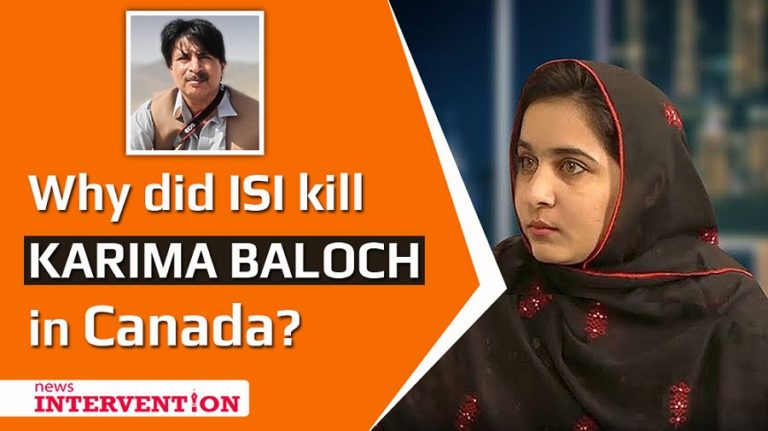
Why did ISI kill Karima Baloch in Canada?

Balochistan’s daughter Karima Baloch’s dead body was found in a canal on December 21 at Toronto, Canada. Karima was a Baloch activist who regularly raised the issues of human rights violations by the Pakistan Army in Balochistan. She also exposed the barbarism and the atrocities committed by Pakistan’s intelligence agency ISI at United Nations and other international forums.

Karima Baloch was a role model for Baloch women and youth. What does her martyrdom mean for Balochistan’s independence struggle?
Watch this 15-minute documentary to understand the inside story.

Click on the YouTube link to watch this short documentary

SEBI prostate Gulliver, FTMF unit-holders in darkness

Who will supervise the crucial December 26-29 voting?

What can you say about the big issue of Franklin Templeton Mutual Fund (FTMF) whose six debt schemes were abruptly closed in April, 2020? That when it happened it rattled over 300,000 unit holders who had a whopping Rs 26,000 plus crore at stake? And that the schemes accounted for one third of FTMF’s total assets of Rs78,000 crore?

And then, like everything else in India, a prolonged courtroom battle ensued? 

Well, it happened, and a tiny portion of the dust appeared settled. But there are enough chances of a huge sandstorm that could engulf the hapless, disparate unit holders. 

Let us not forget that the process of winding up of six schemes is bizarre, this is the first case in history of the Indian mutual funds.

Now, here comes the decider.

In two days flat and for three consecutive days starting December 26, 2020, an estimated 300,000 unit-holders of FTMF will offer e-votes to register their consent or no consent to winding up of the schemes.

The matter did not reach this stage easily, the permission for e-voting happened only after a tough litigation which resulted in a brilliant order from the Karnataka High Court in favour of the unit holders. Then came the December 9, 2020 order from the Supreme Court which asked Securities and Exchange Board of India (SEBI), the market regulator, to appoint an independent observer who could oversee the e-voting process.

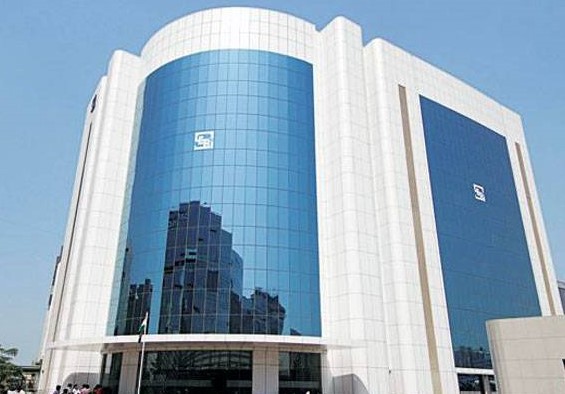
SEBI Headquarters, Mumbai.

But less than 48 hours before the start of e-voting, the market regulator has not announced the name of the observer. Worse, a slow, yet steady campaign is filtering through the social media urging the unit holders to sign away their rights without understanding what it means for them.

Can you offer blind votes? Logically, you should not. 

But what FTMF is seeking is illogical. In short, it wants unit-holders to cast their votes without knowing how much would be the extent of loss, what the unit-holders could get from FTMF and when. Like the proverbial sword of Damocles, the unit-holders are left to fend for themselves like lambs in a wolf-infested jungle. There is a message wafting across the air saying voting against the winding up could mean huge losses to the unit-holders. Amidst all of this, SEBI, the market regulator, lies like a prostrate, disembowelled Gulliver. The market regulator should have ensured that FTMF’s unit-holders are provided adequate information to arrive at an informed decision and not to be frightened into action.

Did SEBI react? The answer is a big No. Even the courts noticed the regulator’s lapse.

Now, the million-dollar question remains: Who will back the hapless, disparate investors against the illogical right and the financial might of FTMF? SEBI, certainly not. Finance Ministry, certainly not. The Supreme Court, well it has acted and issued a very important order that needs some serious implementation from SEBI. 

So let’s place on record what is happening. It is almost certain that FTMF has not been able to collate email IDs of all 300,000 unit-holders. No one knows why FTMF did not agree to a verifiable postal ballot than e-voting. This is not all. FTMF, claims an investor forum, once mentioned a five-year schedule for paying investors. But now, there is no mention of any schedule.

This is 21st Century India, where the Prime Minister himself has repeatedly assured the nation that corruption of any nature will not be tolerated. So who will save the unit-holders from this crisis? The answer is SEBI. But the market regulator is not answering.

SEBI’s silence is a serious matter of concern, ostensibly because the Karnataka High Court has told SEBI in its October 24, 2020 judgement that the regulator did not do enough to sustain confidence of investors and the investors would be “justified in their criticism that SEBI was a silent spectator”. A similar criticism came on December 3, 2020 from Justice Sanjeev Khanna who was critical of the market regulator not doing enough to help investors.

There are enough rumours in the market that FTMF reportedly bullied investors to support the winding up by creating the bogey of distress sale of assets. Read this one: FTMF’s letter to investors says a rejection of the winding up proposal will create havoc and redemption of units will have to be restarted. In short, FTMF has already told the unit-holders that it could be forced to make a distress sale of securities at a very deep discount. 

This is not all.

SEBI has not disclosed details of the forensic audit. Let’s presume the audit has highlighted severe violations, then punishment must follow. Doesn’t it make a huge, huge difference to investors’ vote which is just two days away? There is another issue that merits instant attention from SEBI. There are reports that there could be an ill-liquidity discount of 50 percent on some schemes. Does that mean the investors could be forced to take a neat half haircut on their investment? 

This is not enough. There are other issues that worry the markets. The SEBI has been reportedly asked by one Satyam Jain to act against officials who allowed FTMF to increase borrowing limits from 20 to 30 percent for two schemes, namely, Franklin India Low Duration Fund and Franklin India Short Term Income Plan, and from 20 to 40 percent in Franklin India Income Opportunities Fund and in Franklin India Credit Risk Fund. Jain has reportedly sought disgorgement and cancellation of FTMF’s registration.

The unitholders’ voting will start from 0900 hours on December 26, 2020 and go on till 1800 hours on December 28, 2020. Each unitholder will get one vote for the scheme he/she is exposed to. If the investments are jointly-held, the first unitholder will get the voting right. 

This is not all. This will also be the first time when unitholders of six schemes get a chance to question trustees (in a meeting to be held on December 29) on their decision to wind-up the schemes. Unitholders can also vote during this meeting (each scheme meeting may last one to one-and-half hours), but only if they get on the video conference, which will have a cap of 2,000 attendees.

But most importantly, SEBI must announce the name of the observer for this mega exercise. It should not fail in its fiduciary responsibilities, it should not be the mute spectator.