
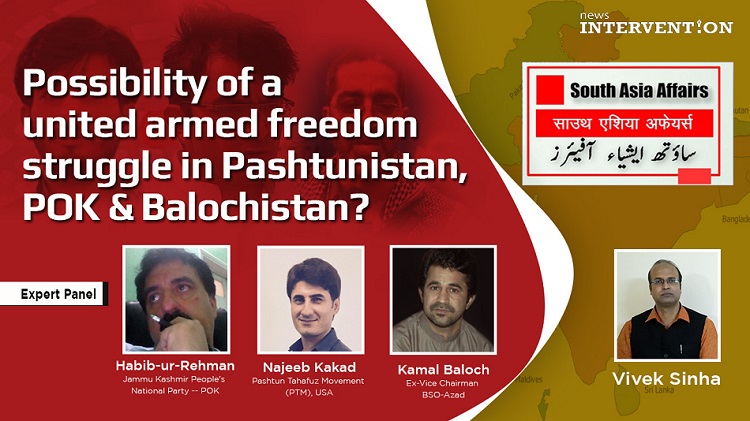
How are three different news from Pashtunistan, POK and Balochistan interlinked? Arrest of Tanveer Ahmed in POK, Detention of Mohsin Dawar in Pashtunistan and Martyrdom of Hayat Baloch in Balochistan. Vivek Sinha, Editor-in-Chief News Intervention joins the dots and analyses the possible fallout in this second episode of South Asia Affairs. The panelists are Habib-ur-Rehman, former Spokesperson of Jammu Kashmir National People’s Party (JKPNP) Pakistan-occupied Kashmir (POK), Najeeb Kakad, leader Pashtun Tahafuz Movement (PTM) and Kamal Baloch, ex Vice Chairman BSO-Azad, Balochistan.
Click on the YouTube link to watch this news show.
Possibility of a united armed freedom struggle in Pashtunistan, POK & Balochistan?
2 Al-Badr militants arrested in Awantipora, cash seized
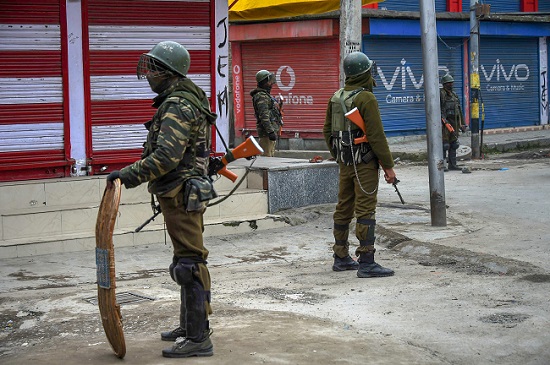
Srinagar/ September 15: Militants managed to escape after a brief gunfight in Pulwama district of south Kashmir on Tuesday, however two militants were arrested in Awantipora with lakhs of rupees. After the militants’ escaped, operation was called off. “The search operation which was launched after a brief exchange of fire has been called off,” J&K Police said.
The search operation was launched by joint team of forces including 50 RR, CRPF and Pulwama Police on specific inputs about the presence of militants in Marwal village of Pulwama district.
Police said that when the search operation was being launched, militants fired upon security forces which was retaliated triggering an encounter in which two army soldiers were injured. However, the officials said that militants managed to flee from the spot.
In Awantipora area of Pulwama, the J&K Police arrested two militant associates of Al-Badr militant outfit along with Rs 6 lakh cash at Ladhoo Crossing. Police said they were acting on a specific information and the Awantipora Police and security forces arrested two militant associates of Al-Badr outfit in the wee hours on Tuesday who were travelling on a Scooty from Southern district of Shopian to Khrew area of Pulwama.
The two militants arrested have been identified as Rayees-ul-Hassan resident of Gadikhal, Awantipora and Mushtaq Ahmad Mir, resident of Dadsara, Awantipora Pulwama district, the official said.
“Incriminating material of Al-Badr outfit have been recovered from their possession which includes Rs 6 lakh (six lakh) cash meant for militant funding of Al-Badr outfit. The Scooty bearing registration number JK-01 AC-4035 used for the crime has also been seized,” the official said, adding that “Case FIR number 55/2020 under relevant sections of Unlawful Activities Act has been registered in Police Station Khrew. “Further investigations are on,” J&K Police said.
China’s Nationalism: Could China Be Defeating Itself?
The geo-political landscape has been changing since 9/11 but this has accelerated since COVID-19. We are part of a multi-polar world with USA still donning the mantle of ‘first amongst equals’. Many nations are trying to carve their own pathway within the regional sphere, but China has broken out and has announced its intent to become and be acknowledged as a global power. By 2017, the US in its National Security Strategy has already acknowledged China as a peer competitor, and along with Russia proclaimed the two nations as adversaries.
The International Geo-Political Environment
A glimpse of global events from the changed socio-politico-economic dynamics in USA, a hundred mutinies (conflicts) in Africa, EU and NATO in flux along with rising tide of right-wing sentiments, irreconcilable Middle East, emergence of Asia and Indo-Pacific as economic hubs, coupled with the rise of the Middle Kingdom China with resurgent Russia, multi-domain competition are changing the very concept of security, and challenged the traditional ways of protecting sovereignty and integrity of nations, and the methodology, space and time paradigms of prosecuting military operations. In addition, diminishing comprehensive national power (CNP) and power projection capabilities of USA starting the slide to a multi polar world; authoritarian governments like Philippines, North Korea, Syria, Turkmenistan; emerging powers with regional aspirations like Iran, Saudi Arabia, South Africa, Nigeria, Turkey, India; rise of religious Islamic fundamentalism with a twist of occupying territory and establishing a caliphate like the IS; global warming and climate change indicators; demographic and economic disparities; transnational MNCs, drug cartels and international crime syndicates sans borders with their own self-serving agendas, rapid urbanisation of the world with its unique challenges, have changed the worldscape.
New Aggressive Demonstrative China
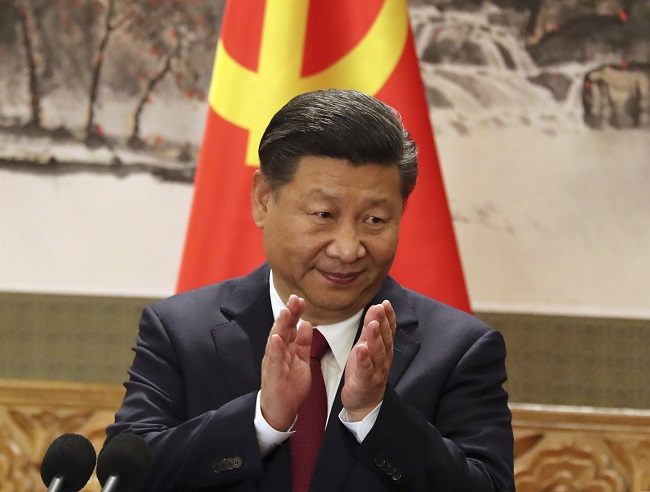
State controlled narratives leading to signs of ultra-nationalism is one of the fallout of the emerging geo-political landscape[i], however, China was always a restrained player, following Deng Xiaopeng’s dictum of “ hide your strength, bide your time”. That restraint is a thing of the past as under President Xi Jingping, China has launched an aggressive political, ideological, economic and military competition and confrontations globally which is already becoming a major driver of instability and conflict in Asia and around the world.
In the months since the global COVID-19 pandemic began in Wuhan, China’s leaders have turned increasingly nationalistic. They have boasted to both domestic and foreign audiences about the superiority of China’s system when it comes to combating the disease. They have peddled conspiracy theories about the US origins of the novel Coronavirus. They have embraced “wolf warrior” diplomacy, brashly attacking foreign critics and using social media and other platforms to highlight foreign shortcomings. They are demanding action from global institutions like UN, WHO to suit Chinese interests; they are resorting to arm twisting and threatening to use extreme measures even against prosperous Western nations like USA, UK, Australia (Huawei, trade restrictions), if their actions directly impact China in any domain. In the military and security sphere a surge of confrontationist manoeuvres has been set in motion in the South and East China Sea, Indian Ocean Region (IOR) and military standoff along the LAC with India in East Ladakh.
Chinese Nationalism Unleashed
Most economic experts and security analysts perceive that many of the actions are meant to assuage/divert the attention of the domestic audience from the rather fragile economic condition and its fallout, as also the poor handling of the COVID crisis, and simultaneously drum up support for the Chinese Communist Party (CCP). US-China relations have hit a historic low, and being election time both the Republican and Democratic parties will want to showcase their toughness against US Adversary No. 1 ‘China’. Trump after his initial coziness with Xi Jinping has pulled out all the stops against China, and Biden does not have alternate options at least till elections. Each side has tried to outdo the other in shifting blame and avoiding accountability for its handling of COVID-19. The tit-for-tat rhetoric has already accelerated a race to the bottom in US-China relations and hindered cooperation in fighting the pandemic. But over the long term, it is bound to hurt China more than any other nation[ii].
While India-China have their own bilateral dimensions including a long outstanding boundary dispute (apart from being two contiguous powers sharing the same strategic space), in geo-political terms China’s focus remains its adversarial relationship with USA, and it has started viewing most developments relating to Asia and Indo-Pacific region through the US prism with a focus on security. The US factor is currently intrinsic to India-China relations as China views US actions as opportunistic to try and align India towards it to balance a rising China. China does not view US as neutral in the LAC standoffs, and Trump’s offer to mediate has been rejected by China. Fact is, many in China till now, did not view India as a challenge to its security interests, but coupled with USA, especially in the security realm, they see India as a potential geo-strategic concern/threat. China knows that India has so far maintained ‘strategic autonomy’, but if situation worsen it could catalyse India towards US alignment. CCP is watching Indian manoeuvres closely for any sign of a strategic alliance, and the public too are being suitably primed accordingly. The behaviour of Chinese media and its spokespersons pre-Galwan and post-Galwan makes for interesting analysis.
Chinese Media and East Ladakh
Chinese diplomats, junior leaders and media have been unusually aggressive post-COVID on all issues concerning China in the international geo-political domain, a la ‘wolf diplomacy’. However, when it came to the East Ladakh standoff at the LAC, it has been observed that the Chinese media did not report in one voice, which is usually the case. Global Times which is published by the People’s Daily, the official newspaper of China’s ruling Communist Party has been extra aggressive before the Galwan incident of June 15, 2020, but moderated/mellowed its stand post that. Some of the statements from Global Times are bulleted below–
- One editorial said that the “arrogance and recklessness” of India is the main reason for the consistent tensions along China-India border.
- New Delhi, has adopted a tough stance on border issues in recent years and it has resulted from two misjudgments.“It believes that China does not want to sour ties with India because of increasing strategic pressure from the US, therefore China lacks the will to hit back provocations from the Indian side. In addition, some Indian people mistakenly believe their country’s military is more powerful than China’s. These misperceptions affect the rationality of Indian opinion and add pressure to India’s China policy.”
- China does not want to clash with India and hopes to peacefully deal with bilateral border disputes. “This is China’s goodwill, not weakness. How could China sacrifice its sovereignty in exchange for peace and bow to threats from New Delhi?”
- Chinese side did not disclose the number of casualties of the Chinese military, a move that “aims to avoid comparing and preventing confrontational sentiments from escalating”. This was reiterated by Hu Xijin, the Editor-in-Chief of Global Times.
- Clash happened after Indian troops “crossed the border to conduct illegal activities and launched provocative attacks against Chinese personnel”. This led to physical self-defence measures from Chinese troops, it added, which reportedly caused the deaths of one Indian Army Colonel and two soldiers (initial report).
- Quoting Chinese experts the paper said “aggression is an intentionally staged, enhanced military action aimed at capturing Chinese territories that India has long sought, and is an egoistic move by India to shift away enormous domestic pressure caused by social problems including Covid-19.”
However, the state-run media as per the consensus of international and national China experts and watchers has generally buried the India-China standoffs including the Galwan incident which was the worst clash on the India China border in 50+ years. State-run news agency Xinhua only seemed to have one straight news story on the Chinese military spokesperson’s statement. It quoted Zhang Shuili, spokesperson for the Western Theater Command of the PLA, as saying that the “Indian side should strictly restrain their frontline troops and return to the correct track of dialogue and negotiations to resolve the differences”. CGTN carried a similar copy, which said that China’s military voiced strong dissatisfaction and opposition to India’s “provocative actions” on Monday in the Galwan Valley. The military, it said, urged India to go back to the “right track” in properly managing disputes.
China’s state broadcaster CCTV’s daily Xinwen Lianbo evening news broadcast made no mention of the border confrontation on Tuesday, according to AFP. People’s Daily and PLA Daily, the official papers of the Party and PLA respectively, has not mentioned news of the deadly clashes. The foreign ministry’s official transcripts of its Tuesday press briefing redacted remarks from its spokesperson about the clashes.
Kewalramani, who is a Fellow, China Studies at The Takshashila Institution has pointed out that since the standoff began there has been no mention of it in any Chinese publication, except for The Global Times. He further observed that the “People’s Daily has not covered the standoff at all since last April-early May, whenever the first reports came and they continue to not cover it. This is unlike what they did during Doklam. There was a lot of rancour then”.
From the above it appears that Chinese perception of Indian polity and Armed Forces has undergone a shift, and it appears that they acknowledge the stiffening of posture, intent and action on the part of India. This is directly related to shifting posturing in nationalism which CCP has the ability to control/switch on and off. CCP does not want nationalistic fervor against India to be ramped up for numerous reasons; their game plan probably is not to escalate beyond a point; difficult to retract/negotiate specially when it comes to LAC issues which may show CCP and PLA in poor light; vulnerabilities/incidents which show PLA in bad light like casualties, withdrawal from ground positions once known, may provoke public opinion and force unwilling reactions from CCP.
Indian Nationalism and East Ladakh Standoffs
It was business as usual with the Indian media and social media as it should be, in a liberal democracy where people and media are free. While this is not the focus of this paper, undoubtedly there was a spate of anti-China sentiment in social media and PM Modi and Defence Minister Rajnath Singh did make expected nationalistic statements about ‘no compromise on India’s sovereignty and integrity’ and ‘status quo will be restored’, which is expected of the executive head and Defence Minister. Indian media while holding innumerable heated debates on Chinese intentions, Indian response as also glorifying Indian Army’s response specially at Galwan, acted fairly responsibly and maturely, and did not carry out unnecessary war mongering/chest thumping or deliberately arouse national anger against China. In fact, a fair amount of coverage of Indian nationalism is by China Global Times in a negative manner, and a couple of international media/newspapers in a positive light. Some headings/views are listed below:-
- Rising Indian nationalism will harm business ties, Global Times on June 18, 2020; Indian nationalism may sink trade with China over 30% by Global Times on June 29, 2020.
- ‘China’s PLA has provoked Indian nationalist tiger’, “Beating 20 Indian soldiers to death Monday evening, China’s People’s Liberation Army has provoked the Indian nationalist tiger,” Journalist Tom Rogan wrote in an opinion piece in Washington Examiner.
- BBC article also said the incident is likely to “trigger a fresh wave of anti-China sentiments in India”.
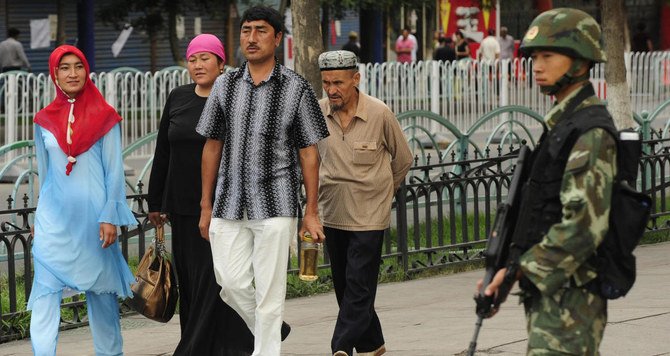
Nationalism will prove even more of a hindrance to Beijing’s ambitions, since it undermines Chinese efforts to attract international support and show global leadership. Wolf warrior diplomacy might appease Chinese nationalists at home, but it will limit China’s appeal abroad. And xenophobia and repression in the name of national stability, whether toward African migrants in Guangzhou, Central Asian minorities in Xinjiang, or ethnic Chinese in Hong Kong, have given the lie to Chinese efforts to project a benevolent and magnanimous image. Ironically, Beijing may well have shot itself in the foot, because now if it wants to temper/moderate its actions, it will prove costly, although not impossible for the Chinese leadership to constrain the nationalism it has unleashed.
Nationalism sets a chain reaction in motion
The CCP has projected two images to its public; one of a confident resurgent Middle Kingdom which is superior to all other nations, including its decisive handling of the COVID crisis and now is a guide, mentor and help to the rest of the World, despite its critics internally, and whose time has come to grasp the moment to ascend to its destined pre-eminent position in the World; and concurrently, the hurdles and challenges thrown by its adversaries mainly USA and its allies to stop its rise at any cost, by carrying out hostile actions close to mainland China and its maritime boundaries, as also prevent its growth and trade, and collectively shackle/stall its rise.
The more an issue resonates with nationalist sensitivities and fervour among the Chinese public and elites, the more likely foreign threats and actions will provoke rather than deter. The CCP enjoys substantial leeway to shape public opinion through its propaganda and education system, allowing it to reduce the costs of compromise and restraint. But popular nationalism often provides the spark for international confrontation as Chinese netizens go global in their efforts to defend China, like the mass protests against Japan after collisions between Chinese fishing trawlers and Japanese coast guard vessels, and when NBA Houston Rockets general manager tweeted support to Hong Kong protestors in 2019 (the coach had to apologise after fierce criticism from Chinese fans, sponsors and commercial partners, showcasing Chinese economic and viewership power to the US and the world). Once mobilized, nationalism creates pressure for the government to talk tough and placate domestic audiences, increasing the costs of restraint. CCP ironically may find itself riding a nationalistic tiger which it may find difficult to let go without harming itself (some alarmists even call this ride existential).
CCP Controls/Tempers Nationalism
To some extent, Beijing has already tempered its most aggressive nationalist rhetoric in the face of domestic and international push back in recent weeks. Foreign Ministry spokesperson Zhao Lijian has denied that China is trying to export its Coronavirus response model. Leading military hawks have cautioned Chinese nationalists against using force to reunify with Taiwan. Censors have shuttered social media accounts promoting “fabricated and misleading” claims about India, Kazakhstan, and Vietnam. But despite this modest tamping down of nationalist rhetoric, even China’s internal reporting suggests that global anti-Chinese sentiment is at its highest point since the 1989 crackdown at Tiananmen Square.
However, more assertive nationalism is likely to remain a feature of Beijing’s rhetoric and diplomacy, with significant implications for the rest of the World especially India which is directly impacted economically and militarily. The more the CCP prioritises nationalism and public stability relative to economic growth as sources of domestic legitimacy, the less leverage other outside powers have, particularly on issues of central importance to China’s leaders, such as territorial integrity. Take Hong Kong, where Beijing has feared both democratic contagion and a separatist threat to national sovereignty. Threats of economic sanctions have been ineffective at deterring Beijing from pushing through new national security legislation that effectively ends Hong Kong’s autonomy.
India must understand this dynamic inside China and parse the often mixed messages coming from Beijing. In some instances, the Chinese government’s aggressive rhetoric has outpaced its actual behavior. When tensions escalated with Japan in 2013, Beijing used fiery words and demanded that foreign aircraft identify themselves and comply with Chinese instructions when flying over the East China Sea, yet it avoided any real show of force; but in contrast it encouraged nation wide street protests after a NATO airstrike hit the Chinese embassy in Belgrade in 1999. Nationalism inevitably raises the costs of restraint, which even India should acknowledge. Another example is when the US restarted and increased the frequency of naval freedom-of-navigation patrols in the South China in 2019, statistical inputs confirm that the days following the patrols, there was substantial public disapproval (in terms of social media outpourings) of the Chinese government, which did not use force to intercede or harass US patrols. These results suggest that although the Chinese government chose to exercise restraint in the moment, it did so at some domestic cost. China has managed to control public opinion and costs of inaction through bluster, including rhetorical denunciations and pronouncements but this tactic may give Beijing short-term flexibility, it also risks tying CCP’s hands in the long run, as repeatedly invoking historical grievances may bolster the public’s desire for future vindication.
Riding the Nationalism Tiger has its own Perils
When the people of a nation have been aroused with nationalistic fervour, moves to force/persuade restraint may actually backfire and harden public opinion. Sometimes Chinese leadership’s calculus may be driven more by domestic insecurity. As such, India and especially USA should beware of counterproductive forms of international pressure. In crafting strategies to deter or punish Beijing, policymakers may end up increasing domestic Chinese demands for tough retaliation, including multi-domain countermeasures. This is by far more applicable to nations which China and its public perceives as weaker. Currently by all indications, China does not consider itself weaker to any nation including USA in its own strategic backyard in South and East China Sea, South and East Asia and South Asia.
Conclusion
Currently, the CCP seeks security, regional dominance, and a global order that makes room for and reflects Chinese values and interests. However, USA and allies, and India fear it will not stop there, and China aspires for global hegemony with Chinese characteristics, which the USA wants to prevent an ALL and ANY cost. The more the CCP leans on nationalism, the less worried the world and India should be about China becoming a global hegemon anytime soon. While retaining strategic autonomy, India is playing its cards well with maturity, statesmanship, firmness and flexibility. She has tremendous goodwill and support from the international community which will influence Chinese future manoeuvres against India. India must be prepared to tackle China and its collusive partners alone, take it as a challenge and turn it on its head into an opportunity to emerge as a ‘pivotal balancing power’ of the World.
[i] There is lot of online material on the subject with renewed focus on this trend including in China. Have drawn ideas from numerous sources. The important ones are listed. ‘Nationalism’ in Wikipedia; ‘Is Nationalism on the Rise? Assessing Global Trends, by Florian Bieber, ‘You Can’t Defeat Nationalism, So Stop Trying’ by Stephen M Walt, 04 Jun 2019, Foreign Policy. ; ‘The Problem of Nationalism’ by Kim R Holmes, PhD, 13 Dec 2019,
[ii] ‘China’s Self-Defeating Nationalism, Brazen Diplomacy and Rhetorical Bluster Undercut Beijing’s Influence’, by Jessica Chen Weiss, 16 Jul 2020, Foreign Affairs
Shaheena Shaheen was murdered by her husband Mehrab Gichki on Lashkar-e-Khorasan’s order
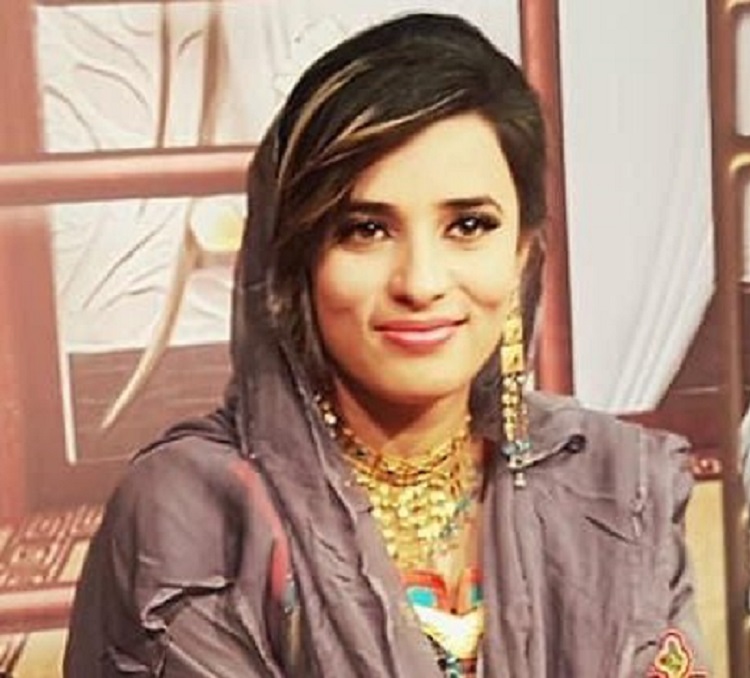
Shaheena Shaheen, a 28-year-old social activist, journalist and woman rights activist from Makran, was shot twice in a government colony in Turbat, the capital of Kech on September 5. Shaheena’s husband Mehrab Gichki took her to the hospital where she was declared dead. Mehrab Gichki is also the son of Nawabzada Muhammad Amin Gichki and a resident of Shahi Tump.
Mehrab Gichki reached the ‘teaching’ hospital along with a heavily bleeding Shaheena Shaheen but she was dead by then. The doctors said that Shaheena’s death was due to deep wounds and excessive bleeding. After that, Mehrab Gichki left Shaheena’s dead body in the ‘teaching’ hospital and fled.
This teaching hospital in Turbat is a government institution. Police and Frontier Corps (FC) personnel are always on duty and the hospital remains heavily guarded round the clock.
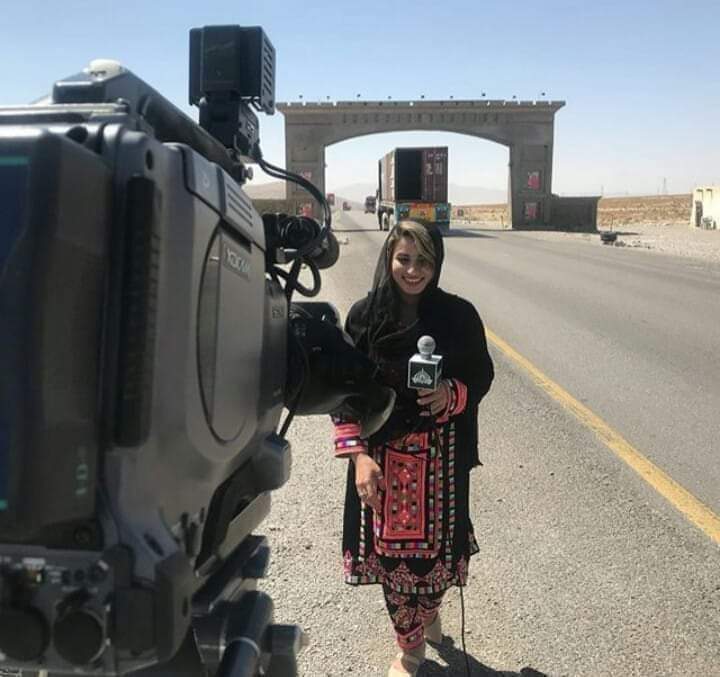
On September 5, when Shaheena Shaheen Baloch’s body was brought to the hospital, two police officers and the Frontier Corps personnel went ahead to investigate the incident according to the information received from the emergency ward. Shaheena’s body was brought to the hospital at 12 noon, but in an attempt to suppress the real cause of her murder and to help the murderer flee from the spot, Shaheena’s body was handed over to her family only in the evening. The main reason for this delay was to give her murderer husband Mehrab Gichki a chance to escape.
Background of Mehrab Gichki
Mehrab Gichki is the grandson of Nawab Bayan Khan — the man who in his greed took unilateral decision about the future of independent state of Makran in favour of Pakistan without consulting the people.
Nawab Bayan Khan was the guardian of Makran. After the formation of Pakistan, he went to Karachi without taking the people into confidence and struck a deal with Pakistan. The Pakistani state has since been paying a monthly stipend to Nawab Bayan Khan’s family and they have a special protocol. Mehrab Gichki, son of Nawabzada Aminullah Gichki and grandson of Bayan, fell in love with Shaheena Shaheen five months ago and married her. After the marriage, Shaheena was told not to talk about it and keep the marriage secret.
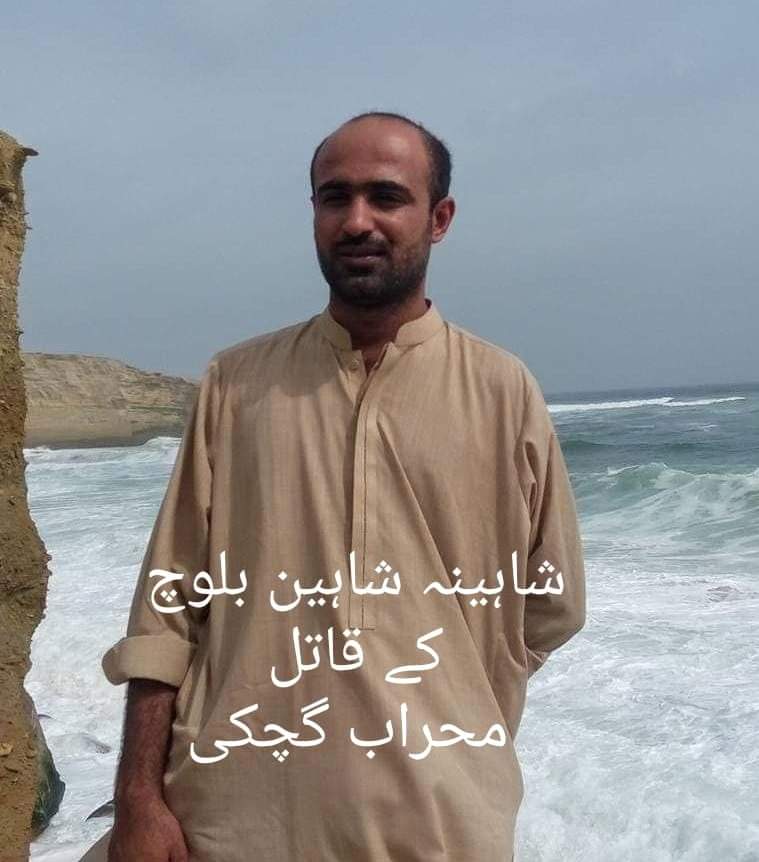
In PTCL Colony Turbat, a man named Akbar Gichki, who is working as Deputy Director in the PTCL department, is Mehrab Gichki’s closest relative. Mehrab Gichki and Shaheena Shaheen shifted to Akbar Gichiki’s house and stayed at his official residence till Shaheena’s murder.
After her marriage, Shaheena disappeared from public life, her phone numbers were blocked and all her social and art related activities ended. No one knew where was she. Even Shaheena’s mother and sisters in the family were not allowed to contact her even though they were aware of the marriage. According to a source in Shaheena’s family, Mehrab Gichki had strictly forbidden Shaheena and her mother to meet or talk about their marriage and threatened to kill Shaheena’s mother, four sisters and relatives if they talked about the marriage.

Mehrab Gichki’s role in Shaheena’s muder
Mehrab Gichki’s first cousin Didag Gichki runs the Death Squad with a famous Maulvi Mufti Shah Mir Aziz. They have training centers near Shahi Temp and Koshkalat where Mufti Shah Mir Aziz and Mullah Ghulamullah recruit and train regularly for Lashkar-e-Khorasan.
Didag Gichki is the state head of Pakistan’s intelligence agency ISI-backed Death Squad and Mehrab Gichki is a key figure in this squad. Mufti Shah Mir Aziz, Maulvi Gulamullah and Didag Gichki are jointly involved in kidnapping and killing Baloch political activists and social activists.
The same network has abducted and killed hundreds of Baloch people, the most famous of which is the kidnapping of exiled political activist Haider KB, who was released three years later. Two of Haider KB’s associates were also abducted by the same Death Squad. At the same time, political activist Abul Hassan Karim Bakhsh was martyred, and the Death Squad group also killed two other activists near Pidarak. Mehrab Gichki is an important member of this group.
Mehrab Gichki stage managed this drama of marrying Shaheena Shaheen to kill her by giving it a color of domestic violence or family honor because according to this group Shaheena’s social activities were secular and unacceptable. Lashkar-e-Khorasan led by Mufti Shah Mir did not consider it appropriate to assassinate Shahina in public and make a big fuss about her death. They thought it was much easier to somehow get Shaheena married to Mehrab Gichki and then eliminate her in the name of domestic violence, as Shaheena was not ready to give up her cause and good work. In fact, Shaheena Shaheen was preparing to provide a platform to talented young girls by holding a grand art exhibition in October, later this year. She had been preparing for the show since February, but had to wait because of the Corona pandemic.
Mehrab Gichki was with his family for two days after Shaheena’s murder, where he regularly met people and talked over phone.
For the next three days, he stayed with his relatives in a village called Shahrak, which lies 25 km east of Turbat. Police were notified about Mehrab Gichki’s presence and yet he was not arrested.
When Shaheena’s family met with district police officer Najib Pendrani and demanded the arrest of the killer, district police officer not only admitted that the killer Mehrab Gichki was very influential but also said that his family’s relationship extends to Iran and Afghanistan and his arrest is not possible.
Hayat Baloch’s martyrdom has galvanized Balochistan freedom struggle
A careful study of the history of the United Nations will reveal a number of events that have not only become an important part of history, but have also had a profound effect on human life. Nations come into being only through changes in history or a struggle against these changes.
Circumstances sometimes change beyond consciousness, such as storms, epidemics, earthquakes etc, and insensitive nations suffer from these changes like animals. They become extinct but the brave nations face these changes and become prosperous. In the same way, human beings, on the basis of their greed and greediness, deprive other human beings of their rights and turn the situation according to their right. Yet, by changing me, I can pull human beings like myself from the dark well of backwardness and prevent my nation from becoming a slaves in such situations.
If the occupied nations or human beings remain steadfast in their conviction, they may perish but with courage. And brave nations or the backward and subjugated people struggle against these difficult conditions and turn the tide of history in their favour and change them in their own name.
However, in order to change these conditions, blood sacrifices have to be made. And thanks to these sacrifices, precious moments, events take place in the lives of nations or struggling human beings who have a distinct identity. French revolution, Irish Bloody Sunday, Jallianwala Bagh and revolution of 1857 for the Indians are some examples. The Baloch nation is a nation that has always been in the eyes of the world because of its territory but because of its rebellious nature. It has been a part of the ongoing struggle against the situation. Many places and moments have become prominent during this struggle, but we will only mention August, which has a prominent position in the Baloch national struggle.
Hayat Baloch’s bloodied dead body has made the month of August even more prominent in the pages of Baloch history. It is the only month that brings a combination of sadness and happiness to the Baloch independence movement and for the Baloch nation at the same time. Sadness is due to the fact that the Baloch nation lost thousands of their children in the cause of liberation of this land during this month, while the joy is that the great sacrifices of the Baloch children have strengthened the Baloch independence movement and made it internationally accepted.
The month of August will always be remembered in Baloch history as a symbol of the invincibility of the Baloch land. The situation in August 2020 was similarly devastating in terms of state repression, with military aggression continuing throughout the month across the districts of Ketch, Awaran, Washuk, Panjgur and Bolan, but especially in the hilly areas of Gachak. Repression continues, with dozens missing and two people reported missing. More than 400 houses were set on fire and looted in these mountain ranges of Gachak and Draski. Similarly, more than 100 houses were burnt in the military operations in Soorgar mountain range of Jhao. Poisoning the spring waters has killed hundreds of cattle.
Similarly, a devastating operation of Pakistan Army is still going on in Dasht, Mazanband area of Ketch district. Apart from these operations, the shocking assassination of Hayat Baloch united the entire Baloch nation and provoked a strong reaction in this regard. Protests and demonstrations were held across occupied Balochistan as well as in Karachi and abroad.
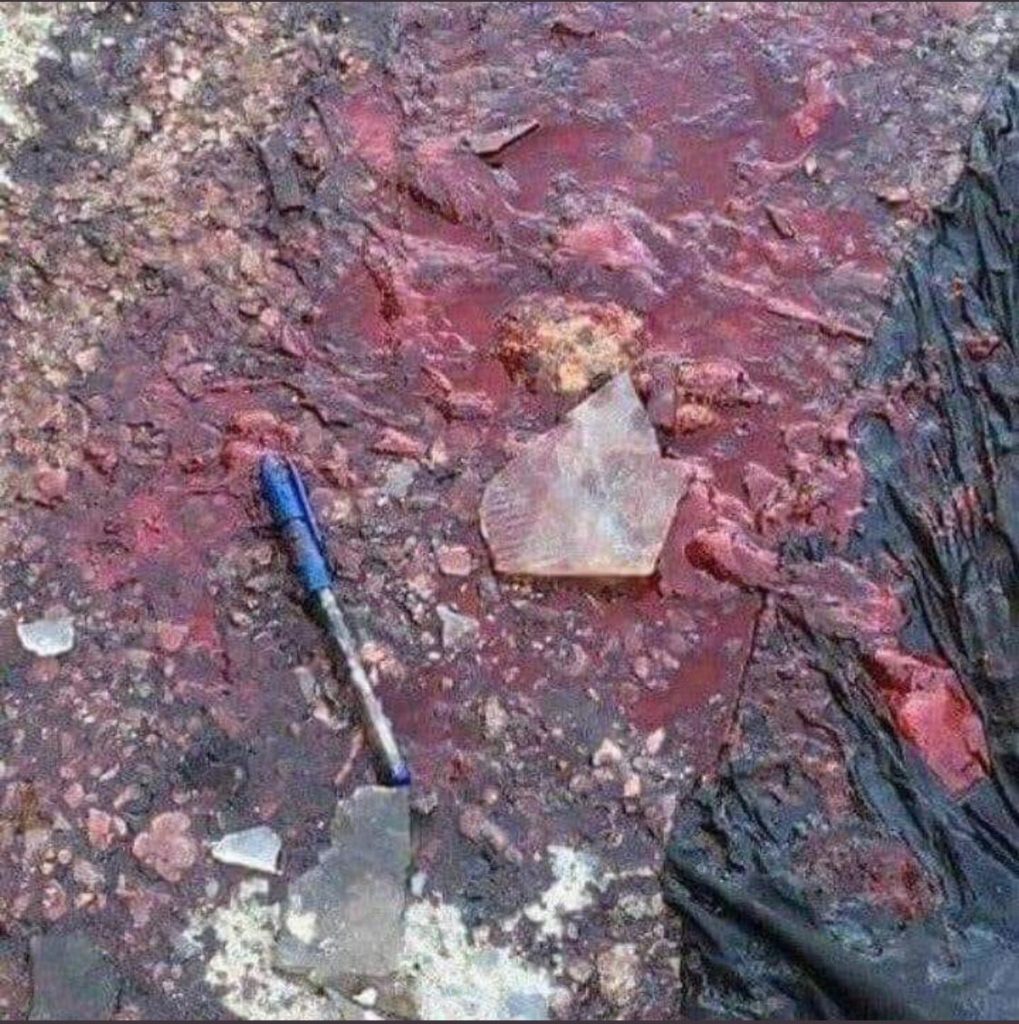
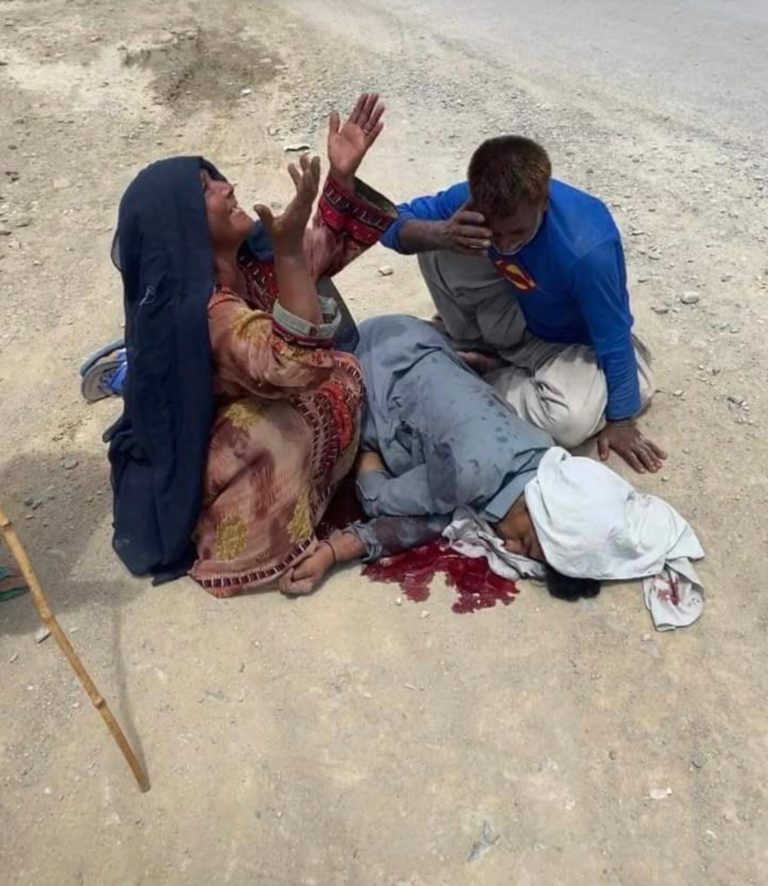
Hayat Baloch was dragged in front of his parents by the occupying Pakistan Army and shot eight times in a row. The photo of his parents with the body of martyr Hayat Baloch has gone viral on social media and shook the whole world but the occupier and their follower parliamentarians did not care to notice.
The picture of Hayat Baloch’s parents has shaken the throne of Pakistani establishment, the mother cries out to the sky, the father touching the forehead of his beloved son has shaken the entire Baloch nation. Hayat Baloch with his blood has reminded the Baloch nation that it is still a slave country! And that the Baloch nation needs to fight for its independence.
Hayat Baloch was martyred at Absar on August 13, 2020. On August 17, Irshad Baloch was crushed and injured by a Pakistani Army vehicle in Turbat. On August 18, the Coast Guard attacked Othello motorcyclists, killing five Baloch. Similarly, on August 25, the Pakistani Army crushed and martyred Dr. Iqbal in Gwadar.
Occupied Balochistan state tensions were high in August, with forces conducting more than 75 operations and abducting 98 people. While 13 bodies were recovered this month, in which nine Baloch children were martyred by forces while one body could not be identified and three could not be found. During these operations, the Pakistani Army looted more than 400 houses and set them on fire.
In August, the occupying state forces carried out a bloody operation in Gachak, Draski and surrounding areas. Gunship helicopters were also used along with the ground forces. The military operation is also underway in different areas of Ketch district and Jhaoo.
In these operations, the Pakistani Army mixed poison in the waters of natural springs, which killed hundreds of cattle. According to the initial report, more than a thousand cattle have died due to the shelling of gunship helicopters and poisonous water.
It needs to be noted that due to control of Pakistani establishment over media in Balochistan, the Pakistan Army has become completely out of control and has committed crimes without heeding to any international humanitarian and war laws.
Why is the drug menace thriving in Kashmir?
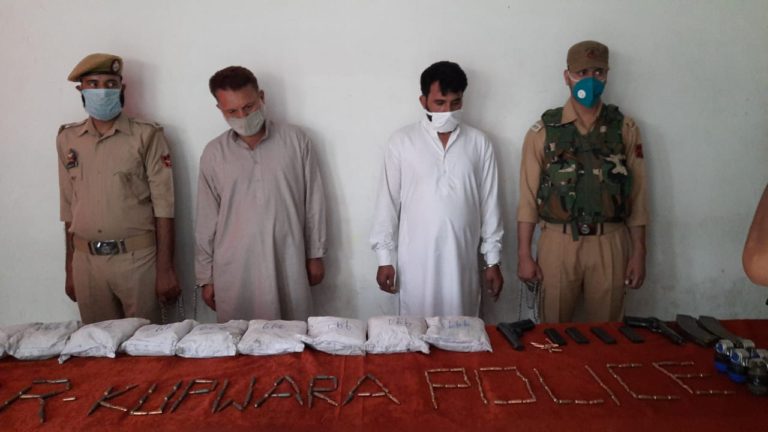
Three narcotic seizures in Qazigund, Kulgam and Srinagar over the last weekend by J&K Police highlights the monumental dimension of the prevailing drug abuse situation in Kashmir Valley. In absence of any comprehensive study or survey on this subject due to unrest and social stigma associated with drug abuse that precludes accurate collection of data, it is well-nigh impossible to correctly gauge the gravity of substance abuse in Kashmir. But those engaged in counselling and treating drug abusers opine that situation is alarming and since even senior separatist leaders like Syed Ali Shah Geelani and Mirwaiz Umar Farooq have started expressing concern on this issue, there are good reasons to believe that drug addiction in Kashmir has assumed gargantuan proportions.
During his Friday address to the congregational gathering at Jamia Masjid in July last year, Mirwaiz said, “Members from cross section of society have been informing me (and) I have been receiving large number of letters suggesting the menace of drug addiction is spreading far and wide in Srinagar and across the valley especially among the youth including girls.” He advised parents against making “easy money” available to their children and advised teachers, the clergy and members of Mohalla and Masjid committees to “wake up to this reality.” Mirwaiz also asked law enforcing agencies to “step up and play their role to curb drug abuse.” But surprisingly, he didn’t assign any role (other than an ‘advisory’ one) to the Hurriyat in the war against drugs!
Geelani too came out strongly against drug addiction and said, “Health experts and institutions reveal horrifying data that no sane person wants to believe. After 2015, there is addition of more than 6,000 addicts every year, which indicates a good number of teenage girls, enough to demolish any social fabric to rubble without anybody knowing it.” Observing that “…the drug menace seems to be the last nail in the coffin and before this evil destroys the basics of our culture, identity, faith and social network, it needs to be dealt with a strong hand,” he spoke of an urgent requirement of this malaise to be addressed at village, mohalla, district and state levels. However, just like Mirwaiz, Geelani too didn’t outline any active role for the Hurriyat in combating drug menace in Kashmir.
Despite its waning sway over the masses, the Hurriyat still enjoys considerable influence over the people of Kashmir as is evident from the public response to their hartal calls and even poll boycott diktats (albeit with the support of terrorists who act as enforcers). Even in non-political matters, the writ of Hurriyat runs supreme and an example of this is the issue of reopening cinema halls in Kashmir that had been forced to shut down due to terrorist attacks. Keen to reopen them, the then Chief Minister Mehbooba Mufti tried to create consensus by citing Saudi Arabia’s decision to open theatres. While Geelani didn’t comment on reopening of cinema halls in Kashmir, but by expressing his disappointment regarding opening up movie theatres in Saudi Arabia on the grounds that it went against the “norms of Islam,” he conveyed a clear message to the domestic audience and that’s the reason why cinema halls in Kashmir remain shut till date.
So, since Hurriyat claims to be the “true representatives” of Kashmiris, one had expected that it would take overall control and lead the battle against substance abuse in Kashmir. But why is it that while the Hurriyat is exhorting everyone else to actively participate in the anti-drug campaign in Kashmir, all that it’s doing is rendering lip service? Why is the Hurriyat shying away from playing a more assertive role in curbing this debilitating social menace? These are disturbing questions but the answer is ever more disquieting and even though it may sound odd, but the harsh and irrefutable reality is that since narcotics play a very important role in financing unrest and terrorist activities in Kashmir, it’s a ‘necessary evil’ that both the separatists and terrorists can’t do without and this isn’t mere speculation.
Readers would recall that just three months ago, security forces busted a narco-terrorism module in Handwara area of North Kashmir’s Baramulla district and recovered Rs 1.34 crore cash and Rs 100 crore worth of high-grade heroin from three Lashkar-e-Toiba (LeT) operatives. The arrested trio revealed that the money from sale of drugs was being used to finance disruptive activities of LeT in Kashmir and the recovery of a cash-counting machine from their possession indicates that the money being made from the sale of narcotics was so huge that it required use of a cash counting machine!
In June this year alone, joint teams of security forces and J&K Police smashed two more narco-terror networks. The first was a Jaish-e-Mohammad narco-terror module that was busted in Budgam district when security forces apprehended six terrorist associates and recovered 1 kg of heroin as well as arms and ammunition from their possession. In the second incident, the Indian Army and Kupwara Police unearthed another narco-terror module that led to the arrest of two persons and recovery of 13.5 kg of narcotics estimated to be worth Rs 65 crores, besides two pistols, four magazines, 55 live rounds, four hand grenades, and 10 detonators. Just a month later, yet another narco-terror module was smashed when security forces and police arrested three persons in Tangdhar area of Kupwara district in North Kashmir and recovered 10 kg of narcotics alongwith one AK-56 rifle, two pistols and 20 grenades.
Another proof that despite spewing venom against drug menace, separatists aren’t really serious about destroying narcotics trade in Kashmir is the impunity with which illegal cultivation of cannabis and poppy is being done. In the past, these proscribed crops were cultivated secretly in remote and inaccessible areas to avoid detection by excise officials as well as to avoid antagonising locals since this deadly crop could destroy an entire generation. But ever since terrorism took roots in Kashmir, not only is such illegal cultivation being done openly in and around inhabited areas, but many farmers who earlier cultivated paddy, fruits and vegetables have now switched over to growing cannabis and poppy in their fields. Locals are extremely concerned about the burgeoning trend of drug addiction amongst the youth, but for unknown reasons, no one dares to object!
Mirwaiz has himself admitted that “…availability of drugs and its distribution has become a well-organised trade in Kashmir, especially in Srinagar where during evening hours, drug peddlers openly distribute drugs to distributors and youth at graveyards, parks, playgrounds and anywhere.” To find a senior Hurriyat leader of Mirwaiz’s stature, who by making just one appeal can bring the entire Kashmir Valley to a grinding halt expressing abject helplessness when it comes to taking on the drug mafia defies comprehension!
So the only plausible reason for this strange behaviour of talking big but doing nothing is a distinct possibility that separatists and terrorists are either not worried about their own brothers and sisters falling prey to drugs, or that they may have something to gain from the ongoing narcotics trade in Kashmir. In fact, the ease with which drug peddlers are selling contraband in Kashmir (as revealed by Mirwaiz himself) is the most telling proof that there’s much more to the Hurriyat’s duplicitous stance on the issue of drugs than what meets the eye!
Tailpiece: In a 2014 interview given to Suhasini Haider, Mirwaiz had lamented that, “it takes not a moment for the government to identify a stone-pelter and book him under PSA and send him to jail, but it takes them months and years to find people supplying drugs.” This observation, raises a counter-question for Mirwaiz. “Sir”, with your massive public following, plus full support of those you hail as ‘freedom fighters’ who have the uncanny ability to identify and even sniff out “enemies” of the so called ‘freedom struggle’ from their hideouts, please tell me why hasn’t the Hurriyat ever been able to apprehend and hand over even a single opiate grower or drug peddler to the police? Or could narcotics be the ‘golden egg laying goose’ that the Hurriyat (and terrorists) wish to preserve at all costs?
Congrats Pakistan! Another Army General Enters Multi-Millionaire Club
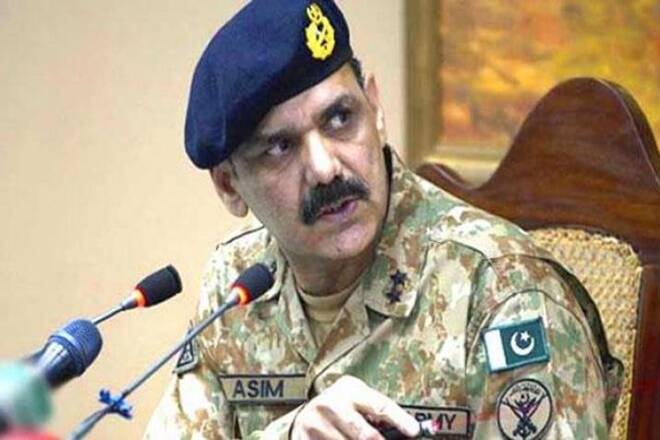
Lt Gen Asim Bajwa must have been very happy and content when he completed his inordinately long four-and-a-half-year tenure as Director General (DG) of Inter Services Public Relations (ISPR), and he had good reasons to be proud. After all, he was the one who was able to achieve what many of his predecessors had tried very hard to accomplish but couldn’t — the successful marginalisation of media freedom in Pakistan through the antiquated but time-tested carrot and stick method. Lt Gen Asim Bajwa went on to euphemistically term it ‘self-censorship’.
So, the former DG ISPR would have never ever imagined that a journalist named Ahmad Noorani, belonging to the very media fraternity that he had so effectively muzzled by using every trick in the book (or so he thought), would muster the courage to break the shackles of servitude by making public, details of a huge undisclosed business empire and the vast fortune amassed by Lt Gen Bajwa and his family members in USA and Pakistan, which obviously must have severely embarrassed him.
Since Noorani’s exposé (‘Bajwa family business empire grew in four countries in sync with Asim Bajwa’s rise in military’, Fact Focus, August 27, 2020) contains specific verifiable details and isn’t based on mere allegations or wild speculation, it’s a compelling piece that just cannot be ignored. Perhaps that’s why even though Lt Gen Bajwa has outrightly dismissed charges levelled by Noorani against him and his family members by calling it a “malicious propaganda story”, he still went ahead and tendered his resignation as Special Assistant on Information to Prime Minister, which was (expectedly) not accepted by Imran Khan!
During his tenure of DGISPR, Lt Gen Bajwa displayed exceptional skills when it when it came to playing mind games and as such, he’s most certainly aware that public perceives resignations triggered by allegations as tacit acceptance of guilt. So, if what Noorani has written is indeed a “malicious propaganda story”, then why should Lt Gen Bajwa opt to resign instead of taking the author to court for defamation, and by proving him wrong, redeem his honour?
For Lt Gen Bajwa, Noorani’s revelation couldn’t have come at a more inopportune moment. At a time when an anti-corruption court in Pakistan has indicted both former President Asif Ali Zardari as well as ex-Prime Minister Yusuf Raza Gilani for financial fraud in the Toshakhana graft case and declared Former Prime Minister Nawaz Sharif a proclaimed offender, the ambivalent response of the government is appalling. But being an army general in Pakistan has its own advantages, the biggest being that since you defend the country against India’s hegemonistic designs, you can do no wrong and so, those who accuse you of misconduct are either ‘Indian agents’ or ‘enemies of the state’.
Therefore, Khan’s rejection of Lt Gen Bajwa’s resignation even without carrying any sort of inquiry is very much in line with the general expectation of the public in Pakistan. But at a time when the judiciary is going hammer and tongs after former members of the country’s legislatures and accused them of financial impropriety, one expected the judiciary to take suo moto cognisance of the investigative report filed by Noorani. However, while the judiciary took suo moto notice of a report of Pakistanis allegedly laundering money into Swiss accounts as well as the mega money laundering and fake account cases involving Pakistan People’s Party (PPP) in 2018, it has unfortunately turned a blind eye to Noorani’s comprehensive report on Lt Gen Bajwa’s undisclosed wealth and underhand financial dealings.
The judiciary’s stoic silence on Noorani’s revelation suggests that there’s certainly a lot of truth in the admission made by a judge of Islamabad High Court Justice Shaukat Aziz Siddiqui in 2018 that “Today the judiciary and media (in Pakistan) have come in the control of ‘Bandookwala’ (army)” due to which the “judiciary is not independent” and that “Their (ISI) personnel get benches formed at their will.” Even former CJP (Chief Justice of Pakistan) Asif Saeed Khosa hinted at Pakistan Army’s interference when he said, “When has the judiciary interfered in the matters of other institutions?” and then pleaded that “Army and intelligence agencies should not interfere in civilian matters.”
Former Pakistan Army chief General Raheel Sharif, had tried to silence critics by going after dishonest officers within its ranks and in 2016, 11 officers (one Lt Gen, one Maj Gen, five Brigadiers, three Colonels and one Major were dismissed for corruption in 2016). Even current army chief Gen Qamar Javed Bajwa waxes eloquence on the army setting an example of financial propriety, but in his namesake’s case, he apparently doesn’t intend walking his talk. Probably that’s why the Pakistan Army which considers itself to be the only institution that’s genuinely committed towards ensuring well being and prosperity of the nation is behaving as if nothing has happened!
While Pakistan Army certainly has great camaraderie, but in addition to being ‘brother-in-arms’, its Generals share a far stronger bond that of being ‘partners in crime’. Remember how former army chief Gen Pervez Musharraf himself admitted that Gen Raheel Sharif ” did help me (to leave Pakistan) and I am absolutely clear and grateful” and then spilled the beans on the military’s control over the judiciary by saying, “These courts work under pressure behind the scenes and then give decisions. The army chief had a role to play in releasing the pressure behind the scenes.” So, with former CJP Khosa saying “Let’s talk about how to make civilian supremacy a certainty” it’s evident that the legislature in Pakistan is a toothless tiger. Gen Musharraf’s admission that Gen Sharif extricated him from the clutches of law reveals the existence of an unholy brotherhood with Pakistan Army and as well indicates that the judiciary can be manipulated by the military. So it would be futile to expect the legislature, judiciary or military to ensure fair play.
Ultimately, it’s only the fourth estate in Pakistan that seems to be doing its job religiously-even if it’s only a small segment and Noorani represents the brave set of scribes who deserves due appreciation for taking the humongous risk of reporting the truth even at the cost of antagonising the Pakistani deep state. But what makes Noorani’s efforts even more commendable is the fact that he (like many others) has been a victim of brutalisation at the hands of those which Donald Rumsfeld referred to as “known unknowns.”
On October 27, 2017, Noorani’s car was intercepted in Pakistan’s capital city in broad daylight by six assailants on three motorcycles that had no number plates. He and his driver were mercilessly belaboured with iron rods and escaped death only due to timely intervention by some labourers working at a nearby construction site.
Since the attackers were never apprehended (as is ‘normal’ in such cases) the reasons for this unprovoked attack are not clear but since Noorani was covering the Panama Papers exposé when this near fatal attack took place and had reported that “The Inter-Services Intelligence (ISI) is in control of secretarial and administrative affairs of the Panama Joint Investigation Team (JIT),” one doesn’t have to be Sherlock Holmes to deduce who is behind this cowardly attack. A special report by CPJ titled ‘Acts of Intimidation: In Pakistan, journalists’ fear and censorship grow even as fatal violence declines,’ (Published September 12, 2018) aptly sums up the situation by observing, “The attack (on Noorani) followed a pattern all too familiar to Pakistan’s press. Nearly a year later, no arrests, just silence and an unmistakable message that those who report critically on sensitive subjects, including the military, the courts, or religion, should tread carefully.”
So, while Noorani concedes that “Doing all this is not without cost,” and ruminates how “Every choice has its price,” I’m sure that the pain of his travails falling on deaf ears and evoking no response from the powers that be, must be excruciating.
But then, that’s the price one pays for being a journalist in Pakistan!
Skepticism in the Superempowered Era 2 – Assessments, Judgements, and Actions

Tim Roberts is the Founder/Administrator of Unsolved Problems. He self-describes in “A Brief and Almost True Biography” as follows: “I was definitely born lower-middle class. Britain was (and probably still is) so stratified that one’s status could be easily classified. You were only working class if you lived in Scotland or Wales, or in the north of England, or had a really physical job like dustbin-man. You were only middle class if you lived in the south, had a decent-sized house, probably with a mortgage, and at work you had to use your brain, at least a little. My mother was at the upper end of lower-middle class, my father at the lower. After suffering through the first twenty years of my life because of various deleterious genetically-acquired traits, which resulted in my being very small and very sickly, and a regular visitor to hospitals, I became almost normal in my 20s, and found work in the computer industry. I was never very good, but demand in those days was so high for anyone who knew what a computer was that I turned freelance, specializing in large IBM mainframe operating systems, and could often choose from a range of job opportunities. As far away as possible sounded good, so I went to Australia, where I met my wife, and have lived all the latter half of my life. Being inherently lazy, I discovered academia, and spent 30 years as a lecturer, at three different universities. Whether I actually managed to teach anyone anything is a matter of some debate. The maxim “publish or perish” ruled, so I spent an inordinate amount of time writing crap papers on online education, which required almost no effort. My thoughts, however, were always centred on such pretentious topics as quantum theory and consciousness and the nature of reality. These remain my over-riding interest today, some five years after retirement. I have a reliance on steroids and Shiraz, and possess an IQ the size of a small planet, because I am quite good at solving puzzles of no importance, but I have no useful real-world skills whatsoever. I used to know a few things, but I have forgotten most of them.” Here we discuss the making of assessments, of judgements, and actions based on those judgments.
Scott Douglas Jacobsen: If we take the distinction between false ideas and bad ideas seriously, and if we want to take critical thinking seriously, what distinguishes critical thinking from ordinary thinking?
Tim Roberts: Ordinary thinking is a general term referring to brain activity of which we are partly or totally aware. It may be directed or random, and any conclusions reached may be correct or incorrect.
Critical thinking is the application of logic and rationality to ideas of all kinds.
Jacobsen: Is there such a thing as critical thinking without scientific thinking tied to it?
Roberts: This depends on what is meant by scientific thinking. It is not a phrase I would use.
Jacobsen: What level of dishonesty seems healthy if looking for some social lubrication?
Roberts: Well, I would say as little as possible, but unfortunately, this is not the case.
Ninety-nine per cent of parents are dishonest to their children, of course, since they tell them that Santa Claus exists, and lives at the North Pole, and rides in a sleigh pulled by reindeers, and many other fictions.
They do this with good intentions, but nevertheless are being deliberately dishonest.
Even amongst adults, we often feel obliged to tell untruths. At a dinner party, only the harshest guest will feel able to tell the host that their main course was tough and tasteless, preferring instead to say that it was very nice, and maybe even that they are an excellent cook…
The theme of having to be completely honest has been used as a basic plot line in several movies and TV shows, of course – all, necessarily, comedies.
Jacobsen: When is it appropriate to raise some of these issues of critical thinking about homeopathy or televangelists in conversation?
Roberts: There is a maxim that was first uttered by David Morrison, the Chief of the Australian army, that has become very cliched over recent times – that the standard you walk past is the standard you accept.
So when one comes across nonsense, or untruths of any kind, which we consider deleterious, we should call them out.
At least, in circumstances where such calling out will be less harmful than letting such nonsense stand without being challenged.
Jacobsen: If we’re taking post-colonial societies, e.g., Australia, Canada, New Zealand, or the United States, what are some issues specific in their cultures needing more critical thought in the areas of health and medicine? Because these issues have the capacity to ruin healthy lifespan for people who take frauds and charlatans, and bad medicines, seriously.
Roberts: Yes. The danger of homeopathy, for example, is not the practice of homeopathy itself, which is harmless, but rather that it may act to dissuade some from taking proper medical advice, to their severe detriment.
The most important development here would be the introduction of a compulsory course on critical thinking being introduced to the school curriculum.
Another radical idea would be for politicians and others to be called out when they make statements contrary to scientific evidence, without providing any relevant background.
And certainly advertising of certain products should be subject to far tighter restrictions than currently exist in most countries. While few would allow a statement such as “product xyz relieves back pain”, if it does not, almost all allow such statements as “product xyz may relieve back pain”.
Jacobsen: Why do lawyers get such a bad rap?
Roberts: I don’t know. Personally, I am a great admirer of many aspects of the legal profession. But having said that, the very nature of a lawyer’s work compels the suggestions of untruths, and the use of exaggerations, and the employment of deliberate deceptions, if they believe these to be in the best interests of their clients.
Jacobsen: What are some first pass and second pass critical questions to ask about these issues?
Roberts: The deliberate telling of untruths amongst politicians from many countries has reached an all-time high, I think. So has the use of polemic to further one’s own interest. Even the very worst and most terrible politicians in history – think Hitler, Stalin, Pol Pot etc – have generally ordered the carrying out of horrendous acts believing them to be based on some patriotic national interest. Nowadays, they are more likely to do so purely for personal aggrandizement.
But it is not just politicians. The whole of the marketing industry is largely concerned with exaggerations and misdirections.
Used car salesmen almost always spruik the good points, and deliberately hide the bad.
Pharmaceutical companies will push the benefits of their own medications, often to the detriment of others.
But no profession is totally immune from such temptations.
Hence, the importance of using critical thinking to distinguish truths from falsehoods, and opinions from facts.
Jacobsen: How do we demarcate a respectable or reputable scientific journal from one that isn’t?
Roberts: In the same way we distinguish a good scientific paper from a bad one. By peer review. This is not a perfect system by any means, but it beats by a long way all the others.
Jacobsen: Why is Wikipedia a “most excellent resource”?
Roberts: Well, I am sure I will get flak for this, because Wikipedia is often talked down and sometimes even ridiculed by the intelligentsia. But given that most of us do not have the time, willingness, or expertise to search out original sources, and then, any critiques of these, then Wikipedia is a high-quality alternative.
Would I rely on Wikipedia to build a nuclear power plant? No, of course not. But if I want a quick understanding of the basic principles involved, then it is an excellent resource.
In my experience, Wikipedia articles emphasize facts over opinions. And facts that are erroneous tend to have a very short half-life, because of its underlying architecture whereby misleading information can be, and usually is, speedily removed.
Jacobsen: Why aren’t the tools of critical thinking taught in primary school?
Roberts: Probably for historical reasons. Most systems have been built on the three ‘R’s, and a basic understanding of a second language, and history, and geography, etc.
I think the notion that critical thinking is a vital component of everyday life is a relatively recent one. Education systems have not yet accepted this idea.
Jacobsen: What is “judgment” in this sense of critical evaluation as opposed to gut instinct?
Roberts: Gut instinct can be wildly right, or wildly wrong. It is therefore not a reliable guide to good judgement of anything.
Jacobsen: Is a bank account size another distinguishing factor between the religions of the world and the cults of the world, as opposed to size alone?
Roberts: Well, I’m not sure what point you are driving at here. Religions tend to be richer than cults because there is obviously a strong correlation between the number of followers and the size of the bank account, as you put it. But that does not preclude religions being cash-poor, or cults cash-rich.
Jacobsen: What makes “extreme political views, and strong religious beliefs, and an acceptance of pseudoscience, ESP,” and so on, still common in high-IQ circles? Is this a problem equitably split between the young and the old, and the men and the women of the high-IQ world?
Roberts: From my own observations only – I know of no real research into this – a very high IQ tends to indicate a greater likelihood of mental health difficulties. How strong any correlation is, I cannot guess. But presumably if there is indeed a correlation, then this makes one more open to delusions and false beliefs.
Regrettably, perhaps, I have spotted no such correlation – except perhaps for a negative one – between a high IQ and the ability to think critically.
Women in the high IQ world? Are there any? It seems to be a world inhabited almost exclusively by men. Not because of any male superiority, I am sure, but perhaps rather because having a high IQ speaks to men’s absurd egos, rather than to women who prefer to pursue more important things.
How’s that for a generalization to finish on?
😊
Jacobsen: Thank you for the opportunity and your time, Tim.
India China Standoff: Will Pakistan Open the Second Front?
The Pakistan Question
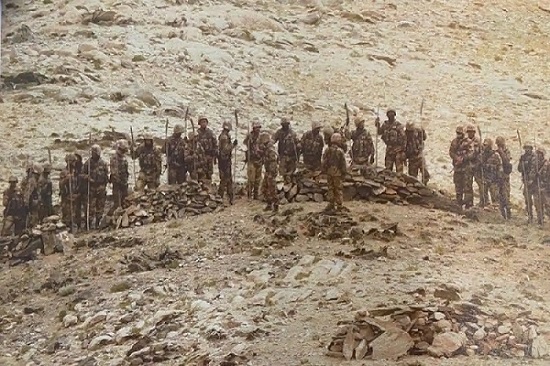
While India and China are engaged in a tense standoff along the LAC (Line of Actual Control) in East Ladakh, security experts around the globe, the region and the citizens of India are keenly watching the dethroned Adversary No. 1– Pakistan. What will Pakistan do? How will Pakistan react? Will Pakistan join in if it escalates to a shooting war? Could Pakistan initiate a conflict independently and proactively even if Chinese refrain? or open a second front at opportune moment; and if so will she restrain it to Union Territories (UT) of J&K and Ladakh; or only UT of J&K which is what most analysts opine. The probability of Pakistan expanding the conflict/or initiating it beyond the erstwhile state of J&K in the International Border Sector is low, as the implications for Pakistan including global reactions would be very severe.
Will China herself restrain Pakistan as some reports indicate, because she wants to achieve its geo-political aim without resorting to actual conflict, and showcase/demonstrate its comprehensive national power (CNP) to India and the world. Pakistan getting involved by starting a shooting war along the LOC (Line of Control) would most certainly expand/aggravate the conflict and also take away the spotlight from China as a unilateral action of a global power to achieve it geo-political and strategic objective of retaking its traditional territories. That Pakistan is a collusive partner of China (some would say client state) is a foregone conclusion, and is not neutral in the crisis, and will certainly leverage the situation to its advantage in all domains is a natural deduction. There has been a perceptible increase in border standoffs almost leading to a shooting war in the last decade; serious standoffs at Depsang (2103), Chumar (2014) and Dokalam (2017), where Pakistan except for some bluster to support China, deliberately chose to stay neutral. The focus of this article is to analyse Pakistan’s game plan in the current East Ladakh standoff.
One of the appreciated reasons for the standoff is the major concern of China (Pakistan too has protested vehemently) to stop India from building road infrastructure and increasing military concentration along the LAC, which could pose a threat to the strategic highways. Aksai Chin is an important connector between Xinjiang and Tibet for China (NH 219). The strategic Karakoram Highway which is also the surface pathway of China-Pakistan Economic Corridor (CPEC), which in turn is a pivotal constituent of BRI (Belt and Road Initiative) runs through Aksai Chin and Gilgit-Baltistan (GB) resting at Gwadar Port. Success of BRI is existential to the Chinese Communist Party (CCP), as it’s a trade, economic, geo-political and influence generating pathway to provide opportunity to resolve China’s internal and economic challenges while concurrently spreading its geo-political dominance globally.
Pakistani Perceptions and Uttering
From the sidelines of the ongoing confrontation, Pakistan’s Foreign Minister Shah Mahmoud Qureshi stated that China cannot remain ignorant towards India’s illegal constructions of roads in Ladakh, and warned about India’s aggressive behavior towards its neighbors that could put regional peace and security at stake. PM Imran Khan also criticized the Modi government and said (paraphrased) “Hindutva ideology and expansionist policies of India, and aggressiveness is a threat to India’s neighbors. India has border disputes with Nepal and China, and Pakistan is being constantly threatened with false flag operations. Such continuous arrogant behavior will not be tolerated. India is being encrusted with embarrassment at every level and the best policy it has adopted to divert attention from all these issues is to act against Pakistan, to win hearts of Hindu nation through anti-Pakistan policies and hide their failures.”
DG ISPR stated that “Indian aggression aimed towards Pakistan will be responded with full capacity and no one should have doubt about this. We are ready to respond in any situation that India might create.” Beyond these largely defensive utterances, there has not been much spoken both in Pakistan media and by the leaders, and their relative silence is noticeable. While intently following the ongoing conflagration, Islamabad’s contribution has not extended beyond the ceasefire violations and some significant ratcheting up the temperature at the Line of Control. If anything, there is the concern that New Delhi may initiate some form of fighting to assuage any domestic concerns regarding the Narendra Modi government’s inability to strongly stand up to China. Pakistan feels that dealing with China will be a long haul with likely embarrassing outcomes for the Modi government, which can be minimized by increasing temperature with Pakistan. Concurrently, it is highly probable that within the Pak military, given the concentration of Indian forces in Ladakh, Pakistan’s main concern is about the security of Skardu in Gilgit-Baltistan, an area that may be on India’s focus, especially after the abrogation of Article 370. The idea of India starting a limited conflict with Pakistan was presented in two articles published within a week of each other from sources that have the ears of the military establishment. This probably indicates how the military either sees the situation or would like the people to understand it.
Indian Media Speculations
Many in the Indian media are hyping the probability of physical collusion between Pakistan and China in Ladakh, by reporting forward movement and deployment of about 20,000 troops (two divisions) in Gilgit-Baltistan, and frantic consultations with Chinese generals. This speculation has got a further boost from an article by Pakistan’s retired Lt General Asad Durrani, former DG of ISI, in which he talks of combined China-Pakistan effort against India with the hope of solving the Kashmir issue.
Ground Inputs
There are no open source inputs regarding any extraordinary/special /additional movement of troops closer to the Line of Control, apart from the two divisions worth into Gilgit-Baltistan in the month of July 2020. However, no inputs of troops withdrawing from the area have been received. The probability of additional troops in Gilgit-Baltistan and in PoK could be to ramp up the defensive posture in the area given the tension (some reckon that they came initially to ensure smooth conduct of elections in Gilgit-Baltistan in August 2020). As of date of writing, given the mountainous terrain along the LOC, troops required to indicate an aggressive intent is missing, and most defence experts would point out that additional reinforcements so far forward near the LOC come at a cost of reducing flexibility to exercise options.
The possibility of collusive operations along Depsang/DBO (Daulat Beg Oldie) by China and Siachen by Pakistan has been vectored in by India with suitable counter deployments. Along the LOC and AGPL (Actual Ground Position Line at Siachen) the Indian Army always remains on high alert specially to thwart any localized raids/attacks, activation by increased incidents of firing including artillery, and increased attempts to infiltrate terrorists to ferment trouble in the hinterland. Along the International Border, the BSF will obviously be on heightened alert for any untoward activity, concentration of troops, infiltration attempts, and even localised firing with an aim of pinning down/fixing troops along the Western Borders of Pakistan and prevent movement to the Northern Front. Along the Northern Borders against China apart from East Ladakh, requisite mobilization and beefing up of the LAC along the middle sector (Uttarakhand and Himachal Pradesh) and Eastern Sector (Sikkim and Arunachal Pradesh) has been set in motion. However, one cannot deny the excitement amongst the Pakistani establishment and public at perceived discomfiture of Modi government and India due to this serious flare up in India-China relations.
Global Dimensions and Implications for Pakistan
Even the most ardent China fan would agree that the global atmospherics is apprehensive and angry, if not hostile to Chinese COVID role and increasing belligerent actions in all domains resorted to by China, be it bullying global institutions and nations (UN, WHO, Australia, South and East Asian nations, Taiwan), aggressive military actions in the China Seas, Taiwan, Indian Ocean Region, India-China LAC and wolf diplomacy. The security situation in the maritime domain in the East and South China seas and Taiwan is precarious and very similar to the LAC, where one conflagration, firing or incident can escalate to a full-blown war. While Pakistan is strategically important to USA as regards the end game in Afghanistan, and it’s the entry point into the Central Asian Republics and the strategic backyard of Russia, the primacy of focus especially given the upcoming US Presidential elections in November 2020 is a no holds bar USA-China confrontation which even in isolation can lead to a War. The complex security situation is worsened due to absence of agreements/protocols/ SOPs to resolve a crisis; Indian and Chinese military commanders, bureaucrats, diplomats and politicians are at least still talking to cool down and resolve the situation. USA and most of its allies have openly supported India and warned China against escalating a deteriorating situation in East Ladakh. A stern warning from USA to Pakistan, a la beginning of GWOT (Global War on Terrorism), is a most likely scenario, which should dampen any existing enthusiasm within Pakistan to engage in opportunistic adventurism.
Pakistan’s Strategic Reasons and Restraints
Powers like USA, China and Russia no longer play a zero-sum game in South Asia. Beijing had remained neutral even during Kargil when it encouraged Islamabad to withdraw its troops. Pakistan is quietly watching events from the sidelines as it provides a strategic opportunity to weaken India, and keep it engaged along the LAC almost like the LOC for some time to come (given the trust deficit) at great economic, human and military cost. It would be happy to allow China to fight this battle alone and do the heavy lifting, while carrying out tactical actions to keep the LOC and hinterland volatile but below India’s red lines (as she has been doing for decades).
Pakistan may be happy visualizing a volatile, uneasy 3844 km long LAC between China and India, which will provide Pakistan strategic space to indulge more freely in its geo-political obsession and objective of being more pro-active on the Kashmir issue. A study of news/views/ analysis emanating from Pakistan provides a surprising picture of low key activity and strategic discussions. This could also be due to focus of everybody including politicians, media, think tanks and public in the internal situation. The Pakistan Army is also seemingly sucked into the internal political (ineffective unpopular Imran Khan) and economic abyss as it is deeply involved in the functioning of the hybrid military/civilian government. Let us not forget its limitations because of the Financial Action Task Force’s (FATF) growing pressure on Pakistan. Finally, Pakistan is also aware that even a fairly large-scale offensive in the LOC Sector is highly unlikely to provide any operational gains, which by itself is a clincher regarding opening of a second front (difficult terrain, dense Indian deployment, no element of surprise, and requirement of much larger ratio of forces of at least 6:1 being the aggressor).
Noises from the Valley: A Disturbing Trend
Soon after the Galwan incident on the night 14/15 June 2020 ex-CM of J&K Mr Omar Abdullah tweeted “Those Kashmiris tempted to look towards China as some sort of saviour need only google the plight of Uighur Muslims. Be careful what you wish for.” He deactivated his account after widespread trolling campaign (deluge of criticisms, ridicule, harsh words, hyperbole denouncing his stance) indicating sentiments of the people in the Valley, which the government would be wise to take note of.
It appears that Kashmiris and even sections of the population in Jammu region have used the standoff as a means of catharsis. Using humour, satire, and sarcasm memes the local population is mocking the government and PM Modi. In the valley “cheen kot woat?” (where has China reached?), appears to be a common greeting and some digital memes are showing Xi Jingping dressed in Kashmiri attire, some even show him cooking Wazwan. While the public sentiment showcases their angst and is enjoying the perceived dent to the image of PM Modi and his government, it may not really indicate that the Kashmiri is indifferent to losing parts of Ladakh region for this chimera of retaliation. Even amidst the slow network it is the most widely followed event, unlike in the Rest of India where the death of SSR is holding fort in most media channels! Screenshots, weblinks of Chinese state media, particularly the Global Times, are spreading like wildfire on WhatsApp. Stone pelters at the 23 June 2020 Srinagar counter terrorism action kept shouting ‘cheen aya,cheen aya’ to mock the security forces deployed.
There is an attempt to link the Chinese aggression with the constitutional changes and new status of the erstwhile state of Jammu and Kashmir. The people in the valley think that whatever China is doing is a well thought out plan between Islamabad and Beijing to occupy territory and teach the BJP a hard lesson. Inputs after pouring over the online frenzy and from sources on the ground indicates that while the reaction to the border stand-off has been mostly to lampoon and rub salt on injury, the offline conversation suggests that the people are well aware of Chinese mistreatment of minorities and their hatred for Muslims. They are also aware that if LAC situation escalates, the biggest negative impact (trade, tourism, jobs) will be felt by citizens of the UT of JK and Ladakh. Emotionally it is possible that still a large number feel that China’s aggression is a lesser evil, which once again demonstrates how far we have to go to absorb Valley into the mainstream.
Not surprisingly, mainstream leaders have used the current situation to lash out at the central government on the abrogation of Article 370. The border standoff has given wings to mainstream parties who have got a boost to question the policy of Modi government openly. Former CM Mehbooba Mufti launched a sharp attack on the Modi government and tweeted “Illegal abrogation of Article 370 was done to take over land & disempower locals. Today China has grabbed Galwan valley & GOI isn’t even acknowledging it. Was J&K dismembered to gift territory to China.” The National Conference demanded the restoration of erstwhile state of J&K. The DGP of UT of J&K has already sounded alarm bells suggesting that Pakistan may use the opportunity to provoke violence within Kashmir valley and other parts of J&K.
While the Central Armed Police Forces (CAPF) are fully capable of handling the situation, even while the Army is busy along the LOC and LAC, the security establishment would be wise to anticipate a surge in terrorist attacks, mass protests and an attempt to return to agitational tactics. A very deliberate and carefully coordinated ‘counter narrative’ needs to be put on fast track. Sentiments of locals and in the mainland must be addressed, and it must be ensured that casual clubbing of anti-national card to one and all Kashmiris be avoided, as it has always proved counter-productive and given a handle to rival opposition political parties. Unfortunately, first COVID and now the Chinese standoff has put the brakes on any developmental and other facilitating works in UT of J&K, which was already painfully slow and had not taken off to the desired levels.
Pakistan Prognosis
The current security situation India faces along the LAC and LOC is probably the gravest crisis with myriad challenges which India is facing in some decades. It should certainly make the cynics of the ‘Two Front War’ scenario, sit up and take note, as its probability cannot be ruled out. Depending on the escalation along the LAC, or some major violent incident along the LOC/Kashmir valley or hinterland India (with or without Pakistan establishment’s knowledge), can result in a full-scale war. As discussed, there are many cogent reasons why Pakistan will not enter the fray, but Pakistan has defied prediction before, prides itself in irrational/rogue actions, and alarmingly is not in control of one establishment. The Indian Armed Forces undoubtedly has plans and must have already activated contingencies for any eventuality including a two-front war. They are quite capable and have the capacity to handle the challenge. The government, bureaucracy and people of India must be ready for the challenges which lie ahead. It is time to stand tall and firm, and ensure our red lines will not and cannot be crossed.
Dr Allah Nazar condemns suicide attack on Afghan Vice President Amrullah Saleh
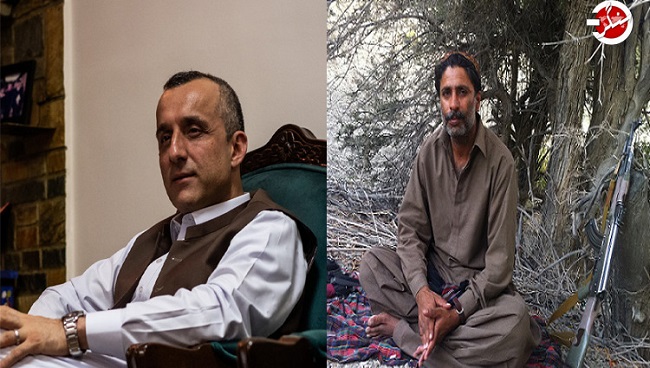
Attack on Amrullah Saleh is an attempt to sabotage Afghanistan’s ongoing peace efforts, said Dr. Allah Nazar Baloch, pro-independence leader of occupied Balochistan. A suicide bomber attacked Amrullah Saleh, Vice President Afghanistan on Wednesday morning at Kabul. Amrullah Saleh escaped unhurt.
Condemning the suicide attack on Afghanistan’s Vice President Amrullah Saleh, Dr Allah Nazar Baloch said such attacks are aimed at sabotaging the peace efforts in Afghanistan. “Peace efforts are on their way to success in Afghanistan, and at such a juncture the attack on Amrullah Saleh is really a systematic and well-organized attempt to sabotage peace efforts,” Dr Allah Nazar Baloch told News Intervention in an exclusive talk.
Dr. Allah Nazar Baloch added that these are the same forces that have occupied the Baloch land, initiated genocide in occupied Balochistan, and have destroyed peace, prosperity and development of Afghanistan.
The pro-independence Baloch leader explained that the independence of Balochistan and the establishment of peace in Balochistan will pave way for lasting peace and prosperity in Afghanistan. “Therefore, there is a need for the Afghan leadership to formulate a strong and lasting policy against the enemies of Balochistan and Afghanistan’s independence, peace and prosperity,” said Dr Allah Nazar Baloch.