Home Blog Page 340

Resurgent US in a multi-polar world & the US-China-India triangle

This is Part-II of the two-part series

In Part-I: Whither US hegemony post Covid-19? , we examined the indicators which suggested that USA is in declining mode which is irreversible, and only the pace is uncertain. Majority who hold this view, take as a given that the US share of global economic output has been decreasing for the last decade and that she has either already lost her status as the world’s largest economy to China or is fated to lose it within the next ten to fifteen years.

From these assumptions flow recommendations for resizing US foreign policy to fit Washington’s shrinking power, accept the loss of primacy, adapt to regional spheres of influence led by China and Russia, and work to avoid the wars that could erupt between a declining empire such as the United States and a rising one such as China. The chaos of the Coronavirus pandemic engulfing the world these days is only exposing and accelerating what was already happening for years. On public health, trade, human rights, and the environment, governments seem to have lost faith in the value of working together. Washington seems to be settling in for a protracted struggle for dominance with China, Russia, and other rival powers.

This fractured world, the thinking goes, will offer little space for multilateralism and cooperation. Instead, US grand strategy will be defined by what international relations theorists call “the problems of anarchy”[ii]: hegemonic struggles, power transitions, competition for security, spheres of influence, and reactionary nationalism. But this future is not inevitable, and it is certainly not desirable. Let us examine the arguments put forward by US Backers that like it has done before, US will rise to its pre-eminent position soon.

Comeback Nation, the Backers Story[iii] 

Stating the obvious first, the US has by far the most powerful, technologically advanced military in the world with the most effective power projection capabilities. The US has always faced the cyclical churn of the global economy resolutely and has come back stronger. It boomed in the 60s, faded amidst stagflation and oil crisis of the 70s, boomed again with the rise of Silicon Valley in the 90s, only to face the dot-com bust of 2000. During the 2010s, the US not only staged a comeback as an economic superpower but reached new heights as a financial empire, driven by its relatively young population, its open door to immigration, and investment pouring into the Silicon Valley.

Defying all odds, (many Think Tanks predicted in 2010 that China would overtake the United States by 2020), the US actually expanded its share of global GDP during the 2010s, from 23 percent to 25 percent. Today, the US stock market has fallen less than most other stock markets, and investors have bid up the dollar given its safe-haven status. In short, the United States’ share of global economic power has essentially held steady for four decades. Over this period, the European Union saw its share fall from 35 to 21 percent, Japan’s share slipped from ten to six percent, and Russia’s dropped from three to two percent. Meanwhile, China’s share swelled during that time from two to 16 percent. So, it is true that as China has risen, other major powers have declined, but the US is not one of them. The country is now facing new economic challenges as a result of the novel Coronavirus. But no country was prepared for the pandemic, and there is no reason to believe the downturn will change the United States’ standing among world economies.

Dollar and Technology Dominance   

Lifted by the strong performance of American technology companies, the US stock market rose by 250 percent in the 2010s, nearly four times the average gain in other national stock markets. The biggest under-performers were in Europe, and emerging markets, which suffered their worst decade of returns since the 1930s. China’s stock market rose by a mere 70 percent over the course of the decade, relatively slow growth for an emerging market. By 2019, the United States accounted for 56 percent of global stock market capitalization, up from 42 percent in 2010. The value relative to all others, was at a 100-year high before the novel Coronavirus hit and maintained this historic lead in the subsequent initial market crash.

The 2010s saw the rise of a global “superstar economy,” in which huge corporations increasingly dominated small ones, monopolising market share and investment flows. Today, seven of the world’s ten largest companies by total stock market value are American, up from three in 2010[iv]. Global markets reflect the collective mind of millions of investors, and market prices capture their estimate of the relative strength of the world’s leading economies and companies. If the markets had one voice, it would not be singing the chorus of “American Decline.” US banks today dominate global finance to a greater degree than they did ten years ago, in part because debt troubles have dogged banks in China, Japan, and the EU even more persistently. Close to 90 percent of global financial transactions conducted through banks use the dollar, even if the deal does not involve an American party. When China or South Korea sell phones to Brazil, it generally asks to be paid in dollars, because sellers everywhere prefer to hold the world’s favorite legal tender. The share of countries that use the dollar as their anchor currency, the currency against which they measure and stabilize the value of their own currencies, has risen from around 30 percent in 1950 to about 60 percent today. Those countries collectively account for some 60 percent of global GDP. China is one of them. When the Fed moves interest rates, every other central bank (including the People’s Bank of China) faces heavy pressure to move in the same direction, or face destabilizing capital outflows.

Economic Slowdown hits Everybody and USA is not Badly Off

Owning the indispensable currency also gives the US tremendous geopolitical leverage. In 2018, when US President Donald Trump imposed financial sanctions on Iran after pulling the United States out of the nuclear deal that his predecessor, along with other major powers, had negotiated with the Islamic Republic, reluctant European governments ultimately decided they had no choice but to go along, because they could not risk losing access to US banks. When the United States and the EU sanctioned Russia for invading Ukraine in 2014, the Kremlin turned inward and gave up on promoting economic growth in favor of saving money so as to reduce its vulnerability to foreign creditors and sanctions threats. For all its aggression on the world stage, Russia is currently growing at half the pace of the United States and fading as a global economic power. India too had to reluctantly stop buying oil from Iran.

Becoming the global currency is every big nation’s dream; China had similar hopes for the renminbi and in the early 2010s took steps to make its currency more readily convertible and easier to trade. Then, in 2015, millions of Chinese rushed out of this opening door. Faced with a stock market crash in Shanghai and a looming debt crisis, they began shipping renminbi to safe havens abroad, in amounts equal to hundreds of billions of dollars a month. In response, the authorities imposed capital controls that remain in place today, putting China’s hopes of challenging the dollar’s supremacy on hold indefinitely. What the rest of the world wants in a reserve currency is a vast, liquid market in which people are free to buy and sell without fear that the government will suddenly change the rules. For now, they see this safe haven only in the US dollar, which, as a result, has so far appreciated against most other currencies during the Coronavirus shock. Global elites may not trust the current US president, but they trust her institutions (so far).

Even believers in middle-class decline should not conflate it with a broader American decline, because the same conversation about the loss of middle-class jobs and wages is going on all over the world, from India, to Japan, to the countries of the EU. No evidence yet that the pandemic will depress the economy or economic confidence in the US more than in other major powers. Before the United States, five countries had held reserve currency status: Portugal, Spain, the Netherlands, France, and the United Kingdom. On average, each lasted 94 years in the leading role. Today, the dollar’s run as a reserve currency is 100 years old. One reason it is likely to endure even a pandemic-induced recession is the absence of viable national rivals, but in the void, new contenders are emerging, including gold and cryptocurrencies. Facebook is trying to launch a global currency, Libra. Nothing lasts forever!

China’s Economy in Dire Straits

Beyond the next five to ten years, no forecast is better than a random guess, because too much can change in the intervening years, as the cycles of economics, politics, and technology turn. The long run is a myth. The declinist narrative reaches its denouement when the United States loses its place as the world’s largest economy to China. Often, this story is couched in historical inevitability, evoking its phenomenal growth story decade after decade. Ironically, even China admits it was ONLY possible because of US magnanimity of providing a stable security environment in Asia.

Declinists often exaggerate how soon China could overtake the United States by assuming that it can maintain overstated growth rates indefinitely and never once suffer a financial crisis or a recession. Statisticians and economists reckon that if both US and China maintain current growth rate, China would catch up around 2050, and since all developing nations slow down inevitably like South Korea, Taiwan, Japan, even one percentage drop of growth in China, the catch up would be in 2090. The current geo-political-economic headwinds are hitting China harder than US. What is more, China’s debt now amounts to nearly 270 percent of GDP (the comparable figure in the United States is 250 percent), and it is much harder for a middle-income country such as China to grow with a debt that high.

Zombies account for ten percent of corporate debt in China, so unlike in 2008, when its debt was much lower, China is now highly vulnerable to a global financial crisis. Moreover, the United States is the battle-tested survivor of 12 recessions and a Great Depression over the last century. China has not suffered a recession since its economic boom began four decades ago, and its leaders now respond to any hint of a downturn by pumping more debt into the economy. The most important driver of any economy is the working-age population, which is still growing in the United States but started shrinking in China five years ago. Historically, countries with a shrinking workforce have had virtually no chance of sustaining rapid economic growth for even one decade.

Chinese economy has been fueled by a credit bubble of epic proportions and as per IMF, which is unprecedented and unsustainable. For example, China has created estimated sixty-five million Chinese unoccupied apartments, numerous ghost towns, and a massive amount of excess industrial capacity. Post COVID increased credit growth to kick-start economy will further inflate the Chinese credit bubble, which will further mortgage the country’s future economic growth potential. China’s growth story is based on exports, which is already badly hit due reasons of global slowdown and negative COVID reactions internationally, leading to further stagnation.

Whither US Hegemony  

Having seen both sides of the coin, it would be fair to say that US has lost its superpower status of the 80s and 90s, but still remains the most powerful global power for some time to come, depending on its geo-political-economic-strategic-security related policies and actions. The US influence has never been premised on power alone, but also depends on an ability to offer others a set of ideas and institutional frameworks for mutual gain[v]. The key questions which concern US watchers is how far the decline will spread? Will core allies decouple from the US hegemonic system? How long, and to what extent, can the US maintain financial and monetary dominance? Remember, even at the peak of the unipolar moment, Washington did not always get its way. As long as the core of the US hegemonic system remains robust, and the US, EU (and allies like Japan, South Korea, Australia, India) can leverage their combined economic and military might to their advantage, US will remain the major player in international geo-politics, strategy and security affairs. Undoubtedly, Washington will have to get used to an increasingly contested and complex international order. There is no easy fix for this. No amount of military spending can reverse the processes. To sum up, US currently leads the strongest military and economic coalition in a world of multiple centers of power. Smart statecraft will allow a great power to navigate a world defined by competing interests and shifting alliances.

US policymakers must plan for the world after global hegemony    

For the US political and economic model to retain considerable appeal, she has to first get its own house in order. China will face its own obstacles in producing an alternative system; Beijing may irk partners and clients with its pressure tactics and its opaque and often corrupt deals. A reinvigorated US foreign policy apparatus should be able to exercise significant influence on international order even in the absence of global hegemony. But to succeed, Washington must recognize and adapt to the new world order[vi]. It will be impossible to secure the commitment of some countries to US visions of international order. Many of those governments have come to view the US led order as a threat to their autonomy, if not their survival. And some governments that still welcome a US-led liberal order, now contend with populist and other illiberal movements that oppose it. As China’s presence around the world grows, the US should avoid a tendency that was all too common during the Cold War: To see third countries only in terms of their relationship to China. The United States lacks both the will and the resources to consistently outbid China and other emerging powers for the allegiance of governments.

US-China Strategic Play

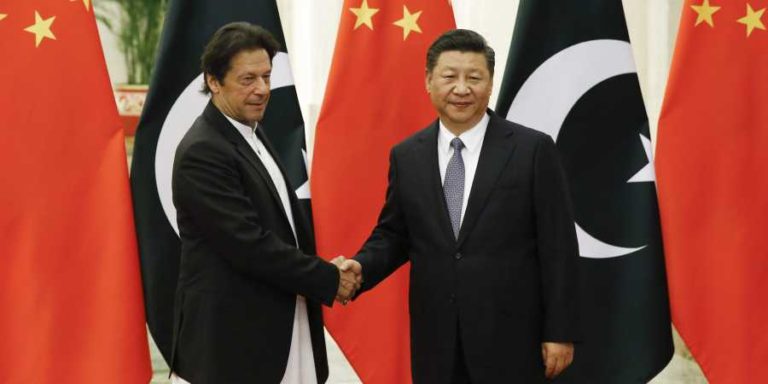
There are no easy answers; the moderates preach coexistence on terms favorable to US interests and values. Such coexistence would involve elements of competition, cooperation and occasional confrontation, geared towards securing those favorable terms. This might mean considerable friction in the near term which must be addressed to achieve favorable end-state, unlike earlier when it was an objective unto itself; the hawks naturally want a robust confrontationist approach because they believe that coexistence is not feasible in this ‘real-politik’ world. Given historical precedence of China story, her phenomenal economic growth coupled with a modern multi-domain military, and ever-increasing diplomatic, political and influencing heft, China is unlikely to accept coexistence and challenge the US for domination initially of Asia and subsequently the world. A cold war or increasing animosity between USA and China is very worrying indeed. Unlike with Russia where CBMs and Crisis Management Protocols (hotlines, codes of conduct, arms control agreement) existed to avert a crisis/disaster the United States and China lack similar instruments to manage crises at a time when new domains of potential conflict, such as space and cyber­space, have increased the risk of escalation. Even an astrologer would hesitate to hazard a guess on how this competition/confrontation would shape out, which leaves the rest of the world wondering about their moves for strategic balancing, to retain their strategic freedom to achieve their national aims and objectives. India cherishes her dream of becoming a global power has many challenges ahead of her in the coming months. 

Chinese Perception of USA-India Relations and India’s Dilemma[vii] 

Nothing is simple in geo-politics-strategy, and China naturally views India’s relations with US, more from the US perspective. Some view US-India relations as an attempt by US to contain China’s rise, and others who are less concerned and see some of the contradictions in the relationship as inhibiting long-term strategic cooperation. The moderates point to obvious contradictions where the US wants to include India in its network, while New Delhi seeks to maintain stability with China and wants to avoid open confrontation/conflict. They perceive areas of significant trade disagreements that constrain bilateral ties and point out external constraints such as India’s close ties with Russia and America’s relations with Pakistan which hamper total alignment.

Ironically, this is exactly India’s dilemma including President Trump’s vacillating foreign policy moves, and uncertainty post Trump (though there appears to be bi-partisan support for India given current environment). There is also the matter of having different stands on many geo-political-strategic issues like Palestine, Middle East, WTO, climate change, environment etc, and importantly different strategic ideas as well as perceptions on defence and security cooperation. The hawks within China want to keep balance in the US-China-India triangle and continue building CNP (comprehensive national power) and ensure presence in the region specially the Indian Ocean Region. The festering border dispute between China and India is cited as a source of resentment that makes India an ideal partner for an US containment strategy.

Most watchers see US-India ties through the security and containment prism and are powerful voices. Meanwhile India and USA have been slowly and laboriously getting their strategic relationship closer. Some important agreements are General Security of Mil Information Agreement 2002 (GSOMIA); New Framework for Def Coop (2005), renewed in 2015; Logistic Exchange Memorandum of Agreement (LEMOA, 2016) which is essential for military ties; Communications Compatibility and Security Agreement (COMCASA, 2018) which facilitates sharing of intelligence, and increases interoperability. Annual Military exercises, including multi services exercises are being conducted. Politically apart from Presidential/PM level meetings, annual meeting of USA-India 2+2 Ministerial Dialogue (US Secretary of State and Defence Secretary with Indian External Affairs and Finance Minister) will provide a fillip to the strategic partnership.

Recent Border Tensions along the LAC  

China feels that the US is deliberately adding fuel to the fire and wants to ‘profit from the tensions’ and maintain her own hegemony, but they hope India will maintain a neutral position. China is aware that India will act as per its national interest and is capable of making its own decisions. China does not view US as neutral in the dispute and Trump’s offer to mediate has been rejected by China. China is also aware of India joining the US camp if driven too hard, apart from the increasing realisation that India is no longer a soft state and will stand resolutely and be prepared to fight when its core national interests are threatened. Fact is, many in China till now, did not view India as a challenge to its security interests, but coupled with USA, especially in security realm, they see India as a potential geo-strategic concern/threat. Concurrently, in India there is a crucial lack of trust within Indian establishment, its people and strategic thinkers, who see Chinese assertiveness as hegemonistic, threatening the integrity and sovereignty of India which implies that turbulence in relations will continue for the distant future. India must prepare to meet its security and economic challenges alone, and have faith on its policy of remaining strategically independent, and not align itself with any power.

Conclusion

USA will continue to remain the ‘first amongst equals for quite some time to come. However, USA has realized that it needs to carry out strategic balancing to continue its dominance, albeit in a multi-polar world. It would be prudent for Indian policy makers to keep repeating to themselves that nations ‘do not have permanent friends and enemies, only permanent interests’. All emerging powers specially China have understood this clearly, and behave pragmatically based on emerging situations and world opinion. While it suits USA currently, to cement increasingly closer strategic partnership including a military one with India, we must be very clear that USA-China relations are too closely intertwined, can wax and wane, and we cannot afford to put all our eggs in the US basket, especially given the fickle nature of President Trump’s actions and uncertain future of the next administration. Concurrently, it is reasonable to assess that there exists bi-partisan support in USA and many other nations, to growing, non-hegemonistic, mature, confident, new India. India is not a ‘sudden leap and change alignments’ nation, and has always been cautious, but clear of its necessity to maintain a neutral status in the world. While, days of non-alignment is long gone, India must step out of its own shadow, and align itself based on issues/crisis situations to attain its national objectives. Currently due to a very real threat posed by China and its allies (Pakistan naturally, Bangladesh, Myanmar and Nepal to some extent), support of USA and its allies without ruffling feathers of our other friends that are not necessarily aligned with USA (Russia, Iran, OIC countries, CAR) is pragmatic and possible given our reputation of being a responsible power. The struggle between the United States and China is ultimately over which country offers a better road to progress. Chinese President Xi Jinping’s great dream (including BRI) is to define an alternative path, a model of capitalism without liberalism and democracy. The jury is out on whether a totalitarian regime can pull this off, and there is reason to be skeptical. But in the meantime, the best way to respond to this challenge is for liberal democracies to work together to reform and rebuild their own model. India must chart its own path, exploit the geo-political environment and enjoy all the characteristics  of becoming ‘The Balancing Power’ of the World.


[i] Innumerable publications, internationally and regionally publish Articles/podcasts on US status as a superpower and its future. Perused Wikipedia, Encyclopedia Brittanica and numerous magazines (including digital) focused on geo-politics, strategy and security. The theme for my study for Part I and II was recurrent, and most articles have expanded on the central theme.

[ii] ‘How a Great Power Falls Apart: Decline Is Invisible From the Inside’, By Charles King; Foreign  Affairs, June 30, 2020

[iii] Consulted from article ‘Is America still the world’s only superpower or is China a real rival? Experts aren’t so sure anymore’ by Christina Zhou, posted 23 Jun 20

[iv] ‘The Comeback Nation: U.S. Economic Supremacy Has Repeatedly Proved Declinists Wrong’ By Ruchir Sharma, Foreign Affairs, May/Jun 2020

[v] ‘The Next Liberal Order: The Age of Contagion Demands More Internationalism, Not Less’ By G John. Ikenberry, Foreign Affairs, Jul/Aug 2020

[vi] ‘Competition Without Catastrophe: How America Can Both Challenge and Coexist With China’ By Kurt M. Campbell and Jake Sullivan, Sep/Oct 2019

[vii]China’s Ongoing Debates about India and the US’ by Dr Christopher K. Colley in Asia Dispatches Blog Post, 30 Jun 20

Whither US hegemony post COVID-19?

This is a 64 zillion dollar question and will be dealt in two parts. Part -I deals with the question “USA: A declining power” and Part-II will explains about “Resurgent USA in a multi-polar world and the US-China-India Triangle”. This Part-I.

USA: A declining power

Ironically, the $64 zillion question answers itself (incidentally one zillion is a huge but nonspecific number). Being a truism in today’s context that among many verticals, economic strength is the pivotal ingredient of comprehensive national power (CNP). Especially after COVID-19, a large number of papers/articles/media discussions have emerged regarding the future status of USA. Ironically and unsurprisingly, the maximum coverage is from within USA, but all other nations are also analysing, watching and reading the geo-political and geo-strategic signals and CNP indices of nations specially of USA and China intently, to catch the emerging trends accurately.

There is no doubt in any nation’s or people’s mind that the world order and geo-strategic-political status is likely to change forever post COVID-19. Currently the number of doomsayers predicting a permanent gradual / sudden degrading of USA’s status and power projection capabilities outnumber the hopefuls who predict that like numerous times before, USA will bounce back and be acknowledged as the numero uno power. Experts acknowledge that the days of absolute domination by USA, like after the collapse of USSR is unlikely to re-emerge, and we are gradually seeing the emergence (some say emerged) a multi-polar world. The US in its National Security Strategy (2017) has acknowledged the emergence of China as a peer competitor, and along with Russia being her main adversaries. This accompanied by 24X7 multi-domain competition and confrontation between nations/alliances is a sure shot recipe for a turbulent unstable international security environment.

The multi-domain contest includes the classical DIME (diplomatic, informational, military and economic) to other kinetic and non-kinetic domains of niche technology (artificial intelligence, nano, hyper velocity weapons, robotics), psychological, cyber, network-centric, electromagnetic spectrum related, space, satellites, rare earths, scarce resources, which has changed the security landscape to one of ‘persistent engagement’ between nations and even groups (MNCs, terrorist organisations who do not follow any national borders).

This two-part article examines both sides of the US story; in Part I we look at the indicators which show USA in terminal decline [i], Part II covers the prospect of USA rising again as the pre-eminent power and future of US-China-India triangular relations.

What does it mean to be a superpower?      

Surprisingly, there is no official definition of what constitutes a superpower, but according to a range of definitions, a superpower is typically characterised by a nation’s ability to exert influence and project itself as a dominating power anywhere in the world. There are several measurements of power which include military and economic strength, as well as diplomatic and cultural influence, and other emerging domains mentioned above; while no nation can dominate all domains all the time; a superpower should be a leader in all of these areas.

Prelude

International relations and US policy expert Gordon Adams told ABC that if power were solely measured in military terms, there is no question the US is the only military superpower. Similarly, the World Economic Forum, contends that US is currently the only global military power with the ability to plan, deploy, sustain and fight on a scale and at a distance from its homeland across land, sea, air and space in a way that’s just not possible for any other country. Those who argue against the US’s unrivalled status suggest that the very concept of a superpower is losing its relevance in an increasingly “multi-power” world while maintaining that the Western giant no longer meets all the required criteria, is losing its dominant role in world affairs and is no longer calling the shots on the global economic stage.

But what does it mean to be a “superpower” in 2020 and beyond? How will we know if or when China has rivalled or passed the US? And are recent phenomena like the rise of US President Donald Trump to blame or are we witnessing the transformative stages of a future inevitability? Many like Maria Rost Rublee, associate professor of international relations at Monash University tend to agree by giving the example of Chinese threat of no longer buying US bonds, but in actuality selling it, which would singe USA very badly. Chinese economy is becoming “a very serious rival” and globalisation has dispersed economic power widely around the globe.

China’s multi-trillion-dollar Belt and Road Initiative (BRI), which is an economic and power projection/influencing pathway is proof of China’s growing clout. US no longer sets the agenda or calls the shots in the Middle East (Russia, Turkey, Iran and Saudi Arabia do). We are seeing a re-balancing of power among the nations in the world, and, of course, the persistent rise of powerful actors like terrorist organisations or MNCs which are turning increasingly influential on the world stage. We are witnessing the old architecture of power being completely redistributed over time, and it is systematically eroding any capacity of the US to actually lead. The Lowy Institute’s recently released Asia Power Index shows a shrinking power differential between US and China. The net assessment worksheet is extraordinarily exhaustive and analysis factors ranging from economic, military, diplomatic, technology and future resources, resilience, defence networks and even cultural influence with each factor having numerous sub-factors. In fact, the report ranked Washington behind Beijing and Tokyo for diplomatic influence in Asia partially due to contradictions between the United States’ “revisionist economic agenda and its traditional role of providing consensus-based leadership”.

Bewildering Surrender/Defeat of the USA to COVID-19 without fighting

World sees US response to COVID-19, both internally and externally as a significant indicator of its current stomach for global moral, material and crisis management leadership. Trump government confronted the Coronavirus epidemic the way that France faced Germany in World War-II (when German armour punched through Ardennes forest to break the Maginot Line): first by glossing over the COVID threat, then declared war without planning for any particular contingencies, and it failed to level with the public about the threat it faced, let alone to persuade it to make sacrifices.

Lack of US leadership led to the uncoordinated international response to the COVID-19 pandemic, the resulting economic downturns, the resurgence of nationalist politics, and the hardening of state borders all seem to herald the emergence of a less cooperative and more fragile international system. The COVID-19 pandemic seems to be further accelerating the erosion of US hegemony, with China increasing its influence in the World Health Organization (WHO) and other global institutions in the wake of the Trump administration’s attempts to defund and scapegoat the public health body. Beijing and Moscow are portraying themselves as providers of emergency goods and medical supplies to Africa, European countries such as Italy, Serbia, and Spain, and even to the United States. Illiberal governments worldwide are using the pandemic as cover for restricting media freedom and cracking down on political opposition and civil society. Although the United States still enjoys military supremacy, that dimension of US dominance is especially ill-suited to deal with this global crisis and its ripple effects.

Historical Precept

Countries decay only in retrospect [ii]. Historically powerful states and its citizens, suffer from the “comfort zone cult,”, the tendency in seemingly stable societies to believe that ‘Reason will prevail’ and that ‘Everything will be all right’ being seductive. As a result, when a terminal crisis comes, it is likely to be unexpected, confusing and catastrophic, with the causes so seemingly trivial, the consequences so easily reparable if political leaders would only do the right thing, that no one can quite believe it has come to this. USA, a country which enjoys untrammeled power for decades, has little incentive to look inward at what was wrong at the core. US possibly considers itself the acme of perfection and therefore has no wish to change its ways either of its own free will or, still less, by making concessions to anyone or anything. Generally, a political system at some point triggers one of two reactions—a devastating backlash from those most threatened by change or a realization by the change makers (Russia, China, Iran, Venezuela, North Korea) that their goals can no longer be realized within the institutions and ideologies of the present order? Propensity of great powers’ like USA for self-delusion and self-isolation puts them at a particular disadvantage (most Americans think that the world is USA!).

US Hegemony post the collapse of USSR

Many international relations experts attribute the decline to President Trump, who has withdrawn from US commitment to a liberal democratic international order due to his “America first” policies, his zero-sum transactional politics and that things will turn around post Trump. That could prove difficult, as the very forces that made US hegemony so durable before, are today driving its dissolution.

Three developments led to a unipolar world; First, after the defeat of communism (China can no longer be defined as one), the US faced no major global ideological rival; Second, it also brought about collapse of accompanying infrastructure of institutions and partnerships, and smaller/developing/illiberal states lacked significant alternatives, when it came to securing military, economic, and political support; and Third, democratic liberal order was the flavor of the season and got increasingly bolstered[iii].

Today, with the rise of powers such as China and a resurgent Russia, autocratic and illiberal projects rival the liberal international system. Nations have options to seek alternative patrons rather than remain dependent on Western largesse and support. The US global leadership is eroding before our very eyes in numerous domains of economy, technology, diplomacy and even military where regional powers are seeking domination of their strategic space like China in Asia, and even EU in Europe. Many feel the decline is not cyclical but permanent.

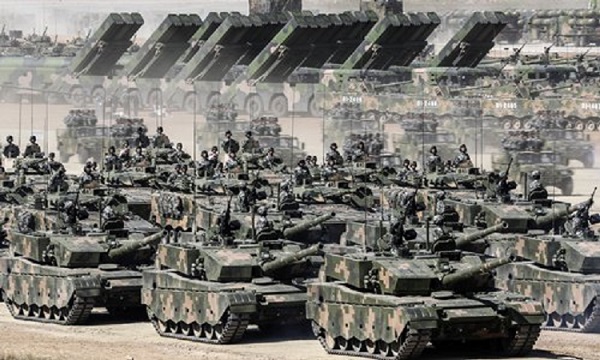
Ironically, the United States spends more on its military than its next seven rivals combined and maintains an unparalleled network of overseas military bases. Military power plays an important role in creating and maintaining US dominance, and no other country could extend credible security guarantees across the entire international system. This rivalry was a major factor for the collapse of USSR. The growing technological advantage enjoyed by the US military, ensured willingness of most of the world’s second-tier powers to rely on the United States rather than build up their own military forces. US hegemony provided the security umbrella to the World.

Unipolarity provided nations with very little options which allowed US and its allies to do as they wished. They did promote some autocratic states (such as Saudi Arabia, Iraq, Pakistan) for strategic and economic reasons, violated international norms, concerning human, civil, and political rights, even resorted to torture and extraordinary renditions during the so-called war on terror. Concurrently, they promoted commitment to liberal principles and norms in form of international Bretton Woods institutions (World Bank, IMF, WTO) and others like UN and WHO, and numerous NGOs. USA created its version of the world where rules where framed and adhered to by others, including controlling the international security environment. Undeniably there was an illusion of an unassailable liberal order resting on durable US global hegemony. Ground realities are breaking that illusion.

The Multi-Polar Emergence led by Russia and China[iv]

Today, other powers offer rival narratives of global order, often autocratic ones that appeal to many leaders of weaker states. The West no longer dictates the monopoly on patronage. New regional organizations and illiberal transnational networks contest US influence. Decisive shifts in the global economy, the rise of Asia particularly China, have transformed the geopolitical landscape. In April 1997, Chinese President Jiang Zemin and Russian President Boris Yeltsin pledged “to promote the multi-polarisation of the world and the establishment of a new international order.” It was dismissed by the West, as China was committed to the rules and norms of the US-led order being a prime beneficiary (China acknowledges the role of USA in becoming a global power), and specifically doubted that Beijing and Moscow could overcome decades of mistrust and rivalry to cooperate against US efforts to maintain and shape the international order.

China and Russia now directly contest the international order from within that order’s institutions and forums; at the same time, they are building an alternative order through new institutions and venues in which they wield greater influence (lesser focus on human rights and civil liberties). At the United Nations, the two countries routinely consult on votes and initiatives. As permanent members of the UN Security Council, they have coordinated their opposition to criticise Western interventions and calls for regime change; they have vetoed Western-sponsored proposals on Syria and efforts to impose sanctions on Venezuela and Yemen. In the UN General Assembly, between 2006 and 2018, China and Russia voted the same way 86% of the time. By contrast, since 2005, China and the United States have agreed only 21% of the time. Beijing and Moscow have also led UN initiatives to promote new norms, that privilege national sovereignty over individual rights. They have created new international institutions and regional forums that exclude the United States and the West like BRICS grouping, which includes Brazil, Russia, India, China, and South Africa. In 2016, the BRICS countries created the New Development Bank, which is dedicated to financing infrastructure projects in the developing world.

Creation of Security Organisations sans USA and her Allies

China and Russia have also pushed a plethora of new regional security organizations[v], including the Conference on Interaction and Confidence Building Measures in Asia (CISA), the Collective Security Treaty Organization (CSTO), and economic institutions, including the Chinese-run Asian Infrastructure Investment Bank (AIIB) and the Russian-backed Eurasian Economic Union (EEU).

The Shanghai Cooperation Organization (SCO), a security organization that promotes cooperation among security services and oversees biennial military exercises was founded in 2001 at the initiative of both Beijing and Moscow. It added India and Pakistan as full members in 2017.

I enjoy highlighting another organisation, the ‘Quadrilateral Cooperation and Coordination Mechanism’ set up by Afghanistan, China, Pakistan, and Tajikistan to jointly combat terrorism! The net result is the emergence of parallel structures of global governance that are dominated by authoritarian states and that compete with older, more liberal structures. These groupings may not be very effective as yet, but allow members to affirm common values, generate denser diplomatic ties among their members, which, in turn, make it easier for those members to build military and political coalitions. In short, these organizations constitute a critical part of the infrastructure of international order, an infrastructure that was dominated by Western democracies after the end of the Cold War.

A powerful initiative by China, the BRI which is a global pathway to promote Chinese economic, diplomatic, security, influence and trade domains is occupying centre-stage. China and Russia are entering areas traditionally dominated by the United States and its allies; for example, China convenes the 17+1 group with states in central and eastern Europe and the China-CELAC (Community of Latin American and Caribbean States) Forum in Latin America. These groupings provide states in these regions with new arenas for partnership and support while also challenging the cohesion of traditional Western blocs.

Against a common adversary USA, Russia and China have successfully managed their alliance of convenience, defying predictions that they would be unable to tolerate each other’s international projects. For example, in CAR (Central Asian Republics), which Russia considers its backyard, Kremlin’s rhetoric has shifted from talking about a clearly demarcated Russian “sphere of influence”, to embracing a “Greater Eurasia” in which Chinese-led investment and integration dovetails with Russian efforts to shut out Western influence. Russia vocally supports China’s BRI. China has also proved willing to accommodate Russian concerns and sensitivities.

Chinese state-affiliated lenders, such as the China Development Bank, have opened substantial lines of credit across Africa and the developing world. In the wake of the 2008 financial crisis, China became an important source of loans and emergency funding for countries that could not access, or were excluded from Western financial institutions. During the financial crisis, China extended over $75 billion in loans for energy deals to countries in Latin America, Brazil, Ecuador, Venezuela and to Kazakhstan, Russia, and Turkmenistan in Eurasia. Other cash rich nations too have stepped in; after the Arab Spring, Gulf states such as Qatar lent money to Egypt, allowing Cairo to avoid turning to the IMF during a turbulent time. But China has been by far the most ambitious country in this regard. China today has surpassed annual US aid disbursals. Chinese economic benevolence is never altruistic as stated, but stoked blatant corruption and habits of regime patronage, with an eye on establishing significant influence and dependence. Here, I must add that US and its allies have been no angels either, and there are innumerable instances of double-speak and hypocrisy. As somebody mentioned ‘their world order has neither been democratic nor liberal’!

China is not USSR         

Like the Soviet Union, China is a continent-sized competitor with a repressive political system and big ambitions. But the analogy is not appropriate. China today is a peer competitor that is more formidable economically, more sophisticated diplomatically, and more flexible ideologically than the Soviet Union ever was. And unlike the Soviet Union, China is deeply integrated into the world economy, especially US. The Cold War truly was an existential struggle. The US strategy of containment worked on an economically weak USSR. Chinese Communist Party has displayed a remarkable ability to adapt to circumstances, often brutally so. Even if the state does collapse, it is likely to be the result of internal dynamics rather than US pressure. Beijing has been better at converting its country’s economic heft into strategic influence. China has embraced globalization to become the top trading partner for more than two-thirds of the world’s nations. The kinds of economic, people-to-people, and technological linkages that were lacking in the militarized US-Soviet conflict define China’s relationship with the United States and the wider world. Ironically, China is central to the prosperity of American allies and partners! Countries which are trading or acquiring hi-tech from China are not doing it with the intention of going over to China’s side or because they don’t identify with US power.

The Phasing out of the Unipolar System     

The end of the West’s monopoly on patronage has seen the concurrent rise of fiery populist nationalists even in countries that were firmly embedded in the United States’ economic and security orbit. The likes of Hungarian Prime Minister Viktor Orban, Turkish President Recep Tayyip Erdogan, and Philippine President Rodrigo Duterte have painted themselves as guardians of domestic sovereignty against liberal subversion. They dismiss Western concerns about democratic backsliding in their countries and emphasize the growing importance of their economic and security relationships with China and Russia. In the case of the Philippines, Duterte recently terminated a two-decade-old military treaty with the United States after Washington canceled the visa of the former national chief of police, who is accused of human rights violations in the Philippines’ bloody and controversial war on drugs. Of course, some of these specific challenges to US leadership will wax and wane since they stem from shifting political circumstances and the dispositions of individual leaders. But the expansion of “exit options”, of alternative patrons, institutions, and political models, now seems a permanent feature of international politics.

Another important shift is that the transnational civil society networks that stitched together the liberal international order no longer enjoy the power and influence they once had. Illiberal competitors now challenge them in many areas, including gender rights, multiculturalism, and the principles of liberal democratic governance. Some of these movements like KKK have originated in the United States and Western European countries themselves. Autocratic regimes have found ways to limit or even eliminate the influence of liberal transnational advocacy networks and reform-minded NGOs. They imposed tight restrictions on receiving foreign funds, proscribed various political activities, and labeled certain activists “foreign agents.” Some governments now sponsor their own NGOs both to suppress liberalizing pressures at home and to contest the liberal order abroad. Russia founded the youth group Nashi to mobilize young people in support of the state, and the Red Cross Society of China, China’s oldest government-organized NGO, has delivered medical supplies to European countries in the midst of the COVID-19 pandemic as part of a carefully orchestrated public relations campaign. While not every illiberal or right-wing movement oppose the US led order, such movements help polarize politics in advanced industrial democracies and weaken support for the order’s institutions.

Conclusion

The erosion of America’s global power may be accelerated by the current US foreign policy. The rules-based international order that has been in place since the end of World War-II is unravelling with USA pulling out of its own created treaties, being insensitive and indifferent to close allies, imposing economic sanctions, starting trade and cold wars. Concurrently, led by China, other nations have begun to rise and play an important role on the global stage. Reshuffling of the deck internationally is taking place, and it will be interesting to watch it play out, and specially how India manoeuvres through the geo-strategic maze. The unipolar moment has passed, and it isn’t coming back.

In Part II, we shall examine the merits of US backers who predict the bouncing back of USA to superpower status, how USA must deal with the world in view of current international ground realities, and major issues relating to USA-China-India triangular relations.


[i]Innumerable publications, internationally and regionally publish Articles/podcasts on US status as a superpower and its future. Perused Wikipedia, Encyclopedia Brittanica and numerous magazines (including digital) focused on geo-politics, strategy and security. The theme for my study for Part I and II was recurrent, and most articles have expanded on the central theme.

[ii] ‘How a Great Power Falls Apart: Decline Is Invisible From the Inside’, By Charles King; Foreign  Affairs, June 30, 2020

[iii] ‘Competition Without Catastrophe: How America Can Both Challenge and Coexist with China’ By Kurt M. Campbell and Jake Sullivan, Foreign Affairs, Sep/Oct 2019

[iv] Innumerable publications, internationally and regionally publish Articles/podcasts on US status as a superpower and its future. Perused Wikipedia, Encyclopedia Brittanica and numerous magazines (including digital) focused on geo-politics, strategy and security. The theme for my study for Part I and II was recurrent, and most articles have expanded on the central theme. Also gleaned ideas from the article ‘How Hegemony Ends: The Unraveling of American Power’ by Alexander Cooley and Daniel H. Nexon, Foreign Affairs, Jul//Aug 2020

[v] The decline of US global leadership: Power without authority’ by Allen Behm, in theinterpreter published daily by the Lowy Institute on 07 Oct 2019.

Pakistan is using Lashkar, Jaish & Taliban to fight Baloch revolutionaries: Gulzar Imam

Gulzar Imam Baloch started his political career with BSO (Baloch Students Organization) Aman in 2002. He quit BSO in 2008, joined Baloch Republican Army (BRA) and became involved in the armed politics for Balochistan’s independence since 2009. In 2018, when the Baloch Republican Army was split into two factions he took reins of the faction that openly espouses the cause of an independent Balochistan. In this interview with Vivek Sinha, Editor-in-Chief News Intervention, Gulzar Imam explains that Pakistan is now using religious proxy groups such as Lashkar-e-Taiba, Jaish-ul-Adl and Taliban against the Baloch freedom fighters.

Vivek Sinha: What were the reasons that led to a split of Baloch Republican Army into two factions?
Gulzar Imam: Our fundamental differences began with the leadership’s attempt at pointless negotiations with Pakistan. When organizational and national decisions are made by courtiers, it becomes difficult to manage the organization and the nation.

Vivek Sinha: Wouldn’t this encourage a series of divisions? Tomorrow someone from your faction may justify his differences and start working in the name of a group, setting forth a chain reaction of divisions in the Baloch Republican Army?
Gulzar Imam: If anyone denies the importance and usefulness of the Supreme Council and Central Committee in political and resistance organizations, then from there it becomes the duty of every revolutionary to protest and revolt along with their legitimate demands. We must move away from those friends who make baseless allegations. A revolutionary must walk only on that path that proves useful for our revolutionary war. In my view, no revolutionary should be alarmed by such a division. If we do not meet the national standards of this war, then our friends will have the right to disagree with us.

Gulzar Imam, Chief Baloch Republican Army (BRA). (Photo: News Intervention)

Vivek Sinha: Are you satisfied with your struggle?
Gulzar Imam: I am quite satisfied with the Baloch national struggle. I always ask myself if I could fulfill what I had to do or had a duty to do for the freedom of my motherland. I will try to fulfill it as long as I live.
If I take a brief look at this journey and see the hard work of my colleagues who are fighting day and night, I will be very satisfied.

Vivek Sinha: On June 29 there was an attack on the Karachi Stock Exchange by Baloch freedom fighters. Some elements in the Baloch movement are opposing it. What is your opinion about it?
Gulzar Imam: It is a fact that self-sacrificing martyrdom attacks have hurt the Pakistani occupation and is a new form of Baloch resistance war that has emerged in front of the world. I have no comments for those who oppose the Karachi Stock Exchange attack. These are those who have practically given up the resistance war.

Vivek Sinha: Balochistan is considered a paradise for guerrilla fighters because of its geography. Yet, what’s the reason that young Baloch people are being killed by the Pakistan Army on a daily basis? Is it because of faulty strategy, or negligence? What is the main reason?
Gulzar Imam: The force that Pakistan uses to crush Baloch guerrilla war has failed miserably. And the Pakistani state is now using its military might to the fullest. In order to crush the Baloch armed resistance, Pakistan has also deployed its proxy religious groups on the battlefield of Balochistan with full force, which includes the Afghan Taliban, Lashkar-e-Taiba and Jaish-ul-Adl. These religious proxy groups take directions and help from Pakistan to fight against Balochistan. There is no denying that we are suffering losses but our losses are less as compared to the Pakistani preparations. However, given the enemy’s tactics, we need to be more vigilant.

Vivek Sinha: Pakistan continues to say that India is helping the Baloch, how true is that?
Gulzar Imam: Since long, Pakistan has been trying to prove that the national resistance war in Balochistan is a proxy war, but it has failed because the reality of Pakistan’s illegal occupation of Balochistan has become clear to the whole world. If India had been helping the Baloch then the form of Baloch war would have been different, but in reality the Baloch are carrying forward their national armed resistance without their help.

When Pakistan can get help from China to end Baloch resistance, we will not feel ashamed to seek help from all over the world, including India. But I think that the Indian government needs be more proactive to answer Pakistan’s cunning strategies in Balochistan by giving financial and diplomatic support to Balochistan. A prosperous Baloch state is important not only for India but also for the peace and security of the region. We hope that the Government of India and their think tanks will think seriously about this. The existence of the present Pakistan can be disastrous not only for this region but for the whole world.

Vivek Sinha: What kind of hope can the Baloch nation have from BRAS?
Gulzar Imam: From its inception till the present day, Baloch Raji Ajoi Sangar (BRAS) has created a hopeful atmosphere in the Baloch nation with its war strategies and deeds. BRAS is proving to be an important platform in uniting the scattered resistance forces of Balochistan. The Baloch nation must have expectations of a single Baloch Army from BRAS, which is an important mission of the Baloch leadership.

Vivek Sinha: Where do you see the Baloch National Movement in the next ten years?
Gulzar Imam: The armed resistance and political struggle against the Pakistani occupation of the Baloch homeland is getting stronger day by day. Despite all the state repression, the young generation is joining armed resistance for the liberation of the Baloch homeland. The participation of the Baloch youth in their war of liberation is linked to their consciousness. Today, the nation, especially the youth, realizes that they are a slave nation and it becomes impossible to stop it when resistance moves forward under the guidance of books and knowledge. Conscious struggle is the determination of the success and destiny of the Baloch nation. I can’t say anything about ten years, but we are mentally ready with our strategies for the long-term struggle against Baloch nation’s slavery.

China’s alarming military activity on Balochistan’s coast

Rapidly changing conditions in the region are highlighting the political and geographical role of Balochistan day by day. Although the geographical importance of Balochistan has historically always been prominent and key to the interests of past colonial powers, today it’ the land of Balochistan and its longest coast that appears to be turning into a center of the most important interests of imperialist powers, without which the fulfillment of their economic, political and defense interests do not seem to be perfectly easy.

In this context, the possible picture that some analysts are presenting about the future of Balochistan can be described as disturbing, and disturbing not only for Balochistan but for the people of the entire region. According to these analysts, as the irreconcilable conflict of interests between some regional and global powers, including China and the United States intensifies, so does the pressure to increase control over Balochistan, at which China is still at the forefront.

And now, after a recent 25-year agreement with Iran, western Balochistan has also fallen into Chinese hands, which some observers and political circles have interpreted as the completion of China’s imperialist occupation of vast areas of eastern and western Balochistan on both sides. Not only is the Baloch nation reluctant to accept China’s move in the face of potential threats to its very existence with opposition and fears being expressed at the local level, but also by all major and minor powers, including the United States. Today, the conflict of interest with China is intensifying day by day. In any case, these increasing steps of China will be stopped and the interests of the youth will be trampled.

These obstacles to China’s imperialist interests are fragmented in their actions and consequences, and in various forms of warfare but Balochistan is the first major step taken by China to control the world economy and the beginning of its journey. It has become a camp, so it will be imperative for the US and other rival powers not only to prevent China from moving beyond Balochistan to the rest of the world, but also to force it to return home from a politically geographically significant location like Balochistan.

Obviously, this situation will increase the dependence on power, which is inevitable to create an atmosphere of war.

Given the potential scenario, China is not only active in the entire Baloch coastal areas, including Gwadar, for mega-economic projects, but also in the construction and transfer of large-scale defense and military installations and equipment in the name of security. Some analysts are expressing fears that China is turning Balochistan into a reformist war front in order to protect its economic interests and deal with the potential war threats posed by its rival powers with the inevitable dangerous and catastrophic consequences. Balochistan will thus emerge as a potential battleground between China and its rival powers, and such a war could certainly take a global form, with all the consequences for Balochistan and the Baloch nation.

Although Pakistani rulers and government circles have denied China’s military and military activities in the Baloch coastal areas, including Gwadar, citing security measures to protect only a limited number of economic activities, local and other political and social circles have gathered on China’s Baloch coast. According to these constituencies, the Gwadar Port and other mega-economic Chinese projects, including CPEC, are being implemented in Balochistan and the Baloch nation due to increasing military strength and measures to turn these areas into no-go areas for the local population.

China’s recent increase in military activities are turning Balochistan into a hell of imperialist war. Therefore, there is a need for the US to consider China’s war and military plans in Balochistan. The world should be made aware of the grave dangers posed to the land and people of Balochistan and all Baloch political and social circles and peace-loving forces should play their full role to prevent Balochistan from turning into fiefdom of any regional and global power including China.

POK politician Habib-ur-Rehman demands withdrawal of Pakistani troops from Kashmir

1

Habib-ur-Rehman is the former Spokesperson and Information Secretary of the Jammu Kashmir People’s National Party (JKPNP), the political outfit based in Pakistan-occupied Kashmir and Gilgit-Baltistan. JKPNP is struggling for the independence of POK and Gilgit-Baltistan from Pakistan. A member of the central committee of JKPNP, Habib-ur-Rehman spoke to Vivek Sinha, Editor-in-Chief News Intervention and Dosten Baloch, Editor-in-Chief Sangar Media Group about Pakistan’s illegal occupation of “Azad Kashmir” and Gilgit-Baltistan.

Vivek Sinha/ Dosten Baloch: When was Jammu Kashmir People’s National Party (JKPNP) formed? Why is Pakistan rattled due to the formation of JKPNP?
Habib-ur-Rehman: The Jammu Kashmir People’s National Party (JKPNP) was formed in April 1985. Before that the Pakistan-occupied Azad Jammu & Kashmir and Gilgit-Baltistan were dominated by the Pakistani-imposed rhetoric that these areas of the state are free and the Muslim population of ‘Srinagar Valley’ remained to be liberated.

In other words, the Pakistani state was trying to further its expansionist ambitions by distorting history to further consolidate its occupation and by besieging the so-called “Azad Jammu & Kashmir” and “Gilgit-Baltistan” for its political, social and economic purposes and this remains till today.

In such an atmosphere of oppression, the Jammu Kashmir People’s National Party clarified the difference between freedom and slavery. The Jammu Kashmir People’s National Party publicly announced that Jammu & Kashmir and Gilgit-Baltistan are under the control of Pakistan and these areas are occupied. One slave cannot set another free unless he breaks his own chains.

Therefore, the people of so-called ‘Azad Jammu and Kashmir’ and Gilgit-Baltistan have to fight for their real and true freedom against the occupation of Pakistan. This statement frightened the occupying rulers. This statement of the party was obviously not to be tolerated by the occupying state of Pakistan, and so they used all the tactics including terror, threatening, accusations through their local agents and intelligence agencies so that these real questions could not be raised. This statement of the party is clearly a challenge to the Pakistani occupation.

Vivek Sinha/ Dosten Baloch: What are the conditions in Pakistan-occupied Kashmir? Please elaborate…
Habib-ur-Rehman: Azad Kashmir and Gilgit-Baltistan are completely under occupation. And the lives of the people living under occupation are always destroyed. Every step the occupier takes, it takes with the intention to make people more and more helpless. The social, economic and cultural structure of Azad Jammu Kashmir and Gilgit-Baltistan has been completely dismantled.

False and distorted ideologies are being imposed in the name of religion to destroy our civilization, culture, language and traditions, which has given rise to psychological deprivation. There are restrictions on those who speak out for freedom and a separate state. Reading history books is forbidden. Everyone is sworn in to join Pakistan.

All the resources are under the direct control of Islamabad. Even, all small and big electric power projects which are in Azad Jammu & Kashmir and Gilgit-Baltistan are under the control of Pakistan. All the production in the area is in their possession and locals have nothing to do with it.
Azad Jammu Kashmir and Gilgit-Baltistan are practically turned into military bases. Before entering and leaving every district and city, there are military camps that apparently do nothing but are a symbol of fear that are used to suppress any future movement. The people are constantly living in despair, humiliation, uncertainty and slavery.

Vivek Sinha/ Dosten Baloch: Your struggle in POK is against Islamabad or the regime in Muzaffarabad?
Habib-ur-Rehman: Our struggle is not against anyone, but we are fighting for our freedom. This war of independence is mainly against the occupiers. Our land and our people have been disgraced. We are fighting for a dignified life and against humiliation, so this struggle is a challenge to the occupation of Islamabad. The poor people of Muzaffarabad are dumb and loyal servants who only breathe for their existence.

Vivek Sinha/ Dosten Baloch: Do you want freedom from Pakistan?
Habib-ur-Rehman: We demand the return of our occupied state. Since we are in control of Pakistan, so our demand is the withdrawal of Pakistani troops from this side of the state.

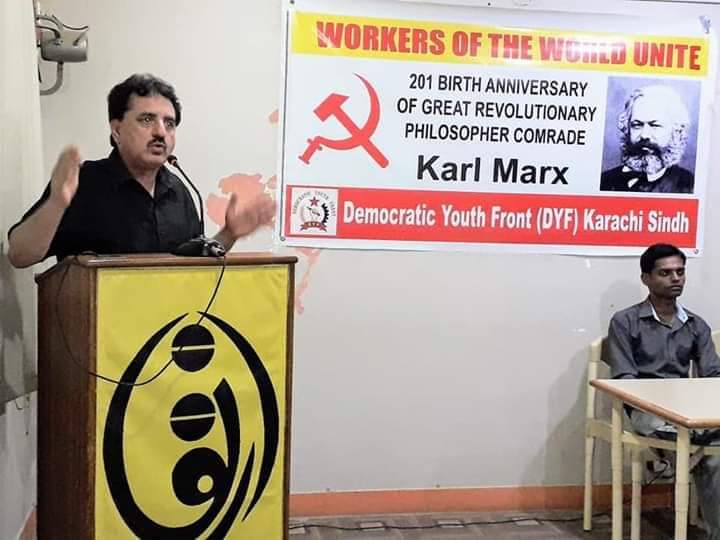
Habib-ur-Rehman addressing people in Pakistan-occupied Kashmir (POK). (Photo: News Intervention)

Vivek Sinha/ Dosten Baloch: You talk about Marxism and Socialism but this ideology and their slogans are dying across the world. How do you justify your struggle in this perspective?
Habib-ur-Rehman: Marxism not only recognizes the liberation movements around the world but also gives them unlimited and unconditional right to self-determination. Therefore, when a nation fights for its sovereignty, Marxism contributes to the movement and intensifies the struggle. The collapse of the Soviet Union is not an argument for the end of oppression and exploitation in the world.

Nationalism is not an ideology but a natural passion of patriotism that every person has for his motherland. After taking control of one’s homeland, socialism is the only way to create a new society by providing economic prosperity.

Vivek Sinha/ Dosten Baloch: Mao Zedong’s China is a socialist economy. How does your political movement see China?
Habib-ur-Rehman: China’s growing power is causing many significant changes in the region. A new balance of regional power is emerging. The state of Azad Kashmir is directly occupied by Pakistan. An important question that arises now is how to fight against a third country while already under the control of a powerful country.

Considering China’s growing economic power, the nations which are fighting for liberation in the region need to adopt a strategy that will persuade China to support these movements because it is difficult to fight at all fronts.

International tensions between the United States and China will push these movements into a single camp with far-reaching negative consequences and will not be very beneficial for the liberation movements.

Habib-ur-Rehman, member central committee Jammu Kashmir People’s National Party (JKPNP). (Photo: News Intervention)

Vivek Sinha/ Dosten Baloch: Don’t you think Nationalism is a better ideology than Socialism…for instance, raising your voice against atrocities on Kashmiris and other ethnic groups of the region? 
Habib-ur-Rehman: 
As I have mentioned above, every socialist must be a patriot, but not every nationalist has to be a socialist. The experiments of history show us that nationalism enters into a narrow alley, where it becomes an instrument of exploitation at the hands of exploitative forces, so caution and responsibility are necessary, not as an emotional state and immediate reaction but being far-sighted, and then a collective wisdom is needed.

The state of Jammu and Kashmir is a multi-ethnic and multi-religious state inhabited by people of different nationalities, religions, cultures and languages. The common struggle of all of them is the guarantee of true freedom. The Jammu Kashmir People’s National Party (JKPNP) has always been struggling unitedly and jointly with oppressed nations such as in the form of PONAM (Pakistan Oppressed Nations Movement). We believe a strong and long-term unity among the like minded movements are important for any struggle.

Vivek Sinha/ Dosten Baloch: How will you define Pakistan’s barbarism in Kashmir?
Habib-ur-Rehman: Occupier always commits barbarism and destroys everything from individual life to collective life which I have already mentioned. In brief they are intimidating, threatening, killing, indulging in forced migrations and enforced disappearances. These are the basic principles of fascism. The people of J&K and Gilgit-Baltistan are suffering the same treatment by Pakistan, against which an indigenous struggle is going on, although it is still very weak.

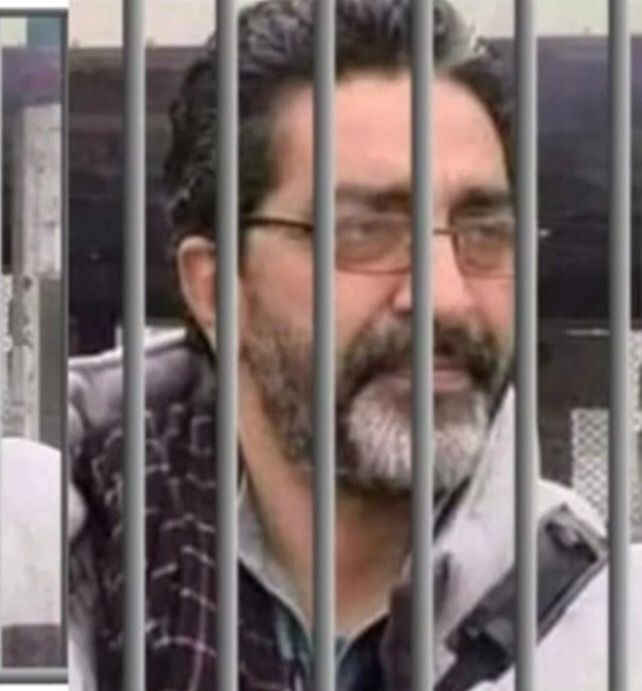
Vivek Sinha/ Dosten Baloch: Baba Jan who raised his voice for the people of Gilgit-Baltistan has been jailed by Pakistan. Why is it that you and your party has been silent on Baba Jan’s illegal detention by Pakistan? 
Habib-ur-Rehman: We have been regularly raising our voice against the sentence of Baba Jan, Iftikhar Karbalai and their associates. We have also launched the Worldwide Free Baba Jan Campaign. In July 2015, there were protests all over the world from the platform of Jammu Kashmir People’s National Party.

Vivek Sinha/ Dosten Baloch: Why is it that Indian communists never talk about your struggle and have remain silent even about the jail term of Baba Jan, who is a communist himself?   
Habib-ur-Rehman: The Indian Communists do not go beyond the wishes and interests of the Indian state as they have made many compromises with the state, and are losing their prestige by going into parliamentary politics. 
When a movement or ideology is silent or compromises on the basic principles, history throws it to the depths. However, the emerging left-wing movements in India seem better and more radical, which may play a better role in the future.

Vivek Sinha/ Dosten Baloch: CPEC bears the stamp of China’s expansionist policy? Do you think the people in POK and Gilgit-Baltistan will be adversely affected due to CPEC? If yes, then how do you plan to oppose CPEC?
Habib-ur-Rehman: The CPEC project will definitely have an impact. Its first door of the entrance is from Gilgit-Baltistan, part of our state. Weak political discourse will affect oppressed nations.

Vivek Sinha/ Dosten Baloch: What is People’s National Alliance (PNA)? It’s being said that Pakistan’s ISI has infiltrated PNA and also does some kind of funding…?

Habib-ur-Rehman: The People’s National Alliance (PNA) is an alliance of various groups and parties that demand a dignified and empowered government and parliament with more powers in Pakistani-occupied Muzaffarabad and Gilgit-Baltistan. In such alliances, there are always people from the intelligence agencies, and even in this alliance there might be people from intelligence, although they cannot be identified yet.
If this alliance gains more political power and more clarity, then it is easier to identify such people.

However, differences in the alliance and an attitude of disorganization does exist, it appears that some people; certainly, the leftist and nationalist mindset are sabotaging the alliance by trying to discredit this alliance in the guise of nationalism. But in terms of aim and stance, the PNA is clearly in a solid and correct position. To maintain and improve this alliance, it is possible to avoid the intelligence agencies by staying alert and being far-sighted otherwise, it will end. As far as funding for PNA is concerned, this is not true at all that PNA gets funding from anyone.

Vivek Sinha/ Dosten Baloch: Don’t you think that people of Gilgit-Baltistan and POK should resort to armed struggle?
Habib-ur-Rehman: The people of Pakistan-occupied Jammu and Kashmir and Gilgit-Baltistan have been pursuing a constant political resistance movement for control of their land and resources, which is part of a broader democratic struggle. Armed struggle, as a premature and emotional reaction, does less good and more harm to the movement.
A widespread public political struggle is a guarantee of a resistance movement for which we are still in the early stages. There will come a phase of the people’s armed struggle which is vital for the oppressed nations.

Vivek Sinha/ Dosten Baloch: Balochistan is fighting against Paksitan’s atrocities. How do you see the freedom struggle of Balochistan? 
Habib-ur-Rehman: The struggle of the Baloch people is a struggle for freedom based on justice and we are with the Baloch people in their righteous fight. And we hope that while we stand with them firmly, the Baloch nation will also be supporters and helpers of our real liberation movement. At present we can call the Baloch movement the strongest anti-imperialist and pro-people movement in the region.

Vivek Sinha/ Dosten Baloch: Do you think the oppressed communities in Pakistan and in the Pakistan occupied regions must form a joint front to fight for their struggle?  
Habib-ur-Rehman: The oppressed and the enslaved always need a joint struggle. All the oppressed nations and communities of the region must work together to move forward. We would welcome any kind of unity of the oppressed nations in the region, even in the past, we have been in close contact within the form of PONAM (Pakistan Oppressed Nations Movement) alliance. We have been and will continue to be involved in the common political struggle.

Vivek Sinha/ Dosten Baloch: Do you believe that Kashmir can attain freedom from Pakistan?
Habib-ur-Rehman: Yes, you can be free, but you have to do a long and lengthy struggle, there is no shortcut.

Vivek Sinha/ Dosten Baloch: What kind of atrocities are committed by Pakistanis on the Kashmiris living in Pakistan occupied Kashmir? 
Habib-ur-Rehman: I have mentioned this in detail above, the people living under siege have no opinion of their own, no status what could be more barbaric than that? Those who see and feel cannot speak or raise questions. The label of anti-Islam and traitor should be attached to every person who shows love for his land and his people.

Baloch charismatic leader Dr. Allah Nazar tweets about Pakistan’s offer

Baloch freedom fighter and Balochistan Liberation Front (BLF) leader Dr. Allah Nazar Baloch revealed in a tweet how Pakistan sugar coated its threats and made lucrative offers to dissuade him from the Balochistan’s freedom movement. Dr Allah Nazar Baloch refused all offers from Pakistan and chose to fight for Balochistan’s independence.

“They said we’ll make you a minister like Jam Yousuf or go to Europe, we’ll arrange u’r travel, otherwise our bullet will chase you u’r whole life. I chose the last option & narrowly escaped many times. I am waiting for that bullet. Or else Baloch nation will stone my coffin like…,” said Dr Allah Nazar Baloch in his tweet posted on August 21, 2020.

https://twitter.com/AllahNizarNizar/status/1296790204418789378

Dr. Allah Nazar’s tweet has an important meaning, and this tweet has gone viral on social media. A large number of Baloch youth have retweeted Dr Allah Nazar’s tweet and have commented on it praising him for his efforts in this struggle.

Dr. Allah Nazar Baloch is an important pillar of the Baloch national struggle and he was subjected to the most severe torture during his detention by Pakistan.

When Dr Allah Nazar came out and was recovered by Baloch people after months of disappearance by Pakistani forces, he was unable to walk, but he persevered like an iron man. He gave a direction to the national struggle for freedom.

Of course, his tweet points to the fact that he was in prison and was offered luxuries by the state. And his tweet also has an underlying message to those Baloch people who go to Pakistani parliament in the name of opportunism and then how the nation treats them after their death.

It must be noted that several leaders and workers involved in freedom movements are offered great privileges by Pakistan and many workers or leaders do get trapped in the lure of these luxuries and then part ways. But some activists and leaders are ideologically and consciously attached to the movements and cannot be taken away by any kind of luxury.

Dr. Allah Nazar Baloch is one such leader who fought hard after his release and carried the message of freedom to every part of occupied Balochistan. He is the charismatic leader of Balochistan’s freedom movement.

People’s safety in J&K ensured despite challenges: Dilbag Singh

Srinagar/ August 20: Despite challenges, safety of people across the Union Territory of Jammu & Kashmir is being ensured and there have been no causality of any civilians in 2019 and 2020 in any law and order situation or at any the encounter site. This was stated by J&K Director General of Police Dilbag Singh during his visit to North Kashmir.

Accompanied by IGP Kashmir Vijay Kumar, DIG, North Kashmir Mohammad Suleman Choudhary, the DGP first visited Handwara where he interacted with the Jawans and also addressed a press conference.

Commander 7 Sectors Brig. Mahipal Singh Rathore, Dy Commander 7 Sector Col. Narinder Nath, Commanding Officer 32 RR Col. S. P Singh and SSP Handwara Dr. G.V Chakravarthy were also present. The DGP then visited Baramulla and interacted with officers, jawans and also inaugurated the dry and wet canteens in DPL, Baramulla.

Addressing the media in Handwara, the DGP said that with coordinated efforts of forces, the terror structure has been successfully targeted and added that most of the terror groups at present for the past many years are leaderless as during last seven month around 26 top commanders of different terror outfits have been eliminated. He said that many youth have been brought back and Pakistani network which is motivating the youth of J&K to pick up arms through social media and other means is also being continuously monitored.

The DGP said that despite challenges, safety of people is being ensured and added that there have been no civilian causality in 2019 and 2020 in any law and order situation or at any encounter site. He said that protecting the interests of people is our prime concern and every possible step is being taken to ensure it. He said that infiltration of terrorists from across the border has reduced because of strong security grid and number of youth joining terror groups has also declined in J&K. 

DGP Dilbag Singh said that situation in north Kashmir is improving and with the killing of Sajad Hyder and Naseer-u-Din, along with two Pakistan based terrorists Usman (Taimur khan) and Ali (Danish) who were involved in major terrorist activities, forces are expecting slowdown of terrorist activities in the area as both these terror commanders were pressuring and motivating youth in north Kashmir to join terror groups. The DGP also complemented Handwara Police for busting the narco-terror module in the district and said that the case is being further investigated by NIA. The DGP said that Srinagar city one or the another way has remained affected by terrorist activities but at present the quality of information is much better because of which successful operations have been carried out in recent past.

IGP Kashmir said that in recent past security forces were massively engaged due to COVID-19 lockdown and terrorists taking advantage of it had managed to attack security forces. He said that continued coordinated efforts of security forces despite being engaged with COVID-19 lockdown have resulted in eliminating a number of terrorists and their commanders.

Commander 7 sector Brig. Mahipal Singh Rathore on the occasion said that the security grid on borders is very strong but because of the weather conditions and other factors on borders some terrorists managed to sneak in and added that during the last three months all terrorists who managed to cross the LoC have been gunned down. He said families have an important role to play to bring back the misguided youth from terror ranks.

Interacting with jawans and officers at Handwara and Baramulla, the DGP appreciated the commitment and resolve of J&K Police and other security forces for bringing down terrorists activities in these districts. He said J&K Police’s effective response to different situations have earned appreciations and rewards for the organization adding that facing all these challenges successfully has given laudable results. He said that we have to continue with our coordinated efforts to ensure long lasting peace in J&K. The DGP said that it is because of the selfless service of the force that J&K Police has been honoured with highest number of President’s Police medals for Gallantry this year.

DGP Singh added that J&K Police along with the other security forces will continue its efforts to safeguard the interests of people and the country by achieving peace mission in Jammu and Kashmir. He reiterated that J&K Police is committed for peace and order in Jammu and Kashmir. Elements inimical to peace have to realize that public order is beyond any compromise and activities endangering peace and tranquility would be dealt sternly under the law of land, the DGP said.

The SSP Baramulla Abdul Qayoom and SP Handwra Dr. G.V Chakravarthy briefed the DGP regarding the security scenario and mechanism in place to ensure peace and order in their respective district

Pakistan Army – Defenders of Nation or Privileged Corporation?

The Pakistan State, carved out of the erstwhile British Indian empire on 14th August 1947 has, for over thirty of the seventy four years been under the direct rule of its Army (over three extended periods: 1958-71, 1977-88 and 1999 until 2008). In the years it has not directly ruled, the military has dominated governance and strategic decision making. The question to ask and seek reply to, is whether a ‘fighting force’ that has shown such propensity is a ‘professional’ Army? Are they driven by the sacred motive to defend the nation or by other factors that afford them luxury and a special status in society? Samuel Huntington has outlined an interesting theory regarding the conduct of militaries. In his view, nations where there is anti-military ideology and low military political power the prospects of military intervention are not there, and in those where a pro-military ideology, high military political power exists, the prospects of military intervention are high. No better example that the Pakistani polity as becomes clear from a quick run down through developments in Pakistan’s post-Independence history.

In 1947 the Pakistan Army was asked to establish the Civil Secretariat in Karachi, the first capital of the new-born nation. The Army vacated their barracks and renovated them to house the Secretariat and the staff coming from Delhi, an act of ‘kindness’ the Pakistan State has not yet redeemed. The military’s initial frustration with the way the civilian government was handling matters of the state first emerged in the Rawalpindi conspiracy case of 1951 in which over 50 officers and a few civilians with leftist leanings were found guilty of attempting to stage a coup.

Not much later, in 1953 there were two major developments. First, a clash between the central and provincial leadership in Punjab resulted in imposition of Martial Law in Lahore. The second, induction of the then Army Chief, Gen Ayub Khan into the Federal Cabinet. Though Gen Ayub Khan voluntarily relinquished his position in the Federal Cabinet in 1955, he remained powerful and having tasted power, took over as the Chief Martial Law Administrator (CMLA), in the first of the three military coups in 1958.

Pakistan’s Lt. Gen. Amir Abdullah Khan Niazi (right) surrenders to India after losing the 1971 Indo-Pak War. Lt Gen. Jagjit Singh Aurora (left) received command of entire Pakistan’s Armed Forces in Bangladesh.

Field Marshal Ayub himself was succeeded by Gen Yahya Khan whose disastrous tenure saw the humiliation of Pakistan Army in the Indo-Pak war of 1971 and the creation of Bangladesh. The Pakistan Army was briefly compelled to ‘step aside’ and allow the formation of an ‘elected’ civilian government headed by Zulfiqar Ali Bhutto. The military, who found Bhutto’s style brusque and overbearing, waited in patience for an opportunity to return to power which happened when Gen Zia ul Haque, appointed by Bhutto himself as Army Chief treacherously not only ousted Bhutto but had Bhutto hanged to death for his alleged ‘crimes against the state. Zia had the 1973 Constitution suspended and introduced the 8th amendment. On the face of it, this amendment was aimed at bringing about a ‘balance of power’ by empowering the President to dissolve the National Assembly, dismiss the Prime Minister and provincial governments, and order them to seek a fresh mandate but it altered the very system of governance from Parliamentary democracy to Presidential and made the Prime Minister subservient to the President. 

With Gen Zia’s mysterious death in a plane crash in 1988, power did return to elected civilians but ‘back room’ political interference by the military continued. The infamous case of the then Army Chief, General Mirza Aslam Beg, having showered money borrowed from Mehran Bank upon several politicians to help defeat the Pakistan People’s Party from returning to power points to such intervention. Civilian rule that followed saw the elected governments of Benazir Bhutto and Nawaz Sharif being overthrown and replaced. Interestingly both bureaucrats and known ‘agents’ of the military — Ishaq Khan and Farooq Leghar were Pak Army stooges another malaise of the Pakistani polity — the silent ‘league’ of the bureaucrats with the Pakistan Army. Military resumed power with a stunning vengeance when Gen Pervez Musharraf took over as Chief Martial Law Administrator in 1999 and anointed himself President in 2001.   

A semblance of civilian rule returned in 2008 and with Gen Musharraf being made to undergo a trial it appeared on the surface that it had finally come to stay. The military bounced back to ensure that Musharraf is not convicted — to preclude a dangerous precedent being set. Post-Musharraf rule, the Pakistani military changed tactics and chose to adopt a silent but commercially much more lucrative role. It continues to enjoy ‘shared decision-making’ with the elected civilian government but now controls a vast corporate empire that has interests in virtually every major sector of Pakistan’s economy.

Foremost to mention here is the China-Pakistan Economic Corridor (CPEC), touted as a ‘game changer’ with several promises and spin-offs. However, as several Pakistani economists have repeatedly emphasised, it is riddled with terms and conditions that place the Pakistan nation in a state of such heavy debt to China that in effect the CPEC makes it the latter’s ‘vassal state’ that pays the price for usurious interest rates for loans granted by China, induction of old technology, environmentally destructive technologies for power generation, the high unit costs for that power.

A Chinese truck enters Pakistan-occupied Kashmir (POK). (Representative photo)

Also, the Chinese companies bring their own manpower resulting in no employment generation for local youth as had been touted as a major benefit. The Diamer Basha Dam, estimated at $15 billion, is the latest edition to this list of such mega projects. And who ensures Government approval of these projects and that the security of these projects is assured? – the Pak Army, who are the sole direct ‘gainers’ from the CPEC.   

Famously known as the Pakistani MilBus, there are over 100 independent businesses operated by subsidiaries of five Foundations of the military, viz. Fauji Foundation (run by the Ministry of Defence), Army Welfare Trust (run by Pakistan Army), Shaheen Foundation (run by Pakistan Air Force), Bahria Foundation (run by Pakistan Navy), and Pakistan Ordnance Factory Board Foundation (run under the Ministry of Defence). These had been set up with the noble intention to support the families of poor soldiers and particularly the ‘Shaheed’ (martyr) families but have become large corporate conglomerates earning rich dividends. Taken together, the Foundations constitute Pakistan’s largest industrial and trading complex and the range of these business empire is from cement to cereals, general insurance to gas, fertilizers to fish farms, seeds to stud farms, apparel to aviation, meat to medical equipment.

Noteworthy is that these Organisations are registered under the Charitable Endowment Act of 1890 as charities or societies, and not as companies, though they operate as commercial enterprises. Each Foundation is administered by a Committee of Administration chaired by one of the Armed Forces Chiefs. 

It is an open secret that profits from these enterprises go towards sustaining high perks as also lining the pockets of the top brass. There is a huge network of ‘Consultants’ from amongst ex-service officers who are side beneficiaries to their bosses. Instances of direct involvement of senior military Pak leadership in various commercial deals are abundant. Air Chief Marshal Abbas Khattak (Retd.) allegedly having received kickbacks in the purchase of 40 old Mirage fighter jets is well known as is General Jahangir Karamat (Retd.) having pocketed kickbacks of more than US $20 million from a Ukrainian tank company.

More recent are the cases of General Pervez Musharraf acquiring a commercial plot worth PKR (Pakistani Rupee) 20 million at Defence Housing Authority in Lahore, as in 2016, of former Army Chief Gen Ashfaq Pervez Kayani being accused for being involved in a major land scam in a defence housing scheme to benefit a real estate company linked to his businessmen brothers. Also well-known is the fact that Lt Gen Ahmad Shuja Pasha, the former ISI Chief owning several commercial plazas in Islamabad and Rawalpindi.

The Pakistan International Airlines (PIA), is referred as “Bajwa Airlines” as it is run by the family members of the present Chief General Qamar Javed Bajwa. Its President and CEO, Former Vice Chief of Air Staff, Air Marshal Arshad Malik being a brother of the brother-in-law of Gen Bajwa.

Some actions of the Pakistani MilBus have led to problems, as in October 2019 when Askari Bank Limited, part of the MilBus, was penalised by the State Bank of Pakistan for non-compliance of regulatory requirement at a time when the country’s anti-money laundering and counter terror-financing laws were under review for compliance by the Financial Action Task Force.

The Pakistani Military’s ‘welfare’ entrepreneurship is actually a self-serving racket, whose costs is borne by the common man in Pakistan.

So much for a ‘professional’ Army – not of fighters for the nation, but of polished and sophisticated businessmen.

The large number of contracts for exploration, mining, infra and power projects being awarded to Chinese companies with the tacit support of the Pakistan Army is well known. Is this the ‘Force’ that people of Gilgit-Baltistan should lookup to as their defenders? Or as their potential ‘exploiters’? The people of Pakistan must decide.

Pakistan killed Hayat Baloch, commits genocide against Balochistan: Dr Allah Nazar

The assassination of Hayat Baloch is the continuation of targeting Baloch youth and the future of nation, said Baloch leader Dr. Allah Nazar Baloch while commenting on the tragic death of Hayat Baloch by the Pakistani security forces. The purpose of Pakistan by committing such war crimes is to continue the genocide of Baloch people as well as an attempt to psychologically demoralize the youth of Balochistan by creating uncertain situation so that they would not be able to focus on their education nor are able to play their due role in the Baloch national struggle.

“Pakistan has employed multi-pronged aggression to keep the Baloch youth at bay from getting education, which includes the colonial system of education to paralyze the mind of youth, to keep schools, colleges and universities under control of the army and to settle military camps and check posts in these educational institutions. Thousands of Baloch students are killed by the Pakistan Army and thousands of them are still enduring inhumane torture in secret detention centers run by the army,” said Dr. Allah Nazar, the pro-independence Baloch leader.

“After the horrific and gruesome murder of Hayat Baloch, the reaction of the Baloch nation was a natural phenomenon. The Baloch nation has made thousands of sacrifices to keep the spirit of national struggle alive. Pakistan has employed every tactic to destroy our identity, culture, and language. Along with the genocide across Baloch nation, our culture and language are also being endangered. For this Pakistan has imposed a ban on reading and writing of Balochi language whilst the English language centers and teachers are also being continuously targeted. All those books which are published in Lahore and Karachi are banned in Balochistan. Pakistan Army has confiscated Balochi and other books from the book shops in district Kech and other places, which is the clear indication that the state of Pakistan is trying to keep Baloch nation away from getting education and knowledge,” explained Dr Allah Nazar Baloch.

Dr Allah Nazar further elaborated: “The assassination of Hayat Baloch is the continuation of this policy which aims to target the bright stars of Balochistan. Even though we have time and again been telling our youth and appealed to them that they should stand against Pakistani atrocities but also adjust themselves to the available colonial educational system and prove it to the world that while living within the colonial system of education, it cannot carry them away from their national aspirations.”

“The state lackeys have become active in order to mitigate and cool down the extremely angry reaction created by Hayat Baloch’s shooting. Military officers and police authorities are busy in the photo sessions. These excursions are nothing but false sympathies. They only want to make the Baloch believe that it was an error of an individual and the legal proceedings have been initiated against the culprit. But I want to make this clear that the assassination of Hayat Baloch was not the crime of an individual, but the state of Pakistan is the killer of Hayat Baloch because this is not the first case of its nature. For this reason, giving blood money or punishing an individual is an insult to the injuries of the Baloch nation,” Dr Allah Nazar Baloch said without mincing words.

“Anti-Baloch federalist parties are also trying to cash out on this issue for their petty interests. For instance, Dr. Malik, an anti-Baloch element, came out of the hibernation only at a time when the Baloch nation is expressing their hatred vehemently against the state of Pakistan. The attempt from Dr. Malik to associate the assassination of Hayat Baloch and martyrdom of other Baloch shaheed and missing persons to the armed struggle is an attempt to let Pakistan go scot-free from all of its committed crimes, said Dr Allah Nazar Baloch.

Dr. Allah Nazar Baloch concluded, “Our armed struggle is in accordance with the international laws and is being waged on our own land. Until now the Baloch armed struggle has not violated any international law and abides by the Geneva Conventions. On the contrary, Pakistan is committing war crimes on a daily basis. Dr. Malik instead of blaming the Baloch nation should advise his masters that they should peacefully withdraw from the Baloch land.”

LeT terrorist involved in CRPF jawan’s killing hunted down in Handwara

Srinagar/ August 19: A prominent Lasker-e- Toiba terrorist involved in the killing of Central Reserve Police Force (CRPF) jawans in northern Kashmir was eliminated along with another terrorist during a brief shoot out in Handwara Tehsil of district Kupwara last night.

The LeT terrorist has been identified as Naseer-u-Din lone. In a tweet J&K police quoted Inspector General of Police, Kashmir Vijay Kumar saying that LeT Commander Naseer-u-din Lone, who was involved in the killing of three CRPF personnel at Sopore on 18/4/20 and 3 CRPF jawans at Handwara on 4/5/20, got killed in Handwara.

The J&K Police said another terrorist is a Pakistani national, who was also involved in the attacks on security forces and civilians. Police has also recovered an AK Assault Rifle that was taken from a CRPF jawan after killing him in Sopore area of Baramulla district.

This is the second encounter in northern Kashmir in last 24 hours. In a two day long operation three terrorists and five security forces personnel were killed in Keeri area of Baramulla district.