Home Blog Page 347

Mida Maleki Talks About Participation in “My Home is a Suitcase”

My Home is a Suitcase” is a play by Rzgar Hama about individuals who sought new lives as immigrants. It is based out of Vancouver, British Columbia, Canada. These are real stories. The next few interviews will be from some of the individual readers of their stories of beginning new lives in Canadian society. Hama is known for several plays, including “Soldierland” with some professional commentary by Dr. Marvin Westwood and Dr. George Belliveau of The University of British Columbia in “Dr. Marvin Westwood & Dr. George Belliveau on SOLDIERLAND a play Written and Directed by Rzgar Hama.” Here I speak with Mida on “My Home is a Suitcase.”

No description available.
Sky Theatre Group, “My Home is a Suitcase”

Scott Douglas Jacobsen: We’ll keep this focused on an initiative by Sky Theatre Group under Rzgar, “My Home is a Suitcase.” How did you find the Sky Theatre Group?

Parmida Maleki: I actually heard about the Sky Theatre Group from Rzgar himself through the “My Home is a Suitcase” project. It has been amazing to work with the group. 

Jacobsen: How did you become involved with “My Home is a Suitcase”?

Maleki: Hila Graf, who was the Assistant Director on the project let me know about this opportunity to tell my story and I jumped on it. My story has seen many ups and downs, and I was very excited about having a chance to talk about it and bring it to life for others to see. 

Jacobsen: What was the experience of telling the story – without telling your story – to some of the public and peers who made a new life for themselves?

Maleki: It was so inspiring to hear about other people’s journeys, and humbling to talk about my own. I believe it’s very important for the world to know these stories, put a face on the “Immigrant” and the “Refugee.” Many have no clue as to what exactly is happening to people around the globe, and knowing we were able to get the word out, about our truth, is just amazing. 

Jacobsen: What was working with a seasoned, veteran playwright and director like for you?

Maleki: Oh absolutely great. It was amazing to sort through my own life events, bring them on paper and have someone else’s perspective on it. The process of fitting the story in 10 minutes, without dropping the ball on what is actually important, was brilliant.

Jacobsen: What are you hoping some of the audience takes home with them when the final production comes out?

Maleki: Perspective and context. I believe that is the most important thing in our world today. We are so used to having our perspectives being shaped by the media, seeing and realizing that people’s lives shouldn’t be a propaganda, and that everyone has the right to seek a better environment to live in.  

Jacobsen: Thank you for the opportunity and your time, Parmida.

Maleki: Of course. Thank you for your time.


Photo by Arnel Hasanovic on Unsplash

Image Credit: Soran Mardookhi, and Rzgar Hama/Sky Theatre Group.

Pakistan uses its puppets to subvert democracy in POK

The news about attack on free thinkers in Rawalkot (Pakistan-occupied Kashmir) by a tribal group is not the complete story. Simply because this is not just an attack by a tribal group, rather it’s the hand of ruling classes sitting in Muzaffarabad behind these attacking tribal group that must be looked in detail. From generation to generation occupying forces of Pakistan have been looting state resources in POK with the privileged classes playing a supporting role.

Occupying Pakistan uses its puppets to deprive the people of Occupied Kashmir of their democratic right to vote. Propagation of any ideology through peaceful means and methods is a fundamental human right and this is a universal human right across the world. It is also present in the constitution of Pakistan, but Pakistan does not take into account any principle in depriving the people of their right to vote in their occupied territories. This is Pakistan’s history from Bangladesh to Balochistan and from Sindh to Pakhtunkhwa. Occupied Kashmir has its own free thinking atmosphere.

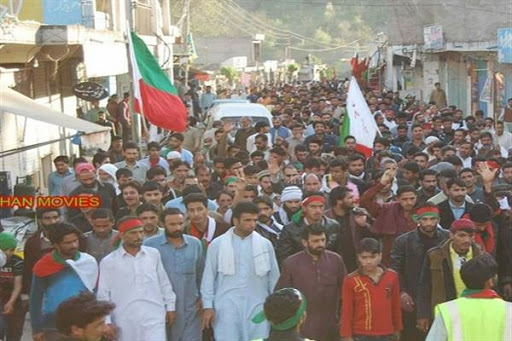
It’s in this context that the July 19 terrorist attack on JKPP (Jammu Kashmir Peoples Party) by a tribal group during a joint peaceful protest organized by the ideologically aligned organizations such as JKNAP (Jammu Kashmir National Awami Party) and JKNSF (Jammu Kashmir National Students Federation) against the false, baseless and anti-people occupation of Pakistan is important. Since 1947, history has slapped the false mujahids and invaders in their face and proved them to be traitors of the land. In occupied Kashmir also they have resorted to high-handed tactics. But the people of occupied Kashmir are beginning to understand the difference between slavery, recognizing right and wrong and are now exposing the culprits of history.

The state of Pakistan is being exposed in front of the people of Jammu and Kashmir. The people of occupied Kashmir have understood the doublespeak of occupying Pakistan and its proxies are being exposed in front of the people of POK. And so the occupying power and its dummy rulers are fearful of the development. They want to stop this development by force and coercion, but the movement of development and progress cannot be stopped by any coercive means. Elimination of obsolete ideology and thinking and the victory of modern ideology over these occupying mindset is inevitable.

As a result of the July 19 attack on the Liberals in POK, the Liberal and Progressive forces will have to formulate a serious strategy, not only to remain united in alliance but also to form alliances with the Baloch, Pakhtunkhwa and Sindhi movements. The struggle of the subjugated classes becomes common. Given the role of the fascist and occupying state of Pakistan, engagement with friendly forces is need of the hour. And given the current situation, the responsibilities and duties of the People’s National Alliance (PNA) have increased.

In order to fulfill these duties and responsibilities effectively, the PNA will have to formulate a clear and solid policy. Our struggle must take a more mature form and move on to the next step. It’s the demand of time and it is imperative to openly support the struggles and movements of the subjugated nationalities and oppressed classes. It will be a process of strengthening our struggle externally, and internally facilitating the lost rulers and the role of the occupying state. By exposing it to the world, the solid foundation of the people’s resistance movement must be laid.

Pakistan pushing terrorists in Kashmir to disrupt Art 370 revocation anniversary

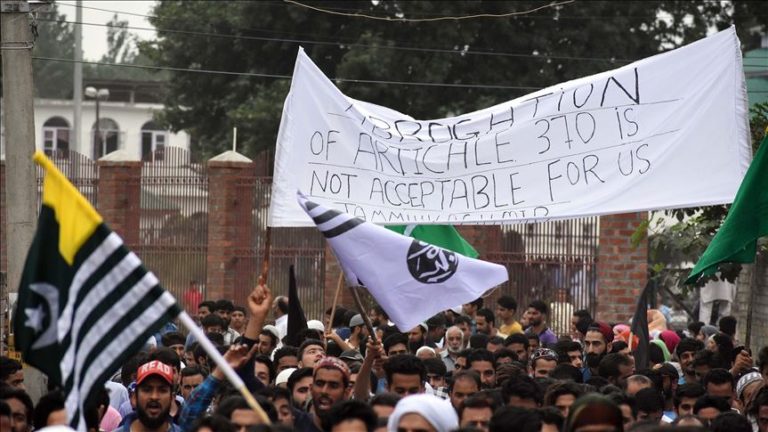
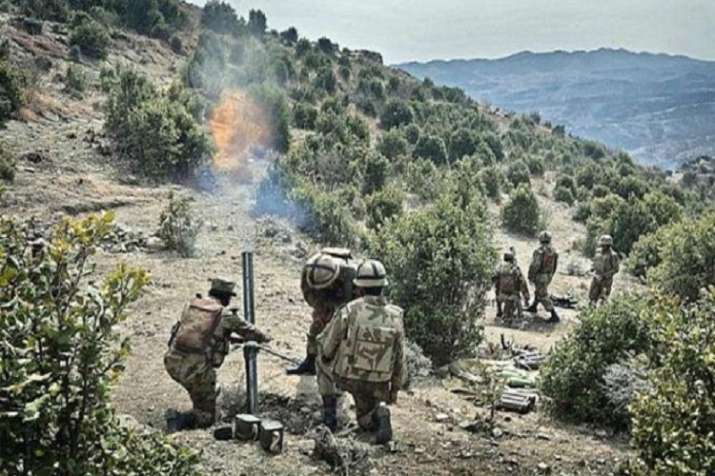
Srinagar, July 24: In less than 24 hours Pakistan has violated ceasefire at two places in north Kashmir leaving a woman injured. Indian Army says that violations are being done to push more terrorists in the Kashmir Valley in the wake of first anniversary of abrogation of Article 370.

The ceasefire violations (CFVs) took place in Nowgam and Tangdhar sectors of frontier district of Kupwara in north Kashmir. Senior Indian Army officials of the Srinagar-based 15 corps said that on the LoC, the number of ceasefire violations have gone up since last year and has remained high since.

“The Pakistan Army is keen on pushing more terrorists,” a senior Army officer told News Intervention. “First anniversary of the abrogation of Article 370 is very near and we believe they might try to disrupt the prevailing peace.”

https://twitter.com/ChinarcorpsIA/status/1286332249915314176

The figures available with the Indian Army reveal that that there have been 2,215 ceasefire violations (CFVs) recorded on the LoC till June 25 this year. A total of 3,168 ceasefire violations were recorded in 2019, and 1,629 in 2018.

During May 2020 there have been 382 ceasefire violations on the LoC and 302 in June, rising sharply from the 221 and 181 ceasefire violations recorded during these two months in 2019.

Quite recently, General Officer Commanding 15 Corps, Lt General BS Raju had told the reporters that Pakistan’s attempt to assist more terrorists to infiltrate into India are part of its efforts to disrupt normalcy in the Kashmir Valley.

“Pakistan Army facilitates these infiltration attempts,” Lt. Gen. BS Raju had said adding that Pakistan’s persistence in infiltrating terrorists, proliferating false propaganda are intended to disturb peace and its actions are unlikely to change anytime soon.

In needs to be emphasized that besides preventing infiltration, there has been a marked intensity in counter-terror operations in the Kashmir Valley.

As per official data, so far 141 terrorists have been killed in the Kashmir Valley this year. A total of 158 terrorists were killed in 2019, which was down from 254 in 2018 and 213 in 2017. This is an indication that terrorism is gradually declining in the Kashmir Valley, which is why Pakistan is desperate to facilitate infiltration of terrorists into Kashmir.

A senior Army officer posted in Srinagar added that security forces in Kashmir have been additionally proactive. “ It is a good strategy to keep the terrorists on the run,” he said adding that because of the pressure in the hinterland, the handlers in Pakistan are trying to heat up the LoC to divert attention of the Army.

Pseudo-Godmen and the game of religious conversions in Punjab

Punjab, since millenniums, has been home to a number of ethno-religious communities. The region takes pride in its diversity and has always remained open to the coexistence of different religions and faiths. This ethos and tradition continues till date. In the present context, Sikh are a majority religion while Hindu, Islam and Christianity continue to be practiced along with other smaller religions.

In the mid-19th century, Punjab became a part of the British Empire and evangelistic efforts by Christian missionaries gained momentum. The first preachers came from Europe and they quickly created a local base with translation of Christian texts, including the New Testament and the Gospel, into both Hindi and Punjabi. The conversions were, by and large, due to two reasons. First, to remove the shackles of the caste system which led to the conversion of Hindus. Second, to take benefits that entailed from being a Christian, especially in the field of education and health.

In colonial Punjab, maximum concentration of Christians was in Gujranwala, Sialkot and Sheikhupura districts. The most prominent Christian of Indian origin in the early twentieth century was Raja Sir Harnam Singh, a scion of the Kapurthala Royal family who put in a lot of effort towards spreading the word.

The Punjabis who chose to convert to Christianity continued to observe cultural affinity with Punjab to include use of Punjabi language, cuisine, dress code and other aspects. They also actively participated in the various festivals, traditions and customs of Punjab.

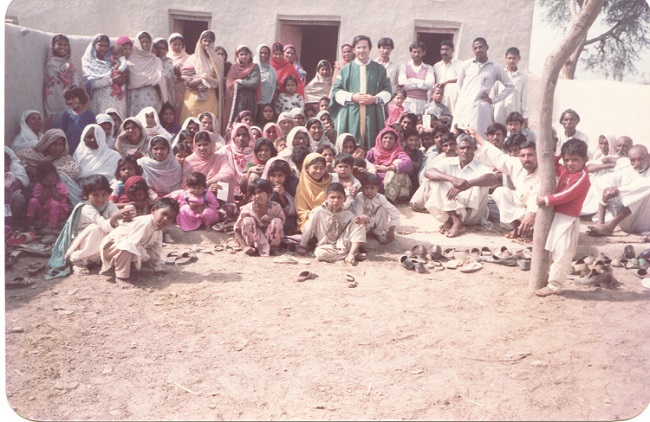
At the time of partition, areas with a larger concentration of Punjabi Christians went to Pakistan where they chose to stay. This was the beginning of the horror that they are witnessing till date. In Pakistan, the Christians have been reduced to menial jobs, mainly sanitation, and continue to be called “Churas” (sweepers). They have been kept in a state of poverty and lack of development since the elitist Punjabi Muslims do not want to do menial jobs and are content in having Christian serfs doing the same for them. They continue to be nothing more than bonded labour. In Pakistan Punjab an estimated 80% of the sweepers and cleaners are Christians.

Christians in Pakistan are being subjected to the most horrendous form of persecution. Apart from an impingement of their fundamental rights in terms of education, health and other facilities that the state is bound to provide to them, they are being subject to horrifying human rights violations. Hundreds of them have been killed or incarcerated under the infamous Blasphemy Law; many continue to languish in jails without any judicial support whatsoever.

International Christian organisations have been attempting to give legal support to these hapless people. There are instances, like the case of Asia Bibi, who was given a death sentence for blasphemy that was later on commuted due to pressure from western countries. She has now left Pakistan after having been granted asylum in France. Such good luck cases, however, are few and far between; most are killed for so-called Blasphemy or spend their lives in jail. By and large the Christians of Pakistan are a suppressed, exploited people who are not even allowed to seek refuge in India since they are required in their country to do all the dirty work.

Christians are settled all across Indian Punjab but are more concentrated in Gurdaspur, Amritsar, Jalandhar, Ludhiana and Firozepur districts. They too predominantly belong to the lower strata, but, due to equal opportunity being provided by the democratic Indian state, many have acquired good education and are on to jobs in different fields. There are Christians in the higher strata of society too as is seen in the large cluster of the Masih Christian community.

While the census puts the Christian population in the state at about one or two percent some senior members, pastors and social activists of the community like Imanul Rehmat Masih, Father Peter Kavumpuram, spokesperson of Jalandhar Diocese and George Soni, President of the Punjab Christian United Forum say that it stands at about 7 to 10 percent. It is on this basis that the Christian community leadership is making demands for more representation in the State Legislative Assembly by grant of minority community status and reservation under backward classes.

Successive governments have been seized with the effort to provide special impetus to the Christians. The Shromani Akali Dal-Bharatiya Janata Party coalition Government had established a Christian Welfare Board in July, 2016. It was through the proceedings of this Board, under its chairman Salamat Masih that instructions have been passed by the Government to Rural Development and Panchayat Departments to identify common village land (‘Shamlat’) and provide additional and adequate burial grounds for the community across the state. There are various concessions in education, state, employment etc. that are being given to Christians.

Christianity has a strong Church with established practices to look after the spiritual needs of the followers. The preachers take vows of the Church and become a part of the theological structure for life. They have a set hierarchy and appointments and are addressed as Father, Mother and Sister. They look after the Churches and other religious social, education institutions, conduct all religious practices and give sermons. There are negligible extra-constitutional  institutions involved in preaching practices in the Christian faith.

Surprisingly, Punjab is witnessing rapid proliferation of Christian Deras (religious sects) as is the case with other religions also. This is a deviation from established religious ethos and tradition of the Church and is also resulting in blatant exploitation of the emotions and sentiments of people in the name of name of Christianity and more critically, Jesus Christ. Normal people who have no education in Christian theology or the necessary sanction to preach, are becoming self styled “Apostles” and “Pastors” of these new age Deras. In the bargain they are earning huge amounts and have tremendous power as in the case of Dera chiefs of the Sikh and the Hindu communities.

These Christian Dera chiefs are mostly first generation converts from among Hindus and Sikhs alike and from different castes like Jats, Khatris etc. They are media savvy and have a considerable presence on various mediums of social media, especially You Tube, Face Book, Twitter and Instagram. While on stage they behave like Rock Stars complete with music, props and attendant drama.

They hold the pulse of people and speak about the problems faced by Punjabis especially in rural areas. They are adept at hitting weak spots and speak of miracles being performed in the name of Jesus Christ to remove diseases, alcohol dependency, drug abuse, marital discord, depression etc. They have managed to build their own Churches without sanction from established Christian authorities. They also have community halls and what they call open door Churches. In the process they have amassed untold wealth and are seen living in palatial houses while driving around in luxury cars.

All of this is creating trust deficit between the Christian community and the other communities of Punjab since it is perceived as a well organised system to carry out conversion to the faith, especially of those who belong to a marginalised section, are less educated and vulnerable to psychological manipulation.

The deteriorating social, economic and political situation in Punjab also has a big role to play in the ongoing religious churning being witnessed. Post the attack on Durbar Sahib in 1984 and the long period when Punjab was in the throes of debilitating militancy, there was a perceptible leadership vacuum, especially so, in the Sikh community. The leadership gap remained even when the environment changed, peace returned and normal activity started. It is this shortage of good leaders, role models, ideologues, intellectuals to guide the society which has created a space for all sorts of mavericks and pseudo Godmen to take center stage.

Punjab is today known for the proliferation of personality based Deras (religious sects) in all religions. Dera chiefs, who hold absolute authority in their Deras, are adept at influencing semi-literate, impressionable people with sweet words and a show of miracles. Many such Dera chiefs have been found to be indulging in criminal activities and are now imprisoned for the same. With the space in the Sikh and Hindu communities quite filled up these elements have hit upon Christianity as the latest cash cow. It is not without reason that the Christian self-styled “Pastors and Apostles” in Punjab are all in the 30-40 age bracket. The intention is to earn unimaginable wealth, boost followers and trigger conversion to Christianity.

Sabu Mathai Kathettu, a Christian missionary, in 2009 has published a report that lays down a well planned methodology for conversion of Sikhs to Christianity. The main among many recommendations is the need to attract Sikhs of high caste into the fold of Christianity to gain better and faster results. The emphasis was recommended to be on propagating the Gospel in the Punjabi language and through Satsang type of congregations that the Sikhs are more comfortable with. When seen in this context, the proliferation of informal Godmen and Christian Dera chiefs starts making sense. The conversion process needs to be looked upon with utmost seriousness. Any religious activity that is based on exploitation needs to be stopped.


Pak forces abduct Baloch mother, hand her to ‘Death Squad’

Mashkey/ occupied Balochistan: Pakistan’s barbarism continues in occupied Balochistan with the abduction of another Baloch woman by Pakistani forces from district Awaran. Naz Bibi, mother and a resident of Qalat area of Mashkey in district Awaran was abducted four days ago and shifted to a military camp where she has been subject to inhuman torture.

Local sources in Balochistan told News Intervention that Naz Bibi was first subjected to extreme physical and mental torture and then handed over to a state-backed ‘Death Squad’ goon named Akram Sajidi.

Baloch sources said that Pakistani forces had abducted Naz Bibi on an earlier occasion but at that time she was released after a few days torture in the Pakistani military torture cells.

Pakistan’s military barbarism and war crimes are increasing with each passing day in occupied Balochistan. Local Baloch sources asserted that this is not the first tragedy where a Baloch women has been forcibly abducted, subjected to extreme torture and later on handed over to the Death Squads’ goons. These forced abductions have been taking place in Jahoo, Koh-e-Isfeet, Ragy and other areas as well.

Baloch locals said that Mashkey completely turns into a military camp where after 7 PM nobody is allowed to step out of their homes but then the Pakistani security men forcefully enter the houses, misbehave with women and harass the Baloch men and children.

However, Pakistan Army along with its backed ‘Death Squads’ have made a complete network to spread drugs among youth across occupied Balochistan. Local sources said that Pakistani security men and their Death Squads forcibly inject drugs on children in Mashkey, district Awaran.

People’s movement in POK gaining momentum

The struggle for freedom and revolution is difficult and one must be patient. The results of freedom struggle do not come overnight, but the constant struggle for the rights becomes the basis for organizing the people. Discipline must be maintained while maintaining the continuity of the freedom struggle, and mistakes made during the struggle must be identified and rectified. When there are mistakes during an action then these mistakes and shortcomings must be rectified. Repeating these mistakes is very harmful. At the end of the second phase of “Leave Jammu and Kashmir Movement,” the workers and leadership of the People’s National Alliance (PNA) have collectively shown resilience.

On their return to Muzaffarabad, the PNA have managed to garner the sympathy of a large section of the public. At the same time, the PNA workers have returned with a new revolutionary spirit, determined to go to the masses for the third phase of their movement with greater intensity.

At the end of the second phase of the movement, the contradictions between the occupying forces and subjugated masses had deepened to such an extent that some new questions had arisen among the lower and conscious strata of the masses, especially the youth, along with debates and very weak dialogues. They had also begun to take a strong position over time.

Some of these questions and debates are common. For instance: If the governments of Muzaffarabad and Gilgit are empowered to form an assembly that will present the issue of Jammu and Kashmir to the world, can we really take any practical steps to restore the unity of the state of Jammu and Kashmir? Are we ready for it?

Is the question of independence of Srinagar connected with the question of independence of Muzaffarabad?

If there is real enmity between the upper classes of Pakistan and India, then why doesn’t Pakistan cancel all the agreements with India over the issue of Jammu and Kashmir? What is the freedom in the presence of Act 74, Karachi Agreement and the Lent Officers?

Many more such questions are under discussion after October 22. These are the questions that need to be discussed with the people in the language of the people. We will continue our struggle while adhering to the philosophy of giving awareness to the people and taking awareness from the people. We will increase, because what we learn from the analysis of society, the majority of the people learn from the day-to-day process, and during any movement, the people learn very quickly and move forward.

We have returned to Muzaffarabad with the determination and spirit that we will work tirelessly and continuously to organize the people on the right basis. Today the situation is such that right and wrong, good and bad, friend and foe are more than in the past. The difference between freedom and slavery has become easier to understand.

Let’s move forward while strengthening the belief in the victory of the organized people. Victory awaits the people.

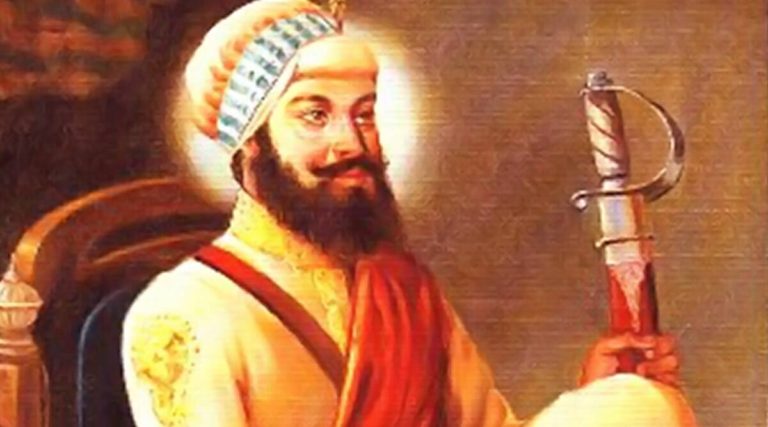
Akal Takth and the concept of Miri and Piri created by Guru Hargobind Ji

Much before his martyrdom, Guru Arjan Dev Ji was well aware of the need for the Sikh community to develop a body of dedicated warriors who would become guardians of the oppressed, fight for justice and righteousness and protect their nation and people against repressive powers. It was with this thought in mind that he decided to train his son, Hargobind, who was very young at that point in time, in martial arts.

The responsibility for the same was given to Bhai Budda. Bhai Budda should not be confused with the saintly old Baba Buddha Ji who possessed no such skill. He was a Sikh skilled in soldierly qualities and proficient in the use of arms.

Guru Arjan Dev Ji also impressed upon his son the need to build a viable force for self defence within the rapidly expanding community. He probably took these steps due to a divine realisation that he would not be in a position to carry forward the evolution of the community beyond the massive task of compiling the holy Granth and they would fall on the young shoulders of Hargobind.

When the summons came from the Mughal Court for Guru Arjan Dev Ji, he knew that he would not come back. Before leaving, he declared on May 25, 1606, that young Hargobind, would be the next master of the Sikhs.

On June 11, 1606 then only 11 years old, Hargobind became the sixth master of the Sikhs, and came to be known as Guru Hargobind Ji. Some chronicles put his initiation date as June 24, 1606.

Guru Hargobind Ji, though very young, completely understood what his holy father required of him. During the initiation ceremony itself, he requested Baba Budha Ji to adorn him with a sword rather than the Seli (silk cap) of Guru Nanak Dev Ji as was the tradition. It is said that Baba Budha Ji, who knew nothing about swords, put the sword on the wrong side; Guru Hargobind Ji then requested him to put another sword on the other side and thus started the tradition of him wearing two swords. This created the concept of Miri and Piri, implying that henceforth both religious and temporal power would remain vested upon the Guru.

The first step taken by Guru Hargobind Ji was construction of a seat of Temporal Power of the Sikhs. It came up on June 15, 1606 on a high ground opposite the Hari Mandir in the form of a 9 to 11 foot tall platform called the “Akal Bunga.” On this throne like structure sat Guru Hargobind Ji along with Bhai Gurdas and Baba Buddha Ji and held court. He received petitions and dispensed justice. The temporal nature of the Akal Bunga balanced the spiritual nature of the Hari Mandir, thus cementing the concept of Miri and Piri. The building is now a five storey structure with a marble inlay and gold leafed dome and is called the Akal Takht. It is the most important of the five Takhts of the Khalsa community.

Having created the seat of Temporal Power, the young Guru and his dedicated advisors set about strengthening the defences of the holy city of Amritsar. The city was walled and a small fortress named “Lohgarh” was constructed on the outskirts. The Guru initiated his own flag and war drums that were beaten twice a day.

Then began the arming and martial training of the Sikhs; the Guru himself was adept in the use of arms and was an avid hunter. Martial Vaars (ballads of heroism) were composed and sung in the Court on a daily basis. The heroic deeds of Sikhs were commemorated. With time the Guru had, under his command, seven hundred horses and a considerable Infantry.

Thus, within a few years of becoming the sixth master of the Sikhs, Guru Hargobind Ji was well poised to fructify the dream of his holy father of reconstitution of the Sikhs as a separate nation. The seed was sown even though the tree took almost two centuries to grow to its full potential. It is important to note here that to further the concept of nationhood, the Guru adopted all trappings of royalty, but deep within, and in his own words, he remained a simple ascetic and servant of the Sikhs.

After Pakistan, Iran brings home the Chinese Dragon

Some Indian and Iranian antiquarians might nostalgically speak about the commonality of their ethnocultural origin but in practical dealings, these long-forgotten and outdated pleasantries hardly play any meaningful role. Yes, for a very short duration of the Pan-Iranian movement spearheaded by the founder of Pahlavi ruling house, Reza Shah Pahlavi, Iranian academics and pragmatic scholars did conduct valuable researches in the phenomenon. However, Indians seem to have given only lip service to it. 

A partial freeze in India-Iran relations set in as early as 1979, when, in the aftermath of the ouster of monarchy, Teheran passed into the hands of orthodox ecclesiastical fraternity. The Ayatollahs, reminiscent of the Zoroastrian mobid (clerical) hierarchical structure— no doubt a significant social entity— had, hitherto, remained apolitical, or at the best, played a minimal advisory role if and when domestic exigency so demanded. The difference is that following the Islamic revolution, the Iranian clergy cleverly sidelined the Iranian Left, the real vanguard of the revolutionary movement, and directly grabbed political power. It ruthlessly attuned the entire Iranian polity to its time-hardened pro-Islamic stereotype. Keeping clear of religious tag, Indian political arrangement only sullenly watched the history of the region shaping quite differently.

With the introduction of the rule of the Iranian Islamic Republic in 1979, Indo-Iranian trajectory of relations shifted from benign intimacy to disgusting caution. India strictly followed the international norm of non-interference in the internal affairs of a state. Under the guidance of Imam Khomeini, the hero of the Islamic revolution, the Ayatollahs set forth an effective mechanism for a quick shift from Pan-Iran-ism to Pan-Islamism. A large number of Pan-Iranian fans, staunch nationalists and upholders of Iran’s civilizational permanence left their native land and sought refuge in western countries, especially the US, to escape persecution. The long drawn conflict between reason and dogma reappeared in its new avatar.

Obviously, in ideological terms, Islamic Republic of Iran was bound to enter a phase of deep skepticism and hostility towards the Arab world in general and Saudi Arab monarchy in particular, an institution Iran stubbornly refused to recognize as the epicentre of Islamism on the globe.

Iran is a nation that does not easily untie the accumulated baggage of loathing against its adversary. The Ayatollah’s antagonism against the US is that (a) it supported monarchical rule in Iran and suppressed populist movements especially of the Jibh-e-Milli in the 1950s (b) it offers solid support to the State of Israel against Palestinians (c) it protects and manipulates monarchy in Saudi Arabia and through it controls the vast oil reserves and the strategic routes in the Gulf.

Iran’s animosity against the State of Israel is rather amusing and without any cogent reasons like (a) Iran wants to shame the Arab states for their conciliatory attitude towards a people who have been castigated in the Islamic scriptures. Iran wants to send the message that it, a non-Semitic nation, is more Islamic than the Semitic Muslims (b) Israel is no less than canker eating into the vitals of Islamic body in the Middle East, and (c) Israel is a modern military power with the potential of exerting large scale influence on the history of the region, something that minimizes the stature of Iran.

Iran is at loggerheads with the Saudis for these reasons: (a) Arabs have been the historical dominators of Iran (b) there is a great ethnolinguistic and cultural divide between Iran and the Arabs and Saudi is considered the leader of the Arab world (c) Ayatollah Khomeini had declared that monarchy was disallowed in Islam and hence Saudi monarchy is void of legitimacy. (d) The Saudi ruling house cannot and is not the custodian of the twin holy shrines, the Mecca and Medina. Iran does not recognize it as the custodian.

It will be recollected that when anti-Saudi monarchy sentiment was at its height, nearly four hundred Iranian Hajj pilgrims were killed in the riots that erupted within the precincts of the sanctum sanctorum of the Mecca. Calling herself more Islamic than the Arabs, Iran wants to be recognized as the leader of the Islamic world. That seems wishful thinking because Muslims, despite the slogan of Islamic fraternity, are sensitive to factionalism. 

Obsessed with these political-cum-regional paradigms, Iran, under the Ayatollahs thought of going nuclear to cow down Israel and also obtain an edge over the entire Arab world, particularly the Saudi. The take of Saudi Arabia and Israel from Iran’s nuke ambition was that they could be vulnerable to Iran’s nuclear-rattle, and, therefore, ganged up with the US to subvert Iran’s nuclear undertaking. Washington had earlier done it in Iraq, though after the destruction of that country no tangible proof of late Saddam Hussein coming anywhere close to making the dirty bomb was found. Destruction of Iraq and not Iran or Pakistan will be discussed for long by historians as one of the controversial decisions of US military strategy planners.

When Washington rushed to impose sanctions on Iran on the nuclear count, it showed that the US was not fully prepared to talk to the Iranian side without doing the exercise of sabre-rattling. Iran is a very tough country to negotiate with and the Americans have very little experience of dealing with a nation of split personality like Iran.

What do we mean by split personality? By and large, most countries including ours, engaged in business with Iran have little knowledge of a historical reality. The non-Semitic Muslims anywhere in the world, especially in the Asian continent, all have a split personality. They have never been able to come out of the delusion whether Islam brought them something more useful and viable in comparison to the cultural ethos to which their elders had tenaciously remained glued millennium after millennium. This is true not only of Iran but also for Pakistan, Afghanistan, Tajikistan, and India including the Kashmiri and even the Central Asian (Turkistan) and Eurasian Muslims.

It is only among the non-Semitic Muslim societies that the debate about true Musulman and pseudo-Musulman has been raging with unabated intensity over the centuries. In the eyes of the Arab Muslims all non-Semitic Muslims are more or less spurious Muslims. This is the reason why the non-Semitic Muslims have invariably resorted to the destruction of all cultural symbols of pre-Islamic times in their lands. The revolts surfacing in Muslim countries in our times in the shape of protests, violence or militancy is, in fact, the reflex of that split personality and a struggle for finding out how the gap can be bridged over? A glaring example is of nearly two crore mohajirs of Pakistan desirous of returning to their parent land – India.

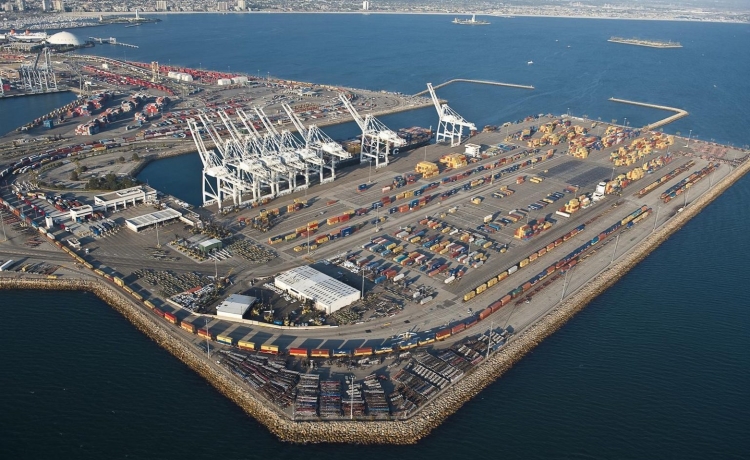
Chabahar Port and India

Apparently, American pressure and India’s compulsions thereof could assume the potential of forcing India to slow down the progress of work at Chabahar in the Straits of Hormoz. Whether Iran’s pre-planned deal with China discussed during President Xi’s visit to Tehran in 2016 had whetted the appetite of Iran of obtaining hefty financial packages from China or not remains a moot point.  Whatever transpired between them, Iran, nonetheless, thought it is more in her interests to enter into partnership with India on Chabahar and other two projects. Iran is well aware of the implications of wriggling out of any one of the three deals made with India. Moreover, Iran with her big oil reserves, and a nation with a strong ego is not to be compared with Pakistan that will put all eggs in China’s basket as in the case of Gwadar.

If India undersize her stakes in Chabahar, she may face hurdles in completing the Chabahar-Zahedan rail link of 680 km and also the Farzad-B gas exploration and exploitation project which was originally discovered by the Indian gas giant ONGC. However, India cannot escape the blame of soft peddling with the projects in terms of finances and technological infrastructure. I was part of PM Narendra Modi’s team during his official visit to Tehran in 2017 and the Iranian side repeatedly desired that India keeps the time frame for the completion of the projects. They were skeptical, nevertheless.

India should seriously consider that it was with great persuasions that the US allowed a waiver on Chabahar. As such, India should have made the hay while the sun was shining. India should expedite the import of necessary machinery and equipment from European countries by impressing upon them that India had to work under a waiver which might be withdrawn at any time given the unpredictability of the ruling apparatus of the two hostile countries. India should never give Iran a cause for concern because Teheran cannot wait indefinitely as she has to recover fast from economic crunch imposed by the sanctions.

It is for the American policy planers to debate whether it will be in the interests of Washington to push Iran into the lap of China? As per reports, Iran has been offered to bite the $400 billion dollar carrot package by China for developing the Chabahar port with the option of connecting it with Gwadar. This will bring solace to Pakistan because it changes the security strategy scenario in the region to India’s disadvantage. Iran had been raising a hue and cry over the US naval ships making their presence felt in and around the Gulf. But how much comfortable Iran will feel with Chinese naval force making its presence massively felt in the strategic Gulf region if India is out? The past century of Iran’s history is actually the history of her struggle for protecting the Gulf water channel from external influence and penetration. No regime in Teheran will afford to make the Gulf a bone of contention between mighty navies of the superpowers and thus endanger the security not only of the littoral states but also its own as well by undoing the balance of power.

It is time that India revisits the narrative and makes some pragmatic changes in her policy of handling her Iranian projects and the Gulf, without losing sight of peculiar traits of Iranian character. Even if New Delhi has some unknown assurances from Washington, these should not be allowed to influence adversely the essential contours of her foreign policy particularly towards an important neighbour like Iran. It is no strong logic to presume that Chabahar will have very limited intake capacity because no major trade transactions to the CARs (Central Asian Republics) will take place through Chabahar–Sirakhs-Turkmenistan corridor. With Indian presence in Chabahar, not only Afghanistan, Iran and the littoral states will feel more secure but the vast region called Central Asia will also find access to the warm waters of the Indian Ocean and the most crucial world’s naval route of trade and transportation. If India abandons Chabahar it will be a big setback to the cordial Indo-Afghan relations as well.

India should galvanize into action her topmost diplomatic expertise to re-activate the deals with Iran and simultaneously prevail upon the European Union to work towards softening of American sanctions on Iran so that India-Iran link up is not disrupted and the dragon is kept at an arm’s length. This will go in the interests of the stakeholders. The US should be dissuaded from performing an act that amounts to making India suffer for the sins of others. The world’s strongest democracy has to be strongly disposed towards the interests of the world’s largest democracy. Moreover, the US has to understand that saner voices in Iran will not remain stifled for all times to come. Matured diplomacy does not mean wielding the whip all the time.

Terrorists kill former ikhwan turned policeman in Kulgam, South Kashmir

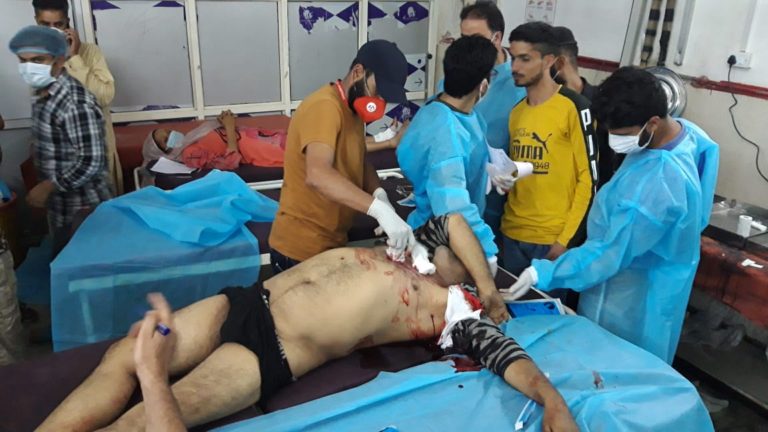
Srinagar, July 22: Terrorists on Wednesday evening shot dead a former counter-insurgent turned policemen Abdul Rashid Dar at Kulgam, South Kashmir. Seven years ago, terrorists had killed Abdul Rashid’s son and now they shot dead the counter-insurgent turned policemen. Security forces have launched a hunt to track down the attackers.

Gurenderpal Singh, Senior Superintendent of Police (SSP), Kulgam in a statement said that at 2120 hours (9:20 PM IST) a report was received about sound of 3-4 shots being fired in Furrah area of Police Post Mirbazar jurisdiction.

SSP said that immediately after this information Police parties rushed to the spot from where it was learnt that a person named Abdul Rashid Dar (son of Ghulam Hasan Dar) who was a resident of Furrah had been shot by unknown persons.

SSP, said that Dar was taken to Janglat Mandi Hospital but could not make it and is now no more. “Area has been cordoned and search has been launched to nab the assailants,” a senior Police officer added.

However, police sources said that Dar was an ikhwan (counter-insurgent) who was later on recruited in Police. Ikhwanis had been on the forefront in dealing with terrorism in Kashmir in mid 90’s. As a counter-insurgent Abdul Rashid Dar had worked at the then Sidora based ikhwan camp. 

Medical superintendent GMC Anantnag Dr Majid Mahrib said that Abdul Rashid Dar was declared brought dead to health facility.

Kashmir lockdown till 27 July to control Corona spread

Srinagar, July 22: As the COVID-19 cases and deaths surge in Kashmir Valley since the lockdown was eased, the Jammu and Kashmir government on Wednesday announced strict lockdown till July 27.

“From today onwards till July 27, strict lockdown will remain in place to prevent the further spread of COVID-19 pandemic in valley,” Director of Information and Public Relations said in tweet on Wednesday morning. “Further decision about continuation or announcing relaxation will be taken depending upon the situation.”

It needs to be mentioned that since Unlock-2, COVID positive cases have shown a huge spurt and so far over 15,000 people have tested positive and 260 people have died due to this pandemic.

Several doctors and civil society members had urged the government to re-impose the lockdown to prevent the mass spread of the Coronavirus (Wuhan Virus). Leading medicos and doctors have already stated that the deadly virus was already in the community and it was time to take precautions that include wearing of masks and maintaining social distancing.

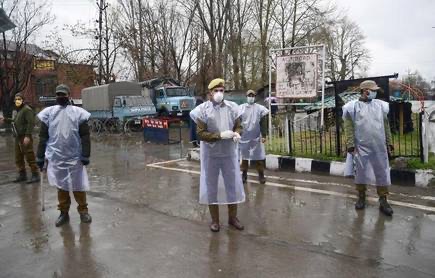
There have been reports that shops and other business establishments across valley remained closed on Tuesday while the public transport was off the roads. Barricades have been put up and vehicular movement, except for essential services, was restricted in Srinagar. Restrictions on public movement and activities were imposed in 88 areas notified as COVID-19 red zones in Srinagar after a sharp spike in positive cases in the last couple of weeks.

In old Srinagar and other parts of the city, barbed wires were laid to stop the movement of traffic. The red and contaminated zones also remained sealed.

The authorities have enhanced a fine up to ₹1,000 for not wearing masks, whereas the violation of social distancing guidelines in red zones will incur a fine of ₹10,000.

Restrictions also remained imposed in Pulwama, Anantnag, Ganderbal, Baramulla and Kupwara, officials said.

The Union Territory administration had first announced a lockdown across Jammu and Kashmir on March 22 as part of its efforts to curb the spread of COVID-19. Restrictions were imposed in many parts of the Kashmir Valley, including in the city, on March 19 after the union territory saw its first positive case from Srinagar.

The lockdown was then gradually eased in June and the markets in the city re-opened after about three months in the second week of June.