Home Blog Page 357

Freemasonry, Mozart, Love, and Romance with Christian Sorensen

Christian is a Philosopher that comes from Belgium. What identifies him the most and above all is simplicity, for everything is better with “vanilla flavour.” Perhaps, for this reason, his intellectual passion is criticism and irony, in the sense of trying to reveal what “hides behind the mask,” and give birth to the true. For him, ignorance and knowledge never “cross paths.” What he likes the most in his leisure time, is to go for a walk with his wife.

Scott Douglas Jacobsen: Mozart or Johannes Chrysostomus Wolfgangus Theophilus Mozart was a prolific composer of music. You love him, or the performances of the music. You mentioned Die Zauberflöte or “The Magic Flute.” Any further commentary on it?

Christian Sorenson: In my opinion, it is a musical composition loaded with “esoteric symbolism,” about which much can be speculated, but can hardly be deciphered.

Jacobsen: Now, there was some Freemasonic influence on the music. Is there any freemasonry background for you? I cannot shake the hand to be sure with the peculiar handshakes.

Sorenson: Depends on who asks…

Jacobsen: Are there any particularly trashy Mozart pieces? He couldn’t have made everything perfect with the music.

Sorenson: I estimate Mozart “did nothing perfect,” and in that sense it is necessary to distinguish between “mediocrity and perfection,” since “not being mediocre,” does not means unconditionally “something less perfect.” In relation to “Requiem,” which is its last composition, and to “Allegro Molto,” I feel there’s “something lacking.” Regarding the former, the reason was evident since it was left unfinished due to his death, but in relation to the last one, in my opinion there’s “a talent lack,” because both, the “musical notes wealth,” and “musical harmony,” are not evident as well as in the rest of the body of its musical work.

Jacobsen: Love and romance go hand-in-hand with music. We’re an auditory species for many emotions. Mozart, in fact, had trouble finding himself a partner, even Constanze was clumsily courted. As Seinfeld would say, “What’s the deal?” Why did he suck at this? It is one of those baffling aspects of highly intelligent people, even geniuses. There can be an attainment of the height of creative productions and the devilish failures in amour. It is as if the gods made a Faustian bargain with most of the great geniuses of ye olde worlde order. I could list a long scroll of names who admit to utter failures in romance while being amongst the most highly intelligent.

Sorenson: Indeed, “love and romanticism” go hand in hand with music, since these “are emotions,” and this last can “ignite and feed” them. Nevertheless, I believe that “romanticism and love” usually “don’t go hand in hand,” as occurred to Mozart and generally happens to geniuses, due to the fact that many times, though they are people “in love with love,” they instead “approach awkwardly” towards “the beloved” one, perhaps because they lack emotional and social skills, and therefore “fail in their attempt.” From my point of view, “romanticism is risky” in reason that “exacerbates love desire,” and this last brings as consequence the “evidence sign” of “love object non-existence.” If I could summarize it in one simple sentence, I would say that “to find love you better not talk about it.”

Jacobsen: Mozart’s music, it is almost a synesthetic experience. Why?

Sorenson: Because Mozart was a genius, and as geniuses we are able “to experience synesthetic experience,” and to produce in others that kind “of experiences,” since “our perceptions” are not always “fixed,” regarding to “perceptual organs” and to “supposed sensible objects” related to these.

Jacobsen: If we take music, live classical music, as a form of art, let’s say of Mozart, it’s a mix of three things. One of them is sound in minute ways in the manipulation of waves in air. Another is the visual presentation of the community of experts who play instruments – almost miraculous a primate species has been adapted to this purpose for the species enjoyment qua species enjoyment. A last is the, if close enough to the stage, the second acoustic resonance; the powerful resonance from the reverberations of the instruments on one’s body – truly remarkable. It is visual. It is auditory, primary and secondary forms. It is triggering for emotions. Emotions triggering certain memories, as keys unlocking feelings for emoting’s sake or for bringing forth, calling forward, buried moments of awareness. What are some other elements of the musical experience? How do the live performance and the recorded experience differ from one another?

Sorenson: The difference between both kinds of music, is similar to what occurs “when sucking a candy with or without its paper,” due to the way of approaching to it, and though it’s the same object, it leads to sensations that rather “oppose each other.” By listening to live music, what is lived is an “experience of real experience,” while doing it with recorded one, what arrives is the “experience of an inexistent experience.” In consequence, strictly speaking within the last “nothing is there” and our conscience is aware of it, meanwhile the former unlike this, possesses the “unpredictable and unexpected,” through which “uncertainty” of outcome is faced, in order to “increase emotionality” and to “trigger a pleasure chain,” associated with the “sensible experience” of “feeling nothingness.”

Jacobsen: For the unmeasurably gifted, such as yourself, what is the importance of intense emotionality to balance out the intense cognitive life?

Sorenson: “Emotional intensity” is an “intrinsic constitutive condition,” of being an “unmeasurable genius,” linked to the fact of possessing a very low “stimulus threshold” that leads in turn to be “hyperreactive” and “emotionally susceptible.” Therefore, this last “is necessary” as part of our life, but it “is not enough,” in itself for allowing us to achieve an adequate personal balance. Indeed, the latter will depend on the consequence fundamentally on the “quality and connotation” that “intensity within emotion” and “nature of emotions” adopt in order to achieve a “harmonic” and “stable balance.” Anyhow, we “are not balanced” precisely because everything “is balanced.”

Jacobsen: Thank you for the opportunity and your time, Christian.

Sorenson: Thanks to you, and I hope I have “silenced the noise of the stones carried by the river.”

Image Credit: Christian Sorenson.
Muscular India gives free hand to its army to tackle China

It would be a grave misjudgement to believe that China has walked over India in a physical showdown in Galwan Valley in eastern Ladakh on Monday. If nothing, ask the Chinese who made moves in lockstep over the last few weeks to test India’s nerves and found a nation mature in diplomacy and dare in equal measure.

India has used velvet gloves against a petulant Nepal which thumbed its nose on borders but didn’t elicit a raging anger from New Delhi that would’ve played into the hands of its puppeteer, China. India knows, as does Nepal, that the latter can’t survive without India’s open borders. Simply put, the land-locked nation would run out of essential supplies. A manufactured border dispute has no future but for headlines and talk shows.

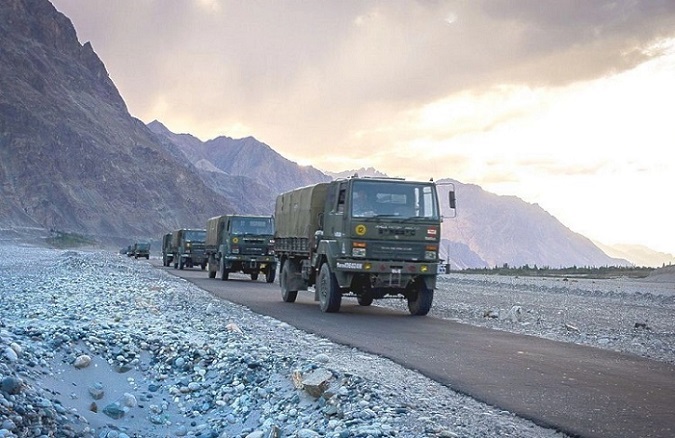
China meanwhile had crossed the Line of Actual Control (LAC) at four different points in Ladakh, agreed for de-escalation but then stayed put when the two armies were to pull themselves back by a few kilometres. India would have none of an enemy’s forward-post left standing inside the Galwan Valley which belongs to India. It didn’t back down from a physical combat either since arms and ammunition are avoided by the two neighbours in sensitive stretches of border running into thousands of kilometres.

Now has come the news that Indian Army has been empowered to act as per the ground situation without looking for directions from New Delhi. In other words, the Indian Army has been freed from political constraints. It’s an unambiguous message to Beijing that they are now in the wilds. That your superior nuclear stockpiles, defence spending or armaments wouldn’t be of much aid if it’s bare knuckle fight. So, if it’s to fists, stones and clubs now, may the best man win. There is no referee.

Indian Express has quoted an army source thus: “Army has been given emergency powers for deployment there as per needs and new situations without looking towards Delhi…We have to demonstrate our strength on the ground…there is no need to show aggression, only our strength.”

This would put China in a spot. Either they shove the conventions and turn it into an armed combat. Or they pull themselves back as they did in Doklam in 2017. Or they escalate which wouldn’t go unnoticed to a concerned world. It’s a massive show of intent from Modi’s India which is largely consistent in its zero-tolerance approach on nation’s sovereignty and integrity.

It’s not like South China Sea where the Middle Kingdom has usurped islands, sea tolls, reefs and banks overriding neighbours protests. China could not only carry through the bluff but were assured of its efficacy by the mumbled response of the affected. India seems determined to call out the bully. It’s not the semi-autonomous Hong Kong, a cowering Taiwan or a Vietnamese fishing boat you could sink to the floor of the South China Sea.

China clearly is upset at India’s assertions in recent months. India has signed a pact with Australia in the middle of the pandemic which would give teeth to QUAD (Quadrilateral Security Dialogue) between four democracies of Indo-Pacific: the United States, Japan, Australia and India itself. It has openly given a call to multinationals to shift their operations to India, a blow to China where it hurts the most. It has decided to screen the foreign investments beyond the FDI regulations. It now heads World Health Organization (WHO) which is to take call if China was complicit in hiding the truth on Coronavirus pandemic. It hasn’t helped the matter that Taiwan, which Beijing is paranoid about, could have “observer” status at WHO on pandemic deliberations. Then we have an expanded G-7 group of nations where India is to be included but no invitation has gone out to China.

India has an uncontested control of Galwan Valley, between Ladakh and Chinese-occupied Aksai Chin, since 1962. It suffers from poor infrastructure in a hilly terrain unlike China which makes use of the flat Tibetan plateau to carry its road and highway network unhindered. India in contrast has to cross several mountains to access the LAC. It’s only natural that India wants to secure its borders. China would either have to give up the encroachments or face consequences, no less economic. There is a groundswell of consensus to boycott Chinese goods. The little matter of Huawei-5G also hangs in the balance.

There is little doubt that China faces uncommon heat across continents. Pushback against its over-arching reach has already begun in Africa and Southeast Asia. Unemployment is unprecedented. Economic woes are spiralling. The world is a hostile theatre after China’s machinations on pandemic which has set the world back by a generation in economic terms. Its present misadventure in Ladakh is an undisguised diversionary tactics.

There is little doubt Indo-China relations would freeze in near future. It would bring Pakistan in closer ambit of China. India, on its part, would have the United States in its drawing room. Distrust between the two main powers of Asia would now run deep. Russia is a common friend which could find its loyalty divided.

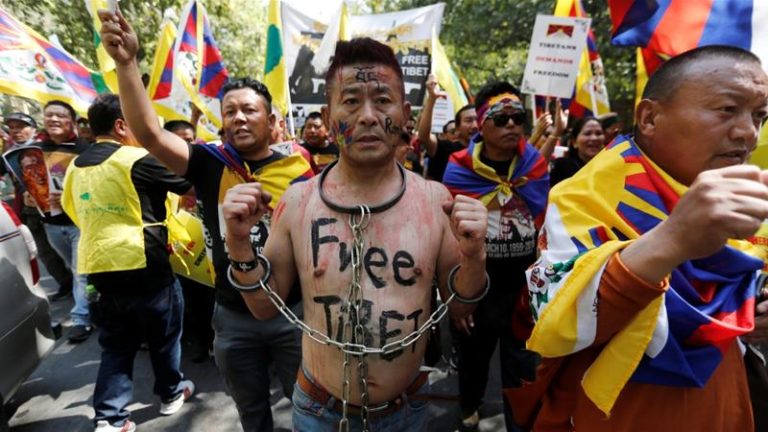
‘Tibetans have lost their motherland, they need some friends’

During my 48-year long love affair with Tibet, many Tibetan and other friends have asked me the same question, “What made you fall in love with Tibet?” Their question is quite valid because as journalists we regularly come across so many issues. We go deep into one, write about it and then move ahead to something else. As we move on, most of us forget most of these issues with passage of time. Moreover, in a country like India where every journalist and photographer has a huge variety of social, political and developmental issues worth specializing and writing about, how a journalist like me could continue with Tibet while many of my colleagues sincerely believed that it was a ‘dead’ or a non-issue?

When I look back and revisit my first encounter as a journalist with Tibetan refugee community and their leader HH the Dalai Lama in 1972, I discover that the reason of this love affair was my father and my mother. Meeting first time with the energetic refugee youths like Lodi Gyari, Jamyang Norbu, Tenzin Geyche, Lhasang Tsering, Tendzin Choegyal, and Sonam Topgyal, the fire in their belly for Tibet was very much same as I’ve been noticing since my childhood days in my father for his lost homeland in Kashmir.

My parents too were refugees from that region of Kashmir which was occupied by Pakistan only three months after the Indian Partition. When I met a middle aged Tibetan lady Tsering Kiya in McLeod Ganj Chowk, her enthusiasm about narrating her home place back in Tibet was as infectious as my mother telling me about her home in Mirpur, her school and life in the town. May be this Tibetan encounter was a case of self identification. And I was hooked.

Refugee

My father became refugee three times in his life time. He was just two years old in 1931 when followers of young Sheikh Abdullah, a fanatic leader of Muslim Conference led a dreadful communal massacre as part of his anti-Maharaja movement in J&K. All property of my grandfather who was a prosperous businessman, an accomplished Hakim (Amchi), a famous story-teller and a popular preacher of Quran (despite being a Hindu), was looted and burnt. He was forced to leave his ancestral village of Panjan and migrated to Mirpur.

The family became refugee and lost its entire belongings second time in 1947 when they were forced to leave Mirpur overnight in the wake of attack by Pakistan Army and tribesmen. The surviving members of his family were among those 18 thousand out of 42 thousand Hindus and Sikhs of Mirpur who survived the violence. The family settled temporarily in Jammu city but was soon pushed out by the state government of Sheikh Abdullah to neighboring Punjab on the ground that it did not want to handle too many refugees. That was his third and final exile from his homeland. Following a long exploration in Punjab, Uttar Pradesh and Himachal Pradesh the family split in many parts and my father finally settled in a refugee slum of Delhi. I was born in this slum near Old Subzi Mandi.

Faceless, Hopeless Refugees

But as the luck would have it, a large majority of refugees from POK (Pakistan-occupied Kashmir) who migrated to other parts of India were deprived of their identity and status as ‘citizens of J&K’. While all State governments of J&K had refused to accept these POK refugees as ‘State Subjects’ of J&K for over 72 years now, the New Delhi government had her own reasons to deprive this community even the status of a ‘refugee’. For over seven decades the central government was shy of accepting these children of POK as refugees for the fear that this formal labeling will weaken her claims over POK in any future legal fight with Pakistan. This approach of he Centre, unlike victims of Indian partition from Pakistani Punjab, Multan, Sindh and East Pakistan who were compensated for the properties they had lost in Pakistan, automatically deprived my father, his parents and the entire POK refugee community of being compensated for the properties they had left behind in their homeland. Till the last days of his life when he passed away last year in June, my father had written innumerable petitions, participated in demonstrations and lead delegations to win justice and formal identity as the children of J&K. But to no avail.

He lived all his life with his pain of being denied even the right to call himself a legitimate son of his own motherland. Leave aside having any legal right to send his children to settle permanently in J&K as proud ‘citizens’ of their ancestral homeland, he could not even win a chance to send any of his children for higher education in an Engineering college of the State which were reserved exclusively for ‘State Subjects’ of J&K and are actually funded by the tax money he and other Indians were paying.

The last hope

In his last few months, my father had lost his eye sight. His only interest in sitting near the TV or radio was to hear some news about his homeland Jammu & Kashmir. He had big hopes from the Narendra Modi government in its first five years. But had started losing heart gradually. In his last days the only words he could speak after big efforts was his only one question, “Modi Kuj Karega?” (Will Modi do something?). All of us knew what ‘something’ he was looking forward to. This ‘something’ did happen but only on Aug 5, 2019 which came 50 days after he had already breathed his last. On May 24, this year when my mother heard Modi government’s announcement about the new domicile citizenship laws for J&K her quick reaction was, “He was waiting all his life to hear this news. Had he (my father) been alive today, he would have died of his happiness shock.”

My father lived for 90 years and struggled for 72 years to win the Kashmiri identity for himself, his children and over a million other faceless Kashmiris like us who left their homes in Mirpur, Muzaffrabad, Bhimbhar, Kotly, Dev Batala, Kainy, Ali Beg and thousands of small villages like Panjan. Most of the co-refugees of my father’s generation are already dead without seeing the dawn of May 24, 2020 or hearing the news that their home State of J&K has finally recognized them as her own children. Me and my children’s generations who have never had a firsthand feel of what it feels like being a citizen of our own motherland J&K, can now hope to win back our original identity. But the dream of my father’s generation to bring back our original ancestral homeland in POK is still far away. Still, many among us are now more hopeful that this term of Modi or the next one might bring back the lost POK back to its mother J&K one day.

There were many occasions when after reading my newspaper articles on Tibet, watching me in a TV debate on Tibet or hearing about my speaking in a seminar about Tibet, he would quietly hold my hand and ask me, “You are working so much for the Tibetans who are from another country. Why don’t you fight with the same spirit for your own people?” I could feel his pain but I had no such answer which could reassure him about his painful situation. On some occasions I could just muster some courage to tell him, “Don’t you think we are still very lucky that despite losing our homeland we are living in our own motherland as free citizens? But poor Tibetans have lost their homeland and motherland both. They are too few to fight it out with China. Don’t you think they need some friends like me?” On a couple of occasions, he just smiled and said, “It’s a smart answer. But you are also right.” I don’t know whether his answer was out of his understanding of the Tibetan situation or his own hopelessness about his own fight.

Today as I remember my father on his first anniversary I don’t have an honest answer to the question which has shaken my conscience during all these years of my love affair with Tibet, “DID I LOVE TIBET TO CHEAT MY FATHER?”

Right Now, Mubarak Bala: Let Him Go, or Have a Fair Trial (Right Now)

Mubarak Bala is one of the most articulate and intelligent humanists in the world today. Not heard of much in the mainstream of some of the secular discourses for several reasons, as Dr. Sikivu Hutchinson has been noting for years, Humanism remains Euro-centric, as in Caucasian and Western culture; nothing wrong with either the ethnic groupings or the culture, but the over-emphasis can exclude other voices deserving a platform, due respect and dignity, and a presentation of a different side of problems, experiences, and, thus, manifestations of Humanism in order to make Humanism true to the universalist visions and aims of Humanism and humanists. Here’s the catch if you’re not aware: Bala is in jail.

Or so we think, he could be dead. We really don’t know. And that’s another reason for considering this a crime and a human right injustice (violation). As the innovator and freethinking leader of Nigeria, Dr. Leo Igwe, has noted repeatedly, there is a long-term trend of persecution of atheists and humanists throughout Nigerian society with one of the biggest manifestations in the northern parts of Nigeria, especially places like Kano because of the strong adherence to fundamentalist versions of Islam. Igwe and Bala are brilliant people. They’re extremely well-known and articulate, in life and word, humanists. There’s no doubt some fundamentalist believers are relishing this persecution of Bala. Many humanists, around the world mind you, are not enjoying this one bit.

As this is part of an ongoing series of opinion pieces, as with Igwe and several others, we won’t stop until there is justice for Bala. We’ve won the media war on a number of fronts. Don’t doubt international humanists’ resolve in this matter, the religious fundamentalist have messed up on all fronts in handling this case; if they want even a semblance of ass-covering, then one way in which to do this would be the release or fair trial in a secular court of Bala. Even in those cases, there would be failure on their parts. There’s only damage control left for this fundamental mistake on the part religious fundamentalists to try to subvert proper law and order, and international human rights, and the rights due to the President of the Humanist Association of Nigeria as stipulated in the Nigerian constitution.

We didn’t want this campaign; we didn’t want this fight. It was thrust on the community based on the bigotry, fear, prejudice, and superiority complex inherent in some religious minds, usually fundamentalist, about the non-religious. For this post, I want to focus the penal code of Kano in brief. Because this was part of the longer article the day of the arrest of Bala, unjustly. S.S. Umar & Co. were the ones filing the complaint to the police from Kano about a Facebook post by Bala in Kaduna. Bala was dragged out of his own place of residence by two out of uniform cops and then placed in jail. This entire situation is unfair and should be openly condemned from the outset. I know moderate and ordinary Christians in southern Nigeria and moderate and ordinary Muslims in northern Nigeria know the justice due to Bala because of the outrageous acts being demanded in order to appease religious fundamentalists in northern Nigeria.

We have international humanist support. We have ordinary religious believers’ support. It is only a small minority of religious fundamentalist believers who have proclaimed themselves the arbiters of the faith for all Muslims, which, in and of itself, should be seen as, and probably is perceived as, a blasphemous act or behaviour within the conceptualization of the ordinary Muslims and Christians in northern Nigeria and southern Nigeria, respectively. Nigeria, technically, has a secular constitution; as a fundamental tenet of Humanism, in some regards, is a separation between religion and state, or faith and governance.

The Penal Code of Kano State has a subtext of being a Sharia law-based legal code in which religion becomes imposed on the entirety of the population of Kano while within a larger context of Nigeria’s secular or humanistic constitution. How is this not wrong? How is this not unfair and unjust, and illegal in some manner? Because it has a larger secular law for all and then a secondary religious law precisely for the religious only; a religious or faith-based law that many want to impose on Mubarak Bala in which a humanist, an atheist, and a former Muslim would be subject to the death penalty because of the religious zealots who a) cannot handle open criticism, b) cannot handle an open and extremely intelligent and articulate humanist, c) cannot handle a prominent leader within the humanist communities, and d) cannot handle a individual who uses freedom of expression guaranteed within the constitutional setup of Nigeria. This is, fundamentally, unjust and shall be challenged by humanists, whether Humanists International, or the Humanist Association of Nigeria, or individual activists like Dr. Sikivu Hutchison, Mandisa Thomas, and others.

There are towering figures like the aforementioned and Professor Anthony Pinn who have provided an in-depth and rich intellectual analysis and contextualization for comprehension of the issues facing us as humanists. It is useful here. And to all humanists young and old, how ever much they may make you feel unwelcome and as if you’re not deserving of and granted the same human rights as them, these are your societies and your global community and, therefore, your identical rights too.

As per the complaint from S.S. Umar & Co., they stated, Bala “publically [insulted] Prophet Muhammad (PBUH) on his Facebook page contrary to Section 210 of the Penal Code of Kano State ad Section 26(1)(c) of the Cybercrimes (Prohibitions, Prevention, Etc.) Act of 2015.”

Cybercrimes (Prohibitions, Prevention, Etc.) Act of 2015 Section 26(1)(c) states:

26. (1) Any person who with intent –

(c) insults publicly through a computer system or network–

(i) persons for the reason that they belong to a group distinguished by race, colour, descent or national or ethnic origin, as well as religion, if used as a pretext for any of these factors; or

(ii) a group of persons which is distinguished by any of these characteristics;

What does this complaint mean? It implies a dead man, a man six feet under (or purportedly in heaven), has been insulted. How can someone know this? By principle of parsimony, a more pragmatic interpretation is a select group of Muslims claiming to speak for all Muslims feel insulted over a Facebook post and, thus, declare this an insult to a dead man – leaving aside the idea of a religion being insulted.

I have seen on social media numerous death threats against Bala because he is an atheist (or a humanist and a former Muslim). In this, the real crime radar should be utilized to focus more rightly on real individuals making more than insulting claims and, in fact, declarations of public intent to murder against an individual because of a set of beliefs and a particular rejection of a systematized religious series of beliefs. Who is this justice system kidding? Bala should be released without question or given a fair trial in a secular court; otherwise, the logical implication, by the penal code and the cybercrimes bill would imply a far more grievous and larger set of open charges, by their own stipulations, of the need to jail and potentially charge numerous individuals proclaiming open harm against a living individual, Mubarak Bala.

Free Mubarak Bala.

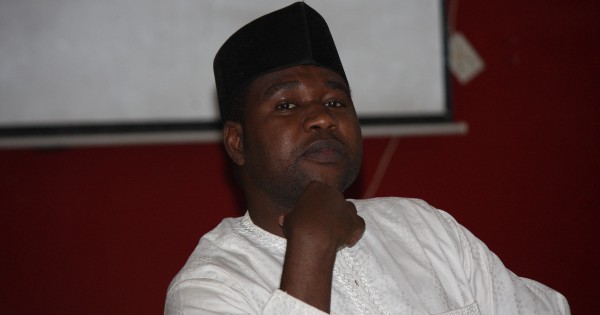
Image Credit: Mubarak Bala.

India China face-off in Galwan turns violent, efforts on to diffuse tensions

India and China were involved in a violent face-off at the Galwan Valley on June 15/16 night while the two sides were in the process of de-escalation. In the ensuing scuffle three Indian soldiers that included a Colonel and two other soldiers were martyred. At least 4 Chinese soldiers were also killed in this violent scuffle while several others have been injured.

Confirming the casualties suffered by the soldiers of PLA (People’s Liberation Army) Hu Xijin, Editor-in-Chief of Global Times, said “Chinese side also suffered casualties in the Galwan Valley physical clash…” Global Times toes the official line of Beijing and works as a mouthpiece of the Chinese government.

Commander level talks are still on between India and China as they make efforts to diffuse the situation. PM Narendra Modi, NSA Ajit Doval, Defence Minister rajnath Singh, External Affairs Minister Dr S Jaiashankar and Army Chief MM Naravane held detailed discussions about the current stand off with China.

This is the first time since 1967 that military personnel of both India and China have been martyred in a border skirmish.

Jehovah’s Witnesses’ Human Rights Continue to be Violated

The United States Commission on International Religious Freedom (ISCIRF), akin to one supportive of Jehovah’s Witnesses argument in “Rights and Science: Persecution of and by Jehovah’s Witnesses” on the rights violations against the Jehovah’s Witnesses by the Russian Federation, “condemned” the increase in harsh prison sentences handed to the members of the “Jehovah’s Witnesses in Russia.” The USCIRF is a bipartisan, independent federal government entity. It was established by the Congress in the United States for the analyzing, monitoring, and reporting of threats to religious freedom outside of the United States.

This does not negate the issues of the rejection of some medical treatments grounded in non-science or theological reasoning and premises, i.e., quoting scripture as the basis for rejection of a series of medical treatments, or the cover-up of child abuse for decades as in many other religious sects or denominations. It’s a mixed bag, as with many religions and religious groups. I know believers and non-believers alike realize this based on correspondence. However, one side wants only to condemn the religious believers’ poor blood transfusion policy and cover-up of child abuse; while, another only wants to focus on rights violations against the Jehovah’s Witnesses. Both matter and reflect the complicated nature of many of these affairs.

To the right to freedom of belief, freedom of religion, and freedom of expression, Jehovah’s Witnesses have full rights to these, as with other Christians, or Hindus, Muslims, Jewish peoples, Native American spiritualists, and atheist, agnostics, Unitarian Universalists, and the like. Thus, the violation of the human rights of the Jehovah’s Witnesses is an important thing to stop in order for the free practice of religion for them.

The USCIRF focused on the harsh prison sentences, but this follows a long series of negative impacts on Jehovah’s Witnesses all over the Russian Federation. Take the case of Artem Gerasimov, who is a resident of occupied Crimea, he was sentenced to six years’ imprisonment based on personal faith. Is this not unjust and unfair? It is based on fundamental rights to freedom of religion and belief. Yet, he is imprisoned because of it.

A few days after the last one on June 4 with Gerasimov; there was the June 9 case of a 61-year-old man named Gennady Shpakovsky to even more time at 6.5 years based on religious views and sharing religious views of others. Could this be applied to other religions, say the Russian Orthodox Church? It is unjust and unfair in and of itself. It should stop, as it should stop for others all around the world.

Commissioner Gary Bauer said, “Russia’s vicious targeting of the Jehovah’s Witnesses, guilty only of practicing their peaceful religious beliefs, clearly illustrates the government’s contempt for the international human rights treaties to which it is a party.”

The 2020 Annual Report from the USCIRF listed a recommendation to the State Department of the United States for the Russian Federation as a country of concern based on the repression – rights violations – of the Jehovah’s Witnesses and other minority religious belief systems’ adherents.

Vice Chair Gayle Manchin stated, “The ongoing campaign against the peaceful Jehovah’s Witnesses is one of the many reasons why USCIRF considers Russia worthy of being designated a ‘country of particular concern’ for systematic, ongoing, and egregious violations… We sincerely hope that the State Department will reach the same conclusion later this year.”

With files from the USCIRF

Photo by Aaron Burden on Unsplash

Kashmir’s Muslim youth no longer trusts Pakistan, gives info about terrorists to Indian forces

In recent months Pakistan has stepped up unprovoked firing and shelling at many sites along the LoC in Jammu & Kashmir. Deviating from the previous practice and in blatant violation of the ceasefire agreement of 2003 between the two sides, Pakistani Rangers are now using heavy weapons and targeting the civilian locations on our side of the border. Several civilian casualties have happened and a large number of civilians living along the border had to be shifted to safer places. Pakistani troops have a definite purpose of scaring away the border population which they consider a hindrance to the armed jihadis clandestinely crossing the border without being detected and reported by the civilian population. In simpler terms, these are not skirmishes but part of the new war tactics of Pakistan.

At the same time Pakistan abetted Kashmir Valley terrorists, too, have increased the frequency of ambushes and attacks on the patrol parties of security forces. Recurring encounters and cordoning off in areas infested with terrorist activities in Kashmir are also intended to whip up anti-Army hysteria among the local civilian population that, more often than not, comes out in large numbers after each encounter to show solidarity with the fallen terrorist and express hatred against the troops. According to a report more than 90 terrorists including three of their commanders have perished in encounters with the security forces during the past four months. Nearly one third this number on the side of the security forces has also been martyred. The question is why the sudden spurt in encounters and killings?

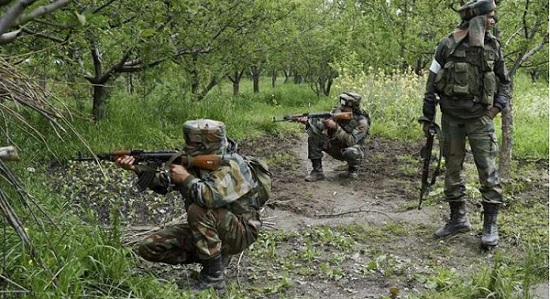
Indian security forces eliminated three terrorists at Shopian, Kashmir on June 16, 2020. (Representative photo)

Pakistani authorities claim that escalation in armed clashes in Kashmir is their reaction to India scrapping the special status of Jammu and Kashmir, abrogating Art 370 and Art 35-A and dissolving the statehood status of J&K by converting it into two union territories.

However, Pakistan has to understand two things very clearly. The first is that Article 370 was accepted by a majority vote in the Indian Constituent Assembly in 1949. It was scrapped by a majority vote in the same Parliament on August 5, 2020 wherein the majority voted in favour of scrapping it. The simple logic is that Indian Parliament is the supreme law-making body in the country that decided in 1949 what had to be implemented, and again a decision on August 5 and 6, 2019 what needs to be implemented. And it has been implemented along with all its ramifications. In either case, the sovereignty of the Parliament stands out pre-eminently. What locus standi has a neighbouring country to fret and fume on a matter that is absolutely an internal one?

As far as Article 35-A is concerned, it is a blatant and shameful story of fraud and deceit in which all legal, democratic and moral values were thrown to the wind and the parliament was hoodwinked. The Article was surreptitiously incorporated at an obscure place in the Constitution text that normally goes unnoticed by the readers and parliamentarians. There is a question mark on the role of Prime Minister Jawaharlal Nehru on his hobnobbing with Kashmir in tandem with Sheikh Abdullah.

Pakistan concluded the Karachi Agreement in 1953 by which it separated Gilgit and Baltistan (Northern Areas) from the rest of the State of J&K that was under its illegal occupation. There was no representative from Gilgit-Baltistan as part of the team that signed the Karachi Agreement. Not only that, the “Azad Kashmir” High Court, while dispensing a supplication to define the political status of Gilgit-Baltistan (Northern Areas) said in its judgment that Gilgit and Baltistan (the Northern Areas in Pakistan’s official parlance) were the part of the Kingdom of Dogra rulers of the State of Jammu, Kashmir, Ladakh and Tibet.

How Pakistan has been handling POK (Pakistan-occupied Kashmir) and GB (Gilgit-Baltistan), the areas of the original state of J&K under its illegal occupation since 1947, is a bizarre story of blatant occupation, suppression and oppression. How many illegal rules were framed and arbitrarily imposed on the people of these unfortunate regions is the repeat of an unknown saga of inhuman colonial oppression. How many uprisings in opposition of the occupying forces have been brutally quelled is what the dispassionate historians of the region will tell you. How many leaders, artists, journalists and human rights activists have vanished in POK and Gilgit-Baltistan leaving no trace behind is what their family members will recount. And all this because they demanded the civil, political and human rights as admissible to any free people on the globe.

Not satisfied with the perfidy, Pakistani authorities ceded more than five thousand square kilometres of Raksam and Shaksgam Valley in Gilgit and Hunza to China enabling her to build the railroad to Lasah in Tibet. The ceded area belongs to India, the country to which the Maharaja of Jammu and Kashmir formally and legally acceded on October 26, 1947. Also, Pakistan invited China to build the Karakorum Highway connecting Urumchi with Gwadar across the Karakorum Mountain and through the Indian part of J&K State. Now the China-Pakistan Economic Corridor (CPEC) the offshoot of China’s Belt and Road programme will be bringing Chin into Gilgit and Baltistan physically and militarily. China is reported to have received the consent of Islamabad for setting up a military base in Skardu and is also persuading Afghanistan to provide her with a military base in the Wakhan corridor. This is actually to encircle India in the north what is termed by Beijing as a Necklace of Pearls.

Forgetting all this highly inimical and provocative activity, Pakistan went about beating its breast that India, (in Pak’s own words), has let loose a reign of terror in its part of Kashmir. Hours after the Indian Parliament passed the J&K Reorganization Act on August 6, 2019 which all big powers recognized as an internal affair of India, Pakistan started issuing threats, invoked the role of the dirty bomb and above all called it the occasion to initiate Islamic jihad against India. Imran Khan complained to the US President and some more Heads of the Western States. Its foreign minister undertook the mission of visiting many countries and raising the bogey of Kashmir as a “land where Muslims were being decimated”. On receiving only a negative response, Pakistan turned to the Muslim world and OIC (Organisation of Islamic Cooperation) only to be given a cold shoulder, Saudi Arabia and UAE declared that it was an internal matter of India and they would not interfere. Dismayed and dejected Pakistan began issuing nuclear threats. Pakistan’s ministers had no qualms to announce on television interviews that they had nuclear bombs of half a kilogram weight. India did not budge nor give it any importance.

Finding that Arab countries showed no interest in the Kashmir tantrum, Pakistani leaders began accusing them of being unmindful of “infidel” India attempting to destroy Islam. It equated Indian PM Modi to Hitler and India’s Hindutva as the re-incarnation of Nazism. At home, Pakistan whipped up anti-Hindu and anti-India passions in a massive way polluting the minds of the entire Pakistani nation. Imran Khan went to the length of scorning the Arab Islamic countries “for not coming to the rescue of Kashmiri Muslims.” Overnight he forged camaraderie with non-Semitic Muslim countries, namely Turkey, Malaysia and Iran and managed to extract anti-India statements from Erdogan of Turkey and Mahathir of Malaysia. Iran, however, observed restraint on Kashmir perhaps because India had summoned the Iranian ambassador in New Delhi to protest a baseless statement of Iranian President Khamenei, which India had considered harmful to her interests and relations with Iran.

Why Erdogan and Mahathir fell in Pakistan’s trap is not difficult to understand. Erdogan has been refused admittance to the EU, something Turkey had been aspiring for very long. In revenge, Erdogan is now brandishing the defunct Ottoman Empire card to the gullible and scantily informed Muslim masses in the subcontinent. He aspires for the leadership of the Muslim world and in the process must do something to oust the Saudi monarch. His extraordinary interest in Pakistan bonhomie is to see if he can obtain the nuclear secrets from Islamabad. And about Mahathir of Malaysia, becoming a puritanical Musalman at the age of 94, he knew that unless the Islamic segment of his party is pleased he would not win the impending election. Mahathir tried but failed and is now a forgotten entity.

Thus having failed on all fronts to denigrate and blackmail India on Kashmir issue, Pakistan finds that at the end of the day the only option open to her is to keep the Kashmiri Muslims in good humour that Pakistan cares for them. The way of doing that is of accelerating violence and terrorist activities in Kashmir, go on shelling and firing across the border on even civilian population and thus provoke India to a massive retaliation so that Pakistan would find a justification for raising the Kashmir issue and the threat of “Hindu Nazism”. But the reality on the ground is that Indian security forces are dealing with these terrorists befittingly, most of their “senior commanders” have been liquidated, and the security forces are committed to cleaning the valley of every militant so that not a single among them can hide or escape.

The truth is that Kashmiri Muslim youth who had responded to the allurement of ISI in the past, have begun to realize how fragile and pathetic Pakistan is and how the world community takes its Kashmir tantrum nothing but a big lie to fulfill the aspiration of Punjabi ruling elites to grab Kashmir and rule the roost. Pakistan’s greatest frustration in the course of this narrative is that it is fast losing the trust of indoctrinated Kashmir Muslim youth. To them, Pakistan’s claim of being the biggest supporter of Muslims world over, and more particularly of Kashmir is a lie. Kashmir’s Muslim youth have began asking why Pakistan does not speak a single word about those Muslims of Pakistan who are groaning under the iron heels of Punjabi soldiers. They ask why Pakistan does not talk about the brutal killings undertaken by the legions of Islamic Caliphate. They ask why Pakistan does not make any mention of the Uighur Sunni Muslims of Xinjiang province of China whose population is three times that of the Kashmir Muslims. Pakistan’s biggest frustration is that almost 90% of the encounters taking place in Kashmir between the terrorists and the security forces are taking place on the intelligence brought to the security forces by the Kashmiri locals as they are fed up with the presence of terrorist outfits in their villages and localities.

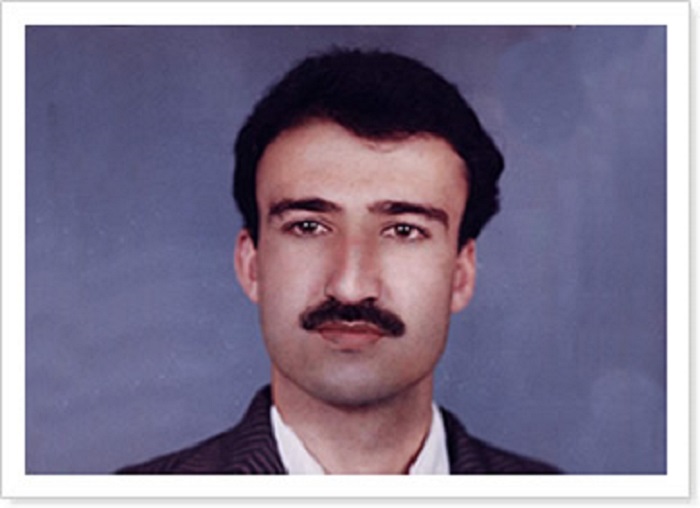
Hayat-Ullah Khan: Waziristan journalist who was killed for truthful reporting

On December 3, 2015 Gen Pervez Musharraf (also the then President of Pakistan) was on a state visit to Kuwait when he announced that he was “200 percent” certain that al-Qaeda’s ‘Operation Chief’ Abu Hamza Rabia had been killed two days earlier in North Waziristan’s border town of Miram Shah. Not much was known then about this Egyptian born man in his thirties, but according to US intelligence, he ranked third in al-Qaeda’s hierarchy and that made his elimination a huge success in the ongoing joint US-Pak war against terror. Whereas there was no disagreement regarding Gen Musharraf’s “200 percent” claim, but the circumstances under which Rabia met his end did raise considerable controversy.

Pakistani Information Minister Sheikh Rashid Ahmed told CNN that Rabia had died in a blast that occurred while he was apparently handling explosives, and Interior Minister Aftab Ahmad Khan Sherpao too confirmed that “five miscreants, including three foreigners” had been killed in this explosion, while two others were injured. But the local residents who witnessed this explosion had something else to tell, of how they had seen a flying object discharge what appeared to be a rocket that had struck and exploded the house in which Rabia and his associates were present, killing and injuring those inside.

Pakistan vehemently denied this allegation and Washington’s reply was evasive and didn’t clarify whether it had any role in this killing. US National Security Adviser Stephen Hadley said, “We’ve seen the reports (of Rabia’s killing) out of Pakistan… We are not in a position at this point to publicly declare that he has been killed. However, when he went on to say “…there are conflicting reports as to what happened, but obviously, the details of these kinds of things, are things, that is best left for the Pakistanis to talk about,” it was generally accepted that Islamabad was telling the truth.

But then a story with photographs appeared in a local Urdu daily ‘Ausaf’ that contradicted the ‘accidental’ explosion account given by Islamabad. In one of the photos, a rocket fragment with the nomenclature-plate bearing initials “US” (United States) was clearly visible, as was description of the armament (“Guided Missile Surface Attack: AGM 114”). This photo was also received by European Pressphoto Agency (EPA) on the same day, which further distributed it across the world. While this photo left no room for any doubts whatsoever that Rabia had been ‘droned’, it also revealed that even though America had violated Pakistan’s sovereignty by carrying out a drone attack on its soil, instead of confronting Washington on this unacceptable trespass, Islamabad was instead going out of its way to conceal American involvement in this incident!

Since an innocent college going youth had also died in this drone attack, the article in ‘Ausaf’ enraged locals and highlighted the government’s complete lack of control over the Federally Administered Tribal Areas (FATA). At the same time, these photos also caused immense diplomatic embarrassment for Islamabad as the international community realised that Pakistan was once again intentionally peddling lies. The person who had written the piece on this drone attack and provided the photographs to EPA was a 30-year-old freelance journalist named Hayat-Ullah Khan from Mir Ali in North Waziristan.

On December 5, 2005 (a day after his drone attack article and missile fragment photos appeared in the media), Hayat-Ullah was abducted by five armed men in broad daylight when he was on his way to cover a protest by college students against the death of their colleague in this attack. His brother Ehsan-Ullah Khan, who too is a journalist and an eyewitness to his brother’s abduction, raised a massive hue and cry, both at home and abroad by contacting various media watchdogs like the New York based Committee to Protect Journalists (CPJ), which is a global non-profit organisation committed to the promotion of press freedom, defending rights of journalists to safe reporting without fear of any reprisals and highlighting violations against media persons worldwide.

Forced to act, the government of Pakistan did what it’s best at— giving an impression of great concern and promising to bring the perpetrators to book without really intending to do so. It asked the Pakistan Army to investigate and in March 2006, the army (expectedly) ‘confirmed; that Hayat-Ullah Khan had not been arrested by the security forces. The enquiry hinted that he may have been abducted by the Taliban and kept somewhere in Afghanistan. But if Rawalpindi thought that it could absolve the army by offering such a ludicrous ‘assessment’ that seems to have been conjured by a juvenile, then it was sadly mistaken. Doesn’t the Pakistan Army know that:

  • The Taliban doesn’t keep hostages unless they are of a status that could facilitate release of its cadres through swap deals. Hayat-Ullah certainly didn’t meet this criterion.
  • The Taliban also abducts for ransom. But here again, it was obvious that the government of Pakistan would never agree to negotiate his release in exchange of money, nor did his family have the means to offer any substantial amount for securing his release.

Furthermore, since Hayat-Ullah’s revelation had aroused anti-US feelings amongst locals in the Tribal Area and turned them into heroes, he had actually done Taliban a big favour and as such his being abducted by them doesn’t make any sense. The Taliban could have abducted him only if they had suspected him of being a CIA or an ISI operative, but since they had already kidnapped him just a year earlier and after interrogating him found him to be ‘clean’, why should they have abducted him once again?

On June 16, 2006, Hayat-Ullah’s body was found in Miran Shah area of North Waziristan. He had multiple gunshot wounds and one of his hands still had a handcuff– the type used by ISI. An investigation was carried out by High Court Justice Mohammed Reza Khan but surprisingly, the findings were never made public. Despite receiving numerous threats not to depose before the inquiry committee, Mehrunnisa (Hayat-Ullah’s widow) did so as she was certain that her husband had been a victim of some inter/intra army or intelligence agency rivalry. In his report (Mystery of murdered tribal journalist, BBC News, 19 June 2006), Aamer Ahmed Khan of BBC’s Karachi Bureau mentions Mehrunnisa revealing that “I know those officers. They wanted Hayat-Ullah to report that Abu Hamza Rabia had been killed by an American missile.”

Since the inquiry report findings haven’t been made public, there’s no way to know what was it that Mehrunnisa revealed, and the tragedy is that we can’t ask her the same because she was killed in an IED blast on November 17, 2007, when she was sleeping inside her house. So, was Hayat-Ullah an unwitting victim of having sided with a renegade section within the army or ISI that wasn’t happy with the military top brass decision not to publicise the drone attack that killed Rabia? This isn’t mere speculation; au contraire, it seems to be the most plausible explanation for the following reasons:

  • If the sole aim of the abductors was to kill Hayat-Ullah, then why should they have taken all the trouble planning and executing his abduction, then keeping him at a secret location for more than six months, unless the aim was to keep him alive till complete information to unearth the pro-Taliban elements within its ranks had been extracted?
  • If the Pakistan Army and ISI weren’t involved, then who made threatening calls to Hayat-Ullah’s widow to dissuade her from deposing before the inquiry commission? The Taliban surely wouldn’t have-simply because government inquiries mean nothing to them!
  • If an entity other than the Pakistan Army or ISI was involved, what was the point of issuing threats to Mehrunnisa not to give her statement? Wouldn’t permanently ‘silencing’ her before she could depose be much simpler and more reliable option than just scaring her?
  • Mehrunnisa’s targeted killing indicates that someone was extremely uncomfortable with something that she knew or could reveal. Had it been the Taliban, wouldn’t it have (just like in Malala Yousufzai’s case), simply send someone to shoot her dead? Since when has the Taliban started taking the pains of setting up an IED in her house and then wait for the opportune moment to blast it, ensuring that her children aren’t harmed?

CPJ is a highly respected organisation that upholds and speaks up for the rights and safety of journalists and Islamabad has never accused it of being anti-Pakistan. So, when its website mentions “military officials” as the “Suspected Source of Fire” for Hayat-Ullah’s murder, should we believe the CPJ or instead accept Islamabad’s version that its security forces had nothing to do with this abduction and murder? I for one am more inclined to believe CPJ’s former due to its impartial reputation rather than the latter, which ruined its own credibility by trying to pass off a deliberate drone attack that took place in broad daylight as an ‘accidental’ explosion!

Had Hyat-Ullah not reported on the drone strike that killed al-Qaida’s No. 3, he and his wife would have been alive today. But, like several others zealous journalists, he made the cardinal mistake of reporting truthfully, knowing very well that his factual report would antagonize Pakistan’s deep state and so it’s not surprising that both he and his wife paid for this folly with their lives. Who killed them may matter little to Islamabad, but doesn’t Islamabad have the moral responsibility of telling the orphaned children of Hayat-Ullah and Mehrunnisa as to who had murdered their parents?

Transsexuality, Transgenderism, Men and Women with Sorenson

Scott Douglas Jacobsen: With some of the preliminary thoughts setting the groundwork, let’s delve into transgenderism and transsexuality, how would transssexuality be a fourth category in itself?

Christian Sorenson: Since in my opinion “transsexuals” have a “fe-male sexual orientation” regarding their “sexual self-identification outcomes,” and in relation to their “secondary sexual characteristics” that are “completely feminine-masculine,” as well as to their “sexual object elections” that are “markedly one or the other.” By analyzing them “comprehensively,” it is possible to sustain “functionally” speaking, that they are “exactly identical” to “men or women,” except for the fact that in their “primary sexual characteristics,” and “sexual karyotype” are “inverted.” If we place the “sexual characteristics set” on “a balance,” encompassing both, “biological and physical,” as well as “psychological” aspects, it’s possible “to deduce” and clearly “demonstrate,” in my opinion that “they definitely lean towards the opposite,” though strictly speaking “they are not what they seem to be.” Nevertheless, by “identifying transsexuality” to “man-woman categories” as “original genders,” “an absolute injustice” and “complete reality denial” are induced.

Jacobsen: How would transsexuality become part of transgenderism?

Sorenson: Through “a conversion factor” analogous to that used for “transgenders,” that is to say as these last in my opinion become a gender of “special woman” and of “special man,” more commonly known as “transgender women” and “transgender men,” since they are “transformed” through “an externally intervened” process, it could be possible to “extrapolate” that logic regarding “transsexuals,” due to the reason that with them it would occurred exactly the same, except for the fact that their “conversion process” does not regards “to any external intervention” which could consist of “cutting something over their bodies.”

Jacobsen: Why do some religious traditions mentioned – Christianity and Islam – impose concepts so strongly on community?

Sorenson: Because they are “so sexually attracted” and “tempted” by transsexuals and transgenders that “they can’t hold back.”

Jacobsen: What is a man?

Sorenson: From my point of view, is somebody who “always” carries “an Y chromosome,” and who regarding its “sexual orientation,” and its “sexual object election,” is “behaviorally” speaking at some point along “a continuum” between two “extreme tendencies” that I will denominate respectively as “absolutely heterosexual pole” and “absolutely homosexual pole.” Additionally in my opinion, due to “its simplistic nature,” it could be said that excepting “sexual functions,” usually man tends “not to be able” to relate with “woman.”

Jacobsen: What is a woman?

Sorenson: Is someone who “never” carries “an Y chromosome,” and that “behaviorally” speaking, in relation to “sexual orientation” and “sexual object election,” is somewhere between two “extreme tendencies” that I will denominate respectively as “absolutely homosexual pole” and “absolutely heterosexual pole.” From my point of view, due to “its complex nature” and to the fact that woman is similar to “a paper sheet, since use to tolerates everything,” it could be said that excepting “reproductive functions,” generally its relationship with “man,” tends to “be incompatible.”

Jacobsen: What is a “pseudo-man”?

Sorenson: It is a “genetically biploid” man in relation to “chromosome X,” and its “primary and secondary sexual” characteristics are “feminine” in appearance.

Jacobsen: What is a “pseudo-woman”?

Sorenson: It is a “genetically monoploid” woman in relation to “chromosome X,” who does not have its “primary and secondary sexual” characteristics well developed, and therefore has “a childlike” appearance.

Jacobsen: What integrates the primary sex characteristics, secondary sex characteristics, and “psychological sexual orientation”?

Sorenson: In my opinion, the “sexual appetite intensity,” associated with the “unconscious sexual object election,” and “its triggering function,” as “a sexual desire object.”

Developed India by 2020: Vision or Mirage?

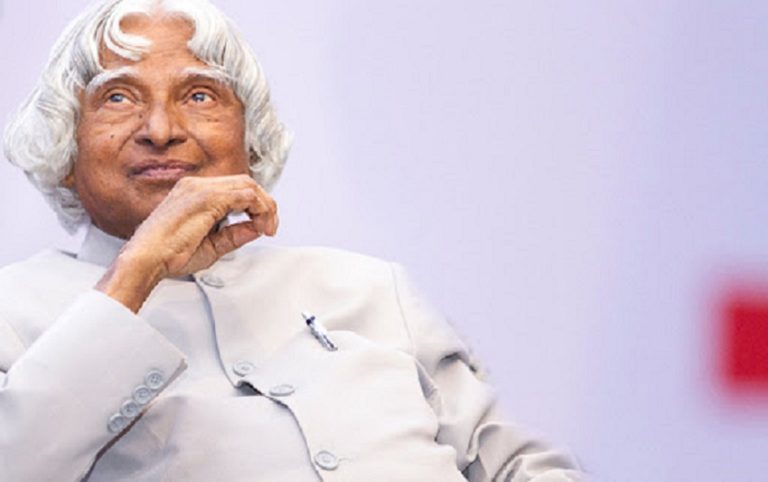
“Transforming the nation into a developed country, five areas in combination have been identified based on India’s core competence, natural resources and talented manpower for integrated action to double the growth rate of GDP and realize the Vision of Developed India” that was former President of India Dr APJ Abdul Kalam’s vision for India by 2020. In 1998, Kalam and YS Rajan, also a government scientist, co-authored a book called India 2020: A Vision for the New Millennium. The book had a simple message: “A developed India, by 2020 or even earlier is not a dream. It need not even be a mere aspiration in the minds of many Indians. It is a mission we can all take up and accomplish.”

“Seldom does one, in these troubled times, see such a lucid marshaling of facts and figures to bolster the thesis that India is mere two decades away from superpower status,” wrote the Times of India at that time while introducing “India 2020.”

Collective delusion, and not critical analysis, has been the hallmark of our media, intellectuals and patriotic elites, then and now — when the missile man envisioned a ‘developed’ India by 2020 then or when our beloved leader tells now that 21st century belongs to India.

Much of the Kalam’s book is a compilation of optimistic forecasts, powered by an impressionable sense of patriotism than by any empirical data. In many ways, the book’s style and substance is an inspiration and precursor to the millions of patriotic messages flooding our WhatsApp Universities of today.

The Vision is dedicated to a ten year old girl whom Kalam met during one of his talks and asked her about her ambitions, to which the young girl replied, “I want to live in a developed India.” The book examines the weaknesses and strengths of India and offers a vision of how India can emerge to be among the world’s top four economic powers by the year 2020. The world’s GDP, according to the International Monetary Fund (IMF) is $91.98 trillion in 2020. India is ranked at No. 7 with a nominal GDP of $2.72 trillion or about 3% of world GDP. In comparison, China is ranked at No. 2 with a nominal GDP of $13.4 trillion or about 15% of world’s GDP. China has left India way behind, breathing down the neck of USA to snatch the No. 1 trophy from it. India is just competing with small European countries like Italy, France or UK in terms of GDP. India is ranked at 145th position in terms of per capita income. India’s nominal per capita income at $2,199 in 2019 was approximately five times lower than world’s average of $11,673. Given that we are now in 2020, we know that India has not become a developed nation — not by a long shot — even before the virus has turned 2020 into a nightmare for the Indian economy.

Dr Kalam and Rajan, assume in the book that there is a “greater likelihood of more women taking part in direct economic activities” and, most incredibly, that “there are good chances that poverty can be fully eliminated by 2007-08.” It is apparent that even after 12 years from the target year of 2008, poverty in India has not been eliminated. The humanitarian crisis posed by the migrant labourers during the lockdown period is a true commentary on the worsening position of poor in India. While making the predictions about more women participation in the economic activities, Kalam and Rajan seemed to have under estimated the deep rooted strength of Indian patriarchy. India’s female labour force participation rate had fallen to a historic low of 23.3% in 2017-18. Only nine countries across the world, including Syria and Iraq, have a lower female participation rate than India’s.

In order to realize the vision of India becoming a developed country by 2020, Dr Kalam and Rajan had envisaged that we need to transform India in five areas where the country has core competence: Agriculture & Food Processing, Education & Healthcare, Information & Communication Technology, Infrastructure Development & Self-Reliance in Critical Technologies. Though India has made substantial progress in Information and Communication Technology and some progress in Infrastructure Development, it could not usher in any transformational change in the Agriculture sector. Inclusive and affordable Education and Healthcare are a mirage. Dr Kalam’s dream of ‘assurance of education on merit with complete disregard to societal and economic status’ is miles away from the bitter reality such that quality higher education is accessible only to rich and not to the poor or not even to the middle classes. Self-reliance in Critical Technologies is still a distant dream. A report by IBM Institute of Business Value and Oxford Economics found that 90 % of Indian Startups fail in their first five years of running.

Vision 2020 assumes that the urban-rural divide will be bridged and the differences of caste, class, religion, language and region will be seen as irrelevant leading to a more united and secular country. In today’s India, these fault lines manifest more than ever since country’s independence.

In spite of the fact that Kalam’s superpower India 2020 prediction was widely off the mark, its spirit continues to survive, with only extension of the target year. During the 2019 Lok Sabha elections, BJP promised voters that India would become a superpower by 2024 if Narendra Modi was voted back as prime minister. There are real costs to the Indian economy associated with living in this “Superpower 2020” dream, of faulty policy making based on unachievable targets. Now, economists like Amartya Sen are showing the mirror that India is in fact losing out even to its South Asian neighbors such as Bangladesh and Sri Lanka, who are able to offer their people better standards of living.

“To achieve the progress, he envisioned in Vision 2020, that the country’s growth rate must be 10% for 10 continuous years in agriculture, manufacturing, industry and energy sector. So far, the country has never seen this. Maybe we’ve achieved 8% to 9% growth for three years straight, but then it dipped later. India should not work on extractive policy based on tax collection but instead work on inclusive policies, governance and institutions. Instead of relying on tax collections, we must work on developing infrastructure. Only then we can succeed,” Dr APJ Abdul Kalam’s former scientific advisor V Ponraj had said in 2019.