The
United States Commission on International Religious Freedom (ISCIRF), akin to one
supportive of Jehovah’s Witnesses argument in “Rights and Science: Persecution of and by Jehovah’s
Witnesses” on the rights violations against the Jehovah’s Witnesses by the Russian Federation, “condemned”
the increase in harsh prison sentences handed to the members of the “Jehovah’s
Witnesses in Russia.” The USCIRF is a bipartisan, independent federal government
entity. It was established by the Congress in the United States for the
analyzing, monitoring, and reporting of threats to religious freedom outside of
the United States.
This does not negate the issues of the rejection of some medical treatments grounded in non-science or theological reasoning and premises, i.e., quoting scripture as the basis for rejection of a series of medical treatments, or the cover-up of child abuse for decades as in many other religious sects or denominations. It’s a mixed bag, as with many religions and religious groups. I know believers and non-believers alike realize this based on correspondence. However, one side wants only to condemn the religious believers’ poor blood transfusion policy and cover-up of child abuse; while, another only wants to focus on rights violations against the Jehovah’s Witnesses. Both matter and reflect the complicated nature of many of these affairs.
To the right to freedom of belief, freedom of religion, and freedom of expression, Jehovah’s Witnesses have full rights to these, as with other Christians, or Hindus, Muslims, Jewish peoples, Native American spiritualists, and atheist, agnostics, Unitarian Universalists, and the like. Thus, the violation of the human rights of the Jehovah’s Witnesses is an important thing to stop in order for the free practice of religion for them.
The USCIRF focused on the harsh prison
sentences, but this follows a long series of negative impacts on Jehovah’s
Witnesses all over the Russian Federation. Take the case of Artem Gerasimov,
who is a resident of occupied Crimea, he was sentenced to six years’
imprisonment based on personal faith. Is this not unjust and unfair? It is based
on fundamental rights to freedom of religion and belief. Yet, he is imprisoned
because of it.
A few days after the last one on June 4 with Gerasimov; there was the June 9 case of a 61-year-old man named Gennady Shpakovsky to even more time at 6.5 years based on religious views and sharing religious views of others. Could this be applied to other religions, say the Russian Orthodox Church? It is unjust and unfair in and of itself. It should stop, as it should stop for others all around the world.
Commissioner Gary Bauer said,
“Russia’s vicious targeting of the Jehovah’s Witnesses, guilty only of
practicing their peaceful religious beliefs, clearly illustrates the
government’s contempt for the international human rights treaties to which it
is a party.”
The 2020 Annual Report
from the USCIRF listed a recommendation to the State Department of the United
States for the Russian Federation as a country of concern based on the
repression – rights violations – of the Jehovah’s Witnesses and other minority
religious belief systems’ adherents.
Vice Chair Gayle Manchin stated,
“The ongoing campaign against the peaceful Jehovah’s Witnesses is one of the
many reasons why USCIRF considers Russia worthy of
being designated a ‘country of particular concern’ for systematic, ongoing, and
egregious violations… We sincerely hope that the State Department will reach
the same conclusion later this year.”
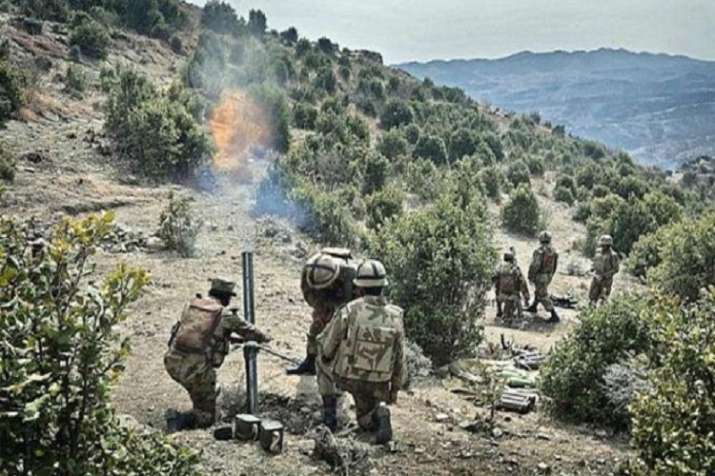
In recent months Pakistan has stepped up unprovoked firing and shelling at many sites along the LoC in Jammu & Kashmir. Deviating from the previous practice and in blatant violation of the ceasefire agreement of 2003 between the two sides, Pakistani Rangers are now using heavy weapons and targeting the civilian locations on our side of the border. Several civilian casualties have happened and a large number of civilians living along the border had to be shifted to safer places. Pakistani troops have a definite purpose of scaring away the border population which they consider a hindrance to the armed jihadis clandestinely crossing the border without being detected and reported by the civilian population. In simpler terms, these are not skirmishes but part of the new war tactics of Pakistan.
At the same time Pakistan abetted Kashmir Valley terrorists, too, have increased the frequency of ambushes and attacks on the patrol parties of security forces. Recurring encounters and cordoning off in areas infested with terrorist activities in Kashmir are also intended to whip up anti-Army hysteria among the local civilian population that, more often than not, comes out in large numbers after each encounter to show solidarity with the fallen terrorist and express hatred against the troops. According to a report more than 90 terrorists including three of their commanders have perished in encounters with the security forces during the past four months. Nearly one third this number on the side of the security forces has also been martyred. The question is why the sudden spurt in encounters and killings?
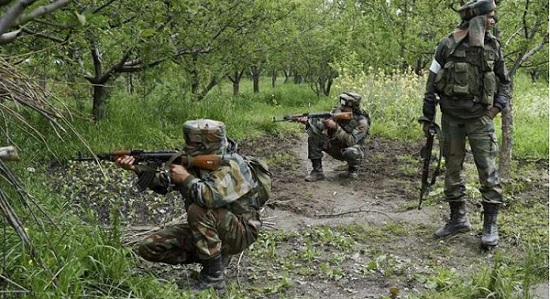
Indian security forces eliminated three terrorists at Shopian, Kashmir on June 16, 2020. (Representative photo)
Pakistani authorities claim that escalation in armed clashes in Kashmir is their reaction to India scrapping the special status of Jammu and Kashmir, abrogating Art 370 and Art 35-A and dissolving the statehood status of J&K by converting it into two union territories.
However, Pakistan has to understand two things very clearly. The first is that Article 370 was accepted by a majority vote in the Indian Constituent Assembly in 1949. It was scrapped by a majority vote in the same Parliament on August 5, 2020 wherein the majority voted in favour of scrapping it. The simple logic is that Indian Parliament is the supreme law-making body in the country that decided in 1949 what had to be implemented, and again a decision on August 5 and 6, 2019 what needs to be implemented. And it has been implemented along with all its ramifications. In either case, the sovereignty of the Parliament stands out pre-eminently. What locus standi has a neighbouring country to fret and fume on a matter that is absolutely an internal one?
As far as Article 35-A is concerned, it is a blatant and shameful story of fraud and deceit in which all legal, democratic and moral values were thrown to the wind and the parliament was hoodwinked. The Article was surreptitiously incorporated at an obscure place in the Constitution text that normally goes unnoticed by the readers and parliamentarians. There is a question mark on the role of Prime Minister Jawaharlal Nehru on his hobnobbing with Kashmir in tandem with Sheikh Abdullah.
Pakistan concluded the Karachi Agreement in 1953 by which it separated Gilgit and Baltistan (Northern Areas) from the rest of the State of J&K that was under its illegal occupation. There was no representative from Gilgit-Baltistan as part of the team that signed the Karachi Agreement. Not only that, the “Azad Kashmir” High Court, while dispensing a supplication to define the political status of Gilgit-Baltistan (Northern Areas) said in its judgment that Gilgit and Baltistan (the Northern Areas in Pakistan’s official parlance) were the part of the Kingdom of Dogra rulers of the State of Jammu, Kashmir, Ladakh and Tibet.
How Pakistan has been handling POK (Pakistan-occupied Kashmir) and GB (Gilgit-Baltistan), the areas of the original state of J&K under its illegal occupation since 1947, is a bizarre story of blatant occupation, suppression and oppression. How many illegal rules were framed and arbitrarily imposed on the people of these unfortunate regions is the repeat of an unknown saga of inhuman colonial oppression. How many uprisings in opposition of the occupying forces have been brutally quelled is what the dispassionate historians of the region will tell you. How many leaders, artists, journalists and human rights activists have vanished in POK and Gilgit-Baltistan leaving no trace behind is what their family members will recount. And all this because they demanded the civil, political and human rights as admissible to any free people on the globe.
Not satisfied with the perfidy, Pakistani authorities ceded more than five thousand square kilometres of Raksam and Shaksgam Valley in Gilgit and Hunza to China enabling her to build the railroad to Lasah in Tibet. The ceded area belongs to India, the country to which the Maharaja of Jammu and Kashmir formally and legally acceded on October 26, 1947. Also, Pakistan invited China to build the Karakorum Highway connecting Urumchi with Gwadar across the Karakorum Mountain and through the Indian part of J&K State. Now the China-Pakistan Economic Corridor (CPEC) the offshoot of China’s Belt and Road programme will be bringing Chin into Gilgit and Baltistan physically and militarily. China is reported to have received the consent of Islamabad for setting up a military base in Skardu and is also persuading Afghanistan to provide her with a military base in the Wakhan corridor. This is actually to encircle India in the north what is termed by Beijing as a Necklace of Pearls.
Forgetting all this highly inimical and provocative activity, Pakistan went about beating its breast that India, (in Pak’s own words), has let loose a reign of terror in its part of Kashmir. Hours after the Indian Parliament passed the J&K Reorganization Act on August 6, 2019 which all big powers recognized as an internal affair of India, Pakistan started issuing threats, invoked the role of the dirty bomb and above all called it the occasion to initiate Islamic jihad against India. Imran Khan complained to the US President and some more Heads of the Western States. Its foreign minister undertook the mission of visiting many countries and raising the bogey of Kashmir as a “land where Muslims were being decimated”. On receiving only a negative response, Pakistan turned to the Muslim world and OIC (Organisation of Islamic Cooperation) only to be given a cold shoulder, Saudi Arabia and UAE declared that it was an internal matter of India and they would not interfere. Dismayed and dejected Pakistan began issuing nuclear threats. Pakistan’s ministers had no qualms to announce on television interviews that they had nuclear bombs of half a kilogram weight. India did not budge nor give it any importance.
Finding that Arab countries showed no interest in the Kashmir tantrum, Pakistani leaders began accusing them of being unmindful of “infidel” India attempting to destroy Islam. It equated Indian PM Modi to Hitler and India’s Hindutva as the re-incarnation of Nazism. At home, Pakistan whipped up anti-Hindu and anti-India passions in a massive way polluting the minds of the entire Pakistani nation. Imran Khan went to the length of scorning the Arab Islamic countries “for not coming to the rescue of Kashmiri Muslims.” Overnight he forged camaraderie with non-Semitic Muslim countries, namely Turkey, Malaysia and Iran and managed to extract anti-India statements from Erdogan of Turkey and Mahathir of Malaysia. Iran, however, observed restraint on Kashmir perhaps because India had summoned the Iranian ambassador in New Delhi to protest a baseless statement of Iranian President Khamenei, which India had considered harmful to her interests and relations with Iran.
Why Erdogan and Mahathir fell in Pakistan’s trap is not difficult to understand. Erdogan has been refused admittance to the EU, something Turkey had been aspiring for very long. In revenge, Erdogan is now brandishing the defunct Ottoman Empire card to the gullible and scantily informed Muslim masses in the subcontinent. He aspires for the leadership of the Muslim world and in the process must do something to oust the Saudi monarch. His extraordinary interest in Pakistan bonhomie is to see if he can obtain the nuclear secrets from Islamabad. And about Mahathir of Malaysia, becoming a puritanical Musalman at the age of 94, he knew that unless the Islamic segment of his party is pleased he would not win the impending election. Mahathir tried but failed and is now a forgotten entity.
Thus having failed on all fronts to denigrate and blackmail India on Kashmir issue, Pakistan finds that at the end of the day the only option open to her is to keep the Kashmiri Muslims in good humour that Pakistan cares for them. The way of doing that is of accelerating violence and terrorist activities in Kashmir, go on shelling and firing across the border on even civilian population and thus provoke India to a massive retaliation so that Pakistan would find a justification for raising the Kashmir issue and the threat of “Hindu Nazism”. But the reality on the ground is that Indian security forces are dealing with these terrorists befittingly, most of their “senior commanders” have been liquidated, and the security forces are committed to cleaning the valley of every militant so that not a single among them can hide or escape.
The truth is that Kashmiri Muslim youth who had responded to the allurement of ISI in the past, have begun to realize how fragile and pathetic Pakistan is and how the world community takes its Kashmir tantrum nothing but a big lie to fulfill the aspiration of Punjabi ruling elites to grab Kashmir and rule the roost. Pakistan’s greatest frustration in the course of this narrative is that it is fast losing the trust of indoctrinated Kashmir Muslim youth. To them, Pakistan’s claim of being the biggest supporter of Muslims world over, and more particularly of Kashmir is a lie. Kashmir’s Muslim youth have began asking why Pakistan does not speak a single word about those Muslims of Pakistan who are groaning under the iron heels of Punjabi soldiers. They ask why Pakistan does not talk about the brutal killings undertaken by the legions of Islamic Caliphate. They ask why Pakistan does not make any mention of the Uighur Sunni Muslims of Xinjiang province of China whose population is three times that of the Kashmir Muslims. Pakistan’s biggest frustration is that almost 90% of the encounters taking place in Kashmir between the terrorists and the security forces are taking place on the intelligence brought to the security forces by the Kashmiri locals as they are fed up with the presence of terrorist outfits in their villages and localities.
On December 3, 2015 Gen Pervez Musharraf (also the then President of Pakistan) was on a state visit to Kuwait when he announced that he was “200 percent” certain that al-Qaeda’s ‘Operation Chief’ Abu Hamza Rabia had been killed two days earlier in North Waziristan’s border town of Miram Shah. Not much was known then about this Egyptian born man in his thirties, but according to US intelligence, he ranked third in al-Qaeda’s hierarchy and that made his elimination a huge success in the ongoing joint US-Pak war against terror. Whereas there was no disagreement regarding Gen Musharraf’s “200 percent” claim, but the circumstances under which Rabia met his end did raise considerable controversy.
Pakistani Information Minister Sheikh Rashid Ahmed told CNN that Rabia had died in a blast that occurred while he was apparently handling explosives, and Interior Minister Aftab Ahmad Khan Sherpao too confirmed that “five miscreants, including three foreigners” had been killed in this explosion, while two others were injured. But the local residents who witnessed this explosion had something else to tell, of how they had seen a flying object discharge what appeared to be a rocket that had struck and exploded the house in which Rabia and his associates were present, killing and injuring those inside.
Pakistan vehemently denied this allegation and Washington’s reply was evasive and didn’t clarify whether it had any role in this killing. US National Security Adviser Stephen Hadley said, “We’ve seen the reports (of Rabia’s killing) out of Pakistan… We are not in a position at this point to publicly declare that he has been killed. However, when he went on to say “…there are conflicting reports as to what happened, but obviously, the details of these kinds of things, are things, that is best left for the Pakistanis to talk about,” it was generally accepted that Islamabad was telling the truth.
But then a story with photographs appeared in a local Urdu
daily ‘Ausaf’ that contradicted the ‘accidental’ explosion account given by
Islamabad. In one of the photos, a rocket fragment with the nomenclature-plate
bearing initials “US” (United States) was clearly visible, as was description
of the armament (“Guided Missile Surface Attack: AGM 114”). This photo was also
received by European Pressphoto Agency (EPA) on the same day, which further
distributed it across the world. While this photo left no room for any doubts
whatsoever that Rabia had been ‘droned’, it also revealed that even though America
had violated Pakistan’s sovereignty by carrying out a drone attack on its soil,
instead of confronting Washington on this unacceptable trespass, Islamabad was
instead going out of its way to conceal American involvement in this incident!
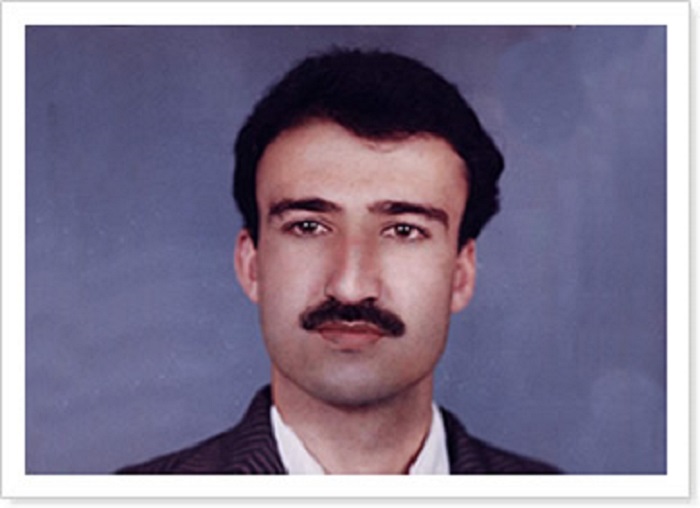
Since an innocent college going youth had also died in this drone attack, the article in ‘Ausaf’ enraged locals and highlighted the government’s complete lack of control over the Federally Administered Tribal Areas (FATA). At the same time, these photos also caused immense diplomatic embarrassment for Islamabad as the international community realised that Pakistan was once again intentionally peddling lies. The person who had written the piece on this drone attack and provided the photographs to EPA was a 30-year-old freelance journalist named Hayat-Ullah Khan from Mir Ali in North Waziristan.
On December 5, 2005 (a day after his drone attack article and missile fragment photos appeared in the media), Hayat-Ullah was abducted by five armed men in broad daylight when he was on his way to cover a protest by college students against the death of their colleague in this attack. His brother Ehsan-Ullah Khan, who too is a journalist and an eyewitness to his brother’s abduction, raised a massive hue and cry, both at home and abroad by contacting various media watchdogs like the New York based Committee to Protect Journalists (CPJ), which is a global non-profit organisation committed to the promotion of press freedom, defending rights of journalists to safe reporting without fear of any reprisals and highlighting violations against media persons worldwide.
Forced to act, the government of Pakistan did what it’s best at— giving an impression of great concern and promising to bring the perpetrators to book without really intending to do so. It asked the Pakistan Army to investigate and in March 2006, the army (expectedly) ‘confirmed; that Hayat-Ullah Khan had not been arrested by the security forces. The enquiry hinted that he may have been abducted by the Taliban and kept somewhere in Afghanistan. But if Rawalpindi thought that it could absolve the army by offering such a ludicrous ‘assessment’ that seems to have been conjured by a juvenile, then it was sadly mistaken. Doesn’t the Pakistan Army know that:
The Taliban doesn’t keep hostages unless they are of a status that could facilitate release of its cadres through swap deals. Hayat-Ullah certainly didn’t meet this criterion.
The Taliban also abducts for ransom. But here again, it was obvious that the government of Pakistan would never agree to negotiate his release in exchange of money, nor did his family have the means to offer any substantial amount for securing his release.
Furthermore, since Hayat-Ullah’s revelation had aroused anti-US feelings amongst locals in the Tribal Area and turned them into heroes, he had actually done Taliban a big favour and as such his being abducted by them doesn’t make any sense. The Taliban could have abducted him only if they had suspected him of being a CIA or an ISI operative, but since they had already kidnapped him just a year earlier and after interrogating him found him to be ‘clean’, why should they have abducted him once again?
On June 16, 2006, Hayat-Ullah’s body was found in Miran Shah area of North Waziristan. He had multiple gunshot wounds and one of his hands still had a handcuff– the type used by ISI. An investigation was carried out by High Court Justice Mohammed Reza Khan but surprisingly, the findings were never made public. Despite receiving numerous threats not to depose before the inquiry committee, Mehrunnisa (Hayat-Ullah’s widow) did so as she was certain that her husband had been a victim of some inter/intra army or intelligence agency rivalry. In his report (Mystery of murdered tribal journalist, BBC News, 19 June 2006), Aamer Ahmed Khan of BBC’s Karachi Bureau mentions Mehrunnisa revealing that “I know those officers. They wanted Hayat-Ullah to report that Abu Hamza Rabia had been killed by an American missile.”
Since the inquiry report findings haven’t been made public, there’s no way to know what was it that Mehrunnisa revealed, and the tragedy is that we can’t ask her the same because she was killed in an IED blast on November 17, 2007, when she was sleeping inside her house. So, was Hayat-Ullah an unwitting victim of having sided with a renegade section within the army or ISI that wasn’t happy with the military top brass decision not to publicise the drone attack that killed Rabia? This isn’t mere speculation; au contraire, it seems to be the most plausible explanation for the following reasons:
If the sole aim of the abductors was to kill Hayat-Ullah, then why should they have taken all the trouble planning and executing his abduction, then keeping him at a secret location for more than six months, unless the aim was to keep him alive till complete information to unearth the pro-Taliban elements within its ranks had been extracted?
If the Pakistan Army and ISI weren’t involved, then who made threatening calls to Hayat-Ullah’s widow to dissuade her from deposing before the inquiry commission? The Taliban surely wouldn’t have-simply because government inquiries mean nothing to them!
If an entity other than the Pakistan Army or ISI was involved, what was the point of issuing threats to Mehrunnisa not to give her statement? Wouldn’t permanently ‘silencing’ her before she could depose be much simpler and more reliable option than just scaring her?
Mehrunnisa’s targeted killing indicates that someone was extremely uncomfortable with something that she knew or could reveal. Had it been the Taliban, wouldn’t it have (just like in Malala Yousufzai’s case), simply send someone to shoot her dead? Since when has the Taliban started taking the pains of setting up an IED in her house and then wait for the opportune moment to blast it, ensuring that her children aren’t harmed?
CPJ is a highly respected organisation that upholds and speaks up for the rights and safety of journalists and Islamabad has never accused it of being anti-Pakistan. So, when its website mentions “military officials” as the “Suspected Source of Fire” for Hayat-Ullah’s murder, should we believe the CPJ or instead accept Islamabad’s version that its security forces had nothing to do with this abduction and murder? I for one am more inclined to believe CPJ’s former due to its impartial reputation rather than the latter, which ruined its own credibility by trying to pass off a deliberate drone attack that took place in broad daylight as an ‘accidental’ explosion!
Had Hyat-Ullah not reported on the drone strike that killed al-Qaida’s No. 3, he and his wife would have been alive today. But, like several others zealous journalists, he made the cardinal mistake of reporting truthfully, knowing very well that his factual report would antagonize Pakistan’s deep state and so it’s not surprising that both he and his wife paid for this folly with their lives. Who killed them may matter little to Islamabad, but doesn’t Islamabad have the moral responsibility of telling the orphaned children of Hayat-Ullah and Mehrunnisa as to who had murdered their parents?
Scott
Douglas Jacobsen: With some of the preliminary thoughts setting the groundwork,
let’s delve into transgenderism and transsexuality, how would transssexuality
be a fourth category in itself?
Christian
Sorenson: Since in my opinion “transsexuals” have a “fe-male
sexual orientation” regarding their “sexual self-identification outcomes,” and
in relation to their “secondary sexual characteristics” that are “completely
feminine-masculine,” as well as to their “sexual object elections” that are “markedly
one or the other.” By analyzing them “comprehensively,” it is possible to
sustain “functionally” speaking, that they are “exactly identical” to “men or
women,” except for the fact that in their “primary sexual characteristics,” and
“sexual karyotype” are “inverted.” If we place the “sexual characteristics set”
on “a balance,” encompassing both, “biological and physical,” as well as “psychological”
aspects, it’s possible “to deduce” and clearly “demonstrate,” in my opinion
that “they definitely lean towards the opposite,” though strictly speaking “they
are not what they seem to be.” Nevertheless, by “identifying transsexuality” to
“man-woman categories” as “original genders,” “an absolute injustice” and “complete
reality denial” are induced.
Jacobsen:
How would transsexuality become part of transgenderism?
Sorenson: Through “a conversion factor” analogous to that used for “transgenders,”
that is to say as these last in my opinion become a gender of “special woman”
and of “special man,” more commonly known as “transgender women” and “transgender
men,” since they are “transformed” through “an externally intervened” process,
it could be possible to “extrapolate” that logic regarding “transsexuals,” due
to the reason that with them it would occurred exactly the same, except for the
fact that their “conversion process” does not regards “to any external
intervention” which could consist of “cutting something over their bodies.”
Jacobsen:
Why do some religious traditions mentioned – Christianity and Islam – impose
concepts so strongly on community?
Sorenson: Because they are “so sexually attracted” and “tempted” by transsexuals
and transgenders that “they can’t hold back.”
Jacobsen:
What is a man?
Sorenson: From my point of view, is somebody who “always” carries “an Y chromosome,”
and who regarding its “sexual orientation,” and its “sexual object election,”
is “behaviorally” speaking at some point along “a continuum” between two “extreme
tendencies” that I will denominate respectively as “absolutely heterosexual
pole” and “absolutely homosexual pole.” Additionally in my opinion, due to “its
simplistic nature,” it could be said that excepting “sexual functions,” usually
man tends “not to be able” to relate with “woman.”
Jacobsen:
What is a woman?
Sorenson: Is someone who “never” carries “an Y chromosome,” and that “behaviorally”
speaking, in relation to “sexual orientation” and “sexual object election,” is
somewhere between two “extreme tendencies” that I will denominate respectively
as “absolutely homosexual pole” and “absolutely heterosexual pole.” From my
point of view, due to “its complex nature” and to the fact that woman is
similar to “a paper sheet, since use to tolerates everything,” it could be said
that excepting “reproductive functions,” generally its relationship with “man,”
tends to “be incompatible.”
Jacobsen:
What is a “pseudo-man”?
Sorenson: It is a “genetically biploid” man in relation to “chromosome X,” and its
“primary and secondary sexual” characteristics are “feminine” in appearance.
Jacobsen:
What is a “pseudo-woman”?
Sorenson: It is a “genetically monoploid” woman in relation to “chromosome X,” who
does not have its “primary and secondary sexual” characteristics well
developed, and therefore has “a childlike” appearance.
Jacobsen:
What integrates the primary sex characteristics, secondary sex characteristics,
and “psychological sexual orientation”?
Sorenson: In my opinion, the “sexual appetite intensity,” associated with the “unconscious
sexual object election,” and “its triggering function,” as “a sexual desire
object.”
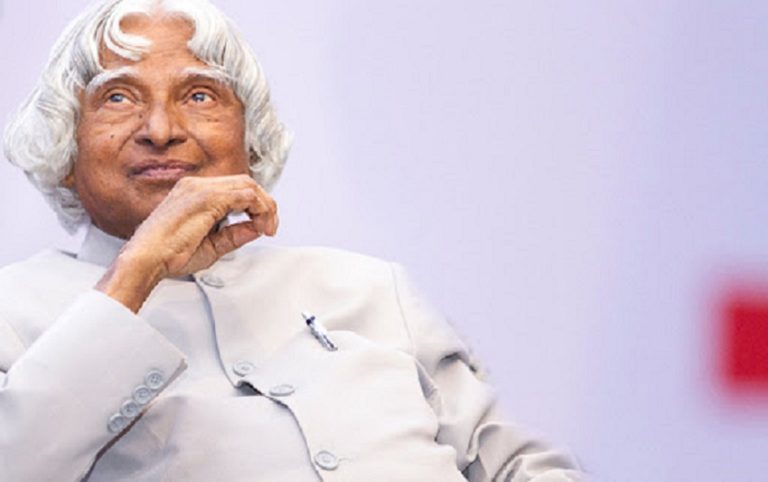
“Transforming the nation into a developed country, five areas in combination have been identified based on India’s core competence, natural resources and talented manpower for integrated action to double the growth rate of GDP and realize the Vision of Developed India” that was former President of India Dr APJ Abdul Kalam’s vision for India by 2020. In 1998, Kalam and YS Rajan, also a government scientist, co-authored a book called India 2020: A Vision for the New Millennium. The book had a simple message: “A developed India, by 2020 or even earlier is not a dream. It need not even be a mere aspiration in the minds of many Indians. It is a mission we can all take up and accomplish.”
“Seldom does one, in these troubled times, see such a lucid marshaling of facts and figures to bolster the thesis that India is mere two decades away from superpower status,” wrote the Times of India at that time while introducing “India 2020.”
Collective delusion, and not critical analysis, has been the hallmark of our media, intellectuals and patriotic elites, then and now — when the missile man envisioned a ‘developed’ India by 2020 then or when our beloved leader tells now that 21st century belongs to India.
Much of the Kalam’s book is a compilation of optimistic
forecasts, powered by an impressionable sense of patriotism than by any
empirical data. In many ways, the book’s style and substance is an inspiration
and precursor to the millions of patriotic messages flooding our WhatsApp
Universities of today.
The Vision is dedicated to a ten year old girl whom Kalam met during one of his talks and asked her about her ambitions, to which the young girl replied, “I want to live in a developed India.” The book examines the weaknesses and strengths of India and offers a vision of how India can emerge to be among the world’s top four economic powers by the year 2020. The world’s GDP, according to the International Monetary Fund (IMF) is $91.98 trillion in 2020. India is ranked at No. 7 with a nominal GDP of $2.72 trillion or about 3% of world GDP. In comparison, China is ranked at No. 2 with a nominal GDP of $13.4 trillion or about 15% of world’s GDP. China has left India way behind, breathing down the neck of USA to snatch the No. 1 trophy from it. India is just competing with small European countries like Italy, France or UK in terms of GDP. India is ranked at 145th position in terms of per capita income. India’s nominal per capita income at $2,199 in 2019 was approximately five times lower than world’s average of $11,673. Given that we are now in 2020, we know that India has not become a developed nation — not by a long shot — even before the virus has turned 2020 into a nightmare for the Indian economy.
Dr Kalam and Rajan, assume in the book that there is a “greater likelihood of more women taking part in direct economic activities” and, most incredibly, that “there are good chances that poverty can be fully eliminated by 2007-08.” It is apparent that even after 12 years from the target year of 2008, poverty in India has not been eliminated. The humanitarian crisis posed by the migrant labourers during the lockdown period is a true commentary on the worsening position of poor in India. While making the predictions about more women participation in the economic activities, Kalam and Rajan seemed to have under estimated the deep rooted strength of Indian patriarchy. India’s female labour force participation rate had fallen to a historic low of 23.3% in 2017-18. Only nine countries across the world, including Syria and Iraq, have a lower female participation rate than India’s.
In order to realize the vision of India becoming a developed country by 2020, Dr Kalam and Rajan had envisaged that we need to transform India in five areas where the country has core competence: Agriculture & Food Processing, Education & Healthcare, Information & Communication Technology, Infrastructure Development & Self-Reliance in Critical Technologies. Though India has made substantial progress in Information and Communication Technology and some progress in Infrastructure Development, it could not usher in any transformational change in the Agriculture sector. Inclusive and affordable Education and Healthcare are a mirage. Dr Kalam’s dream of ‘assurance of education on merit with complete disregard to societal and economic status’ is miles away from the bitter reality such that quality higher education is accessible only to rich and not to the poor or not even to the middle classes. Self-reliance in Critical Technologies is still a distant dream. A report by IBM Institute of Business Value and Oxford Economics found that 90 % of Indian Startups fail in their first five years of running.
Vision 2020 assumes that the urban-rural divide will be bridged and the differences of caste, class, religion, language and region will be seen as irrelevant leading to a more united and secular country. In today’s India, these fault lines manifest more than ever since country’s independence.
In spite of the fact that Kalam’s superpower India 2020 prediction was widely off the mark, its spirit continues to survive, with only extension of the target year. During the 2019 Lok Sabha elections, BJP promised voters that India would become a superpower by 2024 if Narendra Modi was voted back as prime minister. There are real costs to the Indian economy associated with living in this “Superpower 2020” dream, of faulty policy making based on unachievable targets. Now, economists like Amartya Sen are showing the mirror that India is in fact losing out even to its South Asian neighbors such as Bangladesh and Sri Lanka, who are able to offer their people better standards of living.
“To achieve the progress, he envisioned in Vision 2020, that the country’s growth rate must be 10% for 10 continuous years in agriculture, manufacturing, industry and energy sector. So far, the country has never seen this. Maybe we’ve achieved 8% to 9% growth for three years straight, but then it dipped later. India should not work on extractive policy based on tax collection but instead work on inclusive policies, governance and institutions. Instead of relying on tax collections, we must work on developing infrastructure. Only then we can succeed,” Dr APJ Abdul Kalam’s former scientific advisor V Ponraj had said in 2019.
“Naam, Namak Aur Nishan,” is an ethos that calls upon Indian soldiers to strive for the good name of their country, the salt that they have partaken and the glory of the national flag or regimental standard, to the extent of making the supreme sacrifice of their lives when required. The Indian Armed Forces are particularly proud of their All India All Class (AIAC) character, a complete integration of all communities and faiths into a single mould — that of the Indian soldier.
Religion, caste, community etc. never figures in the scheme of things of an Indian soldier. The moment he joins service as a trainee recruit, he becomes a part of the noble fraternity and brotherhood of arms, leaving all else behind.
It is to the credit of the founding fathers of the Constitution of India that they remained sensitive to the need of recruiting only the fittest and the best in the Armed Forces of the country and precluded the services from “Reservation.” This provision has been assiduously upheld by successive governments, the judiciary and the senior military hierarchy as intrinsic to the good performance of the Armed Forces.
In order to live up to the faith reposed on the Armed Forces by the country, only the fittest and the best are selected across ranks from Sepoy (Indian Army soldier) to an Officer. The Army has a very impartial and effective recruitment policy, which has seen minimum or negligible court interventions in all recruitment including officers. For recruitment in the Army, fulfillment of criteria like requisite educational qualification, age bracket, health and physical fitness parameters etc. and then making it to the merit list is the only factor considered in an applicant.
Such is the fairness of the system that instances abound where wards of junior ranks (Sepoys and Junior Commissioned Officers) get selected in the officer cadre while wards of officers face rejection for not fulfilling the required criteria.
The recruitment process for Sepoys ensures that pro rata, all states, castes and denominations in our country are given equal share in the intake process by considering proportions of Recruitable Male Population (RMP) of each State. A state like Uttar Pradesh having a larger RMP gets more vacancies than a state like Punjab having a lesser RMP. Thus, a contention that equal opportunity is not given is grossly incorrect.
The argument is based on the existence of some Fixed Class composition units in the fighting arms. The army has regiments like the Gorkha Regiment, Jat Regiment, Sikh Regiment etc. which have soldiers coming from specific castes. This, however, does not impact the All India All Class (AIAC) character since the said classes do not get any extra benefits in the RMP (Recruitable Male Population) index. Also, the soldiers of these Regiments come from different parts of the country – a Jat Regiment will have intake from Haryana, Uttar Pradesh, Rajasthan etc. and a Sikh Regiment will have intake from Punjab, J&K, Haryana and so on. The process is organised by first filling vacancies of the Fixed Class composition units from the recruitment influx.
There are many good reasons for carrying on with this system. The first and foremost is that it has stood the test of time, not only in India, but in the best Armies across the world. Modern armies of other countries like the United Kingdom, Canada, Pakistan and many more also subscribe to the system. The UK has Irish Guards, Welsh Guards, Scottish Regiment etc. Pakistan has Punjab Regiment, Baluch Regiments etc.
The “Fixed Class” composition Regiments have noble and historic traditions. They have proved themselves in innumerable wars and battles and are great military assets. They have a history and a legacy that needs to be nurtured to maintain the cutting edge. Fixed Composition also facilitates parameters like ease of administration, kinship, religious/regional camaraderie, language, customs, eating habits and most importantly time-tested battle winning capability.
The Sikh Light Infantry (SIKH LI) that comprises of Mazhabi (Dalit) Sikhs is often quoted to reinforce the casteist angle of arguments. It is insinuated that the Regiment has been created to accommodate Dalit Sikhs and thus separate them from the Jat Sikhs who serve the Sikh Regiment.
The reality is that the SIKH LI will not wish to lose its character under any circumstances having created an enviable niche for itself by virtue of its valour and courage. SIKH LI has given three Chiefs and innumerable Generals to the Indian Army, including the incumbent Chief, General MM Naravane. Please watch the pride with which the incumbent Army Chief begins his addresses with “Sat Sri Akal” the traditional greetings of the Sikhs. There is no embarrassment evident in him or other officer of the regiment for having served with “low caste” Dalit soldiers. They are, in fact, so very proud of their Regiment and their men.
Glorifying the rich history and tradition of old Indian regiments and units actually manifests as force multipliers and meeting their intake requirement within the fold of the basic AIAC (All India All Class) composition. It is a true example of the artful Human Resource management of the Armed Forces.
The units that were raised after independence are based on the AIAC model. Thus, in the Indian Army of today, there are a large number of Mixed or All Class composition Regiments in fighting arms like Armour, Mechanised Infantry, GUARDS, Artillery, Engineers and all Services too. Even Infantry units like Mahar, Grenadiers etc are of Mixed or All class composition.
Sabyasachi Dasgupta, in his article, has spoken of a Public Interest Litigation filed against the Fixed Class composition of the President’s Body Guard (PBG). It is a matter of record, as accepted by the writer too, that the Judiciary does not find any reason to interfere with the internal affairs of the Armed Forces. The writer has said in the article, “The Supreme Court quashed the petition, saying that it did not want to “rock the army’s boat.” Surely, with a direction of this nature coming from the highest Court in the country there should be no reason to broach the subject again and again. In any case the PBG is a ceremonial Regiment dedicated to the office of President of India. Any changes in the composition of the unit can be affected only at the pleasure of the President.
Monumental successes achieved in post-independence wars is the result of the forces being given a free hand to run their affairs in the manner they deem fit. It is only befitting that the organisation of the selected manpower be left to the Army. To comment on the basis of peripheral knowledge with consideration of one sided aspects is not correct. It is surprising that after seven decades of independence when there should be talk of removing reservation altogether the opposite is being propagated for the Army.
The situation along Line of Actual Control (LAC) between India and China in Eastern Ladakh has been subjected to interpretation by many through the medium of blogs, tweets and articles. There are some who describe it as a loss of face for India. Ajay Shukla, an Army veteran and presently consulting editor with a business magazine, understands it as an abject surrender to China. He has also accused the present government of camouflaging the actual situation and hiding illegal occupation of approximately 60 square km in Galwan valley, Hot spring, North of Pangong Lake, Fingers 4 to 8 and the Sirijap area.
Pravin Sawhney, yet another Army veteran and publisher of a magazine named “Force” has, in a recently released video, mentioned that China is emerging as a new superpower challenging USA. He goes on to suggest that China and its People’s Liberation Army (PLA) are invincible. He declares that, militarily, China is a big giant in six kinetic and non-kinetic domains to include strategic, operational and tactical wherewithal, supported by cyber warfare, information and psychological operations and the space force to which India is no match. He predicts that in the eventuality of a conflict with China all Indian airfields will be destroyed by missiles attack after administering a total communication blackout leading to decision paralysis and loss of command. He seems to be highly impressed by the Chinese Order of Battle (ORBAT).
The more well informed veterans including this writer feel that there is a congress of media and pseudo-intellectuals playing a doctored narrative possibly with the aspiration of an award by fifth columnists and enemy intelligence set ups that look towards lowering the morale of Indian political leadership, military hierarchy and people. The efforts are in tune with the Chinese military doctrine of “victory without war” as advocated by their strategist Sun Tsu. Chankya has said in 250 BC, “if you know your enemy well half battle is won.” So, let’s probe into the Dragon’s den. Chinese Military Commission is the supreme authority. Chinese President Xi Jingping, is the commander-in-chief of PLA.
Prior to 2016, Chinese had seven Military Regions (MR) which are Langzhau, Chengdu, Ghanshghou, Nanjing , Jinan, Bejing and Shenyang. Now, keeping in mind joint operations, all MR’s have been restructured into five theatre commands which are Northern, Western, Southern, Eastern and Central. We will be facing basically Western Theatre which includes Xinjiang & TAR (Tibet Autonomous Region). Eight Airborne corps and two Artillery Corps will be CMC (Central Military Commission) reserves with China. It has 18 Army Groups of Corps strength that it will need to mobilise from 1000 km away. They will be supported by indigenous Chinese fighter aircraft J-11, J-10 and J-17.
India has also come a long way from Indo-Pakistan War, 1965 when a single theatre command under Lt Gen. Harbaksh Singh was responsible for an area spanning from Rajasthan to Ladakh. We won a decisive victory even then. Northern Command was raised in 1972; 14-Corps was raised and located in Ladakh after Kargil war; recently the South-West Command has come up with the intention of ensuring that Northern Command can concentrate on its frontier along the LAC and the LOC.
India has the best tanks and mechanised elements operating in the high altitude regions of Ladakh. It is common knowledge that India has a robust missile programme that has been militarised under a Strategic Forces Command. India also has a Special Forces Command and capacity for Cyber/EW (electronic warfare). Robust airlift capability can ensure fast transportation of forces, and that is what C-17 Globemaster and C-130 J Hercules aircraft are meant for.
Indian Air Force has frontline 4/5 generation fighter squadrons equipped with SU-30 MKI, Mirage 2000, Jaguars and Tejas fighter aircraft to be further boosted with induction of state-of-the-art Rafale aircraft shortly.
If China possesses Dongfeng 3, 4, 5, 21 & 31 IRBMs (Intermediate Range Ballistic Missiles) / ICBMs, (InterContinental Ballistic Missiles), India has AGNI 3, 4 & 5 nuclear capable IRBMs (Intermediate Range Ballistic Missiles) and, of course, the Brahmos. India holds the capability to strike Bejing. Indian also posses TRIAD capability with Arihant launched B-15 & K-4 SLBM (Submarine-Launched Ballistic Missile).
Pravin Sawhney speaks highly of the capability of Chinese military satellites. He would be aware, as all of India and the whole world is, that India has reached Mars orbit before China. ISRO has time and again proved its credentials to the world. It created a world record by launching 104 foreign and Indian satellites in 2018. PSLV C-42 has already completed 45 successful launches. Anti-satellite missiles have already been developed by lndia. Four military satellites, GSAT-7, GSAT-7A, HYSIS, and MICRO SAT R are in orbit for Indian Armed Forces.
Above all, what is of prime importance is the quality of the “man behind the machine.” Israel completely knocked down three belligerent Arab countries well equipped with Russian Armour and weapon systems in 1948 , 1967 & 1973 fighting on three fronts i.e. Egypt, Jordan and Syria.
In the case of India and China, even if one concedes to a small edge in military capacity to China, it is the professionalism of the Indian Army, its commitment to the nation and its noble legacy that will prevail. The PLA is a politicised force used more for keeping the iron control of the Chinese Communist Party on the subjugated people. The Indian Army, on the other hand, created a new nation, Bangladesh, in a 14 days blitzkrieg while fighting on four fronts i.e. West Pakistan, East Pakistan, Chinese showing muscles in North and US Aircraft Carrier Enterprise Battle Group with Nuclear capability threatening in the Indian ocean.
In modern times also wars have not been won by machines alone, it has always been the human factor that prevailed and here India has a decided edge.
It would be in the interest of the nation to remain vigilant of the limited vision of a few who push inadequate knowledge only with the gift of the gab. India is and will remain well poised to face any threat posed by the Red Army on our Northern Frontier and also a two front war if forced on us. In the present scenario it is obvious that certain blood hounds are not happy with progress of a peaceful solution as it defies the orchestrated narrative.
This year 2020 is like living in the sequence
of a horror movie. Coronavirus, earthquakes, cyclones, riots and untimely
deaths, it’s happening all around us. After Irrfan khan, Rishi Kapoor and Wajid
Khan, the current heartthrob of the Hindi film industry Sushant Singh Rajput was
found dead at his apartment in Mumbai.
The body of Sushant Singh Rajput was found
hanging from a ceiling fan at his Mumbai apartment fuelling speculations about
his suicide. At 34, Sushant Singh Rajput was a successful actor whose movies attained
both commercial success and critical acclaim, a rarity for any artist.
Sushant Singh Rajput was a highly successful
actor who won several awards for his role in Hindi movies and the popular TV
show Pavitra Rishta. His blockbuster movies include the likes of ‘M.S Dhoni–
the untold story’, ‘PK’ and ‘Kedarnath’. He was an inspiration and role model for
several youngsters. Sushant’s role in Chichhore was also highly appreciated.
The film had a message that suicide is not the solution of any problem. It’s
ironic that the actor’s life ended with speculations of his own suicide.
The COVID-19 pandemic has had an impact on everybody
across the world and people have to face challenges every day and also battle depression
and mental health issues. This has affected even successful actors like Sushant
Singh Rajput.
Sushant started his career with television
serials. His debut show was at Star Plus named “Kis desh main hai mera dil”.
Life is like uniform motion where we have to
face challenges and live. We should never give up on it. After all Sushant has performed
the great role in a movie like Chichhore, even then due to depression he
attempted suicide. Depression damages our ability to think and we forget how
much our family means to us. The man who broke stereotypes, defeated nepotism in
an industry with actual talent, has broken us all with his death.
Mental health is very crucial, it may destroy our daily lives and affect our health. The stress and anxiety affect the psychological thinking and may even cause death. Sushant Singh Rajput you will live in our hearts forever.
In three months flat, hundreds of journalists and camera persons have lost jobs in India’s big media industry that is considered to be among the largest in the world. Everyone wants a Pied Piper to kill the rats (read virus), but no one is offering hope. Sackings have grown faster, ostensibly because for almost three decades, India’s media industry rarely worked on any legal protection for journalists, especially those fired from jobs. The Working Journalist Act, passed by the government way back in 1955, worked well till the mid 80s. From here on, news organisations changed the hiring process to a consultant model where the owner had complete liberty to hire and fire, even imposing restrictions on journalists from joining competitive newspapers and news channels.
Journalist bodies, press
clubs and more importantly, the Press Council of India (PCI) or the Editors
Guild did not protest strongly, mostly remaining silent. Journalists too
happily signed on the dotted line in their appointment letters and never asked
the management about their crisis cover. When they were fired, they were happy
if the management offered a few months salaries along with the pink slip. If
there was no compensation, journalists rarely raised a banner of revolt.
As long as it was followed,
the Working Journalists Act worked like a protective rain gear which
journalists used whenever there was a crisis. Those who joined under the Act
were employees and their salaries were framed under multiple categories. Cash
in hand was less but the management did not sack at will. There was restraint.
Journalists covered under the Act could not be fired till 58 years of age. Then
came the consultancy model where salaries were hiked, sacking was at will.
Sometimes compensation was offered, mostly not.
The difference was in the
attitude. The owners of news organisations got bold and bolder. When they shut
shop, they just walked away and partied hard. Journalists who went to court
waited for decades. There were no definitive judgements. Journalists started
becoming vulnerable. Now, the levels of vulnerability have gone sky high.
“Once the sackings started
and magazines started shutting shop, journalists started falling like ninepins.
They realised, probably for the first time, they are no longer invincible,”
says Anthony Jesudasan, troubleshooter for Anil Dhirubhai Ambani’s companies.
Jesudasan’s understanding of the media is among the finest in India. He once
worked for The Times of India, published
a wildlife magazine, weekly and daily broadsheets, even headed a business
television channel and partly controlled a wire agency.
Jesudasan says that the prevailing climate in the Indian media market could even get worse, sackings could reach even 55-60 percent across all newspapers, television channels, magazines and portals. “It is a vicious cycle. If there are no revenues, the management will simply sack. India’s media market does not have a Pied Piper to solve problems.”
Private sector advertising revenue for the Indian market touched a record ₹72,000 plus crore last year but nearly 60 percent of that cake went to television channels, mainly entertainment, sports and news. The rest went to other segments like newspapers, magazines, and portals. But right from the start of 2020, advertising revenues started showing a dangerous, downward slide. And now, it has come to a trickle. The government at the Centre has cash, it spends a little over ₹1500 crore on advertisements per year. So do governments in the states. But there is a catch: Any negative reporting about the government means the cash tap could be switched off. In short, if you are solely dependent on government advertisement revenue, your independence — the foundation of journalism — will go for a toss.
There are many news
organisations across India which do not even mind such stringent, backbreaking
conditions offered by state governments and the one in the Centre. There are
other hidden help offered by many state governments to many newspapers and news
channels. But that is not accounted for. Many say it is hearsay but there have
been several examples when politicians in India have been found funding news
organisations. And no one battles an eyelid when these dubious news
organisations shut shop.
So let’s look at the size of
the market. India has over 5,000 newspapers, over a thousand magazines and 450
news channels, besides 2000 news portals. But barring a handful, almost all
news organisers are reeling under severe cash crunch. Sacking, not hiring, is
written on the wall. There is genuine fear in the air.
The National Alliance of
Journalists (NAJ) and Delhi Union of Journalists (DUJ) recently protested
against salary cuts and sackings but it did not cut ice. In private
conversations, owners of news organisations said they will continue to push for
more sackings using the nationwide lockdown announced to combat the spread of
COVID-19. For them, this was not an excuse for retrenchment and arbitrary pay
cuts, it was a genuine concern. The journalist bodies had no answer.
But then, a crucial question
still remains unanswered: If Coronavirus is a national crisis then it must be
accepted by media companies and their shareholders. Why pass on to vulnerable
employees? Many even remembered how the media houses had resorted to similar
pay cuts and sackings in 2016 when demonetisation hit India.
Fake news pandemic has eroded the credibility of several journalists and the media organisations.
Media veterans and analysts — in a recent statement — raised the issue of profits earned for decades by some of the big media houses in India and how, despite making such profits, they were offering pink slips. The veteran journalists raised the issue of The Times of India’s sackings and asked why the group should not have sacked people but kept them on payrolls (even with salary cuts). After all, employee costs are a small percentage of the huge profits the company makes. “Those sacked now include people who have dutifully worked for them for over two decades, contributing to the growth and wealth of the company,” said the note.
This statement was in reference to the newspaper group closing down its Sunday magazine section. One of its senior journalists, Nona Walia, had written in her Facebook post about the lay-offs: “The entire team of Sunday magazine of Times of India asked to leave. Got a call from my boss Poonam Singh. Sacked after 24 years from a company I served with love for more than two decades. Wow.”
Former Times of India’s Delhi resident editor Anikendra Nath Sen says
Indian media markets will not offer hope for sometime now, maybe a year or two
before things start looking up. “It’s a very bad situation. Everyone is
downsizing, no one is saying when they will fill up the slots again. Newspapers
in India sell way below their original cost of printing, and the deficit is
covered by advertisements. It’s the Rupert Murdoch model where the real cost is
always hidden. And once advertisements drop, the paper cuts size and
journalists are shown the door.”
Sen says big buck editors and CEOs who take lots of cash home are rarely sacked, the ones who lose jobs are journalists. “So many have started asking what value do these editors or CEOs bring to the table. They are not Shah Rukh Khan or Amitabh Bachchan who can carry a whole movie on their shoulders. So why pay them in crores?”
Market analysts say in India
those in the upper slot in the media industry always try hard to downsize staff
to earn brownie points from the management. The hidden message is simple: The
more you save money, the more you go up the corporate ladder. So the fear of
losing a job stays. Worse, Indian newsrooms today work under pressure, under worries.
Journalists rarely raise flags to ask questions. Incorrect news stories often
pass the desk because of editorial pressures or political pressures. Routinely,
scandals and controversies involving politicians, political parties and
corporate captains are dropped.
It is all about keeping the
head above the water, keeping the publication or news channel below the radar.
A senior editor of a top newspaper recounted how he drew flak after he used an
eight column banner headline for a health related issue severely impacting his
city. The chief minister of the state did not like the headline and there were
fears of government advertisements drying up. Worse, the editor was hounded by
his colleagues who wanted him not to write such provocative headlines. “For you
it is a headline, for us it is our survival. If the advertisements stop, our
salaries will not come,” the reporters pleaded with the editor.
“I could not sleep that
night,” the editor told me during a recent conversation at his residence.
Some of the senior editors,
now almost retired, say India lacks powerful editors. It is rumoured that the
current crop of editors pick up their jobs because of powerful push from
corporate captains or political leaders. “Managements now want a name on the
chair. Rest, everything is done through some backroom mechanisation. The grip
of politicians and corporate captains have always been there on the editors,
but now that very grip has turned very strong, at times lethal,” says former Sunday and National Herald editor Shubhabrata Bhattacharya.
In short, the editor’s chair, once compared to be very close to that of the country’s Prime Minister’s seat in India, is seen as extremely vulnerable because of the very editor’s equation with the management. “Linking the media to the great Independence struggle is history. Today’s media business is not charity, it’s a cruel balance sheet. I am not against retrenchment. It is like any other business. What will the management do if a 46 page broadsheet is reduced to 16 pages because of lack of advertisements? All I seek is a little more respect when journalists are asked to leave because these very journalists gave their best to make newspapers and television channels, or magazines, successful brands,” says Kalyan Kar, former resident editor of the Times of India.
Kar says he sincerely
believes the role of the editor in India has diminished to a great extent
because editors have rarely risen to the occasion, be it abrupt sacking of
colleagues or slanted news coverage to suit a particular political party. “An
editor needs to carry his prestige on his sleeves. It rarely happens now. Editors
do not stand up for any cause anymore. Their voices do not matter, nor does it
matter when they resigned or when they are pushed out of office.”
For the last couple of years, editors of top broadsheets and news channels have been hauled over the coals for a host of reasons. Some have been caught on hidden cameras for demanding cash for slanted coverage, some have been fired for plagiarism, some have been caught on leaked tapes pleasing corporate captains and lobbyists, some have been pushed to prisons for taking cash from ponzi merchants and some have been blamed for sexual harassment. Some have even got into the business of making sweets and candy floss, some have been seen helping corporates get licences to start private medical colleges. For nearly a month, a series of WhatsApp messages have been circulating between Delhi and Mumbai about alleged scandals of two top editors of a top newspaper and how they were allegedly working closely with some ministers and bureaucrats to fix many things, including finalising top level transfers and getting other favours sanctioned by ministers and bureaucrats for friends (obviously at a cost).
“Where are those editors who
could keep owners waiting outside their office because they were busy writing
editorials? Today, the brand image of editors has been severely compromised.
They are not taken seriously by their management, and by their readers,” says
Kar.
Kar should know. Everytime
journalists are fired, social media goes into a total spin. But interestingly,
the dust settles within a week and life turns normal for everyone, including
those who lost their jobs. Unlike other parts of the world, journalists in
India have rarely learnt to pick up crossover communication jobs. Even if they
do, they fail miserably. Worse, journalists in India have rarely grouped
together to form companies on the British Broadcasting Corporation (BBC) model.
Tehelka, which started as a portal
and then shaped up into a magazine, did great journalism despite little cash.
But the magazine tanked when its editor, Tarun Tejpal, was embroiled in an
alleged rape case.
Then there are editors who
hate private corporations in the media business but they themselves do not know
what is the alternative.
The bottomline: The readers
get confused. India wants to see editors as powerful people who may go to bed
without supper but must carry a very powerful, truthful pen. Minus that,
everything is considered a bit of compromise of values. In current day India,
those firebrands editors have all but vanished.
Let’s consider the recent case of resignation of the editor of Anandabazar Patrika which triggered a storm in Kolkata. The editor, Anirban Chattopadhyay, put in his paper four days after Chief Minister Mamata Banerjee accused the 98-year-old daily for what she said was pulling down the image of the state with negative coverage of the government’s efforts to handle the Coronavirus and cyclone Amphan crises. An FIR was lodged against Chattopadhyay. The 62 year-old editor sent a reply through his lawyer and cited medical reasons for not visiting the police station. Many felt the editor should have been bold enough to visit the police station. There were others who criticised the editor for not standing up to the management when some of his senior colleagues were pushed out of jobs.
So what is the alternative?
If the newspaper industry is losing cash everyday, why should not the government reconsider its policy of deliberately depressing newspaper prices and forcing the dailies to depend wholly on advertisement revenues? On the flip side, see what the newspapers are doing: The dailies want removal of 5 percent customs duty on newsprint, a two-year tax holiday, a 50 percent increase in DAVP advertisement rates and a 100 per cent increase in budget spend for print media. But what largesse is it giving the employees? When the Hindustan Times sacked people, those doing the dirty job of handing the pink slips were no other than editors. So it’s actually a very vicious circle, journalists slice journalists. No one has any solutions, no one has any answers.
Then there are other issues that plague the Indian media. The country has a low literacy level and it adds huge readership every year. As a result, the Indian news industry — from the late 90s — started expanding rapidly and cluttered the space with multiple editions, new channels and vernacular media expanding into English. This, in turn, resulted in a huge recruitment drive, further fuelled by mushrooming news portals. So what happened? It turned the media sector into a large employer. But eventually, many media platforms shut shop and the rest were struggling to remain viable. And then came the pandemic which shattered the great Indian media market like a house of cards.
The problem is serious because the Indian media has not invested in grooming talent like international news corporations. A large chunk of media personnel have either a year long diploma or a two year degree from Journalism schools. Now when the crisis happened, not many could make a crossover to the corporate sector. In India, mainstream journalists have often treated corporate communications or public relations jobs as those below their dignity level. Today, credible journalists and media platforms are practically competing with paid influencers and sponsored social media campaigns.
Merely broadcasting video bytes and endless debates without any value addition hardly guarantees a dedicated viewership. (Representative photo)
The situation is worse in the
hinterland where vernacular reporters with low salaries are often forced to
gather advertisements from local companies by their news organisations, a
faulty and criminal model. In the big cities, editors often meet corporates for
funds for big ticket annual jamborees organised by news organisations for
awards ranging from Power Women to the Most Powerful & Popular Indian.
Those in the web news business
are also unhappy as top portals continue to cut salaries, making staffers go on
leave without pay or simply laying them off. The Quint has sent almost half its staff on leave without pay
besides enforcing pay cuts for the rest. Same in the case with the other
portals. The electronic media is the worst affected where hundreds work with a
million, virtual Damocles Swords on their heads. Many channels have shut shop
without blinking an eyelid. New players have entered the market only to
humiliate jobless journalists, asking them to work for a pittance.
Read this note posted on Linkedin by a former employee of News Nation channel: “Guys, in a very
unfortunate decision, News Nation has
sacked the entire English digital team yesterday. Many of my colleagues were
left with no job in the middle of this crisis. The team includes hard working
journalists and social media executives. They are looking for jobs. Fortunately
I quit the place a month before. But they need our help now. If anyone can help
them in their hour of need, will be appreciated. PS: News Nation sucks. Let’s boycott them. Raghwendra Shukla.”
The bottomline: Closures,
layoffs and retrenchments are not a new phenomenon and will stay. In the last
few years, scores of media employees have lost their jobs, with little or no
compensation. Routinely, the media industry, led by cash-rich and politically
powerful media houses, has flouted directives of the Hon’ble Supreme Court of
India to implement the 2011 Majithia wage board award for newspaper and news
agency employees. It would be pertinent to note that the recommendations of the
Majithia Wage Board are statutory in nature and are also applicable to all
contractual employees.
One thing is clear: The longevity of one’s innings at a newspaper, magazine or a channel does not matter. If a sack has to happen, it will happen. Second, Indian journalists will just not be able to form a team, raise cash and run a news platform. They will need serious funding. And they will have to generate alternate revenue models. Indian news platform owners run telecom companies, football and cricket clubs, departmental stores, even real estate business. Journalists will have serious troubles getting into such businesses. And finally, any news business cannot sustain on generating only news or views. Others will copy fast and upload faster. There needs to be solid juice, more and more ground level reporting which will require some solid cash flow.
Social Media has become a major source of news consumption. (Representative photo)
The issue once again returns to the big question: Who will open the purse? Like everything else in present day journalism in India, there are no answers. The absence of a proven revenue model in the digital space has prevented the Indian media from bouncing back. Global experts are sure that Indian media can be successful only if Google and Facebook pay fair share of their revenue with news publishers the way it happened in Australia.
Christian is a Philosopher that comes from Belgium. What identifies him the most and above all is simplicity, for everything is better with “vanilla flavour.” Perhaps, for this reason, his intellectual passion is criticism and irony, in the sense of trying to reveal what “hides behind the mask,” and give birth to the true. For him, ignorance and knowledge never “cross paths.” What he likes the most in his leisure time, is to go for a walk with his wife.
Scott Douglas Jacobsen:
Speaking of acoustic tolerance, or, rather, acoustics, if we’re looking at the
output of human beings, we’re auditory in terms of direct communication, more
so in terms of, hopefully, conscious intent. Whereas, there can be a
first-level superficial non-verbal language with the body, probably. But at the
level of the spoken word, there is a sense in which the quality of speech is a
great indicator of the quality of the mind. Not in all cases, but it’s a good
heuristic, I’ve found. Have you found the same?
Christian Sorenson: In fact, I would distinguish “three levels” of communication in
relation to language, respectively one “non-verbal or corporal,” and two others
that I will denominate as “analog and digital verbal.” In my opinion, although the
three of them will be given simultaneously, the “non-verbal and analog” ones,
would provide an “implicit formal symbolic” message regarding to the latter,
while the “digital” is going to contribute with a content that at the same
time, is “symbolically explicit” in its “significativity” and “symbolically
implicit” within its “significativeness.”
Jacobsen: Back to acoustics, a good mind is often referred to as a sound mind, as in, “He is of sound mind.” It is the use of an auditory term to describe a balanced intelligence. If anything, the world needs far more balanced intelligence and, as Evangelos Katsioulis correctly notes in an interview with also another smart person, Erik Haereid, humility. My sensibility is such that the world appears off-kilter with exaggerations in both some narrow applications of intelligence and in the ego. A sort of pseudo-Asperger’s Syndrome unhealthily combined with borderline narcissism (not formal NPD) en masse. What do you think the world needs?
Sorenson: First of all I believe that it is necessary to refer “more precisely” to “narcissistic personality disorder,” since this is a “diagnostic category” that as such, exists in the “Statistical Manual of Mental Disorders” (DSM-IV) of the “American Psychiatric Society,” which requires the “objective presence” of at least five symptoms within a series of other ten, in order to determine “its effective clinical existence.” In this sense, one of these would be the appearance of “overrated ideas about oneself,” which alone in itself is not a sufficient element to establish categorically this “diagnosis.” What follows from the above, therefore is that when speaking of “narcissism,” it must be distinguished beforehand what “are traits” from what is actually a true “personality disorder” of this nature. In relation to Katsioulis premise regarding “balanced intelligences,” it seems to me that it’s an “attractive and apollonian” proposal, though at the same time it is “not sensibly grounded” to reality, due to the fact that in its deep meaning it is an “absolutely fallacious explanation” in relation to what “exceptionally high intelligences” should be. Indeed, the vast majority of problems in the world lay on some kind “of imbalance,” but this has little to do with what “intelligence” is, because in itself “exists no function regarding any balance.” In other words, its “only and exclusive” property has to do with “knowing objectives” and behalf to “beings reality.” Then “homeostatic resources,” must be sought somewhere else, as for example may occur within “personality and characterological” factors. Another is the situation related to “correlations,” between “intelligence” and the two aforementioned, since in that case is possible to talk about the so-called “harmful imbalances.” In reason of this last, it’s factible to found an almost “perfect correspondence,” but “inversely proportional” due that its value is minus one. Using other terms, “When higher is the balance lack, then lower is the degree of intelligence found.” By this way, within “extremely high intelligences,” there is in fact an “implicit prevalence imbalance,” yet has to do with an “opposite co-valence” in its value, because “geniuses” in their most “original and proper essence,” are “rupturist” and therefore “misunderstood” socially speaking, cause they usually “live out of canons” and “ahead of their time.” Consequently and even though the latter leads to what I will name as an “auto-hetero mis-comprehension,” which is obviously linked to “disagreement arising” within themselves and with society, as ultimately “destabilization” also arrives, in some manner “anyway and anyhow,” they always reach “valuable results,” which “sooner or later” in time, will be “socially rescued” as “unique and necessary contributions,” since lastly “nobody, but except themselves” have been capable to arrive there, to that point. In another sense, it could also be said that “geniuses” unlike the rest of humanity, “acoustically speaking,” not only “are able to hear,” but besides also “are skillful for listening” other “registers of reality” that shouldn’t be accessible not even for highly intelligent ones. In my opinion, by striving to understand this last, and perhaps by trying “to socially harmonize” each other, yet nevertheless without “de-profiling” or “turning-off” their “alma mater,” we may arrive to something “substantially” speaking more relevant, and less absurd for the world. That is instead of pushing efforts towards “to fit them” into “Gaussian Bells,” in function of “self-complacency” and “self-recognition” complexes of some, in which they “sell cough syrups without being aware that they are made of herbs.”
Jacobsen: You mentioned Mozart in another interview. He simply sounds joyful to hear, often. What do you think is behind that phenomenon?
Sorenson: I would say that at the base of Mozarts compositions, there is a “free
and creative spontaneity” that “goes beyond all establishments,” and leads to “harmonious melodies,” since when they’re transmitted into “musical
scores,” they produce afterwards a “joyful and pleasant” circulation of energy.
Jacobsen: What do you believe is behind Mozart as a genius?
Sorenson: I feel there is an “irreverent and vitalist spirit” that ironizes with “canons
status quo maxims,” and “mocks of enlightened minds.”
Jacobsen: If Mozart lived on
into old age and died of more slow natural causes, what do you think would be a
culmination of the works for him? In other words, what do you think that we
missed out?
Sorenson: I “do not believe” that “he or his work,” would have been very different,
and therefore I feel that “rather than having lack of something” that we did
not see, what we actually lost “was the continuity of what he showed and taught.”
In this sense, it could be said that Mozart always lived like “an eternal child,”
who played and enjoyed “turning the world upside down.”
Jacobsen: When dealing with
someone “evil” or “bad,” etc., we can feel a sense of disharmony, of something
not quite right. Do you think there could be an analogous application of
auditory metaphors to the forms of disunity of mind and behaviour leading to
bad people in addition to the sense that we have about hose people?
Sorenson: I will denominate that sensation of “dis-harmony” and “dis-unity” as “evils aesthetic defects.” The “metaphor” of when listened would be similar to “rape feelings” as if it was “an imaginary phallus,” that in turn is “invested” by some kind of “implicit aggressive knowledge,” since in its meaning “does not distinguish” “the border” that exists between “knowledge and truth,” due to the fact that both “appear identified,” within the message. Therefore also, “unlike someone else” or rather said “better than anyone else,” “leaves no room for reasonable or methodological doubts,” and in consequence by being the only one “who knows that knows,” and “actually is knowing what is truly good for somebody,” uses language as a “seduction tool” for its own benefits, and with the sole purpose “of perverting through conviction,” as if it was “a “flipping” or somehow as if “a tapestry was put on its back.”
Jacobsen: Maybe, this is a general sentiment. When things exist autonomously through time, progress as if by nature herself, it’s a signal of things being set right rather than being built to fail. I suppose this could be a survival advantage. In fact, there might be some clues. Most people who have formal Narcissistic Personality Disorder a) leave a trail destruction behind them and b) tend to live life alone or end up alone if they haven’t ended up that way already. And people feel something is off about them (rightly). This seems like an embodied consciousness thing. Do you think this will make reconstruction in an artificial intelligence more difficult when it comes to intuition, sensibilities, and sentiments about disharmonies in all sorts of ways?
Sorenson: I believe that such forms “of consciousness” certainly are going to be
more difficult to be reconstructed as “artificial intelligence.” At the same
time, however I feel that by this it would be an excellent way to test if
whether human beings actually “possess any spirit or not,” since strictly
speaking almost everything, including “consciousness,” could theoretically be “symbolically
encoded” and eventually “translated” into “artificial intelligence,” that yes,
except if this “insight capacity” is of “a spiritual nature.”
Jacobsen: Thank you for the
opportunity and your time, Christian.
Sorenson: You are welcome, and I hope that “the spirit of time” continues
accompanying us.
We use cookies on our website to give you the most relevant experience by remembering your preferences and repeat visits. By clicking “Accept All”, you consent to the use of ALL the cookies. However, you may visit "Cookie Settings" to provide a controlled consent.
This website uses cookies to improve your experience while you navigate through the website. Out of these, the cookies that are categorized as necessary are stored on your browser as they are essential for the working of basic functionalities of the website. We also use third-party cookies that help us analyze and understand how you use this website. These cookies will be stored in your browser only with your consent. You also have the option to opt-out of these cookies. But opting out of some of these cookies may affect your browsing experience.
Functional cookies help to perform certain functionalities like sharing the content of the website on social media platforms, collect feedbacks, and other third-party features.
Performance cookies are used to understand and analyze the key performance indexes of the website which helps in delivering a better user experience for the visitors.
Analytical cookies are used to understand how visitors interact with the website. These cookies help provide information on metrics the number of visitors, bounce rate, traffic source, etc.
Advertisement cookies are used to provide visitors with relevant ads and marketing campaigns. These cookies track visitors across websites and collect information to provide customized ads.
Necessary cookies are absolutely essential for the website to function properly. These cookies ensure basic functionalities and security features of the website, anonymously.
Cookie
Duration
Description
cookielawinfo-checkbox-analytics
11 months
This cookie is set by GDPR Cookie Consent plugin. The cookie is used to store the user consent for the cookies in the category "Analytics".
cookielawinfo-checkbox-functional
11 months
The cookie is set by GDPR cookie consent to record the user consent for the cookies in the category "Functional".
cookielawinfo-checkbox-necessary
11 months
This cookie is set by GDPR Cookie Consent plugin. The cookies is used to store the user consent for the cookies in the category "Necessary".
cookielawinfo-checkbox-others
11 months
This cookie is set by GDPR Cookie Consent plugin. The cookie is used to store the user consent for the cookies in the category "Other.
cookielawinfo-checkbox-performance
11 months
This cookie is set by GDPR Cookie Consent plugin. The cookie is used to store the user consent for the cookies in the category "Performance".
viewed_cookie_policy
11 months
The cookie is set by the GDPR Cookie Consent plugin and is used to store whether or not user has consented to the use of cookies. It does not store any personal data.