Home Blog Page 369

Riaz Naikoo was a terrorist supervisor for Hizbul & was killed by India. Period.

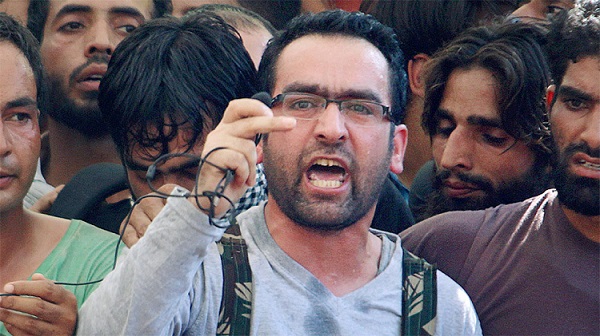
Neutralising Riaz Naikoo, the self-styled ‘operation commander’ of Hizbul Mujahideen (HM) is no doubt a spectacular and praiseworthy achievement for Indian security forces and intelligence agencies. Whereas this is certainly a setback for the Hizbul Mujahideen, but at the same time to say that Naikoo’s removal from the scene will have a major adverse impact on terrorism in Kashmir is not only far-fetched, but also misleading. Its far-fetched, because Naikoo may have been conferred with an impressive sounding title of ‘operation commander’, but in reality, he was merely a supervisor who faithfully executed orders passed down to him by his masters from across the Line of Control (LoC).

So, opining that his death is a ‘major blow’ to terrorism in Kashmir in effect amounts to conveying the specious impression that Naikoo was some sort of irreplaceable icon, a rallying point for youth picking up guns or an ideologue whose absence will create some sort of void. While there’s no doubt that he had a charismatic personality and good oratory skills, which he fully exploited, but at the end of the day Naikoo was (just like his predecessors), nothing more than an elevated pawn, whose replacement will not be hard to find. We have been seeing this for the last three decades since terrorism erupted in Jammu & Kashmir!

Giving deceased terrorist ‘commanders’ a larger than life image may add to the ‘feel good’ factor, but it simultaneously reinforces Islamabad’s blatant lie that it has no linkage with violent activities in J&K. In fact, exactly this is what happened on Wednesday, when Pakistan Prime Minister Imran Khan claimed that ‘violence in Kashmir was local’, and tweeted “I have been warning the world about India’s continuing efforts to find a pretext for a false flag operation targeting Pakistan. Latest baseless allegations by India of ‘infiltration’ across LoC are a continuation of this dangerous agenda.” Readers will recall that even after Pakistan-based Jaish-e-Mohammad (JeM) accepted responsibility for the Pulwama suicide attack, Khan, in his UNGA (United Nations General Assembly) address tried to shift the blame on “a Kashmiri boy radicalised by Indian forces.”

Imran Khan was able to level this bizarre allegation because a section of our media, certain ‘intellectuals’ and ‘activists’ tried to justify a cowardly act that took 40 lives by projecting the perpetrator as a simple soul who was driven to do what he did because of ill-treatment by security forces. We don’t seem to realise that our unproven utterances give desperate Pakistan a ‘life line’ needed to peddle its pack of lies. Remember how during hearing of Kulbhushan Jadhav case at the International Court of Justice (IJC), Pakistani Attorney General quoted articles written by Indian authors Karan Thapar, Praveen Swami and Chandan Nandy to buttress his claim that Jadhav was an” Indian spy” who was “involved” in an “espionage mission” in Pakistan! Similarly, Khan supported his claim of Modi government’s anti-Muslim agenda by saying, “The Congress party gave a statement that terrorists were being trained in RSS Camps”— incredible but true!

Even in Riyaz Naikoo’s case, there’s been a deliberate effort to portray only one side of his character– of him being an underprivileged child from a very humble back ground who struggled against all odds, excelled in academics, got degree and became an affable school teacher who was adored by his pupils. No one seems to remember that he was the same Naikoo, who in his November 2018 audio message released alongwith the videotape of Safanagiri resident Nadeem Manzoor being brutally  ‘executed’ in Islamic State style defended this gruesome act by claiming that the victim was a ‘mukhbir’ (informer).

It’s also surprising that none one of our eminent intellectuals and activist recollect how in August 2018, Hizbul Mujahideen terrorists barged into the house of a middle-aged lady named Shamima Bano and without even questioning her, shot her several times. Naikoo had ordered this ‘hit’ as he suspected that Shamima Bano had provided information to security forces that led to the neutralisation of Hizbul Mujahideen terrorist Sameer Ahmad Bhat alias Sameer ‘Tiger’. What’s really surprising is that while some people and news agencies have dug out Naikoo’s past ever since he was a child and even found a ‘plausible cause’ that justifies his picking up the gun, none considered it necessary to recount how after Shamima’s murder, slain terrorist Bhat’s own father went on record to say that he was very sure that Shamima did not compromise Sameer’s whereabouts. How could our hyper-sensitive activists forget her son Musain Ahmad Bhat’s anguish that made him lament that “If my mother was an informer (then) like the other informers, why didn’t militants shoot a video of her, like they have done, naming the names? … Why did they not talk to her? Why did they directly pump bullets into her body?”

I just can’t fathom what compels our learned ones to exhibit such pronounced subjectivity while brazenly defending the indefensible, knowing that it would erode their credibility. But all one can say that whatever they must be getting in return for their indiscretions would most certainly be something really very precious! So, while this tribe may assign a plethora of reasons ranging from lofty ideals like emancipation, right to self-determination and expression of dissent to outrageous thoughts like ‘resisting occupation’ and justifying terrorism as being the ‘natural consequence of oppression’, for a layman like me the fact that terrorism in Kashmir has been able to survive for so long, is not because of leaders like Burhan Wani or Riaz Naikoo but only due to Pakistan Army’s continuous support to terrorist outfits which are based on its soil and fighting in Kashmir.

Our beliefs need to be based on facts and not illusions and there’s no doubt that terrorism in J&K is the manifestation of Pakistan’s proxy war– a low cost venture using Kashmiris to bleed India through ‘a thousand cuts’ and the following indisputable facts support this contention. Can anyone deny these?

  • HM chief Syed Salahuddin himself admitted that “We are fighting Pakistan’s war in Kashmir.”
  • In 2009, President Asif Ali Zardari revealed that “Militants and extremists emerged on the national scene and challenged the state not because the civil bureaucracy was weakened and demoralized but because they were deliberately created and nurtured as a policy to achieve short-term tactical objectives.”
  • In 2010, during an interview given to Der Spiegel, Pakistan’s former President and ex-army chief Gen Pervez Musharraf acknowledged institutional involvement in the creation of “underground militant groups” when he said “They were indeed formed. The government turned a blind eye because they wanted India to discuss Kashmir.”
  • In 2017, Mahmud Ali Durrani, who was National Security Advisor of Pakistan when Mumbai attacks took place said “I hate to admit that the 26/11 Mumbai attack carried out by a terror group based in Pakistan on November 26, 2008 is a classic trans-border terrorist event.”
  • In 2019, during a discussion at United States Institute of Peace, PM Khan admitted that “when you talk about militant groups, we still have about 30,000-40,000-armed people who have been trained and fought in some part of Afghanistan or Kashmir.” 
  • Former CIA director Michael Hayden in his book ‘Playing to the Edge’, has mentioned that “His (former ISI chief Lt Gen Ahmed Shuja Pasha’s) investigation (of Mumbai attacks) had revealed that some former ISI members were involved with Lashkar-e-Taiba (no surprise there). Pasha admitted that these unspecified (and still uncaptured) retirees may have engaged in some broad training of the attackers.”
  • Hayden’s revelation is corroborated by former ambassador of Pakistan to America Husain Haqqani in his book ‘India vs Pakistan: Why Can’t We Just Be Friends?’ Haqqani writes that on a query as to who had carried out the Mumbai attacks, Lt. Gen. Pasha had told him “Log hamaray theh, operation hamara nahin thha,” (The men were ours but the operation wasn’t).

While neutralising terrorists is both essential and unavoidable to prevent the situation spiraling out of control, the notion that this menace can be wiped out solely by dispatching these terrorists is incorrect. Since it is Kashmiris who are being killed, the same doesn’t bother Islamabad at all. Furthermore, since the separatist camp thrives on generous financial grants from across the LoC, encouraging terrorism suits them, especially since they keep their own kith and kin at an arm’s length from the gun. It’s true that Junaid Ashraf Khan, son of Tehreek-e-Hurriyat chairman Mohammad Ashraf Sehrai is a Hizbul Mujahideen cadre, but he’s never been heard of participating in any attacks on security forces; if I am wrong and he’s actually a hard core and dedicated fighter, then let’s see if he is chosen to replace Riaz Naikoo?

Tailpiece: Terrorism in Kashmir can only be effectively countered by addressing it both at the micro and macro levels. While the former includes action at tactical levels to prevent infiltration and conduct anti-terrorist operations, the latter pertains to diplomatic and if required even the conduct of military actions with high deterrence quotient across the LoC. Three decades is a long time, but if Rawalpindi still wants to test our patience, let’s take the hard decision to formulate our own strategy of bleeding Pakistan through a thousand cuts, so that the message is conveyed to Rawalpindi in the language it understands!
$65 billion loss, empty stadiums haunt world sports

The sporting world could end up losing a little over $65 billion because of the deadly Coronavirus scare which has stopped all big buck events across the world. Let’s start with India.

Cricket

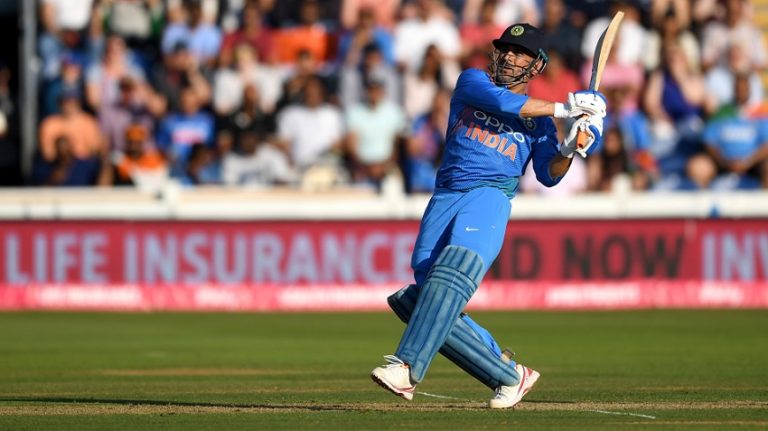
In cricket-crazy India, the crisis over missing out on the world’s most expensive Indian Premier League (IPL) this year is not the only issue bothering the Board of Control for Cricket in India (BCCI). There are other pressure points, among them the future of hosting tests, ODIs and T20 series and domestic matches. More importantly, the huge maintenance costs to run gigantic cricket stadiums which were once symbols of huge cricketing cash but now conjure up an image of despair.

BCCI president and former Indian skipper Saurav Ganguly has made it clear that he sees no hope for cricket. Cricketing bodies in England, Australia and South Africa are not speaking. 

So it will be safe to conclude that cricket is in serious trouble in India, a billion plus nation which regularly guarantees the required cash to push the willow game to greater heights. 

This is just one side of the coin, revolving around cricket and cricketers. 

The other side has larger problems. First, will the crowds be allowed to come in? No one has an answer. Will sponsorships return? No one has an answer. Will television channels pay big cash for rights? No one has an answer. Will cricketers field from close? No one has an answer. Can bowlers use saliva to shine the ball? No one has an answer. Sussex head coach Jason Gillespie feels shining the ball with saliva and sweat needs to be scrapped for the time being. But how would you play a test if you cannot shine the red ball? Or will ICC shift to the white ball?

The bottomline is clear: If India, where all the cricketing cash is stored, is having serious problems, then even the Gods cannot help world cricket.

Hockey

The national games, hockey, is also in the dumps. After suspension of its Europe leg matches of the Pro League, the Indian men’s hockey team’s home games against New Zealand have also been cancelled due to the COVID-19 pandemic. The New Zealand men were scheduled to play back-to-back games on May 23 and 24 in Bhubaneswar. But now, the team will not be travelling to India.

Top Hockey India officials accept the situation is not conducive. 

“It is disappointing that the matches need to be cancelled but these are unavoidable circumstances. We hope to host them again soon, once the situation improves,” Hockey India (HI) CEO Elena Norman said, adding that tickets already bought for the same would be refunded.

Badminton

The shuttlers are in a similar crisis. Courts are out of bound due to the lockdown, India’s chief coach Pullela Gopichand is handing out tips through videos to the country’s top shuttlers. Gopichand has started putting in place a program for the shuttlers through WhatsApp. “We can only do fitness (training) because nobody has access to courts,” Gopichand told a news agency.

Apart from Gopichand, Jamshedpur-born trainer Dinaz Vervatwala, who has worked with London Olympics bronze-medallist Saina Nehwal, is taking fitness classes on Zoom app, a platform for video communication. The men’s doubles pair of Chirag Shetty and Satwiksairaj Rankireddy, who were assured of a place in the Olympics, is also part of the same group.

But there is one problem. Sports cognoscenti say online sessions might keep the shuttlers fit but getting back to being match ready will be a huge challenge once the Badminton World Federation restarts the international calendar.

So what are Indians doing?

Rise in Online Gambling

With all of India in lockdown, online gambling has become a favourite pastime. The new industry is now worth $150 million and growing fast, especially poker and rummy and a host of other gambling avenues. Teen Patti, a popular Diwali game, is now among top 10 ranks in the global virtual world. Worse, many Indian bookies are betting on these sites on behalf of thousands of benami clients and making huge profits. 

And there are other tensions as well. 

Tokyo Olympics

The chief executive of the Tokyo Games has already declared that he cannot guarantee the postponed Olympics will be staged next year — even with a 16-month delay. “I don’t think anyone would be able to say if it is going to be possible to get it under control by next July or not,” Tokyo organizing committee CEO Toshiro Muto told reporters. The Olympics were postponed last month with a new opening set for July 23, 2021, followed by the Paralympics on August 24. “We have made the decision to postpone the games by one year,” Muto said amidst reports that organisers of Paralympic games were faced with a severe cash flow crisis. The cost of postponing has been estimated by Japanese media at between $2 billion-$6 billion.

The International Olympic Committee (IOC) was contemplating taking the Olympic flame on a world tour to use it as a symbol of battle against the virus but the tour has been cancelled because of severe travel restrictions across the world.

Football

Soccer, another cash-spinner, is in a deeper crisis. 

Premier league clubs are looking at making as many as five substitutes when the season is resumed. There are high chances of player burn out and injuries with remaining games crammed into a matter of five weeks or less. Soccer’s controlling body, FIFA, has huge concerns at the repercussions for players of the expected tight timetable when matches are given the green light to resume. 

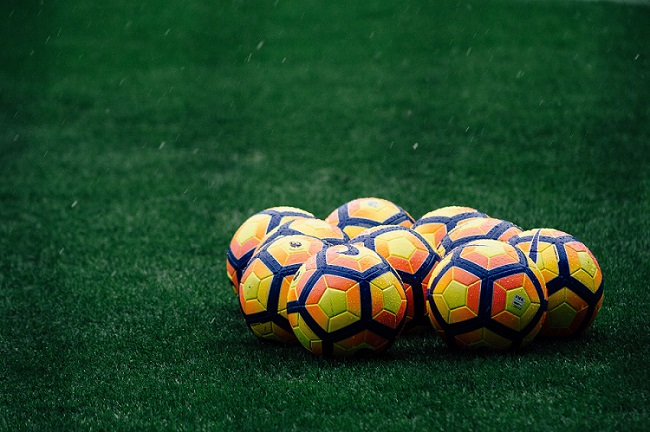
Soccer, the world’s most popular game, is at the mercy of deadly Coronavirus. (Representative image)

But then, no one knows when the matches will start. And even if it starts, whether or not the crowds will be allowed inside the stadiums.

European nations are taking steps to ease lockdown measures imposed due to the coronavirus pandemic, UEFA is trying hard to meet up with the continent’s football clubs and associations to find a way to resume the season. European soccer’s governing body hopes there will be a consensus among its 55 members, UEFA wants to finish the season.

Empty Stadiums?

Everything is on paper, no one has signed on the dotted lines. Consider the case of Germany which wants to restart Bundesliga matches behind closed doors next month. That means the stadiums will be empty and everyone will have to watch the game on television sets at home, not even on open air giant screens or pubs. England, Italy, Spain, Belgium and Scotland have not disclosed their plans, they are awaiting a green light from UEFA. Forget UEFA, no one is ready to take a call on how to end their seasons, ostensibly because the virus has claimed over 165,000 lives globally, nearly two-thirds of them in Europe. 

So there will be a series of meetings — keeping in mind the issues of social distancing — between UEFA, European Club Association (ECA) and the European Leagues. There are hopes that the meeting could trigger some key announcements. But that’s only hope. Honestly, it is clear that nothing will be decided because it is still impossible given all the uncertainty surrounding the easing of the lockdowns. When football stadiums were locked out in mid-March, planners pushed the end of June as the target date for finishing the season. UEFA says it could even extend the season to July, even August, if required.

What is of utmost importance is the matches must resume without spectators. The organisers and club owners are unanimous that it is better to play behind closed doors than not at all. Worse, if the season remains incomplete, the impact would be terrible for clubs and leagues. Soccer world is in a mess. UEFA has postponed Euro 2020 by a year, the Champions League and Europa League — now in the last 16 stage — are on hold until further notice.

The world’s most popular game is at the mercy of a deadly virus.

There are lockdowns in the UK, France, Spain and Italy that will continue into May. Germany and other parts of Europe are trying hard to ease measures. German clubs desperately want the season to be finished by June 30 to secure an instalment of television money, reportedly worth $326 million. The case of the missing cash because of no games is also a central concern for Europe’s other leading leagues, Soctland and Belgium have anyway declared their leagues as over. 

Have a look at how the soccer calendar across the world has been messed up.

Here is a list of cancellations

# Euro 2020 was postponed. Europe’s flagship tournament will now be staged from June 11 to July 11, 2021. 

# This year’s Copa America, originally scheduled for June-July in Colombia and Argentina, was postponed to June 11–July 11, 2021.

# FIFA has agreed to delay the first edition of its revamped Club World Cup due to be held in 2021. 

# UEFA put all club and national team competitions for men and women on hold until further notice. The men’s and women’s Champions League finals and Europa League final originally scheduled for May have been formally postponed. UEFA postponed all Champions League and Europa League matches due to take place between March 17-19. 

# All elite games in England, including the Premier League, Football League and Women’s Super League, were suspended until April 30 but the current season can be extended indefinitely. 

# Germany’s Bundesliga and second division will pause till further notice. 

# South America’s two biggest club competitions, the Copa Libertadores and Copa Sudamericana, were suspended until at least May 5.  

# The CAF postponed two rounds of the 2021 Africa Cup of Nations qualifiers (March 25-31). 

# CONCACAF suspended all competitions, including the Champions League and men’s Olympic qualifiers. 

# The top two tiers of French football — Ligue 1 and Ligue 2 — were suspended. 

# All matches in Spain’s top two divisions were postponed for two weeks. Spain’s Copa del Rey final between Athletic Bilbao and Real Sociedad (April 18) was postponed. 

# U.S. Major League Soccer suspended its season. 

# All soccer in the Netherlands was suspended until the end of March. 

# FIFA and AFC agreed to postpone Asian World Cup qualifying matches in March and June. FIFA postponed South American qualifying matches for the 2022 World Cup between March 23-31.

# New seasons in the Chinese, Japanese and South Korean leagues were postponed. 

# A four-team event in Doha featuring Croatia, Portugal, Belgium and Switzerland (March 26-30) was canceled. 

# Asian Champions League: Matches involving Chinese clubs Guangzhou Evergrande, Shanghai Shenhua and Shanghai SIPG were postponed. The start of the knockout rounds was moved back to September. 

# The Asian Football Confederation postponed all AFC Cup 2020 matches scheduled for March and April. 

# The Brazilian football Confederation suspended all national competitions until further notice. 

# All events organized by the Russian Football Union, including Russian Premier League fixtures, between March 17-April 10 were cancelled. 

Way Ahead?

So the billion dollar question is: When will sport as we know it – in front of packed crowds – return? Sports organisers and administrators are looking at huge losses, they are convinced there are no silver bullets to kill the werewolves. It could be months and months, perhaps even next year and beyond before the crowds return to the stadium.

Even if cricket, hockey or football return behind closed doors – the best‑case scenario – there will be serious issues. If a single player tests positive for the virus then their whole squad will have to self-isolate for a fortnight, elongating the tournament (read season) further. And if this is analysed in terms of cash and economy, there are high chances that people across the world may not be able to afford to go to see cricket or football matches.

And then there is rugby, boxing, cycling, golf, snooker, tennis, and winter sports, all impacted severely because of Covid-19. The future looks totally uncertain, ostensibly because there could be a second or third wave of the virus. Actually, it could mutate into something worse. On the table there will be no deals, no dollars. 

Sports across the world, like everything else, will take it’s biggest hit and – in the process – transform the way some of the big buck shows are held. 

Can you get charged playing before an empty stadium?

Humanist Canada calls for release of Nigerian Humanist President

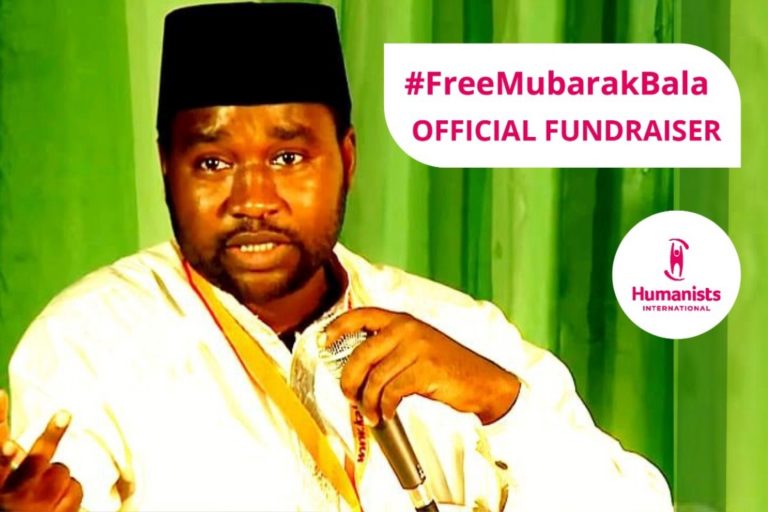
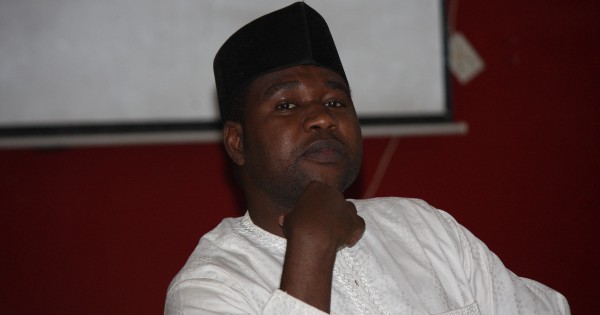
VANCOUVER, British Columbia May 5, 2020 PRLog — Canadian Humanists are supporting calls from Humanists International to have Mubarak Bala released from a Nigerian jail. Bala, who is president of the Humanist Association of Nigeria, was arrested by Nigerian police April 28 following a complaint the had insulted the prophet Mohammed in a social media post. Bala, who is a former Muslim, has been arrested without formal charges. Bala’s lawyer has not been allowed access to his client.

“The right to be charged within 24 hours of arrest and the right to legal counsel are enshrined in Nigerian law. In addition, we would request: if Mr. Bala is charged with a crime, then the charge is, or those charges are, heard in a secular as opposed to a Islamic court, as he is a humanist, atheist, and former Muslim,” said Scott Jacobsen, international rights spokesman for Humanist Canada. Humanist Canada Vice-President, Lloyd Robertson, said Canadians can support Mr Bala’s defence campaign organized by Humanists International by visiting:

https://www.gofundme.com/f/free-mubarak-bala.

He added that international support is important for the protection of minorities.

Mubarak Bala: Speak Out Against Religious Tyranny in Kano

By Leo Igwe

Today marks a week since the police arrested Nigerian humanist Mubarak Bala in Kaduna. They later transferred him to Kano. His arrest was over a post that he made on Facebook, which some Muslims said insulted Prophet Muhammad. The whereabouts of Bala is unknown. The police have refused him access to a lawyer. They have not charged him in court. There are concerns over his life, health and human rights. Incidentally, there has not been any reaction from the religious organizations. No religious group has condemned the arrest and detention of Mr. Bala.

In this piece, I argue that the palpable silence from the religious establishment signifies a deficiency or, in some sense, the death of moderate religiosity in the country. It should be noted that many religious individuals have spoken out against the arrest and detention of Mubarak. They did so in their individual capacity. Persons of different faiths have used their Facebook, Twitter, and Instagram pages to express shock and outrage over the petition that was brought against Mr. Bala and his illegal detention. Unfortunately, religious institutions have been silent. Religious organizations such as the Christian Association of Nigeria (CAN), the Nigeria Supreme Council for Islamic Affairs (NSCIA), the Pentecostal Fellowship of Nigeria (PFN) and others have kept mum. They have refused to say anything condemning Bala’s arrest and detention. Why? Does this mean that the religious establishment endorses the treatment being meted out to Bala? That somebody could be thrown into jail by the mere fact that he posted a comment on Facebook. Is that not outrageous?

Now no religious organization has spoken out against the persecution of Mubarak Bala, does that imply that religious institutions are on the same page with the petitioners? Is the religious establishment of the view that Mubarak committed a crime by making posts on Facebook? Simply put, why have the CAN, the PFN and the NSCIA not spoken out against the detention of Mr. Bala including the several death threats that have been issued against him? Why? Why are they not issuing statements defending Bala’s right to freedom of religion and freedom from religion, freedom of speech and expression? Those who petitioned Mr. Bala said he posted comments on Facebook that implied that Prophet Muhammad was a terrorist and designated these comments offensive and as crossing the limit of free speech. Does it mean that there are no religious organizations that object to this proposition or aspects of it?

Look, Christians and Muslims in Nigeria post similar and worse comments on daily basis. Don’t they? They say things that could be deemed insulting to prophets of other religions. Don’t they? If you are in doubt, go online and see the comments that Nigerian Muslims and Christians make about the prophets of the various religious traditions and then compare them with Bala’s. Go to the different churches, mosques and worship centers and listen to multiple imams and pastors preach. Their teachings and sermons are interspersed with lines that could be interpreted as insults and blasphemes. And nobody has arrested them (nobody should actually arrest them). Nobody considered these expressions beyond the limit of freedom of speech and religion. So why is it different in the case of Bala? What did Bala say about Prophet Muhammad that Muslims or Christians have not said about this prophet and others?

Now imagine if Bala were to be a Muslim in Anambra state. Imagine the police arrested him for making posts on Facebook that Christians interpreted as a form of insult on Jesus Christ. Hell would let loose. NSCIA and other Islamic groups, including the governors of the sharia states, would have called for protests and for the immediate release.

Imagine if Bala were a Christian detained in Kano for posting comments that some Muslims deemed disrespectful to their Prophet. Numerous Christian organizations would have issued statements calling for his release, invoking the secular character of the Nigerian state. But in the case of Mubarak, this has not happened. The religious establishment is looking the other way. They have kept silent in the face of Islamic tyranny in Kano. This is unfair.

Religious organizations mustn’t agree with what Mubarak said or what Mubarak believed in before standing for his rights and liberties. Accusations of insulting Prophet Muhammad do not respect religious boundaries. They are brought against both religious and non-religious people; they are levied against Christian, Muslims, religious critics and atheists. To remain silent in the face Bala’s current travails, to look the other way as he languishes in the police jail, and to refrain from standing for him and his fundamental freedoms is a clear mark of deficit and death of moderate religiosity.

Today it is Bala’s turn; tomorrow it could be mine, it could be yours. Don’t keep silent. Speak out against the ongoing religious persecution, oppression and tyranny in Kano, Nigeria.

Leo Igwe holds a doctoral degree in religious studies from the University of Bayreuth. He chairs the Board of Trustees of the Humanist Association of Nigeria.

Image Credit: Mubarak Bala.

Story of Zeenat Shahzadi & Hamid’s abduction and jail term in Pakistan can be a tell-all movie

Talking about Bollywood film plots, here’s one: There’s a boy who is so badly smitten by his online ‘girlfriend’ that he decides to marry her, but just like all love stories, there’s a big hurdle in the way. No, not the hackneyed one in which religion plays the spoiler (as you may have expected), but that of different nationalities. He’s an Indian, she a Pakistani and since the animosity between these two countries matches that of the Capulet and Montague clans in Shakespeare’s ‘Romeo and Juliet,’ the narrative gets more interesting.

Undeterred by this more than seven-decade old irreconcilable feud that continues to bleed both sides even today, the boy decides to go and get his love residing in tribal area of Pakistan, but unlike Salman Khan in ‘Bajrangi Bhaijaan’, he doesn’t simply go across the Indo-Pak border. He makes his way to Afghanistan and from there tries to secretly enter Pakistan and the suspense starts because nothing is heard from him thereafter. With no clue of his whereabouts, it seems that he has either been swallowed by the earth or just vanished in thin air and this situation sets the stage for a sad song that if sung by Adnan Sami could be a chart buster!

It’s also the emotionally perfect time for ‘intermission’.

The story resumes with spotlight on our hero’s distraught mother who seems to be on the verge of giving up all hopes of getting any news of her son. Just when she thinks all is lost, a young female journalist from Pakistan contacts her and promises help in tracing out her missing son and the mother’s face lights up. Armed with a special power of attorney given by the boy’s mother, this young Pakistani reporter files a case in court and even approaches the Commission of Inquiry on Enforced Disappearances (CIED) to ascertain the missing boy’ whereabouts.

Suddenly, Pakistani security forces admit that our ‘missing’ boy is in their custody and that he has been (just like Sharukh Khan in ‘Veer-Zaara’) tried secretly by a military court and jailed on trumped-up charges of espionage. Our jailed hero remains unrepentant, while his mother is overjoyed by the news that her son, though imprisoned, is alive. But since this plot is too cliché and to close it at this stage with a ‘happy ending’ could leave the viewers pulling their hair. So, let’s give this story an unexpected ‘twist’–the reporter who helped locate our hero is delighted when she gets a summon to appear before CIED and present her case, but alas, her joy is short-lived!

Just four days before her scheduled appearance before the
Commission of Inquiry on Enforced Disappearances (CIED), the female reporter, while going to work is abducted by gun totting assailants from a densely populated locality in Lahore in broad daylight. Even though this theme too has been overused in Bollywood for adding a ‘twist’ to the plot, but it has to be retained since there seems to be no other alternative. This abduction causes massive public outrage that spills into the international arena, and in a real ‘twist’ of events, her ‘missing complaint’ is filed with the very same commission where she had filed the report of the unlucky romantic she was searching for–surely, no script can become as dramatic!

For her widowed mother and siblings, the psychological trauma caused by the reporters’ abduction is further aggravated by worries about her fate, which compels her inconsolable younger brother to commits suicide. Since the missing female reporter is also the sole breadwinner, financial woes dog her unlucky family. When all seems lost, our brave lady journalist reappears just as suddenly and unexpectedly as she had vanished two years ago and with the jailed boy for whom she had done so much also being released a year later, the story ends on a happy note.

Just to keep the option of making a sequel open (if the movie based on this story proves to be a box office hit), as well as to give it the ultimate twist, the closing scene shows the reporter being bombarded by a volley of questions– Who kidnapped her? Why? Where was she kept for two years? Was her abduction in any way connected with her taking up the case of a missing Indian? As the camera slowly closes in capturing her face and focusing on the faraway look, in her eyes, spectators will be on the edge of their seats to hear what she has to say.

But the movie ends without her saying anything and instead, on the frozen frame of her face, there appears the line with the message that after completing his six-year prison sentence in Pakistan, the lovelorn Indian boy for whom the Pakistani lady journalist had endured so much was released a year later. Isn’t this storyline the ultimate in emotions and suspense?

The only problem with a movie based on this plot is that we won’t be able to use the disclaimer: “All characters and events depicted in this film are entirely fictitious; any similarity to actual events or persons, living or dead, is purely coincidental.”

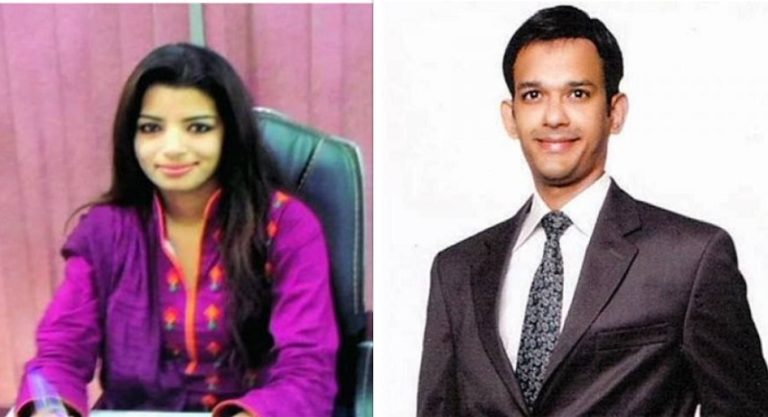
This is simply because it’s a true story. It starts in 2012 and the boy who fell in love online and took the arduous journey to Pakistan via Kabul to meet his beloved is a Mumbai resident Hamid Ansari, while the lady reporter who took up his case is Zeenat Shahzadi and lives in Lahore. Sadaam was Zeenat’s 17-year-old brother, who unable to cope with her disappearance had taken his own life.

As per the CIED (Commission of Inquiry on Enforced Disappearances) chief Justice (Retired) Javed Iqbal, “Non-state actors and anti-state agencies had abducted” Zeenat and that “she has been rescued from their custody,” from near the Pakistan-Afghan border. But rather than clear the air, this statement has only raised more questions. In her 2016 interview with BBC Urdu, noted Pakistani Human Rights lawyer and activist Hina Jillani disclosed that before she had been abducted, Zeenat had once been “forcibly taken away by security agencies”, detained for four hours and questioned about Hamid.

After Zeenat returned home after her two year long unexplained absence, journalist Raza Ahmad Rumi tweeted: “Best news today. Young Pakistani journalist Zeenat Shahzadi ‘missing’ for 2 years, is back. God knows what she went through. Accountability?”, and on re-reading this post, one will find that there’s a lot in-between the lines. But with Pakistani Human Rights advocate Mustafa Qadri posting “Great, journalist Zeenat Shahzadi, first woman journalist I’m aware of who may have been subjected to enforced disappearance, has been released,” little is left to imagination. The biggest unanswered question however is, why should “non-state actors and anti-state agencies” pick up Zeenat in the first place and then, release her unconditionally after two years?

Zeenat wasn’t working for the Pakistani establishment– au contraire, by approaching Peshawar High Court and CIED (Commission of Inquiry on Enforced Disappearances) in an effort to trace out ‘missing’ Hamid, she had done just the opposite, since her petitions made things extremely unpleasant for the authorities, particularly Pakistan Army and the ISI. Whereas Hamid had been in Pakistani custody since 2012, it was only after Zeenat launched her mission to ‘find’ him, that forced Islamabad to make details of his arrest, trial and sentence public. A four year long and undoubtedly intentional delay in intimating New Delhi about the whereabouts of Hamid is a blatant violation of international conventions on arrest, trial and imprisonment of foreign nationals as well as the Vienna Convention!

So, why should “non-state actors and anti-state agencies” abduct someone like Zeenat whose crusade forced Islamabad to indirectly accept the existence of Pakistan’s deep state? Why should forces inimical to the Pakistani establishment kidnap someone who was furthering their aim of embarrassing Islamabad? Lastly, why is Zeenat silent on her travails? Is it just a voluntary attempt to purge the mind of the horrors that she endured during the two-year long memory? Or is it because she and her ‘abductors have made her an offer that she can’t refuse?

Too many questions but no answers, but anyway, a very happy Press Freedom Day to all!

Will the ‘rich big boy’ China emerge as ‘class topper’ in post-Corona world?

The most interesting and complex classroom is the world that comprises of a large number of boys of various hues, temperaments, sizes, wealth, strengths and ages with differing backgrounds, history and upbringing. I often wonder who has the greater advantage, the biggest boy in class or the richest. On reflection, I realised that especially in today’s environment both ‘big and rich’ are equally important to have an edge in the class. By mutual consensus, China is the fastest growing rich big boy in class, as existing biggest boy, who’s also the Headboy (USA), is no longer growing fast (some would say it has stopped growing). The rest of the class comprises of one large boy (Russia) who was once a peer contender of USA, few mid-sized and many smaller boys that are mainly poor and individually don’t pose much competition. Some mid-sized and small boys have formed a boy’s fraternity club (EU), with the aim of projecting a richer and bigger size than their individual personas.

The biggest boy has attracted large number of other boys including the fraternity club on his side with a mix of help, persuasion, coercion and his approachable friendly nature. He has also influenced the ‘Management’, ‘Principal’ and most ‘Teachers’ (Bretton Woods institutions, UN and its associated institutions, WTO etc.) who think they set the rules in the school and class. In reality, the biggest boy and to some extent the fraternity club have actually set the rules and traditions, but allow the management to think otherwise. To ensure domination, the Headboy has strategically made friends with groups and even individual boys with the assurance of mutual help whenever required.

China, the fastest growing rich big boy has always been different from his birth; low key, unconventional, treading his own path to the consternation of the majority. In spite of being a loner and introvert, he had the advantage of being born to an old illustrious family with a rich history and tradition. His quiet determination and focus have been rewarded handsomely by increasing wealth (maximum savings) and becoming the second strongest boy in class. From his usual reticent self, he is slowly transforming into a confident, abrasive, aggressive boy and feels it is time to step out of the shadow of USA, and dominate his side of the class.

Russia, the original bad boy, who had a special dislike for USA for being the Headboy has stopped growing and is actually shrinking, is now another interesting student. Due to his nuclear arsenal and oil he can still play the spoilsport by influencing some boys and exploit any eventuality / opportunity which comes his way. A few upstarts, small but ambitious (North Korea, Pakistan, Iran, Venezuela and some more), want to create space for themselves both by association and being even more unconventional (willfully rogue or irrational), and generally gravitate towards China after initially being enamoured by Russia.

Change being the only constant, like declining fortunes of Russia at present, the US and China are battling it out to be the Headboy in the world’s 2020s class. China, also referred to as ‘Dragon’ has friends and a permanent coterie by providing generous assistance to mainly unconventional boys, and Russia got a spurt of energy (literally speaking), and both found that with intelligent manoeuvres and friendships and exploiting situations they can walk taller. Maybe they could even become true friends, which is unlikely given their ambitions, uncompromising nature as also past frictions. This collection of disparate students makes for a fairly noisy, feisty, argumentative and unruly batch with frequent one-upmanship, petty quarreling, monopolizing resources, sharing discriminately, using tricks to subdue adversaries with rare moments of harmony. Even if they did appear to get along for a common cause the big boys made sure to create enough centripetal force to ensure their friends stayed close to them.

Let’s be clear, the democratic, capitalist strongest boy USA was by no means ‘ever benevolent’. To ensure he remains the Headboy, he too would resort to any means, democratic or otherwise. He never hesitated to make strong friendships with the headstrong, even unstable boys (Pakistan, Iran, Iraq, Israel, Saudi Arabia, even China till very recently) to achieve his aims. In fact, the onus of making China strong vests solely on him, as he created conditions for making China the counterbalance to rival Russia.

Remaining as the Headboy takes its toll specially on wealth and strength, and a new inconsistent, immature and some would say unreliable USA slowly started losing interest, wealth and thus clout due to his continues manoeuvring to remain on top, allowing other boys to occupy the strategic space vacated. His new philosophy of ‘America First’, ironically has impacted even his closest friends let alone the groups he promised to protect (UK, EU, Japan, South Korea) making them feel vulnerable and cheated. This has impacted their stance and reactions towards China (irrespective of their inclinations).

America always had his favourite adversaries, but the current villain China has become a peer competitor and is threatening the status quo. For the first time ever, his dominance in the world and homeland America is being challenged (he likes to say threatened) credibly. The established class order and structures are unstable, and all the boys need to dynamically adjust their relationships. An apprehensive USA realises that his holding on to the post of Headboy is slippery, and he has two options open to him– First, to continue fighting his main rivals Russia and China in every way possible; Second, to allow them their spheres of influence and friends and reach some sort of understanding of rules of engagement/conduct where all three maintain status quo within their zones. Secretly, all three, especially the US knows that the second option is unworkable/unrealistic as allowing space will only embolden each of them to manoeuvre and increase their influence leading to degradation of other rivals. This open and discreet juggling has led to further instability.

Within this class, there was also a quiet, innocuous, disciplined, economically poor but big boy India with a rich history and culture, who was considered insignificant, except to provide some succour or seek help purely to make up numbers. India sermonised peace and chose to be neutral like Switzerland and formed a very small peaceful non-aligned group. He did surprise the big powers by firmly resisting to take sides. He did what everyone else including the US and China are doing now; ‘a fine balancing act’. Initially, India didn’t count for much, but his non-partisanship, maturity and consistency became noticeable to many, and what impressed and surprised them was India’s readiness to help everybody irrespective of group and without an agenda, providing him formidable soft power (ironically this softness has also caused him many a hardship!). Status of a nuclear weapon state also supplemented his strength.

Unfortunately, at least initially, India failed to make good friends of the bench mates around him (immediate and regional neighbourhood), as he was much bigger but also perceived as harmless. We all know that boys do not think much of other boys who are perceived as weak, meek or harmless. Two benchers China and Pakistan, for many reasons were perpetually implacable to India and are constantly trying to bring him down, by not allowing him any space. China seeing a potential threat to his ambitions, and Pakistan being born of the same mother but being ‘different and small’. Naturally, they became steadfast friends with a common cause of stymieing India’s rise. Fortunately, a more confident, decisive and focussed India has emerged, who has learnt to ‘run with the hare and hunt with the hounds’.

Suddenly, into this unstable cauldron of a class came a new dangerous virus and the disease called ‘COVID-19’ by the end of 2019 which is threatening to totally upend the class, its dynamics, the tenuous relationships and even ravage death and destruction (in all ways including economic) if not fought both collectively and individually. There are serious differences in the class (leaders, organisations, medical authorities and even citizens) on how to deal with the pandemic. One fact which has emerged is that it will not go away in a hurry and can only be stalled once a vaccine is introduced. Even the methodology of control varies, but the most discussed and analysed aspect is the lockdown, both inter and intra-state. The desperation is heightened by the fact that while lockdown would establish some degree of control over the virus, it would concurrently destroy the economy in varying degrees within the class, which in turn could totally change the dynamics and power structure of the class.

Naturally the class has got seriously disrupted and disunited instead of getting together to fight and defeat this COVID-19. China is emerging as ‘the bad boy’ for creating/or being willfully instrumental in creating a dangerous virus and the pandemic. Many rumours and theories are doing the rounds causing pandemonium amidst the growing pandemic. A truly disturbing rumour that a lab created the virus in China and/or China kept hidden vital information about the virus from the class to ensure that all get infected and thus weaken them, with the strategic aim of becoming the dominant boy of class is sounding increasingly tenable. China, having stemmed the onslaught of the virus through self-discipline appears to be surging ahead in helping others in many ways, which boys suspect is not truly altruistic. This is causing severe heartburn to the US who naturally is not pleased, and is making loud threatening noises but is presently battling the Coronavirus which has hit it particularly harshly due to a mix of poor leadership and mismanagement.

India, the ponderous elephant of the class, has surprisingly done well so far by acting early, with focus under a strong leadership and with a public willing to cooperate. India understood far-reaching implications both in terms of the pandemic and the strategic space that would result if it handles the crisis well.

Many observers and self-styled experts watching the class, both passionately and dispassionately are predicting many outcomes and making numerous recommendations based on their observations / perceptions / biases and alliances on how the class will fare, who will come out on top, what new alignments will take shape, which ideology will emerge dominant, who will be winners and losers, how the class composition will be like, or whether China will emerge the dominant player. The future is uncertain and nobody can predict with surety. One aspect is certain, the class will change irrevocably, it’s an opportunity for India to play its cards well and emerge more confident and stronger with a respected standing in the class. Only time will provide the answers.

‘Missing’ Journos Sajid Hussain & Saleem Shahzad and their ‘Watery Graves’

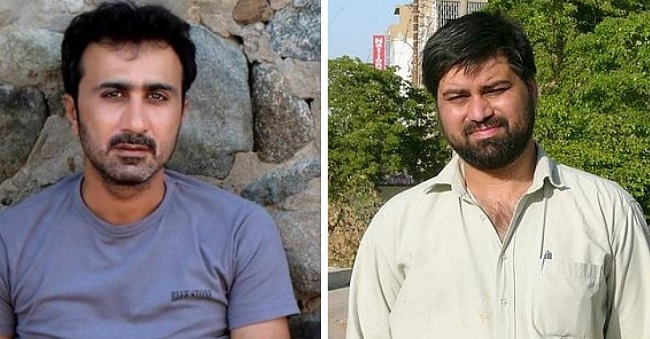
The news of Swedish police recovering the dead body of a 39-year old, Sajid Hussain, a Baloch journalist, outside Uppsala about 60 kilometres north of Stockholm on April 30, brings back a strong sense of déjà vu as one is overwhelmed by bitter memories of another 40-year old Pakistani journalist named Saleem Shahzad whose body was recovered in Punjab province of Pakistan, nine years ago. Whereas it’s incorrect to try and place two different incidents into the same template, but since there are such strong similarities in these two cases, comparison becomes inevitable!

For one, both journalists went missing when they were on their way for some work; while Shahzad was driving down to a TV station for an interview on May 27, 2011, Sajid Hussain had on March 2, 2020 taken a train to Uppsala for collecting the keys of his new apartment there. Secondly, despite both journalists disappearing in broad daylight and that too from busy places, there’s not even a single witness to any of these abductions. Thirdly, the dead bodies of both the journalists were found dumped in water bodies–that of Hussain was fished out from Fyris river near Uppsala, barely 60 km from Stockholm and that of Shahzad from Upper Jhelum canal in Mandi Bahauddin district of Punjab Province in Pakistan.

It can always be argued that the above mentioned similarities mean nothing and one could even mock the same by saying that there’s yet another similarity– that forenames of both the deceased start with the alphabet ‘S’! But the similarity in both these cases goes far beyond cosmetic; there is irrefutable proof that the reportage of both journalists had antagonised Pakistan Army and the ISI. Shahzad wrote extensively on widespread infiltration of jihadis into the armed forces of Pakistan and the nexus between the country’s deep state and terrorist outfits; Sajid Hussain exposed the inhuman ‘kill and dump’ policy being followed by Pakistan Army and ISI in Balochistan. Another similarity was that since both the deceased journalists based their reports on factual details and never retracted their reports, it embarrassed the military and intelligence agencies to no end.

But the most telling similarity was that Sajid Hussain as well as Shahzad had been receiving threats from the ISI and both knew that their lives were in danger. In a piece written for ‘The New Yorker’ (Letter from Islamabad; The Journalist and the Spies, September 19, 2011 Issue), award winning American journalist Dexter Filkins, who had met Shahzad just nine days before his mysterious disappeared writes, “… And then Shahzad changed the subject. What he really wanted to talk about was his own safety. “Look, I’m in danger,” he said. “I’ve got to get out of Pakistan.” He added that he had a wife and three kids, and they weren’t safe, either. He’d been to London recently, and someone there had promised to help him move to England.”

Filkins goes on to recount, “The trouble, he (Shahzad) said, had begun on March 25th, the day that he published the story about bin Laden’s being on the move. The next morning, he got a phone call from an officer at the ISI, summoning him to the agency’s headquarters, in Aabpara, a neighbourhood in eastern Islamabad. When Shahzad showed up, he was met by three ISI officers. The lead man, he said, was a naval officer, Rear Admiral Adnan Nazir, who serves as the head of the ISI’s media division.” Filkins adds, “They were very polite,” Shahzad told me. He glanced over his shoulder. “They don’t shout, they don’t threaten you. This is the way they operate. But they were very angry with me.” The ISI officers asked him to write a second story, retracting the first. He refused.”

However, the scariest part of this report is Shahzad’s account of his previous meeting with ISI officers, five months ago. He told Filkins that “After a tense meeting with two ISI officers about the article (regarding apprehended Taliban commander Abdul Ghani Baradar having been secretly released by ISI), Shahzad called Ali Dayan Hasan, the director of Human Rights Watch in Pakistan. Hasan suggested that Shahzad make notes of the meeting. Shahzad did so, and sent a copy of them to Hasan.

Shahzad wrote that he was met at headquarters by two ISI officials—Commodore Khalid Pervaiz and Rear Admiral Nazir, the same officer who gave him the warning in March. Nazir and Pervaiz were courteous as they asked him to reveal his sources for the Baradar story. Shahzad refused. They asked him to publicly retract the story, and Shahzad refused to do that, too. The ISI officers did not push him, he wrote. But at the very end of the conversation Nazir made an ominous remark. He said, “We recently arrested a terrorist and recovered a lot of data-diaries and other material-during the interrogation. The terrorist had a hit list with him.” He then added, “If I find your name on the list, I will certainly let you know.”

Unfortunately, before he could escape from Pakistan, Shahzad disappeared and his badly battered dead body was recovered subsequently. However, Sajid Hussain was much luckier as he chose to flee the country immediately after his damning reports on ‘forced disappearances’ and rampant human rights violations by the Pakistan Army and ISI in Balochistan resulted in the police raiding his house and interrogating his family members. Working his way through Dubai, Oman and Uganda, Hussain finally reached Sweden and was eventually granted asylum. True to his profession, he continued to highlight the persecution of Balochis by Pakistan’s deep state through Balochistan Times. So, when he went missing on March 2, the needle of suspicion naturally pointed at the ISI as no one else had anything to gain from his death.

There can be only two explanations for the inability of Swedish police to trace out Hussain for three weeks– one, its lack of professional proficiency, and two, the extraordinary precautions taken by his abductors to avoid detection. Since Swedish police has an impressive track record, one can safely rule out the former possibility. So, it’s quite likely that Hussain’s disappearance is no ordinary kidnapping but a meticulously planned covert mission (which in intelligence parlance is referred to as a ‘snatch operation’) carried out with perfection by an experienced spy agency. But with the Swedish police declaring that “The autopsy has dispelled some of the suspicion that he was the victim of a crime,” it appears that an effort is being made to prepare grounds for declaring this death as an accident or even suicide.

Given the accentuating factors discussed above, ascribing Sajid Hussain’s death to an accident or suicide doesn’t make any sense whatsoever. Sajid Hussain had left by train for Uppsala with the specific purpose of obtaining the keys for his new apartment and not for sightseeing or exploring the riverside. So, since there was no reason for him to have gone anywhere near Fyris river, it’s implausible that he ended up falling into it by accident. As far as the suicide theory goes, why should a man who wishes to end his life take all the trouble to take a 60-km train ride and then jump into a river, when he can find other less agonizing and equally effective ways to end his life while sitting right at home?

Furthermore, if he did intend on committing suicide, then he would have at least left a suicide note for his wife or colleagues– being a journalist, sending a tweet, message or email would be the first thing that would have come to his mind. That’s why the apparent haste being shown by Swedish police only raises more suspicion that there seems to be much more than what meets the eye!

Tailpiece: The coroner’s report on the approximate date and time of Sajid Hussain’s death will provide an important clue– if it emerges that Hussain died 24 hours after going missing, then it’s absolutely clear that there’s some foul play involved. Because a man who’s left his wife aback home and has gone on a trip solely for collecting his apartment keys won’t end up accidentally drowning himself in a river. Similarly, if a man has taken a train ride to reach a pre-decided place where he intends to commit suicide, then he won’t sulk around for 24 hours before plunging into the river.

Dissidents face threat of extinction from the government or deep state of their parent countries and since Sweden is considered a safe place, it’s a popular destination for the persecuted. Sajid Hussain too thought so and that’s why it becomes the moral responsibility of the Swedish government to leave no stone unturned in its efforts to track down his assailants! 

Handwara: India pays homage to her fallen heroes

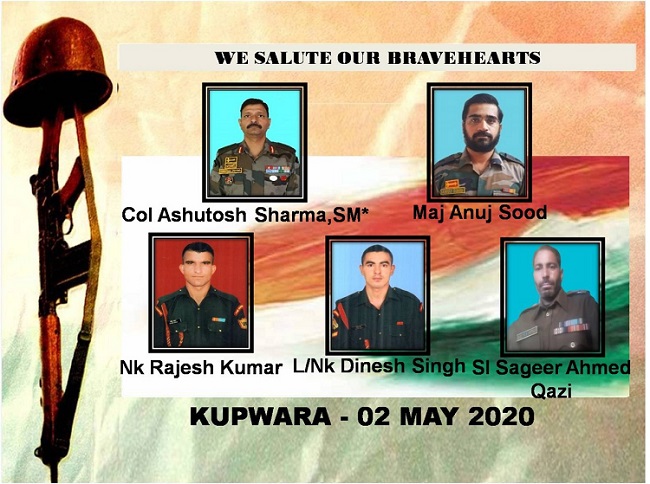
In Handwara, Kashmir, five sons of India from different parts of the country, different security forces (Indian Army and JK Police), different castes and communities, different ranks and responsibilities, found common cause in meeting a hero’s death for the singular objective of upholding the sanctity and security of their country. By their gallant act they have sent shivers down the spines of the enemies of India.

India is united in paying homage to her fallen heroes —  Colonel Ashutosh Sharma, Sena Medal and Bar, Commanding Officer 21 Rashtriya Rifles (RR), Major Anuj Sood, Naik Rajesh Kumar and Lance Naik Dinesh Singh all serving the 21 RR, an elite counter-insurgency unit of the Indian Army. Accompanying them as an integral part of their mission was Sub Inspector Shakeel Qazi of the Jammu and Kashmir Police who also embraced a hero’s death in service of the nation and for the safety of his people.

Reports and inputs received suggest that the operation had been going on for a few days in the dense Rajwara forest of District Kupwara in Kashmir. Initially, the terrorists managed to slip out by using civilians as human shields, which is to be expected since their leader was a Godless Pakistani terrorist named Haider and these Pakistani terrorists are unconcerned about civilian casualties. They have no compunction is using civilians as human shields, this in fact is their preferred form of defence.

The same group of terrorists was once again located at a house in Changimulla, Handwara. A joint operation of 21 RR and JK Police was launched immediately. Once again the terrorists chose to use civilians as human shields and it was under these conditions that a team comprising of the five brave soldiers, led by Colonel Ashutosh Sharma personally went into the house to evacuate the civilians.

“The team of Army and J&K Police personnel entered the target area and successfully extricated the civilians. However, during the process, the team was subjected to a heavy volume of fire by the terrorists. In the ensuing firefight, two terrorists were eliminated and the team of five Army and J&K Police personnel comprising of two Army officers, two Army soldiers and one J&K Police Sub Inspector attained martyrdom,” a statement from the Indian Army said.

Thus, the team succeeded in getting the civilians out, but themselves embraced a hero’s death. Saving civilians under all costs is a firmly embedded ethos of the Army and its units. The team, therefore, took the correct decision as the situation demanded. Colonel Ashutosh Sharma has been decorated for gallantry twice, he was a dreaded name among the terrorist cadre of the valley and very high on their hit list. He was also very well liked by the civilian population and was a cult like figure for his command. 21 RR, comprising of soldiers from the elite Brigade of the Guards, is one among the best and most successful counter-insurgency units operating in the Kashmir Valley.

The big consolation is that the evil terrorists also met their justified end and died a dog’s death in complete ignominy. Haider was a terrorist of Pakistani origin and a senior commander of the Pakistani terrorist organisation, Lashkar-e-Toiba (LeT). He was known as a scourge due to his activities involving extortion from poor and innocent civilians, molestation of  women and wanton killing. The region therefore will be safer and stronger than before, the sacrifice of our heroes has not gone in vain.

The courage and spirit that is being exhibited by the families of the heroes is mesmerizing. Smt. Pallavi Sharma, the wife of Colonel Ashutosh Sharma, Sena Medal and Bar, exhibited commendable composure and fortitude while speaking to some media channels. “Instead of mentioning loss let us start with mentioning his passion, his dream and his priority and his love for the uniform and nothing can match that,” she said. “This loss is unbearable and irreparable but what he did for his nation, for his unit’s pride for his men’s safety, for safety of civilians. I have no words and I am proud of my husband,” she added.

While speaking about the encounter she said that going into the house was totally Col. Ashutosh Sharma’s choice and his decision taken with the confidence about his family being in a position to manage after him. “I have no regrets, it was totally his choice, his decision and it matters a lot to me,” she said.

The young company commander, Major Anuj Sood, is an alumnus of Punjab Public School, Nabha, Punjab. A brilliant student, he was selected to join the Indian Institute of Technology (IIT), but opted to go to the National Defence Academy (NDA) to pursue a family tradition and his passion for the uniform. “He has made a supreme sacrifice. It was part of his duty and what he was trained for. I feel sad for his wife as they were married 3-4 months back. He was meant to save lives,” said Brig Chandrakant Sood, the proud father of Late Major Anuj Sood.

In an Instagram post a little while back Major Anuj Sood wrote, “When you are older you will realise that the only thing that matters– the only thing– that you had courage and honour. Lose these things and you will not die any quicker. But you will be less than the dirt on your boots.” It is not difficult to understand where his courage came from.

One has no doubt about the courage and commitment of the remainder three fallen heroes. They too have a magnificent story to tell and soon will become folklore. Not one among this team was an ordinary human being.

India while being in grief, is pouring out tributes. “Tributes to our courageous soldiers and security personnel martyred in Handwara. Their valour and sacrifice will never be forgotten. They served the nation with utmost dedication and worked tirelessly to protect our citizens. Condolences to their families and friends,” said Prime Minister Narendra Modi in a Tweet.

This unprecedented chronicle of courage and commitment should serve as a lesson for such forces that cast an evil eye upon India. While the nation will continue to find strength in its heroes, these evil powers will suffer ignominy as their Godless tool Haider did. In death, as in life, he will remain cursed.

Pak Army fires & kills cancer patient in Balochistan

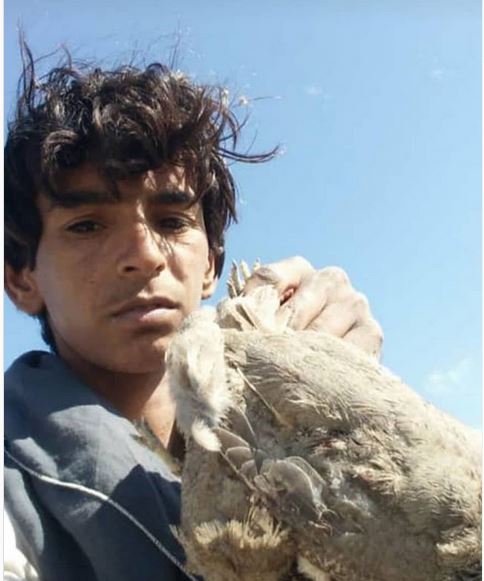
A teenage boy who was battling cancer, lost his life due to incessant and unprovoked firing by the Pakistani forces in Balochistan. Sources told News Intervention that the adolescent victim, Imam son of Sher Mohammed, was traveling along with his uncle and younger brother when Pakistan Army soldiers opened fire on the vehicle in Aapsikan area of Mand in Kech.

Imam was fatally injuries in this firing and his brother was taken away by the Pakistani forces. As per the reports, Imam died due to intense bleeding as the Pakistani forces kept him under their custody for a very long time without medical treatment.

Later the Pakistan Army personnel handed him over to their military wing and he was also kept there for some hours. At last when he was taken to the hospital, it was too late.

The young boy Imam was already battling cancer and was receiving financial help from the Baloch locals for his treatment.

Imam was a cancer patient who was under treatment. Pakistan Army fired upon him and killed him.


Imam was a cancer patient who was under treatment in Balochistan. Pakistan Army fired and killed him.

Many cases of collective punishment in the past by Pakistan Army have been reported in this region of Balochistan.

Due to the insurgency in the region and skirmishes between Pakistan Army and Balochistan’s pro-independence forces, the Pakistan Army indiscriminately targets innocent Baloch civilians.

This is the fifth freedom struggle in Balochistan that has been going on for the last two decades. Over the last 72 years Balochistan is under illegal occupation of Pakistan.

Pakistan’s dishonoring the dead bodies of Baloch freedom fighters shows its lack of human dignity: BNM

Khalil Baloch, Chairman of Baloch National Movement (BNM) and Dr Murad Baloch, Secretary-General BNM in their joint statement paid tributes to the martyr Major Noora and his companions. They said that the Pakistan Army martyred them in ground and aerial military operation in the Parom area of Panjgur. After killing the martyrs their bodies were despoiled and dishonored. This act of Pakistani Army reflects that Pakistan and its soldiers lack human dignity and proves Pakistan’s inherent hatred towards the Baloch nation.

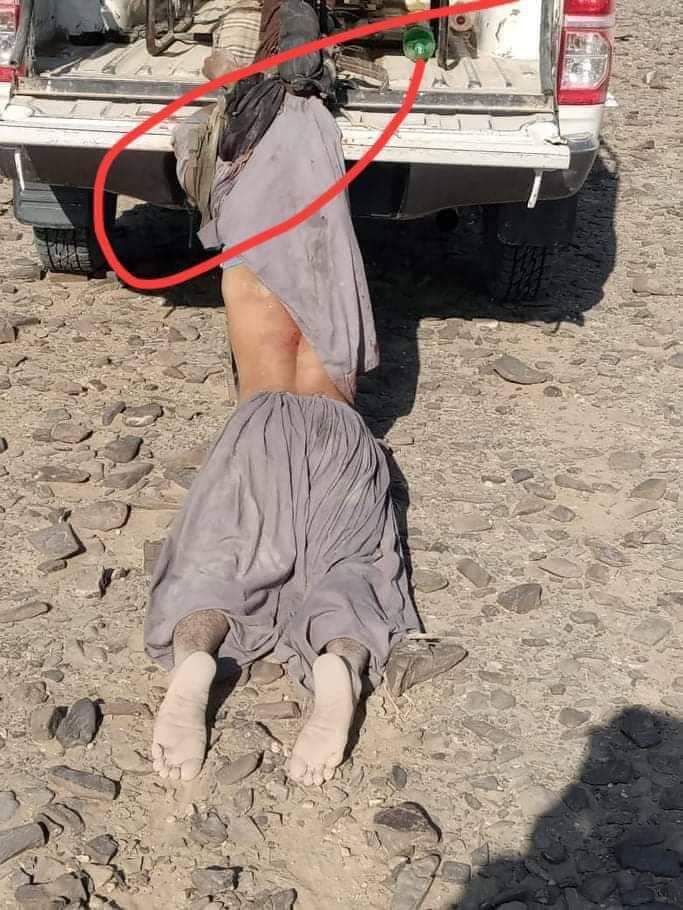
Pakistan Army flouted human dignity, war ethics and international laws by tying the bodies of Baloch martyrs and dragging them behind a vehicle. Such brutal acts and tactics of “outrage upon personal dignity” display Pakistan’s hatred against the Baloch nation.

Such crimes by the Pakistani Army have also taken place in previous instances such as in Mashkay, when the Pakistan Army committed a similar barbaric act of despoiling the bodies of Master Safar Khan and martyr Sulaiman. “We also brought that war crime to the notice of international organizations and world powers but they failed to take any noticeable step. As a result, Pakistan keeps enjoying impunity in violating international laws,” said Khalil Baloch and Dr Murad Baloch in their joint statement.

They further added that Major Noora and his three friends with their bravery, valor and sacrifice have written a new chapter in Balochistan’s war for freedom and justice. “These brave sons of the soil with their courage, bravery and blood had created history that would perpetually be remembered by the coming generations of Baloch nation,” the joint statement added.

They further added Momin Jan, who was also among the martyrs of Parom, Nawaz Jan and his brother Abdul Malik embraced martyrdom in this military operation. They opted for the path of martyrdom in defense of their right to freedom rather than surrendering before the enemy. The Baloch nation would never forget the sacrifices they made for the nation. The sacrifices of Baloch martyrs have always motivated the youth to resist the invading and occupying enemy. 

Martyrs of the Balochistan Liberation Front (BLF) being dragged by Pakistan Army.

They added, “the international bodies must send their peacekeeping mission in war-affected Balochistan in order to ensure that international rules of law are being followed. Pakistan is on top of the list at violating international laws and committing war crimes, but the crimes are being ignored due to the dual policies of several organizations, countries and international political interests.”

The leaders of BNM stated that the history of Balochistan is rich with bravery and valor. The sons of soil have been defending their motherland from times immemorial. Major Noora was associated with the Baloch national struggle as a peaceful student activist. He was a member of the Baloch Students Organization (BSO). The state felt threatened by his ideology and his student politics. He was abducted and “enforced into disappearance” from Lahore in July 2010 while he was a student at one of Pakistan’s top universities i.e King Edward University. He was tortured by the ISI during his “enforced disappearance”. The ISI later forced him to conduct a press conference in Lahore in an attempt to absolve ISI of his and other Baloch activists’ “enforced disappearance”. The brutal torture and humiliation of Noora forced him to discontinue his education and join ranks with BLF. He chose to continue his struggle for freedom with the help of a gun rather than surrendering to Pakistan’s policy of abduction and humiliation of peaceful political activists. He remained on this path until he embraced martyrdom on April 26, 2020.

Khalil Baloch and Dr Murad Baloch in their joint statement remarked that Major Noora had not only defied Pakistani enemies on the ground but also on battlefield at the time of his martyrdom. Before being killed he sent his last message to Baloch nation. Defiant as always, he conveyed a clear message to the enemy and to the Baloch people that the enemy might kill us but would not suppress the voice of Baloch nation for national freedom. “The way Major Noora looked into the eyes of death and fought the occupying forces is itself a history which will be remembered forever.”