Home Blog Page 375

J&K’s new domicile law is regressive. Fix residency period to 5 years

A lot is being said about new domicile laws or rules that have been framed for the Union Territory (UT) of Jammu & Kashmir. There is a large number of people who are opposed to them. They are advancing many arguments against these laws.

A friend asked me why I had not written on the issue. Well, I just did not feel like doing so and that was the basic reason. Besides, I am anyway against prescription of any domicile reservations. As such, it seemed that my not writing on the issue was not needed perhaps.

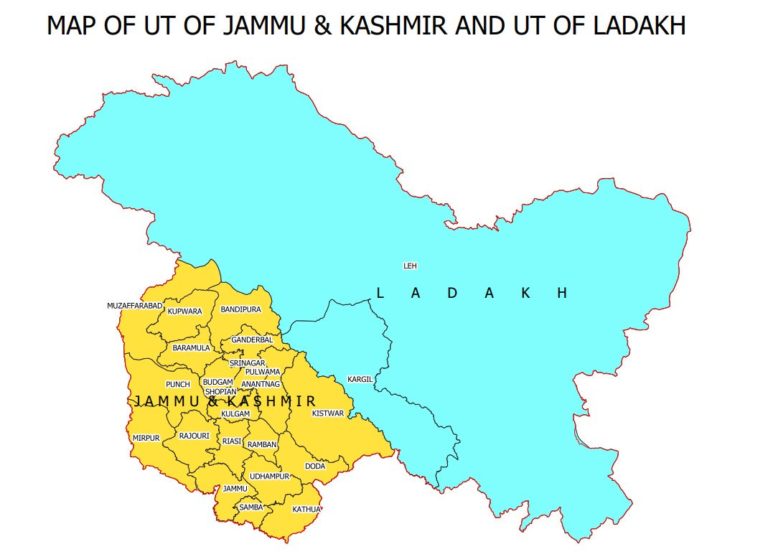
Let me begin by stating last things first. Let me say it again. I am aghast that a residential period of 15 years has been prescribed for getting domicile of the UT of Jammu & Kashmir. I feel this is unwarranted and should have been, let us say, only five years.

Why? Why not? Maharaja Hari Singh had issued two sets of State Subject laws, one on April 20th 1927, and the other on June 27th 1931. The period of residency prescribed by him was only 10 years. What justifies a period of 15 years to get a domicile certificate?

Let us talk of the conditions prescribed for getting the UK or US citizenship. How much is the period of residency prescribed for getting that? Please check. Countless people from India, doctor couples, other professionals, are waiting for acquisition of citizenship there. Why should the period of residency prescribed be 20 years there? Or even more.

Something like what is followers by a good number of Arab nations where people can stay for donkeys’ years. Still be treated like donkeys, fit only for working and not for citizenship. Were Permanent Resident Certificate (PRC) laws of J&K state inspired by these laws? May be. How long does it take for refugees in Germany, UK or France to get absorbed in those societies? Is it 15 years by law? If that happens, the refugees arriving in the Western nations in 2006-07 would still not be citizens there. Please check again.

Everywhere else a good number of people argue for making acquisition of citizenship easy. Oh, not when it comes to Jammu and Kashmir. Why? “Special Status Syndrome” at play here and in full flow.

Name any major city or cities of India in which people from Jammu or Kashmir do not own properties. Name some top notch hotels of India in which people from J&K don’t own shops. Name some tourist attractions of India where there are no people from J&K. Well, Jalandhar, Ludhiana, Chandigarh, Delhi, Agra, Lucknow, Bhopal, Ahmedabad, Bangalore, Indore, Mumbai and countless other cities have people from J&K domiciled there. There is no city in which students from J&K are not to be found.

Yes, a good number of them studying outside J&K on scholarships provided by New Delhi. This has been going on for last several years. Certainly, more than six years as the Modi government had taken charge on May 26, 2014.
Despite that, most of these students, their parents, as also relatives, would let out howls in protest when someone talks about giving people from outside the union territory of J&K it’s domicile. How very shameless and ironical it is! Perhaps there is no limit to being selfish and absolute blindness when self-interest destroys all reasoning.

The West Pakistan refugees came to J&K in 1947. A residency of 10 years (as prescribed by the Maharaja) would have made them eligible for domicile by mid 1957, give or take a couple of months. The Valmikis were brought in 1957 and by 1967, or early 1968, they should have been absorbed in the state of Jammu and Kashmir.

The women of the state, their spouses and children, should have enjoyed all the rights of State Subjects ab initio. It was a gender discrimination of the worst kind which denied them these rights.

Gorkhas fought for the defence of the state, right from 1947, or even earlier. Yet, these soldiers were expected to sacrifice their lives in the line of duty without domicile rights in J&K. All these enumerated above are some examples of unfair, unjust laws.

Indeed, some laws barred them all. But these laws were totally unjust and were scrapped on August 5, 2019. Good riddance. The state was converted into a Union Territory on the same day. Very good. From October 1947 to August 2019, J&K was a state and that status and concession granted to it failed to integrate it fully into the Indian Union. Only “I, me and myself” were the apparent policies that drove it’s polity.

Now, nothing conceivable can change the changed status and changed laws in a hurry. So, brace up and be loyal Indians. Forget dreaming about winning back so-called “Special Status” till at least the next Lok Sabha elections due in April-May 2024. The alternative choice of fomenting troubles is always open. If India could deal with insurgency, secessionist ideas, countless killings and more, so would it be doing to keep J&K an “integral part of the nation” as it has done so far.

The Central government should be bold and cut down the period of residency needed to get domicile of J&K to 5 years, and not peg it at 15 years as per the new domicile laws. We have paid a heavy price for mollycoddling wrong policies and using velvet glove where iron fists were needed. No more. Period.

Pakistanis kidnap a bride from her marriage in Washuk, Balochistan

Even in these times when the world is fighting with Coronavirus pandemic, the Pakistani regime continues to terrorize innocent Baloch people. Pakistanis have abducted a bride from Shinger in district Washuk. The hapless bride was kidnapped during her marriage ceremony.

Local sources in Balochistan told News Intervention that Pakistan Army nurtures Death Squads that commits innumerable atrocities on Baloch freedom fighters, pro-independence activists and parties. A couple of days ago, Haji Ghulam Qadir, commander of Pakistan Army-sponsored Death Squad along with his nephew Zain Jan and other associates attacked the marriage ceremony of Ms. Shabana who is the daughter of Abdul, and then forcefully abducted her from the marriage ceremony.

The two cars on which these Death Squad monsters came to kidnap Ms. Shabana had Pakistan’s flag mounted upon them.

Pakistan Army and Pakistani regime continue to commit nefarious crimes against women in occupied Balochistan that includes enforced disappearances, kidnappings, torture, rapes and killing on a daily basis.

Days before the kidnapping of Ms. Shabana from Washuk district, Pakistani regime had arrested nine persons from the Kech district. In fact, Pakistani forces along with its secret agencies raided the Balnigor, Dasht Jathani Bazar areas of Kech district and randomly arrested nine persons.

These nine individuals who were arrested illegally by the Pakistani forces include Rahmat son of Khudadad, Saddam son of Rahmat, Chakar son of Abdul Samad, Abdul Hameed son of Mohammad Issaq, Bakhshi son of Sayad, Jumma son of Ahmed, Niyaz son of Shambey, Rahmdil son of Shahmurad and Muhktiyar son of Khan Mohammad. These nine Baloch individuals have now been “disappeared”.

During these kidnappings the Pakistani forces also looted Baloch houses and tortured women and children.

World’s silence about gross human rights violations by Pakistan in Balochistan has only emboldened the Pakistan Army and its rogue intelligence agency ISI who continue to commit severe atrocities across Balochistan. The number of “missing persons”, “enforced disappearances”, abductions, rapes and murders are increasing every day in Balochistan such that the Pakistani regime is innovating newer ways to terrorize the hapless Baloch people.

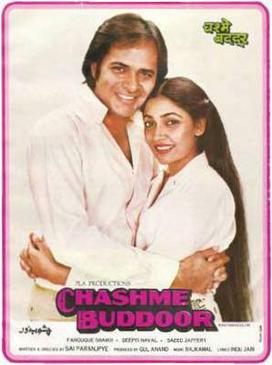
‘Chashme Buddoor’ (1981) review: Enduring nostalgia

The banality of daily chores in the current lockdown has its own advantages. It makes you crave for something interesting to best utilise the free time you have. I decided to catch some classic Hindi films from the 80s and the first deliberate choice was Sai Paranjpye’s brilliant film Chashme Buddoor.

Released 39-years-ago in 1981, the light-hearted comedy wafts a cool breeze of nostalgia, so typical of Delhi’s languid summers, whenever you watch it. The film was shot at some familiar locations in Delhi, including North Campus of Delhi University, Talkatora Garden, Defence Colony, Lodhi Gardens, Mandi House and Tughlakabad Fort and gives an ample view of the beautiful landscape of less crowded and greener Delhi in the 80s.

Interestingly, the year 1981 saw several big budget multi-starrer films like Kranti, Laawaris, Kudrat, Ek Duje ke liye, Naseeb, Yaarana, Kaalia, debut films of Kumar Gaurav Love Story and Sanjay Dutt’s Rocky, still, Chashme Buddoor, went on to celebrate its silver jubilee and was loved by the audience.

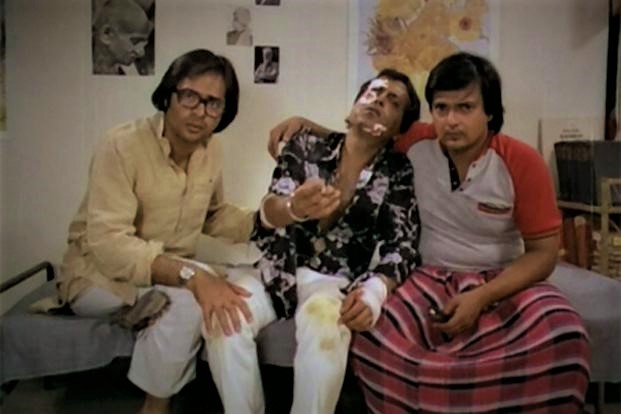
Sai Paranjpye’s directorial brilliance is magical in the opening scene of the film, where we are introduced to the three main protagonists. Enjoying a great camaraderie, in a messy, smoke-filled Defence Colony barsati, the three bachelors, Siddharth (Farooque Shaikh), Jai (Ravi Baswani) and Omi (Rakesh Bedi) are relaxing as they did not go home during the summer vacation. However, they have their own plans. The first few minutes of the film makes one realise what the three youngsters are upto and despite having different tastes and preferences they are bonding well, from shared cigarettes to segmented walls with pin-ups of voluptuous women. While Omi and Jai are always on the lookout for their next ‘shikar’ (prey), Siddharth is studious type, who wants to pursue his Phd in economics.

The female lead Neha (Deepti Naval), is a petite, girl-next-door with a calm demeanour.  Other memorable characters of the film included Neha’s adorable daadi (Leela Misra) and the brilliant Lallan miya (Saeed Jaffrey), the neighbourhood paanwaala who shares a special bonding with the three young men. It is a delight to watch how a lovable paanwaala not only scold them for not giving his money but is also a friend and well-wisher, with whom they can share their secrets.

The real charm of the film lies as much in the ordinariness and simplicity of the plot, as in the realistic portrayal of the characters and narrative. While, Omi and Jai make several efforts to know Neha’s whereabouts to woo her – both of them fail miserably to impress her.  Surprisingly, Siddharth succeeds after a chance meeting with Neha, when she visits his room as a salesgirl. Initially, while Siddharth tries his best not to entertain her, but soon relents. She then insists on demonstrating the product. Neha’s sales pitch “Chamko. Kapdon ke liye behtareen sabun. Baar baar. Lagatar. Chamko” becomes the talking point for themduring the wait time for Chamko detergent powder to clean the towel. Meanwhile, Neha discloses her interest in music and about her music classes.  Soon, Siddharth and Neha meet again and love blossoms. When Omi and Jai come to know about Siddharth and Neha’s romance, they get worried as they think Neha would reveal their secrets and the treatment they got at her house. Watching Omi and Jai coming up with comical ideas to split the two lovebirds and then trying to bring them together with help from Neha’s daadi, makes it a predictable climax but that doesn’t take away the interest to watch it.     

Sai Paranjpye’s eye for details and her attempt not to overplay the emotional melodrama, makes it a fantastic narrative. The subdued romanticism of the 80s, in the film, looks beautiful when Siddharth and Neha go out on their first date and both share their secrets, with a sheepish smile and grin, gradually becoming comfortable after the initial embarrassment.

The casting of the film is perfect. Ravi Baswani, who made his acting debut with this film, came with a comic timing that was simply amazing. Rakesh Bedi’s boyish insouciance as a chubby would-be poet, brings laughter at his every dialogue. Both of them made it a delight to watch the way they mock at each other, and through their innocent mischiefs brought the humour alive on the screen. Baswani and Bedi were later also nominated for the Filmfare award in the category – best actor in comic role. In contrast, Farooq Shaikh, played his role as a sober and studious Siddharth with remarkable restraint and ease.

There are several scenes in the film, where Paranjpye comes out brilliantly as a storyteller, with an eye on the minute detailing. Be it the Chamko scene, when Farooq Sheikh brings a besan ladoo for Deepti Naval in a cup, or in the brief interaction of Leela Misra with Omi and Jai, where she endearingly suggest them to put a few photographs of God also on the walls adorned with pin-ups of actresses and then also in the parody of hit songs used by Paranjpye  to poke fun at Hindi films. The background score and sound effects further add to the comic timing of the actors. The music is good. From the slapstick “Pyaar Lagaavwat Pranay Mohabbat” to classical numbers like “Kahan Se Aaye Badara” and “Kaali Ghodi Dwar Khari, songs are worth remembering.

Even after four decades, Chashme Buddoor stands out for its genuineness, honest storytelling and an engaging yet simple approach to filmmaking. Puerile attempts made by some filmmakers to copy it have failed ignominiously. The original remains fresh and unmatchable, evoking enduring nostalgia and romance.

Modi detractors are writing fictitious stories to derail India’s fight against Coronavirus

World is at war with the novel Coronavirus. And the pandemic due to this Chinese virus has created an unprecedented war like situation. In these times when people have come together to fight the global pandemic and buried their political and ideological differences, albeit temporarily, there’s a large section of media, social media warriors, filmmakers, sadist-comedians and self-proclaimed intellectuals who derive extreme pleasure by putting a spanner in the humanity’s herculean efforts to contain this lethal disease.

Unfortunately a large majority of these self-serving sadists are Indians or they are of Indian origins. This sadist bunch had expected widespread chaos and lakhs of deaths in India due to the novel Coronavirus. As India continues to contain the pandemic to a large extent much to the relief of millions of Indians, it has surely upset the plans of this sadist coterie. And this cabal is out with its knives. They have now resorted to their tested technique. Deceit.

The cabal shamelessly defends Tabligh-e-Jamaat despite clinching evidence that they deliberately spread Coronavirus across the country. Selective amnesia and selective pruning of messages are their key weapons. The coterie knows what to pick and what to leave in a communiqué, news report or an announcement. And if this communiqué is from PM Modi then this group carefully selects a few words or sentences to drive home their point.

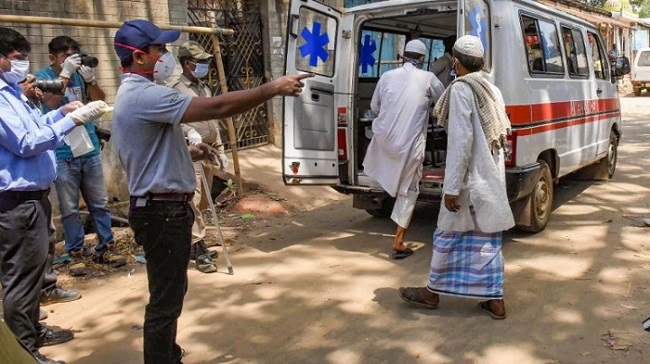
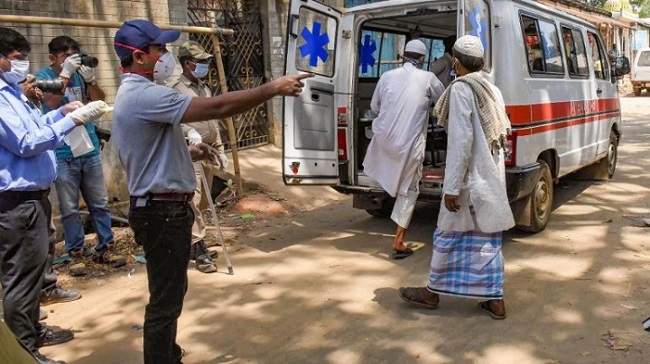
Attendees of Tabligh-e-Jamaat’s Markaz have spread the Coronavirus in different parts of India. The Tabligh congregation was attended by thousands of people who stayed together in Nizamuddin, Delhi from March 1 to 15. (Photo: PTI)

“India is not testing enough people,” “India is suppressing Coronavirus cases,” “There are not enough ventilators and India should order ventilators from China,” “WHO says India needs to ramp up its efforts to fight with the pandemic” “India is not following WHO guidelines,” these are some of the phrases that this coterie keeps shouting out.

Enough.

Let me come straight to the point. India is a country with a population of 1.3 billion (130 crore) and let’s be clear that no medical preparation will be enough to combat a pandemic of this magnitude. The number of hospitals, health care centres (primary, secondary and tertiary) are grossly inadequate in India. Several studies point that even during normal times we have a shortage of over six lakh doctors and twenty lakh nurses. Ditto for lab technicians and other paramedical staff.

Further, India’s 130 crore population compares with 6 crore population of Italy, France’s 6.5 crore population and UK’s 6.7 crore. The population of US is 33 crore and Singapore has a minuscule population of 58 lakh. Despite a much lower population than India and superior healthcare facilities Italy, Spain, France and UK, among others have been brought down to their knees. Such is the impact of this novel Coronavirus (read biological weapon) that even United States of America, the world’s sole superpower, is struggling to cope up.

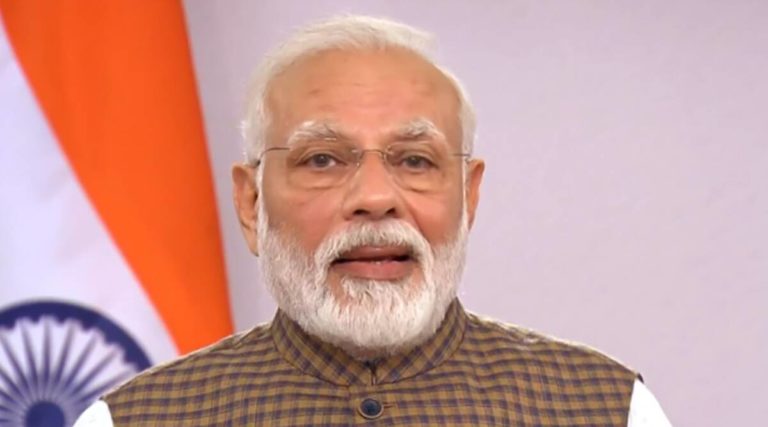
In this perilous scenario prevention is the only weapon for a nation with 130 crore people. And this is exactly what Prime Minister Narendra Modi has been doing. Modi knows it quite well that we have to nip this deadly Chinese virus in the bud, else Covid-19 will become the albatross around India’s neck. But this is easier said than done. Mobilizing and motivating 130 crore people is a task in itself. In the initial days, Indians did not take the Coronavirus threat seriously. Modi announced Janata Curfew on March 22 and requested countrymen to clap from their windows as a gesture to thank all the doctors, nurses, medical staff, bank employees, sanitation workers etc. Along with expressing nation’s gratitude towards our frontline warriors it raised awareness amongst Indians about the gravity of threat due to Coronavirus.

Even when India expressed solidarity with its doctors, the sadist-coterie screamed that Modi’s irrationality has put India under grave risk of Covid-19. “When country needs to import ventilators and conduct tests Modi is asking Indians to clap,” they yelled.

Thereafter, entire country was put under complete lockdown from March 25. It’s been more than a week since lockdown in India, and despite Covid-19 cases remaining under check, news has now begun pouring in about severe psychological stress among otherwise healthy individuals. It’s happening only because this kind of isolation is unprecedented in recent human history. Now, to uplift the mood of nation and to make each one feel that they are not lone fighters in this battle, PM Modi has requested that individuals need to stand on balconies, doors or windows of their homes on Sunday April 5, and light diyas, candles or torches. Modi has explained in clear terms that this is only to make everyone feel that entire India is a participant in this war against Coronavirus.

But the coterie is out once again. They cite WHO’s recommendations to argue that India is lagging behind China in putting brakes on Coronavirus. The coterie must know that the current Director-General of World Health Organisation (WHO) Dr. Tedros Adhanon is equally responsible for this Coronavirus pandemic as is China. Dr Tedros is an Ethiopian politician who had been involved in a major cover up about the lethality of this virus. Dr Tedros continued to defend China’s communist dictators till March until it became impossible to defend. This is the key reason why Coronavirus epidemic has evolved into a global pandemic.

Also, China has grossly under-reported Covid-19 deaths. Official deaths reported by China stand at a mere 3,326, which is absolutely wrong. Just one statistic exposes China’s lie. During January and February, three top mobile operators in China — China Mobile, China Unicom Hong Kong and China Telecom lost over 21 million (2.1 crore) subscribers. This is extremely unusual and point towards a staggering high number deaths due to Covid-19 in communist China.

PM Modi understands these shenanigans. Yes, we are short of ventilators but we also lack doctors who can monitor them, and even if we get millions of testing kits there are hardly enough pathologists to test 130 crore people for the novel Coronavirus. Yet we need to keep up our fight. Modi knows India needs to chart its own course. Modi has formed a Coronavirus task force where each minister responsible for a state takes feedback from district nodal officers of the districts who in turn get feedback from the ground medical staff such as the doctors and paramedical professionals. All this is done every day through video conferencing and feedback from the ground is being implemented in real time. Over 30 scientists and doctors are leading Modi’s task force on Coronavirus and monitoring the ground situation on real time basis. If India has managed to keep the spread of Covid-19 under control it is precisely for this reason. But is this enough? Certainly not. India is a billion plus nation and even football stadium size hospitals are not going to be enough.

But at the same time Modi also needs to uplift the mood of Indians who are feeling helpless sitting inside their homes. The nation needs to shed pessimism so that it hits the ground running whenever the lockdown is eased. Lighting of diyas, candles or torches is not about celebration rather a steely resolve that the entire country stands united in this fight against global pandemic.

J&K’s new political party and its contradictory ‘outlook’

Jammu and Kashmir’s new political party called JK Apni Party (JKAP) is very much in the news. Only a fortnight ago its delegation comprising twenty four members called on the Home Minister Amit Shah. If JK Apni Party (JKAP), the new political party inspired by senior Kashmir advocate-politician and former Deputy Chief Minister of PDP, Muzaffar Hussain Baig with Altaf Bukhari as the handle, is the replication of Bakhshi Ghulam Muhammad and his National Conference, then the fate of JKAP and its leadership will be nothing different from the fate that visited Bakhshi. Congress propped up Bakhshi and Congress dumped him later, thus exposing the state to what it is facing since 1990. Will BJP behave differently, is the baffling question.

The emergence of a new party, the amalgam of disgruntled, ambitious and self-seeking legislators of de-popularized parties and the lumpen, was a natural corollary to the political void that has gripped J&K ever since the surfacing of Jamat-i-Islami promoted jihadist movement in Kashmir along with its ramifications. In that sense, Altaf is not far away from the truth that “circumstances warranted the formation of a new political party in J&K,” as he has put it.

However, his statement to the press more than a week ago, which has received wide coverage, is disappointingly archaic and bundled in ambiguities and inaccuracies. There is hardly any cognizable symptom that he has wriggled out of the traditionally notorious Kashmirian mindset of putting hard realities under the rubric of soft semantic code.

Let us be precise. He defines JKAP as “a regional party with a national outlook.” Fantastic semantics isn’t it, but it has no takers. The core of the Kashmir issue is a fathomless void between the “region and nation.” The big majority of the region viz. Kashmir Valley and newly carved cut Chenab Valley, want secession from the Union; Jammu wants either separate state or integration into the Indian Union, and the border regions of Rajouri and Poonch districts are indecisive and in limbo because the Gujjars and Bakarwals are apprehensive of dark future if detached from India, and finally the internally displaced people being the indigenous people of the valley want a separate homeland within the valley. How is Bukhari’s Apni party going to reconcile these diametrically conflicting interests with national outlook? Please be a realist and stop vague statements.

Again, the famous phrase of Abraham Lincoln is very oddly borrowed by Altaf. Who are the commoners he is alluding to? If the valley people and leadership were the commoners, they would not have brought the situation to such a pass in which Indian forces needed to protect the grave of Sheikh Abdullah from being vandalized by those very people who followed him for forty long years and won the struggle of ousting the Dogra rule. Who would we consider commoner among the people of the three regions and sub-regions and how? Valley population being altogether Muslim never accept themselves as commoners because Islam does not include its people among the commoners. Islamists are different people with different ideology and different destination. That is what the history of Islam says.

Pragmatically speaking, Kashmir is not in a political void as Bukhari thinks; rather it is in a perfect political frame. Kashmiris and their political leadership invited foreigners to help them replace law and order in the valley with anarchy, lawlessness and barbarism and ethnic cleansing. They got what they wanted and they are happy with it. Had they not been, they would have revolted against it. They reconciled to it for three decades and are determined to continue the joys and pleasure of decadence. This is the destiny that people of Kashmir have been cherishing and what justification has Altaf to recommend deviation from it.

Altaf has mentioned three primary aims of his newly founded party. First is the restoration of Statehood. He needs to be a realist, which either he is not, or he pretends not to be. Statehood of J&K had to be dismembered essentially and solely because the Kashmir Valley majority government and legislature with pronounced pro-communal orientation discriminated Jammu and Ladakh regions so ruthlessly that they left no option for the Union government but to dismember the state. The statehood will never be revived because Jammu region will be lost to it for all times to come as has the Ladakh region. Therefore our suggestion to Altaf would be please do not try to drag the dead horse and do not mislead the people any more. You are wearing a very thin transparent attire by asking for the revival of the state. Forget that and let people everywhere stay in a sober mood.

The second objective of JKAP as stated by the leader is the protection of domicile rights. This has already been conceded by the Home Minister Amit Shah at the time of tabling the reorganization bill. There is nothing wrong in asking for domicile rights and we support it. However, the question is that domicile rights have to percolate down to the regional and sub-regional levels as well. What right has the people of Kashmir Valley to purchase village after village in Jammu region and build dozens of exclusively Muslim localities all around the peripheries of Jammu city but at the same time disallow Pandits to resettle in the Kashmir Valley? Domicile rights are acceptable only if regional and sub-regional dimensions of law are accepted. Similar is the case of job reservations. It is for the JKAP leadership to consider how safe the Kashmiri settlers in different parts of the country will be in the wake of the party demanding domicile rights for its people.

The third objective is of supporting “dignified return of the Kashmiri Pandits.” This is the repeat-in-repeat rhetoric voiced by all previous leaders, governments and legislators, which is only fake and false. Kashmiri Pandits just laugh at it. Mr Altaf knows and let me reiterate that the return of the Kashmiri Pandits is a priority issue not with him, not with the state, or the central government and not with any political party in India. It is definitely a priority with the Ummah, with the Caliphate and the Muslim world. He knows it and we need not substantiate the issue. By raking up the issue of return of IDPs (internally displaced persons), he will be playing with fire. Pandits will accept nothing short of a separate homeland in the valley. Those who threw them out shall have to pay a price for their sins.  No power in the world will stop them from achieving that demand. The UN Human Rights Charter allows it. The Pandits know that the Indian government will not allow it because its political mind is surcharged with vote bank strategy. The homeland demand of the Kashmir Pandits destroys the very basis of the false and ramshackle ideology of winning the Muslim vote bank by sacrificing the interests of the Pandits. Pandits want homeland because they want their identity and political empowerment and will not survive as underdogs or the “other”. What Altaf should say is that the Pandits will return to their separate homeland in the valley because they have been wronged and reparation has to be made.   

Altaf says he has to talk to Delhi. As long as they are on the same page, their talks will go on but when the pages alter, the story of Bakhshi Ghulam Muhammad will reappear.

In the final analysis, Altaf has to decide whether he has to continue with clear and decisive political perception or with duplicity and taqiyya meaning non-transparency. The ball is in his court. Our sincere advice to Altaf will be to make good diagnosis of the ailment and then propose medication. If he is really caring for the people he should forget all programmes and undertake only one and that is of rationalizing the criminalized, fundamentalized, indoctrinated and polluted minds of the people of Kashmir. He can take a cue from the life and works of late Bakhshi Sahib. Doctor does the diagnosis first and medication next.

Kashmir is most vulnerable to spread of COVID-19 from Pakistan & Iran

As the world grapples with the spread of COVID-19, the possibility of a rapid spread of Coronavirus across South Asia from Pakistan and Iran, where Chinese influence is more pronounced, is causing great concern.

China has a large presence in Iran and its influence is growing. It is the largest buyer of Iranian oil after US President Donald Trump re-imposed sanctions on sale of Iranian oil; China has also committed billions of Dollars investment in Iran. As such, visits by a large number of Chinese to the country is routine.

Chinese influence and presence in Pakistan needs no elaboration. A huge trading channel is running from Xinjiang in China to the Gawadar Port in Balochistan through Gilgit-Baltistan. A large numbers of Chinese are working on various CPEC related projects. They are moving around freely in almost all government offices, military establishments and commercial areas of Pakistan.

Coming back to the Coronavirus, it is widely believed that China discovered the first trace of this virus in November 2019. The highly contagious nature of the virus was also known by December 2019, yet, the totalitarian regime of the country managed to keep the matter under wraps. China declared the state of an epidemic in Wuhan only in late January. By then, movement of millions of people had taken place in and out of Wuhan; many came towards Iran and Pakistan causing a wide ranging spread of the infection.

Iran has already declared a considerable presence of the Coronavirus with more than 20,000 active case and more than 2000 dead. Pakistan, however, is tight-lipped about the impact; its quoted figures are too less in comparison to other countries like Italy, Spain, US and Iran, where there is direct Chinese influence; thus, they are not reliable.

There are reports of widespread infection within the Pakistan Army including the families of military personnel. The reason behind this possibility is not difficult to fathom, Pakistan Army personnel visit China frequently. Monitoring of trade movement from China and joint work of CPEC leads to close proximity of Pak Army personnel with the Chinese. Being elitist in nature the soldiers, especially senior officers of the army did not subject themselves to quarantine in time. Hence, the infection in Pakistan Army rank and file would definitely have originated from China directly. This is considered to be the strongest and most deadly strain of the novel Coronavirus.

Reports suggest that scores of Pakistani Army personnel have already tested positive and about 2000 are quarantined. Results of tests for a large number are awaited. The solders identified were serving in different areas of the country including Pakistan-Occupied Kashmir (POK) and Gilgit-Baltistan. Areas like Muzaffarabad, Domel, Bagh, Rawalakot, Kotli, Mirpur, Balochistan, Khyber Pakhtunkhwa, Rawalpindi, Muree and of course, Punjab have reports of cases flowing in.

To avoid media glare and also to prevent more infection to their army personnel, their families and among others of the Pakistani political elite, Quarantine facilities for all infected personnel of this category are being established in POK and Gilgit-Baltistan. In order to hide the deep design some affected civilians are also being allowed into the Quarantine areas.

Already 624 Covid-19 cases in POK and 77 cases in Gilgit-Baltistan have been reported. These are the result of interaction with Iran and forced interaction with the Chinese working on CPEC and in business ventures and also with the Pakistan Army. Now with a large number of military cases being quartered the region has been opened to a calamity. The poor people are in the cusp of yet another huge tragedy.

The spread of the virus in Jammu and Kashmir (mainly Kashmir Valley) is escalating. A sudden spurt in the last few days is being witnessed. As things stood on Sunday, 29th March, more than 30 positive cases with two deaths had been reported with doctors expressing worry of a large increase in coming days. It is believed that the virus came into the Kashmir Valley through Iran where a fair number of valley population goes for studies, business and pilgrimage. Another reason for concern is that one person from Kashmir who was part of a group that attended a Tablighi Jamaat congregation in New Delhi has died of the infection. Now efforts are on to trace all other attendees and quarantine them.

The Kashmir administration is putting in a herculean effort to control the situation. Facilities in the hospitals, mainly, SKIMS (Sher-i-Kashmir Institute of Medical Sciences) and chest disease hospital are being ramped up. Those who have a history of foreign travel within India and abroad are being identified and quarantined as are others who have come in contact with the first lot.

The Indian Army is helping in every way that it can; it has initiated a #CoronaMuktAwam campaign that is designed to create awareness on prevention and best practices through pamphlets, videos etc. and through social media. Those who are stranded are being looked after by the Indian Army. It is also providing infrastructure support to the civilian administration by transporting fumigation machines and chemicals by air and other such activities.

With Pakistani quarantine facilities so close to the Line of Control (LOC), proliferation from across to Kashmir also needs to be guarded against. Even a few infected clothes thrown on this side can have a devastating consequence and doing something of this nature cannot be put beyond Pakistan.

Jammu and Kashmir, therefore, will need to look at the challenge of controlling the spread by inimical means emanating from across the border. The best recourse in Kashmir is that all those who have a travel history should declare themselves and go into voluntary quarantine. The remainder population should, very strictly, follow the social distancing and lockdown norms. Vigil along the border should be heightened; extensive intelligence activity to counter all Pakistani moves will be required. The Coronavirus challenge is by far, most critical for India in Kashmir; it will require concerted effort to  be kept in control.

BLF slams additional Pakistani troop deployment in Balochistan under the cover of Covid-19

Balochistan Liberation Front (BLF) spokesman Maj. Gwahram Baloch said in a media statement that the move to send additional Pakistani troops to nine districts of Balochistan in response to the global outbreak of Corona virus is a shameful act.

Major Gwahram Baloch added that he wants his beloved and brave Baloch people, and the whole world to know that this deployment of additional Pakistani troops across occupied Balochistan was not being done to stop the spread of Coronavirus but to suppress the Baloch movement under the cover of combating this global pandemic. “This is a disgusting plan to intensify military operations against Baloch mass,” Maj. Gwahram Baloch said.

He explained that during this global pandemic, the Pakistani military generals and their civilian puppets are trying to repeat the same inhumane tactics with renewed intensity against the Baloch nation as they did after the devastating earthquake of 2013 in the areas of Mashkay, Jhao, Awaran, Raaghe and Makran. The world must never forget that in 2013 the Pakistani Army escalated its military operations against civilian population across earthquake-hit areas in the name of aid and rehabilitation of the earthquake victims. At that time, on the one hand Pakistan Army hindered international aid for relief and rehabilitation of the earthquake victims and seized relief goods and supplies sent by various NGOs, and on the other hand, they mobilized disguised Jamaat-ud-Dawa’s group of volunteers along with its local death squads and proxies. Due to this action thousands of earthquake affected families are still suffering and living in distress and had to migrate from their homes.

BLF spokesman said that in early days of the global outbreak of Covid-19 the disease was deliberately allowed to spread across Balochistan and now the Pakistan Army is increasing the number of troops under the garb of containing the virus.

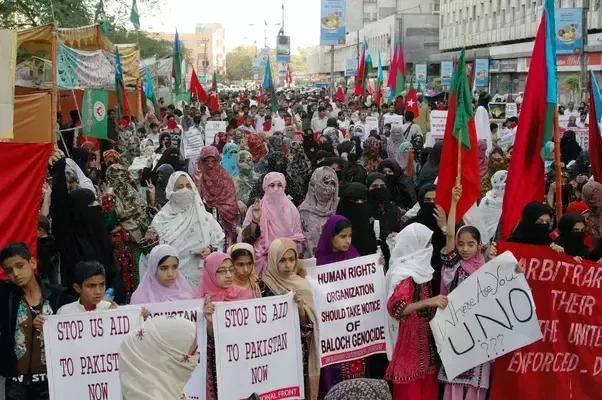
Although most areas of Balochistan, including Quetta, already have numerous Pakistani military camps and checkpoints at short distances that raid civilian populations on a daily basis, loot homes, and detain youth, elders, women and children. “After these detained Baloch people have been detained they endure severe mental and physical torture. Therefore, we urge the United Nations, international aid agencies and other humanitarian organizations to not give any aid to Pakistan to control the Coronavirus. Rather do the relief work under their own supervision in the occupied Balochistan,” urged Maj. Gwahram Baloch.

Major Gwahram Baloch said that the people of Balochistan need doctors, trained medical staff, test kits, ventilators, masks, sanitizers and other medical equipment and medicines to prevent the spread of Coronavirus in Balochistan and not the Pakistani military.

Pakistan media’s insensitive reporting on Kabul Gurdwara carnage

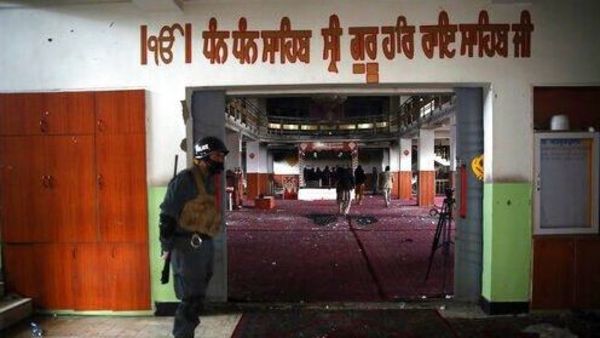
Wednesday’s carnage (March 25th, 2020) at Gurdwara Har Rai Sahib in Kabul that left 25 Sikh worshipers dead was a despicable act that has been widely condemned across the globe in the severest of terms. Yet, instead of adopting a somber tone and tenor while reporting this despicable crime against humanity, Pakistan’s ‘The Express Tribune’ instead chose to publish this piece under a highly insensitive headline (‘Indian citizen carried out Kabul Gurdwara carnage’; March 28, 2020). which was in very bad taste as it made light of a humongous human tragedy.

Foul Words

But this wasn’t all– the very opening sentence of the report wells up a feeling of utter disgust. It reads, “India, which routinely blames its neighbour of exporting terror, might be having a taste of its own medicine as a top English-language news channel of India has indicated in a shocking expose that terrorism might have been exported from a southern Indian state since 2016.” How could a well read and popular Pakistani daily like The Express Tribune be so callous and impervious to the sensitivities of the kith and kin of deceased worshipers, defies any logical explanation.

The only plausible reasoning is that this decision to abandon all acceptable norms of journalism and civility might have been influenced by the media house’s attempt to remain in the good books of the all-pervasive Pakistan Army! But, is currying favour with Rawalpindi at the cost of a newspaper losing its own credibility really worth it? One does empathize with Pakistani media since it is working under tremendous pressure. One understands the dangers of truthful reporting, which renowned award-winning Pakistani journalist Hamid Mir (who himself survived an assassination attempt for his factual reporting that incensed the establishment) aptly described as “naked censorship.”

Pakistan Media’s Dilemma

One also remembers how during his press conference in June 2018, the then Director General (DG) of Pakistan Army’s media wing Inter Services Public Relations (ISPR) Maj Gen Asif Ghafoor boasted that “We have the capability to monitor social media as to who is doing what.” As if this “spine-chilling” indirect threat wasn’t enough, he went on to brazenly violate an individual’s fundamental right to privacy by flashing a graphic with photos of journalists and other Pakistani nationals who according to him were using social media for spreading anti-state and anti-army propaganda.

The fact that Umar Cheema of ‘The News’, recipient of prestigious CPJ’s 2011 International Press Freedom Award was one of the alleged ‘delinquents’ just goes to show that the list of ‘offenders’ prepared by ISPR may have been influenced by extraneous considerations!

This unwarranted act of ‘media-bullying’ was rightly criticised by Asia programme Coordinator of US-based Committee to Protect Journalists (CPJ) Steven Butler who noted that “Displaying photos of journalists alleged to help push anti-state propaganda in Pakistan is tantamount to putting a giant target on their backs.” He also demanded an apology by DG ISPR, but since the army in Pakistan is a law unto itself, nothing of this sort ever happened and the country’s media (understandably) didn’t consider it prudent to raise their voices against the gross violation of media freedom and strong-arm tactics employed by the army to intimidate scribes and media houses.

Luckily, all isn’t lost because the media in Pakistan continues to show spine, both individually and collectively. Despite escaping death by a whisker in what is commonly believed to be a ‘hitjob’ by Pakistan’s spy agency Inter-Services Intelligence (ISI), Hamid Mir has always stood his ground when it comes to upholding ethical journalism and truthful reporting. Similarly, Cyril Almeida of Dawn too displayed immense moral courage and outstanding professional integrity in reporting about the government’s unhappiness on the army’s patronage to certain terrorist groups. At the same time, by publishing this explosive and damning report (which became famous as ‘Dawn leaks’) and refusing to back down and withdraw the article despite direct and indirect coercion by Rawalpindi, the Dawn management has made Pakistani media really proud!

Calling spade, a spade

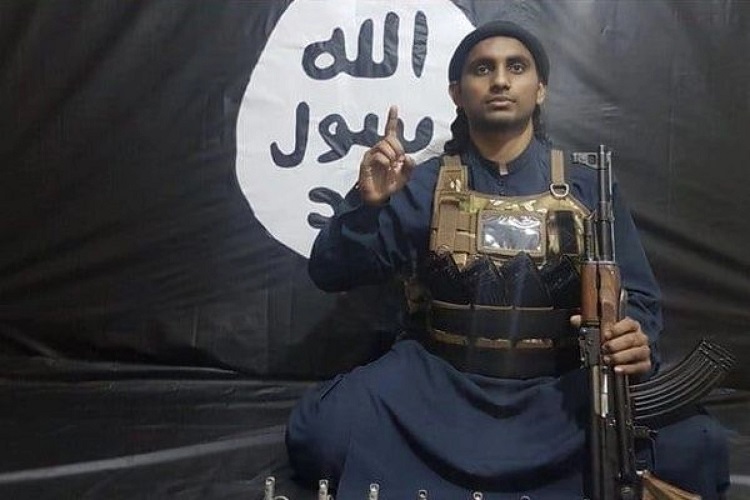
Any confrontation on the irresponsible manner in which The Express Tribune has chosen to report on this incident is best avoided as it would serve no meaningful purpose. But at the same time, since this piece tends to divert the reader’s attention from the unspeakable barbarity unleashed by the Islamic State of Khorasan (IS-K), putting the record straight becomes a moral responsibility that can’t be shied away, even though it runs the danger of being misconstrued as politicising human tragedy. To start with, while one of the assailants was definitely an Indian citizen, he perpetuated this grizzly attack as a member of the IS-K and not in the capacity of being an Indian or at behest of a terrorist organisation patronised by New Delhi.

So, on what grounds has The Express Tribune so definitely concluded that this ghastly mass murder of unarmed and innocent worshipers amounted to India “having a taste of its own medicine”?

Also, while the newspaper may be right to some extent in saying that India “routinely blames its neighbour of exporting terror,” but does an Indian citizen’s personal decision to join IS-K actually translate into India “exporting terror”? Taking minor liberties while establishing correlations in order to arrive at deductions that endorse a particular line of argument may sometimes be acceptable in journalism, but just like elasticity, inferences too cannot be stretched beyond a limit. Accordingly, perhaps it would do The Express Tribune some good to educate its News Desk on this aspect!

Setting the record straight

Islamabad denies any links with IS-K and there isn’t much evidence of this as well. But this doesn’t mean that Rawalpindi doesn’t have any association with IS-K. Why much isn’t known about Pakistan Army IS-K nexus is simply because rather than having direct interaction, Rawalpindi’s communication with this terrorist group is completely done through its proxies. Besides several authoritative sources, details of IS-K and ISI symbiosis can also be found in a well-researched report titled ‘The Islamic State-Khorasan: Capacities and Future Prospects’, available on Canadian Government’s official website.

Though the ISI’s close ties with Haqqani network is a conclusively established fact, few know that in December 2017, IS-K entered into a working arrangement with the Haqqani network and according to sources, IS-K even agreed to pay it for “its support, including help in organising terrorist attacks in Kabul.” You would agree that as a proxy of Pakistan Army, the Haqqani brothers couldn’t have made any agreements with IS-K without obtaining explicit prior approval from Rawalpindi.

Next, as per Washington-based Middle East Institute, unlike all previous ‘amirs’ (chiefs) of IS-K, the current incumbent Mawlawi Abdullah aka Mawlawi Aslam Farooqi, is a former Lashkar-e-Taiba (LeT) commander. Now, with the LeT being the Pakistan Army’s ‘most favoured’ proxy, isn’t it obvious that the IS-K under Farooqi would obey ISI! Further, by revealing that “Faruqi (Farooqi) was an advocate of appeasement with Pakistan, in exchange for being granted a safe haven by the Pakistani authorities,” the Canadian report confirms that he’s completely subservient and furthers ISI interests without any reservations. This report further reveals that “Farooqi has spent most of his time inside Pakistan, as have most of the other senior figures in the organisation. According to IS-K sources, Pakistani intelligence have even started providing some financial support to the organisation.” With such damning evidence available, can the ISI still deny its unholy alliance with IS-K?

One may argue that since IS-K has carried out some attacks against civilians in Pakistan and the army has also taken retaliatory actions, there’s no likelihood of any nexus between the two. However, the Canadian government report rightly observes that even though IS-K may have attacked “non-state targets’, they haven’t targeted security forces of Pakistan and the mutual ‘friction’ is “either (because) both sides constantly are trying to renegotiate the terms of the agreement or that its implementation is a matter of dispute.”

In addition, since this report reveals that IS-K “has been able to move its main base from Afghan territory, where it was vulnerable to US air strikes, to the Tirah Valley in the tribal areas of Pakistan,” and that “it is also able to maintain several training camps in various locations throughout the tribal areas” the existence of ISI-ISK nexus is far-far beyond any reasonable doubt!

Mystery Deepens

IS-K claimed responsibility for the Kabul Gurudwara attack and identified the murderer by his nom de guerre ‘Abdul Khalid al-Hindi’ indicating that he was an Indian national. It also said that this attack was “revenge for the Muslims in Kashmir.” This purported reason for the carnage raises suspicions that there’s more than meets the eye, because even if one goes by IS-K’s demented sense of logic, attacking the Sikh community in faraway Kabul to avenge the alleged ‘atrocities’ committed by a ‘Hindu Government’ in India against the Muslim community in Kashmir makes just no sense!

But when the already heightened sense of insecurity within the Sikh community in Kabul is correlated with ongoing motivated opposition in India against the Citizen Amendment Act (CAA) that provides asylum to certain religiously persecuted minority communities (including Sikhs) living in countries neighbouring India, then a method definitely appears in the madness of perpetuating this carnage!

Tailpiece– The tragedy is that whether it be Kabul or Kashmir, it’s ultimately the Sikh community that’s always at the receiving end as far as senseless violence perpetuated by fundamentalists in the garb of ‘jihad’. Such a peaceful sect which embraces others without pre-conditions or reservations based on religion and ethnicity, feeds and takes care of them just like their own family members certainly deserves much better.

Last but not the least, no community grieving the loss of its near and dear ones deserves to be taunted by the fourth estate about getting “a taste of its own medicine!”

Modi may lose goodwill if daily wage earners are not protected

Prime Minister Narendra Modi received plaudits just about 10 days ago for showing unprecedented resilience in the face of adversity by imposing a 21-day national lock down. Even his critics and the opposition parties had to admit that in the wake of the spread of the killer Coronavirus, which could take thousands of lives, a lockdown was the only solution even if it meant a huge blow to the economy. What no one had then accounted for, was the mass migration of daily wage earners from urban centres to their homes in the tiny villages across the hinterland.

Heart wrenching news reports and pictures showing the plight of homeless and penny-less, desperate to return home started flooding social media handles, bringing much embarrassment to New Delhi.

While the government was quick to announce a Rs 1.7 lakh relief package under the Pradhan Mantri Garib Kalyan Yojana for the poor, who have lost their jobs due to the lockdown, it has not yet carved out any concrete plans to come to their aid to ensure their safe return to their respective homes or providing with shelter and food in case they wished to stay back.

The financial package is of no use if the benefits do not reach the eligible in time. Clearly it also does not address their immediate concern of food and shelter and when I say immediate, it means the next couple of days.

There has been no announcement on the implementation of the package either. Clearly that is no solution. All that the Centre and the state governments’ have done is to repeatedly urge citizens to help the poor.

And how will citizens help the poor on the road if no one is allowed to be on the road?

The government has to come up with a well thought out plan to rescue these workers, whose lives and livelihood need to be protected as much as those who have been rescued from other countries and brought back to the country.   

Until the government addresses the immediate problem of the millions, who were engaged in the unorganised sector, it will soon lose face and goodwill that it won after imposing the lockdown as a precautionary measure, despite the timely action taken including the Rs 1.7 lakh crore relief package and the Reserve Bank of India’s injection of Rs 3.74 lakh crore into the system.

In case steps – not monetary but that of a socially equitable nature — are not taken immediately, the debate will soon take a different turn. One needs to take extraordinary measures during extraordinary times.

Why can’t the government use schools and university premises to shelter the poor for the time being? Why can’t food be provided to them at these shelters? The government must mobilise its district administrators to take steps to ensure that the daily wage earners get their due.

The loss and uncertainty are difficult to quantify at this point but after all, the fight to overcome COVID 19 should not result in the loss of lives due to hunger. 

Baloch intellectuals express concern over kidnapping of senior journalist Sajid Hussain from Sweden

Baloch intellectuals have expressed serious concern about the sudden disappearance of Sajid Hussain, Chief Editor Balochistan Times from Sweden. It’s been a month since the senior journalist and writer Sajid Hussain has gone “missing” from Uppsala in Sweden. Dr. Murad Baloch, Secretary General of the Baloch National Movement (BNM) said that the Swedish government, journalist organizations and other international human rights organizations should help by raising this issue and help find senior Baloch journalist and writer Sajid Hussain.

Dr. Murad said that Sajid Hussain is one of the gifted journalists from Balochistan. He had worked in renowned Pakistani daily newspapers, ‘The News’ and ‘Daily Times’ as assistant news editor and city editor respectively.

“It is the obligation of the Swedish government, police and the authority of university to trace out Sajid Hussain, and demonstrate their efficiency in this regard, otherwise their passive attitude will constitute their vicarious guilt and culpability,” said Kachkol Ali, an Advocate.

Sangar’s Chief Editor, Dostin Baloch, strongly condemned the disappearance of Sajjad Hussain Baloch saying that the disappearance of senior Baloch journalist from Sweden is not only alarming, it’s a big question mark for the protection of journalists around the world.

Pakistan Army has been involved in routine abductions and killing of several journalists across Balochistan and due this, Sajid Hussain was also facing threats of persecution and escaped from Pakistan and sought asylum in Sweden. Being the Chief Editor of online magazine “Balochistan Times” Sajid Hussain has been highlighting and covering the actual position of Balochistan through his portal. He was living in Stockholm, the capital city of Sweden for the last four years and pursuing a master’s degree in Balochi language at Uppsala University. In order to fulfill his educational commitments, he had shifted to Uppsala on the 2nd of March and the same day he went out of contact. The local police in Sweden and related authorities had been informed about his mysterious disappearance.

Dr Murad Baloch explained that Sajid Hussain is the nephew of Shaheed Ghulam Mohammad Baloch, the founder of the Baloch National Movement (BNM). The family members and relatives of Baloch political leaders and workers had always faced state brutalities and barbarism in Balochistan. Baloch National Movement had named that policy of the Pakistani state as “collective punishment”.

Dr Murad Baloch added: “Sajid Hussain, besides belonging to a political family, is a renowned journalist. He has played a vital role in showing the real humanitarian crisis in Balochistan in front of the world. He has been writing in both Balochi and English languages in Balochistan Times. Furthermore, Balochistan Times also broadcasts a radio channel to give a voice to the voiceless people of Balochistan. His mysterious disappearance has shocked us extremely and we fear that Inter-Service Intelligence (ISI) is behind his abduction.”

Dr. Murad Baloch explained that political and human rights situation in Balochistan have gone worse over the last two decades. Thousands of people have been killed and are languishing in the Pakistani torture cells. Thousands of Baloch political activists in order to avoid this persecution have escaped from Balochistan and are compelled to seek asylum in European counties; journalists and human right activists are among these asylum seekers. The disappearance of Sajid Hussain has created an environment of uncertainty among thousands of Baloch political asylum seekers in Europe. The mysterious disappearance of a journalist would raise questions about the country that is proud about protecting refugee lives and show a great record of protecting human rights and values.

Sweden has ratified and singed International Covenant on Civil and Political Rights. Article 2 of the Covenant holds that each state party to the Covenant undertakes to respect and ensure to all individuals within its territory and subject to its jurisdiction the rights recognized in the present Covenant, without distinction of any kind, such as race, colour, sex, language, religion, political or other opinion, national or social origin, birth or other status.Where not already provided for by existing legislative or other measures, each state party to the present Covenant undertakes to take necessary steps, in accordance with its constitutional processes and with the provisions of the present Covenant, to adopt such legislative or other measures as may be necessary to give effect to the rights recognized in the present Covenant.

Since Shahid Hussain has gone “missing” from the territorial jurisdiction of Sweden, its thus the constitutional responsibility of Sweden to protect his right to life, liberty and security.

Even the Universal Declaration of Human Rights insists in Article 8: Everyone has the right to an effective remedy by the competent national tribunals for acts violating the fundamental rights granted him by the constitution or by law.

“Although I have no acquaintance with Sweden’s constitution and law, however I believe that Sweden being a civilized country, it has incorporated the provisions of the Universal Declaration of Human Rights and International Covenant on Civil and Political Rights into its constitution and laws of land. It is pertinent to refer here the International Bill of Human Rights – United Nations: Every human being has the inherent right to life. This right shall be protected by law. No one shall be arbitrarily deprived from life,” explained Advocate Kachkol Ali.

Sangar’s Chief Editor Dostin Baloch added that Sajid Hussain Baloch’s writings and journalism are not only for the Baloch people but also represent the freedom of expression and truth and his disappearance from Sweden is a serious concern for journalists around the world.

Dostin Baloch added the kidnapping and killing of journalists in Pakistan, including Balochistan, is a daily occurrence, but the disappearance of a senior Baloch journalist in foreign country is extremely surprising.

“We urge the Swedish government, including journalists around the world to take notice of the disappearance of Sajid Hussain Baloch, and try to find him,” said Dostin Baloch. He also a started a twitter hashtag #FindSajidHussain to connect journalists and human rights activists around the world. He also appealed to global media organizations, the IFJ and other World Federation of Journalists, to play a role to find Sajid Hussain Baloch.

“We are in touch with all the journalist organizations and Sangar Media organization will write letters to all journalists to help find senior journalist Sajjad Hussain Baloch,” Dostin Baloch said.