Home Blog Page 38

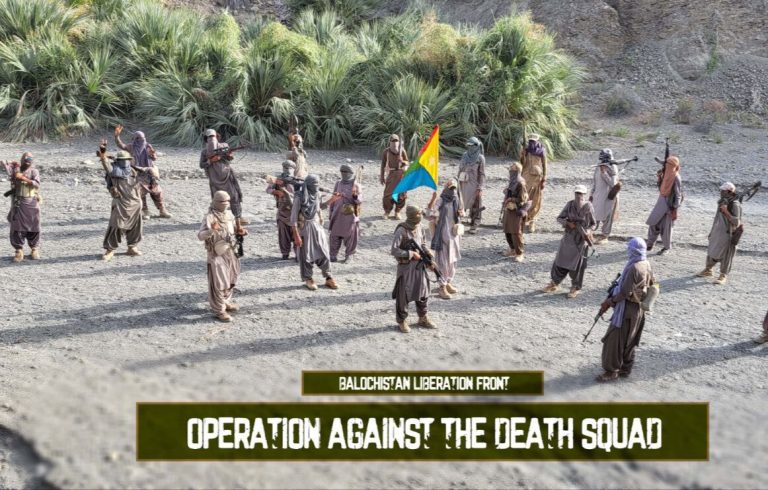
Baloch freedom fighters set ablaze heavy machinery at Kalat construction site

Armed men attacked a construction site in the Mahlebi area of Kalat district, setting fire to heavy machinery used in road development. The attack took place at Marjan, where equipment, including a crushing plant, was destroyed by the men.

The attackers detained company personnel during the raid, torching all heavy machinery on-site. After completing the attack, they released the workers unharmed and fled the area.

Despite the scale of the incident, local officials have yet to release any statement about the attack. Such silence reflects the occupied-state’s inability—or unwillingness—to acknowledge the growing hostility against these projects, which are often carried out for Paki establishment’s interests.

This attack aligns with a broader pattern of Baloch freedom fighters targeting infrastructure projects that are tools of Pak Army exploitation. While Islamabad markets these initiatives as “development projects,” they actually serve military purposes, tightening control over the province. The road networks, in particular, facilitate the Pakistan Army’s movement and operations against local populations, enabling further repression.

Baloch Resistance Against ‘Military Development’

These projects are colonial extensions meant to exploit Pak-occupied-Balochistan’s resources while marginalizing its people. Development initiatives in Pak-occupied-Balochistan, such as the China-Pakistan Economic Corridor (CPEC), are benefiting the military and foreign interests at the cost of local livelihoods. Roads built under these projects enable the movement of military convoys, and increasing surveillance.

The Pakistan Army’s ‘development narrative’ has failed to win over local support, as such projects offer no meaningful benefits to the Baloch population. Instead, they further the military’s grip on the region, escalating tensions. With enforced disappearances, kill-and-dump operations, and military crackdowns becoming routine, these attacks are acts of defiance in an occupied land.

No group has formally claimed responsibility for this particular attack yet. However, the Baloch nationalist movement has been consistent in opposing such projects, as these are instruments of subjugation. For them, the destruction of construction sites is a necessary resistance against Islamabad’s colonial ambitions, signaling that freedom, not false development, is the only acceptable future for Balochistan.

Israel strikes in north Lebanon, kills 21 amid Hezbollah militia conflict

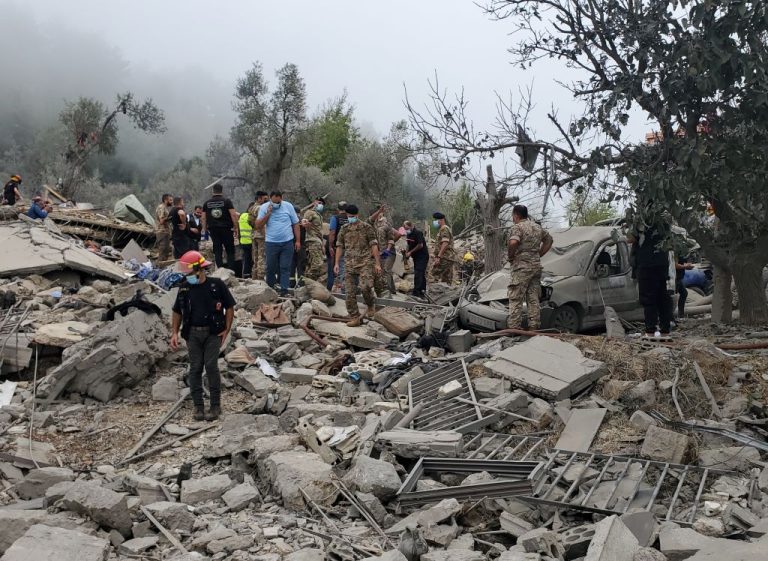
Israel intensified its military operations against Hezbollah militants in Lebanon on Monday, with airstrikes killing at least 21 people in the country’s north. Health officials reported that the strike targeted a house in the Christian-majority town of Aitou, which was housing displaced families. Eight others were injured, adding to the toll of a conflict that has escalated sharply over the past weeks.

As tensions surged, millions of Israelis sought shelter from cross-border projectiles fired by Hezbollah. The Israeli military reported that 115 projectiles from Lebanon were intercepted or landed within Israeli territory on Monday, although no casualties were reported. Prime Minister Benjamin Netanyahu vowed to target Hezbollah “without mercy” across Lebanon, including Beirut.

UN Expresses Concern

The U.N. Security Council issued a statement expressing concern after several peacekeeping posts came under fire amid the clashes. Tensions between Israel and UNIFIL, the U.N. peacekeeping force stationed in southern Lebanon, have escalated. U.N. officials reported that Israeli tanks breached a UNIFIL base on Sunday.

UNIFIL spokesperson Andrea Tenenti reaffirmed that the peacekeeping mission would remain in place, stating, “We are staying … under a Security Council mandate. It is essential to maintain an international presence.”

Netanyahu denied allegations that Israeli forces deliberately targeted peacekeepers, suggesting instead that Hezbollah exploits U.N. positions to launch attacks. “Israel regrets any harm to UNIFIL personnel,” Netanyahu said, but urged peacekeepers to temporarily leave conflict zones to ensure their safety.

Israel Orders Evacuation, Hezbollah Responds with Drone Strikes

In response to intensifying skirmishes, Israel ordered the evacuation of 25 villages in southern Lebanon, instructing residents to move north of the Awali River, 60 kilometers from the Israeli border. On Sunday, four Israeli soldiers were killed in a Hezbollah drone attack near a military base in central Israel.

Israeli forces escorted foreign journalists into southern Lebanon, showing them a Hezbollah tunnel shaft located less than 200 meters from a U.N. post, along with weapons caches. “This is a Hezbollah military base hidden under U.N. cover,” claimed Brigadier General Yiftach Norkin. Israel’s military reports that it has destroyed multiple Hezbollah tunnels, rocket launchers, and command posts in recent operations.

The conflict has further expanded to northern Gaza, where Israeli strikes killed 10 Palestinians queuing for food in Jabalia, according to Palestinian medics. Meanwhile, fears of a broader regional conflict loom large as Iran, a backer of both Hezbollah and Hamas, remains on high alert. Speculation grows over a potential Israeli retaliation for an October 1 missile barrage from Iran, heightening tensions across the Middle East.

Punjab (Pak) police assault students protesting for justice in Punjab college rape case

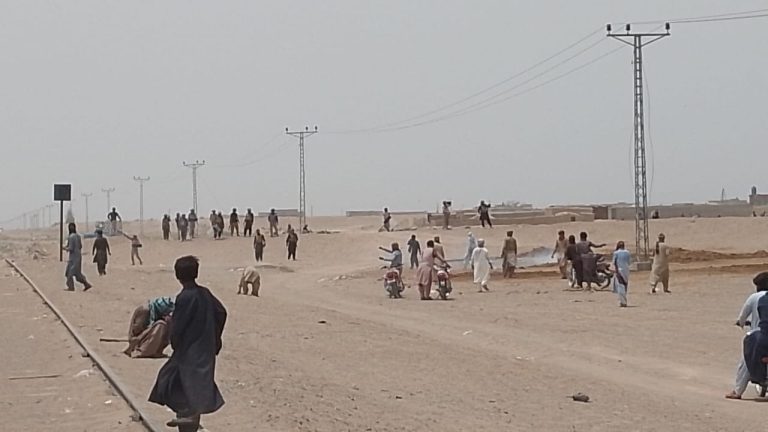
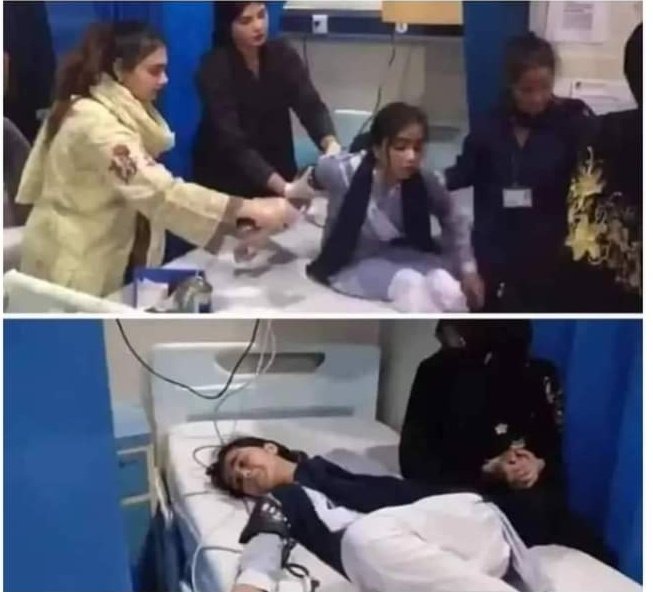
The brutal crackdown by Punjab police on students protesting an alleged rape at a private college in Gulberg has left at least 28 injured, sparking outrage and raising serious questions about the Paki authority’s handling of the incident. The protest, triggered by reports that a security guard raped a female student, has been met with denials, conflicting narratives, and outright repression.

While provincial officials initially dismissed the rape allegations as “false claims circulating on social media,” Punjab’s Higher Education Minister Rana Sikandar Hayat contradicted the narrative by promising justice to the protesting students. This inconsistency reflects the deepening confusion among authorities, who appear more concerned with damage control than addressing the students’ grievances.

A Potential Cover-Up

The incident took a darker turn as Punjab police unleashed violence to disperse students, chasing them into nearby shopping plazas and residences, and beating them mercilessly with batons. Videos circulating on social media show riot police storming the campus and attacking students who were demanding a fair investigation into the rape allegations.

The students claimed that the college administration attempted to cover up the incident by deleting CCTV footage, raising further suspicions about the involvement of higher authorities. However, Punjab Information Minister Azma Bukhari denied the occurrence of any rape, stating that police inquiries found no evidence. Lahore DIG Operations Faisal Kamran echoed this denial, claiming the allegations were fabricated to incite unrest.

Despite these dismissals, Education Minister Rana Hayat visited the campus and assured students of action against the administration if it was proven that recordings were tampered with. Footage of Hayat standing among students and ordering police to halt their brutal crackdown circulated widely, reinforcing concerns over the authority’s inconsistent approach to the situation.

Government Involvement and State Complicity

The violent police response mirrors a pattern of repression familiar in Pakistan, where authorities frequently resort to brute force to suppress dissent. Just as the Pakistan Army has routinely silenced voices of dissent in Pak-occupied-Balochistan with violence, Punjab’s police acted with similar brutality against these young protesters, further eroding public trust in state institutions.

The Punjabi Army backed-government’s response reveals a deeply entrenched alliance between the college administration, law enforcement, and political elites. The fact that the college in question belongs to a powerful PML-N figure, Mian Amir, shows an orchestrated cover-up, underscoring how power dynamics often determine the pursuit—or obstruction—of justice in Pakistan.

The students have vowed to continue their protests until a transparent inquiry is conducted. They also called for a boycott of Punjab College, demanding parents withdraw their children to pressure the administration and government into taking the allegations seriously.

Probe Committee Formed Amid Public Outrage

In response to growing public outrage, the puppet government announced the formation of a “high-powered” committee to investigate the alleged rape. Led by the chief secretary, the committee includes top officials from education, home, and health departments. However, skepticism remains high, with many fearing the probe is merely a delaying tactic to diffuse public anger without delivering justice.

Despite official attempts to downplay the incident, the unfolding events highlight the systemic rot within Pakistan’s institutions, where the powerful operate with impunity while ordinary citizens—especially students—face repression.

Baloch leader Mahrang takes legal action against Karachi police’s harassment & theft

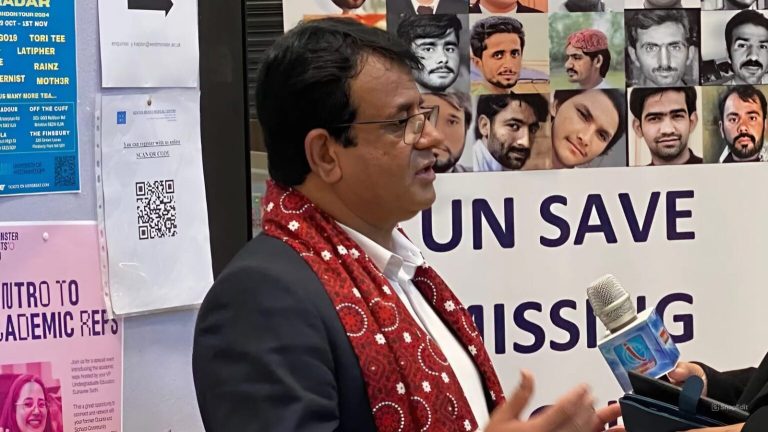
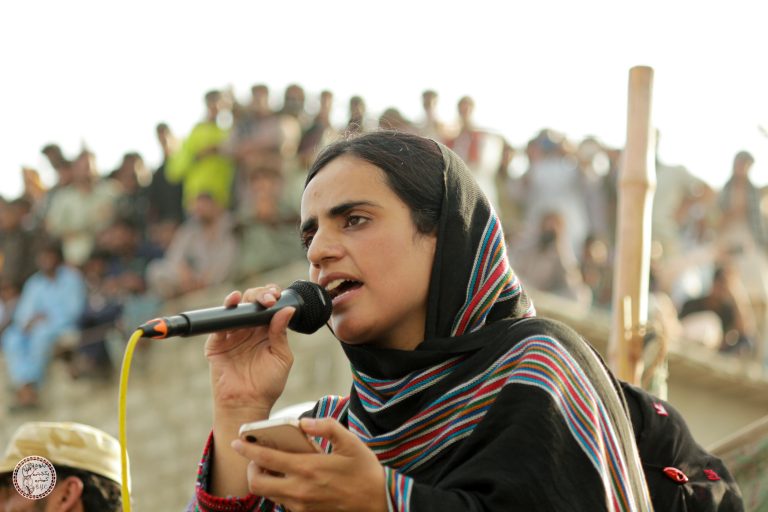
Prominent Baloch activist Dr. Mahrang Baloch filed a petition in the Sindh High Court on October 14 for the recovery of her stolen passport and mobile phone, which were seized under suspicious circumstances at Karachi Airport on October 8. Accompanied by her legal counsel Advocate Jibran Nasir, Dr. Baloch demanded accountability from law enforcement, exposing the occupied-state’s attempts to harass and intimidate Baloch voices through theft and false charges.

The court has issued notices to SSP and SHO Malir, directing them to recover the stolen items and present them before the court by October 21.

https://twitter.com/MJibranNasir/status/1845807728234578217

Dr. Mahrang also revealed that the Sindh High Court had dismissed a false FIR filed against her by Karachi police on October 13. The FIR, designed to harass and discredit her, was quashed after the court found the allegations baseless upon reviewing solid evidence.

The court further ruled that Dr. Mahrang must not be subjected to any form of harassment by officials in the future, a significant legal victory amid growing occupied-state oppression.

Harassment of Baloch activists continues unchecked

The incident underscores Pakistan’s increasing use of legal tools and police harassment to suppress Baloch activists and intimidate those who challenge the regime’s oppressive tactics. Dr. Mahrang’s ordeal is not an isolated case but part of a larger pattern of Pak Army-sponsored repression. Baloch activists, whether in Karachi, Quetta, or abroad, face continuous harassment, including arbitrary arrests, enforced disappearances, and the confiscation of personal property by security forces.

The theft of her passport and phone at Karachi Airport is a calculated move to disrupt her activism and isolate her further. However, Dr. Mehrang’s swift legal action and the court’s favorable response signal the growing resistance to such tactics.

This case adds to the mounting evidence of how Paki establishment uses fabricated cases and harassment to maintain control over oppressed communities, especially in Pak-occupied-Balochistan. The court’s intervention may be a temporary reprieve, but activists fear the machinery of intimidation will continue unless the Paki establishment is held accountable for its colonial-style repression.

Khyber-Pakhtunkhwa: TTP attack on police station kills 25 Pak personnel

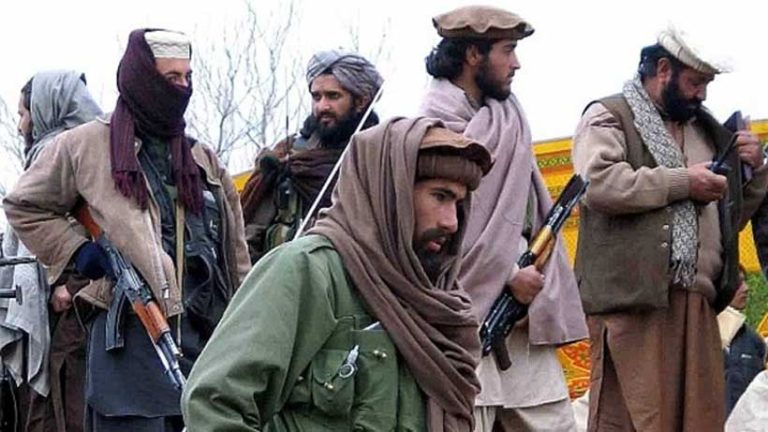
Tehreek-e-Taliban Pakistan (TTP) on Monday attacked a Pakistani police station in Bannu, Khyber Pakhtunkhwa (KPK) killing 25 Pakistani policemen. However, Pakistan forces claim only four soldiers have died in TTP attack. Meanwhile, three terrorists have also been killed in the cross firing.

Heavy firing was heard during the encounter in nearby areas. The attack comes ahead of the high-octane SCO Meeting, showcasing Pakistan’s capabilities to organise such events.

Additionally, once again, TTP proved that Pakistan is unable to control the demons it unleashed. Initially, it provided space for the TTP, which seized the opportunity to grow so significantly that even the Pakistan Army is now struggling to contain it. The TTP began merging smaller factions into its organization in 2020, and since then, over 60 smaller terrorist groups have joined its ranks, making it nearly unbreakable.

Additionally, the TTP appears to be receiving back-channel support from the Afghan Taliban.

However, according to Pashtun organizations, there is a belief that the Pakistan Army and the TTP are colluding in these staged escalations, enabling Pakistan to secure foreign aid by presenting a front of fighting terrorism

Pashtuns call TTP, Pak Army ti vacate Pakhtunkhwa

Regardless, the Pashtuns are the ones facing the ultimate consequences. Their resources, including crude oil, gas, and emeralds, are exploited by the Pakistani establishment, while they are left to live in poverty and labeled as terrorist sympathizers for raising their voices.

The timing and nature of this blast also raise suspicions, as the Pashtuns as a nation are undergoing significant changes. They have organized a local jirga and issued a directive for Pakistani forces, the ISI, and the TTP to withdraw from Pakhtunkhwa within 60 days.

The TTP attack will provide another excuse for the Pak Army to continue operations and maintain control over the region for as long as they want. It also gives them a free hand to silence any dissenting voices under the pretext of fighting terrorism, as they have always done.

Manzoor Pashteen warns Pak Army to leave Pashtun land within 60 days or else

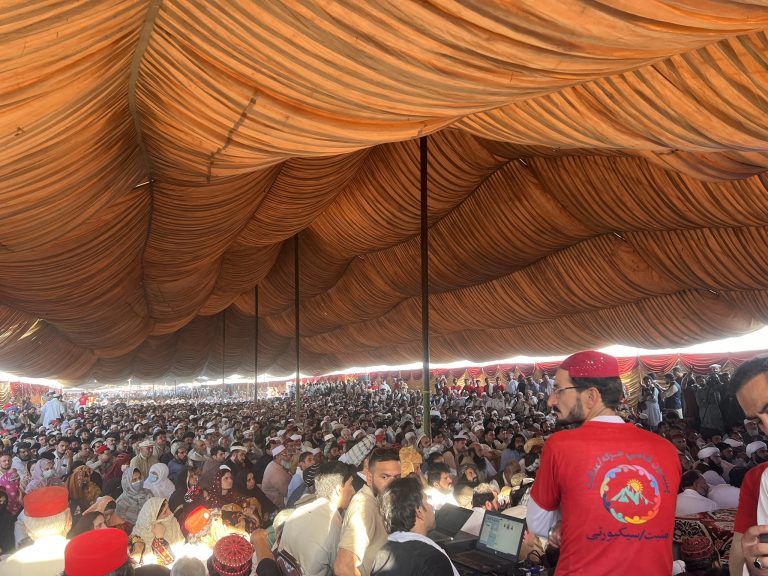
The three-day Pashtun Qaumi Jirga, chaired by Pashtun Tahafuz Movement (PTM) leader Manzoor Ahmad Pashteen, concluded with a powerful 20-point resolution, exposing the Punjabi Pak Army’s oppressive control on Pashtun land and people. Thousands of Pashtun leaders, tribal elders, and activists attended the Jirga, where demands were made for an end to military interference, exploitation of natural resources, and suppression of Pashtun voices.

Pashteen launched a scathing critique of Pakistan’s colonial-era legal system and demanded the immediate withdrawal of the Pakistan Army from Pashtun regions. Pashteen said that the Punjabi Pak Army elites are ruling with the same oppressive laws used by the British to suppress the people of these lands, leaving no space for reform or justice.

“The current laws are those imposed by the British rulers, designed to control an occupied population. Today, those same laws remain intact, serving as tools of repression by the military establishment,” Pashteen told the gathering of tribal elders, political leaders, and activists. He added, “Even former Prime Ministers admitted that the laws passed by Parliament were drafted not in Islamabad but in Rawalpindi’s General Headquarters (GHQ).”

Jirga Demands the Removal of Pak Occupying Forces

The resolution boldly called for the eviction of all occupying forces—whether in uniform or not—within 60 days, reflecting growing frustration with the military’s control over the region. The participants vowed to reclaim occupied lands, recover missing persons, and secure justice for martyrs through legal channels.

Pashteen called for the complete removal of the Pakistan Army and Taliban factions from Pashtun regions, holding both responsible for the chaos and insecurity plaguing the area. “It is time for this Jirga to decide: both the military and Taliban—whether labeled as ‘good’ or ‘bad’—must leave, for they are the root cause of unrest,” he said, directly challenging the establishment’s policy of using proxy militants to maintain control over strategic areas.

This is not the first time the PTM has exposed the toxic nexus between the military and extremist groups. Activists have raised voice against the Pakistan Army for sheltering militants to further its strategic interests while branding dissenters as terrorists.

Declare the Pak Army and Intelligence Agencies as Terrorist Organizations

In a daring move, Pashteen urged the Jirga to officially declare the Pakistan Army, ISI, Military Intelligence (MI), and both factions of the Taliban as terrorist organizations. “These forces do not serve the people—they terrorize them. The Pashtun community must collectively recognize them for what they are: enemies of peace,” Pashteen said.

The PTM has long protested against the Punjabi military establishment for orchestrating violence to control the region, using enforced disappearances, extrajudicial killings, and intimidation tactics to silence dissent.

Economic Boycott of Exploitative Practices

In a show of defiance, the Jirga announced that no resident would pay more than five rupees per unit for electricity. Participants warned that if power was cut or load shedding continued, they would dismantle the power transmission infrastructure—a direct strike against the occupied-state’s failure to provide basic services while squeezing citizens for exorbitant bills.

Rejection of the Durand Line as a Border

The resolution demands free movement across the Durand Line without passports or visas, challenging Pakistan’s use of borders as a tool to isolate and control Pashtuns. The call for unrestricted cross-border movement exposes the colonial nature of the border, imposed by the British and sustained by the Paki establishment to fragment Pashtun unity.

Pashteen also addressed the contentious issue of the Durand Line, which the Paki establishment enforces as a border between Pakistan and Afghanistan. He rejected its legitimacy, saying, “The Durand Line has no legal or official status for the Pashtun people. It was drawn to divide us, and we must resist it. Trade and movement should be restored as they once were, with no artificial boundaries separating us.”

This statement aligns with the long-standing grievances of Pashtuns on both sides of the border, as the Durand Line is a colonial imposition that disrupts cultural and familial ties.

Land Disputes

A special Jirga committee will be formed to resolve land disputes in the Pashtun region through traditional dialogue.

Support for Internally Displaced Persons (IDPs)

All IDPs will decide the timing of their return, and the Jirga, along with the Pashtun community, will lead and support them.

End to Discrimination Against Pashtun Students

Discriminatory treatment of Pashtun students in Punjab, Sindh, and other federal areas must stop. If it continues, the Jirga and Pashtun leaders will travel to these areas to offer support.

Denouncing Military Extortion and Interference

The Jirga took a firm stance against extortion, declaring that no Pashtun would pay bribes or extortion money—whether demanded by uniformed officers or their civilian proxies. It promised collective action if any community member faced such harassment, signaling growing defiance against the military’s informal control networks.

Demand for a New Social Contract

In a direct challenge to the Paki establishment, the Jirga declared the existing constitution a failure and demanded a new social contract that reflects the will of the Pashtun people. This call questions the legitimacy of Pakistan’s current political structure, which has long marginalized ethnic minorities and handed disproportionate power to the Punjabi military elite.

Release of Political Prisoners and Repeal of Black Laws

The Jirga condemned the use of military courts and internment centers, demanding their immediate abolition. It also called for the repeal of the draconian Action in Aid of Civil Power law, which grants sweeping powers to the military in tribal areas. The participants demanded the immediate release of all political prisoners, including those detained during the Jirga sessions.

End to Colonial Exploitation of Resources

The resolution demanded that Pashtun lands be granted control over natural gas resources, as per Article 158 of the constitution, and called for the enforcement of the 1991 Indus Water Treaty to ensure equitable access to water. These demands highlight how the military and state have exploited natural resources while denying benefits to local communities.

Challenging Social Injustice

The Jirga took steps toward dismantling outdated practices, announcing the abolition of “Swara,” the exchange of women to settle disputes. It also demanded that Afghan girls be allowed access to education, aligning with broader regional struggles for women’s rights.

Warning of Nationwide Protests

The Jirga declared that mass protests would be held next Sunday across district capitals to highlight the oppression of Pashtuns and pressure the state to meet their demands. Participants warned that any attempt by the occupied-Punjabi-authorities to obstruct or target those involved in the Jirga would provoke a strong response from the Pashtun community.

Critique of Pakistan’s Military and Establishment

The Jirga’s resolutions are a direct indictment of the Pakistan Army’s control over civilian matters and the broader establishment’s exploitation of marginalized communities. The demands for self-determination, resource control, and justice for victims of occupied-state violence reflect the growing disillusionment with a occupied-state that prioritizes Punjabi Pak Army dominance over the well-being of its citizens.

The message from the Jirga is: Pashtuns will no longer accept the status quo dictated by the Punjabi military.

Pak police brutality on peaceful Sindh Rawadari march outside Karachi Press Club

In yet another episode of authoritarian force, police clashed with peaceful demonstrators outside the Karachi Press Club (KPC) during the Sindh Rawadari March on Sunday, violating Section 144. The violent crackdown underscores the oppressive tactics employed by the Paki establishment to silence dissent, while extremist groups like Tehreek-i-Labbaik Pakistan (TLP) continue to enjoy impunity.

The march, which included human rights defenders, trade unions, and feminist movements, aimed to raise concerns about rising extremism in Sindh and demand justice for Dr. Shahnawaz Kunbhar. The physician was killed on September 19 in a staged encounter after being accused of posting blasphemous content—a narrative that the authorities use to justify Army-sanctioned murders.

Women Targeted, Journalists Blocked

Videos circulating on social media revealed police using batons to disperse the demonstrators, many of whom were women. In a particularly shocking incident, ten policewomen were seen dragging Romasa Chandio, a young lawyer and daughter of renowned Sindhi writer Jami Chandio, outside the press club.

https://twitter.com/_Qasim_Kehar/status/1845465854894350695

Protesters were met with force for exercising their fundamental rights to peaceful assembly, while the KPC—designated as a “Hyde Park” for free speech—was barricaded. Journalists, too, were prevented from covering the event, with KPC President Saeed Sarbazi criticizing the roadblocks around the press club.

Meanwhile, the police allowed notorious TLP to hold a counter-protest nearby. Confrontations erupted between TLP supporters and law enforcement, leading to violence that left one protester dead and several others injured, including police personnel. A protester with a gunshot wound to the head was brought to Jinnah Postgraduate Medical Centre, according to police surgeon Dr. Summaiya Syed.

Despite the violence from TLP supporters, the police response was notably lenient compared to the crackdown on civil society demonstrators. This contrast exposes the deeply rooted bias within Pakistan’s apparatus, where peaceful protests are violently suppressed, but extremist groups operate with relative freedom.

Paki establishment’s repression

Sindh Home Minister Lanjar defended the use of force, claiming Section 144 was imposed to prevent clashes amid the arrival of foreign dignitaries for the Shanghai Cooperation Organisation (SCO) summit. However, this justification rings hollow as such legal restrictions are frequently used to stifle dissent and silence marginalized voices under the guise of maintaining order.

Lanjar announced an inquiry into the violence against women but was quick to shift blame onto the protesters, accusing them of assaulting police officers and setting a police vehicle on fire—narratives often employed to deflect attention from police brutality.

The heavy-handed police response highlights the colonial mindset of Paki’s establishment, particularly the military, which continues to dominate civilian institutions. Peaceful protesters demanding justice for a victim of a staged police killing were treated as criminals, while the very officers responsible for Dr. Shahnawaz’s death remain at large.

The occupied-state’s selective application of the law—favoring radical Islamist groups like TLP while cracking down on civil society—reflects a disturbing pattern. This authoritarian behavior mirrors the Army’s broader repressive tactics, where Army violence and enforced disappearances are routine.

Armed men attack in POB kills 20 coal miners & injures 7

20 coal miners were shot dead and seven others injured after unknown armed attacked a mining site near Duki city late last night. The massacre, which occurred in the police jurisdiction of the area, has left the region in shock, with businesses shut down in protest.

Reportedly, the armed attackers entered the mining area and opened fire on the workers without warning. The victims included four miners from Afghanistan, while the remaining were from various districts of Pak-occupied-Balochistan, including Zhob, Qila Saifullah, Pishin, Musa Khel, and Kuchlak.

The attackers not only targeted the laborers but also set fire to several pieces of machinery, including ten engines, causing additional destruction at the coal mines.

Despite the severity of the attack, no group has claimed responsibility for the massacre, and the motive behind the attack remains unclear. Investigations are currently underway, with authorities exploring multiple angles.

Reportedly, the community has decided to protest at the main square in Duki, demanding justice for the victims. In response to the tragedy, the city’s business centers remain closed in solidarity with the grieving families.

The bodies of the deceased have been sent for post-mortem, while the injured have been transported to the District Headquarters Hospital in Duki for medical treatment.

Manzoor Pashteen condemns Pak Army’s brutality at funeral of martyred PTM activists

Pashtun Tahafuz Movement (PTM) leader Manzoor Pashteen attended the funeral of four PTM members martyred by the Pakistan Army’s brutal crackdown. The funeral, held at the Jirga Grounds in Khyber, marked a somber yet defiant moment for the Pashtun community, as they continue to face the oppressive might of the Paki establishment.

The activists were killed in cold blood when Pakistan Army forces, under Chief Asim Munir, opened fire on PTM supporters during a peaceful assembly. Their deaths have intensified the outrage among the Pashtun people, as this is yet another chapter in the Army’s long history of violent repression.

Manzoor Pashteen, standing alongside mourners, condemned the Pakistan Army’s actions, calling it an unforgivable act of Army-sponsored terror. “The blood of these martyrs will not be in vain,” he said, as thousands of Pashtuns gathered to pay their respects. Despite the heavy military presence and attempts to intimidate the people, Pashteen’s presence at the funeral underscored the PTM’s unyielding stance against the Army’s atrocities.

Today’s funeral comes a day before the historic Pashtun National Court Jirga, a pivotal gathering to address the grievances of the Pashtun people. The jirga has received widespread support from figures like Chief Minister Gangapur, Mohsin Dawar and other key stakeholders, but it remains under threat as the Pakistan Army continues its efforts to suppress the movement. The Army-backed police assaulted the Jirga site in an attempt to block the event, first deploying tear gas and then opening fire on peaceful civilians.

https://twitter.com/Pashtanaaa/status/1844501178731962596

The Punjabi-dominated Pakistan Army’s assault on the jirga site not only reflects their disregard for the Pashtun people but also their fear of losing control over regions where their oppressive policies have long fueled resentment. The Pashtun people’s march to Khyber, despite these violent attacks, highlights their resilience and determination to seek justice for the decades of military occupation, enforced disappearances, and extrajudicial killings that have plagued their communities.

Pak Army bombards Dera Bugti, injures women, children & livestock

The Pakistan Army’s ongoing military operations in Dera Bugti have plunged the region into chaos, as relentless shelling and drone strikes target civilian populations. Recently, eight individuals, including women and children, have been injured as a result of the Army’s bombardment of homes, deteriorating humanitarian situation in the area.

In a shocking display of violence, Pak forces have executed three drone strikes in the Rais Tokh area of Sui, focusing on civilian targets rather than military installations. This blatant disregard for human life and the sovereignty of the Baloch people highlights the grim reality of Pakistan’s oppressive tactics in POB.

The brutality inflicted by the Pakistan Army is also compounded by the ineffectiveness of the Paki establishment backed-POB Chief Minister, who has failed to protect the rights and safety of his constituents. The military’s operations are marked by airstrikes from gunships, which indiscriminately bomb villages and threaten innocent lives. As residents live in constant fear, many farmers and livestock owners have been forced to abandon their homes, while military trucks flood the region and gunfire reverberates in the distance.

This is the third consecutive day of the Pakistan Army’s aggressive bombardment in the Lanjo and Seghari areas of Dera Bugti, with innocent lives becoming the collateral damage of a brutal military campaign. The targeting of women and children serves as a stark reminder of the oppressive measures employed by the Paki establishment against the Baloch population, which has long suffered under exploitation and marginalization for its resources.

Human rights organizations must raise their voices in protest against this systematic violence. The world cannot continue to ignore the suffering of the Baloch people, who endure relentless aggression from a military that prioritizes force. The escalating violence in Dera Bugti is a blatant violation of human rights and a disturbing indicator of the Pak Army’s willingness to target political opponents and civilians alike.