It was almost 4-years-ago that
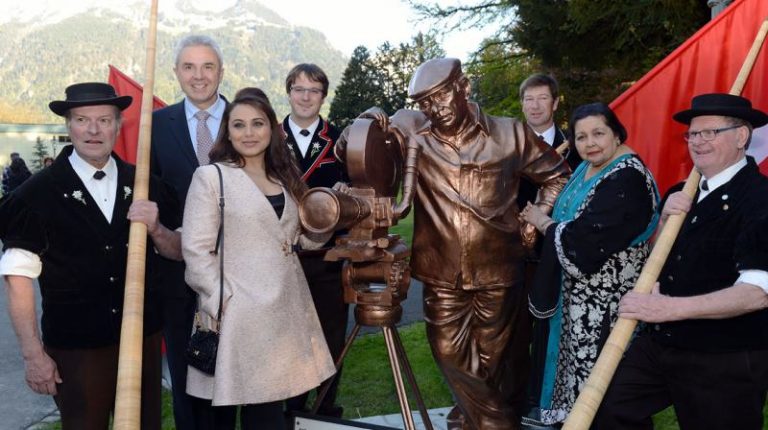
legendary Bollywood filmmaker Yash Chopra’s statue was unveiled in Kurssaal
Garden in the central Swiss town of Interlaken, canton Bern, as a tribute to
his remarkable contribution in popularising the Alpine nation among Indian
tourists. A few years before that, when Chopra was still alive, the government
of Interlaken had awarded him the honorary title of “Ambassador of Interlaken”
in 2011, and Jungfrau Railways named a train after him. In addition, the
five-star Victoria Jungfrau Grand Hotel & Spa in Interlaken named a suite
after Chopra!
Yash Chopra made romance blossom amidst
snow-clad Alps, grassy fields, and exotic flowers, making Indians fell in love
with Switzerland again and again. He created a magic in the pristine Alpine
panorama, and Darr, Lamhe, Chandni, and Dilwale Dulhaniya Le Jaayenge
(DDLJ) are beautiful testimonies of the signature style of the king of romance.
However, Bollywood has always been fascinated with foreign locations, and one can
easily recall the cinematic magic of films like Love in Tokyo (1966) directed
by Pramod Chakravorty and An evening in Paris (1967) directed by Shakti
Samanta. These films were shot when outdoor locations were a rare sight in
Hindi cinema.
Over the years, not only
Bollywood started exploring various exotic destinations for shooting, but Indian
tourists also developed a knack for travel. A country crazy for films, also
becoming crazier for travel. Though, several travel shows and tv channels in
India have caught the attention of travellers looking for new destinations to
explore, but there are no dedicated tourism film festivals in the country.
Francisco Dias, Director of Art & Tur International Tourism Film Festival, Portugal’s oldest tourism film festival, feels that a tourism film festival can provide a major boost to not only tourism directly but also help in developing an ecosystem benefiting all. He had launched the festival more than a decade ago, when anybody would be remotely interested in organizing something like a tourism film festival.
Prof. Francisco Dias, Director, Art & Tur International Tourism Film Festival , Portugal
“Way back in 2007, it was difficult to make any one understand and believe in the idea of a film festival around tourism, as it was no one’s focus area. Today, we have our festival being organised in various municipalities in Portugal and a dedicated audience comprising of filmmakers, producers, govt. officials, tourists enthusiastically participating every year. There has been a tremendous change,” says Dias, who is also a Professor at the Polytechnic Institute of Leiria and Vice President of Centro Portugal Film Commission.
In India, for a week-long academic
trip, Dias is of the view that ‘Film festivals are a medium and not a
destination and tourism films makes you develop a stronger and deeper
relationship with a place, its people, culture and cuisine.” He further shared how
he has been creating an ecosystem of tourism film festivals and more such
festivals will be happening in Spain, Brazil, Japan and South Africa.
Dr. Ali Afshar, architect and film producer from Iran
Similar thoughts are also echoed by Dr. Ali Afshar from Iran, who is also passionate about the power of tourism films and was on his maiden visit to India. An architect by profession and Assistant Professor at Eqbal Lahoori Institute of Higher Education in Tehran, Afshar has been conducting workshops on ‘Architecture and Cinema’. Taking forward his philosophy of ‘happiness’ in urbanism, he is now working on a film project called “Happy Island”. Sharing more about it, he says, “It will be a short film focussing on island Kish, which is located off the southern coast of Iran in the Persian Gulf and has tremendous tourism potential.”
“The short film will not only
focus on island Kish as a tourism hotspot but also on the issue of responsible
and sustainable tourism, a zero-waste island and nature friendly spaces,” he
adds.
For film buffs and travel
enthusiasts there could be nothing more exciting than a tourism film festival,
which could introduce them to new destinations, cuisines and cultures, and give
them another opportunity to create memories for lifetime.
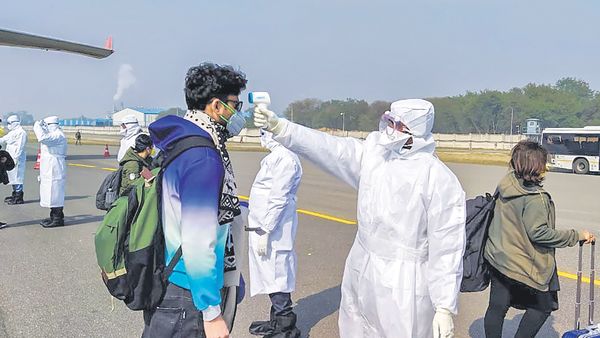
To curb the spread of coronavirus, India is monitoring its outbreak at the highest level. Secretary (HFW), Preeti Sudan, recently chaired a video conference (VC) with Health Secretaries from States/UTs along with senior officials from Ministry of Shipping, Ministry of External Affairs, Ministry of Civil Aviation and Ministry of Tourism to review their preparedness for prevention and management of COVID-19.
Secretary (HFW) informed that
various precautionary measures have been undertaken in close coordination with
the concerned ministries at the central level. She added that the situation is
under control in the country and is being regularly monitored by Prime
Minister’s Office, Union Minister of Health & Family Welfare and Cabinet
Secretary on a regular basis regarding the updates, status of preparedness and
actions taken so far. In addition, the Group of Ministers is also reviewing the
status; two meetings of the GOM have been held till date. States were informed
that while the cases have not increased in the country, the vigil needs to be
kept high. States were urged to keep enhancing the awareness among the masses
for prevention through personal hygiene, and self-reporting in case of any
travel from China and other identified countries.
States were advised to regularly
fill the requisite information accurately and in timely manner on the portal
which has been put in place as a special surveillance web tool to monitor the
cases on a real time basis, and to help in national-level monitoring.
Secretary (Health) further
elaborated that containment and prevention activities shall be taken up on
utmost priority. All the states need to strengthen their rapid response teams
to counter any eventuality. Also there needs to be role clarity and robust
administrative structures in place at all Districts.
She informed that one patient, a
student from Wuhan University, who tested positive for the COVID19 thereby
becoming the country’s second such case, was on Thursday discharged from the
isolation ward of the Alappuzha Medical College hospital, Kerala. She commended
the efforts put on by all the States/UTs and various ministries to combat the
situation arise due to COVID19 in India.
States/UTs have reported that the
protocols and guidelines issued are being followed to avoid any eventuality.
They further informed that the sufficient stocks for Personal Protection
Equipments and masks have been procured.
States of Uttarakhand, Uttar
Pradesh, Bihar, West Bengal and Sikkim bordering Nepal have been advised to
strengthen the disease surveillance.
So let’s start this one with some hardcore facts. A good (read best) book on sports is the one which persuades readers — who hate statistics like me — to empathize with players and their lives. Those are readers who are just looking for a darn good story. That, in short, means the book has worked wonders with readers who loved such heartbreak tales of players, and their wonder victories on the podium. That also means the book has fit the bill as one of those rare gems in the Indian publishing market. And the authors have successfully transported readers inside the boxing ring, they have made readers watch the shuttle with complete concentration inside a badminton court, they have dropped readers inside a shooting range with some brilliant detail by brilliant detail.
No, I am not telling you the whole story, I am merely saying why you need to pick up a copy of Dreams of a Billion: India and the Olympic Games by Boria Majumdar and Nalin Mehta. These two brilliant sports historians and authors, if let loose, could run wild like Butch Cassidy and the Sundance Kid and transform Indian sports and its management with their brilliant ideas. But that has not happened, the babus and politicians have refused professionals to run sports in a billion plus nation. So Majumdar and Mehta write books and offer ideas to those in the business of sports, both are always on the podium and every time on television channels to discuss sports, sports persons and the business of sports. They are a unique Bikash-Krishanu combo. If you have not understood about the Bikash-Krishanu combo, replace it with a MacFish-Coke. You will have your fill. That’s all about the authors.
So let’s return to the book, a wonderfully reported glimpse of sports stars and their coaches and how they act and react before the big, prestigious games, the big arena Olympics. The book has worked because the authors understand sports and constantly mingle with sports stars, coaches and managers of the game. So they have a first hand idea of how successful sports stars survive tension-ridden moments before walking into the court, and more importantly, what coaches do to turn ugly into bad and eventually good moments. Majumdar and Mehta knew their book will be read by a WhatsApp generation, both offered recent examples of such success stories in the world of Olympics.
The book has broken barriers, shattered myths in a nation where many — till recently — believed India only dominated in hockey in the Olympics some four decades ago and now only a handful of sports persons are bringing Olympic laurels. And that India is far away from the Olympic dreams. That’s not the case, the book tells us. The book — in my opinion — tells me of the sleeping dragon in the mythical Shangri-La. It tells me India’s sporting potential is immense, actually immense. And it is high time the government grants more cash to the sports ministry while finalising the annual budget. The book tells me why Niti Aayog and even the PMO must discuss sports and not only cross border diplomacy and internal security. The book has showcased stars who have done exceptionally well, the book is a reminder for the government if funds are allocated well, India can – actually — be among the top ten nations in the Olympics.
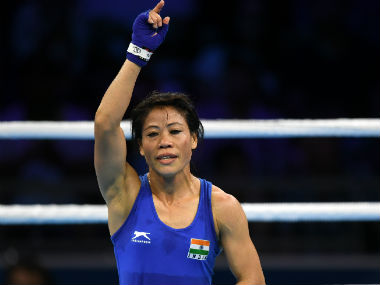
Mary Kom, India’s boxing superstar from Manipur
Let’s start with the MC Mary Kom story. The diminutive boxer is from Manipur, a state in news more for soldiers with guns and bullets, drug addicts and routine violence. It is a state where the routine is horrible and the horrible routine. Yet, Manipur is home to some of the top boxers, footballers and hockey players. Mary Kom, say the authors, is mother superior of the state. Mary Kom, defied norms at 36, winning the gold medal in the Gold Coast Commonwealth Games, at the Asian Games and also at the World Championships in Delhi. And then, the authors found her as the face of the Tata Mumbai Marathon where she sang on the stage and brought the whole audience to its feet. SheThePeople, a lovely television channel run by the affable journalist, Shaili Chopra, quoted her as saying the following: “People have 72 dreams of a billion and started to expect the gold medal from me in Tokyo (Olympics). What people don’t realize is that I will yet again have to fight in the 51 kilogram category with boxers who are taller and stronger. But I am not saying this as an excuse. All I am trying to say is it will not be easy to make it to Tokyo and win a second Olympic medal.” If Bengal’s most celebrated sports writer, Moti Nandy, was alive, he would have said: Fight, Mary, fight.
The book says boxing was not easy for Mary Kom. She was born in a lower middle-class household, walked miles to attend classes and was beaten by her father for wanting to pursue boxing and was racially vilified ever since she came to Delhi. She braved taunts of chinki — a shameless term coined by North Indians for girls from the northeastern states for their Tibeto-Mongoloid features — and beat Nikhat Zareen, fourteen years younger, at the Indian Open in May 2019 and won gold at a World Championship preparatory event two months later.
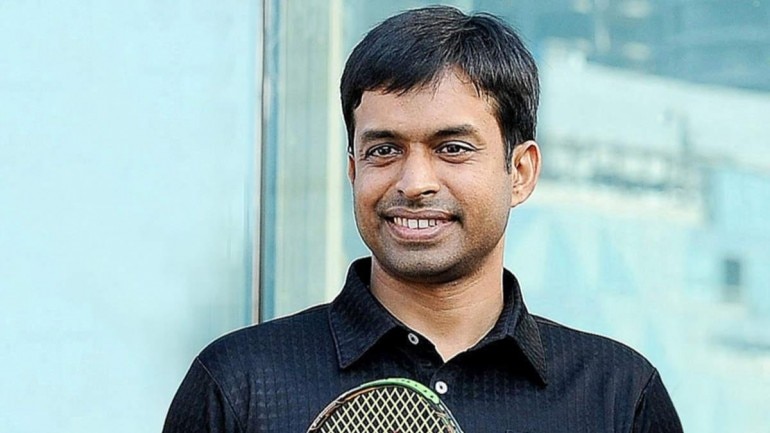
Pullela Gopichand, former Indian badminton player is Chief National Coach for the Indian Badminton team.
Write the authors: “A similar issue arose between the two over representing India at the Tokyo Olympics. Zareen, known for having won a bronze medal at the 2019 Asian Championships, made an impassioned plea to the sports minister and the Boxing Federation of India for a trial bout. Abhinav Bindra sided with her, saying that as athletes you are always judged in the present and not by what you have accomplished before. Hence, it was a matter of time before a trial was organized. The federation, while initially reluctant, did eventually give in, saying that the same rules should apply to everyone. This controversy should never have been allowed to fester. Their selection trial was scheduled for December 2019, by which time this book would have already gone to press. Mary, who had publicly opposed the trial match, wasn’t pleased with the outcome but was left with no option but to accept the ruling. Frankly, this is the best way forward.”
Do you know that the life of MC Mary Kom is not just medals but also loads of blood and sweat? She is the best boxer in her category in India. She proved this at the World Championships by becoming the first-ever boxer in history to win a record eight medals, surpassing Cuban legend Felix Savon.
Majumdar and Mehta — throughout the book — persuade readers to empathize with the players. They write that the actual event may last a few minutes, or at the most, for an hour. But fame is permanent, it is never short-lived. The book shines because it sheds light on several untold aspects of the Olympics involving Indian sports persons. Sadly, there are very few books about Indians and their participation in the Olympics.
Why Mary Kom, why not discuss the struggle and success of single arm, double Paralympic gold medalist, Devendra Jhajharia who battled against the odds to win his Paralympic javelin gold in 2004? Read this part, and you will realise how tough life is for sports persons in India. Says Jhajharia: “When I went to the Athens Paralympics in 2004, all I had was a pair of spikes that cost me Rs 400 and a javelin priced at Rs 300. That’s all I had. I paid for the trip myself, (I) was one of the twenty-five athletes who represented India in Greece.”
“Every other athlete participating in Athens would come to the stadium with his personal coach, trainer, physio and support team. They had better javelins, which were very similar to the ones we use now. But for me, it was never about facilities. It was never about the quality of my javelin or spikes or coaching. It was always about hard work and more hard work. Working the hardest was my weapon against adversity and I am glad it worked for me.”
Want more? Jhajharia lost an arm at the age of eight when he accidentally touched an electric cable while climbing a tree. He was depressed when he returned from hospital and did not leave his house. His mind was weighed down with a huge sense of inferiority and peer pressure. Eventually, it was his mother who motivated him to go out and play. His mother was confident in her son. Indian mothers are different, they can gauge the world even if they rarely step out of their kitchen and bedroom.
Majumdar and Mehta’s reporting is fresh and has some solid, meticulous archival digging. There are heavy sections, there are light sections, there is hope, there is despair, and there is hope again. The book tells me why the Olympics have the ability to bring the world together and why every sports person wants an Olympic medal in his trophy chamber. I remember how in 2018 North Korea and South were drawn together, albeit only for a brief time. In A Team Of Their Own: How an International Sisterhood Made Olympic History, Seth Berkman — claims The New York Times — offers an insider’s look at what happened when North Korea and South Korea unexpectedly combined their women’s hockey teams to play on a unified squad at the Pyeongchang Olympics. Majumdar and Mehta’s tome is also unique, the behind-the-scenes opportunity shows in the duo’s clear storytelling, their passion for the subject is also clear. They weave the back stories of the sports persons in a larger examination of culture and identity, extremely important for the current generation in South Asia. What a wonderful book.
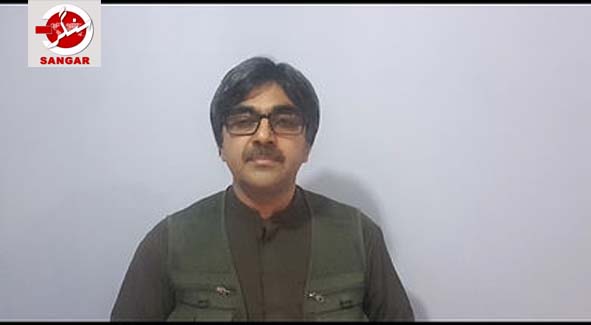
Dil Murad Baloch, Central Information Secretary of the Baloch National Movement (BNM) has said that year 2020 has begun with innumerable state atrocities by Pakistan on Balochistan. The security forces of Pakistan carried out more than 30 military operations and raids across Balochistan in the month of January and 67 persons were arrested and were forcibly “disappeared” during these operations. Approximately more than 50 houses were looted and 30 houses were burnt down.
Thirty one persons were killed in the month of January; whereas the cause of 23 persons’ death remained undetermined. The other 8 Baloch were killed by the security forces of Pakistan. Essa Shah Zaman Bugti who was previously abducted by security forces on 14th January was killed in a fake encounter by the military. Similarly another person was killed in a fake encounter by Levies force. One person, a resident of Sodd, Jahoo district Awaran was killed by the state sponsored death squad. And five others laid their lives in fighting against the state security forces.
Forty three persons were released from Pakistan secret cells in the month of January. Among them, two had been forcibly disappeared since 2013, two since 2014, one since 2015, six since 2016, ten since 2017, twelve since 2018 and ten since 2019 by the security forces of Pakistan.
Dil Murad Baloch stated that since the last two decades the atrocities of Pakistan had been increasing with every passing year. This reveals the intentions of Pakistan for carrying out the genocide across Balochistan. Not a single place in Balochistan is spared from the atrocities of Pakistan. From every nook and corner of Balochistan people had not only been abducted but also houses were set on fire. Spy agencies of Pakistan and the Pakistan Army had been abducting people, looting houses and livestock on a daily basis. The proxy terrorist organizations and death squads of Pakistan have turned Balochistan into a hell for Baloch people. Security forces pick up the young children in front of their helpless parents. Some of these relatives could be seen in the protests and hunger strike camps for the recovery of their loved ones for years. But rarely does anyone gets released from the clutches of Pakistan Army.
“…this is crystal clear that the atrocities of Pakistan in Balochistan have taken the shape of a humanitarian crisis. The victims’ families are going through an unbearable situation and the situation is even getting worse. Hence for the last several months, it can be clearly perceived that a parliamentary party has been using the problem of ‘missing persons’ as a political means of securing political benefits from the army and has thus been directly involved in bargaining with the state; though the problem of enforced disappearance of the people by the Pakistan Army and spy agencies are linked with the slavery of the people,” he explained.
Dil Murad Baloch further explained that Pakistani state lacks all human and international values and it dishonours to its own constitution. “That is why for the last two decades thousands of Baloch are illegally and for indefinite periods of time in the torture cells of security forces of Pakistan. But the state lacks obligation to its own constitution and courts and is unable to produce a single person among these thousands of “forcibly disappeared” persons before its own court. This scenario puts thousands of Baloch in a state of decay and death. But they are fully aware of one fact that their children are bearing these illegal detentions for the great cause. There is not a single case where the family members of the missing persons bowed before the state and made a compromise for the release of their loved one. But unfortunately, a parliamentary political party has been exploiting this humanitarian crisis and using it brazenly for its political game. It is already clear that it has secured two to four seats in the parliament by secretly dealing with the Pakistan Army, which became clearer by their supporting the Army Act; and as a result of this only some people were released,” he added.
Dil Murad Baloch added, “We are going through a historical transition; where history on one side will remember the atrocities of the state; on the other side the submission of the so-called political party before the enemy will never be forgotten. The humanitarian crisis of the enforced disappearance and playing with the emotions of the victims’ families through bargaining with the enemy forces is tantamount to being an equal partner of Pakistan in its war crimes. On one hand a few missing persons are being released from torture cells and being handed over to this party in order to cover the war crimes of Pakistan Army; on the other hand a greater number of people are being forcibly disappeared and the number of the missing persons is increasing enormously.”
“A few people among thousands of missing persons are being released from the torture cells of army, and they are being handed over to the central and local level of leaders of this political party; they are equally answerable along with state that where had been these missing person for years? For what crime they were detained? And what sort of ordeals they had to suffer? Those political parties surely know about the fate of thousands of missing persons and what sort of deal they have made or will make with the state regarding the missing persons? Sooner or later the Baloch nation and the history will hold them accountable for this,” Dil Murad Baloch questioned.
He added, “The illegal abduction of the people is a big crime. No law of the world, not even the constitution of Pakistan permits it, but this inhuman act is being fully exercised in Balochistan. This is a clear war crime. And Pakistan would have been held accountable for this war crime, but Pakistan has been exonerated at the expense of the emotions and helplessness of the people. As history will punish Pakistan, characters like those of the parliamentarian groups will also never be free from history’s penalty.”
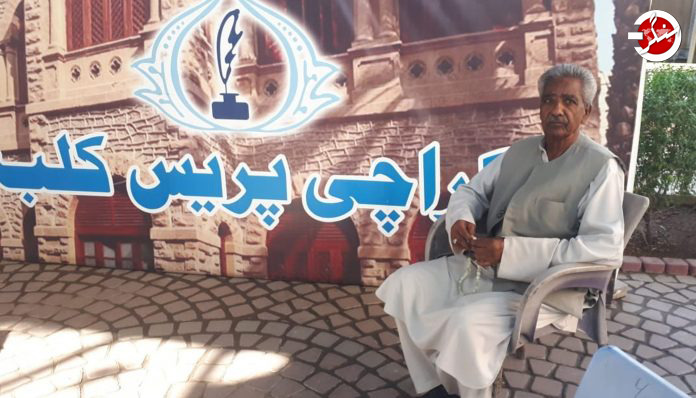
The Voice for Baloch Missing Persons (VBMP) will organize a protest demonstration outside the Karachi Press Club at 3 PM (local time) on 16th February 2020 to draw attention of the United Nations Secretary General Mr Antonio Guterres to the grave human rights violations in Balochistan, Mama Qadeer Baloch, vice chairman of the VBMP, said in a video message that was released on social media.
For the last eighteen years, Pakistani security forces have been actively involved in the enforced disappearance and extra-judicial murders of students, political activists and human rights defenders in Balochistan with impunity. In most cases, they have tortured the victims and thrown their mutilated dead bodies at desolated places, explained Mama Qadeer Baloch.
The #VBMP will organize a Protest outside the Karachi Press Club at 3PM on 16 Feb to draw the attention of the #UN Secretary-General to the Grave Violations of #HumanRights in #Balochistan .We appeal to all HR activists, students & social activists to participate in our protest. pic.twitter.com/CZrCOekbt4
Mama Qadeer Baloch, Vice Chairman of Voice for Baloch Missing Persons (VBMP) in this video message explains that VBMP will organise a protest outside Karachi Press Club to draw attention of the United Nations Secretary General Mr Antonio Guterres about grave human rights violations in Balochistan
According to data gathered by the VBMP, thousands of Baloch people including children, elderly and women have been picked up by the Pakistani security forces outside the purview of law. Even the judiciary has failed to offer any remedy and the perpetration of crimes against humanity continues in Balochistan with no help in sight.
UN Secretary General Mr Antonio Guterres is expected to visit Pakistan from 15th February, and will be accompanied by a 14 member delegation.
The VBMP appealed to marginalized religious and ethnic minorities to participate in their protest to remind the UN Secretary General about Pakistan’s failure to live up to its pledge of respecting the UN conventions it has ratified, and to request Mr Guterres’ personal intervention in resolving the humanitarian crisis facing the people of Balochistan.
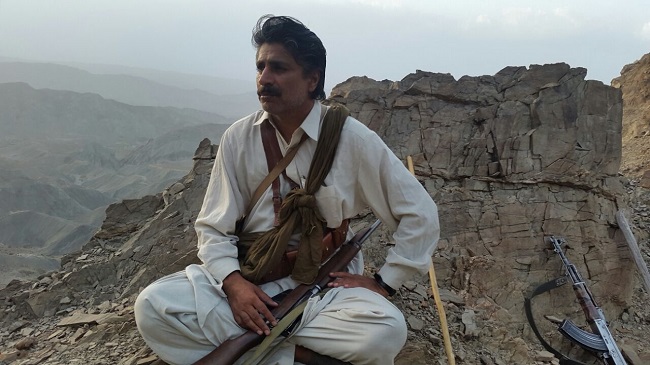
Balochistan Liberation Front (BLF) spokesman Major Gwahram Baloch claimed responsibility for the attack on the death squad’s hideout, including a check post and a checkpoint of the Pakistani Army in Awaran.
Maj. Gwahram Baloch told the media from an unknown location that the freedom fighters of Balochistan attacked the Pakistani military check post at Labach Dansar area of Awaran district at around 4 AM (local time) on Wednesday morning with rockets and automatic heavy weapons. Three Pakistani military personnel were killed and two were injured in the attack.
Maj. Gwahram Baloch added that a military outpost located at Kor-e-Dot in Awaran District was hit by rockets and heavy weapons at around 4:30 PM (local time) killing two army personnel and injuring two.
He said the death squad personnel Barkat’s hideout was also attacked in Labach area of Awaran district. The hideout of the aforementioned state-sponsored death squads was targeted with rockets and automatic heavy weapons. The Death Squad established under the patronage of the state of Pakistan is involved in several crimes, including kidnapping, murder, and intimidation of the Baloch and is equally involved in the Baloch genocide by the Pakistani Army.
He said that attacks on the occupying state forces and their assistants and facilitators would continue till the independence of Balochistan.
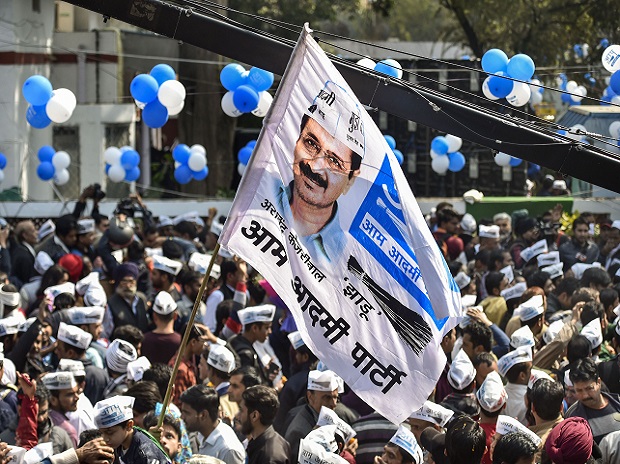
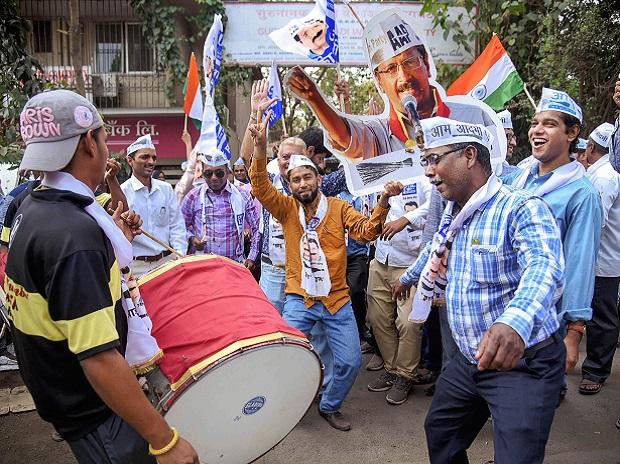
In a splendid electoral performance, the Arvind Kejriwal-led
Aam Aadmi Party (AAP) has won 62 seats while the BJP has won eight seats in the
70-member Delhi Assembly. AAP’s landslide win in the Delhi assembly election,
for the third time, has left BJP stunned.
“This is the victory of every family in Delhi who treated me
like their son. This is the victory of every family of Delhi that has started
getting 24-hour electricity supply, whose children have started receiving
quality education, and whose members have started getting good health services
in hospitals of Delhi,” Kejriwal said after winning the election.
“Kaam ki rajneeti bhari padi (The politics of work
overshadowed everything). We will decide the swearing in date and inform
everyone soon,” he added.
Prime Minister Narendra Modi also congratulated Kejriwal.
“Wishing them the very best in fulfilling the aspirations of the people of
Delhi,” he tweeted.
All prominent AAP leaders have been able to retain their
seats. AAP’s prominent faces Arvind Kejriwal, Manish Sisodia, Satyendra Jain,
Gopal Rai, Imran Hussain, Kailash Gahlot, and Rajendra Pal Gautam, retained the
New Delhi, Patparganj, Shakur Basti, Babarpur, Ballimaran, Najafgarh, and
Seemapuri constituencies respectively. AAP’s Pawan Sharma also kept his Adarsh
Nagar seat, defeating BJP’s Raj Kumar Bhatia by over 1,500 votes. Ambedkar
Nagar, a reserved constituency, was retained by AAP’s Ajay Dutt by a margin of
over 28,000 votes. Chatarpur’s Kartar Singh Tanwar, Deoli’s Prakash Jarwal,
Saurabh Bhardwaj from Greater Kailash, Nangloi’s Raghuvinder Shokeen and
Mangolpuri’s Rakhi Birla also retained their seats.
AAP’s Atishi also won her debut Assembly polls. One of the
most popular faces of the Aam Aadmi Party, had a tough fight. She bagged the
seat with over 11,000 votes defeating BJP’s Dharmabir Singh, who got 39,438
votes against Atishi, who polled 46,775 votes.
As many as 44 sitting MLAs including two from the BJP
retained their seats in the high-pitch Delhi Assembly elections. The two BJP
MLAs — Vijender Gupta from Rohini and OP Sharma from Vishwas Nagar — retained
their seats with comfortable margins of over 12,000 and over 16,000 votes
respectively. Anil Kumar Bajpai, former AAP MLA from Gandhi Nagar, retained his
seat not from AAP but BJP.
Aam Admi Party’s Raghav Chadha, the 31-year-old chartered
accountant-turned-politician, won from central Delhi’s Rajinder Nagar by
defeating BJP veteran Sardar RP Singh by nearly 20,000 votes. This is the first
time that the young AAP leader contested an assembly election. He had last year
unsuccessfully contested the Lok Sabha election from South Delhi.
AAP also won all 12 seats reserved for SC candidates
The Bharatiya Janata Party (BJP) has lost Delhi state elections and it’s certainly time for the BJP leadership to do some serious introspection on why after sweeping win in the Lok Sabha elections in mid-2019, they have not received the same support at state elections in Delhi. BJP had won all seven seats of Delhi in the 2019 General Elections.
It is worth thinking about why Delhi’s electorate changed its mind in less than a year. The BJP leadership at the state level in Delhi should do some serious introspection and compare the results of 2015 and 2020 elections. After an incredible Lok Sabha victory in 2014, they lost badly in 2015. The story is no different between 2019 Lok Sabha elections and the 2020 Delhi State elections. Of the 70 Delhi Assembly seats Arvind Kejriwal-led Aam Aadmi Party (AAP) won 62 seats and BJP could manage to win in only 8 constituencies.
Clearly, the electorate knows their mind and they know what they want from their politicians at the National level and at the State level. Yes, the people have huge expectations from Prime Minister Narendra Modi and his team for the country. They have similar expectations from their local leaders, but in matters that affect their daily lives.
They want the infrastructure in their community and town to be as they expect. They want their local politician to address and resolve these challenges. Mr Kejriwal and his party did a lot of work for Delhi over the past 5 years and this did not go unnoticed. Running down or challenging achievements in education and healthcare was a poor strategy of the BJP. The electorate did not believe the BJP leaders.
Let us look at some reasons why the BJP is consistently losing elections in most of the states.
National Issues are different from State Issues
National Security is critical and every step taken by the Prime Minister has been supported and applauded by the people. At the state elections, people do not want to hear about Pakistan bashing or the achievements of the country in international arena.
Matters like the revocation of Article 370 and Article 35A are important for the nation. However, these are not for discussion at the state level.
State Politicians need to deliver
The central government needs the support of states. Politicians at the state need to deliver in their constituencies. The BJP leadership at the state level must learn to win elections on their own and stop relying only on the senior most leaders. State politicians must realize that they are fighting the assembly elections and not for the Lok Sabha. Therefore, they need to depend on their work and not that of the central government. The state leaders must work to strengthen the hands of the Prime Minister and not constantly look for a free ride. They should bring in the big guns for support and not to win the elections.
If people want good health and good education, is it unreasonable? If they want a pollution free Delhi, they expect work to be done. If the electorate wants free electricity and free water, then so be it.
The electorate
understands the capabilities of the Prime Minister and his team. However, when
they hear their local leaders wax eloquent on national issues without bothering
to talk of local issues, they know these politicians are simply not delivering
what is expected of them.
Alliance Partners of the NDA must be taken into confidence in every election even if it means that the BJP has to lose a battle to win the war. The alliance partners know that the BJP is a strong party and yet they also know that they play a vital role in BJP’s plans at the state level. Alienating alliance partner just before state elections can never be a wise strategy and this normally starts with the bravado of the local state level leaders of the BJP.
Unless the BJP can
carry its partners, they will continue to bite the dust as is evident from
Maharashtra.
Loudmouths of the BJP need to
be told to shut up before every election. The people are tired of the
unnecessary rhetoric from some BJP leaders. They need to be told to stay quiet
if they do not have anything constructive to say. Negative statements are not
supported by anyone (though the politician who makes such statements may get
some applause from the community they are addressing).
Abusive language is
not respected by anyone in India. Why do junior BJP politicians not see and
learn from the dignity of their senior leaders? Such loud mouths do more harm
than good to BJP’s campaign.
BJP’s Communication must improve. Traditionally, the communication of BJP has been very poor. The spokespersons are the same for national issues and state issues who keep pushing the national agenda in all debates without understanding the challenges. If the discussion is about the state elections, the BJP spokespersons will try and manoeuvre the debate to a national issue. BJP needs a separate set of leaders who will address national issues and state issues. The BJP cannot have the same set of spokespersons on every channel on every issue.
Citizens Amendment Act(CAA)
The CAA has cleverly been morphed into National Population Register (NPR) and the National Register of Citizens (NRC), and BJP has not been able to communicate the difference clearly. Varying comments from central leadership is also being used very effectively by the opposition leaders who have very successfully managed to confuse the masses.
For the moment, the BJP can take some comfort from the fact that their vote share has increased in the Delhi elections but unless they change fast, the next round of state elections will have a similar sad story for the BJP.
The Prime Minister spoke of the report card of his government during the Lok Sabha elections and he was given a resounding mandate. What applies at the centre applies equally at the state.
BJP’s state leaders must show their report card and not that of the Prime Minister Narendra Modi or that of the BJP Government at the Centre.
Unless the BJP is in
power in States, they will find it increasingly difficult to implement their
plans and policies.
The harsh truth is
that no one remembers who came second.
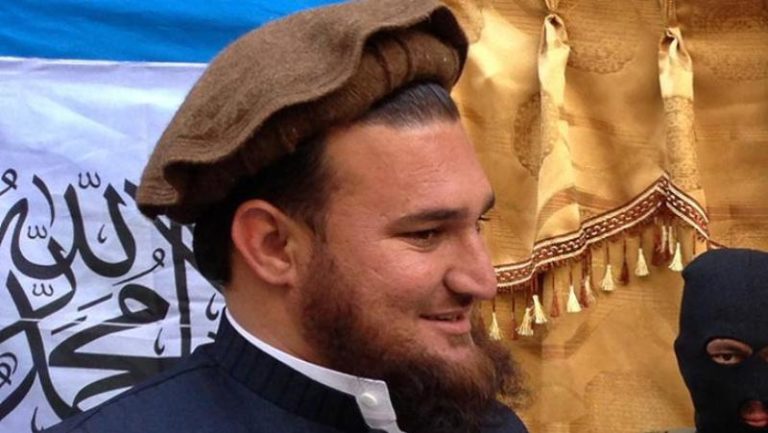
It was The Sunday Guardian that on January 18, first broke the news that former Tehreek-e-Taliban (TTP) and Jamaat-ul-Ahrar (JA) spokesperson Ehsanullah Ehsan had escaped. Ehsan had been kept under detention by the Pakistan Army. But since there was no mention of this ‘breaking news’ in the Pakistani media, this report generated no debate or discussion. Au contraire it was treated with such scepticism that people overlooked the fact that the otherwise very hyperactive Director General Inter Services Public Relations (DGISPR) Maj Gen Asif Ghafoor didn’t even come out to rebut this report that appeared in an Indian newspaper and openly ridiculed the professional abilities of Pakistan Army.
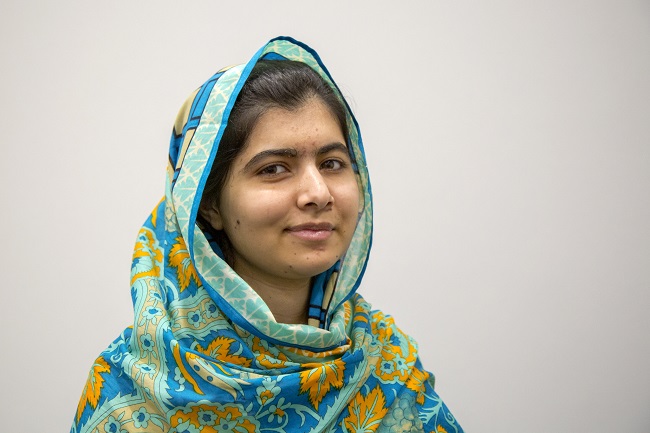
But now that an audio tape purportedly released by Ehsan has emerged in which he has confirmed his escape, the question which arises is that how did this high-profile terrorist manage to escape from military custody? Please remember, Ehsanullah Ehsan belonged to the group that targeted Malala Yousafzai, besides being involved in numerous other terrorist attacks in Pakistan including the despicable Army Public School (APS) Peshawar massacre of innocent school children.
Nobel Laureate Malala Yousafzai. She was shot on her head by Ehsanullah Ehsan in October 2012.
The answer reveals
shocking laxity on the part of Pakistan Army. Quoting “sources in Pakistan,” Daily
Times has confirmed that Ehsan had “escaped
from a safe house where he was detained along with his wife and two daughters”
and that “The Pakistan Army got to know about his escape on January 12.”
That Ehsan not only managed to escape with his entire family
but also succeeded in fleeing the country raises serious doubts about the
Pakistan Army’s sincerity regarding its war on terror. Even though DG-ISPR
vehemently denied it, but right from the time of his so called ‘surrender’,
there were deep suspicions that Pakistan Army had struck some sort of a secret
deal with Ehsan. These fears were strengthened when the army (which otherwise
boasts about its professionalism and efficiency), failed to file a charge sheet
against him even after an year and the degree of suspicion of complicity was so
intense that the distraught parent of an Army Public School, Peshawar victim
even approached Peshawar High Court to ensure that the Pakistan Army doesn’t
manipulate the system to get clemency for Ehsan and thereby facilitate his
release!
Now that Ehsan has escaped, those who have lost their near
and dear ones in the numerous terrorist attacks carried out by Tehreek-e-Taliban
(TTP) and Jamaat-ul-Ahrar (JA) would obviously want to know why didn’t the Pakistan
Army incarcerate a hard core terrorist like Ehsan in a high security prison and
instead put him up in a “safe house” where he could enjoy the company of his
wife and children? How could Rawalpindi be so casual is something that Pakistan
Army chief Gen Qamar Javed Bajwa has to explain to the people and ensure stern
action against those guilty of omissions and commissions that allowed Ehsan to
escape and flee the country. Not filing a charge sheet in itself is a clear
indication of premeditated reluctance on the part of Pakistan Army as regards
bringing Ehsan to justice is concerned and his escape only further reinforces
suspicions of organisational complicity.
In his audio message Ehsan has confirmed that he had
surrendered to the Pakistan Army in 2017 under “an agreement.” This revelation confirms
that the Pakistan Army was being economical with the truth while announcing his
“surrender” and explains why it never charge sheeted him. But this is just the
tip of the iceberg and more skeletons from Rawalpindi’s cupboard will come
tumbling out as the former TTP and JA spokesperson has said, “I will also
mention on whose approval this accord (to surrender) was made with me. And what
were the terms and conditions of the agreement and which prominent figure had
assured me that the agreement will be implemented.”
Ehsan’s claim of having made some sort of an “accord” or
“agreement” with Pakistan Army officials doesn’t appear to be farfetched as Rawalpindi has a long history of
making Faustian deals with terrorists and one is reminded of former US
Secretary of State Hillary Clinton’s observation about Pakistan keeping ‘snakes
in its backyard’ and US President Donald Trump’s tweet about “lies & deceit”
that Islamabad has been peddling for the “last 15 years.” The international
community has turned a blind eye to Rawalpindi’s perfidy in regards to going
soft on certain terrorists for too long and in order to make the world a safer
place to live in, concerted action for compelling Pakistan to cease patronising
terrorist groups is the crying need of the hour.
Tailpiece– Since Ehsan has ‘confessed’ working at
the behest of Indian spy agency Research and Analysis Wing (R&AW), Pakistan
Army’s decision to keep him in a ‘safe house’ is in itself highly suspect. So, if
Rawalpindi continues to hold that Ehsan is a R&AW operative, then it has to
admit that by executing the successful ‘covert extrication’ of its ‘asset’, R&AW
has outwitted Pakistan’s Inter Services Intelligence (ISI). But if this isn’t
the case, then it’s obvious that that his so called ‘escape’ has been
clandestinely orchestrated by certain influential and powerful elements within the
Pakistan Army for whom Ehsan was proving to be a hot potato?
My life changed forever during a visit to my native village Sogam Lolab in Kashmir Valley. This was 17 years ago, and I was an excited 8-year-old boy. We were visiting after a long time. From Srinagar, we had traveled to north Kashmir’s Kupwara to reach the village.
Upon arrival, my mother decided to visit my uncle’s house and spend the night. She insisted that I stay with her but I didn’t listen. I went to another uncle’s place to have fun, as I hadn’t met them in a long time. Little did I know, it was going to be the last time I would speak to my mother.
To my surprise, at around 6 PM that day, all the neighbouring houses in the village switched off their lights. I asked my cousin about it, and he said, “Militants make routine visits to the houses in the village, and people offer them food and other things. Nobody has the guts to say anything to them. Whatever they say, everyone follows.”
At around 7 PM, while I was playing carrom with my cousins, we heard some gunshots. Initially we thought it to be an encounter between security forces and militants, because militancy was far too common in the Valley back then. After a few minutes, upon hearing loud cries from outside, we rushed to the gate to find my aunt weeping. When we entered the house where my mother was staying for the night, we saw blood stains on the walls. My elder sister fainted, and my brother and I had no idea what was going on.
The following day, people started gathering at our house. I saw two lifeless bodies lying on the bed — one was my mother and the other was my uncle.
There was a cotton roll full of blood in my mother’s right eye.
Eight-year-old me kept asking everyone why was my mother lying on the bed and why nobody was speaking to her or asking her to talk. I could only think of her being angry at me for not staying with her the previous night. Then I saw my father crying and realised something was wrong. Nobody responded to my questions; everybody was crying.
In the evening, I was told to see my mother’s face for the last time before the burial. I also went to the graveyard and filled her grave with my hands. It was all a blur, and I was absolutely clueless about the goings-on.
So what really happened that fateful night to my mother? The story goes, the militants had come knocking on my uncle’s door, and asked my mother for water. When she returned with water, one of them shot my uncle in the chest, while another shot my mother in the eye. Both of them died on the spot, and the militants fled.
Those militants not only killed two people – they rendered seven children motherless in the blink of an eye.
Seventeen years have passed, but the incident remains fresh in my memory. I still recall my last moments with my mother.
As per the central government’s data, there has been a 40% decline in the recruitment of militants in 2019 since the previous year. After the crackdown on Jamaat-e-Islami and the Hurriyat, stone-pelting has reduced. The Hurriyat has also faced opposition and rejection rejected from different sections of the Valley because of their failed Kashmir policy.
But the youth in south Kashmir, especially Tral, Pulwama, Shopian, continue to join militant outfits. They tend to easily fall for the ideals of jihad, after systematic brainwashing. They have no idea what they are up to, but they seem to prefer death over life.
It’s believed that (late) Hizbul commander Burhan Wani heralded the use of social media to recruit Kashmiri youth into militant ranks.
The fear of the gun in Kashmir is the only reason people don’t want to raise their voice against militancy and violence. In the past, we have witnessed the fate of those who have spoken against gun culture and violence in the Valley. Nobody dares to question the militants in such an atmosphere.
We use cookies on our website to give you the most relevant experience by remembering your preferences and repeat visits. By clicking “Accept All”, you consent to the use of ALL the cookies. However, you may visit "Cookie Settings" to provide a controlled consent.
This website uses cookies to improve your experience while you navigate through the website. Out of these, the cookies that are categorized as necessary are stored on your browser as they are essential for the working of basic functionalities of the website. We also use third-party cookies that help us analyze and understand how you use this website. These cookies will be stored in your browser only with your consent. You also have the option to opt-out of these cookies. But opting out of some of these cookies may affect your browsing experience.
Functional cookies help to perform certain functionalities like sharing the content of the website on social media platforms, collect feedbacks, and other third-party features.
Performance cookies are used to understand and analyze the key performance indexes of the website which helps in delivering a better user experience for the visitors.
Analytical cookies are used to understand how visitors interact with the website. These cookies help provide information on metrics the number of visitors, bounce rate, traffic source, etc.
Advertisement cookies are used to provide visitors with relevant ads and marketing campaigns. These cookies track visitors across websites and collect information to provide customized ads.
Necessary cookies are absolutely essential for the website to function properly. These cookies ensure basic functionalities and security features of the website, anonymously.
Cookie
Duration
Description
cookielawinfo-checkbox-analytics
11 months
This cookie is set by GDPR Cookie Consent plugin. The cookie is used to store the user consent for the cookies in the category "Analytics".
cookielawinfo-checkbox-functional
11 months
The cookie is set by GDPR cookie consent to record the user consent for the cookies in the category "Functional".
cookielawinfo-checkbox-necessary
11 months
This cookie is set by GDPR Cookie Consent plugin. The cookies is used to store the user consent for the cookies in the category "Necessary".
cookielawinfo-checkbox-others
11 months
This cookie is set by GDPR Cookie Consent plugin. The cookie is used to store the user consent for the cookies in the category "Other.
cookielawinfo-checkbox-performance
11 months
This cookie is set by GDPR Cookie Consent plugin. The cookie is used to store the user consent for the cookies in the category "Performance".
viewed_cookie_policy
11 months
The cookie is set by the GDPR Cookie Consent plugin and is used to store whether or not user has consented to the use of cookies. It does not store any personal data.