Home Blog Page 388

Au Revoir Lt. Gen. Ranbir Singh, we will miss your steely determination and calm demeanour

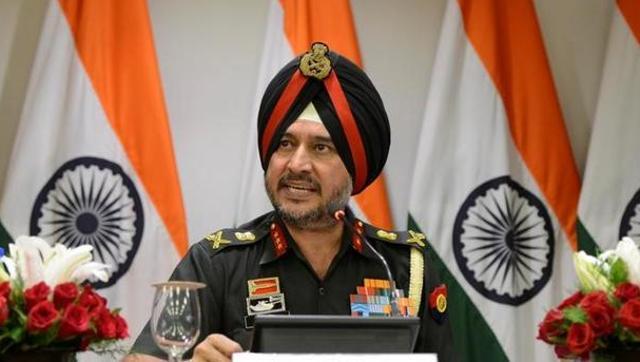
Lt. General Ranbir Singh, Army Commander of the iconic Northern Command since 1st June, 2018 will superannuate from military service on the 31st January, 2020. He will be sorely missed by the rank and file of the command since, throughout his tenure, he has spent maximum time with the troops operating in remote areas. He will be remembered by the other security forces, political and bureaucratic establishments for the seamless synergy and confidence he instilled between organisations. Most significantly, he will be missed by the common man who felt safe under his watch.

Lt. General Ranbir Singh has had a distinguished career. Apart from commanding sensitive formations and serving overseas with the United Nations, he had extensive tenures in the Directorate General of Military Operations (DGMO) and instructional institutions. He has, thus, developed considerable expertise in counter insurgency operations, operational art and information operations. It is for this reason that he was specially chosen to head the Northern Command.  

The Northern Command encompasses varied terrain from the icy glaciers of Siachen to the plains of Akhnoor. It also has the unique distinction of guarding four different types of borders – the Line of Actual Control (LAC), the Actual Ground Position Line (AGPL) with China, the Line of Control (LOC) and also the International Border with Pakistan. Each one of these boundaries comes with a separate politico-military perspective which poses a very big leadership challenge.

When the General took over Northern Command the after effect of the Surgical Strike carried out by Indian troops on 29th September, 2018 was still palpable. Pakistan was nursing a bruised ego and added to this was the fact that the General was a principle planner of the strikes. Seething in anger, Pakistan definitely looked for revenge and retribution. The General completely disregarded the pressure.

Lt General Ranbir Singh was mandated by the government to rid the region of the menace of cross border terrorism and was given a free hand to do so. He used the free hand in full measure to fulfil the mandate.

Sustained counter-terrorist operations became the norm in his command. Cowardly attempts by the enemy to instigate civilians towards disruption of the operations did not make the forces relent from their objective. They, instead, formulated good operating procedures for crowd control that worked well. Meticulous planning, synergetic effort, excellent intelligence gathering and a host of other coordination aspects combined with good leadership played a big role in the conduct of successful operations and a virtual wipe out of terrorism.

In September 2018, Pakistan Army Chief said that the country would launch ten surgical strikes if India launches one.  General Ranbir Singh dealt with the cowardly threat with disdain. “It doesn’t really matter what statements are made from which quarter, it is important for us to retain and refine our capabilities and be prepared for any contingencies at all times,” he had said while adding that the Indian Army continues to be a “potent, responsible and accountable instrument of national power.”

A big security challenge came up on 1st November, 2018 with the dastardly murder of a Bharatiya Janata Party (BJP) leader, Anil Parihar, in Kishtwar. The killing immediately raised fear of a revival of terrorism in the area that has remained peaceful for decades. The assistance of the army to contain a potentially explosive situation was solicited. Lt General Ranbir Singh immediately visited Kishtwar and carried out a detailed assessment along with the civil administration. He complimented the solidarity among communities while offering condolences to the bereaved families. “There have been reports of activities of terrorists in the south of Pir Panjal but these are isolated incidents and we have been able to check and arrest any kind of movement in the region. People of the area know the dividends of peace in the area and have helped the army in keeping it this way. I want to thank people for this as well,” he said. Thus, the situation was restored with great patience and maturity.

Lt General Ranbir Singh gave considerable thrust to “Winning Hearts and Minds” (WHAM). Primary among his concerns was weaning away of youth joining terrorists’ rank and file. The initiatives taken by former J&K Governor Satya Pal Malik in this direction elicited complete support from the Indian Army. Initiatives like the Super-40 designed to prepare students for competitive examinations, other sports competitions and Hunar-e-Kashmir Youth Festival organised by the Srinagar-based Chinar Corps witnessed path breaking results. The Army Commander made it a point to interact with many young boys and girls of Kashmir, particularly those who had achieved laurels after being trained by the Indian Army. The end result has been a perceptible decline in the recruitment into terrorism.

Indian Army under General Singh paid particular attention to the Line of Control (LOC) by augmenting the fencing with smart technology and further strengthening it physically. The effort accrued excellent results in neutralising of infiltrating terrorists. Now, the number of foreign terrorists operating in Kashmir is at an all time low. Local recruits were left without weapons, ammunition and equipment.

The Army improved on its weapon and equipment profile with state-of-the-art Sniper Rifles, Bullet Proof Jackets and other essential operational equipment. Provision of better administrative facilities vastly improved living conditions leading to more operational efficiency.

A monumental security crisis came up in mid-February 2019 in the form of a terrorist attack on a CRPF convoy in Pulwama, Kashmir. India responded within a few days with aerial strikes on a terrorist camp at Balakot, deep within Pakistani territory. The camp was razed to the ground and hundreds of terrorists were killed. The strike was followed by an aerial dog fight the next day in which an Indian pilot, Wing Commander Abhinandan, was taken prisoner. He was returned back to India in a couple of days. Even as the return of the Wing Commander was underway, heavy firing was reported all along the LOC which led to some civilian casualties. Pakistan had chosen not to relent. The Indian Army, under Lt. General Ranbir Singh, ensured that the fallout (external as well as internal) was managed well.

The general elections in May 2019 saw the incumbent NDA government return with a decisive majority. Lt General Ranbir Singh reiterated the commitment of the force towards discharge of its constitutional responsibilities. “Indian Army remains committed to be able to take on any challenge as far as external threats are concerned and similarly take on any internal disturbances when called upon to do so….” he said in May 2019. To Pakistan he sent another firm message, “They dare not try and come anywhere near the line of control to carry out any kind of action. Our deterrence and articulation of our military strategy is very clear. Should there be any misadventure by Pakistan, they will be given a befitting reply.”

On August 2019, the parliament of the country passed a legislation to reorganise the state of Jammu and Kashmir into Union Territories of Jammu and Kashmir and the Union Territory of Laddakh. Parliament also diluted the provisions of Article 370 and Article 35A in a manner which rendered them toothless.

The changing political narrative necessitated a state of high alert. Lt. General Ranbir Singh called a meeting of the security core group that comprises heads of all security forces operating in the region. He highlighted Pakistan’s initiation of ceasefire violations, pushing of infiltrators across the LoC, calibrating of terrorist actions in the hinterland and exploiting of social media to launch disinformation campaign in J&K. He noted that the Indian Army had given a befitting response in thwarting these nefarious designs of the enemy. He urged the people not to fall prey to the enemy’s evil designs to poison their minds with incessant propaganda and exhorted them not to proliferate or indulge in rumour mongering. He warned Pakistan Army against continuing with a disruptive course. All through the period of transition from statehood to Union Territory, the Indian security forces have remained firmly in control of the situation and ensured peace and security.

With regards to China, the Army Commander ensured peace and tranquillity with confidence building mechanisms to ensure that there are no friction points. If friction came by it was not allowed to escalate. Things have remained quite stable on the Chinese front.

The sterling, passionate and selfless service to the nation given by Lt General Ranbir Singh, especially so in Jammu and Kashmir as Army Commander Northern  Command, which also marks his last tenure in a long and distinguished service, deserved the highest approbation and respect. His steely determination hidden under a calm and affable demeanour will be remembered in times to come.

While wishing Au Revoir’ and Godspeed to the General, the Northern Command cannot spare even a moment of respite since the enemy is ever vigilant for a weakness to show up and be exploited. Undoubtedly, General Ranbir Singh will leave the Command in some very capable hands.
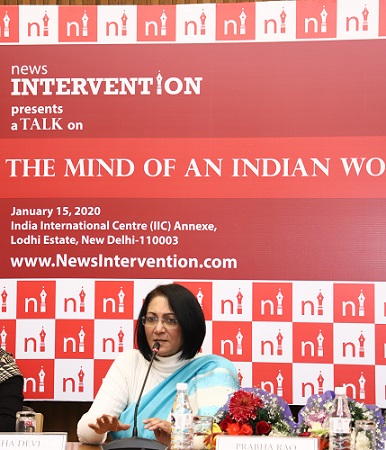
Don’t thrust sanitary pads on rural women without their consent: Prabha Rao

0

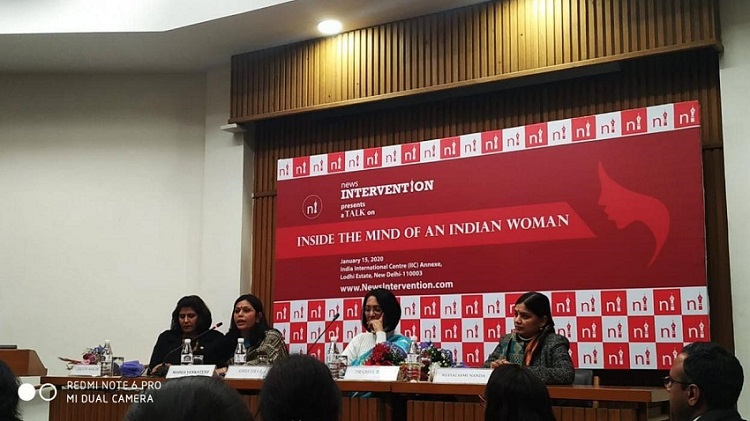
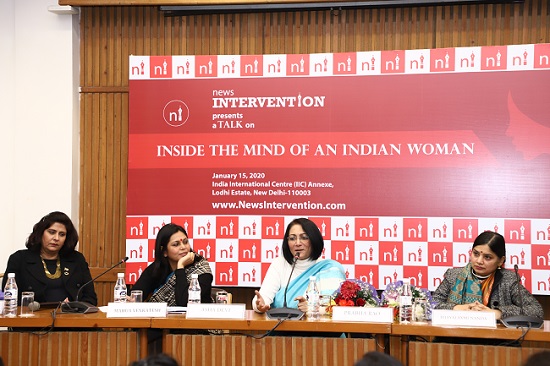
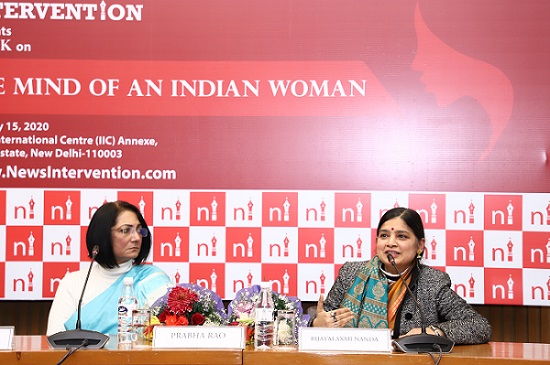
The recently concluded News Intervention Talk—“Inside the Mind of an Indian Woman” discussed a range of topics about women, which included safety, health and hygiene. Dr Bijayalaxmi Nanda (Acting Principal Miranda House, Delhi University), Ms. Prabha Rao (retd. IPS & Intelligence Officer) and Padma Shri Deepa Malik (Khel Ratna Awardee 2019) were the three panelists for this conversation who shared their thoughts regarding a woman’s power and capabilities. It was a platform where discussions centered around women safety, misconceptions about menstrual hygiene, patriarchy, women trafficking, and top to down approach to make policies available at the grassroots.

Dr. Bijayalaxmi Nanda said that rarely in this world one gets to know that a woman’s mind has been celebrated, the focus has always been on the body of the woman.

Also, it was shocking to know that an eminent advertisement filmmaker rejected Deepa Malik for brand endorsements. This ad filmmaker said quite bluntly that no brand would be interested in selling their product through an old and crippled body. Deepa Malik’s endless struggles with her disability and extraordinary achievements is nothing less than epic.

Deepa Malik highlighted that there are no government schemes on women’s safety and protection. She stressed upon the need to have a mechanism to create awareness with active women consultation in remote areas and allow those who are actively participating in the Panchayats to be understood.

Prabha Rao underlined the need to take right approach towards menstrual health. She explained that sanitary pads were thrust upon rural women without even consulting them. Without proper disposal facilities in the rural areas, these pads remained scattered all around in the villages and the accompanying plastic sheets occupied the landfill sites where cows ate them, which created a menace. This garbage eventually turned into breeding ground for dengue and other germs.

‘Inside the Mind of an Indian Woman’ was thought provoking

0

I recently had the privilege to attend a Talk — “Inside the Mind of an Indian Woman.” Well, its important for everyone to understand a woman’s mind. Everyone feels that it’s quite difficult to understand a woman as it’s tough to know what goes on inside her mind, which is often dubbed as ‘mood swing’. But why is it so? No one wants to apply their mind to it. A woman is the power house of a country, and yet female foeticide is rampant in India.

Isn’t it ironic that nobody tries to understand women, and yet thoughts and ideas are imposed on women and it is expected that they meekly reflect those thoughts. It baffles me as to why instead of understanding a woman society is happy to put all kinds of allegations on them. Yet, a woman continues to struggle and fight her battles even when those around have committed wrongs on her, just like Maa Durga.

So, when I came to know about News Intervention Talk—“Inside the Mind of an Indian Woman” I was too excited to come for it. The Start-up news portal News Intervention had formed a stellar panel for a discussion. The panelists were Padma Shri Deepa Malik (Khel Ratna Awardee 2019), Ms. Prabha Rao (retd. IPS & Intelligence Officer), Dr Bijayalaxmi Panda, (Acting Principal, Miranda House Delhi University) and Smt. Asha Devi (Mother of ‘Nirbahya’).

Deepa Malik narrated the story of her struggles about how not to give up hope. She inspired the entire audience with her stories about how she achieved success despite her paralysis. Deepa Malik explained that there were loads of difficulties in her path, and her father motivated her every time so that she was able to fulfill her desire. She spoke about the time when after an accident her elder daughter was left partially paralyzed. A few people then talked in hushed tones that Deepa Malik’s illness has now affected her daughter. Yet, without bothering about these negative talk she continued with her struggles.

Nirbhaya’s mother Asha Devi could not come for the talk as she was stuck in the Delhi High Court petitioning that the rapists of Nirbhaya be hanged. For the last seven years she has been running around the courts to get these rapists hanged. Asha Devi is an inspiration for women all around to stand up against the violence against them.

Prabha Rao and Dr Bijayalaxmi Nanda shared their insights about the issues women face on a day-to-day basis across India.

After this insightful talk I felt motivated and inspired to speak up against the wrongs committed against women. As a woman myself, I feel that we should never give up hope and should always try to stand up to the wrongs committed by the society. If we talk about respecting a woman we must give respect to her thoughts and opinion and what she thinks must matter for the society. We should listen to a woman’s side first before taking a decision.

India among top nations that watch child pornography: Prabha Rao

0

Startup media company News Intervention organized the talk “Inside the Mind of an Indian Woman” on January 15 at New Delhi. This talk was the first in News Intervention Conversation Series on women issues. The panelists at the talk were Padma Shri Deepa Malik (Khel Ratna Awardee 2019), Ms. Prabha Rao (retd. IPS and Intelligence Officer) and Dr Bijayalaxmi Nanda (Acting Principal Miranda House, Delhi University).

The panelists at this talk discussed issues that ranged from menstrual hygiene to women’s safety.

Deepa Malik shared her struggle to become a para-athelete that inspired the audience.

Prabha Rao raised the issues about women safety. She also revealed that India ranked top in the list of nations that watched child pornography and also in trafficking.

Dr Bijayalaxmi Nanda explained how some women face difficulties to be economically independent.

Being a woman and a student of journalism it was quite engrossing and enlightening to hear the panelists speak at the News Intervention Talk.

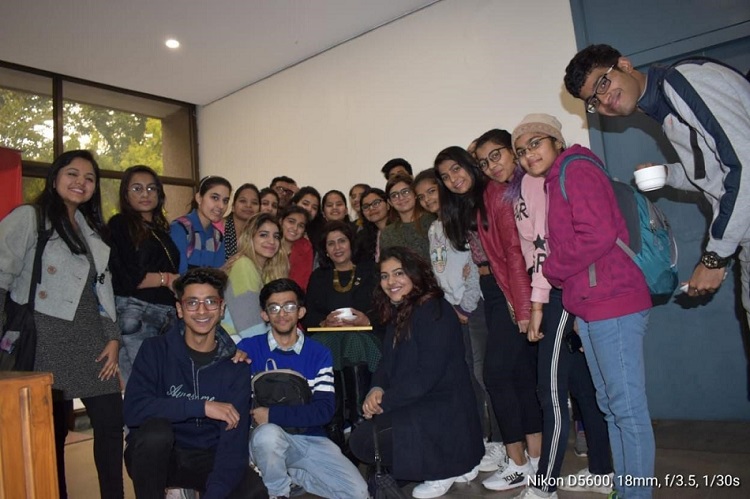
Journalism students of MERI College with Padma Shri Deepa Malik at the News Intervention Talk — “Inside the Mind of an Indian Woman”

TRP is responsible for skewed sports coverage by media: Deepa Malik

0

Padma Shri Deepa Malik has won several medals in international sports, the most notable being a silver medal at the 2016 Paralympic Games held at Rio de Janeiro, Brazil. Deepa Malik was a panelist at the recently concluded News Intervention Talk — “Inside the Mind of an Indian Woman”. She spoke to a journalism student, Niket, on the sidelines of this Talk about the condition of sports in India. Excerpts:

Q: Madam, why is it that the condition of athletes remains miserable in India?

Ans: According to me, in India the audience is responsible for the condition of Indian athletes.

Q: We had a grand tally of medals at the recently concluded South Asian Games, yet there was no coverage by media…

Ans: Well, I believe it’s all about the TRP (Television Rating Point). Today as an audience one enjoys the television shows that interest us, rather than the ones with factual knowledge. But it might change if budding journalists like you bring some changes to the flaws in today’s media.

Q: Are you taking part in this year Paralympic games at Tokyo?

Ans)  No. This year there’s no Javelin throw event at the Tokyo Paralympic games. 

BNM releases report about Pak atrocities in Balochistan

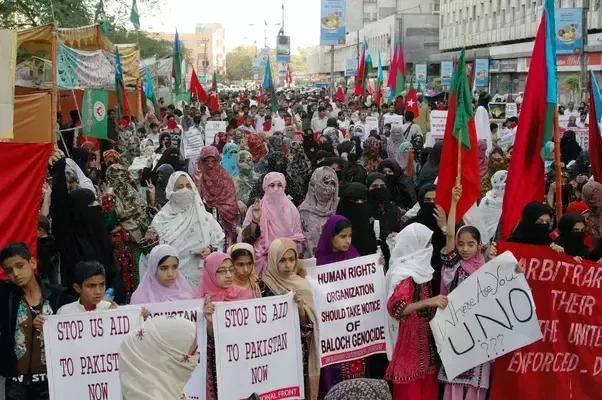
Baloch National Movement (BNM) has published its monthly report regarding human rights situation in Balochistan for the month of December 2019. While presenting the report, Central Information Secretary Dil Murad Baloch stated, “The last month of 2019 also ended with continued state barbarism. This month the Pakistani security forces carried out 50 military operations and raids. During these raids these security forces looted more than 100 houses and 71 civilians were forcibly disappeared. Also 7 dead bodies were found and among the dead one lost his life due to indiscriminate police firing. One was murdered by the state-sponsored death squad members presumably while resisting burglary or enforced disappearances; two other embraced martyrdom at the hands of security forces. The death causes of three other dead bodies remain unknown.”

Dil Murad Baloch

Dil Murad Baloch further stated that 15 people had been released from the torture cells run by the Pakistani security forces. Among them, two had been kidnapped in 2018 and the rest 13 persons had been abducted in 2019 between the months of June and December. He added, “…along with the establishment of three new check posts in the month of December, Pakistan Army carried out a severe level of operations in the areas of Jahoo, Awaran, Kech and in the vicinity of Bolan.”

Dil Murad Baloch reiterated, “Not only the frightening darkness of slavery continues in Balochistan but it is also witnessing a constant rise. In this month the foot soldiers had the support of the gunship helicopters in all their military operations. In Balochistan, the meaning of the Pakistan military operation is all-out destruction. Wherever the military storms, the torture, shifting people into military torture cells, looting and burning of the houses becomes a part and parcel.”

He further explained that for the last several years Baloch National Movement has been collecting data about Pakistani atrocities and war crimes and sharing them with the world. “The basic purpose of this is to inform the world about the gross human rights violations by Pakistan across the length and breadth of Balochistan. The world should see the true face of the Pakistan Army which has carried out the massacre of 3 million civilians in Bangladesh and dishonored hundreds of thousands of women. Today Pakistan Army is repeating the same in Balochistan. It seems that the world cares more about their interests than the blood spilled of other human beings. Otherwise, Pakistan would have been held accountable for committing war crimes in Balochistan on the ground of these given statistics.”

“The ongoing humanitarian crisis in Balochistan and the spilling of blood of innocent Baloch people is questioning the world as to when would the world’s soul wake up from its deep slumber?” Dil Murad Baloch asked emphatically. “The Pakistan Army and its intelligence agencies are killing people on a daily basis. In such a state the silence of the international community is questionable. We believe the indifference of the world is one of the factors contributing to the genocide of Baloch people. If the international community and international human rights organizations knew their responsibilities and took practical action against Pakistan then the young and elders in Balochistan would not be murdered with such impunity by Pakistani security forces.

“We request the United Nations, international community, human rights organizations, and international media to come forward to save the wailing soul of humanity in Balochistan. The delay and negligence of these organizations from their responsibilities is the reason which is adding to the difficulties of the Baloch nation,” the Central Information Secretary of Baloch National Movement Dil Murad Baloch appealed to the world. 

We will protest till last ‘missing’ person of Balochistan is released: Mama Qadeer Baloch

Vice Chairman of the Voice for Baloch Missing Persons (VBMP), Mama Qadeer Baloch along with Hani Baloch met students and journalists at the Karachi Press Club to discuss setting up a protest camp for the recovery of the missing persons of Balochistan.

Speaking to the media, Mama Qadeer Baloch said that he will set up a protest camp in front of the Karachi Press Club for Baloch disappearances a few days later. “I asked the students from other fields, including political and social circles to join us in the protest. We will continue our protest till the release of the last missing person from Balochistan,” said Mama Qadeer Baloch.

The Voice for Baloch Missing Persons (VBMP) helps families register cases of missing persons and lodge petitions in courts. VBMP records data on enforced disappearances, releases press statement organises protests, rallies, hunger strike camps, and also facilitates the submission of first information reports and cases to Pakistani police stations and courts.

The VBMP had set up its protest and hunger strike camp in 2009 in the aftermath of unrest in Balochistan to mount pressure on the authorities in Pakistan to ensure the safe recovery of missing Baloch missing persons. VBMP says that more than 45000 Baloch have went missing over the last two decades.

Ehsanullah Ehsan’s ‘Mysterious’ Surrender, Confinement and Escape from Pakistan

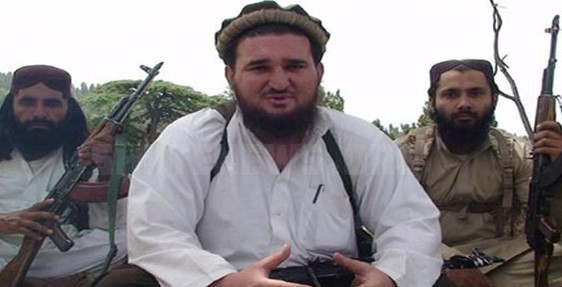
Ehsanullah Ehsan is no ordinary person. As spokesperson of the dreaded Jamaat-ul-Ahrar (JA) and Tehreek-e-Taliban Pakistan (TTP) terrorist organisations, he had proudly claimed responsibility on their behalf for so many heinous attacks in Pakistan that way back in 2012, the country’s Interior Minister Rehman had even announced a $1 million bounty on him. That’s why when in 2017, Director General Inter Services Public Relations (DGISPR) Maj Gen Asif Ghafoor announced that this dreaded terrorist had ‘surrendered’ to the Pakistan Army, the whole episode appeared so fishy that in its editorial on this incident, even Pakistan’s Dawn newspaper termed this surrender as having taken place under  “mysterious circumstances.”

Amongst the many claims of killings made by Ehsan, a few heart rending ones are:

  • Shooting 15-year-old Malala Yousafzai in the head for highlighting Taliban atrocities in 2012.
  • Suicide bombing of Shiites in Rawalpindi and Karachi in November 2012 that killed at least 25 people.
  • The killing of nine foreign tourists and their guide in Gilgit-Baltistan area in 2013.
  • Twin blasts targeting peace committee volunteers in Chinari village of Safi Tehsil in Mohmand agency that claimed six lives in 2014.
  • Suicide attack near the Wagah border that claimed at least 60 lives in November 2014.
  • The 2016 bombing of a Christian gathering celebrating Easter in a Lahore park that killed at least 75 people and injured more than 300.

If Ehsan’s alleged surrender was controversial, then so was the way he was treated by the Pakistan Army while in its custody because, even after more than two and a half years since his so called “surrender,” the Pakistan Army has not yet even filed a charge-sheet against him. This is rather surprising because the otherwise ‘efficient’ Pakistan Army that took a mere 13 months and seven days to investigate, complete judicial proceedings and award death sentence to retired Indian Navy officer Commander Kulbhushan Jadhav! The only plausible reason for this inexplicable delay in Ehsan’s case is that he was playing ball with the Pakistan Army and keeping his captors in good humour by parroting out whatever he was told by his captors.

This suspicion is substantiated by the fact that soon after his ‘surrender’, Geo TV was allowed to interview Ehsanullah Ehsan and in a 30 minutes broadcast of the same that followed, the former spokesperson of Jamaat-ul-Ahrar (JA) and Tehreek-e-Taliban Pakistan (TTP) claimed that he was working for India’s external intelligence agency, Research and Analysis Wing (R&AW). Coming at a time when the complete lack of transparency and highly questionable legal proceedings that culminated in Jadhav being handed down death sentence was being questioned by legal luminaries the world over, Ehsan’s revelation of R&AW inciting terrorism in Pakistan served as a much-needed ‘fig-leaf’ of propriety for the Pakistan Army. But coming from a person with dubious antecedents Ehsan’s ‘revelation’ didn’t even cause a ripple!

Ehsan is also a prime accused in the gruesome 2014 Army Public School (APS) Peshawar attack in which 134 school children and 15 staff members were mercilessly gunned down and since a majority of the pupils were wards of those who were serving (or had served) in the Pakistan armed forces, one had expected that he would be speedily brought to justice. Dawn in its, Editorial (“Ehsanullah Ehsan’s Confession,” April 28, 2017) too had cautioned that “What the country’s leadership must not do is create fresh confusion about who the real enemy is and thereby inadvertently create some sympathy for the Pakistani Taliban as misguided and manipulated fighters.” But as is its wont, Rawalpindi doesn’t seem to have realised the sagacity of this suggestion.

Just like his ‘surrender’, Ehsan’s incarceration too turned out to be equally mysterious. In fact, he seems to have been given such preferential treatment by Pakistan Army that in 2017, the father of an Army Public School victim petitioned Peshawar High Court (PHC) against any attempt by the Pakistan Army to facilitate grant of clemency to Ehsan for getting him released. That the Peshawar High Court took cognisance of this petition and instead of dismissing it as a frivolous or baseless complaint, went on to pass an order barring the government from releasing him, vindicates the general perception in Pakistan that the army was going ‘soft’ on Ehsan.

During February 2018, in a written reply to the Senate, Interior Minister Ahsan Iqbal had confirmed that civilian agencies weren’t involved in investigating or initiating legal proceedings against Ehsan and that he would be tried by a military court. Yet, nearly a year later, nothing has happened except that Ehsan, who until now was only eluding justice is now reportedly eluding his captors. How did he manage to escape from Pakistan Army’s custody is just as mysterious as his surrender and confinement. And if this news is true, then this incident not only raises many questions but also strengthens the deep suspicion that this mysterious disappearance is an ‘inside-job’ of the Pakistan Army.

Tailpiece — Dawn’s aforesaid editorial ended with a cautionary note that “As for Ehsanullah Ehsan, he must face justice. In no circumstances should an individual who brashly and with a great deal of pride claimed responsibility for the slaughter of countless Pakistanis ever be allowed to escape punishment. There are no conceivable circumstances, no tactical gains or operational information that Ehsan can offer to justify ever being a free man again.” Peshawar High Court also decreed that he shouldn’t be released.

So, just what Pakistan’s judiciary and media feared could happen has actually happened, but this is not at all surprising in a country where everyone proposes, but it’s only the Pakistan Army that disposes!

News Intervention Talk on Women raised unsettling issues

How many of us have truly tried to understand a woman in our lives? Not only men, but how many of the women have ever tried to understand the lives of fellow women? There has been so many instances where the choices of these women were ignored and were not respected enough.

News Intervention, the startup digital platform, has made an honest effort to usher change and discuss the issues that were either not discussed or talked about in hushed tones. News Intervention is the voice of unheard, and to commemorate the successful completion of one year, the startup portal organized a talk on “Inside the Mind of an Indian Woman” on January 15. This was the first talk in the Conversation Series being planned by News Intervention.

Three women who had been exemplary examples of courage and determination and have attained success in their respective careers were the panelists at “Inside the Mind of an Indian Woman”. Padma Shri Deepa Malik, recipient of Khel Ratna Award in 2019, Ms. Prabha Rao, retired IPS & Intelligence Officer and Dr Bijayalaxmi Nanda, Acting Principal Miranda House, Delhi University talked about their life’s experiences and inspired the audience.

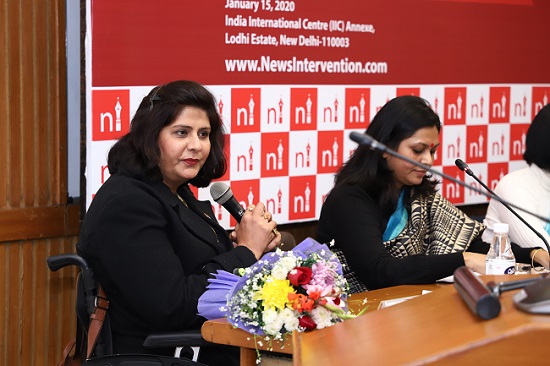
Mahua Venkatesh, moderator for the talk, started off by asking Deepa Malik about her struggles and how she overcame them in order to reach her current position. A Khel Ratna Awardee and the first Indian woman to win a medal in the Paralympic Games in 2016, Deepa Malik’s words enlightened the audience. She spoke about her initiative “Ability beyond Disability” and asked, “What has taken 70 years for India to get a female Paralympics athlete?” This question forced the audience to think about the state of affairs of women in India.

A survivor of chest-below paralysis and a spine tumor, Deepa Malik is also a winner of F53 Javelin at the 2010 Asian Para Games in Guangzhou, China. Deepa Malik revealed that most of the derogatory and critical comments that she ever faced in her career came mostly from women. She urged everyone to never give up hope and to never be scared of asking for help. Deepa Malik also pointed out on how the society as a whole tends to put limitations on the basis of their gender, age and body structure and very seldom looks at the will of the person.

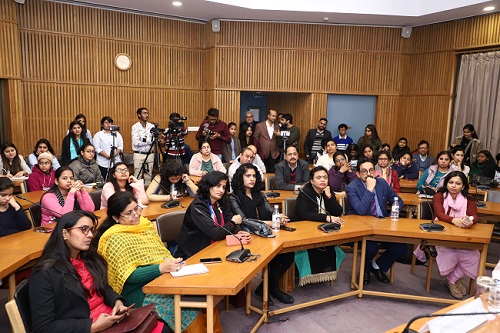
Full House at the News Intervention Talk — “Inside the Mind of an Indian Woman”

Prabha Rao talked about the origin of patriarchy and its existence in modern society. She started her career as a journalist with Indian Express and retired as an IPS officer. A woman of tremendous intellect and a powerhouse of wisdom, Prabha Rao talked about rescuing trafficked victims. She also spoke about the sheer confidence that women develop within themselves from the economic independence and about the severity of conditions of human trafficking in India. She also highlighted the issue of sanitary pad disposal in rural areas which surprisingly has turned out to be a burden for them as there is no proper system for its disposal in rural areas.

Dr. Bijayalaxmi Nanda, who is researching on the issues of declining child sex ratio, said that she was quite impressed by the topic of the talk “Inside the Mind of an Indian Woman.” She explained that this society has always preferred the body of a woman more than her mind. Dr Nanda added that both men and women are equal bearers of patriarchy and that the term ‘feminism’ has existed in the history of Indian society for a long time as there were a number of women in the subcontinent who challenged societal systems fearlessly. She also threw light on the fact that the country has a number of laws for women’s rights but unfortunately does not have the social readiness to accept those.

Dr Bijayalaxmi Nanda made a powerful statement when she said: “The more educated is always not the most empowered.”

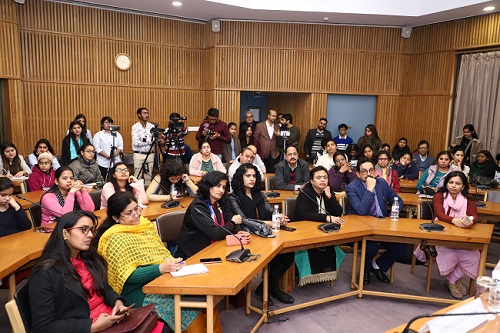
The audience participated enthusiastically in the conversation and there was a vibrant question and answer round.

Nirbhaya’s mother Smt. Asha Devi could not join this conversation as she was busy fighting the legal battle in courts to get Nirbhaya’s rapists hanged. Even though Asha Devi was not present, the other three panelists made sure that the discussion addressed the issue of Nirbhaya as well. The panelists called Asha Devi a very courageous mother who didn’t sit back and accept the crime that was committed against her daughter and chose to fight back in order to deliver justice.

Asha Devi is a fighter and a rebel who made her presence felt among the audience despite not being physically present at the talk.

My body may be paralyzed but my soul isn’t: Deepa Malik

1

I had the honour to meet Padma Shri Deepa Malik at a talk show where she was the panellist. Yes, there were many other renowned panellists at the talk –“Inside the Mind of an Indian Woman”, but I felt an instant connection with her warm personality.

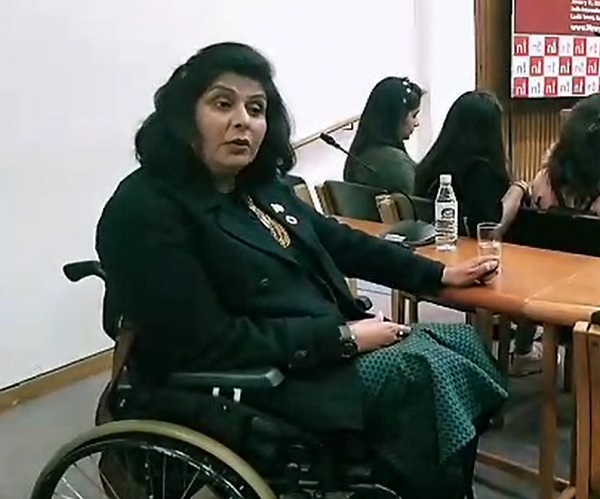
Deepa Malik carries herself unapologetically and speaks so powerfully that I was mesmerized by her.  

“My body may be paralyzed but my soul isn’t,” Deepa Malik said smilingly and with a glint in her eyes. It didn’t matter that she was paralyzed waist down and moved around on a wheelchair, what mattered was how she lived every moment of her life and enjoyed them. As a sportswoman she had convincingly defeated paralysis. She was rightfully awarded the Khel Ratna Award in 2019.

The talk “Inside the Mind of an Indian Woman” was organized by News Intervention, a startup media organization. Apart from Deepa Malik the other co-panelists at this talk were: Dr Bijayalaxmi Nanda, Acting Principal of Miranda House, Delhi University and Ms. Prabha Rao, retired IPS and intelligence officer.

During panel discussions at the talk, Deepa Malik revealed that she regularly goes for swimming and biking. “I am now learning to swim into the sea, and ‘am also finding solutions for those who are in need and looking for help,” she explained to the audience who were amazed at her grit and determination.

Audience at the News Intervention Talk — “Inside the Mind of an Indian Woman”

Breaking of stereotypical boundaries has always been Deepa Malik’s central thought. Her unease towards the glitzy advertisement world was unnerving as she talked about how objectification and commodification works behind the camera. She shared an anecdote about how she was once ridiculed by a big honcho of the advertisement world, who said that a crippled body with a disability doesn’t help in advertisements. Rather than lament about this incidence, Deepa Malik made a strong case for advertisements that break stereotypes.

Deepa Malik believes in reaching out to the rural community to highlight the positives and simultaneously show the truth behind patriarchal mindset. In the future, she intends to write a book which can bring about a positive impact on the civilization.

Deepa Malik’s life and her struggles are an inspiration. There are millions of women who did not give up on their dreams and go through a similar struggle and yet their story remains unknown. News Intervention has made an initiative to recognize these women through their “Breaking Barriers Award”. The startup media company will soon announce the finer details and the different categories for this award.