Home Blog Page 397

Pakistan Army abducts four women in fresh crackdown in Balochistan

Pakistan Army has abducted four Baloch women and a boy, who is the son of one of these women during two separate illegal raids in the Awaran district of Balochistan. All women and the boy are now “missing”.

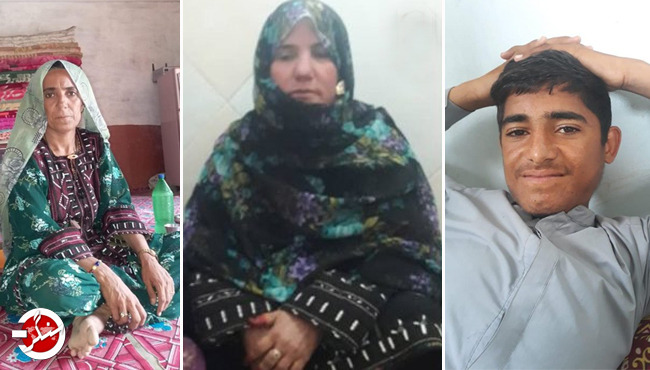
Local residents say that the Pakistan Army personnel attacked a house in Haroni Dunn area of ​​Awaran district on Friday night and arrested the women. They added that these “personnel from Pakistani Army have disappeared the women along with her son”.

These “abducted and disappeared” women have been identified as Bibi Sakina and Bibi Saeeda. Local residents explained that Sajid Baloch, who is the son of Bibi Sakina, was also forcibly abducted on November 25 by Pakistani security forces and has now been “disappeared” along with his mother and one another women.

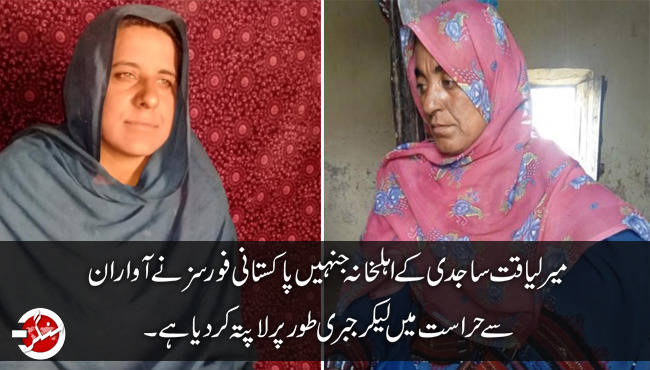
In a similar and related incidence, Pakistan armed forces attacked Mir Liaqat Sajdi’s house in the Peerandar Zeelag area of ​​Awaran district at midnight on Friday and took two women of his family into illegal custody. These two women have also now “disappeared” with no whereabouts of them available anywhere. The women are Bibi Nazal and Bibi Hameeda, sister of Mir Liaquat Sajidi.

Bibi Nazal and Bibi Hameeda who have been illegally abducted by Pakistan Army in Balochistan

Pakistan Army has been continuing these forced abductions, inhuman disappearances and several other atrocities across Balochistan for the last several decades. Armed forces of the Pakistan Army forcibly enter inside Balochistan homes, misbehave with women and abduct innocent people including women and children at their whim. It’s rather strange that mainstream Pakistani media never reports these crime and illegal abductions. International human rights organisations have also chosen to stay mum over gross human rights violations in Balochistan. Various local reports suggest that Pakistan Army is guilty of abducting and forcefully disappearing around 40,000 Baloch nationals.

Magic Bullet to Revive the Indian Economy

Earlier this week, India’s Finance Minister Nirmala Sitharaman painstakingly tried to convince the nation through her statement in the Parliament that the economy has slowed, and is not in recession. Coming directly from the government, it is indeed a matter of concern. There can be no magic to reverse the slowdown, yet that’s exactly what everyone is hoping for.

However, this magic is possible through one major correction which is long overdue, yet it’s the least talked about.

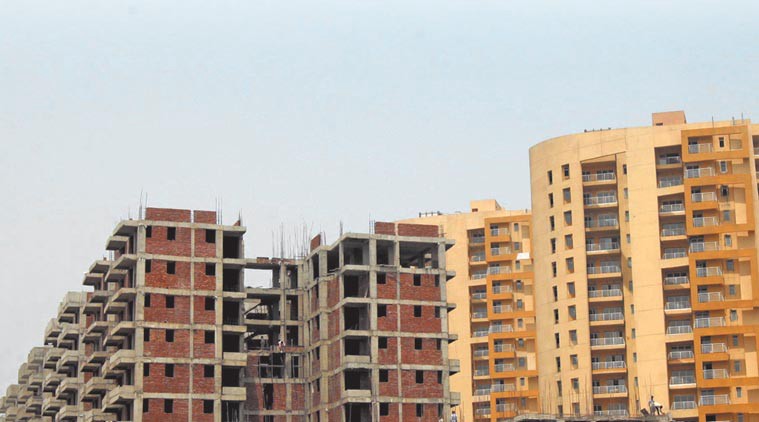
There is one big-ticket industry, which affects every family, both in the urban and rural areas: Housing, Construction and Real Estate. India’s real estate and construction is one such industry that creates demand for hundreds of other small and large industries. And these industries range from the heavy weights such as steel and cement to light industries such as electrical, fabric and furniture, among others. For comparison, what the automobile or car industry means to the American economy, is what construction, housing and real estate means to the Indian economy.

At present, India’s real estate is suffering not due to a lack in consumer demand, but primarily because of “very high prices,” which the masses cannot afford. Fortunately, policy correction (no, I am not advocating for any fresh fund allocation) can reverse this scenario and trigger a strongest recovery ever in the country, not merely for short-term, rather for a few decades. This is possible, as the entire country needs to be rebuilt, city-after-city (particularly the Tier-2 and Tier-3), village-by-village, both in the private and public spaces.

The three key questions which needs to be answered before this magic bullet can be fired for economic revival in India.

1) What is the right affordable price for a house?

2) How do we ensure that these affordable housing prices become viable for the industry as a whole?

3) How much GDP growth can be expected through this one move?

Well, answer to the first question is simple arithmetic, which one can compute on fingertips. For this we need to consider the prevailing monthly rents. A large majority of people who rent (or, may like to buy their own house if it’s affordable) pay ₹25,000/- to ₹50,000/- per month as rent for one to three bedroom dwelling in suburban metros and ₹10,000/- to ₹25,000/- in Tier-2 and Tier-3 cities. At an interest of around 9% per year, the value of these houses could vary from ₹35 lakh to ₹70 lakh in metros, and approximately ₹15 lakh to ₹30 lakh in Tier-2 and Tier-3 cities. One may put a premium of 20 to 25% for being the owner of a house and raise these prices a bit. But the big point is that affordable prices for a house are about half when compared to the current level of prevailing prices. Full demand (15-20 lakhs houses per year in urban areas alone) is worth about ₹10 lakh crore for houses alone. This lone example gives an idea of the magnitude of growth in real estate and housing sector.

The answer to second question about ways to reach affordable price levels, may appear to be a non-starter to many; but that is where the “true solution” to Indian economy lies. To appreciate this as a solution, one needs to pay attention as to how land and housing prices rose exorbitantly in the first place. If we go back to the year 2004, which is not too long ago, prices for 1-to-3 bedroom apartments were in the range of ₹10 lakh to ₹20 lakh in metropolitan cities, and ₹4 lakh to ₹8 lakh in Tier-2 and Tier-3 cities. How did these prices increase by 1000%, merely in a decade by 2014?

It can be said with conviction that speculative price increase of real estate between 2004 to 2014 was the greatest economic fraud, the nation has ever experienced. An astounding 100% increase every year! Incidentally, this is the same period, when banks disbursed huge corporate loans of over ₹15 lakh crore, much of which has eventually turned into NPAs (Non-Performing Assets). NPAs are termed as bad loans in common parlance or better called as ‘loan-defaults’. Much of this is commonly viewed today as telephone-banking frauds. Worst affected by these speculation are the youth who now face a situation where owning a house has become a distant dream. In fact, around 95% of the population is unable to afford a house today.

The big point is why did these phenomenal speculations did not raise an eyebrow. The reason is very simple. In real estate, even if one house sells at a hefty price in a colony, price of every other house in the area is considered to have been increased. Who dislikes, if told that price of their existing land or house has increased by 5-10 times in its value, provided they could sell it! People carrying notional value of the only house they own, in their mind, also forget that to acquire additional room for a growing family they would now need to pay ₹50 lakh instead of the earlier ₹5 lakh. Those who talk of shortage of supply being the reason for such price increase, need to note that not even 0.1% of existing stock of land and houses are really traded fresh.

In this context, following actions that are essentially policy decisions (not requiring financial outlays by the government) can trigger a fresh addition of more than 5% in India’s GDP, with almost immediate effect.

1) Government should make parts of government land in every city available at prices a little higher than 2004, for housing purpose. Remember, price depression of one house will bring down prices of every other house in the area. A quick, back-of-the-envelope estimate suggests that every 10% reduction in real estate price, can add more than 1% to the national GDP. Compared to the 10-folds price rise during 2004-14, the fall in current prices by half may not look so bad, after all. However, even after correction, real estate prices would be 5-times compared to the price of 2004. But people will accept this gladly.

2) Registration charges in real estate should be waived off for the next 2 to 3 years.

3) Income tax deductions for purchase of “first home”, should be allowed to the extent of 100% of payment.

The only people who would feel hurt to some extent are those who have purchased their first homes at the higher speculative price during the past decade. But even they would find it far easier to buy a bigger home, once affordable. Besides home owners, SMEs (small & medium enterprises) and budding entrepreneurs would benefit immensely. Reduced land and house costs will bring about overall cost reduction in prices of all kinds of daily-use commodities, ranging from vegetables, grains, etc. while adding huge employment at all levels, for unskilled to highly skilled.

Indian economy has slowed down due to the bursting of speculative bubbles, created during 2004-14 and not because of GST (Goods and Services Tax) or even demonetisation. It’s time, we correct this fraud, through simple policy interventions and put India on high road to prosperity for all.

Pak Army’s ISPR works tirelessly to conceal their military casualties

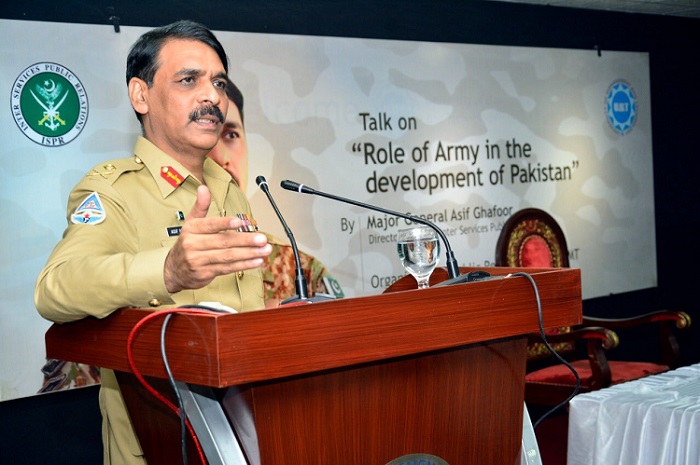
The good thing about Pakistan Army’s media wing Inter Services Public Relations (ISPR) is that it never disappoints those who are looking for a good laugh. Remember how after the post Balakot aerial combat, Director General (DG) ISPR Maj Gen Asif Ghafoor announced with great flourish that “our ground forces arrested two (Indian Air Force) pilots; one of them was injured and has been shifted to CMH (Combined Military Hospital) and, God-willing, he will be taken care of.” It seems that God answered Maj Gen Ghafoor’s prayer and had really “taken care” of the injured pilot, because by evening, this pilot simply vanished from the face of the earth without any trace and hasn’t been heard of ever since!

Then, on the same day, DGISPR went on to vehemently deny that Pakistan Air Force (PAF) had used US supplied F-16 fighter jets during its February 27 foray across the Line of Control (LoC). However, even when IAF displayed remnants of AIM-120 C-5 AMRAAM air-to-air missile that can only be fired from an F-16, DGISPR didn’t give up and continued to stand by his statement. But on April 1, he suddenly made a U-turn by saying “Even if F-16 have been used as at that point in time complete PAF was airborne including F-16s, the fact remains that Pakistan Air Force shot down two Indian jets in self-defence.” This admission once again revived the issue that a PAF F-16 being downed by IAF on February 27.

Surprisingly, just four days later, Foreign Policy, an American news publication carried an article quoting “two senior US defense officials with direct knowledge of the situation” as saying that US personnel had counted the F-16 of PAF after the February 27 aerial combat and found none ohttps://foreignpolicy.com/2019/04/04/did-india-shoot-down-a-pakistani-jet-u-s-count-says-no/f them missing. It went on to say that “The findings directly contradict the account of Indian Air Force officials, who said that Wing Commander Abhinandan Varthaman managed to shoot down a Pakistani F-16 before his own plane was downed by a Pakistani missile.” This report should have vindicated Maj Gen Ghafoor’s claim, but rather than settle the issue once for all, its contents and subsequent developments made his assertions appear all the more suspicious. 

For one, the article didn’t name the two officials, which is intriguing as the magazine said it was Pakistan that had invited the US to physically count its F-16 planes after the incident as part of an end-user agreement signed when the foreign military sale was finalised. Therefore, there was nothing secretive about US auditing the holding of F-16s of PAF that necessitated anonymity. Secondly, it’s quite unlikely that “two senior US defence officials” would indulge in speculation just to ratify DGISPR’s stance by saying “It is possible that in the heat of combat, Varthaman, flying a vintage MiG-21 Bison, got a lock on the Pakistani F-16, fired, and genuinely believed he scored a hit.”

However, the knockout blow came when Pentagon confirmed that it was “not aware” of US carrying out any such audit of F-16s!

But Maj Gen Ghafoor’s latest tweet claiming that the Indian Army had lost more than 60 soldiers along the LoC since February 27 suggests that ISPR hasn’t learnt anything despite its monumental failures of the past. But with India using its special forces, air force and long-range artillery to pulverise terrorist camps located inside Pakistan-occupied Kashmir (PoK), DGISPR has no other option but to exaggerate Indian Army casualty figures to such an extent that public opinion at home is diverted. The Indian Army, no doubt, has been suffering casualties due to ceasefire violations along the LoC, but unlike Pakistan Army which has a proven record of concealing its fatalities, the Indian Army doesn’t have any such perverted proclivity.

Remember how during the Kargil Aar in 1999, Pakistan Army refused to accept the dead bodies of its soldiers killed in combat? In fact, such has been Pakistan Army’s obsession with suppressing data on fatal battle casualties that in 2017, this issue was hotly debated in the Upper House of Pakistan Parliament and what transpired there was downright comical. During a discussion on the situation along the LoC, senators were shocked when the Minister of State for Power who was speaking on behalf of the Defence Minister only gave out the details of civilian casualties, clarifying that “Pakistan Army wants to withhold the information about the losses suffered by its troops due to security reasons.” This irked six-time Senator and Senate Chairman Raza Rabbani so much that he not only shot back saying “Nothing can be withheld from parliament” but even hit out at the Pakistan Army by saying “Declare us irresponsible people, then (it’ll be) fair enough.” 

Needless to say, Rabbani’s assertion on supremacy of the legislature fell on deaf years as the military stood by its illogical explanation that declaring details of fatal military casualties would compromise Pakistan Army’s security. Consequently, while Rawalpindi celebrated the deaths of Indian soldiers in artillery duels and skirmishes along the LoC, many of its own casualties were denied the respect that are due to martyrs simply because they went unreported. Data of Pakistan Army casualty figures collated by reputed military analysts who have been meticulously monitoring open sources of information reveals that the Pakistan Army has suffered inordinately high casualties after it escalated hostilities after the Balakot airstrike.

One such analysis lists out the names of more than 60 Pakistan Army soldiers along with the date and place where they were killed within just a matter of five weeks during July-August this year. The fact that this handle has been suspended by Twitter clearly indicates that this was done on the complaint of some entity that wasn’t very comfortable with such specific data and this in turn establishes beyond any doubt that the Pakistan Army does have plenty of skeletons in its cupboards when it comes to supressing data on its fatal casualties!

But ISPR would still like us to believe that while the Pakistan Army is bleeding Indian Army dry along the LoC, it itself remains unscathed despite Indian Army’s devasting retaliation and this in itself is a howler that’s beyond compare!   

Tailpiece: Napoleon may have been exaggerating when he said “God fights on the side with the best artillery” but the fact is that this adage is very apt for the LoC. It’s no secret that the guns and munition available to the Indian Army are far more superior in both quality and quantity than what the Pakistan Army has and it’s but natural that being badly outgunned, the Pakistan Army has always been at the receiving end when guns blaze along the LoC. That’s why, when Gen Pervez Musharraf declared a unilateral ceasefire along the LoC in 2003 even after having had to bite the dust in Kargil, it was not out of any goodwill or his quest for peace, but purely to reduce the humungous casualties that the Pakistan Army was suffering!

Lessons from Maharashtra’s new political landscape

0

Politics must change in the country before Indian entrepreneurs can prove their mettle. New way of politics, for new India is need of the hour.

Country is not the fiefdom of a handful of individuals or their families. Filling vacuum in political leadership is the primary need of the hour in India. Irrespective of which profession or work one is engaged in, doing one’s work with full honesty, is indeed a “Service to the Nation”.
In order to improve the political scenario in the country, it should be possible for any interested person who desires to enter public life through politics, to be able to seek lateral entry with ease into any party of his/her choice.

For this to happen, selection of candidates for any election by any party, should happen through involvement of local population too, rather be turned into an “internal issue” (read opaque decisions) of the political party. This way, politics will naturally improve through involvement of talented people, who choose to sacrifice private life, for greater public roles. And nation’s wealth grows for all, not looted by a select few.

Amongst the current lot, BJP is the most appropriate party, to take up this “pioneering initiative”, because “nationalism” is the very foundation of it’s ideology, not only of individuals or their families. I sincerely hope that BJP turns the tide of politics upside down: From “electoral machinations” to “rise of genuine leaders at all levels”.

America’s Terrorism Report Comes Down Heavily on Pakistan, Praises India

The United States of America (USA) released its annual “Country Reports on Terrorism” for the year 2018 on 22 November 2019. The report assesses all major nations of the world in terms of their fight against terrorism with special emphasis on compliance with international norms for countering terrorism. For each country there is an overview followed by listing of the number of terrorist incidents that have taken place, legislation, law enforcement and border security, countering the financing of terrorism, countering violent extremism and international and regional cooperation among others. The reports are not based as much on statics as on assessments.

In its foreword, the report identifies Iran as the “world’s worst state sponsor of terrorism.” Beyond this, one complete paragraph of the foreword is dedicated to Pakistan. The report openly admits that India continued to experience terrorist attacks from Pakistan-based organisations. “Pakistan-based Lashkar-e-Tayyiba – which was responsible for the 2008 Mumbai attacks – and Jaish-e-Mohammad (JeM) maintained the capability and intent to attack Indian and Afghan targets,” it says. It specifically mentions the terrorist attack on the Sunjwan Military Camp in the Indian state of Jammu and Kashmir in February, 2018. The foreword also indicts Pakistan for not doing enough to contain the Taliban and the Haqqani network that “Continued to launch lethal attacks throughout Afghanistan, including against the US military personnel.” With regard to the internal dimensions, the foreword indicts the inability of the state to contain the Tehrik-e-Taliban Pakistan (TTTP) that has continued to carry out attacks within Pakistan.

Main chapter of the report dedicated to Pakistan begins with a very serious indictment of Pakistan’s role in Afghanistan. It constitutes an elaboration of what is written in the foreword. “Although the Pakistani government voiced support for political reconciliation between the Afghan government and the Afghan Taliban, it did not restrict the Afghan Taliban and the Haqqani Network (HQN) from operating in Pakistan-based safe havens and threatening US and Afghan forces in Afghanistan,” the report states.

The report has further identified close relationships between the Pakistani state and terror groups in Pakistan that are aligned against India. “The government (of Pakistan) failed to significantly limit Lashkar e-Tayyiba (LeT) and Jaish-e-Mohammad (JeM) from raising money, recruiting, and training in Pakistan,  and allowed candidates overtly affiliated with LeT front organizations to contest the July general elections,” says the report.

The report further lists out the trouble that Pakistan has been facing because of the many terror groups active there and the sensitive internal security situation in provinces such as Balochistan and Sindh. “Terrorists used a range of tactics to attack individuals, schools, markets, government institutions, and places of worship, including IEDs, VBIEDs, suicide bombings, targeted assassinations, and rocket-propelled grenades,” it states.

The report quite openly blames the government of Pakistan for its inability to contain this proliferation of terror. The reason attributed is the “inconsistency” of the state apparatus (read Pakistan Army) to eliminate safe havens in the country, “Authorities did not take sufficient action to stop certain terrorist groups and individuals from openly operating in the country.” On the issue of terror financing also, the report comes down heavily on Pakistan, and in a rather blunt statement it says that Pakistan criminalises terrorist financing through the Anti-terrorism Act, but implementation remains uneven. The inability of the government of Pakistan to register and monitor all madrassas that are engaged in imparting fundamentalist Islamic education to children has also been mentioned in the report.

In the India segment the report identifies India as a victim of Pakistan-sponsored terrorism. “The parts of India most seriously impacted by terrorism in 2018 included the state of Jammu and Kashmir, the northeast Indian states, and parts of central India in which Maoist terrorists remain active,” it states. The report is very appreciative of the successful efforts put in by India to detect, disrupt, and degrade terrorist organizations’ operations within its border. “Indian leadership expressed resolve to prevent terrorist attacks domestically and to bring to justice the perpetrators of terrorism, in cooperation with the United States and other like-minded countries,” the report says.

Several initiatives taken by India and the US in counter-terrorism cooperation such as the Joint Working Group, 2+2 (top U.S. and Indian diplomatic & military officials), and the Ministerial Dialogue for increased information sharing, found special mention in this report.

Pakistan’s severe indictment in the “US Country Reports on Terrorism”, when seen along with their precarious position with the Financial Action Task Force (FATF), puts the country in a very precarious position. It is notable here that FATF, which is a global terror financing watchdog, has consistently put Pakistan in its grey list since the country failed to deliver on 22 out of 27 targets related to terror financing.

Pakistan is continuing with a blinkered approach, not realising that what it could get away with earlier, is now no longer feasible. Pakistan simply has to stop justifying its inimical interference in Kashmir by terming it as an internal problem of India. The world is no longer convinced by its line of thought. It also has to clean out the mess within its borders by coming down heavily on fundamentalist Islamic forces that are playing havoc in the country’s neighbourhood, especially in India and Afghanistan. It has also failed to meet global requirements on curbing terror funding. Finally, the country has to address the open revolts in its provinces such as Balochistan where untold atrocities are being perpetrated on innocent civilians by the government forces.

The “US Country Reports on Terrorism” leaves no doubt about the international appreciation for Indian efforts to fight the menace of terrorism and the concern that the international community feels with regards to the critical situation in Pakistan. Sadly, Pakistan is refusing to accept its own shortcomings and is hell bent upon putting the entire blame on India, which is totally unacceptable.

Media must learn how not to report during terror attacks

As India remembered the horrors of deadly terrorist attacks on November 26, 2008 that left more than 160 people dead and 300 injured, there is one area which, the country’s newsrooms, have conveniently chosen to ignore. Yes, the role of the media and the basic principles of reporting!

The terror attacks in Mumbai brought out a rather ugly side of the media.

It was officially documented that the terrorists could easily access television broadcasts and other news feeds, which helped them. Not just that, we also know that a few lives could have been saved if the media had exercised restrain in dissemination of information.  

The manner in which unfolding of 26/11 terror attacks and the response of our security forces was covered by media should be a lesson for all journalists to understand how not to report events during times of crises or emergency. While the media and public at large have the right to know in a democratic set up, it also comes with a great amount of responsibility, which we need to uphold.

Many of us know how the reportage of 26/11 made things extremely difficult for the National Security Guards (NSG) commandos.

In our journalism classes we were taught how to exercise restraint in reporting despite having critical pieces of information – if that helped in saving lives or maintaining peace. It seems somewhere down the line, the rule books have been re-written and these principles have been given a quiet burial by the media houses.

A few years after the unfortunate 26/11 Mumbai terror attacks, Bangladesh Prime Minister Sheikh Hasina slammed the media for its reportage in the middle of the terrorist attack at the Holey Artisan Bakery in Dhaka. In fact without mincing words she even said how the coverage helped the terrorists.

While providing 24×7 coverage on the Mumbai terror attacks, many of us in our urge to “break” news and increase our viewership, ignored the basic principles of journalism. Yes, challenges are rising for news organisations—whether print through their online presence or the television channels going in for 24×7 coverage. But equally important is to fiercely uphold the principles of journalism, especially when we seek full freedom.

Freedom of press is critical, especially at a time when we have been unanimous in raising the pitch for maintaining transparency in dissemination and sharing of information.

Bottom line —We, in the media industry, need to act responsibly too. Newsrooms must ensure that.

Inside Tihar, Inside Life, Inside Hell

There are 17,000 inmates in Tihar Jail, many say its actual space is for just 6,000 inmates. I still haven’t figured out why it is called the Maximum Security Prison. I once covered the trial of alleged assassins of PM Indira Gandhi, Tihar Jail – South Asia’s largest prison – then looked like a correctional facility with barbed-wire fences, guard stations and cells scattered across 400 acres of land.

Tihar figured in the headlines every now and then, it still does. But  there was no classy documentation, no brilliant lines about life and death behind those huge, concrete walls. I had no idea whether the warden would share –like in the US — his handset number to every prisoner on release. I knew very little about Tihar.

Roli Books latest, Black Warrant, offers a virtual walk the talk from inside Tihar, narrated by its former jailor Sunil Gupta and chronicled brilliantly by seasoned journalist Sunetra Choudhury, currently political editor of Hindustan Times newspaper. There is so much information that it becomes difficult to dissect it for an effective analysis. Black Warrant grows on you, its like travelling in a lift to the Eiffel Tower, the best view is reserved only when you reach the top. I found the best chapters towards the end: It had Manu Sharma, Subrata Roy and Jaswinder Singh Jassa, the King Cobra of Tihar. It was gripping.

Choudhury, who had an immaculate style when she anchored shows for NDTV, has managed to get almost anything and everything out of Gupta, and the two blended well to get both the news and the juice out of that prison. It’s not very easy because very few jailor open up as Gupta did, in one case he explains in detail about his dust up with Roy of the Sahara Group, considered among the top influencers in India. Gupta complained to Delhi CM Arvind Kejriwal who sought proof and – I have a feeling – the matter rested there without any more fireworks.

Gupta makes it clear that he wanted to push in a host of changes in Tihar and did not like the way some of the high profile prisoners like Charles Shobraj were throwing their weight around. And he knew he had to cut through many, many red tapes to achieve the near impossible. It’s clear from the book that Tihar blew hot, blew cold every now and then. It was not exactly a cold, harsh American prison, nor it was a Norwegian prison home that has the world’s best correctional systems in place. That Gupta liked prisoners who worked overtime to improve systems of Tihar is clear because he mentions how Manu Sharma, who killed Jessica Lall, worked overtime and helped Tihar earn some decent cash through new models of business. But hold it, Gupta also says he did not like the way Manu Sharma conducted himself inside the prison, often ordering food from expensive hotel outside Tihar and running a private durbar inside the prison.

Chowdhury and Gupta talk in detail about the Nirbhaya case and the way the accused were housed in Tihar, and the way they conducted themselves and the way they were treated by others, it was a fascinating read. So was the chapter on the assassins of Indira Gandhi. Black Warrant brilliantly chronicles life inside Tihar, tucked in a crowded West Delhi neighbourhood synonymous with huge crowds, backfiring trucks and belching lorries. The book also tells you moments of death when prisoners are taken to the gallows. Afzal Guru, a top political convict, sang a Bollywood song, assassins of Indira Gandhi shouted religious slogans, some just collapsed. Death is not just a five letter word, it means everything to those in the condemned cells. The condemned cells are a little far away from the ones which housed inmates convicted of lesser violent crimes. The condemned cells are eerily quiet — death is plastered all over the walls and there are no huge sounds of slamming metal doors or shouting inmates.

Tihar Jail, New Delhi

The book details the life and times of Shobraj, the notorious bikini killer now lodged in a prison in Kathmandu. And the incident leading to the rape and murder of Geeta and Sanjay Chopra by Billa and Ranga. The Chopra story had – for all practical purposes – dropped from my storyboard but Shobraj was a fascinating read. I tried tracking him a year or two ago in Nepal and even managed a brief conversation with him through a handset owned by his mother-in-law. I was amazed to hear that the serial killer – who once proudly claimed he could smuggle even an elephant in Nepal – was now a pale self of his flashy life. Even if he completes his sentence in Nepal, the Thai cops will be seeking his custody.

The book — actually — gets inside the minds of prisoners and explains how they miss the openness of light, the effect of fresh air coming through. The writers make a genuine effort to explain the strange, love-hate relationships between officers and inmates. Gupta worked hard in Tihar. For him it was not an ordinary job, he had to understand the life of the inmates within the walls, and what he could do to shape their lives once released. Choudhury, as a seasoned historian of crime and punishment inside Indian prisons, chronicled the events perfectly. The jugalbandi is a brilliant read, I would recommend it to be used as a standard tool in all journalism schools in India.

Short fiction on Bahurupias “Kayantar” to be screened at Woodpecker International Film Festival

The filmmaker duo Rajdeep Paul and Sarmistha Maiti’s short fiction film, “Kayantar” has already won several accolades globally and will be now screened this week in New Delhi as part of 7th Woodpecker International Film Festival (WIFF).

The story is centered around a family of Bahurupias, indigenous street performers. Aasia belongs to a clan of Bahurupias – who dress up as Hindu deities. She wants to adopt her father Ali’s art of metamorphosing into Kali, the black Goddess of Time, Power and Liberation, but being a woman she is not allowed to take up the conventionally male profession. Instead, the now decrepit Ali, forces the traditional family profession onto his son Aslam who detests it fearing ridicule, persecution and for its waning popularity. Despite poverty and hardship the small family lives freely in the fringes of the village society in the lap of nature influenced by the religious syncretism of the Baul-Fakir mystics, tolerated by both Hindus and Muslims. But a sudden surge of change transforms their lives forever.

Set in the backdrop of the lush green tapestry of rural Bengal while narrating a story rooted in its milieu, the film reflects themes of universal concern. It takes an insightful look into the age-old evils of gender binaries, religious fundamentalism and communal disharmony plaguing human society even today and is an earnest cinematic appeal to look beyond such myopic glasses of discrimination and celebrate humanity simply as human beings.

Produced by Anjan Bose, the world premiere of Kayantar was held at 10th Chicago South Asian Film Festival 2019 followed by the 14th Tasveer South Asian Film Festival 2019 in Seattle, USA and 4th Mustard Seed Film Festival, Philadelphia, USA. The Indian Premiere was held in the 25th Kolkata International Film Festival 2019, followed by New York South Asian Film Festival 2019. It will be screened in 7th Woodpecker International Film Festival, New Delhi on 1st December and will be showcased in the 17th Kalpanirjhar International Short Fiction Film Festival 2019 in Kolkata on 5th December. It has also been selected at the 19th Imagineindia International Film Festival, Madrid, Spain in May, 2020.

This year’s Woodpecker International Film Festival (WIFF) has “67 films to Know Your World” as its central theme and the festival once again brings hard-hitting contemporary issues on the big screen. It will be organised from Nov 29-Dec 1, 2019 at Siri Fort Auditorium. According to Rao Narender Yadav, Founder Director of the festival, “Woodpecker International Film Festival (WIFF believes in showcasing the ‘real world’ on the big screen. This year also, we have got diverse stories from different parts of the world, on issues that are of critical importance to everyone. Be it violence against women by ISIS, condition of Rohingya women, rise of Artificial Intelligence, exciting new discoveries from the natural world or issues related to LGBT community, through WIFF we want to bring them in the public domain.” Woodpecker International Film Festival (WIFF) was launched in 2013 and is chaired by veteran actor Avijit Dutt.

Directors of ‘Kayantar’, Rajdeep Paul and Sarmistha Maiti will be present during the screening of their film on December 1 in New Delhi.

Great interest for Russian films among Indian people: Maria Lameshev

Joint production of films and cultural exchange through films will bring the spirit of India and Russia together, said Russian Ambassador to India Nikolay Kudashev. A joint agreement was signed at Vladivostok in Russia during September 2019 for expanding cultural exchanges between the two countries. It is time to take advantage of the agreement by working together and reaching our common aims, he said. Nikolay Kudashev was addressing a media conference at the 50th  International Film Festival of India in Panaji, Goa.

Replying to questions, Kudashev said that it is true that contemporary Russian literature is not adequately represented in India. “The government has got plans to bridge this gap by publishing ten of best Russian books in Hindi and ten of the best Indian books in Russian. Efforts are also on for more exchanges and co-operation in the field of education too,” he said. Niklolay Kudashev added Russia is committed to the promotion of the bi-lateral ties between two countries

The Ambassador thanked the Indian government and government of Goa for choosing Russia as a partner country in the 50th edition of IFFI.

On the reach and popularity of Indian films in Russia, Kudashev said that there is an Indian channel in Russia which brings Bollywood films to viewers in the country on a daily basis.

Head of Russian delegation in IFFI and Editor in Chief of Kinoreporter Maria Lameshev said that there is a great interest for Russian films among Indian people. “Diverse films from Russia which got international awards and acclaim have been brought to India for showcasing in IFFI. Films like ‘Abigail’ portrays the fantasy of youngsters”, she said.

Maria Lemesheva added that according to the co-production agreement, 40 percent of budget of the film would be given back by the Ministry of culture. She extended her support in facilitating meetings for possible co-productions for future.

Lead actress of ‘Beanpole’ which is one of the eight films being screened in the Country Focus  Section and the recipient of many international awards Viktoria Miroshnichenko  said that ‘Beanpole’ depicts a difficult time in the history of Russia. Actor in the Russian film ‘Abigail’  Peter Zekavica, said he grew up watching Ramayana on television as a child and recalled how it helped him to get in touch with the spiritual side of India. He also thanked the festival for bringing him upclose with some of his Indian heroes at the opening ceremony.

Attending her third IFFI, actor Anfisa Chernickh said that she loved Indian cinema and even though none of her films were showcased at the festival, she was here to support her delegation.

Actor in the Russian film ‘Abigail’ Glbe Bochkov also participated in the media conference. The actors also expressed their interest in acting in Indian movies in the future.

Eight Russian films- Abigail, Acid, Andrei Tarkovsky: A Cinema Prayer, Beanpole, Great poetry , Once in trubchevsk , Why don’t you just die!, The Hero  were screened in the Country Focus section of IFFI this year.

Dharmendra Pradhan meets Russian representatives from Far East Russia

Union Minister of Petroleum & Natural Gas and Steel Dharmendra Pradhan has called for greater sourcing of coking coal from Far East Russia, and development of logistics infrastructure, during a meeting with Leonid Petukov, CEO, Far East Russia Investment and Export Agency in New Delhi. Russian delegation included Russian Ambassador Nikolay Kudashev, Trade Representative of Russian Federation in India, YaroslavTarasyuk, other senior officials from Far East Russia Investment and Export Agency. Minister of State for steel Faggan Singh Kulaste, Secretary (Steel) Binoy Kumar along with senior representatives of Steel, Coal, and External Affairs were also present along with industry leaders from Indian steel, coal, port sectors.

Discussions centred around further developing economic linkages with Far East Russia, particularly through sourcing of metallurgical or coking coal, development of infrastructure of Far East Russia ports and connectivity of these ports with Russian mining locations, and improvements in evacuation infrastructure.

Pradhan also reviewed the progress made in strengthening ties pursuant to the visit of Prime Minister Narendra Modi to Far East Russia. He further said that pursuant to his visit to Moscow and Vladivostok during the last three months, in which he had met Deputy Prime Minister of Russia, Yuri Trutnev and subsequent meetings of representatives of Russian and Indian steel companies, the latter have started testing samples of coking coal from the Far East Russia in their plants.

The Minister stated that offtake of coal from Far East Russia can grow as the coking coal from Far East Russia becomes more attractive from the point of view of price, ease of availability, connectivity to the ports and sea transport. He hoped that the improvements by Russian side in developing inland as well as port logistics and rail connectivity in Far East would go a long way in developing economic linkages with India. He also suggested Far East Russia Investment and Export Agency to indicate specific concessions that can be made to Indian importers of coking coal and to offer port facilities at preferential terms for Indian companies.

Pradhan thanked the representatives from Far East Russia Investment and Export Agency for visiting India and expressed confidence that the coming months will see significant increase in import of coking coal for Indian steel industry from Far East Russia.

India currently imports more than 50 MTPA coking coal. In view of huge opportunity offered by the Far East Russia to attract Indian investments, the Government of India earlier extended a USD 1 Billion line of credit to Russia. This line of credit can be used for furthering economic linkages with Far East Russia, including development of evacuation infrastructure and logistics in the Far East Russia.