Home Blog Page 402

Religious Education in Greece: Privileges and Recent Controversies

By Angelos Sofocleous and Scott Douglas Jacobsen

Religious Education (RE) classes in Europe can spark controversies in a number of ways. One is the endorsement of a particular religion or life philosophy in the process of teaching the materials to a diverse student body coming from a variety of different faiths and cultures. Another can be the outing of students’ individual faith or parents’/household faith of the student in the context of discrimination or prejudice within the larger culture or in the school for children of other faiths.

A further controversy may occur with the standard educational reason for insufficient teaching of the RE curriculum for various reasons, akin to skimming over evolutionary biology because of the legitimate fear of backlash from religious-creationist parents. A more obscure one, but not necessarily uncommon, can happen when the education minister and theologians come into conflict with one another. In Greece, recently, the controversy centred on the need for parents to submit a Solemn Declaration for their children to opt-out of the RE class.

The National Secular Society reported on a recent case in some depth. The NSS stated that five Greek students and parents brought forth a case to challenge the requirement of a solemn declaration for opting out of RE classes. They would be required to stipulate that they – the students – were not Orthodox Christians in the request for opting out of the RE class. This can carry social risks with 81-90% of the population self-identifying as Greek Orthodox Christian.

The students, if required to stipulate their faith tradition differing from the Greek Orthodox Church, may be exposed to intrusion and coercion from the school authorities and their classmates. In addition to this, the exemption viewed individual belief structures as bound to belief groups and, therefore, neglected the rights of individuals in the light of the freedom of religion and freedom of belief. Both amount to sovereign individual rights, not collective rights seen in the assumption of belief groups as homogeneous as if one mind.

More importantly, making it necessary for students to reveal their religious beliefs in order to receive an exemption from Religious Education classes is unconstitutional. In a unanimous ruling, on Thursday the 31st of October, the European Court of Human Rights (ECHR), Europe’s top human rights court, ruled that Greek authorities do not have the right to oblige students to reveal their religious beliefs for any reason. “The authorities did not have the right to intervene in the sphere of individual conscience, to ascertain individuals’ religious belief or to oblige them to reveal their beliefs,” the ECHR’s ruling said.

The Education Minister of Greece, Niki Kerameus, pledged to abide by the ruling of the European Court of Human Rights and alter the ways in which RE classes take place in Greece as well as revise the procedure to ask for an exemption from the course. This ruling essentially puts in practice changes which the former Minister of Education, Nikos Filis, under the left-wing SYRIZA government, sought to make. In particular, Filis attempted to make RE in Greek schools more secular, diverse, and less focused on Christianity.

As it is currently the case, the nature of RE classes is catechistic and indoctrinates students in the Greek Orthodox religion. Because of this, Nikos Filis put forward certain proposals through which he hoped to modernize RE and enable students to learn about religions other than Christianity. However, the proposed changes were deemed unconstitutional by Greece’s Council of State on the grounds that the government’s plan “distorted the purpose of [religious] teaching, which is, according to the Constitution, to develop pupils’ Orthodox Christian conscience”. The Council of State’s stance and its focus on developing “pupils’ Orthodox Christian conscience” is not surprising given the fact that Greece is one of the few countries in Europe which has a state religion.

In fact, religion plays a major role not only in the everyday lives of Greek people and in the political scene but also in the education system. It is common for schools in Greece to have compulsory morning prayer, religious icons in classes, to take trips of religious context, or to host ‘blessing rituals’ at the start of the academic year. Sometimes, it takes regional human rights cases to bring this to light.

In the end, Article 2 of Protocol 1 of the European Convention on Human Rights was ruled as breached in the ECHR court case with Article 2 of Protocol 1 protecting the right to an education. It states:

No person shall be denied the right to education. In the exercise of any functions which it assumes in relation to education and to teaching, the state shall respect the right of parents to ensure such education and teaching in conformity with their own religious and philosophical convictions.

The NSS stated, “The article requires states to ‘respect’ parents’ rights to ensure education and teaching is “in conformity with their own religious and philosophical convictions… The court ruled that the declaration requirement risked ‘placing an undue burden on parents’ and exposing ‘sensitive aspects of their private life.’”

The intervention portion from the NSS was drafted by Professor Ronan McCrea of UCL with input from Harry Small and Sadikur Rahman. With the efforts of the students and the parents, and the support of the NSS and its drafters of the NSS intervention, individual religious and belief rights have remained more respected than before.

Photo by iSAW Company on Unsplash

Ashutosh Gowariker’s ‘Panipat’ to have Kriti Sanon in lead role

Based on the third battle of Panipat that took place in 1761, Ashutosh Gowariker’s upcoming project ‘Panipat’ to have Kriti Sanon in the lead role. Kriti says she was surprised when filmmaker Ashutosh Gowariker offered his ambitious period drama “Panipat” to her, but she took it as an opportunity to experiment.

“Panipat” is Kriti’s first historical period drama and she is excited about the project.

“It is a great story that needs to be told. I like the character of Parvati Bai, especially the way Ashu sir has written it. It did attract me as I have never done something like this before. I was initially confused like how come he thought of me to play this Marathi girl because I am a North Indian, Punjabi.

“I was a little surprised. But I did not want to let go of the opportunity to do a period film with a director, who is a legend in that space. It is very different from what I have done and so it becomes exciting and challenging at the same time. That is how you break certain barriers,” Kriti told PTI.

The film’s cast also includes Arjun Kapoor, Sanjay Dutt, Mohnish Bahl, Padmini Kolhapure and Zeenat Aman. Arjun plays the role of Maratha leader Sadashivrao Bhau, while Dutt is portraying Ahmad Shah Durrani.

“Panipat” produced by Sunita Gowariker and Rohit Shelatkar’s company Vision World, is scheduled to release on December 6.

Five Powerful Films on Women Issues in 7th Woodpecker International Film Festival

Woodpecker International Film Festival (WIFF), India’s best known film festival on issue-based cinema is back with an an engaging line up of films and documentaries. Here are five must watch films on women issues in the upcoming edition of the festival.

Film: Hell and Hope, Director: Amish Srivastava

Islamic State militants abducted, raped, tortured and sold thousands of girls. A few girls risked their lives to escape. What happened to them? This documentary follows those girls. This film not only reflects the horrific experience that these young women suffered, but also shows how their lives have been changed. This is one of the first testimonies showing the world what it takes for ISIS victims to start the process of healing.

Film: Mother, Daughter, Sister, Director: Jeanne Marie Hallacy

Amae, Thamee, Ama (Mother, Daughter, Sister) gives voice to Kachin and Rohingya women calling for an end to sexual violence in conflict. The film revolves around the stories of four women: Shamima, a volunteer counselor working with survivors of military rape in the Rohingya refugee camp in Bangladesh, Dil Kayas, a teenage survivor and San Lung and Lu Ra, the sister and mother of two Kachin school teachers brutally raped and killed in 2015, allegedly by the Burmese military. Powerful testimonies from survivors, witnesses and activists explore the far-reaching impact of sexual violence and trauma upon communities, woven with stories of courageous women calling for justice and an end to impunity.

Film: Mamatva, Director: Kirti

In a village in Western Uttar Pradesh state of India, a woman who belongs to a lower caste used to be the mid wife of the village. When her younger sister in law gives birth to a son, the wish to have her own child becomes stronger in her. In this period, living in a family where she is seen as a curse, faces more and more discrimination for not being a mother. All this while, the darker forces inside her come to live and she plans to do a ritual which involves taking bath by sitting on the baby to attain motherhood. She abducts the baby but could not perform the ritual as while holding the baby in her arms true motherhood evokes within her and she fights the darkness within her. She returns with the baby while nobody now believes her. The family disintegrates and the baby is separated from her as she sings lullaby for him from far away.

Film: Womeniya, rhythm of change, Director: Aakash Arun

The documentary highlights the life and journey of a group of women in the Dhibra village near Patna who have organised themselves to form a musical band. The village which falls in the Punpun block of the state capital of Bihar, India and has been a witness to a silent revolution pioneered by these women belonging to the socially backward castes.

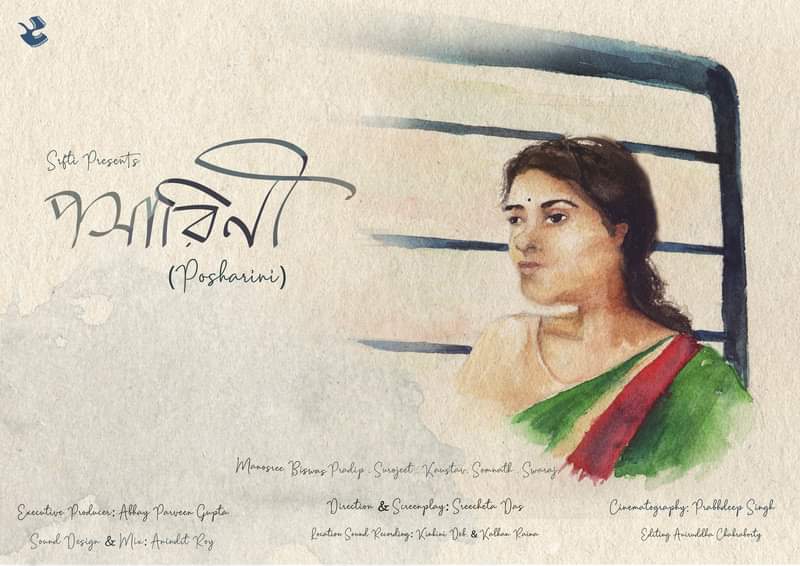
Film: Posharini, Director: Sreecheta Das

Driven by circumstances to take to hawking in the local trains, Gauri comes of her own after overcoming professional challenges, acute territorial jealousy from her peers and her own hesitation and lack of confidence.

7th Woodpecker International Film Festival will be organised form November 29-December 1, 2019 at Siri Fort Auditorium, New Delhi. Entry is Free in the Festival.

Philosophical and Historical Foundations of American Secularism 9 – The British

Dr. Herb Silverman is the Founder of the Secular Coalition for America, the Founder of the Secular Humanists of the Lowcountry, and the Founder of the Atheist/Humanist Alliance student group at the College of Charleston. He authored Complex variables (1975), Candidate Without a Prayer: An Autobiography of a Jewish Atheist in the Bible Belt (2012) and An Atheist Stranger in a Strange Religious Land: Selected Writings from the Bible Belt (2017). He co-authored The Fundamentals of Extremism: The Christian Right in America (2003) with Kimberley Blaker and Edward S. Buckner, Complex Variables with Applications (2007) with Saminathan Ponnusamy, and Short Reflections on Secularism (2019).

Here we talk about the British and the Americans, and the American Revolutionary War.

Scott Douglas Jacobsen: The British Empire produced some of the prominent Western philosophers, empiricists, and others. Obviously, the Americans and the British had a strained relationship for some time. What were some of the statements and ideas of the freethinkers on the American and the British sides during the American Revolutionary War? What were the different reactions to the American Revolution of the 13 colonies and the British Empire? What happened to the secular, men and women, during this time of war – common in American history?

Dr. Herb Silverman: The term freethinker emerged towards the end of the 17th century in England to describe people who stood in opposition to Christian churches and literal belief in the Bible. These people believed that they could understand the world through consideration of nature. In the United States, freethought was an anti-Christian and anti-clerical movement to make an individual politically and spiritually free to decide for himself on religious matters.

John Toland, an Irish philosopher and freethinker in the 18th century, was the first person called a freethinker (by George Berkeley, a Bishop in Ireland). Toland wrote over a hundred books, mostly dedicated to criticizing ecclesiastical institutions. In Christianity Not Mysterious, the book for which he is best known, Toland challenged not just the authority of the established church, but all inherited and unquestioned authority. Because of this book, he was prosecuted by a grand jury in London. The Parliament of Ireland proposed that he should be burnt at the stake, and in his absence three copies of the book were burnt by the public hangman.

British deists and freethinkers including John Toland, Anthony Collins, and Matthew Tindal focused on the human roots of Judaism, Christianity, Islam and ancient Paganism. They advocated tolerance and freedom of thought and fought against the influence of Christian doctrine on political and social life. They also denied the supernatural foundations of Christianity and analyzed the Bible with the aim to promote the free search for truth. They helped bring about Enlightenment views of religion and the secularization of Europe.

John Locke, who was British, inspired both the American and French revolutions. His arguments concerning liberty and the social contract motivated written works by Alexander Hamilton, James Madison, Thomas Jefferson, and other founding fathers of the United States. One of Locke’s passages is reproduced verbatim in the Declaration of Independence, the reference to a “long train of abuses.” Thomas Jefferson wrote, “Bacon, Locke, and Newton. I consider them as the three greatest men that have ever lived.”

Locke’s theory of the “social contract” influenced the belief of many founders that the right of the people to overthrow their leaders was one of the “natural rights” of man. He also argued that all humans were created equally free, and governments therefore needed the “consent of the governed.” Many scholars trace the phrase “life, liberty, and the pursuit of happiness” in the American Declaration of Independence to Locke’s theory of natural rights. At the time of the American revolution, the belief that rights came from God was widespread. British citizens believed in the divine right of kings.

Unlike many American founders, Locke was not a deist or a freethinker. He was a theist who accepted the cosmological (first cause) argument for the existence of God. Had Locke been born in our time, he might well have been an atheist.

Locke also had a strong influence on the French deist Voltaire, who called him “le sage Locke.” Voltaire’s major contribution to our founding fathers was his tireless quest for civil rights and his support for freedom of religion as well as separation of church and state. Voltaire’s reasoning may be summed up in his well-known saying, “Those who can make you believe absurdities can make you commit atrocities.” But my favorite quote of Voltaire is, “I have never made but one prayer to God, a very short one: ‘O Lord make my enemies ridiculous.’ And God granted it.”

Many Americans at the time of the Revolution were attracted to “secular millennialism,” a belief that we would someday be transformed into a utopian world of peace, justice, prosperity, and fellowship. The focus is on “worldly” transformation as opposed to “other-worldly” promises of spiritual salvation after death. Such predictions of America’s destiny came from people like Thomas Paine and his enormously influential pamphlet Common Sense. The pamphlet’s millennial-style passages include “We have it in our power to begin the world over again.” Paine added, “The birthday of a new world is at hand.” In Paine’s view this new world would be far from theocracy, grounded not on ecclesiastical authority, but on the principles of a democratic republic and equal rights.

While religious ideology was an important inspiration for many Americans, the military of the new American nation had no religious policy. Soldiers mostly appeared to have been indifferent to the religious consequence of the Revolutionary War. The war was over the birth of a new nation, rather than a new nation-with-church. Both the British and American sides tried to recruit Americans from every background for their cause. For many Americans, the ecclesiastical tyranny of tax-supported religious establishments was another form of oppression they were fighting against

The American Revolution hurt the Church of England in America more than any other denomination because the King of England was the head of that church. Anglican priests in America swore allegiance to the King. The Book of Common Prayer offered prayers asking God to give the king victory over all his enemies. In 1776, the King’s enemies were American soldiers and loyalty to that church could be construed as treason. So, Anglicans in America revised The Book of Common Prayer to conform to political realities, eliminating allegiance to the king.

The Franco-American Alliance brought thousands of French troops onto American soil, exposing American soldiers to advanced forms of freethinking and anticlericalism. The American Declaration of Independence, Bill of Rights, and Constitution of the United States also inspired the French revolutionaries of 1789, offering an example of liberty for the world and an example for modern constitutional democracies. The French Revolution motivated people to put irreligious ideas of the Enlightenment into practice and later extended beyond France to other European countries, and to the American colonies. For Americans at that time, irreligion more often took deistic rather than an atheistic form.

Jacobsen: Thank you for the opportunity and your time, Dr. Silverman.

Photo by freestocks.org on Unsplash

Bedi’s “The Secret Life of Frogs” to be screened at Woodpecker International Film Festival

It’s not every day that you get to see a frog that uses dance moves to seduce its mate, or the ‘potter frog’ that gently encases his eggs in clay to protect from predators.Even forAjay & Vijay Bedi, award-winning filmmakers, photographers, and wildlife conservationists, who have been filming, researching and exploring in India for many years, it wasn’t an easy affair. It took them 3-long years deep in the swampy rainforests of India, to understand and document frogs smaller than a thumbnail. They wanted to captures species that have their own unique story to tell.

Through “The secret life of frogs” they wanted to draw attention to these tiny creatures as old as dinosaurs yet still a mystery to science. Sadly, more than 80% of the 400 species of amphibians found in India are already on the endangered list. Some have not been seen from 18 to 170 years. The figures are dire when one considers that about 60 percent of amphibians are endemic to the sub-continent. The documentary throws up behavioral facts hitherto unknown to science, documenting for the first time the entire life cycle of the highly endangered, rare purple frog that emerges from the underground for just one day of the year to breed.

“India conservation policy focuses on big cats and mammals. So the idea, therefore, is to pronounce the Purple frog as an ‘umbrella species’ much like the tiger so that the habitat as well as other species, living in the same diversity, can be indirectly protected. Unless we act quickly, amphibian species will continue to disappear, resulting in irreversible consequences to the planet’s ecosystems and to humans. When we save the frogs, we are protecting all our wildlife, our resources, our ecosystems, our planet and ultimately all humans,” the directors said in a statement.

Beautifully shot in the rainforests of India every sequence leaves the viewer awestruck by how little we know about these delightful creatures. In the land of tigers, rhinos and elephants, amphibians of India are croaking for our attention. Told in an easy lyrical way, the filmmakers hope to draw attention to fossorial creatures that seldom receive conservation attention. The film is an ode to amphibians it is also a plea to save them. There is hope, while some species are adapting to changes in their habitat, others can be protected with simple management interventions, provided we show we care for life in the undergrowth.

The Bedi Brothers; Vijay & Ajay Bedi are the third generation of wildlife filmmakers in their family. They are youngest Asians to have won the Green Oscar for their films and also the only Indians to have won a nomination at the television highest awards at Emmy Academy of Television Arts & Sciences.

The Bedi Brothers; Ajay & Vijay Bedi are the third generation of wildlife filmmaker and photographer in a family that has a long history of expertise in this highly specialized field. They are youngest Asians to have won the Green Oscar for their films and also the only Indians to have won a nomination at the television highest awards at Emmy Academy of Television Arts & Sciences for their film “Cherub of the Mist”, based on highly endangered Red Panda.

Bedi brothers along with scientists working in the area, have also submitted a proposal to Kerala government for making Purple Frog a state frog which would help boost its conservation. “The purple frog is considered an important species globally and it is endemic to Kerala and we believe that the Purple frog can be an ideal ambassador for the ecosystem that makes up the Western Ghats,” the directors said.

“The Secret Life of Frogs” will be screened at 7th Woodpecker International Film Festival on November 30, 2019, 4:30 pm at Siri Fort Auditorium.

Imran Khan’s call for jihad in Kashmir is maliciously dangerous

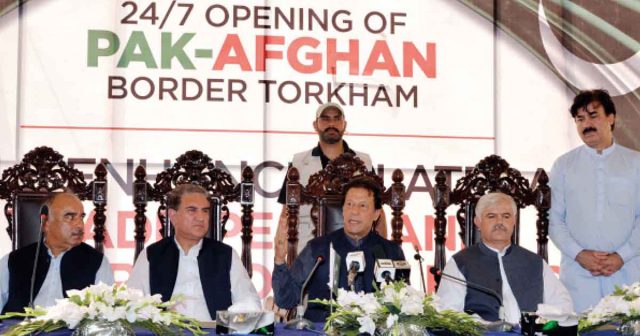
Talking to media after inaugurating the Torkham Terminal at Pak-Afghan border before leaving for New York to attend the UNGA (United Nations General Assembly) session, Pakistan PM Imran Khan warned his people that, “If anyone from Pakistan goes to India to fight ‘jihad’ (Holy war), he will be the first to do an injustice to Kashmiris; he will be the enemy of Kashmiris.” Pacifists and supporters of Khan considered this paradigm shift in Pakistan’s Kashmir policy of packaging and presenting terrorism in Kashmir to the international community as “freedom struggle” a clear indicator that he was finally breaking away from the country’s dubious past record of patronising terrorism. But pragmatists viewed this announcement as a well-timed ploy just before the UNGA session aimed to mislead the international community by giving the false impression that Islamabad no longer had any truck with terrorism.

In his UNGA address, Khan spoke of how in the 80s, “Pakistan trained the then “mujahedeen” at the behest of the Americans” and while “the Soviets called them ‘terrorists’, the Americans had then called them as ‘freedom fighters’. He went on to mention that after Pakistan “had to join the US and tell the same indoctrinated people this is now not a “freedom struggle” but “terrorism”. They (mujahideens) suddenly saw us as collaborators; it became a nightmare and they turned against us.” His admission that even if sponsored by the state, violent activities by armed groups could no longer be passed off as “freedom struggle” seemed to vindicate those who believed Khan’s assurance of ‘zero tolerance’ for all types of terrorist activities in his “Naya (new) Pakistan.” This belief was reinforced when in his UNGA address Khan also mentioned that “when we came into power; we decided to disband all militant groups; and this was a decision taken by all political parties.”

At that time, it really seemed that after realising how the country and its people had suffered due to the self-debilitating state policy of patronising terrorist groups, Khan had finally given Pakistan Army’s ‘strategic asset’ strategy a ‘thumbs down’. But, just two days after Khan had waxed eloquent at the UNGA, the pragmatists who had all along accused him of trying to mislead the international community by taking the high moral ground against terrorism were proved right in their assessment. Khan admitted that he was “disappointed” on finding no worthwhile support from the international community on his Kashmir narrative even after he did his best to “forcefully present the Kashmir case like never before at the UNGA session.” So, in a complete reversal of his stand on terrorism at UNGA, the first thing that the “disappointed” Khan did upon his return home from the US was to talk about ‘jihad’ (holy war) in Kashmir by saying, “It (standing by Kashmiris) is ‘jihad’. We are doing it because we want Allah to be happy with us.”

Though New Delhi did condemn Khan’s ‘jihad’ call, it has (as is its wont), let him off very lightly by not acquainting the international community with the dangerous consequences of his remarks. Khan’s bid to give the Kashmir issue a communal flavour and inciting Muslims all over the world is something that cannot be overlooked. In fact, his actions are reminiscent of former Pakistan President and army chief Gen Pervez Musharraf’s candid admission during an interview given to Der Spiegel, a reputed German magazine, in 2010. Readers may recall that he openly spoke of how “we (Pakistan Army and ISI) poisoned Pakistani civil society for 10 years when we fought the Soviets in Afghanistan in the 1980s. It was ‘jihad’ and we brought in militants from all over the world, with the West and Pakistan together in the lead role.”

With Islamabad’s attempt to internationalise the Kashmir issue falling flat at the UNSC (United Nations Security Council), its inability to garner international support on Kashmir at UNGA and the plan to knock on the doors of the International Court of Justice making no headway, one doesn’t have to be a rocket scientist to comprehend that Pakistan has decisively lost the diplomatic battle for Kashmir. All these setbacks left Khan with no other option but to violate established canons of diplomatic behaviour and civility by brazenly using the venerated podium of UNGA to spew vitriol in an attempt to polarise the world on communal lines and subsequently call for ‘jihad’ in Kashmir just in order to replicate the Afghanistan ‘jihad model’ here.

As far as the Kashmir issue is concerned, the situation for both Islamabad and Rawalpindi is desperate and since desperate times call for desperate measures, Khan’s ‘jihad’ call and Pak Army chief Gen Qamar Javed Bajwa’s willingness to “go to any extent” for the sake of Kashmir need to be taken very seriously as these certainly aren’t empty threats. Again, one is reminded of Gen Musharraf, who during an interview given to Pakistan’s Duniya TV in 2015 unabashedly admitted that “We gave Lashkar (Lashkar-e-Toiba) terrorists a heroic welcome. We trained and supported them. They were our heroes. They fought very well in Kashmir.” He also went on to mention that “We introduced ‘religious militancy’ to flush out Soviets. We brought Mujahideens from all over the world. We trained Taliban, gave them weapons and sent them for war and they (militants) were our heroes. Osama bin Laden and Haqqani were our heroes.” 

Even though Khan has declared that “We are the first government that has started disarming militant groups,” but by admitting that “we still have about 30,000-40,000-armed people who have been trained and fought in some part of Afghanistan or Kashmir,” he’s made it clear that Pakistan still retains the capability of creating trouble both in Kashmir and Afghanistan. Furthermore, by making false allegations of excesses and saying that had he been in Kashmir he would have picked up a gun, Khan is openly playing with emotions of young Kashmiris and pushing them into the abyss of terrorism. This is precisely the reason why his unambiguous call for ‘jihad’ in Kashmir, complemented by Gen Bajwa’s ominous assurances of “going to any extent,” need to be taken far more seriously not only by New Delhi, but by the entire global community as well because who knows when Pakistan might create another Osama bin Laden!

Indo-China relation is a ‘work in progress’

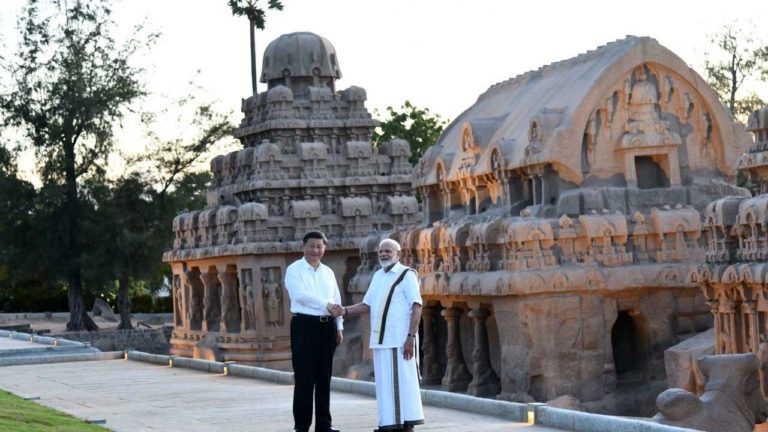
Prime Minister Narendra Modi and President Xi Jinping are world leaders of great repute. They are also seasoned politicians who keep the interest of their respective countries above everything else. Against this backdrop, the “Informal Summit” between the two leaders at the Indian coastal town of Mamallapuram, Chennai, certainly had more on the cards than building a personal friendship with a liberal dose of art and culture thrown in.

The two leaders are gravitating towards each other to offset growing challenges that they both are facing domestically and in the international arena. Domestically, both are looking at an economic downturn in their respective countries. Internationally, China does not wish to see India leaning towards the United States and India does not want China to aid Pakistan, especially so, in the matter of Kashmir. It seems that there was some positive interaction between the two at Wuhan which has resulted in taking the conversation forward.

That it had the required effect becomes apparent from the rushed visit of Pakistani Prime Minister Imran Khan to China before President Xi Jinping’s visit to India. Such was the anxiety being felt by the Pakistani establishment that Khan was accompanied by the Army Chief, General Qamar Bajwa. Many, of course, would suggest that Prime Minister Imran Khan had accompanied his Army Chief to China, the latter having a need to allay fears about China’s position on Kashmir. The Pakistan Army is well aware that it cannot survive without Chinese support in this matter.

The prelude to this informal summit witnessed flare up of tensions between the troops of India and China, which by now, has become a tradition. This time round the action took place on 12th September and the venue was the northern bank of the 134-km-long Pangong Tso Lake in Eastern Ladakh. The mater died down after the necessary theatrics had been performed. What does China gain from such infantile posturing, especially when the visiting dignitary is of the stature of President Xi Jinping is anybody’s guess. The matter, as usual, was ignored by the leaders in their conversations.

Coming back to the takeaways from the summit, on the flip side, no progress was made with regard to the longstanding border dispute between the two countries. As a result, India needs to continue with a high state of vigilance and remain prepared in view of the burgeoning military might of the neighbouring country. 

On Kashmir, there has been a thaw in the hard position adopted by China. Certain statements emanating through diplomatic channels of the country are terming the issue as a “bilateral dispute between India and Pakistan, to be resolved by the two sides through negotiations.” Official sources confirmed that Kashmir was not discussed by the two leaders, even as they agreed to work together to deal with the challenge of terrorism.  The new position adopted by China constitutes a significant departure from the earlier posture and is possibly a result of New Delhi allaying certain fears that China harbours with regard to the borders. Pakistan would be quite disconcerted by this unexpected turn of events which further weakens their position on Kashmir.

Trade and economics predictably dominated the talks! Prime Minster Modi went well prepared and determined to get certain concessions that would lead to a reduction in the ever increasing trade deficit between the two countries. President Xi Jinping responded positively with assurances of increase in tourism, pharmaceuticals etc. There was agreement to establish a “High-Level Economic and Trade Dialogue to deepen economic cooperation; achieve enhanced trade and commercial relations and better balance of bilateral trade.”

China, on its part, is looking for permission for its companies, especially Huawei, to invest in India, and also wishes to see India joining the China-led Regional Comprehensive Economic Partnership (RCEP). Experts are of the belief that India cannot afford to ignore an Asia centric free trade agreement and hence the Modi government may accede to the demand in time.

It is notable here that China has launched a huge propaganda war against the United States that is largely centric to the Indian sub-continent. Islamic nations like Pakistan and Bangladesh are terming news of Chinese repression of its Muslim population as a product of US engineered misinformation. “As a part of the propaganda war, they (US) have now employed the media outlets to make the Islamic world hostile towards China by spreading fake news of so-called Muslim oppression in the country,” says Mohd Enamul Hassan in an article published in the Global Times. Hassan is a Bangladeshi journalist who has done a fellowship at the Beijing-based Communication University of China.

India will need to be vigilant to not fall in a similar propaganda trap laid out by China and will need to nurture the good relationship with the US alongside the positive developments on the Chinese front. The US, on its part, would do well to understand the emerging dynamics in the South Asian region. In case it wishes to get assistance from India to balance out China then it will need to show more compliance in trade talks and other concerns that India may have about China.

Notwithstanding the growing bonhomie with China there is much for India to be wary about. First and foremost is the Chinese reluctance to ease out on the borders; India simply cannot reach out to China as a friend till the border dispute is not settled in letter and spirit. Chinese support to Pakistan has an element of flip-flop diplomacy that continues to generate unreliability in the relations between the two Asian giants. The fact that Pakistan continues to get Chinese assurances of a “Harmonious Relationship” along time tested lines is something that India cannot ignore.  An acid test will come by with the Chinese reaction to Pakistani mischief after the reorganisation of J&K into two Union Territories. The manner in which things play out will indicate the success or failure of the Mamallapuram Summit.

The last word here is that India needs to continue resisting Chinese attempts to dominate Asia while building a relationship based on equality with the country. To summarise, though the Mamallapuram Summit had a positive spin-off much needs to be done to get Indo-China relations on to a desirable level.

Sunny Leone to feature in Indian classical dance show

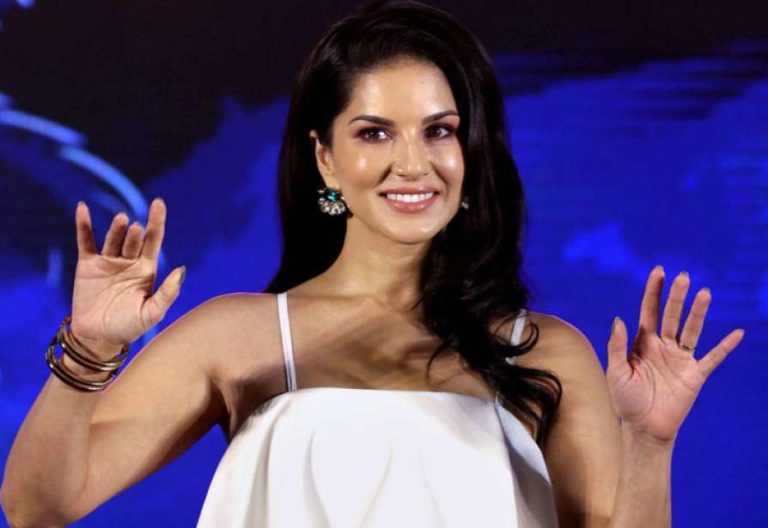
Sunny Leone is all set to perform in Indian classical dance show in Broadway style, “Abhimanyu”, choreographed by Sandeep Mahavir.

Touted as “one of its kind play”, “Abhimanyu” combines Kathak and hip-hop into an grand dance show.

“I love experimenting with the work I do and this time I am learning Kathak with a blend of hip-hop. When Sandeep came to me with the concept, I was taken aback since the concept is unconventional. I am ecstatic to be a part of it,” Leone said in a statement.

Mahavir said “Abhimanyu” chronicles the journey of a dancer, shown through different authentic dance forms and music.

“The unique element of the musical is that the content part and storyline is very convincing and relatable. The artistes are real-life masters of their art forms and not just actors imitating it.

“The music score is completely original and no cover tracks are used. Without Sunny Leone this wouldn’t have been possible because no one else could do justice to the character,” Mahavir added.

The musical Broadway would first flag off in Ahmedabad and would be taken forward as a global tour.

Commemorative coin to mark Guru Nanak’s 550th anniversary issued by Pakistan

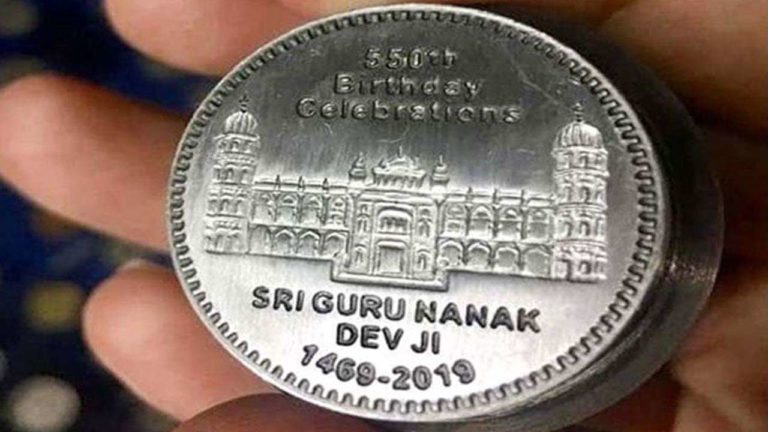
Pakistan has issued a Rs 50 commemorative coin to mark the 550th birth anniversary of Guru Nanak Dev, the founder of the Sikh religion in November.

In a Facebook post, Prime Minister Imran Khan shared a picture of the coin. “Pakistan issues commemorative coin to mark the 550th anniversary of Guru Nanak Devji,” Khan said in the post. Sikh pilgrims visiting Gurdwara Kartarpur Sahib to celebrate the birth anniversary of their religious founder, will be able to buy the commemorative coin.

The coin comes ahead of the inauguration of the landmark Kartarpur Corridor by Prime Minster Khan on November 9, three days before the 550th birth anniversary celebrations of Guru Nanak.

The year 2019 marks the 550th birth anniversary year of Sikhism founder Guru Nanak, whose birthplace is Sri Nankana Sahib in Pakistan. Earlier this week, Imran Khan also laid the foundation stone of Baba Guru Nanak University in Nankana Sahib.

Postage stamps having the image of Gurdwara Janam Asthan will also be issued, which will be worth Rs 8 and could be used commonly.

Last November, both India and Pakistan agreed to set up the Kartarpur Corridor to link the historic Gurdwara Darbar Sahib – the final resting place of Guru Nanak – in Pakistani town of Kartarpur with Dera Baba Nanak in Punjab’s Gurdaspur district. Kartarpur Sahib is located in Pakistan’s Narowal district across the river Ravi, about four kilometres from the Dera Baba Nanak shrine. India and Pakistan last week signed the agreement on the Kartarpur Corridor that will allow Indian pilgrims to undertake visa-free visit to Gurdwara Darbar Sahib, the shrine of the Sikh religion’s founder Guru Nanak in Pakistan. The agreement will allow 5,000 Indian pilgrims daily to visit Gurdwara Darbar Sahib where Guru Nanak spent last 18 years of his life.

Indian School of Business (ISB) and Ministry of Railways enters into strategic partnership

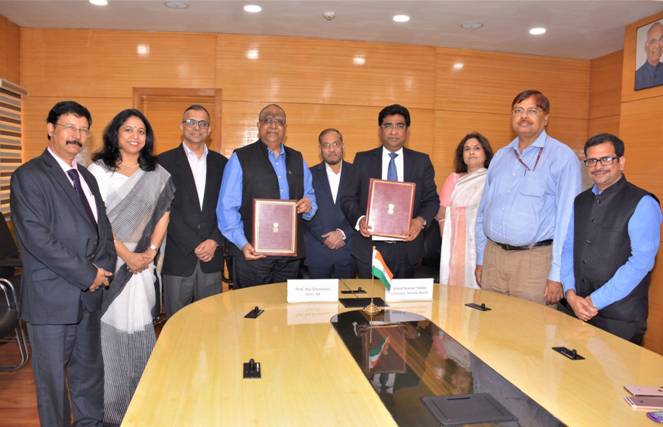
Ministry of Railways and the Indian School of Business (ISB) have signed a Memorandum of Understanding (MoU) today for a strategic partnership. It was signed by Vinod Kumar Yadav, Chairman, Railway Board and Professor Rajendra  Srivastava, Dean, ISB, in the presence of Railway Board Members & faculty members of ISB.

The comprehensive MoU covers several aspects including executive education programs, developing research opportunities, developing case studies and pedagogical materials, and creating of a future-ready leadership pool for the Indian Railways.

Speaking on the occasion, Vinod Kumar Yadav, Chairman, Railway Board said “I am very pleased to formalize this partnership with the Indian School of Business. This strategic partnership will allow Indian Railways to build leadership talent in a rapidly changing competitive environment. The MoU will also facilitate research in areas of importance to the Railways and make the Railways an innovation and technology driven future-ready organization.”

Speaking on the occasion, Professor Rajendra Srivastava, Dean ISB said, “The extended partnership between the Indian Railways and ISB is going to create an important milestone in the country’s developmental processes. It is important for the Railway officials to comprehend the nuances of managing the future transformations, and it is here that ISB could offer appropriate learning interventions, develop thought leadership and initiate research programmes to bring up win-win scenarios. I am sure the collaboration between the Railway Board and ISB will go a long way and will benchmark such partnerships”

Through its Centre for Executive Education (CEE), ISB has been training the Indian Railway officers for their mid-career training requirements. To further strengthen its collaboration, the Railway Board and ISB will also jointly conduct research in areas of mutual interest and develop case studies. ISB will initiate an ‘Executive in Residence’ Programme and involve senior executives of Indian Railways to participate. Select ISB Faculty will be made available to advise the Railway Board in areas of mutual interest.