Home Blog Page 412

Sports and Religion: A New Challenge?

Annie Sugier, president of the League of International Women’s Law, calls upon the Organizing Committee of the Paris Olympics 2024 to strictly apply the letter of Olympic Charter. She is ably supported by several eminent personalities and associations in her tribune to the “World”. 

The interference of religion in sports is undoubtedly a current issue that is embarrassing both for public authorities as well as for sports leaders. A revealing example: The actions of “civil disobedience” in a Grenoble public swimming pool by some fifteen burkini-clad women, claiming the right to swim there in ultra-modest bathing suits. This was formally forbidden by the bylaws.

Reacting to this situation, the environmental mayor of Grenoble calls on the President of the Republic to decide: “Does the government want public swimming pools to be, like schools, sanctuaries protected from religions, and thus with an attitude contrary to the present position of national institutions such as the Observatory of Laicity (secularism) and the Defender of Rights?”

Similarly, the reporters of the Parliamentary mission on “public services, faced with radicalization,” mention a proposal inspired by the French Law forbidding religious symbols in public schools: “…there might be therein a line of approach even if the possibilities for regulating religious behavior (even ostensible) seem limited in privatized sports structures (…)”.

The terms of the debate are thus set: On the one hand, an official vision of Laicity (a form of secularism with narrow vision), on the other, the promotion of an educational value of sport allowing more strict rules. 

Reasserting the boundaries of laicity (secularism), guides have been developed to help supervisors manage such conflicts. The UFOLEP (the first multi-sport federation in France) published “the C.O.D.E. of sport and laicity“, followed by the Ministry of Sports, with its “Laicity and religion in sports“.

Impotence dominates

From the start, the Ministry of Sports states: “The ambition of this guide is to demonstrate that the expression of religion and laicity (secularism) are not, in themselves, incompatible in the field of sports“. The UFOLEP is even more specific; it quotes Pierre Tournemire, an administrator of the Ligue de l’Enseignement (League of Education): “Our society is multicultural sustainably. Identity claims or religious practices must be legitimately expressed in the public space without constraint or suspicion, only on the conditions specified for public space”.

These guides propose a simple message: Laicity (secularism) applies only to professionals in the status of public officials. Where practicing religious people are concerned, their freedom to show their convictions and beliefs must be protected on the condition that public order is not affected. The authors immediately add that the idea of public order must be dealt with carefully, since “it might hide a potential discrimination for a religious purpose”. This caveat ignores the fact that the religious motivation itself masks sexist discrimination.

In short, there’s a serious lack of any political analysis of the societal functions of sport, and what dominates is impotence. Should we really accept that?

Nicolas Cadène, General Rapporteur of the above mentioned Observatory of Laicity in an intervention annexed to the Sports Ministry’s guide, reasserts the limits of Laicity (secularism), but proposes an interesting solution: “Here, in reality, it is not laicity (secularism) that is concerned.  Forbidding proselytism stems from the values of sport, recalled in particular in Rule 50 of the Olympic Charter as well as in Law 4 of the FIFA, concerning football”.

This view is consonant with the Belgian association, the Brussels Wallonie Panathlon, the armed branch of the Belgian Olympic Movement for ethics in sport. On the initiative of its President, Philippe Houssiaux, three symposia were organised with representatives of sports, religions and laicity (secularism), which resulted in the declaration: “Sport, the Spirit of Humanity” where primary element is the following: “Whereas each person engaging in sport possesses their own rich values and philosophies of life or of belonging, he/she accepts that once they cross the threshold or enter the sporting arena, they will agree, with no exceptions, to adopt and conform to the rules of sport in the widest sense, without promoting their philosophical convictions in an ostentatious or intolerant fashion, in any way whatsoever.”

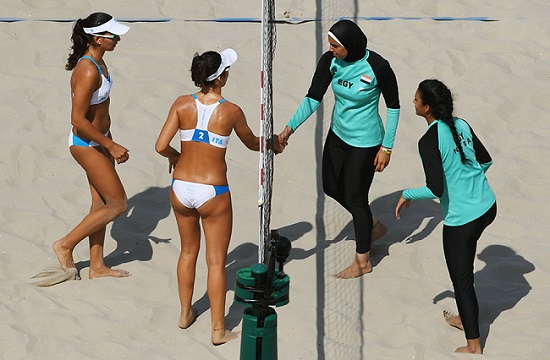
With this same concern in mind, the League of Women’s International Rights, supported by over 100 organisations and more than 360 personalities, appealed to the Organising Committee of the 2024 Paris Games (COJO) demanding the application of the Olympic Charter and punishments for failures to comply.  Among the offenders are Iran and Saudi Arabia, both of which submit their women athletes to strict sexual apartheid (participation only in such disciplines judged to be “Quranic”, bodies covered from head to toe and “women only” sports). Because these Games are mirrors of our societies, Paris must be exemplary. Let us recall that over 50 metropolises in the world upheld our candidacy saying that: “Paris has the necessary assets and the will to give a new vigour to Olympic values”. If Paris refuses to apply the Olympic Charter to sex-based discrimination in the same way that it has in the past applied it to racial discrimination, then its inconsistency, far from being a protection against discrimination will become an egregious example of it. 

Also, sports must be governed by the same rule for all. Only thus will sports remain a space for learning the respect of the one Olympic rule.

The tribune was first published in French in the newspaper Le Monde. Given below is the link to the tribune and in it the first 380 signatories of the Paris 2024 petition
LeMonde.fr/idees/article

Noose tightens around ‘Kingpin’ Chidambaram

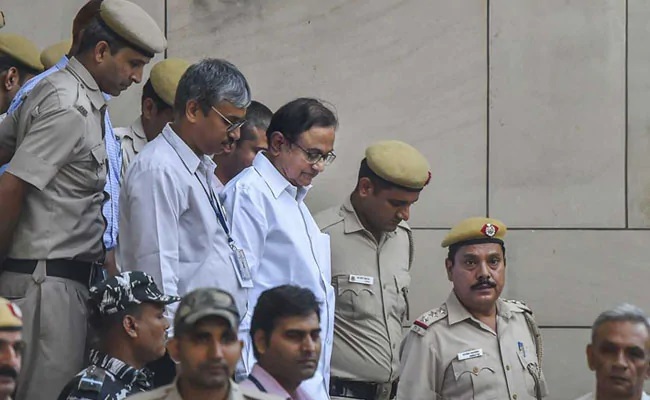
The corruption cases involving senior Congress leader P Chidambaram, who is also a sitting member of the Rajya sabha and influential member of Congress Working Committee (CWC) have been in the limelight ever since CBI (Central Bureau of Investigation) and ED (Enforcement Directorate) officials arrested him from his residence on August 21 night. In a dramatic turn of events CBI officials had to scale the walls of Chidambaram’s Jor Bagh residence to arrest him as he made himself unavailable for the first 27 hours after his anticipatory bail plea was rejected by Delhi High Court saying that the INX media case was a “classic case of money laundering” and the facts prima facie reveal that Chidambaram is the kingpin and the key conspirator in the case.

Chidambaram is facing charges of corruption in a 2007-08 case related to FIPB (Foreign Investment Promotion Board) approval for foreign funds to the tune of Rs 305 crore. CBI is probing corruption angle in the INX Media case and ED is investigating charges of money laundering.

Background

CBI in its probe found that there were irregularities in the grant of FIPB clearance of INX Media. INX Media was owned by media entrepreneurs Peter Mukerjea and his wife Indrani Mukerjea who are currently in a Mumbai jail for killing Sheena Bora, Indrani Mukerjea’s daughter from her ex-husband. In March 2007, INX Media had approached the finance ministry for issuing 14.98 lakh equity shares and 31.22 lakh convertible non-cumulative redeemable preference shares. Each share was to be priced at Rs 10 a piece and was to be owned by three non-resident investors under the FDI norms. The finance ministry approved the request in May 2007. Back then Chidambaram was the finance minister. This implied that INX Media was allowed to receive foreign fund of Rs 4.62 crore. But the company went on to receive foreign funds to the tune of Rs 305 crore from three Mauritius-based firms. INX Media also invested money in INX News which is another violation of the FIPB order. Thus this media group managed to flout the conditional FIPB approval and received foreign funds of Rs 305 crore against the approved inflow of Rs 4.62 crore. CBI probe reveals that the foreign firms bought each share for Rs 862.31 that was at a price more than 86 times of the face value.

His son, Karti Chidambaram, is also accused in this case as he is the founder director of Chess Management Services — the company which was engaged by INX Media to settle the matter amicably with finance ministry when income tax department, ED and financial intelligence unit raised questions and sought clarification from INX media.

Karti is said to have used his influences in his father’s ministry in 2008 to favour INX Media, and P Chidambaram was party to all this fraud. This has been backed by a statement from Indrani Mukerjea, who has turned approver in this matter on July 4 this year. Indrani Mukerjea has said it clearly that INX Media got a favourable deal after she had a meeting with P Chidambaram seeking FIPB clearance in 2008.

The Questions

In his defence, Chidambaram has said that FIPB decisions were taken by Finance Ministry officials and the FIPB. Now the question arises as to why the board members and ministry officials would have a soft corner for INX Media group without any motive. Were they bribed? Were they pressurised by the then finance minister P Chidambaram? Or Chidambaram simply connived with them? In either of the case, it points to culpability of the then finance minister Chidambaram.

CBI even called Sindhushree Khullar, former CEO Niti Aayog, to confront her with Chidambaram to cross check his claim. Khullar was additional secretary in the Department of Economic Affairs when Chidambaram was finance minister.

Definitely there are layers and layers of concealing and involvement of the then finance minister which cannot be denied outright. But Chidambaram and his son have accused government of running a vilification campaign against them to demonize and humiliate them. Karti called it a political witch hunt and went on to say that outrageous media leaks are the preferred tactics of Enforcement Directorate. P Chidambaram too has been evasive and non-cooperative in his replies during his questioning and has even objected to ED handing over the investigation material to the court in a sealed cover.

How were the anomalies detected

In January 2008, the financial intelligence unit of the finance ministry found an anomaly in money flow from three Mauritius-based firms into a media venture called INX Media. As it involved foreign funds, the Income Tax Department in Mumbai forwarded this case to the Enforcement Directorate (ED), which began probing the flow of funds to see if money was laundered. The ED investigation pointed towards large scale corruption with involvement of powerful people. The ED then referred the matter to Central Bureau of Investigation (CBI), which registered an FIR in INX Media case on May 15, 2017. Last year, ED too lodged a separate case of money laundering. Chidambaram has been booked under Sections 420 and 120B of IPC (Indian Penal Code) and the Prevention of Money Laundering Act. His son, Karti was also arrested by the CBI on Feb 28, 2018 for 12 days. Last year in May Chidambaram had moved to the courts seeking interim protection fearing arrest in the case, and had been enjoying interim protection against arrest for the past 13 to 15 months. The big point is that no common man enjoys such protection for so long. And still he cries vendetta politics.

Probe findings

In its probe against Chidambaram in money laundering case, ED found that financial intelligence unit has given specific inputs that former finance minister and his co-conspirators had accounts or valuable properties in Argentina, Austria, British Virgin Islands, France, Greece, Malaysia, Monaco, Philippines, Singapore, South  Africa, Spain and Sri Lanka. ED also told the Supreme Court that persons with “close” links to Chidambaram had set up a web of shell companies in India and abroad to launder money. The shell companies have been created so as to make it difficult for law enforcement agencies to track the money trail. According to the ED, accounts of one of the shell companies has been closed and another account has been opened by a co-conspirator. All this to fool the agencies. Chidambaram and his co-conspirators have changed the share holding pattern of shell companies and have made changes in directors so as to distance himself and his family from the money already laundered and invested. ED claims that 17 benami foreign bank accounts have been found through which money is laundered.

The ED in its response to the apex court said that it has found, “Two individuals ….acted as agents of Chidambaram and interacted with the parties applying for FIPB approval including INX Media as well as collected the proceeds of crimes on behalf of/at the behest of petitioner- accused”. CBI sought Chidambaram’s custodial remand only after the triple test of flight risk, non-cooperation and tampering got satisfied. According to ED, Chidambaram and his co-conspirators not only tampered with the documents but also influenced the witnesses.

The father-son duo are also facing charges in another case of controversial FIPB clearance of Rs 3,500 crore which is related to Aircel-Maxis deal of 2006. Only the Cabinet Committee on Economic Affairs was empowered to clear it but P Chidambaram, one of the most powerful ministers in erstwhile UPA government Okayed it in his capacity as finance minister as his own son was party to it. The ED is also probing money laundering angle in the Aircel-Maxis deal.

With the ongoing probe by CBI and ED, it is sure that what has so far been seen is just the tip of iceberg. Much will be revealed in the upcoming days.

New Motor Vehicles Act provides for very strict penalties

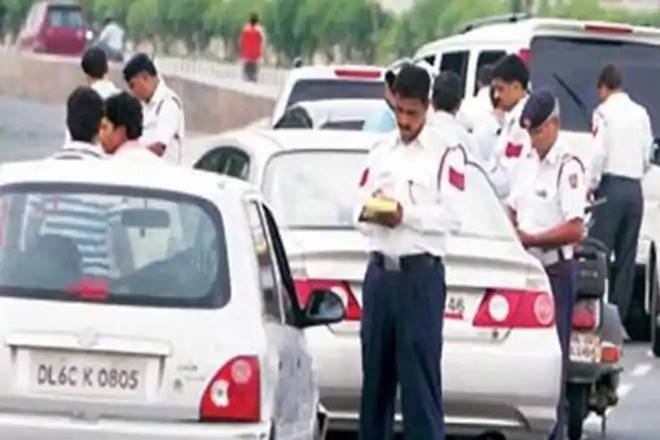
The new Motor Vehicles Act laws that came into effect from September 1, 2019 are draconian in nature, to say the least. The automobile industry is in the midst of a crisis, and the new law may be a severe deterrent to its progress. While, some provisions of the law like enhancement of compensation for road victims, protecting good samaritans, fixing responsibility of contractors and road safety boards are in public interest, but many other provisions are quite cumbersome. Why a fine of Rs 100 to Rs 500 has to be increased ten-fold? The rationale has neither been explained nor have the social conditions been taken into account.

The new law has peculiar provisions like penalizing guardians of juveniles and even putting them in jail, cancellation of registration and suspension of driving licence. These are not only superfluous but also against the basic concept of empowering citizens. These apart, it would mostly be used as coercive extortive tactics by the law-enforcement agencies. Instead of solving the problem, it adds to it.

Even today all over the country, millions of impounded vehicles are parked at every police station. These have become junks. Neither the owner is prepared to take these back nor can authorities dispose it off being case properties. These are tremendous wastage of wealth. The law has not respected the concept that a car is a private property and the state cannot on any ground except severe criminal culpability impound it. Moreover impounding of vehicles only compounds the problem. Unnecessary provisions need to be scrapped.

Then levying fines for over speeding have been increased to Rs 1000 to Rs 2000. It is too heavy. Most drivers are fined for driving 2 to 4 km above the 50 km limit. This should better be given up as in normal circumstances even a speed of 80 km is safe. It has not taken into account that modern vehicles zoom to 70/80 km even without pressing the accelerator. Rash driving is a different issue. It entails a fine of Rs 5000. But would that stop it? It has been observed that rash drivers often skip notice and not prosecuted. But a sober one crossing the limit by a km is penalized. Jumping a signal costs Rs 5000.

Another problem is with the insurance. As per law it is already a compulsion. The new provisions have not taken into account that insurance charges have been increased manifold. Higher the charges higher would be default. The rates must be affordable and the law must ensure it.

Overall, the basic tenet of the law is not adhered to while drafting and enacting this law. Mere inducing fear among people by imposition of severe penalties is not a solution. It does not reduce incidence of violation but empowers the enforcers to coerce and extort. The law is apparently a creation of such people.

While enacting this kind of law one forgets the adage that more stringent a law more is the corruption. The powerful are not subjected to law. They skip with their clout. Others skip it if they can grease the palms. But could any lawmaker tell the nation how many have the capacity to pay a fine of Rs 10,000 or more?

Entire effort seems to be revenue realization for an administration that is crying hoarse of its increasing expenses and shortfall in revenue. The practice is to extort the maximum from the common man even to his ruin. This is a prescription for disaster.  

The country forgets that one improper environmental dictum ushered by the National Green Tribunals of junking ten-year-old working vehicles is playing havoc. The NGT’s quixotic order has put a brake on car sales, new and old. Many had alleged that the NGT had issued such orders to boost car sales. It is also an example of NGT’s concern for the environment! It does not apparently know that manufacturing a new car is more polluting than the one in use. The US and the West encourages buying one-year old cars and pushes resale as a new car pollutes more and allows these to ply for 40 years. The resale industry is in jeopardy here. Since resale is difficult, new car sales are affected. The reduced demand is affecting the automobile sector. Sales have come down drastically by over 30 percent or more. The new MV Act would add to the problem.

The new law seems to create more problems than solving it. The law that was aimed at weeding out corruption and improving road safety is likely to do the contrary. The Yamuna-type expressways are badly designed where tyre bursts are common due to faulty grid-marks. The loops are also inappropriate. But instead of the road operator, drivers are being penalized.

Let the nation and the lawmakers rethink. It calls for immediate review of the law. Like the Delhi rent control act that was passed over decades ago in a jiffy, it needs reconsideration. The new law needs to be sent back to the standing committee for detailed review. It should also follow a public debate. The need is for a simpler law imposing more responsibility and least fear. Such laws should not be designed for revenue generation.

Statehood of J&K to be restored as soon as the situation warrants: Amit Shah

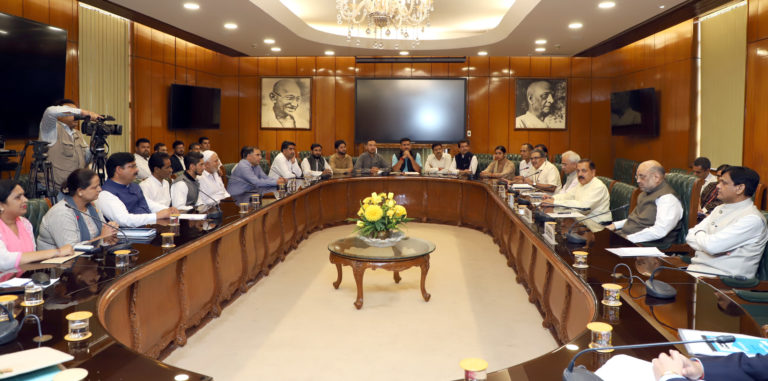
Union Minister of Home Affairs Amit Shah recently met three different groups of representatives from Jammu and Kashmir. Shah clarified that the statehood of Jammu and Kashmir would be restored as soon as the situation warrants, and asked the representatives to not believe any rumours.

This was his first meeting with the representatives of sarpanches from various districts of Jammu and Kashmir after abrogation of Article 370. He also met representatives of fruit growers, agricultural markets and some members of local horticulture associations. He also met the representatives of the community of people displaced in the partition.

Shah informed the delegation of sarpanches that henceforth the provisions of the 73rd and 74th  Constitutional Amendment Acts would be applicable to Jammu and Kashmir and this would serve to empower local governance and panchayati Raj institutions in Jammu and Kashmir.

On the issue of mobile connectivity and restoration of communications, the Union Home minister said that the issue would be expedited and that a solution would be found as quickly as possible. Greeting the sarpanches, Shah hailed them as the leaders of Jammu and Kashmir and said that it would be their responsibility to ensure that the benefits of various government schemes would reach the correct beneficiaries and that an atmosphere of peace and prosperity is maintained. Shah promised to begin recruitment for various government jobs at the earliest and said that the government would ensure merit-based recruitment of at least five aspirants from each village.

The representatives of fruit growers expressed their concern regarding the possibility of unsold and wasted produce.  Shah reassured them by saying that the government is in touch with concerned agencies to resolve the issue. He noted that with the abrogation of Article 370, the benefits of various government schemes like PM Fasal Bima Yojana would reach all farmers of Jammu and Kashmir now.

He reassured the representatives that nobody’s land would be taken away and government land would be used for the establishment of industries, hospitals and educational institutions. This would not only create employment opportunities for the locals but also enhance tax revenues for the state, which in turn would be used for the welfare of the people.

Shah said that it was essential to change the atmosphere and bring the people of Jammu and Kashmir to mainstream. He promised to begin the process of Block level elections as quickly as possible. He told the representatives that your fight is against terrorism, as is ours, hence we should ensure an atmosphere of peace in Jammu and Kashmir at the earliest.

Home Minister also met the representatives of the displaced people who had initially registered in various stages of India but later settled in Jammu and Kashmir. Shah assured them that they are being considered for inclusion in the scheme under which displaced families registered in Jammu and Kashmir are given financial assistance.

IAF inducts eight Apache multi-role combat helicopters

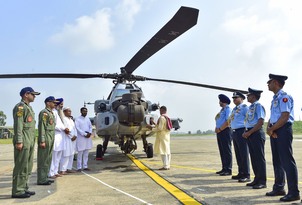
Indian Air Force now has one of the world’s most advanced multi-role combat helicopters, AH-64E Apache. Eight US-made Apache stealth attack helicopters were inducted into the Indian Air Force on Tuesday, significantly boosting the force’s firepower capability at a time India faces complex security challenges including cross border terrorism.

The eight helicopters, manufactured by aerospace major Boeing, were part of a multi-billion dollar deal India struck with the US for 22 Apache AH-64E choppers nearly four years ago. The choppers are customised to suit IAF’s future requirements.

In a brief address after induction of the fleet, Air Force chief Air Chief Marshal B S Dhanoa said procurement of choppers with latest technology was a “significant step” towards modernisation of the IAF.

“The Apache helicopters will enhance the operational capabilities of the IAF,” he said at this strategically located air-base, adding that the fleet will be deployed in India’s western region.

The Apaches also have a fully integrated digital cockpit which enhances its mission performance. It is uniquely suited for reconnaissance, security, peacekeeping operations, and lethal attack across myriad environments without reconfiguration

In a statement, Boeing said India is the 16th nation to procure the Apache, and that it is receiving the most advanced variant, of the chopper.

“Boeing is committed to supporting the modernisation requirements of the Indian armed forces and maintaining them to be mission-ready,” said Salil Gupte, president of Boeing India.

“We are confident that the Apaches will be an indispensable asset to the Indian Air Force. We will continue our efforts to deliver advanced capabilities to India’s defence forces,” added Gupte.

The IAF chief said the Apache helicopters will replace the ageing Mi-35 fleet of the IAF and the last batch of the choppers will be delivered by March 2020.

The IAF had signed a multi-billion dollar contract with the US government and Boeing Ltd in September 2015 for 22 Apache helicopters.

Additionally, the Defence Ministry in 2017 approved the procurement of six Apache helicopters along with weapons systems from Boeing at a cost of Rs 4,168 crore for the Army. This will be its first fleet of attack choppers.

Dharmendra Pradhan reaches out to steel trade unions, calls for collaborative efforts

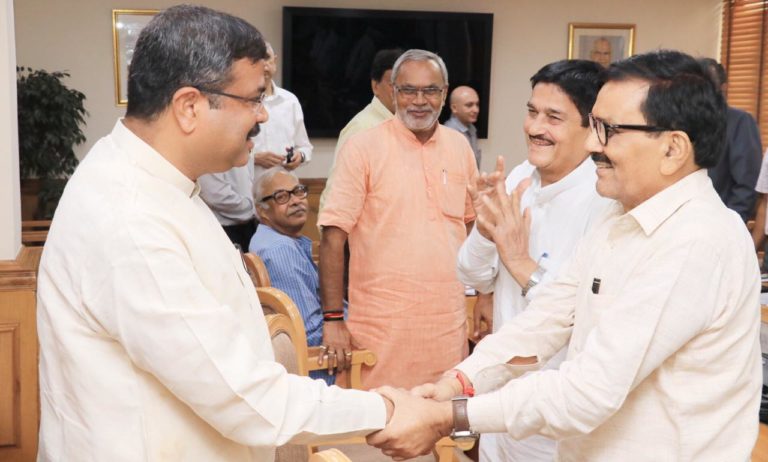
Dharmendra Pradhan, Union Minister for Petroleum and Steel met trade union leaders of the steel sector on Tuesday to discuss an array of issues that included labour welfare, manpower succession planning, skill development, safety and wage revision, among several others. Pradhan stressed for the collaborative efforts of management and workmen towards achieving high performance while balancing workmen’s interests.

Union Minister Pradhan said that all payments made to permanent workmen as well as to the contract workmen must be done through digital means to ensure transparency. He further added that civic amenities at townships must match those of a smart city.  The minister also said that medical facilities being provided by SAIL will continue and will be modernized. He also added that enhancing cost efficiency and labour welfare are not mutually exclusive goals and will be pursued simultaneously. 

Trade union leaders thanked Pradhan and expressed their happiness at minister’s outreach efforts towards workmen. Last month Union Minister Pradhan had visited SAIL’s Bokaro Steel Plant and mines in Jharkhand and had interacted with the employees. Meeting witnessed exchange of positive and constructive dialogue towards strengthening participative culture in the steel industry.

Pakistan’s hip-hop on Kashmir has no takers

The change of constitutional status of the Indian state of Jammu and Kashmir carried out by a valid democratic process by the Indian Parliament has taken Pakistan by surprise. The time and space of this change is also not in favour of the country that is facing a debilitating financial crisis and simmering unrest in all its provinces.

The Pakistani response lacks structure and coherence. The Imran Khan-led government is swinging dangerously between diplomacy, threats and outright appeals to the people of Kashmir to raise in protest. In none of these efforts it has gained any viable traction.

Internationally the bid to initiate a discussion in the United Nations Security Council (UNSC) has not gone in the favour of Pakistan since four of the permanent members and nine of ten temporary members have termed the reorganisation of J&K as India’s internal matter.

The biggest diplomatic blow came when US President Donald Trump reversed his earlier statement of being ready to “mediate on Kashmir.” After his meeting with Indian Prime Minister Narendra Modi on the side lines of the G-7 meet Trump said, “…we spoke last night about Kashmir, Prime Minister (Modi) really feels he has it under control. They speak with Pakistan and I’m sure that they will be able to do something that will be very good.” He has literally put a lid on all talk of US intervention in the matter. Most other nations, including Islamic states considered to be close to Pakistan, have also adopted the posture of “Kashmir being an internal matter of India” and have quite openly suggested to Pakistan to lay off. Pakistan, thus, stands diplomatically isolated in the matter.

In response, Pakistan has adopted the time tested war mongering bogey to pressurise the international community into intervening in the issue. Right from his Independence Day speech on 14, August, Prime Minister Imran Khan has been giving threats of war in the most blatant manner. “The time has arrived to teach you (India) a lesson,” he said in his Independence Day speech.

That this policy has a wide ranging consensus from the all powerful Pakistan Army becomes apparent from a tweet by the Inter-Services Public Relations (ISPR), “Reality of #Kashmir was neither changed by an illegal piece of paper in 1947 nor will any other do it now or in future. Pakistan has always stood by Kashmiris against India’s hegemonic ambitions, (and) will always do. There can never be a compromise on #Kashmir,” tweeted ISPR. “We shall stand in the face of tyranny, regardless of the cost. Pakistan Army is fully alive to the sanctity of Jammu & Kashmir and will remain fully ready to perform its part in line with our national duty for Kashmir cause. (The) COAS said on Independence & Kashmir Solidarity Day,” it stated in the second part of the tweet.

With blessings from the Pakistan Army in place, Pakistani ministers went all out with their war cries and bravado. One minister has set out October as the time when the war will begin. How they will fight in the Kashmir region in the extreme cold wintery conditions is anybody’s guess.

Sadly for Imran, the world has paid no heed to his threats! In frustration he has started playing the nuclear card which has, for long, remained the “Brahmastra” (ultimate weapon of destruction) of the nation.  “If the world does nothing to stop the Indian assault on Kashmir and its people, there will be consequences for the whole world as two nuclear-armed states get ever closer to a direct military confrontation,” he is quoted to have stated to the New York Times on August, 30.

It is here that the sordid tale gets a new twist. While Pakistan’s Prime Minister is going whole hog with his nuclear threats the biggest hawk of the country, Foreign Minister Shah Mehmood Qureshi, has started smoking the peace pipe. In an interview to BBC Urdu on August 31, he said, “War will bring destruction for people and the world. Therefore, war is no option.”

In the usual show of confidence he has spoken of talks with pre-conditions, “There are three parties involved in the [Kashmir] dispute: Pakistan, India and Kashmir. I believe, if India is serious about it, it must release the Kashmiri leadership and allow me to meet them and do consultations. I will have to weigh their emotions as Pakistan cannot sit on the negotiation table by disrespecting their sentiments and crushing Kashmiris’ feelings.” He has stated rather grandly. But, when did India last speak about resumption of dialogue Mr. Qureshi?

India and the world, quite naturally, are totally confused with the hip-hop. Are we looking at a nuclear holocaust or at peace? Who to believe — the prime minster or the foreign minister? And what to make of the Pakistan Army’s veiled threats?

A deep analysis of the posturing makes it very obvious that Pakistan wishes to push the Kashmiri people into open revolt. At the same time it does not wish to annoy the international community, so it is not supporting its threats with any tangible military action on ground. It is playing out an obnoxious Jekyll and Hyde act to raise the passions of Kashmiris.

India has remained firm in its position all through – the reorganisation of J&K is an internal issue of the country in which Pakistan should not interfere. Secondly, talks will be held only when Pakistan controls absolutely and irrevocably the proliferation of terrorist activities from its soil to India, especially Kashmir. The people of Kashmir have not reacted violently to the change brought about as Pakistan has been and continues to hope for. They are, clearly, not taken in by its malicious propaganda.

Under the circumstances the best option for Pakistan is to back down. Instead of playing around the bush the country should reconcile to the reality on ground. It should stay away from Kashmir and concentrate in resolving its own financial and internal security issues. Its future as a nation depends upon doing so.

It’s time to call Pakistan’s nuclear bluff

There is an old saying that ‘desperate times call for desperate measures’ and Islamabad’s situation after New Delhi’s abrogation of Article 370 in Jammu & Kashmir, is despairing, to say the least. For Prime Minister Imran Khan, who after his recent US visit thought that with President Donald Trump’s mediation offer on Kashmir, he had “returned with the World Cup,” this sudden development was even more embarrassing. 

On the domestic front, Khan was so badly ridiculed for government’s inaction on Article 370 abrogation issue in their Senate that in a fit of sheer exasperation he blurted, “What can I do? Do you want me to attack India?” But that’s not all. A few days back, a video surfaced in which opposition leader and Pakistan Peoples’ Party (PPP) chairman Bilawal Bhutto can be heard mocking Khan by saying, “Earlier, Pakistan’s policy on Kashmir was on how we will take Srinagar. Now, under Imran Khan’s government, we have been forced to think on how we will save Muzaffarabad!”

As far as the international arena is concerned, Islamabad’s high decibel pitch against abrogation of Article 370 ended in an inaudible whimper after it failed to gather global support against this move which Khan described as an “illegal” and “unilateral” step. What made matters even worse was that the UNSC (United Nations Security Council) meet on Kashmir which Foreign Minister Shah Mehmood Qureshi had hailed as “Pakistan’s big success at diplomatic front” and which according to him “had landed India in utmost panic,” didn’t even result in a communiqué or statement being issued on what transpired during this ‘closed door’ meeting.  

With the UNSC refusing to comment on the recent developments in Kashmir, Islamabad’s allegation that abrogation of Article 370 was in violation of UNSC resolutions on Kashmir fell flat. Pushed into a corner by its own diplomatic intransigence, the only recourse left for Rawalpindi that actually formulates Pakistan’s Kashmir policy was to start beating the war drum with military precision. The first thing Khan did (or, rather was instructed to do by Pakistan Army), was to play ‘victim’ by claiming that he had definite information that India would orchestrate a ‘Pulwama-type false flag operation’ in Kashmir to give it an excuse to carry out a pre-meditated attack in Pakistan occupied Kashmir (PoK).

Though this plot seems to have been lifted straight out of a John le Carré novel, yet there were chances that it could still have gained some sort of acceptability had it not been for two major blunders that Pakistan made. The first was that during his maiden US visit, Khan had himself dubbed the Pulwama car-bomb suicide attack as an “indigenous thing” and went on to justify his allegation by saying “A Kashmiri boy was radicalised after the brutalities of the Indian security forces and he carried out the attack.” But just within two months, he suddenly made a U-turn and started accusing New Delhi of orchestrating this attack and tried to raise a “false flag operation” bogey without even furnishing any evidence to substantiate his allegation.

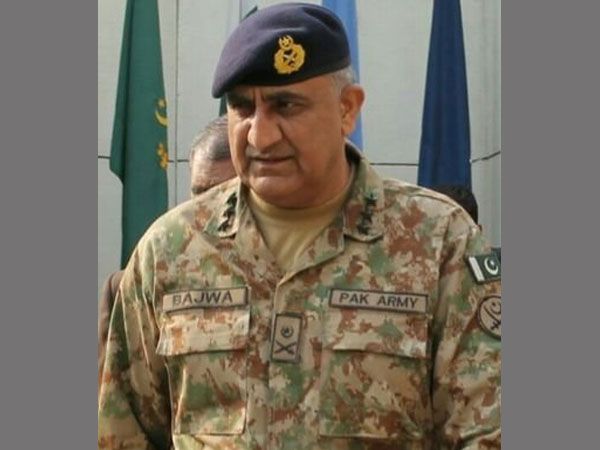
The second (and bigger) blunder was made by Pakistan Army chief Gen. Qamar Javed Bajwa himself, when just a day after New Delhi abrogated Article 370, he declared that “Pakistan Army firmly stands by the Kashmiris in their just struggle to the very end. We are prepared and shall go to any extent to fulfil our obligations.” What does the commitment of an army chief to “go to any extent to fulfil our obligations” imply needs no elaboration and so, if the international community chose not to side with Pakistan on the Article 370 issue, Khan and Gen. Bajwa have only themselves to blame. But instead of learning a lesson, losing the diplomatic battle seems to have sent the Generals who dictate Pakistan’s Kashmir policy into an overdrive and perhaps this is the reason why they directed Khan to start beating war drums by claiming that India was looking for an excuse to attack PoK.

Islamabad tried to raise international concern by saying that it would give a befitting reply to any Indian “misadventure” and this could lead to an all-out war. However, its ploy failed because the world is well aware that India being in an extremely favourable diplomatic position wouldn’t be so imprudent as to start a war and thereby lose international goodwill and be branded an aggressor. But, since it’s their Generals and not diplomats or civil servants who devise Islamabad’s Kashmir related policies, instead of looking at other diplomatic alternatives, Rawalpindi upped the ante by bringing in the nuclear exchange dimension in an extremely amateurish manner.

When Indian Home Minister Rajnath Singh spoke about a possible review of New Delhi’s ‘no first use’ nuclear policy, we heard Khan expressing concern and saying “…the world must also seriously consider the safety and security of India’s nuclear arsenal in the control of the fascist, racist Hindu supremacist Modi government. This is an issue that impacts not just the region but the world.” He even went a step further and presented the doomsday scenario by saying, “If the world does nothing to stop the Indian assault on Kashmir and its people, there will be consequences for the whole world as two nuclear-armed states get ever closer to a direct military confrontation.” However, this isn’t a mere apprehension – it’s an unconcealed and direct statement of intent confirming Pakistan’s willingness to exercise the military option and New Delhi needs to highlight this open display of Pakistan’s belligerent attitude at all international forums.

However, little did those who came up with this idea of nuclear blackmail realise that by not issuing any nuclear threat in 1999 even when the Pakistan Army violated international conventions and committed a blatant act of unprovoked aggression by the occupying Indian territory in Kargil, New Delhi has already made place for itself in the exclusive club of responsible nuclear powers. On the other hand, White House National Security Council member Bruce Riedel who was privy to top-secret briefings given by CIA to the US President had confirmed that on July 4, 1999, the CIA had “very compelling” evidence that “Pakistan was preparing its nuclear weapons for deployment and possible use.”

When even this ploy didn’t work, the Kashmir policy makers in Pakistan decided to test-fire the Ghaznavi missile, which is capable of carrying nuclear warheads and has a range of 290 km. Coming at a time when Indo-Pak relations have reached its nadir, this missile launch doesn’t inspire much confidence in Islamabad’s claim of being a responsible nuclear state as it’s evident that it has done this to provoke New Delhi into following suite so as to add weight to Khan’s allegations that India’s nuclear arsenal is in the hands of what he considers as the “fascist, racist Hindu supremacist Modi government” which is a global threat. But since New Delhi has wisely opted not to fall into this trap, Rawalpindi’s nuclear bluff has finally been called.

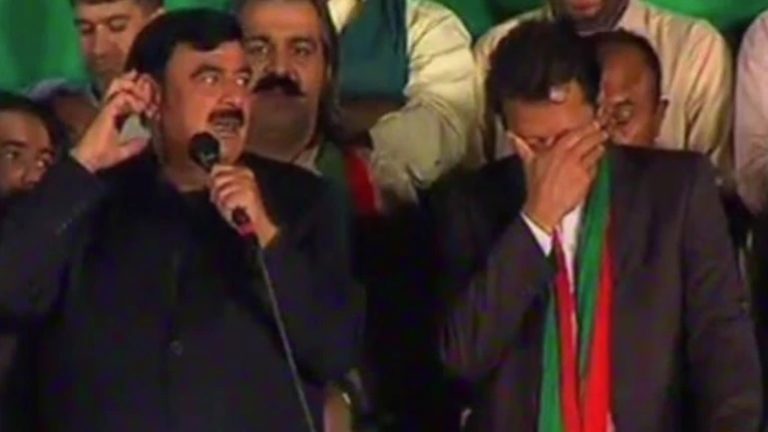
Therefore, instead of worrying about India behaving in a reckless manner and nuking Pakistan, the international community should be more concerned about Pakistan Minister Sheikh Rashid Ahmed’s unambiguous statement that “Kashmir issue if not resolved could become a ‘nuclear flashpoint’ between India and Pakistan” as it reinforces what Khan has said and also decodes Gen Bajwa’s pledge that Pakistan army will go to “any extent” for the sake of Kashmir.

So, it’s high time that the international community called Pakistan’s nuclear bluff.

An important issue that Islamabad failed to take note of is that while India has a ‘no first use policy’ in place and reconsidering the same is mere loud-thinking, its own nuclear doctrine doesn’t have any such stipulation. So, would it be incorrect if the international community retorts to Khan’s tirade on the possibility of a pre-emptive Indian nuclear strike by saying, “look who’s talking?”

Pakistan’s joke: ‘Kashmir Solidarity Hour’

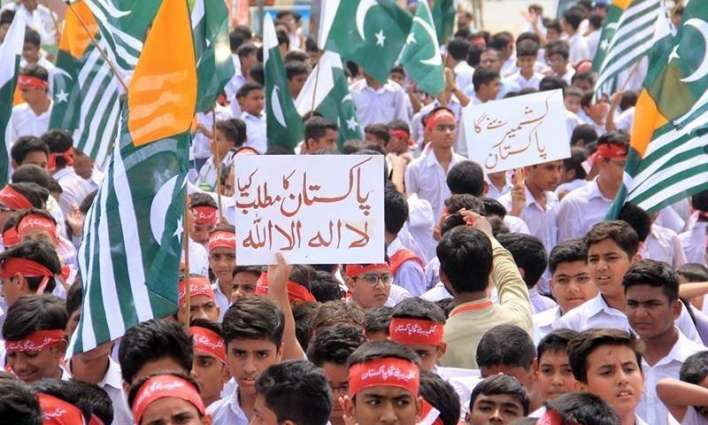
Suggested in 1990 by Qazi Hussain Ahmad of Jamaat-e-Islami, ‘Kashmir Solidarity Day’ is observed on February 5 every year in Pakistan ever since 1991. But except for providing an opportunity to manufacturers of billboards, placards and buntings to earn an extra buck, as also bringing joy to school children for a welcome holiday, this annual ritual has failed to attract global attention. Surprisingly, even though this event has achieved nothing in the last 28 years so rather than toning it down Islamabad has been increasing the frequency of this sterile act of expressing solidarity with Kashmiris.

In 2016, Nawaz Sharif who was the then Prime Minister of Pakistan first declared July 19 as a ‘black day’ and subsequently converted it into yet another ‘Kashmir Solidarity Day’. A month later, the then Pakistan High Commissioner to India Abdul Basit went on to dedicate Pakistan’s Independence Day to “Kashmir’s Freedom” (which in reality implies it coming under tutelage of Pakistan). The very next month, Sharif once again dedicated that year’s Eid-ul Azha “…to the supreme sacrifices of Kashmiri people and we will continue doing so till the Kashmir issue is resolved according to their wishes.”

But while Sharif forgot to keep his promise of dedicating subsequent Eids’ to the Kashmir struggle, Prime Minister Imran Khan has resurrected this practice by declaring that on this year’s Eid-ul-Azha, Pakistan would “express solidarity with Kashmiris.” He then went a step further by announcing that Pakistan would observe its Independence Day in solidarity with Kashmir but ended up making a humungous diplomatic faux pas by declaring that federal government of Pakistan would observe India’s Independence Day as a ‘black day’ that shocked the entire international community.

Islamabad’s fascination with ‘black’ and ‘solidarity’ days is understandable because even after more than seven decades, it has failed miserably to project India as the villain in Kashmir. Khan frequently voices his frustration regarding the international community’s silence on Kashmir, but being a newcomer into politics, he can’t be blamed since it appears that he doesn’t know that the international community is very discerning and gets convinced by facts and logic, not rhetoric and symbolism. Therefore, while he may feel that observing Pakistan’s Independence Day in solidarity with Kashmir would compel the international community to take note and side with Pakistan on the issue of Kashmir, just the opposite has happened.

Imran Khan has now come out with another novel idea of observing ‘Kashmir Hour’, which requires “all Pakistanis to come out on Friday between 12 noon-12.30 PM to show solidarity with the Kashmiri people and send the Kashmiris in Kashmir a clear message that the entire Pakistani nation stands in solidarity with them.” Unlike observing ‘solidarity’ days, which are still manageable since they are annual events, ‘Kashmir Hour’ will be a weekly affair and whether Khan will succeed in bringing the entire nation to a grinding halt for this purpose at noon on every Friday would be something that would be interesting to watch.

Reactions to first “Kashmir Hour” are mixed; some say it was a grand success, others claim that Khan’s appeal could only receive a lukewarm response. Yet with reports of commuters being harassed and even intimidated by the police and local authorities in Pakistan to ensure that they observe the first ever ‘Kashmir Hour’ it is evident that this weekly show of solidarity, will like all other such initiatives end up proving to be more of an embarrassment than a psychological victory for government. So, the question is – why is Pakistan resorting to antics that will only embarrass it in the international arena?

But, with its recent rebuke at UNSC (United Nations Security Council) that certainly is the ‘mother’ of all failures as far as internationalising the Kashmir issue is concerned, coupled with the lukewarm response of Organisation of Islamic Conference (OIC) and US President Donald Trump making a U-turn on his offer to mediate and help in resolving the Kashmir issue, Islamabad has little to show in terms of what it has proudly claimed to be “Pakistan’s big success at diplomatic front that had landed India in utmost panic.” Whereas New Delhi is exhibiting no signs of “utmost panic” whatsoever, this phenomenon is clearly manifesting in Islamabad in the form of knee-jerk reactions. Aren’t unilateral decisions like downgrading diplomatic ties, threatening to take the Kashmir issue to the International Court of Justice and talking about not only the possibility of a conventional war but also adding in the nuclear exchange dimension, clear signs of panic within Pakistan?

For Pakistan these are desperate times and New Delhi needs to watch out for any desperate measures that Islamabad or Rawalpindi may initiate. It is evident that by repeatedly raising apprehensions regarding a “false flag operation”, Khan is only preparing grounds to deny Islamabad’s involvement when Pakistan Army and the ISI employ their “strategic assets” (a euphemism for terrorists). If this hasn’t been done so thus far, it’s not because Rawalpindi doesn’t have the capability or will to do so, but only because it can’t afford to get involved in terrorist strikes at a time when the fear of Pakistan being placed on the ‘black-list’ of Financial Action Task Force (FATF) is looming large in the horizon.

It is no secret that it’s Rawalpindi that dictates Pakistan’s Kashmir policy and the latest US Congressional report titled “Pakistan’s Domestic Political Setting” has once again reiterated this unique feature that can only be found in Pakistan’s polity. With Islamabad losing out on the diplomatic front as far as Kashmir is concerned, Rawalpindi will surely step up terrorist activities in Kashmir and this is what New Delhi needs to be cautious about. Since Kashmir symbolises the monumental failings of the Pakistan Army’s repeated attempts to gain control over it by force, Rawalpindi will do anything as a face-saving measure.

But since it doesn’t have the capability to militarily wrest Kashmir, the Pakistan Army will surely (to borrow Gen Pervez Musharraf’s words) continue to “incite” Kashmiris and take vicarious pleasure in seeing India ‘bleed through a thousand cuts’. It makes no difference to the Generals in Pakistan if Kashmiris continue to die and suffer due to the misdeeds of terrorists. What matters to them is the perverted satisfaction that they derive by playing dog in the manger in Kashmir and following the mutually destructive philosophyof “Hum toh doobenge sanam, tumko bhi le doobenge” (We will definitely sink, but we’ll also take you with us)!

Dharmendra Pradhan visits Russia to boost bilateral engagement on energy

Renewing India’s interest in energy and mineral collaboration with Russia, Minister of Petroleum & Natural Gas and Steel Dharmendra Pradhan visited Moscow from August 29-30, 2019 on the invitation of Minister of Energy of Russian Federation Alexander Novak. During the visit, he held a series of high-level bilateral engagements with Russian Government and private sector entities from energy and steel sectors.

The Minister was accompanied by a 25-member strong business delegation comprising of CEOs of some of the largest Indian oil & gas, steel and engineering consulting companies. Coming a week before the visit of Prime Minister Narendra Modi to Vladivostok, it represented a powerful signal of India’s interest in energy and mineral collaboration with Russia.

 The visit saw high level meetings of Pradhan with Deputy Prime Minister of Russia and Presidential Envoy to the Far Eastern Federal District Yuri Trutnev; Minister of Energy, Alexander Novak, and Deputy Minister of Industry and Trade, in-charge of steel sector Victor Evtukhov.

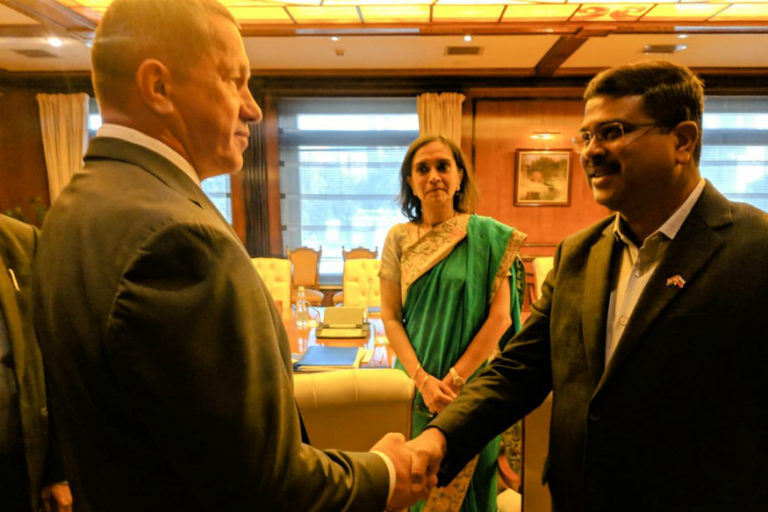
In his interaction with Dy PM Trutnev, Pradhan conveyed that India was committed to strengthening India’s engagement in energy and steel sector with the Russian Far East. He presented the Indian interest to increase energy cooperation with Russia and to become a long term partner of the Russian coal sector. The Deputy Prime Minister invited the Indian side to consider various opportunities in the Far East in the coking coal, transport and logistics sector.  He also stressed upon the need of direct shipping routes between Russian Far East and Indian Eastern Coast.

Dharmendra Pradhan also met with the Russian Minister of Energy Alexander Novak. The two sides reviewed the current status of cooperation and identified various opportunities in which to their engagement can be increased. Their discussions covered a myriad of issues like mutual investment in each other’s countries, developing on robust energy relationships, protection of both energy producers and consumers etc. After the meeting of the two Ministers, the discussion was opened to oil and gas companies of both countries from public and private sectors. The two Ministers stated their support for increasing energy relations and welcomed the initiatives of the companies which have resulted in the energy sector becoming one of the important pillars of India-Russia relations.

During the visit of Pradhan, a special session was organized for the Indian delegation to discuss specific projects of immediate interest to Indian companies. The session which was organised with the support of Russia’s Far East Investment and Export Agency was attended by around 40 representatives from top Russian companies. This platform provided an opportunity for high-level interaction between the Indian and Russian companies. During the event presentations were made on specific opportunities for Indian companies in the oil, gas and coking coal and steel sectors–in both greenfield and brownfield investments. Companies on both sides held separate B2B follow-up meetings to concretize the ideas discussed in the expanded session.

Pradhan and the delegation also visited the Innovation Centre and Moscow Business School in Skolkovo. The head of Skolkovo foundation Arkady Dvorkovich, presented the opportunities to Indian companies and welcomed their participation in the Skolkovo platform. The Skolkovo Innovation centre which has more than 2000 start ups has the potential to integrate Indian and Russian products into the global value chain. Various Russian companies which had interest in cooperation with Indian companies presented various opportunities for collaboration in sectors ranging from oil and gas to Digital economy to robotics etc.