Home Blog Page 417

Communication and sobriety are key to Kashmir riddle

0

The Indian nation has remained engrossed in the all pervasive “K” issue since the beginning of this month when indications of some major change started coming in. In view of the volumes already written on the subject, a good columnist would realise that fatigue has set in among the readers. Another piece may not be a great idea, nevertheless, it is quite difficult to curtail the urge to put in some more words.

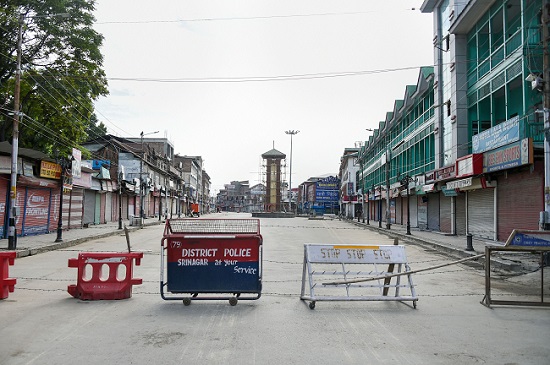
Earlier “stakeholders” was the preferred word to define the various players in the Kashmir battleground. Now, the goal posts have changed in a manner that has made the so-called stakeholders, national and international, irrelevant. In the ensuing fall out, the centre stage has gone to two protagonists – the people of the region and the Indian Union, in the given order of priority. Having changed the status of Jammu and Kashmir forever, the Narendra Modi-led government of India now has to convince the people of the region that what has been done is for their benefit.

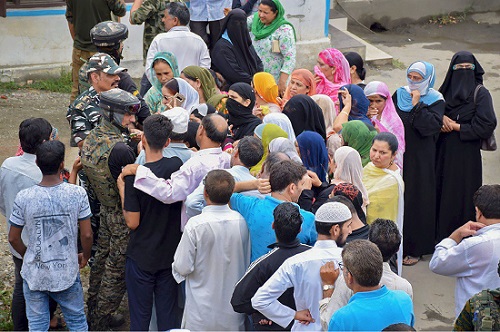
Some important issues that have been flagged in the aftermath of this momentous affair need to be reiterated. Top on the list is the reaction of the Indian nation; then comes Pakistan’s reaction since it will also guide the reaction of other ex-stakeholders; most important is the reaction of people of the region, presently not fully known due to restrictions and the fact that the change will take some time to sink in. Finally, comes the position of the security forces on whose shoulder lies the responsibility to control any adverse or violent situation.

The Indians, since long exhausted by the never ending violence, turmoil and political disruption in the region, would have welcomed any change in the status quo and that is exactly what has happened. There is a belief that the change will be for the better even as some sections continue to remain cynically critical. The main grouse is not the change of the status; it is the so-called lack of consensus for the same. A realist would certainly say that no amount of discussion would have led to a consensus. This has often been substantiated by the failure of successive governments of the NDA as well as the UPA in reaching to an accord whenever talks with separatists or Pakistan have been held.  

Therefore, the decision to go for a change in status quo was the only recourse available notwithstanding the element of abruptness that it came with. It had to happen at some point in time and now it is over and done with! Whether it was right or not too right, only time will tell, but definitely, the situation will not deteriorate from the level where it was already standing.

Pakistan has been caught completely by surprise and is presently getting its act together. Its initial maneuverings on the diplomatic, economic and political front has not accrued the desired results. International support to its appeals is nowhere near what it would have desired, and the decision to stall relations with India will have a much more critical impact on it while India will hardly feel the pinch.

There, however, exists for India no reason to be too elated by the neighboring country’s disarray and discomfort. It is not likely to remain quiet due to the setback and will definitely strike back with more innovative and incisive methods. It should not be forgotten that Pakistan holds influence over China because of CPEC and on the US due to Afghanistan; it will definitely maximise this influence in its revised Kashmir policy. Pakistan will exploit such local elements that have lost their hold over the region due to the new dispensation. These assets have considerable power and their coming together poses a potent danger. People, who form the most important element being the centre of gravity, will elicit the focus of all competing powers. Whosoever gains the initiative will emerge the winner. How they will react is still not known since restrictions are in place. It is also feasible that an initial calm will be more of the proverbial “lull before the storm.”

India has to take all possible actions to win the confidence of the people and remove their sense of insecurity and deprivation which would be a natural fallout of the change that has taken place. The government alone cannot do this; the entire nation will need to pitch in and that too with an open heart and clean hands; a long call but definitely the need of the hour. Since Kashmir is already quite comfortable on the development index, assertions of development and economic gain will not be enough to get the desired results. What is required is immediate end to the endemic corruption and inequitable distribution of wealth to the common man. Achieving this in the short term is a tall order for the government but absolutely imperative to remove the trust deficit.

A security threat beyond what has been tackled successfully earlier is not envisaged, even though high state of alertness is the need of the hour. What can be effectively leveraged is the close bond that the Indian Army has with the people, particularly those living in remote higher reaches. These people, being simple, gullible and not very educated, will be targets for rumour mongering and psychological warfare of the enemy and inimical forces. If the army gives to them the right picture and removes the insecurity and distrust that they may feel, the chances of their falling prey to the enemy machinations will get obviated.

There is definitely a need to look at the development with due sobriety and seriousness. There is also a need to remain vigilant and alive to the situation. It is the emotional connect as seen through honesty of effort which will pay maximum dividends. The challenge to the nation has just begun.
Watan – a patriotic song by DD released as a tribute to New India

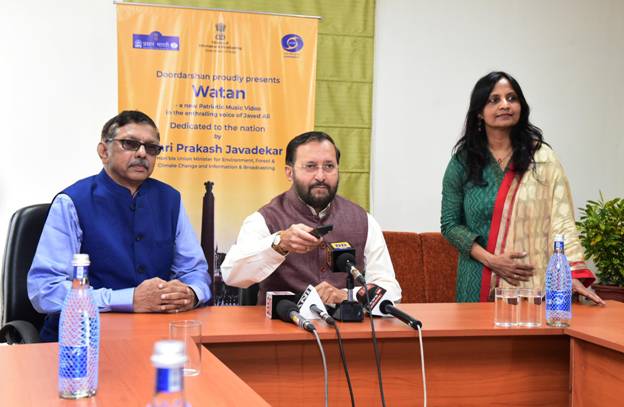
On the occasion of Independence Day, Union Minister Prakash Javadekar has released a patriotic song “Watan” produced by Doordarshan. The song pays tribute to New India. It highlights several path breaking initiatives of the government including the determination and vision behind the recent successful launch of “Chandrayaan 2”.  The song also pays tribute to the bravery and valour of our armed forces and the martyrs of the country.

Speaking on the occasion, Javadekar congratulated Doordarshan and Prasar Bharati for creating the song. He added that the song will add colour and fervour to the Independence Day celebrations this year.

Sung by famous Bollywood singer Javed Ali, penned by lyricist Alok Shrivastav and musically composed by Dushyant, this special song has been produced by Doordarshan, Prasar Bharati. Being broadcast by all the stations and kendras of Akashvani and Doordarshan, this song has been made free of copyright by Doordarshan and Ministry of I&B  for all the FM stations, entertainment and news TV channels, social media and all other communication platforms to ensure that more and more citizens of this country can enjoy and share this song and celebrate Independence Day with this song.

Chairman, Prasar Bharati  Dr. A. Suryaprakash; CEO, Prasar Bharati Shashi Shekhar Vempati; DG, Doordarshan Supriya Sahu; DG, DD News, Mayank Agrawal; DG, AIR, F. Sheheryar along with senior officers of Ministry of I&B and Prasar Bharati were also present on the occasion.

The song can be watched here:

JAMA – Shared Decision-Making in Practice

Beach and Sugarman (2019) provided an analysis of the SDM or shared decision-making framework in clinical practice, in which clinicians are encouraged to engage patients on the values and preferences of the patients.

“Professional societies and other groups generating screening and treatment guidelines specifically recommend SDM. In 2015, reimbursement from Medicare for lung cancer screening was made contingent on SDM,” the authors of the JAMA article stated.

If the values and preferences of the patients sit on morally firm foundations, then there can a more reliable process moving forward for the benefits of the patients. It respects the cultural and individual variations in values and preferences while also dignifying the independent judgment of the patient about their own health and welfare.

Even so, SDM, as a practice, is “rarely achieved in practice.” The reasons provided for this theory and practice gap is the multifactorial nature of the problem. There are many factors leading to reduced implementation of it.

“Studies show that patients tend to think they have been involved in making decisions when direct observation suggests they have not,” Beach and Sugarman reported, “This may be because patients are unaware that a decision was made, the measurement standards for observed behavior are too dogmatic, or both.”

Then the coding of the information can be problematic as well as creating an environment in which patients know their role in decisions and processes with the medical professionals.  Further time placed into the hands of the medical professionals to explain to the patients may be wasted time better spent on other medical issues or medical duties. Benefits of more time explaining remain uncertain.

The positions of the author of the paper is that SDM should be implemented in medical settings more in spite of the lack of clarity in the reportage. They provided solutions includng more specificity for the task in the calls for SDM, the use of decision aids to become more routine and available, the prioritization of decisions requiring SDM over others to increase its prevalence, the facilitation of engagement with a better interpersonal environment, and the importance of the communication models of practitioners more conducive to the independence of the patients and the giving of recommendations by the medical professionals with a modicum of prudence.

“SDM is a means to an end. The principal goals of SDM are to respect patients as individuals and to deliver care consistent with their values and preferences. Achieving these goals will sometimes involve explicitly engaging patients in decision-making. But decision-making can be emotionally demanding, and imposing a standard by which patients are expected to engage in all (or even most) decisions is not only unrealistic and inefficient, but also potentially burdensome to patients and clinicians,” the authors concluded.

Reference

Beach MC, Sugarman J. Realizing Shared Decision-making in Practice. JAMA. Published online July 25, 2019. doi:10.1001/jama.2019.9797

Photo by Louis Reed on Unsplash

Amidst India-Pak tension Mika Singh performs at Karachi wedding; sparks outrage

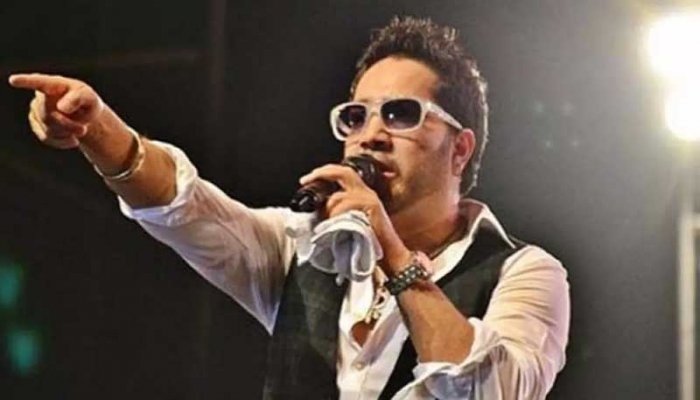
For some artists money remains the ultimate deciding factor in life, with no concern for ethics, morality or humanity. At a time when Pakistan is busy strategizing how to destabilize the ensuing peace in Kashmir, post Article 370, Singer Mika Singh and his troupe recently performed at the wedding of a billionaire’s daughter in Karachi, apparently close to former Pakistan President General Pervez Musharaff.  Mika apparently charged USD 150,000 for his performance.

According to a report in Daily Jang newspaper, Mika reportedly performed on August 8 at the ceremony and his presence in the city came to light when some guests uploaded videos of his performance on social media.

India’s action to revoke Article 370 of the Constitution and decision to bifurcate the State of Jammu and Kashmir into two Union Territories, drew a sharp reaction from Pakistan. As a result Pakistan downgraded its diplomatic ties and snapped trade relations with India, besides suspending the Samjhauta Express services between the two countries.

Opposition leader of the Pakistan Peoples Party Syed Khursheed Shah said the government must find out who gave the security clearance and visas to the Indian singer and his 14-member troupe to visit Pakistan at a time when the country had suspended diplomatic and trade relations with India. “This is a time when there is a ban on Indian films, dramas, shows, and Pakistan has made its views clear to the Indian government. Even if visas were issued early on they should have been cancelled,” Shah said.

The newspaper reported that apparently the groom was a big fan of Mika and wanted to see a live performance and to grant his wish the in-laws used their connections to procure high-level security clearance and visas for the Indian band.

Twitterati in India, lambasted the singer on social media. One of the Twitter users wrote, “Shame on you traitor.”

“Mika Singh Paaji we Indians gave you so much love… And in a situation like that when Pak banned all trade ties with us, sending terrorists across the border, our tensions are very high right now. Why did you go to Pakistan for a show? Few bucks are bigger than India? ” another user tweeted.

Tax assessment process simplified for startups

While the government of India has been a major supporter of startup ecosystem in the country, the Income Tax department has been the cause of major heart burn in the startup sector. The Finance Ministry is now taking steps to simplify the process of assessment in the case of Startup entities.

In cases where scrutiny assessments of Startup entities are pending, the CBDT has decided that:

i) In case of Startup Companies recognized by DPIIT which have filed Form No. 2  and whose cases are under “limited scrutiny” on the single issue of applicability of section 56(2)(viib),the contention of the assessee will be summarily accepted.

ii) In case of Startup Companies recognized by DPIIT which have filed Form No. 2 and whose cases have been selected under scrutiny to examine multiple issues including the issue of section 56(2)(viib),this issue will not be pursued during the assessment proceedings and inquiry on other issues will be carried out by the Assessing Officer only after obtaining approval of the supervisory authority.

iii) In case of Startup Companies recognized by the DPIIT, which have not filed Form No. 2, but have been selected for scrutiny, the inquiry in such cases also will be carried out by the Assessing Officer only after obtaining approval of the supervisory authorities.

In addition to the above, the Central Government has further decided to relax Para-6 of the DPIIT notification No.127 (E) dated 19.02.2019 and make it clear that this notification will also be applicable to Startup Companies where addition under section 56(2)(viib) has been made and the assessee has been recognized by DPIIT and subsequently filed Form No. 2. The Circular to this effect in F.No 173/149/2019-ITA-1 of CBDT dated 8th August, 2019, has been placed on www.incometaxindia.gov.in.

Kashmir: Pak ups the ante, New Delhi must not be complacent

For the last seven decades, Pakistan has been shouting from rooftops that India is in “illegal occupation” of Kashmir but no one has cared to listen because this claim is factually untrue. To buttress its stand, Islamabad keeps talking about the UNSC (United Nations Security Council) resolutions and asserting that Kashmir is “disputed territory”, but even here it hasn’t been able to find any support from the international community because of its selective application and interpretation of these resolutions. But even after having twice failed to wrest control by force, the Pakistan Army still hasn’t given up and has been waging a proxy war in Kashmir for the last three decades as it gives it a face-saving mechanism and serves as a source that enhances its relevance amongst the people of Pakistan.

By abrogating Articles 370 and 35 A of the Indian constitution and reorganising J&K into Union Territories of J&K and Laddakh, India has sent out a loud and clear message that J&K is very much an integral part of India. This decision has punctured Pakistan’s balloon of lies and also proved that neither does Islamabad have the diplomatic ability to garner support of the international community to challenge this move, nor the military capability to intimidate India into making amends. Yet to think that Pakistan Army will finally reconcile with reality and stop its mischief would be suicidal because keeping the Kashmir pot boiling gives the military an excuse to corner a lion’s share of the impoverished country’s GDP.

Unlike other militaries who keep changing their stratagems to baffle the enemy, the Pakistan Army appears to be a ‘one trick pony’ which believes that it can continuously fool the world by disguising its personnel and then denying their existence even if it amounts to disowning their own dead soldiers. In 1947, Pakistan Army personnel masquerading as tribals invaded Kashmir; in 1965, they secretly infiltrated into J&K in the guise of ‘razakars’ (volunteers) and in 1999 they intruded across the Line of Control (LoC) in Kargil disguised as ‘mujahideens’ (holy warriors). Generals and those heading terrorist groups being nurtured by the military openly speak about the involvement of the Pakistan Army and terrorists in Kashmir and enumerated below are a few examples:

  • During an interview given to Der Spiegel in 2010, Gen Pervez Musharraf admitted that it was the Pakistan Army that created “militant underground groups to fight India in Kashmir.”
  • In 2012, Syed Salahuddin, who as chief of ISI created ‘Muttahida Jihad Council’ controls various terrorist groups operating in Kashmir said during an interview that “We are fighting Pakistan’s war in Kashmir” and even threatened that “if it (Pakistan Army) withdraws its support, the war would be fought inside Pakistan.” 
  • In a 2014 TV interview, Gen Musharraf accepted that Pakistan Army was fomenting unrest in Kashmir by admitting that “People in Kashmir are fighting against (India). We just need to incite them.” 
  • In 2015, Lashkar-e-Taiba co-founder who has been designated international terrorist by UN admitted that the jihad’ (holy war) in Kashmir being waged by his terrorist organisation was being supported by Government of Pakistan and its army.
  • Even a few weeks back, while at the US Institute of Peace, Prime Minister Imran Khan admitted “we still have about 30,000- 40,000, armed people who have been trained and (have) fought in some part of Afghanistan or Kashmir.”   

But despite such incriminating revelations, the indifference of the international community is surprising and so is the lack of determination in New Delhi’s part in highlighting the dangers being posed to the world by Pakistan Army’s continued patronage of terrorist groups. Resultantly, the military has been able to get away with only a mild rap on its knuckles and continues to nurture terrorist groups.

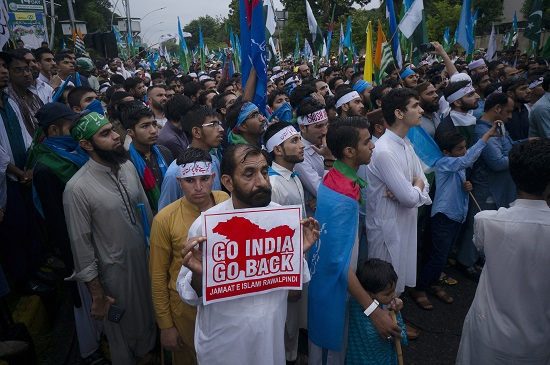
With no support forthcoming from the international community, Pakistan’s much publicised plans to gather international support and move the UNSC against India’s decisions has turned out to a damp squib. Due to this, the present situation has become extremely volatile because the only option the Pakistan Army is left with is resorting to the use of violence in order to reaffirm its relevance by ensuring that there is no peace and tranquility in Kashmir. The hostile reactions emanating from Pakistan substantiate this apprehension and therefore one can expect continued ceasefire violations by the Pakistan Army in an endeavor to keep the LoC ‘hot’.

In the hinterland, the ISI will increase the tempo of its two-pronged strategy to disrupt normal life. Separatists would be instructed to organise demonstrations on a massive scale and incite protesters to indulge in acts of violence and arson in a bid to provoke law enforcement agencies to use force. Simultaneously, while intensity of terrorist activities will increase, an upsurge in frequency of grenade attacks against security forces in crowded places is likely as this could compel the security forces to retaliate and could cause collateral damage. By saying “We fear more bloodshed in coming days in the Occupied Kashmir,” Pakistan Foreign Minister Shah Mehmood Qureshi has given a clear hint about Islamabad’s future plans for Kashmir!  

New Delhi needs to apprise the world of how, by airing apprehensions of Indian excesses against Kashmiris just to prejudice the thinking of the international community, Pakistan is cleverly preparing ground to facilitate deniability of its own deep involvement in inciting violence in Kashmir. On more than one occasion, Islamabad has talked about how India’s “reckless approach” could result in “some false flag operation” or a “Pulwama-2” type of action and “Pakistan blamed on the fake pretext of terrorism.” Whereas this prognosis is theoretically within the realms of possibility, but who would ever believe that a country would target its own citizens just in order to humiliate a neighbouring nation?

Tailpiece

Despite unsuccessfully trying to sell the “false flag operation” hypothesis a number of times, Islamabad still continues to do so. But this also has a positive side as it serves as a timely warning of an impending act of terrorism and that’s why Pakistan Army Chief Gen Qamar Javed Bajwa’s willingness to “go to any extent” to help Kashmiris should give New Delhi a wakeup call!

Pakistan’s angry men continue to blabber after Art370 shock

1

Pakistan’s Prime Minister Imran Khan is an angry man. But that’s understandable because even before he could fully savour the euphoria of his US visit (the success of which he likened to “having won the World Cup”), his Indian counterpart Narendra Modi spoilt the party by altering the seven-decade old status quo on Kashmir. But there’s more to it- by abrogating Articles 370 and 35A of the Indian constitution and carving out two new Union Territories (J&K and Laddakh) out of what was earlier the state of Jammu and Kashmir, Modi also disproved the prediction made by Khan just four months ago to a group of foreign journalists when he said that “Perhaps if the BJP, a right-wing party, wins, (then) some kind of settlement in Kashmir could be reached.” 

Even though abrogating Article 370 and 35 A was part of the BJP-led NDA’s election manifesto it seems that Islamabad and Rawalpindi didn’t take this forewarning seriously. Perhaps, since this promise had also been made by the NDA in its last election manifesto but not acted upon and so Pakistan’s Foreign Office may have rejected this as another election gimmick. Even when New Delhi rushed additional security forces into Kashmir, the Pakistani establishment and its army failed to connect the dots. US President Donald Trump’s talk about him being asked by Modi to mediate between India and Pakistan on the Kashmir issue could also be a reason why the otherwise deeply suspicious Pakistan Army failed to visualise this eventuality.

Miffed by the latest developments in J&K, Pakistan has resorted to a series of knee-jerk reactions and in the process ended up inadvertently making some monumental blunders that give India even more substance to expose the absolute fallacy of Islamabad’s narrative on the issue of Kashmir. Pakistan Foreign Minister Shah Mahmood Qureshi is reported to have said that “Indian move to revoke Article 370 has no legal or constitutional justification.” But he has failed to offer any justification to buttress his views other than his plea of J&K being an “international dispute” which has no bearing on this move. Qureshi’s anger is also understandable but in case he wants to be taken more seriously by the international community then he will have to replace rhetoric with logic and with Washington terming India’s actions in J&K as an “internal matter” it should be clear to him that his is just a voice in the wilderness.

On the other hand, by using constitutional provisions and following legitimate legislative procedures to permanently alter status quo on Kashmir, New Delhi has sent out a strong signal to the world that J&K is an integral part of India and this is what appears to have actually rattled Islamabad. But Qureshi conveniently forgets that if Islamabad wants the international community to view abrogation of Articles 370 and 35 A along with the reorganisation of J&K’s administrative structure as an act that has “no legal or constitutional justification,” then doesn’t the same yardstick also apply to Pakistan’s unilateral decision of handing over Shaksgam Valley, which is part of the Hunza-Gilgit region of J&K, to China in 1963?

One of the most serious reaction is Khan’s aggressive announcement that “incidents like Pulwama are bound to happen again, (and) I can already predict this will happen.” This isn’t a mere foreboding or the emotional outburst of an out-manoeuvred politician; when one co-relates this with his own recent admission at United States Institute of Peace during his three-day US visit that “when you talk about militant groups, we still have about 30,000-40,000-armed people who have been trained and fought in some part of Afghanistan or Kashmir,” his rant actually turns out to be a sinister threat and a clear expression of intent. Additionally, by warning that “there will be bloodshed,” Qureshi has literally let the cat out of the bag!

Pakistan’s special advisor to PM Imran Khan for information and broadcasting, Firdous Ashiq Awan’s declaration that “Pakistan will continue to extend moral, diplomatic and political support to Kashmiris until they achieve their right to self-determination under UN Security Council resolution” is fine. But how does any sane person decipher Pakistan Army chief Gen Qamar Javed Bajwa’s pledge that “Pakistan Army firmly stands by the Kashmiris in their just struggle to the very end. We are prepared and shall go to any extent to fulfil our obligations in this regard”?

Since an army has only military means and warlike material at its disposal, isn’t Gen Bajwa’s specific reassurance amount to directly or indirectly providing military support to terrorist groups operating in Kashmir? Once again, there’s a need for New Delhi to co-relate this statement with undisputable proof of Pakistan army patronising terrorist groups that are fighting in neighbouring countries. Isn’t it because of this that Pakistan has landed itself in the grey-list of the Financial Action Task Force (FATF)? Therefore, Gen Bajwa’s promise to “go to any extent” in helping Kashmiris to fight against New Delhi’s decision (which has constitutional sanctity) needs to be brought to the notice of the international community and FATF yet once again!

Tailpiece: New Delhi can’t afford to be complacent because the Pakistan Army will definitely escalate violence levels through its proxies to keep the pot in Kashmir boiling. Hence, rather than dismissing the menacing voices emanating from Pakistan as hollow threats arising out of anger and sheer frustration, it would be more appropriate for New Delhi to pay heed to the old saying that one must always “listen to people when they are angry, because that is when the real truth comes out!”

Sanjay Leela Bhansali wins first National Award as a music director

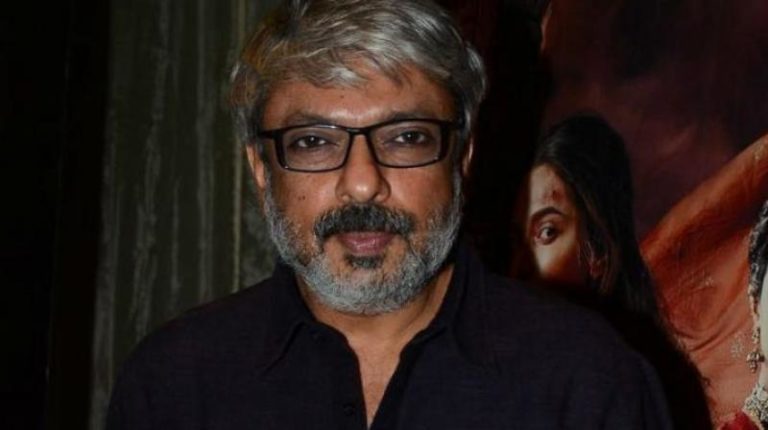
It was a special moment for Sanjay Leela Bhansali when National Film Awards were announced this year.  His film “Padmavaat”, won three National Film Awards, including two for music. The film won the best music director award (songs) for Bhansali in addition to best choreography (Kruti Mahesh Madya and Jyoti Tomar) and best playback singer to Arijit Singh for “Binte Dil” at the 66th National Film Awards that were announced on Friday.

It is the first National award for Bhansali as a music director. He has previously won for awards for “Devdas”, “Black” and “Bajirao Mastani” in different categories.

Recalling his experience of making the film he said, “It is the most difficult film that I have ever made. There has been physical assault, morcha, dharna, banning of the film and every possible thing that could have gone wrong. But every time I felt low, I created a song and it was a nice outlet for me. It (music) was a positive way of looking at all the difficulties,” Bhansali added.

“In any creative field, an artiste goes through some difficulties here and there. In my case, it was more than necessary but you still look at it positively… We went to the recording studio and shut all the sound that was coming from the protests and concentrated on making music. It has come from the heart and it resonated with the people.”

Bhansali said the awards, chosen by a jury of qualified people, encourages one to work hard.  “Any recognition, and especially the one coming from the government, means a lot. It is chosen by the jury of very qualified and respected people. It encourages you to work harder. It is a pat on the back and an emotional moment.”

66th National Film awards announced

After a delay of four months, the 66th National Film awards were announced today by Rahul Rawail, head of the Jury for feature films. 419 films competed for the awards this year. 

While normally, the recipients of the National Film Awards are announced in April and the presentation takes place on May 3 every year, it was delayed this time owing to the Lok Sabha polls. The national film awards are given in 31 categories. Vicky Kaushal and Ayushmann Khurrana were named Best Actors and Keerthy Suresh won the Best Actress award. Uttarakhand declared most film friendly state.

Here is the full list of awardees

Most film friendly state: Uttarakhand

Best Feature Film: Hellaro a Gujarati film directed by Abhishek Shah

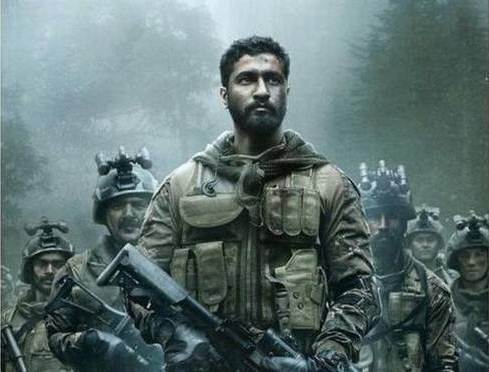
Best Actor: Ayushmann Khuranna for Andhadhun and Vicky Kaushal for Uri : The Surgical Strike

Best Actress: Keerthy Suresh for Mahanati

Best Supporting Actor – Swanand Kirkire for Chumbhak

Best supporting actress – Surekha Sikri for Badhaai Ho

Best non feature film: Son Rise by Vibha Bakshi and The Secret Life of Frogs by Ajay and Vijay Bedi

Best Educational Film: Sarala Virala

Best Director: Uri : The Surgical Strike- Aditya Dhar

Best Action Direction: KGF Chapter I

Best Choreography:  Padmaavat for Goomar

Best Film for National Integration – Ondalla Eradalla (Kannada)

Best Cinematography – Olu (Malayalam) to MJ Radhakrishnan

Best Popular Film: Badhaai Ho

Best film on Environment issues – Paani

Best Debut Film of a Director: Naal (Marathi)

Best film on Social Issues: Padman

Best Child artist:  P V Rohith (Kannada), Sameep Singh (Punjabi), Talha Arshad Reshi (Urdu) and Shrinivas Pokale (Marathi)

Best Children’s Film: Sarkari Area Prathamika Shaale Kasaragod

Best Cinematography: MJ Radhakrishnan for Olu, Malayalam

Best Special Effects: KGF

Special Jury Award: Award shared by Sruthi Hariharan, Joju George for Joseph, Savithri for Sudani From Nigeria, Chandrachood Rai

Best Film on Environment Conservation/Preservation: Paani

Best Regional films

Best Rajasthani Film: Turtle

Best Tamil Film: Baaram

Best Marathi Film: Bhonga

Best Hindi Film: Andhadhun

Best Urdu Film: Hamid

Best Telugu Film: Mahanati

Best Assamese Film: Bulbul Can Sing

Best Punjabi Film: Harjeeta

Music

Best Lyrics: Nathichirami (Kannada)

Best Music Direction (Songs): Sanjay Leela Bhansali for Padmaavat

Best Music Direction (Background score): Uri

Best Sound Design: Uri

Best Female playback Singer: Bindu for Mayavi Manave (Kannada)

Best Male Playback Singer: Arijit Singh for Bhinte Dhil

Production

Best Make Up artist- Awe

Best Production Design:  Kammara Sambhavam (Malayalam)

Best Costume: Mahanati

Screenplay

Best Original Screenplay:  Chi La Sow

Best Adapted Screenplay:  Andhadhun

Best Dialogues: Tariqh

Kashmir: Security poses no worry, yet precaution is necessary

With the reorganisation of the state of Jammu and Kashmir done, all eyes are on the possible fall out, more so, from Pakistan. The neighbouring country has partially recovered from the shock to rustle up a response, however incoherent and disjointed.

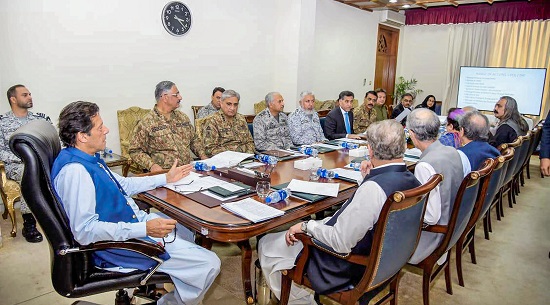
In the initial stages came the tweets. “CCC on Kashmir situation at GHQ. Forum fully supported Government’s rejection of Indian actions regarding Kashmir. Pakistan never recognised the sham Indian efforts to legalise its occupation of Jammu & Kashmir through article 370 or 35-A decades ago efforts which have now been revoked by India itself. Pakistan Army firmly stands by the Kashmiris in their just struggle to the very end. We are prepared and shall go to any extent to fulfil our obligations in this regard,” COAS affirmed. The above were the brave words tweeted on @OfficialDGISPR, the official Twitter handle of the Pakistan Army.

Also of note was a rambling speech in the National Assembly of Pakistan by Imran Khan from which two main points emerged – a threat of “more Pulwama-like incidents” and possibility of a “conventional war being triggered.” This is probably the first time that a prime minister has made such an open threat about terrorist activity as a fall out of a legitimate decision taken by a foreign country with respect to its internal affairs. It seems that the prime minister was later appraised of the diplomatic blunder that he had committed and he has now give a statement ruling out war and terror as instruments of his country’s response. However, an initial, spontaneous reaction is the best indicator of a person’s mindset, hence, there should remain no doubt about what Khan actually wishes to do.

Pakistan has also announced that it will be downgrading diplomatic relations with India and will suspend bilateral trade. As an afterthought, it chose to order partial closure of its airspace. In another demonstration of pettiness, it stopped the Samjauta Express on its own side of the border and told Indian authorities to send their own crew to take the train back.

All of this and more was expected from Pakistan. Security experts have been cautioning about escalation in the conflict spectrum. “The biggest challenge comes from the Kashmir’s hinterland, where rabble-rousing will be attempted under instigation from Pakistan….. We cannot afford a repeat of either 2010 or 2016. In the latter case, India became the target of international criticism due to the blinding by pellet guns,” said Lt. Gen. Ata Hasnain, a military veteran who, while in service, commanded the Srinagar-based Chinar Corps.

There exists universal agreement that Pakistan will emerge as the pivot for all activities directed against India for having changed the status quo in Kashmir. Pakistan Army is poised to not only invoke its massive infrastructure of terrorists as a riposte; it is also ready to get into the fray with military interventions, while the government looks into the diplomatic and religious aspects. It is from Pakistan that anti-national elements will get the finances, direction and facility to go for the rabble-rousing that Gen. Hasnain has referred to. In assistance to Pakistan will be such people who have lost control over the region and would now need to contest the emerging scenario with all might that they can muster.

The moot question that arises is: Does India need to be worried about these actions that all experts are very rightly pointing towards as the response from Pakistan and its proxies? The answer lies in a counter-question, “Would there be anything new or extraordinary, that India has not handled earlier, in these actions if taken by Pakistan and its proxies?” The response is a big “NO.”

The Army Commander, Northern Command, Lt. Gen. Ranbir Singh chaired a meeting of the Core Group of Intelligence and Security agencies at Srinagar to review the operational readiness to meet any contingency that could adversely impact the security situation in J&K. He admitted to an intensification of proxy war activities by Pakistan including ceasefire violations, pushing infiltrators across the LoC, calibrating terrorist actions in the hinterland as also exploiting the social media to launch disinformation campaign in J&K. He has also given an assurance that the Army has given a befitting response in thwarting these nefarious designs of the enemy to cause disturbances in our country, particularly in the Kashmir Valley.

Thus, the assurance given by Home Minister Amit Shah that there will be no untoward fallout of the decision of the government in Jammu and Kashmir has been further substantiated by the Army Commander on ground. Overall, the security forces are firmly in control of the situation and necessary arrangements had been put in place for ensuring peace.

Nevertheless, there exists a need to remain both cautious and vigilant since the enemy is going to leave no stone unturned in attempting to wrest back the initiative. He is like a wounded animal and can strike in any direction. There is a need for the nation to stay ready to face all eventualities– political, security, administrative, international and economic.

The silver lining is that the nation has done what it set out to do and thus it holds the benefit of the first strike. The requirement is simply to respond to what the enemy throws at us and for that detailed preparation has been done. Of maximum importance is the capacity to instil in the people of the state a sense of security since what they considered to be normal has been disrupted. This is possible only through application of a national will. More than promises of development and financial gain, it is propagation of the political empowerment and social justice derivatives that will pay dividends in the reconciliation phase. If there is conviction that what has been done is to the benefit of the nation and more importantly the people of Jammu and Kashmir, there will be no hurdle that cannot be crossed.