Home Blog Page 42

POB:Pak Army targets Baloch activists under anti-terrorism laws

The Baloch Yakjehti Committee (BYC) has criticized the Paki establishment for its discriminatory use of anti-terrorism laws against peaceful political activists, labeling it as both unacceptable and a reflection of the occupied-state’s oppressive tactics in Pak-occupied-Balochistan.

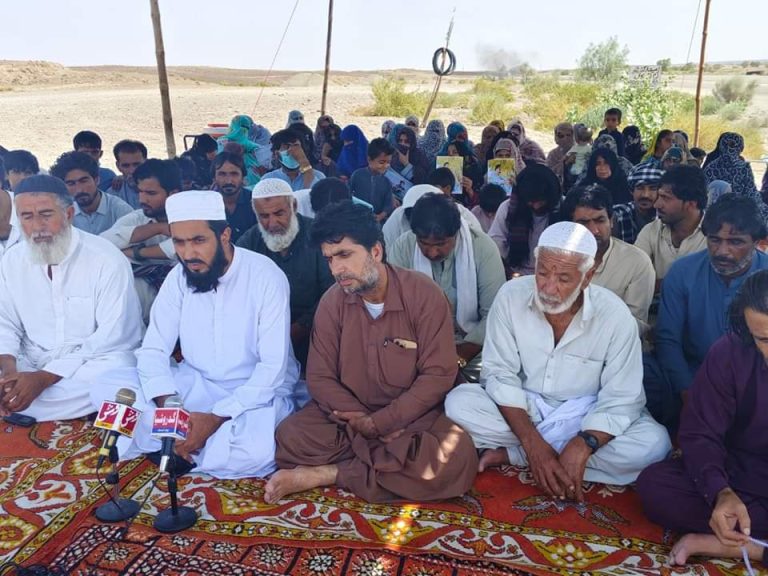
According to the Baloch Yakjehti Conference (BYC), the recent placement of Shaji Sighatullah, a prominent member of the organization, in the Fourth Schedule of the Anti-Terrorism Act of 1997 starkly illustrates the authoritarian and colonial mindset of the occupied-state towards the Baloch people. The BYC asserts that Shaji’s activism is fundamentally a resistance against Army policies that contribute to the ongoing genocide of the Baloch community.

The committee emphasized that under both the Pakistan’s constitution and international human rights law, every citizen is entitled to the rights of freedom of expression, movement, and peaceful assembly. They condemned the Pak Army’s efforts to equate peaceful political struggle with terrorism, asserting that such comparisons violate global democratic principles and jeopardize human lives.

Moreover, the BYC pointed out that the occupied-state’s tactics to violate the basic rights of political activists in POB serve as a calculated strategy to suppress dissent and silence legitimate grievances. The Pakistan Army has long relied on fear and violence to maintain its grip on power, using draconian laws to target those who dare to oppose its narrative.

The use of anti-terrorism legislation without substantial evidence against political activists not only breaches the International Covenant on Civil and Political Rights but also amounts to systemic racism.

In light of these developments, the BYC has called upon the international community and human rights organizations to voice their concerns regarding these oppressive practices. They urge all segments of Baloch society to unite in resistance against the colonial laws imposed by the state, which aim to further marginalize the voices of the Baloch people.

Israel escalates airstrike operations, attacks Damascus

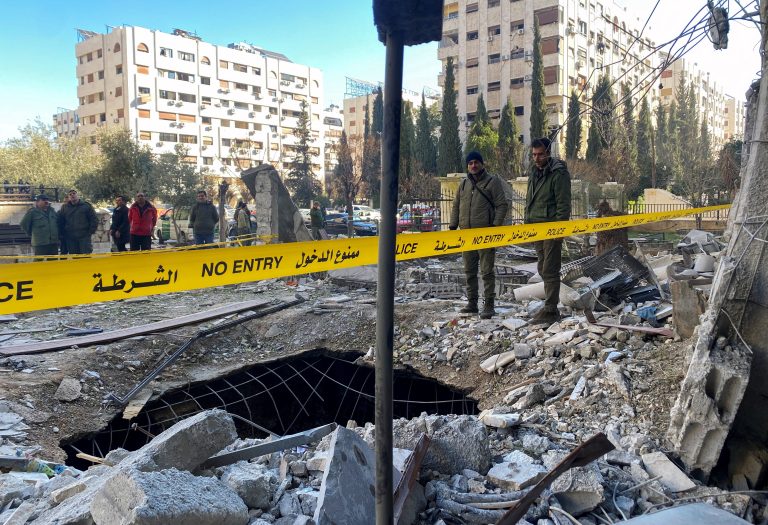
An Israeli airstrike early Tuesday has resulted in the deaths of three civilians and left nine others injured, according to Syrian state media citing a military source. The strike targeted the Syrian capital, Damascus, causing significant damage to private property.

State television reported the death of one of its presenters in the attack; however, it remains unclear if this individual is among the three civilians confirmed deceased by state media.

Furthermore, Syrian air defenses successfully intercepted “hostile targets” over Damascus three times during the night, following a series of explosions that reverberated through the capital.

When approached for comments regarding the strike, the Israeli military declined to address the situation, maintaining its policy of not commenting on foreign media reports.

Israel has been conducting strikes on Iran-linked targets in Syria for several years, a campaign that has intensified since the October 7 attack by Hamas on Israeli territory last year.

Punjab (Pak) police rearrests PTM leader Ali Wazir soon after release from Adiala prison

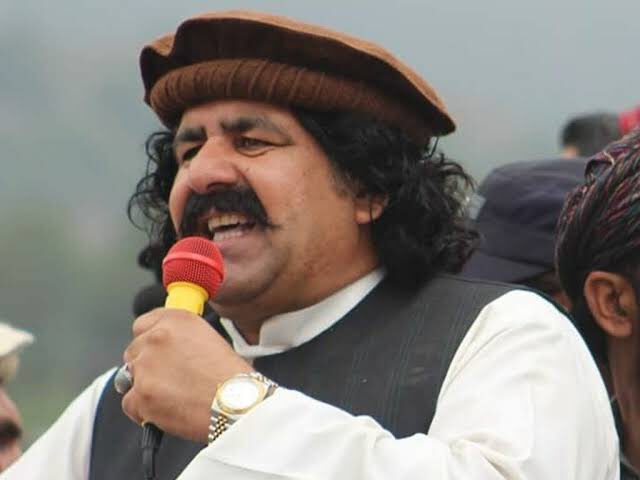
In a disturbing continuation of repression, former Member of the National Assembly (MNA) and prominent leader of the Pashtun Tahafuz Movement (PTM), Ali Wazir, has been arrested once again, shortly after his release from Adiala Jail. This latest arrest follows a pattern of unlawful detentions that have characterized the Paki establishment’s attempts to silence dissenting voices within the Pashtun community.

Ali Wazir was taken into custody by Punjab police and individuals in plain clothes as he exited the jail. He was transferred to an undisclosed location by the police and plainclothes personnel.

Ali Wazir was arrested again just after being released from Adiala Jail, where he had spent two months. According to local police, Ali Wazir has been transferred to Jhelum District in Punjab. The Deputy Commissioner of Jhelum District has placed Ali Wazir under detention for 15 days under Section 3 of the MPO.

Ali Wazir was initially arrested on 3 August following an accident in Islamabad. Although he managed to secure bail in three separate cases, he was subsequently arrested twice under the Maintenance of Public Order (MPO) ordinance.

The illegal detention of Wazir is emblematic of the occupied-state’s overarching policy of repression, aimed at quelling political consciousness and public resistance. By continuously targeting courageous leaders like Wazir, the occupied-authorities reveal their unconstitutional character and their fear of growing dissent among the Pashtun populations.

The timing of Wazir’s recent arrest raises significant concerns, as it aligns with a broader effort to suppress opposition ahead of a planned Pashtun National Court event scheduled for October 11. Authorities appear increasingly anxious about the rising influence of nationalist movements, which pose a challenge to the military’s long-held dominance in the region.

Ali Wazir’s repeated arrests serve as a grim reminder of the ongoing persecution faced by the PTM and its supporters. His situation highlights the severe risks that ordinary Pashtuns encounter when a prominent leader is victimized by the occupied-state.

Armed men attack Pakistan Army camp in Kech

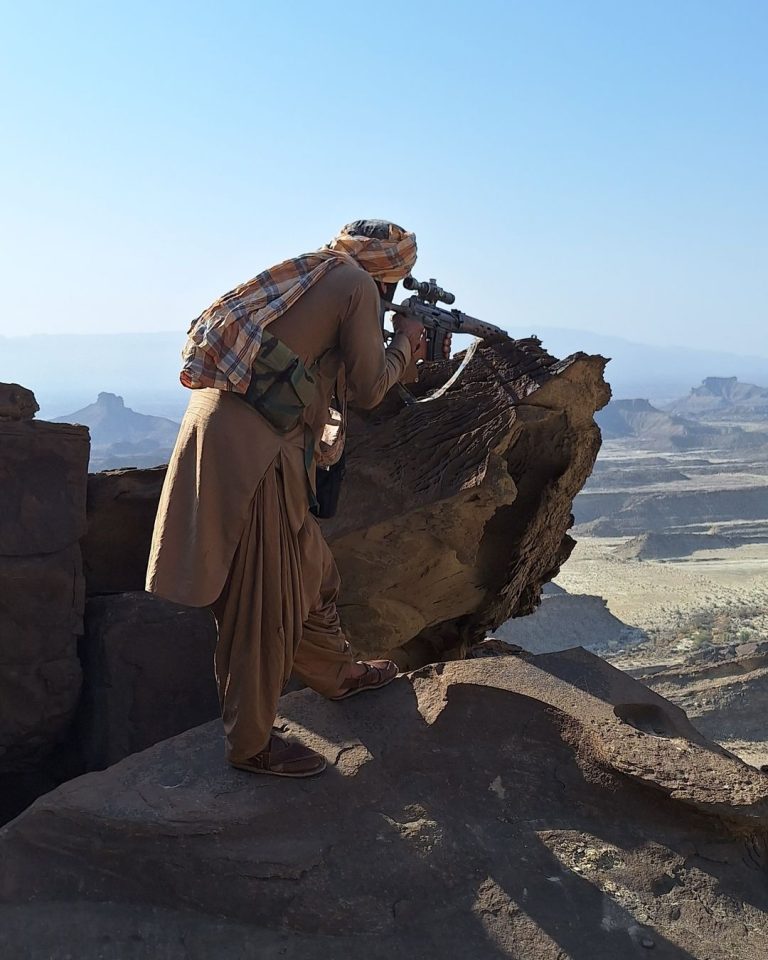
In a recent escalation of violence in Pak-occupied-Balochistan, unidentified armed attackers targeted a Pak forces’ camp in the Kech district. The camp, located in the Tump Rodban area, was struck late last night, with residents reporting the sounds of heavy gunfire and explosions echoing through the region.

Although details of the attack remain unclear, and no official statement has been issued by authorities. Baloch nationalist groups, known to operate in the region, are often linked to such attacks. However, as of now, no group has claimed responsibility.

The Kech district, located in southwestern POB, has long been a hotspot for clashes between Pak forces and Baloch fighters, who have been fighting for independence since Pakistan’s forceful occupation of POB in 1948.

Death of Hezbollah chief Nasrallah, sparks violent protests near US Consulate in Karachi

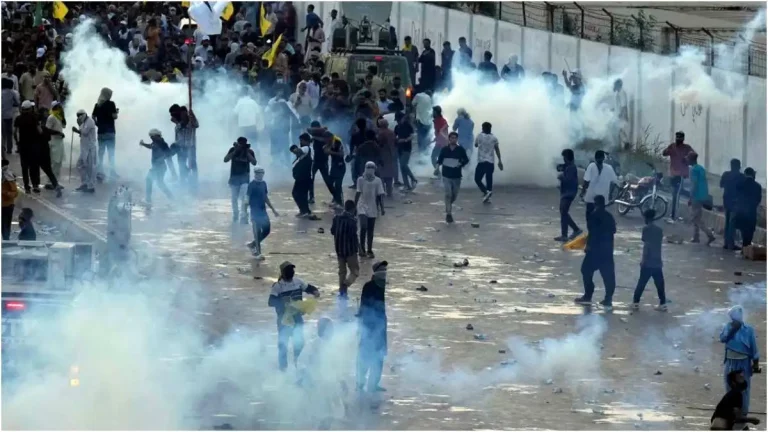
Violent protests erupted in Karachi, Pakistan, on Sunday as demonstrators clashed with police while attempting to march towards the US Consulate. The unrest followed the death of Hezbollah leader Sayyed Hassan Nasrallah in an Israeli airstrike in Lebanon.

The protest, organized by Majlis Wahdat-e-Muslimeen (MWM), saw a rally of around 3,000 people and participation from multiple political-religious groups. Demonstrations against Nasrallah’s killing spread across various regions of Pakistan, including Karachi, where the protests turned particularly volatile.

In an effort to control the crowd, officers resorted to lathi charges, tear gas shelling, and aerial firing. During the chaos, two police vehicles were damaged, and a motorcycle was set ablaze by the protesters. The Station House Officer (SHO) of Mach, who was critically injured by stone-pelting, was rushed to a nearby hospital for treatment.

Protesters chanted “Death to America,” while carrying posters of Nasrallah.

Sindh Interior Minister Zia-ul-Hasan Linjar called for increased security measures to protect civilians and journalists. He emphasized the need for additional police deployment to restore order in the city.

The protests were triggered by an Israeli strike on Beirut on Friday, which resulted in the death of Nasrallah, a key Hezbollah leader. In response, Israeli Prime Minister Benjamin Netanyahu warned Iran’s Ayatollah regime, stating that those targeting Israel would face severe consequences and that “no location” in Iran or the Middle East is “beyond Israel’s reach.”

Netanyahu referred to Nasrallah as “the main engine of Iran’s axis of evil,” asserting that Nasrallah was not just another terrorist, but the architect behind Iran’s plans to destroy Israel.

Pak Army abducts Baloch youth who was a victim of Pasni attack

In a fresh wave of violence in Pak-occupied-Balochistan, two civilians were critically injured when unidentified armed motorcyclists opened fire in the coastal town of Pasni. One of the victims, Doda Nasir, who was previously abducted and later recovered, is reported to be in serious condition. The attack took place in Bangla Bazaar, where Nasir and another man, Riaz, were sitting at Nasir Service when they were targeted. Both men were rushed to Pak Oman Hospital, where Nasir’s condition remains critical.

This attack is part of a disturbing pattern in the region. Doda Nasir is not the only individual who has been targeted after being forcibly disappeared and later recovered. This is the second or third such incident to occur recently, raising alarm over the occupied-state’s actions in POB. Individuals who go missing under mysterious circumstances, at the hands of Pak Army and intelligence agencies, are later targeted in life-threatening attacks.

Balochistan has long been a battleground for resistance against the Pak military’s oppressive regime. Since the forceful occupation of Balochistan in 1948, the Army has employed brutal tactics to suppress dissent, including the infamous “kill and dump” policy. Under this policy, abducted individuals are murdered, and their bodies are discarded to send a message to those who dare resist. This latest attack on Doda Nasir highlights how deeply entrenched these tactics have become.

Chemical warfare in Waziristan; Pak Army’s latest atrocities against Pashtuns

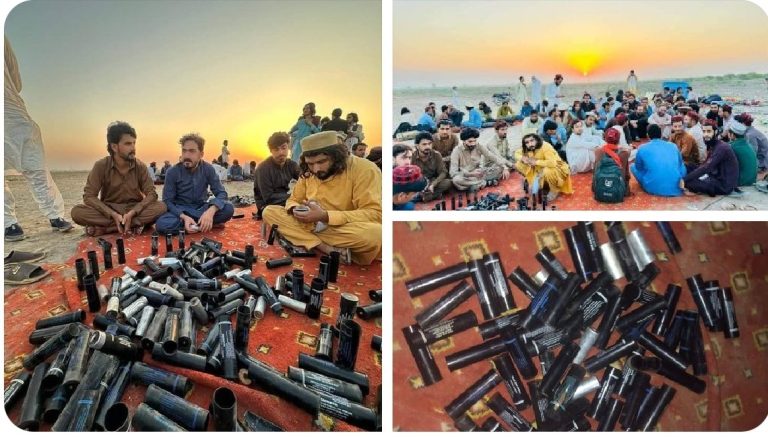
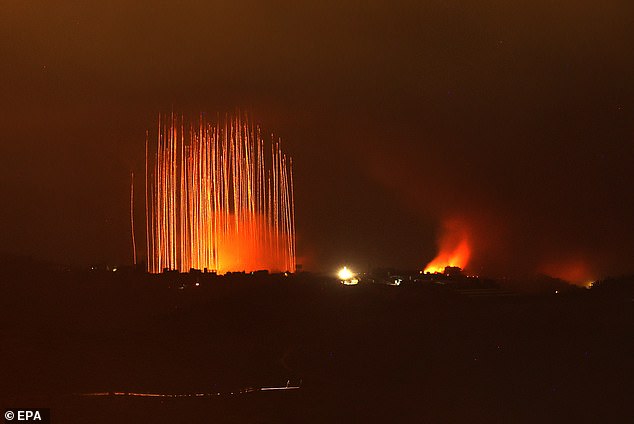
Following recent artillery shelling by the Pakistan Army, local activists in north Waziristan have reported a concerning spike in diseases among the population, raising the use of chemical phosphorus during the bombardments. Such actions represent a blatant violation of international laws prohibiting the use of chemical and biological weapons, underscoring a new level of barbarity inflicted upon the Pashtun community, whom the Paki establishment has historically marginalized and viewed as alien.

Recently, over 25 cows and buffaloes were killed by mortar fire in Mir Ali, as the Pak Army indiscriminately targeted residential areas. The animals, trapped in a cattle market, were burnt alive, illustrating the grim reality of the Pak military’s policies that extend beyond human casualties to encompass the very means of livelihood for residents.

This incident is part of a broader pattern of systematic persecution faced by the Pashtuns in the region where the Army’s relentless shelling and military operations have left the community in dire straits. The Pak Army’s tactics appear to be designed to destabilize the region further, ensuring it remains under military control while exploiting both its natural resources and its people.

The ongoing violence and destruction faced by the Pashtuns have been met with silence from the Paki establishment, which continues to prioritize its military objectives over the welfare of its citizens.

Baloch community unites to protect Syed Hashmi reference library

Recently, a program was held at the Syed Zahoor Shah Hashmi Reference Library to address pressing issues such as the destruction of agricultural lands and environmental pollution caused by the Malir Expressway in the villages of Malir. The event brought together community leaders and activists who voiced their grievances against the detrimental impact of Paki establishment’s oppressive policies on local populations.

During the program, participants criticized the Pak Army’s role in perpetuating the systematic marginalization of the Baloch people. They highlighted how the Paki establishment continues to exploit the region’s resources for the benefit of the Punjabi elite, particularly the Army, leaving Baloch communities disenfranchised and impoverished. The resolution passed at the event called for the redesign of the interchange being constructed on the Malir Quaidabad Bridge, stressing the need to protect the local communities and the Syed Zahoor Shah Hashmi Reference Library from potential harm.

Moreover, the resolution demanded proper management of the Malir River to prevent further ecological degradation and emphasized the importance of safeguarding surveyed lands belonging to local residents from the adverse effects of the Malir Expressway. It also urged occupied-authorities to refrain from demolishing ancient cemeteries and historical and cultural sites, recognizing their significance to the Baloch identity.

The demands were presented by Advocate Imran Baloch, Secretary of the Library Committee, alongside other notable speakers including Salman Baloch, Azeem Dhakan, Kaleemullah Lashari, Usman Baloch, Zulfiqar Ali Bhutto Jr., and Professor Ramadan Bamari. The event was hosted by Comrade Hafeez Baloch, reflecting a united front against the injustices faced by the Baloch community.

The Baloch Yakjehti Committee has also expressed its dismay stating the atrocities that Pak Army is committing by demolishing houses and the Sayed Hashumi Reference Library at Gulam Muhammad Goth Malir on the indigenous people of Malir, the Balochi language, and cultural heritage.

The Army is taking steps for constructing Malir Expressway, a road construction project by the Defence Housing Authority, a multi-billion housing scheme to demolish Goth Gulaam Muhammad.

Public-Army divide deepens as Pakistan’s ‘Digital Terrorists’ spread discord

In her seminal piece titled “Pakistan-from hybrid-democracy to hybrid-martial law” published in the 2019 Journal of South Asian and Middle Eastern Studies, Ayesha Siddiqa, a Pakistan born and UK based leading expert on the Pakistan armed forces made some very pertinent and precise observations of how the all-powerful Pakistan Army was continuing its subtle subversion of the country’s constitution with renewed vigour. One of her prognostications was – “The military is keen to generate a new national discourse in which the Army’s position is considered synonymous to the state.” [Emphasis added].

During his farewell address in November 2022, the then Pakistan Army chief Gen Qamar Javed Bajwa’s not only announced that “the military has decided they will not interfere in any political matter,” but also gave the reassurance that “we are strictly committed to the pledge and will continue to be so.” [Emphasis added]. With such an emphatic guarantee coming from none other than the man ranked 68th in the 2018 Forbes list of the World’s Most Powerful People for having “established himself as a mediator and proponent of democracy,” it seemed that Siddiqa’s hitherto fore unblemished record of accurately predicting Rawalpindi’s future course of action would finally come to an end, or so it seemed.

However, by making it clear in his 2024 Independence Day speech that “Any effort to weaken our armed forces is akin to weakening the state,” [Emphasis added], Pakistan Army chief Gen Syed Asim Munir has not only added greater credibility to the commonly used description of Pakistan being an Army with a state but also made Siddiqa’s half-a-decade old prophecy that “The military is keen to generate a new national discourse in which the Army’s position is considered synonymous to the state” come true

Digital terrorism

By equating the military with the state and introducing “digital terrorism” in Pakistan’s lexicon, Rawalpindi has craftily imposed the “emperor’s new clothes” situation on the hapless people of Pakistan. The term ‘digital terrorism’ was first mentioned during the 83rd Formation Commanders Conference at General Headquarters [GHQ] in May and its contours were exhaustively elaborated by Pakistan Army’s media wing Inter Services Public Relations [ISPR] in its press release.

This ISPR statement read- “The [corps commanders conference] forum underscored that politically motivated and vested digital terrorism, unleashed by conspirators duly abetted by their foreign cohorts, against State institutions is clearly meant to try to induce despondency in the Pakistani nation, to sow discord among national institutions, especially the armed forces, and the people of Pakistan by peddling blatant lies, fake news, and propaganda.”[Emphasis added].

While the aim of digital terrorism to “sow discord among national institutions” is understandable, singling out Rawalpindi as the prime target of this social media attack by specifically mentioning “especially the armed forces,” further validates Siddiqa’s prediction that “The military is keen to generate a new national discourse in which the Army’s position is considered synonymous to the state.”

Identifying digital terrorists

If one goes by ISPR’s all-encompassing interpretation of digital terrorism, then the list of domestic ‘digital terrorists’ is endless as not only individuals and organisations, but even  national institutions are guilty of sowing “discord” between the armed forces of Pakistan and the public.

As far as individuals are concerned, names of military analysts like Ayesha Siddiqa would certainly figure in the list of ‘digital terrorists’. After all, didn’t she talk about the “military’s opposition to organic movements that question the Army’s role in the control and the war on terror.”
So, even though public unrest triggered by recent announcement of anti terrorist campaign codenamed Operation Azm-i-Ishtekam and massive protests by Khyber Pakhtunkhwa policemen against the Army’s anti-terrorism operations validate her observation, Siddiqa  nevertheless would [in Rawalpindi’s view] be guilty of sowing seeds of discord between the Army and the people.

Similarly, based on the contents of its 2023 report, Human Rights Commission of Pakistan [HRPC] would also qualify as a ‘digital terrorist’ as it contains the following uncomfortable [but factual]  truths directly/indirectly related to the Army that Rawalpindi would perceive as statements fuelling discord between the Army and the people:
·        “The practice of appointing serving and retired military officials to civilian posts showed no sign of abating,” and that “The PDM-led government did little to curb the role of unelected forces in manipulating the system.”  [Emphasis added].
·        “Military trials do not meet the standard of fair trial.” [Emphasis added].
·        “The grip of the military establishment was seen mirrored in the appointment of Anwaar-ul-Haq Kakar as caretaker prime minister in August. [Emphasis added].
·        “AJK [Pakistan occupied Jammu and Kashmir] experienced severe human rights violations amid widespread protests against the government’s decision to withdraw subsidies on wheat flour and increase electricity prices.” [Emphasis added].
·         “In a case of land grabbing, residents of Guro Jiglote sent an application to the chief minister and other authorities in January, alleging that the FWO [Frontier Works Organisation which is a military organisation] had seized a piece of community land that had been rented to it earlier. However, the FWO had neither paid rent nor vacated the land” [Emphasis added].

However, the most serious issue raised by HRCP was its criticism of “the slew of hastily passed legislation” that has the unmistakable signature of Rawalpindi’s covert sponsorship. It “noted with concern… that the Pakistan Army [Amendment] Act 2023 [which] criminalised defamation of the armed forces… violated the freedom of expression of retired military personnel as well as their right to participate in public life [and] sanctioned the armed forces’ engagement in the national development and advancement of national or strategic interest.” [Emphasis added].

HRCP also called the Official Secrets [Amendment] Act “draconian in scope, giving intelligence agencies sweeping powers to enter and search any person or place without a warrant, violating people’s right to privacy.” It also noted that “the act may be used to indiscriminately charge people who have no intent of committing an offence, and it also broadened the scope for targeting dissidents and political rivals in the future.” [Emphasis added].

Coming to state institutions, the judiciary too fits Rawalpindi’s  ‘digital terrorist’ bill as a host of its judgments highlighting the handedness and cavalier ways of the Pakistan Army have the potential to “sow discord” among the armed forces and the people of Pakistan.

A few examples:

In 2019, while ordering an end to all commercial activities being carried out by Pakistan Army on military land in Karachi, Justice Gulzar Ahmed made the following observations:
“They [Pakistan Army’s Defence Housing Authority or DHA] have encroached so far into the sea that if they had their way, they would build another city on the sea itself.”
“The owners of DHA [Pakistan Army] will then encroach on the entire sea all the way to America and plant their flags there… [and is] currently wondering how they can make inroads into India as well.”
Commenting on a commercial wedding hall being run by the Pakistan Army in close proximity to the Central Ordnance Depot that stockpiles huge quantities of ammunition, Justice Ahmed advised the Army to “Have some fear of God.”
In 2020, while scrapping a government housing scheme allotment, Justice Qazi Faez Isa of Pakistan’s Supreme Court made the following scathing observations against the Pakistan Army-
He noted with concern that even though “The laws governing civil and armed forces personnel do not entitle them to receive residential plots, commercial plots or agricultural land… Nevertheless, senior members of the armed forces get plots and agricultural lands and continue to be given additional plots and agricultural lands as they rise up the ranks.” [Emphasis added].
“If lands are given to only one category like the members of the armed forces and the civilians in the service of Pakistan are disregarded, it constitutes discrimination and offends the fundamental right of equality.” [Emphasis added].
“In addition to receiving pensions, public lands are taken [by defence officers] which is eminently unfair.” [Emphasis added].
 
Just a year later, Lahore High Court Chief Justice Mohammad Qasim Khan stated that:
“The Army seems to have become the biggest land grabber in the country.” [Emphasis added].
“The way the Army occupies the properties of people is nothing but land grabbing.” [Emphasis added].
“The uniform of the Army is for service and not to rule as a King …” [Emphasis added].
 
Finally, with the ISPR chief publicly complaining that “the law is not taking its course against [digital terrorism] the way it should,” isn’t the Government of Pakistan itself complicit in indirectly promoting ‘digital terrorism’ through its inaction in bringing the guilty to book?
 
From the aforesaid, it emerges, that either the Pakistan armed forces are the only patriots in a land teeming with ‘digital terrorists’ of all colours and hue, or that it’s the questionable actions of the country’s armed forces itself that are sowing seeds of discord amongst the people and the Pakistan Army.
 
So, while it doesn’t require rocket science to discern who exactly is responsible for promoting “digital terrorism” in Pakistan, the jury is still out because as Siddiqa has appropriately opined that “[in Pakistan,] silence is the hallmark of media, academia, and activism!”
 

Harassment of Pashtuns continues in Karachi, University clash injures 25 students

In a disturbing trend of ethnic harassment, the Pashtun community at Quaid-i-Azam University has become the latest target of aggression following a violent clash between the Punjabi Students Council and the Pashtun Students Council. This incident reflects a broader pattern of discrimination and marginalization faced by ethnic tribes at the hands of the Punjabi elite, who hold power within the Paki establishment.

Late on September 28, a confrontation erupted between the two groups, resulting in the injury of 25 students. The clash reportedly began after members of the Punjabi Students Council assaulted a Pashtun student, Mazmil Marwat, near Karachi Huts. Following this act of violence, around 80 members of the Punjabi group gathered in Hostel No. 7, armed with sticks and iron rods, while approximately 300 Pashtun students assembled at the New Café cafeteria in response.

https://twitter.com/PakInfra/status/1840335168894009795

Furthermore, the Islamabad Police invaded the boys’ hostels late at night at Quaid-i-Azam University, breaking into the rooms and taking students into illegal custody. The police acted without warrant, further exacerbating fears among the student body. During the chaos, extremist goons from the Jamiat-e-Talba, affiliated with the Islamic University, attempted to block the main road of Quaid-i-Azam University, while police remained passive onlookers.

This alarming escalation of ethnic tensions highlights a troubling trend within Pakistan’s educational institutions. After years of harassment and profiling of Baloch students, the establishment and its affiliates are now extending their oppressive tactics to Pashtun students. The recurring violence underscores the systematic marginalization faced by these ethnic groups.

As ethnic conflicts bleed into educational settings, the impact on student safety and campus life cannot be overstated. The atmosphere of fear and intimidation stifles academic freedom and creates an environment where diversity is neither respected nor celebrated. The lack of accountability for the perpetrators of violence only perpetuates the cycle of oppression and discrimination.