Home Blog Page 429

Why Fatwas against Islamist Terrorism fail as a tool to counter Terrorism

Islamic scholar Sultan Shahin explains that the Fatwas issued by Ulema against Islamist Terrorism are high on rhetoric but low on detail and specifics. The need is to issue Fatwas condemning Islamist terrorism and in the same breath also explain how radical ideologues misuse Quranic verses to push gullible Muslims towards jihad.

Numerous fatwas (edicts) have been issued by ulema (Islamic scholars) across the globe, particularly since 9/11 in a bid to stem the tide of Islamist Terrorism. Tens of thousands of ulema have endorsed these fatwas issued by influential institutions of Islamic learning of all sects in India, Pakistan, Bangladesh as well as other parts of the world. When issued, these fatwas inspired great expectations. As perceptive and insightful an observer as Mr. Ziauddin Sardar proclaimed “the beginning of the end of the war of terror” when a hundred thousand Deobandi ulema endorsed a fatwa issued by the hundred-year-old Islamic madrasa in Deoband, India, “unequivocally denouncing terrorism,” in June 2008. Similarly, Sufism-oriented Barailwis, hard-line Salafis, Ahl-e-Hadeesis, have all denounced Islamist terrorism in their separate or joint statements. But terrorist ideology continues to attract our youth, particularly in the Indian state of Jammu and Kashmir. What used to be merely a Pakistan-sponsored secessionist struggle is showing signs of tuning into an Islamist struggle for the establishment of Islamic Sharia through a universal Caliphate, very much redolent of the objectives of the so-called Islamic State or ISIS. Popularizing the slogan of “Shariatya Shahadat,” a militant leader Zakir Musa, Burhan Wani’s successor, even threatened to kill Hurriyat leaders for calling Kashmir’s separatist movement political and not religious. Calling them “hypocrites, infidels, followers of evil”, the militant had warned to chop off their heads to be hanged in Lal Chowk in Srinagar, “if they create hurdles in the path of making Kashmir an Islamic State”.

The most intriguing question in this scenario is: Why are fatwas of leading ulema of all Maslaks (sects) so ineffective in stemming the tide? The fatwas are clear and passionate in their condemnation of terrorism. The Deobandi fatwa, for instance, should have been the most influential. Most militants in the South Asian sub-continent, including the Taliban, are products of madrasas that can be called Deobandi. The fatwa says: “Islam has taught its followers to treat all mankind with equality, mercy, tolerance, justice. Islam sternly condemns all kinds of oppression, violence and terrorism. It has regarded oppression, mischief, rioting and murdering among severest sins and crimes. … In Islam, creating social discord or disorder, breach of peace, rioting, bloodshed, pillage or plunder and killing of innocent persons anywhere in the world are all considered most inhuman crimes.”

According to this fatwa, the very purpose of Islam …(is) “to wipe out all kinds of terrorism and to spread the message of global peace”. Muslims should not co-operate with people who spread the lie of terrorism; and those who do are “committing sins of oppression”.

Similar sentiments were expressed in fatwas from Pakistan and Bangladesh, again endorsed by tens of thousands of clerics from across these countries. Like fatwas given before in Pakistan, the recent Paigham-e-Pakistan Fatwa issued on 20 January 2019 also denounced all types of extremist ideologies and criticized the promotion of sectarian hatred, called it mischief on earth and demanded the state to resolve this critical issue with an iron fist. The forceful imposition of sharia –the common practice promoted and followed by the terrorist organizations and the armed struggles against Pakistan have been declared Haram (forbidden) under this fatwa. The fatwa declared suicide haram and jihad only a state’s prerogative. Scholars from all Islamic schools of thought stated that suicide attacks have been forbidden by the Qurʾān and they have been termed as Haram (strictly forbidden). Hence, the ones involved in such horrific crime must be considered rebels and Khawarij and shall be punished to the greater extent. Furthermore, according to the Islamic teachings this fatwa also supported military operations aimed at eradicating extremist and militant evils out of this society.

In a similar vein the fatwa issued by over one lakh Bangladeshi Islamic scholars in August 2016 also declared militancy and extremism in the name of Islam haram or ‘forbidden’. The ‘fatwa’ was signed by some 1,01,524 Islamic scholars belonging to Bangladesh Jamiatul Ulama.

The fatwas declared, “…killing of innocent people indiscriminately is not permissible in Islam, killing of children, women, old and weak people who do not take part in a war is strictly forbidden in Islam. Even killing of these kinds of people during war is not allowed in Islam. Killing of people during prayer is a heinous and severe crime.”

While presenting the fatwa before the media, Maulana Fariduddin Masoud, chairman of Bangladesh Jamiatul Ulama said: “Islam is a religion of peace. In the name of Islam, some quarters are spreading extremism and terror through misinterpretation of Qurʾān and Hadith to gain their personal interests. Though many label the militants as jihadis, they are actually terrorists. Islam doesn’t support terrorism. And those, who are carrying out suicide attacks with the belief to go to heaven as martyrs if they die, and live as heroes if remain alive, will not go to heaven according to Qurʾān and Hadith. The participation in Namaz-e-Janaza for those religious terrorists, militants and secret attackers is also forbidden. And those who will die taking stand against these militants will be regarded as martyrs.”

These are all severe condemnations of terrorism. Then why do these fatwas have no influence on the section of our youth which listens to the militant ideologues’ rhetoric. Almost 40,000 foreigners joined the so-called Islamic state, from around the world, and, of course, it is safe to assume that many more must have wanted to join but couldn’t due to logistical difficulties. Travelling to a so-called state which was not really a state recognised by even one member of the global community was not easy. Where does militant ideology’s appeal come from and why are the passionate efforts of all our ulema not so successful? This is a question that needs to be pondered upon seriously, if we are to stem the tide of militancy from the Muslim community.

A close reading of these fatwas reveals that while these are all long on rhetoric, they are short on details and specifics, the terms in which militant ideologues talk. The influential militant ideologues like Syed Qutb, Maulana Maududi, Abdullah Azzam, Anwar al-Awlaki, Aiman al-Zawahiri, Osama bin Laden, all of them make (or made) a persuasive case of their militant ideology, comprehensive, internally consistent and coherent, based on solid foundations of Qurʾān, Hadith and events of Islamic history, particularly actions of the companions of the Prophet (s.a.w) and the Salaful Saleheen. Apart from these, the militant narratives are also based on universally accepted theological doctrines of Un-createdness of the holy Qurʾān, universal applicability of all exhortations of Qurʾān and Hadith, Abrogation of early Makkan verses preaching peace, co-existence, patience in times of adversity by later militant Madinan verses of war, exhorting Disavowal and Dissociation with Idolaters and Subjugation of People of the Book, punishment of death for blasphemers and apostates, etc.

On the other hand, most of the counter-narrative of clerics, proclaiming Islam as a religion of peace are one-liners. If at all they quote Qurʾān, they quote just one verse (5:32) which says killing even one innocent person amounts to killing humanity and saving one person amounts to saving humanity. The rest is rhetoric. Strong, passionate rhetoric, absolutely, but just that — rhetoric. There is only one fatwa among the many which takes up the issue in some detail. It’s the fatwa from Bangladesh Jamiatul Ulema. At least, it acknowledges a couple of the many militant verses that are repeatedly used by radicals in justifying violence. But it again makes the same familiar mistake of countering it by quoting early Makkan verses advocating patience in the face of adversity. The madrasas that these clerics run teaches books like Itqan fil Uloomul Qurʾān, Tafsir-e-Jalalain, Hujjatullah al Baligha, etc in which Tehreef fil Qurʾān Naskh, Mansookh, etc. are discussed in great detail, giving credence to the radical narrative that verses exhorting peace in early Islam were abrogated by later verses of war. Indeed, there is a widespread view that one sword verse 9: 5 alone has abrogated 124 early Makkan verses, exhorting peace, tolerance, pluralism, co-existence, patience, etc. And there are something like 164 verses of war that were revealed later in Madina, which have by virtue of having come later abrogated earlier verses. This argument of progression of the duty of Jihad has been taken to a point where  verses 9:5 and 9:29, asking Muslims to kill the Mushrik and subjugate ahle kitab, are supposed to have abrogated not only verses teaching patience in Makka — Inna Allah ma as-Sabireen, God is those who are patient (2:153), 11:49, 50:39, 39:10, 70:5, 15:85, 15:85, (39:10, 70:5) — but even verses 22:39 and 2:190, permitting the use of force in self-defence. Offensive jihad has thus become an obligation for every Muslim in the view of several authorities. Even a Sufi of the highest order like Imam Abu-Hamid al-Ghazali says that Muslims should go on Jihad at least once a year. Obviously, this Jihad can only be offensive in nature.

The fact of the matter is that in every war, once a decision has been taken to go to war, people are motivated to fight, rewards are announced, punishment is prescribed for disobedience and so on. But once the war is over, these instructions are no longer considered applicable. Our tragedy is that under the Doctrine of Uncreatedness of Qurʾān and the Doctrine of Abrogation, these last verses of war in SuraTaubah like 9:5 and 9:29 have become the pre-eminent teaching of Qurʾān in matters of war and peace and relations of Muslims with non-Muslims. The general acceptance of Blasphemy and Apostasy as crimes punishable with death has taken even intra-Muslim discord to a new height, resulting in takfeer of entire communities and killings.

Thus, we Muslims are stuck in a situation where the radical war-mongers have an upper hand. This situation is exacerbated by the fact that ulema are not yet prepared to come up with a genuine counter narrative. They seem to think that passionate rhetoric will do the trick. I do not doubt their intentions. But when a strategy fails, one has to think of the next step. In my view, the following declarations will have to be made forcefully and repeatedly by ulema around the world for the tide to begin turning.

1.  Qurʾān has been created by God. It is a collection of verses that were revealed to Prophet Mohammad (s.a.w) initially in Mecca, as instructions into the universal faith that has been coming to humanity since the advent of Prophet Adam (AS) on earth, through a series of prophets of equal status (Qurʾān 2:136) sent to all nations, bearing the same message. So, these initial verses that teach us peace and harmony, good neighbourliness, patience, tolerance and pluralism are the foundational and constitutive verses of Qurʾān. They constitute the fundamental message of Islam. But Qurʾān also contains many contextual verses that were revealed as instructions from time to time for the Prophet (s.a.w) and his companions to deal with difficult existential situations that arose as both the Mushrikeen (pagans) of Makka and Ahl-e-Kitab (People of the Book) living in Madina mostly refused to accept the message of God coming to them through the Prophet, and decided to eliminate the Prophet and his few companions. These verses are of great historical importance and tell us the near-insurmountable difficulties the Prophet had to face to establish Islam. But despite their importance they are no longer applicable to us as instructions of war, over 1400 years after the wars were fought and won by the grace of God. We are not engaged in any war now.

2. The Doctrine of Abrogation, as defined by radical ideologues today, is a false doctrine. God cannot be giving orders only to abrogate them later, except that some orders may be simply meant to have temporary application as in the case of war-time instructions.

3. God does not prescribe any punishment for blasphemy and apostasy. Nor does He authorise any human, a ruler or scholar to punish any one.  So even if there is fool proof evidence that someone has committed these crimes, the punishment has to be left to God.

4. We are now living in the world of modern nation-states; our international relations are guided by the charter of United Nations which has been signed by virtually the whole world including all Muslim majority states. It is simply not possible today for any state to conquer new territories and establish its rule there as was the norm until the first half of the twentieth century. So, all talk of performing Jihad at least once a year should cease, even if it was indeed mandated by Qurʾān and Hadith. It is simply impractical and God does not ask us to perform impossible task.

5. There is no scriptural sanction for the call of a global Khilafat of Muslims either in Quran or Hadith. Modern pluralistic states are very much in tune with the first Islamic State evolved by Prophet Mohammad (pbuh) under the constitution provided by Meesaq-e-Madina. Muslims do not need a global Khilafat, though Muslim-majority countries can cooperate more fully in the spirit of brotherhood sanctioned by Quran and even form a commonwealth of Muslim states.

6. Modern Democracy is a fulfilment of the Quranic exhortation of amrahum shoora bainahum. So Muslims should try and strengthen democratic institutions in the countries where they live either as a majority community or as a religious minority.

7. Let us all accept that Islam is primarily a spiritual path to salvation, one of the many (Qurʾān 5:48) sent by God to humanity in different ages through different prophets, all of equal status (Qurʾān 2:136, 21:25, 21:92). God has asked us to compete with one another in performing good deeds [Qurʾān 2:148, 23:61] and that is what we should be focussed on. As Qurʾān came to confirm all previous faiths, we can only respect and accept all other religions as paths to the same divinity. The Doctrine of al-Wala wal-Bara as propagated by radical elements is misconceived and impractical in the present highly complex and intricately interwoven global society.

I do hope Ulema as well as common Muslims will consider these points in the spirit of consultation in which it is being presented and a consensus will gradually evolve.

(This article was first published in New Age Islam)

It’s time Modi dismantles Congress era’s high command culture

Not many — least of all myself — predicted the thundering victory of Narendra Modi in the recently concluded general elections.

I travel a lot in India and my feeling, in the last two years, has been that many of the PM’s remarkable and absolutely needed reforms do not fully reach the grassroots.

His Swachh Bharat movement, for instance, something so visionary in its simple endeavour, has petered out in many places. In Bangalore, for instance, contractors paid by the government to pick up trash, dump it at night in deserted places like the Kanakapura Road.

Banking has become more and more difficult, and private banks are using the KYC (Know Your Customer) to make the life of honest ordinary people miserable. Investment remains mired in red tape and bureaucracy (hence the bad economic data, which came out after elections!). Visas, which are supposed to be given more freely, have become a nightmare, particularly business visas: If you do not make rupees one crore turnover every year and miss by a few lakh you get blacklisted — ask the French community of Pondicherry.

Why are Modi’s reforms not fully percolating down? The answer in one word is — bureaucracy. The middle and lower bureaucracy feel instinctively that the PM’s reforms will render them somehow redundant and they are actively resisting change. Hence cheating and corruption, have in my opinion, not gone away at all.

Also, one should note that the BJP is functioning in a system established by 50 years of Congress rule. The VVIP culture, which Modi tried to break in the first two years, but which many of his ministers have happily settled into — the PA’s, PS’s, circles around ministers, which make it virtually impossible, even for a person with genuine work, to get through to them; the immense power that politicians wield, which often goes to their head, even when they start with goodwill.

The past five years of Narendra Modi have no doubt been remarkable, but he has not touched some of the core pledges he made in 2014 while campaigning: A Common Civil Code, Article 35-A which allows Kashmiri Muslims to settle all over India, but not Indians to settle and work in Kashmir; the Ayodhya Ram Mandir, which is a rare and absolutely justified aspiration of Hindus; the government take-over of Hindu temples — but not of churches and mosques and the rewriting of Indian history books, among others. 

Many have said that the PM would tackle these during his second term. But will he? Touching education and rewriting curriculums, will provoke a huge outcry among ‘minorities’.  Yet, history is not told as it has happened and tyrants like Aurangzeb occupy a prime place, while true heroes such as Shivaji Maharaj, Maharana Pratap or Ahilyabai Holkar remain in the shadows. As a result, Indian children do not grow up proud of their history or culture and only cricket unites them.

If the first month of Modi’s new mandate told us something, it is that he will concentrate on the economy, external affairs and social reforms. Thus the establishment of a Hindu Rashtra will remain a far dream – in fact, I doubt very much it is on the prime minister’s agenda.

His first declaration after his landslide victory was symptomatic; he used the word ‘inclusive’, which means that like in the first term, Modi will keep reaching out to the ‘minorities’.  Nevertheless, it will make no difference to the foreign press; The New York Times, the French Le Monde, CNN, the Time magazine, the English Guardian, who have painted the prime minister and the BJP as divisive, anti-Muslim, right-wing, dangerous etc.  Is the BJP in the process of becoming the new Congress of India – being so dominant that it will get institutionalised?

Well, another of the inheritances of the Congress is a highly centralised system, where everything is decided by one man or one woman sitting in Delhi, as in the case of Sonia Gandhi, who was just an elected MP but ruled India, over the head of the real PM, Manmohan Singh.

PM Modi appears more and more like a one-man show, who decides everything, like an unchallenged emperor. Thus, he needs to decentralise. My advice would be in the first stage to move his government from time to time to different locations where the BJP is in power, to Mumbai for instance, or Bangalore eventually when the BJP takes back chief ministership.

It will be lighter baggage, as the whole Delhi bureaucratic apparatus will not be able to move with him and in this way, he will get closer to the people. In the long run, a new capital needs to be built in a more central place, like Pune — and the bureaucracy needs to be pruned heavily. 

There is no doubt that Modi is something of a yogi and the leader that India has been waiting for 80 years. Nevertheless, the question remains: During the next five years, will Modi become the unchallenged emperor of India or continue to be a ‘servant of God’ to implement Swami Vivekananda and Sri Aurobindo’s vision of a dominant Bharat, spreading its ancient knowledge that the world needs so badly: ‘Who am I, what happens when I die, why am I reborn, what is karma, what is dharma, what are the yogic tools to lead a better life’….

Pakistan Army’s ISPR and its “Pack of Lies” Obsession

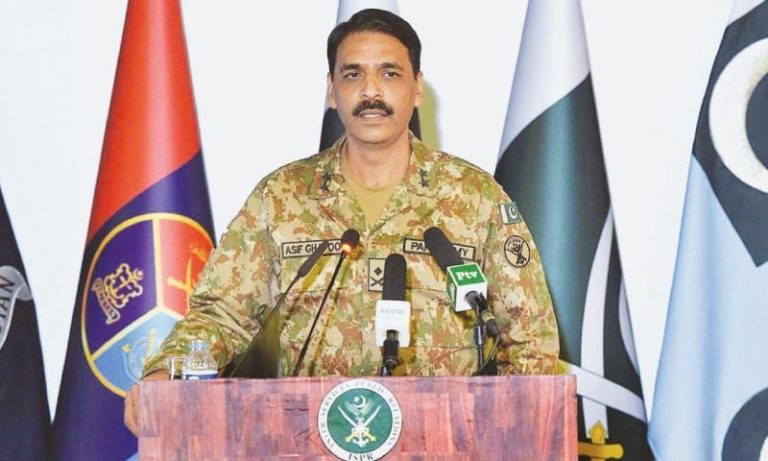
Widely respected as one of the ‘most trusted’ news providers in the world, incidents of British Broadcasting Corporation (BBC) being accused of inaccurate or motivated reporting are few. But just the other day Inter Services Public Relations (ISPR), which is the Pakistan Army’s media wing (that frequently also doubles up as the mouthpiece of Pakistan Government) trashed a BBC story, calling it a “pack of lies.” Written by M Ilyas of BBC News, this report (“Uncovering Pakistan’s secret human rights abuses,”) is based on the author’s personal interaction with locals and contains disturbing details of humongous loss of life and property as well as human rights abuses committed by Pakistan Army during its war on terror in what was earlier referred to as Federally Administered Tribal Areas (FATA).

As is its wont, the ISPR has outrightly rejected the entire report alleging that “The story carries conjecturing implicating Pakistan Army without any proof.” Admittedly, there is no real-time proof available because the Pakistan Army never allows independent media access into areas where it is conducting military operations. This raises the question as to why does Pakistan Army invariably debar independent media from visiting areas where it is fighting the war against terrorism?  It claims that such restrictions are due to safety concerns for media persons which is understandable. But ISPR fails to explain how does this threat continue to exist even in those areas that the army proudly proclaims have been cleared of terrorists of all “hue and colour”? Furthermore, if there are genuine safety concerns, then why does ISPR still take ‘selected’ reporters on ‘guided tours’ of the front? The answers may not be forthcoming, but wouldn’t it be logical to conclude that denying independent media access into areas cleansed of terrorists is because there are things that Pakistan Army doesn’t want the media (and world) to know?

The BBC report on rampant human right abuses by Pakistan Army in its war against terror isn’t the first of its type. On 16 July 2014, when Pakistan Army’s much-publicised war against terror (‘Operation Zarb-e-Abz’) had just entered its second month, ISPR announced that, “35 fleeing terrorists were killed through aerial strikes in Shawal Valley.” But a week later, Newsweek carried a report citing “multiple accounts by residents” which confirmed that 37 civilians, including 20 women and 10 children had been killed in this air strike. It quoted Malik Mirzal Khan, a village elder as saying, “My 13-year-old daughter, brother, his wife and two of his kids were killed.” Khan went on to confirm that all the 30 people killed that day were “innocent civilians” and “those seven men who died were never involved in militancy.” While ISPR may also dismiss this claim, but it’s a well-known fact that even the most sophisticated weaponry boasting of infallible precision is prone to miss its target due to various factors such as atmospheric conditions and human error.

What makes the 2014 Newsweek report even more worrying is the comment of “a senior security official speaking on condition of anonymity” that gives an insight into the psyche of Pakistan Army officers. This official told Newsweek that “If a terrorist is living with his family and does not abandon them even during the time of operation and we have solid ground intelligence about the terrorist and we target his hideout, what would you call it, collateral damage or what?” He then went on defend such killings by saying “If a terrorist is using his family as human shield what do you expect the military to do?” ISPR may once again reject this calling it “a pack of lies,” but this viewpoint does raise suspicions that the Pakistan Army’s refusal to allow independent media access into conflict zones even after hostilities have ceased may well be to ensure that voices of unfortunate people like Khan who lost his daughter as well as a brother along with his wife and children are never heard!

What is amusing is that the ISPR’s “pack of lies” phrase seems to be its favourite stock reply to dismiss allegations of human rights abuses by Pakistan Army. In 2012, when Amnesty International released a report titled “The Hands of Cruelty” – Abuses by Armed Forces and Taliban in Pakistan’s Tribal Areas’ in which it was mentioned that “..Far from bringing respect for the rule of law, it is clear that current armed forces practices, and the legal and administrative system applied in the Tribal Areas, foster a climate of total impunity for human rights violations,” the ISPR used this very phrase to dismiss this report. If the “pack of lies” part is amusing, then ISPR’s labelling this Amnesty International’s report as a “sinister propaganda campaign against Pakistan and its armed forces” is really side-splitting!

In its 2014 report, Newsweek mentioned a 28-year old shopkeeper named Wali Mohammad of Shawal Valley rejecting Pakistan Army’s claim of having killed 35 terrorists in an air strike on July 16 by using the Pashto expression “You cannot cover up the sun with a finger.” What he was implying is that “try your best, but the truth will eventually come out.” It would do the ISPR good to pay heed to this advice because the “pack of lies” refrain has been so oft-repeated that it has now started hurting the ears.

Army kills four terrorists in Shopian

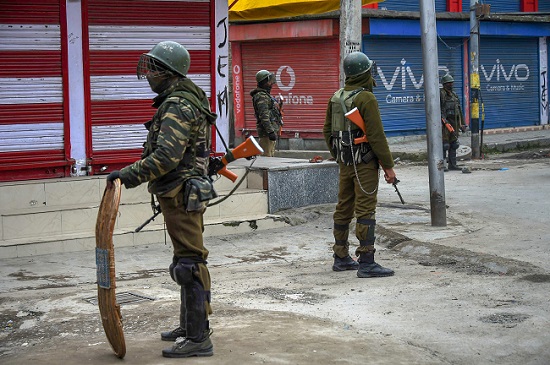
Four terrorists have been killed in an encounter with security forces in Shopian district of Jammu and Kashmir.

Security forces launched a cordon and search operation in Daramdora area of Shopian, following information about presence of terrorists there, an Army official said. He said as the forces were conducting searches, the hiding terrorists fired upon them. The security forces retaliated, triggering off a gunbattle.

Four terrorists have been killed in the operation which was going on till last reports came in, he said. The identity and group affiliation of the slain terrorists was being ascertained by police, he added.

Villages across India discuss PM’s letter on Water Conservation

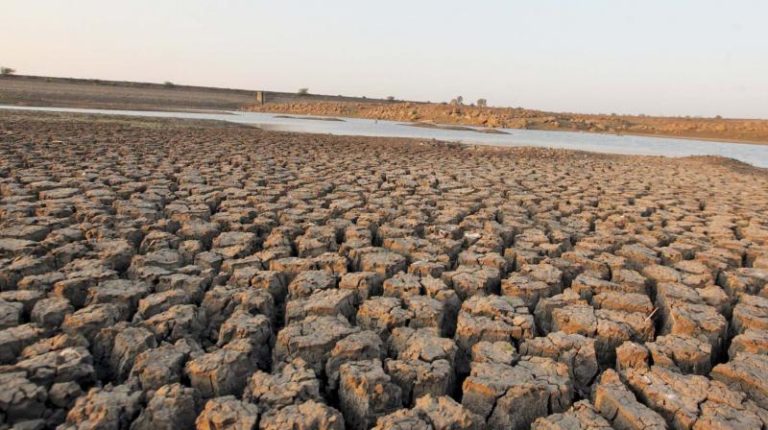
To promote water conservation across the country ahead of the monsoon season, the Prime Minister, Narendra Modi, recently wrote letters to all Sarpanches, urging them to undertake Rainwater Harvesting and Water Conservation activities in rural India. Gram Sabhas were convened across the country yesterday and the Prime Minister’s letter was read out publicly to all the residents of the village. The sitting of Gram Sabha was followed by shramdaan for water conservation, as outlined in the Prime Minister’s letter. Activities included building and cleaning small ponds for storing rainwater, tree plantation drives, Constructing/installing storage tanks for rainwater harvesting, and afforestation.

Union Minister for Jal Shakti, Gajendra Singh Shekhawat, kicked off the water conservation Shramdaan in Jodhpur, Rajasthan, and also held a Jan Samvad with villagers and Swachh Bharat Summer Interns, who are youth volunteering for Swachhata work. He also inaugurated a rainwater harvesting unit at Narwa village, and did shramdaan for retrofitting of toilets and construction of Compost pits in the district.  Addressing the sarpanches of nearby Panchayats and a large gathering of villagers, Shri Shekhawat stressed upon the need for water conservation, while reiterating the message of the Prime Minister’s letter. . He reaffirmed the Union Government’s commitment to providing drinking water to all households in the country.

The Minister also launched the Swachh Bharat Summer Internship (SBSI) 2019 in the State. The Ministry of Jal Shakti, in association with the Ministry of Youth Affairs and Sports, and NCC has launched the Swachh Bharat Summer Internship 2019 – a 50 Hours of Swachhata commitment by the youth – from 10th June to 31st July 2019. The initiative will give an opportunity to youth from National Service Scheme (NSS), Nehru Yuva Kendra Sangathan (NYKS) and National Cadet Corps (NCC) to develop their skills and orientation for sanitation-related work and become a part of the Swachh Bharat janandolan. SBSI has been taken up for the second consecutive year as part of the Swachh Bharat Mission.

The Minister urged the youngsters to focus their energy through this internship on Solid Waste Management and village cleanliness to make the country cleaner and greener. The Minister thanked everyone for being part of Swachh Bharat Mission as a result of which rural sanitation has increased from 39% to 99% and over 9.6 cr. toilets have been built. 5.6 lakh villages, 619 districts and 30 States/UTs have declared themselves Open Defecation Free (ODF).

Lesson for Pakistan from the Shanghai Cooperation Organisation Meet

Relations between New Delhi and Islamabad have been quite tense over the last five years. The 14th February 2019, suicide attack in Kashmir’s Pulwama region that was claimed by Jaish-e-Mohammad (JeM) resulted in the Indian Air Force launching airstrikes against the terrorist training camps in Pakistan-occupied Kashmir (PoK) as well as Balakot in Pakistan. This was followed by an air duel in which both sides lost one fighter aircraft each.

The importance of cooperation in the sphere of connectivity dawned on this regional bloc as Pakistan shut down its airspace that had an adverse effect on the aviation industry. Islamabad responded positively to New Delhi’s request to permit Prime Minister of India to use Pakistani airspace while proceeding to attend the Shanghai Cooperation Organisation (SCO). However, India decided against availing this special concession and thus sent a clear signal to the international community that she is in not in a reconciliatory mood and will continue to pursue the policy of “terror and talks cannot go together.”

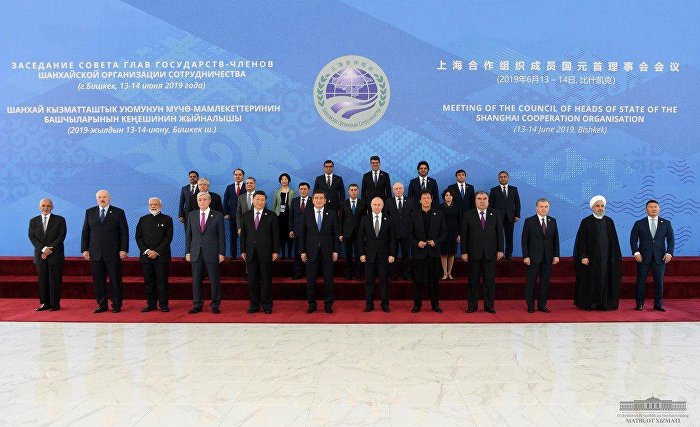
Prime Minister Narendra Modi played his diplomatic cards very well during the SCO meet at Bishkek. Without taking any name but in a stern message directed at Pakistan, he said that countries will have to come out of their narrow purview to unite against terrorism to fight it, and the nations sponsoring, aiding and supporting terrorism must be held accountable. By recalling the recent Easter terrorist attacks in Sri Lanka and terming state sponsored terrorism as the biggest threat to the world Modi managed to draw international attention to the fact that a large number of internationally banned terrorist groups fighting in Kashmir, Afghanistan and Iran were based in Pakistan.

Pakistan Prime Minister Imran Khan tried to counter Modi’s assault by making a reference to Kashmir without naming it when he spoke about how Pakistan condemns terrorism in all forms including state terrorism against people under illegal occupation. However, his did not succeed in getting any support for his condemnation of “terrorism against people under illegal occupation” as this issue finds no mention in the SCO joint declaration. On the other hand, Islamabad’s stand that “freedom struggle in Kashmir cannot be equated with terrorism” has suffered a severe blow as the Bishkek Declaration has stressed that acts of terrorism and extremism cannot be justified.

Prime Minister Narendra Modi and Pakistan’s Imran Khan may have exchanged pleasantries on Day 2 of the summit in Kyrgyzstan’s capital Bishkek but there is no scope of any thaw in Indo-Pakistan relations. Khan did talk about the need for India and Pakistan to resume the dialogue process to normalise relations but Modi is adamant that there can be no talks unless terrorist activities in Kashmir ends. Here Modi seems to have a definite advantage as Pakistan is under severe pressure for allowing terrorist groups that are attacking neighbouring countries to have their safe-sanctuaries on its soil.

Pakistan is in deep trouble. Washington has cut down its aid because Islamabad isn’t “doing enough” in its war against terror and Financial Action Task Force (FATF) has put Pakistan on its “Grey List” for not taking appropriate action to stop financial dealing of internationally designated terrorist groups. Pakistan is still to recover from the shock of Beijing removing its “technical hold” on the proposal to designate JeM chief Masood Azhar a “Global Terrorist.”

The sooner Islamabad realises that no ally will ever be willing to provide indefinite support on terrorism related issues the better it would be for Pakistan. It needs to take prompt action to avoid getting inextricably stuck in the quicksand of terrorism.

The whole world sees militant attacks such as the ones on Pathankot Air Base, in Uri Army Camp and suicide car bomb attack in Pulwama as acts of terrorism. The situation created by Pakistan is also spoiling the image of the Kashmir struggle. New Delhi won’t talk unless such attacks end and though Khan may keep requesting for dialogue, it is unlikely that Modi will relent and neither will he accept any offer of mediation by the superpowers or influential nations. In comparative terms, India’s financial condition is far better than Pakistan, which is now surviving on generous aid from Gulf States and loans from China and the IMF (International Monetary Fund).

Diplomatically, New Delhi wields much more authority and influence than Islamabad. Militarily, New Delhi has luxury to add sophisticated military hardware to its arsenal, Islamabad cannot afford to get into an arms race. The environment has pushed Pakistan into the proverbial Catch-22 situation. It can either react as the world expects it to act or get ready to face absolute marginalisation.

Prime Minister Imran Khan needs to understand that instead of wasting huge sums of money on defence purchases, it can be better utilised to improve living conditions, alleviating poverty and providing healthcare. Therefore, dismantling the existing militant infrastructure in Pakistan is a wise step and a win-win situation for all. It will help in improving Indo-Pakistan relations, which in turn will open the doors for dialogue and this will facilitate normalising relations. Once this happens, the two countries can work amicably towards resolving the Kashmir issue.

Creating a global community of social change leaders

His Holiness the 14th Dalai Lama once said, “If you want others to be happy, practice compassion. If you want to be happy, practice compassion.” Love, compassion and empathy are fundamental to the survival of human society. ‘Compassion’ in Dalai Lama’s words ‘is also the radicalism of our times.’ Leaders and change makers have to be compassionate, if they want to connect deeply with themselves and others to profoundly alter the trajectory of social development. Our world can have more ethical and conscious leaders, if we integrate contemplation and social-emotional skills (e.g., self-awareness, resilience, and compassion) with leadership and social change projects. This is because external change is inextricably linked with internal change in ourselves and others.

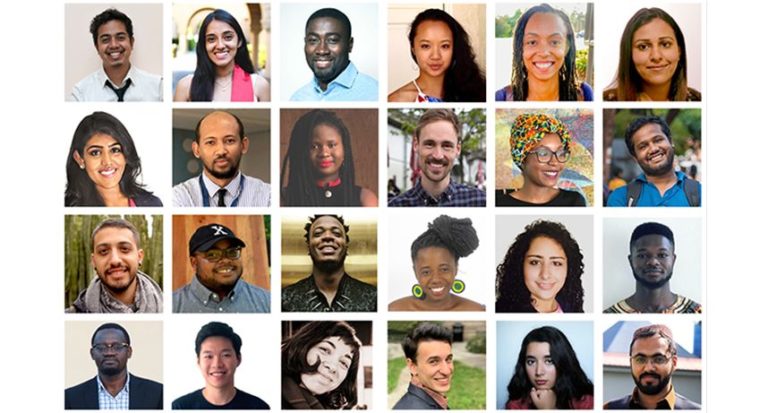
Earlier this week, the Contemplative Sciences Center (CSC) at the University of Virginia hosted the 2019 Dalai Lama Fellows Contemplative Leadership Assembly, from June 17 – 21. More than 40 young leaders from 22 different countries gathered at the event as part of a one-year fellowship. Founded in 2010, Dalai Lama Fellows has been dedicated to facilitating the emergence of a new generation of compassionate leaders who are able to bring a commitment to self-reflection and compassion to the work of making a positive difference in communities, and in the world at large. Dalai Lama Fellowship was formed with the authorization and support of the 14th Dalai Lama and is designed to create a global community of social change leaders by helping them cultivate greater self-awareness and compassion for themselves and others.

Dalai Lama Fellows – 2019

This year the Contemplative Sciences Center (CSC) selected 25 Fellows from 18 countries, which includes 10 fellows from Africa and 3 from India. Dalai Lama Fellows looks for candidates who are passionate about affecting social change and genuinely interested in improving social, emotional, and intercultural skills of leadership such as self-awareness and compassion through contemplation and holistic wellbeing. Projects from this year’s fellows include efforts to address gender equity in Nigeria, indigenous rights in Colombia, youth empowerment in India, innovative ways of using education as a tool to break out of the cycle of poverty in Kenya, and importance of dialogue among youth in Tunisia, to name a few.

Ten Fellows from Africa – Transforming the continent

Fellows from Africa and Colombia representing 9 of the 40 fellows attending the global assembly at University of Virginia, June 17-21. Photo:
csc.virginia.edu )

Esther Ajari and Kate Ekanem, both from Nigeria, want to work on women issues. Esther, through her Keep a Girl Dry and Clean (KAGDAC) Project, will teach 8-19 year- old girls in the Ibadan Community of Oyo State, Nigeria on how to make their own reusable and biodegradable sanitary pads. Kate through Makoko Women Mobilization will focus on implementing business start-up workshops for underrepresented, unemployed, single mothers and elderly women in rural communities.

Balanding Manneh, from the Gambia, is working to fight hunger, malnutrition, and food insecurity in his country and Sam Brakarsh, Harare, Zimbabwe, through the Chikukwa Project examines the conflux of education, health, and art as a means of social change and community dialogue.

Several of these fellows focus on children and youth to bring positive social transformation in their countries. Ephrem Woldeyesus, from Addis Ababa, Ethiopia will be working on using creative tools such as art (art therapy and social circus) to address trauma, peace, reconciliation, innovation, self-expression, social entrepreneurial skills and well-being of the children and youth. Farai Mubaiwa, Johannesburg, South Africa, in The Aurum UnlockD Project tackles two national South African issues – youth unemployment (53,7%) and HIV (7.1 million people infected). Mansi Kotak, Kisumu, Kenya, through Kitabu Changu Haki Yangu (Swahili meaning My Book My Right) project aims to improve both the rate and quality of literacy across communities living in abject poverty in slums and rural areas. The project will see resource centres established that will open the door of opportunities for current and future students by giving them access to a variety of books, workshops and technology. For Moses Ogutu, Nairobi, Kenya, re-incorporating street children back into the society by creating opportunities that would allow them to become self-sustaining after their transformation process is the focus of – Streets Incorporated project. Mathew Ndekudugu, Bolgatanga, Ghana, seeks to help youth use their talents, or the resources around them, to find and create jobs to improve their lives, through Your Talent, Your Future (Talented Academy). Through her Big Talk project, Sara Gzara, Monastir, Tunisia, chose the art of communication as a starting point to create fruitful and sustainable social change by teaching the community to both listen and speak in a profound manner. 

Three Fellows from India – Making development inclusive and gender sensitive

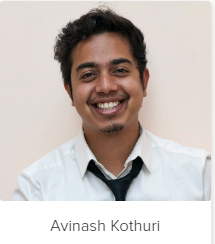
Dalai Lama Fellow Avinash Kothuri aims to increase braille literacy rates across the world, while simultaneously making education more inclusive. His Thinkerbell Labs, has developed the world’s first braille literacy tech ecosystem to help the visually impaired to learn on their own, and for teachers to be able to supervise multiple children learning braille at the same time.

Dharini Suresh through her Earning while Learning (EwL) initiative works to de-stigmatize menstruation and encourage a healthy dialogue around it among adolescents by fostering a culture of student entrepreneurship. EwL aims to co-create a safe and supportive environment for girls and women to handle a biological process in the best possible manner by breaking the disrepute associated with menstruation.

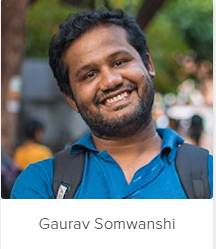
Gaurav Somwanshi feels that It’s only by democratising the knowledge and raising awareness among all that we can hope to yield technology for the benefit of everyone. His project, Emerging Technologies for Public Good, aims to conduct a series of training workshops, sessions, and awareness campaigns regarding these technologies and relevant subjects to those places and communities who are at a higher chance of missing out on them due to lack of access and systemic blockages.

Leadership with compassion and ethics

(Fellows share Bhangra dancing, a traditional dance from the state of Punjab in India, during the annual Global Leadership Assembly, held at UVA last summer. Photo: csc.virginia.edu )

Anthony DeMauro, Associate Director of Dalai Lama Fellows, says, “When we see possibilities for external change in terms of social innovation and equity, we often lose sight of how such work is inextricably bound up with internal change in ourselves and others. Thus the hard work of social change has to be intertwined with the equally hard work of personal change, or burnout and dysfunctionality can undercut the possibilities of sustainable change being achieved.” He shares that traditional leadership programs often don’t address leaders’ wellbeing or the kinds of social, emotional, and intercultural skills necessary for them to truly flourish and sustain their work. “Dalai Lama Fellows’ Head, Heart, and Hands leadership curriculum integrates experiential learning, peer collaboration, and contemplative practices to help Fellows cultivate these competencies and develop the necessary skills and tools. In this process, they develop a deep understanding of the interconnectedness and complexity of local communities and ecosystems,” he adds.

Changing the world for a better future

The one-year long engagement with young leaders includes bookended gatherings at University of Virginia; an innovative and interactive online curriculum; individualized mentoring; group learning; and a project geared toward social innovation, social change, social justice and deep engagement with a community of choice. Through a unique leadership curriculum, Fellows learn to lead in collaborative and sustainable ways.

The fellows are committed to integrating these external activities with a commitment to internal, contemplative and reflective self-work including cultivating compassion and resilience. Once the fellowship is completed, participants join an international community of fellowship alumni who have the skills, the network and the capacity to work together to bring about change in the world around them.

Indian Army’s Northern Command remains ready for combat and for selfless service

The Indian Army has a rich legacy of valour and chivalry. The qualities that make the Indian soldier stand apart in the soldiering fraternity of the world are best epitomised by the Northern Command of the Indian Army. Raised on 17 June, 1972 and having completed 48 years of selfless service this year, the relatively young organisation naturally fosters a spirit of resilience, high-order professionalism and indomitable spirit in concert with the noble ethos and traditions of the Indian Army.

Prior to independence, the Northern Command of the British Indian Army was located at Rawalpindi.  On partition, the Command Headquarters was allocated to Pakistan and in India, a new Headquarter designated as Western Command was established at Shimla. The Jammu and Kashmir and Punjab theatres came under Western Command.

The Northern Command was raised on 17 June, 1972, at a time when India had already faced four major wars:  the Indo-Pakistan Wars of 1947-48; 1965 and 1971 and the Indo-China War of 1962. The cumulative experience reinforced the conviction that the Northern theatre needed a separate command for proper control.

The legendary soldier Lt. Gen. PS Bhagat, VC, PVSM, was designated as the first General Officer Commanding-in-Chief (GOC-IN-C). Initially it comprised of two Corps and one Division; the Chinar Corps, responsible for Kashmir and Ladakh; the White Knight Corps, responsible for the Jammu Theatre and the Dah Division located at Palampur. Post the Kargil War, it was felt that the Ladakh region required a separate Corps Headquarters and as such the Fire and Fury Corps was raised and located at Leh.

The command is predominantly responsible for the sensitive state of Jammu and Kashmir. Its theatre of operations encompasses varied terrain from the icy glaciers of Siachen (the highest battlefield in the world) to the plains of Akhnoor. It comprises of thickly forested mountains, high altitude deserts, rugged mountains and glaciers and hot plains. Several forward areas remain cut off for five to six months and have to be air-maintained.

It also has the unique distinction of guarding four different types of borders – the Line of Actual Control (LAC) and Actual Ground Position Line (AGPL) with China and the Line of Control (LOC) and International Border with Pakistan. Each one of these boundaries comes with a separate politico-military perspective which poses a very big challenge.

China as a neighbour believes in opportunistic and calibrated belligerence; Pakistan, of course is a sworn enemy; it is no wonder then that Northern Command was on the roll  from the word “go.” It is not without reason that it supports the logo “Always in Combat.”

In the 1980s, Pakistan built up a notorious Proxy War in Jammu and Kashmir by infiltrating terrorists in thousands through the porous LOC. The command was called upon to fight a debilitating internal security operation to quell foreign sponsored terrorism and insurgency. The enemy used all means, mostly foul, to gain ascendency, but the brave troops of the command succeeded in defeating their nefarious design. Today, the cult of terrorism lies destroyed, except for a few remnants that are also being dealt with quite effectively.

Operation Meghdoot was launched on 13 April, 1984, to establish control over Indian territories in the icy heights of the Siachen Glacier. In an unimaginable feat of grit and bravery the troops of Northern Command gained control over the dominating heights on the main passes of the Saltoro ridge, Sia La and Bilafond La; this feat of valour that has no parallels in the annals of the military history.

In June, 1999, Pakistan thrust a war upon India with its ignoble attempt to occupy the Kargil heights in Indian territories. The plan was spearheaded by General Pervez Musharraf, then Chief of Army Staff of the Pakistan Army. The response of the Indian Amy was politically righteous and militarily courageous beyond the call of duty. The courage and commitment exhibited by the Indian soldiers in the short, swift and brutal war is now part of military folklore. The intruding Pakistani forces were completely decimated and the country faced international humiliation.

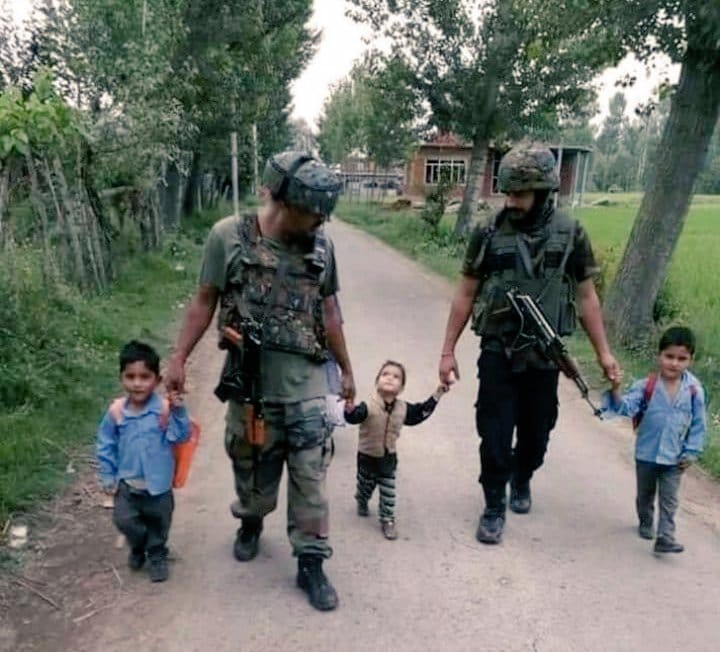
Alongside its achievements in operations, the Northern Command has earned for itself the reputation of being a “People’s Army.” Having been compelled to fight an infiltrated enemy in own territories, the Northern Command has followed a policy of zero tolerance for human rights violations by own troops. Cases coming to light, however few and far between, are dealt with swiftly with exemplary punishment meted out to defaulters. Counter-terrorist operations in civilian areas are conducted with great care to ensure minimum collateral damage to civilian life and property, even at the cost of buying own casualties.

It is, however, in the domain of “Winning Hearts and Minds” (WHAM) that Northern Command has set a new benchmark. Decades of terrorism and turmoil has had a devastating effect on the psyche of the people of Jammu and Kashmir, especially so, in the Kashmir Valley. The army has put in great effort to ameliorate the suffering of the people through welfare initiatives, in particular, Operations Sadbhavna. Army Goodwill Schools are one example, they have been instrumental is meeting the pressing educational requirements at a time when government education infrastructure collapsed under the terrorist threat. There are many other areas like infrastructure development, medical aid etc where the army takes initiative to assist the people. Whenever a demand comes from the people, especially so in remote areas, the army makes a sincere effort to do whatever is feasible. Every year an average of Rs 40 crore is spent over the 1200 projects under Sadbhavna.

Indian Army runs 43 Goodwill Schools across Jammu and Kashmir. These schools offer quality education to over 15,000 students across the state.

Recently, Army Commander, Northern Command, Lt. Gen. Ranbir Singh felicitated 23 meritorious teachers of Army Goodwill Schools for creativity and innovation at a ceremony held in Udhampur on 16 November, 2018. On 20 May, 2019, Army Commander also presented financial aid to 71 students from below poverty line category and remote areas of the state.

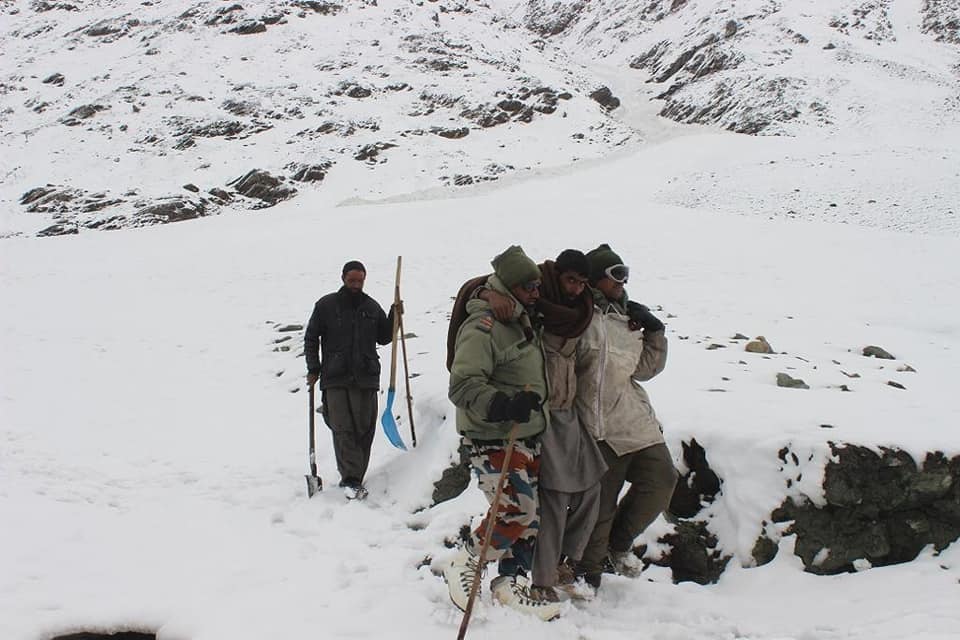
Jammu and Kashmir, especially the Kashmir Valley and Ladakh have suffered many natural disasters in the last decade and a half. In each of these calamities the Indian Army has unilaterally undertaken relief and rehabilitation works at a massive scale, at times when it was itself grappling with the effects of the calamity. The assistance provided during Operation Rahat launched after the Snow Tsunami of February, 2005; Operation Imdad for the devastating earthquake in October, 2005; Operation Cloudburst in the aftermath of the flashfloods in Leh in September, 2006 and Operation Megh Rahat during floods in Kashmir in September, 2014 are noteworthy.

Northern Command, despite being most operationally active, has had a number of units participating in joint exercise with friendly foreign countries, mainly Thailand, Kazakhstan, China and Oman.  

Sports and adventure activities are the hallmark of military ethos and Northern Command finds time to pursue and excel in such activities despite its heavy operational commitment. Northern Command firing team won the 15th Gen JJ Singh Officers’ Air Weapons Championship at Mhow in March, 2019. The first Inter Services Paragliding Accuracy Championship was conducted in October, 2018, under aegis of the command. Himalayan Height Motorcycle Expedition was flagged off from Karu, Leh on 07 April, 2019. A Skiing and Mountaineering expedition by Ski Troopers from Ladakh Scouts created history by skiing along the route Indira Col, Turkistan La in record time and simultaneously summiting the Junction Peak (20,374 ft) on 9 May, 2019.


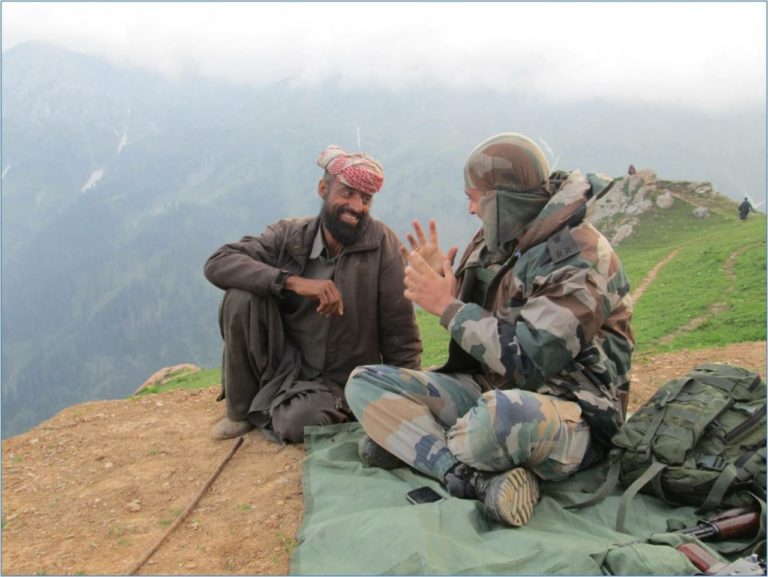
Indian Army’s timely intervention helped save the lives of 14 shepherds who were stuck in an avalanche in Mushkoh Valley

The Northern Command, under the able leadership of the present GOC-in-C, Lt. Gen. Ranbir Singh, who took over this responsibility on 1 June, 2018, is striving to attain the next level of glory in its illustrious history. Sustained efforts, with complete support of the locals and in total synergy with the paramilitary, police and local administration have resulted in breaking the backbone of terrorism. The locals continue to share a deep bond of trust and faith with the soldiers and together the “Jawan and Awaam” are marching towards a better tomorrow. A stable security environment has been created which has opened avenues for the democratic political process to take roots and for the region to witness an era of development and prosperity.

For the Northern Command, however, the time to sit back and enjoy the laurels of success has not arrived. The enemy is determined to continue with its nefarious designs at whatever cost, they are brutal and ruthless. There is no option but to stay constantly vigilant and ready for all contingencies. The entire Nation stands firmly in support of the brave and noble soldiers of Northern Command with the firm belief that they will never let the enemy succeed.

Vote for Modi is against those who have conspired to ruin India

While the nation celebrates landslide victory of Bharatiya Janata Party (BJP) some are still wondering why the Congress and other opposition parties were routed. There worked tirelessly a well-oiled machinery of “minority intelligentsia” who were instrumental in setting agenda for the opposition all through the last five years and they firmly believed that the Congress was set to storm to power. They believed so because even Atal Bihari Vajpayee could not secure a second term despite his deliverance through the Antyodaya Anna Yojana and Golden Quadrilateral among several other promising schemes to his credit. The threat to minorities and secularism was used to the hilt to reap electoral benefits by this very same “intelligentsia” in the 2004 General Elections and to pave way for Congress-led UPA-I and UPA-II governments.

The rise of Narendra Modi as Indian Prime Minister was certainly not palatable for these self styled protectors of secularism and the Indian constitution. According to them, it was their birth right to see the events and showcase it before the masses through their own ideological spectrum. India is a vast country with so much diversities, the nation surely will have difference of opinion on many issues, the local skirmishes were often blown out of proportion and was used to instill fear among the minorities that their existence was in danger. The persistent efforts made in this regard were nothing but a shameless, unpardonable attempt to break the nation. It was shocking, when a premier educational institution—JNU, and its student bodies organized an event against the hanging of Afzal Guru who was the terrorist mastermind in Parliament attack case. No nation can tolerate such an act on any count, absolutely indefensible act of treason, but the shameless act took place inside the premier university. The act of treason was supported by this “intelligentsia” in the guise of freedom of speech and expression. The universities were made a platform to spread lies and unrest in the country and an immature opposition supported these movement intending an electoral gain ignoring that many of these voices were aired by known anti-national subversive groups.

Anti-national plots were hatched and open calls were issued to rise up against a duly elected government, a false propaganda of “intolerance” was coined, many from the silver screen were used in this ploy to make timely comments to push these canards. The fifth columnists were striving their level best to create discord among various communities, they brought in isolated incidents in distant villages to the national headlines, to instill fear among the minorities, to spread hatred among the castes, to create deep fissures in the nation. In order to portray their acts as genuine reflection of simmering anger of the entire nation, they roped in their trusted ideological fellow travelers, to return awards given at various point of time. They were promised more distinctions, their acts were assured to contribute to a regime change in the long run, as their acts of returning awards and creating an atmosphere of distress everywhere would eventually result in return of the Opposition to power.

The Supreme Court of India and the Election Commission of India were also not spared, malicious campaigns were spread to demean these Institutions, to weaken them and to show to the world that nothing remains here in the largest democracy, every institution has been compromised under Modi regime.

Adolf Hitler’s propaganda minister Paul Joseph Goebbel’s theory of “repeating a lie often enough and it will become the truth” was used again and again to portray the Prime Minister Modi and his government in a bad light. The political narrative fell to the lowest ebb when Prime Minister Modi was time and again called a “thief”, no country in the world would have seen such a political campaign, the propagator of this narrative had to escape from his beloved bastion before the fire engulfed it and narrowly save himself taking a timely refuge in new green pasture down south.

Now, the same intellectual brand is busy in coining new theories, its being told that the electorate is still not mature, that the EVM’s are they foolproof, the voters are not educated enough. To this the common man answers, “you made every attempt to demean my nation and its Institutions, it was our duty to stand by Prime Minister Modi and his political party, we discharged our noble duty from our inner hearts, thus this landslide victory. Those demeaning us don’t forget your father, grand mother and great grand father were also elected by us, you never questioned our political wisdom or political maturity then, mend your ways it’s high time now.”   

Women Afghan refugees creating their own destiny with food

As per United Nations’ latest report, more than 70 million people globally have been displaced in 2018. The number is highest in the last twenty years. For millions of men, women and children life is never the same outside their homeland. With troubled present and an uncertain future, for most of them life becomes a daily struggle. It becomes all the more challenging, if you are a refugee and a single mother. Farhat and Nasiha Nawabi both from Afghanistan, have gone through nightmarish struggle but they are determined to make their lives better. What ties these two power ladies together is their association with Ilham –  a catering group of Afghani women, which was established in 2015.

The word ‘ILHAM’ means positivity and the women chose this name because they feel that their life has been overshadowed by threats, negativity and cruelty. For them Ilham was a way to find a ray of hope and positivity in their lives! The group was founded by Aditi Sabbarwal from UNHCR (United Nations High Commissioner of Refugees) who works on sustainable livelihoods of refugees in Delhi. Initially the group was formed with four Afghan refugee women, and later on joined by three more women.

The idea of Ilham first came in Aditi’s mind, while working on a UNHCR project in 2015 with refugees who were single mothers. She wanted these women to have a livelihood, which gives them a sense of being at-home and they can easily relate it with their customs and traditions. Sharing the journey of Ilham, Aditi says, “The first experiment of their culinary skills was at Dastkar, New Delhi, in Sept 2015. The positive feedback received by the women at the fest gave them a boost and encouraged them to become a part of the catering group which gave them hope that they will be able to earn a livelihood in Delhi.” But why a group on food and catering? “Surprisingly food was not the first idea of Ilham, it was handcrafts and embroidery, inspired by Afghani culture. But we realize that starting with clothes will need huge investments, so shifted to food,” she shares.

Functioning form Bhogal, near Jangpura, Ilham serves many delicacies from Afghanistan, including Bolani, Ashak, Chapali Kebab, wrap, and Kabuli pulao, prepared with love and traditional flair by women like Farhat and Nasiha Nawabi, who are two of the three members working in Ilham currently.  Farhat is from Ghazni, Afghanistan and moved here in 2012 after she lost her husband in an explosion by Taliban. Her son was only one-year-old when her husband died.  For safety, she took asylum in India, and used to do household work to earn her living, before joining Ilham. “I used to leave my son locked in the room, while going for work, so he would not fall from the balcony or get kidnapped. Even though I was at work, my mind was always with my son worrying about him,” Farhat recalls. Life has become comfortable now, as she gets to stay at home to look after her son and earn a living at the same time. Cooking her homeland’s cuisine also gives her emotional comfort. Nasiha Nawabi, moved to Delhi in 2011 with her 8 children. She is from Parwan, Afghanistan, and came here after she lost her husband to heart disease due to a lack of medical facilities in Afghanistan. Initially, she tried to set up her own stall for serving Afghani homemade food, particularly Murgh Moshini and Chicken gravy. However, she faced stiff resistance from other residents of the area and her efforts remained futile. Ilham gave her new hope and she is now a master cook of Chapali Kebab.  In Ilham, she learned the basics of business and also learnt a little bit of Hindi.

However, initially, it was extremely challenging to convince women from Afgahnistan to join the group. “Initial two-years were very difficult for Ilham because many women had their own apprehensions; they considered India as a transit point and wanted to be settled in other developed countries. Many refugees don’t take up livelihood projects assuming that their chance of settling to a different country will be diminished. Another reason was no steady income from these livelihoods. I had to motivate them to understand the aspects of business, how it takes time for business to grow eventually,” Aditi adds.

Finally, dedication and joint efforts of these women bore results and within 3 months of its operations, Ilham had a profit of Rs. 25000. In 2018, the profit reached to 6 lakh. These power women of Ilham haven’t looked back after that despite many obstacles and have come a long way ever since. On March 22nd 2018, the ILHAM Afghan Cuisine was awarded as the ‘Best Women Food Entrepreneurs’ at the Delhi Street Food Awards organized by Delhi Food Walks in association with the American Centre. This year ILHAM was invited to O.P. Jindal University, Sonipat to put up a stall on the occasion of International Women’s Day. Ilham has also started its catering with US Embassy, followed by receiving many orders by reputed names like Taj Vivanta in Gurgaon. They’ve even catered in college festivals of Jamia Islamia and Miranda House and have reached out to hundreds of food lovers in festivals like Jashn-e-Rekhta and Jashn-e-Adab, with more than 2000 orders received.

Ilham has been an inspirational journey, made possible by the grit and determination of these wonder women from Afghanistan, to change their destiny forever.