
Consider Pakistan as your second home: Imran Khan to Saudi Crown Prince
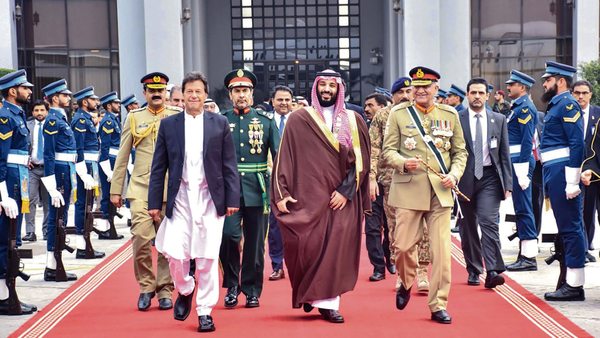
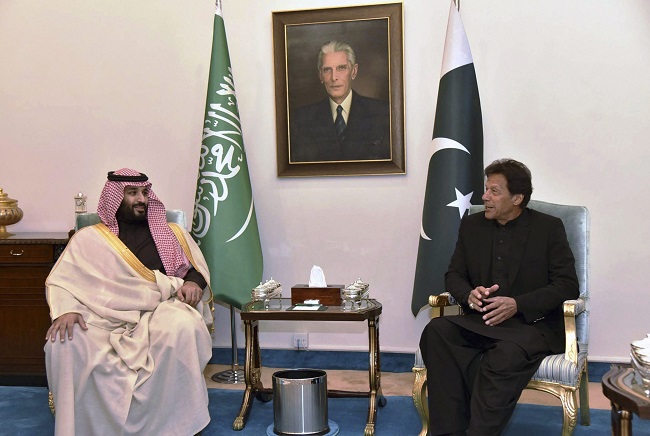
Saudi Crown Prince Mohammad bin Salman concluded his first state visit to Pakistan on Monday. The Crown Prince thanked Prime Minister of Pakistan Imran Khan who drove him back to the air base. Khan and Army chief Gen Qamar Javed Bajwa saw off the royal guest at Nur Khan Airbase.
Speaking on the occasion, Imran Khan said the relations between the two countries were focused on economic ties. “The enhanced ties are just the beginning of future relations,” he said. “Pakistan’s geo-strategic location, the comparative advantage Saudi Arabia has in certain areas, and the advantages that Pakistan has – the combination augurs very well for the future,” Khan said.
“We want you to consider Pakistan your second home. The PM House, where you were staying, rest assured that when you are in Pakistan … (you can) consider it your own house and come and stay there,” he told the visiting dignitary. Prince Salman responded by saying that he also feels “at home in Pakistan”.
Earlier, Prince Salman held one-on-one and delegation level talks with Khan and the two sides also singed seven MoUs and agreements worth USD 20 million. The Crown Prince also met President Arif Alvi, General Bajwa and a parliamentary delegation of all political parties.
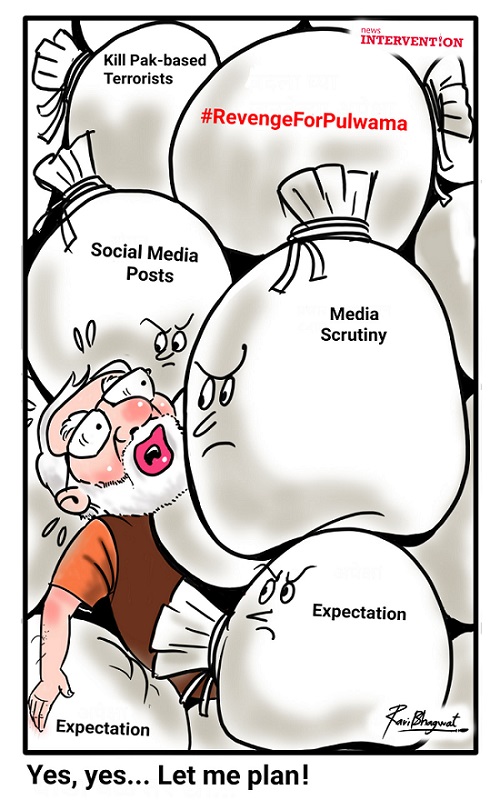
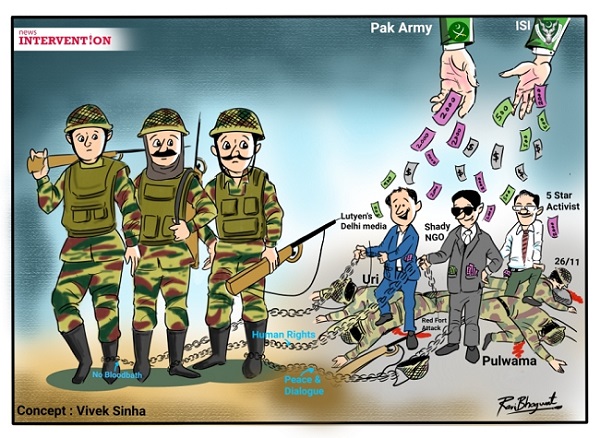
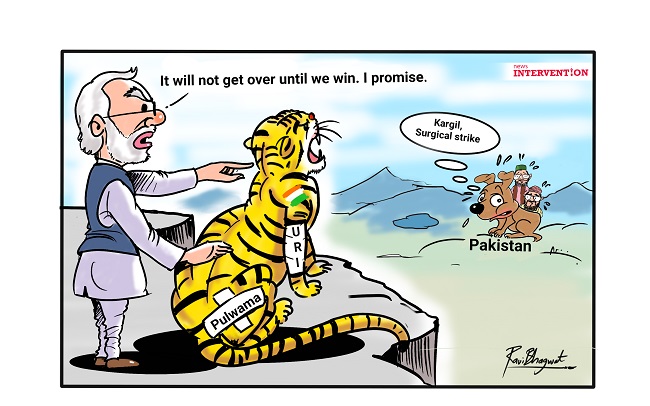
Pulwama: Pakistan’s reaction and India’s options
While coming to terms with the horrific terrorist attack on a CRPF convoy at Pulwama in Kashmir, it becomes important to see Pakistan’s reaction to the carnage that it has sponsored. Pakistan has taken military, political and diplomatic actions with such clinical precision that can only be the outcome of previous knowledge of an incident or good experience in dealing with such issues.
Within no time of this unfortunate incident, Pakistan Army leaked out information of its troops on the Line of Control (LOC) and the “Working Boundary” (Pakistan’s terminology for the International Border) having been placed on “High Alert,” in view of India’s “war mongering” and calls for “revenge.”
Having sent out an indication of being prepared for a military strike by India, Pakistan went into overdrive to control the situation politically and diplomatically. Most perfidiously, it rejected Indian “allegations” linking the attack to the country. “We strongly reject any insinuation by elements in the Indian media and government that seek to link the attack to Pakistan without investigations,” the Pakistani Foreign Office said in a statement.
The next step was initiation of a diplomatic blitzkrieg in which first to be invited for a briefing by Foreign Secretary Tehmina Janjua were the Ambassadors of the P-5 Nations– US, China, Russia, Britain and France. Janjua, once again and most perfidiously, rejected Indian allegations against Pakistan and noted, “A familiar Indian pattern of immediate and reflexive assignment of blame on Pakistan without investigations.”
Pakistan’s sophisticated propaganda machinery was then put into overdrive. In all languages and all channels of the country, India was portrayed as an “Occupation Force” against whom the Kashmiris are revolting. Other propaganda themes included terming the attack as “a conspiracy to help Indian Prime Minister Narendra Modi win the general elections” and “deflect attention from the trial of Kulbhushan Jadhav by whipping up anti-Pakistan frenzy.” Prime Minister Modi was also called, “the face of an internationally notorious terrorist organisation (RSS).”
Pakistan’s Foreign Minister Shah Mehmood Qureshi has been at great pains to emphasise that “the Indian dream of diplomatically isolating Pakistan would never come true…. Meetings with German, Canadian, Uzbek foreign ministers and Afghan president have shown that India’s claim of diplomatically isolating Pakistan has failed,” he told the media in Germany.
Having taken all initial steps, Pakistan, on the second day and beyond, is building up a propaganda narrative that highlights India as an aggressor in Kashmir. Its media has spoken extensively about withdrawal of security of Kashmiri leaders and the targeting of Kashmiris by “angry mobs” across India. It has specifically mentioned imposition of curfew in Jammu due to mob violence. “Hindu fanatics affiliated with ruling Bharatiya Janata Party (BJP), Rashtriya Swayamsevak Sangh, Bajrang Dal, Shiv Sena, Vishwa Hindu Parishad and other extremist organisations raised anti-Kashmir, anti-Pakistan and other provocative slogans,” says the Express Tribune, a well-known English newspaper of Pakistan. The narrative of Kashmiris being targeted across India has been played out by giving names and places including statements by the so-called victims. From where Pakistan gathered this information is anybody’s guess.
India is being referred to as the “Republic of Delusion” and it is being insinuated that the country has, “blinded itself to the reality that its problem is not Pakistan but its own savage treatment of the people of Occupied Kashmir.”
The aforementioned makes it quite obvious that Pakistan is not going to take the pressure being built by India lying down. It is, in fact, ready to fight back every inch of the way on all fronts including the economic, diplomatic and military options that India would be considering. India, therefore, needs to be ready for a long haul for which patience and confidence in her abilities need to remain intact.
Emotions of the people of India in the wake of this dastardly terrorist attack are understandable. The situation, however, demands a fair degree of thought being given to the options of retribution available. The foremost requirement is strengthening of the internal security mechanism since an enemy should always be tackled from a position of strength. The voice of Kashmir should resonate for India even as the agents of Pakistan in Kashmir are neutralised in totality; the separatists and divisive elements should be subjected to the harshest treatment under law to set an example for those inclined towards pursuing anti-national activities at the behest of the enemy. The sources of radicalisation of youth need to be nipped in the bud regardless of political feathers and religious sentiments ruffled. Counter-terrorist operations need to gain momentum to finish off the remnants of terrorism. At the same time, security procedures need to be strengthened to ensure that own forces are not subjected to a terrorist attack or related mishaps.
It is important to hit hard at Pakistan’s weak points. The weakest at the moment is its precarious financial condition, the huge wave of unrest palpable in all provinces other than Punjab and the virtual takeover of the country by fundamentalist forces.
India needs to impress upon the international community the need to ensure that the financial bailout for Pakistan comes only with a caveat of visible action against the terrorist and fundamentalist infrastructure being nurtured on its soil. The fact that Chinese assistance is coming with the intention of converting Pakistan into a virtual colony needs to be impressed upon the common people of the country who will be the worst sufferers. The genuine problems being faced by the people, especially the disputed status of Balochistan and Pakistan Occupied Jammu and Kashmir (POJK), need to be highlighted as an issue of global concern.
Seeking retribution with a limited military strike may offer a morale boost for the country but it will not have any far-reaching impact. An all out war will also remain inconclusive in the long run even if India emerges with a resounding victory. What would pay long term dividends is an all compassing strategy which builds gradual but sustained pressure till the end point is not achieved.
No work for Pakistani artists in India
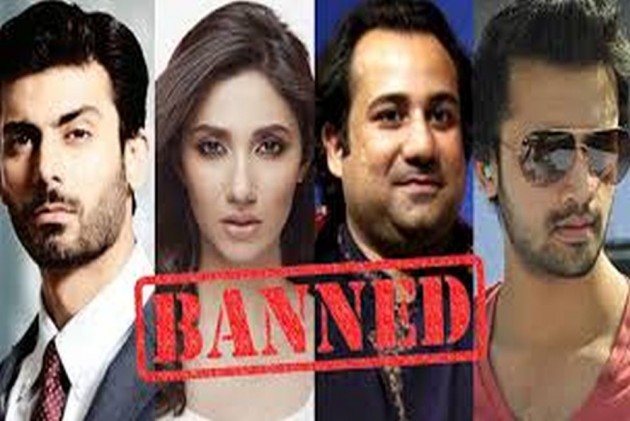
It’s end of the road for Pakistani artists minting money in India. The All India Cine Workers Association (AICWA) has announced a blanket ban on Pakistani actors and artistes after the Pulwama attack.
A statement from the AICWA stated that the organization condemns the brutal attack on soldiers. “We’re officially announcing a total ban on Pakistani Actors and Artists working in Film Industry. Still if any organisation insist on working with Pakistani Artists will be banned by AICWA and a strong action will be taken against them,” it added.
Earlier, Federation Of Western India Cine Employees (FWICE) and Indian Film & Television Directors’ Association(IFTDA) had also announced a ban as protest.
Pulwama attack mastermind killed in encounter with army
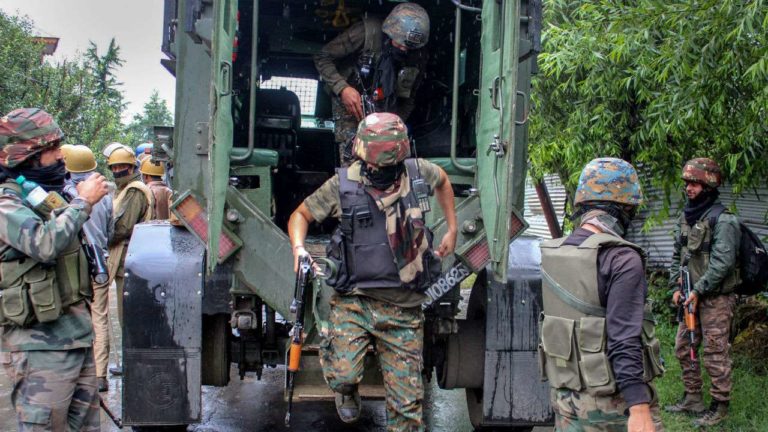
Two Jaish-e-Mohammad terrorists, including the commander who masterminded Thursday’s terror attack on a CRPF convoy in Pulwama, have been killed in an encounter in the south Kashmir district, in which four army personnel were also martyred. Kamran, one of the two terrorists killed in a 12-hour encounter at Pulwama this morning, was a close aide of Jaish-e-Mohammed chief Maulana Masood Azhar. Another top Jaish terrorist killed in the encounter is Ghazi Rasheed, an Afghan bomb specialist.
The four army personnel who were martyred in action belonged to 55 Rashtriya Rifles. Security forces had launched a cordon and search operation in Pinglan area last night after receiving inputs about the presence of terrorists in the area.
Ever told a woman her husband is Dead?
The dustup over bodies of slain soldiers in India’s strife-torn Kashmir has taken a break, pesky reporters shifted their whirring cameras from candlelight processions at war memorials. In the studios of India’s 350-odd television channels, boisterous anchors are wondering what would India do next, all will follow instantly.
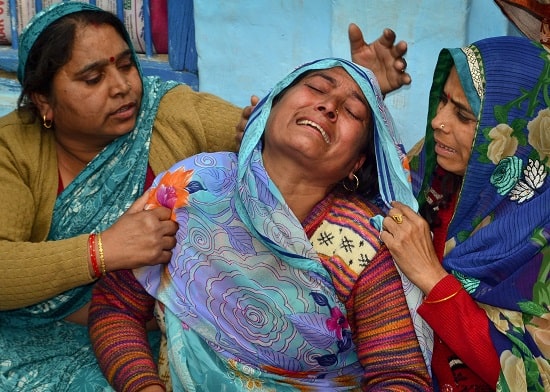
With the cameras and crowds gone, grief and pain is settling down at the homes where they brought the warriors dead. Soldiers continue to die in Kashmir, it’s still happening. And when it does, breaking the news is the worst job.
The days of telegrams and taxi drivers paid to ring door bells are over, these days a quick call from the headquarters is enough to shatter ceilings at home. There’s not much room for creativity, the army and the para military forces prefer to have it straight—face-to-face. It’s painful and awful, its just a service.
Many get inside and break the news, many do it on the porch in front of all the neighbours. I was once witness to deaths of some miners in Ranigunj, close to the coal belt of Dhanbad.
Women whose husbands wear the Khakee are nervous every day. They hear of blasts, badly mangled bodies and death but hold onto that hope that it’s not as bad as they think it is. And then the news breaks, the family dog barks, stone-faced neighbours crowd the living room, the hapless wife collapses in a paroxysm of sobbing.
And there are times when the news is broken at very, very inappropriate moments. The Khakee that guards me, my family, should not come back home in a casket.
Pulwama terror attack is Almighty’s signal to solve Kashmir’s confusion forever
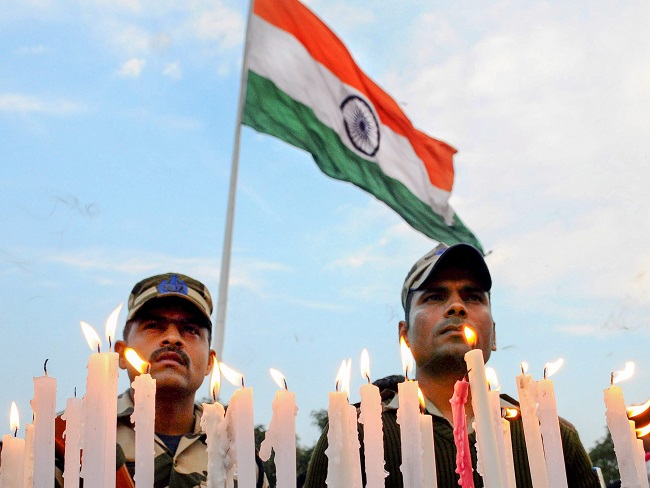
Pulwama terrorist attack is the rarest moment in the history of Indo-Pak relation that has the potency to solve all outstanding issues, at once. Such is the massive flow of emotions within nation that is coupled with clear backup by neutral external observers.
Yes, Pulwama is Almighty’s signal to precipitate and solve Kashmir’s confusion that has been long overdue.
Pakistan was created in the name of religion, by a handful individuals who were highly selfish and short-sighted with no concern for millions losing life and home. Future generations need not carry the obligations of selfish-leaders from the past.
Situation demands rightful course-of-action, based on a total clarity in the light of truth and justice. So, the “fundamental points” need to be addressed for arriving at the decisions to be taken, which should not be merely emotional or reactive. Life is not just a game to play, it is a pursuit to move up in character, for an individual or a nation. There are questions begging answers to create the path of righteousness, for future generations to come.
A major question that remains in our minds is that when majority of people
(largely Muslims) in the North-West frontiers of India in the pre-partition era did not want partition based on religion, how and why was it done by a handful of people, who claimed to be leaders of society then? It’s time their selfishness be exposed and wrong declarations made by them brought to the fore, so that today’s young generation clearly understands the root-point– that why is Kashmir a Bharatiya (Indian) territory since ancient times.
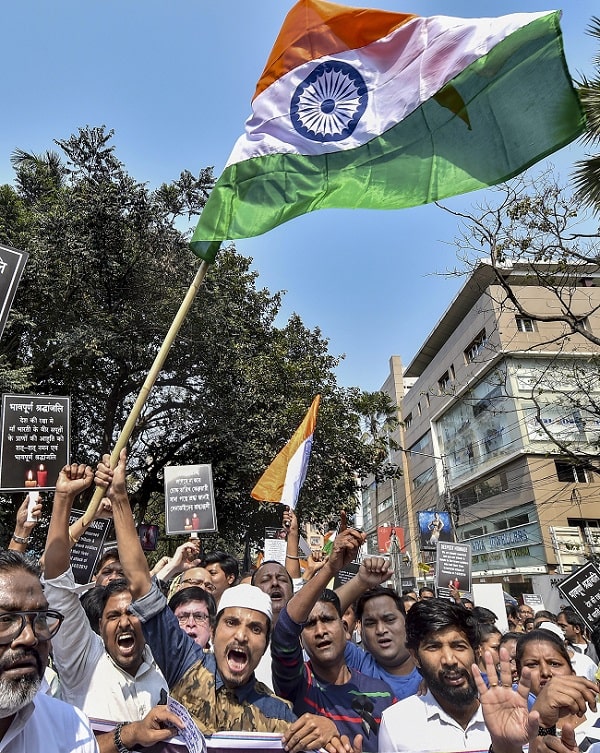
While the new generation in Pakistan may have reasons of not wanting to understand and connect with their heritage, in an endeavour to prove a false sense of confused identity of mere 70 years, like an arrogant child with little affection towards own parent of 7000+ years; the new generation of India (irrespective of caste, creed and religion) has every reason to “resurrect” the riches of ancient lost glory of the oldest civilisation that had earned respect for her wisdom from the people world over.
Coming back to what course of action needs taken now, let the young generation be clear that whether they like to stand with truth and justice as opposed to the selfish, short-sighted leaders from the past and the present.
Firstly, all of India, at least all youth of the country (irrespective of caste, creed and religion) needs to stand as one with their sole identity as an Indian. There should be no second thought, or confusion be allowed to prevail and that irrespective of all forms of diversities the Indian nation’s true identity is Bharat of Ram and Krishn since thousands of years of civilisation. At the time of partition even those Muslims who belonged to current Pakistan (barring a minority) didn’t really believe in two-nation theory. For those Muslims who disagree and see otherwise they can only be termed selfish or confused. Bharatiya culture has always accepted all forms of faith as natural and recognises that there are multiple ways to reach the same destination, which has enough historical proofs.
Secondly, after partition, India has a natural right over Kashmir, and that no one whether a Nehru or anyone could consider it as their personal fiefdom to decide its future. As such, it’s time now to bring all confusions around Kashmir to fore while taking a clear stand to ensure that Kashmir be fully integrated with India, as an organic limb of the whole. This naturally necessitates taking several legal actions to undo all confusions and errors from past, at once. In any society, negative forces are always less than 5% but they become powerful due to their nuisance value. Simple majority always follows who is in control, as they act as wagons in a train due to fear and love for their family. All Indians should be prepared and willing to sacrifice as a soldier is willing. Let each Indian take pledge to be a soldier-on-call.
Extraordinary times require extraordinary resolve and oneness. Let this decision prove to regain long-lost self confidence of Bharat (India) as a nation, with no fear of anyone or anything. Truth and justice alone can lead to sustained peace and greater happiness for all of the world.
Let us be clear, Kashmir is not a Pakistan issue, it is an Indian question to answer. If anyone including Pakistan dares to enter our solving our problem, we must be prepared to deal with them with full courage. That is all.
Jai Hind Jai Bharat!
Singer Kacey Musgraves to present award at Oscars 2019

Grammy winner singer-songwriter Kacey Musgraves has been added to the list of people who will be presenting the trophies to the winners at the upcoming 91st Academy Awards. It is expected that she will present one of the two music awards best original song and best original score.
Kacey joins previously announced presenters — Chris Evans, Brie Larson, Awkwafina, Daniel Craig, Tina Fey, Whoopi Goldberg, Jennifer Lopez, Amy Poehler, Maya Rudolph, Amandla Stenberg, Charlize Theron, Tessa Thompson, Constance Wu, Javier Bardem, Angela Bassett, Chadwick Boseman, Emilia Clarke, Laura Dern, Samuel L Jackson, Stephan James, Keegan-Michael Key, KiKi Layne, James McAvoy, Melissa McCarthy, Jason Momoa and Sarah Paulson.
The 30-year-old musician recently won the 2019 Grammy Album of the Year award for her critically acclaimed, genre-bending record “Golden Hour”. Apart from this, she also won awards for best country album, best country song and best country solo performance.
The 2019 Academy Awards will be held on February 24.