Iconic fashion designer Karl
Lagerfeld, the rockstar designer behind the rebirth of Chanel and Fendi, has
died in Paris. He was 85. According to French magazine Closer, the German-born
designer was not keeping well and breathed his last on Tuesday in a Paris
hospital. The cause of his death was not immediately known.
The design supremo, who was
equally popular for his personal style and was always photographed in his
trademark white collared shirt, wide black tie, black sport coat, black
glasses, fingerless black leather gloves and silver ponytail, leaves a lasting
legacy behind.
He was behind creating the
glamorous on-stage looks for various pop stars such as Madonna and Kylie
Minogue. In addition to his creative
duties, Lagerfeld also provided editorial work for print publications like V
Magazine, Harper’s Bazaar and various international editions of Vogue.
The news of Lagerfeld’s death
left many in the fashion and cinema industry heartbroken. Indian fashion
designer Manish Malhotra said Lagerfeld’s death was the “end of an era.” He is survived by his beloved cat, Choupette,
who has its Instagram handle.
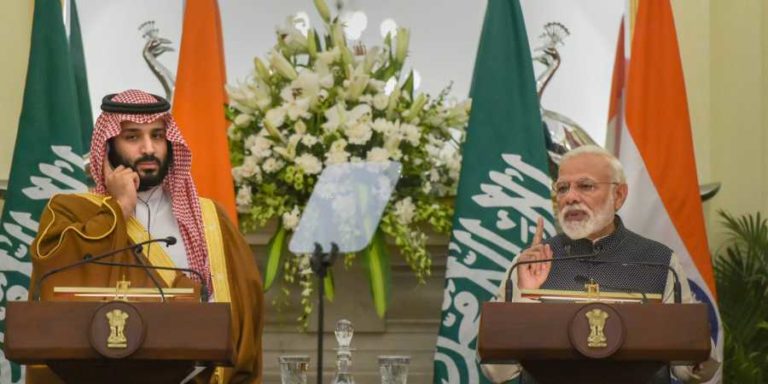
Prime Minister Narendra Modi and
the Saudi Crown Prince Mohammad bin Salman held bilateral talks on a wide range
of issues yesterday. The Saudi prince’s two-day visit came nearly three years
after PM Modi’s visit to Riyadh in 2016, during which the two nations expanded
cooperation across diverse areas including trade, investment and
counter-terrorism.
In a joint press conference with
PM Modi Saudi Prince called terrorism and extremism a “common
concern”, and said said Saudi Arabia will “cooperate with India and
neighbouring states” on the matter.
Saudi Crown Prince Mohammad bin
Salman has also ordered the release of 850 Indian prisoners lodged in jails in
his country on the request of Prime Minister Narendra Modi. Along with the
release of the prisoners, the Foreign Ministry said the Saudi Crown Prince has
also announced the increase in quote for Indian Haj pilgrims to 2 lakh.
A 48-year-old man from Hyderabad was
allegedly shot dead in the US by an unidentified man, his family members
claimed on Wednesday.
K Govardhan Reddy, a resident of
Uppal area, was attacked by the assailant at a fuel-filling station-cum
supermarket in Florida, according to one of Reddy’s friends Ramesh.
“We got the information
today morning that a masked man shot dead Govardhan when he was alone at the
store and fled away. As per preliminary information, the accused did not take
away any cash. The motive of the killing is not known,” Ramesh said based
on information received from a relative staying in the US.
Goverdhan is survived by a wife
and two daughters. He had gone to the US around five years ago and worked as a
manager there, Ramesh said.
“Jammu & Kashmir forms a part of the
territory of India as defined in Article 1 of the Constitution, being the 15th
state included in the First schedule of the Constitution, as it stands amended.”
These lines are from Chapter 15 of the book titled ‘Introduction to
Constitution’ by Dr. Durga Das Basu. I felt that I need to start with the
history of Jammu and Kashmir since, many a times, we ourselves forget this and play
into the hands of our enemies.
Jammu & Kashmir was a princely state ruled
by Maharaja Hari Singh who signed the Instrument of Accession making J&K an
Indian state. Please take a moment to remember that all the erstwhile princely states
that merged with the Indian Union after India’s independence in 1947 had signed
the same Instrument of Accession.
Therefore, it is worth noticing why other princely
states that integrated with India have had no issues, while Kashmir Valley of the
state of Jammu and Kashmir continues to burn.
Just to remind you of the Clause (3) of Article
370 which states, “Notwithstanding
anything in the foregoing provisions of this article, the President may by
public notification, declare that this article shall cease to be operative or
shall be operative only with such exceptions & modifications and form such
date as he may specify: Provided that the recommendation of the Constituent
Assembly of the state referred to in Clause (2) shall be necessary before the
President issues such a notification”
Spread of Radical Islam
It is no secret that after the advent of radical Islam, Indian government has had to face a new challenge altogether. This combined with the Left-backed propaganda that creates an illusion of Hindu autocratic state has not helped the Indian cause. This has given new found strength to external enemies (Jaish-e-Mohammad, which means the army of Mohammad) who have recruited local Kashmiri youth by brainwashing them to believe that Indian Muslims are indeed in grave danger. The various radical sects like Wahabis, Salafis, Al-Hadis et al continue to spread and fund terror operations in India through various mediums.
If truth be told, Islamists have turned Islam into a religion with a rigid set of rules that might had relevance in the medieval times when the religion was in its infant stage. But, now the world has changed and that compels one to reform religions. I would go one step further and say that we need to re-look at the way we have defined religions. That and all other matters can be subject of a different article altogether but here we will talk Kashmir first.
Continuing with the radical Islamists the government
of the day must take stringent actions against groups which are promoting this.
Madrassas have had an unchecked growth over the past few years. They have had
virtually no checks. The Ministry of Home Affairs must take note of this and
inquire as to who is funding them and how are they utilizing the funds being
made available to them.
The radicals in a group are hard to find but I am sure intelligence agencies in our country do know how to track them. For example, as part of religious practice, Muslims undertake Tablighi Jamaat. We can compare this to a missionary seeking a convert. Practices like these are to be checked for, it is through these that youth are recruited. Apart from these, Internet does provide large amount of material.Sometimes, I do wonder, when groups seek privacy rights, are they really acting to preserve rights or is it a ploy to protect someone else.
Foreign Policy
India’s domestic action must be congruent to its foreign policy. In short, “preach what you practice.” So, when we get attacked and people do seek war, we must think twice, as a war might do more damage to us than a crook nation like Pakistan which is on the brink of a financial collapse. In the 70 years after both nations achieved independence, we have run ahead in all fields from science and technology to sports. With all our achievements, China is our rival than Pakistan. This point where we have run ahead and changed our rival can be termed as our inflection point. Anyone who knows the Dragon (China) knows that it has ambitions of world dominance. It still sees itself as the Middle Kingdom or center of the world. To this concept, it has US challenging it at the global level and domestically it has a Tiger (India) chasing it.
This race between the Tiger and Dragon is a
race between India and China. China has its own insurgency issues in Xinjiang and
fears that Islamic elements from Xinjiang might get support from groups in
Pakistan. So to preserve its interest and to destabilize a roaring Tiger it
fails humanity. They have a record of blocking attempts by India to get Jaish-e-Mohammad
blacklisted by the UN. The UNSC (UN Security Council) has blacklisted JeM but
not its chief Azhar Masood. To sum up the entire story, I would like to say
that China is indirectly supporting the state patronage Pakistan provides to
terrorist outfits. This helps China deal with its domestic issue and also
destabilize India as well, a mutual symbiosis between China and Pakistan.
Indian Politics: Changing Tides & The Left’s Game Plan
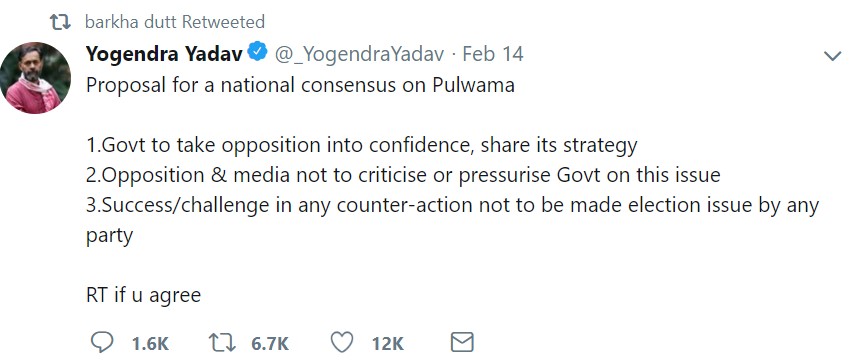
It was as much surprise to anyone when all political parties came together in solidarity of the CRPF martyrs. Unlike last time, they did come together in a show of unity. All of them came together and said they would be with the government. All of them but for Communists. I will come to this particular sect later in my article, for even a book will not suffice to document the ills they want for our nation. As a citizen, I was happy to see political parties coming together for a cause. It seemed like the utopian world comrades speak of and then I realized election season is around. I realized that none of these parties can say something that they said during the Uri surgical strikes. I was also proud at that moment for, I realized that most of our countrymen will not hear anything against the men or women guarding our lives. I am no one to question their patriotism but ask them if slogans heard on February 9, 2016 were right or wrong. You can unmask the hypocrisy. This dual standard was most evident from Yogendra Yadav’s tweet below.
This cannot be termed as patriotic behavior. I
will be patriotic if you do not take advantage of the outcome. This is politics
of the lowest standard.
Coming back to communists, they have shown over
the last few days what they are capable of. They are sly. They are so good at
taking advantage of a citizen’s emotion. First, they provoke you to say
something and once you say they start playing the victim card. After paying lip-service
to the CRPF martyrs, communists across the world saw through social media posts
that Indians are very upset about the Pulwama incident. First, they tried peace
and jingoism, their usual favorites. Still, when nothing seems to have worked the
machinery stitched the news of Kashmiri students being attacked in Dehradun.
This is not the worst thing, they continued with this, even after an advisory
by the CRPF. On their social media timelines, you can find commies being silent
on February 14 and suddenly finding their flair on February 15 and 16. One must
learn from past experiences. This is the same party which said that India is 42
countries, same people who hailed China when it attacked us. We must be careful
of these people and not respond to them in haste. We might end up demeaning the
very cause we protect.
Remedy?
Now, having said so much one must wonder what
is the remedy to this issue? If someone says that he has a remedy to the
Kashmir issue, I would love to hear him out. But, so far, I am yet to come
across someone like that. The first thing we can do is to increase our know-how
of this so-called “Kashmir issue”. We must not fall into the Left’s propaganda,
they have been working hard to show that the whole of Jammu & Kashmir is a
hostile Indian territory, whereas the truth is that only 4 districts in Kashmir
Valley are problematic.
Before we say something in public through our
social media pages we must know that Kashmir is a sensitive issue. This is what
we can and should do.
The government has started various schemes aimed at providing employment to the youth of Jammu & Kashmir. This is a good start. One of the main issues has been spread of radical Islamic movements, stringent checks must be put in place to ensure that materials pertaining to these radical ideologies are not spread. Efforts must also be made to relocate those who have deserted the valley. These are still small ideas which I can think of and I am no bigger than any of you. All I can say is that this country is very beautiful and we are indeed lucky to be born as Indians. So, let us strive to make India the Golden Sparrow that it was during ancient times.
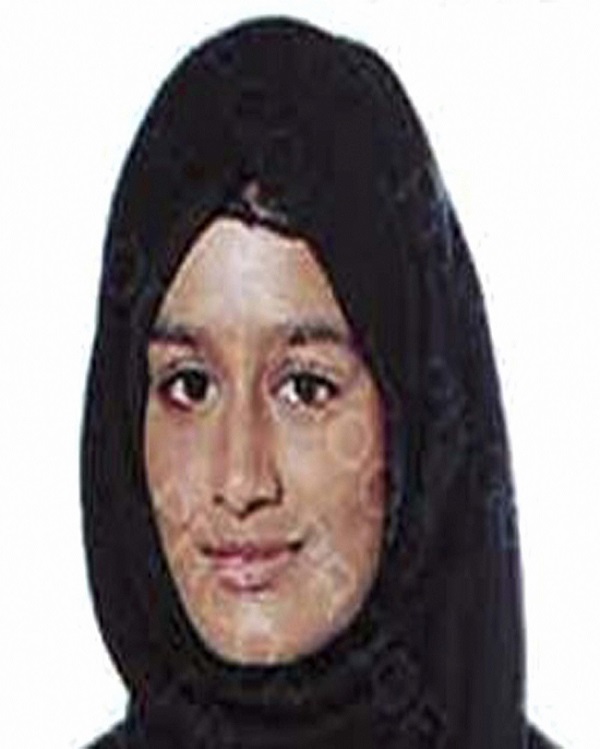
Shamima Begum doesn’t feel any real remorse for her involvement in the ISIS. She simply cares about herself.
Last week, ISIS bride Shamima Begum was interviewed by Sky News about her involvement in ISIS. She said, “I don’t regret it [joining the caliphate], but when I saw underground oppression, it really hit me.”
Well, if
she doesn’t regret it, then seeing oppression couldn’t have really hit her that
hard.
But Begum’s lack of remorse goes further than this. In an interview with The Telegraph on Sunday, Begum was asked what she thought about the enslavement and rape of Yazidi women by ISIS fighters, she replied, “Shia do the same in Iraq.”
Let’s
dissect Begum’s logic here: “If other people do it, then it’s okay.”
We are talking about the systematic rapes and torture of an already persecuted religious minority whose only “crime” is not being Muslim. ISIS persecution of Yazidis has involved cutting open pregnant women and raping their babies to death, as well as gang rape, and other unspeakable forms of torture.
Yet, all
that Begum has to say is, “Shia do the same in Iraq.” Impressive. If one group
commits genocide, then it’s perfectly acceptable for others to do the same,
right?
Yet, there are already people defending Begum’s “right” to have a second chance. Those who take this position have even gone so far as to describe Begum as a victim of “grooming.”
ISIS propaganda videosshow fighters beheading people. Even if it were true that Begum was “groomed” to an extent, and that she was presented with some of the “benefits” of being an ISIS bride (i.e having a husband, family, and house), it is highly unlikely that Begum was unaware of the violence that ISIS perpetrates.
That ISIS
might provide some material benefits to jihadi brides is in no way an excuse to
join a genocidal death cult. If Shamima showed no remorse for her actions just
one week ago, why, then should we believe her when she says that she feels
remorse now?
Imprisonment or other severe deprivation of physical liberty in violation of fundamental rules of international law
Torture
Rape, sexual slavery, enforced prostitution, forced pregnancy, enforced sterilization, or any other form of sexual violence of comparable gravity
Persecution against an identifiable group or collectivity on political, racial, national, ethnic, cultural, religious, gender as defined in paragraph 3, or other grounds that are recognized as impermissible under international law, in connection with any act referred to in this paragraph or any crime within the jurisdiction of the Court.
Enforced disappearance of persons
The crime of apartheid
Other inhumane acts of similar character intentionally causing great suffering, or serious injury to body or to mental or physical health
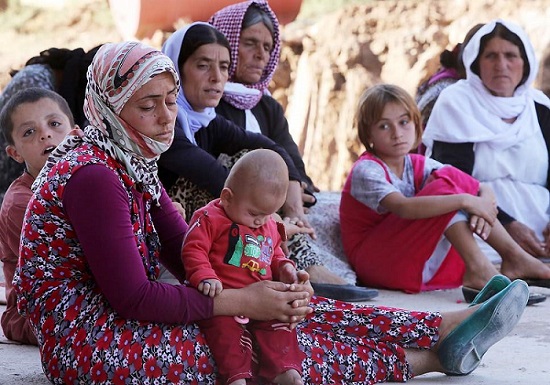
ISIS committed what is officially recognized by the UN as a genocide against the Yazidis. This genocide involved murder, torture, rape and sexual slavery, extermination, and persecution against an identifiable group, all of which are recognized as crimes against humanity.
Yazidi survivors of the ISIS genocide (Picture credit: The Independent)
Let’s look
back to Shamima Begum’s response when asked about her thoughts on the
enslavement of Yazidis. “Shia do the same in Iraq.”
Nonchalant, isn’t she?
It’s quite hard to doubt that Begum probably, in some way or another, helped to facilitate the genocide. Begum very likely could’ve been one of the ISIS brides who helped her husband rape Yazidis by tying them to beds, and not allowing them to breastfeed their children. In fact, many Yazidi women have testified that the wives were “worse” than the men.
This is not
even to mention ISIS’s crimes against Shias, Copts, Assyrians, LGBT people, and
Sunni Muslims who dare to challenge them.
Shamima Begum
must be brought to the international criminal court.
Much work
must also be done to locate possible victims of Begum in Iraq.
As for the possibility of “rehabilitating” Begum, no one who, just one week ago, said they were unfazed by capitated human heads, or is nonchalant about sex slavery, is likely able to be rehabilitated. If any country attempts to give Begum a chance to live anywhere outside of a prison, there is the possibility of her either committing a terror attack against locals, or tracking down former Yazidi captives to harass them, as some ISIS fighters have done.
As she is
very obviously doing right now, Begum could put on a false appearance to
rehabilitation specialists to appear as though she has changed.
No one in
the world with a brain stem should take Shamima Begum seriously when she says
that she didn’t see what ISIS was doing, or that she now regrets her
involvement in the ISIS.
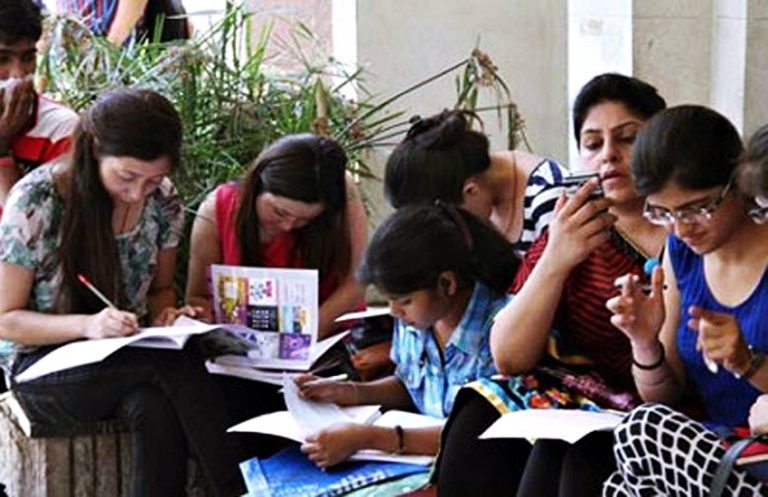
“My dear, here we must run
fast as we can, just to stay in place. And if you wish to go anywhere you must
run twice as fast as that”, Lewis Carol in Alice in Wonderland as quoted by
Economic Survey 2017-18 in terms of Indian education and development.
It is now certain that
despite the wish, we are unable to run that fast particularly in the education
or human resource development. Growing population, increased demand and
increasing learning poverty gap as evident from Annual Survey of Education
Reports, the Economic Survey (ES 17-18) states the basic learning benchmark is
missed by sizeable section of the children despite higher enrolment and pupil
teacher ratio (PTR).
Another aspect that the ES
17-18 stresses on is the basic and school education and not higher education. Despite
the opening of many IITs, IIMs and central universities the allocation has
remained low and general complaint of delivery has increased. It is well known
that students have withdrawn from some of the newly set up IITs and many new
central universities could not attract students as they lack in faculty, labs
and other facilities. So it means we are posing as if we are running but actually stuck.
This is despite a positive
approach by the NDA government since 2014. India in 2018 has 799 universities up
from 670 in 2014 with 2.8 crore students. It looks good. But when it comes to
allocation, interim budget for 2019-20
earmarked Rs 93,847.64 crore for the education sector. The allocation this year
has seen an increase of 10 percent from last year. The centre during the Budget
2018 presentation had allocated Rs 85,010 crore for the sector. Out
of the total allocation for 2019-20, Rs 37,461.01 crore has been assigned for
higher education, while the rest of the amount, Rs 56,386.63 crore has been
allocated for school education.
The centre has given some boost to the Indian
Institutes of Technology (IITs) and National Institutes of Technology (NITs). Two
independent ‘Schools of Planning and Architecture’ (SPA) and 18 in the IITs and
NITs as autonomous schools are proposed to be set up. However,
there has been a decline in the budget outlays for IITs, IIMs, IISER, UGC and
AICTE. The IITs alone have suffered a cut from Rs 7703 crore in 2017-18 to Rs
6143 crore. In revised estimates these can be further reduced as it happened in
2018-19, when it was cut by Rs 457 crore.
The stress on higher education has reduced.
During the last two decades, governments have been stressing on school
education and leaving the higher education to fend for itself. Even the ES
17-18 does not speak of higher education. The ministry of HRD has issued innumerable
circulars to the higher government and autonomous institutions and
universities, including the newly set up central universities to raise 30
percent of their budgetary needs on their own. In most cases it has not
happened. It has affected the quality of education. They have only increased
tuition and other fees. In short, India’s education has become
expensive and large number students are under high debt.
Another problem most higher education
institutions face is the crowding of classrooms with more and more
reservations. The pupil teacher ratio (PTR) that is around 30 to 40 according
to ES 17-18 in schools is mostly not there in higher education. An average of
60 to 90 is the norm. Neither classrooms have been added nor
faculty. Rather in most public institutions and universities, there has not
been replacement for retiring faculty.
While the process of liberalization opened up
doors for setting up private universities, it has further exacerbated the
quality of education. While the government universities, IITs and other
institutions suffer from faculty crunch, contract employment at about 20
percent of the stipulated salaries, it is worse in private universities. The
private universities, colleges and institutions have a double whammy. Without
any social funding they compromise on the quality of faculty, their wages –
often as low around Rs 3,000 to 30,000 a month in the best of conditions.
The governments have forgotten that higher education has been the key to the development in 1960s to 1980s. The brain drain then has become brain gain. So today without social funding, education is gasping and institutions are at their wit’s end for raising funds to meet their basic expenses.
India has to run faster. It has to rethink
about education and its funding. Else despite political drum beating, the
nation would remain under-developed and learning poverty ought to increase.
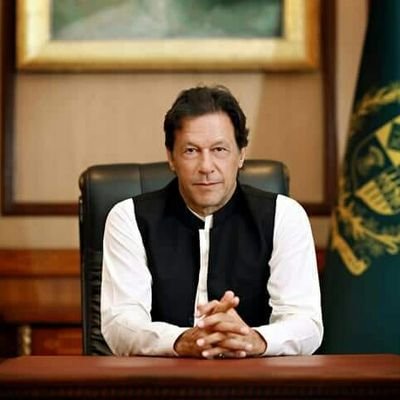
India on Tuesday strongly
rejected Pakistan Prime Minister Imran Khan’s response to its allegations of
Islamabad’s involvement in the Pulwama attack, saying disclaiming its link with
terrorist attacks is an oft-repeated excuse by the neighbouring country
In a hard-hitting statement, the
Ministry of External Affairs said, “We are not surprised that the Prime
Minister of Pakistan refuses to acknowledge the attack on our security forces.
He has neither chosen to condemn this heinous act, nor condoled with the
bereaved families.”
“Disclaiming any link
between the terrorist attack and Pakistan is an oft-repeated excuse by
Pakistan. The Pakistani Prime Minister has ignored claims made by the
Jaish-e-Mohammad, as well as by the terrorist, who perpetrated this heinous
crime,” the MEA said.
“It is a well-known fact
that Jaish-e-Mohammad and its leader Masood Azhar are based in Pakistan. These
should be sufficient proof for Pakistan to take action,” it said
In a video message, Khan had
assured India that he would act against the perpetrators of the Pulwama terror
attack if New Delhi shares “actionable intelligence”, but warned
against any “revenge” retaliatory action.
Counter
insurgency implies countering the insurgents, who are always proactive and keep
seeking soft targets. On the contrary, the security forces keep looking for the
needle (terrorists / insurgents) in the haystack (innumerable public). The
search tends to lose impetus due to poor results over extended periods.
Complacency thus sets in, thinking that all is well. A false psychological veil
develops amongst the security forces who begin to overlook procedures.
The
pattern of terrorism established over the last 30 years in Kashmir, wherein,
the peaks and troughs of their activities in summers and winters are well known,
are also overlooked due to non-institutionalised approach and short lived
memories. Political masters have over the years become complacent on the
Kashmir issue since they have run out of ideas and options of how to tackle
this menace. Making tall statements during critical periods and crisis
management times are common. However, these too are forgotten when the dust
settles. The bodies of martyrs are given respectful departures with media hype
to soothe the public psyche. Martyrs keep increasing but their families are
left to fend for themselves. Rioting, candle lights and political statements
and debates build up a crescendo, but fall flat abruptly.
Indian
memories are short-lived. Complacency sets in when memories fade away. Chitti
Singhpora, Nagrota, Kaluchak, Kargil, Uri, Pathankot and now Pulwama will once again
get buried in the memories of Indian public and politicians.
Common
questions as to when peace will return and how and when the bloodshed will stop
remains unanswered. However these too get overshadowed by political infighting
and lack of political will and desire to resolve this issue.
How
do we deal with this menace? Nobody in Delhi has the answer to include
National Security Council, Army HQs (Director General Military Operations),
National Intelligence and Investigation Agencies. These establishments get
into a muddle of numerical counts while a large disparity remains in the field
of military thinking. State governments and political parties make hay
while the sun shines and the opposition parties keep calibrating militancy both
during lean and critical periods. Pakistan and the ISI (Inter-Services
Inelligence), however, are NOT complacent! They remain extremely proactive.
30
years is a long time to realize that old thinking, measures adopted and
strategies both at Strategic and Operational levels have not accrued the
desired results. “Iron Fist in Velvet Glove” and Sadhbavana have
been tested; they have not achieved the desired degree of success. This needs
to be understood by the military thinkers. Security forces cannot solve this
problem by themselves. New measures that are proactive, aggressive
and dynamic have to be instituted. Security forces have to think ahead of the
terrorists. When measures which were adopted at the tactical level succeeded
they came under the heavy hammer of Human Rights. Major Gogoi’s method to save
the situation with a person tied in front of his jeep led him to be ridiculed
at the national level. Where and what are the human rights after Pulwama attack?
Can anyone answer now? With this level of confusion at the strategic
level only God can save us.
Lack
of political will and foresight over the last 70 years has subjected our security
forces in Jammu and Kashmir to death and hell. How long can political desires
of nationalist parties trample the saviours of our nation? India has
failed miserably to prove to the world that Pakistan is exporting terror in our
state. We don’t need to prove this to anyone, the world is not blind. The UN
has failed to set things right or provide support or options. This is our war
and we need to fight it ourselves to bring an end to this issue, especially when
all bilateral and diplomatic measures too have failed. Time has
come to unleash action instead of words.
Kashmir
needs an Israeli approach or the well-tested Punjab approach. This approach
should be the preliminary method put in place to break the back of terrorists,
radicals, fundamentalists, OGWs (over-ground workers) as also the local
political parties. The main thrust should be on a swift military offensive to
capture POK (Pakistan-occupied Kashmir), now that the opposition and the nation
stand united to teach Pakistan a big lesson and recapture the balance of
J&K. The Cabinet Committee on Security (CCS) must launch a firm directive
to execute an offensive into Pakistan rather than promising that we shall teach
them a lesson.
The
war, since 1947, is active and on, with the troops of either side sitting
across the LC (line of control) since last 70 years, with calibrated firing
on a daily basis. This war needs to be completed by a final plunge. Indians
should not forget that Pakistan was carved out of erstwhile Indian Punjab and
portions of Sind. It is time to even test Pakistani’s nuclear irrationality and
tolerance levels or the so called overhang to call the Pakistani bluff.
Moreover there is a dire need to break the myth of Pakistani Army to ensure a
peace loving neighbourhood.
This is the last opportunity that has come our way and needs to be cashed immediately, failing which, we will never be able to kill the snake. Another such attack in the near future where our security forces are mercilessly butchered or beheaded will prove that our policy makers and politicians are scared and self-centred with no respect for the sacrifice by our security forces, their honour as also the Sovereignty of the Nation.
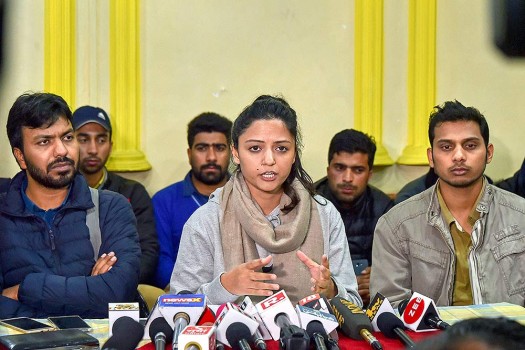
Shehla Rashid, a former student
leader of Jawaharlal Nehru University and pro-Pakistan activist, was booked by
Dehradun Police on Monday for allegedly spreading rumours and fear on Twitter,
in the wake of the Pulwama terror attack. Prem Nagar Police Station has registered
an FIR against Rashid under sections 505, 153, and 504 of the Indian Penal Code
for disturbing public tranquility and trying to disrupt peace.
In a series of tweets, she had alleged
that there were attacks on Kashmiri students living in Uttarakhand and other
parts of north India. Rashid in a tweet, had said, 15 to 20 Kashmiri women
students were “trapped” in a Dehradun hostel, while a mob of angry people
standing outside demanded their expulsion. She added, the police was present at
the spot, but was “unable to disperse the mob”.
However, the Uttarakhand Police
dispelled all “rumours” in a tweet on Sunday, clarifying that the Kashmiris
were not trapped in a hostel. The Dehradun Police alleged the former JNU
student union leader tried creating panic among masses with her tweet. “In her
tweet, Rashid claimed that Kashmiri girls were ‘trapped’ for hours and mobs
outside were ‘baying for their blood’ both of which were factually incorrect
and aimed at disturbing peace in the area,” the Senior Superintendent of Police
Nivedita Kukreti was quoted as saying by The Times of India.
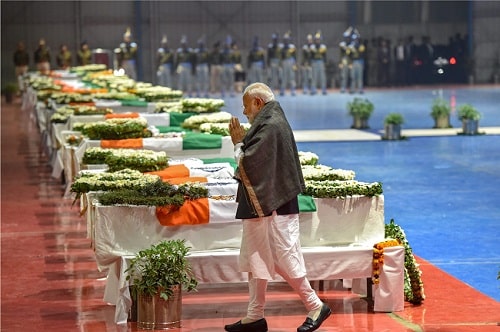
The airplane was ready on the runway. Coffins of the martyred CRPF Jawans (soldiers) were to be airlifted. Dheerendra Kumar Singh and his colleagues bent down to lift one of the coffins. Singh was surprised to see how easily he was able to lift the coffin, with almost zero effort. He did not feel the weight of the box. A moment later, his heart wrenched when he realized why the coffin was weightless.
Eyewitnesses recount that around 18 coffins were completely empty; they contained only the shreds of uniforms of martyred CRPF soldiers. Their bodies had just vaporized under the severe impact of 300 kilogram RDX blast.
And, empty coffins are the heaviest.
Rest of the coffins were more or less similar. What remained of the “bodies” of our martyred Jawans was nothing more than pieces and shreds of mangled, charred flesh. Soldiers who collected the ‘bodies’ of their martyred colleagues’ recount that it was impossible to collect most of the body parts simply because it had melted due to intense heat generated after the blast.
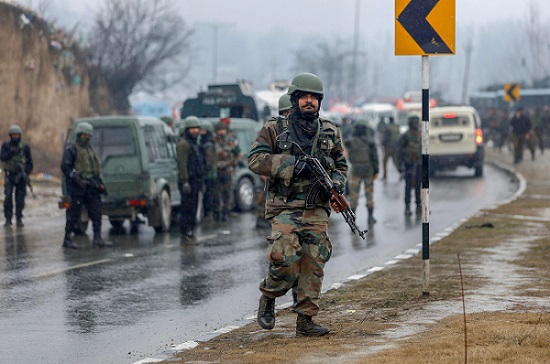
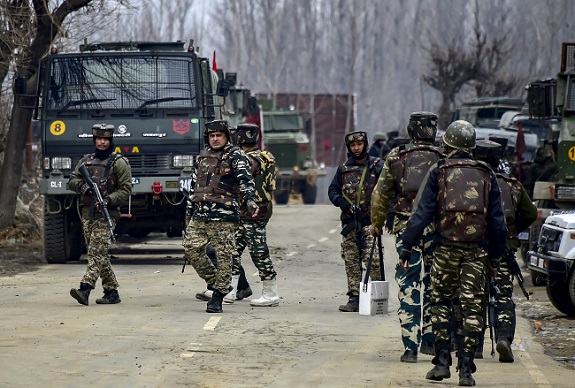
Indian soldiers look at the mangled and shredded body parts of CRPF Jawans who were martyred after a car laden with 300 kilogram high-grade explosives rammed into a CRPF bus at Pulwama in Kashmir on February 14.
The most primal thing in a funeral is the body of deceased, which is cremated. Parents, wives, children and friends of the martyred Jawans could not even get to see their man for that one last time. Several families who did not get any remnants of their sons to carry out last rites, used only tiny shreds of uniforms during the cremation rituals. All that was left of the martyred Jawan was a sea of past memories and a giant void.
The 40 CRPF Jawans who were martyred in the Pulwama terrorist attack on February 14, hailed from different Indian states, were of different castes, clans and varnas. But they were Indians first. They lived and died for this nation.
Unfortunately, a specific section of people in this country often comes out with a guitar in their hands and compose songs like “This valley of death is not my country”. These “great men and women”, who often protest against the crackdown of terror outfits in the Kashmir Valley celebrate martyrdom of Indian soldiers. An Indian soldier in uniform remains the ultimate symbol of oppression in the eyes of these “great people”. These self-proclaimed ‘learned’ men and women often reach out to the terrorists to tell their side of the story but miserably fail to report about the pain suffered by a martyred Jawan’s family.
Till yesterday the martyrs’ might have been in pain seeing those few celebrating their deaths. Today, they might find solace that billions of Indians have stood up for them and want action against the traitors who have been celebrating the terror attacks and untimely martyrdom. It’s said that a new dawn comes up only with great sacrifice. The Indians who, hitherto, were lost in their self-centered lives have now started to show signs of life, they are seething with anger and demanding action against the seditious moles. It needed 40 lives to make us realize that we are intolerant to sedition. It needed 40 Jawans to make us stand against these groups of anti-nationals who sympathize with terrorists and demonize the men in uniforms.
A handful of these self-proclaimed intellectuals in this country question a Jawan’s sacrifice by comparing him with a paid security guard. These arm-chair, 5-star activists often say: “Jawans are security guards who get paid. They aren’t doing this out of greatness. Does an employer really feel pain for a security guard?” Okay yes, Jawans are security guards who get paid for their service. But their employers are 130 crore (1.3 billion) Indians who know what great service these “security guards” do. That’s why, when a commie believes that a compensation of Rs. 3,000 ($42) is too much for a security guard, the 130 crore (1.3 billion) Indians believe that even Rs. 10 lakh ($14,000) is too small an amount to compensate a Jawan. When a commie believes that we are paying back a “security guard” for his services, the nation believes that we are merely providing a maintenance for the soldier’s family, not the price of his precious life.
When a Jawan dies, the parents lose a son, children lose their father,
wife loses her husband, siblings loses their brother and a friend loses his/her
friend. When a Jawan dies, he leaves behind several broken hearts and a heroic
legacy. All these things can never be measured by few pieces of paper with some
numbers and an image of Gandhi—the rupee.
February 14th will forever be remembered in Indian history, till the day mankind exists.
We use cookies on our website to give you the most relevant experience by remembering your preferences and repeat visits. By clicking “Accept All”, you consent to the use of ALL the cookies. However, you may visit "Cookie Settings" to provide a controlled consent.
This website uses cookies to improve your experience while you navigate through the website. Out of these, the cookies that are categorized as necessary are stored on your browser as they are essential for the working of basic functionalities of the website. We also use third-party cookies that help us analyze and understand how you use this website. These cookies will be stored in your browser only with your consent. You also have the option to opt-out of these cookies. But opting out of some of these cookies may affect your browsing experience.
Functional cookies help to perform certain functionalities like sharing the content of the website on social media platforms, collect feedbacks, and other third-party features.
Performance cookies are used to understand and analyze the key performance indexes of the website which helps in delivering a better user experience for the visitors.
Analytical cookies are used to understand how visitors interact with the website. These cookies help provide information on metrics the number of visitors, bounce rate, traffic source, etc.
Advertisement cookies are used to provide visitors with relevant ads and marketing campaigns. These cookies track visitors across websites and collect information to provide customized ads.
Necessary cookies are absolutely essential for the website to function properly. These cookies ensure basic functionalities and security features of the website, anonymously.
Cookie
Duration
Description
cookielawinfo-checkbox-analytics
11 months
This cookie is set by GDPR Cookie Consent plugin. The cookie is used to store the user consent for the cookies in the category "Analytics".
cookielawinfo-checkbox-functional
11 months
The cookie is set by GDPR cookie consent to record the user consent for the cookies in the category "Functional".
cookielawinfo-checkbox-necessary
11 months
This cookie is set by GDPR Cookie Consent plugin. The cookies is used to store the user consent for the cookies in the category "Necessary".
cookielawinfo-checkbox-others
11 months
This cookie is set by GDPR Cookie Consent plugin. The cookie is used to store the user consent for the cookies in the category "Other.
cookielawinfo-checkbox-performance
11 months
This cookie is set by GDPR Cookie Consent plugin. The cookie is used to store the user consent for the cookies in the category "Performance".
viewed_cookie_policy
11 months
The cookie is set by the GDPR Cookie Consent plugin and is used to store whether or not user has consented to the use of cookies. It does not store any personal data.