Home Blog Page 97

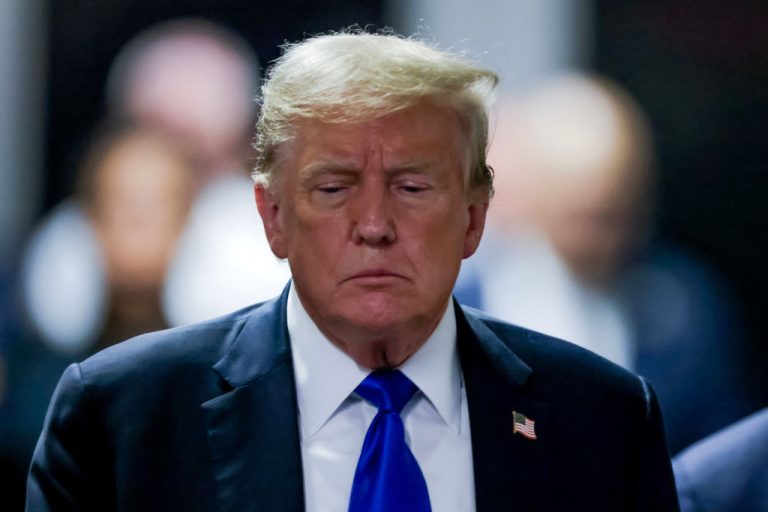
Trump becomes first ex US president to be convicted of crime

In an unprecedented ruling, former U.S. President Donald Trump was convicted on all charges on Thursday in a hush money case, becoming the first ex-president in the nation’s history to be found guilty of a crime. The conviction comes just months before Trump aims to regain the White House in the 2024 election.

A New York jury found the 77-year-old Republican guilty on all 34 counts of falsifying business records to conceal a $130,000 payment to porn star Stormy Daniels, made shortly before the 2016 presidential election to buy her silence about an alleged sexual encounter with Trump.

While Trump could face up to four years in prison on each count, legal experts say he is more likely to receive probation as a first-time offender when sentenced on July 11 – just days before the Republican convention where he is expected to be nominated as the party’s presidential candidate.

Trump, who was released without bail, maintains his innocence and denounced the trial as “rigged” and a “disgrace.” However, the conviction marks him as a felon – a historic first for a former U.S. president.

The nine-week trial featured testimony from Daniels, whose real name is Stephanie Clifford, who provided graphic details about her alleged 2006 sexual encounter with the married Trump. Prosecutors argued the hush money payment, funneled through Trump’s former lawyer Michael Cohen, was part of an illegal plot to cover up information that could have derailed Trump’s 2016 White House bid.

Despite the conviction, Trump is not barred from running for president again, even if he receives a jail sentence. His campaign issued a defiant fundraising appeal after the verdict, calling Trump “a political prisoner”.

The hush money case is just one of several legal battles Trump faces, including charges of trying to overturn his 2020 election loss and mishandling classified documents after leaving office.

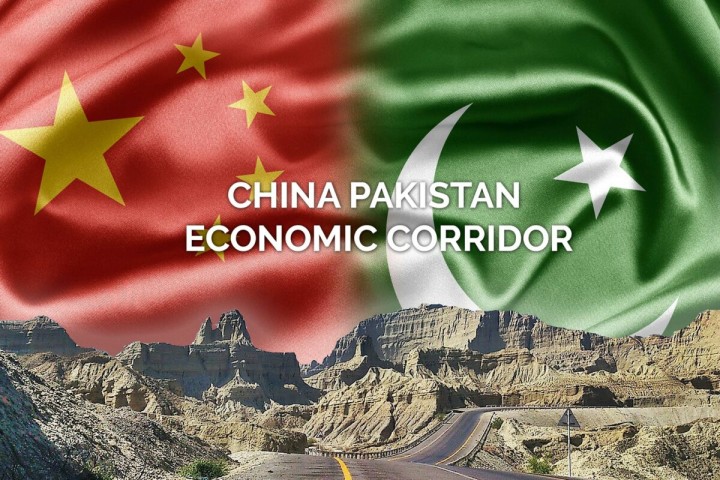
China-Pakistan Economic Corridor: Who really benefits?

Beijing and Islamabad recently celebrated the tenth anniversary of the ambitious USD 62 billion China-Pakistan Economic Corridor [CPEC] and complimented each other for the spectacular progress this project has made. While this project has promoted infrastructural development in the power generation and surface communication sectors, it most certainly hasn’t measured up to Beijing’s oft-repeated claim of being a ‘game changer’ for Pakistan.

Au contraire, CPEC has been viscously plagued by time overruns resulting in burgeoning budgetary escalations. To add to these woes, inexplicable opaqueness in the terms and conditions of contracts as well as interest rates on loans extended to Islamabad by Beijing makes an accurate cost-benefit analysis of this project extremely difficult.  Nevertheless, information available in the public domain does suggest that things may not be as hunky-dory as being portrayed by both Beijing and Islamabad.

On paper, CPEC is a brilliantly conceived initiative incorporating “early harvest” projects for speedy provision of basic facilities to the people of Pakistan and simultaneously generating income for the government into three phases [short, medium and long-term]. While the short-term phase [2015-2022] focussed on infrastructure, energy and port development projects, creation of 33 special economic zones [SEZs] were planned to be executed in the medium phase. The third phase is yet to commence formally.

While several independent power projects [IPPs] being operated by Chinese companies have come up in the first phase, electricity is still not available to many living in remote areas due to inadequate power distribution infrastructure. To make matters worse, instead of generating revenue for the government, CPEC’s power generation project has created a ‘circular debt’ in Pakistan due to unpaid government subsidies and this leads to debt accumulation in power distribution companies.

Quoting data released by Pakistan’s Power Division of the Ministry of Energy, Dawn, has disclosed the total circular debt of Pakistan [as on March 2024] was a whopping Rs 3,000 billion. There have been several allegations of over invoicing by IPPs resulting in exorbitant per unit cost of electricity as well as huge transmission losses. Furthermore, thermal power plants created as part of CEPC utilise imported coal and the regular requirement of foreign exchange to procure the same further depletes Pakistan’s already woefully scarce foreign exchange reserves.

Port Qasim Electric Power Company Ltd, an ‘early harvest’ IPP owned by China’s Sinohydro Resources and Qatar’s Al Mirqab Capital Ltd which runs a 1,320 megawatts power plant using imported coal. The fact that in May last year, this IPP served a payment default notice of USD 263.5 million on Pakistan’s Central Power Purchasing Agency, illustrates how CPEC is slowly turning out to be a liability of sorts. It also indicates that the patience of Pakistan’s ‘Iron brother’ is fast running out and this isn’t the first such incident.

In September 2021, while presiding over Pakistan’s Senate Standing Committee on Planning and Development, its chairman Saleem Mandviwalla disclosed that the “Chinese ambassador has complained to me that you have destroyed CPEC and no work was done in the past three years.” [Emphasis added]. Beijing has also publicly expressed its annoyance on several occasions as regards the Pakistan Army’s dismal failure to prevent attacks by Baloch freedom fighters on its nationals working on CPEC projects.

Another issue riling Pakistanis is that the promise of employment opportunities on a large scale has turned out to be a damp squib. While some data has been furnished by Beijing and Islamabad, but in absence of any independent verification, the same can’t be relied upon as there’s a wide disparity in the official data. While Chinese official state media estimates that about 1,55,000 Pakistanis are working on various CPEC projects, Pakistan’s erstwhile minister for planning, development and reforms Ahsan Iqbal estimated that CPEC has created more than 2,30,000 jobs!

Excessive restrictions on movement and frequent military operations in Balochistan, purportedly for ensuring security of CPEC projects and Chinese workers, result in indiscriminate arrest of innocents and enforced disappearances on mere suspicion cause untold miseries to locals. In addition, with Chinese fishing mafia using sophisticated trawlers in the area, the traditional fishermen of Gwadar have been deprived of their traditional vocation, while security fencing in this area has literally made Gwadar ‘out of bounds’ to locals.

Institutional repression of Baloch people has not only led to an escalation in attacks on CPEC assets and Chinese workers but also inspired the immensely popular ‘Haq Do Tehreek Balochistan’ [give us our rights movement of Balochistan] non-political mass public campaign. The fact that Baloch women who traditionally avoided participation in public rallies and stayed indoors came out in great numbers to protest against the Pakistan Army’s highhandedness indicates the gravity of the prevailing situation. Speaking in the Senate, PML-N’s Senator Kulsoom Parveen lamented that “the people of Balochistan have not gained anything from the [CPEC] project” and aptly echoing their disillusionment by adding that “Maybe, the people of Balochistan will only be given jobs to fix punctured tires”!

While CPEC has undoubtedly brought about development, the costing of this mammoth project is one of the major factors responsible for pushing Pakistan into the inextricable morass of financial instability. So, the question arises is- whose interests does the CPEC primarily serve? A quick project intention internet search of CPEC offers two answers.

Popular Indian educational technology company BYJU’S opines that “The project intention of CPEC is to rapidly upgrade Pakistan’s important infrastructure and strengthen its economy by the construction of energy projects, special economic zones, ports, and transportation networks.” [Emphasis added]. However, even after more than a decade, neither has CPEC resulted in a rapid infrastructure upgrade, nor has it strengthened Pakistan’s economy.

On the other hand,  Wikipedia maintains that This sea-and-land-based corridor is aimed to secure and reduce the passage for China’s energy imports from the Middle East by avoiding the existing route from the Straits of Malacca between Malaysia and Indonesia which, in case of war could be blockaded, and thus hamper the Chinese energy-dependent economic avenues.” [Emphasis added]. Being a more practical assessment, this reasoning is certainly more convincing.

Accordingly, while it would be incorrect to consider CPEC a white elephant for Pakistan, it would also be equally naïve to believe that the driving force behind this extremely cost-intensive project is Beijing’s love for its ‘iron brother’ Pakistan. The harsh reality is that CPEC is primarily meant to serve Beijing’s commercial interests and any benefits from it that may come in Pakistan’s way are just incidental.

Because had CPEC indeed been truly Pakistan centric, then why [in the words of the Chinese ambassador], “no work [on CPEC] was done in the past three years” by Islamabad? And if this project was not primarily meant to serve Beijing’s interests, then why did the Chinese ambassador get so agitated and complain to the Chairman of Pakistan’s Senate Standing Committee on Planning and Development that “you have destroyed CPEC”?

Target killings in Khyber-Pakhtunkhwa: TTP shoots dead tribal man

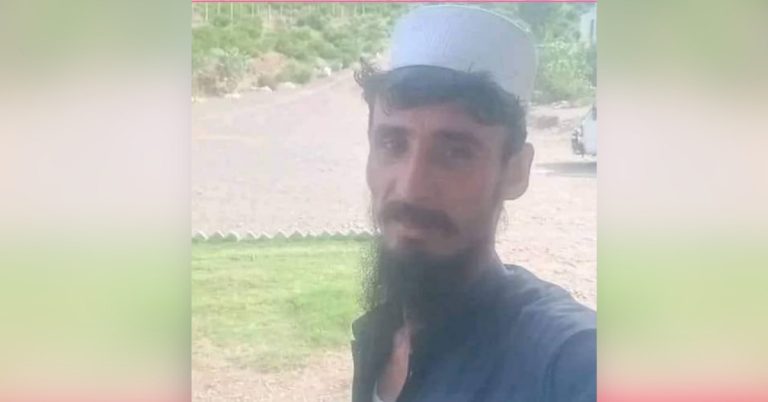
In a tragic incident, a local elder tribal, Malik Salahuddin, was shot dead allegedly by TTP in Gomal Bazar, Tank district of Khyber- Pakhtunkhwa. The attack occurred when a group of five individuals entered a shop and opened fire on Salahuddin, killing him on the spot. The assailants fled the scene immediately after committing the crime.

Police have launched an investigation into the killing. However, this incident is part of a worrying trend, as target killings in Khyber Pakhtunkhwa have risen significantly in recent weeks. Despite the spike in cases, the so-called security forces have failed to apprehend the accused or curb such instances effectively.

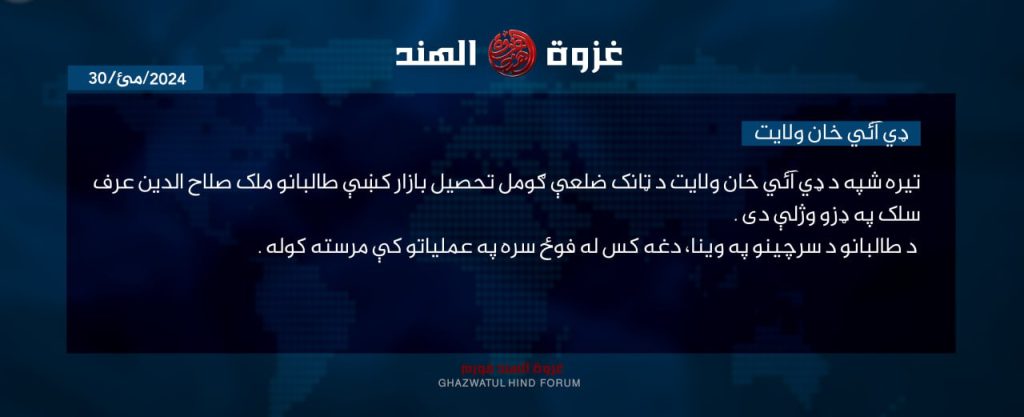
Meanwhile, a pro-TTP channel has claimed that TTP killed Salahuddin as he was helping Pak Army in its operation.

Post acknowledged TTP role in Salahuddin’s assassination (Photo: X)

However, the local community has voiced strong accusations against the security forces, claiming that they have put the region in this vulnerable and devastating position. The condition of civilians in the region has worsened as TTP and Pak Army, both are involved in killing them.

Pashtuns argue that most part of the region are heavy militarised and checkposts are installed at close distances still the target killings are on the rise. Apparently, their concern is genuine as Pak Army barely takes fructifying steps against the terrorists but keeps a close eye on civilians in the region. Recently, Pashtun right organisation Pashtun Tahafuz Movement (PTM) held a protest in Dhaka city against the rise in target killings and the incident of six coal trucks being set on fire.

PTM argues that such acts are happening under the watch of Pak Army and its generals. They harbour terror, fear in the region and the cost is paid by the Pashtun population.

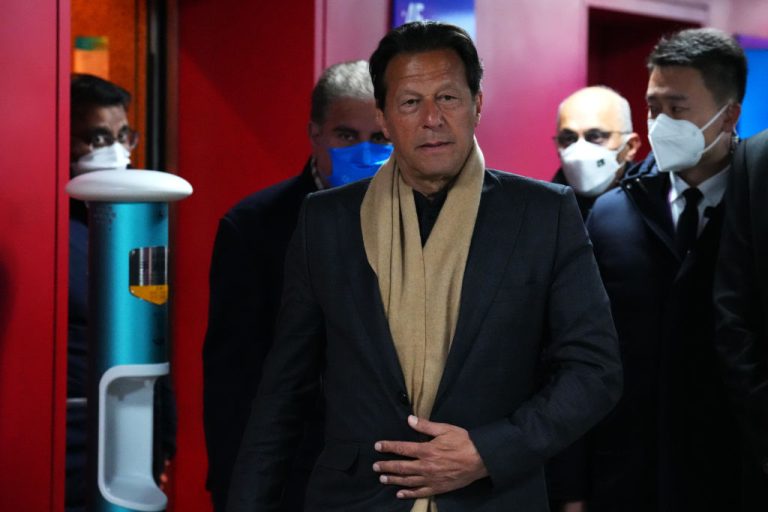
Pakistani court acquits Imran Khan of two more cases linked to May 9 riots

In a legal reprieve for the jailed former prime minister, a Pakistani court on Thursday acquitted Imran Khan in two more cases related to last year’s violent protests by his supporters following his arrest.

The District and Sessions Court in Islamabad cleared Khan of the charges filed at Shehzad Town police station, citing “insufficient evidence” presented by the prosecution against the Pakistan Tehreek-e-Insaf (PTI) party chief.

“Because of insufficient evidence presented by the prosecution, the PTI founder has been acquitted”, the court order by Judicial Magistrate Umar Shabbir stated.

Khan, 71, has already secured acquittals in two other cases connected to May 9 vandalism earlier this month from a separate magistrate’s court.

The back-to-back legal victories have provided some relief to the embattled former premier, who remains incarcerated at the high-security Adiala Jail in Rawalpindi over allegations stemming from the nationwide protests last year.

On May 9, 2023, Khan’s arrest on graft charges sparked widespread arson and attacks on military installations across Pakistan by enraged PTI workers. This collective outburst was very uncharacteristic in Pakistan’s history.

The rampage saw mobs storming the Lahore Corps Commander’s residence, known as the Jinnah House, as well as the Mianwali airbase, ISI building in Faisalabad, and even an audacious assault on the Army headquarters in Rawalpindi.

While the acquittals have buoyed Khan’s supporters, he still faces a multitude of other cases related to the May 9 violence, including charges of inciting attacks on state symbols and military assets.

Pak Army implicates and arrests Pashtun activist in false case

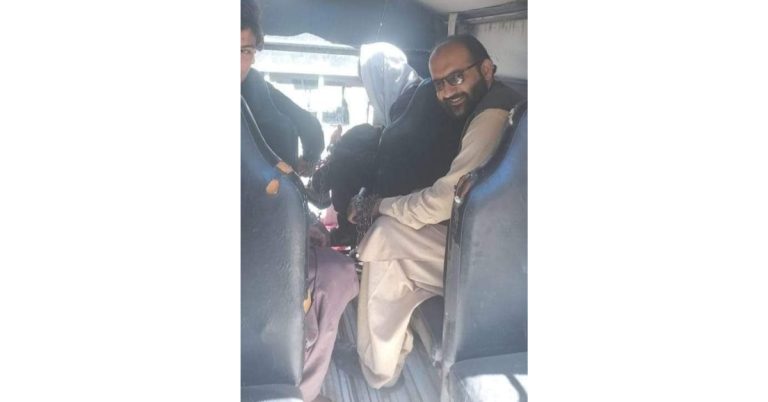
Fatih Khan Kakar, the coordinator for the Pashtun Tahafuz Movement (PTM) in Qilla Saifullah, has been arrested by Pakistani authorities under false and politically motivated FIRs. The arrest took place on May 27, and Kakar has since been remanded to police custody for five days by the court.

PTM has long accused the Pakistani establishment of using fabricated charges to target its members and suppress their activism. This latest arrest is seen by many as a continuation of this trend. Despite years of imprisonment and state repression, PTM activists have remained steadfast, refusing to abandon their cause.

Fatih Khan Kakar’s arrest has sparked outrage within PTM and among human rights activists. The movement, which advocates for the rights of Pashtun and other marginalized groups, claims that Pakistan is increasingly alarmed by the rising national consciousness and awareness among the people. This awareness, they argue, poses a threat to the oppressive policies of the authorities, prompting desperate measures to stifle dissent.

In response to Kakar’s arrest, PTM leaders have vowed to continue their struggle, emphasizing that such actions will not deter their movement.

Armed assailants kill kin of famous Baloch poet in Pak-occupied balochistan

A young man was gunned down in broad daylight on Thursday by unknown armed men in the town of Kali Sharif Khan near Noshki, Pak-occupied-Balochistan. The victim has been identified as a student named Balouch son of Nazeer Ahmed Badini.

Reportedly, a group of armed men traveling in a white car with tinted windows opened fire on the young man on Sharif Khan road, killing him on the spot. The attackers immediately fled the scene after the shooting.

The deceased was the younger brother of Absaar Baloch, a renowned poet of the Brahui language. Tragically, this was not the first time violence had touched Baloch’s family.

Last December, Pak Army conducted a raid on their home, and forcefully abducted the victim. He was eventually released, but the ordeal had deeply traumatized the family.

The motive behind the killing remains unknown, but it has sent shockwaves through the local community and reignited concerns over the widespread issue of enforced disappearances and indiscriminate killings by the occupying Pak Army in Pak-occupied-Balochistan.

Pak Army forcibly disappears six students in Quetta, three missing

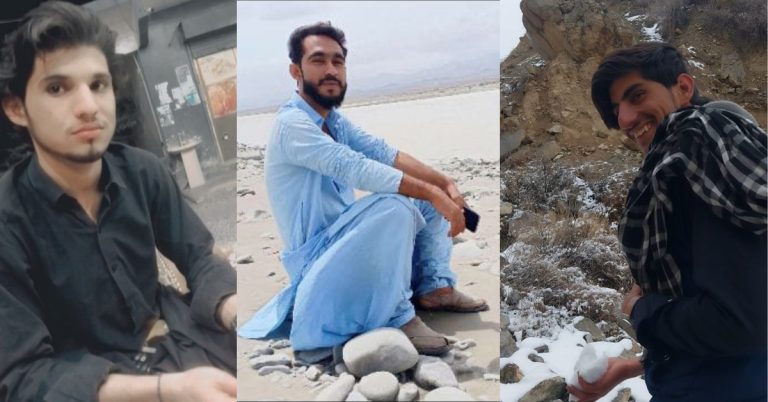
Six students were subjected to enforced disappearance by Pak Army in plain clothes from a room in Arif Plaza, A-One City Phase One in Quetta early Wednesday morning.

Reportedly, the Army barged into the room around 2 a.m. and forcibly took away the six students to an undisclosed location. While three of the abducted students were later released, the whereabouts of the remaining three remain unknown.

The three still missing have been identified as Farooq son of Sakhi Dad, Shahaik son of Kahoor Khan, and Wazir son of Nazeer, who are cousins. Their distraught family members say they have received no information so far regarding their loved ones.

The abducted youths, who originally hail from Kech district, were in Quetta to pursue their education. The incident has triggered outrage, with the Baloch Voice for Justice said it is a “grave violation of fundamental human rights” in a press release condemning the enforced disappearances.

The spokesperson for the Baloch Voice for Justice, in a press release, said that last night six students were taken into custody from Quetta and taken to an unknown location. Although three students were later released, Farooq, Shahaik and Wazir are still missing.

Enforced disappearances by Pak Army

The statement said that this alarming increase in enforced disappearances is a grave violation of fundamental human rights and demanded that Farooq, Shahaik and Wazir Baloch be presented immediately.

The statement further said that the relatives of Imtiaz, Wasim and Salih Muhammad have been protesting in front of the DC office in Turbat since last night and demanding the return of their loved ones, but the institutions and administration are turning a deaf ear.

Moreover, two brothers named Faisal Suwali and Rafiq Suwali were recently taken into custody and kept missing for several days, and now a false case has been registered against Faisal Sualeh by the Army. Faisal’s life is in danger; a similar fake case was registered against Balach Baloch, and despite being presented in court and taking remand, the CTD killed him in a fake encounter.

As anger simmers in the region, the press release announced plans for a rally from Belida to Turbat on June 2 to protest the human rights abuses and press for the safe recovery of the missing students and other victims of enforced disappearances.

The Pak forces through such cowardly tactics of enforced disappearances, kill-and-dumps, and other brutalities are trying to suppress the Baloch community and their voice since it has occupied the region in 1948.

Mahrang Baloch: The fearless voice of Balochistan’s struggle for freedom from Pakistan

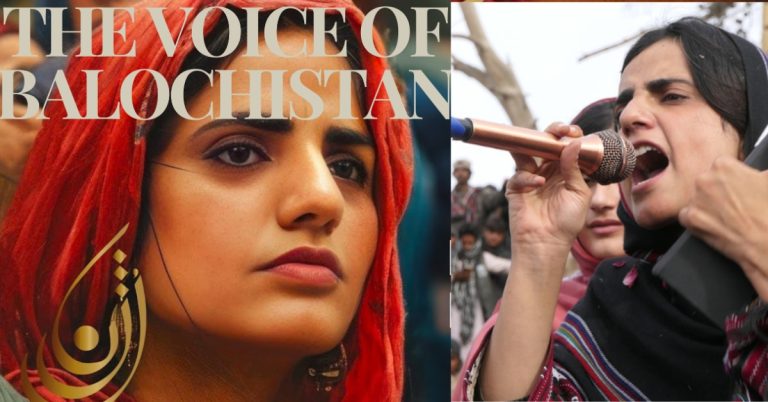
In the resource-rich regions of Pak-occupied Balochistan, where any basic sense of human rights and calls for justice are muffled by the oppressive Pakistan Army, one courageous woman has stood as a beacon of hope and emerged to take on the powerful establishment in Pakistan. The “lioness of Balochistan”, Dr. Mahrang Baloch, has earned the reputation of being resilient and defiant in the face of hardship.
Dr. Mahrang Baloch is a surgeon turned human rights activist. She hails from a Muslim Baloch family. Her journey from a physician to a crusader for justice is an outcome of her tragedy. In 2009, her father, Abdul Gaffar Baloch, a labourer and political activist, was forcibly abducted by the Pak Army, while he was going to a hospital in Karachi. She was only sixteen at the time. Later, in 2011, her father’s tortured body was found. Tragedy struck again when her brother, Nasir Baloch, too was abducted in 2017.


“It was the moment I decided to protest for everyone. And I removed my veil and showed my face to everyone”, Mahrang Baloch told the Guardian in 2021.

Since then, Dr. Mahrang has been at the forefront of the Baloch resistance movement, fearlessly confronting the entrenched forces of oppression. Despite facing intimidation, harassment, and baseless charges, she remains undeterred in her quest for justice.
Mahrang hasn’t raised her voice of resistance just for her community but has also stood up with oppressed groups, including the Hazara, Sindhi, Muhajir, Pashtun, Shia, Hindu and Christians of Pakistan.

Mahrang Baloch is the formidable leader of the Baloch Yakjehti Committee (BYC). The BYC is dedicated to advocating for the rights of the Baloch people, particularly against enforced disappearances and extrajudicial killings. Through peaceful protests and advocacy, the BYC seeks to draw attention to the plight of the Baloch population and challenge the oppressive policies of the Pak establishment. Under Mahrang Baloch’s leadership, the BYC continues to serve as a powerful voice for justice and accountability in Pak-occupied Balochistan.

In November 2023, the extrajudicial killing of 24-year-old Balach Mola Bakhsh, another victim of enforced disappearance by the Counter-Terrorism Department (CTD), ignited a new chapter in the Baloch struggle for justice. Dr. Mahrang and her fellow activists embarked on a powerful movement called: The Baloch Long March from Turbat to Islamabad, staging sit-ins and protests across the country. Despite facing brutal crackdowns and vilification campaigns, they refuse to be silenced.
In the male-dominated Pak-occupied- Balochistan, where it is unusual for Balochis to rally behind a woman leader, Mahrang is special.

She has made relentless efforts to garner global support for the Pak-occupied Balochistan’s cause. On April 29, 2024, she held meetings with UN officials, aiming to draw international attention to the dire human rights situation in Pak-occupied Balochistan, Mahrang engaged with United Nations officials and presented detailed accounts of human rights abuses, including enforced disappearances and extrajudicial killings. She highlighted the perilous conditions faced by Baloch protesters during demonstrations and sit-ins, and she underscored the urgent need for international intervention to address these systemic injustices.

On 25 January 2024, thousands of people gathered in Quetta near Balochistan University to celebrate the return of participants in the Turbat long march, which was led by the indomitable Mahrang Baloch. It was a historic show of bravery and dedication to their cause. The march, which covered 1,600 k.m. and ended in Islamabad, represented a passionate demonstration against the systemic injustices that the Baloch people have to live with.

Recently she spoke at a discussion organized by the Norway chapter of Pen International in Oslo, Norway. Addressing activists from around the world, she highlighted the grave human rights violations in Balochistan, particularly enforced disappearances and extrajudicial killings. Sharing personal experiences and challenges faced by Pak-occupied- Balochistan’s people, she called for international intervention and solidarity.

Dr. Mahrang is at the forefront of these movements against the Pak-occupied- Balochistan’s age-old story of discrimination and exploitation by the Islamabad-Rawalpindi regime. This can be gauged from the fact that Balochistan is a resource-rich province and the poorest in the region. Over 41% of its residents are still living below the poverty line. Pak “establishment” along with Chinese interests has been continuously exploiting the Baloch resources mainly through the infamous CPEC corridor in Gwadar.

Pak-occupied Balochistan has seen constant deprivation. As if the situation was not dire enough, for decades, the Baloch community has witnessed forced disappearances and kidnappings by Pak Army personnel.

Balochistan has a long history of enforced abductions leading to mysterious disappearances. Earlier, social activists, intellectuals or those looked upon as opposing the Pakistan establishment were picked, however, now it has come up to this that every Baloch faces the danger of being picked up with ease. It is a known fact that the Pakistan Army has, for a long, supported criminals in the creation of what the locals call “death squads.”

PAANK, the Baloch National Movement’s Human Rights Department, has released its findings stating that 38 Baloch individuals forcibly disappeared after extrajudicial detentions by the Army in April 2024 alone. Imagine the staggering figure for the past 75 years of forceful occupation of Balochistan by the Pak Army.

Hereof, a trained surgeon and fiery orator, Mahrang Baloch has become a symbol of resistance against the Pak establishment. She is being compared to the brave Baloch daughter Karima Baloch who was assassinated by the Pakistani ISI in Canada for exposing barbarism and the atrocities committed by Pakistan. Her courage inspires countless others to stand up against the oppressive tactics of the Pak Army and demand a future where justice prevails.

Gwadar residents protest over harassing night raids by Pak Army

The people of Gwadar, Pak-occupied Balochistan, are suffering from frequent nighttime raids by the merciless Pak Army. These raids, happening without warning and any justification, have ignited a raging fire among the residents.


Majid Johar, the Vice-Chairman of the municipality and leader of the Haq Do Tehreek, spoke against these raids and warned of protest if the Pak Army did not inform them prior about their operations before their barbaric raiding.

During a meeting at the Haq Do Tehreek office, Johar and others said these actions by the Army are utterly unacceptable. They also talked about the struggles the community is facing, like the denial of necessities like electricity, clean water and other essential services.

The residents of Gwadar are besieged by the terror of these midnight intrusions by the remorseless Pak Army violating their privacy by raiding their homes without permission. They expressed that these operations amount to psychological torture, casting a perpetual shadow of fear of the Pak Army showing up unexpectedly.

Additionally, residents expressed the unbearable harassment they face and the restriction on movement they encounter from the personnel during what they call “hunting hours”.

One of the residents of Gwadar, Mulahind ward recounted his experience on Tuesday night, when a large contingent of the Pak Army raided his home, confiscated his ID card and subjected him to interrogation without any lawful authority. This reign of terror is a recurring nightmare inflicted upon countless others in the area.

The municipal councillors have warned of protest if these operations are continued. As of now, there is no justification provided by the establishment for these complaints.

These raids are conducted daily, and they blatantly violate the human rights of Gwadar residents. During the occurrence of these raids, People are being displaced and tortured, women and children are terrified, and fishermen are locked in their houses when they need to go fishing.

It is important to note that since 1948, when Pakistan forcibly occupied Balochistan, the region has been subjected to the exploitation of its resources and systematic oppression of its people by the Pak Army.

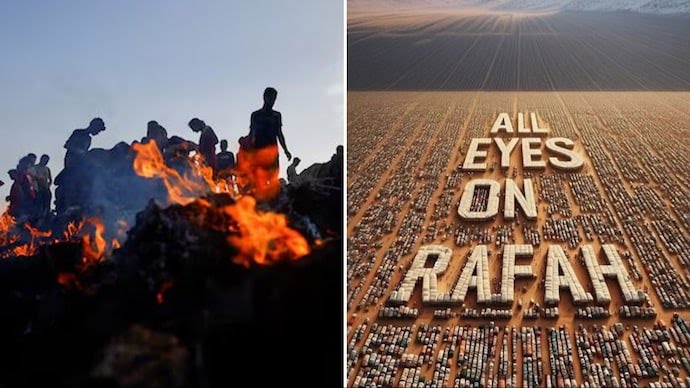
Israeli retaliatory strike kills 45 in Rafah; ‘All eyes on Rafah’ trends

At least 45 people, including children, were killed in a devastating Israeli air strike on a refugee camp in Rafah, Gaza, late Sunday. The attack has drawn widespread international condemnation, coming just days after the International Court of Justice (ICJ) ordered Israel to halt its military operations in the area.

The incident occurred hours after Hamas launched a barrage of rockets at the Tel Aviv area, most of which were intercepted by Israeli defenses. Despite the ICJ’s order and global calls for restraint, Israeli forces have continued their offensive on Rafah, a border town that has become a crucial entry point for humanitarian aid and a refuge for displaced Palestinians.

The air strike on Rafah has intensified the humanitarian crisis in Gaza, which has already seen more than 1 million Palestinians flee their homes, many of whom were already displaced by ongoing conflict between Israel and Hamas. The offensive has led to significant casualties and displacement, exacerbating the dire conditions in the region.

‘All eyes on Rafah’

The attack on Rafah has also ignited a firestorm of criticism on social media, with the hashtag “All eyes on Rafah” trending globally as people expressed their support for the Palestinians affected by the air strikes. The international community has been vocal in its condemnation, with global leaders calling for an immediate cessation of hostilities and urging Israel to comply with the ICJ’s ruling.

Israel has defended its actions as necessary for its national security, citing the rocket attacks from Hamas as justification for the continued military operations. However, the global backlash has been swift and severe, with even the United States issuing a warning to Israel about the potential repercussions of its actions.

Humanitarian crisis in Gaza

The United Nations has raised alarm over the escalating humanitarian crisis in Gaza. UN Secretary-General António Guterres has expressed deep concern about the potential for famine, particularly in the north of Gaza, and has warned of increasing malnutrition in the south following the Rafah incursion. The UN has been struggling to provide adequate aid and support to the displaced population amid the ongoing conflict.

The situation in Rafah underscores the broader challenges faced by Palestinians in Gaza, who have been moving up and down the Gaza Strip in search of safety. The Israeli military’s directive for residents in the north to evacuate, followed by operations in central Gaza and the southern city of Khan Yunis, has forced hundreds of thousands to seek refuge in Rafah.

The Rafah offensive has not only deepened the humanitarian crisis but also strained Israel’s relations with the international community. As global leaders continue to call for an end to the violence and for accountability for the loss of civilian lives, the path to peace in Gaza remains fraught with challenges.

The international community’s response to the Rafah air strike highlights the urgent need for a resolution to the conflict that prioritizes the safety and well-being of civilians. With the situation on the ground rapidly deteriorating, the call for immediate humanitarian assistance and a cessation of hostilities has never been more critical.