Home Blog Page 284

Why is Pakistan perturbed by the prospect of a prosperous Kashmir?

1

Things aren’t going too well for Pakistan. Even as the mounting external debt is driving the country to the brink of financial disaster, a Faustian deal struck with proscribed parties like Tehreek-e-Labbaik Pakistan (TLP), and likelihood of another one with Tehreek-e-Taliban Pakistan [TTP] terrorists, will surely bring Islamabad down to its knees. Yet, not a day passes without Pakistan’s Prime Minister Imran Khan or his party member expressing concern on what Islamabad’s jaundiced eyes perceive as ‘oppression’ of Kashmiris.

The irony is that rather than focusing on internal issues threatening the very idea and existence of Pakistan which merit immediate attention, Khan and his band of merry ministers are busy condemning what they allege is the abject apathy of the international community towards Kashmir. The pro-Pakistan lobby in J&K goes into raptures every time Islamabad mentions Kashmir but the majority knows that since Kashmir has served as Pakistan polity’s most effective theme for diverting domestic public opinion, its rhetoric in this regard is mere theatrics. 

With the United Nations Security Council [UNSC] making it absolutely clear that J&K is a bilateral issue between India and Pakistan that needs to be mutually resolved without any third-party intervention, Islamabad’s assertion about Kashmir being an international issue is meaningless.

So, it was not at all surprising that UNSC refused to entertain Islamabad’s bizarre claim that by abrogating Article 370 of the Indian Constitution, New Delhi had violated U.N. resolutions on Kashmir. In fact, Islamabad knew all along that this allegation had no substance as even before the UNSC meet, Foreign Minister Shah Mehmood Qureshi asked his countrymen “not live in the fool paradise,” and told them that “They [UNSC members] are not waiting for you with garlands in their hands.”

However, as Islamabad still feels that it’s stand on Article 370 abrogation is right, then why doesn’t it approach the International Court of Justice? Two weeks after Article 370’s abrogation, Pakistani Foreign Minister Qureshi had pompously announced that, “We have decided to take the Kashmir case to the International Court of Justice”.

Yet even after more than two years, this promise remains unfulfilled. So, those who consider Pakistan to be the true well-wisher of Kashmiris, need to ask Pakistan as to why hasn’t it taken the Article 370 abrogation issue to ICJ as yet? Could it be the fear that being infructuous, this case would unceremoniously be thrown out by ICJ?

Islamabad’s hostile reaction to the recent developments in Kashmir should serve as an eye-opener for the pro-Pakistan lobby. Last month, two important things happened in the Union Territory of J&K. One, an MoU for real estate and infrastructure development was signed between the government of J&K and UAE; Two, Islamabad gave private Indian carrier GoFirst airways overflight clearance for operating non-stop flights between Srinagar-Sharjah, four times a week with effect from October 23.

On 1 November, GoFirst entered into an agreement with Lulu Group, one of Dubai’s biggest retail business house for shipping Kashmiri apples, handicraft items and other local products to various markets in the Middle East. While signing the agreement, Lulu Group Director Salim MA noted that there were “immense opportunities that we have for the exports from here[J&K]” and gave an assurance that “As Lulu, we will be able to take a lot of fruit, vegetables and antique and craft and a lot more items. We assure you that we will do our best to export goods from Kashmir”.

However, the very next day, Islamabad closed its airspace for GoFirst airways without assigning any reasons, and the timings of these two developments surely can’t be mere coincidence! Au contraire, by denying overflight clearance, GoFirst has successfully ‘sabotaged’ Lulu Group’s ambitious plans to market made in Kashmir products in Middle East. While the overflight ban won’t impact either the well-established Lulu Group or GoFirst airways, it will essentially be Kashmiri horticulturists and artisans who will be deprived of a golden opportunity to capture Middle East markets.

There’s no doubt that Islamabad is upset with India-UAE bonhomie and its angst can be gauged from former high commissioner of Pakistan to India Abdul Basit’s admission that “This [MoU] is a major success for India in the context of both Pakistan and Jammu and Kashmir as OIC members have always kept Pakistan’s sensibilities on Kashmir at the forefront.” However, since it can’t influence the Indo-UAE agreement, Islamabad has gone back to its puerile ways and decided to close down its airspace for GoFirst within 24 hours after this airline signed an agreement with the Lulu Group, without even caring about its adverse effects on the people of Kashmir.

Unfortunately, this isn’t the first time that Islamabad has denied use of its airspace to Indian commercial flights operating from Srinagar. In 2009, after according clearance to Air India’s direct flight from Srinagar to Dubai, Pakistan abruptly closed its airspace for this flight. The long detour to bypass Pakistani airspace made this flight economically unviable and thus had to be suspended. This could well happen this time too as the detour to avoid Pakistani airspace involves additional 90 minutes flying time, which would hike fares and possibly result in this flight being suspended.

It is absolutely clear that by closing its airspace for GoFirst flights, Islamabad is jeopardising the prospects of Kashmiri farmers and artisans getting better prices and larger markets in the Middle East. So, the question that the pro-Pakistan lobby needs to ask their benefactors sitting across the Line of Control (LOC) is- if Islamabad is really a well wisher of Kashmiris, then why is it denying them a chance to sell their products in foreign markets by closing its airspace to flights originating from Srinagar?

Basit’s view that opening up of commercial activities between the people of Kashmir and the Middle East is a “major success for India in the context of both Pakistan and Jammu and Kashmir”, aptly describes Islamabad’s prejudiced mindset that perceives any positive development for the people of Kashmir as threat to its own influence. Denying the advantages of low-cost international air connectivity to the people of Kashmir by closing its airspace on two separate occasions is clear indication that for Islamabad, impoverished Kashmiris are more beneficial than prosperous ones as its very easy to use the former as pawns in its proxy war against India.

The pro-Pakistan lobby must face the reality that Islamabad neither has any legal grounds to claim J&K, nor the military capability to wrest its control. Those at the helm of affairs in Pakistan know this and are well aware that Kashmir is a dead issue, but for obvious reasons are not willing to accept this. So, all that Pakistan can do is to keep the Kashmir pot boiling by inciting violence- and since it’s Kashmiri blood that’s being spilled, how does it matter to Islamabad?

Tailpiece: In September 2019, Indian Ambassador to the U.S. Harsh Vardhan Shringla spoke about Pakistan’s “vested interest in preventing prosperity in Jammu and Kashmir, and in the Ladakh area of Kashmir, because a weak economy fuels separatist sentiments in some quarters.” He also made it clear that while Pakistani Prime Minister Imran Khan has “every right to run his own economy into the ground. But his determination to inflict similar damage on the province of a neighbouring country must be challenged by the international community.”

At that time Shringla’s observations appeared to be farfetched and even motivated. But two years later, Islamabad’s U-turn on overflight clearance to GoFirst airways has proved beyond any doubts that the Indian ambassador was indeed speaking the truth!

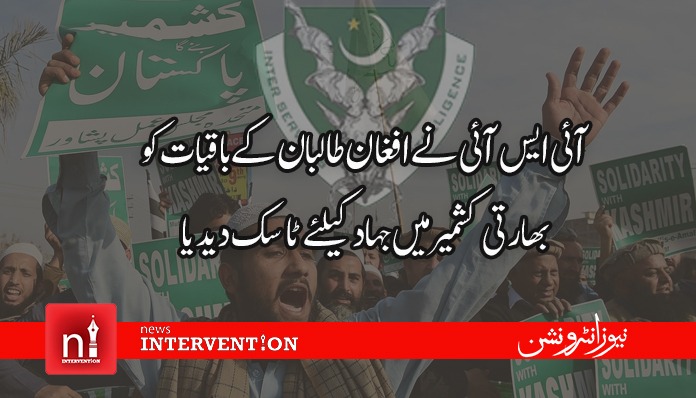
Taliban prisoners being trained in POK to fight against India

3

Islamic religious extremism has not only destroyed Afghanistan’s history, culture and its traditions, but this inferno has engulfed the entire world, especially the Indian sub-continent in South Asia.

Even as the civilized world falls for the false promises made by Pakistan Army and ISI about their fight against Islamic extremism, yet the ground facts are completely different. It’s an open secret that the mastermind of this Islamic terrorism is Pakistan Army and its secret agency ISI (Inter-Services Intelligence) that are destroying world’s peace for their own vested interests. Can the world feel safe if Pakistan Army, which also has nuclear weapons, is nurturing nurseries of radical Islamic extremism all over the world?

After the occupation of Afghanistan by extremist Taliban, Islamic jihadists have also begun to raise their head in Pakistani-occupied Kashmir (POK). It needs to be understood that after Taliban occupied Afghanistan all the Islamic extremists lodged inside Afghan jails were released. Among them were the terrorists belonging to jihadi groups from Pakistan-occupied Kashmir (POK), who immediately after release found their way inside the POK (Azad Kashmir). Now these terrorists are trying to sneak inside the Indian side of Kashmir.

Neelam Valley, TattaPani and Hajira border in Pakistan-occupied Kashmir (POK) have become the launch pads of renewed terrorist activity. Recent spate of civilian killings on the Indian side of Kashmir proves that ISI has managed to sneak in several of these Islamic terrorists inside Kashmir. This is just the beginning and will escalate further.

The basic groundwork to strengthen terrorist infrastructure has already begun in POK. Over the last few days, jihadi organizations have given permission to telecom companies to start installing mobile signal boosters in Bagh and Rawalpindi to run their 4G internet services across Pakistan-occupied Kashmir. The installation of mobile signal boosters are a clear indication that ISI is providing ‘employment’ to terror mongers and offering them state-of-art connectivity so that they can coordinate all activities.

In the recent past, no communications company was allowed to operate 4G mobile network in POK and Gilgit-Baltistan, such that in the year 2016 all such these installations of the telecom provider Jazz were removed citing strict government rules. In 2016, Rawalpindi had said that Jazz telecom had set up its mobile boosters on land belonging to the government of “Azad Kashmir” (POK) without seeking their permission. However, these mobile signal boosters that were purchased in 2005 were installed on privately owned properties in POK. From 2005 to 2016, Rawalpindi did not have a problem. The problem occurred when the company improved the internet speed, which was used by local Kashmiris to communicate with the outside world and report about the atrocities committed by Pakistan Army.

Now, when Rawalpindi has the wherewithal to monitor all telecom data it has allowed the installation of mobile signal boosters. All these point to the sinister gambit of ISI for POK.

ISI wants to use the people of Pakistan-occupied Kashmir (POK) as religious pawns and destroy their identity and culture like they have done in Afghanistan. In this regard, Islamic extremists including Jamaat-ud-Dawa have been activated.

Jamaat-ud-Dawa and Harkat-ul-Mujahideen have been given freedom to hold meetings and programmes in various parts of Pakistan-occupied Kashmir to propagate the jihadi narrative and motivate peaceful Kashmiri people towards religious extremism, in order to disturb the peace of India and undermine her sovereignty.

This poster is being distributed by Harkat-ul-Mujahideen across Pakistan-occupied Kashmir (POK) that’s dubbed as “Azad Kashmir” by Pakistan. The poster urges local Kashmiris to donate money to the jihadi terrorists. (Photo: News Intervention)

A pamphlet has been published in this regard in which it is written that local Kashmiris must offer monetary help to the jihadists and be a part of jihad.

This poster goes on to list the items wanted by jihadis: Bed 4500 rupees, coat 3200 rupees, warm suit 900 rupees, warm hat 250 rupees, warm sheet 1000 rupees, shoes 2700 rupees, socks 150 rupees, gloves 250 rupees, undergarments 1050 rupees. Total goods for a Muhajaheed costs 14,000 rupees as per the poster released by Harkat-ul-Mujahideen. The poster urges local Kashmiris that through monetary help to jihadists they can also be a part of jihad while being at home.

It is not difficult to guess from this developments that in the name of Islam the Pakistan Army is not only making money through religious blackmail but also destroying world’s peace through exporting terrorism. All countries across South Asia have to bear this brunt of Islamic extremism.

‘Judging’ the Judges of Pakistan

While speaking at the Asma Jahangir Conference in Lahore on Saturday, Chief Justice of Pakistan (CJP) Justice Gulzar Ahmed said that “We [judges] work and will continue to do so without pressure.” Not everyone agreed and the cynics had good reasons for their scepticism. Just last week, retired Justice Rana M Shamim [former chief justice of Sindh High Court who also served as chief judge of the Supreme Appellate Court Gilgit Baltistan], made a stunning revelation that shook the people’s faith in Pakistan’s judiciary. In a notarised affidavit, Justice Rana M Shamim claimed being witness to an incident in which former CJP Saqib Nisar had [apparently at the behest of the army] directed a high court judge to make sure that former Pakistan Prime Minister Nawaz Sharif and his daughter Maryam Nawaz “must remain in jail until the [2018] general elections are over.”

Justice Shamim’s claim has been outrightly denied by former CJP Justice Nisar, but being the ‘accused’, this denial ultimately boils down to his word against that of his colleague. Justice Shamim’s son Ahmed Hassan Rana [a supreme court advocate] appeared on TV and by saying that his father, who had earlier served as vice president of Pakistan Muslim League- Nawaz [PML-N] in Sindh, “has remained [Sharif’s] lawyer, so the two have relations; they have direct relations,” hinted that his father’s affidavit may have been motivated by past loyalties.

Yet, not many are willing to buy this insinuation as it’s highly implausible that a former judge who held the coveted post of chief judge of Gilgit Baltistan’s Supreme Appellate Court would be so naïve or pliable as to commit perjury by filing a false affidavit. So, what could have made him take this step?

Usually, there are two reasons that makes officials speak out against their own organisation or the establishment: One, on being left-behind in the career progression ‘race’; Two, on falling from grace. In the case of former Justice Shamim, none of these factors are applicable. Furthermore, release of an audio tape of the purported conversation between former CJP Nisar and a subordinate judge by a different source buttresses Justice Shamim’s assertion and adds credence to the contents of his affidavit.

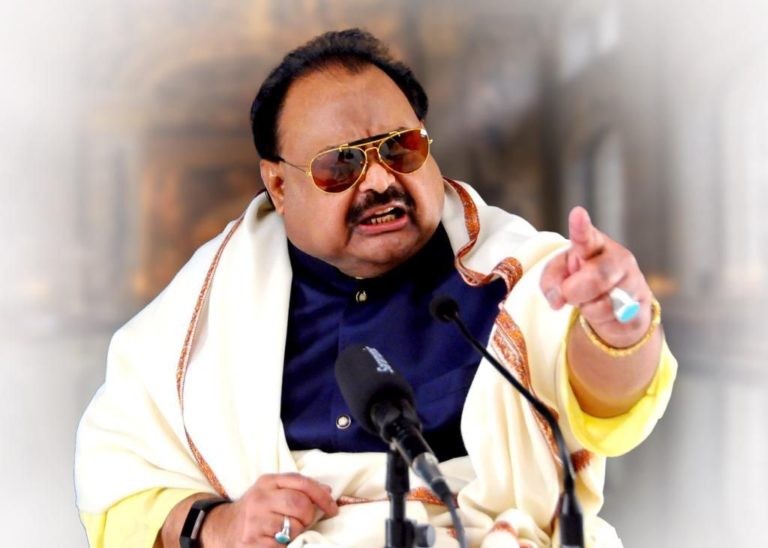
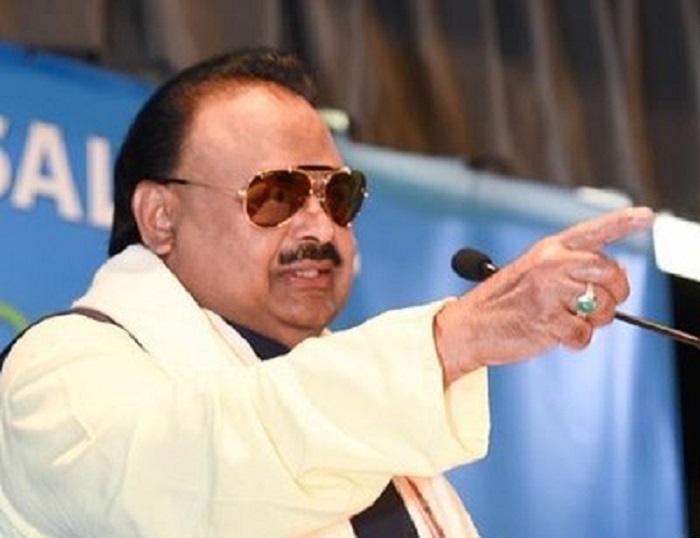
Sindh’s leader Altaf Hussain tweeted about the authenticity of audio tapes of Saqib Nisar, former Chief Justice of Pakistan.

Whereas the former CJP Nisar has claimed that “I have never spoken to the person in the audio call,” and even said that the audio tape is “fabricated,” the following issues definitely tilt the balance in former Justice Shamim’s favour:

  • From the legal point of view, both Nawaz and Maryam Sharif had sound reasons for being granted bail and so, denial of the same to them does raise suspicions that some extraneous influences were at play.
  • The audio tape has been released by Fact Focus, an investigative media website with proven credentials of factual reporting and has no links with Justice Shamim or an axe to grind with Justice Nisar.
  • Fact Focus has confirmed authenticity of the audio tape from a reputed US based multimedia forensic specialist firm [Garret Discovery], which has confirmed that “this audio has not been edited in any way.”

It may nevertheless be reasoned that drawing deductions from an isolated incident is unscientific and misleading- an argument that’s absolutely correct. However, Justice Shamim isn’t the only one talking about pressure being exerted on the judiciary by Rawalpindi. In July 2018, while addressing the Rawalpindi Bar Association Justice Shaukat Aziz Siddiqui, a serving senior judge of Islamabad High Court [IHC] candidly admitted that:

  • “Today the judiciary and media have come in the control of ‘Bandookwala’ [literal translation ‘gunman’; here a reference to the army]. Judiciary is not independent”.
  • “In different cases, the ISI [Pakistan Army’s spy agency] forms benches of its choice to get desired results.” This is done by manipulating judicial proceedings as its officials manage to constitute benches at its will and mark cases to selected judges.”

He further revealed that the ISI had told Islamabad High Court Chief Justice Muhammad Anwar Khan Kasi “We do not want to let Nawaz Sharif and his daughter come out [of jail] until the elections. Do not include Shaukat Aziz Siddiqui on the bench [hearing their appeals].” With Justice Siddiqui also claiming that Pakistan Army was exerting pressure on the judiciary through ISI, Justice Shamim’s assertion of Pakistan military’s determination to keep the Sharif father and daughter duo behind bars till elections, gains yet more strength.

Justice Siddiqui had neither lost the career progression race, nor suffered any disgrace when he spoke out against the army. Au contraire, he was amongst the senior most judges of the Islamabad High Court and very much in the running for CJ of Islamabad High Court. That he was subsequently removed from office for his anti-army comments by the President and not impeached is a clear case of judicial expediency to avoid skeletons tumbling out of Pakistan Army’s cupboard- another indication that there could be some substance in his claim of army’s interference in judicial process.

So, while the current CJP may put up a brave face and maintain that “We work and will continue to do so without pressure,” there’s no denying that the Pakistan Army directly or indirectly does interfere with the judicial process in Pakistan, and besides judges, even former President and ex-army chief Pervez Musharraf has openly admitted this.

In 2016, when asked by a TV anchor as to how did he managed to get the court directive prohibiting him from leaving Pakistan revoked, Gen Musharraf smugly replied “Once he [Gen Raheel Sharif, the then army chief] got the government to relieve the pressure that they were exerting, the courts gave their judgement and allowed me to go abroad for treatment.” Could there be a more damning proof of army manipulating the judiciary in Pakistan?

There are no two views that the Pakistan Army does at times interfere with the judicial process. Nevertheless, it would be a grave mistake to conclude that the judiciary in Pakistan is Rawalpindi’s ‘lapdog’, as many judges have upheld rule of law even at the cost of annoying the military, which is indeed very reassuring.
A few examples:

  • In its judgement on the 2017 Faizabad Interchange sit-in by Tehreek Labaik Pakistan, the Supreme Court of Pakistan noted that “The Constitution emphatically prohibits members of the Armed Forces from engaging in any kind of political activity, which includes supporting a political party, faction or individual.” It thereafter directed that “The Government of Pakistan through the Ministry of Defence and the respective Chiefs of the Army, the Navy and the Air Force are directed to initiate action against the personnel under their command who are found to have violated their oath.”
  • In October 2020, Supreme Court of Pakistan rued that inspite of there being no provision to make free land allotments to army officers, “senior members of the armed forces get plots and agricultural lands and continue to be given additional plots and agricultural lands as they rise up the ranks.” 
  • In April 2021, Lahore High Court [LHC] not only referred to the army as Pakistan’s “biggest landgrabber,” but even reminded Rawalpindi that “The uniform of the army is for service and not to rule as a King.”
  • In November 2021, having summoned Prime Minister Imran Khan on the 2014 APS Peshawar attack hearing, a three-member bench headed by CJP Ahmed exposed ISI’s monumental failure by saying, “There is also a claim that we are the best intelligence agency in the world. So much is being spent on intelligence but the results are zero.” Terming the attack, a “failure of security,” the bench wanted to know-“Was a case registered against the former army chief and others responsible?

In the final analysis, while the judiciary in Pakistan is doing an excellent job, it’s the army’s interference in the judicial process that’s making people wary of the country’s legal system and hence, only Rawalpindi can remedy this malaise. This isn’t very difficult as the only thing that Pakistan Army Generals have to do is to respect the country’s constitution by paying heed to Lahore High Court’s seminal observation that “The uniform of the army is for service and not to rule as a King”!

Pakistan surrenders to TTP, but calls it ‘reconciliation process’

“Are we going to surrender [to TTP] once again?”
Justice Qazi Mohammad Amin Ahmed
Judge, Supreme Court of Pakistan
November 10, 2021

Islamabad has always alleged that Indian consulates in Afghanistan were being used as covert bases by its spy agency Research and Analysis Wing [RAW] for orchestrating subversive activities inside Pakistan. It also maintained that the Ashraf Ghani government and Afghanistan’s spy agency National Directorate of Security [NDS] was helping RAW in sponsoring terrorist activities by providing arms, munitions and funds to anti-Pakistan terrorist groups. In fact, while releasing its December 2020 dossier on this issue, Pakistan’s Foreign Minister Shah Mahmood Qureshi, boasted that Islamabad had “irrefutable facts” regarding India sponsoring Tehreek-e-Taliban Pakistan [TTP].

On August 24, 2021 while addressing a press conference in Islamabad, Pakistan’s Federal Minister for Information and Broadcasting Fawad Ahmed Chaudhry appeared very happy, and he had good reasons to feel elated. This was the time when the Rawalpindi-sponsored Taliban juggernaut had swept across entire country and was now firmly in control of Afghanistan. As a result, Pakistan had finally been rid of two existential enemies– One, the pro-India Ashraf Ghani government alongwith its NDS, and two, Indian diplomatic staff stationed in Afghanistan, who as per Islamabad’s allegations were essentially spies specifically tasked by New Delhi to destabilise Pakistan by orchestrating terrorist attacks.

The exuberant Fawad Chaudhry told the media that “We should be satisfied to know with regards to the TTP, that for the first time the process of Indian funding [to TTP]-which had been going on for a long time-has ended and at this time they are in disarray.” Making it clear that “These internal challenges [of combatting TTP] are not a problem for us,” Chaudhry logically concluded that “once they [TTP and Balochi groups fighting Islamabad’s exploitation of their natural resources of Balochistan] stop having a funding stream from abroad then it will be a big blow for them and the rest we will handle ourselves.” As quid pro quo for having hosted Taliban for two decades, he was sanguine that Taliban authorities would act on this “[as] Pakistan’s top terrorists from the BLA [Balochistan Liberation Army] and TTP are sitting in Afghanistan, and we want them.”

Considering the exceptional bonhomie shared between Pakistan and Taliban government of Afghanistan, Fawad Chaudhry’s expectation that “We hope we will have cooperation from Afghanistan on this” is a fair expectation; so is his unbounded confidence in Pakistan Army that makes him believe that “inside the country we will look at these matters ourselves.” However, in a shocking development, Islamabad decided to negotiate with TTP in less than three months after Chaudhry’s exceptionally optimistic belief that without RAW and NDS sponsorship, the powerful Pakistan Army would be able to decimate TTP!

So, it’s evident that contrary to Islamabad’s expectations, TTP hasn’t been weakened at all and thus, it’s amply clear that Pakistan’s claim of TTP being sponsored by India is nothing but a big fat lie!

With TTP being responsible for the 2014 APS Peshawar carnage in which 147 people (including 132 school children who were predominantly children of defence personnel) lost their lives, how any self-respecting government can even think of initiating a “reconciliation process” is indeed perplexing and even the Supreme Court of Pakistan seems to be visibly shaken by Islamabad’s decision. A three-judge bench headed by Chief Justice of Pakistan (CJP) Gulzar Ahmed, Justice Qazi Mohammad Amin Ahmed and Justice Ijazul Ahsan summoned Prime Minister Imran Khan and during the ensuing hearing, made the following pejorative observations:

  • CJP Gulzar noted that, “You are in power. The government is also yours. What did you do? You brought those guilty [TTP] to the negotiating table.”
  • Justice Amin noted that “we [Government of Pakistan] are bringing them [TTP] back to the negotiating table instead of taking action against them?” adding, “Are we going to surrender once again?”
  • Justice Ahsan also drew attention of Khan to the fact that “The satisfaction of the parents [whose children died in the APS attack] is necessary.”

While the bench hauled the government over coals, it also made stinging observations on Pakistan Army and its spy agency Inter-Services Intelligence [ISI]. Noting that “We have the sixth largest army in the world,” Justice Amin reminded the PM that Pakistan wasn’t a small country. CJP queried, “Where do the intelligence [agencies] disappear when it comes to the protection of their own citizens?” He also asked, “Was a case registered against the former army chief and others responsible? “ On Attorney General’s reply that nothing adverse had emerged in the APS Peshawar massacre inquiry, CJP retorted- “There is such a huge intelligence system in the country. Billions of rupees are spent on it. There is also a claim that we are the best intelligence agency in the world. So much is being spent on intelligence but the results are zero.”

Justice Ahsan maintained that the agencies concerned “should have known there would be a reaction to the operation [Zarb-e-Azb] in tribal areas,” adding that, “The easiest and most sensitive target were children.” Terming it a “failure of security” he maintained that it was “not possible that the terrorists [involved in APS Peshawar attack] did not have inside support.” CJP made a stinging attack on senior army officers by saying that while accountability process should have commenced from the top, action was taken only against those at the lowest levels- school guards and soldiers, while “the higher-ups took salaries and benefits and left.”

Could there be a more disparaging commentary on an army’s professional competence? Surprisingly, as the government prepares to go ahead with its “reconciliatory process” involving those responsible for the 2014 APS Peshawar massacre, Rawalpindi remains unfazed even though the majority of the victims in this dastardly attack were children of the army’s rank and file!

Labbaik is Pakistan’s new Frankenstein monster

“Bizarre that the [Pakistani] government is negotiating and accepting the demands of “India-sponsored and India-directed” organisations.” -Hasan Zaidi
Pakistani journalist and filmmaker
(October 25, 2021)

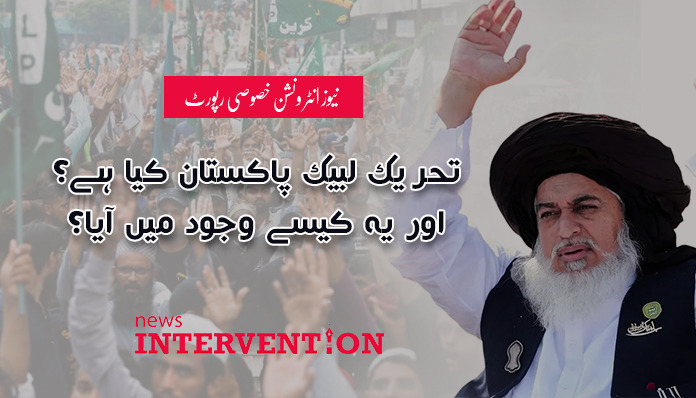
In November 2017, protesters belonging to several Sunni religious groups from the Barelvi school of Islam led by Tehreek-e-Labbaik Pakistan (TLP) chief, Allama Khadim Hussain Rizvi, congregated at Islamabad and Rawalpindi to demand removal of Law Minister Zahid Hamid. Reason? The agitators believed that he was responsible for controversial changes in the “Khatm-i-Nabuwwat” [the finality of the prophethood of Prophet Muhammad] oath clause in the Elections Amendment Bill 2017. Luckily, these three week-long protests that brought normal life in Islamabad to a virtual standstill ended when the government of Pakistan and the protesters reached an agreement.

There’s nothing unusual or odd about agreements between governments and protesters. However, there were two serious issues of concern in this instance. One, the agreement was brokered by Pakistan Army, even though it is not constitutionally mandated to undertake such activities. Two, even though federal ministers signed on behalf of the Pakistan government, it was the Director General [DG] of Pakistan Army’s spy agency Inter-Services Intelligence [ISI] who endorsed his signatures as the “guarantor” of this agreement which makes no sense as in a democracy, the armed forces are subordinate to the legislator. So, how can the army underwrite an agreement made by the government- unless of course, the quip- “Pakistan is not a country with an army, but an army with a country,” is true!

Khadim Hussain Rizvi, founder of Tehreek-e-Labbaik Pakistan (TLP)

But things didn’t end here. Instead of conforming to military ethics and maintaining an apolitical stance while dealing with protesters, DG of Pakistan Rangers [Punjab] Maj Gen Azhar Naveed did just the opposite. In what was an unmistakeably a brazen act of mollification through cash incentives, Maj Gen Naveed was caught on camera distributing envelopes containing money to protesters and saying “This is a gift from us to you.” He can even be heard telling protesters, “Aren’t we with you too?” While politicians do indulge in appeasement and posturing, but for the military to do so is something that doesn’t auger well for any democracy.

By distributing cash to protesters, DG Punjab Rangers blatantly mocked the four policemen killed and 263 others injured by Tehreek-e-Labbaik Pakistan (TLP) activists. However, the most embarrassing thing was that a two-star General of Pakistan Army publicly expressed solidarity with TLP, which was proscribed under Pakistan’s Anti-Terrorism Act 1997 just four months later!

In August this year, Federal Minister for Information and Broadcasting Fawad Chaudhry added an ‘Indian-link’ to support the TLP ban by alleging that “When the TLP started tweeting under a campaign, they got 400,000 tweets in 15 hours with a huge chunk of it [originating] from India and its Ahmedabad city.” Two months later, the government of Pakistan’s Punjab province submitted intelligence reports to the country’s apex court which contained details of foreign remittances that purportedly “… indicates the Indian nexus with the proscribed TLP to destabilise Pakistan.”

So, no one was surprised when on October 27, Pakistan’s IB Minister again made it clear that “… a clear policy decision was taken in a meeting, which was held under the chairmanship of Prime Minister Imran Khan and attended by the top leadership of Pakistan Army, intelligence agencies heads and all the authorities concerned, that the proscribed TLP will be treated as a militant group.” Therefore, when Pakistani media reported that while Prime Minister [PM] Imran Khan authorised use of force against TLP, but the Pakistan Army chief Gen Qamar Javed Bajwa advised him against this, the obvious question that comes to mind is- why is Pakistan Army so wary of taking firm action against what Islamabad considered to be a “militant group” allegedly working at the behest of India?

Saad Hussain Rizvi, chief of Tehreek-e-Labbaik Pakistan (TLP) soon after his release in Lahore. (Photo: Reuters)

Though Khan is famous for making ‘U-turns’, his decision to lift the ban on TLP just 13 days after the broad-based high-level meeting chaired by him had unanimously concurred that the “TLP will be treated as a militant group,” is intriguing. So, while Khan may have revoked the TLP ban for political expediency, when the “top leadership of Pakistan Army,” had determined that TLP shouldn’t be treated as a militant group, but then why did Rawalpindi choose to maintain a stoic silence on Islamabad’s brazen attempt to ‘mainstream’ a militant organisation with links to India?

Pakistan Army has been treating TLP with kid gloves is apparent right from the beginning. Be it brokering and underwriting the agreement to end the protest, openly distributing money to protesters and expressing solidarity with them, Pakistan Army has a lot to answer for its non-professional conduct. That the Pakistan Army had adopted a patently non-professional approach while dealing with TLP isn’t an off-the-cuff deduction or exaggeration. Even the Supreme Court of Pakistan has observed the army’s unbecoming behaviour.

In its Nov 2018 judgment, a two-member bench of the apex court hearing the 2017 TLP sit-in at Faizabad Interchange case noted that “The Constitution emphatically prohibits members of the Armed Forces from engaging in any kind of political activity, which includes supporting a political party, faction or individual.” It ordered that “The Government of Pakistan through the Ministry of Defence and the respective Chiefs of the Army, the Navy and the Air Force are directed to initiate action against the personnel under their command who are found to have violated their oath.” That Rawalpindi hasn’t taken any action whatsoever on this directive given by Pakistan’s supreme court, once again endorses the jibe of ‘Pakistan being an army with a nation’!

It’s difficult to comprehend why Rawalpindi is letting this fundamentalist group with a proven proclivity for violence, gain legitimacy. Unless, of course TLP is the latest ‘Frankenstein monster’ that the Pakistan Army has created to ‘democratically’ orchestrate the downfall of those governments that refuse to toe Rawalpindi’s line!  

Pak’s military destroying Sindh through its network of pawns

The murder of Nazim Jokhio, a young 27-year-old Sindhi social worker, from Thatta in Pakistan-occupied Sindh (POS) led to a crisis between the incumbent federal government led by PTI and PPP’s Sindh provincial government. Nazim Jokhio had made a video of some foreigners (Arab) hunting houbara bustard and shared them over social media that led to his brutal killing.

Simultaneously, common people, progressive society, nationalist and human rights organizations of occupied Sindh are in rage after this incident. Murders are not new in occupied Sindh and every other day Sindh receives tortured mutilated bodies killed by the Pakistani intelligence agencies and Islamist terrorist groups and feudal lords backed by ISI.

Every year a larger of Arabs from the gulf countries visit Sindh for hunting. They own land, rest houses and servants in Sindh. The Pakistan government (military establishment) provides them security while the local feudal lords, landlords serve them with the money.

Nazim Jokhio was Sindh’s wildlife conservationist and social worker who was brutally murdered in Pakistan-occupied Sindh.

When every other day a Sindhi is abducted, tortured and murdered, and yet no authority or any government department takes note of it then why has the murder of Nazim Jokhio highlighted? To understand, we have to look into the strategy of Pakistani military.

The murder of Jokhio is politicized and highlighted because of opposition political parties in Sindh. Otherwise no one cares about the killings of innocent civilians of occupied Sindh. Till now hundreds of thousands of Sindhis have been murdered and their bodies are found on the streets. This issue also will be sorted soon as the military establishment will intervene in the incident. Though it is quite predictable that none will be punished because this elite class are pawns of the actual masters and not until they are revolted against.

In Pakistan, military establishment which runs the show owns a large number of different outfits and uses them as pawns on different times to win the game by hook or crook to keep ruling. These pawns include players like media personalities, feudal lords, radical Islamist outfits, various small political groups and even political parties having huge mandate and followers.

Every year thousands of Arabs visit Sindh on hunting expeditions that is arranged by the Pakistani regime

Feudalism is a curse for any society especially a country like Pakistan that has ruined lives of hundreds of thousands common people since it’s creation in 1947. The elite feudal class that own 45% of land in Pakistan are privileged people who have direct or indirect links with military establishment and they work under different Pakistani intelligence agencies. These pawns are used on certain occasions as required against opponents. Some time these pawns are sacrificed by their masters.

In Pakistan-occupied Sindh, the provincial government, their different departments that manage poor common people (masses) are the key pawns in the game of Pakistan military establishment. A military establishment’s special division works only on these pawns. The first thing they do is to corrupt these people and then document their corruption deeds. These pawns then come under the clutches of Pakistani military establishment and start acting on the wishes of their masters. The useful pawns enjoy lifetime perks and protection provided by the military establishment.

Sindh’s great leader and founder of the ideology of “Sindhudesh” Sain G.M. Syed said in his teachings: “We have three opponents and they are our enemies of Sindhudesh”
1- Military establishment of Pakistan
2- Elite feudal class
3- Islamist extremist groups

Sain G.M. Syed’s teachings have proved to be hundred percent right because the freedom movement of Sindhudesh has faced opposition only from these three opponents at every step.

Pakistan’s military intelligence network has killed hundreds of our nationalist leaders and political workers till today. Feudal lords have played their role in keeping the common people away from national freedom movement and on many occasions they have identified our workers from their areas/ constituencies, while Islamist groups have established thousands of Madrassas to brainwash common peoples’ minds. Some time they even roam on the streets of Sindh with their weapons to create fear among the people.

The military establishment (the masters) who are the actual owners of Pakistan, play and use all their pawns when needed. These feudal lords, political personalities and Islamist radical groups are merely pawns, because if we look deep into the systemic organized ways of military establishment then it becomes clear that only they have authority to bring, protect, support anyone any time as they want.

Over the last few decades, the murder of PPP leader Benazir Bhutoo (feudal family) on demand of a few radical Islamist elements sitting in military establishment and overthrow of PML (N) Nawaz Sharif (an industrialist) government on asking for more share in CPEC project funds, which was not acceptable to the military establishment was orchestrated by the Pakistan Army. It is the Pakistani military that creates various factions of Islamist radical groups and uses them as per their requirements, labelling them as good Taliban and bad Taliban according to the situation. It only shows that this is a engineered system of military establishment to keep their supremacy and cement their rule across Pakistan.

If anyone is in doubt that any political party that’s taking part in Pakistan’s electoral process can change the fate of Pakistan then they are living in a fool’s paradise because Pakistan was created for military establishment and will be ruled by them only, till the time Pakistan is balkanized. This is the only solution to get rid of this rogue terrorist nation.

Here’s how Modi could deal with the ‘Occupy Streets’ enemy

0

It’s unlikely Narendra Modi doesn’t know India’s streets would be occupied henceforth under some pretext or other. How does Modi beat back this wolf dressed in lamb’s garb?

The Nature of Enemy
Let’s first know the enemy. This enemy believes in taking over the public space. Their defence is since we are public, we don’t need permission to occupy public space. Thus begins a form of civil disobedience, howsoever minor. 

It refuses to recognize the legitimacy of existing political institutions or legal order. It’s call is for Direct Action but is couched as ‘Citizenism’. The defiant insistence is acting as if one is already free. These Public Spaces soon turn into encampments.

A new slogan to create new institutions, new society, the New Democracy gets underway—even if it is inside the shell of the old. They operate as if they don’t have any internal hierarchy. That it works as a consensus-based direct democracy.

These Public Spaces become a Republic of its own, with its own kitchens, clinics, media centres, libraries, food courts, gyms and even entertainment lounges in due course. The society is polarized, social order deformed and Radical Left has gotten a new kiss of life.

It’s been over two centuries since John Adams, a founding father of the United States, uttered: “There never was a democracy which didn’t commit suicide.” This model of democracy is sold as one of Athens but in essence is one of Rome. 

That is, if one was a society decided and run by the citizens, the other was one run through the representatives of the citizens. 

Democracy such as ours could be sunk without a trace or rendered meaningless. 

When civil disobedience occurs, the Rulers go less for batons and more for concessions which ends up abandoning their own reform agenda and alienates the majority of citizens who have elected them.

The majority wonder if the Rulers were necessary in the first place. 

Soon enough, the Rulers go, their party is discredited, its business as usual, for the nation is taken over by corrupt and greedy, and colonialists resume their stranglehold on nations which they had once sucked dry.

The mode of enemy

It should be apparent to Modi by now that use of force is not an option; and relying on India’s judiciary is trusting a straw to swim across an ocean. 

He also has to concede that disinformation is effective—700 dead farmers, for instance—and masses are lazy.

That refutations are seldom effective. The time lag has already conceded that advantage to disinformation monsters. You can’t be fighting a fire-emitting dragon with your squirt of truth.

That propagandists have the advantage of first impression. It’s rarely overcome. The audience is already primed. Falsehood and inconsistency has already gained traction;

He has to cede that repetition leads to familiarity and familiarity leads to acceptance and Corporate Media has perfected this art for decades;

  • Media plays the role of convincing people in an ideology nobody really believes exists—Equality, Freedom, Justice etc.—but most suspect that everybody else does;
  • It’s rapid, continuous and repetitive, and lacks commitment to consistency. Above all, it’s very responsive to events; 
  • He has to cede that such propaganda has incredibly large volumes and is broadcast or distributed through hundreds of channels. Its text, audio, video, imagery is spread through internet, social media and traditional print and digital media. 
  • There are paid internet trolls, online chat rooms, discussions forums and comments section in portals. Thousands of fake accounts are at work on Twitter or Facebook who work 24 hours a day and each has a quota. 
  • The psychology literature tells us that more the surround sound around a propaganda, that is multiple channels playing it endlessly, and multiple celebrities and brands endorsing it, more is lent an unstoppable momentum. 

When many endorse it leads to trust and reliance. Multiple sources make masses, lazy and indifferent, to trust the misinformation. 

It’s a fact that Quantity indeed has a Quality of its own. 

How does Modi tame the Beast?

So far Modi has believed that his work alone speak for him and his party. I am afraid it’s too simplistic against such a nuanced monster. It might not affect an RSS to engage in perception battle. But it would cripple BJP and this nation if this battle is not fought on the turf of enemies. And that means: 
* Create your own NGOs;
* Don’t discourage the suffering majority—inconvenienced by the roadblocks, denied citizenship or justice—from coming to streets or occupying public spaces, as it were;
* Don’t believe in refutations; be first to respond to events; second-guess the misinformation about to happen and educate the masses beforehand; speed is of essence;
* Build your own information machinery; get masses, professionals, amateur journalists, media outlets involved in the evolving landscape of social media and internet; leave no stone unturned (If you have time, look for how Hungary does it against his and our nemesis George Soros). In short, overwhelm the audience.

This battle won’t be won by Modi’s shastra of constitutionality and morality. 

It won’t help his reform agenda; save innocent lives in Bengal or provide citizenship to Hindu refugees; or weed out the ISI and Khalistanis who are bent upon balkanizing India. 

It would keep on hold the laws he has in mind for farmers; the land and labour reforms; for his enemies wear the raincoat of deception, such as, say, environment. 

(this article was first published in News Bred.)

BLF kills 12 Pak soldiers in attacks across Balochistan

During October 2021, the Balochistan Liberation Front (BLF) carried out eleven lethal attacks against the Pakistani forces, in which more than twelve Pakistani soldiers were killed and dozens injured. One attack was carried out on Pakistani military construction company, Frontier Works Organization (FWO). Seven BLF fighters embraced martyrdom defending Balochistan against the occupying forces of Pakistan.

2nd October 2021: On Saturday, Baloch Sarmachaars (freedom fighters) targeted a Pakistani military post at Bazdad Kulli in Kolwah with heavy weapons. Losses occurred to occupying forces.

3rd October 2021: On Sunday, Sarmachaars attacked Pakistan Army check post in GandKaur area of Bazdad Kolwah. It inflicted heavy losses to enemy forces.

5th October 2021: Balochistan Liberation Front (BLF) spokesman Major Gahram Baloch paid homage to Shaheed Shayhak alias Nako Talang and said that he and his companions were on a routine patrol in the Nag area of Anjir Kahn, mountains of Kalbar on October 5, 2021 when at 2 PM, Pakistani regime backed Death Squad personnel opened fire on them. Thus began a long and bloody skirmish, in which Sarmachaar Second Lieutenant Shayhak alias Nako Talang fought very bravely and managed to free his comrades from the enemy’s siege. He fought to defend the Baloch land. Meanwhile, the Pakistan Army had also reached out to help the death squad.

Shaheed Shayhak Baloch had been fighting for Balochistan’s independence since 2013. He was also a very brave and a conscious revolutionary young poet. He had served on the fronts of Tump, Dasht, Balgatar, Buleda and Zamuran. With his ability, sincerity, and hard work he was promoted to the rank of Second Lieutenant. The Baloch Martyrs’ Mission “Struggle for the independence of Balochistan” will continue.

6th October 2021: A hand grenade was hurled at a Pakistani military post on Turbat Airport Road by Sarmachaars on Wednesday evening. The grenade fell inside the check post, causing casualties to the forces.

9th October 2021: BLF pays tribute to Sarmachaars Asadullah, Aqil Baloch, Sakhi Bakhsh and Pervez Baloch who were martyred in defense of Baloch land in Kolwah.

Spokesman of Balochistan Liberation Front (BLF) Major Gwahram Baloch while paying homage to Shaheed Asadullah Baloch, Shaheed Aqil Baloch, Shaheed Sakhi Bakhsh Baloch and Shaheed Pervez Baloch said that they were martyred while fighting bravely with the Pakistan Army in Kolwah.

On October 9, in the Madag Kaur area of ​​Kolwah, the Sarmachaars and the occupying Pakistan Army came face to face, which led to a two-way clash in which the Sarmachaars inflicted heavy blows on the occupying army. In this battle, four BLF fighters were martyred while fighting valiantly for the independence of Balochistan.

Shaheed Asadullah Baloch alias Major Basit Baloch, a resident of Pasni, had been fighting against Pakistani occupation for the independence of Balochistan under BLF since 2011. His brother Sabir Baloch was forcibly disappeared by the Pakistan Army in order to force him to give up his struggle for Balochistan’s independence. When Asadullah Baloch did not come under pressure, the Pakistan Army martyred his brother Sabir in custody in November 2016 and dumped his mutilated body, claiming that he had been killed in an encounter. On March 4, 2016, his mother, Bibi Amna, was wounded by forces’ firing. Major Basit Baloch himself was injured in an attack by the Death Squad on January 3, 2016. Similarly, the Pakistani regime and its Death Squads martyred his three uncles, Lal Bakhsh on October 16, 2016, Yusuf Baloch on March 31, 2016 and Babu on August 11, 2018.

Martyr Major Basit was a talented young Sarmachaar. He was a member of BLF Makran Area Council and held the post of Major. He also wrote poetry in Balochi language. Shaheed Basit Baloch actively participated in the war against Pakistan on different fronts in Kolwah and different areas of Pasni and played a role in the activism of the organization in the said areas.

BLF salutes the Baloch martyrs who attained martyrdom while fighting occupying Pakistan Army. (Photo: News Intervention)
BLF salutes the Baloch martyrs who attained martyrdom while fighting the occupying Pakistan Army. (Photo: News Intervention)

Shaheed Aqil Azab Baloch alias Riaz Baloch, resident of Pasni, was associated with BLF since 2012. He was a lieutenant and a network commander. He has served in various areas of Pasni Kulanch, Kolwah, Balgatar, Zamuran, Gwarkop, and Parom. Shaheed Aqil Jan was also a good poet of Balochi language. Shaheed Abid Sawali is his brother who was martyred by the Pakistan Army in 2013. Similarly, Habib, Hanif and Yusuf from his family were martyred by Pakistan.

Lieutenant Sakhi Bakhsh Hussain son of Muhammad Hussain alias Mureed had been associated with BLF since 2013. Due to his combat skills and leadership skills, he was appointed as a lieutenant in BLF. He has been active against the enemy Pakistani regime on the battlefields of Awaran, Kolwah, Gichk, Keelkaur, Ormara and Balgatar.

Sarmachaar Pervez Mehr alias Malook joined BLF in 2014. He fought bravely in several battles against the enemy at Awaran, Kolwah, Keelkaur and Ormara. BLF extends its heartfelt condolences to the martyred Sarmachaars and vows to continue their national mission till the independence of Balochistan.

13th October 2021: On Wednesday evening, Sarmachaars attacked a Pakistan Army camp in Gaddagi, Baalgatar with snipers, rockets and heavy weapons, killing more than three soldiers and wounding several others.

At the same time, Sarmachaars fired four shells of rocket which fell inside the camp, causing loss of life and property to the Pakistan Army.

In another attack on this day, the Sarmachaars attacked the military construction company between Shand and Dar-e-Cham areas in Mand, working to set up a fence on the border.

A water tanker and bulldozer was set on fire while the drivers were left unharmed as they were civilians.

19th October 2021: On this day at 8 PM, Sarmachaars fired rockets at a military post in Dasht, Perutag area of ​​Kech district. The rocket landed inside the checkpoint, causing casualties to the forces.

In the Cheri Gaddagi area of ​​Baalgatar, Sarmachaars laid a landmine in the way of the enemy army. An army personnel ran on it and was killed in the blast. Another Pakistan Army soldier was killed in a sniper rifle attack on a military post at Talaro in Jhaoo Nondara Tehsil of Awaran district.

20th October 2021: In Kech district, Sarmachaars attacked a military post in Sangistan Kandag area of ​​Mand. Five soldiers were fetching water from a nearby river when they were shot dead by Sarmachaars. Meanwhile, a soldier standing for their security was shot dead as he came out of the front. Pakistani gunship helicopters arrived at the scene to pick up their dead and wounded after the attack.

Baloch sarmachaar (freedom fighter) Shaheed Sheyhak Shah. (Photo: News Intervention)

21st October 2021: A check post set up to protect the mobile phone tower of Zong in the Chot area of ​​Dasht was targeted by rocket-propelled grenades and automatic weapons. Two occupying Pakistan Army personnel were killed and others were injured when a rocket landed inside the check post. This mobile phone tower is located on the road built for the China-Pakistan Economic Corridor (CPEC) project. The tower was first attacked by sarmachaars who set fire to machinery and other equipment, after which a military outpost has been set up to protect it.

22nd October 2021: Major Gwahram Baloch, spokesman of Balochistan Liberation Front (BLF), while paying tribute to the martyrs of Panjgoor, said that there was a skirmish with the state-backed squad. The clash started at 5 AM in the morning and continued till 4:30 PM in the evening. In this clash Lieutenant Qambar Baloch alias Adil and Nasir Baloch alias Sufi fought bravely with the enemy. They killed and wounded several Pakistani personnel. They sacrificed their lives to get other comrades out safely.

Shaheed Qambar had been associated with the BLF since 2012. He was a lieutenant in the organization. Shaheed Nasir Baloch joined the BLF in 2013.

Shaheed Asim alias Naveed was the cousin of BLF’s Shaheed Qambar, who was martyred in 2014. Naeem Jan was also his cousin, who was martyred in 2014. His uncle Dr. Juma was martyred in 2014. His another close relative Qadeer was martyred in 2014.

24th October 2021: Sarmachaars attacked a military camp at Kuddan in the Dasht area of ​​Kech district with rockets and heavy weapons inflicting heavy casualties on the occupying enemy forces.

Security trends 2040: India must stay ahead of the loop

The World is no longer One Family
India boasts of her ancient civilizational code “Vasudhaiva Kutambakam” (world is one family). Unfortunately, today and for the foreseeable future, we will live in a multi-polar, fragmented but inter-connected world, where all nations are cooperating, competing, confronting and if required conflicting with each other in the political, diplomatic, informational, military and economic (PDIME) sphere, to establish/retain/expand their strategic space to realise their national aspirations and establish their place amongst the comity of nations.

Nations are hardly behaving like a harmonious family, with each building their comprehensive national power specially hard power and multi-domain capabilities. Every country’s destiny is dictated by its geo-political-strategic-economic environment which is no longer constant (even geography due to globalization and technology). India the ancient, proud civilization with a glorious history aspires to be and exhibits all the ingredients to be the pivotal balancing power in the World Order. We must be absolutely clear that ALL countries are in competition with India including our strategic partners, especially our known collusive adversaries China and Pakistan and immediate neighbours.

In future (two decades till 2040), it is envisaged that humans will continue to be central to the decision-making process, its character will be determined by politics, strategy, society and technology. There will be ever increasing employment of autonomous systems, disruptive technology and game changing kinetic and non-kinetic systems which are changing the nature of war/confrontation. There will be less emphasis on emotions, passion and chance. The international order is transforming with power increasingly diffused within and among states bringing fresh layers of complexities. 

Why study future security trends?
It provides focus to security policy makers, and Indian Armed Forces. It helps understand the future environment in which we all may find ourselves operating by 2040. The nature of ‘futures’ is such that attempting to pinpoint when particular trends or characteristics will emerge is invariably problematic. Some characteristics are likely to be similar to those apparent today, but dynamic factors (re-alignment of nations, emergence of hi-technology impacting environment, geo-pol-strategic-economic shifts) will emerge and some will become increasingly important in determining the future environment in comparison to today. By 2040, the Big Two (US and China) will have global reach, while lesser powers will try to influence regionally. China will dominate the regional security zones of Asia (East, South-East and South Asia). The probability of being in the midst of a cold war between USA and China with its attendant characteristics similar to the previous cold war is very high. India, while currently caught in the classical power play of global and regional security dynamics as its not yet a great power, should position itself as a ‘balancing power’.

An overview of Multi-Domain World (MDW)
While threat of full-scale conventional wars has gone down, correspondingly the span of conflict, its complexity, unpredictability, lethality, accuracy, reach and manifesting into many domains have emerged. The physical and nonphysical domains including the cognitive have expanded. Competition is 360 degrees, 24×7, with no front, rear and flanks, and then there is no place to hide. Commonly held perception of deterrence and conflict has changed irrevocably. Specially after COVID-19, with a flux in the global power structure, nations are in a state of ‘persistent engagement’.

Warfare has already transcended the domains of soldiers, military units, and military affairs, and is increasingly becoming a matter for politicians, scientists, networks and even bankers! Four interrelated trends will define competition and conflict by 2040: Adversaries will contest all domains, with the electromagnetic spectrum (EMS) and the information environment gaining pre-eminence; smaller armies can fight on an expanded battlefield that is increasingly lethal and hyperactive; nation-states have more difficulty in imposing their will within a politically, culturally, technologically, and strategically complex environment; and states will compete below armed conflict (Pakistan’s game against India, Iran, North Korea vs USA). MDW calls for a change of thought process, ‘a transformation and not just modernisation[i]

India is already engaged in a MDW
Confrontation/conflict is a national effort and not fought by armed forces alone. Increasingly our adversaries China and Pakistan, have leveraged multi-domains to expand the battlefield in time (a blurred distinction between peace and war), in domains (space, cyberspace, information, psychological, diplomatic, legal), and in geography (now extended all India) to create strategic, operational and tactical payoffs, and achieve their objectives without resorting to armed conflict (stay below our red lines). Resorting to hybrid warfare and attempting to fracture our resolve (proxy war, salami slicing they are using ‘Three Wars’ concept. India and its armed forces must therefore commit and act to become a “full spectrum multi-domain entity”.

Evolving trends which will impact security environment and India
A future security scan is incomplete without examining clearly discernible and distinct trends emerging (by 2040), which at first glance appear theoretical and esoteric, but will need careful analysis, planning, management and implementation for India to exploit/manage[ii].

  • Diffusion of States: Internally and Externally. Asia and Indo-Pacific will emerge as economic power centres, where the political and military power of China (and to a lesser extent India), will grow, potentially rivalling that of the USA. Other regional players EU, Russia, Iran, Turkey, Japan, Australia, Nigeria, Brazil will remain important political actors, but their influence is likely to diminish and the economic and soft power of the West will reduce. Whether the current institutions, mechanisms and norms of the international system can adapt to accommodate this shifting balance of power is difficult to predict. If it cannot, there will be instability. Dispersed and contested political power will make it harder to forge internationally-binding treaties, and non-compliance and subversion of international laws are likely to increase. The transition of power between states is occurring alongside the diffusion of power within states. A few multinational corporations will become bigger and more powerful, providing vital services that states will depend on, and some will use their power to demand concessions from the state. The sovereignty of the state will diffuse and a more complex, potentially de-centralised, hybrid system of governance may begin to emerge.
  • Ever increasing power and role of information. Processing power for the volume and variety of data, and network centric operations will continue to grow exponentially, driving the development of artificial intelligence (AI), quantum computing, big data, and the ability to solve problems of increasing complexity and difficulty, leading to improvements across all aspects of human endeavour. Digitisation, cyberspace, information is becoming pivotal to humanity, and ironically conflict. Information Influence Operations (IIO) to include social media will be pervasive creating ‘echo chamber’ effect, polarise populations, eroding trust in institutions, creating uncertainty, and fueling grievances. Difficulty in regulating cyberspace and social media will continue to be exploited by nations, corporates, global terrorist and criminal groups and other malicious actors.
  • Mushrooming Niche and Disruptive Technologies.The change to a significantly more automated world (4th Industrial Revolution) involving a range of new technologies that are fusing the physical, digital and biological worlds and impacting all disciplines, economies and industries, is likely to happen faster than previous transitions. Easy accessibility, quantity and quality of kinetic and non-kinetic systems is already changing the global economic and security landscape. This will be beneficial but equally disruptive. China is at the forefront in this field and will exploit her asymmetric superiority in all domains to the detriment of India.
  • Climate Change and Environmental Stress, and Impact of Demographics. There will be spike in natural and man-made disasters with an enormous impact on the economic and security environment. China and South Asia are particularly susceptible to these developments. Disaster alleviation and community action plans need urgent implementation. Whichever country manages the environment better will enjoy a more stable and steady developmental growth. There is sudden realisation of the adverse impact of poor demographics and declining population; it can be a game changer and assist achievement of national aspirations, or can even be the cause of a nations decline (Japan, China, Russia).
  • Rising Human Empowerment. Human security, prosperity, health, awareness and empowerment will grow. The price would be more fragmented societies and increasing populism. Inequality is growing, and so is division within many countries, between those with liberal and those with traditional views; and nationalism, religious intolerance and antipathy towards immigrants are on the rise. Many governments are becoming more authoritarian, and even with some checks and balances, the rise of autocrats/dictators (Xi Jinping, Duterte, Kim Jong-un) who will be the final arbiters of a nation is growing. Knowing the mind and personality of leaders is assuming critical dimensions. In the triangular relations of China-Pakistan-India, we are looking at two illiberal nuclear weapon countries ruled by CCP/military, are collusive and believe in hybrid warfare. India must study its adversaries and their leaders thoroughly.

Manifestation of Trends impacting India
Trends highlighted above can manifest in unexpected ways and complexities due to cross linkages. To illustrate; it may result in significant geopolitical shifts in alliances; major conflict (US-China; India-China; India-Pakistan); natural or man-made disasters; financial crisis; collapse of key multilateral organisations; proliferation of a disruptive technology; and 24×7 competition between nations which is already happening. Specific action plans need to be designed and activated to manage the trends; public, societal and political unrest, adversary’s IIO (influence information operations), disasters and climate change; scarce resources like water, rare earths; fair share of global commons (cyberspace, the oceans, polar regions and space). India needs to stay ahead of the loop so that our multi-domain capabilities and capacities are not impacted adversely, which could slow down our GDP growth, impact our freedom to operate in expanding strategic space, with grave consequences for our aspirations of being a regional player, and allow China along with collusive Pakistan and other countries in immediate neighbourhood (Bangladesh, Nepal, Myanmar) to exploit our vulnerabilities.

Deterrence Capabilities and Reputation
Deterrence requires a national strategy that integrates PDIME
(political, diplomatic, informational, military and economic) domains. India must develop strategies, plans and operations that are tailored to the perceptions, values, and interests of specific adversaries. Effective and successful deterrence warrants that our military capabilities and potential (pivotal ingredient) must be visible and known to all, and communication must be established with adversaries to generate the desired decision outcomes. In some cases, military capabilities may not be an effective tool to deter a particular adversary’s action, making other instruments of power the primary deterrent. We must constantly review our nuclear policy and capabilities in line with global trends specially of China and Pakistan. Additionally, coalition support should be integrated to enhance deterrence credibility, but deterrence must be viable as a unilateral strategy. Military options will always remain the final arbiter to achieve national objectives both proactive and reactive. Possessing adequate CNP alone is not sufficient and one must create a reputation (Israel, China, USA) for using deterrent tools when national interests/ sovereignty is at stake.

Is the answer a Grand Strategy for India?   
A grand strategy is a road map for how to match means with ends. It works best on predictable terrain, where policymakers enjoy a clear understanding of the distribution of power, a solid domestic consensus about national goals, and stable political and national security institutions. Economic and military power no longer yield influence as reliably as they once did. The result is an emerging world of multi-polarity and disorder, where grand strategy may not work well. For India, the answer possibly could be a mix of centralisation and decentralisation and evolving incrementally.

Conclusion
Anticipating and exploiting emerging trends have the potential to position India as the world’s most influential democracy in the second half of the 21st century, giving it the ability to shape Asia, Indo-Pacific region and the dynamically evolving global order. Militarily, we need to be a complete multi-domain power. We have to play our cards carefully and deliberately, and create conditions (not just hope) for breaking out from South Asia to balance the security environment regionally, in Asia and beyond.


[i] ‘Multi Domain Warfare in the Indian Context’ by Lt Gen PR Kumar, 36th USI National Strategic Paper, 2018

[ii] Inputs have been taken based on personal experience, seminars, interaction with core experts, and extensive study, reading and research not only from mainstream media, but from Think Tanks, and online SOPs/texts/manuals from global armed forces institutions. It also finds focus in the paper ‘Global Strategic Trends: The Future Starts Today’, MoD, UK

Farm Unions won the battle, but have farmers lost the war?

0

On the auspicious day of Prakash Purab (birth anniversary) of Guru Nanak Dev, Prime Minister Narendra Modi announced the decision of his party and his government to repeal the three farm laws. These laws, also called the Indian Agriculture Acts of 2020, were formally enacted on 27 September 2020, after having been passed by both houses of Parliament and given an assent by the President of India. The promulgation of the laws witnessed protests in many states, mainly Punjab, Uttar Pradesh, Haryana and Rajasthan.

Protestors established camps on the border of Delhi, thus causing tremendous economic loss and also considerable inconvenience to commuters to and from Delhi. A series of meetings were held between the government and the leaders of the farm unions which were inconclusive, leading to a prolonged agitation. On 12 January 2021, the Supreme Court stayed the implementation of the laws and appointed a committee to look into the grievances of the farmers. It was expected that once the matter became sub-judice, the farmers would roll back the protest and go back home but this did not happen, the protest continued.

Now, the government has submitted to the will of a small segment of the farmers who were not convinced about the benefits that would accrue from the laws. In taking this dynamic decision, Prime Minister Narendra Modi has upheld the highest traditions of democracy and exhibited his respect and love for the farmers. The prime minister has also maintained his internationally acclaimed stature of being a statesman who remains sensitive to the feelings of even the smallest segment of society.

While declaring the decision during the course of his address to the nation on the occasion of Gurpurab, the  prime minister was humbleness personified in admitting that “Tapasiya Mein Kuch Kaami Reh Gayi”. What he meant was that though the farm laws would have been beneficial to a major segment of the farmers, but, he and his government failed to convince some segments of the community and hence the decision to repeal the laws altogether.

Prime Minister Narendra Modi addressing the nation on November 19, 2021 when he announced that his government would repeal the three farm laws.

On the issue of the remainder demands including a statutory legal guarantee that all farmers will receive minimum support prices for their produce and withdrawal of the electricity amendment bill, the union government has given an assurance that a committee of experts and farmer union representatives will be constituted to look into the matter and a decision taken after taking all views into consideration.

Politically speaking, in election bound Punjab and Uttar Pradesh, the decision has taken the wind out of the sails of most parties that oppose the BJP; the party is getting feelers from both the Shiromani Akali Dal (SAD) and from Captain Amarinder Singh for forging an alliance.

The Shiromani Akali Dal (SAD) is saying that the falling out of their decades old alliance with the BJP was due to the promulgation of the laws and now when the issue is no longer there, a resurrection of the alliance can be worked out. Captain Amarinder Singh, having left the Congress, is in the process of formulating a new party and needs support of the very big and powerful BJP. Apparently, both entities have realised that they have no political future without support from the BJP and are now desperate to get into an alliance.

The BJP in Punjab, however, has been working very hard over the last year or so to create a pan-Punjab signature. It has gained considerable success which will be supplemented by this latest decision of the government. Under these circumstances, to ally with the Akalis would spell disaster. Some sort of a seat sharing  alliance with the new party being floated by Captain Amarinder can be worked out on the basis of like-minded views in charting a progressive future for Punjab.

While there is a wave of euphoria in Punjab at the declaration of the intent of the prime minister, many experts feel that while the farm unions have won the battle the farmers have lost the war. This situation offered an ideal opportunity to the farmers to bring about a change in the repressive agricultural practices of the “Adhathiyas” (farm produce traders) and move on to an independent course. There would have been initial hiccups but, with time, the process would have settled down to the benefit of the farmers.

This was also an opportunity to break free from the debilitating Wheat-Rice cycle that is causing unbearable damage to the soil in Punjab and will soon lead to a serious environmental disaster. 

It would be best for the rice and wheat growing states like Punjab and Haryana to carry forward the process of reform albeit in a more deliberate manner. There can be a study of incentives to support farmers for switching from rice cultivation and declaration of a policy change rather than a law. In the deliberation stage care will have to be taken to ensure that rigid, obdurate positions are not taken since they can lead to breakdowns of talks.

Benefits have accrued in areas where an open view has been adopted, ‘eChoupal’ Initiative  is helping farmers in procurement/planning etc and eventually to deal directly with the ultimate buyer of their produce. Fishermen are using mobile apps to check prices in various markets up and down the coast and then sailing to and selling into the market offering the highest prices. Such innovations can change the face of agriculture.

It has to be kept in mind that the farmers of Punjab succeeded in the green revolution which was backed by the government by switching their agriculture practices to cultivation of paddy and wheat in a big way. The same should now not be looked upon as a liability, instead, more remunerative and ecologically sustainable alternatives need to be put in place. This would require a dynamic leadership at the regional level working in close coordination with the centre. Creation of such a leadership model, thus, should be a priority for the people of Punjab.

Once the prime minister has given an assurance that the repeal process will be taken up in the next session of parliament, it was expected that the farm union leaders would immediately call off the agitation. The statement of the farm union leaders of waiting till the process culminates amounts to embarrassing the highest executive office in the country and increasing the woes of the farmers whom the prime minister wishes to see in their respective homes before the onset of winters. The Modi government  is committed to the welfare and development of agriculture sector across the country. It is due to the efforts of the government in provision of seeds, keeping fertiliser prices in control, crop insurance, easy finance, direct benefit transfers etc. that a marked increase in agriculture produce has been witnessed in the country in the last few years. There is a need to build trust on the basis of this reality.