Home Blog Page 295

Islamic extremism in Gilgit-Baltistan must be a wake-up call for India

Islamic extremism is the most lethal weapon in the arsenal of Pakistan Army. Rawalpindi uses this munition whenever it sees righteous political thinking gaining ground or there’s a perceptible rise in public awareness in areas under its occupation. Pakistani generals know quite well that a vigilant population never allows arbitrary infringement of fundamental rights and would raise its voice against misappropriation of resources that would put Pakistan Army in the dock. And the panacea for all ills of Pakistani generals is islamic extremism.

Radical islamic extremism becomes all the more important when it comes to the Pakistan occupied portions of Kashmir and Gilgit-Baltistan, because, islamic extremism in any part of Kashmir and/or Gilgit-Baltistan ensures international eyeballs and unlimited source of funds. In the name of being saviours of Islam, Pakistan Army collects huge funds from gullible Muslims around the world, pockets a large sum for themselves and use the remaining to add fuel to islamic terrorism. This is how Rawalpindi has managed to rule across Pakistan with an iron fist for the last seventy years.

This script is now being re-enacted in Gilgit-Baltistan.

Over the last few years people across Gilgit-Baltistan have been raising their voice against human rights violations, sexual exploitation by Pak Army soldiers and against the illegal land grabbing business of Pak military. A new thinking was shaping the collective consciousness.

Questions were also raised about the malignant policies of Islamabad and fingers were being pointed towards military establishment for illegal appropriation of natural resources of Gilgit-Baltistan. Recent protests in Skardu against the illegal land grabbing by Pakistan Air Force (PAF) had rung alarm bells in Rawalpindi. It did not end here. Islamabad and the military establishment are vexed by public demands to put an end to illegal and coercive occupation of local people’s land by Pakistan Army, punish the army personnel involved in sexual assaults and grant of autonomy to Gilgit-Baltistan.

It’s in this backdrop that Rawalpindi fired its first salvo by unleashing fugitive islamic terrorist Habib-ur-Rehman on Gilgit-Baltistan.

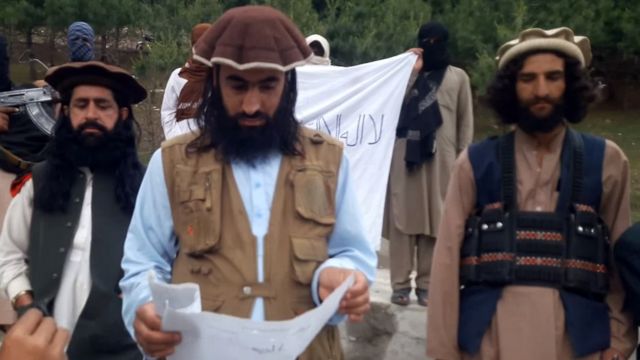
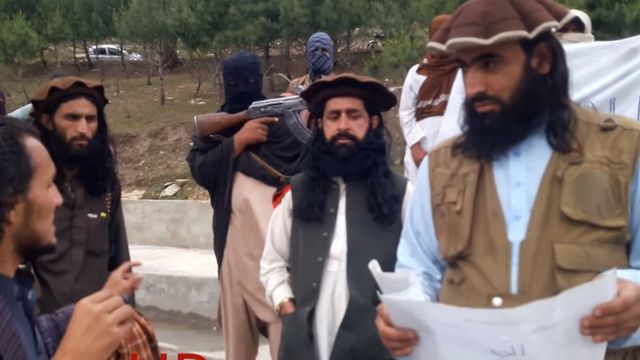
On July 7, a video surfaced on social media where Habib-ur-Rehman and his accomplices were seen holding an open court (kangaroo court) in Gilgit-Baltistan. This kangaroo court went on through the day with heavily armed islamic terrorists taking turns to address the locals.

Who is Habib-ur-Rehman?

Habib-ur-Rehman along with other islamic terrorists was involved in the killing of ten foreign mountaineers at Nanga Parbat in 2013. He was also the perpetrator of the attack on a passenger bus in Mansehra district of Khyber-Pakhtunkhwa. The passenger bus was stopped at Lulusar and twenty Shia passengers were killed after being identified.

Habib-ur-Rehman and his band of islamic radicals were also involved in the burning of a girls’ school in the Diamer district of Gilgit-Baltistan. Liaquat Khan, Habib’s accomplice, was also involved in other extremist incidents besides the Nanga Parbat incident.

Later on all these terrorists were arrested by the Gilgit-Baltistan Police. However, Habib-ur-Rehman along with two other terrorists managed to escape from the Gilgit Jail in 2015. He then went into hiding after escaping from jail, albeit under supervision of Rawalpindi. The Paki generals have now pulled out Habib-ur-Rehman when they need his ‘services’ to start a fresh wave of islamic extremism across Gilgit-Baltistan. And so on July 7 Habib-ur-Rehman held this kangaroo court at the polo ground in Babusar Top at Diamer district, where he was interviewed by a local reporter who released the ‘video interview’ on social media.

Habib-ur-Rehman and his bunch of islamic terrorists read their agenda at the kangaroo court held at Babusar Top at Daimer district in Gilgit-Baltistan. (Photo: News Intervention)

In the video, Habib-ur-Rehman openly claims that he had an agreement with the Pakistani government and its intelligence agencies. It was under this agreement that Habib-ur-Rehman and other terrorists held the day long kangaroo court under the banner of “Mujahideen Gilgit-Baltistan and Kohistan” where religious, secular, economic, social, domestic and foreign issues were discussed.

Habib-ur-Rehman ‘Hakwanda’ announced that Islamabad must ensure the implementation of peace agreement reached on February 20, 2019 at Khanjari Guchhar in Gilgit-Baltistan. “We call for peace and want lasting peace in Gilgit-Baltistan,” he said at the kangaroo court.

All this is sham.

The real objective of holding this kangaroo court was to spread the word across Gilgit-Baltistan that the new custodians of Islam have arrived and they will interpret Islamic tenets for the locals.

Mubarak Jan, the Gilgit-Baltistan Police spokesman declined to comment about the kangaroo court held by terrorist Habib-ur-Rehman, probably upon orders from Rawalpindi to stay away from this larger gambit.

Senior police officials of Gilgit-Baltistan confirmed that the leader of Habib-ur-Rehman’s group is one Maulvi Abdul Hameed. This group calls itself “Mujahideen Gilgit-Baltistan and Kohistan” who have anointed themselves as the authority for Gilgit-Baltistan.

Pakistan Army’s dirty game in Gilgit-Baltistan

This sudden emergence of Habib-ur-Rehman and other islamic radical terrorists under the banner of “Mujahideen Gilgit-Baltistan and Kohistan” after seven years and the refusal of local administration to take any action against them is itself a proof that all of this has been planned by Pakistan’s military establishment.

Holding of a kangaroo court and releasing video interview in social media is an effort to terrorise locals across Gilgit-Baltistan and stifle their demands for political, social and fundamental rights.

Click on the link to watch this news analysis by Vivek Sinha, Editor-in-Chief News Intervention

And this has already started giving the desired results to Rawalpindi.  

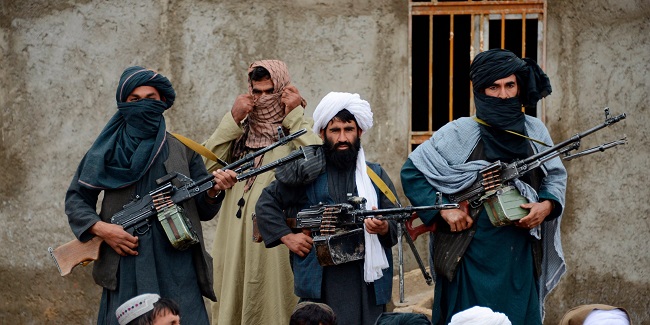
There’s panic among locals over the return of Taliban-styled islamic terrorists to Gilgit-Baltistan. The intelligentsia, elders and diaspora of Gilgit-Baltistan say this fresh wave of Talibanization and terrorism after a spate of seven years is only to instill fear amongst locals such that they give up their natural resources and other basic rights including the demands of provincial autonomy. The sudden public appearance of known criminals and terrorists like Habib-ur-Rehman with sophisticated weapons and his holding of a kangaroo court proves that they have complete patronage of the military establishment who have been imposed on the people of Gilgit-Baltistan.

The unbridled Islamic radicalization in Gilgit-Baltistan will serve two objectives for the Pakistan Army. One, it will tighten their vice-like grip over the region, and two, this would help raise funds from the world and Islamabad in the name of maintaining peace and security in ‘troubled’ areas of Kashmir and Gilgit-Baltistan.

So, over the next two or three years “Mujahideen Gilgit-Baltistan and Kohistan” would increase its activities in Gilgit-Baltistan, and with a worsening law and order situation the Pakistan Army would force Islamabad’s civilian government to sanction a huge budget in the name of military operations. The Paki soldiers in the name of conducting military operations will rob local people of their homes and livestock. There would be a fresh spate of illegal land grabbing by Pakistan’s military personnel. This has happened earlier and it would happen again. During military operations Pak Army gets huge tracts of land vacated, which then goes into their control forever.

Kashmiris and locals across Gilgit-Baltistan fear that the withdrawal of US and NATO forces from Afghanistan will lead to a spread of terrorism across the region. If the Taliban continue to advance and control more areas in Afghanistan the spill over of Islamic terrorism will reach the Indian side of Kashmir as well. Massive influx of Taliban has been going on in Pashtun regions such as Waziristan and now this has come over to Gilgit-Baltistan also.

Re-emergence of islamic terrorists in Gilgit-Baltistan is a testament to the fact that Pakistan Army is spreading Talibanization in regions adjacent to India in order to destabilize India.

Over the past three decades, Indian authorities have taken tough measures to deal with islamic terrorism in Kashmir that has indeed controlled terrorism in the region. But the war is far from over. All these islamic radicals who had fled Kashmir have now regrouped in Afghanistan. They have set their foot in Pakistan-occupied Kashmir (POK) and Gilgit-Baltistan. The impact of all this would be seen on Indian side of Kashmir and Ladakh.

India must take aggressive steps and reset its foreign policy to contain this rising scourge of islamic terrorism that has come knocking at its door.

Spurious saffron is ‘manufactured’ on Chinese machines

China is not only ruining India’s electronic market but is also damaging the highly lucrative saffron market in the country. The Chinese are pushing specific machines and tools in India through which manufacturers with dubious credentials produce artificial saffron by cutting red paper in the shape of original saffron. And it doesn’t end here. Harmful lead-based chemicals are added to give glitter to the ‘paper saffron’, which helps deceive the naked eyes of gullible consumers who then consume these dangerously harmful saffron.

“This spurious paper saffron is much cheaper than the original saffron. Wholesalers and distributors make fat profits through their sale. But it’s the end consumer who ends up ingesting harmful lead contents through this paper saffron,” said Sachin Vashishth, director King Kesariya. Sachin Vashishth is one of the largest dealers of original saffron from North India.

Saffron is a popular spice in India and is especially consumed by growing children and pregnant women due its powerful immune boosting properties. The ‘king of spices’ saffron is also known as ‘Zafran’. It consists of more than one hundred fifty medicinal ingredients which are beneficial for our body and well-being. “Saffron is a bitter spice and its smell and taste last for a longer duration, despite not being as alluring as rose or jasmine,” explained Sachin Vashishth.

Research on saffron has proved that saffron contains homoslate, a compound that beautifies the skin by removing dead skin cells. A cup of tea with two to three saffron leaves helps prevent diseases like flu. Saffron helps build immunity and resist COVID-19 by boosting the immune system. Aromatherapy in combination with other uses of saffron can help in coping with obsessive compulsive disorder.

Saffron farming in the Kashmir Valley. (Representative photo)

Ayurvedic doctors prescribe saffron to control blood sugar. There are studies which say that saffron benefits students by controlling their stress levels in obsessive-compulsions. Saffron acts as a stress-buster and aids in better meditation as well.

Saffron has its own chemical benefits due to the presence of zinc, manganese and magnesium which are beneficial to human body.

It is for these benefits that saffron is in high demand across India and this is what the Chinese have taken advantage by helping in the production of spurious ‘paper saffron’. The highly dangerous paper saffron appears quite lucrative due to its shiny red colour and the end user is duped into buying this paper saffron due to huge price discounts.

Quad Plus? China anxious over Bangladesh

Bangladesh once considered as a poor third world country, ignominiously referred to as a ‘basket case’, is now one of the fastest-growing economies in Asia. Today, her per capita income has surpassed India’s, and she is a global leader in readymade garment exports. With a demographically young population of over 160 million, and an impressive human developmental record, Bangladesh is now considered to be a country with potential.

Uncharacteristic Chinese Statement that made the world sit up         

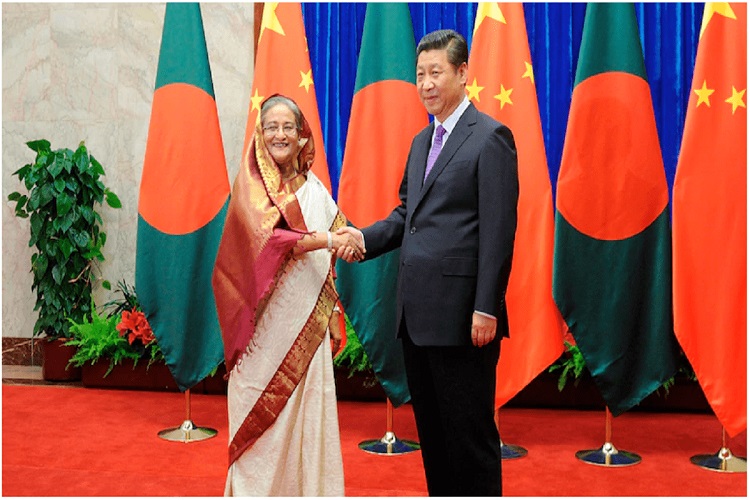
On 12 May 2021, Mr Li Jiming the Chinese Ambassador to Bangladesh surprised the world apart from ruffling Bangladeshi feathers, by an uncharacteristically aggressive statement. She warned Bangladesh that China-Bangladesh bilateral relations would be “substantially damaged”, if Bangladesh joined the Quad — the USA, Japan, Australia, India grouping.

On April 27, Chinese Minister of Defence Wei Fenghe had urged Bangladesh’s President, Prime Minister, and Chief of General Staff, not to join the US-led Quad. A day after Ambassador Li Jiming’s warning, a top Bangladeshi official called the comments unwelcome, saying that Bangladesh will respond to any proposal from any sources in line with its own foreign policy. The Bangladesh Foreign Minister AK Abdul Momen told local English daily Dhaka Post that, “None of us were invited to the Quad”. He added, “China is talking about the issue in advance over the US-led four-nation security alliance QUAD. No decision has yet been made about the Quad, and Bangladesh will decide on it as an independent, sovereign country.”

However, it is unlikely that the Chinese Ambassador would have resorted to such assertive remarks without knowledge of some credible inputs of the same. Moreover, the news that Bangladesh had been invited to join the Quad may not be groundless either; Bangladesh could have sent feelers to Quad members, or deliberately raised this bogie to check international, regional and China’s reaction. There is also a strong possibility that China may be messaging to the world, especially to the nations in the Indo-Pacific region forewarning of any such moves.[i].

Chinese Perception
Beijing has been openly critical of the Quad as an “exclusive clique” reminiscent of “cold war politics” being led by the US in an attempt to contain China. The Quad agenda is driven by the US’ Indo-Pacific Strategy (IPS) which not only ropes in Japan, India and Australia, but also intends to woo other countries, including ASEAN members, and South Asian countries such as Nepal and Sri Lanka. China feels that Quad does not respect the global multilateral international system with the UN at the core, but promotes a US-centered world order. Therefore, if Bangladesh joins the Quad, it will be taken advantage of by India, the US and others.

China views the Quad through a ‘security prism’ with a vision to counter the BRI (Belt and Road Initiative) and slow/stall China’s inexorable growth. On the other hand, Bangladesh is an important ally, considering it is a multi-directional pathway to the IOR (Indian Ocean Region), Myanmar, ASEAN and China. Bangladesh has tended to play the two big neighbours China and India opportunistically to gain maximum geo-political and economic leverages. While China-Bangladesh relations have blossomed, China perceives that her substantial all round investment in Bangladesh has been pivotal in the latter’s remarkable economic growth. She further assumes that given Bangladesh’s geo-strategic importance in the Indian Ocean Region, her adversaries mainly USA and India are trying to drive a wedge between the two countries. China has accused USA of hyping the ‘debt trap’ theory in relation to Bangladesh, which is patently false.

India sees Bangladesh as an important country in China’s so-called string of pearls strategy, which poses a threat to India. The Chinese fear that apart from endangering the BRI grid, Quad will undermine the 21st Century Maritime Silk Road, and the Bangladesh-China-India-Myanmar Economic Corridor (BCIM) which incidentally is already experiencing uncertainties given the tensions between India and China, and Myanmar’s internal instability. China keeps emphasising to all her allies that their partnership is economic and with no geo-political strings attached. The Chinese government and media after Li Jiaming’s warning, has categorically emphasised that China does not intend to bring Bangladesh into its “sphere of influence”.

US Stance
The US had got Bangladesh in its geo-political radar since its turn-around. The US Deputy Secretary of State Stephan Biegun when visiting Bangladesh in October 2020, had stated that USA looks at Bangladesh as a key partner in its Indo-Pacific Strategy (IPS). Regarding the warning of the Chinese Ambassador, the US State Department’s spokesperson Ned Price stated “We have taken note of that statement from the PRC (People’s Republic of China) … what we would say is that we respect Bangladesh’s sovereignty and its right to make foreign policy decisions for itself”, and “When it comes to the Quad, we have said this before… it’s an informal, essential, multilateral mechanism that right now convenes like-minded democracies, to coordinate in the Indo-Pacific and fundamentally to push forward our goal of a free and open Indo-Pacific region”. 

Bangladesh Perspective
Dhaka views the Indo-Pacific purely from an economic perspective and is also contemplating coming out with a strategy for the region. Being located in the Bay of Bengal area, Bangladesh wants to be part of the blue economy and is interested in all Indo-Pacific developments. Momen, in an earlier interview had said, “For us, being part of any security alliance as such is difficult because we believe in non-aligned policies and we would like to keep it that way.” One of the primary reasons to join BRI was the promise of China to provide US $24 billion for the development of infrastructure in the country. The IPS and Quad would have helped Bangladesh to secure additional funds for developmental work, enhanced connectivity, and strengthened economic ties with countries within the Indo-Pacific.

US is the single largest export destination, and also the second biggest investor for developmental activities in Bangladesh. The IPS and unexpectedly rapid coalescing of Quad has placed Bangladesh in a spot. Therefore, Bangladesh faces a challenge in balancing her geo-politco-diplomatic-economic relations between US, China and India, especially since China-India relations have taken a nose dive transforming into an adversarial relationship.

India’s Takeaways from Quad
China has not been squeamish while interfering in India’s strategic backyard, which is very demonstrably against India’s strategic and security interests. The geo-political-economic advantages of having a friendly, aligned Bangladesh as a fellow member of ‘Quad Plus’ is obvious and is not being elaborated upon. The security dividend will be significant. India and Bangladesh can jointly exploit the opportunities generated from the steady restructuring of regional and global trade and investment relationships, reducing dependence on China. A stable neighbourhood and strengthening of India-Bangladesh ties, reinforces internal stability, and catalyses ‘India’s Look and Act East’ policy with Bangladesh being a huge beneficiary.

Why are the Chinese rattled or worried?     
As China and USA increasingly compete for influence, Bangladesh’s induction in the Quad framework would signal its firm alignments with India and the United States. Beijing is deeply unsettled that a “Quad plus Bangladesh” would challenge China’s strategic outreach in South Asia and act as a catalyst for a new trend in the region by effectively enabling the Quad’s expansion.

Bangladesh is well aware that Chinese aid and loans are designed to expand Beijing’s influence and tilt the regional power balance, thereby casting a shadow over historically-rooted ties with India. India’s opposition to the BRI, rapidly emerging details of China’s “debt trap” diplomacy under BRI initiative (neighbour Sri Lanka’s Hambantota experience has raised alarm within their polity, people and media), have made Dhaka wary, and more cautious about its relationship with Beijing.

Bangladesh has also emerged as a major focus on India-Japan third country cooperation. With the future of BCIM imperilled, Japan’s Expanded Partnership for Quality Infrastructure (EPQI) has grown with Tokyo becoming a pivotal development partner of both South Asian and Southeast Asian states. Japan has also implemented an “India-plus approach” towards South Asia, building on the robust India-Japan partnership. Bangladesh is being seen as the “intersection between India and ASEAN”.

China Signals its Global Role
While Bangladesh is undoubtedly emerging as an important player in South Asia with an enlarging strategic influence, it is not critical to China to dominate South Asia, IOR and the Indo-Pacific. China’s warning to Bangladesh is clearly a signal that China is now confidently asserting her global role, and is sending a strong message that she will not take kindly to any nation joining an adversarial camp, and there will be a price to pay!

Conclusion
With her economy plateauing, her own internal dissensions, debilitating demography, sudden convergence of democratic forces opposing her rise post Covid, China needs all the allies she can garner like Bangladesh, to achieve Xi Jinping’s ‘China Dream’ which is slowly appearing like a chimera.


[i] ‘China may have warned Bangladesh against joining Quad, but nobody has invited Dhaka yet’, 12 May 2021

Tributes for Sindh’s Maharaja Dahir on his martyrdom anniversary

Jeay Sindh Freedom Movement(JSFM) organised 40 events in Sindh and abroad to pay rich tribute to the last indigenous King of Sindhudesh, Maharaja Dahir, on the anniversary of his martyrdom. This is the first time that a nationalist movement of Sindh has organised so many events in remembrance of Maharaja Dahir in Sindh.

The main event was organised in Washington DC by JSFM founder and chief organiser Zafar Sahito. Sindhi, Baloch, Pashtun, Bangladeshi, Gilgit-Baltistani political representatives joined the programme to show solidarity with the historical Sindhi nation and their hero Maharaja Dahir, who fought bravely with the Arab invaders in 712 CE. He was martyred by enemies in a battle that continued for 18 days, after which the Arabs conquered Sindh and marched towards Hind.

Speaking on the ocassion, Baloch National Movement (BNM) America chapter leader Nabi Bakhsh Baloch said: “…like any occupying and exploitative power, Pakistan’s Punjabi Islamist establishment attempts to blacken the history and reputation of the people whose land, wealth, bodies and minds it exploits for its own purposes. Just like the Baloch are referred to as savage robbers in Pakistani school history textbooks and Baloch historical heroes are amiss, similarly Sindhi heroes like Raja Dahir are mentioned only in concocted stories of injustice and ignorance.”

The Pakistani establishment and radical Islamist groups are against celebrating or shedding light on the original history of Sindh and Raja Dahir, as he was a Hindu monarch.

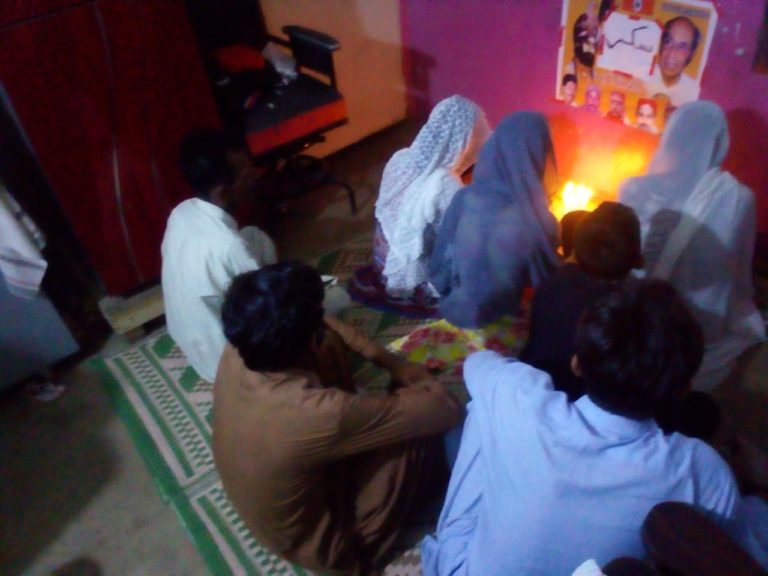
Sindhis take pledge, on Maharaja Dahir’s martyrdom day, to restore the lost glory of Sindhudesh. (Photo: News Intervention)

Slamming Pakistani establishment for harboring terrorism, Pashtun Tahafuz Movement (PTM) USA chapter Pir Zubair Shah said that there is an increasing recognition in world capitals that Pakistan is the most-dangerous terrorist country. “An entire oppressed population is being brainwashed after erasing their ancestral memory and making them pawns in the business of exporting religious terrorism,” he lamented.

Representative from Bangladesh Council for Minority Hindus, Buddhists and Christians, Priya Saha said: Bangladesh’s history gives an indication that even when a population is able to partially regain its self-awareness and throw off a religious-colonial yoke, so much progress is possible.

Gilgit-Baltistan representative Senge Sering lamented: Even 63 years after independence, schools in Gilgit-Baltistan use Punjab school board history textbooks. An entire generation has grown up not knowing anything about their own history, the causes of their present state. He emphasized that from Tibet, where the Sindhu river begins to Sindh, where it enters the ocean, the traditions and destiny of various people that inhabit both its banks are intertwined with a celebration and gratitude of water resources.

Stressing on the need to organise such events, founder JSFM Zafar Sahito said: the fundamentalist Pakistani intelligence agencies with the support of radical Islamist groups want to keep the native people away from their history, and they are continuously destroying Sindh’s historical syncretic identity and image. They want to change and convert the Sindhi nation to their own image – of a fundamentalist and radical Islamist mindset. “Organizing events like the Remembrance Day of Maharaja Dahir, serves as an initiative to connect to one’s roots, culture and the great history of the Indus Valley civilization, he asserted, adding that the days are not far when “we will break these chains of slavery from Pakistan, and we will reach to our destiny of a sovereign Sindhudesh, a secular, progressive and democratic country in which religion will be not be a part of government and state affairs.”

A JSFM central organising body’s online conference was also held to discuss the event and successful programmes and gatherings held across Sindh.

Azhar back as Hyderabad Cricket Association President

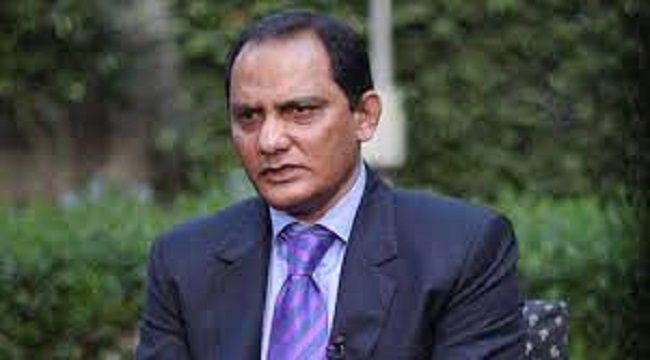
Former Indian captain Mohammad Azharuddin was reinstated as the President of the Hyderabad Cricket Association by Ombudsman Justice (retd) Deepak Verma. Five members of the Apex Council, which had suspended Azhar, were also “temporarily disqualified” by Verma.

In an interim order, the HCA Ombudsman temporarily disqualified five members of the HCA Apex Council, K John Manoj, Vice President, R Vijayanand, Naresh Sharma, Surender Agarwal, Anuradha.

Azharuddin was suspended for alleged violation of its constitution. Allegations of Conflict of Interest were levelled against the former captain.

In his order, Justice Verma(retd) pointed out that the complaint against Azharuddin was not forwarded to Ombudsman and in effect has no legal validity.

“Apex Council on its own accord cannot take such a decision. Therefore, I deem it appropriate to set aside the resolution (if any) passed by these five members in suspending the duly elected President, issuing a show cause notice and direct them to refrain from any subsequent actions against the President of HCA, Mohammed Azharuddin,” Justice (retd) Verma, said.

“Therefore, I direct that Mohammed Azharuddin shall continue as President and all complaints against office bearers shall only be decided by the Ombudsman

Point-Counterpoint 3: Cops and MeToo

By Scott Douglas Jacobsen and Rick Rosner

*Interview conducted June 23, 2020.*

Scott Douglas Jacobsen: Okay, so, there was a reckoning with Me Too. It was Time’s Up. It was a whole host of sub-women’s MeToos within that. What are some of the next steps after this?

Rick Rosner: The next steps probably won’t pertain to me two times up as much as other social movements. MeToo is still happening today. Ron Jeremy, the guy who’s been a porn star for 35 or 40 years, was charged with rape. Several prominent people were charged with raping. Danny Masterson, who I think was on That 70s Show, was charged with rape of a Hollywood producer, was charged with close to half a dozen rapes from 2012 to 2014. So, Time’s Up, MeToo will continue. But more people are focused on, right now, fixing the cops. Because we’ve had a number of notorious murders done by cops. George Floyd, Breonna Taylor, which may be less familiar to you in Canada, but she’s a woman. And I think in Louisville, Kentucky, where three cops were exercising a no-knock warrant.

And I think they got the wrong house or it was just like a supplementary house. And they busted down the door. And Breonna Taylor’s husband had a gun. And a no-knock warrant means the cops don’t have to identify themselves as cops. So, they just kick in the door. The husband took a shot at them and they shot Breonna Taylor like eight times or eight shots hit her. And one cop has been fired, but no cop has been charged in that. It’s hard. Anyway, these things keep happening. Cops being murderous and cops keep avoiding serious charges after the obvious assassination of largely blameless people. So, that’s the thing that people are looking at right now.

Jacobsen: And we’re dealing with a statistical thing here, too, where there will be some false accusations. There will be a small number, but there will be some.

Rosner: What, against the cops or against people?

Jacobsen: Yes, in either case, whether it’s something like a MeToo, or whether it’s something like cops.

Rosner: Yes, but okay, so, because there are also cops who’ve been killed for no reason, David, I forget his last name. Cops have been killed during these, at least half a dozen cops have been killed. Might be much higher than that, like 20. I haven’t looked it up lately. Cops who are killed during the protests, rioting.

Jacobsen: And we go to the original question theme. Excuse me.

Rosner: Hold on. One more thing, which is, black people are more than two times as likely to be killed by cops than non-black people. So, that’s that, anyway, go back to your original question.

Jacobsen: Sure. I look at the statistics. I wanted to look for boring bureaucrat, official sources. And the ones that came up were the FBI and the Home Office of the U.K. I believe the research was done independently. I know the Home Office in the UK used a thousand or two thousand cases for this research.

Rosner: Which statistics? Statistics about cops or Me Too.

Jacobsen: MeToo or related to it. But before that became a movement, it was to do with not just violence against women. It was to do with extreme violence against women in the form of rape. And in those cases, they found that only 8% were unfounded. So, I would interpret that as not enough information or the personal side.

Rosner: Yes, I’ve looked at those studies too. I took a bunch of women’s studies in college. I was taught that the percentage of false accusations of sexual assault and related stuff is no higher than for any other crime. And in actuality, you’re only a few percent, no more than 5%. And then I looked at the studies and I found that the studies are more equivocal than that, because it’s hard. Because murder is a very clearly defined crime. It’s not entirely cut and dried, but murder pretty much requires a dead person. Sexual harassment and sexual assault, the whole spectrum from harassment to rape, encompasses more stuff.

And so, when you look at studies and plus different studies have different definitions of each aspect of sexual assault, it’s harder to get a consensus. Also, it’s hard to get a consensus about sexual assault because it’s one of the least reported. Murders get reported. You’ve got a dead body. Robberies get reported. Sexual assaults often have a lower rate of being reported.

Jacobsen: In the cases of murder, the other person cannot respond, in all the other cases the person can respond, hopefully.

Rosner: Yes. But anyway, so, it’s hard to say for sure what the, and also it depends on your definition of what is well-founded.

Jacobsen: To me, these would be as founded as other research into these kind of murky or grey areas of the law and of jurisprudence. But I would say that we do have some data, we have to work with that data. However weak. And so we have that data.

Rosner: It’s tough to lock some of this shit down, like, when cops have historically been bad at dealing with sexual assault. Colleges have been terrible at dealing with sexual assault. When you have changing understandings of what sexual assault and rape are. For instance, 20 years ago, consent that is initially given and then withdrawn wouldn’t have been considered rape in a lot of places. 30, 40 years ago, 50 years ago, 60 years ago, 80 years ago, there was no such thing. There was no legal class of marital rape in most US states. And it only started turning around, I think, in the 70s and 80s. So, things change in our understanding of stuff. What’s his face? Master in none. What’s his name?

Jacobsen: I don’t know. I’m going to agree, but I don’t know who.

Rosner: Yes. So, he’s written on sex and romance and dating. But that didn’t stop him from being accused of being sexually coercive based on this woman who went on a date with him and she felt forced by him. He went down on her. He thought she was giving clear signals that that was something she was especially into. And he faced a lot of criticism. And before everybody kind of decided, I think, that it didn’t amount to rape.

So, he seems to have recovered from that. But that was based on the woman just feeling uneasy about an awkward date. James Franco has been accused of sexual coercion based on him being a movie star. And that guy does all sorts of shit, including, I guess, running acting classes when he feels like it. He would have sex with some of the women in his acting classes and they felt like the power differential was such that it created a coercive situation. He doesn’t seem to have suffered from that. Louis C.K. has had his career destroyed because it came out… well, he destroyed his career through his sexual behavior. It’s not that other people destroyed his career. He destroyed his career because he had a habit of cornering young female rookie comedians and making them watch him jerk off.

Jacobsen: So here’s the question: If we take all of those cases looking at the collective, we look at all of those cases. We take them into account and we compare the 70s, the 80s and the 20th and 21st centuries. What do you make of it? Is it better? Is it worse?

Rosner: It’s certainly better because people have more clues. I remember my friends and me growing up in the 70s. We were all the class of ‘78 and we were just clueless about almost all aspects of sex. We didn’t have sex with anybody except my one cool friend. And then another one of my friends managed to get a girlfriend right at the end, right before graduating high school. But anyway, we were largely clueless. And so, a lot of the bad things we didn’t do sexually; we didn’t do, because we couldn’t get close enough to anybody to have sex. Otherwise, we may have done shitty stuff out of ignorance. Though I do feel that, I had a certain amount of naive, clueless decency. But my ignorance was such that I still might have fucked up and did fuck up.

I don’t think I wrecked anybody’s life through bad sexual behaviour. But, I certainly had sex with various women that were probably not great sex for either person. And even if you’re completely well informed, obviously, you can’t avoid that, sometimes. But we were clueless, is the point. And now, people are wildly unclueless. At least, if they choose to be a part of the world and not like an Incel dickhead, but if you consume enough media, like my wife and I have noticed in the stuff we’ve been watching on Netflix and HBO this week, there are just penises everywhere. Like we’ve been watching a show, which is about wild behaviour among teens. And, dick pics are involved. Remember the old show from 60 years ago? You probably have never seen, but you should remember the name Perry Mason, the courtroom drama.

Jacobsen: Oh, yes, of course, it’s great.

Rosner: Ok, so, Raymond Burr, he usually gets the perpetrator to confess in the last scene. HBO just resurrected Perry Mason. But he’s not a lawyer, yet. I don’t know if he’ll ever be a lawyer. Now, he’s a down on his heels private eye. And we just watched the first episode. I thought it was pretty great. It had a huge fucking penis in it. He’d been hired by a movie studio to catch one of their stars fucking up, so they could terminate his contract because the talkies have come in and his voice is no good for the talkies. He was a silent star. He’s the guy who looks like, Hardy of Laurel and Hardy or Fatty Arbuckle.

And Perry Mason cracks him down to where he’s banging or he’s having a weird kind of sex with this woman and takes some pictures of him and he gets caught taking the pictures. And this fat guy runs down the street after him with his big old Johnson flopping all over the place chasing Perry Mason fully naked. And it’s like when you think of Perry Mason, you don’t think of dicks flapping around.

Jacobsen: But that’s a larger phenomenon. That’s a larger commentary on the pornification of culture.

Rosner: But that’s not porn. That’s gritty. It’s a gritty show.

Jacobsen: That’s nudity. And pornography is about nudity. So, I think some overlap between gritty and porn, and nudity.

Rosner: I’ll fight you on that. They’re just trying to be as gritty as possible.

Jacobsen: I think they’re trying to be as gritty, where “as gritty” means “as porny,” as possible.

Rosner: No. Because it’s not something that the producers of the show would expect you to beat off to. And I don’t think most viewers would beat off to what’s going on. And the show Euphoria, one of the main characters is a trans girl who’s – I don’t know – 16, 17, who has scary sex with people. She picks up hotel room sex with people she meets on the Internet. So, there’s all this stuff that you see. All we had in the 70s were dumb sex comedies where, sweet white boys, guys, who are portrayed as good guys would try to lose their virginity. And now, you’re seeing a more balanced picture of all aspects of sex. Also, people are having less sex, especially young people.

Jacobsen: And if people are having less sex, is there a kind of balance there between what’s portrayed externally in media and how we behave internally in the home?

Rosner: I don’t know. It’s not like the media that we consume shows everybody having sex anywhere. In the 70s, media showed, or at least implied, that cool people had a lot of sex and that you were weird if you didn’t want to have sex. And now, there’s a presentation of people as sex being just one aspect of some people’s lives. Like the other main character on that show is a drug addict, she is largely asexual. Even though, she’s kind of a cute high school girl. Nobody would have been permitted to be this girl on Saved by the Bell, except in maybe a very special episode. And plus, like, I don’t know the last thing Carol and I watched on Netflix was this show called Disclosure, which is about how trans people have finally become reasonably portrayed in media to some extent and to their years of being portrayed horribly.

Jacobsen: Ok. I’m going to play the lawmaker here, and play cop. Ok, great, if we have these shows and you reflect on the past because of the original question, where is this heading? Where is the direction of this now?

Rosner: Yes. Well, you also asked me before, are things better now than before? I said, “Yes.”

Jacobsen: Ok, so, they’re better now looking forward. Are they going to get better?

Rosner: Yes, I think I’ve done with Lance; I’ve done a lot of arguing about trans people.

Jacobsen: Does he think they are mentally ill as many conservative commentators think about?

Rosner: He does. He thinks that being trans. It means having a mental illness that makes you chop off your genitals. But I have to debunk that because of the people who have surgery at all. Only one-half of one percent have bottom surgery. It’s a crazy low number because it’s brutal surgery. And the outcomes are often not optimal. If you have penis to vagina surgery, then you have to work the area afterwards with dildos of increasing size to make sure that your vaginal canal, your surgically created vaginal canal, stays big enough for sex. So, that’s a miserable exercise. And it is surgery that, compared to a lot of surgeries, has a fairly low satisfaction rate. But the good thing here about transness is that most trans people don’t have surgery.

And, I don’t know what the statistics are on people doing hormones. It’s obviously a lot more than people having surgery. But that people feel free to live trans life without surgery, I think is a major step forward. Like, maybe, one of the most famous trans people as Caitlyn Jenner. And she had top surgery. And I think she had surgery to sort of feminize her nose, probably to get rid of her Adam’s apple. But I think she left her dick alone. And that’s a good thing, because you shouldn’t have to go through this horrible butchery to live the life as the gender that you are; that you feel you are. And I think if I were a younger person, there are a lot of options; it’s a range like every other, or hot trans people – and there are trans people who aren’t hot.

But I always felt like I had a better shot with, on a per capita basis. Like, present me to a group of women and present me to a group of trans women, I always felt like my chances would be better with the trans women. And that’s kind of weird and ridiculous, but that’s how I felt. And back in the 80s, I could have at least made out with a very hot trans woman that I knew from the bars I worked at, and also I knew her as a woman at night in bars. And I knew her in the daytime from on campus and at night when she was a woman, she was just super hot. And we were flirting and I could have gone and made out with her.

And I was afraid to because I was worried about the dick that I was going to be around. And now I think if I were twenty-five years old now instead of then, I wouldn’t be as afraid of making out with some hot woman who has a penis. It wouldn’t be that big a deal. And I’d get to make out with a hot woman because that was like a thing I always wanted to do. And, my wife is attractive, but she’s not a fucking 6-foot ballistic redhead. And anyway, so, I think it’s a step forward that trans people can be accepted and don’t have to go to ridiculous lengths to transform their bodies.

Jacobsen: Can we close this on an agreement, the idea that things have gotten better, but there have been bumps in the getting better?

Rosner: Yes. we’re living – Americans, the whole fucking world is living – in a huge bump right now. Coronavirus fucked up everything. In America, we elected a guy who claimed he would be the best president for gay people. He might still claim it because nothing stops him from saying fucking anything he fucking wants, and when Trump was running and also when he said he’d be the best president ever for LGBTQ people, I think he’s claimed to be the best president ever for gay people. And he’s obviously a piece of shit for gay people, and especially for trans people. He’s trying to remove all sorts of protection from them. He’s made it so that trans people can’t serve in the military.

Trump’s administration has been a huge step back in whatever areas he can get his fat little hands-on for trans people and just a certain extent for gay people. He’s a voice of intolerance. So, yes. at the same time, media has fucking gotten a gazillion times better with trans people. And also for anybody who wants to have sex, that doesn’t leave you scarred for life. But Trump himself is a huge step back. He’s been credibly accused of rape or sexual assault or harassment by more than two dozen women. And he got elected despite it. So, yes, it’s a mixed fucking bag.

*High range testing (HRT) should be taken with honest skepticism grounded in the limited empirical development of the field at present, even in spite of honest and sincere efforts. If a higher general intelligence score, then the greater the variability in, and margin of error in, the general intelligence scores because of the greater rarity in the population.*

Rick Rosner: “According to some semi-reputable sources gathered in a listing hereRick G. Rosner may have among America’s, North America’s, and the world’s highest measured IQs at or above 190 (S.D. 15)/196 (S.D. 16) based on several high range test performances created by Christopher HardingJason BettsPaul Cooijmans, and Ronald Hoeflin. He earned 12 years of college credit in less than a year and graduated with the equivalent of 8 majors. He has received 8 Writers Guild Awards and Emmy nominations, and was titled 2013 North American Genius of the Year by The World Genius Directory with the main “Genius” listing here.

He has written for Remote ControlCrank YankersThe Man ShowThe EmmysThe Grammys, and Jimmy Kimmel Live!. He worked as a bouncer, a nude art model, a roller-skating waiter, and a stripper. In a television commercialDomino’s Pizza named him the “World’s Smartest Man.” The commercial was taken off the air after Subway sandwiches issued a cease-and-desist. He was named “Best Bouncer” in the Denver Area, Colorado, by Westwood Magazine.

Rosner spent much of the late Disco Era as an undercover high school student. In addition, he spent 25 years as a bar bouncer and American fake ID-catcher, and 25+ years as a stripper, and nearly 30 years as a writer for more than 2,500 hours of network television. Errol Morris featured Rosner in the interview series entitled First Person, where some of this history was covered by Morris. He came in second, or lost, on Jeopardy!, sued Who Wants to Be a Millionaire? over a flawed question and lost the lawsuit. He won one game and lost one game on Are You Smarter Than a Drunk Person? (He was drunk). Finally, he spent 37+ years working on a time-invariant variation of the Big Bang Theory.

Currently, Rosner sits tweeting in a bathrobe (winter) or a towel (summer). He lives in Los AngelesCalifornia with his wife, dog, and goldfish. He and his wife have a daughter. You can send him money or questions at LanceVersusRick@Gmail.Com, or a direct message via Twitter, or find him on LinkedIn, or see him on YouTube.”


Photo by Marissa&Eric on Unsplash

‘Pak forces kill and rape during operations’

Baloch elders and women from the Keelkor area of district Panjgur talked about Pakistani raids and human rights violations at the Turbat Press Club in occupied Balochistan on Sunday. “Pakistani forces have brutally killed our innocent loved ones. They arrested Pirjan who was then subjected to severe torture. Pirjan could not survive due to severe injuries. Our houses are set on fire by these (Pakistani) forces… our cattle are routinely shot dead during military operations. In a recent operation five camels were shot dead… our lives have been ruined by these law enforcement forces,” said Rehmat Dawood, a tribal elder.

“We are told that these forces have been deployed to protect us, but they are killing us. Recently during a military operation our women were desecrated. Can this be the work of protectors?” asked Rehmat Dawood.

“Our women have been desecrated during the raids on our houses. We appeal to the higher authorities to save us from the tyranny and barbarism of these unbridled forces,” said Ghulam Nabi, another tribal elder from Keelkor. Ghulam Nabi added that they were not being allowed to cultivate their lands. “Our crops have been deliberately destroyed by the forces,” added Ghulam Nabi.

Banuk Jangul introduced a small child to the media during this presser and said, “…this is five year old Mughal, whose father Daljan was killed during the operation.”

“Who will bring justice to this orphaned child? Justice is not expected anywhere. We want to know what is our crime, what have we done to these forces,” asked Banuk Jangul. She further added that they should be given the right to live on their land.

Extrajudicial killings and disappearances of Baloch by the Pakistani security forces across occupied Balochistan is a serious issue. Over the last several years more than 35,000 Baloch have been abducted who are now “missing” and more than 10,000 innocent Baloch civilians have been killed by the Pakistani forces as part of their “kill and dump” policy.

Pakistan Air Force grabs public land in Skardu, arrests protesting locals

Pakistan Air Force (PAF) has occupied public land at Skardu in Gilgit-Baltistan. Nationalist leader Manzoor Parwana was arrested along with several locals of Skardu for protesting against this illegal land grab by Pakistan Air Force.
Watch our news report to know the full story.

Click on the YouTube link to watch our news report

Why is the hatred against Pakistan Army growing in Pakistan?

Public opinion is fast turning against the Pakistan Army in Pakistan.
Watch this video report to know more.

Click on the YouTube link to watch our video report

Will there be a resurrection for Dr Deen Mohd Baloch?

Countless people are born in this world who leave their mark on human minds. The past struggle of these characters shape the present and, thereafter, write the future’s history. Historians adore the character of these entities in their books. In my life I have also known several people who are no longer with us physically, yet their role compels the historians to put pen to paper and describe their amazing job. There are numerous such names in the history, whose roles are not easy to describe, but such characters force an author’s pen to describe what they had said, what they did in the past for they did not hesitate to jump into the fire like the mythical Nimrod. And so their deeds has become special indeed.

Several Baloch personalities are no longer with us in this mortal world and several others continue to suffer state oppression and endure the ordeals inflicted by the occupying Pakistani forces. The memory of numerous such leaders’ sufferings in these torture cells inspires me to pick up the pen and paper to write about them. Dr Deen Mohammad Baloch is one such personality whom I met seventeen years ago in 2004 at Quetta during the Baloch National Movement (BNM) council session. I had the opportunity to meet this great leader and from that day onwards we became good friends. Dr. Deen Mohammad Baloch belongs to Mashkay and is considered one of the intellectual and ideological friends of the BNM’s revolutionary ideology. This what Martyr Ghulam Muhammad Baloch said to me about Dr. Deen Jan.

During those three days of the BNM council session, I saw Dr. Deen Mohammad Baloch as a moderate politician and a revolutionary leader in our society. He traveled to Balochistan to carry out BNM’s revolutionary programs and independence slogan to every Baloch across every village and house. Dr. Deen Mohammad Jan’s sincerity and hard work led the BNM caravan to reach Balochistan’s every corner in a short period.

Dr. Deen Jan Baloch became a member of the BNM Central Committee in the 2004 council session. At the same time through his efforts the great leader of BNM, martyr Dr. Manan Jan also joined BNM and stepped into revolutionary politics. Both Dr. Deen Mohammad Jan Baloch and Dr Mannan are doctors and belonged to Mashkay. Baloch doctors have been ideological and political free thinkers. Dr. Deen Mohammad Jan’s efforts led the Baloch Doctors Forum and several organizations to become ideological allies of the Baloch National Movement.

On December 3, 2006 when Pakistani regime abducted martyr Ghulam Mohammad Baloch and BNM workers were worried about the disappearance of their leader, it was Dr. Deen Jan who made a prolonged visit to Balochistan and Karachi with other party members to mobilize the rest of the placid workers. Very soon thereafter, the BNM was reorganized.

In 2007, I remember when we joined the hunger strike camp in Quetta and started a campaign to join the Baloch women panel members, it was Dr. Deen Mohammad Baloch who along with other friends visited our camp at Quetta. This camp had the full support of BNM and BSO Azad.

Despite being a government doctor Dr. Deen Mohammad Baloch was a revolutionary leader and an active member of the BNM. When martyr Ghulam Muhammad was released from the Pakistani torture cells after nine months and was bailed out in eight fake cases, Dr. Deen Jan stood up with martyr Ghulam Muhammad along with other friends and organized party programs at Malir, Karachi and engaged in preparations for the 2008 council session. Dr Deen Mohammad Baloch held a successful revolutionary session on 15 July 2008 where once again he was elected as a member of the Central Committee of BNM. Henceforth he joined the freedom movement with martyr Ghulam Muhammad Baloch.

On April 3, 2009 the Pakistani security forces martyred Ghulam Muhammad after his enforced disappearance, his bullet-riddled dead body was found at Murgap. Dr Deen Jan along with other friends attended the funeral prayers at my home at Mand. I was spellbound to see the comrades of martyr Ghulam Muhammad’s funeral caravan.

Unfortunately, I am writing these words today out of sadness after the loss of several friends in my life. In these tragic times many friends in the caravan went away but several others stayed until the last breath of their lives and history will remember them always. Many of these friends are undergoing physical and mental torture in the Pakistani prisons for the last ten to twelve years.

Dr. Deen Mohammad Baloch who was among those who attended the funeral prayers of martyr Ghulam Muhammad. I was honored to host him at my home on the occasion of martyr Ghulam Muhammad’s funeral. At that time I didn’t know that this honor would not be possible again during martyr Asif and Atif Jan’s funeral after they were martyred by Pakistani security forces.

The next day Dr Deen Mohammad Baloch had said goodbye and promised to meet me again. But even Dr Deen Jan didn’t know, nor the martyrs of Murgap knew that this will be the last see off. On June 28, 2009 a friend informed through a phone call that Dr. Deen Mohammad Baloch had been abducted by state-run Pakistani intelligence agencies by breaking into his house while he was still on duty at Ornach, in Khuzdar. I am still waiting for Dr Deen Jan for the last twelve years. Dr. Deen Mohammad’s innocent daughters are also waiting for their father. Will there be a resurrection?

Click on the YouTube link to watch this video report