Zara Kay (YouTube, Wikinews) is the Founder of Faithless Hijabi (Facebook, Instagram, Twitter, Wikipedia). Faithless Hijabi aims for the creation of shared experiences and creating a community for ex-Muslims.[1] Since the founding of the organization in October of 2018, the organization, under the helm of Kay, has advanced rapidly.
Many resources have been provided by the organization including sections of the web domain for sharing your story[2], a blog[3], a mental health program[4], advice on setting boundaries with family as an ex-Muslim[5], life after Islam[6], a support corner[7], how to support them[8], and, as of recent, #JusticeForZaraKay[9]. Why the hashtag with “Justice” in it?
My first interactions with Kay happened around the turn or the start of the organization, around Spring of 2019. These took many months to come to transcription and publication. It became an extensive four-part introduction and interview with her.
The parts were entitled “An Interview with Zara Kay on Ethnic and Religious Background, Differential Treatments of Boys and Girls, Men and Women in the Religious Culture, and Theological Justifications (Part One),” “An Interview with Zara Kay on Faithless Hijabi, Global Violence Against Women Statistics, Leaving Fundamentalism, and Building Bridges (Part Two),” “An Interview with Zara Kay on No True Scotsman, FGM, Clitoridectomy, Infibulation, Identity Crisis, and Secular Communities (Part Three),” and “An Interview with Zara Kay on Dawkins, Liberation of Women, and Women’s Free Choices (Part Four).”
All published in In-Sight: Independent Interview-Based Journal (2369-6885). Through the interview, it was clear, early, Kay was going to be a powerful and influential voice for ex-religious people, ex-Muslim people, and, in particular, women in those communities.
The quelle surprise surprise was the bringing Kay into a police station, hence “Justice.” Her last tweet before heading into the station mentioned being checked into it. There have been growing petitions for her. Including a rapid development signatory support list, the number of signatories has grown rapidly for Kay’s case[10].
Kay was detained on purported charges on December 28, 2020. She was held in the Dar es-Salaam Oysterbay Police Station for 32 hours. It is claimed by the Council of Ex-Muslims of Britain that the charges against Zara are politically motivated.
Those charges coming from the Khoja Shia Ithnasheri Jamaat. The community, allegedly, opposed the activism, apostasy, and blasphemy, of Kay. Kay has Tanzanian ethnic background while being an Australian national. She was bailed on December 29, 2020. She has had to report to the police station every weekday between December 29 and January 11 followed by spotty reporting on January 15 and 18.
Her next report to the police station, apparently arbitrary and capricious, happened on January 22, 2021, presumably. With weeks since the original detainment in Dar es-Salaam, no court date or motion towards a resolution of this illegitimate, scurrilous, and contumelious behaviour on the part of the police authorities of Tanzania is forthcoming.
The International Coalition of Ex-Muslims, started in early 2020 and suspiciously sounding like a proposal from an article entitled “An Immodest Proposal: International Coalition of Ex-Muslims (ICEM)” (from 2019, not 2020), representative (via Ex-Muslim Somali Voices), Halima Salat, stated, “Faithless Hijabi is Zara’s organization, which has since also published a long list of signatories from all walks of life including international organizations in solidarity with what she is facing.”
I asked Salat about the post and the backlash to it, by the larger community around Kay. Salat directed attention to two posts seen as critical of the president of Tanzania, which were satirical of the government’s role vis-a-vis Covid-19.
“She shared them in May 2020 while living in London. The posts had very little interaction and no particular backlash at the time. However given that a lot of Tanzanians, specifically people from her former community had issues with her social media presence, have been wanting to actively shut her down,” Salat stated, “I have personally seen direct threats to her and her family. There have been attempts to shut down her Wikipedia page, she has been asked to leave school grounds when picking up her nieces. At the break of this story in western media, there are ongoing comments about her arrest where people have actively agreed with the government’s targeting of Zara, and calling for her to be jailed on the basis of her criticism of Islam.”
Then I asked about the similarity of this particular case with other prominent cases of ex-Muslims mistreated by the wider community and the justice system, e.g., Waleed Al-Husseini in occupied Palestinian territories (Qalqilya) and Mubarak Bala in Kaduna, Northern Nigeria, even ‘Ayaz Nizami’ in Pakistan.
Salat remarked on a refreshing fact. No blasphemy penalties exist in Tanzania. However, the risks for freethinkers and ex-Muslims are ubiquitous. Salat talked about the daily reporting to the Tanzanian police at the time.
“World-wide we see freethinkers, atheists, ex-Muslims facing persecution for their conscience, expression and beliefs. Depending on the country, it can even result in the death penalty. It has become increasingly common to see people jailed for sharing their opinion, satire, comment on social media and especially if such posts are deemed blasphemous by theocratic governments,” Salat explained.
When I asked about important ways to become involved, or effective forms of activism, Sala toted common means by which vocal ex-Muslims and activists have been targeted by the public, and how the public have been utilizing existing misdemeanour charges. These become a platform to get vocal ex-Muslims and activists in trouble with the law.
Salat stated, “In countries where blasphemy laws are not as succinct and clear on paper, the societal attitudes and individuals who hold religion sacred, have especially resorted to using state actors in making such accusation as a way to silence activists, dissenters, exmuslims, freethinkers and anyone they deem does not hold religions sacred.”
The President & CEO of Atheist Republic, Susanna McIntyre, provided some information and stated:
Zara Kay’s case has demonstrated that the ex-Muslim community, and the atheist movement more broadly, can extensively and efficiently mobilize during a moment of crisis. Ours is a large movement, and prominent figures have fundamental disagreements, but all put aside their differences when officials threatened Zara’s liberties. It has been incredibly heartening to be involved in and witness this international collaboration to secure Zara’s freedom and her safe return home, and the fight is not yet over. In the process of calling upon the United Republic of Tanzania to demonstrate their commitment to their proclaimed values of democracy and the protection of civil liberties, this tense situation has inadvertently forged a model of the achievements possible through global cooperation. Atheist Republic reiterates its appeal to the Tanzanian Government to honor the principles ensconced in their nation’s constitution and drop all charges against Zara Kay.
Furthermore, one more prominent international voice is the United States Commission for International Religious Freedom (USCIRF), which provided some answers to queries about their positions. It is bipartisan, which adds to its legitimacy.
On the social media post and the backlash against Kay for the post, USCIRF Vice Chair Anurima Bhargava considered the main concern the authorities questioning Kay about her beliefs and relationship to a religious ideology, Islam. This happened during the investigation.
“Asking such questions is problematic in and of itself, and if they base any charges or action against her on the answers to these questions, they would be committing violations of her right to freedom of belief,” Bhargava stated, “We are especially concerned about this potential since advocates report that Kay had received threats from members of the Khoja Shia Ithnasheri Jamaat, a prominent Muslim group in Tanzania, for leaving Islam and her activism supporting ex-Muslims. Religious freedom includes the right to change one’s religion or to be non-religious, and Kay must not be penalized or mistreated by either state or non-state actors for exercising this right.”
Bhargava’s recommendation was to reach out to other human rights and free speech organizations to learn more about the analysis of the situation. The Council of Ex-Muslims of Britain (CEMB) remains a potent and important organization in this regard because of its and the International Coalition of Ex-Muslims (ICEM) updates regularly coming out about the situation for Kay.
“Pew Research has found that restrictions on religion overall have increased around the world in recent years. The data around violations against humanists and free thinkers specifically is inconclusive and difficult to interpret, especially since humanists are often not accounted for in religious demographic data,” Bhargava stated.
There are broader trends of the violations of the human rights of believers and non-believers in 2020. It makes things difficult. Also, with the Covid-19 years, the comparison and tracking compared to previous years becomes difficult too.
“We have seen several high profile cases of violations against humanists in 2020, including the unlawful detention of Mubarak Bala in Nigeria, whom USCIRF Commissioner Fred Davie has adopted as part of USCIRF’s Religious Prisoners of Conscience project,” Bhargava stated.
If you wish to add your name or organization to the signatory list for Kay, please send an email to info@faithlesshijabi.org or search for CEMB’s and ICEM’s ongoing updates on the case.
Footnotes
[1] “About” states:
Faithless
Hijabi was established in October 2018 and since we’ve helped hundreds of women
to engage with us from all over the world. As it stands, women who leave the
religion of Islam are often ostracised by their families, any form of dissent
has the possibility of inciting violence.
This is a space where vulnerable and endangered women garner support. Our space
is one of shared experiences, experiential guidance, and strength in unity.
The reality of the world today is that there exists many nations and cultures
where women are abused and threatened with honour violence and killings when
questioning their faith…
…At
Faithless Hijabi we aim to ensure women are safe in questioning their faith and
are protected from harm when exploring the space outside Islam.
✽ We’ve established a
community on Discord that ensures anonymity of our members and enables women to
express themselves freely while ensuring all members are protected.
✽ We work with women from
abusive backgrounds by guiding them to the relevant organisations in their
country that can support them.
✽ We aim to be a support
system and help women grow by mentoring them to achieve financial independence
✽ Some of our mentorship
revolve around create a nurturing environment that advocates for a balanced conversation
with their families and helping them understand how to create and maintain
boundaries.
✽ As of recently, we’ve
started our podcast/video series on Life After Islam and Support Corner, for
more information visit our video series page.
See Faithless Hijabi (2021a).
[2] “Sharing Your Story” states:
Send your story out
into the world so that we can help each other grow!
Here are a few guidelines that you can use. We’re here to listen,
only share what you’re comfortable sharing.
- How were you raised?
- What was your upbringing like?
- When did you first start questioning Islam?
- What questions did you have?
- What triggered the questioning phase?
- How did you react after you found your answers?
- What do you think of the Hijab?
- Did you wear the hijab? If so, when did you start?
- Are you still wearing it? If not, when did you remove it and why?
- Do your family know about you leaving Islam?
- If yes, how did they find out and how did they react?
- If not, what does it feel like living a double life?
See Faithless Hijabi (2021b).
[3] “Blog” states:
By sharing the stories of ExMuslims from around the globe we aim to engage our audience by igniting empathy based on stories that may be of shared experience or ones that present to us a different understanding of the current landscape.
See Faithless Hijabi (2021c).
[4] “Mental Health Program” states:
In 2014 a Freedom of Information request to UK police forces revealed that over 11,000 cases of ‘honour’ crime were recorded between 2010-14. Before accessing support, victims at risk of HBV experienced abuse for 2 years longer
(5 years vs 3 years) than those not identified as at risk of HBV.
Nearly a quarter (23%) of victims at risk of HBV were not eligible for most benefits. 68% of victims at risk of HBV were at high risk of serious harm or homicide, compared to 55% of those not identified as at risk of HBV.
We aim to create a safe space for women to come
together and support one another. We have multiple programs in place, such as
the video series “Support corner”, our community engagement group, and our
story telling podcast on YouTube.
Currently, we are fundraising for our Mental Health Program. Our mental health
program has partnered with a clinic in the UK, Cherry Tree Clinic and other independent
therapists depending on locations that are trained to provide specialised
therapy for apostates. Sponsoring 1 session for 1 person costs as little as
£20-40 pounds, and with greater funding we can refer women for longer sessions.
This program is open to both Muslim and ExMuslims
If you’re looking to join the program to receive this benefit, please email
info@faithlesshijabi.com to join our waiting list.
See Faithless Hijabi (2021d).
[5] “Setting Boundaries With Your Muslim Family, As An ExMuslim” (2021e) states:
What are boundaries?
We’ve often heard the word ‘boundaries’ being thrown around nowadays, and while many may theoretically know what that means, but how many of us really understand what it means. What are boundaries?
We can think of boundaries as a line, an imaginary line, that you set around yourself which helps how you interact with others in any relationship, it guides how you would like to be treated, and communicates what you are willing to accept.
Why is it important to set boundaries?
Personal boundaries are vital in order for us to thrive and be in healthy relationships. Having them in place allows us to communicate our needs and desires clearly and succinctly without fear of repercussions. It is also used to set limits so that others don’t take advantage of us or are allowed to hurt us. It is a way for us to practice self-care and self-respect.
With unhealthy boundaries we lose self-respect as we go against our values in order to please others. We keep giving of ourselves and yet feel like when we ask for help we are ignored. Allowing others to determine what we like, where we are going, or who we are shows that we are allowing them to control us which are a signs that we have unhealthy boundaries.
See Faithless Hijabi (2021e).
[6] “Life After Islam” states, “Life After Islam is a series dedicated to speaking with ExMuslims about their experiences, their views, advice to younger ExMuslims and just engaging in insightful conversations with our growing community of ExMuslims.” See Faithless Hijabi (2021f).
[7] “Support Corner” states:
Support Corner is weekly 30 minute series of Ghada and Zara Kay discussing most commonly asked questions by ExMuslims. And occasionally interviewing subject matter experts and other ExMuslims on specific topics. We’re by no means professionals in these topics, we only speak from experience discussing what has helped us.
See Faithless Hijabi (2021g).
[8] “Support Us” states:
Your
donations will be spread across helping us run Faithless Hijabi, individual
cases that we work with and events that we’ll be sponsoring in the future.
Your donations will be contributed towards:
✽ Funding
therapy sessions: mental health remains to be stigmatised in Muslim
communities, for girls that face honour and religious based abuse who require
professional help but can’t afford it, Faithless Hijabi works with external partners
and will sponsor 6 sessions for every case referred dependant on donations.
✽ Funding
shelters when necessary: we often find ourselves in touch
with women who have left abusive homes and are on the run. While we connect
them to other supporting organisations, we often require the funding to help
girls with essentials and immediate needs.
✽ Our
admin: more on the operations side, technology used and other forms of outreach
that require funding to support.
✽ Volunteers:
our volunteers have donated hours of their weeks to help us run this, in the
future and as a last priority for funding usage.
See Faithless Hijabi (2021h).
[9] “#JusticeforZaraKay” stated:
Zara
Kay, an Australian citizen and founder of Faithless Hijabi, was summoned to the
Dar es-Salaam Oysterbay Police Station in Tanzania on 28 December 2020 and held
in police custody for 32 hours without a clear indication of charges.
Zara is a well-known ex-Muslim and women’s rights activist. Whilst in police
custody, Zara was asked about the work of her organisation and why she left
Islam. Zara was released on bail and is now to return to the police station
with her lawyer on 5 January 2021.
The charges against her are:
1) Social media posts deemed to be critical of the president of Tanzania (these
light satirical posts were posted in May when Zara was in London, addressing
the handling of Covid-19 in Tanzania)
2) Not returning her Tanzanian passport after gaining Australian
citizenship (she never returned her Tanzanian passport as she misplaced and
never used it after gaining Australian citizenship)
3) Using a SIM-card not registered in her name (this was registered in a family
member’s name). Failure to register SIM-cards legislation has been
used to persecute other high-profile cases.
We, the undersigned, call on the Tanzanian government to immediately drop all
the politically-motivated charges against Zara Kay, return her passport and
allow her to leave Tanzania. The constitution of Tanzania enshrines
secularism as a state principle and recognises freedom of expression and of
conscience. We also call on the Australian authorities to intervene and get
Zara home to safety.
(More information available here.)
See Faithless Hijabi (2021i).
[10] “#JusticeforZaraKay” states:
A C Grayling, Philosopher, UK
Aaron Yandell, USA
Abir Ahmed Raihan, Author and Ken Fiklow Prize Awardee, Canada
Adriana S.Thiago, Communications Officer, European Network of Migrant Women, Belgium
Ahmad Nasser, ExMuslim TV, UK
Ahmedur Rashid Chowdhury, Editor in Chief and Publisher, Shuddhashar, Norway
Prof. Alan Davison, University of Technology Sydney, Australia
Albert Beale, Pacifist Activist, UK
Ali A. Rizvi, Author of The Atheist Muslim and Co-host, Secular Jihadists for a Muslim Enlightenment podcast, Canada
Ali Malik, Council of Ex-Muslims of Britain Refugee and Asylum Project Manager, UK
Ali Utlu, Human Rights Activist, Germany
Aliaa Magda Elmahdy, Women’s Rights Activist, Sweden
Alice Carr, Advocate, Progressive Atheist Inc., Australia
Alliance of Former Muslims, Ireland
Amardeo Sharma, President, The Gesellschaft zur wissenschaftlichen Untersuchung von Parawissenschaften, Germany
American Atheists
Ana González, Solicitor, UK
Andrew L. Seidel, Constitutional Attorney and Author, USA
Andrew Rawlings, Former President, Progressive Atheist Inc., Australia
Angkatan Murtad, Malaysia
Anissa Helie, Professor, Algeria/USA
Anna Zobnina, Coordinator, European Network of Migrant Women, Belgium
Annie Laurie Gaylor, Co-founder, Co-President, Freedom From Religion Foundation, USA
Anthony McIntyre, The Pensive Quill, Ireland
Arash Hampay, Refugee Rights Activist, Greece
Arif Rahman, Secular Humanist Blogger, Bangladesh/UK
Armin Navabi, Founder, Atheist Republic, Canada
Arsalan Nejati, Activist, Turkey
Arzu Toker, Internationaler Bund der Konfessionslosen und Atheisten, Germany
Ashanour Rahman Khan, Ex-Muslim Blogger, Sweden
Ashkan Rosti, Activist, Ex Musulmani d’Italia
Atheism UK
Atheist & Agnostic Alliance of Pakistan
Atheist Iranian Community
Atheist Refugee Relief
Atheisten Österreich
Atheists for Liberty
Atheists In Kenya Society
Atika Samrah, Activist, Conseil des Exmusulmans de France, France
Avinash Patil, Executive President, Maharashtra Andhshraddha Nirmulan Samiti (MANS) And Vice President, Federation of Indian Rationalist Associations (FIRA), India
Azam Khan, Ex-Muslim Blogger, Switzerland
Barry Duke, Editor, The Freethinker, UK
Beatrix Campbell, Writer, UK
Betty Ibtissame Lachgar, Founder, M.A.L.I. (Alternative Movement of Individual Liberties, Morocco), Morocco
Bread and Roses TV, UK
Cadmeus Cain, Representative, Atheist Muslims South Africa, South Africa
Carl Russ-Mohl, Filmmaker, UK
Catherine Dunphy, Author, Canada
Cemal Knudsen Yucel, Leader, Ex-Muslims Of Norway, Norway
Central Committee of Ex-Muslims in Scandinavia
Centre for Secular Space
Chris Cooper, Representative, Atheist Muslims South Africa, South Africa
Chris Street, President, Atheism UK, UK
Christa Compas, Director, Humanistisch Verbond, The Netherlands
Cinzia Sciuto, Journalist, Italy
Community Women Against Abuse
Conseil des Exmusulmans de France
Council of Ex-Muslims of Britain
Council of Ex-Muslims of New Zealand
Council of Ex-Muslims of Singapore
Council of Ex-Muslims of Sri Lanka
Craig Michael Chatfield, UK
Dagfinn Eckhoff, Leader, Norwegian Atheists, Norway
Dan Barker, Co-President, Freedom From Religion Foundation, USA
Dario Picciau, Co-President, EveryOne Group, Italy
David P. Kramer, South Africa
David Rand, President, Libres penseurs athées, Montréal, Canada
Signatories Cont.
De Balie Centre for Arts and Politics, The Netherlands
Didarul Islam, Ex-Muslim Blogger, Greece
Djemila Benhabib, Collectif Laïcité Yallah, Belgium
Dustin Krinzer, Chairman, Atheisten Österreich, Austria
E.A. Jabbar, Yukthivadi Organisation, Kerala, India
Eddie Goldman, Journalist, USA
Eldridge Alexander, Information Security Engineer & Speaker, USA
Eric Weinstein, Host of the Portal Podcast, USA
ExMuslim Somali Voices, Netherlands
Ex-Muslims of India
Ex-Muslims of Netherlands
Ex-Muslims of North America
Ex-Muslims of Norway
Ex-Muslims of Tamil Nadu, India
Ex-Muslim Support Network of Australia
Fabian van Hal, Activist, The Netherlands
Faithless Hijabi
Fariborz Pooya, Producer, Bread and Roses TV, UK
Fauzia Ilyas, Atheist & Agnostic Alliance of Pakistan, The Netherlands
Federation of Indian Rationalist Associations (FIRA), India
Federico Galanetto, Italy
FEMEN
Freedom From Religion Foundation
Freethought Lebanon
Geoff Cooper, Author, USA
George Broadhead, Secretary, Pink Triangle Trust, UK
Gita Sahgal, Spokesperson, One Law for All and Founder, Centre for Secular Space, UK
Glenys Robinson, Co-President, EveryOne Group, Italy
Gulalai Ismail, Human Rights Activist and Founder, Aware Girls (Pakistan), USA
Haafizah Bhamjee, Representative, Atheist Muslims South Africa, South Africa
Halaleh Taheri, Executive Director, Middle Eastern Women and Society organisation-MEWSo, UK
Halima Salat, Founder,, Ex-Muslim Somai Voices, The Netherlands
Harris Sultan, Author and Ex-Muslim activist, Australia
Harrison Mumia, President, Atheists In Kenya Society, Kenya
Harsh Kapoor, South Asia Citizens Web, India
Hassan Radwan, Agnostic Muslims & Friends, UK
Helen Pluckrose, Writer, UK
Hemant Mehta, Editor, Friendly Atheist, USA
Hina Hasan, Co-Founder, Ex-Muslims of India, India
Houzan Mahmoud, Women’s Rights Activist, Germany
Humanist Union of Greece
Ian Bellis, USA
Ibn Warraq, Author and Researcher, USA
Imal Senevirathna, Irreligious Community of Sri Lanka, Sri Lanka
Inna Shevchenko, FEMEN, France
Internationaler Bund der Konfessionslosen und Atheisten (IBKA), Germany
Istishion Blog, Bangladesh
Izzy Diab, Community Support, Faithless Hijabi, Jordan
Jaan Dillon, Public Officer, Faithless Hijabi, Australia
Jahid Hasan, Ex-Muslim Blogger and ICORN Scholar, Norway
Jalil Jalili, Activist, Council of Ex-Muslims of Britain, UK
Jan Bockma, Contributing Editor, Vrij Links, The Netherlands
Jane Donnelly, Human Rights Officer, Atheist Ireland, Ireland
Jason Frye, CEO, Secular Policy Institute, USA
Javed Anand, Human Rights Defender, Journalist and Convener, Indian Muslims for Secular Democracy, India
Jay B. Kohnson USA
Jean-Pierre Sakoun, Chairman of Comité Laïcité République, France
Jenny Wenhammar, FEMEN Sweden, Sweden
James Gavitt, USA
Jill Nicholls Film-maker, UK
Jimmy Bangash, Spokesperson, Council of Ex-Muslims of Britain, UK
Jimmy Snow, YouTuber USA
Johanna AGA Browne, Melbourne Australia
Jorick-Yzaak Mallette, Canada
Julie Bindel, Journalist, Author and Feminist Campaigner, UK
Kacem El Ghazzali, Secular Essayist and Activist, Switzerland
Kareem Muhssin, Spokesperson, Alliance of Former Muslims (Ireland), Ireland
Karen Ingala Smith, Women’s Rights Campaigner, UK
Karrar Al Asfoor, Humanist Dialogue Forum, Germany
Kat Parker, Secular Rescue Case Manager, Center for Inquiry, Australia
Katha Pollitt, Poet and Essayist, USA
Keith Porteous Wood, President, National Secular Society, UK
Kenan Malik, Writer, UK
Khadija Khan, Journalist, UK
Kifriazrin Ahmad Kapli, Malaysia
Komal Ali, Netherlands
Lawrence M. Krauss, Physicist and Author, USA
Leo Igwe Humanist Association of Nigeria, Lagos, Nigeria
Libres penseurs athées – Atheist Freethinkers, Montréal, Canada
Lisa-Marie Taylor, Feminist Activist and CEO, FiLiA, UK
Ludovic Mohamed Zahed, Director, CALEM Institute, France
Mahaarah
Maharashtra Andhshraddha Nirmulan Samiti (MANS), India
Marea Magazine
Marek Łukaszewicz, President, Kazimierz Lyszczynski Foundation, Poland
Mariam Aliyu, Founder and Executive Director, Learning Through Skills Acquisition Initiative, Nigeria
Marieke Hoogwout, Writer and Editor, Vrij Links, The Netherlands
Marieme Helie Lucas, Founder, Secularism is a Woman’s Issue, Algeria
Markus Wollina, Co-founder LAG Säkulare
Linke Berlin, Germany
Maryam Namazie, Spokesperson, Council of Ex-Muslims of Britain and One Law for All, UK
Maryam Shariatmadari, Women’s Rights Activist
Meredith Tax, Writer and Feminist Organizer, USA
Mersedeh Ghaedi, Iran Tribunal London, UK
Michael Nugent, Chairperson, Atheist Ireland, Ireland
Milad Resaeimanesh, Spokesperson, Central Committee of Ex-Muslims in Scandinavia, Sweden
Mimzy Vidz, Youtuber, Counsellor, Lifecoach UK
Mina Ahadi, Founder, Zentralrat der Ex-Muslime in Deutschland, Germany
Miriam Therese Sofin, Ex-Muslim Women’s Rights Activist and Blogger, Germany
Mo Jones, Cartoonist Jesus & Mo, UK
Mohamed Amara, Critic of Islam, Sweden
Monica Lanfranco, Editor, MAREA magazine, Italy
Mouvement alternatif pour les libertés individuelles Morocco
Muhammad Syed, President, Ex-Muslims of North America, USA
Muslimish
Nada Perat, Center for Civil Courage, Croatia
Nadia El Fani, Filmmaker, Tunisia/France
Nahla Mahmoud, Sudanese Atheists, UK
More Signatories
Nao Behache, Founder, Asociación de Exmusulmanes/as de España, Spain
National Secular Society
Network of Women in Black Serbia/Mreža Žena u crnom u Srbiji
Nicholas Forbes, Secretary, Faithless Hijabi, Australia
Nick Fish, President, American Atheists, USA
Nidhal Gharsi, President, INARA Association, Tunisia
Nina Sankari, Editor, Atheist Review and Vice-President, Kazimierz Lyszczynski Foundation, Poland
Norwegian Atheists
Nur – E – Emroz Alam Tonoy, Ex-Muslim Journalist, Contributor – Muktomona blog, Columnist – Dhaka Tribune, South Asia Monitor and South Asia Journal, Frankfurt, Germany
Nur Nabi Dulal, Writer, Hamburger Stiftung für politisch Verfolgte and Editor, Istishon, Germany
Obaid Omer, Podcaster, UK
One Law for All
Panayote Dimitras, Spokesperson, Humanist Union of Greece, Greece
Parisa Pouyande, Human Rights Activist, The Netherlands
Peter Tatchell, Director Peter Tatchell Foundation, UK
Pragna Patel, Director, Southall Black Sisters, UK
Progressive Atheist Inc. Australia
PZ Myers, Biologist, USA
Rahila Gupta, Writer, UK
Rana Ahmad, Founder, Atheist Refugee Relief, Germany
Ratan Kumar Samadder, Author and ICORN Scholar, Norway
Rebecca Durand, Feminist Dissent, UK
Reginald Bien-Aime, Haitian Freethinkers, Haiti
René Hartmann, Chairman, IBKA, Germany
Richard Dawkins, Scientist, UK
Ridvan Aydemir, Creator, Apostate Prophet, USA
Rishvin Ismath, Council of Ex-Muslims of Sri Lanka, Sri Lanka
Rivka Leah Goldstein, Kent Community Secular Alliance, USA
Rob Sellars, Manchester, UK
Roberto Malini, Co-President, EveryOne Group, Italy
Robyn E. Blumner, President and CEO, Center for Inquiry and Executive Director, Richard Dawkins Foundation for Reason & Science, USA
Rohit Balakrishnan, Author and Human Rights Activist, India
Rokaya Mohamed, Program Coordinator, Faithless Hijabi, Egypt
Rumana Hashem, Founder, Community Women Against Abuse, UK
Saadiq Samad, Ex-Muslims of Tamil Nadu, India
Saba Ismail, Activist, USA
Sadaf Alvi, Women’s Rights Activist and Columnist, Pakistan Affairs, Pakistan
Saff Khalique, Activist, UK
Safwan Mason, Council of ex-Muslims of New Zealand, New Zealand
Saif Ul Malook, Advocate, Pakistan
Salil Tripathi, Journalist, USA
Sami Abdallah, Freethought Lebanon, Germany
Samint, Artist, France
Sanal Edamaruku, President, Rationalist International, Finland
Sarah Haider, Executive Director, Ex-Muslims of North America, USA
Sarah Taylor, Researcher, Australia
Savalan Sultan, Co-Founder, Ex-Muslims of Netherlands, The Netherlands
Scott Homan, Witness Underground
Secular Policy Institute
Seth Andrews, Secular Activist, Author, Podcaster, USA
Seyyid Hanif, Ex Muslim Activist, Faithless Hijabi, Canada
Shabana Rehman, Født Fri, Norway
Shaheen Hashmat, Writer and Activist, UK
Shahin Mohammadi, Atheism Campaign, Sweden
Shakila Taranum Maan, Artist/Filmmaker, UK
Shaparak Shajarizadeh, Women’s Rights Activist, Canada
Shelley Segal, Singer-Songwriter, Australia
Shirin Shams, Founder of Women’s Revolution (of Iran), Sweden
Sikivu Hutchinson, Writer and Founder, Black Skeptics Los Angeles, USA
Sohail Ahmad, Reason on Faith, Canada
Staša Zajović, Activist, Belgrade, Serbia
Stephen Evans, Chief Executive Officer, National Secular Society, UK
Stephen Knight, Podcaster, UK
Stephen Law, Philosopher, UK
Steven Lukes, Professor of Sociology, NYU, USA
Subrata Shuvo, Atheist Blogger, Sweden
Sudesh Ghoderao, National General Secretary, Federation of Indian Rationalist Associations (FIRA), India
Sunny Hundal, Journalist, UK
Susanna McIntyre, President & CEO, Atheist Republic, USA
Taslima Nasrin, Writer, India
Teresa Giménez Barbat, Writer and ex-MEP, Spain
The Secular Party of Australia
Thomas Sheedy, President, Atheists for Liberty, USA
Thomas Westbrook, Media Producer & Conference Organizer
Ufa M. Fahmee, Freethinker and Social Activist, Maldives
Usama al-Binni, Arab Atheists Network and Manaarah, USA
Veedu Vidz, Youtuber, UK
Victoria Gugenheim, Body-Artist, UK
Wissam Charafeddine, Muslimish, USA
Women in Black Belgrade, Serbia
Yasmin Rehman, Human Rights Activist, UK
Yasmine Mohammed, Founder, Free Hearts, Free Minds, Canada
Yoeri Albrecht, General Director, De Balie Amsterdam, The Netherlands
Zehra Pala, HumaSecuLa, Turkey
Zihni Özdi, Author, Former Member of Dutch Parliament, The Netherlands
Zoheb Hasmani, Tanzania
See Faithless Hijabi (2021i).
References
Faithless Hijabi. (2021i). #JusticeforZaraKay. Retrieved from https://www.faithlesshijabi.org/justiceforzarakay/.
Faithless Hijabi. (2021a). About. Retrieved from https://www.faithlesshijabi.org/justiceforzarakay/.
Faithless Hijabi. (2021c). Blog. Retrieved from https://www.faithlesshijabi.org/blog-page/.
Faithless Hijabi. (2021f). Life After Islam. Retrieved from https://www.faithlesshijabi.org/life-after-islam/.
Faithless Hijabi. (2021d). Mental Health Program. Retrieved from https://www.faithlesshijabi.org/mental-health-program/.
Faithless Hijabi. (2021e). Setting Boundaries With Your Muslim Family, As An ExMuslim. Retrieved from https://www.faithlesshijabi.org/setting-boundaries/.
Faithless Hijabi. (2021b). Sharing Your Story. Retrieved from https://www.faithlesshijabi.org/share-your-story/.
Faithless Hijabi. (2021g). Support Corner. Retrieved from https://www.faithlesshijabi.org/support-corner/.
Faithless Hijabi. (2021h). Support Us. Retrieved from https://www.faithlesshijabi.org/support-us/.
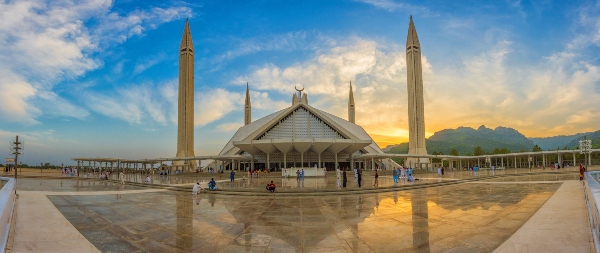
Photo by Harshil Gudka on Unsplash