
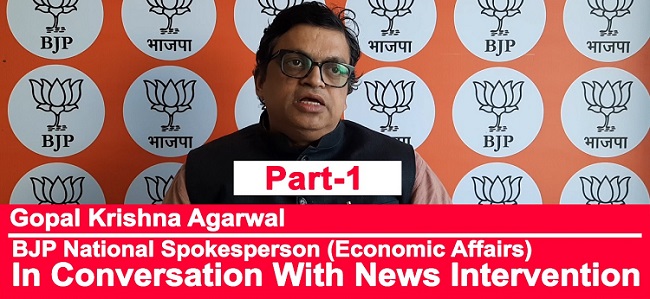
Part-1 of the Interview with Gopal Krishna Agarwal, National Spokesperson BJP (Economic Affairs). Gopal Krishna Agarwal explains what corrective steps are being planned to put the Indian economy on the high growth path. Click on the link below to watch Part-1 of this interview on the YouTube Channel of News Intervention.





BJP-JJP government in Haryana: Early cracks visible in the alliance?
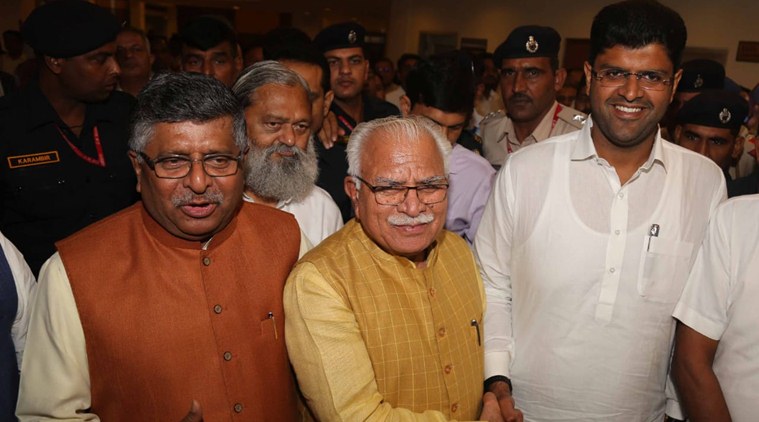
Just after the revolt of JJP MLA Ram Kumar Gautam, another MLA supporting the BJP government Balraj Kundu has also sounded a bugle within three months of the formation of BJP-JJP alliance government. Is it too early to say that the alliance is treading a rough path or the opposition party leaders are deliberately stretching a small issue to make some quick points?
Sometimes bad luck of one turns into a favourable opportunity for the other. BJP not getting a full majority in October 2019 Haryana Assembly elections provided new political wings to the Jannayak Janta Party (JJP) in the murky political scenario of the state. The over confident state BJP had declared its target of 75 plus seats out of 90 in Haryana Vidhan Sabha, but failed to read the ground report. When election results were declared, it came crashing to the ground with just 40 seats out of total 90. The main opposition party congress got 31 seats, the newly formed JJP 10 seats, whereas the independents and others succeeded in getting 9 seats. With clever political maneuvering BJP’s Manohar Lal Khattar once again got the King’s crown and JJP in lieu of its kingmaker’s role got the Deputy CM post for its field supremo Dushyant Chautala.
With the initial euphoria now over and time has come to fulfil the poll promises, the alliance seems to be entering into a rough patch and the going might get tough for both the alliance parties. Generally, during the elections tall promises are made to woo the voters, and most of them never gets implemented on the ground. To win the political fight in Haryana, JJP made 160 promises in its manifesto during the elections. Due to paucity of funds and other restrictions many of these promises can’t be implemented. JJP knew this beforehand, but it promised them just to attract the voters. Perhaps, they never thought of getting the power share so soon. Now their own promises have put BJP-JJP alliance in a dilemma. Both partners have made nearly 400 promises, out of which 70 are common and are being considered for their Common Minimum Programme (CMP).
JJP’s some major promises included, increase in the monthly old age pension from the existing Rs 2,000 to 5,100, lowering down of eligibility age for the old age pension from present 60 years to 55 for women and 58 for males, to reserve 75% of jobs for the local youth which constitute a sizeable chunk of nearly 1.83 crore voters of the state, to give a monthly assistance of Rs 11,000 per month to unemployed youth, students from rural areas to be given extra ten marks when they appear in competitive examinations in the state, for farmers, a bonus of 10% or Rs 100 to be given over MSP, minimum wages to be fixed at Rs 16,000 and waiving off the loans taken by farmers from the cooperative banks.
Interestingly, 823811 farmers in Haryana are yet to repay the loans amounting Rs.3748 crore as on 31 December, 2019 to the cooperative banks in the state even after the recovery. Haryana Cooperation Minister, Banwari Lal, while announcing the last date of ‘One Time Settlement Scheme’ till January 31, 2020 for the loanee members and farmers, who have an account with cooperative banks to facilitate the members and farmers to take advantage of the scheme, told that the total amount of short term loan of Harco Bank is about Rs 3091 crore and there are about 6,99,804 beneficiaries, out of which Rs 1136.36 crore has been recovered from 2,51,481 beneficiaries till 31 December 2019. He also added that the total loan amount of District Central Co-operative Banks is about Rs 608 crores and there are about 31749 beneficiaries, out of which an amount of Rs 150.74 crores has been recovered from about 6925 beneficiaries till 31 December 2019. He further informed that the Land Mortgage Bank has a total of 92258 indebted beneficiaries and a total loan amount of Rs.1577.75 crores, out of which an amount of Rs.242.18 crores has been recovered from 9151 indebted beneficiaries till January 2, 2020.
Haryana Power and Jail minister Ranjit Singh divulged while addressing media persons during the first bijli panchayat in Hisar on Jan 05, 2020, “The total pending amount is Rs. 2,900 crore, of which Rs. 95 crore is of farmers using tubewells. We are meeting the panchayat members of villages that are on the defaulters’ list and will ask them how they will pay the amount.”
It is pertinent to mention here that the farmers had stopped the repayment of loans and electricity bills believing on the waiver promises of different political parties. During this assembly election, JJP and Congress both had made farmers’ loans and electricity bills as election issues. During the assembly election campaign, Congress leader and former chief minister of Haryana, Bhupender Singh Hooda had alleged that due to wrong policies of BJP government Haryana had become a debt ridden state. In a tweet on October 15,2019, Hooda alleged, “BJP government had emptied the state treasury and burdened the state with a loan of Rs. 164076 Crore during BJP’s five year tenure from 2014 to 2019, whereas during the 48 years regime from 1966 to 2014 the state availed of a debt of Rs.76263 Crore.”
To start with, the alliance declared implementation of its first promise of enhancement of old age and widow pension from present Rs. 2000 per month to Rs. 2250 by giving an increase of just Rs. 250 per month. Recently, Chief minister Manohar Lal Khattar on January 3, announced an increase in all monthly social security pensions, including the old age pension, from Rs. 2,000 to Rs. 2,250.
However, BJP’s power partner, JJP had promised an ambitious increase in the monthly old age pension from the existing Rs 2,000 to Rs. 5100, whereas the BJP itself had promised to increase the old age pension to Rs. 3,000 per month during the assembly election campaign. If we consider this increase of Rs. 250 per month as a routine yearly increase on the lines of previous yearly increase of Rs. 200 per year by BJP led government, then the question arises about JJP’s promise. what the JJP did? Did JJP succeed in getting an increase of Rs. 50 only as its share?
Commenting on the increase, Congress leader Deepender Singh Hooda reacted on January,03, “The BJP-JJP alliance government has given a lollypop to the public by just enhancing old age pension from Rs. 2000 to Rs. 2250 against a promise of Rs. 5100. The public will never forgive the alliance government for this betrayal. Is this the common minimum programme?”
Another Congress leader Randeep Singh Surjewala took a dig at the BJP-JJP coalition government in Haryana and said their common minimum programme had become “common mess of parties”. “Neither any farm debt was waived, nor old age pension of Rs 5,100 was given. Though JJP did got 11 departments and the BJP managed to retain the power, but what 2.50 crore population of Haryana got,” Surjewala asked.
Indian National Lok Dal (INLD) leader Abhay Singh Chautala termed the pension increase as ‘a drop in the ocean’ and questioned JJP leaders, without naming them, “Where are those, who were claiming to extend Rs. 5100 per month pension to the old age citizens?”
However, JJP is still appreciating the step. Speaking to the media in Bhiwani on January 4, JJP supremo and Deputy CM Dushyant Chautala said, “The Old age pension got an increase of just Rs. 700 in 10 years rule of the congress in the state, whereas the BJP-JJP alliance government has given an enhancement of Rs. 250 in just 67 days.” He claimed that during these 67 days, the BJP-JJP alliance government has fulfilled four promises of JJP manifesto and three from BJP manifesto under the common minimum programme.
However, political analysts calculate that getting the tall promises implemented as part of the common minimum programme will not be a cake walk for JJP. Moreover, political expediency will never allow the BJP to fulfill the manifesto promises made by JJP. BJP clearly knows if JJP succeeds in getting its agenda implemented, it will be nothing less than digging its own grave in the state. A slight enhancement in the old age pension, against a high pitch promise of Rs. 5100 of JJP, is an indication of downsizing the JJP.
While at Rohtak on January 6, INLD supremo and former Chief Minister of Haryana, Om Prakash Chautala predicting the possibility of mid-term polls for the state said that BJP-JJP alliance government will fall on its own very soon. Exhorting the workers, Chautala said, “I urge you all to get ready for mid-term polls for Haryana assembly, because many MLAs of the ruling alliance are not happy and they will topple the government any time.”
Supporting the INLD supremo’s prediction, Leader of Opposition in Haryana assembly and former CM Bhupender Hooda said, on the same day, “If Chautala had stated so, he must have made this observation after having a proper analysis of the situation. No possibility can be ruled out in politics.”
This might be too early to predict the political discourse in the state, but one can smell the brewing problem in the alliance.
Minority Sikhs being robbed off their land in Karahal due to petty politics
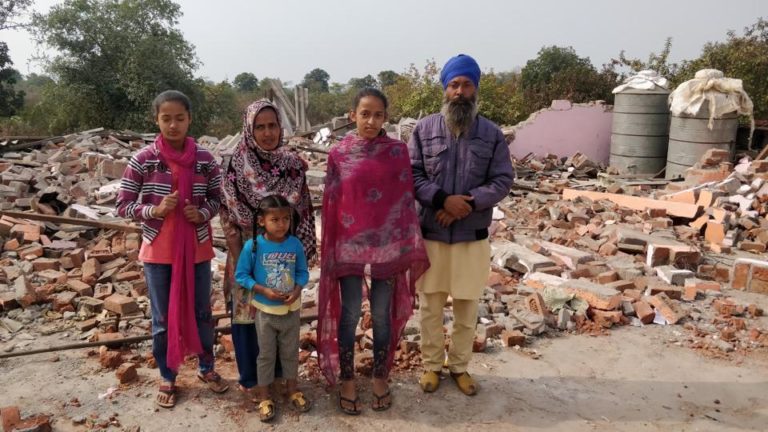
It seems no political party is willing to earn the ire of locals in Karahal, Madhya Pradesh by assisting the few Sikh families. Locals are eyeing high value land, if the minority Sikhs are driven out. Politicians are making empty noise but have left the Sikhs to their sorry plight.
Woes of the minority Sikhs who have settled in Karahal Tehsil of Madhya Pradesh do not seem to be ending even as political exploitation of their beleaguered condition continues in the most abhorrent manner.
More than three decades ago, a few Sikh families migrated to the Karahal region from Punjab and Haryana and acquired some land legally. They worked very hard to make it cultivable. These hapless families had to leave their new found home in 1984 in the wake of the anti-Sikh riots. Almost a decade later some families once again went back to Karahal and re-acquired their lands. Now their land holdings are productive agriculture units and they give employment to locals and boost the economy.
The small but hardworking community of Sikhs that has done so much for local development in this remote rural area is now facing eviction for the second time. The Kamal Nath-led Congress government in Madhya Pradesh has targeted the Sikhs under its so called drive against “encroachments in tribal areas.” The holdings of about 11 Sikh families in Karahal have been declared illegal. In the most brutal and insensitive manner their farm houses have been razed to the ground and their standing crops destroyed. And all this happened between the ten days from December 21 to December 31, 2019. Everything that they worked so hard for, has been wrested away from them.
Several institutions and political parties have sent teams and delegations to Madhya Pradesh and the affected region of Karahal to find the facts so that the justifiable cause of Sikhs could be taken up.
The latest to go there is a “Fact Finding Team” of the Government of Punjab, chosen and despatched by Chief Minister Amarinder Singh personally. The high profile team was led by the Revenue Minister of Punjab, Gurpreet Singh Kangar, and it was reported to have visited Karahal on 22nd January.
Post the visit, the team leader has come out with an obnoxious statement that reeks of political doublespeak. In the first part of the statement the minister does admit that injustice is being done to the Sikh families. “After our meeting with the affected families, it’s clear that the Sikhs were singled out to persecute them with cruelty by razing their houses despite the fact they all have legal ownership of the land,” he said. However, it is the second part of his statement that is absolutely insufferable since he is attempting to put the blame of the pathetic condition squarely on the BJP. “The officers responsible for such cruelty are working for the BJP,” he said without blinking an eyelid, adding that the Kamal Nath government was not to blame for the action since the officers did this to defame the government in the eyes of the Sikhs.
The motivation of the Punjab minister to make statements of this nature is not difficult to find. He belongs to the Congress and has shown allegiance to his party which is also the ruling party in Madhya Pradesh. Also, his boss Captain Amarinder Singh is an old friend and school mate of Kamal Nath and has probably sent him to Madhya Pradesh to do some damage control in favour of the latter. Can political opportunism get worse than this?
The Congress is admitting that in its own rule the BJP is using official machinery to “persecute minorities.” One would like to remind the minister and his cronies that responsibility for failure of law and order rests on the government and not the opposition. The government cannot absolve itself by blaming rival political parties. The Punjab minister should contemplate on the devastation that his loaded political statements would cause to the families of the Sikhs whose interests he is supposed to be protecting.
Other political parties were equally adept in using the incident for political ends. SAD (Shiromani Akali Dal) leader Prem Singh Chandumajra who was part of the party’s delegation sent for a similar fact finding mission said, “This was all done at the instructions of Kamal Nath government as Kamal Nath is anti-Sikh. If action was not taken against guilty officers and compensation not given to the affected families SAD will launch an agitation in this regard.”
Well, Prem Singh Chandumajra could have issued a statement that rose above political blame game and given a more detailed account of the plight of the devastated families. He could have spoken about what needs to be done to expedite the process of rehabilitation. Instead he chose to make a few irrelevant brownie points by political targeting of the ruling party and left the matter at that.
Rajneesh Agrawal, BJP spokesperson Madhya Pradesh said, “The Sikhs were victimised at the instance of Kamal Nath government. The BJP has already been raising the issue since the state government launched the drive that the real mafia is being shielded and innocents are being victimised. There are also reports about extortion by the government personnel in the name of anti-mafia drive.” One would now expect the BJP to take a more proactive position on ground of being the largest opposition party in the state.
There is talk of a few junior officials being suspended but Sheopur collector Pratibha Pal is quite sure that what has been done was above board. “The teams assessed the situation at their own level. We apprised them of the ground and facts based on which the action was taken. Our action is absolutely correct and we apprised the teams of the facts relating to the each and every case,” she is reported to have stated.
In this evil play of political subterfuge, the future of the beleaguered families is not being mentioned at all. Nobody has said a word about their rehabilitation whether it is on their own land or someplace else. It can be reasonably assumed that, post the theatrics and the media circus, the victimised families cannot expect any sort of relief. This is also in concert with real-politic since assisting the few families and earning the ire of the local people who are coveting the land because of its high value would not serve the electoral prospects of any party; hence, the proclivity to make a lot of noise and then leave the victims to their sorry plight.
Indian politics is facing a serious crisis. Politicians have become adept at shirking responsibility under the garb of blame games. The citizens, instead of making politicians accountable are fighting with each other in support of some party or the other. The Karahal episode needs to be converted into a test case of compelling the political class across the board to shun vote politics and come up with utmost honesty to assist the minority Sikhs and thus prove their “secular credentials.”
It’s time the world knows about ‘missing’ people of Balochistan
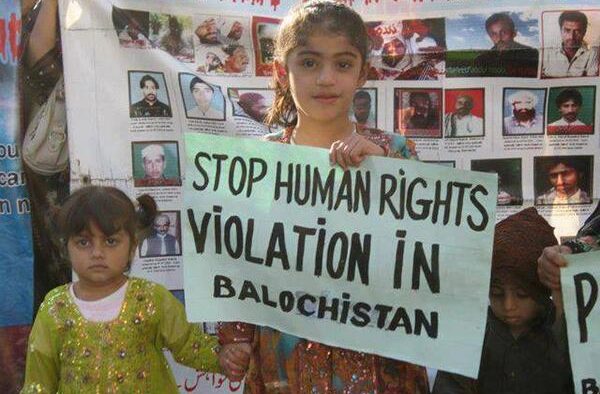
Baloch Missing Persons is a long story which contains forceful disappearances from Balochistan. The victims are political & social activists, doctors, teachers, farmers, and even women and children. The question arises as to who is behind this heinous crime of paradoxical disappearances from Balochistan. The answer can be found in the press conferences of the victimized families. Yes, the prime responsibility for these disappearances lie with the Pakistani intelligence agency — the Inter-Services Intelligence (ISI), which is under control of Pakistani Army.
ISI, at the behest of Pakistan Army, violates United Nations recognized universal human rights across Balochistan. The ISI also violates the constitution of Pakistan which states that a person when arrested, should be produced in front of a court within 24 hours. It is startling as to how the entire Pakistani machinery is involved in this barbarism.
In fact, thousands of Baloch people are missing from Balochistan. This list of missing persons is increasing by day by day. After approving the Army Act Bill in the Pakistan Assembly, Balochistan National Party (BNP-Mengal) has began its propaganda to take credit of getting a few missing persons released. Along with them, the newly formed Balochistan Awami Party (BAP) is also there to take its share of credit. Yet, nobody from these parties dares to ask why these persons were kidnapped in the first place and then kept in a dungeon for a long period.
The voice of missing persons of Balochistan came into limelight in 2009 when Mama Qadeer, the Vice Chairman of Voice for Baloch Missing Persons (VBMP) started a hunger strike in front of the Quetta Press Club. Later he did the same in front of Karachi and Islamabad Press Clubs. In order to highlight the issue, Mama Qadeer led a foot march from Quetta to Karachi and then from Karachi to Islamabad. They made history by walking 2500 kilometers against disappearances in Balochistan. This issue is protested at the United Nations’ forums too.
In 2012, the fact finding mission of United Nations visited Quetta, the capital city of Balochistan where VBMP handed over the list of missing persons from Balochistan. After the 2018 elections, BNP supported Imran Khan’s PTI in the formation of the federal government and handed them the list of missing persons and demanded their release after their support. But despite this the forceful disappearances continues unabated in Balochistan.
The people of Balochistan are now looking forward to the agreement between BNP (Balochistan National Party) and PTI (Pakistan Tehreek-e-Insaf). However again the question arises that who will ask the “mighty” Pakistan Army? Who dares to talk about the secret torture cells where Baloch have been kept for decades. In spite of being one of the burning issues, the media has kept silence on it. There is a total media blackout. Political parties are equally contributing to the issue by talking less about the issues of Baloch missing people.
On the other hand, Pakistan Army continues to refuse that it is keeping Baloch people and those of other nationalities in dungeons. The Pakistan Army portrays them to be in Afghanistan and other places. In Balochistan, all the freedom seeking Baloch political activities are banned completely. So the Baloch nationalist parties should treat the issue of missing people as their prime responsibility and highlight this issue abroad so that the case of missing persons is heard by all. It needs to be brought out clearly that though some people have been released yet the abduction and forceful disappearances continues unabated across Balochistan.
How to trigger India’s economic growth amidst slowdown
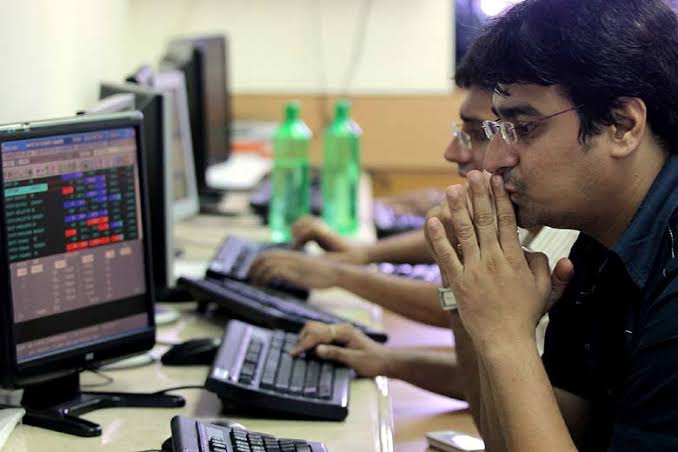
The current slowdown in Indian economy can be equated to a scenario where a vehicle has taken a pause at a multi-way intersection and the driver is unsure which way to go. Tank’s full with fuel, but the driver lacks self confidence to decide; waiting for someone to lead the way. Well, that’s the state of Indian Economy today! Time for pioneering entrepreneurs to take charge of the New India.
Good thing about this economic slowdown is that we are fortunate to discover the natural minimum rate of growth, which by default is around 4-5%. Unless someone deliberately tries to hurt India, of which there is no chance; one convincing trigger and economy is poised to roar, like never before.
Any sincere economist can tell you that macro parameters have never been so good as of now. So, there’s no need to waste time on them. What is vital and more relevant at this stage is to realize the role of each stakeholder and how they could play their part in trigger and thereafter.
Government naturally represents collective interests and must not get confused by conflicting commentaries from economists waiting to pounce on them. All that they need to understand is: How to identify pioneering entrepreneurs at multi-levels, listening to them carefully, and how to tweak ecosystems through policies that would trigger the economic growth, without incurring fresh funds outlay.
Pioneering entrepreneurs, who are not as visible, due to overbearing speculative and manipulative business czars would begin to come to fore and impact policies. They also need to realize that they need to shed their humility a bit, as the nation needs them to assert for the betterment of all. They ought to chalk out their dream projects which requires long term conviction and government’s fullest policy support to succeed.
People at large ought to understand that employment is generated by entrepreneurs and not the government. So they need to encourage youth all around to take initiatives and become first generation entrepreneurs. While the government and pioneering entrepreneurs may create opportunities, nothing much can happen if there are no new entrepreneurs who take little risk and implement ideas at the ground levels. Nation as a whole has to rise, to develop an encouraging environment in favour of job creating entrepreneurs instead of allowing talents to be job seekers. India traditionally has been an entrepreneurial country, but somewhere this spirit got disconnected from educated youth during the past several decades. All parents need to understand that India’s time has arrived, provided more people opt to become engines of the economy and not just remain job seeking wagons.
Most of all the Indian public, as consumers, needs to realize the power of every rupee they spend every day. This has a greater force compared to the power to vote, which comes once in five years. What we buy empowers the business and employment. So one needs to be careful when spending money. It’s time to check and be fully aware of which product or company creates greater employment per unit of money we spend. Which product we buy generates prosperity in rural areas. Which product hurts environment and climate and which ones keep us healthy. It’s also time for celebrities who earn extra income through advertising products to take time to understand how their facilitation can empower employment generation and the rural economy, where two-thirds of our population still lives.
Having taken good control in cleaning up the governance, it’s time for the Narendra Modi government to get the right grip over wealth creative policies and monitor growth in quantity and quality of entrepreneurs in every block of the nation.