Home Blog Page 387

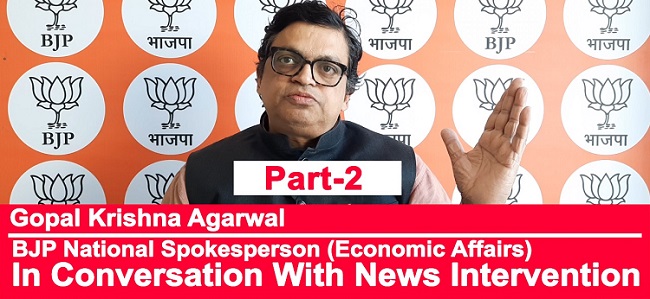
Interview Part-2: Gopal Krishna Agarwal, National Spokesperson BJP (Economic Affairs)

Part-2 of the Interview with Gopal Krishna Agarwal, National Spokesperson BJP (Economic Affairs). Gopal Krishna Agarwal explains When & How will the Indian Economy respond to steps taken by the Narendra Modi government.
Click on the link below to watch Part-2 of this interview on the YouTube Channel of News Intervention.

Sale of Mohun Bagan & a novel of tears in Kolkata

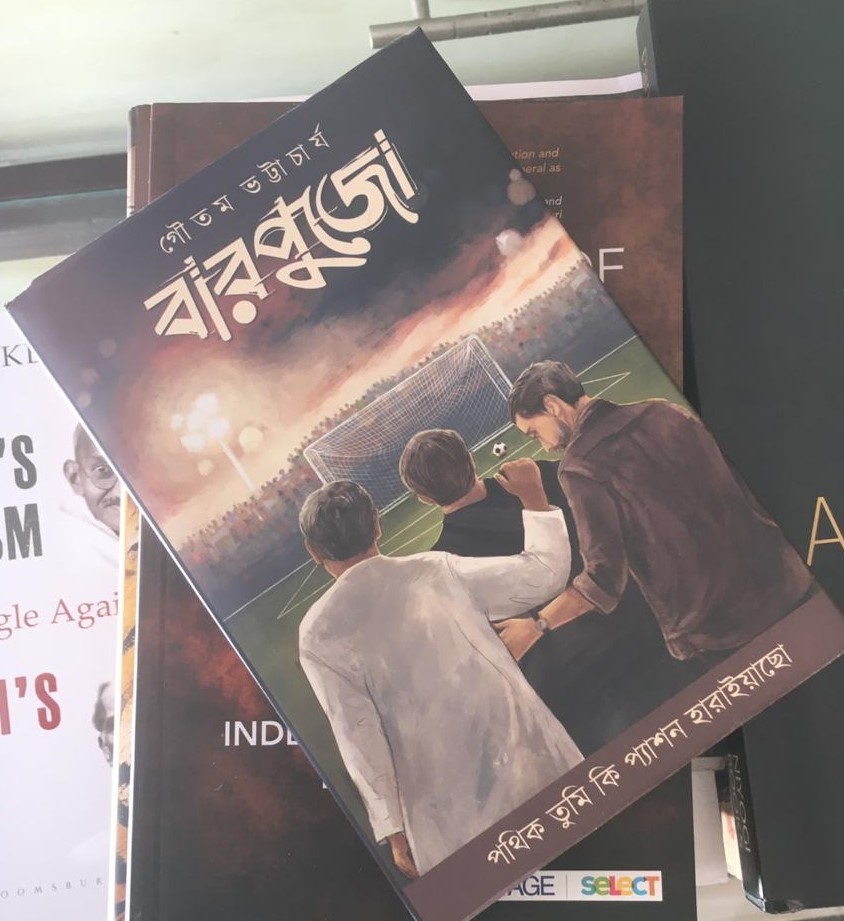
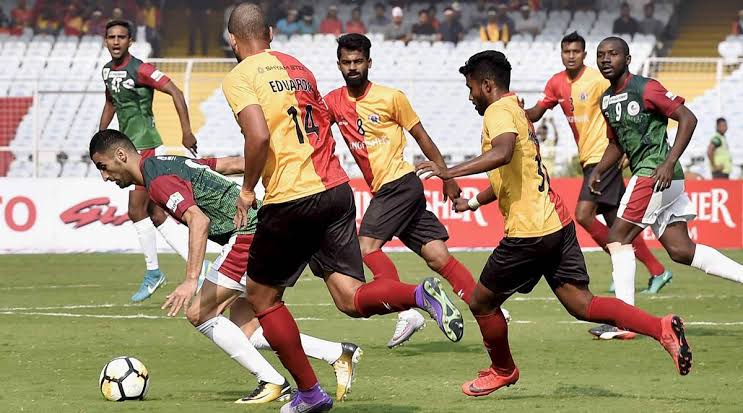
The outright sale of India’s most iconic club, Mohun Bagan, happened around the time a Bengali novel on aspirations of a football coach hit the stands in Kolkata. Probably it was a mere coincidence but what is interesting is that both, the sale of the club and the launch of the novel, had a tinge of sadness, a mood of realism.

Kolkata-based RPG-Sanjiv Goenka Group bought out Bagan in a hush-hush deal, triggering vociferous reactions from supporters across the globe. Group CEO Sanjiv Goenka said the club was acquired to push the group’s sporting ambitions. At the same time, footballers, actors and politicians started promoting seasoned journalist and anchor Gautam Bhattacharya’s book, Bar Pujo, which translates into worshiping the goalposts. It is a strange and unique Bengali custom where priests offer prayers to goalposts on the first day of the Bengali New Year — always in mid-April — and seek sporting success.

Interestingly, both the book and the sale of Mohun Bagan once again brought the fading fortunes of the Kolkata soccer clubs together in limelight. The book, written in Bengali language, triggered debates across colleges, clubs, and coffee stores about what would save football clubs of Kolkata: Passion, or cash? Or both?

So let’s talk about the novel first. 

Gautam Bhattacharya’s novel “Bar Pujo” is about the struggle and journey of a football coach in Kolkata

Protagonist Archit Mukherjee is a soccer coach who does a decent job with the Tatas — a dream for many in Kolkata — and wants a team that should be Kolkata’s answer to a top English Premier League club, say Manchester United or Liverpool. He is aware of the standards of the game in the city, and in the country. He is very, very realistic. He remembers India last won a decent soccer trophy in 1974 when the nation was crowned joint champions with Iran in U-20 Asia and thereafter it has been a long, long slide. But he still wants parents to push their children to play soccer but not hate cricket because Saurav Ganguly is the state’s biggest icon. More importantly, he wants the passion that was in existence in the 70s to return to Kolkata’s vast green cover — its called Maidan that translates into a big field — and the clubs to regain glory and help the city regain the title of Mecca of Indian football. But the coach is not day-dreaming, he knows India is ranked 108 out of 210 nations by FIFA and an unlikely destination for aspiring footballers. So the local youngsters give football a miss in Kolkata but a steady stream of young men from West Africa and parts of Asia keep landing in the eastern Indian metropolis, hoping Kolkata will be the first step on the road to football stardom. 

Mukherjee knows he has a long way to go.

Mukherjee wants — the book claims repeatedly — the passion to grow, he wants the rise of the youth power. His example of passion is not only limited to footballers, it is for all those who love the game. For him, this very passion could exist even in a gatekeeper punching tickets for entry to the stadium. The book has an interesting incident about how one lanky gatekeeper, Hituda to many, found a person coming late for an East Bengal match and asked him the reason. The person, a diehard fan, said he was coming straight from the crematorium after completing the last rites of his son. Mukherjee seeks similar passion from everyone. For him, passion is the way forward.

Football clubs in Bengal struggle for cash, yet it’s the ‘passion’ that runs these clubs.

Mukherjee knows he is Ekalavya, smarter and faster than Arjuna. Like the proverbial story of the epic Mahabharata and Guru Dronacharya seeking a finger of Ekalavya to slow down his fiery arrows and please Arjuna, Mukherjee knows he has to fight alone, he will not have too many big guns on his side. He, only he, must find a way out of the Chakravyuha, or the Circle Of Death. But Mukherjee is not old fashioned, he is the modern Ekalavya who will not sacrifice his finger because he knows the Guru is biased. Mukherjee wants to rule with modern understanding of the game, he wants to walk into a supermarket knowing well what he will buy and then cook a meal and serve. He wants to have the power of Sir Alex Ferguson, he will ignore the star status of his footballers. Yet, he will plug them all over the media. He understands the importance of social media, he knows if a top corporate acquires a club it will run on cash and carry and not only on emotions. Mukherjee is a thinking coach, like a seasoned director, he knows. He also knows the importance of social media’s impact on the game. He is the master chef.

This is not a hop-skip-jump novel, it is brilliantly crafted, very, very nostalgic for those who followed Kolkata football because there are similar examples of such coaches in the city who live with their hopes, ambitions and pains. The author is clear that only the coach knows how a victory is rarely credited to him, it is almost like getting the smallest slice of a birthday cake. The rest is always reserved for the captain, players and team management. The coach is a lone ranger, a silent observer, the boy on the burning deck.

The author reflects on the life and times of successful coaches, failed coaches. In some ways it reflects the life and times of men and women of his profession, journalists. Bhattacharya’s words about a tired coach walking with a huge sports bag can easily be turned into a tired journalist walking home after arguing unsuccessfully with his editor over whether or not to write a big scandal involving a corporate giant. Mukherjee knows he cannot leave the game, he has to be a part of the system to change the system. And change is inevitable. He knows he will only be worshipped if he is successful. Past and failures are rarely remembered.

Like it happened when Mohun Bagan got sold, the incident triggered breaking headlines even as the Department of Posts and Telegraph issued a postage stamp for Parimal “Chuni” Goswami, former Mohun Bagan captain and top footballer who had once turned down an offer from Tottenham Hotspur to spend his entire footballing career at Mohun Bagan. It was all about passion for Goswami, who recently completed 82 years. But very few linked Goswami’s sacrifice to the sale of the club. Arguments still continued, there were some in Kolkata for whom Mohun Bagan was national pride because it was the first Indian club to defeat a British team to win the IFA Shield in 1911. The victory was seen as a path-breaking win against the British rulers of the subcontinent. But the novel also reminded us that the victory was 108 years ago, around the time British royal rulers came to India to kill tigers. I have a feeling the novel reflected the writing on the wall, highlighting the change that many claimed was inevitable in Kolkata’s football clubs. Actually, it reminded football fans in Kolkata that in the new financial year, Mohun Bagan could even have a new name and a new jersey. In short, age-old sentiments will have to take a break. From now on, wealth and heritage will have to walk hand-in-hand, side-by-side.

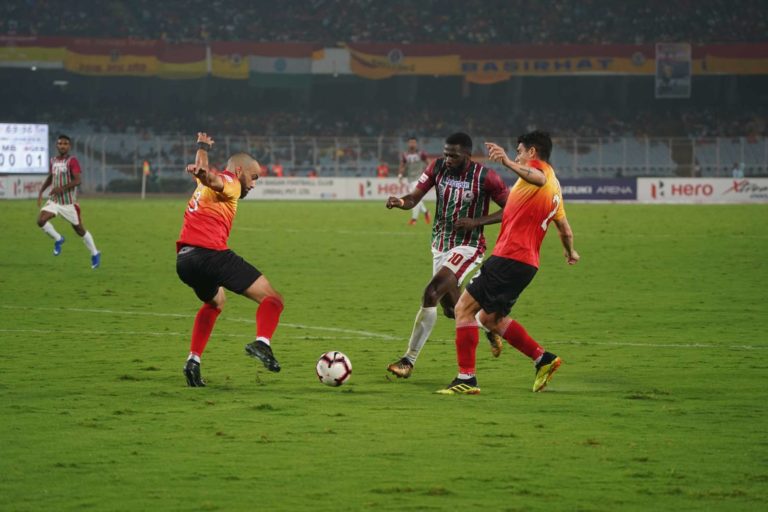
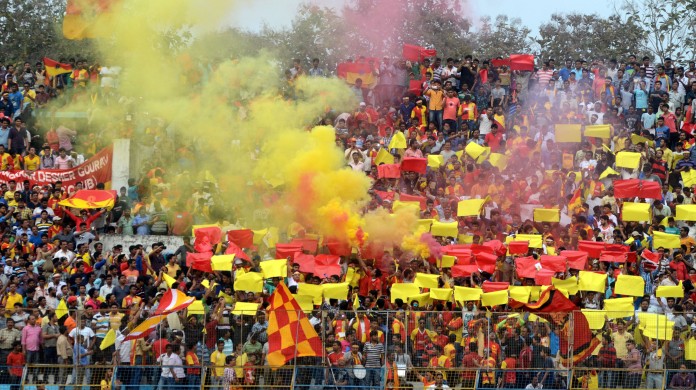
Passionate soccer fans at a football match in Kolkata

Mukherjee knew what will be the new heartbeat of Indian football, even though he wept silently in his heart because he wanted a rerun of the glorious 70s. He would be very happy to retain the heritage but knows with changing times, he has to blow with the wind. So the protagonist of the novel keeps his passion intact, thinks about football even from a hospital where he is being treated for low blood pressure following the death of a close friend. Mukherjee lives for another day, another life, and another match. His team wins the trophy riding on the players’ passion.

Football has died many deaths in Kolkata, only to rise like the proverbial Phoenix. An East Bengal-Mohun Bagan match gets no advertisements but over a lakh of supporters without the hype of pink balls and pink coloured lights created to generate crowd at cricket stadiums. There are no big anchors, no great commentary, no cheerleaders, no nothing. But there is passion, there is a deafening roar every time a top club scores a goal. Bhattacharya has talked about this very passion that draws people to such matches. Many know how football clubs are run in Kolkata: Players are rarely paid on time, club owners struggle hard to find players from distant Africa, Spain or Latvia. There are times when the clubs non-playing staff go home without paychecks. Lack of cash means the players will not give their best during a match, it is almost like no hot water in the showers after training. In such cases, only passion works. Just pure, unadulterated passion.

Bar Pujo has reminded many in Kolkata to think about football, and think passionately.

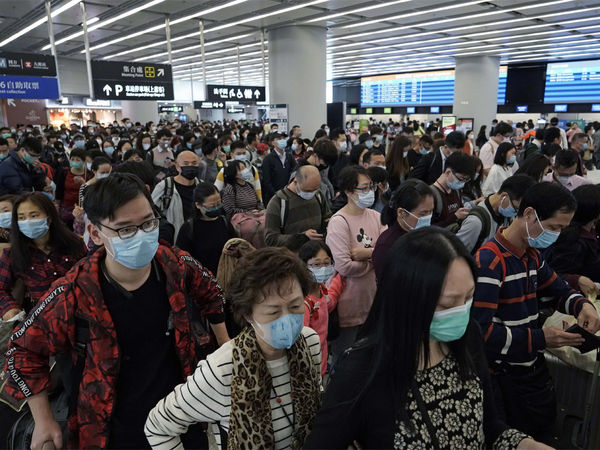
Coronavirus alert: High level meeting at PMO

On the instructions of Prime Minister Shri Narendra Modi, Principal Secretary to the Prime Minister Dr. P. K. Mishra chaired a high level meeting on the Coronavirus outbreak in China.

During the meeting, the officials apprised the Principal Secretary on the recent developments, preparedness and response measures associated with the spread of Coronavirus.

Ministry of Health and Family Welfare briefed the Principal Secretary on hospital preparedness, laboratary preparedness, measures taken for the Capacity Building of the Rapid Response teams and the extensive surveillance activities undertaken by the Ministry.

Principal Secretary also reviewed the preventive measures taken by other Ministries like the Ministry of Civil Aviation.

The officials assured the Principal Secretary that the situation is being closely monitored by the Ministry of Health and Family Welfare, in close coordination with various other Union ministries as well as State governments and Union Territories.

So far, 20,000 people from 115 flights at 7 international airports have been screened. National Institute of Virology labs all over the country are fully equipped to test the virus. All State and District health authorities have been alerted and are in the loop.

Cabinet Secretary Rajiv Gauba, Secretary Home Affairs Ajay Kumar Bhalla, Secretary External Affairs Vijay Gokhale, Secretary Defence Ajay Kumar, Secretary Health and Family Welfare Preeti Sudan, Secretary Civil Aviation Pradeep Singh Kharola and several other top officials attended the meeting.

Padma Awards 2020 Announced

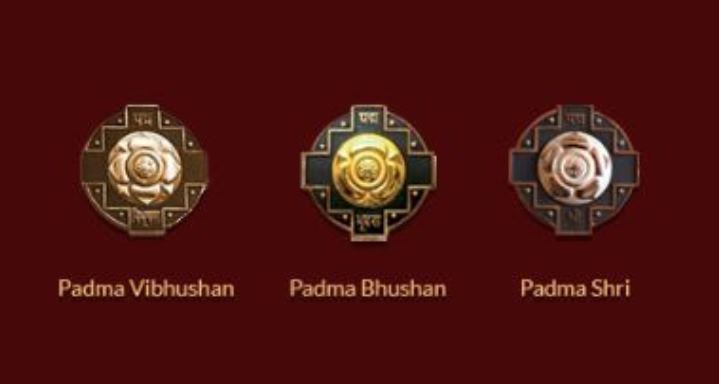
On the eve of 71st Republic Day of India, Padma awards were announced today. The Padma Vibhushan for this year has been awarded to a total of seven prominent personalities, while 16 have been given the Padma Bhushan, and 118 have been given the Padma Shri. This year the President has approved conferment of 141 Padma Awards including 4 duo cases (in a duo case, the award is counted as one). Thirty four of the awardees are women and the list also includes 18 persons from the category of Foreigners/NRI/PIO/OCI and 12 posthumous awardees.

Eminent personalities, including former union ministers Arun Jaitley, Sushma Swaraj and George Fernandes, Olympian boxer Mary Kom, former Mauritius Prime Minister Anerood Jugnauth have been honoured with the Padma Vibhushan on the Republic Day this year.

Former Defence Minister Manohar Parrikar, industrialists Anand Mahindra and Venu Shrinivasan, Olympian badminton player P V Sindhu, former Nagaland Chief Minister S.C. Jamir and Jammu and Kashmir politician Muzaffar Hussain Baig have been awarded with the Padma Bhushan.

Producer Ekta Kapoor, director Karan Johar, actor Kangna Ranaut and singer Adnan Sami will receive the Padma Shri.

Congratulating the Padma awardees, Prime Minister Narendra Modi tweeted, “Congratulations to all those who have been conferred the Padma Awards.” The Prime Minister said the awardees include “extraordinary individuals who have made exceptional contributions to our society, nation and humanity”.

Padma Awards – one of the highest civilian Awards of the country, are conferred in three categories, namely, Padma Vibhushan, Padma Bhushan and Padma Shri. The Awards are given in various disciplines/ fields of activities, viz.- art, social work, public affairs, science and engineering, trade and industry, medicine, literature and education, sports, civil service, etc. ‘Padma Vibhushan’ is awarded for exceptional and distinguished service; ‘Padma Bhushan’ for distinguished service of high order and ‘Padma Shri’ for distinguished service in any field. The awards are announced on the occasion of Republic Day every year.

These awards are conferred by the President of India at ceremonial functions which are held at Rashtrapati Bhawan usually around March/ April every year.

Full List of Winners:

Baloch freedom fighters must step up their efforts to free Balochistan

Pakistan’s state brutalities in Balochistan continued unabated in 2019, like in the previous years. Last year Islamabad’s barbarism across occupied Balochistan reached newer heights. This state-sponsored barbarism included unprovoked military operations, killing of Baloch dissidents, forced disappearances during operations, torturing of people, looting, burning houses and forced evacuations of inhabitants from their ancestral villages in Balochistan.

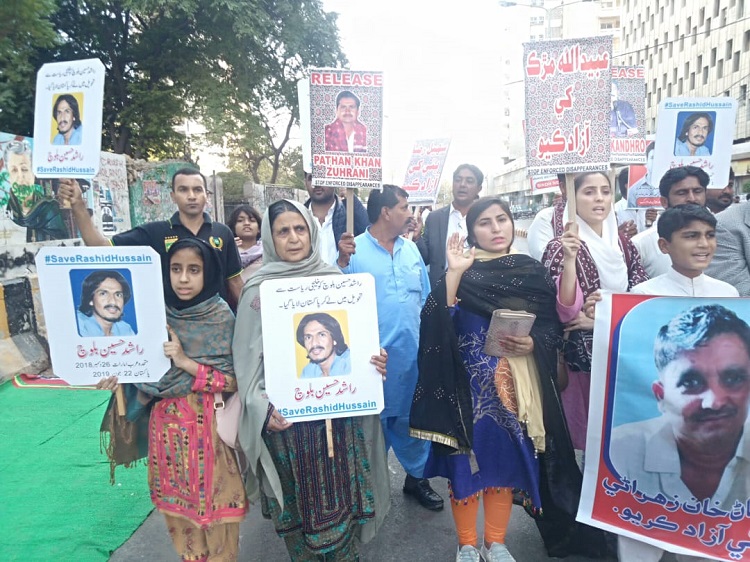
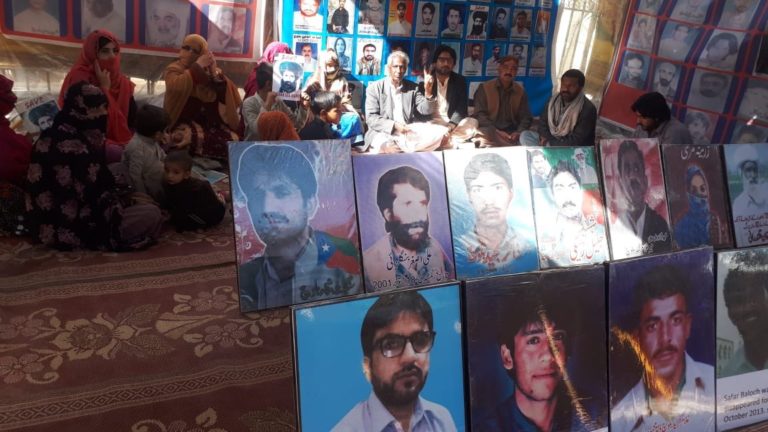
In 2019, the occupying state of Pakistan intensified its tactic of forcibly disappearing Baloch women and children.

Dwindling CPEC

However, even as Pakistan Army’s tyranny and atrocities were carried on in Balochistan, the Baloch militant organizations also stepped up their armed activities that resulted in loss of life and resources to the Pakistani armed forces. The attack on Gwadar port by Baloch militant organisations received international attention. The Baloch Liberation Army took responsibility for this attack on the Gwadar Continental Hotel that went on for nearly 26 hours. In this attack four Baloch freedom fighters were martyred whereas several armed personnel of Pakistan and other foreign investors were killed.

Apart from the militant Baloch armed organizations that are fighting for Balochistan’s independence from Pakistan, there are several other Baloch independence political parties and human rights organizations who continue to protest peacefully at the national and international platforms. They strive to show gross human rights violation across Balochistan by Pakistan. They also reach out at various international platforms in order to highlight the issues of Balochistan.

The year 2019 also saw the situation of exploitative China-Pakistan Economic Corridor (CPEC) dwindle. The hustle-bustle in CPEC construction activities and Chinese movements in Balochistan have significantly reduced giving an impression that the project might be delayed or fail altogether. The corridor’s apparent failure and China’s disinterest has provoked the occupying Pakistani forces to further increase their atrocities and restrictions on the Baloch people. This seems to be a desperate approach to satisfy Chinese security requirements that has devastated the whole Balochistan and fulled pent-up anger and dissatisfaction against Pakistan.

This year also saw some so called “Baloch nationalists”, who were in the Pakistani Parliament and were part of their projects, change track and adopt different kinds of approaches to save their respective positions. The National Party (NP) who had previously played a key role in implementing this strategic CPEC, started opposing the economic corridor through its newspaper statements. The party started raising slogans against the state to restore their trust within the Baloch nation. However, I see this change in their approach as a blackmailing tactic against the establishment to restore their position in Pakistan’s parliament. Also, even as the BNP remained stuck with a slogan of ‘six points’, they also remained partners to the Imran Khan government in Islamabad.

Forced Disappearances in Balochistan

Four Baloch women were forcefully disappeared from Awaran by Pakistani state agencies in 2019. Widespread anger and protests helped in getting them released. BNP declared this as their success, while the BNP leaders also expressed their wish for greater provincial autonomy and the inclusion of historical Baloch land in Balochistan which currently is part of Pakistan’s Punjab province.

So, on the one hand Baloch pro-independence organizations and parties have stepped up their efforts and struggle for freedom, on the other hand Pakistan has increased its oppressive polices across Balochistan. This situation has exposed the role and integrity of parliamentary ‘nationalists’.

Pakistan’s problems

The success of Balochistan freedom fighters has seriously weakened Pakistan’s apparatus in Balochistan. This can also be seen in the internal developments of Pakistan’s establishment. This year, one of the biggest party of Pakistan, Ulema-e-Islam opposed the government by their protests and then many party leaders joined them. Besides these political parties, Pakistani courts and military organization’s atmosphere remained overheated over the extension of the post of their army chief Gen. Qamar Javed Bajwa and then over the decision to execute former General and President Pervez Musharaf.

International economic organizations and FATF (Financial Action Task Force) have listed Pakistan in the grey list of countries for its support towards terrorism. This is bound to create economic difficulties for Pakistan that has been totally reliant on IMF and Saudi Arabia to keep its economy afloat.

The condition of minorities in Pakistan is also deteriorating by the day. Protests for the release of thousands of dubiously disappeared persons continue. Pakistan Army continues to dump the mutilated bodies of political workers in different parts of the country. In this situation, all the nations that are currently under illegal occupation by Pakistan have to come together on a single platform to gain freedom.

International scenario

Due to violent protests the regimes of Iran and Iraq in 2019 have been changing their track from one side to the other,  using their military powers to trample protests. The presidential elections in Afghanistan were successfully conducted and Ashraf Ghani once again got the hot seat. Afghanistan has been in the limelight because of their ongoing talks with the Americans and Taliban.

The cold war like scenario between South Asian neighbours Pakistan and India have continued and there were several instances in 2019 when it looked like the two countries will go for an all-out war. The trade war between US and China can push this region into further complexities.
The situation in Occupied Balochistan has deteriorated rapidly. Hence 2019 has shown a bloody picture like in the previous years.

Pakistan’s “Kill and Dump Policy”

The occupying state of Pakistan carried out 626 military operations against the Baloch nation in 2019. In these operations, 785 people have been forcefully kidnapped and have now disappeared which includes a large number of women and children. Also during this year, 302 dead bodies were found, of these 80 had been killed by Pakistani forces and while the exact motives of 144 killings were not found, 78 dead bodies went unrecognized. The burning and demolition of houses across Balochistan and looting them has also continued. More than 1,416 houses were looted, 200 houses burnt, 321 persons were released from the torture cells of state forces and 42 new check posts were built in Occupied Balochistan as Pakistan continues with its barbaric policy in Balochistan.

Furthermore, no motives were found for the deaths of these missing people. Because of state barbarism, thousands of Baloch families were compelled to migrate to Iran, Afghanistan and in the internal areas of Balochistan and Sindh and southern Punjab in Pakistan.

If we compare the devastation in Balochistan, it is in no means lesser than to those other regions that have been declared as war zones by the United Nations and other superpowers. Balochistan’s situation is much worse but the international community does not bother to focus on Balochistan, thus giving the occupying state of Pakistan an exemption to increase its policy of barbarism in Balochistan. So Baloch organisations and political parties fighting for freedom have to struggle really hard in order to show Pakistan’s real image to the world.

Missing Persons of Balochistan

The Voice for Baloch Missing Persons (VBMP) has been struggling for the last 10 years. They have been trying to show and uncover the state barbarities in front of the world. In the year 2019, organisation fighting for Balochistan freedom were busy with human rights issues and they struggled to draw the attention of the world towards the Baloch nation.

Yet, it can be said that Balochistan is not raising a coherent and forceful voice at international platforms. The Baloch freedom fighters and Baloch political parties who are struggling for Balochistan’s independence need to come on a single platform and speak in a forceful voice so that the world can get a clear understanding about the Balochistan issue. This will double the hopes of Baloch nation for freedom from Pakistan.

Baloch leadership has to also think about national interests of Balochistan and then catch the world’s attention towards them. This will counter-balance and negate those Baloch parliamentarians who only want to further their political ambitions at the expense of Baloch national struggle for independence. Whether it is the National Party (NP) or Balochistan National Party it will not be able to further enslave aspirations for an independent Baloch nation or cover up the Baloch genocide. All those who are fighting for Balochistan independence need to understand the present geo-politics where occupying forces of Pakistan have been weakened economically and politically. There is a massive social unrest across Pakistan, tussle among superpowers such as China, US and Russia, and situation is tense in South Asia, Afghanistan, Iran and the Middle East. In the wake of these developments, the strategy for Balochistan’s freedom struggle needs to be right and efforts streamlined. If the Baloch make a concerted effort, Balochistan will soon be a free nation. 

Interview: Gopal Krishna Agarwal, National Spokesperson BJP (Economic Affairs)

Part-1 of the Interview with Gopal Krishna Agarwal, National Spokesperson BJP (Economic Affairs). Gopal Krishna Agarwal explains what corrective steps are being planned to put the Indian economy on the high growth path. Click on the link below to watch Part-1 of this interview on the YouTube Channel of News Intervention.