The incident of mob violence at Gurdwara Nankana Sahib in Pakistan
on Friday, January 3rd has raised deep concern worldwide, especially
amidst the Sikh community. Reports suggest that post the afternoon Friday
prayers, a mob comprising of hundreds of Muslims laid siege on Gurdwara Nankana
Sahib. The holy premises were pelted with stones and Sikhs offering prayers in
the Gurdwara were threatened. The homes of other Sikhs residing in Nankana
Sahib were also attacked with stones and they were told to vacate the city.
The matter was taken up at the highest level with the Governor of
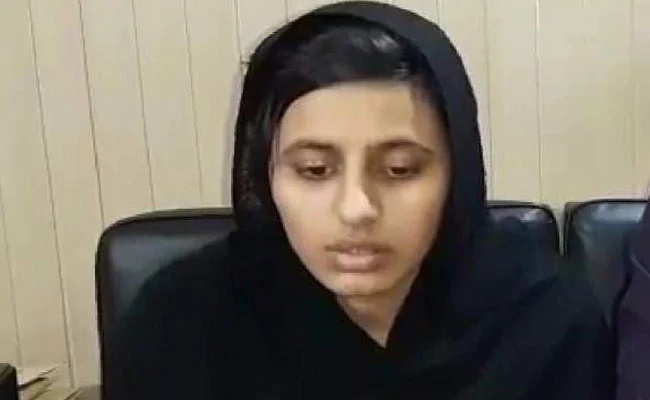
Punjab (Pakistan) getting involved. Jagjit Kaur stated that she had converted
and married by her own will. Punjab Governor Chaudhry Sarwar, however, gave
instructions for shifting of the girl from the house of her so called ‘husband’
to Darul Aman in Lahore. Eight people suspected for the kidnapping of Jagjit Kaur
were also taken into police custody. Later, a video recording of the Governor
stating that the marriage would be considered void and the girl would be sent
back to the house of her parents became public. The girl, however, has still
not returned to her parents and the matter continues to be under judicial
scrutiny.
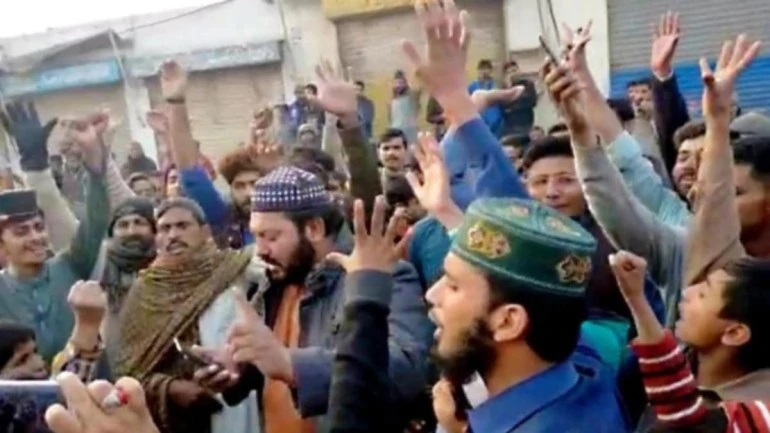
In this latest incidence of violence at Nankana Sahib, the brother of Mohammad Hasan is seen prominently in the video footage. He is seen leading the crowd and making provocative statements. He is seen alleging that authorities are forcing the girl to go back to her parents while she is very content with her conversion to Islam and her marriage to Mohammad Hasan. He is openly threatening to drive away all Sikhs from Nankana Sahib and rename the city and the Gurdwara as “Ghulam-e-Mustafa.”
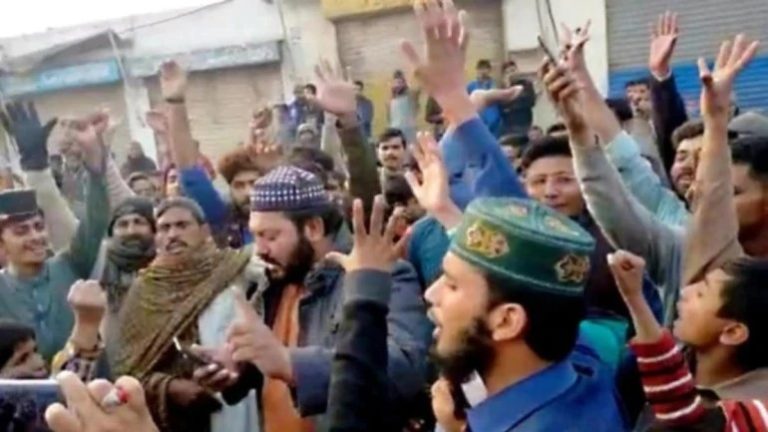
The large mob of radical Muslims shouting slogans at the Gurudwara Nankana Sahib in Pakistan on January 03, 2020.
India, very rightly, has strongly condemned the “wanton acts of
destruction and desecration of the holy place,” and called upon the government
of Pakistan to take immediate steps to ensure safety, security, and welfare of
the members of Sikhs. Pakistan has responded by alleging that, “….attempts to paint this incident as a communal issue are
patently motivated” and that “all insinuations particularly the claims of acts
of ‘desecration and destruction’ are not only false but also mischievous.”
Pakistan’s Foreign Office has issue a statement saying that the
incident has not occurred at all and what actually happened was a scuffle
between two Muslim groups. Further, reputed English dailies of Pakistan like
the Express Tribune and Dawn have not even mentioned the incident at all; there
is a media blackout in place. This blatant denial of the very serious incident
by the Pakistan government is a matter of grave concern.
The Sikhs are quite distressed by the incident. “Appeal to
@ImranKhanPTI to immediately intervene that the devotees stranded in Gurdwara
Nankana Sahib are rescued and the historic Gurdwara is saved from the angry mob
surrounding it,” said Punjab Chief Minister, Captain Amarinder Singh, in a
tweet. Various other Sikh leaders, institutions and prominent personalities
also expressed concern.
The aforementioned pressure by India and the Sikhs had the desired effect. Within no time videos of Pakistani attempts to restore the situation went viral on social media. The brother of Mohammad Hasan made a video in which he apologised for his behaviour; leaders of all faith establishments and local officials and politicians too came on screen to assure the Sikh community that they were integral to the society of Nankana Sahib and Pakistan.
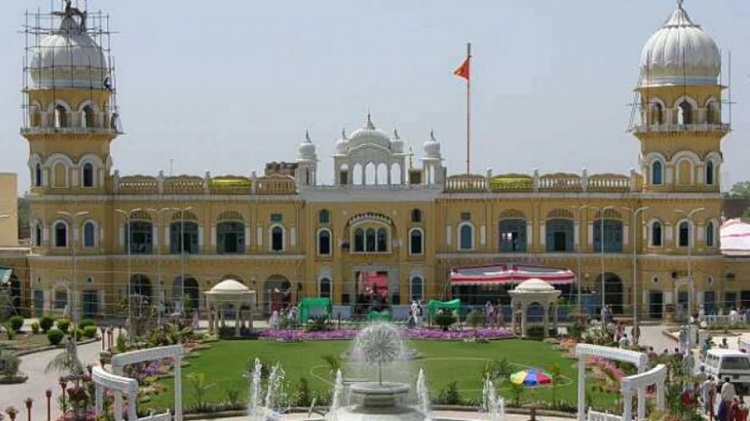
Nankana Sahib Gurdwara in Pakistan. The mob of radical Muslims pelted stones at the revered Gurdwara on January 3rd and demanded that the Gurdwara be razed down and a mosque be erected at this site.
Apparently, the Pakistani establishment is very worried about the
repercussions of the incident, especially on their efforts to woo the Sikh
community, and it wishes to put the matter under wraps. The fact, however,
remains that the family of Mohammad Hasan, through this violent and obnoxious
protest, is attempting to pressurise the authorities into putting an end to the
judicial proceedings against Mohammad Hasan.
If the family had a problem against the administration, it should
have organised a street protest or laid siege on the government installations.
That it chose to show its strength at the Holy Gurdwara is a clear message that
an inability on the part of the administration to bring early closure to the
case would result in danger for the Sikh community. In other words, to remain
safe in Nankana Sahib, the Sikhs would have to accept the conversion of Jagjit
Kaur and her marriage to Mohammad Hasan.
It becomes quite apparent from the proceedings that this family has
the political power and wherewithal to gather a violent mob at will. It stands
to logic, therefore, that the abduction of Jagjit Kaur was done on the strength
of this political power. The incident also points towards a bigger conspiracy
of creating circumstance wherein the exodus of Sikhs from Nankana Sahib could
be engineered. Jagjit Kaur is a mere pawn in this higher game plan.
The deep acrimony against minorities in Pakistan has once again
become visible. Any and every minority voice being raised for justice is
considered to be an affront to the Sunni majority and mob violence is used to
suppress the same. The reality of Pakistan lies in the mob violence and the
statements made therein and not in the placating voices and half-hearted cover ups.
It is time for the world in general and India in particular to
take note of the blatant suppression of minority communities in Pakistan with
use of brute force. There is a need to get the government of Pakistan out of
its denial mode and compel it to take concrete action to ensure protection of
all communities.
Coming close on the heels of Prime Minister Imran Khan’s “…We will show Modi’s India how to treat minorities” jibe, the Pak Foreign Office’s attempt to water-down the Nankana Sahib incident is understandable. But after hearing its version, one is reminded of George Washington’s famous advice that “It is better to offer no excuse than a bad one.” I’m sure that Pakistan’s Foreign Office has no dearth of talent and that’s why it’s all the more surprising that its mandarins seem to be incapable of even spinning a convincing yarn. How could the Foreign Office ever believe that people will disregard what they have seen and heard for themselves and instead, believe its version that two quarrelling groups somehow found a common meeting ground and ended up uniting to jointly direct their hatred at a Gurdwara– and that too in the very place where founder of Sikhism, Guru Nanak was born?
Gurdwara Nankana Sahib in Pakistan. On January 3, 2020 a large mob of radical Muslims pelted stones at the Gurdwara, raised slogans and demanded that the revered Gurdwara be razed down and a mosque be erected at this site.
If the Foreign Office thinks that merely saying “The opening of the Kartarpur Sahib Corridor is a manifestation of Pakistan’s special care extended to the minorities” will completely dispel the fear which Nankana Sahib incident has instilled within the Sikh community, then it’s sadly mistaken. Nor will its allegation that “attempts to paint this incident as a communal issue are patently motivated,” in anyway help to mitigate the pain inflicted worldwide on the peaceful Sikh community. But the most unfortunate thing in the Foreign Office’s statement is the mention that “Most importantly, the Gurdwara remains untouched and undamaged,” as it obfuscates the whole incident and this is very dangerous as it will surely embolden fundamentalists.
Regrettably, despite the plethora of audio-visual evidence available in public domain, Pakistan’s media has also gone overboard in downplaying this incident. For example, Dawn newspaper’s version is that four customers taking tea at a stall outside Gurdwara Janam Asthan started a conversation regarding a youth named Muhammad Ehsaan who had allegedly married a Sikh girl after forcing her to convert. This enraged the tea stall owner who coincidently happened to be Ehsaan’s uncle and this led to an altercation in which a “small group gathered to raise slogans.” According to the Dawn news report, it was a minor incident and a spontaneous act triggered by heightened emotions that luckily ended on a happy note– thanks to “a team of Nankana Sahib Police that had to intervene briskly to control the situation.”
But there’s enough circumstantial evidence to prove that the
Nankana Sahib incident wasn’t precipitous — it was definitely pre-planned.
Some pointers:
The sheer numbers of slogan shouting protesters that can be seen in the video recordings of this incident belies the Dawn newspaper’s claim that it was “small group (that had) gathered to raise slogans.”
From the determined way in which the mammoth crowd can be seen converging onto Gurdwara Nankana Sahib, it’s clear that the mob had been instigated beforehand and that this holy site had been predesignated as the ‘target’.
With eviction warnings being issued to Sikhs, the desire to rename Nankana Sahib as ‘Ghulam-e-Mustafa’ being expressed and threatening the demolition of this Gurdwara in order to make place for a Mosque, can we still say that this incident isn’t communal in nature?
Doesn’t the conspicuous absence of any law enforcement personnel at one of the most revered religious shrines of a minority community (even after it was besieged by an unusually large congregation of angry protesters belonging to the majority community) seem suspicious?
In its 2019
Pakistan Chapter Report, United States Commission on International Religious
Freedom (USCIRF) observed that “During the year, extremist groups and
societal actors continued to discriminate against and attack religious
minorities, including Hindus, Christians, Sikhs, Ahmadiyas, and Shia Muslims.”
The USCIRF went on to indict Islamabad by stating “…the government of Pakistan
failed to adequately protect these groups, and it perpetrated systematic,
ongoing, egregious religious freedom violations; this occurred despite some
optimism about the potential for reform under the new government of Prime
Minister Imran Khan.” Based on Islamabad’s perceptible failure to protect the
religious rights of its minorities, the US Department of State has
re-designated Pakistan as one of the nine “Countries of Particular Concern
(CPC).”
Pakistan’s Foreign Office spokeswoman Aisha Farooqui tried
to deflect this ignominious designation by terming it as “selective targeting
of countries” and even waxed eloquent on how “Pakistan is a multi-religious and
pluralistic country where people of all faiths enjoy religious freedom under
constitutional protections.” Imran Khan has been also been blaming external
forces for all the ills afflicting Pakistan and even in this case, his Foreign
Office has tried to do the same by mentioning how “patently motivated” attempts
were being made to “paint this incident as a communal issue.” But one doesn’t
have to be a rocket scientist to conclude that the Nankana Sahib incident is
undoubtedly and downrightly communal in nature that shows just how widespread
and vicious the malaise of fundamentalist ideology is in Pakistan.
Now that Islamabad has officially concluded that the Nankana Sahib incident wasn’t communal in nature, it’s evident that the culprits won’t be either booked or punished for hurting the religious sentiments and intimidating the minority Sikh community in Pakistan. Therefore, in this case, while the Government of Pakistan may not be guilty of having “perpetrated systematic, ongoing, egregious religious freedom violations,” but by letting the perpetrators off the hook, it has conclusively proved that the US State Department certainly wasn’t “selective” when it designated Pakistan as a ‘Country of Particular Concern’!
Postscript– Since the Nankana Sahib incident openly scoffs
Imran Khan’s idea of the ‘Naya (new) Pakistan’ he has promised his
people, perhaps his being more assertive and calling spade a spade instead of
brushing communal acts under the carpet will do both him and Pakistan some
good!
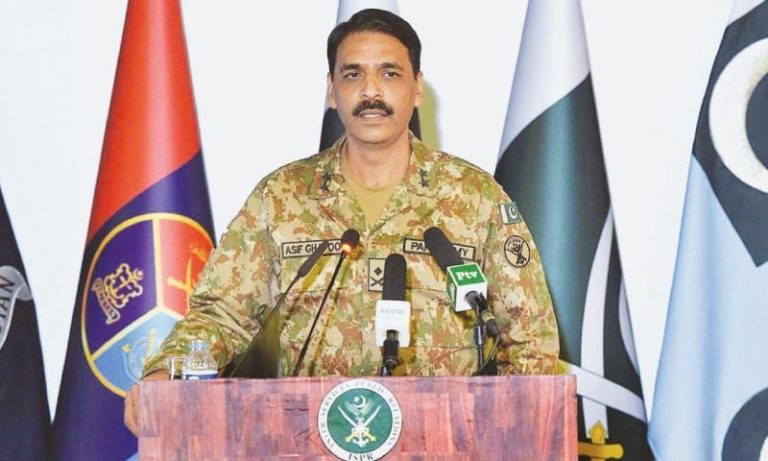
Though mandated to deal with military matters, Pakistan Army’s media wing Inter Services Public Relations (ISPR) is notorious for its proclivity to transgress into the realm of politics and diplomacy, leading to severe embarrassment. Therefore, Director Gen (DG) ISPR Maj Gen Asif Ghafoor’s puerile tweet conveying Christmas wishes to “Christians in Pakistan, across the globe and especially to the ones in the states of Odisha and alike under the Hindutva obsessed environment” comes as no big surprise– although its timing certainly does!
Isn’t it ironical (and equally amusing) that the DGISPR’s
sarcastic tweet comes just on the heels of Pakistan being re-designated as a ‘Country
of Particular Concern’ (CPC) by the US State Department for being guilty of “particularly
severe violations of religious freedom,” implying official tolerance towards “systematic,
ongoing, egregious violations of religious freedom”? Or could it be that this
knee jerk reaction is mere manifestation of the frustration arising out of Pakistan’s
continued inclusion in the CPC list? Whatever may be the reason, but if Maj Gen
Ghafoor had thought that his tweet would find favour with the Christian
community and arouse anti-government sentiments amongst them, then he was
terribly mistaken.
Christians the world over (including India) have not quite
appreciated the idea of their faith being used as ‘ammunition’ by Pakistan for
its ongoing war of words with India. Furthermore, the DGISPR’s tweet rekindles
bitter memories of how Christians are repeatedly being targeted in Pakistan and
the case of Asia Bibi, who was terrorised and wrongly confined for eight long
years on trumped up charges of blasphemy automatically comes to mind. Indian MP
Dr. Sasmit Patra, (who himself is a Christian) hit back at Maj Gen Ghafoor with
a strongly worded tweet that read, “Please hear a young Christian MP (Dr.
Sasmit Patra himself) from Odisha (since you referred to Odisha), slamming
Pakistan’s anti-minority barbarism before 170 countries this year at 141
Inter-Parliamentary Union (IPU), Belgrade.”
Patra also tagged video footage of his 141 IPU speech in
which he can be heard saying that “It is shameful and derogatory,
condemnable the kind of action Pakistan has been taking over the years. The
minorities in Pakistan are fleeing Pakistan because Pakistan is perpetrating
crimes on them. Can Pakistan confirm that it is home to 130 UN-designated
terrorists and 25 terrorist entities listed in UN? Is this the agenda of
Pakistan?” India’s Minister of Petroleum & Natural Gas and Minister of
Steel, Dharmendra Pradhan from Odisha too hit back at DGISPR by tweeting “So
says a man sitting at the epicentre of genocide against religious and
ideological minorities.”
But in a way Maj Gen Ghafoor’s uncharitable Christmas tweet
has done India good because it has fully exposed Pakistan’s grievous intent of
vitiating the secular environment here. Minorities need to understand that the
great concern that Pakistan is displaying is solely to instigate them to
indulge in violence and this, as we all know, they have done earlier in Punjab
and J&K. Whereas the people of Punjab saw through the Pakistan Army’s
game-plan and rejected terrorism before it was too late, the people of Kashmir haven’t
been as lucky since they have amongst their ranks, those, who being recipients
of Islamabad’s largesse are using the deadly combination of religion and strong-arm
tactics to ensure that normalcy doesn’t return to the Kashmir Valley.
DGISPR’s tweet has also brought back focus on the way Pakistan is treating its minorities and one is reminded of how he had sounded more like a novice politician rather than a mature military officer when in an obvious mention to Pashtun Tahafuz Movement (PTM) he had said, “Their time is up” The PTM is neither a terrorist or fundamentalist organisation. On the contrary, it’s a Khyber Pakhtunkhwa (KP) and Balochistan-based social movement for Pashtun human rights that was originally created by students for pressing the authorities to remove landmines laid by Pakistan Army in the former Federally Administered Tribal Areas (FATA). Shaken by continuing incidents of rampant extrajudicial executions and enforced disappearances, PTM added the demand for a truth and reconciliation commission on extrajudicial killings and presenting missing persons before courts.
The very mention of enforced disappearances and
extrajudicial killings in Khyber Pakhtunkhwa–Balochistan regions upsets the
Pakistan Army and this is but natural because of its humungous magnitude.
Infact, during the same press conference in which he warned PTM that “their
time was up,” the DGISPR himself conceded that “The list (of missing persons) has
shortened to 2,500 cases today and the (missing persons) commission is working
day and night to resolve those cases.” Whereas for Maj Gen Ghafoor it may be a
matter of great pride that the list of missing persons had been “shortened to
2,500,” but this monstrous figure would certainly shock any God-fearing mortal.
The Pakistan Army is in full control of the Khyber
Pakhtunkhwa– Balochistan regions and therefore such large number of persons missing
isn’t possible without the army being either involved or at least aware of
these disappearances! Though Rawalpindi has always denied it, but Maj Gen
Ghafoor’s own statements made with reference to the PTM belie Rawalpindi’s
claim. Examples:
DGISPR said that the army
chief ordered him to engage with PTM and that “I was given one order by the
army chief: ‘Do not use a harsh hand with them.’ The question that arises here
is that if the Pakistan Army goes by the book and respects human rights, then
where was the need for its army chief to specifically caution a senior officer
holding the rank of a Maj Gen not to use “a harsh hand” against social
activists?
Maj Gen Ghafoor further
said that “People will not face any sort of problem and neither will any
unlawful path be adopted.” He also emphasised that “Everything will
be done lawfully.” Now, if the Pakistan Army has been doing things
lawfully all along, then where was the reason for DGISPR to reassure the people
that “Everything will be done lawfully”?
While speaking about the
PTM leadership, what did the DGISPR mean when he said: “You have enjoyed
all the liberty that you wanted to,” especially when correlated with the “Their
time is up” threat!
Tailpiece- By originating a tweet on Christmas that
has reminded the world of the skeletons stuffed in Pakistan’s own cupboard, Maj
Gen Ghafoor has once again completely ‘goofed’ it up. Let’s now wait and see
what’s he’s going to entertain us in this New Year 2020!
There is an interesting story about Ajoy Chakrabarty, the genius and probably India’s finest classical singer. During the recording of show for Zee Telefilms, he exhorted his daughter, Kaushiki, to sing an old one, Saat Bhai Champa, even as he explained the notes to musicians on the stage. And then, after a pause, Chakrabarty looked into the camera and said it was high time people need to close the chasm that existed in India between Classical and Western music. Everyone should sing whatever they love, said Chakrabarty. “Many ask me why do you sing songs of Kishore Kumar, please do not do it. It hurts our feelings. I told them they should all stop this Panditji, Panditji business. Let people sing whatever they want, and if they can sing both classicals and Western songs well, applaud them and do not criticise.” Chakrabarty reminded me of the 1980 Telegu language movie, Sankarabharanam, where the protagonist JV Smayajulu said a similar thing to a gang of boisterous rappers, silencing them after he performed a song with perfection. And when it came to the turn of the youngsters to do a Classical one, they collapsed within seconds. This was no power show, Sankara helped the rappers understand the genesis of music and told them not to slice music into various compartments.
Ajoy Chakrabarty, the genius and probably India’s finest classical singer.
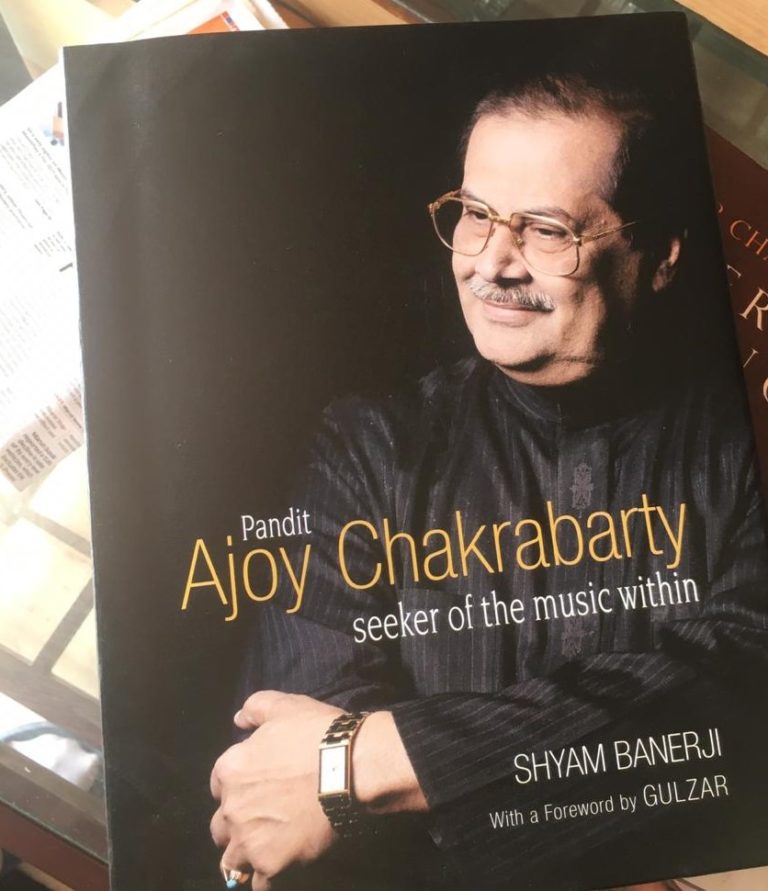
Chakrabarty is a root man, seeped into music, Shyam Banerji’s wonderfully scripted book, Pandit Ajoy Chakrabarty: Seeker of the music within – a product of Niyogi Books — explains the man and his music, and his life and struggles. I loved the chapter — all have a signage of the word Ga on top — where Banerji talks about Chakrabarty’s early days when his father, Ajit Chakrabarty, bought a dismantled weaving loom from Mymensingh (now in Bangladesh) and wanted to earn some extra cash by weaving Sujani, a quilt made from recycled sarees. Read these lovely lines: “The click-clack of the loom was a rhythm that I soon got used to. What I loved most was my father calling me and asking me to sit on his lap while he wove the cloth. Matching the beat of the loom, he made me practise the sargam.” Ajoy Chakrabarty looked at the colours and heard the sound of the loom for hours, it was absolutely enchanting for him.
Ajoy Chakrabarty’s daughter Kaushiki Chakrabarty is also a classical singer.
The rickety loom was his gateway to life, Ajoy Chakrabarty remembered his music forever.
Many moons later, sarangi maestro Pandit Hanuman Prasadji Maharaj, told Chakrabarty that he (Hanuman Prasad) was happy at Chakrabarty’s usage of laya in his songs. Chakrabarty’s father was probably standing close. He instantly quipped: “Well, it pays to listen to a heavy dose of chautal, teevra and dhamaar at a very young age (he was referring to the kirtan sessions). Singing kirtans — Bengali Holy songs devoted to Lord Krishna — did not help Ajit Chakrabarty earn enough cash but grounded him in musical brilliance, his son Ajoy happily walked on the pavement of gold.
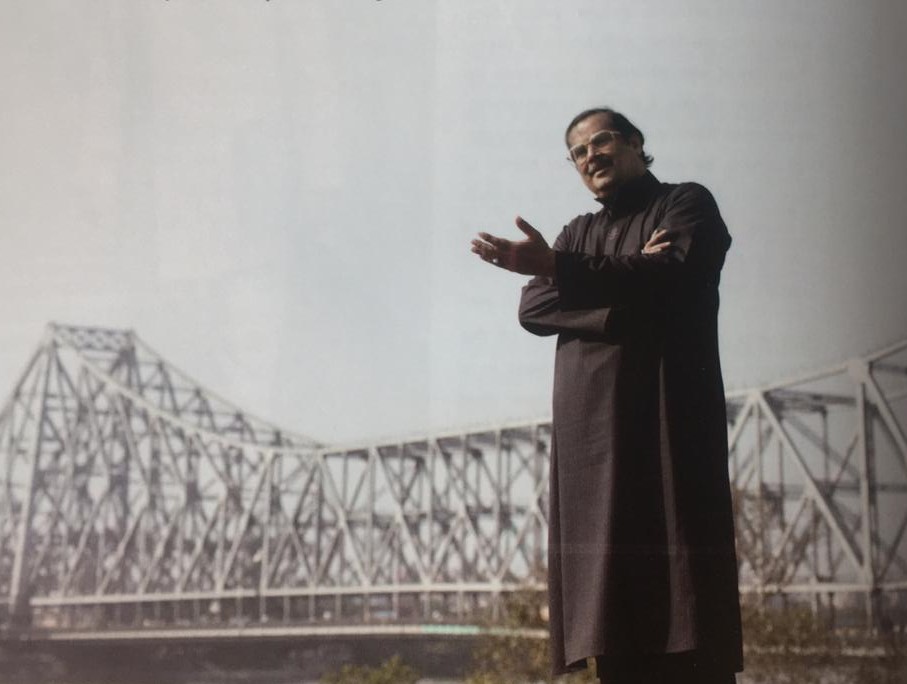
Biographies of legends can always be boring if its too, too laudatory without much insights, almost like the tomes written on cricketers and film stars. They rarely tell you the right stories, do not say why the batsman failed for three successive seasons and why as many as seven movies one after another did not work for an actor India knows as a superstar. But this one is different, it scores because it has both pain and gain. It has some of the most fascinating insights about the man who once stood close to the mighty Ganges in Kolkata like a character from the 1951 Jean Renoir film, The River, to shoot a commercial exhorting non resident Bengalis to return to Kolkata and boost the economy of the state. The Ganges, Ajoy Chakrabarty and his music was the highlight of the film. The book, time and again, explains why the protagonist has earned both name and fame, how hard, hard, hard he honed his skills to emerge as the Big Boss of Indian Classical Music. And how the Ganges remained an integral part of his life because he lived close to the river, almost like his gurus who could make out by the rustle of his slippers that Ajoy had come for his music lessons. I read how his father took an expensive loan from an Afghan trader — once Bengal had loads of them offering both dry fruits and cash — to buy a tanpoora for Ajoy. The instrument cost ₹90 in those days and Ajit Chakrabarty eventually ended up paying a whopping ₹300. Sounds lovely in these days of unpaid loans and non performing assets (NPAs) of the nationalised banks (isn’t it a whopping ₹8 lakh crores?). In those days, how many could have paid ₹220 extra for an instrument costing just ₹80. This was not just for music, this was also for life, this was also for the future of a rising star, Ajoy Chakraborty.
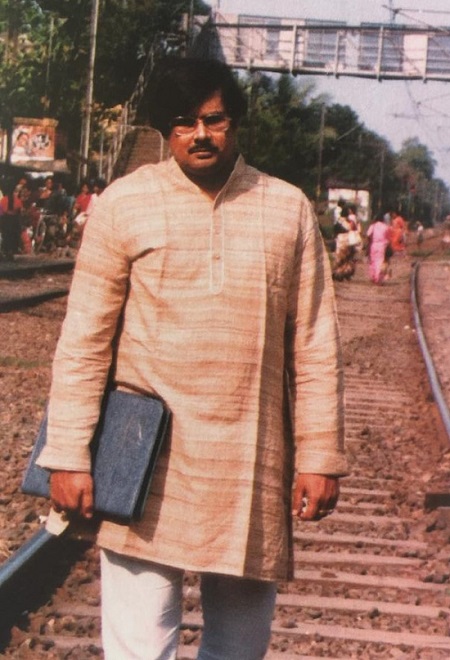
Ajoy Chakrabarty, during his younger days.
Ajoy Chakravarty wanted to do things in style. He wanted blessings from the Gods, was very, very keen to meet up Ustad Bade Ghulam Ali Khan. Chakrabarty loved Khan’s music. Chakrabarty waited for an opportunity to meet the legend. But getting across to Khan was very, very difficult. Eventually, on a balmy morning in 1966, Chakrabarty met Khan in the corridors of the imposing All India Radio building in Kolkata. Chakrabarty touched Khan’s feet and the latter remarked instantly: “Jeetey raho beta.” Chakrabarty, then a teenager, was floored by the humility of the legend. Khan died on April 26, 1968, around the time when the UK pop charts buzzed with What a Beautiful World. Chakrabarty was crestfallen. He told the author: “I had come to regard Ustad Bade Ghulam Ali Khan Saheb as my ideal. I had heard so many tales of his generosity, his personality and his devotion to music. I wanted to be like him. His passing away was a heavy blow that weighed me down for days. There was a sense of gloom.”
Banerjee, the author, explains how Ajoy Chakrabarty was encouraged by his father to rise and sing again, not to be depressed because of the death of Ustad Bade Ghulam Ali Khan. It seemed to me — the author does not write this one in the book — the rise of Chakrabarty was like that of the proverbial Arjuna from depression in the battle of Mahabharata, the words of Lord Krishna ringing in his ears, words that eventually formed the Holy Gita. For Chakrabarty there was no battle, no armies, no bows and no Godspeed fired arrows. Chakrabarty had to emerge from gloom. Eventually he rose, Chakrabarty recharged his batteries with that single memory of meeting his God in the corridors of AIR. He was back again, and there was no looking back.
Ganges remained an integral part of Ajoy Chakrabarty’s life.
Wonderfully written, the book is like a bangle studded with precious diamonds. I loved the one where the author explains how he — sitting in front of a radio — took notes from Tagore songs. The idea was to write down the lyrics and notations of each word of the songs and the transition of each note in a span of 15 minutes — obviously it was an AIR programme — and then emerge stronger. Chakrabarty remembered lines from his favourite Sukumar Ray poem, Ei Dekho Pencil, Notebook Ei Haathey (which translates into Look Here Is My Pencil, And Notebook In My Hand). And then, after training hard, Chakrabarty impressed his Guru Jnan Prakash Ghosh, who often asked his students to repeat what he taught. On that day when Chakrabarty outsmarted everyone, he had learnt by heart as many as 17 compositions. It was like scoring a hat trick in front of the coach, and also the club owner.
In a world of styles and brands, Chakrabarty does not need special hairdos, nor he needs a Merc or a designer kurta to make a statement, he rarely talks about his performances. He is an unusual musician who is at ease at the various musical conferences, and also at the lobby of a five star hotel jam-packed to receive Shah Rukh Khan. Once he used to sing like Munawar Ali Khan, only to be rebuffed by his father. And then he developed his own style. A style of singing the world loved, loved and continues to love. His inspiration comes from an extraordinary insight into the structure of ragas. He once told a reporter that he sees his place at the feet of Saraswati, the Indian goddess of learning who rides a swan and is worshipped at the start of the new year. I have a feeling Chakrabarty prides himself being Paramahansa, the swan who drinks milk by separating it from water. The title in Bengal, till date, is reserved for the sage Ramakrishna who was born Gadadhar Chattopadhyay.
What a lovely read, and imagine the book is unjustifiably priced at Rs 1500. If I was a publisher, I would have priced it three times the current price. Those interested in music make some right investments, and not seek all answers from Alexa or Google. They must buy the right kind of books to enrich knowledge. All music schools must pick up copies of this one and make it mandatory purchase for its students. Will they do it? If they do, the publisher will earn some decent cash.
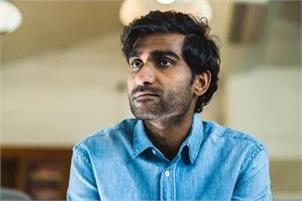
Indian singer Prateek Kuhad’s song “cold/mess” has made it to
former US President Barack Obama’s favourite music of 2019 line-up.
The list, shared by Obama on Twitter on Monday, has 35 songs which includes
“Hello Sunshine” by rock legend Bruce Springsteen, “Show Me
Love” of Alicia Keys featuring Miguel and “Go” by the band Black
Eyed Peas.
“From hip-hop to country to The Boss, here are my songs of the year. If
you’re looking for something to keep you company on a long drive or help you
turn up a workout, I hope there’s a track or two in here that does the
trick,” the ex POTUS captioned the list.
Featuring actors Zoya Hussain and Jim Sarbh, Kuhad’s “cold/mess”
featured on number 22 and the Delhi-based singer said he was honoured by the
gesture.
“This just happened and I don’t think I’ll sleep tonight. Totally flipping
out. I have no idea how ‘cold/mess’ even reached him but thank you
@barackobama, thank you universe. I didn’t think 2019 could’ve gotten better,
but damn was I wrong. What an honour,” Kuhad replied on Obama’s tweet.
Sarbh also gave a shout-out to the singer on Twitter.
Previously, Obama shared his favourite movies and TV shows of 2019, and the
list includes Phoebe Waller-Bridge’s “Fleabag” season two, limited
series “Unbelievable”, Martin Scorsese’s “The Irishman” and
Korean filmmaker Bong Joon-ho’s genre-defying class drama “Parasite”.
The Ministry of Environment, Forest and Climate
Change (MoEF&CC) recently shared key highlights of the work done by the
Ministry in the year 2019. In its report, the ministry claims that India’s leadership
and commitment on environmental issues under the guidance of Prime Minister Narendra
Modi has led to landmark achievements. With significant developments such
as India for the first time ranking among
the top ten countries in the Climate Change Performance Index (CCPI) goes
further to prove that all efforts and activities being currently undertaken by
the country under the Ministry of Environment, Forest and Climate Change
(MoEF&CC) are setting a tone of vast improvements.
Some of the major highlights of the Ministry in the
year 2019 are outlined below:-
Environment:
Air pollution is one of the biggest global
environmental challenges of today. A time bound national level strategy for pan
India implementation to tackle the increasing air pollution problem across the
country in a comprehensive manner in the form of National Clean Air Programme
(NCAP) was launched on 10th January,
2019.
Third Indo-German Environment Forum with the theme
“Cleaner Air, Greener Economy:” held in New Delhi in February. The
one-day event through panel discussions and parallel sessions focused on
challenges, solutions and necessary framework conditions of air pollution
control, waste management and circular economy as well as implementation of NDCs
and SDGs based on Paris Agreement and Agenda 2030 of UN respectively.
In a significant first, India piloted resolutions
on two important global environment issues relating to Single-use Plastics and
Sustainable Nitrogen management at the fourth session of United Nations
Environment Assembly (UNEA) which was held in Nairobi from 11th to 15th March
2019.UNEA adopted both the resolutions with consensus.
India Cooling Action Plan (ICAP) Launched in March
this year. India is one of the first countries in the world to develop a
comprehensive Cooling Action plan which has a long term vision to address the
cooling requirement across sectors and lists out actions which can help reduce
the cooling demand. Cooling requirement is cross sectoral and an essential part
for economic growth and is required across different sectors of the economy
such as residential and commercial buildings, cold-chain, refrigeration,
transport and industries.
In order to strengthen the implementation of environmentally sound
management of hazardous waste in the country, the Ministry amended the
Hazardous and Other Wastes (Management & Transboundary Movement) Rules,
2016 vide notification G.S.R. G.S.R. XX (E), dated 01 March 2019. The amendment
has been done keeping into consideration the “Ease of Doing Business” and
boosting “Make in India” initiative by simplifying the procedures under the
Rules, while at the same time upholding the principles of sustainable
development and ensuring minimal impact on the environment.
On World environment Day, Union Minister for Environment, Forest and
Climate Change, Shri Prakash Javadekar launched
a people’s campaign #SelfiewithSapling urging all to join and plant a sapling
and post the selfie with the sapling on social media. Shri Javadekar stressed that
‘Jan Bhagidari’ is integral towards tackling the environmental issues and
environment protection has to be a people’s movement.
The country has leapfrogged from Bharat Standard IV to Bharat Standard
VI for vehicle emission norms and from 1st April 2020, vehicles will be BS VI
compliant. There is also a strong push for use of e-vehicles by introducing
multiple policy interventions and incentives.
Forest & Wildlife:
A Memorandum of Understanding (MoU) was signed in
February between MoEF&CC and University of British Columbia (UBC), Canada
for next 10 years in New Delhi. Both the institutions shall explore
opportunities for future collaborations in the field of forestry science
through their respective organizations namely Indian Council of Forestry
Research and Education, Wildlife Institute of India, Forest Survey of India,
Indira Gandhi National Forest Academy and Directorate of Forest Education,
Dehradun, Uttarakhand, India and University of British Columbia, Vancouver,
Canada.
A dedicated“Asiatic Lion Conservation Project” with
a budgetary contribution of Rs 97.85 Cr from Central Government was launched in
February . The Asiatic Lion endemic to Gir landscape of Gujarat, is one of the
21 critically endangered species identified by the Ministry for taking up
recovery programmes.
‘Not
all animals migrate by choice’ campaign launched to raise awareness on illegal
wildlife trade.
On the occasion of International Tiger Day, Prime
Minister Narendra Modi released the results of the fourth cycle of All India
Tiger Estimation – 2018 in New Delhi on July 29th,
2019. The count of tigers in India has risen to 2967, in 2018, according to
this census.
In a major boost towards promoting afforestation
and achieving green objectives of the country, the Ministry handed over
Rs.47,436 crores of Compensatory Afforestation Fund anagement and Planning
Authority, CAMPA funds to various states in August. Important activities
on which the fund will be utilised will be for the Compensatory Afforestation,
Catchment Area Treatment, Wildlife Management, Assisted Natural Regeneration,
Forest Fire Prevention and Control Operations, Soil and Moisture Conservation Works
in the forest, Improvement of Wildlife Habitat, Management of Biological
Diversity and Biological Resources, Research in Forestry and Monitoring of
CAMPA works etc.
With efforts towards protecting and conserving Snow
Leopards, the First National Protocol on Snow Leopard Population Assessment in
India was launched on the occasion of International Snow Leopard Day in
October.
Draft amendment to the Indian Forests Act withdrawn
to remove any misgivings, thereby enriching the livelihood of tribals and
forest dwellers.
The Union Minister for Environment, Forest and Climate Change, Prakash
Javadekar recently released the biennial “India State of Forest Report (ISFR)”,
in New Delhi. The report is published by the Forest Survey of India (FSI) which
has been mandated to assess the forest and tree resources of the country
including wall-to-wall forest cover mapping in a biennial cycle. Starting 1987,
16 assessment have been completed so far. ISFR 2019 is the 16th report in the
series.
Announcing the results the Union Minister said that India is
among few countries in the world where forest cover is consistently increasing.
Shri Javadekar told that in the present assessment, the total forest and tree
cover of the country is 80.73 million hectare which is 24.56 percent of the
geographical area of the country.
The Environment Minister further said that as compared to the
assessment of 2017, there is an increase of 5,188 sq. km in the total forest
and tree cover of the country. “Out of this, the increase in the forest cover
has been observed as 3,976 sq km and that in tree cover is 1,212 sq. km; Range
increase in forest cover has been observed in open forest followed by very
dense forest and moderately dense forest and the top three states showing
increase in forest cover are Karnataka (1,025 sq. km) followed by Andhra
Pradesh (990 sq km) and Kerala (823 sq km).”, said the Minister.
Area-wise
Madhya Pradesh has the largest forest cover in the country followed by
Arunachal Pradesh, Chhattisgarh, Odisha and Maharashtra. In terms of forest
cover as percentage of total geographical area, the top five States are Mizoram
(85.41%), Arunachal Pradesh (79.63%), Meghalaya (76.33%), Manipur (75.46%) and
Nagaland (75.31%).
The
Mangrove ecosystems are unique & rich in biodiversity and they provide
numerous ecological services. Mangrove cover has been separately reported in
the ISFR 2019 and the total mangrove cover in the country is 4,975 sq km. An
increase of 54 sq Km in mangrove cover has been observed as compared to the
previous assessment of 2017. Top three states showing mangrove cover increase
are Gujarat (37 sq km) followed by Maharashtra (16 sq km) and Odisha (8 sq km).
The
total growing stock of India’s forest and TOF is estimated 5,915.76 million cum
of which 4,273.47 million cum is inside the forests and 1,642.29 million cum
outside. There is an increase of 93.38 million cum of total growing stock, as
compared to the previous assessment. Out of this the increase in growing stock,
there is an increase of 55.08 million cum inside the forests and 38.30 million
cum outside the forest areas.
The extent of bamboo bearing area of the
country has been estimated 16.00 million hectare. There is an increase of 0.32
million hectare in bamboo bearing area as compared to the last assessment of
ISFR 2017. The total estimated green weight of bamboo culms is 278 million
tonnes, slowly an increase of 88 million tonnes as compared to ISFR 2017.
Under the current assessment the total
carbon stock in country’s forest is estimated 7,124.6 million tonnes and there
an increase of 42.6 million tonnes in the carbon stock of country as compared
to the last assessment of 2017. The annual increase in the carbon stock is 21.3
million tonnes, which is 78.2 million tonnes CO2 eq.
Wetlands within forest areas form
important ecosystems and add richness to the biodiversity in forest areas, both
of faunal and floral species. Due to importance of wetlands, FSI has carried
out an exercise at the national level to identify wetlands of more than 1 ha
within RFA. There are 62,466 wetlands covering 3.8% of the area within
the RFA/GW of the country.
General Bipin Rawat assumed office of the Chief of Defence Staff (CDS) today. As the CDS, General Rawat will be the Principal Military Advisor to the Raksha Mantri on all Tri-Services matters. He will also head Department of Military Affairs (DMA). The CDS will have a key role in ensuring optimum utilisation of allocated budget, usher in more synergy in procurement, training &operations of the Services through joint planning and integration. The CDSwill facilitate indigenisation of weapons and equipment to the maximum extent possible while formulating the overall defence acquisition plan for the three Services.
Interacting with media persons, General Rawat vowed to work to create more synergy among the three Services. “The CDS is mandated to facilitate integration, ensure best economical use of resources allocated to the Armed Forces and bring uniformity in the procurement procedure. I want to assure you that the Army, Navy and Air Force will work as a team and the CDS will ensure integration among these,” he said.
Earlier, General Rawat inspected the Tri-Service Guard of Honour at the South Block Lawns. Chief of the Naval Staff Admiral Karambir Singh, Chief of the Air Staff Air Chief Marshal R K S Bhadauria and Chief of the Army Staff General Manoj Mukund Naravanewere also present on the occasion. General Rawat also laid wreath and paid homage to the martyrs at the National War Memorial.
Ex-Chief of the Army Staff General Rawat, is an alumnus of National Defence Academy, Defence Services Staff College, Wellington; Higher Command, National Defence College. He also attended the Command and General Staff Course at Fort Leavenworth in the United States.
During his distinguished career in the Army, General Rawat commanded an Infantry battalion along the Line of Actual Control in the Eastern Sector, a Rashtriya Rifles Sector, an Infantry Division in the Kashmir Valley and a Corps in the North East. General Rawat had also commanded a Multinational Brigade in the Democratic Republic of Congo. As an Army Commander, he commanded a theatre of operations along the Western Front and was appointed the Vice Chief of the Army Staff before assuming office of Chief of the Army Staff.
During the span of over 41 years in the Army, General Rawat has been awarded several gallantry and distinguished service awards.
A
big hindrance to this feeling of positivity comes from a small set of Leftists,
pseudo-intellectuals and bleeding hearts, who spread venomous and jaundiced
narratives of divisiveness, hate and prejudice with regard to Kashmir. To give
an example, in recent times the Baloch Diaspora has been using the term
“collective punishment” in the context of the massive Human Rights violations
that the government of Pakistan and the Pakistan Army are heaping upon the
hapless people of Balochistan. This term relates to the deplorable abuse of women
and children of their land, marked with illegal detentions, torture and
disappearances. Nothing of this sort is happening in Kashmir. There is, in
fact, minimal violence being reported from the region. Yet, a highly volatile
term like collective punishment is being used most brazenly.
The
propagandists often say that Kashmir is specially targeted as a land where
violent protest is a way of life and where the people are all anti-national.
The manner in which India has reacted to the mindless violence witnessed during
the recent protests against the Citizenship (Amendment) Act, 2019 (CAA) puts
paid to the aforementioned line of argument. The attendant violence has been
strongly criticised in all discussions and articulations, even as protests have
been upheld as a legitimate expression in a vibrant democracy like India. It
has been said openly that the violence was engineered by certain anti-national
forces. The aforementioned makes it clear that violence during protests is
unacceptable anywhere and everywhere in the nation and that Kashmir has never
been singled out for any special censure. It is also notable that whenever the
matter of violence in Kashmir is spoken of, it is said that the same is the
handiwork of a few foreign-sponsored anti-national elements; never is it said
that all Kashmris are responsible for the same.
There is another aspect that the people of Kashmiri should be wary of. Anti-national elements across the country have made it a habit to use Kashmir as a tool to whip up passions to further their evil agenda. In most protests, ‘Kashmir’ is raised as a slogan in a manner similar to that used by foreign sponsored anti-national elements in the Valley. This is a very clever and immoral design to isolate the Kashmiri people from their own land. The reality is that the Kashmiri people have every opportunity to voice their concerns and their opinions. Further, they are vibrant and politically aware; they know what is good for them and what is not. They do not need the help of a faceless, treacherous set of people who have their own axe to grind and are bent upon ruining the nation. The people of Kashmir should understand the environment and counter the hollowness of the shrill divisive rhetoric, provocative sloganeering and jaundiced writings.
That Kashmir today is looking at an era of peace and development is quite visible from the manner in which things have played out post the re-organisation of the state into two manageable Union Territories under direct control of New Delhi and considerable dilution of the divisive Article 370 and Article 35A. There were many who had predicted total chaos and mayhem should the government of India “Dare” to tinker with Article 370. The predicted chaos is nowhere to be seen. New Delhi did impose certain restrictions but soon it was apparent that these were also not required and they were removed.
As
part of damage control, the existing environment of peace is being project by anti-Kashmir
forces as a proverbial “Lull before the Storm.” This idea is coming not from
Kashmir but outside of it. It is being given maximum traction by Pakistan and
in support of the neighbouring country are, most unfortunately, some perfidious
elements within India, mainly in the information domain. Happily, the obdurate
propaganda stands exposed by the fact that the people have, for many months
now, gone about their work without any upheaval.
A
more pragmatic assessment of the situation would lead to a conclusion that the
people, especially the youth, are quite relieved. Earlier they were being held
at ransom by the foreign terrorist elements and were constantly under fear of retribution,
if seen as non participative in local Azadi
(freedom) movement. They were receiving no support from the local leadership which
was quite content to play with both India and Pakistan due to certain vested interests.
Now, the terrorists have no capability to force the Kashmiri youth onto the self-destructive
path of terrorism and the self serving leaders have been rendered powerless.
The youth are now looking at the evolving situation with a fair degree of positivity
and have become apathetic to the cult of terrorism, divisiveness and
disruption. This is the very real and very positive element that is slowly
gaining roots in the environment of Kashmir.
After
great sacrifice, the courageous people of Kashmir have defeated such forces
that wished to annihilate their identity and their very existence. In the most
difficult of times they had rooted for democracy and a proud place within India.
In this fight they were ably supported by the nation, especially so the
security forces. The Indian Army, in particular, shares a unique bond with the
people created by common cause and common suffering. The encouraging situation
in Kashmir indicates that the hard work and sacrifice has paid good dividends.
The challenge now lies in defeating those attempting to create mistrust and
distrust and root for what is righteous, justified and beneficial for the
people of the land. It has to be ensured that peace gains firm roots. This New
Year Kashmir must resolve to convincingly defeat those creating mistrust and
divisiveness
There’s a joke doing the rounds in Kolkata: Ask Alexa for Saradha.
Nearly a decade after it erupted and triggered an Ebola-type scare across Bengal, India’s biggest Ponzi Scam is going one step forward and four steps backward. A little over 500,000 people impacted by the scam remain unpaid, their cash (read savings) lost forever. Gullible farmers, fishermen and office-goers have lost close to $1.2 billion (₹ 8,570 crore) in the scam that erupted during the fall of 2010.
And now, the case is acquiring interesting hues.
Sudipta Sen
The main accused, Sudipta Sen, promoter chairman of Saradha Group of companies, has repeatedly told judges he is guilty, cashless and should be punished. He has 293 cases against him and has spent a little over seven years in jail. And till date, the CBI has not been able to conclusively say where did the cash disappear. But punishment for Sen, claim highly placed sources in Kolkata, is far away because no one knows where the cases are heading. Sen is troubled with the courts because of this delay. His lawyers are troubled with their client. Sen’s lawyers have urged him repeatedly to clear his legal dues. And then he needs to pay the bail bond in case he wants bail from all the cases. That would be a little over ₹1.2 crores. Sen has not responded, he has told his lawyers all his properties and cash has been seized by officers of the Central Bureau of Investigation (CBI) and he has some loose cash for making phone calls. Jail authorities have confirmed Sen makes call to two handsets in Kolkata but refused to share details. Sen, who named his company after Ma Sarada, the holy mother and wife of Bengal’s greatest saint, Ramakrishna Paramahansa, has turned into a mental wreck, claim jail officials.
Sen has told the CBI that he paid many top policemen and politicians loads of cash to keep his company away from any investigations. He has confessed that cash given to top editors were meant to generate breaking news and launch channels and news magazine, and club owners took cash to fund teams by hiring footballers from Africa and parts of Asia. Sen has repeatedly said he is guilty and that he did splurge cash taken from investors. But he has not given any written statement — remember he was arrested seven years ago — till date to show where all he spent the cash. But he has repeatedly said he is guilty and cashless. In some courts, like the one in Barasat, he took help from the state’s Legal Aide.
But those in Kolkata who claim to have observed Sen from close say he wanted to be the state’s biggest money changer and styled himself as the state’s new Jagat Seth, a powerful banker who lived in Murshidabad, Bengal, during the time of its ruler, Nawab Siraj-ud-Daulah in the early 18th century. What is interesting is that Sen, almost like Jagat Seth, would rarely show up in daytime and preferred all meetings in the night. He splurged cash as if there was no tomorrow, buying news channels, newspapers, magazines, hotels, resorts and football clubs. Yet, very little is known about Sudipta Sen. He is in his mid-fifties, a reclusive man, described by people as soft spoken and charming. Some say he is the son of a man called Bhudeb Sen, who used to run a chit fund called Sanchayani in the 1980s and which went bust 10 years ago. The Saradha chit fund was launched in 2006. It is rumoured that Sudipta Sen had plastic surgery done in the 1990s to change his looks.
Obviously, he was the apple of Trinamool’s eye because of his big-buck donations. In many places, Saradha agents employed wives of local police officers as representatives to prevent investors from raising an alarm against such dubious investment programmes. In cash-starved Bengal, Saradha’s growth was phenomenal. There was a time when many joked: “There is a bit of Saradha in everyone in Bengal”, the lines borrowed from the mid-90 SAIL advertisement. Sen, claim his former colleagues, loved to hear stories about himself. But eventually, Saradha collapsed.
CBI officers agree investments made by Saradha are lost cash but if the money Sen and his men sent abroad using hawala channels can be tracked, some cash could still return to India. But CBI’s job has been made tough by TMC politicians in Bengal who have reportedly egged on their party workers and the local police to remove files with vital links from Saradha offices. Before he escaped from Kolkata, Sen posted a letter to the CBI, saying two ministers from the governing TMC pressured him to pay them large sums in return for protection from government regulators.
Sen was initially saddled with 293 cases, and then the CBI clubbed 195 cases into 4 cases. As of now, there are 98 cases pending against Sen. The promoter-chairman of Saradha Group of Companies was given a three year jail term in 2014 but he is out of it, having completed the term in Presidency Jail. Sen is thinking smart. He knows in all the cases filed by the state government, he will get a maximum of seven years, which he has already spent in the jail. So he has hopes that he will be a free man by 2020. But then, the CBI has not had the last say on Saradha. Top CBI officers are still struggling to get details of Sen’s dealings with some of Bengal’s influential leaders. Sen has given the CBI a written statement and said he not only paid politicians but also top cops, but it does not include some “crucial information”. Sen has told CBI that he handed over his papers to the Special Investigation Team (SIT) of West Bengal Police but the SIT has not offered any clue to CBI about the existence of those information, allegedly concealed in a pen drive, handsets, laptop and a red coloured diary.
Till date the CBI officers have not been able to lay their hands on any of those material mentioned by Sen.
It is evident that Sen desperately wants the cases to get over so that he knows for how long he has to stay in prison, and if there is life beyond that. Sen has not been keeping good health, he has been in and out of hospitals while serving his jail term. But sadly, his demand has generated no response. The West Bengal government, Kolkata Police, West Bengal Police, West Bengal CID, CBI and ED are all silent. The last two named have said — unofficially — they will put a seal on the cases soon and file the final charge sheets. As many as seven charge sheets have been submitted by the CBI, there is one more to be submitted before the investigating agency will drop the lid on the cases. There are high chances that a few more legislators of the Trinamool Congress, officers of Kolkata Police, West Bengal Police and some influential people of the state could find their names in the charge sheet. This is one part of the case.
Rajeev Kumar
Rajeev Kumar, former Kolkata Police Commissioner, had been running from CBI to evade his arrest. Kumar is now the Chief Secretary of Bengal’s Information Technology department.
The other part revolves around the former Kolkata Police Commissioner Rajeev Kumar. Now Kumar, ADG (CID), once on the run from the CBI had spent many tough nights under cover at the homes of his friends and relatives, has a new job. Kumar is now the Chief Secretary of Bengal’s Information Technology Department, a post traditionally reserved for IAS and not IPS officers. The move triggered instant speculations within the corridors of Nabanna, the blue and white coloured state government headquarters close to the Ganges. Some bureaucrats said posts meant for IAS should be reserved for them because those in the IPS are groomed differently, and they have a different mindset. Worse, IPS officers headed for such non law and order posts need clearances from the Central government and such clearances are given only for three months. In Kumar’s case, no such rule was followed in Bengal. State Chief Minister, Mamata Banerjee, did not allow the speculations to reach the newsrooms of television channels in the city. And now, for some strange reasons, Kumar is no longer in the headlines. No one is even discussing the fact that CBI could call him a co-accused for allegedly shielding the corrupt and allegedly destructing evidence against the city’s powerful politicians, corporate captains, football club owners and media gurus. In short, no one knows where the investigation is heading in the Saradha Ponzi Savings Scheme, a devious combination of financial illiteracy and political protection.
Consider some of the points emerging out of Kumar’s conversation with officers of the CBI. Kumar — head of the SIT — has admitted there were some flaws in the probe conducted by the SIT. He reportedly admitted that bulk of the investigation took place at the neighbourhood police station and the SIT did not have a complete grip on the investigation, conducted by Arnab Ghosh, a senior office officer now posted in Malda bordering Bangladesh. But he also made it clear that he was not responsible for the lapses and he was led astray by a number of officers working on the case. Kumar also said he had drawn up a list of influential people who were to be questioned for their alleged role in the Saradha scam and submitted the same to the Supreme Court. But then the CBI took over the case and nothing was heard about the envelope. Now, the rumour doing the rounds in Kolkata is that Kumar was brought in because of his unflinching loyalty towards the state government. The investigation — claim highly placed sources in Kolkata — went for a toss while SIT continued its probe. Crucial evidence went missing, files, laptops, handsets and pen drives with vital information collected from Sen’s office also went missing.
Kunal Ghosh
The other crucial angle in the case revolves around former TMC MP and journalist Kunal Ghosh, who also spent a fair amount of time in jail following his arrest some years ago on charges of laundering cash collected from gullible investigators. Ever since he has been released, Ghosh has launched a web channel and has been singing like a canary, opening cans and cans of worms to highlight the extent of cash that was collected by Ponzi operators in Bengal and its neighbouring Jharkhand and Odisha states. When the CBI officers got Ghosh and Kumar face to face for a meeting, Kumar could not answer a host of issues raised by Ghosh. These issues were about those very missing documents, handsets, laptops, diaries and pen drives of the Saradha group. Now Ghosh has informed the CBI that it was at the behest of the SIT that the documents were allegedly destructed to save a number of influential people in Kolkata. Kumar has denied the charge but could not answer how could documents collected by officers of the SIT could go missing from the custody of Kolkata Police. What’s interesting is that Ghosh even agreed to do a narco test on himself and Kumar but the latter rejected the offer.
Kunal Ghosh, accomplice of Saradha Scam main accused Sudipta Sen. When CBI officers got Ghosh and Rajeev Kumar, former Kolkata Police Commissioner face to face for a meeting, Kumar could not answer a host of issues raised by Ghosh.
In the last one decade, an estimated 25 people have committed suicides in West Bengal, including agents of Saradha and Rose Valley chit fund companies. There are high chances that more investment firms will collapse, the West Bengal Association of Small Savings Development Officers has even warned of riots in the days to come. The Securities and Exchange Board of India, or SEBI, says the scams have resulted in at least $5.5 billion (₹39,241 crore) in losses and affected 3.3 million people in West Bengal, making it one of the biggest financial fraud cases in India. As per the national Serious Fraud Investigation Office (SFIO), 53 companies are in default, the largest of which is the Saradha Group which promised returns as high as 100% in three years in order to lure deposits from villagers of West Bengal, who lacked easy access to banks. SEBI said several ponzi operators have confessed using the cash to acquire villas in Jordan and Dubai, invest in oil businesses in Qatar and acquire rights of diamond mines across Africa. But to trace the Rs 6,000 crore Saradha raised from gullible investors is becoming a very tough exercise for the CBI officers. Much of the cash, the officers reckon, has already been wired to Asian and European tax havens.
The CBI has probed many. Some answers have come, others have not. Former Bengal sports minister, Madan Mitra, says he has nothing to hide but has had difficulties in answering the Trinamool top brass as to how his son got a Ferrari from Sen and whether he took cash from Sen to repair temples in his constituency, Bishnupur. Mitra also did not say whether he took cash from Sen to organise a soccer match involving Argentine superstar Lionel Messi. In Kolkata, veteran actress and director Aparna Sen — now a staunch critic of PM Narendra Modi — has not answered whether she actually spent some ₹3.5 crore to renovate her office and took a salary of over ₹800,000 when her last drawn salary was ₹200,000. Rathikanta Basu, former I&B secretary, also must answer how he managed to sell his Tara channels to Saradha for a little over ₹65 crore when the market value was less than ₹15 crore. Manoranjana Gupta, a journalist turned entrepreneur, must answer whether the Assam channels she sold to Saradha were actually worth ₹40 crore.
We use cookies on our website to give you the most relevant experience by remembering your preferences and repeat visits. By clicking “Accept All”, you consent to the use of ALL the cookies. However, you may visit "Cookie Settings" to provide a controlled consent.
This website uses cookies to improve your experience while you navigate through the website. Out of these, the cookies that are categorized as necessary are stored on your browser as they are essential for the working of basic functionalities of the website. We also use third-party cookies that help us analyze and understand how you use this website. These cookies will be stored in your browser only with your consent. You also have the option to opt-out of these cookies. But opting out of some of these cookies may affect your browsing experience.
Functional cookies help to perform certain functionalities like sharing the content of the website on social media platforms, collect feedbacks, and other third-party features.
Performance cookies are used to understand and analyze the key performance indexes of the website which helps in delivering a better user experience for the visitors.
Analytical cookies are used to understand how visitors interact with the website. These cookies help provide information on metrics the number of visitors, bounce rate, traffic source, etc.
Advertisement cookies are used to provide visitors with relevant ads and marketing campaigns. These cookies track visitors across websites and collect information to provide customized ads.
Necessary cookies are absolutely essential for the website to function properly. These cookies ensure basic functionalities and security features of the website, anonymously.
Cookie
Duration
Description
cookielawinfo-checkbox-analytics
11 months
This cookie is set by GDPR Cookie Consent plugin. The cookie is used to store the user consent for the cookies in the category "Analytics".
cookielawinfo-checkbox-functional
11 months
The cookie is set by GDPR cookie consent to record the user consent for the cookies in the category "Functional".
cookielawinfo-checkbox-necessary
11 months
This cookie is set by GDPR Cookie Consent plugin. The cookies is used to store the user consent for the cookies in the category "Necessary".
cookielawinfo-checkbox-others
11 months
This cookie is set by GDPR Cookie Consent plugin. The cookie is used to store the user consent for the cookies in the category "Other.
cookielawinfo-checkbox-performance
11 months
This cookie is set by GDPR Cookie Consent plugin. The cookie is used to store the user consent for the cookies in the category "Performance".
viewed_cookie_policy
11 months
The cookie is set by the GDPR Cookie Consent plugin and is used to store whether or not user has consented to the use of cookies. It does not store any personal data.