Home Blog Page 105

Surge in enforced disappearances by Pak Army across PoB

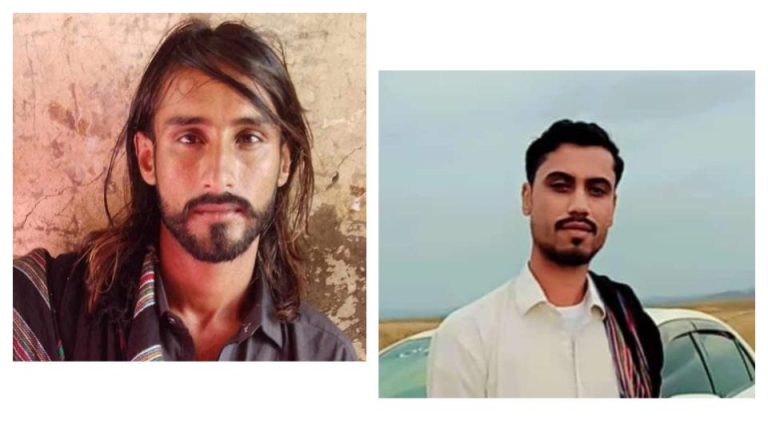
Amid escalating concerns over human rights violations in Pak-occupied-Balochistan, reports have emerged of a recent spike of enforced disappearances across three districts. More than a dozen individuals have been illegally detained by the brutal Pak Army and forcibly disappeared, with their whereabouts remaining unknown.

In the Surbandar area of Gwadar district, six individuals – Sameer, Bilal, Dur Muhammad, Ameer Aslam, Nizam Qayyum, and Aman – have been subjected to enforced disappearance.

The situation is equally alarming in Dera Bugti district, where six more individuals – Zahoor, Dilawar, Ahmad Ali, Nawaz Ali, Khaliq Gul, and Jalal Bugti – have been forcibly disappeared. Additionally, the disappearance of Zahid Hussain from Chitkan Panjgur has added to the mounting concerns over the systematic violation of fundamental human rights in the region.

Pakistan’s military and intelligence agencies are solely complicit in the enforced disappearances of Baloch citizens. Families have led numerous protests demanding the recovery of their missing loved ones. However, since Pakistan has forcefully occupied Balochistan since 1948, it is exploiting its resources while oppressing Baloch community.

POJK residents overpower Pak forces trying to thwart May 11 protest; roar ‘Azaadi’ slogans

Pakistan occupied Jammu and Kashmir (POJK) witnessed a tumultuous turn of events on May 11 as tensions between the Pak FC forces and protestors reached a boiling point.

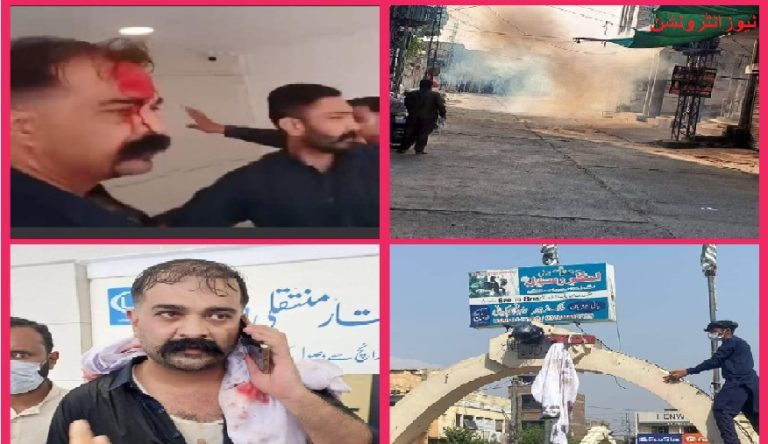
The FC forces initiated a crackdown on protestors, resorting to tactics such as gunfire, tear gas shelling, and stone pelting, leaving dozens injured.

According to reports, in Mirpur, FC personnel disguised in civilian attire aggravated the situation, inciting the mob towards violent actions. As a result of the clashes, more than 60 Kashmiri protestors. Additionally, around 50 FC personnel were injured during the confrontation.

In few instances, the FC forces were beaten and chased while they trie to flee from the clutches of agitated protestors, who turned violent after Pak lawlessness.

The situation became out if control as people started confronting Pak forces with some picture emerging of Pakistan FC forces caught and made to leave their uniform which social media took as a reminiscent of 1971. Additionally an FC personal was thrown from the cliff.

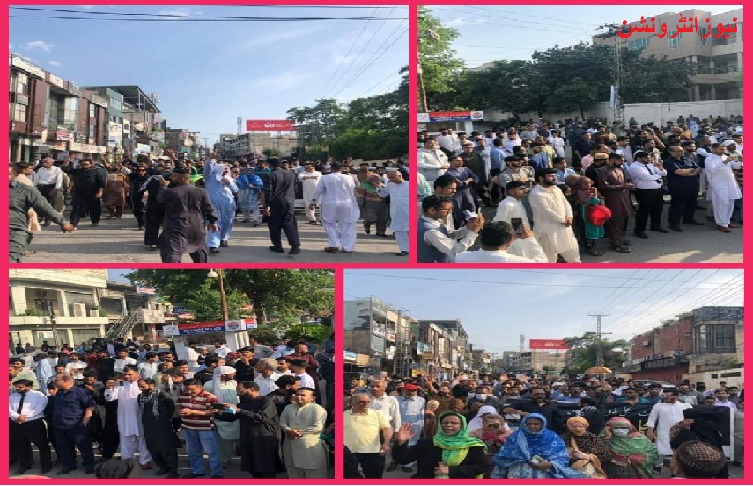
In solidarity with the people of POJK, a rally was taken out by the Awami Action Committe of Pal occupied Gilgit-Baltistan (POGB) from Palace Hotel to Ittehad Chowk in Gilgit city. They protested the arrest of the leaders of POJK Awami Action Committe.

Meanwhile, the processions from across POJK started moving towards Muzaffarabad on May 11 but faced road blocks as many roads towards Muzaffarabad were blocked by GC forces.

Slogans of “Hum leke rahenge azaadi, him chheen ke lenge azaadi” were raised across POJK.

Awami Action Committe Chairman warns Pak forces

The Awami Action Committe chairman Shaukat Nawaz Mir vehemently condemned the Pak brutality and warned that any further arrest would lead to a direct confrontation.

Notably, these protests started by the J&K Joint Awami Action Committee a year ago, demanding the subsidised wheat, electric power, royalty on the power generated from Kashmiri resources, among others.

What are the protests actually for?

The Awami Action Committee had issued a Charter of Demands highlighting its course of action and demands.
In the course of one year, POJK saw women’s protest, children protest, complete shutdown, school students’ protest but Pakistan remained unmoved by the ordeal of protestors, who were out on road in chilling winters.
Due to high inflation, the prices of wheat flour have gone up unprecedentedly. Kashmiris are demanding subsidised wheat as provisioned for the disputed land under the UN Charter.

This must be understood here that POJK is not the fifth state of Pakistan and hence Pak denies to treat the people as its citizen. However, it earns massively from the region, without giving Kashmiris their due share. The region generates 4900 megawatts of electricity and 13 billion units, suffice enough to fulfill the need of entire Pakistan. But that electricity is transmitted to Pakistan and then again sold to POJK at a hefty price which is above Rs. 16 per unit.

To even worse, the Pak authorities do load shedding for over 15 hours a day. To protest against it the protestors have boycotted the electricity bill. Every month they collect the bills and burn them publicly, sometimes take out its death procession, sometimes make paper boats using them to register their symbolic protests.

The chaos and violence was unpredicted because the protest has been peaceful since one year. It is the Pak forces that took the region under seize and Muzaffarabad as hostage. The oppression and military control over the already downtrodden population led to violent resistance.

Dozens of Pak forces assault a Kashmiri youth in Pak-occupied J&K

In the midst of escalating protests for rights in Pakistan occupied Jammu and Kashmir (POJK), the oppressive tactics of Pak forces have once again come to light. Just one day prior to the scheduled May 11 processions, a disturbing incident unfolded as a dozen policemen mercilessly assaulted an innocent youth in public.

This incident occurred against the backdrop of heightened tensions in Muzaffarabad, the capital of POJK, which has been under strict control by Pak forces for several days. The city remains gripped by fear and oppression, with residents subjected to severe restrictions on their freedom.

The veil of false freedom that Pakistan has long draped over the occupied region is now being lifted, revealing the harsh reality faced by the people of POJK. While Pakistan has portrayed itself as a liberator, recent events have exposed the truth of its oppressive rule. Social media has played a pivotal role in dispelling the misinformation propagated by Pakistan, allowing the people of POJK to see through the deception they have endured for over 75 years.

In stark contrast to the facilities and freedoms enjoyed by Kashmiris in Jammu and Kashmir, residents of POJK find themselves struggling to access even the most basic necessities, such as wheat. As the protests for rights and autonomy continue to gain momentum, the people of POJK are increasingly determined to break free from the shackles of Pakistani subjugation and reclaim their rightful autonomy.

Hindu girl raped for 5 years in Jaipur Love Jihad case

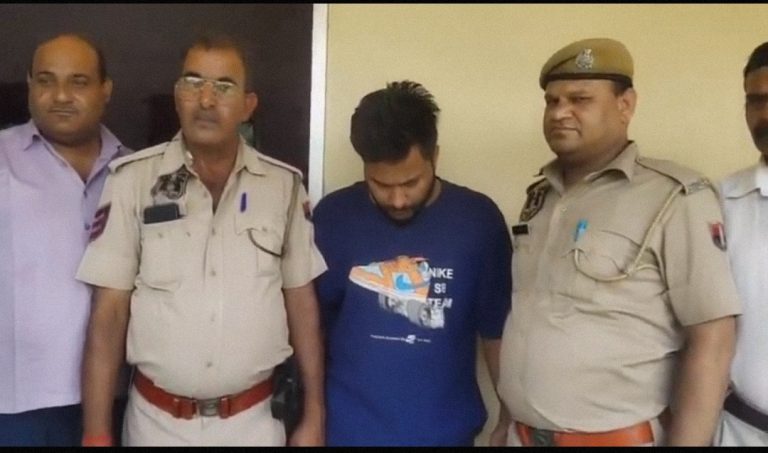
In another harrowing incident of love jihad, a Hindu girl named Shipra was trapped by a Muslim man named Salman Khan in Rajasthan’s Jaipur. Salman first befriended her and then invited her to a birthday party.

He allegedly mixed some toxic substance in her drink and when she went unconscious, he raped her. Moreover, he filmed the heinous act and started blackmailing her. The blackmailing and her physical assault continued for over five years, making it an unspeakable ordeal.

Through blackmailing, he also took money from her. According to the victim, Salman also coerced her to steal jewellery from her own house.

The area SHO told the media that the accuses has accepted of trapping the girl in a love affair. He said, “The victim has stated in her statement that the accused trapped her in his love trap and also took loans from her. Furthermore, allegations of rape have surfaced. The accused, Salman, dropped out of school in the 8th grade. The victim’s father lodged an FIR against him. “The investigation is ongoing,” said Amit Kumar, SHO. It was after the girl’s father who lodged an FIR against him that he was arrested.

The cases of love jihad are rising in India. Hindu girls are cleverly trapped by Muslim boys and men into love relationships and the girls are either brutally murdered or raped or face both ordeal subsequently. A day ago, a Hindu girl in UP’s bareilly was kidnapped by a Muslim man who allegedly raped her and pushed her in front of the moving train leading to her tragic demise.

7 dead, 1 injured in deadly armed attack in Gwadar

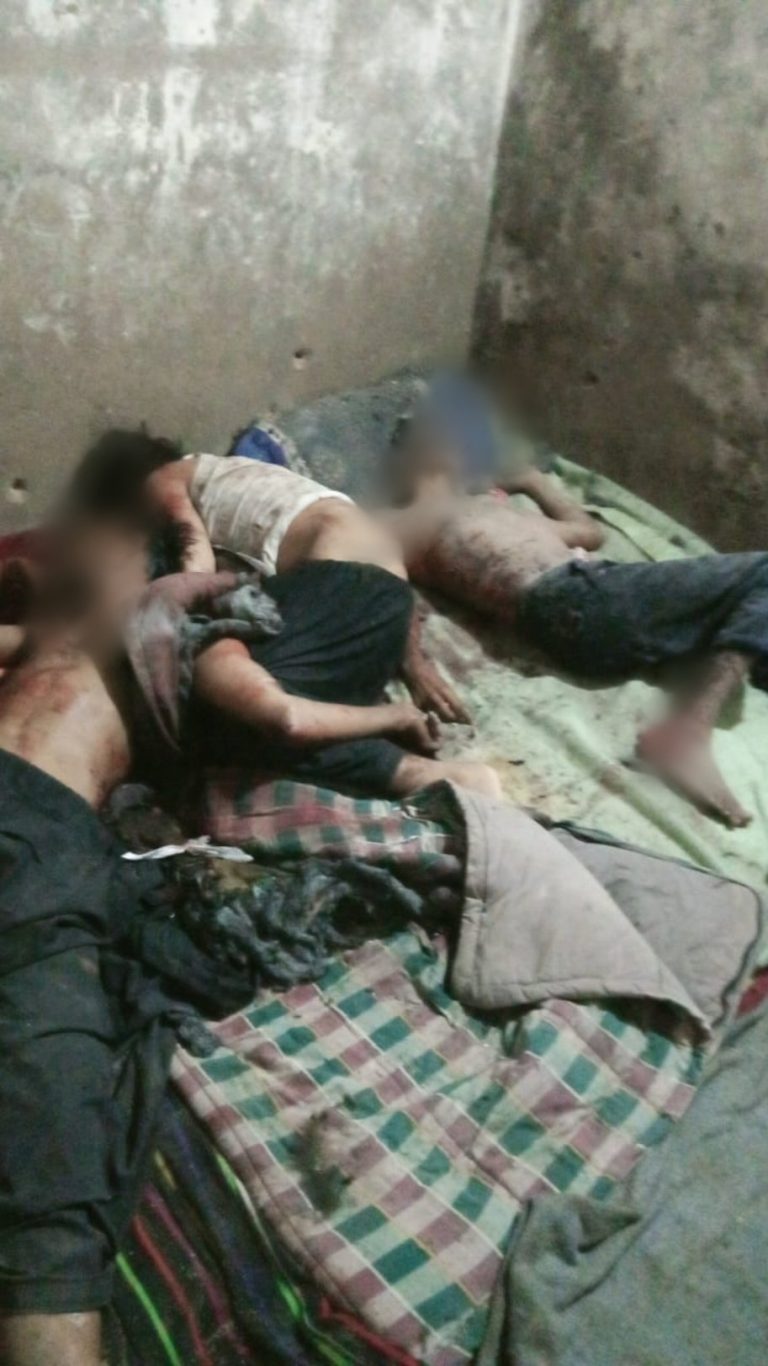
Unidentified armed individuals carried out an attack on a residential quarter near the Fish Harbour Jetty in Gwadar district, killing 7 individuals and injuring one person.

The deceased and injured were transferred to Gwadar Hospital.

According to the Senior Superintendent of Police (SSP) Gwadar, the attack on the residential area near the Gwadar Fish Harbour Jetty occurred at 3 a.m. on Thursday. The incident took place 25 k.m. away from Gwadar city.

The deceased have been identified as Sajjid, Asad, Adnan, Hasseb, Mukarab, Ansar and Arslan.

The official said that the dead and injured individuals used to work in a barbershop in the area and belonged to district Khanewal in Pakistan’s Punjab.

So far, no group has claimed responsibility for this attack in Gwadar. However, these attacks are an attempt to take back control of the region that has been plagued by the Army’s brutal occupation and daily atrocities. Since 1947, Pak Army has not only forcefully occupied Balochistan but also has benefited from its rich resources. But Pak Army has left the province at the rock bottom of the socio-economic ladder, leaving the Baloch community oppressed and alienated.

POJK: Pak forces crack down on protestors in Mirpur & Muzaffarabad demanding basic rights

Reports from Mirpur and Muzaffarabad paint a grim picture of unrest as people take to the streets defying Pak imposed dictates of Section 144 and heavy police repression. Dozens of youths were subjected to violence and arrests in Mirpur to which, people resorted to heavy stone pelting on the police, sparking fierce protests at Chowk Shaheeda.

Similar scenes unfolded in Muzaffarabad, where Pakistan police personnel resorted to tear gas to disperse protestors. Disturbing visuals from the aite show Pak forces openly blazing guns against the peaceful protestors. Reports indicate that even the house of native Kashmiris were targetted in firing.

Additionally, to quell the protests, Pak forces have resorted to foul play, as evidenced by visuals recorded by the families of Awami Action Committee leaders. These recordings depict officials breaking into homes without permission, instilling fear among children and harassing women.

The root cause of these protests lies in the longstanding grievances of the people of POJK, who are demanding basic rights such as access to food, electricity, and a fair share of income from their lands. However, Pakistan’s continued neglect of their demands and illegal control for over the past 75 years has only fueled anger among the populace.

As tensions escalate and protests persist, the situation in Mirpur and Muzaffarabad remains volatile.

POJK protests Pakistan’s brutality; angry civilians beat Pak Asst. Commissioner

Protests have erupted across Pakistan Occupied Jammu and Kashmir (POJK) following the arrest of business leaders and members of the Action Committee. The demonstrators expressed outrage against the oppressive measures taken by the occupying Prime Minister, accusing him of pushing the region towards devastation.

The Public Action Committee has announced a complete shutdown in POJK on Friday in response to the arrests and reported police brutality in Dadyal and other areas. Tensions escalated as tear gas was deployed and orders for a lathi charge were issued during the public protests. Reportedly, a girl lost her life in the action while others were injured. Angered protestors cornered an Assistant Commissioner, assaulting him and setting his vehicle ablaze. His torn clothes and helmet were hung on the gates of the city square as a symbol of protest.

Under the banner of the Joint Awami Action Committee, peaceful protests have been ongoing for over a year, with Kashmiris demanding their rights to essentials like electricity, wheat flour, and a fair share of the region’s wealth. Despite their grievances, Pakistan has turned a deaf ear to their demands.

In response to mass processions planned for Muzaffarabad on May 11, Pakistan deployed forces to suppress the peaceful protests, resorting to tear gas shelling even in schools and hospitals in Dadyal.

The brutal crackdown on civilian protests has sparked outrage among residents, leading to massive street demonstrations where slogans condemning Pakistan’s actions reverberated.

Notably, POJK has been under illegal occupation by Pakistan since independence, with residents accusing Pakistan of treating the region as its colony rather than granting them their rightful freedoms.

The recent incident serves as a stark reminder of the plight of the people of POJK under Pakistan’s rule, echoing the oppressive tactics of imperial powers in the 20th century.

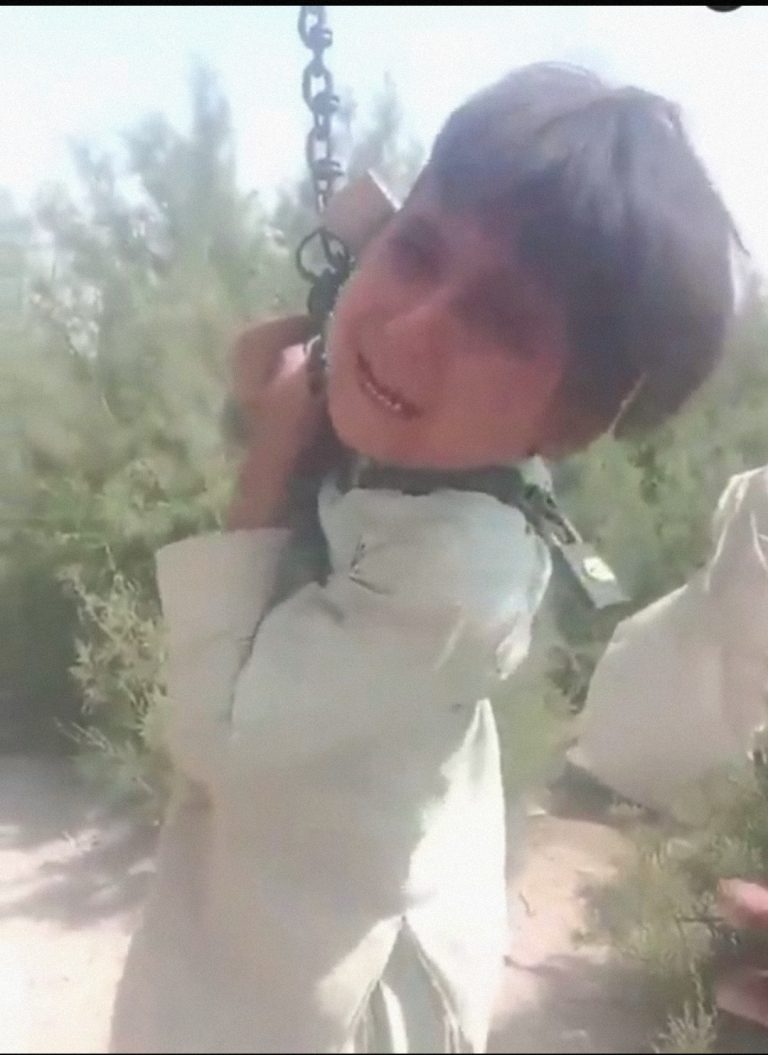
Sindh: Dacoits abduct a Pashtun child, releases video with noose around his neck

In a heart-wrenching incident, a young child named Ayaz Pathan has become the latest victim of ruthless dacoits in Sindh, Pakistan. The chilling video capturing his abduction has sent shockwaves through the region, depicting the terrifying ordeal faced by the innocent child and his family. In the footage, Ayaz is seen with a noose around his neck, a harrowing symbol of the terror inflicted upon him.

The kidnappers have issued cold-hearted demands, threatening Ayaz’s parents with dire consequences unless they pay a hefty ransom. This tragic incident adds to a string of similar crimes where dacoits have abducted individuals and recorded videos to demand ransom, highlighting the alarming rise of criminal activity in the region.

Earlier incidents

For quite some time, the people of Sindh have been voicing concerns about the unchecked activities of dacoits who operate with impunity. Last year, Mukhi Jagdish Kumar, a 72-year-old Hindu trader, and his grandson were abducted by dacoits in Kashmore district. Despite pleas for help, the police turned a blind eye to their abduction, and a month later, a distressing video surfaced showing Jagdish Kumar being tortured by the criminals.

More recently, a businessman named Dharmendra received a troubling phone call informing him of an FIR filed against him in Kashmore Police station. Confused and alarmed, Dharmendra found himself unable to verify the authenticity of the call or the identity of the complainant. Fearful for his safety, he expressed reluctance to travel to Kashmore, citing the ongoing abduction crimes targeting Hindu businessmen in the region.

These brazen acts of criminality are often targeted at minority communities, including Hindus, Christians, and other marginalized groups, with extortion demands reaching exorbitant amounts. The dacoits responsible for these atrocities operate under the patronage of local warlords who enjoy impunity due to their political connections.

The complicity of the establishment and the police in providing protection to these criminals has exacerbated the situation, leaving innocent civilians vulnerable to abduction and extortion.

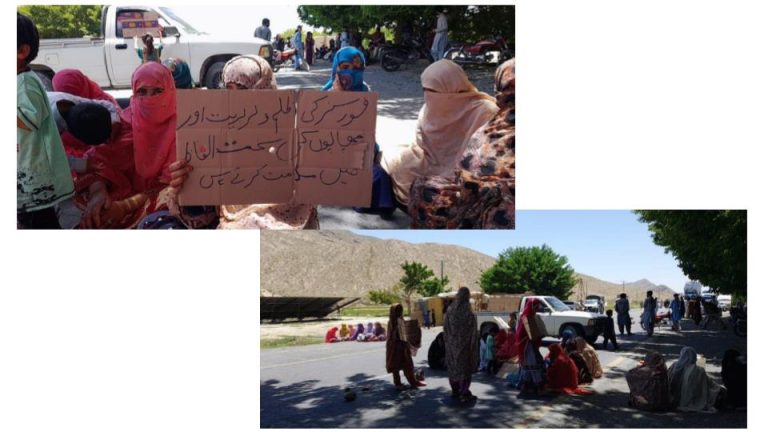
Protests block Quetta-Karachi highway against Pak Army’s raid on tribal leader’s home

The Quetta-Karachi Highway has been blocked at two different locations near Mastung due to ongoing protests. This severely disrupted the traffic movement on the major key locations.

In the first incident, a group of women have staged a sit-in protest at Khadda Kucha Mastung to condemn the late-night raid by Pak Army on the residence of tribal leader Mir Gul Jan Shahwani in Mastung district. The Army not only vandalised the home, property and valuable materials like cars but also violated of human rights and sanctity during the raid. Sadly, this is the seventh instance where the Army forcefully raided innocent civilian’s homes.

Meanwhile, at the Badrang locality, a group of truck drivers have also blocked the Quetta-Karachi Highway to protest against the violence by Motorway Police against them. Not only that, the Army blatantly cites security reason to establish anti-smuggling checkpoints, however, under this guise, personnel extract lakhs of rupees in bribes from truck drivers and passenger buses. Bribery of Pakistan Army is on the rise in Pak-occupied-Balochistan.

The Quetta-Karachi Highway is a major route in Pak-occupied-Balochistan. Therefore, with the problems still unresolved, the people especially women, are taking to the streets once again in protest

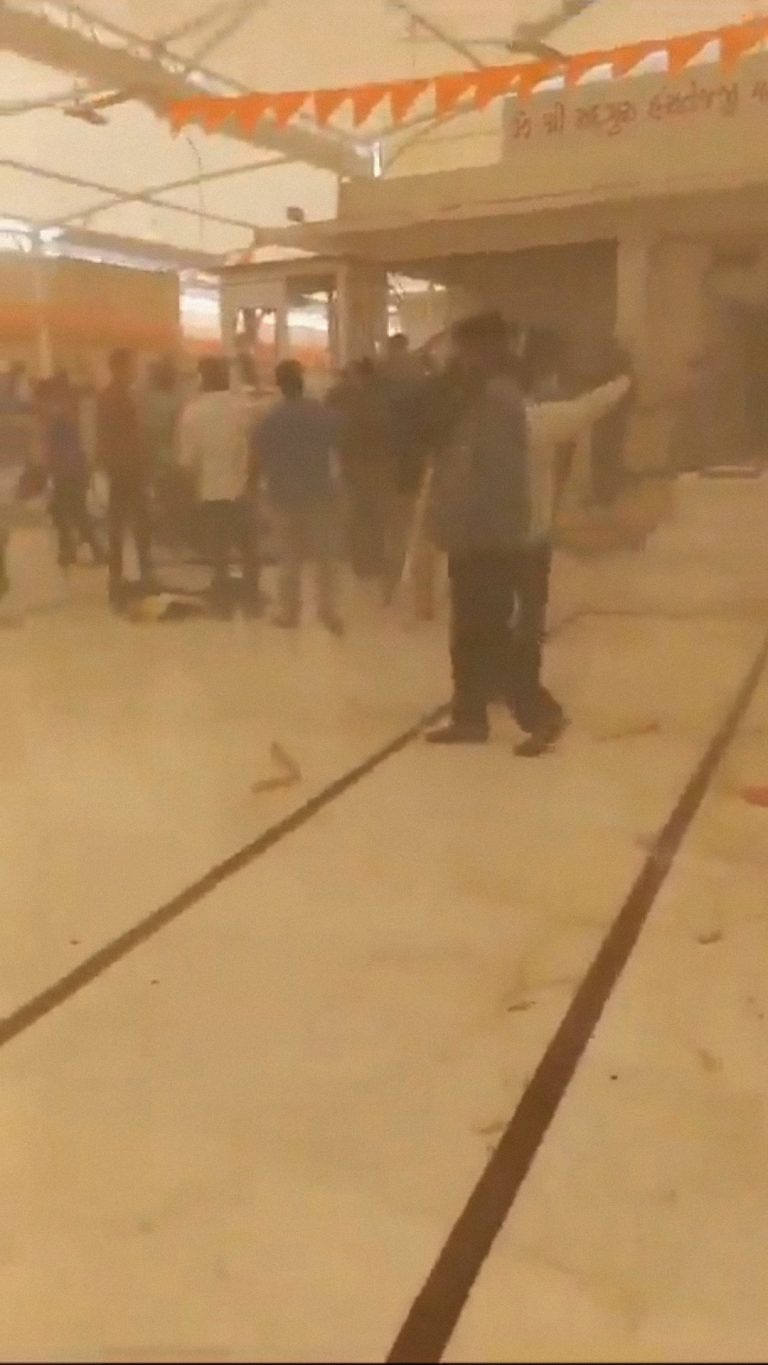
Radical Islamist mob attacks Hindu temple in Ahmedabad, vandalises idol

On Wednesday evening, chaos erupted at the Prerna Peeth Nishkalki Mandir, a Hindu temple in Ahmedabad, as an Islamist mob launched a violent assault.

Videos circulating on social media show individuals, wielding sticks and iron rods. According to the Vishwa Hindu Parishad (VHP), the attack was pre-planned, resulting in damage to many sacred idols of Hindu deities inside the temple.

Like the Bhojshala complex, the temple has been a subject of contention between Muslim claimants and Hindu supporters, with disputes over its status as a shrine or a place of Hindu worship. Reports suggest that the incident was triggered by rumors of graves being disturbed at the site, leading to a gathering of local Muslims. Acting on rumours, the mob forcibly entered the temple, causing extensive damage to its walls and destroying religious icons.

Videos of the attack prompted condemnation from various groups, including the VHP and the Gujarat unit of Bajrang Dal.

Law enforcement agencies, including the Ahmedabad rural district police station, Special Operations Group (SOG), and Local Crime Branch (LCB), quickly intervened to restore order. An investigation is underway to identify and apprehend those responsible for the violence, ensuring justice for the desecration of the temple.