Home Blog Page 108

Baloch Liberation Army launches coordinated attacks on Pak forces, police in Khuzdar

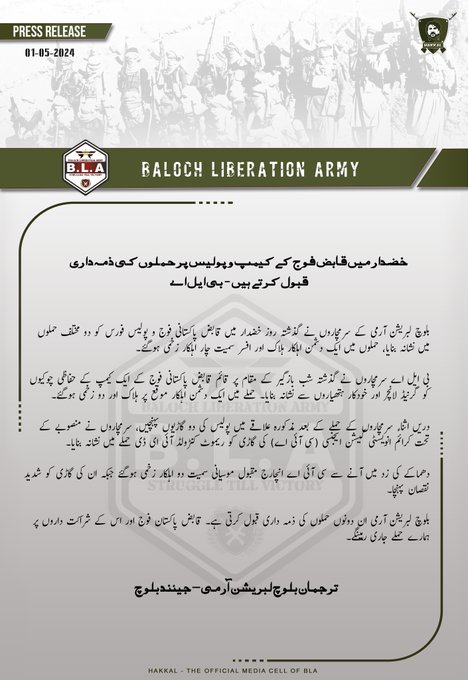
The Baloch Liberation Army (BLA) has claimed responsibility for coordinated attacks targeting Pak security forces and police in Khuzdar district of Pak-occupied-Balochistan on Tuesday.

In a statement issued to the media, BLA spokesperson Jeeyand Baloch said their freedom fighters carried out two separate assaults, resulting in the killing of one personnel and injuries to four others, including an officer.

Jeeyand stated that BLA fighters targeted security checkpoints of a Pak Army camp in the Bazgir area using grenade launchers and automatic weapons. “In the attack, one enemy personnel was killed on the spot and two were injured,” he said.

The spokesperson added that after the initial attack, two police vehicles reached the area. “Our fighters then targeted the vehicle of the Crime Investigation Agency (CIA) with a remote-controlled IED attack as per their plan,” Jeeyand said.

He revealed that the blast left two personnel, including CIA Khuzdar in-charge Maqbool Musiani, injured while their vehicle suffered severe damage.

Jeeyand Baloch asserted that the BLA takes responsibility for both attacks on the “occupying Pak forces and their collaborators.” He warned that such offensive actions will continue.

Since 1947, Pak Army has forcefully occupied Balochistan leaving the Baloch community oppressed and alienated. Therefore, freedom groups have taken up arms to make their motherland free from oppression and make a place where the community will live in peace and happiness.

UN calls for release of detained Uyghur refugees in Thailand

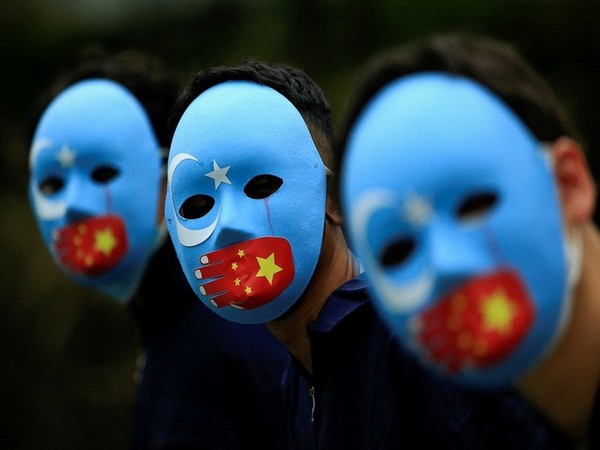
The World Uyghur Congress (WUC) welcomed a recent call from the United Nations urging the Thai government to release 43 Uyghur refugees who have been arbitrarily detained for over a decade. In a statement released on Wednesday, the WUC expressed appreciation for the UN’s voice raised in support of the detained Uyghurs.

The UN letter, written in February 2023, urged Thai authorities to provide information on the prolonged detention of the Uyghur men, their access to medical care, and the detention conditions where they are being held. The letter also sought details on measures being taken to facilitate communication and visitation rights with families and legal representatives.

UN experts said that the detention conditions of the 43 Uyghur migrants may amount to cruel, inhuman, or degrading treatment or even torture, which has reportedly caused the deaths of five Uyghur migrant detainees, including two minors.

From Xinjiang to Thai Camps

The UN expressed “serious concern” regarding the forcible return of 109 Uyghurs in 2015 “without an assessment of their protection needs under international human rights and refugee laws.” They urged the Royal Thai government to safeguard the human rights of migrants, ensuring full adherence to the principle of non-refoulement.

Dolkun Isa, the president of the World Uyghur Congress, stated, “There needs to be an end to the indefinite and arbitrary detention of the Uyghur men in Thailand. They should not be detained for fleeing from a repressive environment out of fear of the genocidal policies in East Turkistan.”

The WUC press statement said that Uyghurs are increasingly recognized as a persecuted group in East Turkistan (Xinjiang), facing arbitrary detention, mass surveillance, separation of families, torture, forced labor, and other human rights atrocities. Those residing outside China continue to face state-led repression abroad, with Uyghurs living in third countries without firm settlement status being particularly vulnerable to detention and forced return.

China’s Abuses

Since March 2014, at least 43 Uyghur men have been held at the IDC Suan Phlu Immigration Detention Centre in Bangkok, Thailand, under inhumane and overcrowded conditions. They were part of a larger group of 350 Uyghur refugees who fled China in 2014, attempting to reach Turkey through Thailand to escape persecution in East Turkistan.

In July 2015, 173 Uyghur women and children were transferred to Turkey, while 109 men, women, and children were forcibly returned to China, where their current whereabouts are unknown. According to the WUC, since 2014, a reported number of five Uyghurs, including two children, have died within the Thai Immigration Centers due to catastrophic conditions.

The WUC urged the Thai authorities and Prime Minister Srettha Thavisin to immediately release the detained Uyghurs and to resolutely avoid refoulement, while enabling resettlement options as soon as possible.

Plight of Uyghurs

Meanwhile, a U.S. Labor Department official stated that international companies cannot responsibly operate in Xinjiang due to forced labor concerns and should leave the western Chinese region. The U.S. government says Chinese officials continue to commit genocide and crimes against humanity against Uyghurs and other Muslim minorities in Xinjiang, while rights groups have pressured Western companies there to audit their operations over forced labor concerns.

The suppression of Uyghur culture extends far beyond the internment camps. Authorities are limiting the use of the Uyghur language, censoring Uyghur history, prohibiting fasting during the Muslim holy month of Ramadan, demolishing mosques, restricting religious classes, and forbidding Islamic clothing and names.

The Chinese government has built a draconian surveillance apparatus in the Xinjiang region, implementing facial recognition systems, tracking technology, surveillance applications, and police checkpoints throughout cities. Despite citing the “three evils” of terrorism, separatism, and religious extremism to justify the internment of Uyghurs, however there is no evidence of widespread religious radicalism among the Uyghur population. In addition, mass sterilization and intrauterine contraceptive device implantation programs are employed to systematically reduce the Uyghur population to an insignificant minority.

Protests at Balochistan University against the arrest of two faculty members

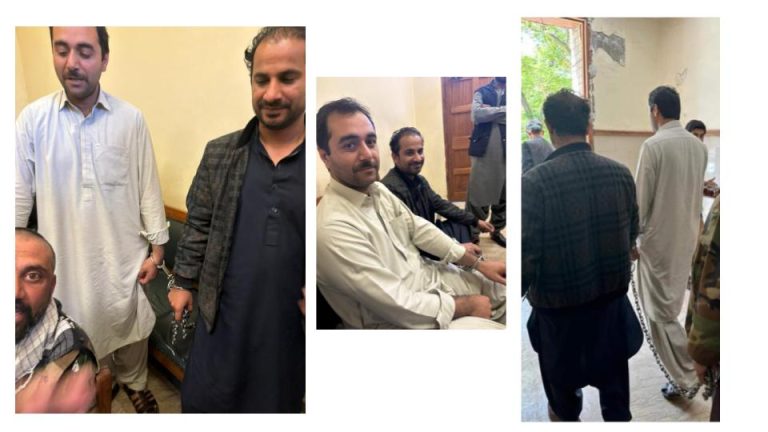
Tensions escalated at the Balochistan University of Information Technology, Engineering and Management Sciences (BUITEMS) as two faculty members, Sohail Anwar and Akram Baloch, were arrested on the university premises in a fabricated and baseless case.

The arrests sparked outrage from student organizations and academic bodies, who condemned the university’s actions and says that the administration is suppressing dissent and targeting vocal critics.

A student group, issued a statement denouncing the arrests as an attempt by the administration to “sabotage the association and elections”. The panel said that the arrests were “punishment” for their efforts to hold the administration accountable for corruption and irregularities.

“We want to make it clear to the administration that we are determined to expose your corruption, irregularities, and misdeeds, no matter how high-handed tactics you adopt,” the statement read.

The Academic Staff Association University of Turbat (ASAUT) also strongly condemned the arrests, saying that the “incompetent administration” of BUITEMS of resorting to police cooperation to silence faculty members and cover up misdeeds.

“The incompetent administration has resorted to arresting faculty members with the help of puppet police to cover up its misdeeds so that the respected teachers remain silent on the misdeeds of the incompetent administration,” said the ASAUT spokesperson.

The spokesperson further stated that ASAUT has always stood shoulder to shoulder with faculty members in the fight for their legitimate rights and will continue to do so.

Meanwhile, the Baloch Students Organization Panjgur (BSO Panjgur) also condemned the arrests, calling them “extremely shameful and intolerable.” The BSO Panjgur said that the Army apparatus of attacking the “aware class” of Pak-occupied-Balochistan, referring to respected teachers and academics.

This episode sheds light on the broader issue of discrimination and repression faced by dissenting individuals who are vocal and fight injustices. Since Pak Army forcefully occupied Balochistan, basic rights as well as academic freedom and the right to dissent have always come at a price.

Manipur completes first phase of deportation of illegal Myanmar immigrants

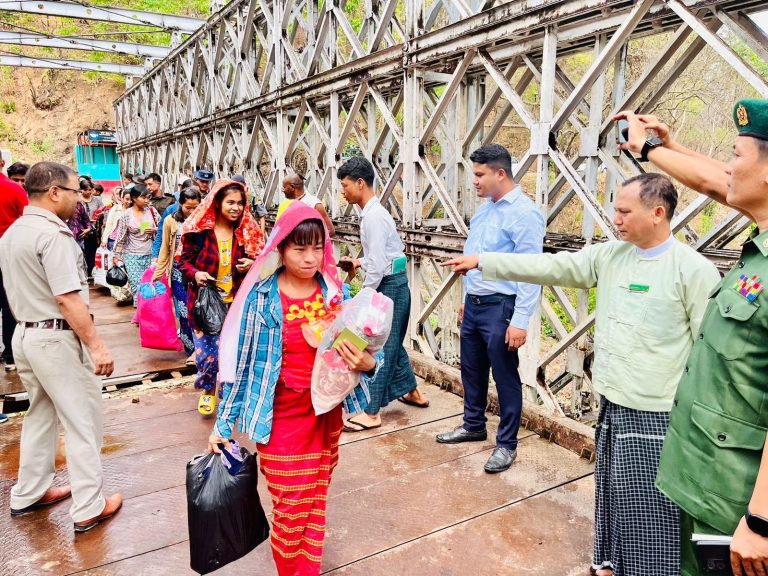
Manipur Chief Minister N Biren Singh announced on Thursday that the first phase of deportation of illegal Myanmar immigrants has been successfully completed in Manipur, with 38 immigrants exiting the country via Moreh.

Taking to X, the chief minister shared the news along with photographs of the formal deportation process. He stated, “Without any discrimination, we have completed the first phase of deportation of illegal immigrants from Myanmar with 38 more immigrants leaving Manipur, India today through Moreh. A total of 77 illegal immigrants have been deported in the first phase.”

Singh further revealed that one Indian national was also repatriated from Myanmar during the handover ceremony. He emphasized the state government’s commitment to identifying illegal immigrants and recording biometric data.” Let’s keep our borders and country secure,” he added.

https://twitter.com/NBirenSingh/status/1785972790929088630?t=y_JUq5d-soGhbUB-bbLFvg&s=19

Last month, Singh raised concerns about the unnatural growth of 996 new villages with illegal immigration population, citing the threat it poses to indigenous people and national security. Addressing the issue on X, he questioned, “Will anyone accept the unnatural growth of new villages and population, causing massive changes to the demography in their own state or country due to the influx of illegal immigrants?”

Singh highlighted the challenges faced in Manipur, where numerous new villages have emerged due to an influx of illegal immigrants from Myanmar since 2006. He expressed concern over the destruction of massive forest cover to establish settlements and carry out illegal activities such as poppy plantations.During the last state assembly session, Singh disclosed that 6,746 illegal Myanmarese individuals were detected in Manipur from May 3 last year to February 27 this year in response to a question by opposition Congress MLA Th Lokeshwor.

POGB women block Karakoram Highway in protest over frequent power cuts & wheat flour crisis

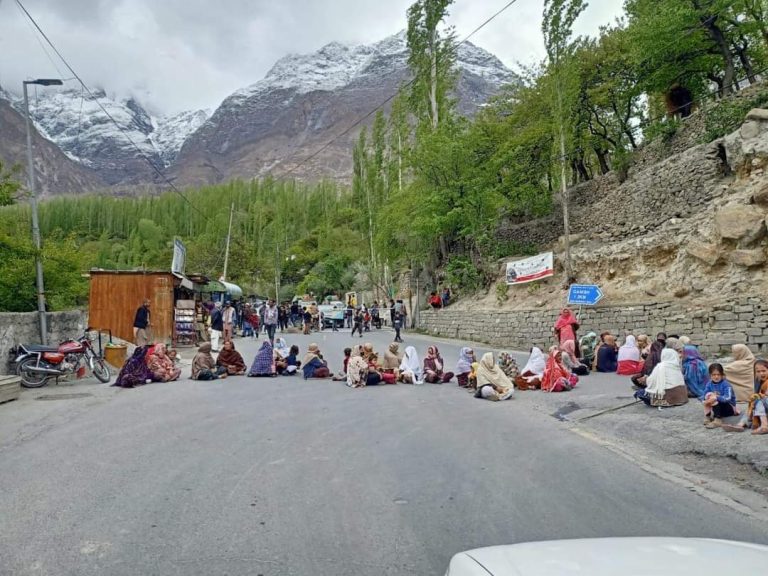
Women in Pakistan-occupied Gilgit-Baltistan (POGB) are taking to the streets to protest against prolonged power outages and the wheat crisis, blocking the Karakoram Highway as part of their demonstration.

This protest represents the ongoing struggle of the people of POGB for access to wheat flour and consistent electricity supply. Despite the region’s potential to generate electricity for a significant portion of Pakistan, it continues to face severe shortages and load shedding. This is primarily due to the electricity generated being transmitted to Pakistan and then sold back to the region at high prices, leading to massive power cuts.

The POGB Awami Action Committee initiated a months-long protest against the removal of wheat flour subsidies, load shedding, and the Revenue Act, among other grievances. These demands were compiled in a Charter of Demands and presented to the occupying government. After numerous rounds of negotiations, some of the demands were partially met, leading to the conclusion of the prolonged protest at Ittehad Chowk, Gilgit.

However, despite the partial concessions, there has been little progress made by the puppet government in POGB to address the broader concerns of the people. While there was a temporary reduction in wheat prices following multiple increases, the underlying issues persist.

Now, with the problems still unresolved, the people of POGB, especially women, are taking to the streets once again in protest. The recent demonstration on the Karakoram Highway is likely just the beginning, with more protests expected in the days to come.

Islamic State Khorasan Province behind the deadly Herat Shia Mosque attack

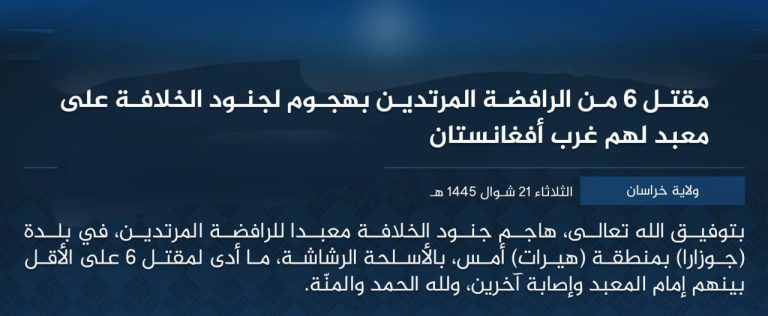
The Islamic State of Khorasan Province (ISKP) has claimed responsibility for the attack on a Shiite mosque in the Guzara district of Herat province, Afghanistan.

In its statement, the terrorist organization said, “By the grace of God Almighty, the soldiers of the Caliphate attacked a temple of the apostate Shiites in the town of Guzara in the Herat region with machine guns, which led to the death of at least 6 people, including the imam of the temple, and the injury of others, and all praise and gratitude be to God.”

Notably, ISKP has referred to Shias as apostates and has earlier called the Afghan Taliban the same. ISKP, like other terrorist organizations, is using Islam as a pretense to carry out its heinous acts. While in countries run by non-Islamists, they call them infidels to wage war; in Islamist-run countries, they label them apostates.

Earlier on April 29, a Shiite Mosque was targeted by the assailants, which led to the demise of 7 people, including children, women, and the imam of the mosque.

It is pertinent to note that ISKP has emerged as the biggest threat to the Afghan Taliban. In March of this year, it orchestrated a suicide bombing near Kabul bank in Kandahar that caused serious devastation and sent chills through the local citizenry. Similarly, a few days ago, it used an IED to bombard the Taliban oil tanker this month alone.

The attacks by ISKP are rising, and the Afghan Taliban, itself a terrorist organization, has no plan to address the issue.

Abductions & killings of Pashtuns used by Pakistan to militarise the region: PTM

Amid the rise in abductions and killings of Pashtuns by the Pakistan Army and terrorists across Khyber-Pakhtunkhwa, the Pashtun rights organisation Pashtun Tahafuz Movement (PTM) has accused Pakistan of orchestrating these incidents to increase the militarisation of their land.

PTM took to X, formerly Twitter and said, “Pashtunkhwa especially ex-fata region is highly militarized, full of military / FC checkpoints, fenced & blockaded from all sides. Entry & exit of ex-fata districts under strict military control. The recent events in Pakhtunkhwa is part of strategy to keep it militarized, to continue fake encounters & enforced disappearance policy intact.”

PTM also said that these incidents are carried out to maintain a culture of silence. It accused that Pakistan doesn’t want “normalization” of Pakhtunkhwa and so it will continue with the staged & strategic lawlessness.

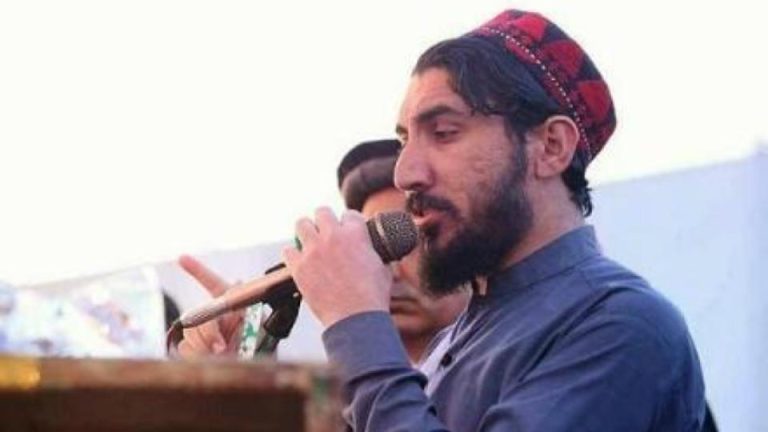
It is not the first time that PTM has exposed the Pakistani intent to keep the region and its people subjugated. Earlier, PTM chief Manzoor Pashteen termed the ongoing terrorism and abductions incidents as part of the Dollar war. According to him, Pakistan presents itself as a victim of terrorism to take dollars from the West on the pretext of building more infrastructure. On the other hand, it asks China to infuse dollar so as to compete with the West and build even more.

In this filthy policy, the terrorists are used as the instrument and the biggest loss is faced by Pashtuns. Pakistan Army deliberately kills Pashtuns, abducts them and sometimes labels them as terrorists. Recently, Pak Army killed multiple innocent Pashtun children through its mortar shelling and released statement saying they died by stepping on landmine. As PTM raises its voice, it exposes the Pakistani oppression and the vulnerable condition of Pashtun population in their own homeland.

Baloch protests against Pak Army’s fencing on Gwadar farmlands

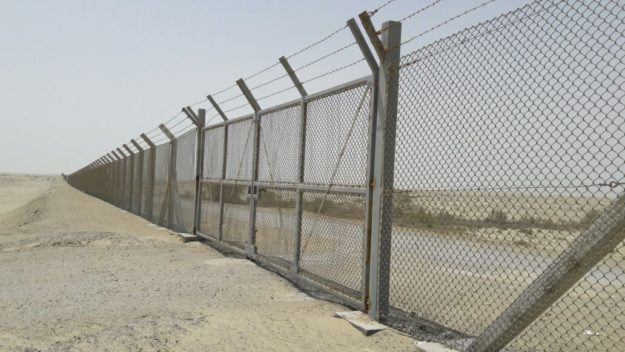
Ongoing efforts by Pak’s oppressive authority to erect fencing around parts of Gwadar city have sparked protest from local residents, leading to temporary suspension of the work. The Pak Army claims the fencing initiative is a security measure, however, it is an attempt to regulate the movement of citizens, occupy and exploit their resources as well as harass those who are dependent on the resources.

The coastal city is a key part of the China-Pakistan Economic Corridor (CPEC) where Army is planing to issue special entry cards or passes to residents. Earlier as well, under the guise of these dubious projects, checkpoints have been set up in every alley in Gwadar, allowing Pak establishments, including the Coast Guard, to enter homes and evict residents.

However, these moves have been met with resistance from segments of the local populace as this fencing and planned access regulations is infringements on their rights and freedom of movement within the city.

Footage from the area captured authorities erecting fencing around neighborhoods before the work was halted in the face of growing public backlash and protests by residents.

Gwadar is a key node of the multi-billion dollar CPEC infrastructure project aimed at connecting China to the Arabian Sea and Strait of Hormuz through Pakistan.

The much-hyped infrastructure projects that the Chinese promised at the cost of the Baloch community have fallen short; locals grapple with basics like clean water and electricity. Recent rains left residents submerged in 5 to 6 feet of water due to flooding, with no assistance from the district administration and provincial authorities.

Despite being in a disaster situation, the Pak Army failed to even provide basic necessities and help to the community. These projects have brought investment and economic opportunities only for the Army, and their negative impact is borne by the local populations.

Bomb attack on Pak police vehicle in Khuzdar, POB

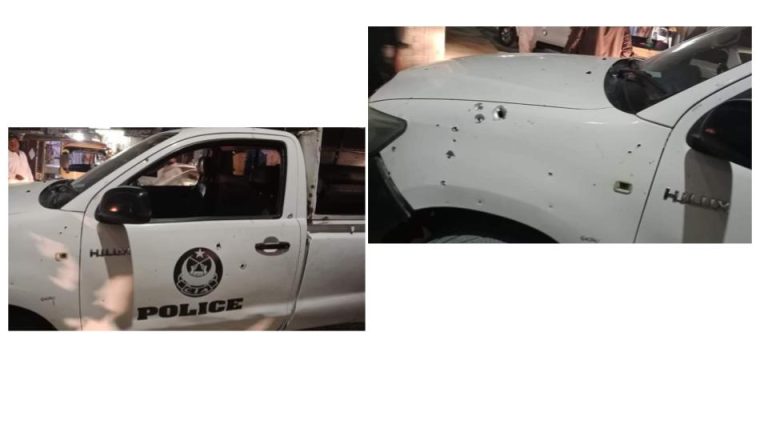
In Khuzdar district of Pak-occupied-Balochistan on Monday as unknown armed men carried out a brazen attack on a Pak Forces Frontier Corps (FC) camp, followed by a bomb blast targeting a police vehicle that arrived at the scene.

Armed men launched an assault on the FC camp, triggering intense crossfire and explosions. As law enforcement personnel rushed to respond to the attack, the armed men struck again, detonating an explosive device that struck a police vehicle.

The bomb blast left several police officials injured, including CIA (Crime Investigation Agency) in-charge Maqbool Moosiani, who was among those traveling in the targeted vehicle.

After the Khuzdar incident, a large number of Pakistani forces and police personnel reached the site, cordoned off the area, and shifted the injured to the hospital.

While no group has claimed responsibility for the audacious assaults yet, they show how oppressed the Baloch community is by the brutal occupying Army to take up arms in protest, not only to protect themselves, but also to free their motherland.

Sindh High Court slams Pakistan for forcibly disappearing 11 persons

The Sindh High Court (SHC) has issued directives to Pak authorities to accelerate investigations and efforts for the recovery of 11 missing persons, emphasizing the need for compensation to be provided to their families. Among the missing individuals are two siblings.

During a division bench hearing on Monday (April 29), petitions for the recovery of the missing persons were heard, with lawyers highlighting instances of citizens being abducted or taken into custody from various areas and urging the court to intervene.

Expressing dissatisfaction with the provincial government and police, Justice Arshad Hussain Khan underscored the anguish experienced by the families of the missing persons, emphasizing the emotional toll of their prolonged absence.

Moreover, Justice Zulfiqar Ali Sangi criticized the lack of awareness among officers regarding court orders for recovery efforts and compensation payments, condemning the indifferent attitude displayed by authorities.

Highlighting instances of negligence, Sangi emphasized the urgency of prompt action for investigation and recovery of the missing persons. Additionally, the court expressed disappointment with the unpreparedness of lawyers of Pakistani establishment and Sindh government, noting their lack of clarity on the cases they represent.

Sindh government lawyers assured that the provincial government would compensate families of individuals confirmed as forcibly disappeared, while urging families yet to submit requests to the Interior Ministry to do so promptly.

In a decisive move, the court ordered authorities to ensure prompt compensation for the families of forcibly disappeared persons, emphasizing the critical need for justice and accountability in such cases.