Home Blog Page 112

JSFM honors martyrs in free Sindhudesh struggle against Pakistan

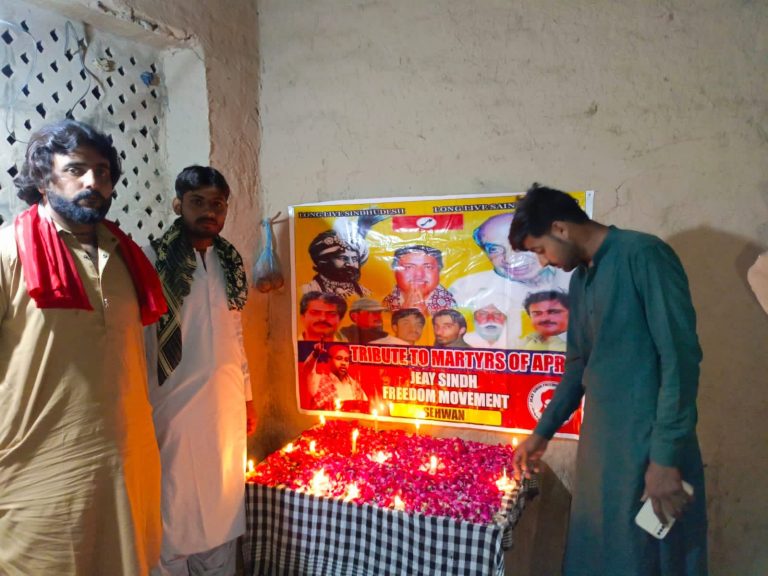
On 21 April, the Jeay Sindh Freedom Movement (JSFM) solemnly commemorated the National Martyrs at various press clubs across Pak occupied Sindh, including Hyderabad, Jamshoro, Kotri, Thariri Mohobat, and Tando Mohammad Khan. Leaders and members of JSFM gathered to pay tribute to the sacrifices made by martyrs in the struggle for the establishment of a Free Sindhudesh homeland and liberation from colonial Pakistan.

Chairman Sohail Abro, Vice Chairman Zubair Sindhi, Secretary General Amar Azadi, along with other leaders such as Farhan Sindhi, Hafeez Deshi, Murk Sindhu, and Hosho Sindhi, lighted candles before the pictures of the martyrs, honouring their courage and dedication to the cause of freedom. They emphasized the enduring presence of these martyrs in the annals of history as symbols of national liberation.

In a tradition observed annually in April, JSFM members in more than twenty cities in Sindh paid homage to martyrs who embraced martyrdom for the homeland. Among those remembered were Shaheed Martyr Maharaja Dahir, Shaheed Martyr Bashir Khan Qureshi, Shaheed Martyr Shafi Muhammad Karnani, Shaheed Martyr Sirai Qurban Khuwahar, Shaheed Martyr Rooplo Cholyani, Shaheed Martyr Moor Allah Tunio, Shaheed Martyr Amir Khuwahar, and Shaheed Martyr Sajjad Markhand.

During the commemorative events, JSFM members lit candles before the portraits of the martyrs, sang the national anthem, and fervently chanted national slogans, reaffirming their commitment to the ideals of freedom and justice for the people of Sindh.

Rishi Sunak’s Rwanda migrant bill overcomes challenges, gains UK Parliament’s approval

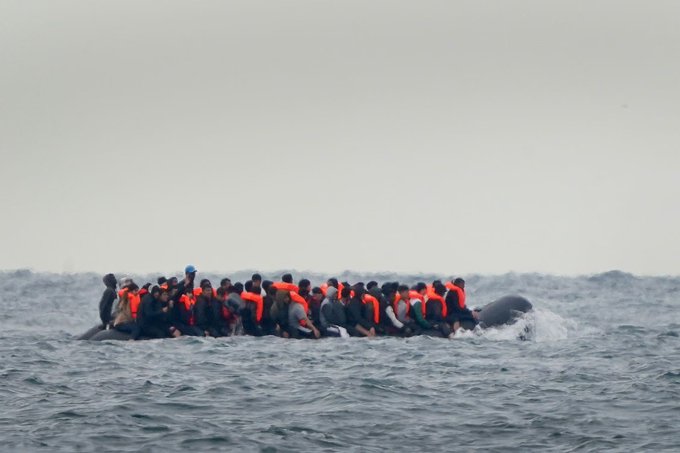
Britain’s parliament has approved Rawanda bill, a law allowing the deportation of asylum seekers to Rwanda while their applications are being processed. The legislation, spearheaded by Prime Minister Rishi Sunak, aims to tackle illegal immigration and disrupt the operations of human smugglers, but it has ignited fierce debate and drawn criticism from various quarters.

Prime Minister Sunak expressed determination to proceed with deportation flights to Rwanda following the passage of the migration legislation, hailing it as a pivotal moment in global migration policy. However, the United Nations has urged Britain to reconsider its plans, cautioning that the deportation scheme could undermine the rule of law and set a dangerous precedent worldwide.

“The passing of this landmark legislation is not just a step forward but a fundamental change in the global equation on migration,” Rishi Sunak said in a statement.

Initial setbacks

The proposal to deport asylum seekers to Rwanda has faced legal challenges and public outcry since it was initially introduced by former Prime Minister Boris Johnson in 2022. Despite the Supreme Court declaring the policy unlawful last November, Sunak is pushing forward with the new legislation in hopes of circumventing legal obstacles and fulfilling his pledge to curb illegal immigration via small boats crossing the English Channel.

Under the Rwanda plan, individuals who arrived in Britain illegally after January 1, 2022, would be subject to deportation to Rwanda. However, the scheme faced setbacks, including a blocked deportation flight in June 2022 and subsequent legal challenges citing concerns about the safety and human rights of migrants.

New treaty

To address these concerns, Prime Minister Sunak negotiated a new treaty with Rwanda, stipulating that deported individuals would only be returned to Britain, rather than risk mistreatment in other countries. Once the bill becomes law, the government plans to detain asylum seekers, a move likely to spark further legal battles from advocacy groups and unions questioning Rwanda’s suitability as a safe destination.

The deportation plan comes amid ongoing migration challenges, with thousands of migrants undertaking perilous journeys to reach Britain, fleeing conflict and poverty in regions across Africa, the Middle East, and Asia. Sunak has made tackling illegal immigration a priority, aiming to clear a backlog of asylum claims and stem the flow of migrants arriving via the English Channel.

While the new legislation represents a significant development in Britain’s immigration policy, it remains a subject of intense scrutiny and debate, with critics raising concerns about the rights and welfare of asylum seekers and the implications of outsourcing immigration control to foreign nations. As the deportation scheme moves forward, its impact on the broader landscape of migration policy and human rights will continue to be closely monitored.

Fatal Blow to Pak Army: BLA kills 2 & destroys communications equipment across POB

The Baloch Liberation Army (BLA) has claimed responsibility for two separate attacks targeting Pak security forces and communication infrastructure in the provinces of Pak-occupied Balochistan.

In a statement released to the media, Jeeyand Baloch, the spokesperson for the BLA, said their brave fighters carried out the assaults in the Qalat and Zamran districts.

Qalat Attack

According to the statement, BLA fighters launched a heavy attack on the security outposts of a central camp belonging to Pak Army in the Johan area of Qalat district. The sarmachars bravely eliminated over two Army personnel, and injured another three in the assault.

Zamran Operation  

Simultaneously, in the Zamran district’s Jalgi area, the BLA fighters destroyed communication equipment belonging to the Army, including battery and solar power systems.

Jeeyand Baloch stated that during the operations, the weak and confused Army responded by indiscriminately firing mortar shells from different directions. However, the BLA fighters successfully retreated to their safe havens as per their planning after completing the assaults.

The BLA spokesperson vowed that their operations against the Pak Army would continue until the “complete withdrawal” of troops from the region. The group has been waging an armed struggle against Islamabad for decades, demanding independence for the resource-rich but oppressed and impoverished Balochistan province.

BNM Germany & South Korea chapters stand against Pak Army brutality

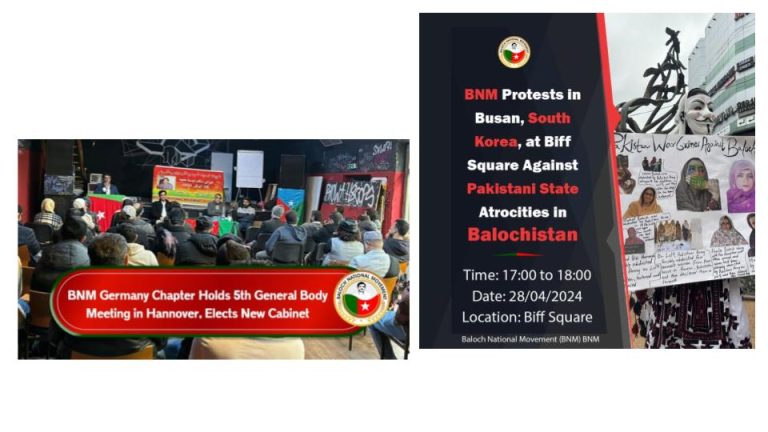
The Baloch National Movement (BNM) Germany Chapter held its 5th General Body Meeting in Hannover on Friday, attended by top BNM leadership including Chairman Dr. Naseem Baloch and central committee members. The meeting saw the election of a new cabinet for the German chapter.

The event commenced with the Baloch national anthem and addresses by outgoing President Asghar Ali and visiting central committee members Haji Naseer, Hatim Baloch, and Hammal Baloch. Dr. Naseem Baloch delivered a keynote speech highlighting the impact of international politics on the Baloch struggle for independence.

After the formal dissolution of the previous cabinet, an election was conducted overseen by Haji Naseer, Hatim Baloch, and Hammal Baloch. The newly elected BNM Germany cabinet includes Shar Hassan (President), Safia Manzoor (Vice President), Jabbar Baloch (General Secretary), Shali Dad (Joint Secretary), and Amjid Murad (Finance Secretary).

Incoming President Shar Hassan vowed to uphold and enhance BNM’s political agenda in Germany. Dr. Naseem Baloch congratulated the new team, expressing hope they would continue the legacy of BNM’s German chapter founder Waja Gafaar Baloch.

Protest in South Korea 

Meanwhile, the BNM South Korea chapter is organizing a protest in Busan city’s Biff Square to denounce the ongoing Pak Military atrocities in Balochistan, including killings, abductions of civilians and the prolonged occupation.

The protest aims to raise global awareness about the dire human rights situation, as Pak forces continue perpetrating violations daily. Earlier in March, the BNM’s spokesperson raised alarm over the military operations in the Bolan, Sabi, and Harnai regions of Pak-occupied-Balochistan. 

Since the illegal occupation of Balochistan by Pak Army in 1948, the Baloch people have faced widespread atrocities including extrajudicial killings, enforced disappearances, torture, harassment at checkpoints, and kidnappings for ransom, as documented by human rights groups.

The BNM leadership has criticized the international community’s silence, accusing it of enabling Pakistan’s military aggression in the resource-rich Balochistan region through lack of accountability.

Pak Army’s mortar shelling massacres innocent Pashtun children in Khyber-Pakhtunkhwa

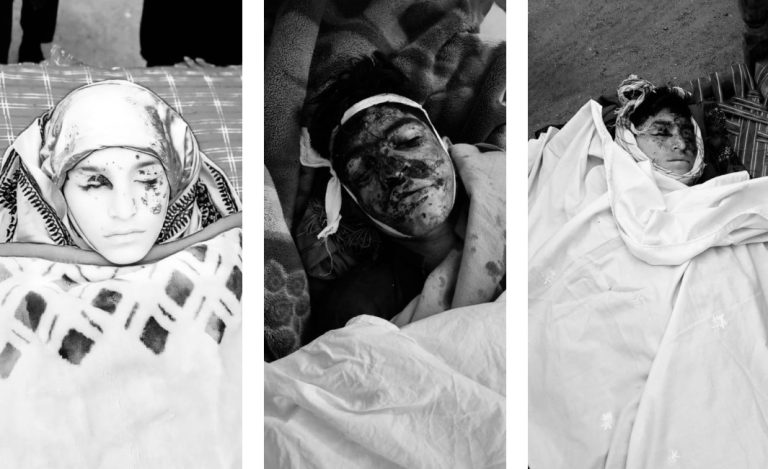
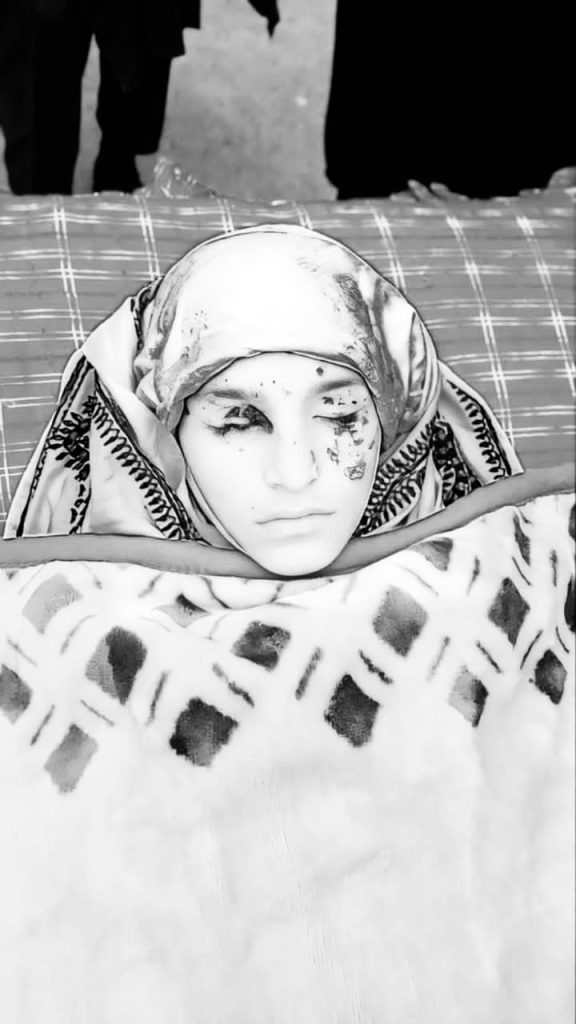
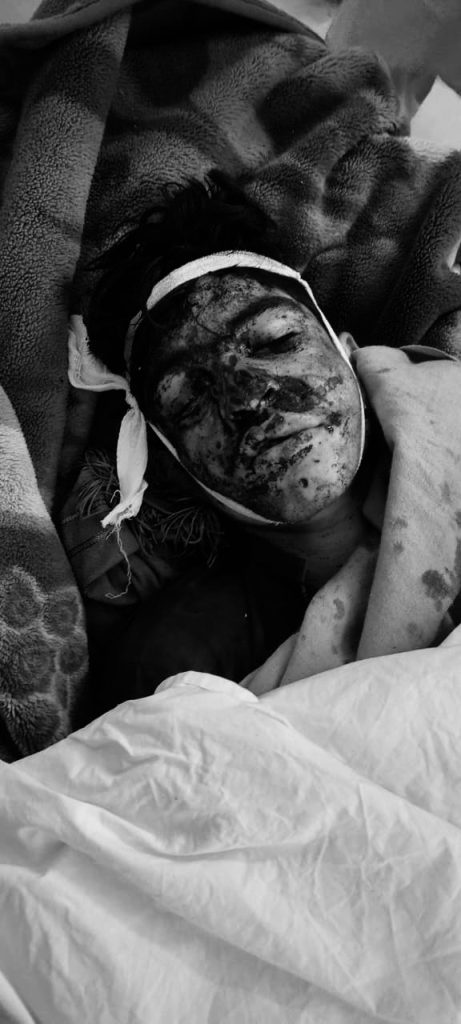
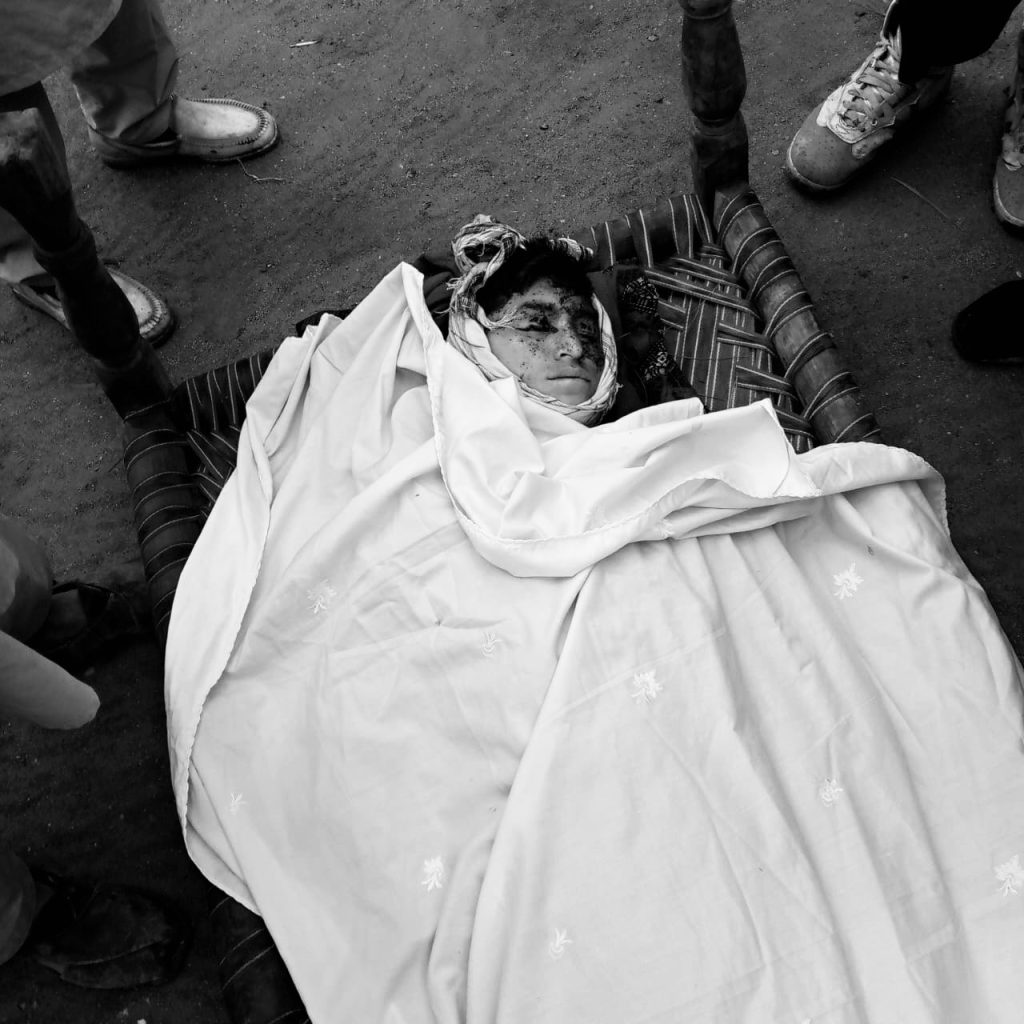
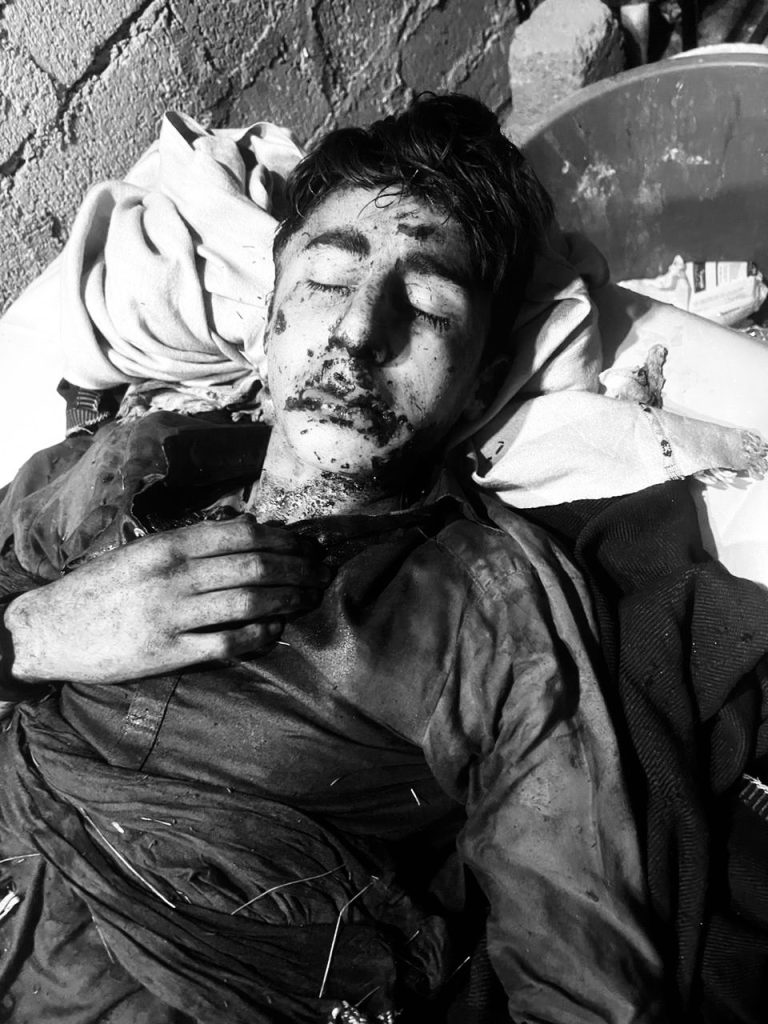
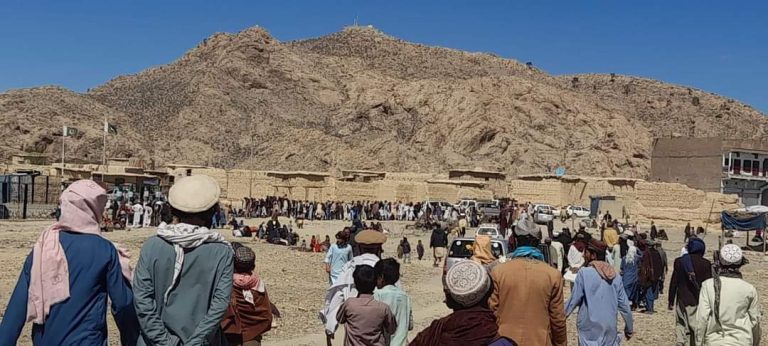
In a tragic incident near the Afghan border in Khyber-Pakhtunkhwa’s Tirah Maidan, four innocent Pashtuns, including two children, lost their lives in a mortar shelling by Pak Army.

The area is under the heavy watch of Pakistan Amry as it shares borders with Afghanistan. Pashtun community members maintain that mortar shelling in the area was responsible for the fatalities. However, Pakistan to suppress the reality have been propogating that the killings were the result of landmine explosion, when the deceased went their searching mushrooms.

Additiinally, Pakistan has also downplayed the number of fatalities claiming them two. On the contrary, Pashtun Tahafuz Movement (PTM) has released the picture of 4 deceased, including children.

Notably, Pakistan’s relation with Afghan Taliban have soured in recent times, which was evident by the abrupt deportation of Afghan migrants, sealing border and imposing one document regime. Amidst the escalating tensions, the primary concern for Pak Army is the same ethnicity of Afghan and Pashtuns who live on the either side of the border. Due to this, Pak Army has aggravated the scrutiny at the border area with fierce actions against Pashtuns, in a bid to deter them.

Pakistan has employed this tactic without address its ramifications for the larger Pashtun population. Consequently, innocent people are dying. Not less than a week ago, three children lost their lives after a landmine detonated in South Waziristan.

Balochistan National Party Mengal rise in protest against poll rigging in Khuzdar

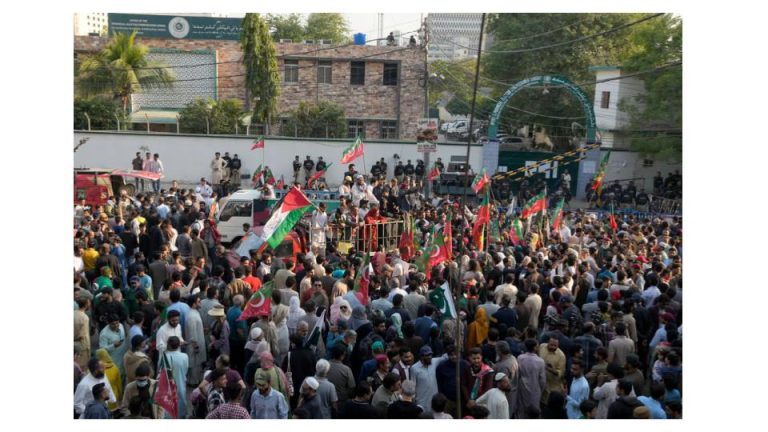
Members of the Balochistan National Party Mengal (BNP-Mengal) staged a protest at the Deputy Commissioner’s office in Khuzdar on Saturday, against the electoral malpractices during the recent Wadh tehsil by-elections.

The demonstration, led by party chief Akhtar Mengal alongside key leaders and female supporters, is on major roads in Khuzdar and Wadh.

During the protest, Akhtar Mengal spoke about the bias attitude of the local election authorities, claiming the presiding officer in Wadh favored his rival Shafiq Mengal, Baloch traitor. He demanded the officer’s replacement, said that the Pak establishment was backing Shafiq Mengal, similar to their previous support for puppet politicians like Anwar ul-Haq Kakar and Sarfaraz Bugti.

Questioning the likelihood of Shafiq Mengal’s victory, Akhtar Mengal asserted his party’s strong regional influence. He criticized the efforts by Pak Army to install Shafiq Mengal in power through undemocratic methods.

He said that around a dozen puppet officers have been posted in the city on the orders of his rival candidate for rigging.

“If the agencies are so desperate to bring Shafiq Mengal into the assembly, they should have him wear an abaya or marry him to a Hindu. That way, he will be eligible for the reserved seats for women and minorities in the Balochistan Assembly,” Akhtar Mengal stated.

Shafiq Mengal and his brother were recruited in ISI and Khuzdar was assigned to the brothers to crush Baloch national movement in the district.

Shafiq Mengal, an ISI pawn in Pak-occupied-Balochistan, is involved in unleashing terror including leading a ‘death squad’ involved in enforced disappearances, murders, kidnappings for ransom, drug trafficking and other offenses. He is also linked to the 2014 discovery of mass graves in Tootak containing at least 169 bodies, as well as a suicide bombing.

Unidentified men kidnap polling staff from 5 stations in Pak-Occupied Balochistan

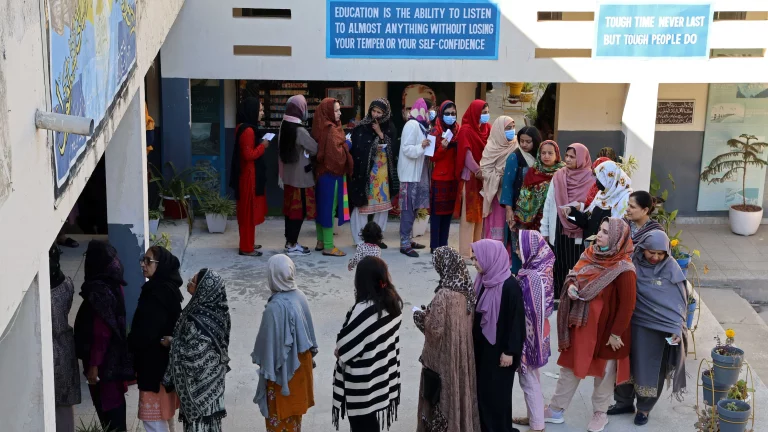
Mir Wais Achakzai, the candidate of the Pashtunkhwa Milli Awami Party from constituency PB-50 Qila Abdullah, has said that unidentified individuals have kidnapped staff from 5 polling stations in the area.

In a video message, Achakzai stated that personnel from 5 polling stations were kidnapped.

“The unidentified individuals took away the ballot papers and other electoral material along with the kidnapped staff,” he said. Further added that the Chief Election Commissioner and other puppet authorities have been informed of the situation.

Achakzai has demanded that the kidnapped election staff be immediately recovered and provided security to ensure their safety and the integrity of the electoral process in the constituency.

Polling staff

Interestingly, Killa Abdullah, the deputy commissioner said that no such incident of abduction of polling staff has occurred. However, the Election Commission of Pakistan directed the deputy commissioner to submit a written report.

This event is not really a shock, as the Pak Army has never accepted its loss and always led the elections according to its way. Balochistan took a decisive step and boycotted the fake election stunt, and this paved the way for an unidentified group to take the bold step and teach the Pak ‘establishment’ an important lesson.

Earlier, in Feb, a senior bureaucrat in Pakistan accepted his involvement in the rigging of the recent general elections in Pakistan. Along with the confession, various reports and videos flooded the social media that showcased the malpractices that occurred during and after the election. Booth rigging, and tampering with ballot boxes, as bags full of stamped ballot papers were also found in the Mand.

Pakistan restores National Health card, excludes Pak-Occupied Gilgit-Baltistan

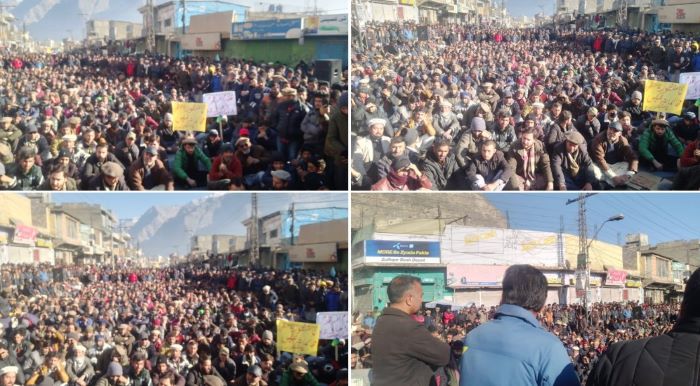
Pakistan’s discriminatory policies against the people of Pak-Occupied Gilgit Baltistan (POGB) have once again come under scrutiny, particularly regarding the issue of health card. Health cards, a prominent demand of the people of POGB, have been a focal point of protests organized under the Awami Action Committee.

The Health Card, colloquially known as the Sehat Card, is a program by the Pakistani establishment aimed at providing health treatments at government expense. However, these health cards were abolished in POGB and Pakistan-Occupied Jammu and Kashmir (POJK), leading to widespread resentment among the population. Consequently, health card restoration became one of the 15 prominent demands raised by the POGB Awami Action Committee in its Charter of Demands.

After months of protests, the puppet government in POGB partially accepted demands such as wheat subsidy restoration and abolishing the Revenue Act 2023. However, crucial demands, including the reinstatement of health card services, were disregarded.

While sehat card facilities have been reinstated throughout Pakistan, POGB remains neglected. For 75 years, Pakistan has exploited POGB and POJK without any moral obligation toward the people. Despite being used as mere territories for exploitation, the region lacks basic amenities and opportunities for socioeconomic development.The denial of health card services is particularly concerning as the region is remote and lacks essential infrastructure. Without access to health cards, the people of POGB face uncertainty and vulnerability, further exacerbating their socio-economic challenges.

It is evident that Pakistan’s agenda in POGB is focused solely on exploitation, with little regard for the welfare and well-being of the local population. By denying essential services like health cards, Pakistan seeks to perpetuate dependence and maintain control over the region, depriving its people of basic rights and dignified livelihoods.

Pakistan shuts Afghanistan border to Pashtuns; enforces ‘One Document Regime’

Pakistan has closed the Angoor Adda crossing on Afghanistan border in South Waziristan as part of its ‘one document regime’, eliciting widespread criticism from Pashtuns living in the region and those who frequently traverse the border for trade or familial connections.

The closure has drawn condemnation from various quarters, including the Pashtun Tahafuz Movement (PTM), which lambasted the Pakistan Army’s decision. PTM took to social media, stating, “Angoor Adda crossing in South Waziristan with Afghanistan remained closed, creating tragic problems for the locals. All these are colonial tactics to displace, alienate, implement ‘one document regime’ & block the mobility of Pashtuns on their own land.”

Previously, individuals crossing the border were issued Tazkira, a paper pass. This facilitated trade and familial ties between people on both sides of the border. However, the abrupt termination of the Tazkira provision and the imposition of the ‘one document regime’ requiring a passport for cross-border travel has sparked distress among Afghan Pashtuns residing in the border area.

The move came on October 21st last year, in the wake of strained relations with the Afghan Taliban and attacks by the Tehrik-e-Taliban Pakistan (TTP). Pakistan responded by deporting Afghan migrants and imposing stringent travel requirements. The sudden policy shift had further exacerbated tensions and disrupted the livelihoods of individuals dependent on cross-border activities across Afghanistan border.

The resentment of people culminated into months long protest at Chaman border in Pak occupied Balochistan, which was eventually dealt with violence by Pakistan Army.

The closure of the Angoor Adda is the latest development that highlights the ordeal of Pashtuns and Afghans living in Pakistan.

Dr. Allah Nazar Baloch to escalate Baloch freedom struggle

In a 20-minute audio message released on April 7, Dr. Allah Nazar Baloch, the chief of the Balochistan Liberation Front (BLF), has vowed to intensify the struggle for an independent Balochistan and claimed the movement is making steady progress towards its goal.

Addressing the Baloch nation, the leader said that the Army’s efforts to suppress the independence have failed. “Our struggle is moving towards success and victory. The enemy’s plan to reduce our population has failed,” he declared in the message released by the BLF’s media wing “Aashob”.

Dr. Baloch said that Pak Army is plundering Balochistan’s natural resources but the relentless struggle has limited its ability to do so. He urged the diaspora Baloch to contribute financially to the “freedom fighters” and extend all possible support to keep the movement resilient.

Dr. Allah Nazar Baloch

Lashing out at Pak-occupied-Balochistan’s elected representatives, he called them of being puppets controlled by the Pak Army and facilitating the “Punjabi occupiers”. He dismissed the provincial and national assemblies as rubber stamps legitimizing Islamabad’s oppressive policies.

In his statement, he said that as you have seen: They have made the cheapest deal by bringing in a large number of drug mafia, drug dealers, and hired killers. These people are war profiteers.

Dr. Baloch applauded the global recognition of the “Baloch genocide” and human rights abuses, stating it has vindicated the movement’s legitimacy. He vowed that neither China’s Belt and Road projects nor the Reko Diq gold mines can proceed without Baloch consent.

Punjabi occupiers

Dr Baloch said that just like the British colonial rule that awarded the title of Nawab to service providers to protect its interests, the Pakistan Army created by the British is also following British imperial policies by awarding Tamgha-e-Jurat, Sitara-e-Imtiaz, etc. He further said that one would be surprised that even those who take pride in being Nawabs also take pride in being awarded these medals. The Nawabs did nothing but serve the British colonial rule. They aided the British army, and in return were awarded the titles of Nawabs, lands and big properties.

Furthermore, Dr. Allah Nazar Baloch said that the Baloch community bravely rejected all the members of parliament in the so-called elections!

Balochistan

He said that a wise man said, “Freedom is not something that is served to you on a plate. Shedding sweat and blood is required for freedom.” You need to share your half bread with your brother. Whether you are in Balochistan or abroad, you need to share your half capital with your brothers.

He further said that Pakistan will never let the Baloch and Pashtuns live in peace. Because the way the Baloch and Pashtuns resisted the British aggression. And the Punjabis were subservient to them. That is why the Baloch and Pashtuns are being punished.

He said that therefore, the Baloch people should never retreat from regaining the same autonomy that Balochistan, until the last breath and the last drop of blood! We have made the world acknowledge the fact that our struggle is for freedom. Neither China nor any other country, will succeed, unless the will, desire, and consent of the Baloch is involved.

Until Last Breath

He further said that, “I want to pay tribute to all the Baloch martyrs, to every youth and elder of the nation who has played a role for this cause and is playing. We are confident that we will regain our freedom, and with your cooperation, we will get it soon”. Finally, Dr. Allah Nazar Baloch said: as the blessed Qazi Sahib says: “The struggle for freedom never gets old. If anyone says otherwise, consider it a lie.”