Home Blog Page 124

United Kashmir People’s National Party chief exposes atrocities by Pak Army in Pak-occupied J&K

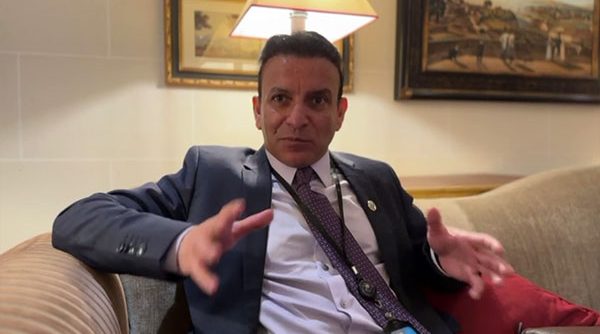
Sardar Nasir Aziz Khan, the central spokesperson for the United Kashmir People’s National Party (UKPNP), shed light on the dire challenges faced by the people residing in Pakistan-occupied Jammu and Kashmir (PoJK), underscoring their struggle for basic rights and opportunities.

During an interview with a media channel (ANI) Khan articulated that despite being portrayed as a region enjoying freedom, PoJK remains under the firm grip of a colonial mindset, akin to the British rule over India. He likened the administration imposed by Pakistan to the autocratic reign of British Viceroys, wherein officers wield unchecked authority, neglecting the welfare of indigenous inhabitants.

Highlighting the stark disparities in development, Khan lamented the severe lack of employment opportunities and industrial growth in PoJK, leading to widespread deprivation among its populace.

UKPNP spokesperson said, “The people of PoK are very deprived of everything, as there are no jobs and industries. Government jobs are also very limited and are given to the people who are loyalists of Pakistan.”

Sardar Nasir Aziz Khan criticized Pakistan’s systematic suppression of dissent, branding anyone advocating for rights or self-determination as anti-state and anti-Islam.

Furthermore, UKPNP spox decried Pakistan’s disproportionate focus on PoJK in its foreign and defence policies, coupled with stringent media censorship, hindering the dissemination of unbiased information. “Our lands have been locked down, denying any access to the international community. And there is no indigenous electronic or print media, hence, any information that comes out is heavily censored and checked by Pakistani agencies. Massive protests have been organised by the people for the last 10 months. We have been demanding basic rights like no load-shedding, the removal of heavy taxes on electricity, and the availability of flour, wheat, and other basic amenities, but the Pakistani media has absolutely ignored us,” Khan said.

Months long protest

Notably, both Pakistan-occupied Jammu and Kashmir (POJK) and Pakistan-occupied Gilgit Baltistan (POGB) have been protesting against the lack of basic amenities for months. The protests led by their respective Awami Action Committees have put forward a Charter of Demand with some common demands of subsidized wheat flour, electricity, royalty on their resources among others. These protests have proved to be widely acknowledged and participated by the people across both regions. The protests have turned out to be the largest ones in the colonial history of POJK and POGB but unfortunately, the media attention to these issued has remained very small. Simply because, Pak media is not audacious to cross a red line drawn by Pakistan Army and the foreign media has only limited reach to the ground and that too solicited by Pakistan government.  

Drawing attention to infrastructure inequalities between PoJK and Jammu and Kashmir, Khan accused Pakistan of perpetuating extremism to divert attention from PoJK’s plight. He condemned the coercive loyalty pledges required by Pakistan for political participation, emphasizing the marginalization of PoJK residents.

Interestingly, he referred POJK as a tool for Pakistan in its proxy war with India. Apparently, Pakistan has always used POJK and its delusional freedom to continue ISPR propaganda against, actually free Jammu and Kashmir. As a result, conditions in POJK have decremented and continue to reach new low by each passing day.
UP police shoots dead Sajid, accused in Badaun double murder case

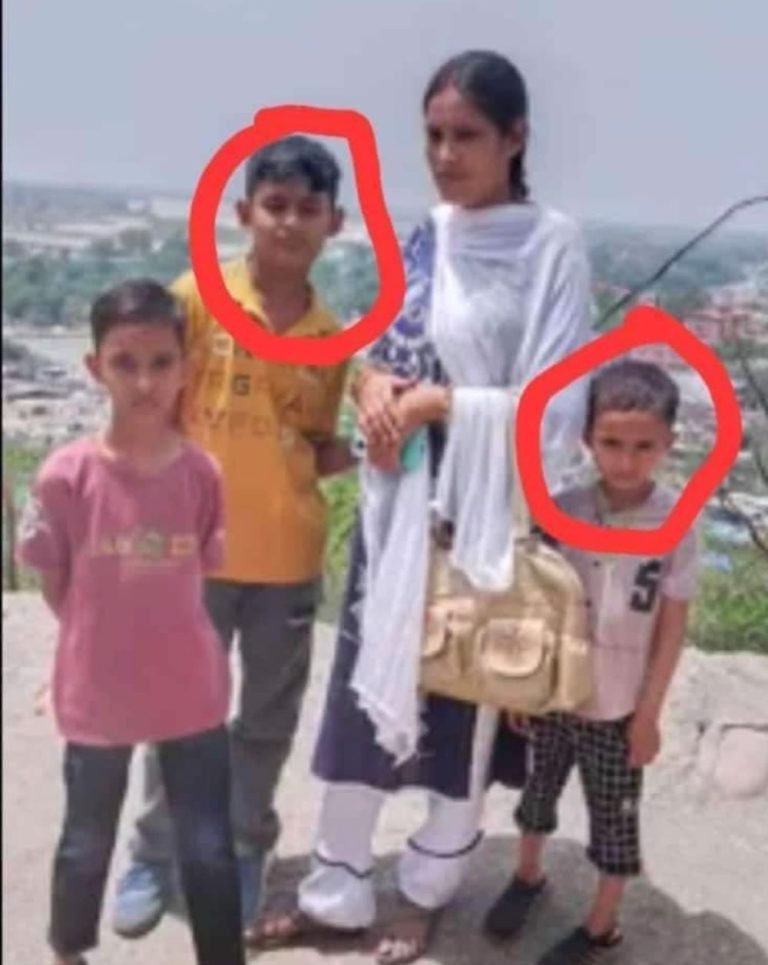
In a shocking and gruesome incident, two minor boys met a tragic end after being mercilessly hacked to death by a local barber in Baba Colony, Badaun Uttar Pradesh. The incident, which unfolded on Tuesday, has sent shockwaves throughout the community.

The accused, identified as 22-year-old Sajid, reportedly entered a house in Baba Colony and launched a vicious attack on three brothers, aged 13, 6, and 10 years old. Tragically, the brothers aged 13 and 6 succumbed to their injuries during the attack, while the third brother sustained severe injuries and was rushed to a hospital for treatment.

According to the mother of the murdered children, the assailants were known to her and had approached her demanding Rs. 5000, purportedly for the delivery of Sajid’s pregnant wife. She recounted that while she went to prepare tea for Sajid, he took the children to the terrace where the brutal attack occurred.

The merciless murder of innocent children has deepened the concerns of violence against Hindus because of their faith. Details so far tells that there was no strained relation between the assailant and the children’s family. In fact they were acquainted well. Meanwhile some reports teel that Sajid drank the blood of poor children amid the allegations of him practising black magic. Whatsoever, the incident happening in Ramadan has raised serious concerns over the religious hatred running deep down in some of the radicalised sections of Muslims.

Sajid gunned down in an encounter

Eyewitnesses reported that after the attack, Sajid and another individual, Javed, managed to escape despite efforts by the crowd to restrain them. However, the perpetrator’s escape was short-lived, as he was gunned down in a police encounter, just a couple of hours later.

Badaun District Magistrate Manoj Kumar confirmed that Sajid had entered the house and attacked the children with an axe, leaving a trail of devastation in his wake. In a heart-wrenching revelation, the surviving 10-year-old brother disclosed that the attacker had also intended to kill him but failed in his attempt.

In a significant development, the police have detained the father and uncle of Javed, who still remains at large, from their residence. Following the postmortem examination conducted on Wednesday, the bodies of the children were handed over to the bereaved family. Security personnel have been deployed in the area to prevent any potential unrest or further incidents.

Dacoits abduct and shoot Christian man in Sindh

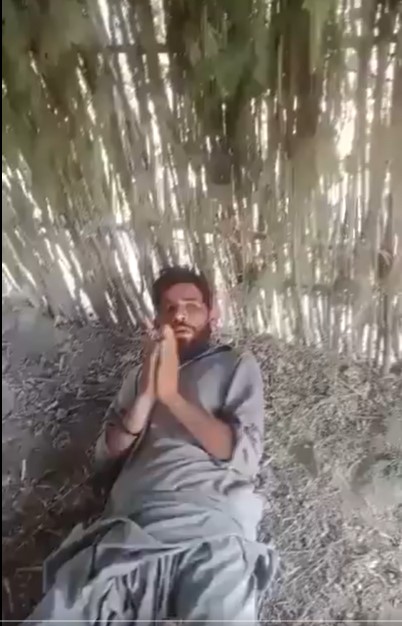
In a disturbing incident from Sindh, a Christian man was shot on camera in the leg by dacoits. A man of Christian faith belonging to Shikarpur, Sindh was abducted a few days ago. The dacoits who abducted him demanded a hefty ransom amount of Rs. 20 lakhs. After the family failed to give ransom, the dacoits shot him in the leg and recorded the video of the incident.  The incident has sent shockwaves through out the community as the law and order is completely parlayed to take any action against the perpetrators.

Notably, the network of dacoits is active in Sindh and works under the patronage of influential political and religious leaders. Surprisingly, more often then not, the victims of these abductions are from minority communities like Hindus and Christians.

More recently, a Hindu man named Ritik Kumar was abducted and his video of being in shekels went viral on social media. Similarly, a couple of months back, two Hindu men named Jagdish Kumar and Sagar Kumar were abducted from Sindh.

Unfortunately, the local administration and law and order machinery has consecutively failed to provide safety to individuals. Also, the perpetrators were not brought to justice, Clearly, they were protected by their patrons.

The latest case once again highlights that minorities are not safe in Pakistan. Not only does a radicalised section of society but also the legal-political system is working out of hatred against them.    

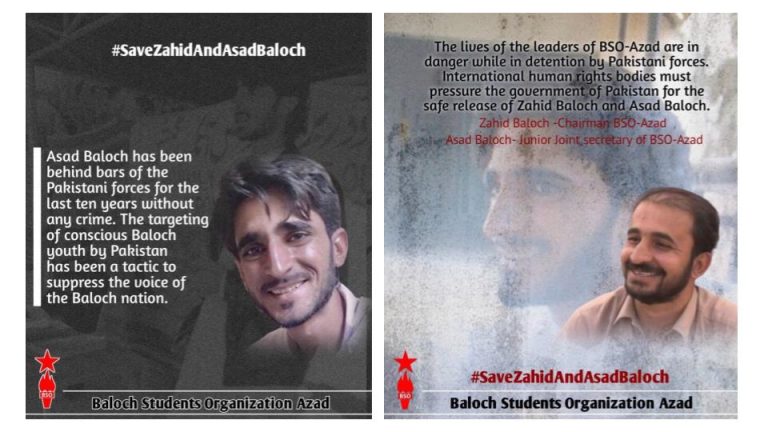
Pak Army’s forced disappearance: Zahid and Asad Baloch missing for 10 years

It has been ten years since the enforced disappearance of Zahid Baloch and Asad Baloch, prominent figures in the Baloch Students Organization Azad. On March 18, 2014, they were forcibly abducted by the Pakistan Army in front of Banuk Karima Baloch from Quetta. Despite the passing of time, their whereabouts remain unknown.

In response to their disappearance, the Baloch Students Organization initiated a hunger strike for Zahid Baloch’s recovery, with Latif Johar observing the protest for forty-six days. This activism prompted the puppet Chief Minister of Pak-occupied-Balochistan, Dr. Malik, to acknowledge the issue. However, these assurances are just lies, the problem persists without resolution.

Enforced disappearances continue to plague Pak-occupied-Balochistan, leading to daily protests. Friends of Baloch student Khudadad Ganj are demonstrating in Islamabad, while Abdul Razzaq’s family members demand his recovery by blocking the Coastal Highway in Pisni. Similarly, in Kech district, roads including the CPEC highway in Hoshop, Tajaban, and Absar have been blocked in protest against enforced disappearances.

Since the forceful and brutal occupation by the Pakistan Army in 1928, Balochistan has endured a painful environment. The innocent Baloch population has suffered countless atrocities. In addition to daily home raids, abductions, and a lack of essential infrastructure, Baloch youth are mercilessly shot, killed and their bodies are dumped.

Pashtuns protest against Pak atrocities; demand self-determination rights at UN

Pashtun Tahafuz Movement (PTM) has started a massive campaign against the persecution of Pashtuns by Pakistan and the illegal and subversive incarceration of its leader Noorullah Tareen. Subsequently, they demanded Right to Self-determination.

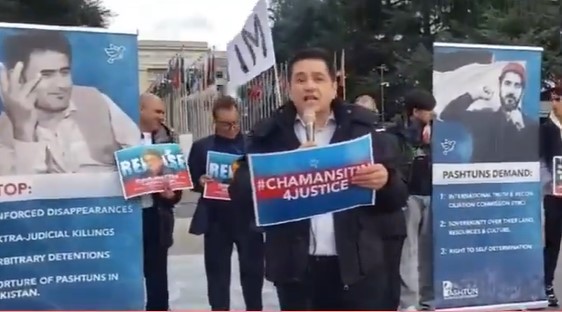
On 18 March, the activists of PTM Europe and other human rights activists reached the United Nations in Geneva and protested against Pakistan highlighting the atrocities inflicted upon the Pashtun Afghan communities by Pakistan Army.

The protest was carried out with banners demanding release of Pashtuns from the captivity of Pakistan and extended support to Chaman protest. Apart from that they also put forward three demands:

  1. International Truth and Reconciliation Committee (ITRC)
  2. Sovereignty over their land, resources and culture
  3. Right to self-determination

Furthermore, the voices for the release of PTM Sindh Coordinator Noorullah Tareen were also raised by the protestors. Tareen was arrested by the Sindh administration in October last year, after he proactively supported the Afghan civilians and provided every sort of assistance to them on behalf of its organisation.

When he was arrested, Pakistan was coercively deporting the Afghan refugees. They were selectively targeted, extorted and tortured in jails.Currently, there have been more than five months that Noorullah Tareen has been incarcerated. Reportedly, he has been facing torture and extreme brutality. Therefore, the Geneva protest highlights that PTM is not only fighting Pakistani establishment’s atrocities but challenging their authoritarian regime both in and outside the country.

Mahrang Baloch urges global support for Pak-occupied Balochistan’s freedom at the UN

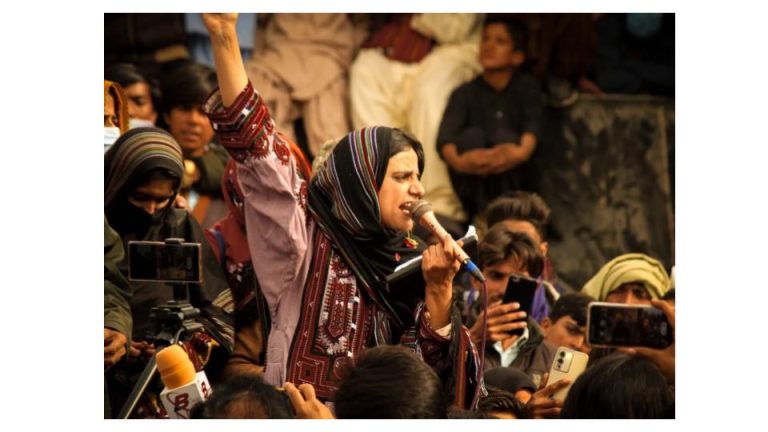
Dr. Mahrang Baloch, leader of the Baloch Yakjehti Committee (BYC), delivered a powerful address at the 55th session of the UN Human Rights Council. Representing the Baloch people, she highlighted the unimaginable suffering endured by the Baloch people, including systematic oppression, disappearances, killings, and disregard for basic rights. With unwavering passion, she pleaded for the world’s attention and intervention in Pak-occupied-Balochistan, where grave human rights violations persist unchecked.

“A slow, calculated genocide” is unfolding, Dr. Baloch stated, condemning the decades-long fear instilled in Baloch communities. Despite tireless protests and pleas for justice, Dr. Mahrang lamented that the Baloch people’s voices have often been ignored or dismissed. She appealed directly to the international community, urging them to stand in solidarity with Pak-occupied-Balochistan, to investigate the atrocities, hold perpetrators accountable, and deliver justice to the countless victims.

With an impassioned call to action, Dr. Mahrang implored the United Nations to send a fact-finding mission to Pak-occupied-Balochistan, emphasizing the urgent need to understand and address the challenges faced by her people. She painted a vision of hope, “We seek your support,” Dr. Baloch concluded, “so our children can grow up free from fear.”

In her closing remarks, Dr. Mahrang rallied the members of the UN’s Human Rights Council, urging them to unite in the pursuit of justice and take meaningful steps to alleviate the suffering of the Baloch people. With conviction in her voice, she made a final, passionate appeal that the time for action is now, and called upon the global community to stand with Pak-occupied-Balochistan in its quest for freedom, dignity, and justice.

Cross border airstrikes between Pakistan and Taliban claim 8 civilian lives

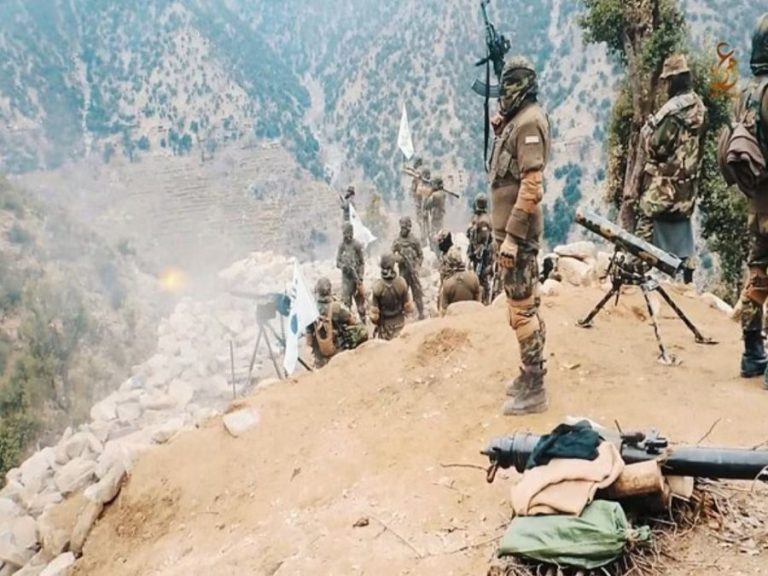
After Pakistan attacked the border areas of Afghanistan, Afghan Taliban has carried out retaliatory airstrikes instigating a new version of clashes between the terror sponsoring regimes of South Asia.

Afghanistan Taliban’s defence minister Mohammad Yaqoob has confirmed that they targeted Pakistan Army’s installation in the border area. Reportedly, Afghanistan bombarded border village of Burkai in Upper Khurram with mortar shells. However, there were no casualties but only shops and other buildings.

Afghanistan’s bombardment comes as a retaliation against Pakistan’s airstrike which Islamabad claimed to have been conducted targeting TTP terrorist Abdullah Shah. The attack led to the killings of 6 civilians with 3 women and 3 children in Paktika province, a house was also destroyed. Along with that, two other women were also killed in Khost province.

As claimed by Afghanistan Taliban and TTP, the Pakistan Army’s target Abdullah Shah is safe and is not present in Afghanistan but across the border in Pakistan. To that extent, TTP has also released a video verifying the above claims.

Airstrikes: Escalation of conflict

The incident has ignited friction between the two terror sponsoring countries. Taliban has in its official statement has warned Pakistan against attacking its territory. It stated that Afghanistan has a history of fighting superpowers and further attack on its territory could lead to undesirable consequences for Pakistan.

Notably, Tehreek-e-Taliban Pakistan (TTP) was once used by Pakistan as a tool for instigating terror in the neighbouring countries and was getting Afghanistan Taliban’s support in it. But the TTP turned hostile and claims itself as the legitimate sovereign of parts of Pakistan in border region. The hostility further increased after the Taliban takeover of Afghanistan, which provided safe haven to TTP against Pakistan. The dialogue between Pakistan and Afghan Taliban has become sour since then.

Consequently, the incident of clashes between TTP and Pakistan have increased. Now the exchange of attacks from either side have escalated the conflict to another level, where both the actors have engaged in violent attacks.

POB: Pak Army’s camp in Mastung under attack

Unidentified assailants have launched a daring attack on a security post near the Pak Army’ central camp in Mastung, Pak-occupied-Balochistan. The incident, which involved the hurling of a hand grenade, sent shockwaves through the area, with the explosion echoing in the distance.

The targeted security checkpoint, located close to Cadet College Cross, bore the brunt of the assault. The puppet Mastung police have refrained from disclosing the extent of the damage caused by the attack.

This act highlights the ongoing challenges faced by Army personnel in the region and underscores how the voices of independence are breaking through the shadows of torture and atrocities inflicted by the Pakistan Army on the Baloch community since forcibly occupying the resource-rich region of Balochistan since 1948.

Paki brutality on peaceful protestors demanding justice for slain Sindhi nationalist Hidayat Lohar

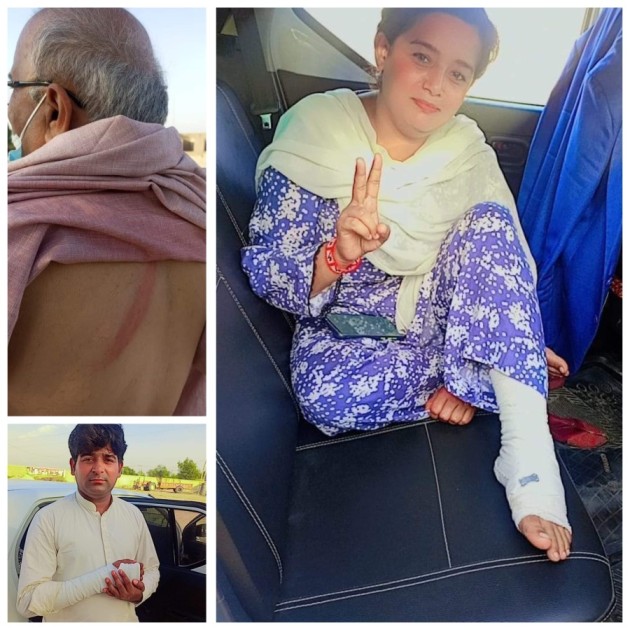
Larkana in Sindh has witnessed the worst and most torturous act of violence by the Pakistani establishment in the last two days. Yesterday, Sindh police broke into the Larkana protest and beat the peaceful protestors before arresting many of them. Later, some of them were released, including their leader Sasui Lohar and Sorath Lohar.

The daughters of Sindhi nationalist and teacher, Hidayat Lohar – Sasui and Sorath Lohar – have been protesting in Larkana over his brutal killing at the hands of the Pakistani establishment while he was enroute to his school. The police resorted to violence against peaceful protestors and arrested many of them, including Sasui and Sorath. The viral video from the time of the attack shows Sasui Lohar clamouring in anger as the police brutalized her fellow protestors.

Surprisingly, it has over a month since these protestors are on the road and in the meantine the entire political system in Pakistan, especially in Sindh, has only been on a rampage mode for elections, wins and losses, formation of government, and “quid pro quo” political dealings. The voice and aspirations of the people remains completely absent from the political discourse, highlighting the absolute ignorance and authoritarianism of the Pakistani establishment.

Now, after months the political ecosystem got over with the electoral mismanagement and manipulation and the new puppet on the name of government has been installed by Pakistan Army. And finally it took cognizance of the matter, by abruptly ordering a violent crackdown, knowing the fact that the protest was peaceful.

Although the daughters of Hidayat Lohar have been released, there are a number of others who still find themselves incarcerated for raising their righteous and justice-seeking voices.

Brutal killing of Hidayat Lohar

Hidayat Lohar was a teacher and Sindhi nationalist who was also the leader of Voice of Missing Persons of Sindh (VMPS), an organization dedicated to streamlining the cases of enforced disappearances of Sindhis at the hands of the Pakistani establishment and subsequently raising the voice for their release. Notably, Hidayat Lohar was himself a victim of enforced disappearance as he was abducted by the Pakistan Army on April 17, 2017, before finally being released in July 2019.

On 16 February, when Hidayat was on his way to the school two assailants, riding on a motorcycle, riddled his body with bullets, leading to his death. The incident sparked massive condemnation from across Pakistan and started a protest under the banner of VMPS led by the brave daughters of Hidayat Lohar, Sasui Lohar, and Sorath Lohar.

Protest erupts as armed assailants kill minor from Pak-occupied Gilgit-Baltistan in Islamabad

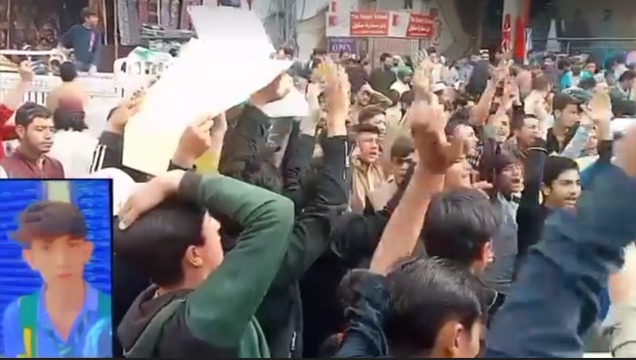
The killing of a minor boy from Pakistan occupied Gilgit Baltistan has sparked resentment in the local populace. The incident has been reported from Alipore, Islamabad where the 16-year-old victim, belonging to Keris Valley of Ghanche district in POGB was killd by armed assailants.

On the night of 16 March, the victim identified as Sharafat Hussain son of Ghulam Hussian, accompanied by his cousins Sohail and Saifullah, was on his way home when he had an argument with assailant Saad. Saad took out the pistol and shot Sharafat and absconded from the scene. Later, Sharafat succumbed to the injuries while undergoing treatment in the hospital. Deceased’s family has said that neither Sharafat nor them had any enmity with anyone. The case highlights the persecution faced by the youth of POJK and POGB, who go to Islamabad for better opportunity. There have been cases of kidnapping and killing of the youth of occupied Gilgit-Baltistan living in Pakistan.

Meanwhile, the family of the deceased minor boy, along with their community started a protest by laying the body of deceased on the road demanding justice. However, as past events tell, the administration and establishment remains a mute spectator of such killings and takes no action.