Home Blog Page 127

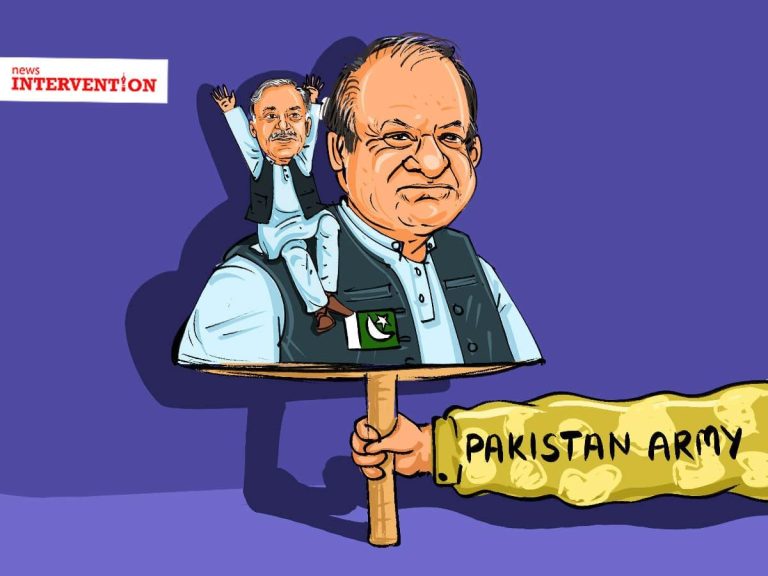
Pak Army backed elections: Pakistan’s politics nears boiling point

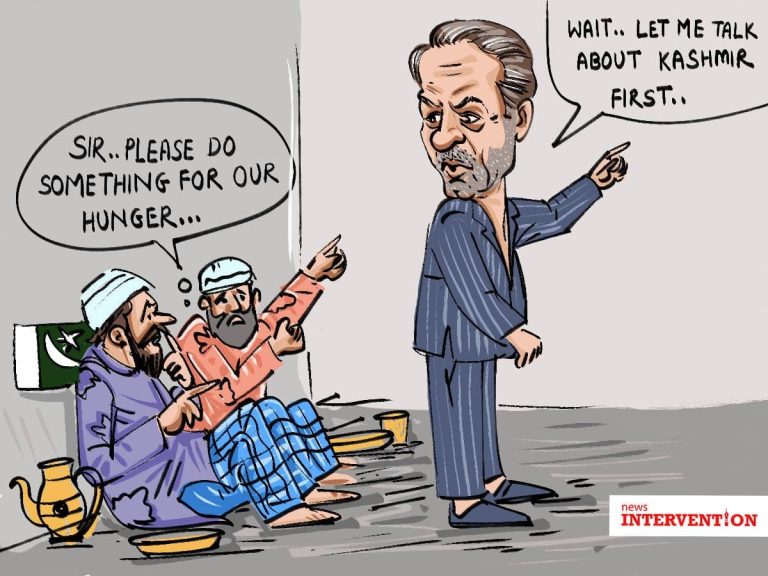
With the Army engineered ‘General’ elections in Pakistan ensuring that Shehbaz Sharif emerges as Pakistan’s newly ‘selected’ prime minister, Rawalpindi would have certainly celebrated its great success. However, with euphoria of having politically ‘neutered’ the one who gave Pakistani Generals the ungainly moniker of “neutrals” over, it’s time for Pakistan’s real kingmaker Gen Syed Asim Munir [who also doubles up as its army chief] to get down to serious work and take stock of the chaotic situation the military has spawned.

Gen Munir needs no reminding as he is a meticulous person known to be one who neither forgets nor forgives. He’s already on the job of tying up all the loose ends to ensure that Pakistan Tehreek-e-Insaaf [PTI] party chief and former Prime Minister Imran Khan’s political aspirations have no scope of resurrection.  He also knows very well that the widespread public dissatisfaction generated by physical and psychological intimidation of the PTI’s rank and file is a ticking time bomb that needs to be defused quickly and with great finesse.

So, it was expected that the elections and its resultant political fallout would be high on the agenda of the corps commanders’ conference held on March 5, and the post-conference press release issued by the Pakistan Army’s media wing Inter Services Public Relations [ISPR] has confirmed the same.  

The ISPR press release states “The Corps Commanders Conference has expressed satisfaction over the smooth democratic transition of power in the Centre and Provinces” [Emphasis added]. The question that arises is- how can the army endorse untainted conduct of the entire election process so definitely? After all, doesn’t the ISPR statement specifically mention that the “Armed Forces of Pakistan provided [a] security environment for the conduct of General Election-24 as per the given mandate and had nothing to do with the electoral process.”? [Emphasis added].

Given Rawalpindi’s  history of meddling in politics, the recently concluded general elections in Pakistan were closely watched by the international community, various rights organisations as well as independent observers, and the general consensus is that the elections, to say the least,  have been “controversial.” So, it’s but natural for Rawalpindi to try and create an illusion of orders and instructions being implicitly followed during the entire election process- from canvassing to result declaration. How many will believe this is anybody’s guess!

ISPR will surely deny the Army’s involvement in orchestrating elections results, but if this is really the case, then why would there be such a pervasive barrage of accusations against the Army? Moreover, if this allegation lacks substance, then where was the need for ISPR to get so worked up and state that the corps commanders’ conference “expressed dismay that some vested small segments of polity and media especially social media have been maligning Armed Forces of Pakistan with unsubstantiated allegations of interference which is highly deplorable.”?

Similarly, ISPR’s statement mentions that during the conference it was “emphasised that due legal processes should be followed with evidence and proof rather than resorting to unconstitutional and uncalled for baseless political rhetoric and emotional outbursts.” If this menacing statement was meant to silence critics, then Rawalpindi needs to realise that unlike days of yore, such arm twisting doesn’t work anymore, and JUI-F chief Maulana Fazlur Rehman’s hard hitting, no-holds-barred response is proof of the same.

Reacting to the ISPR’s missive, the JUI-F chief highlighted the judiciary’s subservience to the military by saying, “When a politician stands against the establishment [Pakistan Army], the judiciary becomes active” [Emphasis added], and rightly noted that “No decision of the judiciary of Pakistan is presented as a precedent in the world.” One could have rejected these assertions had Rehman been the only one to have raised the issue of an existing nexus between the Army and judiciary, but unfortunately, many others have also done the same.

In 2018, senior Islamabad High Court [IHC] Judge Justice Shaukat Aziz Siddiqui, who was in line to become its chief justice, publicly revealed that “Today the judiciary and media have come in the control of ‘Bandookwala’ [Army] [Emphasis added] and that “Judiciary [in Pakistan] is not independent. He even disclosed that “In different cases, the ISI [Inter Services Intelligence, Pakistan army’s spy agency] forms benches of its choice to get desired results.” [Emphasis added].

There’s yet another far more damning revelation coming from the very horse’s mouth.

In 2016, former President and ex Pakistan Army chief Gen Pervez Musharraf admitted in a TV interview that when he was placed in the ‘exit control list’ by the courts, the then Army chief Gen Raheel Sharif “did help me” to get out of it as “I have been his boss, and I have been the army chief before him . . .” Ruminating that “ . . . our judiciary should move towards justice,” Gen Musharraf revealed that “these courts work under pressure behind the scenes and then give decisions. The Army chief had a role to play in releasing the pressures behind the scenes. [Emphasis added]. 

With the faceoff between the Army aided by the judiciary and the politicians supported by the public likely to gain momentum with passage of time, Pakistani politics has all ingredients of a pot boiler and holds promise of interesting times ahead!
Mahrang Baloch joins family of victim disappeared by Pak Army, supports sit-in protest

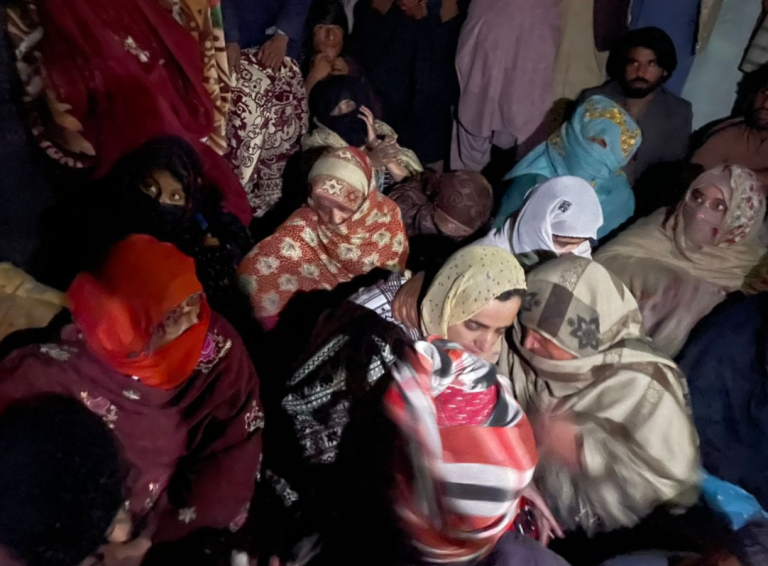
Recently in a distressing incident, Abdul Razzaq Baloch, a Baloch youth, was forcibly disappeared on March 11th, at 8 p.m., by the Pak Army personnel who were dressed in plain clothes.

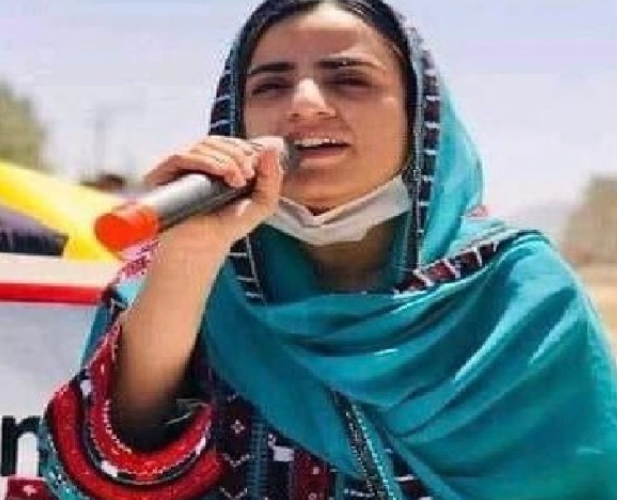
In reaction to this, the family relatives of Abdul Razzaq Baloch blocked the Sorab CD Road in Pak-occupied Balochistan and launched a sit-in protest until he was safely recovered. Dr Mahrang Baloch, head of Baloch Yakjehti Committee (BYC) while addressing Abdul Razzaq Baloch’s father Abdul Khaliq Baloch, stated that it is our constitutional right to resist all forms of coercion against us.

She applauded their initiative and urged the Pak establishment to end their policy of enforced disappearances, otherwise Balochistan population would protest this on the streets. She urged all the Baloch residents in towns and villages to come forward and support the distressed families against this illegality.

It is important to note that, since March 27, 1948, the Pak Army has forcibly occupied Balochistan and subjected the Baloch committees to violence and atrocities. The ongoing pattern of enforced disappearances by the Pak Army in Pak-occupied Balochistan is deeply troubling and demands immediate global attention and cessation.


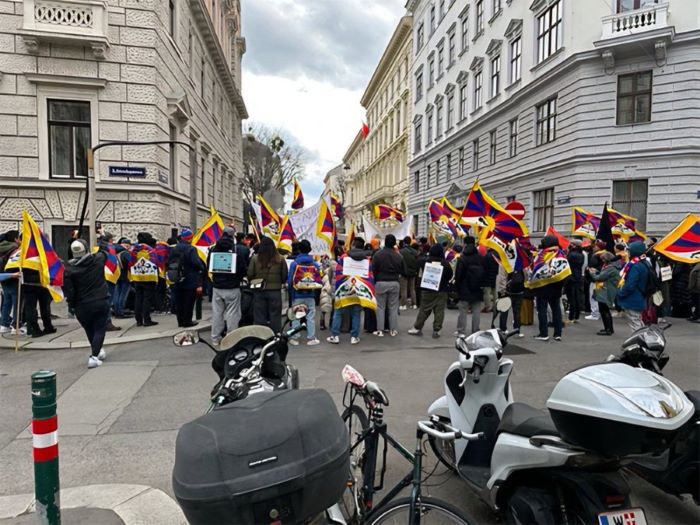
Tibetans protest outside Chinese embassy in Vienna on 65th Tibetan National Uprising Day

In a powerful demonstration of solidarity and resistance, Tibetans residing in Vienna, under the umbrella of the Tibetan Community Organization and supported by Austrian Volunteer Tibet Advocacy Groups (V-TAGs), gathered outside the Chinese Embassy to protest against China’s occupation of Tibet on Sunday, marking the 65th Tibetan National Uprising Day.

Approximately 200 protesters, draped in Tibetan flags, passionately expressed their discontent with China’s alleged atrocities and genocidal actions in Tibet. Chanting slogans such as “Tibet belongs to Tibetans!” and “China must leave Tibet,” the demonstrators voiced their unwavering commitment to the Tibetan cause.

Austrian politician and member of the Vienna State Parliament and Vienna City Council, Dolores Bakos, lent her support to the protest, brandishing a “Free Tibet” banner. Addressing the crowd on the 65th Tibetan National Uprising Day, Bakos reaffirmed the solidarity of the Austrian people with Tibet and pledged her party’s commitment to advocating for justice at the international level.

Expressing concern over the humanitarian situation in Tibet, Bakos highlighted the violation of cultural and religious rights, as well as the erasure of Tibetan identity under the guise of dam development. Bakos, affiliated with the Austrian political party New Austria and Liberal Forum (NEOS), emphasized the party’s dedication to working closely with Tibetans in Austria.

In a recent move, NEOS MPs presented a resolution in the Austrian Federal Parliament condemning China’s forced transfer of Tibetan children to boarding schools. Accordingly, the resolution is currently under consideration by the Foreign Affairs Committee of the Austrian Federal Parliament.

Notably, earlier this month, Tibetan diaspora also staged a protest outside the Chinese Embassy in Vienna, condemning the arrest of Tibetans peacefully opposing the planned dam construction in Tibet’s Sichuan province.

Nevertheless, following the protest, a rally of around 200 Tibetans marched from the Chinese Embassy in Vienna to Stephan Platz, raising awareness among the Austrian public about the harsh measures implemented by the Chinese Communist Party in Tibet. The event aimed to shed light on the ongoing struggle for Tibetan autonomy and human rights, resonating with a global call for justice and freedom.

The gathering storm in Pakistan-occupied Jammu and Kashmir

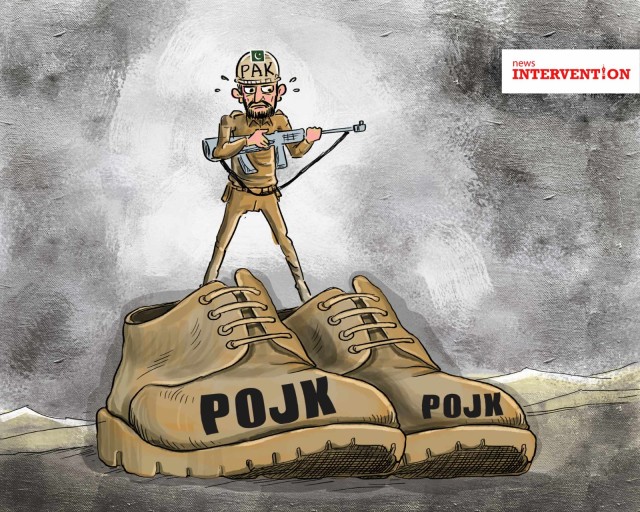
Two significant things happened last Tuesday. One, Pakistan Army chief Gen Syed Asim Munir presided over the corps commanders’ conference in Rawalpindi, and two, Pakistan occupied Jammu and Kashmir [PoJK] saw mammoth gatherings of anti-Pakistan protesters taking to the streets in response to a call given by Jammu Kashmir Joint Awami Action Committee [JKAAC].

The press release issued by Pakistan Army’s media wing Inter Services Public Relations [ISPR] mentions that the Pakistan Army’s top brass expressed “concern” over what they alleged were “continued repression of Kashmiris” and “unabated human rights violations by India” in J&K. However, there’s no mention that the alarming situation developing in PoJK was discussed during the conference, which is indeed very surprising.

Since last year, the entire occupied area of J&K [PoJK] including Pak-occupied Gilgit-Baltistan [PoGB] under Pakistan’s illegal possession has been on the boil, and despite Rawalpindi’s brazen use of its infamous strong arm tactics, the situation is only going from bad to worse.

The reality is that contrary to Islamabad’s claim, people of PoJK never accepted Pakistan’s forcible occupation and this isn’t mere speculation but a hard fact. If everything was really hunky dory, then why would Article 7[3] of PoJK’s constitution specifically prohibit individuals and political parties from propagating against, or taking part in “activities prejudicial or detrimental to, the ideology of the State’s accession to Pakistan [Emphasis added]?

Though not mentioned in the press release, almost everyone agrees that considering its serious implications, the current situation in PoJK would have definitely been discussed during the corps commanders’ conference. However, avoiding mention of the same in the press release by ISPR was intentional as it would invite awkward questions and expose the widespread anti-army sentiments prevailing in PoJK.

Earlier, Islamabad used to conveniently conceal its own monumental failings and abject apathy towards the people of PoJK by claiming that anti-Pakistan protests in this illegally occupied territory were being orchestrated by New Delhi. However, with live issues like denial of basic rights and basic amenities as well as uncontrolled exploitation of natural resources  becoming the reason for protests, and the number of participants swelling to several thousands, allegations that only a small group of disgruntled people instigated by India no longer finds any takers.

For example, the protest in Pakistan occupied Gilgit-Baltistan [PoGB] which started in 2023 and is still continuing was triggered by a whopping four-fold unilateral increase in wheat prices from Rs 12 to 36 per kg. Similarly, some other justified demands that have forced people of PoGB to protest are liberal grant of mineral exploration leases to outsiders. Locals are also seeking 80 percent allocation from royalty on profits received by the Diamer Basha Dam project located in GB for development work in the region, an end to the 22 hour power outage, restoration of traditional routes and establishment of medical and engineering colleges in GB.

The story in other parts of PoJK is the same. Jammu Kashmir Liberation Front [PoJK-GB Zone] Dr Toqeer Gilani who’s leading the anti-Pakistan protests is extremely bitter about the way Islamabad is treating PoJK residents as second class citizens. Noting that “The Pakistan administration has been saying that they will always stand with us, and will always fight for the rights of our people” he aptly exposes this hype by adding, “But anyone who is friends with the Pakistani establishment will not need a foe anyway.” [Emphasis added].

Mounting grievances amongst the marginalised people of PoJK has led to the creation of a Joint Awami Action Committee [JAAC] and with this a unified front opposing Pakistan’s ill-treatment  of residents in illegally occupied territories of PoJK [including PoGB] has come into being.

This year JAAC decided to break the glass ceiling by boycotting government organised annual sham ‘Kashmir Solidarity Day’ on February 5 and instead observing this day as PoJK“Peoples’ Right Day” to air their genuine grievances. Videos posted on social media confirm a drastic fall in the number of locals attending these events and this must have come as a big setback to the establishment that depends on such orchestrated event to seek legitimacy for its illegal occupation of areas of J&K.

Gilani has convincingly justified boycott of Kashmir Solidarity Day functions by saying, “On the one hand, Pakistan announces to express solidarity with Kashmir on February 5; on the other hand, the same dispensation denies the basic rights to the people under its control.” He has also called Islamabad’s bluff by adding that “we can see that the propaganda of Kashmir [PoJK] is being used rapidly this year in Pakistan to distract attention from the [anti-Pakistan] movement that is going on here.”

That JAAC means business is evident from its announcement of a long march by locals from Bhimber to PoJK capital Muzaffarabad on May 11 to press for rights of the people and ending indiscriminate exploitation of this region’s natural resources. So, rather than tilting at windmills and expressing ‘concern’ on what they imagine is happening in J&K, wouldn’t it be more prudent for Gen Munir and his Generals to read the writing on the wall and seriously start worrying about the way things are unfolding in PoJK?

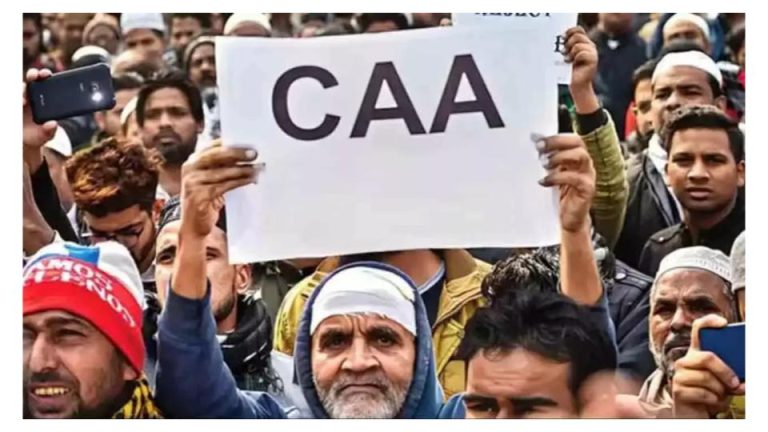
Centre notifies Citizenship Amendment Act (CAA) rules for online applications

The Ministry of Home Affairs has officially notified the rules for the Citizenship Amendment Act (CAA) today, marking a crucial step towards the nationwide implementation of the law. Designed to facilitate Indian citizenship for Hindu, Sikh, Jain, Buddhist, Christian, and Parsi refugees from Afghanistan, Bangladesh, and Pakistan, the rules outline the application process.

In a statement released on official channels, the Ministry of Home Affairs emphasized the digital nature of the application process. “Applications for Indian citizenship under CAA-2019 will be submitted through a dedicated online portal, streamlining the procedure for eligible individuals,” stated the official communication.

This development follows Union Home Minister Amit Shah’s recent declaration that the CAA would be enforced before the upcoming Lok Sabha elections. The law’s primary objective is to grant citizenship to non-Muslim migrants from specified countries who arrived in India before December 31, 2014.

Despite initial protests across the country when the law was enacted in 2019, Amit Shah reiterated its inevitable implementation, emphasizing that the CAA does not jeopardize anyone’s citizenship. He clarified, “The CAA is an act to provide citizenship to refugees who were persecuted in Bangladesh and Pakistan.”

Furthermore, West Bengal Chief Minister Mamata Banerjee declared her state’s opposition to the implementation of CAA and NRC, stating, “We will not allow CAA, nor NRC, nor the politics of dividing Uttar Pradesh and West Bengal.”

Another protest erupts in Pakistan-occupied Gilgit-Baltistan over load shedding

Pakistan occupied Gilgit Baltistan (POGB) once again witnesses the protest against the load shedding in the region. On March 10, some women along with other protestors hit the streets of Amphery in Gilgit and hurled slogans against the puppet government which has failed to even provide basic electric supply.

Just a couple of days ago, the puppet government announced to provide about 5-hours of power a day during Ramadan. This shows the precarious condition of electricity in POGB. Five hours of supply given on special occasions tells that on normal days the power shortage remains unimaginably low.

Additionally, a protest just a day before the holy month clearly indicates that people have lost faith in the Pak-imposed puppet government in POGB.  It is worth noting that POGB, like POJK, has put forward a Charter of Demand to the puppet government under which the wheat flour price crisis and Revenue Act related issues are only resolved. The issue of electricity that remains crucial for the survival of people remains unresolved and the load shedding continues.

Clearly, the electricity shortage is not a genuine problem but an Islamabad-engineered crisis. The region along with POJK has the potential to generate electricity of enormous amounts. But whatever amount of power is generated, it is transmitted to Pakistan, which sells it to them on hefty prices and abundant load shedding. Surprisingly, parts of Pakistan do not face such scarcity. Therefore, it is a doctored crisis which is proof of persecution, exploitation and colonialism.

Hindu man abduction in Sindh: Viral video captures pleas for help

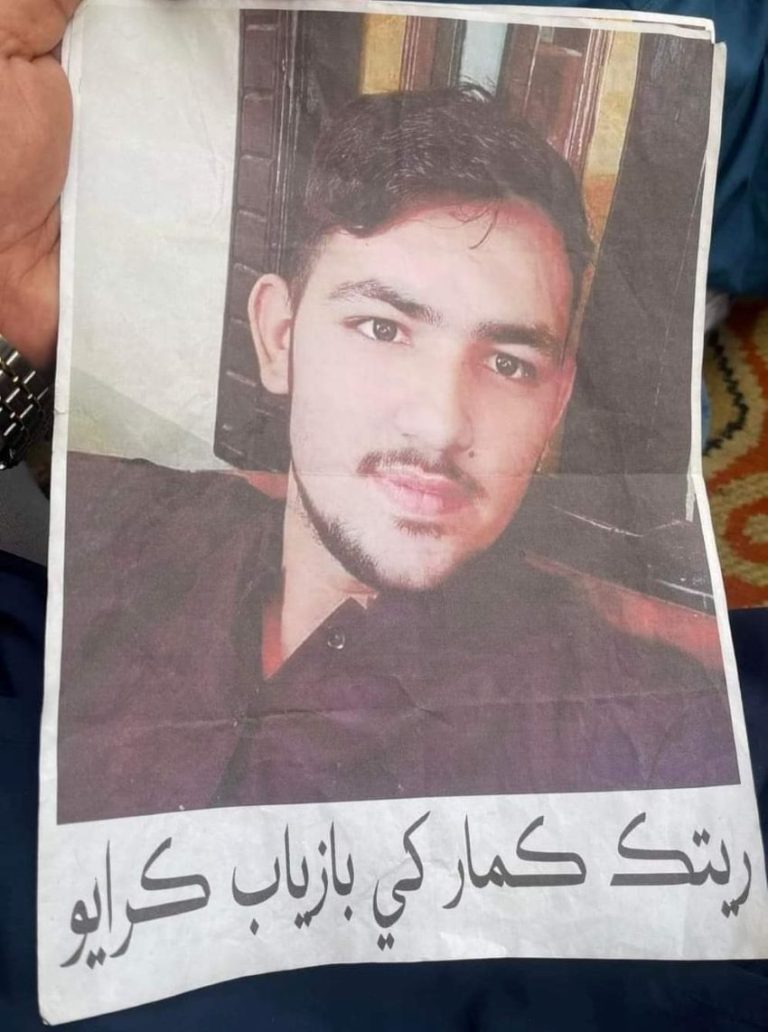
The harrowing tale of a Hindu man named Ritik Kumar, abducted one month ago while traveling from Sukkur to Mirpur Mathelo, has unfolded a disturbing pattern of targeted harassment against Hindus in Sindh. Despite informing authorities immediately, there has been a shocking lack of effort to locate Ritik or identify the perpetrators, raising concerns about the safety and security of the Hindu community in the region.

Reports suggest the involvement of local Waderas (feudal landlords) and bigoted individuals with influential backing. A viral video depicting Ritik in chains, pleading for release while being tortured, has added urgency to the matter.

https://twitter.com/SarmanBrohi/status/1766545150187028829

This incident bears unsettling similarities to a case last year when Hindu man Jagdish Kumar Mukhi was abducted from Kashmore. Later another one, named Sagar Kumar was also abducted from Kashmore. The lack of prompt action by the police led to public protests in Kashmore and Kandhkot. However, instead of addressing the concerns of the protestors, the police, along with some dacoits, attacked the demonstration, injuring many.

The recurring theme of targeted abductions of Hindus and the subsequent apathy from authorities suggest a worrying trend. The striking resemblance between Ritik Kumar’s case and the incident in Kashmore last year implies a selective abduction pattern, indicating potential involvement by influential entities within the Pakistani establishment and their puppet administration in Sindh.

Destruction of Gwadar in the name of Mega Projects: Mahrang Baloch

Dr Mahrang Baloch, the leader of the Baloch Unity Committee, stated in a video message that an unscrupulous megaproject has been launched in Gwadar, creating the illusion that Gwadar and its residents have made progress, which is not the case. Under the guise of these dubious projects, checkpoints have been set up in every alley in Gwadar, allowing Pak establishments, including the Coast Guard, to enter homes and evict residents. Dr Baloch emphasized that Gwadar’s ancient livelihoods, which date back a century, are being undermined, leaving thousands homeless and uncertain about their futures.

In response, the Baloch Unity Committee has decided to organize an awareness campaign in which intellectuals will participate to shed light on how Gwadar’s infrastructure has been altered, negatively impacting the lives of locals. They promised to amplify the voices of those who have gone unheard in Gwadar, and they invited all residents to attend the program at the Gwadar Stadium.

Furthermore, the Baloch Unity Committee distributed pamphlets emphasizing that the recent devastations in Gwadar are not hidden from anyone due to numerous unscrupulous megaprojects. Aside from dealing with various health issues and material losses, Gwadar is drowning in the stress of homelessness. The 2024 floods have highlighted the city’s residents’ decades-long neglect. In these trying times, the Baloch Unity Committee travelled to the affected areas, prepared detailed reports on the destruction (which were also shared with the press), launched a three-day unity campaign in Baloch areas, and appealed to people for cooperation.

At the culmination of the unity campaign, they will hold an awareness session to raise people’s awareness of the causes and effects of the floods, as well as to educate them on various technical aspects of climate change and standard operating procedures (SOPs). They are determined to dispel the myth that everything is natural, refusing to include themselves and others in the false narratives spread by artificial forces, such as flawed Pak Army policies. They encourage active participation in the session to exchange ideas on various topics such as reconstruction, self-made megaprojects, and Gwadar’s development. They invite all residents of Gwadar and the surrounding areas to attend the scheduled awareness session, become advocates for unity, and support affected families when they need it most.

The pamphlet also emphasizes that in the 21st century, despite apparent visibility, ignorance of critical factors and failure to hold relevant forces accountable is the greatest misfortune. As a result, participation in the session is critical for revealing hidden truths behind unjust policies, exposing numerous natural and artificial irregularities, and taking a positive step forward.