Home Blog Page 144

Indian Navy thwarts second piracy attempt, rescues 19 Pakistanis from 11 Somali pirates

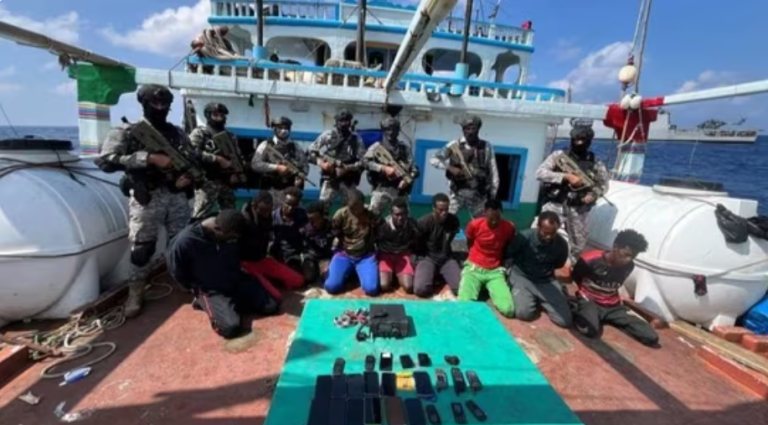
Around 800 miles off the coast of Kochi, the Indian Navy warship INS Sumitra saved the hijacked fishing vessel Al Naemi from Somali pirates in a significant mission. According to Indian Defense officials, the Al Naemi was successfully rescuing 19 Pakistani nationals while sailing off the east coast of Somalia.

https://twitter.com/ShivAroor/status/1752186342963126512?s=20

Within 24 hours, the Indian Navy conducted its second rescue operation. In its anti-piracy operations along the east coast of Somalia and the Gulf of Aden, the Indian Navy rescued another Iranian-flagged fishing vessel, the FV Iman, from Somali pirates onboarding 17 crew members.

The Marine Commandos of the Indian Navy participated in the effort to safely rescue the fishing boat’s crew. According to Indian Defense officials, “warships from the Indian Navy are deployed throughout the Indian Ocean region to provide safety and security in the area.”

The Indian Navy claimed that the warship INS Sumitra saved the hostages of 19 Pakistani nationals on board the fishing vessel after it was intercepted by pirates and action was taken to locate the distressed vessel.

The Iranian-flagged fishing vessel Iman sent out a distress message, prompting the Indian navy to send out its warship, INS Sumitra, which was on an anti-piracy patrol off the east coast of Somalia in the Gulf of Aden.

The hijackings off the coast of Somalia, which coincide with an increase in attacks by the Houthi rebels in Yemen, who are supported by Iran, have raised fears about a return of opportunistic pirates conducting raids in the Indian Ocean. Houthi gunmen have launched scores of attacks in the Red Sea and Gulf of Aden targeting Israeli-linked vessels in response to Israel’s war against the Palestinian militant group Hamas in Gaza.

Since international naval forces have been redirected into the Red Sea from the Gulf of Aden, there is concern that pirates will exploit the security gap, with the first successful case of Somali piracy since 2017 recorded in December.

The number of pirate attacks off the coast of Somalia peaked in 2011 when gunmen launched attacks up to 3,655 kilometres (2,270 miles) into the Indian Ocean. However, the attacks then sharply decreased when warships and commercial shipping deployed armed guards.

Resolute protest in Pak-occupied Gilgit-Baltistan continues despite revocation of wheat price decision

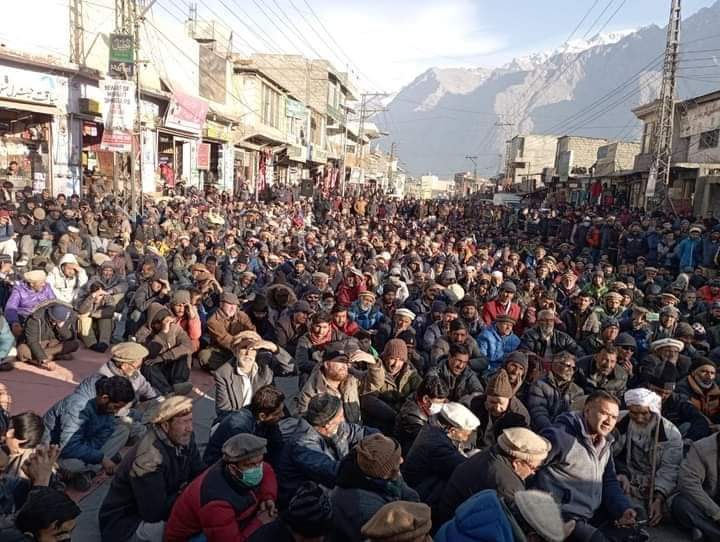
Pakistan occupied Gilgit Baltistan (POGB) seems again to be grappling with uncertainty after the occupying government issued an order to revoke the notification of December 26th, 2023, which increased the price of wheat from PKR 22 per kg to PKR 36 per kg.  

The uncertainty remains around the wheat price for which the Awami Action Committee was protesting, that is, PKR 7.5 per kg. This price was in force during the starting half of 2022 before starting to increase in a piecemeal way. The uncertainty also surrounds the future course of action of the Awami Action Committee, which, after protesting for one month, made blunt announcement that the protest has entered second phase and would end only, when the 15-point Charter of Demand would be fulfilled. Lastly, the uncertainty also remains surrounding the unity of the protestors, who endured the chilling winters to yield a collective and expansive protest under the aegis of Awami Action Committee.

As far as the wheat subsidy is concerned, the order only nullifies the December 26th notification, which means that still the demand is only partially met. More concerning is the fact that there is no clear assurance that the subsidy will continue and that there will be no future notification to increase the price again after everything goes normal. Simply put, after one month of historical protests, what POGB is getting is just an all show but no substance.

Nagar ends protest

However, the committee has rejected the latest order, making it clear that Pakistan’s deceptive redressal has no effect on the people. Awami Action Committee has outrightly denied the approval to such an order and reaffirmed to continue the protest with full intensity. One of the leaders of the protest, Baba Jan has termed the new order as a ‘lollipop.’ He said that Pakistan is trying to fool the populace of POGB by an order that almost has no weightage in terms of time scope.

He highlighted the earlier incidents where these tactics of Pakistan to diffuse the protests by these hollow promises had only added to the miseries of people. Apparently, he denied any end to the ongoing protest. But, Pakistan, may have failed to fool people with the order, it has certainly introduced a division in so-far intact protest. Reports suggest that the convoy from Nagar, which was coming to participate in Gilgit, has returned after the order of revocation was issued.  The march was led by Sheikh Mirza Ali, who has announced that the wheat subsidy reinstatement was their prime agenda and since it has been fulfilled, there is no need for marching towards Gilgit and rest of the demands would be put through dialogue and discussion.

While, the other regions and their protestors continue to escalate the protest until charter of demand is fulfilled. Advocate Ehsan Ali, one of the prominent leaders of Awami Action Committee has also confirmed that the protest would go on as planned. So, irrespective of whether Nagar convoy converges to Gilgit or not, the entire protest would only intensify and there remains a less possibility of an end to this protest until all the demands of POGB are met.

BLA Majeed Brigade launches operation Dara-e-Bolan in Mach & Bolan (POB) against Pak Army

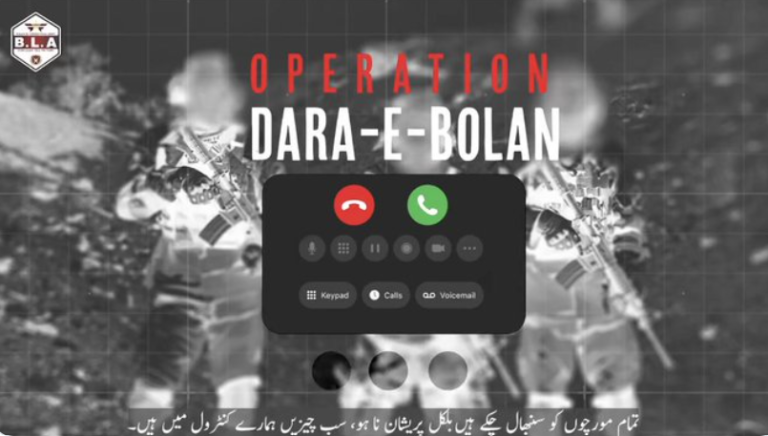
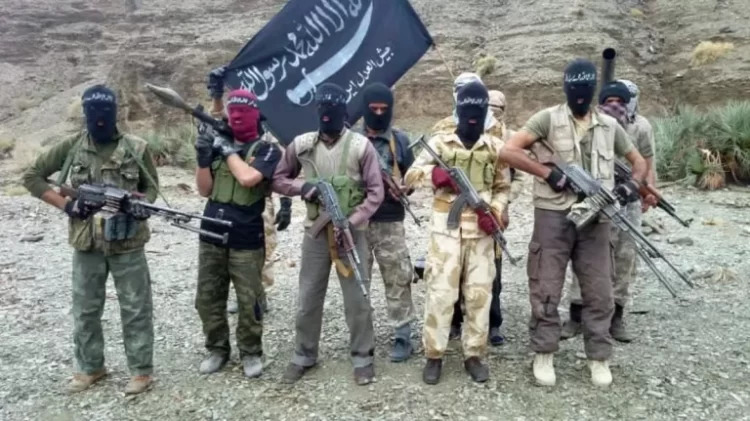
Recently, the Baloch Liberation Army (BLA) has begun “Operation Dara-e-Bolan” in the Mach and Bolan regions of Pak-occupied Balochistan. The BLA’s elite units such as the Majeed Brigade, the Special Tactical Operations Squad, the Fateh Squad, and the Intelligence Wing, are involved in this major armed operation.

Reportedly, Mach City witnessed a huge explosion followed by massive gunfire. Numerous Pak establishment structures and Mach Jail have been reported to sustained significant damage as a result of the operation. The BLA fighters have launched a total of 15 rocket attacks against the Pak Army in Mach City. It is believed that BLA forces have taken over several train stations and are fighting at the FC Commandant’s Office and Jail Colony, among other places.

Jeeyand Baloch, the spokesperson for the BLA, announced the commencement of the operation in a media statement. Because of the ongoing activities, he advised the people of Mach City and the surrounding areas to stay inside and stay off the highways.

Transportation has also been severely disrupted by the operation notably with armed individuals blocking the NH-65 national highway close to the Pinjra Bridge. Operation Dara-e-Bolan now covers an area of more than 70 km, and it includes highway blockades in Bolan as well as ongoing clashes in and around Mach. There has reportedly been a noticeable increase in the Pak Army in the region, with a sizable number of security forces moving from Quetta to Mach.

Subsequent updates suggest that some Pakistani Frontier Corps and Military checkpoints near Mach Cantonment and the Railway Station appear to have been taken over by armed BLA freedom fighters. This represents a significant shift in control over strategic positions in the region. The size of the BLA operation highlights its importance and makes it one of the biggest in Balochistan’s recent history. It specifically targets key locations like Mach jail, the railway station, and other Pak establishment structure.

The BLA spokesperson, Jeeyand Baloch, claimed in a recent statement that “at least 45 enemy personnel have so far been eliminated during BLA’s operation Dara-e-Bolan. The dead bodies of the killed troops are under our custody.” Additionally, he mentioned that some Pak Army levies had been detained but had since been released with warnings. He cautioned that if any of the Pak Army tries to become a hurdle during Operation Dara-e-Bolan they will be dealt with accordingly.

Operations like “Dare-e-Bolan” initiated by the freedom fighters of BLA underscores the deep-rooted struggle for freedom and recognition in the region of Pak-occupied Balochistan. The Baloch people have long sought independence, and the Pak Army has responded with a range of oppressive measures. The BLA’s actions highlight the determination of the Baloch people to resist oppression and achieve their aspirations for independence from Pakistan.

Since 27 March 1948, the Pakistan Army has been oppressing Baloch through daily home raids, disappearances, staged encounters, target killings, torture, humiliation at checkpoints, and kidnappings for ransom. The Pak Army is targeting and monitoring Baloch people, and anyone who has the potential to raise questions is either killed or abducted. 

Martyr Hav Abdul Majid: Brave son of Kashmir

0

The impressive number of gallantry awards announced by the Government of India on the eve of Republic Day 2024 reflects the raw guts and phenomenal spirit of sacrifice that exists within the entire rank and file of the Indian security forces. The highest gallantry award announced this year is the Kirti Charkra [KC], which is the second highest peacetime gallantry award], and the fact that three out of the six recipients are being conferred with this medal posthumously indicates its stringent qualifying parameters.

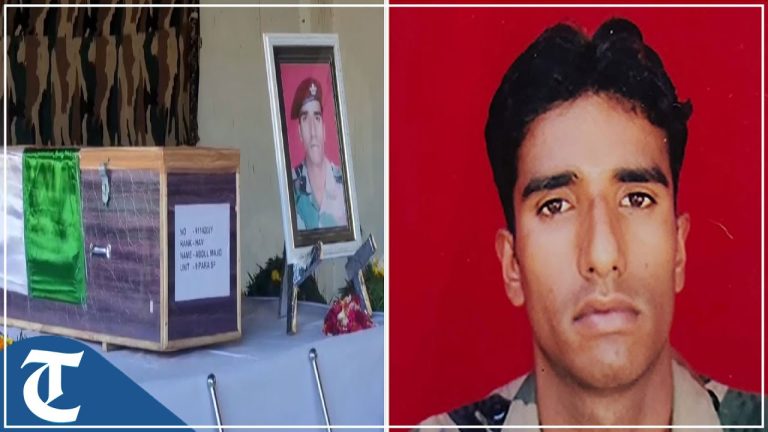
Havildar [Sergeant] Abdul Majid is one of the bravehearts being awarded KC posthumously. A resident of Ajote Village in the Haveli district of Poonch, J&K, Majid was a commando who had been serving with Special Forces [SF] in J&K since 2011. As its designation implies, SF are units trained for special operations, direct action, hostage rescue, counter-terrorism, unconventional warfare, special reconnaissance, foreign internal defence, counter-proliferation, counter-insurgency, seek and destroy and personnel recovery.

Considering the extremely dangerous nature of operations that SF units of the Indian army are required to undertake, induction into this elite force is purely voluntary, and even after entry, a commando is free to revert back to his parent unit by opting out whenever he so desires. Volunteers desirous of joining are put through an unbelievably rigorous selection process to assess their physical fitness and mental resilience. Even after selection, the operational performance of new entrants  is closely monitored in live situations during which they remain under probation and are accepted into the SF fold only after they measure up this organisation’s exacting standards. 

So, it’s only the best of the best that get the privilege of joining SF-and Majid was one of them.

For 12 years, Majid operated continuously in J&K and participated in numerous operations and fierce encounters in various sectors- from Bandipora, Kupwara and Baramulla districts of North Kashmir to the Poonch and Rajouri districts of South Kashmir. His superiors and peers speak highly about Majid’s professional acumen and recall that his exceptional courage and extraordinary concern for the safety of his brothers-in-arms was only exceeded by his humility and unassuming demeanour.

Having grown up hearing stories from elders on how peaceful life was in J&K before Pakistan Army’s spy agency Inter Services Intelligence [ISI] unleashed terrorism Majid experienced a stifling environment vitiated by Pakistan sponsored terrorism in his home state. Like many others, Majid represented the substantial section of Kashmiri youth who have realised that they are being used as cannon-fodder by Rawalpindi’s ongoing proxy war. Perhaps this is why Majid never missed an opportunity to fight Pakistan Army’s proxies, and did so without seeking fame or glory.

On November 22, 2023, an officer leading a search operation in the densely forested and mountainous area of Kalakot area in Rajouri district of J&K was fired upon by terrorists hiding in the thick undergrowth and critically injured. As the terrorists had occupied a dominating position and were bringing down effective fire, extricating the injured officer posed a major challenge, the SF squad which was being commanded by Majid was assigned this task. On reaching the site, Majid immediately took stock of the situation and realised that the situation demanded immediate intervention.

SF commandos commonly rely on the element of surprise by exploiting their exceptional fieldcraft skills and ability to traverse what to others may seem to be non-negotiable terrain. However, as the injured officer was losing blood fast, time was of critical importance and hence there was no other option but to press on despite being exposed to accurate fire. Realising the grave risk involved, Majid decided to personally undertake this task and braving the hail of bullets being fired by the terrorist, managed to shift the injured officer to a safe place and facilitated his evacuation.

Though he successfully completed the assigned task of extricating the injured officer, Majid decided to go ahead and with his commando squad eliminate the terrorist who by taking up an unassailable position inside a natural cave was potentially a grave threat to the security force personnel in the area. This daunting task was fraught with danger yet Majid remained unfazed and by ably manoeuvring his squad, managed to close-in with the cave inside which the terrorist had taken refuge.

Unfortunately, while leading his men from the front, Majid was hit by a bullet in his leg, but unmindful of his injury and despite profuse bleeding he crawled up to the mouth of the cave and lobbed a hand grenade. This forced the terrorist to rush outside and he did so with his AK rifle blazing. Realising that his squad members were exposed and hence in grave danger, Majid despite his grievous injury charged at and killed the terrorist at close quarters before succumbing to his injuries.

Majid’s devotion to duty, raw courage and utmost concern for the safety of the men under his command is in keeping with the age-old tradition of the Indian army which will inspire future generations. Islamabad keeps peddling the ludicrous narrative that the people of Kashmir en masse want to become part of Pakistan and has used every trick in the book to popularise the “Kashmir banega Pakistan” [Kashmir will become part of Kashmir] slogan amongst the public. 

Much to Rawalpindi’s chagrin, despite working overtime for more than three decades, ISI’s objective of creating anarchy in Kashmir hasn’t fructified. This is because Kashmir has no dearth of patriots like Majid who consider it their solemn duty and societal responsibility to defeat Pakistan backed terrorists responsible for spilling the blood of innocent Kashmiris, even if it demands making the  supreme sacrifice!

Jammu & Kashmir emerges as agri startup hub: Lavender Revolution paves the way

Union Minister Dr. Jitendra Singh has declared Jammu and Kashmir as a rapidly growing Agri Startup hub, urging local youth to actively participate in the ecosystem to contribute towards India’s goal of becoming the top economy in the next 25 years. The minister emphasized the critical role of Himalayan States in India’s future, highlighting the pioneering “Purple Revolution” in Jammu and Kashmir as a potential game-changer for the national economy.

Addressing a ‘Kisan Sammelan’ organized by CSIR-IIIM in Hiranagar, Dr. Jitendra Singh shared the success story of lavender farming in the Jammu region, revealing that over three thousand youth in J&K are now engaged in lavender cultivation, reaping the benefits of self-employment with earnings reaching into lakhs.

He emphasized a paradigm shift in the perception of StartUps, asserting that Jammu and Kashmir is rapidly emerging as an Agri Startup hub, breaking away from the notion that only IIT graduates or IT professionals are eligible for such ventures.

Agri Start Up hub J&K: The birthplace of “Purple Revolution”

The minister highlighted the recent Republic Day tableau featuring lavender farms of Bhaderwah in the national capital, symbolizing J&K as the birthplace of the “Purple Revolution.” This unique initiative is now inspiring other Himalayan States like Uttarakhand, Himachal Pradesh, and Nagaland.

Significantly, the foundation of this Agri Startup hub was laid in Bhaderwah, where lavender cultivation has been taken up on a large scale as part of the Aroma Mission by the Ministry of Science & Technology, Government of India. Dr. Jitendra Singh credited Prime Minister Modi’s personal efforts and the government’s support in providing training, industry linkages, and logistical aid to over 3000 lavender entrepreneurs, showcasing how lavender-made products from Bhaderwah are now being sold in thousands in states like Maharashtra, contributing significantly to the economy.

Accordingly, Dr. Jitendra Singh called for proactive measures in exploring unexplored or under-explored areas for potential economic value addition, highlighting the pivotal role of Jammu and Kashmir’s “Purple Revolution” in realizing PM Narendra Modi’s vision of a developed India by 2047.

Responding to inquiries about safety measures in border areas, especially Kathua, Dr. Jitendra Singh assured that bunkers have been constructed for residents to seek shelter during cross-border firing. He highlighted improvements in road connectivity up to the zero line and reservations provided to border residents along the International Border (IB).

Lahore Police detains peacefully protesting Pashtun activists including Rahiman Wazir

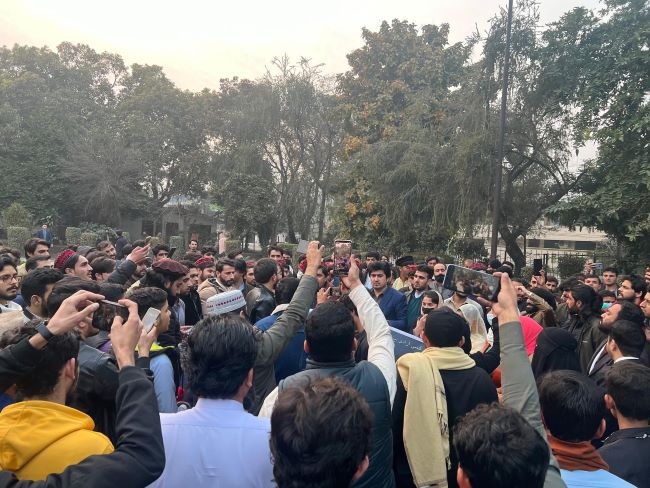
In a concerning turn of events, Lahore police launched a crackdown on peaceful protestors, detaining eight activists associated with the Pashtun Tahaffuz Movement (PTM), including the prominent leader Rahiman Wazir. The activists were participating in a peaceful protest at Liberty Chowk in Lahore on January 28th. The demonstration aimed to voice opposition against the alleged illegal detainment of PTM chief Manzoor Pashteen in Jhelum jail, Punjab.

The arrest of Manzoor Pashteen has raised eyebrows as there is no record of him being present in Jhelum or Chakwal, and no specific First Information Report (FIR) has been filed against him. Despite these facts, Jhelum Police and then Chakwal Police, seemingly acting on directives from the Pakistan Army, reportedly placed him under illegal Maintenance of Public Order (3MPO) orders. More recently, Pashteen has once again been booked under the controversial 3MPO, this time by the orders of Attock Deputy Commissioner.

The actions taken by the Lahore Police in detaining peaceful protestors and the PTM activists highlight a serious infringement on human rights in Pakistan. The incident underscores a growing pattern of impunity within the establishment, raising questions about the country’s commitment to democratic principles.

While the establishment runs a propaganda to project itself as a democracy, the recent crackdown on dissenting voices suggests a different reality. The prevailing lawlessness and the authoritarian approach of the regime are contributing to an environment where citizens’ rights are suppressed rather than protected.

Pak Army books Manzoor Pashteen under 3MPO for the third time

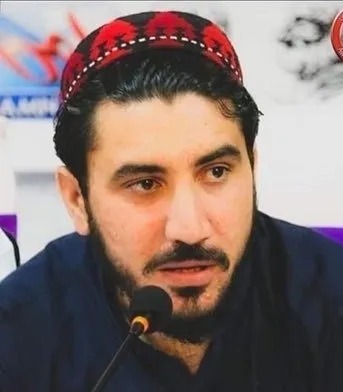
Once again, Manzoor Pashteen finds himself entangled in a controversial Maintenance of Public Order (3MPO) case, leading to his further incarceration. This time, the Deputy Commissioner (DC) of Attock has implicated him, marking the latest chapter in a series of arrests that expose a disturbing pattern of suppressing dissent in Pakistan.

Pashteen, the leader of the Pashtun Tahafuz Movement (PTM), had previously faced two consecutive arrests in fake cases orchestrated by Islamabad police. Despite being granted bail on January 5, his release was short-lived as Jhelum Police abducted him from the gates of Adiala prison, an illegal act with no communicated reason for detainment.

55 days, 4 bails, still detained

The initial abduction occurred on December 3 while Pashteen was enroute to Turbat to protest against the extrajudicial killing of Baloch youth. The Pakistan Army, wielding influence over law enforcement, ordered indiscriminate firing on his convoy, leading to his arrest. Subsequently, he was presented in the Islamabad court and falsely implicated in cases, undergoing prosecution in an Anti-Terrorism Court (ATC).

Despite being a civilian and protesting peacefully for the rights of Pashtuns, he was targeted and prosecuted in an Anti-Terrorism Court (ATC). After two consecutive detentions on fake charges, each time after getting bail, he was ultimately released from the clutches of Islamabad Police. However, as the Pakistan Army dictates the law in Pakistan, he was implicated in a Maintenance of Public Order (3MPO) case by Jhelum Police in Punjab. Later, after his 15-day detention expired, he was again implicated in a 3MPO case by Chakwal Police, and now he has been implicated for the third time in a 3MPO case by Attock police.

Absolute violation of law and order

Without a doubt, the consecutive arrests and eventually rendering him incarcerated in Punjab, the stronghold of the Pakistan Army, point towards an exploitation of the law by those controlling it. It has been more than 55 days that the PTM chief is detained, but he has not seen the sunrise despite getting bail four times. This absolute mockery of law and order by the authoritarian regime in Pakistan clearly validates the fact that Pakistan is no democracy, and there is no platform to raise a voice of dissent or the voice of rights.

Interestingly, the Pakistan Army always refrained from targeting the PTM chief because of being aware of the consequences of antagonizing the entire Pashtun community. However, since Pashteen was unifying his righteous struggle with that of the Baloch, it filled fear in the hearts of the brutal regime. They thought that these extrajudicial abductions and tormenting of law and order would weaken the unification. Little did they know, it would come back to them as a boomerang with an even more firm challenge.

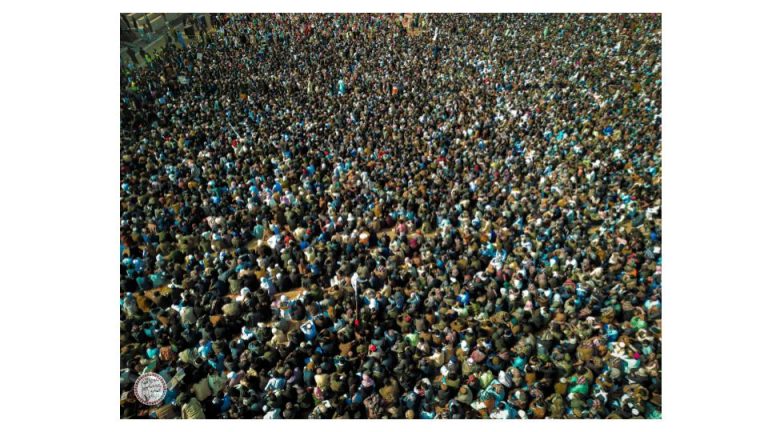
Of late, Pashtuns and Baloch have shared a platform in their struggle against oppression and persecution. A huge mass of people is out in Quetta, Chaman, and the rest of Balochistan and Pakhtunkhwa, raising their voice against Pakistani oppression.

With this impunity, the Pakistan Army and the whole establishment would eventually be left with nothing but to rub their hands out of humiliation.

Pashtuns join Baloch movement against Pak Army’s atrocities on Baloch & Pashtuns

Noor Bacha, a prominent member of The Pashtun Tahafuz Movement, has joined forces with the Baloch movement. At the Grand National Gathering in Shawani Stadium, Quetta, he expressed concerns about ongoing human rights violations in Pak-occupied Balochistan and KPK.

The Pashtun Nation has faced prolonged genocide, with a history marred by bloodshed. The Pak Army, establishing bases in Pashtun land, led to a dire situation with terrorists on one side and the Pak Army on the other. This resulted in widespread human rights violations, including extra-judicial arrests, disappearances, abductions, and indiscriminate killings.


Pashtun and human rights activists not only face abductions but also arbitrary killings. An alarming case is that of PTM Chief Manzoor Pashteen, abducted after a deadly attack on his convoy. He was on his way to participate in a protest against extrajudicial killings organized by Baloch Yekjehti Committee. Despite obtaining bail, he is continuously implicated in unrelated cases at different locations, highlighting the oppression against activists advocating for rights and peace.


This incident underscores the violent suppression of dissent and ethnic communities in Pakistan. The collaboration between the Pashtuns movement and Baloch movement holds the potential to end the genocide of these ethnic communities through unity and resistance.

Two injured during bomb attacks at election offices in Pak-occupied Balochistan

In a recent turn of events, two separate bomb attacks targeted offices of major political parties in Kalat and Mastung, Pak-occupied Balochistan. While no fatalities were reported, two individuals sustained injuries in the blasts.

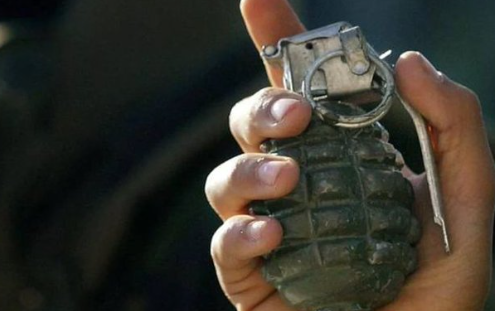
In Mastung, a hand grenade was hurled at the election camp office of the National Party. The explosion injured Ghulam Maheedi and Abdul Aziz, who were subsequently rushed to DHQ Hospital. Police responded cordoning off the area and launching a search operation.
Meanwhile, in the Kalat district’s tehsil of Manchhar, an unidentified group targeted the Pakistan Peoples Party’s election office with a similar hand grenade attack. No casualties were reported at this location as well.

These bomb attacks come amidst heightened tensions in the lead-up to Pakistan’s upcoming general elections. Pak-occupied-Balochistan, long plagued by violence by the Pak Army, has witnessed calls from some nationalist and freedom-fighters to boycott the polls. These groups have urged the public to abstain from participating in the electoral process.
Therefore, these incidents show the attempt of the freedom fighters to remove the facade of Pak Army by conducting rigged elections in Pak-occupied- Balochistan.

Iran-Pakistan standoff and Pakistan’s Jaish-ul-Adl connection

A Faustian Deal

In 2004, the then Pakistani President Gen Pervez Musharraf made a secret deal with the US allowing the Special Activities Division of Central Intelligence Agency [CIA] to use Pakistani airspace for its covert drone programme of targeting top ranking Al Qaeda terrorists. When Washington appeared apprehensive that details of this repugnant programme being compromised, Gen Musharraf allayed its fear by telling the CIA officer handling this issue that “in Pakistan, things fall out of the sky all the time.” 

Bending backwards to please Washington, Musharraf even went as far as agreeing that in order to conceal US involvement, the Pakistani military would take responsibility for the CIA drone attacks, but not without extracting his pound of flesh. He demanded that Washington should also target those whom the military dictator turned president felt were a threat to Pakistan or a personal embarrassment to him. And the first name of such a person that came to Musharraf’s mind was that of Afghan Taliban commander Nek Muhammad Wazir.

As the Afghan Taliban was Pakistan’s ally and Wazir had signed the famous Shakai peace agreement with the Pakistan Army in April 2004, Musharraf’s request for his elimination must have come as a big surprise for Washington. However, since this Taliban commander had vowed that despite this peace deal his ‘jihad’ [Holy war] against the US would continue, Washington gladly obliged. In less than two months after he had signed the peace agreement with the Pakistan Army, Wazir was ‘droned’ by the CIA and his blood sealed the secret US –Pak drone deal.

An Unpublicised Pakistani Airspace Violation

Little would Musharraf have known that his off-the-cuff remark about things falling out of the sky in Pakistan would prove prophetic, and in addition to the US and India, even Iran would carry out aerial strikes against terrorists and their facilities existing on Pakistani soil- with the January 16 Iranian air strike in  occupied Balochistan’s Panjgur district being the latest. While this attack has shocked many as well as generated a lot of discussion and debate, it’s not the first time that Tehran has carried out an aerial attack against terrorists based on Pakistani soil.

In November 2013, Pakistani media reported that a “rocket” fired from Iran territory had hit three houses in Kulahu village of Kech District, Pak-occupied Balochistan. While one of the targeted houses belonged to Mullah Omar Irani, a commander of the anti-Iran Sunni terrorist group Jaish-ul-Adl [JuA] or ‘army of justice’, the other two were owned by his close relatives. Though Tehran didn’t mention anything about this strike, but since JuA had claimed responsibility for the dastardly killing of 15 Iranian Pasdaran [Border Guards] just two months earlier, it’s obvious that Irani was the prime target of this rocket attack.

While one of his nieces was killed and six other relatives injured in this attack, Irani and his two sons survived this assassination attempt. Islamabad played down this brazen violation of its airspace by Tehran as is evident from the news report on this incident. Dawn merely mentions that “Balochistan Chief Minister Dr Abdul Malik Baloch took notice of the rocket attack from the Iranian side on a Pakistani area and said the provincial government had informed the federal government about it,” adding that the Balochistan Chief Minister had asked the Interior Minister to “take up the border violation with Iranian officials.”

An Elusive Fugitive

After its unsuccessful attempt to assassinate Irani, Tehran repeatedly demanded that Islamabad should apprehend the JuA commander and his fighters living in hideouts on Pakistani soil and hand them over to Iran, but Islamabad didn’t oblige. Some maintain that ever since he was targeted by Tehran, Irani had become extremely cautious due to which tracking his movements and ‘fixing’ his location had become virtually impossible. The pro-Pakistan lobby also contends that as Islamabad gains nothing by sponsoring terrorist activities in Iran, there’s no reason for it to provide safe sanctuaries to anti-Iran terrorist groups on its soil.

While this may well be true to some extent, it’s certainly not the only reason. There are numerous indications which endorse the view that Washington has been using JuA to wage asymmetric war against its arch-enemy Tehran. There are also convincing reports that since direct financing of this terrorist group would require congressional approval which besides being an uphill task portended the potential risk of being uncovered by the media, the CIA is instead routing funds to JuA through ISI.

This arrangement put Rawalpindi in a win-win situation. One, it earns Islamabad the goodwill of Washington; two, it allows ISI to siphon part of funds meant for JuA towards its proxy war in J&K. Lastly, it gives the Pakistan army a good degree of control over this terrorist group and makes it a ‘strategic asset’ that can conveniently be used against Iran as and when required. So, acting as a conduit for US funding of JuA makes much sense and is a good enough reason for Rawalpindi to patronise JuA.

Irani’s End

JuA commander Mullah Omar Irani and his two sons were gunned down by Pakistani security forces in an alleged encounter in Turbat Pak-occupied Balochistan district on November 17, 2020, and this should have silenced those claiming that he and his fighters were being sponsored by the Pakistan Army. It should also have drawn Tehran’s gratitude and appreciation as this JuA commander had the blood of many Iranians on his hands. However both things didn’t happen and instead, these killings only raised several more questions on the incident, which Rawalpindi hasn’t yet answered.

The first question is that when he knew that the Iranian security forces were baying for his blood and so was its Pakistani counterpart, why had he thrown caution to the wind by travelling in a single vehicle together with his two sons? Secondly, being a top level commander, why was Irani moving in a single vehicle without any escorts? Thirdly, even if he felt that movement of a single vehicle was a sound decision from the security point of view as it wouldn’t attract attention of the security forces, why didn’t Irani at least utilise the services of a driver?

Lastly, JuA is very particular when it comes to avenging the deaths of its fighters. Hence, its failure to even announce that it would seek retribution for the killing of their commander and his sons is rather surprising-unless of course the JuA leadership was afraid that it could face eviction from its safe sanctuaries on Pakistani soil if it antagonised Rawalpindi.

Decoding Irani’s Killing

It doesn’t require rocket science to deduce that Irani was able to evade arrest by Iranian security forces all along just because he was a protégé of the Pakistan Army.  It’s also no secret that he was the one who carried out the 2016 abduction of retired Indian Navy officer Kulbhushan Jadav from Chabahar area of Iran and handed him over to Pakistan Army’s spy agency Inter Services Intelligence [ISI] for an undisclosed sum of money.

Rawalpindi supporters would argue that why should the Pakistan Army have eliminated an ‘asset’ who has served it so well? The answer isn’t too hard to find.

Irani undoubtedly gave ISI the best ever ‘catch’ in its history. However, being planners and executors of this ‘black operation’, he and his sons were privy to the entire abduction process and the whole deal, which made them high security risks for the Pakistan Army’s spy agency. So, following Benjamin Franklin’s famous dictum that “three may keep a secret, if two of them are dead,” the elimination of Irani and his sons was inevitable. 

The deceased JuA commander and his sons should have known that they signed their own death warrant the day they abducted Jadhav on ISI’s orders!