Home Blog Page 149

Politicians try to delay wheat subsidy dispute in POGB amidst election calculations

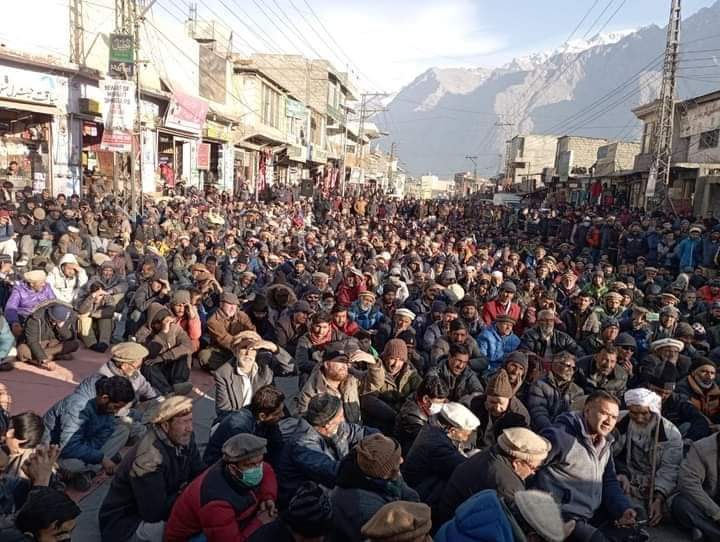
Amidst the ongoing massive protest of the Awami Action Committee against the abolition of wheat subsidy in Pakistan-occupied Gilgit Baltistan (POGB), the POGB council has reached out to the Prime Minister of Pakistan, who also happens to be the Chairman of POGB Council. They have demanded that the earlier price of wheat should be reinstated as the abolition of wheat subsidy has put financial burden over the region, making the condition of native populace worse. However, they have opinionated to defer the increase till February 8 general elections.

The letter also highlighted the unjust wheat price increase from Rs. 7.5/kg to Rs. 36/kg. The council argued that POGB is a far-flung area with no production of wheat. The region is facing massive unemployment and lacks basic amenities. And hence, the people of POGB are incapable of purchasing the costly wheat. Accordingly, the Council has demanded to revisit the wheat policy and defer the increased wheat price till the upcoming elections.
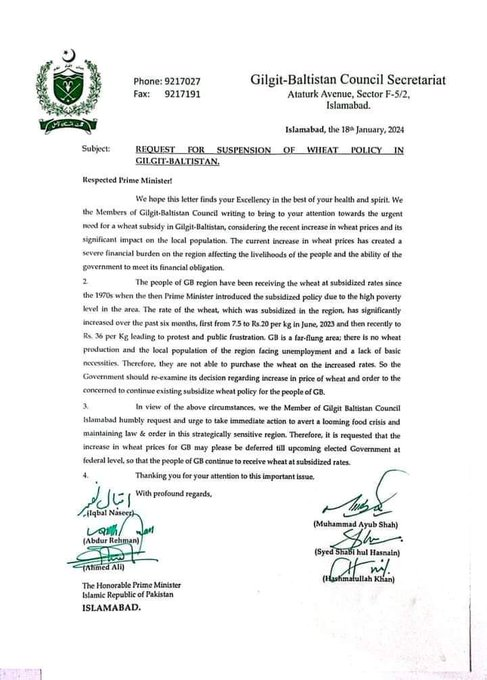
POGB Council letter to the caretaker PM of Pakistan (Photo: Social Media)

The POGB council’s letter comes after it extended support to the ongoing protests against removal of wheat subsidy, abolition of health card, increased taxes among others. While extending the support, POGB council affirmed to submit a summary to the caretaker PM recommending the continuous inflow of subsidized wheat into POGB.

Notably, the serious efforts by the local leaders and the POGB council started only after the strict warning of the protestors, demanding their rights while sitting on the streets of POGB in bone chilling winters, with the temperature as low as -50C.

Sinister interest of political leaders

However, the approach of POGB council which is headed by the PM of Pakistan seems no different than the puppet assembly and its leaders. Each of them is trying to diffuse the escalation of conflict till the upcoming general elections.

At first, POGB Assembly member Fathullah Khan negotiated with the protestors on Monday to end the protest till the upcoming February 8 general election, with a promise of raising the wheat subsidy issue with the newly formed occupying government. To which protestors denied vehemently.  

After the protestors strongly stood their ground, the POGB council, which extended support to the protest and their demands ranging from wheat subsidy to health card, also recommended to the caretaker PM of Pakistan to continue subsidy only till February 8. Simply put, after extending unconditional support and promising to raise the issue, POGB council reached out to the caretaker PM of Pakistan only for the wheat issue and that too to postpone the increase in price till February 8.

It simply means that the only motive of the POGB council and other political leaders is to diffuse the conflict so the question of wheat subsidy could not cast a shadow over the elections. Because if, wheat issue takes central importance, which it will take, the local leaders would neither be able to solve the issue, nor would they be able to show a red eye to their masters in Islamabad.

So there may be a chance that the subsidy is reinstated prior to the general elections, but that would only be to mislead the captivated population of POGB.   
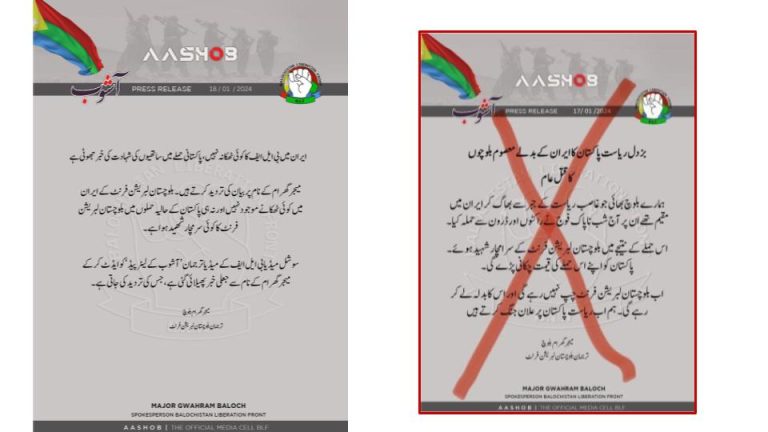
Baloch liberation groups reject Pakistan’s claims, asserts no bases in Iran

In a response to recent claims, the Baloch Liberation Army (BLA) has vehemently denied the existence of any sanctuaries in Iranian Balochistan. The BLA emphasized its unwavering commitment to not seeking assistance from Iran, the very occupant it opposes while fighting against the occupation in Pakistan.

Meanwhile, the Balochistan Liberation Front (BLF) has also issued a strong statement rejecting Pak Army’s claims. They asserted that the BLF has no bases in Iran, vehemently challenging the narrative put forth by Pakistan Army. Major Gwahram, a spokesperson of Baloch Liberation Front (BLF), rebuked reports of BLF comrades’ martyrdom in an alleged Pakistan attack.

He declared that there are no bases of the Baloch Liberation Front in Iran, debunking the false news circulating about the organization’s losses. Adding fuel to the fire, Major Gwahram pointed out that statements circulating were misleading. He clarified that there is no Balochistan Liberation Front presence in Iran, and none of its commanders had fallen victim to recent attacks in Pakistan.

Expressing concern, Major Gwahram highlighted the manipulation of BLF’s media statement by altering and branding it as a deliberate attempt to spread fake news. He raised questions about the authenticity of the edited statement.

Jaish al-Adl

In a separate development, a representative linked with the Jaish al-Adl, spoke to the German news agency DW. They also boldly refuted all claims made by the Iranian government about the organization in Eastern Balochistan, firmly stating that such allegations are baseless.

The Jaish al-Adl representative accused the Iranian government of consistently distorting facts to serve its interests. They criticized the position taken by the Iranian government regarding Jaish al-Adl.

Challenging the Revolutionary Guards, the Jaish al-Adl representative urged them to acknowledge that they are present on Iranian soil instead of searching for them in Eastern Balochistan. They emphasized Jaish al-Adl’s active advocacy for the rights of oppressed Baloch people in Iran, vehemently denying any affiliation with Pakistan.

The representative revealed that during recent operations by Iranian forces in Western Balochistan, no member of Jaish al-Adl suffered harm. They argued that the Revolutionary Guards’ actions, based on flawed information about the presence of organizational members, led to casualties in neighboring areas due to missiles fired in the wrong direction.

However, the representative clarified that Jaish al-Adl had accepted responsibility for the recent incident near Zahedan, where local deputy commander Colonel Hussain Ali Javidanfar and two guards lost their lives. This exchange of statements highlights the ongoing challenges faced by Baloch freedom fighters, who continue to defy Pakistan’s narrative regarding their presence in Western Balochistan.

Baloch refugee killed in Pak Army airstrike on Iran

Last night in a tragic incident, Baloch refugee Najma Baloch lost her life due to a series of airstrikes conducted by Pakistan’s fighter jets and drones in Iranian-administered Balochistan. The recent tensions between Iran and Pakistan have escalated the exchange of airstrikes resulting in the casualties of innocent civilians.

Reportedly, in Haqabad, situated in Iran’s Sistan and Balochistan province, indicate that a minimum of ten individuals lost their lives as a result of airstrikes conducted by Pakistan. The casualties comprised of three women, two men, and numerous children. The initial attack occurred at approximately 4 a.m., followed by a second strike at 6 a.m., targeting those assisting the victims of the first assault.

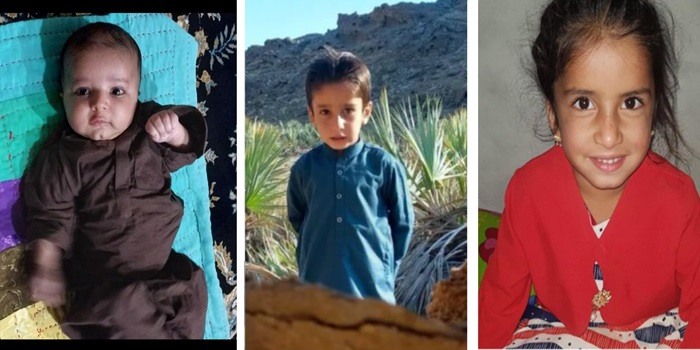
Among the identified deceased are Najma Baloch and the children Hani, Babar, and Chiragh Baloch. They were refugees from the Panjgur district in western Balochistan, fleeing the ongoing military operations in their hometown conducted by the Pakistani forces.

Pakistan’s Foreign Ministry acknowledged these airstrikes, describing them as a “series of highly coordinated and specifically targeted precision military strikes” carried out in Iran’s southeastern Sistan and Balochistan province. The operation, named “Marg Bar Sarmachar” (Death to Guerrilla Fighters), reportedly led to the allegedly deaths of several freedom fighters, as per Pakistan’s Foreign Ministry.

In response to the airstrikes, Tehran called for an immediate explanation from Pakistan. Alireza Marhamati, the deputy governor of Sistan and Baluchistan, confirmed that at least seven people were killed in the strikes. He verified that the deceased included three women and four children, all of whom were foreign nationals.

These airstrikes followed Iran’s missile and drone attacks in eastern Pak-ocuupied-Balochistan, resulting in the deaths of two Baloch children and causing multiple injuries. The ongoing regional conflict is only affecting the Baloch population on both sides of the border.

The heart-wrenching reality of the Haqabad airstrikes, coupled with the relentless Baloch genocide, paints a vivid picture of the painful life endured by the Baloch community. This is not just a crisis; it is a passionate plea for urgent international intervention.

J&K: Handwara police cautions public against contacting banned Muslim League & Hurriyat

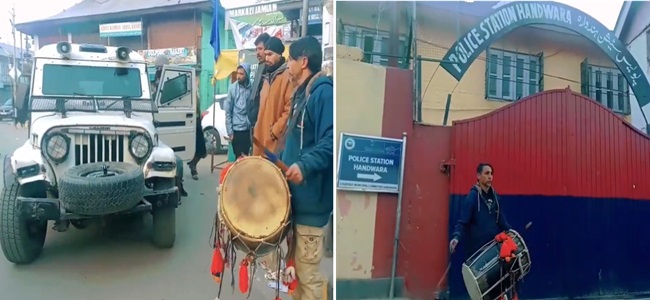
In the aftermath of the Union Home Minister’s recent declaration categorizing the Masarat Alam-led Muslim League as a separatist and anti-national organization, the Handwara police in Jammu and Kashmir have initiated a robust public awareness campaign. The police, utilizing loudspeakers and a drum beater for added emphasis, took to the streets to caution citizens against any involvement with the banned outfit, making it clear that such associations could lead to severe legal consequences.

The recorded announcement said, “This is to inform the citizens that Muslim League Jammu and Kashmir- Masarat Alam faction, by the notification number 5462E, dated 27-12-2023, has been declared unlawful organisation.” Handwara Police also warned people to refrain from making any contact with the banned organisation. Similarly, the announcement was also made regarding Tehreek-e Hurriyat.

Handwara Police also announced that Tehreek-e-Hurriyat, Jammu and Kashmir (TeH) has been declared as unlawful organisation by the government order having notification number SO5532E dated 31-12-2023. Accordingly, the police announced explicit warning, “Beware of making contact with the banned Hurriyat organization. Any contact may lead to legal action. Subsequently, to reinforce the message, posters were also pasted prominently across the Handwara town, cautioning people to steer away from the banned Hurriyat organization and emphasizing strict consequences for any attempted contact.

The Muslim League, based in Jammu and Kashmir, found itself officially outlawed on December 27 under the Unlawful Activities (Prevention) Act, 1967, for a period of five years. Beyond cautioning citizens, the Handwara police are actively encouraging the public to remain vigilant and promptly report any suspicious activity related to the banned organization. The authorities emphasize the vital role of community cooperation in maintaining peace and order in the region.

Opposition leader in Pak-occupied Gilgit-Baltistan strongly criticise abolition of wheat subsidy

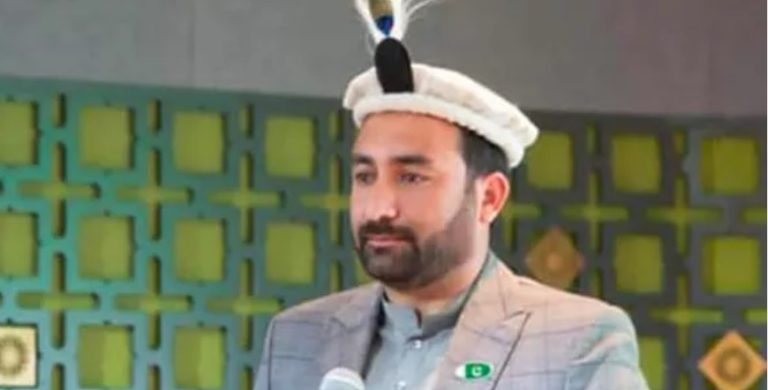
After months of keeping silence over the wheat price protest in Pakistan-occupied Gilgit-Baltistan (POGB), the opposition leader in the POGB’s puppet assembly has vocally criticized the abolition of wheat price subsidy. Muhammad Kazim Maisam, the leader of Majlis Wahadat-e-Muslimeen (MWM) also castigated Pakistan over the political and constitutional status of POGB.

In his statement, opposition leader Maisam highlighted the differentiation and alienation that POGB faced at the hands of Pakistan. He said, “Neither Gilgit Baltistan has representation in National Assembly nor in Senate. Gilgit Baltistan is neither the part of NFC award nor it is getting any facilities similar to citizens of Pakistan.”

Notably seven decades ago, Pakistan with its propagandas manipulated the minds of POGB people. Luring them by the dream of independence, Pakistan illegally occupied POGB and detached the region with its people from their righteous place in India. Since the region was disputed, Pakistan never did the accession to be politically correct. In fact, Pakistan exploited this political uncertainty of the region to squeeze out the resources, without assuming the responsibility of its people. On the other hand, it fueled the accession movement from the inside of POGB. Accordingly, Pakistan kept reaping the fruits from others misery, until the native people started getting aware.  

Now, when the people are at the receiving end of this malicious policy of Pakistan, they are becoming aware of the Pakistani deception.

Ongoing protest in POGB

Nonetheless, Maisam also highlighted the betrayal of Pakistan. He said, “The only movement in the world that is going on for the accession was Gilgit Baltistan. But PDM faction (a political coalition of PPP, PML-N and others), I thank you for carrying on the undemocratic practices like POJK and Pakistan.” MWM leader also underscored Pakistan’s interference in political system of POGB by mentioning Shahbaz Shareef’s monitoring of regime change operation in POGB.

Moreover, Maisam stated that thousands of people of POGB are on the streets because they have some issues. They are hurling slogans in favour of their demands. Despite these strong protests by the people in chilling winters, there has been no redressal.

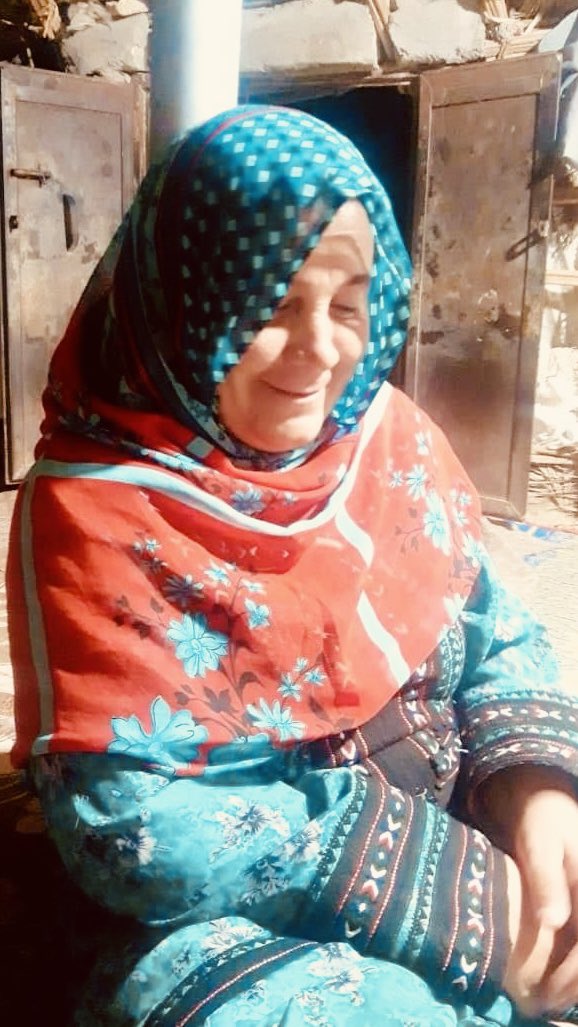
Considerably, after the abolition of subsidy on wheat prices and the imposition of higher taxes using the Finance Act 2023, people across POGB hit out on the streets. In the bone chilling winter with a temperature as low as -5o, the women and children left their homes to protest against increased wheat prices. This speaks volume about the subversion that the people of POGB are facing.  

However, Maisam’s statement comes a couple of days after the Gilgit Baltistan United Movement (GBUM) chief lambasted the local leaders for not voicing in favour of the people. He warned that those who would not align with the righteous demands of people would be considered as traitors.

Pakistan’s “precision military strike”on Iran kills three innocent siblings

Tensions between Iran and Pakistan have escalated following the exchanges of missile strikes in previous couple of days. After Iran attacked Pakistan-occupied Balochistan, Pakistan has retaliated with missile strike that took many innocent lives in Saravan. As of now the count of deceased has reached 9 which includes women and innocent children. Among one such heart wrenching casualties is an infant named Chiragh Dost.

The infant was asleep when the Pakistan Air Force jets carried out the strike, which led to his tragic demise. Along with Chiragh his two other siblings named Hani and Baabar also lost their lives in the Pakistani attack.

In its statement, Pakistan’s Foreign Ministry said that “a number of terrorists” were killed during the intelligence-based operation codenamed “Marg Bar Sarmachar.” While, Pakistan has referred to its launch through precision military strike, the killings of innocent lives portray a completely different picture.

Nonetheless, the airstrikes from both sides held simultaneously with the diplomatic exchanges in which, Iran has now summoned Pakistan’s charge d’ affairs, the top diplomat in Tehran.

Meanwhile, in anticipation of counter strikes, Islamabad is on high alert. It has issued a statement warning Iran. “Pakistan has appealed to Iran to exercise restraint and not to take any further steps which may worsen the situation,” the statement read.

Following the exchange of strikes, many countries including China, Turkey along with Afghanistan Taliban have called both the countries to exercise restraint. However, the probability of escalations still remains high. Unfortunately, both of the strikes have proved to be detrimental for the innocent people only and further escalation could also lead to the humanitarian crisis in Pakistan-occupied Balochistan.

BYC conducts first historic rally in Ornach in solidarity against Baloch genocide

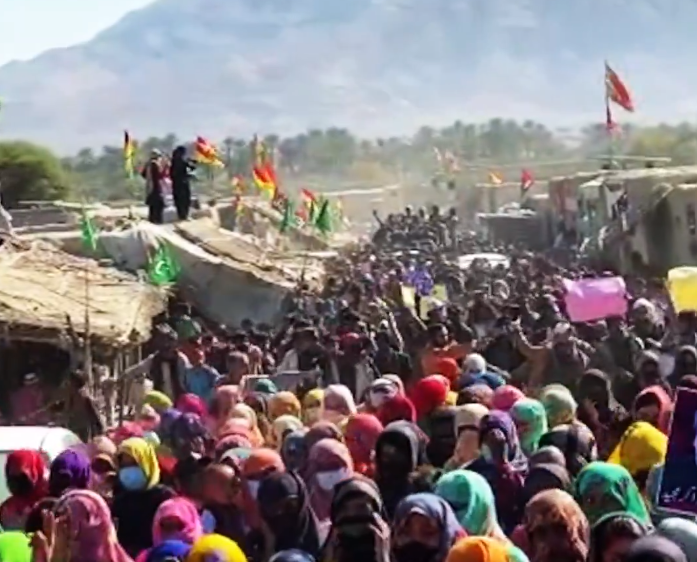
Recently, a massive protest broke out in Ornach, Pak-occupied Balochistan by the Baloch Yakjehti Committee (BYC). This is the first in Ornach’s history that women and children have taken part in a protest rally. This is a response to the call made by the BYC’s urge to express solidarity with the Baloch protestors in Islamabad.

Lately, several protests have been led by BYC in different places, such as a significant crowd including women and children demonstrated in Pasni, also tens of thousands of people including women and children rallied in Gwadar, a massive protest broke out in Tump, and similar protests were held in Gresha, Karkh, Dhadar and Khuzdar. These large-scale demonstrations help the Baloch community raise their voices and promote unity and solidarity.

As the movement gains momentum, the Baloch people are unified and committed to exposing and opposing the grave injustices committed by the Pak Army. These demonstrations are increasing the strength of the movement against Baloch genocide and the atrocities that the Baloch community faces from the oppressive Pak Army.

The Pak Army has been systematically assaulting humanity in Balochistan since March 27, 1948. Since then Baloch people have been subjected to brutality by regular home invasions, kidnappings for ransom, target killings, forced disappearances, torture etc.

JSFM holds National Rally against enforced disappearances of Sindhis, Baloch and Pashtuns

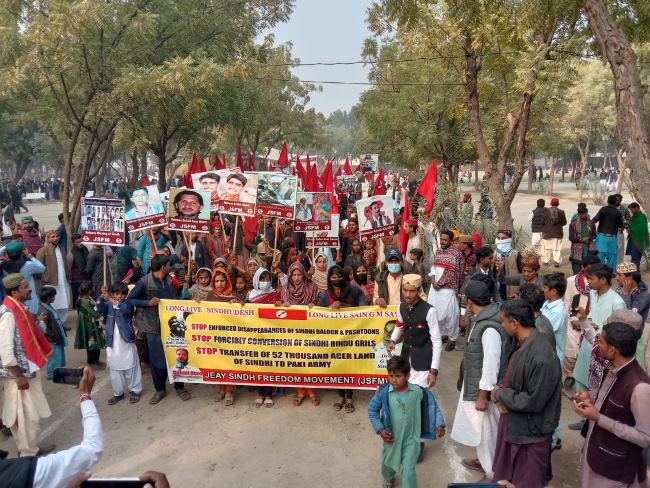
In a powerful display of solidarity, the Jeay Sindh Freedom Movement (JSFM) organized a National Rally in Sann City, Sindh, to vehemently condemn the alarming rise in enforced disappearances of Sindhi, Baloch, and Pashtun political workers. The rally brought together a multitude of activists, supporters, and community members from across Sindhudesh.

The participants, carrying banners and placards, marched through the streets of Sann City, chanting slogans demanding an end to the enforced disappearances and justice for the missing political workers. The atmosphere was charged with a collective determination to address the ongoing human rights violations in the region.

Baloch, Sindhis and Pashtuns fighting oppression

Interestingly, JSFM’s national rally comes at a time when the crimes against Sindhis and minority Hindus is on the rise in Sindh. Additionally, Baloch have also been protesting, holding long march and sit-in movement to fight the Pakistani oppression and the Baloch genocide. Similar is the case with Pashtuns, who are sitting at the Chaman border for more than 3 months demanding their rights while one of the most influential voice of Pashtuns named, Manzoor Pashteen has been abducted by the Pakistani establishment.

These horrendous violation of law and order in a coercively amalgamated geographical entity that calls itself Pakistan, call for a more unified community response based on national solidarity.

Earlier, the Pashtun Rights activists have also called for a unified approach of Baloch, Sindhis and Pashtuns against the oppression of the Pakistan Army led establishment. While joining the Baloch genocide long march in Quetta, Provincial President of PTM (Balochistan) Noor Bacha asked all the communities be it Sindhis, Baloch or Pashtun, to unite and give a tough fight for the rights of people. So, JSFM’s national rally commends the efforts of all the communities in unifying their struggle.

So, JSFM’s rally holds immense significance when it comes to the fight against persecution of these communities by Pakistan.

Pakistan launches retaliatory airstrike on Iran

In a retaliatory move, Pakistan conducted airstrikes within Iran, with the Pakistan Air Force reportedly targeting hideouts in Iranian territory where groups wanted by Pakistan were believed to be located.

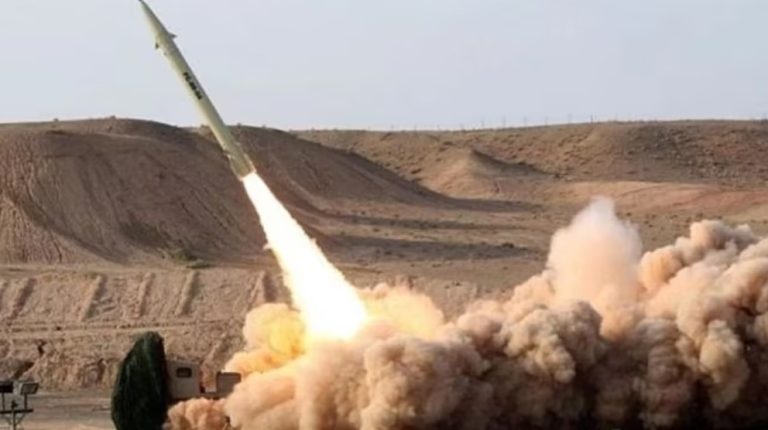
This action came after Tehran claimed to have used “precision missile and drone strikes” to destroy two important headquarters of Pak-sponsored Jaish al-Adl in Pakistan a day earlier. In reaction, Islamabad denounced the violation of its sovereignty as “completely unacceptable” and issued a warning of “severe consequences.”

As per the Iranian media reports, the attack led to the killings of 4 children and 3 women.

Official confirmation from Pakistan

According to a statement from the Pakistan foreign ministry, the country carried out a series of well-coordinated and specifically targeted military strikes against hideouts in the Sistan-Baluchistan province of Iran.

The statement mentioned the elimination of a “number of terrorists”, but it also acknowledged the unfortunate deaths of at least three women and four children in one of the explosions, clarifying that they were not Iranian nationals.

Reportedly, missiles launched from Pakistan hit a border village in Iran’s Sistan-Baluchistan province. Meanwhile, officials in Pakistan-occupied-Balochistan province, bordering Iran, confirmed that four missiles struck the Panjgur district near the border.
The missiles hit the village of Koh-i-Sabaz, approximately 50 kilometers (31 miles) inside Pak-occupied Balochistan.

At the World Economic Forum in Davos, Pakistan’s caretaker Prime Minister Anwar ul-Haq Kakar met with Iran’s Foreign Minister, Hossein Amir-Abdollahian. During this meeting, Iran announced its targeting of Jaish al-Adl bases inside Pakistan using drone and missile strikes.
Jaish al-Adl, labeled a “terrorist” organization by Iran, was established in 2012 and operates in Iran’s southeastern Sistan-Baluchistan province. The group has previously carried out numerous attacks on Iranian security forces, including an attack in December that resulted in the deaths of at least 11 police personnel.

Iran has accused Pakistan of harbouring Jaish al-Adl, a Sunni extremist group designated as a terrorist organization by Tehran. Pakistan, in turn, has accused Iran of supporting Baloch freedom fighters fighting against the Pakistani occupation of Balochistan.

BYC sparks massive protest in Pasni, Gwadar & Tump against Pak Army atrocities

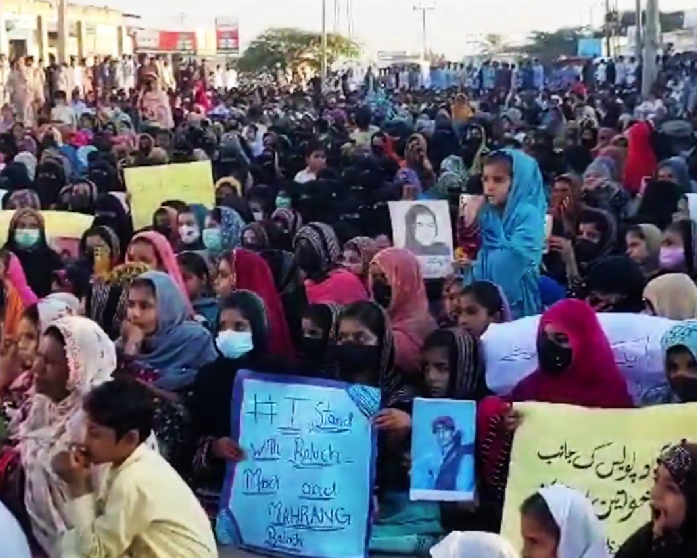
In response to the call made by the Baloch Yakjehti Committee (BYC), a significant crowd including women and children demonstrating powerful unity gathered in Pasni yesterday. Highlighting their shared concerns and determination to address the atrocities by the Pak Army.

Also, in response to BYC’s call to express solidarity with the Baloch protestors in Islamabad, tens of thousands of people including women and children rallied in Gwadar. This demonstrates the coordinated effort by the Baloch community and signalling a united front against the brutality of the Pak Army.

Baloch Yakjheti Committee also led a massive protest in Tump, majorly women and children led this protest. These massive rallies help the Baloch community to make their voices louder and foster a sense of unity and solidarity. This widespread support underscores the significance of these concerns not only locally but on a global scale, fostering a positive change.

Recently, BYC has led a series of protests and rallied in cities such as Gresha, Karkh, Dhadar and Khuzdar. This demonstrates the increasing strength of the movement against the Baloch genocide, with the call for justice resonating throughout the diverse landscapes of Pakistan-occupied Balochistan. This rally serves as a powerful expression of solidarity and unity in the face of difficulties.

The Pak Army is waging a systematic assault on humanity in Balochistan. Since March 27, 1948, the Baloch people have faced regular home invasions, kidnappings for ransom, target killings, forced disappearances, and torture. Exploitation has been directed towards the resource-rich provinces of Pakistan-occupied Balochistan, where the Pak Army is executing an evil plan to loot the region’s wealth.