Home Blog Page 170

NIA attaches property of a terror handler in Jammu and Kashmir

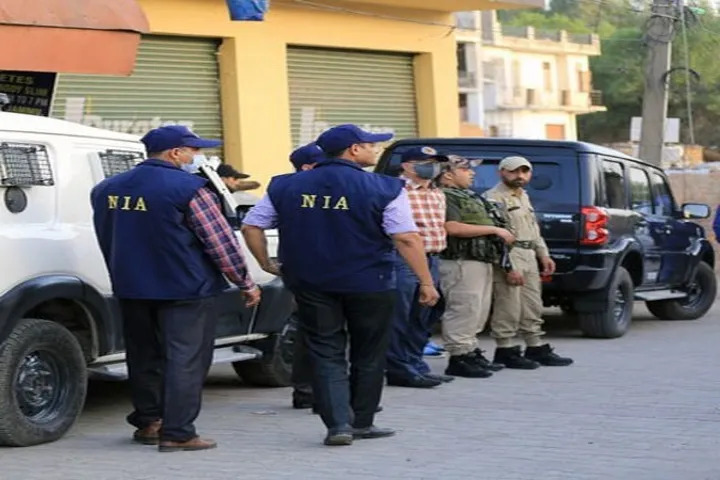
The National Investigation Agency (NIA) has attached the properties of Mohamma Yaseen, an operative associated with the banned terror group Tehreek ul Mujahideen (TuM). This action comes in connection with a case involving the seizure of arms, ammunition, explosives, and narcotics in Jammu and Kashmir.

An NIA spokesperson confirmed that four properties belonging to Yaseen have been attached following directives from the NIA Special Court in Jammu. These properties are located in Yaseen’s village, Dhrooti (Dhabi), situated in the Poonch district.

Yaseen was apprehended on December 27, 2020, and a significant cache of arms, ammunition, and explosives was seized from his possession during the arrest.

A chargesheet was filed on June 24, 2021, implicating Yaseen under various sections of the Indian Penal Code (IPC), Arms Act, Explosive Substances Act, and the Unlawful Activities (Prevention) Act [UA (P) Act].

The case originated with the arrest of Mohammad Mustafa, subsequently leading to the apprehension of Yaseen and another individual named Mohammad Farooq. This series of arrests revealed the possession of arms, ammunition, explosives, and narcotics by the accused individuals.

Further investigations conducted by the NIA uncovered a conspiracy involving plans to target religious sites in the Mendhar area using grenades.

Pak-occupied Gilgit-Baltistan observe complete strike against targeted wheat subsidy

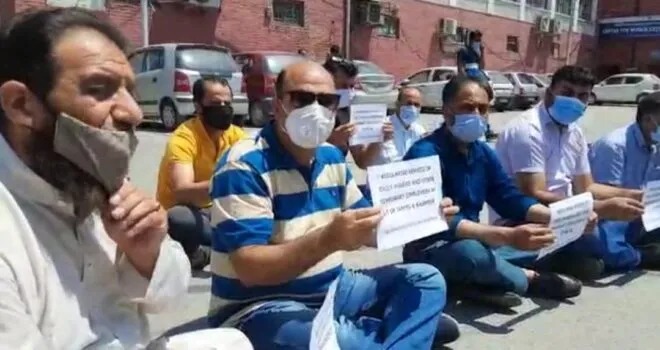
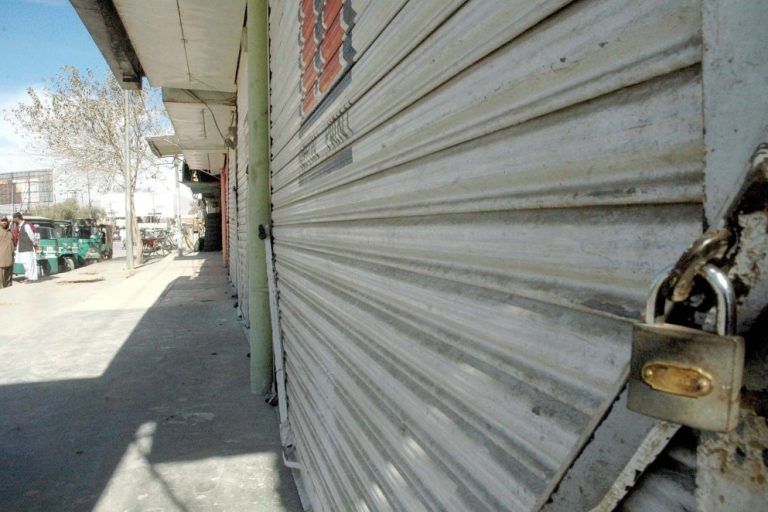
On the call of High Court Bar Association of the Pakistan Occupied Gilgit-Baltistan (POGB), the lawyers observed a complete strike against the ‘targeted wheat subsidy’ imposed by the occupying government. According to the decision, no lawyer attended the court.

Meanwhile, a protest rally was organized by Awami Action Committee in Yasin Ghizar, POGB. Thousands of people gathered in the protest and raised their voice against ending wheat subsidy. The protest comes a day after Awami Action Committee held a meeting and a press conference in Gilgit Press Club.

During the meeting, two factions of the Awami Action Committee united and it was decided to establish a core committee for joint struggle. Through the meeting, the committee sent a clear message to the occupying government. The committee outrightly rejected the price hike of wheat and announced to hold a regular movement against it.  

Additionally, Awami Action Committee also declared that it will only negotiate with the government in Pakistan and not with the occupying government. Considerably, the occupying government has reduced the wheat subsidy which has exerted extra pressure on the native civilians.

According to the official notification, the cost of wheat has increased from Rs. 20 to Rs. 52 while the subsidy has been reduced from Rs. 125.165 to Rs. 93.165. Furthermore, with latest announcement, the ‘targeted wheat subsidy’ was also imposed, according to which subsidy would only be provided to a section of people with less than a set bar of income while for rest it has been abolished.

UN expresses concern over mistreatment of Afghan civilians in Pakistan

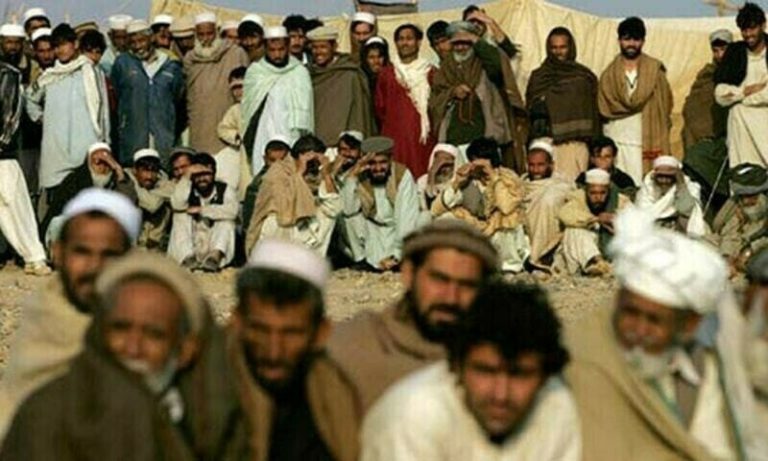
The UN human rights chief has expressed concern over reports of ill-treatment, arbitrary arrest, detention, destruction of property and personal belongings of Afghan civilians during their forced eviction from Pakistan.

According to the report, he said in a statement that this new development contradicts Pakistan’s decades-old tradition of generously hosting large numbers of Afghan refugees.
According to the statement, the UN Human Rights Office received complaints from Afghan towns across the border alleging that they were ill-treated by Pakistani authorities.

He further said that unjustified arrests and detentions are against Pakistan’s obligations under international law.

On the other hand, UNHCR and IOM, in a joint statement on the issue of arrest and detention of Afghan citizens from September 15 to November 11, said that the rate of arrest of Afghan civilians has increased significantly, while in this regard, travel Undocumented Afghan nationals are the most affected.
The United Nations High Commissioner for Human Rights appealed to the government of Pakistan to suspend the repatriation program of Afghan nationals until an individualized assessment procedure and other measures required under international law are implemented. .

He appealed to investigate complaints of abuse by law enforcement officers.

Pakistan Army abducts University student for protesting in occupied-Balochistan

Pakistan Army has abducted a student of Lasbela University of Agriculture, Water and Marine Sciences (LUAWMS) in Uthal, Pak-occupied Balochistan for protesting against the poor facilities in the university. The students have been staging a protest sit-in since last two days in favor of their demands.

According to the students, the armed men in two Vigo vehicles have abducted the student Samir after forcibly arresting him and taking him with them. Students are still protesting against the ongoing police violence, lathi charge firing and shelling in Uthal University. Yesterday around five o’clock in the morning, the students presented their charter of demand while holding a press conference.

They demanded that all the arrested students should be released immediately. Furthermore, action should be taken against the police officers who tortured, charged baton, did shelling and are involved corrupt administration. The students have also demanded that laptops and scholarships should be approved immediately.

Students warn university administration

They iterated that the students have a basic human and constitutional right to protest, and they should be provided basic rights. Any discrimination or discrimination against other students will not be tolerated. The students demanded that the notification of closure of Uthal University should be immediately withdrawn and the stream of education restored.

While Sameer Baloch was detained and disappeared by Pakistan forces yesterday, the students are demanding the university administration to ensure the recovery of Sameer Baloch and bring him back as soon as possible.

The students say that Samir Baloch is a second semester student of LUAWMS University who was forcibly abducted from the university by two armed men in a Vigo vehicle. They warned the university administration that if anything happens to Sameer Baloch, they would solely be responsible for it.

Pakistan Army has been often seen meddling in the affairs of universities in Balochistan and has abducted various students from time-to-time. It operates that way to ensure that no rights oriented voice gets raised in the occupied Balochistan as it perceives any such voice as a threat to its illegal occupation of the region that needs to be crushed at the nascent stage.

World on the Boil: Anything can happen, Anywhere, Anytime

Current Geo-Political Truisms:  Let me start by quoting Lord Palmerston, “in geo-politics, there are no permanent friends or enemies, there are only permanent interests”; second that morality, ethics, even humanitarian considerations are given scant consideration by nations when taking geo-political and strategic decisions, and when prosecuting wars. Thirdly, when a nation or even corporates or groups (even terrorist) create capabilities and capacities, intent can always change rapidly, to either favour or harm you. Importantly, a worrisome trend is the very value and potency of ‘Deterrence (even nuclear)’ both punitive and preventive is declining, which is clearly discernible by the actions of many underdeveloped and smaller powers cocking a snook at global powers (North Korea, Venezuela, Iran), both individually and collectively. Lastly, gradually but with increasing rapidity, the rules based, liberal, democratic world order is being challenged, mainly due to perceived loss of comprehensive national power (CNP) and power projection capabilities of USA and her allies (the ‘West’ is too stretched). Nations especially global peers following differing ideologies, autocracies/ dictatorships (China, Russia, Iran, North Korea), who find the ‘West’ highly hypocritical, are more freely adopting their non-conformist style of governance, with many more nations willing to join or support them, even from the global South. This is naturally causing a lot of geo-political turbulence.

In todays globalized world of ‘persistent engagements’, nations have no choice but to constantly cooperate, compete, confront and if national interest dictates even engage in conflict bilaterally and multi-laterally (4Cs); specially when the Big Three (USA, China, Russia)’ constantly engage in global intervention to maintain/ enhance their strategic space. Experts and philosophers waxed eloquent of more neutral Switzerlands and Swedens being created, living harmoniously and peacefully with no stated affiliations or ideologies; last heard both are eager to join one camp (NATO), shedding their very hard earned and respected neutrality. Within this cauldron, emerges ‘Rising Confident India’, which is slowly establishing itself as a mature, credible global balancing power. India has as many supporters as detractors, trying to ensure that India remains fixated in her own South Asian backyard with both external and internal challenges specially to her security and economy.

Recent Geo-Political Power Games: History is replete with confrontations and conflicts manufactured for geo-political objectives. During the height of the Cold War, most interventions/conflicts specially in the global South was a direct result of proxy manoeuvres to further political and economic influence and interests of the bipolar powers USA and erstwhile USSR (now Russia). With the rise of China to replace Russia, the dynamics is gradually evolving into a multi-polar world. Insurgencies, proxy war and mindless violence is a standout feature of current times. The list of nations facing instability, insurgency or conflict is long: Syria, Iraq, Nagorno-Karabakh, Myanmar, Ukraine, Israel-Hamas, and African nations (Burkina Faso, Burundi, Cameroon, the Central African Republic (CAR), Chad, the Democratic Republic of the Congo (DRC), Ethiopia, Kenya, Mali, Mozambique, Niger, Nigeria, Somalia, South Sudan and Sudan). The span and domains of the 4Cs have also expanded to both kinetic and non-kinetic to include the political, diplomatic, informational, military and economic (PDIME) verticals. Conflicts have expanded into the multi-domain spectrum ranging from the traditional land, sea, air to space, underwater, cyber, AI and quantum physics, information operations and psychological warfare. The escalatory ladder too has widened ranging from non-kinetic (economic, informational, legal, psychological) to sub-conventional, insurgencies, grey, 5G, local to full scale war with biological and nuclear wars manning the other end; which can lead to Armageddon. Interestingly, non-kinetic wars can cause physical and infrastructure casualties and damage, like sensitive or dramatic fake news on communal lines, can paralyse and disrupt normalcy, delay response from state and government security forces, and lead to riots and violence.

The war in Iraq for the mythical weapons of mass destruction (WMD) was for the control of oil, as are most geo-political moves in the Middle East. Russia was constantly provoked by NATO (war gamed by USA) until she attacked Ukraine perceiving it as an existential necessity. With Europe and EU arming themselves, and finding common cause in Europe against Russia, they can contain Russia, while USA turns her attention to the Indo-Pacific, Asia and specifically China to cut her down to size and thus maintain her sole super-power status for as long as possible. Negotiations, affiliations, alliances including defence pacts, are being created and dissolved with rapidity, further exacerbating the tense geo-political and security environment.

Global Scan of Ongoing Geo-Political Events: The Ukraine war is in attrition stage, with the Ukrainian counteroffensive generally stalling against prepared strong, Russian defensive positions. The Russians too are showing their renewed intent of consolidating their gains and stabilizing their territorial gains specially in the Donetsk and Luhansk regions extending towards Crimea. NATO is showing signs of internal discord and tiring of the war, especially regarding sustained logistical supply of weapon systems, munitions and training. Russia while weathering the storm of holistic support of NATO to Ukraine, will be badly singed by the end; and it could end up being a pyrrhic victory if and when it happens (currently we are set for another winter); with Russian economy in shambles along with her waning geo-political clout and standing.

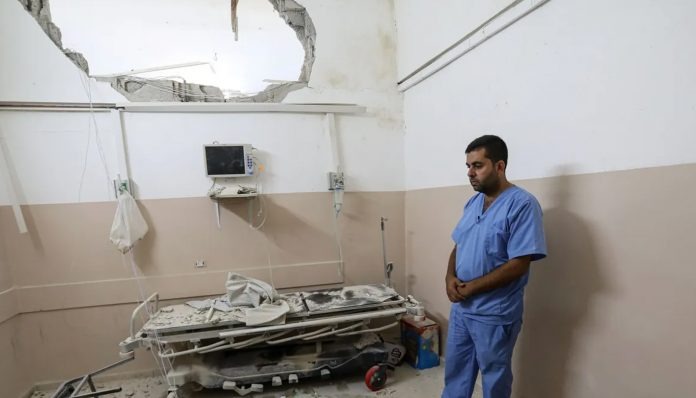
The Israel-Hamas war is in its fourth week, with Israeli retaliation of bombing Gaza Strip continuing in full swing. The much-anticipated ground offensive into Gaza by IDF to destroy Hamas, with possible US help (even actual involvement) has been kept leashed. Probing actions have started, where Israel Defence Forces (IDF) have sealed off Gaza even from the sea, as also separating Northern Gaza from the South physically. Ground operations have been slow to start, in part due to diplomatic pressure by USA to calm down international, regional and IDF temperatures and humanitarian considerations; and allow parleys to release maximum Israeli and international hostages. Minimum casualties to own forces is a key consideration, as urban warfare to flush out well prepared and entrenched Hamas from prepared tunneled defences will be a very laborious time-consuming process, costing tremendous human casualties. Tempering international and internal public opinion is a geo-political necessity; after all social media and disinformation campaigns are very effective and spread rapidly, which Israel has to factor in.

USA with great alacrity has deployed two carrier groups, which combined project a very impressive firepower and airpower capability, as also 2000 odd marines, and special forces in case required for ground operations. Ostensibly, the buildup is to discourage intervention by other regional and major powers from triggering a wider conflict; ironically, their very presence will provoke others, and create an unstable, trip wire like situation which can flare up and explode, and expedite the very conflagration which they are supposed to stop! China too has shown her presence by sailing at last count seven warships into the region. Visit of high-ranking Hamas officials to Moscow typically messages Russia’s continued influence in the region. Both Russia and China have jumped into the turbulent region, with the intention of increasing their influence and presence, and seize the opportunity to weaken the West specially USA. They are operating in multiple domains; economic, militarily stretch her resource, ideologically engage in disinformation and information operations to show the established Western order in poor light; which with ongoing events has already taken a beating within the global South who find Western actions highly parochial and hypocritical.

The multi-domain maneuvers and messaging from the West sound ominous and reminds analysts of the Iraq and Ukraine conflict. The increasing frequency of rhetoric, and fingers pointed at their historic adversary Iran for her active involvement and using her proxies (Hezbollah in Lebanon, Houthis in Yemen, Syria) to widen the conflict, tells an all too familiar tale. Is there more than meets the eye? Is it exploitation of a genuinely shocking Hamas attack to cut Iran to size from her growing regional clout; unthinkable but whispers in the corridor even talk of a larger geo-political great game to clean up the Middle East to suit Western aspirations. After all, it is no secret that Hamas was propped up by Israel (Netanyahu) to weaken PLO, and her infrastructure buildup of tunnels and procurement of armaments was also known. What Israel and USA did not anticipate, was that once capabilities are built up, intent of its employment can always change, to bite the hand which nourished the organization; history is replete with too many such examples like Afghan Mujahedeen, ISIS, Al Qaeda, terrorist organisations like TTP in Pakistan. The urban warfare setting indicates that it will be a slow, agonizing grind, with large human casualties both civil and military (horrendous infrastructure damage already seen), with no easy solutions, and with probability of conflict widening increasing with every passing day.

The China Seas continues to see frequent clashes between Chinese Naval ships accompanied with her humungous fishing and merchant fleet, with other claimants to the high seas, protecting their legitimate EEZ and disputed islands. Tensions between Philippines and China have escalated, with Philippines in no mood to back down. Recently a ship collision between their naval ships, which Philippines has asserted was a deliberate dangerous provocation, has exacerbated friction, bringing USA into the fray. USA has a defence pact with Philippines, and has warned China of its commitment to help Philippines militarily, in case things hot up, specially escalation to further confrontation leading to conflict.

The India – China Disputed Borders: Line of Actual Control (LAC) and Multi-Domain Contestations : China’s hegemonistic designs have from the beginning included India, by claiming the entire state of Arunachal Pradesh and Aksai Chin area in East Ladakh. Xi’s belligerence globally, and increasing intervention and interference in India’s immediate neighbourhood and internally too, coupled with her military penchant of salami slicing others territory has brought India-China relations to a low. Her military actions to creep and claim Indian territory, which resulted in violent clashes opposite Arunachal Pradesh, and fatal causalities in East Ladakh (Galvan), has broken the ‘Peace and Tranquility Treaty’ and brought relations to a nadir. India maintains that relations with China is dependent on China making peace along the borders (similar stance with Pakistan for indulging in cross-border terrorrism). Ironically, our trade has ballooned to over $100 billion since Galvan (maybe a lesson for India-Pakistan relations).

Three adversarial nuclear weapon states, collusive all-weather China-Pakistan relations having boundary dispute with India; massive mobilization and permanent positioning of military forces very close to the borders by all three, makes for a powder keg, which requires just a match/flare up either along the borders (IB, LoC, LAC), or even internally (attributed terror attack, multi-domain acts which are considered inimical to national interests like economic or diplomatic blackmail). A nuclear conflagration cannot be ruled out as enunciated by geo-political experts and Think Tanks. Not in the limelight presently, but South Asia plus China is indeed a very dangerous geo-political region. India should stay wary of China and watch every multi-domain indicator, lest China, using the world’s attention towards Ukraine and Middle East as an opportunity, tries a mis-adventure (even a localized or full shooting war) against India, with Pakistan opportunistically joining the fray.

The Indian Connection in the Global Cauldron: India has been navigating very choppy waters with numerous global geo-political upheavals, with great maturity, skill, dexterity and statesmanship. With her growing CNP and her credible neutral stance, she is being seen as a balancing power. While not out rightly condemning Russia, India has emphasized the necessity of respecting national sovereignty, which has been appreciated globally. India has strongly condemned the terrorist actions by Hamas, while firmly emphasizing her historic support to the two-nation solution. Global turbulence, Russian invasion of Ukraine and her strategic partnership with China, Chinese belligerence, multi-domain actions and military presence along the LAC, has compelled India to increasingly strengthen her strategic relationship with USA and her allies (QUAD, I2U2).

USA is finding it increasingly difficult to police the World; further diminished by decreasing CNP and military power projection capability. This is apparent in the Indo-Pacific region where China is slowly emerging as the power arbiter with more strengths than vulnerabilities, compared to USA, creating apprehension within nations of the region. USA desperately needs India to be a counter-balance in the region. This is a geo-political opportunity for India, but could well be a counter-weight or albatross inhibiting India’s traditional political independence and neutrality. After all, India should not get drawn or caught up in the cold war between USA and China. India needs to read the forthcoming challenges very astutely and navigate with precision and surety.

The Global ‘Nuclear Equilibrium’ is Falling Apart: Lastly and vitally, in addition to the geo-political and security storm striking the World, there is another dimension which is not logging much attention but which could cause a global disaster; the shifting unstable ‘nuclear equilibrium’.  With the nuclear surge in terms of capabilities and capacities by China, the global bi-polar nuclear balance too has been upended. China thinking like a peer to USA now wants parity in terms of warheads and credible second-strike capabilities too. China’s shift from a ‘counter value’ doctrine (targeting strategic non-military targets like cities, oil facilities) which placed primacy on credible second-strike capability by protection of warheads and delivery assets, thus not getting caught up in numbers possessed by adversaries; to a ‘counterforce doctrine’ (targeting strategic military targets like nuclear weapon silos, naval dockyards, military airfields) which gives primacy to number of warheads held by adversaries, ensuring capability of assured second strike capability against each adversary specifically, is fraught with danger. The stable bi-polar nuclear balance has become tri-polar and unpredictable, and some say ‘n’ polar, as other nations want entry to the exclusive club, further exacerbated by a nuclear arms race with NO formal global nuclear protocol. The volatile geo-political combination is a surefire recipe for a ‘Nuclear Armageddon’.

It is time to strengthen and refurbish the UN, for the global powers USA and China to work together on global common concerns, and for the rest of the World to get their act together. For India it could be an opportunity to further buttress her global balancing power status, by playing a mature, non-partisan leadership role.

(This article was first published in  www.bharatshakti.in)

Tibetan,Hong Kong & Uyghur activists unite against Xi Jinping’s dictatorship & oppression in San Francisco

On November 15, President Biden and Xi met in San Francisco before the APEC summit, however, amidst the geopolitical discussions, Tibetans, Hong Kong and Uyghur activists united in a powerful demonstration against Chinese President Xi Jinping and his authoritarian regime. As the world’s attention focused on the APEC Summit, these courageous individuals took a stand, their voices echoing the collective defiance of those oppressed by Xi’s iron grip. 20 y/o student activist Tsela vowed to remain on the flag pole outside the Hyatt waving the Tibetan flag until Dictator Xi arrived. Holding the Tibetan flag is a crime in Tibet and in China. A Tibetan flag flew over Xi’s dinner with the world’s top CEOs.

The voices of these activists can be witnessed echoing through the New York Times app. Opening the New York Times app right now, one will be greeted with a powerful message of unity and defiance. In addition, Tibetan flags flutter in the background, and the voice of Students for a Free Tibet (SFT) Executive Director Pema Doma fills the air, recounting how Tibetan, Hong Kong and Uyghur activists came together to rise up against Chinese President Xi Jinping and his authoritarian regime.

Shared Struggle

The persecution faced by these communities at the hands of the Chinese government is well documented. Tibetan people have long endured the harsh realities of the Chinese occupation of Tibet. Since the 1950s, when China annexed Tibet, the Tibetan people have faced a range of human rights abuses. They have endured the suppression of their culture and religious freedoms.

Hong Kongers have witnessed the erosion of their freedoms shrink under China’s control. They have seen how the ‘One Country, Two Systems’ promise has been broken, and the draconian National Security Law has made life very difficult under the Xi regime. Also, they witnessed a harsh crackdown from the Chinese government that led to the arrest and jail term of many activists.

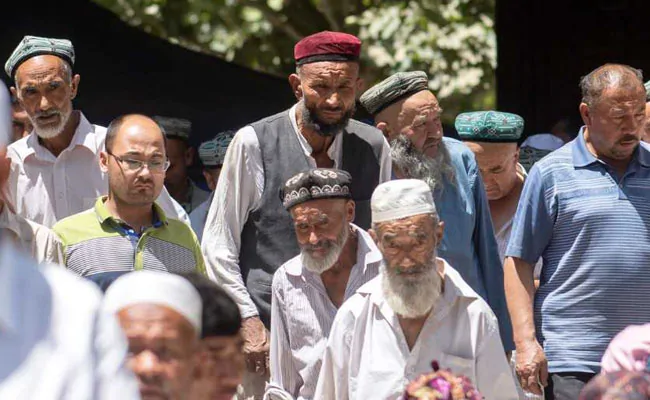
The Uyghurs, in the northwestern region of Xinjiang, are subjected to systematic persecution and cultural erasure. Chinese govt is indoctrinating Uyghurs with Chinese Communist Party ideology and forcing them to renounce their Islamic faith. They have been subjected to mass incarceration, forced labour, and the systematic destruction of their cultural identity.

Defying the Chinese Narrative

In the face of this relentless persecution, these three groups have found a common cause, united in their struggle for self-determination and fundamental human rights. These persecuted communities are raising their voices and calling on world leaders to hold China accountable for its human rights abuses and to stand in solidarity with those who are fighting for freedom and democracy.

Their message is clear: the persecution of Tibetan, Hong Konger, and Uyghur people cannot be ignored or swept under the rug. Their voices must be heard, and their demands for justice must be met. The world is watching, and the future of these communities hangs in the balance.

J&K: Security forces neutralise five Pak Army backed terrorists in an anti-terror ops

In an extensive anti-terror operation in Kulgam district of Jammu and Kashmir Indian security forces successfully neutralized five terrorists within the cordoned area. The operation, situated in the Samno area of Nehama village, encountered a resurgence of gunfire early Friday after a temporary lull overnight.

Initiated on Thursday, the meticulously planned cordon-and-search operation by security forces was in response to credible intelligence pointing to the presence of suspicious individuals in the vicinity.

What initially began as a routine search operation swiftly escalated into an intense exchange of fire between the terrorists and security personnel, leading to a defensive response from the forces.

Some reports have earlier confirmed that the terrorists were linked to Lashkar-e-Toiba.

The Kashmir Zone Police tweeted the successful neutralization of the terrorists, indicating a substantial achievement in the ongoing operation. Additionally, incriminating materials have been recovered from the encounter site.

Indian security forces have been vigilantly following the leads and taking every measure possible to eliminate the terrorists and their terror revival plan in the region. The recent encounter marks their dedication for the same.

Pakistan Army deploys significant forces across Pak-occupied Balochistan

In a notable development, the Pakistan Army has initiated a substantial deployment in the regions of Bolan, including Margat and Jaffarabad. Eyewitnesses have observed convoys of forces, comprising various vehicles, making their way towards the specified regions, indicating a large-scale military movement.

As of now, local authorities have refrained from offering any official statement or position regarding this deployment of Pakistan Army. The motive behind the military presence and the specific details of the operation remain undisclosed at this time. This development has sparked curiosity and speculation within the region, with residents and onlookers awaiting official clarification on the purpose and duration of this deployment.

Pakistan secures $700 million IMF payout But with tax hike conditions

The International Monetary Fund (IMF) announced on Wednesday that it has reached a staff-level agreement with the government. Pakistan met targets set by the International Monetary Fund for the next payout under a $3 billion bailout package, This pact grants Pakistan access to approximately $700 million IMF payout in funding, pending approval from the IMF’s executive board.

These loans play a pivotal role in preventing Pakistan from defaulting on its debt amidst dwindling foreign-exchange reserves and currency devaluation. The government has initiated corrective measures to rectify economic imbalances, including adjustments in gas prices and crackdowns on illegal dollar trading.

The $700 million IMF payout agreement marks a significant boost for Pakistan’s caretaker government, helmed by Prime Minister Anwaar-ul-Haq Kakar. He has been actively seeking $6.3 billion in loans from institutions like the World Bank, Asian Development Bank, and Islamic Development Bank, along with approximately $10 billion in bilateral funding from creditor nations.

IMF asks to increase tax collection

IMF Managing Director Kristalina Georgieva commended Pakistan’s commitment to adhering to the IMF program. However, the IMF’s statement cautioned about Pakistan’s vulnerability to substantial external risks, despite a nascent economic recovery.

Under the IMF program’s stipulations, Pakistan must elevate tax revenue, maintain fiscal discipline, and bolster reserves. The subsequent IMF review is slated for February, coinciding with Pakistan’s scheduled elections.

Earlier discussions led by Christina Georgieva, head of the IMF, acknowledged Pakistan’s steadfast adherence to the economic program amid challenging circumstances. However, she reiterated concerns about Pakistan’s meager tax collection, merely constituting 12% of the GDP. The IMF has proposed a 15% tax increase to mitigate this critical shortfall.

Baloch Liberation Army executes informant linked to recent drone attack by Pak Army

In a significant development, the Baloch Liberation Army (BLA) has executed f Maqbool Samalani, an informant linked to a recent drone attack on Baloch fighters by the Pakistan Army. The BLA’s spokesman, Jeeyand Baloch, issued a statement detailing the circumstances surrounding Samalani’s apprehension and subsequent execution.

According to the BLA, Samalani confessed to providing equipment to Baloch fighters in the Hanna Orok area two months prior to the drone attack. This equipment, unknown to the fighters, contained an electronic chip that enabled the Pakistan Army to track their movements. Utilizing this intelligence, the Army launched a drone attack on the Baloch fighters. However, the fighters’ security measures thwarted the attack, preventing any casualties.

Samalani’s actions, as revealed in his confession, were deemed treasonous by the Baloch National Court, which subsequently sentenced him to death. The BLA executed the sentence, emphasizing its unwavering commitment to safeguarding the Baloch people and their struggle for independence.

The Baloch people have long sought independence from Pakistan, and the Pakistan Army has responded with a range of oppressive measures, including drone attacks. The BLA’s actions highlight the determination of the Baloch people to resist oppression and achieve their aspirations for independence.

Since 27 March 1948, the Pakistan Army has been oppressing Baloch through daily home raids, disappearances, staged encounters, target killings, torture, humiliation at checkpoints, and kidnappings for ransom. The Pakistan Army is targeting and monitoring Baloch people, and anyone who has the potential to raise questions is either killed or abducted.