Home Blog Page 26

BLA kills twenty nine Pak Army soldiers in Kalat attack

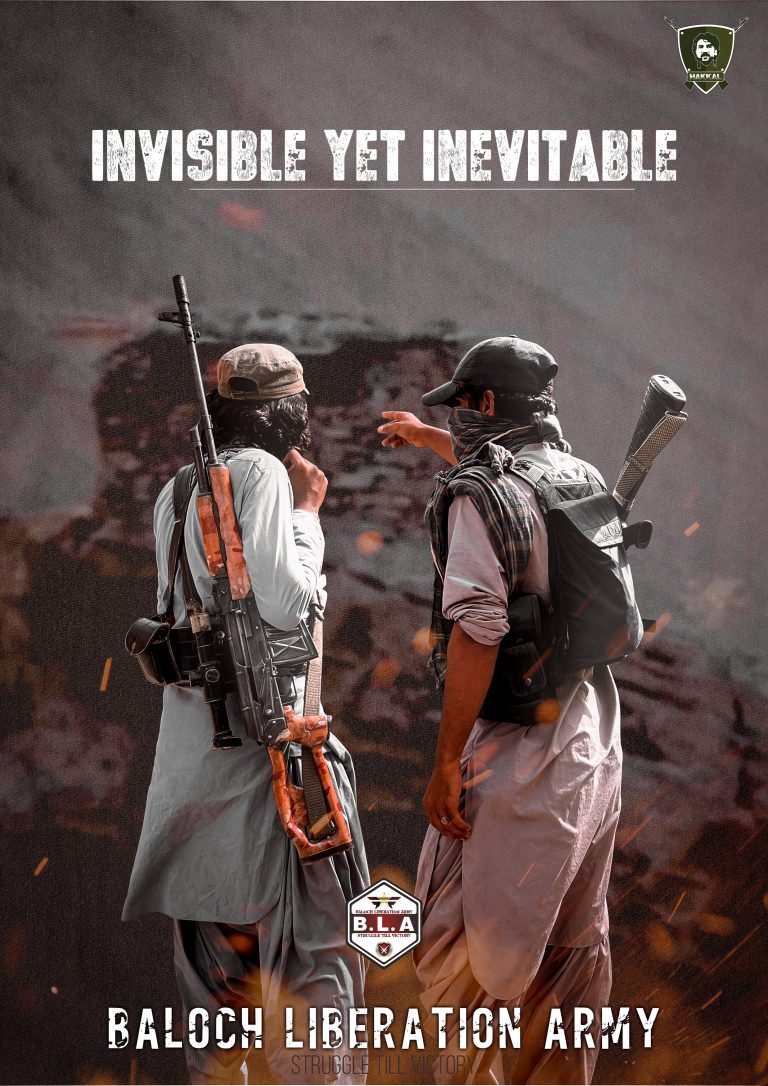
The Baloch Liberation Army (BLA) has launched a significant attack on a Pakistan Army camp in the Johan area of Kalat, in Pak-occupied-Balochistan, on the night of November 15-16. According to a statement issued by BLA spokesperson Jeeyand Baloch, the assault resulted in the deaths of at least 29 Pak soldiers, the seizure of military weapons and ammunition, and the capture of three outposts.

The attack was carried out by the BLA’s elite unit, the “Fateh Squad,” which launched a multi-pronged assault on the camp and surrounding outposts. The intense battle, which began around 9:00 p.m. and lasted until 1:00 a.m., saw Pak forces suffer heavy losses, with several soldiers reportedly fleeing under the cover of darkness.

This operation is part of a broader resistance movement against the decades of Pak military occupation and brutality since the forcible annexation of POB in 1948. Over the years, POB has witnessed a systematic crackdown by the Paki establishment, characterized by enforced disappearances, extrajudicial killings, and the infamous “kill and dump” policy, where the bodies of disappeared victims are discarded in remote areas. The region also suffers from a lack of basic infrastructure, healthcare, and education, further fueling discontent among the local population.

BLA Hits

Pro-independence organizations like the BLA have taken up arms to resist this colonial occupation and seek to liberate their motherland from Paki establishment’s control and protect region’s natural resources exploitation while leaving the local population impoverished and marginalized.

During the recent operation, the BLA mourned the loss of one of its fighters, Shahzaib Satakzai, also known as Gurk, who was killed in a direct confrontation. Hailing from Quetta, Shahzaib was a dedicated member of the Baloch liberation movement since 2018, contributing both as an urban guerrilla and on the mountainous frontlines. The BLA paid tribute to his contributions, describing him as a skilled tactician and loyal comrade.

The BLA stated that its fighters successfully withdrew to their headquarters after achieving their objectives in the attack and vowed to intensify their resistance against Pak forces. The group reiterated its commitment to freeing Balochistan from decades of oppression and systemic exploitation.

Islamist thugs kill Hindu pilgrim on way to Nankana Sahib in Pakistan

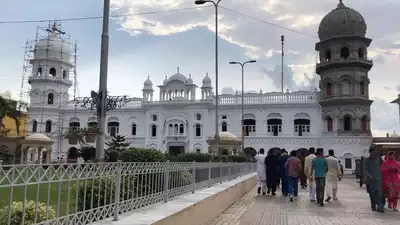
A Pakistani Hindu pilgrim, Rajesh Kumar, was tragically shot dead by robbers on Wednesday night while en route to the 555th birth anniversary celebrations of Guru Nanak Dev in Nankana Sahib, Pakistan, police reported on Friday.

Kumar, a resident of Larkana city in Sindh province, was traveling with his friend and brother-in-law from Lahore to Nankana Sahib when their vehicle was intercepted by three armed robbers on the Mananwala-Nankana Sahib Road, located approximately 60 kilometers from Lahore.

The gunmen stole PKR 4,50,000 from the trio and an additional PKR 10,000 from the driver. When Kumar attempted to resist, the robbers opened fire, hitting him before fleeing the scene, police said.

Following the incident, Kumar was rushed to a nearby hospital in critical condition, but he succumbed to his injuries on Thursday.

A case has been filed against the unidentified assailants under the relevant sections of the Pakistan Penal Code, based on a complaint lodged by Kumar’s brother-in-law.

The shooting occurred just days before the main event of Guru Nanak’s birth anniversary at Gurdwara Janamsthan Nankana Sahib, where over 2,500 Sikh pilgrims from India, along with local and foreign pilgrims, gathered to commemorate the occasion.

BRAS video reveals coordinated attacks on Pak Army and intelligence by Baloch fighters

In a bold display of resistance, Baloch freedom fighters, under the banner of Baloch Raaji Ajooi Sangar (BRAS), have released a video documenting a series of attacks on Pak Army positions, vehicles, and intelligence officials across Pak-occupied-Balochistan. The video, shared on the organization’s official Telegram channel, includes footage of operations carried out in multiple areas over the past few days, showing the growing resolve of the Baloch independence movement.

The footage reveals Baloch fidayeen, armed with modern weaponry and equipment, carrying out roadblocks and snap checks. Pakistan Army and intelligence officials were the primary targets of these attacks, highlighting the ongoing struggle between the Baloch people and Pakistan’s oppressive military regime. Among the attacks featured is a bomb blast on the convoy of Major Haseeb of the Pakistan Army, near Ziarat, illustrating the direct impact on Pakistan’s military leadership.

The video also includes scenes of Baloch fighters taking control of a police checkpoint near Ormara, seizing official weapons, and disrupting Pak authority in the region. These operations are part of a broader strategy by the Baloch resistance to reclaim control over their homeland and resist the long-standing suppression of their rights by the Paki establishment.

Baloch Khan, the spokesperson for BRAS, took responsibility for the attacks, emphasizing that they were a tribute to the sacrifices of Baloch martyrs. In a statement, Khan outlined how Pak forces, military installations, gas pipelines, vehicles transporting minerals, intelligence agency personnel, and operatives from Pak Army’s death squads were targeted in 45 separate attacks over a span of four days.

Video Released by BRAS 

The video also shows Baloch fighters engaging with local police officers, urging them to refrain from supporting the Pak Army’s brutal crackdown on the Baloch people. The fighters warn the police not to collaborate with the military in their oppressive actions against the Baloch population, calling for an end to the violence that has plagued the region for decades.

The release of this video comes as POB continues to be a hotbed of resistance, with the Pak military’s heavy-handed tactics failing to suppress the Baloch desire for autonomy. The Paki establishment’s continued refusal to acknowledge the rights of the Baloch people, alongside its military’s violent actions, has only fueled the Baloch nationalist movement, which has grown increasingly vocal and active in recent years.

For decades, the establishment and military have engaged in a systematic campaign of suppression against the Baloch people, marked by forced disappearances, extrajudicial killings, and the destruction of their culture and identity. The Baloch independence movement has continued to resist these atrocities, with organizations like BRAS spearheading the fight for an independent Balochistan.

India must be aggressive in debunking Pakistan’s false narrative on Kashmir

0

It’s no secret that Pakistan relies heavily on indiscriminate use of social media to not only peddle its pathetic Kashmir narrative but also beguile local youth into picking up guns for waging Rawalpindi’s proxy war in Jammu and Kashmir [J&K]. What’s rather surprising is that New Delhi seldom draws attention of the international community to this concerted disinformation campaign being masterminded by Pakistan Army’s spy agency Inter Services Intelligence [ISI].

One of India’s leading English daily recently carried an illuminating article on this subject, in which it’s mentioned that when compared with the same period last year, the more than 2,000 ‘posts of concern’  flagged during October-November, translates into more than a 22 percentage increase. Quoting “a senior officer in the central security establishment,” the report mentions that there was a concerted effort by Pakistan to use social media to “influence and exploit” impressionable minds and radicalise them for anti-national activities. 

This is indeed very disturbing news.

New Delhi’s Response

The newspaper report ibid merits deliberation for two reasons. Firstly, inclusion of factual data collated by security and intelligence agencies not only adds authenticity to the piece but also reveals the enormity of Pakistan’s sinister psychological warfare programme. Secondly, whereas the specific information provided has definitely been shared by those in the know with the author, the sources haven’t been named, which indicates that the powers-that-be are for reasons unknown, reluctant to make an official disclosure on this serious issue.

Though allowing Islamabad to get away with its falsehood on Kashmir appears inexplicable, New Delhi certainly must be having good reasons for its reticence on this issue. For one, trying to rebut patently absurd claims and untenable contentions doesn’t make good diplomatic sense and only gives the balderdash an additional lease of life. Two, Pakistan’s Foreign Ministry has a proclivity of shooting itself in the foot and as such giving it a long rope by keeping silent is in itself a good strategy.

Remember Foreign Minister Shah Mehmood Qureshi admitting on TV that abrogation of Article 370 was India’s “internal matter”? Or Foreign Minister Bilawal Bhutto Zardari publicly accepting that “We face a particularly uphill task to try and get Kashmir onto the centre of the agenda at the United Nations”? And by telling his countrymen that “You should not live-in [a] fool’s paradise” as “Nobody will be standing there [at UNSC] with garlands in hands,” didn’t Qureshi univocally acknowledge that Islamabad’s massive anti-Article 370 abrogation diplomatic offensive had no substance whatsoever?

Necessity of Counter Action

Islamabad’s bombast on the Kashmir issue may be ignored, but its efforts to beguile Kashmiri youth into joining terrorist ranks definitely needs to be countered through a comprehensive campaign aimed at increasing awareness that exposes Pakistan’s menacing game-plan in J&K. Today’s generation in Kashmir is largely unaware of how for more than three-and-a-half decades their people have been used as cannon-fodder by Pakistan just to further its self-serving interests.

Islamabad’s perfidy needs to be called out in order to save local youth of impressionable age from getting lured into terrorism, and this can best be done by citing facts revealed by those responsible for promoting this senseless violence.

Reality Check

Unlike Islamabad which has no other choice but to rely on disinformation for luring Kashmiri youth into terrorism, all that New Delhi has to do is to educate them of Pakistani perfidy by drawing their attention to true instances that unambiguously expose its double dealings. I am citing a couple of examples below:

Objective of “Armed Struggle”

Kashmiri youth need to realise that the actual objective of the so-called “armed struggle” in J&K is not  achieving “azadi” [freedom] but solely for the purpose of bleeding India ‘through a thousand cuts’. They should be aware that Pakistan’s ex President and former Army chief Gen Pervez Musharraf has himself admitted this during a TV interview by stating that “… Kashmiris who came to Pakistan received hero reception here. We used to train them and support them. We considered them as Mujahideen who will fight with the Indian Army...” [Emphasis added].

Hizbul Mujahideen chief Syed Salahuddin who also heads the United Jihad Council, an umbrella organisation created by ISI to coordinate the activities of terrorist groups fighting and calls upon young Kashmiris to pick up the gun has endorsed Gen Musharraf’s revelation that the so-called “armed struggle” has nothing to do with azadi as “we are fighting Pakistan’s war in Kashmir.” 

With both the former Pakistan Army chief who oversaw terrorist activities in J&K as well ISI’s minion Salahuddin who’s responsible for conducting terrorist actions in this region admitting that the aim of its so-called “armed struggle” in Kashmir is solely to wage a proxy war against India, Kashmiri youth need to more careful and not end up being fooled into being used as pawns by Rawalpindi.  

Assassinations

The youth should be reminded that ISI is responsible for assassinating those Kashmiri leaders who opposed Pakistan’s interference in Kashmir. This is evident from former All Parties Hurriyat Conference [APHC] chairman Prof Abdul Ghani Bhat’s 2011 revelation that J&K Peoples Conference chairman Abdul Ghani Lone, All J&K Awami Action Committee chairman Mirwaiz Maulvi Mohammad Farooq and J&K Liberation Front [JKLF] ideologue Prof Abdul Ahad Wani “were not killed by the Army or the police-they were targeted by our own people.”

Even Pakistan based JKLF founder Amanullah Khan has gone on record admitting that the ISI created HM terrorist group espousing Kashmir’s merger with Pakistan had killed more JKLF officials than Indian security forces. In an interview given to Arif Jamal, author of a seminal book on terrorism in J&K [Shadow War: The Untold Story of Jihad in Kashmir] Rawalpindi based HM commander Ajmal Khan claimed that his outfit had eliminated “about 7,000 political rivals [mainly JKLF cadres]”. However, Masood Sarfraz, a former close confidante of Salahuddin maintains that “the actual number [of Kashmiris killed by HM] is many times higher.”

Pro Pakistan Camp’s Doublespeak

The defining feature of the ISI sponsored political as well as military campaign in Kashmir is that while both APHC leaders and terrorist commanders demand others to make sacrifices, they themselves conveniently keep their own kith and kin out of harm’s way. For example, though senior APHC leader SAS Geelani maintained that We [APHC] never denied or ignored the role of gun[s] in our struggle,” he ironically never made any of his sons join any terrorist group.

Instead, in 2016, Geelani’s grandson suddenly landed a cushy government job as research officer in Sher-e-Kashmir International Convention Centre in a gazetted grade equivalent position that had been lying vacant since 2005. There is strong evidence to suggest that the then Mehbooba Mufti government offered Geelani’s grandson this job as a quid-pro-quo for the APHC patriarch’s indulgence in stopping the violence that erupted after Hizbul Mujahideen commander Buran Wani’s killing in an encounter. Such underhand deals are not uncommon and even Hizbul Mujahideen chief Salahuddin reportedly got a seat in a medical college for his son in a similar sweetheart deal brokered by J&K’s Intelligence Bureau [IB] chief and approved by the then Chief Minister Farooq Abdullah!

Salahuddin proudly accepts motivating Kashmiri youth into picking up the gun by assuring each aspirant that by doing “he would get into the real life after this death and he would get peace. Khuda usse raazi hoga” [Allah would be pleased with him].

However, isn’t it strange that the Hizbul Mujahideen chief has cleverly ensured that his own sons don’t get a chance to get into “real life” after death and earn divine blessings? Rather than picking up the gun, two of his sons had instead taken up jobs and served the same government that Salahuddin so vehemently accuses of strengthening what he perceives is New Delhi’s ‘forcible occupation’ of J&K!

Additional Issues

There’s no dearth of live examples that explicitly prove that despite all its emotional rhetoric, Pakistan has no love lost for the people of Kashmir.  How does the recent targeted killing spate of migrant workers and grenade attack on innocent civilians in a local flea market by ISI sponsored terrorists further the so-called ‘Kashmir cause’ defies comprehension. This unsettling case in point leaves no scope for any doubts that other than creating mayhem and a heightened sense of insecurity amongst locals and tourists, such violence achieves nothing else.

If such aimless violence continues, it will certainly dissuade tourists from coming to Kashmir and this in turn will adversely impact thousands of locals dependent on the tourism industry. The moot point is that if Pakistan really cares for the wellbeing of Kashmiris as it so vociferously claims, then would it precipitate conditions that deprive locals of their livelihood and order grenade attacks on Kashmiris? So, it’s abundantly clear that for Islamabad, creating an illusion to buttress its ludicrous claim that normalcy eludes J&K is more important than the safety and wellbeing of Kashmiris.

Adolf Hitler’s Propaganda Minister Joseph Goebbels had rightly opined that “If you tell a lie big enough and keep repeating it, people will eventually come to believe it,” and that’s why New Delhi cannot afford to be complacent. Pakistan is waging a multi-dimensional proxy war against India and as such every move that it makes needs to be appropriately addressed and befittingly replied to.


Pakistani dacoits abduct Hindu businessman in broad daylight in Sindh

In a disturbing escalation of violence, a Hindu businessman’s son, Rajkumar, was abducted in broad daylight from his factory in Deramore, Kashmore, Sindh, by Islamists armed robbers demanding a ransom. This latest abduction, which took place in full view of the public, highlights the ongoing crisis faced by Hindus and other minorities in Pakistan, particularly in Sindh, where such incidents have become all too common.

The abduction follows a similar case in March, when another Hindu businessman from Kashmore exposed an abduction plot orchestrated by local dacoits — notorious criminals operating with impunity in the region. These dacoits, who have targeted the Hindu and Christian communities for years, demand exorbitant ransoms, often amounting to millions, from families already living under the weight of poverty and fear.

What is even more troubling is the open connection between the criminal gangs and the political establishment in Sindh. The dacoits frequently operate under the protection and influence of feudal lords, local politicians, and other powerful figures, making it nearly impossible for victims to seek justice. In many cases, the local authorities — including the military — have failed to take meaningful action, allowing the crimes to persist and leaving the minority communities abandoned.

These abductions and the subsequent ransom demands have become a plague for Hindus, Christians, and other vulnerable groups in Pakistan. The lack of accountability and the apparent complicity of the Pak Army and the Punjabi political elite in allowing such violence against minorities to go unchecked underscores the systemic abuse and oppression faced by these communities. The feudal and political nexus that protects these dacoits further highlights the chaotic environment the minorities live in which is deeply rooted issues of religious intolerance, abductions, and exploitation.

Quetta police use tear gas,raid Bolan medical college & arrests Baloch students

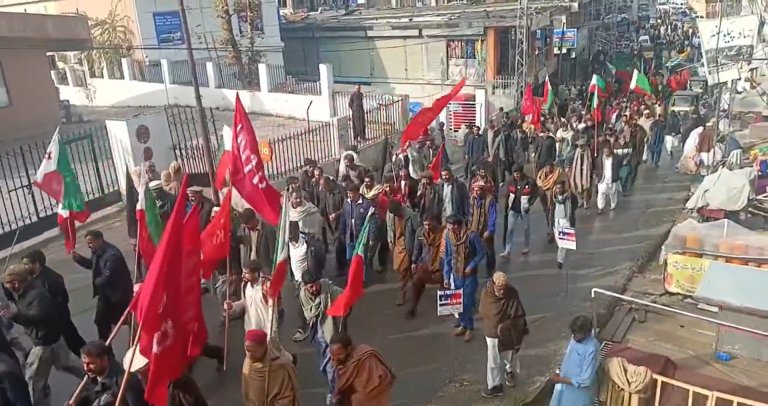
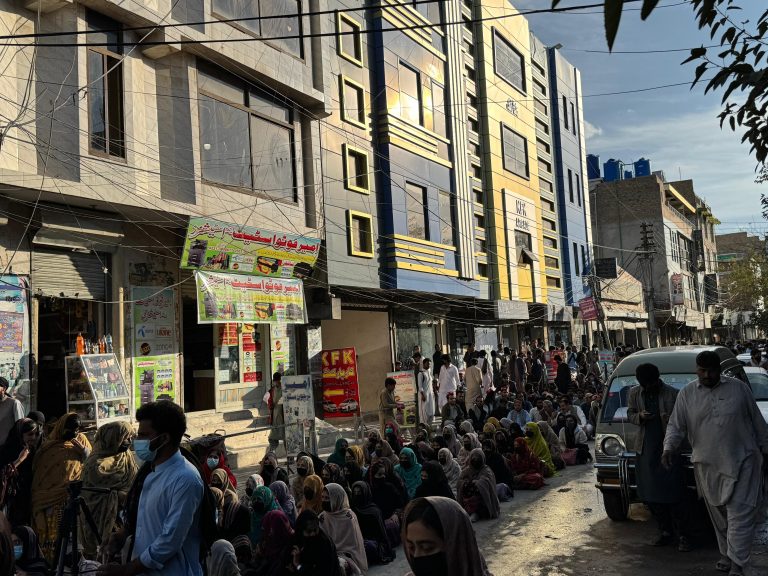
Hundreds of Baloch students took to the streets in Quetta this week, protesting the violent crackdown by Quetta police on Bolan Medical College (BMC) hostels that left dozens injured and led to the arrest of over a hundred students. Angered by the aggressive raid, the students rallied outside the college gates, demanding the release of their peers who were detained during the incident.

The protests erupted following Wednesday’s police raid, where officers reportedly stormed the BMC hostel, forcibly entering students’ rooms, dragging them out, and indiscriminately baton-charging those who resisted. The police crackdown, which escalated into a violent confrontation, led to injuries among several students, including females, as well as the arrest of many others, sparking widespread outrage among the Baloch student community.

Students gathered at the BMC gates, holding a peaceful sit-in and calling for the release of their detained colleagues, only to face a second wave of violence as police once again used tear gas and baton charges to disperse the crowd. Despite the peaceful nature of the protest, authorities intensified their actions, resulting in injuries and renewed clashes as students resisted police efforts to suppress their demonstration.

Brutal Force on Baloch Students

The situation took a new turn when students blocked Brewery Road near Golimar Chowk to amplify their demands, but police intervened with further force, using tear gas to scatter the protesters. Clashes between student groups earlier in the day had reportedly prompted police action, yet the scale of violence and the force used against protesting students has since drawn sharp criticism.

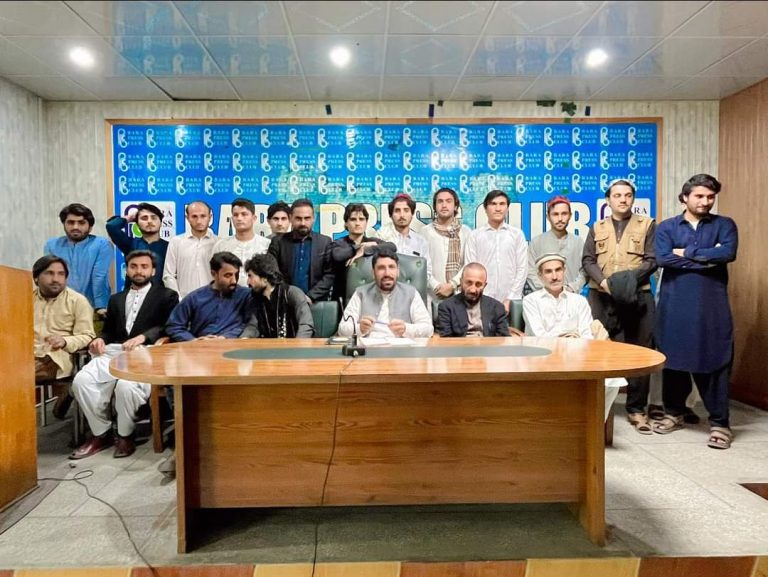
Student organizations, including the Baloch Students Action Committee, Pashtun Students Federation, Baloch Students Organization, BSO Pajjar, and Pashtunkhwa Students Organization, condemned the raid and subsequent police brutality. Political leaders such as Ghulam Nabi Mari of BNP, Asghar Khan Achakzai from ANP, Dr. Ishaq Baloch of the National Party, and Gulzadi Baloch of BYC joined the protests at the Quetta Press Club, denouncing the authorities’ actions and calling for immediate accountability.

Speakers addressed the crowd, demanding the release of the detained students, the reopening of BMC hostels, and justice for those injured. They called for an end to the intimidation and unlawful arrests of Baloch students, asserting that the use of excessive force was a direct violation of students’ rights. More than 128 students are kept in illegal custody of police on 3MPO which is a violations and an attack on students rights.

POB has become a laboratory of human tragedies, where Baloch students face daily repression and violence at the hands of botched occupied-authorities. The raid and ensuing violence have now transformed into a larger movement, with calls for justice and basic rights echoing throughout the province. The brutality displayed by Quetta police is a part of a larger pattern of systemic prejudice and suppression targeting Baloch community.

Pak Army’s drone attack kills three young Pashtun girls in north Waziristan

A brutal drone strike by the Punjabi Pak Army has claimed the lives of innocent Pashtun civilians, including three young girls, in Tapi area North Waziristan, marking yet another dark chapter in the military’s targeted violence against the Pashtun community. As grieving parents mourn their children, outrage grows against the military’s use of indiscriminate force under the guise of counter-terrorism. This senseless brutality — with the Prime Minister publicly congratulating the security forces responsible — lays bare the systematic oppression the Pashtun community faces, revealing deep-seated prejudices and genocidal intentions against their people.

In the past week alone, over 10 Pashtun children, other innocent civilians and livestocks have been killed by military operations in Waziristan and nearby regions. With increased demands for accountability from the influential Pashtun jirgas, the Pakistani Army appears to be retaliating against civilians to suppress these calls, spreading terror across entire communities.

This latest tragedy is a part of an intentional strategy by Paki establishment to uproot and oppress the Pashtun population. The military has long orchestrating a campaign to forcibly depopulate these mineral-rich lands — territories predominantly owned by Pashtuns — to secure economic and strategic gains for the Paki establishment comprised of Punjabi elites. Under the guise of “security,” the Army’s presence facilitates control over these areas, enabling the proliferation of terror networks while displacing Pashtun families.

Islamist mob attacks Hindu family in Dehradun, beats son & attempts abduction of daughter

In a shocking incident that has shaken Dehradun’s Vasant Vihar neighborhood, a Hindu family was allegedly targeted by a violent mob of around 150 Islamists, resulting in severe injuries to family members and an attempted abduction of their daughter. This brazen assault, which unfolded in “Devbhoomi” Uttarakhand — revered as the Land of the Gods — has sparked deep concerns about the safety of Hindu families and the alarming rise in communal tensions. The incident has ignited frustration within the local Hindu community, raising serious questions about the apparent lack of response from authorities to such aggression.

The family recounts a harrowing ordeal, describing how their son was beaten ruthlessly while attackers tried to abduct their daughter, escalating fears among Hindu residents who once viewed the region as a bastion of peace and spirituality. Fortunately, the intervention of Bajrang Dal members and local residents prevented what could have been an even graver tragedy. This show of solidarity has since mobilized the local Hindu community, with many rallying at the police station, demanding accountability and immediate measures for protection.

Despite the brutal nature of the attack, the response from authorities has been criticized as inadequate, leaving many to question why such a large, organized group could act with such audacity and impunity. Residents are particularly dismayed that an incident of this scale was able to unfold without preventive action, casting doubt on the commitment of law enforcement to safeguard citizens, especially in areas of deep religious and cultural significance like Uttarakhand.

Pakistan’s DG ISPR labels Pashtun resources as ‘dowry’ for Punjabi Pak Army

In a recent statement, the Director General of the Inter-Services Public Relations (DG ISPR) claimed that the resources of Pashtun lands were part of Pakistan’s “dowry.” This remark has sparked outrage among the Pashtun community, as it is a dismissive and colonial attitude towards their rightful ownership. Pashtun activists have voiced strong opposition, asserting that their resources belong to them by ancestral right and divine provision—not as assets to be commandeered by the Punjabi Pak military elite.

The Pakistan Army has long been involved in oppressive treatment of Pashtuns, using heavy-handed tactics that disproportionately harm civilians. The Army’s brutal shelling operations in Pashtun territories routinely kill innocents, including children, destroy livestock, and damage livelihoods. Despite claims of targeting terrorists, these actions have only harmed unarmed civilians, children and their source of livelihood – livestocks.

The Army’s oppressive tactics underscore a broader pattern of using ethnic minorities, especially Pashtuns, as pawns in its military operations while subjecting them to systemic discrimination, ethnic profiling, and economic exploitation.

For decades, the Pakistan Army has monopolized resources from Khyber Pakhtunkhwa, diverting wealth and opportunity away from local populations. This concentration of power and resources has left ethnic groups like the Pashtuns marginalized, deprived of their fair share, and silenced whenever they attempt to claim their rights.

Seventy-five years after Pakistan’s creation, Pashtun communities are now more vocal than ever, demanding authority over their land and resources. They insist their heritage and livelihoods are not for sale to enrich a military establishment that continues to sideline their rights.

Pak Army abducts three more Baloch youth in Pak-occupied Balochistan

Pakistan Army have detained and disappeared three individuals from POB, continuing a troubling pattern of enforced disappearances in the province. Two men from the Dasht area of Kech district were taken into custody on Wednesday, with a third person reportedly disappeared from the provincial capital, Quetta.

The two men were from Dasht’s Sholeeg area as Abdul Sattar, son of Khalid, and Tariq, son of Haji Hamza. Both men, residents of Dasht Sholeeg, were detained by Pak forces while honey hunting two days ago. Abdul Sattar is a young photographer, adding to the growing list of Baloch youth whose fate remains unknown after military intervention. Meanwhile, the individual disappeared from Quetta has been identified as Maqbool Zafar, son of Muhammad, who was taken from Killi Ismail.

This incident is part of a larger crackdown in the region. In Dasht and surrounding areas, a military operation has been underway for the past three days, with heavy movement of soldiers observed. During this operation, at least seven individuals have been forcibly disappeared.

The use of enforced disappearances is tragically not a new strategy in POB. For decades, the Pak Army has used systematic abductions, intimidation, and violent coercion as tools to stifle the Baloch people. Baloch activists and rights organizations have long condemned these tactics, as it is a form of collective punishment aimed at instilling fear in local communities. With the disappearance of civilians—often without charges or explanations—the military aims to maintain control over the region and suppress any dissent.