Home Blog Page 356

Do you know what UNICEF is telling us?

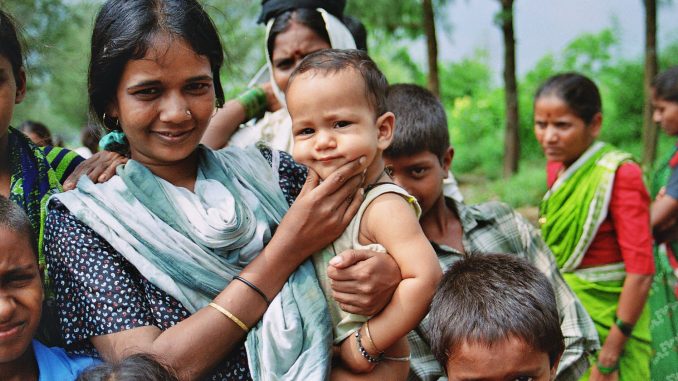
An estimated 300,000 plus children could die in India in a few months time unless state governments push health officials to work overtime. The COVID-19 pandemic could even reduce advancements made by India in the health sector, UNICEF said quoting a top study by Johns Hopkins Bloomberg School of Public Health.

The study, already printed in the widely circulated Lancet Global Health Journal, should serve as a wake up call to the Indian health sector officials, Dr Yasmin Ali Haque, UNICEF Representative in India, said in an interview this afternoon.

“This is a crisis unfolding across South Asia and governments must take urgent action to prevent millions of families from slipping back into poverty,” Dr Haque said in the interview conducted through Zoom.

Unknown to many, the secondary impacts of the COVID-19 crisis are aggravating the challenges of getting affordable and nutritious food, mainly due to reductions in routine health service coverage levels, disruption in live saving immunization activities and an increase in child wasting.

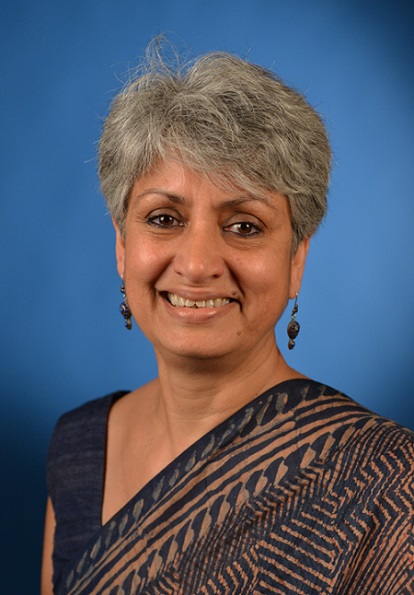
Dr Yasmin Ali Haque, UNICEF Representative in India

Dr Haque, a trained surgeon, said millions of vulnerable children in South Asia are losing out on their development and learning opportunities, and their right to survive and thrive. “They need to be protected. Hunger is always more dangerous than Coronavirus in poorer nations. The most vulnerable families must have access to healthcare, schooling for children, affordable nutrition and other essential services.”

In India, around 20 million children under five years of age are suffering from wasting, over 40 million children are chronically malnourished, and more than half of Indian women aged 15-49 years are anaemic.

Now India has made a steady progress in newborn mortality reduction in the last five years before COVID-19, reducing the National Mortality Rate from 26 in 2014 to 23 in 2017, saving about 75,000 newborn lives each year. But now, there is a danger of losing some of these gains made due to the impact of COVID -19 on health systems in a region that contains a quarter of the world’s population.

And then, there are other issues.

Last week, Indian news channels reported a student’s suicide for not having a smartphone and, in turn, missing out on virtual classrooms. The suicide highlighted a dangerous trend in a country where an estimated 56% of India’s children has no access to smartphones, essential tools for online learning during the Coronavirus-induced lockdown.

Experts say the digital divide in the country may turn online classes into an operational nightmare in India, where only 24% households have access to the internet. School closures have impacted 247 million children enrolled in elementary and secondary education and 28 million children who were attending pre-school education in anganwadi centres. There are concerns that some disadvantaged students may join India’s 6 million children who were already out of school before COVID-19 struck. 

Let’s have a realistic look at the situation at the ground level in India. 

Since March 2020, massive loss of jobs and income have made it harder than ever for poorer families. An estimated 118 million lost jobs in India’s big cities and went back to the hinterland, the reverse migration causing both stress and tension to various state governments. 

“And then, health inequalities and socio-economic disparities have uncovered unique challenges. The spread of misinformation driven by fear, stigma, discrimination and blame have heightened the complexities. Stigmatization against health-care workers, of specific groups, communities, and migrant workers posed a challenge to much-needed social cohesion at the time of the crisis,” said Dr Haque, whose organisation, UNICEF, supported the Ministry of Health and Family Welfare in a national public advocacy campaign and promoted positive and anti-discriminatory behaviour to address stigma.  

At the heart of this crisis are children who are at a heightened risk of exploitation, violence and abuse. This is not only happening in India. For example, school closures during the Ebola outbreak in West Africa from 2014 to 2016 resulted in spikes in child labor, neglect, sexual abuse and teenage pregnancies.

“The side-effects of the pandemic across South Asia, including the lockdown and other measures, have been damaging for children in numerous ways,” said Jean Gough, UNICEF Regional Director for South Asia. “But the longer-term impact of the economic crisis on children will be on a different scale entirely. Without urgent action now, COVID-19 could destroy the hopes and futures of an entire generation.”

Dr Haque says UNICEF is trying hard to explain to people in the hinterland that their children are highly likely to become malnourished without the proper care, which means the family is a priority for health services. Travelling across India, UNICEF officials, along with government officials, explain the importance of eating well and why kids must continue to receive extra food rations so that the children do not fall through the cracks.

The UNICEF study, which reads like a mirror to life, shows how India’s phone helplines are reporting a surge in calls from children suffering violence and abuse during confinement at home. Some children are struggling with depression, even resulting in attempts at suicide. 

The report highlights the need for resumption of life-saving vaccination campaigns against measles, polio and other diseases. The study also says why schools should reopen as soon as possible provided adequate hand washing and other physical distancing precautions are in place. UNICEF projections show that over the coming six months as many as 120 million more children could be pushed into poverty and food insecurity, joining some 240 million children already classified as poor.

The UNICEF bottomline – as always – reads like a Pied Piper wishlist: Governments should immediately direct more resources towards social protection schemes, including emergency universal child benefits and school feeding programmes. Will it happen in India?

“We can only ask people to turn philanthropic and donate for such causes. There are a large number of private companies coming in for such causes. Every month, there are thousands who walk across the UNICEF office and donate. We sincerely hope more will join us,” added Dr Haque.

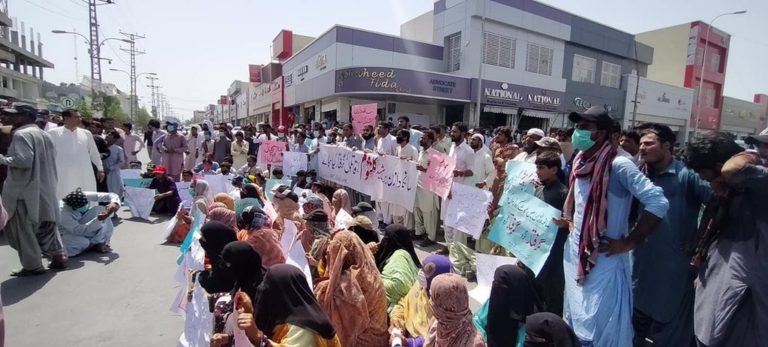
Pakistan arrests lady doctors, students sitting on a peaceful protest in Quetta

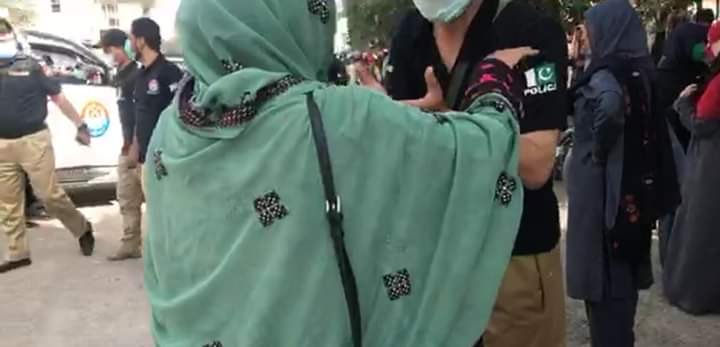
Pakistani Police arrested several lady doctors and other protesting students protesting on Wednesday in Quetta, occupied Balochistan. The arrested women included doctor Mahrang Baloch, Jeehand Baloch and other students of the Baloch Student Organisation (BSO).

The doctors and students were protesting against the decision of Higher Education Commission (HEC) to commence online classes despite the fact that internet facilities are not available in occupied Balochistan. The protest in Quetta was called by the Baloch Students Alliance, that claimed that the sole of the peaceful protest was to grab the attention of concerned authorities towards genuine issues of students. Without internet the students across occupied Balochistan will miss out all their classes and will then not be able to learn their subjects or clear their exams. Pakistani security forces have suspended internet access at several regions in occupied Balochistan citing security concerns. This internet suspension has been in place for several years in occupied Balochistan.

Soon after her arrest, Mahrang Baloch said that they were protesting against the unilateral decision to conduct online classes. She said that the “barbaric state doesn’t change its behaviour towards oppressed nations.”

Students across Balochistan have been protesting since the last few weeks due to non-availability of internet facilities and the decision of Higher Education Commission (HEC) to conduct online classes.

Earlier, the protesting students had said: “The HEC’s decision for beginning online classes is one sided and prejudiced, which completely ignores the ground realities. The HEC’s decision makes it clear that the students of Balochistan are not the part of this education system, which is an attempt to keep away the Baloch students from education.”

Baloch nationalist organisations say that denying internet accessibility in occupied Balochistan is an attempt by the Pakistani state to prevent news going out to the outside world about Pakistan Army’s blatant human rights violations across occupied Balochistan.

With Christian Sorensen, The Responsibility of Intellectuals

Christian is a Philosopher that comes from Belgium. What identifies him the most and above all is simplicity, for everything is better with “vanilla flavour.” Perhaps, for this reason, his intellectual passion is criticism and irony, in the sense of trying to reveal what “hides behind the mask,” and give birth to the true. For him, ignorance and knowledge never “cross paths.” What he likes the most in his leisure time, is to go for a walk with his wife.

Scott Douglas Jacobsen: What is the responsibility of intellectuals?

Christian Sorensen: “None.” That question presupposess that “intellectuals” should have a “greater responsibility degree” or a “particular type” of it in relation to “non-intellectuals,” which in turn implies to believe that “intelligence’s degree” would determine “act’s moral assessment” and therefore the fact of accepting “intellectual’s superiority,” since if “moral non-imputability” and therefore its “responsibility absence or decrease” are determined by “diminished intelligence,” then the aforementioned, is equivalent to express that this “determination,” is given by “reason’s absence,” and in consequence this last would imply to “be almost a beast” or straightly said “to be a beast.”

Jacobsen: How do public intellectuals fail and succeed at this?

Sorensen: “Public intellectuals,” fail insofar as they “self-argue” with “dead superiority,” utilizing for “discriminatory purposes,” contributions that somehow generally are “self-centered,” and by losing any kind of sight regarding “equality sense,” in relation to what should be an “expected awareness” of “fundamental rights.” As a counterpart if “intelligentsia,” provides them with a “differential factor,” which in itself is neither “better nor worse,” but that nevertheless, if it is assumed as a “social duty role” that should visualize a “synergistic achievement” towards what for me is an “enthalpic social integration,” and then if the last becomes a tangible outcome, it can “be inferred,” that “public intellectuals” as such, have been successful in “their task.”

Jacobsen: What public intellectuals and intellectuals impress you?

Sorensen: Stephen Hawking, Albert Camus, and Luc Montagnier.

Jacobsen: Why do they impress you?

Sorensen: “S. Hawking” for not having contributed with anything, “A. Camus” because he learned all morality playing soccer, and “L. Montagnier” for considering that the COVID-19 virus has genetic traces of HIV virus.

Jacobsen: How does a better life decrease god belief?

Sorensen: Because when there “is a need,” god “is resorted,” since “it feels” that it “is not possible” to be satisfied naturally, and due to the fact that “for asking,” god first has “to be believed,” due to the reason that it “is not possible” to ask something of someone, who “does not exist,” and because god “is not going” to grant something to anyone who “does not believes,” nor “venerates” and “does not makes” any merit, so when “a better life” arrives, needs “are fewer” and therefore as it is necessary “to ask for less,” and to “not deserve,” then “god’s belief” doesn’t make much sense anymore.

Jacobsen: Will Africa extricate itself from its bondage of superstition and colonial history? If so, how? If not, why not?

Sorensen: It depends because “Africa” has always found itself in a “systemic vicious circle” that I will denominate as “helplessness-misery’s positive feedback” between “misery and colonialism” on the one hand, and “superstition” on the other, where the first two  have “historically determined” the latter, at the same time that while the formers “further intensify,” then the last one on its part, gets “even stronger.” Therefore it would be possible “to get out” of “this circularity,” as long as this Continent manages to go from “being a closed” to “being an open system,” necessarily through the intervention of what for me an “external non-iatrogenic” agent, that allows to modify “independent variables” and in consequence its “deterministic chains,” in order to finally “make permeable” the access to “dependent variables,” by in this case “replacing it,” with what I will name as a “non-entropic ecosystemic” outcome within “Africa.”

Jacobsen: What makes a virtuous person? What makes a non-virtuous person?

Sorensen: A “virtuous person,” is one who is able to maintain the “right homeostatic balance between two extremes,” while a “non-virtuous” one is the one who actually “does not have good and evil notions” sufficiently well “introjected,” and besides is unable to recognize any “dynamic dimension and balance” between “two polarities.”

Jacobsen: What are the trends active in less developed parts of the world, e.g., Africa, that public intellectuals should focus more on?

Sorensen: If I could summarize it in one sentence, I would say that it is the fact of recognizing, that places such as “Africa,” are “the backyard” and “the garbage dump” of the rest of the world.

Jacobsen: Will Africa decrease in its overwhelming religiosity over time if so?

Sorensen: I am sure of this, since that “overwhelming religiosity” is somehow closely linked to a “need and meaning,” that I will denominate as “over-compensatory sense,” which in turn fulfills “a function” as “defence mechanism” because if this is simply “removed,” they will remain “completely defenceless,” in other words analogously speaking, is what occurs with “phobic dynamic,” since if “phobic object” is abruptly withdrawn, that is to say if this is done with what produces an “irrational fear,” then a huge “anguish and anxiety” wave will be triggered until “surpassing” completely them.

Jacobsen: What are the virtues in behaviour and thought required for African societies? How will good governance assist in guiding and inculcating such virtues?

Sorensen: If I could summarize in one word what are “the virtues” in behaviours and thoughts that “African societies” require, I would say…”Resilience.” Before “governments” assist societies, by guiding and inculcating “these virtues” on them, it is first of all necessary, to “reach good” ones, and due to this purpose,  “democracy” values must ​​be put in advance, which in turn leads to require within these societies “quality and accessible education” as “pre-position” for everyone, that in consequence lastly “will promote” this sort of “virtues,” since if both “citizens and the political class” are pushed to, in my opinion towards what should be an “intersection central point,” then an “encounter” between them might be reached, and therefore by the fact “of sharing” a “meaningful universe,” development is going to be driven “in behalf” of “desirables virtues.”

Jacobsen: Thank you for the opportunity and your time, Christian, as usual.

Sorensen: Thanks to you.

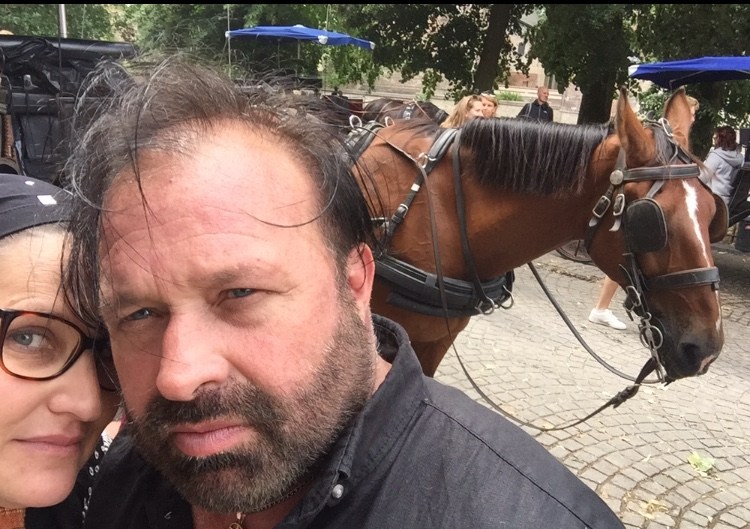
Image Credit: Christian Sorensen.

Interview with Sam Vaknin and Christian Sorensen on Narcissism

Sam Vaknin is Visiting Professor of Psychology, Southern Federal University, Rostov-on-Don, Russia and Professor of Finance and Psychology in SIAS-CIAPS (Centre for International Advanced and Professional Studies), as well as a writer and the author of Malignant Self Love: Narcissism Revisited. Christian Sorensen is an independent philosopher from Belgium. Both have scored profoundly high on the most reliable general intelligence tests, i.e., mainstream tests. In both cases, they have devoted themselves to wide-ranging and deep foci of study throughout life. Vaknin on narcissism and Narcissistic Personality Disorder. Sorensen on philosophy, metaphysics, and ethics. Here they talk about the central focus for Vaknin, narcissism.

Scott Douglas Jacobsen: Within the DSM-V, of those criteria for formal diagnosis of an individual with Narcissistic Personality Disorder (NPD), what ones seem the most reliable, valid, and powerful as predictors of NPD to each of you?

Sam Vaknin: The DSM V is a vast improvement over the DSM IV-TR in that it includes an alternate model with criteria which are dimensional, not categorical; dynamic, not static; and descriptive rather than taxonomic (concerned with lists of symptoms).

The DSM V re-defines personality disorders thus:

“The essential features of a personality disorder are impairments in personality (self and interpersonal) functioning and the presence of pathological personality traits.”

According to the Alternative DSM V Model for Personality Disorders (p.767), the following criteria must be met to diagnose Narcissistic Personality Disorder (in parentheses my comments):

Moderate or greater impairment in personality functioning in either identity, or self-direction (should be: in both.)

Identity

The narcissist keeps referring to others excessively in order to regulate his self-esteem (really, sense of self-worth) and for “self-definition” (to define his identity.) His self-appraisal is exaggerated, whether it is inflated, deflated, or fluctuating between these two poles and his emotional regulation reflects these vacillations.

(Finally, the DSM V accepted what I have been saying for decades: that narcissists can have an “inferiority complex” and feel worthless and bad; that they go through cycles of ups and downs in their self-evaluation; and that this cycling influences their mood and affect).

Self-direction

The narcissist sets goals in order to gain approval from others (narcissistic supply; the DSM V ignores the fact that the narcissist finds disapproval equally rewarding as long as it places him firmly in the limelight.) The narcissist lacks self-awareness as far as his motivation goes (and as far as everything else besides.)

The narcissist’s personal standards and benchmarks are either too high (which supports his grandiosity), or too low (buttresses his sense of entitlement, which is incommensurate with his real-life performance.)

Impairments in interpersonal functioning in either empathy or intimacy (should be: in both.)

Empathy

The narcissist finds it difficult to identify with the emotions and needs of others, but is very attuned to their reactions when they are relevant to himself (cold empathy.) Consequently, he overestimates the effect he has on others or underestimates it (the classic narcissist never underestimates the effect he has on others – but the inverted narcissist does.)

Intimacy

The narcissist’s relationships are self-serving and, therefore shallow and superficial. They are centred around and geared at the regulation of his self-esteem (obtaining narcissistic supply for the regulation of his labile sense of self-worth.)

The narcissist is not “genuinely” interested in his intimate partner’s experiences (implying that he does fake such interest convincingly.) The narcissist emphasizes his need for personal gain (by using the word “need”, the DSM V acknowledges the compulsive and addictive nature of narcissistic supply). These twin fixtures of the narcissist’s relationships render them one-sided: no mutuality or reciprocity (no intimacy).

Pathological personality traits

Antagonism characterized by grandiosity and attention-seeking

Grandiosity

The aforementioned feeling of entitlement. The DSM V adds that it can be either overt or covert (which corresponds to my taxonomy of classic and inverted narcissist.)

Grandiosity is characterized by self-centredness; a firmly-held conviction of superiority (arrogance or haughtiness); and condescending or patronizing attitudes.

Attention-seeking

The narcissist puts inordinate effort, time, and resources into attracting others (sources of narcissistic supply) and placing himself at the focus and centre of attention. He seeks admiration (the DSM V gets it completely wrong here: the narcissist does prefer to be admired and adulated, but, failing that, any kind of attention would do, even if it is negative.)

The diagnostic criteria end with disclaimers and differential diagnoses, which reflect years of accumulated research and newly-gained knowledge:

The above enumerated impairments should be “stable across time and consistent across situations … not better understood as normative for the individual’s developmental stage or socio-cultural environment … are not solely due to the direct physiological effects of a substance (e.g., a drug of abuse, medication) or a general medical condition (e.g., severe head trauma).”

Christian Sorensen: I will do so briefly, and in relation to Sam’s expansive responses, its expertise on Narcissistic Personality Disorder, its labor for helping people who are victims of individuals with this disorder, or individuals who suffer from it, and regarding to part of the responses provided by me on this interview. For doing so, I am going to based my explanation on psychodynamically and psychoanalytically oriented psychiatry, and on Otto Kernberg’s contributions that respectively from a historical and etymological point of view, have developed the concepts of personality disorder, and narcissistic and narcissistic malignant personality disorders. 

If Sam, has a confirmed diagnosis of Narcissistic Personality Disorder, and this type of disorder is in turn associated with primitive defense mechanisms, and a low personality structure… Then from a clinical and logical perspective, and following a formal reasoning, he would not be able not even ethically, to offer any kind of guidance or therapeutic aid, nor could he claims to possess an expertise in relation to this topic. This last, since its theorizations, excepting those that may be bibliographically referred to other authors, are strictly and synthetically speaking invalids.

The predominant defense mechanism of this type of personality disorders is projective identification, which from a clinical sight, needs to be detected and analyzed, through countertransference by the therapist and therapeutic assistant, in order to offer an effective aid in this context, and in other words to avoid any counterproductive or harmful outcomes. At the same time, to achieve this objective, the person who offers or pretends to offer such help, needs imperatively to possess advanced defense mechanisms, and therefore, a high structure of personality. With respect to Sam’s supposed expertise to refer theoretically on such a subject, it is essential to have a sufficient capacity of insight, in order to be able to actually arrive at meaningful conceptual deductions, and to original contributions, which in consequence could be considered as logically valid, nevertheless individuals diagnosed with Narcissistic Personality Disorder, due to their secondary narcissism, lack such skill, and for that reason can hardly be denominated as, or invested with any theoretical authority to speak on this matter.

On to the main question, it is the feelings of greatness and superiority, lack of empathy and exploitation of interpersonal relationships.

Jacobsen: There’s a whole mythology built into the idea of narcissism, NPD, etc. One idea is the story of Narcissus. What are some of the mythologies in history and in folk psychology related to or building towards the idea of a more formal psychological diagnosis of NPD or the observation, at least, of someone appearing on the narcissism spectrum?

Sorensen: From the historical point of view, there are some less recent examples such as Hitler, although there was a cocktail of other pathologies within him, and historically current could be Donald Trump, Kim Jong Un and Nicolas Maduro.  From a popular perspective, in my opinion, it is very well represented in movies like “The Silence of the Lambs”.

JacobsenIn correspondence, Christian, you noted three fundamental axes of identity self-concept, defense mechanisms, and type of object relationship. Christian, can you elaborate on these three axes, please? Sam, can you reflect on these proposed axes from within the professional literature and as a leading expert on NPD?

Vaknin: Pathological narcissism is a reaction to prolonged abuse and trauma in early childhood or early adolescence. The source of the abuse or trauma is immaterial – the perpetrators could be parents, teachers, other adults, or peers. Pampering, smothering, spoiling, and “engulfing” the child are also forms of abuse.

Pathological narcissism has been conceptualized successively as an infantile defense mechanism and a disturbance in object relations. Later, it metamorphosed into a personality disorder. I regard it as a post-traumatic condition coupled with arrested development (puer aeternus, Peter pan). Inevitably, such early childhood traumas render attachment in later adult life very dysfunctional, of course. It also gives rise to cognitive deficits such as grandiosity and to the overuse of defense mechanisms such as fantasy. But these are secondary features and not universal.

Sorensen: It is important to point out that these three axes, are given from a perspective of what means psychic structure. In relation to the self-concept, it refers to a phenomenon that I will denominate as diffusion of identity, that’s caused by difficulties in maintaining an objectal constancy. Regarding defense mechanisms, it is relevant since there is a preponderant presence of what is called projective identification. Concerning object relation, alludes to the fact that bonding relationships that should be significant are not really, because they lack of deep and stable feelings, are viewed for utilitarian and profitable purposes, and are constantly loaded with feelings of idealization and devaluation.

JacobsenChristian, also, you remarked on psychiatry and the phenomenological approach, existentialism, and vitalism. So, Christian, what are the reasons for these intersections with respect to a philosophical approach to analyzing narcissism? Sam, how does philosophy play a fundamental role, or simply a role if at all, in orienting and defining the diagnosis of NPD or simply narcissism with psychology?

Vaknin: It doesn’t. The members of the DSM Committee have no training in philosophy. Psychology pretends counterfactually to be an exact science, at least as much as medicine is. Philosophers are not welcome. Freud was a neurologist and tried to create a physics of the mind (“analysis”). The tradition of experimental psychology now dominates and lab coats are everywhere. There is a very strong strand of anti-intellectualism and anti-philosophy in psychology.

Sorensen: Due to the fact that existentialist philosophical point of view, contributes to psychiatry by introducing the ability to achieve a descriptive observation of phenomenon, while the vitalism allows that psychiatry reaches a deeper understanding, in the sense of going beyond a purely biological approach in regards to the problematics of mental disorders or illnesses.

JacobsenSome still view mental disorders as some otherworldly phenomenon, as in something spiritual grounded in sin or a disorder of the soul. Why do these supernaturalistic propositions and (non-)explanations continue to persist over time?

Vaknin: Because people are ignorant and feeble-minded, befuddled and fearful, disoriented and at the mercy of psychopathic con artist masquerading as religious leaders, public intellectuals, gurus, mystics, and life coaches with the definitive answers to all their questions immersed in the syrups of love and universal harmony, whatever this nonsense may mean.

Sorensen: Since for some reason, the notion of evil and inclination towards it, is at the base of everything, and therefore the necessary consequence of fear, guilt and punishment.

Jacobsen: Gentlemen, thanks so much for your time.

Sorensen: You are very welcome.

Photo by Shai Pal on Unsplash

You Can Tell Them I Said It: Don’t Start None, Won’t Be None

One of the dumbest possible ways to conduct oneself as a group in a society, or as the leadership or a collective within a culture, is to start problems or act insensibly where no problems exist or sense would reason otherwise; within the context of the young life and times of Mubarak, this has happened precisely two major times against him. One time in 2014 with even the idiotic grandstanding psychopathy of Abubakar Shekau making open statements against Bala. This is an individual so far beyond the horror of the contexts described and the inequitable difficulties delineated around the world, by Dr. Sikivu Hutchinson, Bridgett Crutchfield/Bria Crutchfield, Mandisa Thomas, Liz Ross, Candace Gorham, Deanna Adams, Cecilia Pagan, Ingrid Mitchell, Lilandra Ra, Marquita Tucker, Mashariki Lawson-Cook, Rajani Gudlavaletti, Sonjiah Davis, and Sadia Hameed, and a number of other exceptional secular women deserving far more media coverage, interviews, references to professional work, and republication of materials (in part or whole) making their individual marks. Many who have supported him in international efforts.

Here’s Abubakar Shekau’s rap sheet: Through Boko Haram, he has displaced more than 2,000,000 people, killed 1,000s, while hundreds have been raped under the ideological banner of fundamentalist, militant Islam of Shekau, or Abu Mohammed Abubakar bin Mohammad al-Sheikawi. This excludes the massive decline from the Nigerian economy based on the transfer of resources to combat the militant group, the lives destroyed in the process through joining, being raped, killed, or displaced, or as dross in the midst of war, mayhem, and hiring for fighting religious fundamentalist lunatics (an extremely foolish or eccentric person).

The second time for Bala was in 2020. He and I were communicating on April 27, and were supposed to conducted several interviews on April 28, as we were talking on April 28. Then the communication went dead on the morning of the 28th. Obviously, he had been apprehended at that time. I went through the relevant documentation. It was clear. They had concocted a crock reason and then to make a lesson and a show of Bala gathered him and dragged him to Kaduna. Why? Probably, it is to appease religious fundamentalists in various parts of northern Nigeria with some emphasis on Kano.

We still don’t know the whereabouts of Bala; we still do not understand the formal process for the reasoning; we do not see the reason for apprehension by two non-uniformed police officers, dragging away to jail in under 24 hours, jailed in Kaduna, and then presumably jailed in Kano to an unknown location without a formal ability to see a lawyer. This was between April 28 and 29 for the ‘apprehension’ and jailing followed by the transfer to Kano. Bala could be dead or alive. Because, the Nigerian authorities and to some extent the media have been silent on these issues. Even when not silent, they’ve been conspicuously silent on the truth on these matters.

In that, they’ve simply lied. It makes one wonder. Why lie? On the religious proclaimed ethics, it is a sin to lie. On the journalism side, it is unethical to lie. In both contexts, it is a quotidian of untruth, falsity, every time Bala is not provided freedom or a fair, secular trial. Why not give him a fair trial? Why not let the public know the truth about his whereabouts and case? Why keep silent on this most important of issues of the life of a modern pillar of Humanism in Africa? If they wanted a fight (the one we didn’t want), they’ve got it; and, we’re not going to give up.

It has been 55 days since the illegitimate and unconstitutional (in Nigeria) apprehension of Bala. 55 days of a human rights violation for a prominent and known person in Nigeria and made notorious in 2014 because of atheist status, former Muslim, and humanist status. Why is this injustice being permitted in the hallowed halls of the police authorities, the coverage of the Nigerian media, and the legal and human rights mechanisms of Nigeria? Because he is prominent and rejects the common superstitions, denies the veracity of the storybooks in most Nigerian homes, and, the most recognizable social crime, being open about the lack of belief in them, even cutting and direct with the language. That’s why? It’s the reason for the charges against him by S.S. Umar & Co. It was the reason for the Change.Org campaign looking for 25,000 signatures. It was the reason for apprehension to make an example of him. And it could be the difference that makes or breaks the story of him here, because he believed, differently.

I ask Nigerian the faithful. If this is the context in which Nigerians live and remain willing to be silent and complicit on this matter, then the identical charge and actions could be made against Muslims in Kaduna, Kano, Katsina, Osun, Ilorin and Sokoto or Christians in Abuja, Benin City, Calabar, Ibadan, Jos, Kaduna, Lagos, Onitsha, Owerri. If not for the sake of another human being endowed with the same human rights as everyone else, then why not for the sake of others throughout Nigeria who believe differently than you, or even the same as you? Bala’s case could become a long-term and large-scale precedent because of his prominence as a non-believer. What if this became the case for every single prominent believer who said something offensive to another believer from a different religion? What would happen to these individuals?

That’s the context in which Bala found himself. It is the environs in which the international humanist community finds itself in regards to the life or death, freedom or imprisonment, situation for Bala. It’s unfair, ungrounded, and a total violation of the Nigerian constitution and of the international human rights of Bala. We have support from ordinary, moderate believers of all stripes – just read social media – and from the international freethought collectives, including the national and local ones in Nigeria. Even in believers’ homes, there will be dissenters, just ask any parent. The fundamental issue is the freedom for Bala, as in the justice for Bala, and some recompense for him, too, because of the travails endured for almost two months of illegitimate, illegal actions and blatant human rights violations in the face of the pressure of religious fundamentalists in spite of the protestations of non-believers around the world and ordinary believers all over Nigeria.

Free Mubarak Bala.

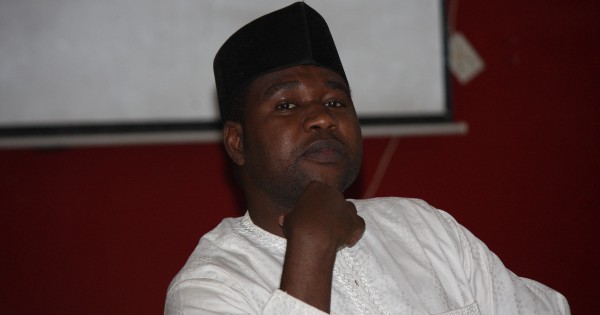
Image Credit: Mubarak Bala.

2 Journalists among 4 people abducted by Pakistan in occupied Balochistan

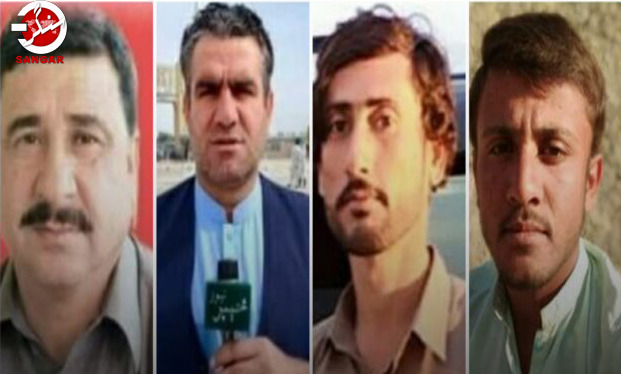
Pakistani forces picked up four people from occupied Balochistan and these people are now “missing” since Sunday. These four “missing persons” people are from Qillah Abdulla and Kharan districts of occupied Balochistan.

According to local sources, Pakistani forces raided a house in Lijje area of ​​Kharan district and arrested two youths and then transferred them to an undisclosed location. The “missing persons” include Din Mohammad (son of Kashmir Mohammad Hasani) and Liaqat (son of Wadera Mohammad Karim Sasoli).

In yet another case of forceful abduction by the Pakistani forces, two journalists affiliated with private media outlets were abducted from Chaman, a border town in occupied Balochistan’s Qillah Abdullah district.

As per the local sources, these abducted journalists are affiliated with news channels broadcasting in Pashto and Urdu.

Saeed Ali Achakzai, former president of Chaman Press Club and senior reporter of Samaa News and Abdul Mateen Achakzai of Khyber News have been “missing” since last Sunday evening.

Journalists’ organizations have condemned their abduction and demanded immediate and unconditional release of both these journalists.

Pakistan is one of the most dangerous countries for fair and transparent journalism. In the 2019 Reporters sans frontières (alias Reporters Without Borders) press freedom index, Pakistan was ranked at 142 out of 180 countries.

15 points about India China battle at Galwan Valley

The June 15 battle between India and China at Galwan Valley in Ladakh is unprecedented in several ways. It was on this day that People’s Liberation Army (PLA) of China shed its facade of professionalism and came out as thugs. PLA soldiers brought in barbed wires, iron rods, nail-studded clubs and sticks to badger the Indian soldiers. They had expected the Indian soldiers to run away and use visual footage of the ensuing spectacle for its psychological propaganda. Alas, much like the low-quality Chinese products this Chinese script too had a very short shelf-life. And what happened on June 15 was a completely different story.

The soldiers of Indian Army fought like lions, the frigid mountainous ridges around Galwan Valley echoed with roars of “Jai Bajrang Bali” — the battle cry of Bihar Regiment which was hunting down Chinese soldiers. But while the Indian soldiers fought valiantly for almost eight hours, a bunch of journalists, defense experts and some veterans ganged up and unleashed their fangs. Their concerted efforts to twist the developments at Galwan Valley has created confusion all around the country. In fact, this cabal is part of China’s propaganda machinery who have waged a psychological war against India.

However, after several interviews with former Indian Army Commanders, discussion with experts in geostrategy and off-the-record briefings, I can say in most certain terms that India continues to be strong against China. Here are the main points that we need to understand about India China battle at #GalwanValley.

1.Indian Army soldiers of the Bihar Regiment fought bravely and embraced martyrdom only after slaughtering the Chinese soldiers who had dared to transgress at the Galwan Valley.

2. In this fierce battle 20 Indian soldiers were martyred but they fought like lions till the end. Chinese side suffered heavy casualties. More than 30 Chinese soldiers were killed in this battle. Intelligence intercepts of Chinese social media platforms say casualties on the Chinese side is much-much higher. But I am putting this figure at 30 because China has accepted this number.

3. China had expected to see the back of Indian soldiers at Galwan Valley on June 15. Dragon had hoped to use this as propaganda material against India and present Xi Jinping as China’s powerful leader. Instead, soldiers of the Bihar Regiment stood their ground and fought valiantly.

4. Soldiers of the Bihar Regiment were not unarmed. Responding to Chinese treachery on the night of June 15 they fought like lions, broke the neck of several Chinese soldiers, scooped their eyes out and smashed their heads with stones. All this while roaring the Battle Cry of Bihar Regiment.

5. Battle Cry of Bihar Regiment is “Jai Bajrang Bali”.

6. Indian soldiers fought bravely at a place where it’s difficult to stand still even for 30 minutes. And yet the Indian soldiers stood their ground and hunted down the Chinese soldiers.

7. While chasing the retreating Chinese soldiers eight Indian soldiers were cordoned off by hundreds of Chinese soldiers who were then returned back to India in exchange of several Chinese soldiers in the custody of Indian Army. India also returned back the dead bodies of Chinese soldiers.

8. Indian Army convoys have now been deployed along the LAC in Ladakh. India is sending more troops along the LAC in Galwan Valley, PangongTso Lake and other places. India’s fighter aircraft are on high alert. We need to trust our armed forces. They are in combat positions. They have not gone to the LAC for a picnic!

9. Geostrategy and combat readiness must be secret. Every military strategy and military movement cannot and must not be discussed in public.

10. Pressurizing the Indian government to reveal finer details of our military strategy will only help China. Writing detailed accounts of our troop deployment will only help China.

11. China’s PLA (People’s Liberation Army) is no match to Indian Army. Please bury the ghosts of 1962. Barely 5 years after 1962, Indian Army slaughtered around 900 Chinese soldiers at the Nathu La and Cho La battle in Sikkim.

12. In the coming days China will step up its efforts to spread rumours about Indian Army, Indian Air Force and Indian Navy. This is dragon’s psychological war. Please don’t fall for it.

13. China knows it cannot wage a direct fight with India but it will indulge in psychological warfare. Sadly, several Indian journalists, experts and communists will side with China in this psychological war. In 1962 they sided with China, and they will do so again.

14. At this time we need to trust our armed forces. Remember this is not a political battle to win elections, rather this is India versus China.

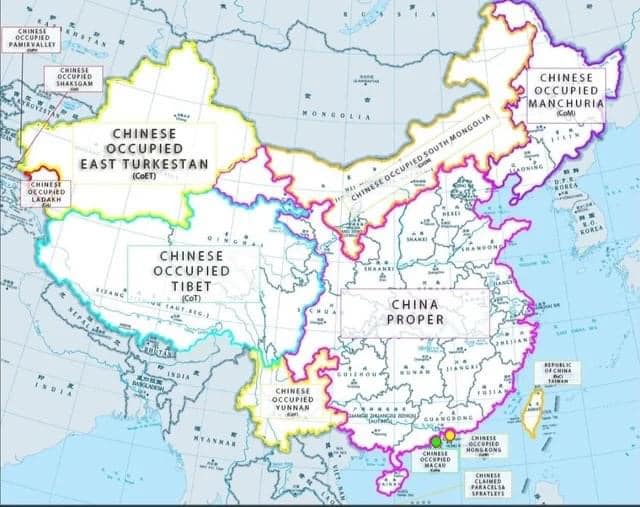
15. Tibet, Taiwan, Hong Kong, Xinjiang (Uighurs), CPEC, Gilgit-Baltistan, etc. China has several weak points (look at the map) India will pick up a spot to strike. There will be no knee jerk reaction but a well calibrated Indian Response.

The Zuck Treatment: Religious Versus Secular Responses to C-19

Secularism seems rife with popularizers, dilettantes, ‘keyboard warriors,’ and scientists. However, regarding formal researchers into the world of secularism and the divides and two-storey buildings of seculars  and the religious, Dr. Phil Zuckerman is a rare individual who takes part in some extensive research into the worldviews and worlds of the “seculars,” the “Nones,” or those without a formal religious affiliation, which can be amorphous – gooey and vague – definitions of the non-religious. When he examined some of the results of the research, something noted within the research was the degrees to which, during a pandemic, faith-based belief systems and, thus, responses utterly failed to deliver on the divine promises. In fact, they worsened the circumstances.

“Back in mid-March, nearly 40 percent of congregants who attended services at a small church in rural Arkansas came down with COVID-19, and a few subsequently died. In April,” Zuckerman stated, “at least 70 people who attended a church in Sacramento caught the virus, and a pastor in Virginia who piously defied social distancing orders within his flock died from COVID-19.”

Amazing – God did not help the most dependent upon his succour. (Many turn out as suckers.) The most devoted, most devout, most dedicated, and the most likely to demise based on a formal belief in the saving grace of God Almighty and the power of prayer. Zuckerman went from Idaho Falls to Frankfurt to Cameroon to South Korea to Cameroon to Israel speaking on the devastation of religion and its ill-equipped worldviews in response to a once-in-a-century pandemic, especially in an era of high-tide science relative to prior history and the tools – and knowledge of in general terms – of the reasons for the disease and death: a virus; not demonic possession, for example.

“While most religious people, communities, and congregations have taken COVID-19 seriously and have followed recommended social distancing practices, many of those pushing hardest to denounce or limit social distancing are strongly religious,” Zuckerman explained, “The fact is, this pandemic has brought into stark relief the underlying differences between a staunchly secular worldview and a fundamentally religious worldview.”

A god who helps those who help themselves is a god who either does not exist or cares not to help those most giving in worship to this god, i.e., the god is either a sadist or an insensate. Your pick. In this, the naturally naturalists, or those who adhere to Naturalism – as in natural events following from prior natural events (on the macro scale), deny the supernatural and the ideas of the religious. The religions claim and the religious believe in a supernatural, otherworldly, order to the constituent portions of life, the universe, and everything.

If a pandemic happens, then the, almost, natural follow-through from a naturalist perspective is to look for functional, scientific procedures and empirically-informed policies to mobilizer actions against the proliferation of a, for instance, virus. In a supernaturalist framework, one can pray for help; angels may assist one; and, God may intervene in the affairs of the believer for the protection, for example, one’s flock and oneself, though this didn’t happen in rural Arkansas.

Zuckerman said, “The results of these different orientations can, sometimes, literally be matters of life and death. We see this in terms of the current COVID-19 pandemic. For example, the strongly secular are more likely to accept the findings and dictates of science while the strongly religious are more likely to ignore or distrust such empiricism, favoring instead faith”

He referenced by Brett Pelham, where, as per an obvious prediction from the data on religion & faith-based thinking versus secularism & scientific-based thinking, the highly religious parts of the United States were “markedly less likely to look up scientific advice regarding best-practices for staying safe…” Religious people aren’t stupid; religion enforces or motivates a worldview of ignorance, motivated not-knowing. The correlation held with education, so the mediating factor is religion.

“According to a recent report, those states that are providing the best support systems to protect their at-risk populations from COVID-19 tend to be the more secular states with lower rates of church attendance and faith in God—states such as Vermont, Massachusetts, Colorado, and Maine—while those states with the worst support systems are nearly all states with highly religious cultures, such as Tennessee, Mississippi, and South Carolina,” Zuckerman said.

And yes, religious exemptions for social distancing furthered the poor outcomes of public health too. It held internationally too. Those more “secular populations and secular leaders” were more likely to “on average” perform better in terms of public health of their respective populations. This is not to deny the positive benefits of community and mental wellness coming from religion in the guise of community involvement and a feeling of solidarity and love with those around oneself. However, why do we need supernaturalism for this?

“To be sure, being religiously-involved has been correlated with many health benefits, especially in societies lacking a well-functioning welfare state that provides free and excellent health care to all citizens,” Zuckerman said, “For example, here in the U.S., people who attend church regularly tend to live longer and report lower stress levels. But what we see today is that the strongly religious appear to not be faring as well as the strongly secular in the face of this global pandemic.”

So, the real culprit is religion in general with hyper-religiosity, specifically; the issue is the extremes of religious belief leading to a denial of the obvious aspects of reality and hoping for some magical cure.  

Photo by Katarzyna Urbanek on Unsplash

Environmentalists join hands to save Amazon of the East

One can say, environmentally conscious people live in Assam and hence public outcries against hydroelectric projects or mining approvals in forest lands are natural to invite media attentions. The recent public mobilization against the rampant open-cast coal mining in rainforests was natural to happen, but its tame end indicates that the uprising was not properly focused.

The uproar at the time of nationwide Covid-19 lockdown was started in the social media and soon it expanded to the mainstream media outlets. With an aim to safeguard a forest reserve, large numbers of environmental enthusiasts, celebrities, social activists, media personalities, etc of the country came out to oppose the lease for extracting coal by the central government in New Delhi.

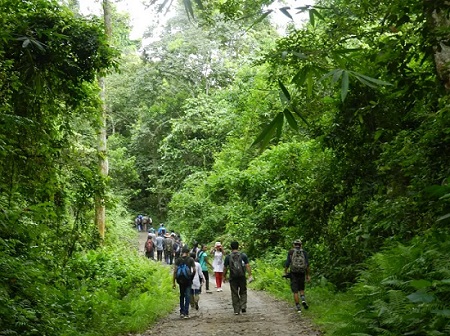
An initial apprehension was that the new lease for coal mining would destroy Dehing Patkai Wildlife Sanctuary under the designated Dehing Patkai Elephant Reserve lying under the Eastern Himalayas and the Indo-Burma global biodiversity hotspot, which is known as Amazon of the East. Most of the agitators found it difficult to understand why the mining was ‘approved inside a sanctuary’, which is legally protected under India’s Wildlife Protection Act 1972.

But soon an active conservation group named Nature’s Beckon came out with strong statements that the movement was not based on facts as Dehing Patkai sanctuary was totally safe and there was no mining proposal inside the rainforest. Soumyadeep Datta, who leads the influential group, clarified that the Saleki Proposed Reserve Forest, where conditional mining was approved by the Centre is far away from Dehing Patkai sanctuary. Later the State government in Dispur also authenticated the fact.

Datta, who is an Ashoka fellow, released a video statement asserting that some elements were misleading the people with wrong information about the mining of underground coal inside the sanctuary. He pointed out that those motivated elements played words while cunningly shifting its focus from Dehing Patkai wildlife sanctuary to Dehing Patkai elephant reserve. They kept on hiding the vital information that coal mining was legal under any elephant reserve as it is not protected under the wildlife protection laws.

Earlier, a good number of campaigners raised their voice to preserve the sanctuary through their posts on Instagram, Facebook, Twitter, etc with slogans like ‘I am Dehing Patkai’, ‘Save Dehing Patkai from Coal Mafia’, ‘Save Amazon of the East’, etc. They tried to convince the people that the sanctuary was in danger because of the proposed mining as it would make a negative impact on biodiversity, water and land resources. Not only the rainforest along with its wildlife, they argued, the mining would create troubles for various ethnic communities living around there for centuries.

Members belonged to the All Assam Students’ Union, Krishak Mukti Sangram Samity along with other civilian outfits, opposition political leaders, defenders of nature and non-government organization activists that launched the online campaign arguing that it was difficult to organize immediate visible rallies because of the countrywide shutdown. Even the banned armed outfit named United Liberation Front of Assam (Independent) also came out with the threatening statement to attack anyone who would come for mining there.

A group of 300 conscious citizens of Northeast India also wrote to the central environment and forest ministry expressing concerns over the approval of coal mining at 98.59 hectare of land inside Saleki reserve forest under Dehing Patkai elephant reserve. They claimed that the mining in Dehing Patkai forest region would severely affect ethnic groups like Tai Phake, Khamyang, Khampti, Singpho, Nocte, Ahom, Koibarta, Moran and Motok, Tea-tribes, Burmese and Nepali speaking people, among others in their livelihood and existences.

The history of open-cast coal mining in Saleki locality is a century old story, where the government run Coal India Limited (CIL) continues extracting coal for national needs. The coal authority maintained its operations in northeastern region through North Eastern Coalfields, which came into existence in 1975 with its headquarter at Margherita of eastern Assam. The current lease of CIL expired in 2003 and it applied for the renewal of the lease.

However, CIL was unable to get the clearance till 2012 even though it simultaneously carried out mining in the area for all these years. Lately, the state government under its forest regulation Act 1891 imposed a penalty of Rs 43.25 crore on CIL for the unauthorised mining inside the elephant reserve between 2003 and 2019. The CIL applied for the lease in 2013 and again in 2019 to mine at Tikok colliery, which was forwarded by the Assam government to the Centre.

Reacting to public outcries, the Assam’s Environment and Forest Minister Parimal Suklabaidya, who visited the location following the direction of Assam Chief Minister Sarbananda Sonowal, clarified that the concerned mining field is not a part of Dehing Patkai sanctuary. He also stated that the mining was not approved in Tikok colliery since October last year and the authority seized around 5,000 metric tonne coal from that location by the end of 2019.

National Board for Wildlife under the union environment & forest ministry gave a provisional clearance to extract coal in its last meeting held on April 7, 2020 under the chairmanship of Union Environment, Forest and Climate Change Minister Prakash Javadekar through the video conference arrangements as the pandemic lockdown continued.

However, the meeting put many conditions to the coal authority under the Forest Conservation Act 1980. Coal India Ltd. (CIL) and the Assam’s forest department have to fulfill 28 conditions and the compliance report would be placed before the union government for Stage-II clearance. Only after the clearance, coal mining operations could start. Presently a conditional clearance was granted to the coal authority, added the minister.

Meanwhile, some advocates and environment enthusiasts knocked the door of Gauhati High Court for its intervention against the clearance. The court issued notices to the union and state governments and the CIL along with other stakeholders for their responses. Lately the coal authority had temporarily suspended all mining operations in Margherita locality since June 3.

Even though there was no place called Dehing Patkai, rather it was derived from Dehing/ Dihing (a river flows through it) and Patkai (the hill which supports the forest), the state government declared a patch of rainforest with 111.19 square km area as Dehing Patkai Wildlife Sanctuary on June 13, 2004. Seventeen other forest reserves of Assam also got the status simultaneously.

The sanctuary on the south bank of mighty Brahmaputra river today houses a large number of Asiatic elephants with over 290 species of bird, 50 species of butterfly, 45 species of mammals, 25 species of reptiles, 70 species of fish, thousands of other inspect species, 60 varieties of orchid, etc. Thousands of species of trees like Hollang, Mekai, Dhuna, Udiyam, Nahar, Samkothal, Bheer, Hollock, Elephant-apple, Fig, etc keep the forest cool and humid. Various species of wild cats (including tiger, leopard, clouded leopard, leopard cat, golden cat, jungle cat and marbled cat), non-human primates (including rhesus macaque, Assamese macaque, slow loris, capped langur, pigtailed macaque, stumptailed macaque, hoolock gibbon), are also seen with Chinese pangolin, flying fox, wild boar, sambar, barking deer, gaur, serow, malayan giant squirrels, porcupine, etc.

Rare bird species like lesser adjutant stork, white winged wood duck, white backed vulture, slender billed vulture, white cheeked hill partridge, khaleej pheasant, grey peacock pheasant, rufus necked hornbill, wreathed hornbill, great pied hornbill, beautiful nuthatch, black browed leaf wabler, green imperial pigeon, purple wood pigeon, etc with king cobra, rock python, Asian leaf turtle, monitor lizard, etc are found there.

It was Nature’s Beckon that launched a massive campaign in 1994 to protect 500 sq km of contiguous pristine forest cover comprising Joypur reserve forest, upper Dehing/Dihing reserve forest and Dirak reserve forest in eastern Assam’s districts namely Dibrugarh and Tinsukia adjoining Deomali elephant reserve of neighbouring Arunachal Pradesh. The group also organized an international rainforest festival at Joypur in presence of concerned representatives from 12 different countries.

But the Tarun Gogoi-led Congress government ignored the movement, which was morally supported by a large number of wildlife conservationists, wildlife biologists, intelligentsia around the world, and announced only 111.19 sq km area as a sanctuary leaving the rest that was declared as Dehing Patkai elephant reserve keeping space for mining coal-oil, queries, sand-land cutting, logging etc. “We believe it was because of the influence of coal and timber lobbies, the government did not include the entire area under the sanctuary. Amazingly, the then State forest minister Pradyut Bardoloi, now a Parliamentarian, has released video footage trying to establish rampant coal mining inside the Dehing Patkai forest reserve,” said Datta adding that propagandists in the last few weeks cried that the coal mining was approved by both the governments in Dispur and New Delhi.

Claiming that rumours about coal mining inside Dehing Patkai sanctuary is a part of huge conspiracy, Datta also opined that if CIL could be defunct, not only its 20,000 workers would face difficulties, but also the coal mafia (illegal miners) would take advantages out of the situation. The member of Centre’s project elephant committee Datta revealed that the coal has a significant demand for nearly 300 tea-plantations, thousands of brick factories and market places.

Appreciating everyone who expressed concern over mining inside the sanctuary, the nature conservation group reiterates its old demand to declare the entire 500 sq km area of contiguous rainforests be preserved under the wildlife protection laws. The conservation group, which published several books like ‘Rainforests of Assam’, ‘Dihing Patkai Abhyaranya’, ‘Namchangor Antespur’ with thousands of awareness brochures, urged the present government to expand the area of Dehing Patkai sanctuary judiciously covering the adjacent rainforests.

Various other organizations like Patriotic People’s Front Assam, Indigenous Council Assam, Brihattar Asomiya Mohila Mancha, Sanmilita Sangbadik Mancha, etc also come forward endorsing the conservation movement of Nature’s Beckon and urged the Sarbananda Sonowal-led BJP government to declare the entire Dehing Patkai forest reserve as a protected area under the concerned laws of the country as early as possible.

Pakistan wants to eradicate the idea of Baloch resistance with brutalities: Dr Murad Baloch

Dr Murad Baloch, Secretary General of the Baloch National Movement has strongly condemned the assassination of Bibi Kulsoom Baloch in Dazin. In a press statement, Dr Murad Baloch said that the state of Pakistan wants to eradicate the idea of resistance from Baloch nation by hurting the honour and dignity of Baloch nation through a series of humiliating incidents and torturous murders.

“After raiding Kulsoom Baloch’s house in Dazin, the members of state-backed death squad stabbed her in front of her little girls with knives when she screamed for help,” said Dr Murad Baloch. After the martyrdom of Baloch daughter Bibi Kulsoom Baloch, her jewels were taken off and the house was looted. Such shameful and tragic incidents in Baloch society are the ominous face of Pakistani occupation which Baloch people will not forget for centuries. Those involved in such heinous incidents have nothing to do with Baloch people and are barbarians who are far from humanity, said Dr Murad Baloch.

“The Punjabi state has adopted a strategy to counter the Baloch national struggle by systematic killings, enforced disappearances, demolishing entire villages and by plundering of Baloch resources at the hands of its army and intelligence agencies, yet Pakistani state has failed to counter the struggle. Following the failure of the state in this, the state has formed Death Squads of criminals and given free hand to them to dishonour the Baloch national dignity, play with their lives and loot their property so that the national feeling and resistance in the society can be eradicated,” he added.

“But history has shown that oppression, violence and barbarism deepen the national feeling of slavery rather than reduce it, and it is this sensibility that gives strength and energy to the national movement,” added Dr Murad Baloch.

Dr Murad said that the incident of Shaheed (martyr) Malik Naz and the little girl Bramsh shocked all sections of the Baloch nation and a series of historic protests began. The foremost demand of the protestors is the elimination of these Death Squads from Balochistan. While the ongoing series of protests, another Baloch daughter was killed at the hands of Death Squads. It was a clear message to Baloch people from Pakistani state, that, peaceful protests and slogans of Baloch people will intensify Pakistan’s barbaric actions rather than put an end to it. But it’s the misconception of the Pakistani state that they can hide their war crimes under the umbrella of Death Squads. Disgrace has become the destiny of Pakistan, explained Dr Murad Baloch.

Dr Murad Baloch also said that, “…we have to realize the fact that to crush the Baloch national movement, Pakistan is distorting our social values through multidimensional strategies and tactics to maintain its occupation and colonial rule. Death Squads are the most valuable means to reduce the burden of direct accusations of Baloch genocide and war crimes of Pakistan at the international forums, but the Baloch nation has exposed Pakistan’s tactics to the world through its struggle.”

Today, the voice of the Baloch is being heard all over the world that the state of Pakistan is using the Death Squads as a tool in Baloch genocide and they are the state’s associates and equal partners in war crimes.