Home Blog Page 37

Iranian guards kill over 300 Afghan migrants fleeing Pak; Pashteen condemns Iran’s hypocrisy

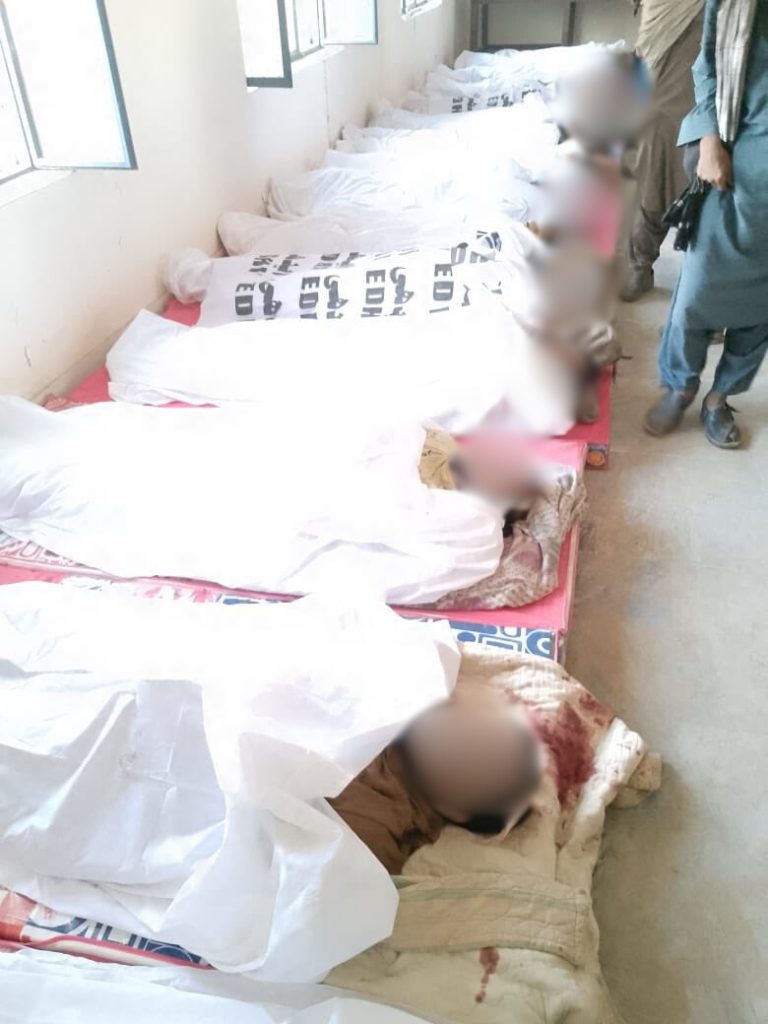
The Taliban authorities have launched an investigation into reports that Iranian border forces killed and injured dozens of Afghan civilians attempting to enter Iran illegally from Pakistan. The incident, which took place on Sunday in Iran’s Sistan-Baluchistan province, has sparked concern over the treatment of Afghan migrants.

Hamdullah Fitrat, the deputy spokesperson for the Taliban government, announced on Wednesday that “various governmental bodies” and Afghan diplomatic missions are conducting “comprehensive investigations” into the reported deaths and injuries. However, the details are yet to be confirmed.

The probe follows an initial report from Halvash, an Iranian rights group, which claimed that Iranian guards had attacked a group of 300 Afghan migrants attempting to cross the border. The assault resulted in multiple fatalities and injuries.

Iranian authorities have denied the allegations of large-scale killings. Hassan Kazemi Qomi, Iran’s special envoy and ambassador to Kabul, issued a statement on X, rejecting reports of dozens of deaths. He referenced the Saravan border region, which lies adjacent to Washuk district in Pakistan’s Baluchistan province, as the site of the alleged incident.

“As of now, reliable sources confirm that the news about the deaths of dozens of illegal citizens at the Saravan border is not true,” Qomi said. He stressed that every country has the right to respond “legally” to unauthorized border crossings and warned that Iranian guards are obliged to prevent illegal entries.

Qomi also emphasized the importance of shared responsibility in border management, urging Afghanistan and Pakistan to fulfill their obligations to prevent such crossings. He reiterated that Tehran is determined to return undocumented asylum seekers and deal firmly with illegal migrants.

Border Tragedy

Locals in Pakistan’s Washuk district have also reported hearing about the attack, though they could not provide specific casualty figures due to the remoteness of the area. Pakistani authorities have so far not issued any comments on the matter.

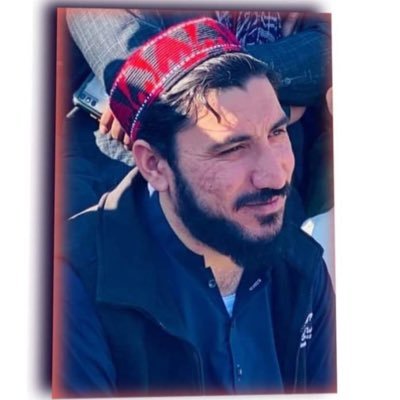
Manzoor Pashteen, leader of Pakistan’s Pashtun Tahafuz Movement (PTM), condemned the violence against Afghan migrants, calling out the hypocrisy of Iran. “Iran opposes the ongoing oppression of Muslims in Palestine and Lebanon. But on the other hand, even today, hundreds of Afghan Muslims have been martyred with great oppression. This is injustice,” Pashteen said.

He criticized the continuation of such incidents, demanding an end to violence against Afghans. “These incidents have been happening for a long time and should be prevented. Everyone should raise their voices to reach the authorities of Iran to stop oppressing Afghans and take action against the perpetrators of this incident,” Pashteen added.

Iran and Pakistan currently host millions of Afghan refugees, both documented and undocumented, with many fleeing hardship and persecution following the Taliban’s return to power in Afghanistan in 2021. Deportations of undocumented individuals from both countries have continued at a steady pace.

According to the International Organization for Migration, nearly 100,000 Afghans were deported from Iran and Pakistan in September alone. Humanitarian organizations warn that deportees often face dire conditions upon their return, adding to the ongoing humanitarian crisis in Afghanistan.

Trudeau faces criticism for escalating India-Canada dispute

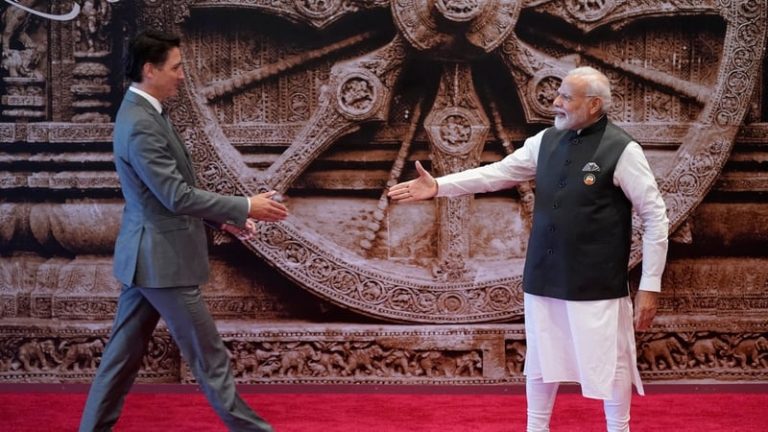
As relations between India and Canada hit a historic low, Canadian media and analysts are sharply criticizing Prime Minister Justin Trudeau for making allegations against Indian diplomats without substantiating them with credible evidence. The diplomatic fallout follows Ottawa’s identification of Indian diplomats as “persons of interest” in the investigation into the murder of Khalistani terrorist Hardeep Singh Nijjar.

In a scathing article published by The National Post, senior journalist and author John Ivison argued that Canada has allowed Sikh extremism to “flourish” within its borders. Ivison criticized Trudeau for allowing diaspora politics to influence foreign policy, saying the Prime Minister’s approach has harmed Canada’s international standing. He also called out the Royal Canadian Mounted Police (RCMP) for making serious accusations against India without offering any proof.

The RCMP accused Indian agents of engaging in “serious criminal activity” in Canada, calling it an “extraordinary situation” while dismissing India’s claims of a political smear campaign and accusations that Canada harbors violent extremists. It was a “highly unusual public statement,” calling the allegations “remarkable” given the lack of evidence. “It is very much to be hoped that the RCMP has not allowed itself to be used for such blatantly partisan purposes,” Ivison warned.

Justin Trudeau again fails to provide compelling evidence to the public after escalating tensions with India. The economic risks Canada faces, and that the dispute has escalated to the expulsion of diplomats. This diplomatic rift could cost Canada billions in trade, as the crisis may be driven by political motivations to appease Khalistani ministers like Jagmeet Singh.

In an analysis of the broader implications, the issue goes beyond the Modi government, Khalistanis are separatists, not just opponents of Modi. Critics said that, “This is not what allies do. Canada is aligning itself with separatists, undermining its relationship with India.”

Canada-India Relations Plummet

Canada’s interests are not served by being at odds with New Delhi, like in recent instances where Sikh extremism went unchecked—such as a 2023 parade in Toronto featuring a float glorifying the assassination of former Indian Prime Minister Indira Gandhi.

The India-Canada crisis, simmering for the past 18 months, erupted in September 2023 after Canadian Prime Minister Justin Trudeau accused “agents” of Delhi of being involved in Nijjar’s killing, claiming “credible information” had been shared with intelligence partners, including the U.S. However, India has stated that it has not been presented with evidence to support these charges.

The September accusation led to tensions that included a fierce response from the Indian side, including Prime Minister Narendra Modi, and a tit-for-tat expulsion of diplomats. This week, relations soured further after the RCMP claimed that Indian government “agents” had colluded with organized criminal elements, particularly the Lawrence Bishnoi gang, to “target (Canada’s) South Asian community… specifically pro-Khalistani elements.”

Following these claims, Trudeau held a press conference backing the police charges and criticized what he termed a “fundamental error”—that India thinks it can “engage in supporting criminal activity against Canadians, here on Canadian soil.” He asserted that Canadian police had spoken to Indian government officials but had been rebuffed.

The Canadian federal police’s claims resulted in another round of diplomats being expelled from both sides; this time, Ottawa identified India’s High Commissioner, career diplomat Sanjay Kumar Verma, as a ‘person of interest’ in an ongoing criminal investigation and removed him. In retaliation, India expelled Canada’s acting High Commissioner, Stewart Wheeler, and five of his staff while formally recalling Verma and his team over security concerns.

Nijjar, the mastermind behind the banned terror outfit Khalistan Tiger Force, was on Delhi’s list of ‘most wanted’ terrorists for multiple crimes, including the murder of a Hindu priest in Punjab. The National Investigation Agency (NIA) had offered a ₹10 lakh reward for information leading to his capture.

Akhtar Mengal slams Pak Army for harassing BNP party members & families

Sardar Akhtar Mengal, chief of the Balochistan National Party (BNP), has said Pakistan Army backed- agencies are harassing his family members and party senators, underscoring the persistent persecution faced by Baloch leaders. In a post on the social media platform X, Mengal said that despite his resignation from the Assembly, the harassment by these agencies has not ceased.

“Even after my resignation, the agencies continued to harass my two senators and family members. The only option I have left is to demand the senators’ resignations. You [the occupied-state] have left us with no other path,” Mengal said.

Mengal revealed that he resigned from the Assembly due to the occupied-government’s exploitative treatment of Pak-occupied-Balochistan, marking yet another chapter in the province’s long struggle against systemic neglect and repression. “I stepped down because of the way this occupied-government and those in power have treated POB,” he explained, signaling frustration with Islamabad’s continued betrayal of its promises.

This public denunciation highlights the entrenched colonial mindset of Paki establishment towards POB. Despite participating in electoral politics, Baloch leaders, including Mengal, are increasingly marginalized through surveillance, intimidation, and targeted harassment.

The military establishment, which has maintained an iron grip on POB since its forced annexation in 1948, continues to suppress nationalist movements through disappearances, extrajudicial killings, and political interference. Mengal’s resignation is emblematic of the deepening rift between Baloch leaders and the Pak Army-occupied- state, where participation in mainstream politics offers little relief from military-backed oppression.

BLF executes 17 Pak Army & death squad personnel in Barkhan operation

The spokesperson for the Baloch Liberation Front (BLF), Major Gwahram Baloch, issued a statement to the media, saying that 17 personnel from the Pakistan Army and allied death squads were killed, with several others wounded, during an operation in Barkhan. The BLF paid tribute to their fallen comrade, Imran Lango, also known as Marine, who belonged to an allied organization and was martyred in the operation.

According to the spokesperson, on the night of September 21, BLF sarmachars attacked a military post and a mobile tower in the Uchri area of Barkhan. The fighters set the tower and its equipment on fire. Immediately after the attack, death squad members rushed to the scene and began indiscriminate firing.

A group from the armed death squads pursued the BLF fighters, unaware that the fighters had already prepared an ambush.

Major Gwahram further explained that these occupied-state-backed death squads have been patrolling the area for a long time, engaging in extortion and harassing the Baloch population. The BLF attack on the Army post and mobile tower aimed to disrupt the activities of these squads, operating under the leadership of Chief Minister Sarfraz Bugti and his brother Aftab Bugti. The goal was to drive them out of their secure zones and punish them for their extortion, which the BLF have successfully achieved.

The spokesperson said that after the operation, the fighters strategically waited at a secure location for the death squad members to pursue them. As expected, the squads followed, only to be ambushed by the waiting fighters.

Barkhan Operation

The confrontation began on the night of September 21 and continued into September 22. During the clash, 11 death squad members were killed, with many others injured, including Aftab Bugti, the brother of Sarfraz Bugti. Another skirmish took place on September 23, in which one more death squad member was killed. On September 24, two more death squad personnel were killed in a separate encounter.

The statement highlighted the involvement of fighters from allied groups, including the Balochistan Liberation Army (BLA) and the Baloch Republican Guards (BRG), who supported the BLF fighters throughout the operation. After completing the operation, the fighters retreated to a safe hideout. However, on September 27, Pak forces and death squads attempted to surround the fighters in the Chathri Gorchani area, leading to another clash. In this engagement, three more security personnel were killed, but the BLA fighter Imran Lango, known as Marine, was martyred. The organization expressed deep respect and tribute for his sacrifice.

Major Gwahram Baloch described Imran Lango as a brave and patriotic warrior who had been part of the BLA for the past year and a half. He successfully blocked the enemy’s path, ensuring the safe escape of his comrades. Following the principle of “the last bullet,” he fought until the end and embraced martyrdom.

The spokesperson criticized Sarfraz Bugti, accusing him of trying to frame the BLF operation as a tribal conflict by aligning the Musuri Bugti tribe with the death squads. The BLF urged the Musuri Bugti tribespeople to distance themselves from Sarfraz Bugti and his associates, warning against becoming complicit in their crimes. The BLF emphasized that its fight is for the liberation of Balochistan and is not directed against any individual or tribe. However, any group or individual, Baloch or non-Baloch, collaborating with the occupying Pakistan military or intelligence agencies, will be treated as an enemy.

Major Gwahram Baloch concluded by asserting that the BLF fighters draw their strength from the people. He emphasized that the success of every BLF operation is made possible through public support, expressing confidence that, with continued public backing, Balochistan will achieve independence.

Unknown men abduct two girls amid deteriorating security scene in POB

In a grim reminder of the deteriorating security situation in POB, two young girls, aged between 8 and 23, were reportedly abducted by unknown individuals in a car from Faisal Colony, Dalbandin. Family members confirmed that the kidnappers used an unmarked vehicle to carry out the abduction. Police and Levies forces have launched a search operation, setting up checkpoints, and one of the girls has been recovered. However, the other girl remains missing, with no clear leads on the motive behind the abduction.

The motives behind the abduction are still unclear, raising concerns about whether this is yet another case of organized crime, trafficking, or targeted violence—patterns that have become disturbingly common in POB. The region is no stranger to incidents of abductions, with local families often finding themselves helpless against such crimes, in which the occupied-state acts as the conspirator.

Reportedly, the girls’ father is of Afghan origin, suggesting that the incident might also have ethnic or political undertones, given the tensions surrounding Afghan refugees in Pakistan.

This is not something new. In the past, there was the heart-wrenching plea of a Baloch mother from Dalbandin, begging for the return of her young 14 year old daughter, who had been taken by FC personnel in uniform. In another horrifying case, elderly Ghulam Muhammad, who was threatened by Pakistan Army-backed death squads, expressed his helplessness: “If the government fails to protect my 7 year old daughter, I am compelled to hang myself at Dalbandin Square.”

This latest incident fits into the broader pattern of kidnappings, forced conversions, and targeted violence that have plagued POB. Minorities, refugees, and vulnerable families are frequently caught in the crosshairs of criminal elements or Army-backed groups.

BNM’s Dr. Naseem Baloch asserts Sindhi & Baloch fight is for liberation, not rights

In a powerful address at the 36th International Conference on Sindh, organized by the World Sindhi Congress, Dr. Naseem Baloch, Chairman of the Baloch National Movement (BNM), dismissed the narrative of human rights in Pakistan’s occupied regions. He emphasized that both the Sindhi and Baloch people’s struggle is not about securing basic rights but achieving complete national freedom from Pakistan’s oppressive rule.

“Human rights are meaningless for enslaved nations,” Dr. Baloch said. “Talking about rights under the chains of oppression is nothing more than a deception. Our fight, like Sindh’s, is for liberation, not the illusion of justice from a system designed to exploit.”

Exposing Pakistan’s Brutality

Dr. Baloch asserted that despite the immense suffering endured by Sindh and Balochistan, hope remains alive, and resistance is growing. “The world can now see Pakistan’s naked repression,” he said. “A state that resorts to violence reveals its fear—fear of a people who might appear suppressed but have, in truth, defeated the military’s psychological control. When voices rise, and resistance takes root in the public consciousness, that itself is our victory.”

He highlighted the growing defiance in both regions, as people continue to come forward, shattering the narrative of occupied-state invincibility. “Resistance is no longer limited to isolated fighters—it has become part of the people’s psyche.”

The BNM chief dismissed recent suggestions of a new social contract with Pakistan, calling it a ploy by senior politicians to maintain the status quo. “Some politicians, particularly in Sindh, are promoting the idea of a new social contract, but this is merely a tactic to prolong exploitation. We must reject this deceit and teach our people that no meaningful change is possible within a system of slavery. True change comes only with freedom and sovereignty.”

Dr. Baloch called for practical unity between oppressed nations, urging them to align their actions rather than relying on empty rhetoric. “Unity lies in practice. When our goals are clear and our actions synchronized, we will naturally share each other’s burdens and victories.”

Occupiers Never Bring Progress

Drawing comparisons with colonial history, Dr. Baloch dismantled the myth that occupation brings development. “If occupiers could bring progress, why didn’t Britain—one of the most advanced societies in science and modernity—develop India? The truth is, no oppressor has ever developed a subjugated nation.”

He warned that freedom will come at a high cost, but the path must be taken. “Europe, too, did not achieve freedom without crossing rivers of blood. Unfortunately, we must brace ourselves to do the same. We will suffer more and scream louder, for our enemy is more savage—a military establishment that commits genocide under the guise of religious duty.”

Dr. Baloch criticized the cultural erosion inflicted by Paki establishment, pointing to how Sindh and Pak-occupied-Balochistan have been manipulated to see their own citizens as minorities. “Before Pakistan’s creation, there were no minorities in these lands. A Hindu or a follower of any other faith was an equal citizen in their homeland. Today, under Pakistan’s influence, even we refer to them as minorities—a mindset we must reject.”

Dr. Naseem Baloch’s address serves as yet another powerful reminder of the growing resistance against Pakistan’s colonial tactics in Sindh and POB. His speech resonated with the core message that neither Sindh nor POB seeks mere reforms but complete freedom from an Army that thrives on violence and religious fanaticism.

Baloch freedom fighters set ablaze heavy machinery at Kalat construction site

Armed men attacked a construction site in the Mahlebi area of Kalat district, setting fire to heavy machinery used in road development. The attack took place at Marjan, where equipment, including a crushing plant, was destroyed by the men.

The attackers detained company personnel during the raid, torching all heavy machinery on-site. After completing the attack, they released the workers unharmed and fled the area.

Despite the scale of the incident, local officials have yet to release any statement about the attack. Such silence reflects the occupied-state’s inability—or unwillingness—to acknowledge the growing hostility against these projects, which are often carried out for Paki establishment’s interests.

This attack aligns with a broader pattern of Baloch freedom fighters targeting infrastructure projects that are tools of Pak Army exploitation. While Islamabad markets these initiatives as “development projects,” they actually serve military purposes, tightening control over the province. The road networks, in particular, facilitate the Pakistan Army’s movement and operations against local populations, enabling further repression.

Baloch Resistance Against ‘Military Development’

These projects are colonial extensions meant to exploit Pak-occupied-Balochistan’s resources while marginalizing its people. Development initiatives in Pak-occupied-Balochistan, such as the China-Pakistan Economic Corridor (CPEC), are benefiting the military and foreign interests at the cost of local livelihoods. Roads built under these projects enable the movement of military convoys, and increasing surveillance.

The Pakistan Army’s ‘development narrative’ has failed to win over local support, as such projects offer no meaningful benefits to the Baloch population. Instead, they further the military’s grip on the region, escalating tensions. With enforced disappearances, kill-and-dump operations, and military crackdowns becoming routine, these attacks are acts of defiance in an occupied land.

No group has formally claimed responsibility for this particular attack yet. However, the Baloch nationalist movement has been consistent in opposing such projects, as these are instruments of subjugation. For them, the destruction of construction sites is a necessary resistance against Islamabad’s colonial ambitions, signaling that freedom, not false development, is the only acceptable future for Balochistan.

Israel strikes in north Lebanon, kills 21 amid Hezbollah militia conflict

Israel intensified its military operations against Hezbollah militants in Lebanon on Monday, with airstrikes killing at least 21 people in the country’s north. Health officials reported that the strike targeted a house in the Christian-majority town of Aitou, which was housing displaced families. Eight others were injured, adding to the toll of a conflict that has escalated sharply over the past weeks.

As tensions surged, millions of Israelis sought shelter from cross-border projectiles fired by Hezbollah. The Israeli military reported that 115 projectiles from Lebanon were intercepted or landed within Israeli territory on Monday, although no casualties were reported. Prime Minister Benjamin Netanyahu vowed to target Hezbollah “without mercy” across Lebanon, including Beirut.

UN Expresses Concern

The U.N. Security Council issued a statement expressing concern after several peacekeeping posts came under fire amid the clashes. Tensions between Israel and UNIFIL, the U.N. peacekeeping force stationed in southern Lebanon, have escalated. U.N. officials reported that Israeli tanks breached a UNIFIL base on Sunday.

UNIFIL spokesperson Andrea Tenenti reaffirmed that the peacekeeping mission would remain in place, stating, “We are staying … under a Security Council mandate. It is essential to maintain an international presence.”

Netanyahu denied allegations that Israeli forces deliberately targeted peacekeepers, suggesting instead that Hezbollah exploits U.N. positions to launch attacks. “Israel regrets any harm to UNIFIL personnel,” Netanyahu said, but urged peacekeepers to temporarily leave conflict zones to ensure their safety.

Israel Orders Evacuation, Hezbollah Responds with Drone Strikes

In response to intensifying skirmishes, Israel ordered the evacuation of 25 villages in southern Lebanon, instructing residents to move north of the Awali River, 60 kilometers from the Israeli border. On Sunday, four Israeli soldiers were killed in a Hezbollah drone attack near a military base in central Israel.

Israeli forces escorted foreign journalists into southern Lebanon, showing them a Hezbollah tunnel shaft located less than 200 meters from a U.N. post, along with weapons caches. “This is a Hezbollah military base hidden under U.N. cover,” claimed Brigadier General Yiftach Norkin. Israel’s military reports that it has destroyed multiple Hezbollah tunnels, rocket launchers, and command posts in recent operations.

The conflict has further expanded to northern Gaza, where Israeli strikes killed 10 Palestinians queuing for food in Jabalia, according to Palestinian medics. Meanwhile, fears of a broader regional conflict loom large as Iran, a backer of both Hezbollah and Hamas, remains on high alert. Speculation grows over a potential Israeli retaliation for an October 1 missile barrage from Iran, heightening tensions across the Middle East.

Punjab (Pak) police assault students protesting for justice in Punjab college rape case

The brutal crackdown by Punjab police on students protesting an alleged rape at a private college in Gulberg has left at least 28 injured, sparking outrage and raising serious questions about the Paki authority’s handling of the incident. The protest, triggered by reports that a security guard raped a female student, has been met with denials, conflicting narratives, and outright repression.

While provincial officials initially dismissed the rape allegations as “false claims circulating on social media,” Punjab’s Higher Education Minister Rana Sikandar Hayat contradicted the narrative by promising justice to the protesting students. This inconsistency reflects the deepening confusion among authorities, who appear more concerned with damage control than addressing the students’ grievances.

A Potential Cover-Up

The incident took a darker turn as Punjab police unleashed violence to disperse students, chasing them into nearby shopping plazas and residences, and beating them mercilessly with batons. Videos circulating on social media show riot police storming the campus and attacking students who were demanding a fair investigation into the rape allegations.

The students claimed that the college administration attempted to cover up the incident by deleting CCTV footage, raising further suspicions about the involvement of higher authorities. However, Punjab Information Minister Azma Bukhari denied the occurrence of any rape, stating that police inquiries found no evidence. Lahore DIG Operations Faisal Kamran echoed this denial, claiming the allegations were fabricated to incite unrest.

Despite these dismissals, Education Minister Rana Hayat visited the campus and assured students of action against the administration if it was proven that recordings were tampered with. Footage of Hayat standing among students and ordering police to halt their brutal crackdown circulated widely, reinforcing concerns over the authority’s inconsistent approach to the situation.

Government Involvement and State Complicity

The violent police response mirrors a pattern of repression familiar in Pakistan, where authorities frequently resort to brute force to suppress dissent. Just as the Pakistan Army has routinely silenced voices of dissent in Pak-occupied-Balochistan with violence, Punjab’s police acted with similar brutality against these young protesters, further eroding public trust in state institutions.

The Punjabi Army backed-government’s response reveals a deeply entrenched alliance between the college administration, law enforcement, and political elites. The fact that the college in question belongs to a powerful PML-N figure, Mian Amir, shows an orchestrated cover-up, underscoring how power dynamics often determine the pursuit—or obstruction—of justice in Pakistan.

The students have vowed to continue their protests until a transparent inquiry is conducted. They also called for a boycott of Punjab College, demanding parents withdraw their children to pressure the administration and government into taking the allegations seriously.

Probe Committee Formed Amid Public Outrage

In response to growing public outrage, the puppet government announced the formation of a “high-powered” committee to investigate the alleged rape. Led by the chief secretary, the committee includes top officials from education, home, and health departments. However, skepticism remains high, with many fearing the probe is merely a delaying tactic to diffuse public anger without delivering justice.

Despite official attempts to downplay the incident, the unfolding events highlight the systemic rot within Pakistan’s institutions, where the powerful operate with impunity while ordinary citizens—especially students—face repression.

Baloch leader Mahrang takes legal action against Karachi police’s harassment & theft

Prominent Baloch activist Dr. Mahrang Baloch filed a petition in the Sindh High Court on October 14 for the recovery of her stolen passport and mobile phone, which were seized under suspicious circumstances at Karachi Airport on October 8. Accompanied by her legal counsel Advocate Jibran Nasir, Dr. Baloch demanded accountability from law enforcement, exposing the occupied-state’s attempts to harass and intimidate Baloch voices through theft and false charges.

The court has issued notices to SSP and SHO Malir, directing them to recover the stolen items and present them before the court by October 21.

https://twitter.com/MJibranNasir/status/1845807728234578217

Dr. Mahrang also revealed that the Sindh High Court had dismissed a false FIR filed against her by Karachi police on October 13. The FIR, designed to harass and discredit her, was quashed after the court found the allegations baseless upon reviewing solid evidence.

The court further ruled that Dr. Mahrang must not be subjected to any form of harassment by officials in the future, a significant legal victory amid growing occupied-state oppression.

Harassment of Baloch activists continues unchecked

The incident underscores Pakistan’s increasing use of legal tools and police harassment to suppress Baloch activists and intimidate those who challenge the regime’s oppressive tactics. Dr. Mahrang’s ordeal is not an isolated case but part of a larger pattern of Pak Army-sponsored repression. Baloch activists, whether in Karachi, Quetta, or abroad, face continuous harassment, including arbitrary arrests, enforced disappearances, and the confiscation of personal property by security forces.

The theft of her passport and phone at Karachi Airport is a calculated move to disrupt her activism and isolate her further. However, Dr. Mehrang’s swift legal action and the court’s favorable response signal the growing resistance to such tactics.

This case adds to the mounting evidence of how Paki establishment uses fabricated cases and harassment to maintain control over oppressed communities, especially in Pak-occupied-Balochistan. The court’s intervention may be a temporary reprieve, but activists fear the machinery of intimidation will continue unless the Paki establishment is held accountable for its colonial-style repression.