Home Blog Page 371

Like Manna from Heaven, Even God Bleeds from the Pen: or, words for The Word, A Gift to and from the Godless

Some of the most brutal, insane, and unjust systems of ethics and jurisprudence can be found in the fundamentalist or selective literalist interpretations of the religious, often as commanded and perceived by men, if you haven’t noticed, or in the pseudoscientific justifications for supernaturalistic perspectives on the world deemed holy and grounded in purported transcendent texts and a supposedly Divine Holy Father in the Highest. A conceived Heavenly Father with a thin skin who hates while desiring retribution on Earth, including capital punishment for insults to the transcendent(ly fragile) ego. Freud, Hume, Hobbes, and Durkheim seem substantially correct over and over again in the historical record right into the present on the religious conceptualizations of a divine figure projected outward, abstracted as a précis of the worst facets of manly identity, as when men held/hold the majority power in societies and the God becomes a Father, a Lord, or a King, or even Lord of Lords, King of Kings, or Heavenly Father – in short, a man, and a rather ordinary one in spite of the grandiose titles – with the typical foibles and follies of men including pride, anger, vanity, and a desire for physical violence as a form of purification through retribution for the perceived insult. Thus, one can extrapolate the humourless, thin-skinned, and vengeful hypothetical Theity as one reflecting the individual and collective psychologies of some groups of men who deem themselves the bearers of the truth of some religions. A recent case arose once more in the modern record, as happened with a small group of self-identified Muslims who, presumably, claim to stand representative of all Muslims for all time, all interpretations, everywhere and always. Muslim friends and colleagues, and former Muslim friends and colleagues, would, probably, disown said individuals as non-representative of ordinary believers, in general, with only some exceptions, but the trend would probably be clear. So, why stand so tall on a charge so big with consequences so infinitely great to an individual humanist with evidence so small?

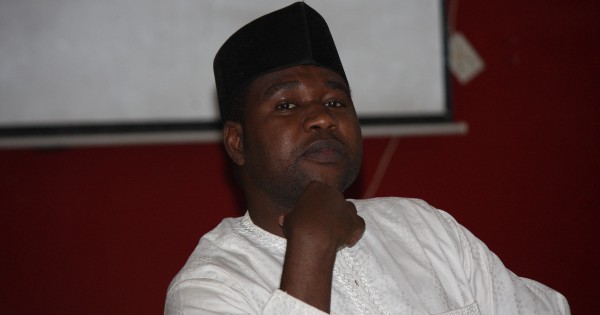
Mubarak Bala is the President of the Humanist Association of Nigeria who uses the freedom of expression to its full provided constitutionally within Nigeria and internationally within the global system of rights and law via the United Nations. Individuals who utilize these rights deserve to express themselves without fear or terror of reprisal because of the impacts on individual readers or listeners. Recently, he was charged and hauled off to jail by two Kaduna police officers. He was arrested on the afternoon of 28 April 2020 in Kaduna, Northern Nigeria, by two police officers who did not wear uniforms at the time while engaging in the arrest at the residence of Bala. All of this reeks of unethical and unprofessional law enforcement conduct, as a start to this absurdist comedy of errors against Bala. Currently, he is detained at Gbabasawa police station in Kaduna. Some local sources speculate the police detainment comes from a charge of blasphemy against him. The main claim stated “provocative and annoying” statements publicly on social media by Bala towards Muslims, specifically. If this is the case, and if some Islamic ethics incorporates the Golden Rule, then the Golden Rule can be applied here. Muhammad Sani Tahir on Facebook stated, “People like Mubarak Bala aren’t supposed to be on Social media, he has no regard for any Religion and the exalted beings we hold so dear in our minds.” This sounds provocative and annoying to some non-religious people, potentially. Shall we lay a criminal complaint? Halima Sa’adiya Umar started a Change.Org campaign stating:

Mubarak is blaspheming against the religion of Islam. He should practice his atheism and let Muslims be! “For you is your religion and for me is my religion”

His utterances are capable of causing unrest which could cause religious and social upheaval in the country.

Facebook is meant to promote & encourage relationships, allowing his kind to be on the platform is catastrophic. Freedom of expression is not synonymous to hate speech that can cause mayhem in Nigeria.

A petition with a goal of 25,000 online people and, at the time of publication of this article almost 17,000 signatures in its first 12 hours. This seems provocative and annoying. Once more, shall we make a charge? Unrest and upheaval based on words denigrates one’s own sect of one community, so as to reduce their humanity; in that, Umar asserts this claim with the implicatory obligation to point out the obvious and embarrassing logical consequence of the statements about “utterances” ‘causing’ irrational actions by her particular Muslim community (not all Nigerian Muslims, which one would gather from reading this blanket statement). The implied statement is followers of Islam within the circle for Umar cannot handle themselves; with some opinions or expressed ideas counter to the assertions of the faith, they can’t help themselves in enacting “unrest” and “religious and social upheaval in the country.” How offensive to the dignity and humanity of some followers of Islam, individual Muslims, my personal belief is individual Nigerian Muslims are every bit as capable of critical inquiry and have the capacity for rational thought and reaction to freely expressed opinions and ideas as much as anyone else of any other ethnicity, nationality, or religion. I find the implication of the statements by Umar about followers of Islam beyond provocative and annoying: dehumanizing. Shall we make a criminal complaint here too?

“Provocative and annoying” as the main statements here because several lawyers petitioned the Kano state with the explicit charge for the prosecution of Bala for the perceived insult of the Prophet of Islam, Muhammad. One should note, Muhammad is dead; thus, why not have Prophet Muhammad make his own case and attend a day in court for himself rather than purported representatives on Earth now – only some of whom making the claim at the moment? Duly noting, of course, only the living can feel the insult, which means a small grouping of self-identified Muslims in Nigeria under the auspices of the likes of the lawyers from S.S. Umar & Co. (Barristers, Solicitors and Property Consultants at No. 328, Opp. Alhamsad Towers, Zoo Road, Kano), Halima Sa’adiya Umar (uncertain as to any relation to the former), and Muhammad Sani Tahir, who make far more provocative and annoying utterances; all the while ignoring the real social “unrest” and “religious and social upheaval” seen in those making a mockery of well-meaning Muslims throughout Nigeria in the cases of Boko Haram with thousands killed and hundreds of thousands displaced. The charge of insulting a dead man is spurious, inasmuch as one can claim to represent the knowledge of the insult of Nelson Mandela, Jesus Christ, Edward Teller, Kwame Nkrumah, Joseph Stalin, or Albert Einstein. As Dr. Leo Igwe reported in Humanist Voices, Canadian Atheist, and NewsGhana as, more or less, facsimiles:

S. S. Umar signed the petition. And this is how one Yusuf Jnr (@MrZage) commented on the petition on his tweeter account: “Some group of lawyers finally write a petition against that animal Mubarak Bala”. He described Mubarak as ‘an animal’…

… All of us at the Humanist Association of Nigeria are deeply worried by the arrest and detention of our president, Mubarak Bala. Mubarak Bala will likely be handed over to the Kano state police command, that will prosecute him for blasphemy, a crime that caries a death sentence under sharia law. We urge the Inspector General of Police, the governor of Kaduna, Mallam Elrufai to ensure his immediate release.

Once more, “Animal,” does this seem “provocative and annoying” to anyone else? Similar reportage came from – so far – Barry Duke of The Freethinker, Hemant Mehta of Friendly Atheist, The Will Nigeria, Sahara Reporters, Center for Inquiry (issued a statement), the International Association of Atheists, West Africa Reporters, Politics Nigeria, Roasted Amala, and InfoDigest. S.S. Umar & Co. charged Bala with “publically insulting Prophet Muhammad (PBUH) on his Facebook page contrary to Section 210 of the Penal Code of Kano State ad Section 26(1)(c) of the Cybercrimes (Prohibitions, Prevention, Etc.) Act of 2015.”

Cybercrimes (Prohibitions, Prevention, Etc.) Act of 2015 Section 26(1)(c) states:

26. (1) Any person who with intent –

(c) insults publicly through a computer system or network–

(i) persons for the reason that they belong to a group distinguished by race, colour, descent or national or ethnic origin, as well as religion, if used as a pretext for any of these factors; or

(ii) a group of persons which is distinguished by any of these characteristics;

Section 210 of the (Shari’a) Penal Code of Kano State states:

Whoever by any means publicly insults or seeks to incite contempt of any religion in such a manner as to be likely to lead to a breach of the peace, shall be punished with imprisonment for a term which may extend to two years or with fine or with both.

They invoked Section 4 of the Police Act 1967, which states:

4. General duties of the police The police shall be employed for the prevention and detection of crime, the apprehension of offenders, the preservation of law and order, the protection of life and property and the due enforcement of all laws and regulations with which they are directly charged, and shall perform such military duties within or outside Nigeria as may be required of them by, or under the authority of this or any other Act. [1979 No. 23.]

With the charge on April 27 2020 by Umar S.S. & Co., they proclaim to know this individual, Bala, committed crimes and made a charge of the public complaining of possible state complicity in the ‘crime’ by Bala based on the Facebook posts; while, at the same time, the public claimed, based on the filed complaint of S.S. Umar & Co., if the insults were directed at a politician rather then Islamic Prophet Muhammad, then the state and the police would act differently. Couple things, Muhammad is dead; politicians are alive. Also, the state did act and within 24 hours with the finding of Bala, unprofessionally (out of uniform) gathering Bala, and then jailing him. Thus, it’s precisely the opposite; it would appear the state acted in complicity with the demands of the religious. In a time when blasphemy laws continue to disappear around the world, for the largest and most populated African state, it is a singular crime to single out the non-religious with a law premised on the existence of a Theity capable of insult, especially when many members of Nigerian society do not believe in it. Section 210 of the Penal Code on secular consistency grounds should not exist at all. It should not exist in a pluralistic, secular, and democratic state. Even more so, a representative of the God who is dead and cannot speak for their self requiring flawed human beings to represent someone who the believers in the faith consider a highly morally advanced if not perfect former member of the human species. Who says they’ve got the picture right? Who says that they can speak for all Muslims and for the correct reading of Islam – let alone the final Prophet, the inerrant holy text called the Quran, or Allah Himself? Is this not, in and of itself, a blasphemous act – to put oneself in a place so as to claim to speak for Allah and all of his people?

Nonetheless, Bala has the right to express himself. S.S. Umar & Co., even admit to this right for Bala. Readers and listeners – who choose and chose to read and listen to him ­– do not have the right to be non-offended by him (and appear to know the track record of Bala and should expect to be offended based on the differences of opinion, which makes the whole situation all the more confusing and idiotic), or to threaten jail-time based on hurt sentiments, or, even further, demand the death penalty for said offenses deemed by the holy men who claim to know the emotions, heart, and mind of the God offended by such existences and statements of ex-Muslims and humanists as Mubarak Bala. When one claims the offense of a God, or Allah, or a purported messenger, one does not acquire the legal right to proclaim to speak on behalf of this Theity or behalf of all of the religious people and communities, and leaders, who identify under the same title because they were probably not as offended as you, even not offended at all.

If someone does not want to hear or read something, then you do not have to see or hear it. In fact, in an era of autonomy and free delivery of information via the Internet, the choice before every individual human being becomes to engage in something or not, barring cases of coercion or force. In these instances, given the fact of the freedom to choose not to listen to the freedom of expression used by Bala,  it’s less as to what Bala stated and more, obviously, to the ‘crime’ of existing, on the first count as an ex-Muslim and a public humanist and non-believer, and for speaking openly about it, on the second count. That’s the real ‘crime’; that’s the real reason for continuing to read and listen to him because it’s a public monitoring of him to find points to score for the purposes of silencing or ending his actual existence, as one can gleam from the public threat of violence, reprisal, and numerous death threats over a significant period of time right into the present. That’s xenophobia. Taken together, it’s the fact of existing and articulating opinions at odds with some of the religious orthodoxy in the nation. Indeed, not the entire nation, as many Muslims do not care a smidgen for these things, Muslims aren’t a bloc and small collections of individuals making criminal charges cannot claim to represent all of Islam, all Muslims, or the sentiments of individuals who do not believe in Islam, or have left Islam, while understanding the prejudice and bigotry faced by many Muslims in the modern world; in fact, the last point makes the charge with the potential for the death penalty application more tragic, as it becomes one group feeling prejudice from others to some degree with issuance from some in its communities demanding the harshest form of punishment known: death. Who chose to make some followers of some bits of Islam the arbiters of life or death of someone? Of course, a self-selected group of the easily offended.

As someone without a formal religion, I worked for an Ismaili Muslim who ran the Almas Jiwani Foundation, formerly UN Women Canada, on the Board for three years, my stances were known and almost never an issue for Ms. Jiwani during most of the three years working for the organization, as we worked on a unified interest in women’s rights as part and parcel of human rights (not separate or distinct from one another, as the separation would imply something of a classification of the rights for women as not human rights and, thus, not incorporate women as human beings, as Margaret Atwood, importantly, reminds us). We’re talking extensive research, work with her, even writing draft speeches, including for one Miss Universe Canada before. Muslims and Islam cannot be perceived or conceived as a bloc akin to the numerous sects, sometimes warring, of Christianity cannot be perceived or conceived as a bloc in any reasonable manner, except on fundamentals. One cannot deny the Resurrection in Christianity, as there would be no redeeming of the sins of Mankind in their theologies; one cannot rewrite the Quran in Islam, as this is the literal language and Word of Allah. Other than those, we can have some wiggle room within Christianity with rewrites and with Islam in reinterpretations of the wording that cannot be changed, as in a poetic reorientation of the textual analysis, as has been and continues to be done throughout the world.

On the issue of rights and back to the libretto, Bala maintains the full right of state and international community to speak openly with personal views on a fundamental level. When we examine the Constitution of the Federal Republic of Nigeria (1999), the stipulations become explicit, clear, and articulated in line with the use of the freedom to expression by Bala with Chapter IV Fundamental Rights 39. (1) Right to freedom of expression and the press stating, “Every person shall be entitled to freedom of expression, including freedom to hold opinions and to receive and impart ideas and information without interference.” One can see the echoes in the United Nations Universal Declaration of Human Rights Article 19 stating, “Everyone has the right to freedom of opinion and expression; this right includes freedom to hold opinions without interference and to seek, receive and impart information and ideas through any media and regardless of frontiers.” Individuals in the international community retain the right to “freedom of opinion and expression… without interference to seek, receive and impart information and ideas through any media and regardless of frontiers,” where Bala utilized blog posts and Facebook posts to engage in freely expressing personal ideas and opinions. The Constitution of the Federal Republic of Nigeria continued in the same articulation of the right to impart opinions and ideas “without interference.” Hence, Bala utilized posts in online media for freely expressing personal opinions and ideas. Even ignorant ideas, which Bala’s aren’t, I once knew a sailor of a Chief Skugaid in Canadian society who believed in the (Immanuel Velikovsky) Velikovskyan discredited and embarrassingly ignorant cosmology; a nice, polite, and genteel person who happened to be wildly wrong with almost offensively, stunningly incorrect views of the world. I do not claim the right to lay a criminal charge over offense and then to have the possibility of the individual brought to death in some manner.

I hold the right to publicly disagree with the gentleman. Thus, a basis for civil discourse and the foundation for civil society grounds itself in this fundamental agreement of a civil discourse barring open threats to violence or livelihood, as has happened to Mubarak Bala with clear examples in the historical record in 2014 on the part of some of the fundamentalist religious community in Nigeria. Furthermore, other rights stand on the side of Bala in the international rights and national law stipulations of Nigeria society. The Constitution of the Federal Republic of Nigeria Chapter IV Fundamental Rights 38. (1) Right to freedom of thought, conscience and religion states, “Every person shall be entitled to freedom of thought, conscience and religion, including freedom to change his religion or belief, and freedom (either alone or in community with others, and in public or in private) to manifest and propagate his religion or belief in worship, teaching, practice and observance.” The Universal Declaration of Human Rights in Article 18 states, “Everyone has the right to freedom of thought, conscience and religion; this right includes freedom to change his religion or belief, and freedom, either alone or in community with others and in public or private, to manifest his religion or belief in teaching, practice, worship and observance.” In short, there’s no question on the freedom of belief and conscience, and religion and expression.

Article 45 of the Constitution, where S.S. Umar & Co. only make vague statements as to the invalidation of the right to freedoms of Bala because Article 45 is a huge statement and, states:

45. (1) Nothing in sections 37, 38, 39, 40 and 41 of this Constitution shall invalidate any law that is reasonably justifiable in a democratic society 

(a) in the interest of defence, public safety, public order, public morality or public health; or 

(b) for the purpose of protecting the rights and freedom or other persons

(2) An act of the National Assembly shall not be invalidated by reason only that it provides for the taking, during periods of emergency, of measures that derogate from the provisions of section 33 or 35 of this Constitution; but no such measures shall be taken in pursuance of any such act during any period of emergency save to the extent that those measures are reasonably justifiable for the purpose of dealing with the situation that exists during that period of emergency: 

Provided that nothing in this section shall authorise any derogation from the provisions of section 33 of this Constitution, except in respect of death resulting from acts of war or authorise any derogation from the provisions of section 36(8) of this Constitution. 

(3) In this section, a ” period of emergency” means any period during which there is in force a Proclamation of a state of emergency declared by the President in exercise of the powers conferred on him under section 305 of this Constitution.

If you want to place a charge, especially when said charge may lead to the risk of someone’s life or make their life forfeit to the glee of enemies and onlookers, then, at least, make a careful analysis of the last straw in the charge. One may point to the S.S. Umar & Co. charge about xenophobia and racism. However, if one is a white Muslim rather than a black Muslim, or a European-Caucasian Muslim compared to an African Muslim, is the religion or the ethnicity the race here? It’s a confused argument and, therefore, illegitimate. Islam as a race is as much a legitimate idea as atheism is a race. On xenophobia, as charged, can one point to the numerous death threats, hurled insults, hatred, claims of violence, etc., at Bala as individuated xenophobia en masse? If one can claim it, then the charges should be placed in the exact opposite direction towards, in fact, a stronger case with a collective of the living rather than a single claim of one religious hierarch as a terrorist who is deceased.

So, what do we have here? Bala made a conscience and belief choice to become free from Islam and other religious indoctrination/impositions based on the freedom to have no belief and no religion and, thus, make a conscientious objection to partaking in the belief structure and practices of one religion and, in turn, all religions. Bala, in the world based on the United Nations, and in Nigeria based on its Constitution, maintains the right to freedom of belief away from religion, freedom from religion as one of non-religion, freedom of conscience so as to make a moral choice regarding the two aforementioned matters, and the freedom to expression of the opinions and ideas against the religions and beliefs without interference. The statement merely amalgamates and unites the rights into a singular statement in support of Bala rather than not. Bear in mind, the entirety of the presentation here amounts to standard rights and law stipulations for the individuals who happen to disagree with the wider strand of human societies while having the desire to live in democratic and free societies. With the individuals who speak out and express themselves openly and articulately, as Bala, the claim for the ability to jail without just warrant and have them, potentially, killed based on a purported blasphemy charge brings other factors of a society into question.

Note, Bala is the President of the Humanist Association of Nigeria with the power of words alone. In more clear-cut cases of doing bad public relations to the image of Islam, we can see Abu Mohammed Abubakar bin Mohammad al-Sheikawi, who is the leader of the Nigerian militant group proclaiming itself Islamic, Boko Haram, under al-Sheikawi’s leadership. Who is doing worse damage to the image of Islam and to the lives of non-Muslims and Muslims alike? Does the focus on Bala make for a perverse form of extreme hypocrisy? Of course, the fundamental basis of words as the problem rather than acts of murder, rape, and enslavement becomes the ethical difference making the moral actual. Boko Haram has killed tens of thousands and displaced more than 2,000,000 people; whereas, Bala made ironic or flat, frank statements of personal opinion about the religious ‘Prophet’ and the supposed holy origin of the text. All claims by individuals on social media have been dealt with in the above arguments, as simply inadequate, illogical, public incitement and declarations of violence, and open xenophobia against the non-religious, and spurious claims to religious legitimacy as if speaking for all Muslims or Islam as if a bloc interpretation or reading for all time, all places, and all peoples, including all Nigerian Muslims. Non-religious and religious alike should stand behind the legitimate claim to freedom of belief, freedom of religion, freedom of conscience, and freedom of expression of Bala because, as the violation of the right of one person in one place is a violation of all peoples rights everywhere as, we do not know when one our other communities’ leaders or group of peoples may fall under similar undue pressure and illegitimate punishment and charges. Either we stand together; or, we abandon the principles upon which free, democratic, pluralistic, and prosperous societies are constructed, and, thus, collapse together. There’s a lot of talk about saving the world qua the world and for human beings as of late for good scientific and survival reasons; however, I argue the future remains built on principles and values, which express themselves in the societies constructed now and into the future, where the maintenance and survival of the natural world and humanity qua the natural world and humanity becomes of utmost importance, but only alongside principles and values expressed in the actualized lives of global citizenry and the international society that make a humanity worth surviving and an Earth worth saving.

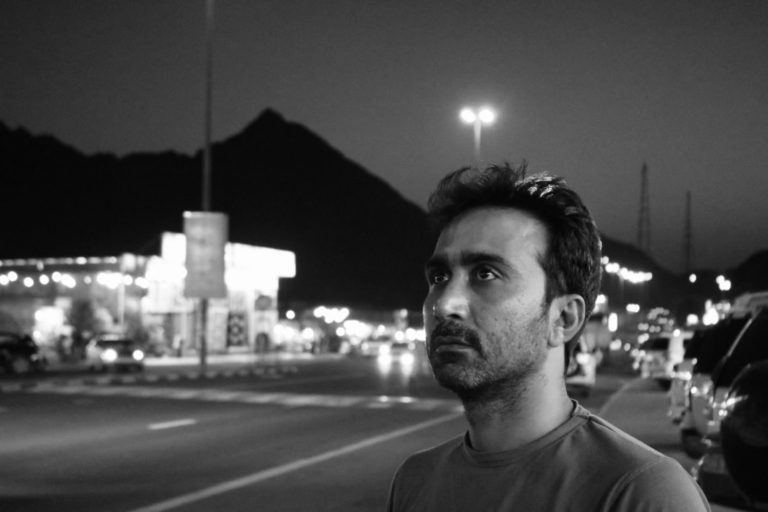
Image Credit: Mubarak Bala.
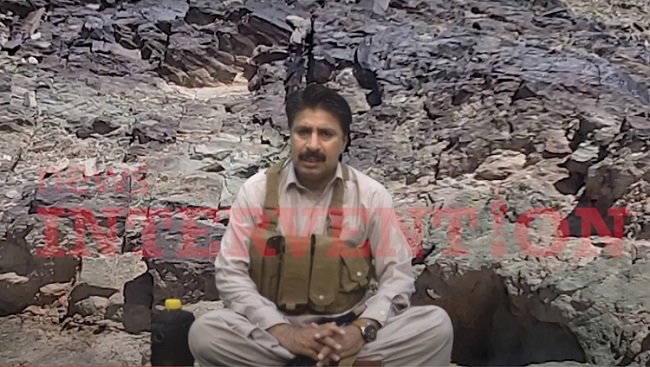
Watch: Exclusive Interview of Dr Allah Nazar Baloch, Chief of Balochistan Liberation Front (BLF)

Dr Allah Nazar Baloch is Chief of Balochistan Liberation Front (BLF) and the revered revolutionary leader of Balochistan. In this Exclusive Interview with Vivek Sinha he explains why does Pakistan Army commit atrocities on innocent Baloch people and how do common people of Balochistan brave inhuman torture at the hands of Pakistani forces. Dr Allah Nazar Baloch has galvanized common people across Balochistan to rise up against the gross human rights violations being committed by Pakistani security forces. Dr Allah Nazar is an inspiration for Baloch people who are fighting for Balochistan’s independence from Pakistan.

This video interview has been
BANNED IN PAKISTAN

Praiseworthy response to Corona crisis by the Rashtriya Swayamsevak Sangh

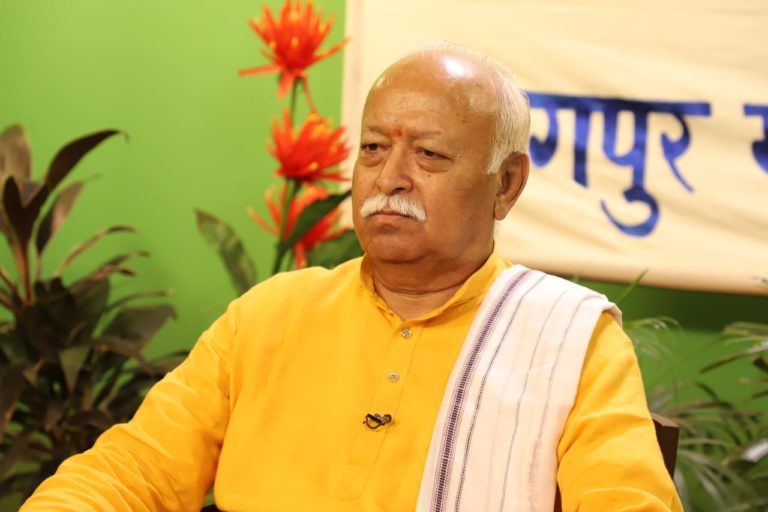
As the nation continues with its disciplined and mature response to contain the spread of CoronaVirus, Rashtriya Swayamsevak Sangh (RSS) Sarsanghchalak, Dr. Mohan Ji Bhagwat, in an online address on Sunday, April 26, called upon the organisation to stand united and help all needy people without any discrimination whatsoever. While elaborating the concept of “Ekant Mein Atam Sadhna, Lokant Mein Paropkar,” Dr. Mohan Ji Bhagwat, said that the lockdown had undoubtedly restricted activity of the RSS Swayamsevaks. However, life goes on despite the lockdown and so do the functions of the Sangh. Formal activity may have been curtailed but alternate activity goes on. He said that the need was for us to be good human beings and use our goodness to make the world also good.

The decision of complete lockdown is a very difficult one for any leader to take, especially so in a democracy where people look upon such restrictions as an impingement of their freedom and liberty. Countries where leaders dithered in taking such a strong decision are now suffering horrifying consequences.

When Prime Minister Narendra Modi took the very difficult and sensitive decision of the first lockdown from March 25 to April 14, the people, most creditably, reposed complete confidence in their leader and adhered to the guidelines in letter and spirit. They have done so in the second spell of the lockdown too which is still underway. The RSS was among the first to hail the decision as correct and justified it and stated that the “steps taken by India’s leadership are an example for the developed nations.”

The organisation then committed itself to seamless application of the same with all resources at its disposal, within the ambit of whatever was permissible under rules.

When faced with this crisis the Sangh moved fast in evolving its strategy to meet the challenge. It realised the importance of social distancing and lockdown. Accordingly, on March 14, ten days before the Government took the complete lockdown decision, the Sangh had already cancelled its scheduled three-day annual meeting of  the Akhil Bharatiya Pratinidhi Sabha (ABPS), its highest decision-making body, to be held at Bengaluru  from March 15 to March 17. It was done to adhere to the advisories that the government had started issuing at that point in time.

This year, Ram Navami  (A religious festival in honour of Lord Ram) was expected to be observed in a special and grand celebration. The Sangh and all Hindu religious organisations unanimously decided to halt the much longed for peoples’ participation in Ayodhya, the birth place of Lord Ram, and across the country.

Sangh’s leadership also denounced attempts by some vested interests to give to the crisis a communal sheen by referring to the restrictions as an impingement of their religious rights. The Sangh, on its part, supported closure of all temples and places of religious activity and curtailed all initiatives being taken under its watch.

The lockdown brought with it a very critical set of socio-economic challenges. Many who were outside their homes got stuck where they were. While those with means had the facility to absorb this difficulty, the migrant labour working in different cities got into a deep crisis. They wanted to get back to its villages which would have caused tremendous damage through widespread infection. Also, the daily wagers were left without work and resources as were tribals, nomads and beggars. Even animals like monkeys, street dogs, cats etc. that were dependent on food from humans faced trouble.

The Sangh immediately set in motion a countrywide support system. “All Swayamsevaks are urged to plan to form small teams and engage people on the need for cleanliness, health and awareness in society. They should also arrange for distribution of food materials to the needy,” said Suresh Bhayyaji Joshi, RSS National General Secretary. “Be in regular contact with the local administration and public representatives to understand their expectations and provide the necessary assistance. Also, fully co-operate in the implementation of the decisions taken by the government,” he added.

Welfare initiatives were conducted only after close liaison with the administration and the local leaders. As a first step, the organising committees in all states, cities and districts took care to restrict the number of volunteers working outdoors to barest minimum. Proper passes for the volunteers were acquired. Those working outside were  trained to maintain all prescribed medical norms in the strictest manner. People who were not working on ground came up liberally with financial support and organising of food and essentials packets etc.

Packets having essential items like rice, flour, pulses, sugar, oil, basic spices used in cooking, salt, tea, soap were made and distributed to the needy across the nation. Cooked food was provided in places where the facility was not available. Help lines were established that took down the problems, not only of their own areas but across the nation and the information was exchanged in a very fast and efficient manner. Main focus was on old people, students, children and those with serious health issues. Those requiring emotional support and motivation were spoken to and inspired to feel secure. Wherever the administration has come up with a request for some item like masks, Sangh workers got down to producing them locally. Lakhs of masks have thus been provided, when hospitals called for blood Sangh volunteers have responded to the call.

The Sangh also did some sterling work in the domain of giving information about the medical norms to be followed. Everybody, especially those less educated, were told about the need to maintain social distance, wash hands regularly, maintain cleanliness and other medical statutes. Social media, personal interactions, posters, loudspeaker messages and many other means were put to use for this purpose.

Very silently and steadfastly, hundreds of thousands of Sangh Swayamsevaks (volunteer workers) have been working. While providing aid, no differentiation is being done in terms of caste, creed, type of work etc. Need is the only parameter considered. The vast experience that the organisation has in extending social services during emergencies and natural calamities has been put to good use.

Punjab had a large number of Non Resident Indians (NRIs) visiting during this period from countries that were badly affected by the CoronaVirus. They needed to be accounted for and during this time isolation was very necessary. It was for this reason that Punjab adopted very stringent curfew like lockdown conditions, and very rightly so. Under the circumstances the poorer section of society was very badly hit. It was under these difficult circumstances that Sangh volunteers came forward with the much needed assistance despite difficult and dangerous conditions. The local Sangh leaders led from the front in all districts of the state. From big cities like Amritsar, Jalandhar, Ludhiana, Taran Taran and Bhatinda to smaller townships like Rajpura, Jaito, Muktsar etc. all places were covered in the relief effort. Apart from going from place to place, Sangh volunteers gave their personal phones as helpline numbers for immediate contact. The seamless cooperation between administration, social workers of all Gurdwaras, Sangh volunteers and other organisation led to an admirable control of the situation which had every possibility of spiraling out of control.

The CoronaVirus has brought strong developed nations to their knees. The strength of a nation is established by its response to a crisis. It is in this regards that India is being looked upon as a leading light for the world to emulate.

Respected Dr. Mohan Ji Bhagwat has observed that this problem is likely to persist and all volunteers should be ready for a long haul. The nation will face the challenge, as one, so long as it does not get contained. This is the resolve of every Indian.

Its time to resurrect the rich religious heritage of Kashmir Valley

The Kashmir Valley is known across the world, not only for its alluring beauty, but also for its religious significance. It is a place where in line with the predominant Sufi culture Kashmiriyat, religious coexistence and integration was at its peak before being destroyed by foreign sponsored terrorists. Many sacred places belonging to different communities can be found in the Valley.

Charar-e-Sharif in Kashmir is the Mausoleum of Shaikh Noor-ud-Din Noorani who was the greatest Sufi saint of Kashmir. Foreign sponsored terrorists burned down the Mausoleum in 1995 at the behest of Pakistan. It has since been rebuilt. The Sheikh, born in 1377 AD, personified the Hindu-Muslim culture of the Valley.

Gautam Nag is a sacred place in Anantnag, associated with the meditation of Gautam Rishi who was also a Muslim Sufi saint.

Hazratbal is a beautiful Mosque that can be seen across the Dal Lake from the iconic Shalimar Garden. It is the repository of a single hair of the Prophet Mohammed (PBUH), exhibited to the public on certain days of the year.

The tomb of King Zain-ul-Abidin is located between the Zaina Kadal and Ali Kadal bridges. The tomb shows a clear Persian influence in its domed construction and glazed tiles.

In the remote valley of Gurez there is a formidable peak named Habba Khatoon. This pyramid shaped peak has been named after famous Kashmiri Sufi poetess Habba Khatoon.

Shri Amarnath shrine, located at the head of the Sind Valley in Kashmir is dedicated to Lord Shiva.  It was from Kashmir that Lord Shiva’s devotion spread in India and across the world. The shrine is flanked in the north by the great Himalayan range and in the south by the Sasakat mountain range. It is located besides a small tributary of the Sind River called Amaravati. It is believed that the Lord Shiva narrated the Amar Katha (Narrative of Eternal Life)  to Goddess Parvati in this cave.

Every years a massive Yatra (Pilgrimage) is undertaken by the devotees of Lord Shiva, mostly Hindus, within a fixed period when the shrine is opened to the public. The Muslims of the area have never heeded the diktats of terrorists and they participate in the pilgrimage with fervour equal to that of the Hindus.

The Shankaracharya Temple,  is also dedicated to Lord Shiva. It is on top of the Shankaracharya Hill on the Zabarwan mountain range in Srinagar. The temple is at a height of 1,000 feet (300 m) above the valley and overlooks the city of Srinagar.

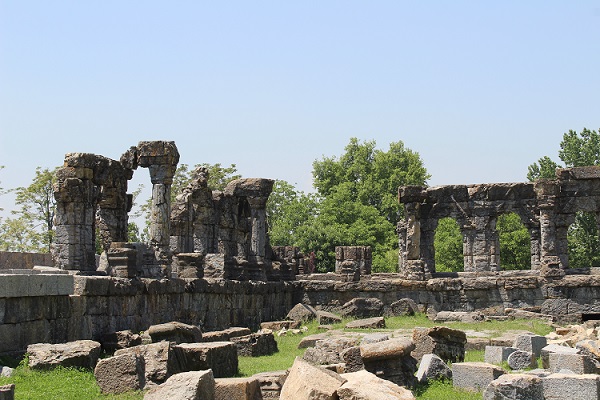
Martand Sun Temple, is a spectacular shrine dedicated to Lord Surya (the Sun God). It lies at a distance of about seven kilometres from Anantnag. It was constructed between the 7th and the 8th century.

The Kheer Bhawani Temple, located in Tullamula, Srinagar, is a highly revered shrine of the Kashmir Pundits. The temple is situated in the middle of a natural spring and is dedicated to Ragnya Devi (an incarnation of Goddess Durga). Muslims of Kashmir participate in the Kheer Bhawani festival with great fervour.

Jaya Devi Temple, also known as Jaya Devi Asthapan, located in Bijbehara, Kashmir, is the shrine of Mother Goddess. It is considered as one of the earliest Shakti Sathals of Kashmir.

An ancient Hanuman Temple also called the Srinagar Hanuman Mandir, is located at Lal Chowk, Kashmir. This type of personification of Bhagwan Hanuman is a rarity, not seen in other Hanuman temples in India. 

The 200-year old Ganpatyar Temple, situated in the heart of Srinagar is dedicated to Lord Ganesh. It holds great significance for Kashmiri Pandits.

Gurdwara Mattan Sahib, situated at a distance of 60 km from Srinagar, is a highly revered Gurdwara of the Sikhs. It is dedicated to the memory of Guru Nanak Dev Ji. Apart from Sikh devotees, Hindus and Muslims also pay homage here.

Gurdwara Guru Nanak Sahib,  situated in Awantipura, about 29 km from Srinagar, is the place where Guru Nanak Dev Ji met some Shaivaites from the Shankaracharya Temple. The historic shrine is constructed in the memory of the Guru’s stay there.

Kashmir Valley is called the land of Sufis and saints because of the high number of mystics who have graced the region; all of them were secular in thought and action. Kashmiriyat is an ancient tradition of the Kashmir’s people that extols a seamless coexistence between all communities regardless of their religious affiliation. It speaks of a unified culture and way of life. In the Kashmir Valley people may pray to different Gods but they also have a lot many Sufis and Saints in whom they believe collectively. For a visitor to Kashmir it would be difficult to differentiate between a Kashmiri Muslim and a Kashmiri Pundit; they look alike, dress alike, speak alike, behave alike, eat the same food, sing the same songs and even pray together; there are no separate Muslim and separate Pundit colonies in Kashmir.

Prominent among the saints was Lal Ded. She combined Islamic and Shaivite thoughts to create a bridge between all communities. The vision of Lal Ded was carried forward by a great Sufi mystic, Sheikh Noor-ud-Din, whose shrine in Charar-e-Sharif is the most revered place of pilgrimage for the entire Kashmiri community including, not only the Muslims and the Pundits, but also Kashmiri Sikhs and Buddhists.

Kashmiriyat is an off shoot of historical developments over many centuries. Before the foreign sponsored holocaust in the early eighties there was no recorded religious riot or difference of opinion between the communities in Kashmir. Such is the strength of this concept that it is refusing to die despite sadistic and dishonorable attempts by inimical foreign forces.

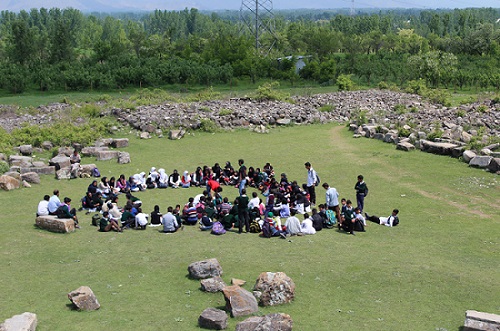
Many of the aforementioned temples, and  others too counting in hundreds, are lying in ruins due to neglect and after being destroyed by evil forces at the time when terrorism was at its peak in the Valley. As the Kashmir region steps into an era of normality it would be worthwhile to resurrect this rich heritage of the Valley that has significance not only for the cultural identity of the people but also as an example of religious coexistence for the whole world.

COVID-19 pandemic has brought back the focus on sustainable cohabitation

COVID-19 pandemic has brought the entire world on its knees and no nation, irrespective of it being highly developed, technologically advanced or economically prosperous has remained unscathed. And despite all boasts of spectacular advances in the field of medical sciences, a microscopic virus is today holding the human race to ransom.

With US, the most technologically advanced and economically prosperous nation on this planet reeling under COVID-19 pandemic, with ‘social distancing’ and ‘lockdown’ as the only means to escape this Coronavirus and with the mighty President of the United States of America incoherent response, one can only conclude that many myths have being broken.

Despite being steered by a clear headed and a resolute leader like PM Narendra Modi, India too has been very badly shaken by the COVID-19 outbreak and given the severity of this pandemic, one is not exactly sure as to what the after-effects of this major catastrophe will have on physical, emotional, spiritual and social values in India by the time the country goes past this invisible enemy. Hence, while we are at the cross roads, with one path leading to survival and the other to extinction, we need to ponder over some of the systems and institutions that are most critical for the future. Whereas material losses due to this pandemic can be progressively made up, it’s adverse effect on education is something that can’t be negated and since education is the stepping stone for human development, it rightly demands maximum thought.

The last few sessions are replete with the instances of disruptions due to a variety of reasons such as demonetization, NRC and CAA agitations, pollution, abrogation of Article 370 & Article 35-A, and finally COVID-19. Whether it is Delhi, Puducherry, Punjab, West Bengal or J&K, there have been ‘shocks’ everywhere but the point to note is that common solutions cannot be applied to them. And since COVID-19 pandemic seems to be the ‘mother’ of all crisis, it’s an extraordinary situation that requires extraordinary measures. What sets this apart from other disruptions is its uncertainty in that, one cannot even guess as to how long the pandemic will it continue.

While the government is relying on social awareness to help beat this virus as much as the society is banking on government’s preparedness. The sad part is that none of the two are sure about the future.

We broadly know what is to be done to ensure that one’s neighbour does not contract the disease, or that a young student does not infect an older relative. In essence, we are educated enough to know the ‘what’ and ‘how’ of our behaviour, but where we lack is the resolve and the value system that reminds us to do what it takes to ensure that we will protect own self and also be instrumental in not infecting others. So, where does the fault lie? This brings us to the question whether the Indian education system is promoting a value system that encourages compassion, empathy and discipline aimed at public welfare? The sad answer to this question is negative. So, is there a case for an alternate approach to education to instill the intent to act selflessly in the interest of the society at large?

In November 2019, the 40th UNESCO General Conference adopted the new global framework on Education for Sustainable Development (ESD for 2030) for the period of 2020-2030. The global framework for implementation of ESD is the follow up to the Global Action Programme (GAP) on ESD (GAP, 2015-2019). ESD for 2030 aims to build a more just and sustainable world through strengthening ESD and contributing to the achievement of the 17 Sustainable Development Goals. The framework will focus on integrating ESD and the 17 SDGs into policies, learning environments, capacity building of educators, empowerment and mobilization of youth, and local level action.

Furthermore, UNESCO also plans to host a ‘UNESCO World Conference on Education for Sustainable Development’ after the world recovers from this ongoing crisis. The Conference will raise awareness of these challenges, highlight the crucial role of Education for Sustainable Development (ESD) as a key enabler for the successful achievement of all SDGs, and create momentum for strengthening ESD in policy and practice.

ESD is aimed at internalizing the unintended effects of one’s actions on others. By introducing subjects such as gender studies and environmental sustainability, education systems across the world are trying to ingrain among their students these concepts at a very young age. The overall objective hinges around the idea of translating academic concepts into relatable real-life challenges and finding their solutions through multidisciplinary, inter-disciplinary and multidimensional approaches. ESD’s focus would often be on ignored soft skills such as critical thinking, problem solving, leadership and communication and equipping students with the right toolkit to deal with these challenges.

Evidence from across the world suggests that ESD curricula should help students develop a deeper understanding of real-life challenges that the global community is facing. These include (but are not limited to), climate change, socio-economic inequality, gender bias and peace-building. Through such a holistic approach, ESD wishes to not only develop virtues such as empathy and compassion, but also remain correlated with better grades and a wider range of future academic and professional opportunities for students. It is, therefore, not surprising that UNESCO is pursuing this objective very rigorously and is working with policy-makers and educational institutions across the world to scale these efforts up. However, a lot still remains to be done.

As much as we may want to wish, the COVID-19 crisis will not be the last such aggregate shock. By not focusing on skills aimed at sustainable cohabitation, we have already produced several generations of adults who may not be psychologically equipped to deal with such challenges. Our best hope, in such a case, is to begin as soon as possible and churn out the next generation of community leaders who can think not only for themselves but also for those around them.

The concept will have three pillars of application, viz, knowledge, skills and attitudes. The curriculum needs to be so structured that all three aspects are taken care of. There must be an online support system that will ensure easy implementation under these pillars. Host of study material, activity ideas, audio visuals, contact programmes, workshops, camps, etc will be factored in to achieve desirable results under each of these verticals.

BRAS freedom fighters eliminate 12 Pakistan military personnel at Mand in Balochistan

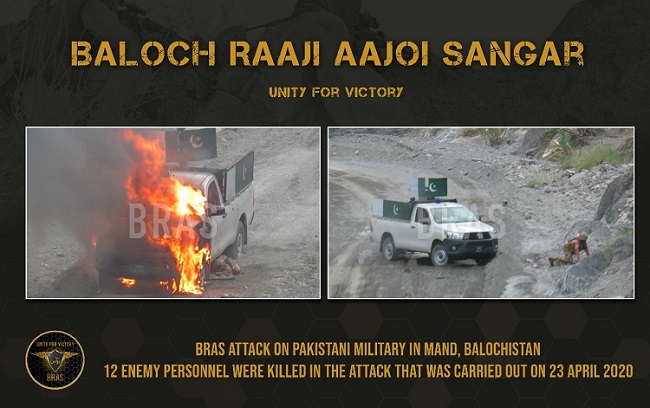
Baloch freedom fighters killed 12 Pakistani military personnel in a major strike conducted on Thursday, April 23 at Mand in Balochistan. The strike was conducted by BRAS (Baloch Raaji Aajoi Sangar) which is an alliance of four armed Baloch organisations that are fighting for an independent Balochistan. The four Baloch armed organisations under the umbrella of BRAS are– Balochistan Liberation Front (BLF), Baloch Liberation Army, Baloch Republican Army and Baloch Republican Guard.

Baloch Khan, the official spokesperson of BRAS (Baloch Raaji Aajoi Sangar) gave details of their attack on occupying Pakistani forces. In its statement BRAS has officially taken responsibility for the attack carried out on Thursday in the mountainous regions near Chak Aaap and Sheeraz in Mand, Balochistan.

In the fierce attack BRAS freedom fighters eliminated at least 12 members of Pakistan’s military. The multi-pronged attack was carried out simultaneously on a Pakistani military outpost and a convoy.

“The Pakistani troops targeted today have been involved in a military operation against civilians for more than a week now in different areas of Kech, Balochistan. In fact, the convoy targeted today was on its way to target a locality. Different localities have so far been shelled with gunship helicopters and many houses have been burnt by Pakistani military,” said Baloch Khan, spokesperson of BRAS.

The Pakistani troops were also accompanied by criminals and religious extremists. The fact that Pakistani military and such elements are carrying out joint atrocities is a confirmation that Pakistani state has not only given full backing to such elements but also uses them against Baloch civilians. BRAS has already launched “Operation AasRech” against such elements and they will continue to be targeted along with Pakistani military. The war of liberation against Pakistani military and their agents will continue until Balochistan’s freedom.

“BRAS reiterates that freedom fighters of BRAS will continue to defend Baloch civilians against any Pakistani aggression,” BRAS spokesperson Baloch Khan added.

International boundaries will be redrawn in the post-Corona world

The Coronavirus pandemic is all set to change the world. Nope, I am not talking about the newly hyped “Work from Home (WFH)” culture or about the never ending trade wars among super powers. I am, in fact, pointing towards a much bigger change that takes place after decades of decadence in civilizations.

Yes, it’s the world order that’s changing. And the novel Coronavirus, aka the novel ChinaVirus, has only expedited this change. So in this post-Corona world the earlier economic models will give way to newer businesses, and, importantly, international boundaries will be redrawn.

In the post-Cold War system, soft power rested within a bunch of haloed institutions such as the WHO (World Health Organisation), UNHRC (United Nations Human Rights Council) and others under the tutelage of UNO. These soft power centres are now wobbling. Even multilateral trade bodies such as the WTO (World Trade Organisation) that had been under severe strain will now face fresh irritants. 

Coronavirus pandemic has only accentuated these strains such that the fissures are now visible as large cracks. And, as these cracks widen the older world order will give way. It’s no longer a question of “If”, not even “When” because the novel Coronavirus has already ushered in this change, which is underway. The real question to ponder upon is “How” will the world order change and “What” shape it could take in the future. 

Indicators

US President Donald Trump withholding the funding of WHO is one of the decisive blows. The symbolism of Trump’s action is momentous. Already there were loud murmurs over WHO Director-General Dr Tedros Adhanom’s mishandling, misreporting and blatant favouring of China about Coronavirus and its origin during the last couple of months. Despite new age media organisations and social media being awash with exposes of Dr Tedros’s partisan behaviour, the mainstream media took it upon itself to defend Tedros’ actions. Just when this mainstream media had managed to cement the narrative that Dr Tedros is a ‘saint’ who along with Communist China was working to save humanity from the deadly Coronavirus, President Trump spoiled the party. On April 14, President Trump announced that the US will withhold over $400 to $ 500 million grants-in-aid to the WHO. The world was stunned at this announcement that came in the middle of a global pandemic. US is the major donor nation to WHO. At $40 million, China gives a mere one tenth to WHO, when compared with US’ grants. Yet, if the WHO chief Dr Tedros has blatantly favoured China then it points to severe accountability issues within WHO and that’s the underlying message in Trump’s diktat.

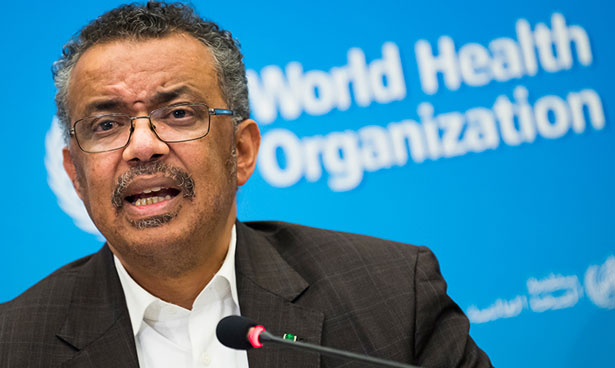
Dr Tedros Adhanon, Director General WHO. Dr Tedros is an Ethiopian politician who is being accused of gross mishandling the Coronavirus pandemic
Dr Tedros Adhanon, Director-General WHO. Dr Tedros is an Ethiopian politician who has been accused of gross mishandling the Coronavirus pandemic.

US withholding funds to WHO is a major embarrassment that has put a big question mark over its credibility, and also on its future. Mind you, WHO is no small organisation, its representatives sit on member nation’s government health panels and even have a say in deciding the health policies of member countries.

Well, WHO is just the beginning, it’s the first loose brick that could be pulled out from the decrepit wall of United Nations. US under President Donald Trump has understood China’s gambit of infiltrating international organisations with its sympathisers and (mis)using these platforms to expand its influence. This is part of China’s statecraft.

The next in line could be UN’s Human Rights Commission. Trump had already given indications that UNHRC has been compromised. In fact, almost all big brand global human rights organisations have become the den of radical Islamists and China-backed communists and their dismantling will be the next in line.

These changes will not stop here. American and European Universities where China could plant its ‘scientists’ and ‘research scholars’ to siphon off research of importance will now come to a halt. China’s stratagem of enriching itself with the invention of others will now fall flat. It would not be able to enrich itself by copying the scientific achievements and stealing away the patents. That time is passé.

Another major indication has come in from Japan. The Japanese government minced no words when it announced that it is doling out a $2.2 billion package for its companies to move their production bases out of China. Samsung, the South Korean tech giant announced to halt mobile production in China. Several other multinational corporations are in the process of shifting their production bases outside China.

European corporate giants that have seen their businesses suffer due to Coronavirus pandemic are also expected to harden their stance. Further, in yet another move with great symbolic significance, Julian Reichelt, Editor-in-Chief of Germany’s largest newspaper Bild has sent a bill of $165 billion (Euro 150 billion) to China as claims for damages to the German economy. The point is not about the locus standi of Germany’s claims on China, rather about an indication of the mood in Europe. Ditto for Italy, France, Spain and UK that have literally been brought to their knees due to the Coronavirus pandemic.

Unlike China’s totalitarian Communist regime, Europe is a vibrant democracy where the masses have seen through the real face of China and its virus. Popular opinion is heavily anti-China in Europe. As and when this Coronavirus is tamed, the European business conglomerates will pull out of China and scout for different regions across the world. The potential suitors could be East Europe, India, Vietnam, East Asia and parts of Latin America and Africa. Already corporate boardroom discussions are centred on shifting manufacturing bases out of China. With corporate biggies stepping out of China the smaller ones will follow suit resulting in a direct impact on the employment prospects of over 180 million people that mainland China employs in export related jobs.

As these changes take effect they will provide enough ammunition on ground to fuel a widespread discontentment across China.

How?

The trickle down effects of these changes will have an adverse impact on the core of production ecosystems built diligently across China. In the post-Corona world order with production bases shifting out of China in droves there’s bound to be massive job losses within mainland China. This will create seismic waves for the ruling communist party and for President Xi Jinping. Xi Jinping, CCP (Chinese Communist Party) and the People’s Liberation Army (PLA) have been ruling China with an iron hand and have managed to quell all dissent. Till now. Supressing dissent will be much difficult this time. Pro-democracy protests in Hong Kong will be come back with renewed vigour and will be ably supported by mainland Chinese workers. Whether there will be a repeat of the 1989 Tiananmen Square protests or even far greater than that is too early to predict. All will depend on how cohesive Xi Jinping is able to keep the burgeoning People’s Liberation Army together. Amidst all these fault lines, even a single spark of dissent amongst the senior ranks of Chinese Army might cause China to implode.

Islamist-Communist Nexus

The economic recession that was being brushed aside over the last couple of years is now staring in our face. Crude oil price is at a historic low. WTI (West Texas Intermediate) prices in the US touched the negative domain for the first time in history. Negative price meant sellers were willing to pay the buyers to lift crude oil stocks. This means OPEC (Organisation of the Petroleum Exporting Countries) members (read Middle East Islamic nations) will be under pressure. It’s an open secret that radical Islamic fundamentalism across the world is funded by petrodollars. And these Islamic fundamentalists have always found support in Communist-controlled mainstream media groups. In the post-Corona world both will have their backs to the wall. Trump has already declared war against mainstream media by calling it “LameStream”. With petrodollars vanishing into thin air and China under severe strain, the Islamist nations and China will get closer to create a joint front or enter into a formal military alliance.

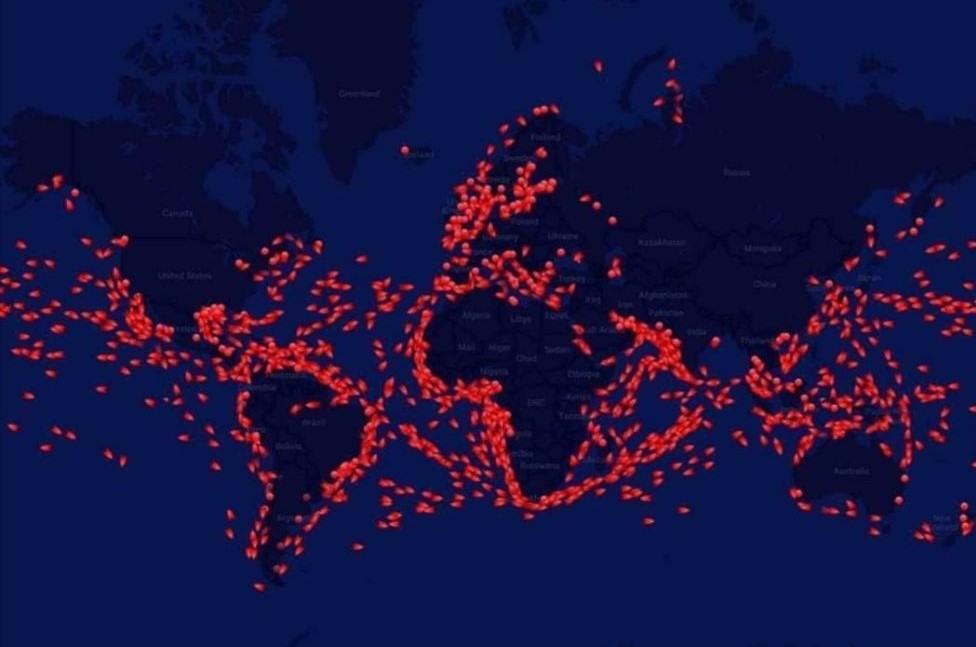
Snapshot of oil tankers stranded along the coastline across the world on April 22. It takes around $30,000 every day for each of these oil tankers to be kept in this condition. For the first time in history, pipes and tankers are full with oil but there are no buyers. Source: MarineTraffic

As a fallout of this unholy alliance, Pakistan that’s virtually on the brink of economic meltdown and has loaned its nation to China in the form of CPEC (China-Pakistan Economic Corridor), will be willing to dance to the tunes of its Chinese masters.

But there’s a twist in this tale.

Pakistan is staring at major upheavals across its two poles. On its North, the Pakistani Pashtuns are getting restive and defying the authority of Rawalpindi. Pashtuns across the practically defunct Durand Line in Afghanistan are increasingly associating themselves with the demands of their Pashtun brethren on the Pakistani side. As fault lines accentuate in this post-Corona world, Pashtuns will be at odds with the China-Pakistan nexus.

Down South, the Baloch freedom fighters have stepped up their efforts to seek independence of Balochistan from Pakistan. Despite Pakistan Army’s desperate attempts to subjugate Balochistan, the Baloch freedom fighters keep striking at regular intervals on strategic CPEC locations. A few days ago Balochistan Liberation Front (BLF) fired rocket missiles at the under construction Gwadar International Airport putting an abrupt halt to the Gwadar airport operations. Such attacks are likely to increase in post-Corona world that will ensure that the $60 billion CPEC remains a pipe dream for both Pakistan and China.

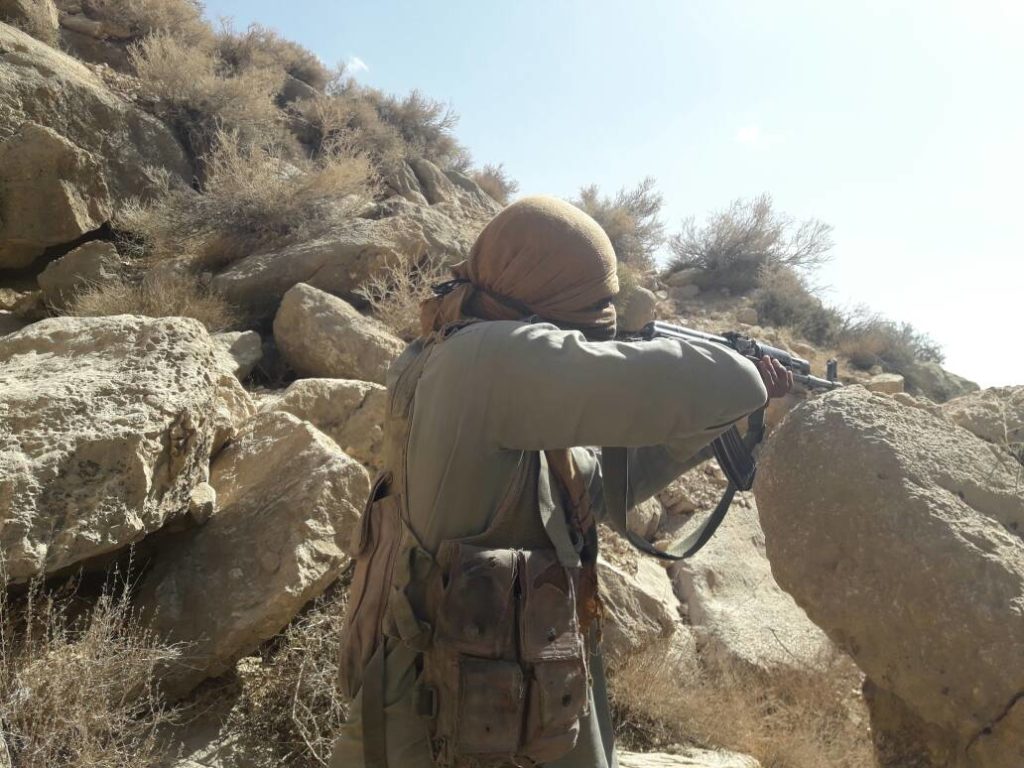
A freedom fighter of the Balochistan Liberation Front (BLF). The BLF strives to free Balochistan from Pakistan's illegal occupation.
A freedom fighter of the Balochistan Liberation Front (BLF). The BLF strives to free Balochistan from Pakistan’s illegal occupation.

In the coming months, both Balochistan and Pashtun movements that are already at odds with the China-Pakistan nexus will gain momentum and redraw the international boundaries in South Asia.

Postscript: The transition in world order will happen sooner rather than later. And this transition will be quite painful. As a marked departure from earlier changes, this time the distinction between opposing camps will not be water tight. Despite a surge in nationalism, division between opposing camps will be fuzzy and not according to the national boundaries. Individuals and groups who had thrived in the earlier set up, either from UN organs or with blessings from radical Islamist-Chinese nexus will form an alliance. The conflict will be about thoughts and ideologies. 

Consciousness in times of global Coronavirus pandemic

Several friends, patients and others have been asking me to write about Corona. So much has been already written, spoken and debated about it as to fill all the libraries of the world. And yet, people are baffled and in disbelief, ignorant and even arrogant about it. After all, an apocalyptic situation has suddenly engulfed the world as never before in our memory.

The world has been deluged by invisible, ultra-microscopic particles stalking the globe like a phantom, unleashing a lethal armamentarium, killing humans everywhere, respecting no geographical boundaries, no religion or faith, no standing or status, striking the high and low equally, and the young and old; bringing humanity to its knees. It has become a leveller and has caused a pandemic of panic and grief and forced almost all nations to lockdown, to stay indoors, bringing life to a grinding halt everywhere.

It is worse than what befell eons back when Lord Vishnu had to take the Matsya incarnation to salvage mankind from total deluge. Pray, who is going to be the saviour in the present age of Kal Yuga, except the humans themselves!  For that we need to create, what I call, a Corona consciousness, an understanding of the genesis, the nature, and the unforeseen consequences of this pandemic that may last several months, even a year or more.

What do we know about Corona? What is COVID-19?

Well, it is a virus of the Coronavirus family that has been around for a long time causing disease in mammals (including humans) and birds. Viruses are notorious in that they change their form and character like a person wearing different disguises. We call it a mutation. The present pandemic is the result of a mutant variety that surfaced in China around November 2019, so the name COVID-19. “Co”-corona, “vi”-virus, “d”-disease and “19” for the year of discovery of this novel variety. 

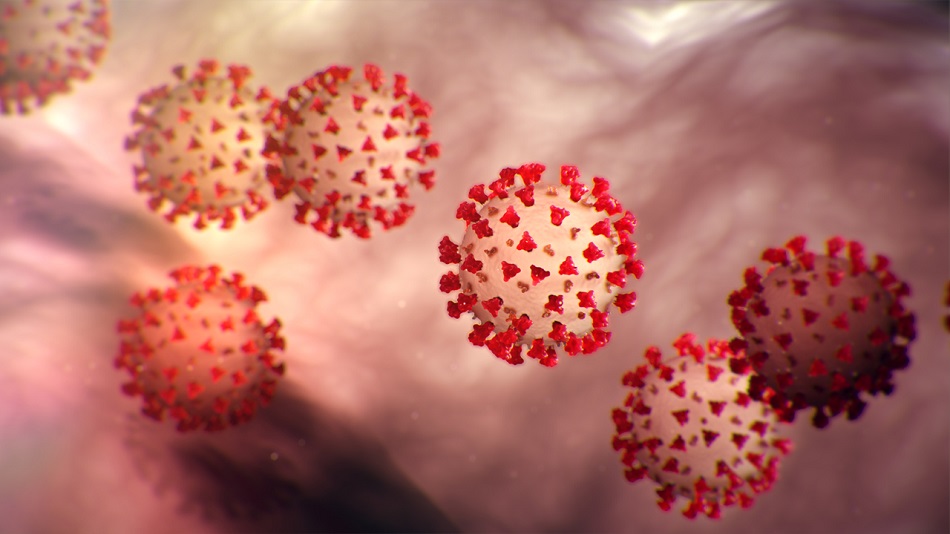
The name ‘corona’ derives from Latin which means a crown or halo-like the solar corona (around the sun). Viewed under the ultra-microscope, the surface of the virus particle is covered with club-shaped spikes giving it the corona shape. These are the spikes with which the virus hooks on to the lining of the respiratory tract of humans including the nose, air passages and lungs, where it multiplies in the cells to wreak havoc.

Microscopic view of a Coronavirus.

Imagine the Sudarshan Chakra of Lord Krisna as it moves towards its target. So also does the Coronavirus move from the breath of an infected person and travels in the air onto others. Coughing and sneezing send it to a larger distance at a faster speed than normal speaking or breathing which has a reach of 5-6 feet. That is why the minimum social distancing advised is about two arm’s length. The virus may settle on any surface and remain alive there for a variable period. An unsuspecting person may touch it and carry it on hands,  touch his nose, eyes or mouth and get infected. He may go anywhere, touch another person or touch a doorknob or a handle, the button of a lift or any other object. This is important to know about the viral spread from human contact (contagion) which has the potential to carry it wherever the vector (carrier) moves. Thus one infected person may pass on the virus to any number of people directly or indirectly resulting in an exponential community spread.

Despite the rapidly accumulating knowledge we are still trying to understand the traits of the virus, as baffling as understating human character. How long does it survive on different surfaces and clothes, under different temperatures or in the atmosphere is still not fully defined. The general observation that respiratory viruses are active in winter gives us hope that summer, which has already set in, might diminish the intensity and spread of this novel Coronavirus. The different rates of spread in different countries, especially the relative moderation with which it has unfolded in India so far has generated some hope that India will be spared the devastating spell. Only time will tell. The early lockdown enforced in the country has been pivotal in checkmating the spread somewhat. An extension for some more time after the present 3-week curfew, might be in order. No doubt, it has a huge immediate and longterm economic, social and political consequences, but we may have to bite the bullet now rather than face the battery later. 

The incubation period, transmission as well as the symptoms of the infection are variable too. It takes up to 2 weeks for the virus after it enters the human body to cause symptoms. Therefore, if someone is suspected to have been exposed to the virus a 2-week quarantine (isolation) is mandatory. Remember, even an asymptomatic person can transmit the disease to others.  

Like most respiratory viral diseases such as the common cold and influenza, COVID -19 may not exhibit any symptoms in the victim. Others may have a mild illness — dry cough, fever, body aches — which may recover without any treatment. Such patients should watch their course. If there is any deterioration like worsening cough and breathing difficulty, they must report to the hospital immediately. Keep your family physician posted of the details all along; he might advise a test done. Online consultation is a useful first step. Only just around five to seven per cent may need hospitalisation and most of them recover with resuscitative measures like respiratory assistance or by inserting a tube in the air passages for ventilation and delivery of oxygen. A much smaller percentage go through a rapidly downhill course involving both lungs and death may supervene despite all efforts in these instances.

No drugs are effective as yet except for some anecdotal evidence of a few like anti-malarials and antivirals. 

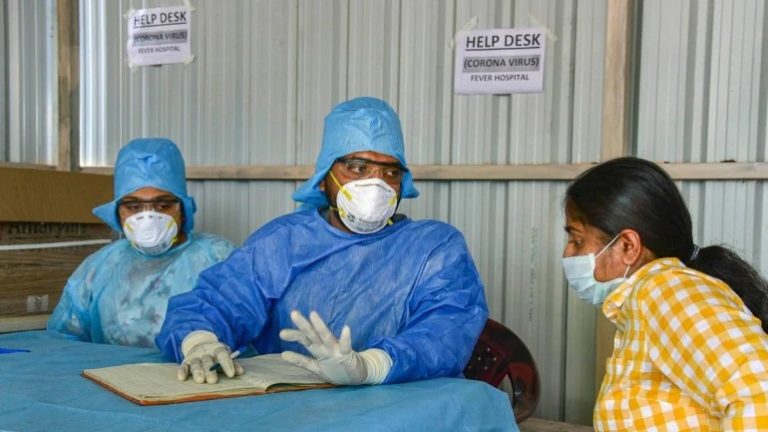
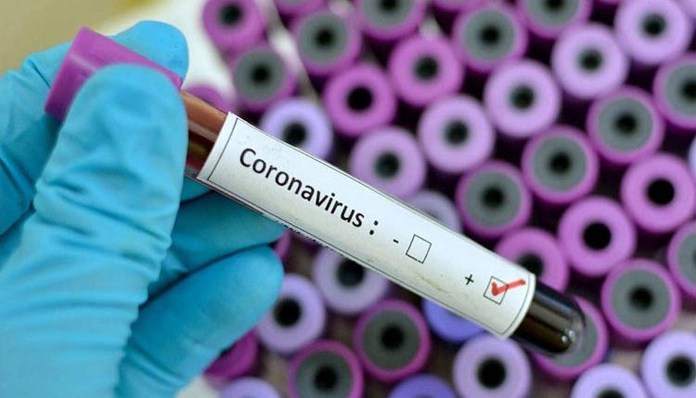
As the world gears up to stop Coronavirus pandemic, the Pakistani regime is deliberately spreading this deadly virus across Balochistan.
(Representational picture)

Scientists are seriously engaged in finding drugs to fight the virus, making effective vaccines to prevent healthy people from contracting the infection, and in creating test kits for speedy screening for the virus in patients, contacts, clusters, communities and even whole populations. It is a gargantuan task. Human and financial resources are limited, but there can’t be any compromises when a pestilence threatens the whole mankind. 

Extensive human trials are going on. It may take months to find the right answers. There is hope that a vaccine may be ready by the end of the year. But, going by the rate of infection in different countries, the Coronavirus could be lethal to hundreds of thousands of humans by that time despite the untiring efforts of medical professionals engaged in the fierce encounter with the greatest enemy of mankind.

Meanwhile, what about others, the common masses cooped up in their homes?

There may an opportunity waiting for us even in this extreme adversity. Either we meekly succumb or stand up to the challenge. It is time for sagacity, self-discipline and self-inquiry. Time for action, not for depression and despondency. Find ways and means to cope with the privations which are not going to last forever. Stay indoors. Maintain social distance. Avoid social and religious congregations. God wants to be left alone for some time and wants us to seek answers from self.

Patience is the watchword.  Stay calm, for panic never helps. It takes reason away, erodes confidence and diminishes immunity. Spend time gainfully by working from home as far as possible (for example, I make myself available to my patients through e-consultation, phone, and WhatsApp). Learn anew the virtue of self-help by doing household chores that were delegated previously to outside helpers. Observe the precautions about hand washing, avoiding contact, using a mask when you have to go out. It is a lot of bother but worth it. If masks are not available, fold a clean cotton hankie several times, wet it slightly and fasten it around your mouth and nose. 

Don’t be misled by the unsubstantiated claims about different diets, herbs, condiments, potions, drinks (hot, cold, lukewarm) etc. that circulate in social media. Eat a normal diet; no change from your routine.  

Take time off to look at the sky, the beautiful sunrises, sunsets and the star constellations. Enjoy the silence for a while. Listen to spiritual music. Hear the birds sing in joy. Speak with the flowers that bloom brighter, watch the gauzy butterflies. All these natural gifts have suddenly sprung into renewed life, reminding us of the injustice we have heaped upon them.

It is also time to revive family values and bond together, spend precious hours with kids, indulge with parents and elders, revive lost contacts with friends, reach out to the sick and needy. Physical distancing can thus be bridged by emotional proximity.

More importantly, it is time to sit back and introspect about the higher truths, about the meaning of life, about the unseen hand of a higher entity that controls the world. The great scientists that ever lived also believed in philosophical inquiry, the world view, and the unifying theories that govern the cosmos. 

It is also time for the world to wake up to the quintessential moral philosophy of the Upanishads, ‘Vasudev Kutumbakam‘ (the whole world is one family). Time to put an end to tinkering with biological agents like viruses, because any attempts at their weaponisation (bio-terrorism) may boomerang, with a serious potential to consume its creators like the fictional Frankenstein monster. This is believed to have happened in Wuhan, the epicentre of the present pandemic. 

It is also time for world leaders to unite and put their heads together in the course correction of mankind. Through unregulated development and the exploitation of natural resources along with the rampant use of toxic chemicals and the massing up of effluents, humans have caused untold environmental disasters and created conditions ideal for genetic mutations in cells resulting in the high incidence of cancers and the emergence of new strains of bugs — bacteria, fungi, viruses —  new mutants, potent scourges for mankind like the COVID-19. 

Finally, let us pay our unbounded gratitude to the doctors and other health professions, the brave warriors who are firefighting at the front lines in the intensive care units of hospitals, against heavy odds and at great personal risk. Many of them have paid the ultimate sacrifice.  Let us applaud  the services of others who keep the cogs of governance functioning including the  procurement of essential supplies, manufacturing life-saving equipment and ensuring uninterrupted power, water, and communication lines so vital in fighting this pandemic.

The world will not be the same after it emerges from this state of dissolution, the pralaya.  A lot will depend on whether those, who survive it, will have learnt the right lessons, or will go back to their erring ways. The post-COVID-19 epoch is going to define a new Yuga, a new world order.

BLF freedom fighters fire rockets at Gwadar International Airport

Baloch freedom fighters (Sarmachars) of the Balochistan Liberation Front fired two rocket shells of 107 mm at the under-construction Gwadar International Airport in the Gurandani area of the Gwadar district in occupied Balochistan. The rocket shells landed inside the construction site of the airport causing severe damages.

BLF spokesman Major Gwahram Baloch claimed responsibility for the attack on Gwadar Airport.

In a media statement Major Gwahram Baloch said that the Balochistan freedom fighters (Sarmachars) fired two 107 mm rocket shells on the under-construction Gwadar International Airport which killed several security personnel and others that included the Chinese.

The construction site of Gwadar International Airport was severely damaged due to this attack and several security personnel and other operatives were killed. It needs to be understood that several Chinese engineers and laborers are constructing an international airport in the Gurandani area of ​​Gwadar. This construction is being opposed by Balochistan freedom fighters who say that China, at the behest of Pakistan, is looting away rich natural resources of Balochistan. China and Pakistan are trying to complete this airport’s construction against the will of Balochistan and by forcibly occupying the land of Baloch people. The Balochistan freedom fighters do not accept these projects in Balochistan which is against the will of Baloch nation.

Major Gwahram Baloch said that such attacks will continue till the independence of Balochistan.

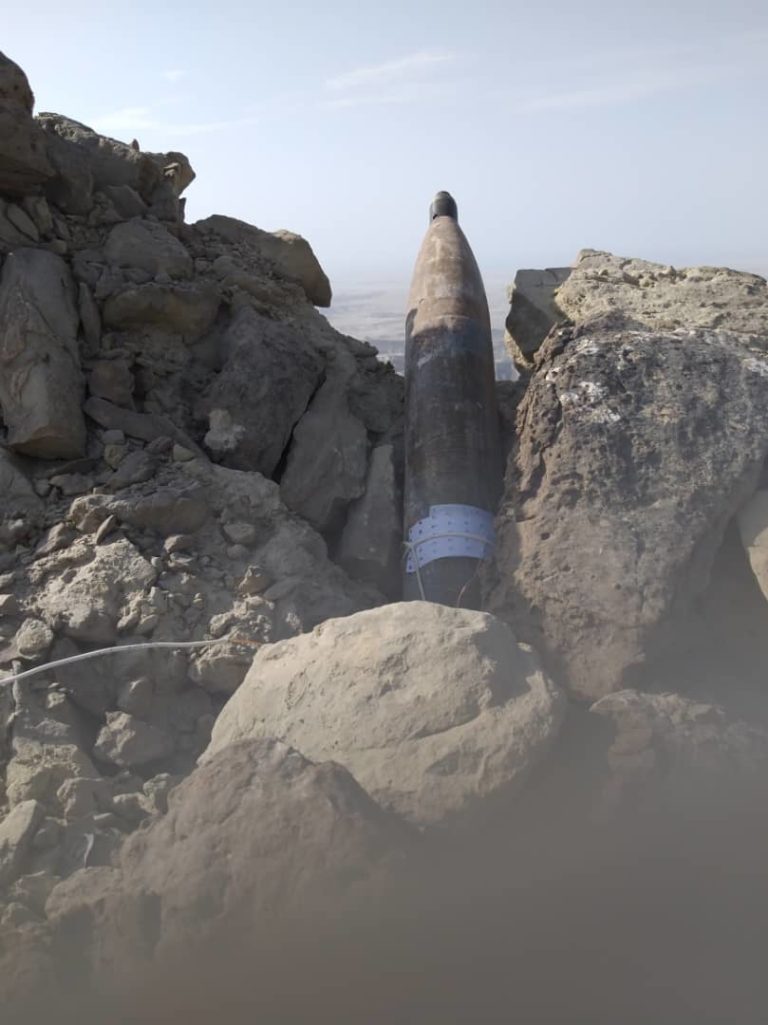
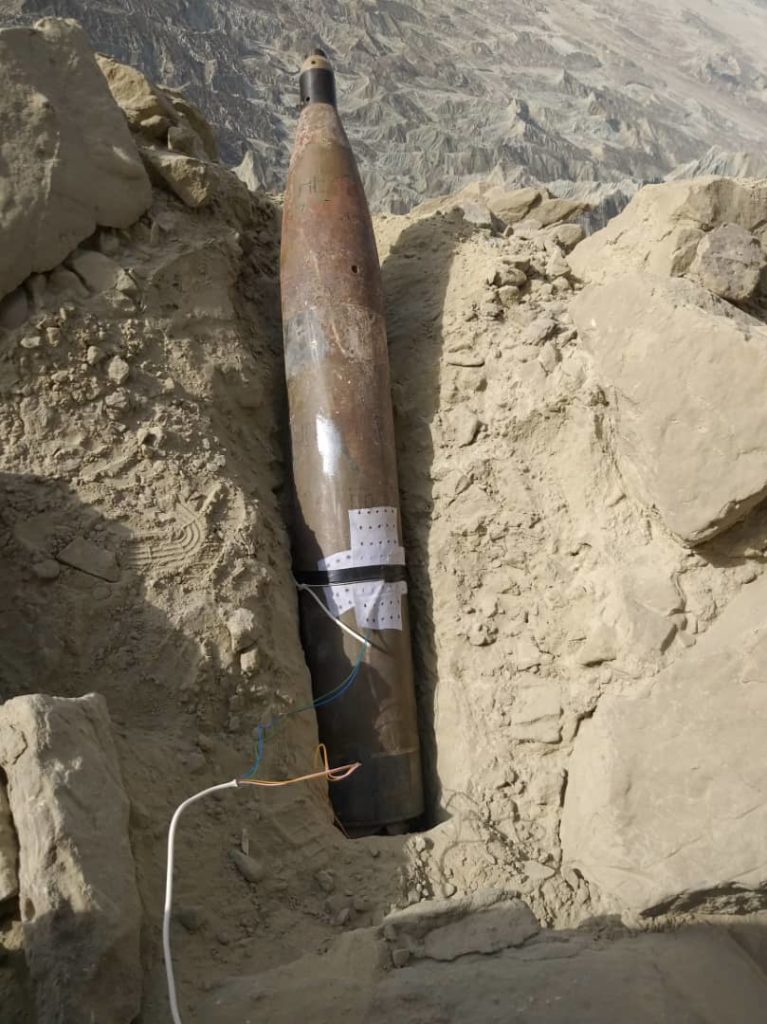
The 107 mm rocket shell that was fired by Balochistan Liberation Front (BLF) on Gwadar International Airport.
The 107 mm rocket shell that was fired by Balochistan Liberation Front (BLF) on under-construction Gwadar International Airport.

World’s silence on Sajid Hussain’s enforced disappearance will only embolden Pak ISI

In 2012, a young journalist named Sajid Hussain started receiving death threats for reporting on the unspeakable atrocities being committed in Balochistan against innocent locals by the Pakistan Army and other law enforcement agencies under its control. Having worked as assistant editor of ‘The News’ and city editor of ‘Daily Times’, he didn’t think much of it initially, but after his house was raided, family members interrogated and was tailed by suspicious persons, he did what any Balochi in his place have been doing for years — he quickly packed his bags and fled Pakistan.

But while Sajid Hussain was no coward, he wasn’t foolhardy either. Living in Balochistan had taught this young Baloch that the ‘agency’ (euphemism for Pakistan Army’s notorious spy agency, Inter Services Intelligence –ISI) is extremely sensitive to any criticism of the army and equally unforgiving while dealing with those it considers to be defaulters. The retribution is harsh and swift since ISI is the prosecutor, jury, judge, and the executioner!

In fact, the brazen level of lawlessness exhibited by Pakistan Army and law enforcement agencies (LEAs) in Balochistan is such that even the Unrepresented Nations and Peoples Organisation (UNPO) aptly refers to such cold blooded exterminations as Balochistan’s “kill and dump” policy! UNPO is an international membership-based organisation established to empower the voice of unrepresented and marginalised people worldwide and to protect their fundamental human rights.

Sajid Hussain’s fears at that time were understandable. Just three years ago, his uncle Ghulam Muhammad Baloch, (who founded the Balochistan National Movement or BNM), along with two other Baloch activists were abducted in broad daylight from the office of a lawyer in Turbat and their badly mutilated corpses were subsequently found dumped elsewhere. What’s surprising is that Ghulam Muhammad Baloch was killed even though he as part of a local committee of elders had secured the release of abducted UN worker John Solecki, less than a week ago. So, besides being a journalist fighting for securing the fundamental human rights of his own people, being the nephew of the BNM founder who was a ‘kill and dump’ victim aggravated Sajid Hussain’s vulnerability!

Another possible reason that may have persuaded Sajid to take the tough decision of opting for an unsure future by going into self-exile could be the revelation of Baloch Republican Party secretary-general, septuagenarian Bashir Azeem contained in 2011 Human Rights Watch (HRW) report on ‘Enforced Disappearances in Pakistan’. In this report, it is mentioned that during his April 2010 “unacknowledged detention,” Bashir was told by a Pakistani official that “…even if the president or chief justice tells us to release you, we won’t. We can torture you, or kill you, or keep you for years at our will. It is only the Army chief and the (intelligence) chief that we obey.”

Though he was able to escape from Pakistan, but life in exile wasn’t easy and for the next five years, Sajid Hussain worked his way from Oman to United Arab Emirates and then to Uganda, before making it to Sweden where he was finally granted political asylum. As chief editor of the Balochistan Times news portal, he resumed exposing atrocities being committed against the Balochis, which most certainly would have enraged Rawalpindi. In fact, even the international media watchdog, Reporters Without Borders (RSF), which stands committed to the promotion of free, independent and pluralistic journalism and to defend media workers, had observed that the Balochistan Times “often crossed the ‘red lines’ imposed by the military establishment in Islamabad.”

So, when Sajid Hussain mysteriously disappeared on March 2 from Sweden, all fingers of suspicion pointed at the Pakistan’s military establishment and its spy agency ISI. Four weeks after Sajid suddenly vanished without any trace, president of RSF (Swedish Section) Erik Halkjaer said, “Considering the recent attacks and harassment against other Pakistani journalists in Europe, we cannot ignore the possibility that his disappearance is related to his work.” Head of RSF (Asia-Pacific desk) Daniel Bastard, has been more forthright by concluding that “everything indicates that this is an enforced disappearance” and his assessment is based on the logical reasoning that “if you ask yourself who would have an interest in silencing a dissident journalist, the first response would have to be the Pakistani intelligence services.”

Sajid Hussain’s disappearance isn’t a common case of abduction— it is the brazen manifestation of an organisation that is law unto itself and doesn’t care tuppence for international conventions on human rights. So much so that while responding to senior journalist Hamid Mir’s query regarding enforced disappearances in Balochistan, Maj Gen Asif Ghafoor, the former Director General of Inter Services Public Relations (Pakistan Army’s media wing) had the unmitigated temerity to say, “We don’t want any person to go missing but where there is a war, you have to do a number of (unpleasant) things– as they say, everything is fair in love and war. War tends to be ruthless.” Even a ruthless Nazi butcher like Heinrich Himmler never made such an uncouth statement!

Unfortunately, the international community hasn’t taken note of this unabashed admission that completely exposes three perverted canons that Rawalpindi religiously follows in Balochistan. One, as far as Pakistan Army is concerned, it’s aim in Balochistan is not getting back misguided citizens into the national mainstream but a ‘war’. Two, since “war tends to be ruthless,” soldiers of Pakistan Army “have to do a number of (unpleasant) things,” and Three, whatever the Pakistan Army is doing in Balochistan is justified because “everything is fair in love and war”! That’s why Asia programme coordinator of New York-based Committee to Protect Journalists (CPJ) Steven Butler’s view that “The disappearance of a journalist who focused on one of Pakistan’s most sensitive issues — human rights in Balochistan — and who escaped Pakistan because of threats he received, is especially concerning,” calls for due deliberation.

Tailpiece– Despite its abysmally low ranking of 145 out of 180 countries in the 2019 World Press Freedom Index of RSF, Pakistan doesn’t care. The UNPO openly accuses Pakistan Army for following a “kill and dump” policy in Balochistan, but Rawalpindi doesn’t care. RSF accuses the ISI of “enforced disappearances,” but this spy agency is impervious to slights. So, the international community needs to do more to put an immediate end to Pakistan Army’s bloody orgy in Balochistan. Turning Nelson’s eye on the ongoing human right excesses against innocent civilians in Balochistan doesn’t behove the international community, which is spending so much time, money and energy in just waxing eloquent on human rights for all.

God forbid, but if something untoward happens to Sajid Hussain, then we must have the moral courage to accept that we, by our silence and apathy are guilty of abetment in his “enforced disappearance”. Similarly, if we fail to humanise the Pakistan Army’s actions in Balochistan, then we too will the blood of innocent Balochi men, women and children on our hands!