Home Blog Page 374

Tablighi Jamaat’s journey from Da’wa to Coronavirus

“The Tablighi Jamaat had in 2010 over 80 million followers spread out over more than 150 countries. The exact numbers are difficult to track because the Jamaat doesn’t follow a centralized system,” wrote the Pew Research Center’s Religion and Public Life Project in Washington.

Da’wa meaning invitation to faith and jihad meaning struggle for enforcing faith are central to Islamic teachings. Da’wa is Islamic mission sanctioned by the Holy Prophet in his lifetime.  Muslims made it a part of their political theory by relating da’wa to jihad. The concept of da’wa got integrated into their political agendas. Taken in general, the intertwining of da’wa and politics, then, has been a feature throughout Muslim history. Iranian theocratic regime, for example, has a separate Ministry of al Da’wa wal Ershad.

Background

In 1926, the Deoband alumni, Maulana Muhammad Ilyas Khan Kandhalwi, descending from a proselytized Mewati Rajput Hindu family pioneered a “non-political and entirely a social-religious” movement for spreading true faith by strictly adhering to the Islamic principles, traditions and rituals laid down by the Prophet Muhammad, and following his lifestyle.

Its goal is to create the “golden age” of Islam (Khilafat) through invitation (tabligh) to nominal Muslims to return to the six pillars of Islam, as espoused by Prophet Muhammad, wrote Lamia Karim of Berkley Centre of George Town University in May 2014.

Caricature of the member of Tablighi Jamaat

Focusing on return to primary Sunni Islam, particularly in matters of rituals, attires, and personal behaviour, Tablighi Jamaat urges concentration on six pillars — kalima (belief in the oneness of Allah), salah (daily prayers), ilm and zikr (remembrance of Allah and fellowship), ikraam-e-Muslim (to treat fellow Muslims with respect), tas’hih-i-niyyat (to reform and devote one’s life to Islamic ideals), and da’wa (to preach the message of Allah).

The “secularists” and the urban liberals are disposed to theorize that the movement began as an effort to counter the activities of Hindu revivalists in India who, at the time, were allegedly attempting to convert Muslims back to Hinduism.

“Worried that existing Islamic educational institutions were not capable of fending off the Hindu challenge, Ilyas envisioned a movement that would send missionaries to villages to instill Muslims with core Islamic values,” said the Pew report. This could be a reference to the Arya Samaj movement (founded in 1875) of Hindu India initiated by Swami Dayanand Saraswati. A comparative but dispassionate study will show that Arya Samaj had embarked on a total reformation of Hinduism from deeply embedded ritualistic and idolatrous practices to pure Vedic traditions. It was reformation and neither propagation nor proliferation. On the other hand, the Tablighi movement is a large scale initiative for spreading Islamic faith and fourteen-centuries-old Islamic ways of life in letter and in spirit, albeit without taking apparent recourse to politics or proselytizing venture.

What prompted the Tablighi Jamaat movement?

It appears the founder of Tablighi Jamaat movement was prompted by two factors to undertake the initiative. One was that after receiving education at Deoband, he came to understand that his community people, Mewatis, being originally Hindu Rajputs, had still retained traces of their original faith (Hinduism). It offended him.

The second was that the fears of Muslim disunity were aroused by decline of Ottoman Empire — the pre-eminent Islamic power of whose Sultan, the Caliph, was seen by pan-Islamists as the leader of worldwide Muslim community. The caliphate was endangered first by Italian attacks (1911) followed by the Balkan war (1912–13), and later by the empire’s-defeat and decline in World War-I (1914–18).

In India, Ali brothers supported by the Congress stalwart Maulana Abul Kalam Azad, vigorously campaigned for the Ottoman Caliphate. It found great moral support when Gandhi leading the Non-Cooperation Movement against the British Raj pledged his own and of Congress’ support to the retrograde concept called Khilafat movement. In 1920 this movement suffered moral defeat by the ḥijrat (exodus) of about 18,000 Indian Muslim peasants to Kabul as they felt that India was an apostate land. It was also tarnished by the Muslim Malabar rebellion in South India in 1921. Gandhi’s suspension of his movement and his arrest in March 1922 further weakened the Khilafat movement. After driving away the Greeks from Asia Minor in 1922, Mustafa Kamal deposed the Turkish Sultan Mehmed-VI in the same year. The movement finally collapsed when Kamal Atatürk abolished the Caliphate altogether in 1924.

This shows that the Tablighi Jamaat movement symbolized reaction to crumbling Muslim centrality in the early years of the 20th century and an expression of its solicitation for the revival of moral Islam. It sprang from the gloom that had engulfed the Islamic world with emaciated Ottoman Caliphate and Gandhi and Congress trying to pilot a sinking ship. This also explains what the cliché like rituals, customs, lifestyle dress code etc. in the Tablighi concept means.

Apolitical Strategy

It is true that during its formative stages the Tablighi Jamaat insisted on remaining apolitical, obviously with an implicit purpose. The organization has been insisting on its global reach and not restricted to India. Muslims are found in at least 153 countries of the world. If the Tablighi Jamaat remained glued to any particular political ideology, it would have become difficult for it to open its fangs in the vast world and become the largest missionary movement in the annals of history. In particular, the liberal western societies would have been mistrustful of its intentions. The Tablighi Jamaat thus achieved unprecedented popularity across the globe and numerous important personalities in Pakistan like Lt. Gen. Javed Nasir, former chief of ISI and Pakistan Army General Mahmud Ahmed are among its members.

Tablighis are heavily criticized by militant Deobandi Islamists, such as the Taliban, Kashmiri militant groups, anti-Shiite sectarian militant groups and Jamiat-e- Ulema-i-Islam (JUI) for their apolitical stance. They are often criticized by orthodox religious authorities (ulema), such as Sunni Wahhabi ulema in Saudi Arabia, who have issued a fatwa prohibiting the Tablighis from preaching in the country or distributing Tablighi literature. The Wahhabi ulema have issued rulings declaring Tablighis to be deviants and forbidding participation in the Tablighi activities. 

Links to terrorist organizations?

Does Tablighi Jamaat have links with terrorist organizations or not, is an absorbing discussion. While pro-Tablighis swear by its apolitical standing, various western official and non-official agencies take it a fertile ground for providing fresh recruits to militant organizations for sabotaging democratic and secular ideologies.

Notwithstanding its claim to puritanical and apolitical Islamic movements, Tablighi Jamaat is largely reported to serve as a fertile ground for the growth of Islamic religious extremists. Emphatic hints of Tablighi Jamaat providing terrorist recruits to Al Qaeda and other Islamic militant groups are available in sections of media. Susan Sachs published a detailed piece The Truth is worth it in the New York Times of July 14, 2003, bringing about Tablighi Jamaat-Al Qaeda link. Paul Lewis authored an incisive piece titled Inside the Islamic Group accused by M15 and FBI in The Guardian of 19 August 2006 starting with the assertion, “The organization – influenced by a branch of Saudi Arabian Islam known as Wahhabism – has already been linked to two of the July 7 suicide bombers who attended a Tablighi mosque at the organization’s headquarters in Dewsbury, West Yorkshire. The jailed shoe bomber Richard Reid is also known to have attended Tablighi meeting.”

Spanish police conducted a series of raids on apartment buildings, a mosque and a prayer hall in Barcelona on Jan 19, seizing bomb-making materials and arresting 14 men who allegedly were planning to attack targets in the city. Spanish Interior Minister Alfredo Perez Rubalcaba said the detainees were Islamists belonging to a “well-organized group that had gone a step beyond radicalization.” A Muslim leader in Barcelona was quoted in some media reports as saying that the 14 suspects — 12 Pakistanis, an Indian and a Bangladeshi — were members of a “Pakistani-based group called Tablighi Jamaat.”

“After the collapse of Soviet Union in 1991, the movement made inroads into Central Asia. As of 2007, it was estimated that 10,000 Tablighi Jamaat members could be found in Kyrgyzstan that was largely driven by Pakistani members initially,” wrote Roter Igor on Eurasianet on 23 June 2007. In an FBI report, it was said that the terrorist plots and attacks on civilians that members of Tablighi Jamaat have been connected with include the Portland Seven, the Lackawanna Six, the 2006 trans-Atlantic aircraft plot, the 7/7 London bombings, the 2007 London car bombs, and 2007 Glasgow International Airport attack and 2007 Glasgow International Airport attack. According to French Tablighi expert Marc Gaborieau, its philosophy and transnational goals include the “planned conquest of the World.”

Tablighi Jamaat in Pakistan

Former Pakistan Prime Minister Nawaz Sharif’s father, a prominent Tablighi member and financier, helped Tablighi members take prominent political positions. In 1998, Muhammad Rafique Tarar, a Tablighi sympathiser, was made Pakistan’s President. In 1990, Lt. Gen. Javed Nasir assumed the powerful director-generalship of the ISI. In 1995, after Benazir Bhutto returned to the premiership, the Pakistani Army thwarted a coup attempt by several dozen high-ranking military officers and civilians, some of whom were members of the Tablighi Jamaat and some of whom also held membership in Harakatu’l Mujahedeen, which has been reported by the US State Department as a terrorist organization.
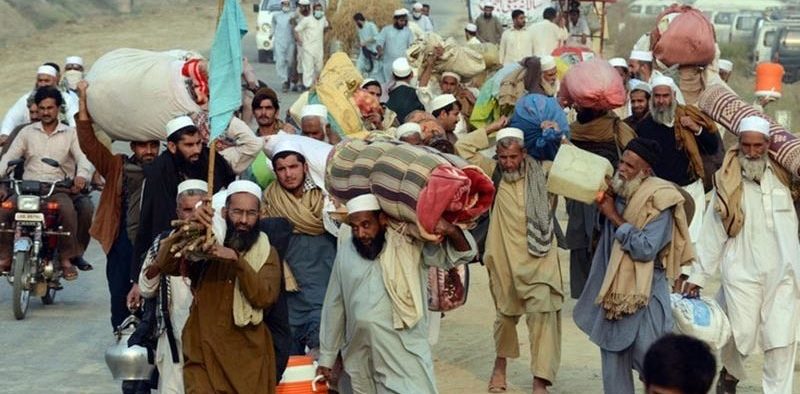
Tablighi Jamaat members in Pakistan

In January 2016, in what was “probably the first time that any restriction has been placed on Tablighi Jamaat” in Pakistan, the government (Punjab) banned preaching on university campuses and banned Tablighi Jamaat (and other non-students) from preaching and staying in campus hostels. Curiously, some university campuses in India have become hotbeds for the propagation of extremist Islam and related jihadist ideology.

Tablighi Jamaat and their role in Coronavirus pandemic

Coronavirus pandemic 2019-20 suddenly brought Tablighi Jamaat into the global limelight. At its 27 February to 1 March 2020 convention at the Sri Petaling Mosque in Kuala Lumpur, Malaysia, more than 600 persons contracted COVID-19 to become the largest-known centre of transmission of the Coronavirus in Southeast Asia. By 17 March 2020, most of the COVID-19 cases in Brunei, Singapore, Thailand and Cambodia traced their cases back to this Kuala Lampur convention.

Despite the outbreak of the virus, Tablighi Jamaat organized a second international mass gathering on 18 March in Gowa Regency. Though the Raiwind gathering near Lahore was called off, yet 150,000 returning Tablighis carried the virus with them including two cases in the Gaza Strip.
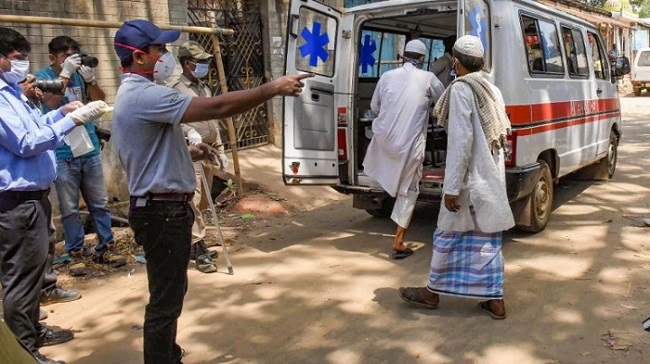
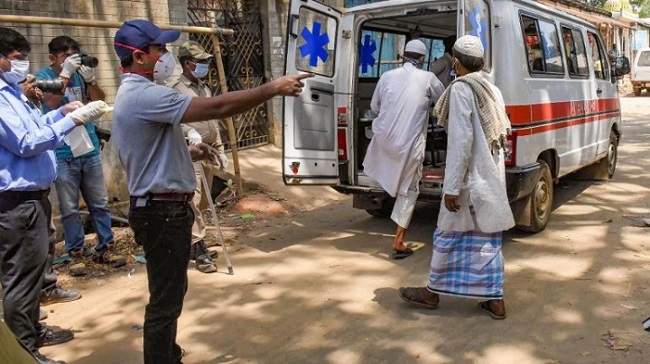
Tablighi Jamaat members being taken away to the quarantine centres.
Tablighi Markaz at Nizamuddin West in New Delhi is the epicentre for spread of COVID-19 across India. (Photo: PTI)

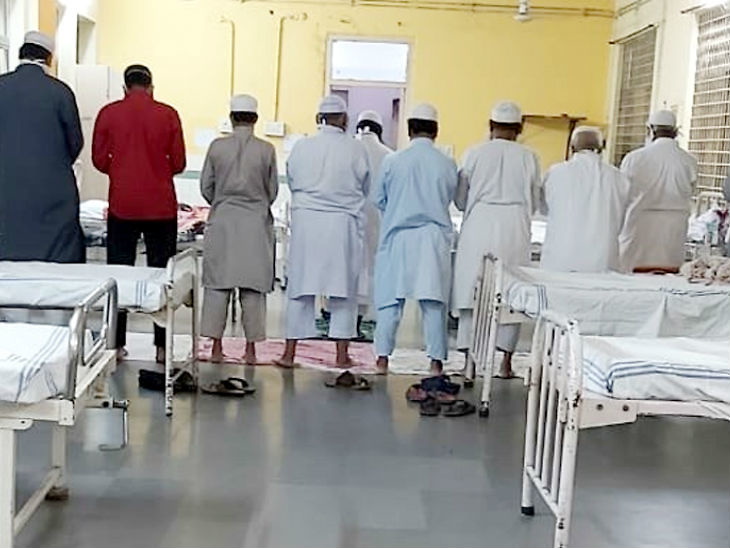
At the Tablighi Jamaat Markaz (Headquarter) Nizamuddin West locality in Delhi, weekly Tablighi congregations (ijtima) were held till March 21. Misusing their tourist visa facility, the foreign participants engaged themselves in missionary activities and did not take the stipulated 14-day home quarantine for travelers from abroad. At least 24 of them had tested positive for the virus among the 300 who showed symptoms by 31 March 2020. Preachers from Indonesia are believed to be the first carriers of the virus. Many had returned to their states carrying the virus with them and some provided refuge to foreign speakers without the knowledge of local governments resulting in local transmission as in Tamil Nadu, Telangana, Karnataka, Jammu & Kashmir and Assam. After evacuation from the markaz, of the scores of participants, 167 were quarantined in a railway facility in south-east Delhi. There were further complications after the staff at the quarantine facility reported that the Tabligh Jamaat followers misbehaved with the medical staff and spat at the doctors looking after them. Tablighi Jamaat gathering emerged as one of India’s major Coronavirus hotspots after 389 people linked to Tablighi Jamaat tested positive by 2 April 2020.

In the meanwhile, Delhi government ordered an FIR against Maulana Sa’ad head of Nizamuddin faction of the Tablighi Jamaat and others by Delhi Police Crime Branch under Section 3 (the penalty for offence) of the Epidemic Diseases Act of 1897 and Sections 269 (Negligent Act likely to spread infection of disease), 270 (Malignant Act likely to spread infection of disease), 271 (disobedience to quarantine rule) and 120b (punishment of criminal conspiracy) of the IPC. Since the country is observing lockdown as a precautionary measure to defeat the COVID -19, judicial processes of the FIRs filed by police may take a long time to process.
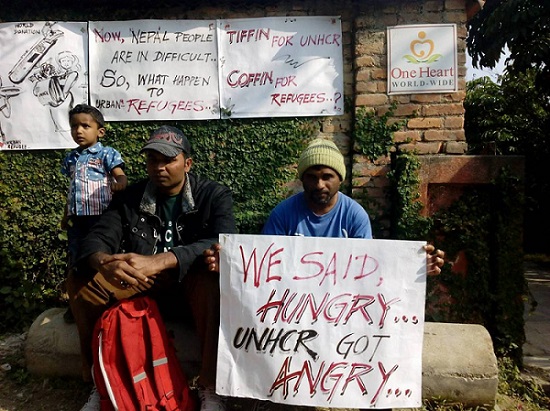
UNHCR abandons refugees registered as journalists and human rights activists in Nepal

Journalists, human rights activists and political activists are receiving stepmotherly treatment at the hands of United Nations High Commissioner for Refugees (UNHCR) Nepal during these unprecedented challenging times, when there’s worldwide lockdown due to the Coronavirus pandemic.

These human rights activists, journalists and political activists are duly registered with the UNHCR Nepal as urban refugees, and yet they have to face grave difficulties due to the lockdown to fight Coronavirus pandemic. This group of 20-22 urban refugees is finding it extremely difficult to sustain themselves and their family members since they have no means to buy food, they have no work permit and receive no monetary support from UNHCR Nepal to tide over these times of crisis.

It’s not that UNHCR Nepal is facing a paucity of funds, rather, UNHCR Nepal is making all efforts to help those refugees who have registered themselves with it as religiously persecuted refugees in Nepal. Around 600 religiously persecuted refugees have been registered with the UNHCR Nepal who have come in from Pakistan, Myanmar, Bangladesh and Sri Lanka. Sources told News Intervention that of the 600 ‘religiously persecuted’ refugees registered in UNHCR Nepal, around 370 are Pakistani Ahmadiyya Muslims, eleven are from Myanmar, four from Bangladesh and eighteen are from Sri Lanka. There are several Christian refugees as well in this group.

“A large number of refugees who have sought refuge in Nepal under religiously persecuted category came in due to economic hardship in their country of origin. They now own businesses and are economically well off,” a UN executive, speaking strictly on conditions of anonymity, told News Intervention.

The UNHCR Nepal did not respond to an email sent by News Intervention on this issue.

“We do not receive any financial support from UNHCR, nor food or shelter. Under normal circumstances we could manage it somehow but after this enforced lockdown to fight Coronavirus pandemic we simply do not know how long are we going to survive,” a human rights activist registered as a refugee with UNHCR said. Other human rights activist also told News Intervention that they do not understand why UNHCR gives a stepmotherly treatment to them when religious refugees receive a handsome monthly allowance, easy loans to start their own business and skill development courses.

Human rights activists, journalists and the political activists, who are now registered urban refugees, wish to have security, shelter and work permit so that they can sustain themselves and their family in Nepal. Yet even these basic requirements are not being fulfilled by the UNHCR Nepal.

In fact, the mandate of UNHCR is to ensure physical and legal protection of all urban refugees registered under it such that basic human rights of each refugee is protected while in Nepal. The UNHCR must also provide free access to basic healthcare and most importantly give a monthly subsistence allowance to all refugees.

It’s rather strange that UNHCR Nepal has been quite selective in doling out mandatory life saving assistance to the registered urban refugees. In the past, it offered undue favour upon several refugees registered under ‘religiously persecuted’ category by helping and expediting their resettlement to the developed Western nations.

“The manner in which some religiously persecuted refugees ‘resettled’ in the West must have raised suspicions and they (UNHCR) have now put a notice within their office premises that no refugee should pay any unaccounted cash to UNHCR Nepal executives to expedite their resettlement applications,” a political activist told News Intervention on conditions of anonymity.

Jihad of ‘Convenience’ in Kashmir

Those who have picked up the gun and are fighting government forces in Kashmir claim they are ‘Mujahideens’ (holy warriors) who are engaged in ‘jihad’ (holy war). But even though Islamabad tried to garner international support for this violent enterprise, it did so by portraying the same as “freedom struggle” and not as ‘jihad’ that is permitted in Islam. This is indeed very surprising because while Pakistan maintains that being an Islamic republic, its concern for ‘ummah’ (Muslim fraternity) in J&K, (and more recently even in other parts of India) is a mandatory religious duty, it still refuses to accept that the violence being perpetuated in J&K by its sponsored militants is ‘jihad’!

Even the 56-nation strong Organisation of Islamic Cooperation (OIC) hasn’t accepted what’s going on in J&K as ‘jihad’, and this raises the obvious question, “Why?” The answer isn’t very difficult to find. It’s because the so called ‘jihad’ in J&K violates the cardinal tenets of Islam. For example, in the Holy Quran it’s stated that “Whosoever kills an innocent person … it shall be as if he has killed all mankind.” Yet, the so called ‘Mujahideens’ in Kashmir have been doing just the opposite and in the last two weeks alone, four innocent and unarmed civilians have been shot dead by these self-anointed ‘Mujahideens’.

Some may argue that since it hasn’t been conclusively proved that ‘Mujahideen’ were behind these four killings, it would be wrong to blame them for these cold-blooded murders. Whereas it’s correct that the killers haven’t been identified, but then, who else could be behind these gruesome incidents? The ‘Mujahideens’ always shift blame on government forces and their favourite reasoning is that this is a ‘conspiracy’ against Kashmiris and the ‘freedom struggle’. But little do these dimwits realise that since such killings contradict the state’s claim that its writ runs in J&K, only a cretin could ever think of such a self-defeating ‘conspiracy’ that undermines authority of the government. Furthermore, why would government forces, which are leaving no stone unturned to win hearts and minds of the locals, be willing to axe their own feet by targeting them?

Au contraire, since summary ‘execution’ on mere suspicion of being a ‘mukhbir’ (informer) spreads terror amongst the locals and one doesn’t have to be a rocket scientist to discern who benefits from such acts!

However, for the sake of discussion, let’s still give the so called ‘Mujahideens’ benefit of doubt in the above-mentioned cases. But then comes the next question: How do they account for videos containing ‘confessions’ of young boys (and in one case, even a young woman) of their being ‘mukhbirs’, followed by their brutal execution type murders? Isn’t the circulation of such videos intended to terrorize locals against cooperating with the security forces? Or, do the so called ‘Mujahideens’ want the world to believe that security forces are such a bunch of morons who for the sake of trying to give the ‘freedom struggle’ a bad name and maligning ‘Mujahideens’ are willing to forego the crucial requirement of securing public confidence!

Those waging what they claim is ‘jihad’ in Kashmir defend murdering ‘informers’ by applying the skewed logic of ‘all’s fair in love and war’. But even if we for a moment accept this indefensible point of view, what do they have to say to justify their murdering religious and political personalities who had no links with the government or security forces?

Readers may recall that in 2011, senior Hurriyat leader Prof. Abdul Ghani Bhatt revealed that “(Abdul Ghani) Lone sahib, Mirwaiz Farooq and Prof. (Abdul Ahad) Wani were not killed by the army or the police. They were targeted by our own people.” This revelation once again raises question “Why?” After all, none of them were ‘mukhbirs’ working for the security forces nor serving as ‘agents’ of the government. In fact, they were all firm advocates fighting for the right to self determination.

So, did the so called ‘Mujahideen’ ever realise that by killing three innocent men, they had killed all mankind thrice?

But this isn’t all. After the cold-blooded murder of Jamiat-e-Ahli- Hadees (JAH), Maulvi Showkat Ahmad Shah, the Lashkar-e-Taiba (LeT) admitted that “Earlier we thought the Indian Army or its agencies killed Maulvi (Showkat Ahmad Shah) to defame the movement and create misgivings. We had not even imagined that the murderer would turn out to be our own men.” The LeT’s admission was not out of righteousness but due to compulsion.

Readers may recall that after the assassination of Maulvi Showkat, Hurriyat (M) Chairman Mirwaiz Umar Farook had announced that “The Hizbul-Mujahideen (HM) is conducting its own probe. The Lashkar-e-Taiba (LeT) had a function in Islamabad and they said that they would look into it. We too are not letting anybody off the hook. We are looking from New Delhi to Islamabad to Srinagar. Everybody is a suspect for us.”

So, LeT’s admission was just a face-saving effort and this group whose name in English translates to “army of the pure,” ironically has the blood of an innocent Maulvi on its hands and is also guilty of murdering all mankind!

The Holy Quran also stipulates that “If you hear of a plague in a land, then do not go into it. If it happens in land where you are, then do not go out of it,” and in his latest audio message released on April 1, Hizbul-Mujahideen operational commander Riyaz Naikoo has also referred to this edict. But the April 2 encounter that took place between security forces and a group of infiltrating militants in the Kupwara forests near the Line of Control (LoC) has proved that the Pakistan’s ISI (Inter-Services Intelligence) is blatantly violating Islamic teachings by continuing to push militants into Kashmir despite it being in the grip of a plague that we are referring to as Coronavirus.

Similarly, while Naikoo has talked a lot about isolation and social distancing, his own cadres are openly violating these instructions. In an encounter that took place in Hardmanguri area of Khur Batpora in Kulgam district on Saturday, four Hizbul-Mujahideen militants had taken refuge in a small house. By taking refuge in a small house, the militants (if infected) put its occupants at grave risk of contracting Covid-19. Alternatively, if anyone in the house was infected, then the militants could have contracted this virus and had they survived, there were bright chances of this virus being passed on by them to occupants of the next house where they would seek refuge.

But, Naikoo has not clarified whether his cadres are playing their role in preventing spread of this disease by avoiding contact with people and instead of taking shelter in houses, keeping away from villages and confining themselves to hideouts created away from inhabited areas.

Islamabad is claiming that Pakistan-occupied Kashmir (PoK) and Gilgit-Baltistan GB) have only 12 and 193 Covid-19 cases respectively. However, reliable sources have confirmed that these figures, especially those pertaining to PoK have been grossly understated and the reason for this is obvious. Facing severe public criticism for its decision to set up quarantine camps in PoK for accommodating suspect Covid-19 cases being brought in from other parts of the country, Islamabad is intentionally playing down the severity of this pandemic to give locals a ‘feel good’ sense.

With PoK becoming Pakistan’s national Covid-19 quarantine hub that will receive patients from all over the country, it is but natural that this pandemic will assume humongous proportions here, and in case ISI infiltrates terrorists from PoK into Kashmir, then incidents of this pandemic will undoubtedly skyrocket in Kashmir. Let’s not forget that those infiltrating into Kashmir will neither have the inclination, nor the luxury of ensuring isolation or social distancing. Since terrorists will continue using houses to hide-in and keep shifting frequently to avoid compromising their whereabouts, they will automatically become an extremely potent source for spreading the lethal Coronavirus.

But since Hizbul Mujahideen is only a proxy of the ISI and has no say, Riyaz Naikoo has cleverly avoided mention of this in his audio message on Coronavirus!

Lastly, these self-styled ‘Mujahids’ need to realise that this type of a sham in the name of ‘jihad’ that’s only insulting the religion is bound to fail since it goes against the very tenets of Islam! 

BLF freedom fighters attack Pakistani trucks loaded with looted Chromite

Balochistan Liberation Front (BLF) freedom fighters attacked Pakistani trucks on Friday, April 3rd that were loaded with Chromite looted from occupied Balochistan.

BLF spokesman Major Gwahram Baloch claimed responsibility for the attack on chromite-carrying trucks between Lesbela and Khuzdar districts in Balochistan.

Major Gwahram Baloch in his media statement said that the freedom fighters (Sarmachaars) of Balochistan targeted two trucks near Jani Kor (stream) at Wal-e-Patt area on Bela RCD Road around 6.30 PM on Friday evening. “These trucks were loaded with chromite of Balochistan. Both trucks were hit and burned,” Major Gwahram Baloch said.

Major Gwahram Baloch added that the plundering of resources of their motherland Balochistan is not acceptable to the Baloch people at any cost. “We make it clear that if the transport community were involved in the plunder, they will be responsible for their lives and property. Occupying Pakistani troops, Pakistani allies and facilitators exploiting the resources are on our target,” BLF spokesman said.

Kabul Gurdwara Attack: Foreign powers spreading vicious lies to create Sikh-Hindu rift

There are a large number of multi-media resources functioning across the world with a singular agenda of creating a rift between the Hindu and Sikh communities by resorting to despicable propaganda based on blatant lies and misinformation. One such organisation is 5K Broadcasting, a United Kingdom (UK) based so called “Media House” that has its office at 29 Saxon Grove, Leeds, LS175DY. In actuality, it is a one man entity run by one Swaran Bir Singh. An analysis of the content of its website makes it clear that the agenda of Swaran Bir Singh is to target the Indian leadership, including Prime Minister Narendra Modi, in a manner that creates ill will and mistrust within the Sikh community towards the socio-political ideology of the majority party of Indian government. He spouts venom and resorts to yellow journalism in the most obnoxious manner.

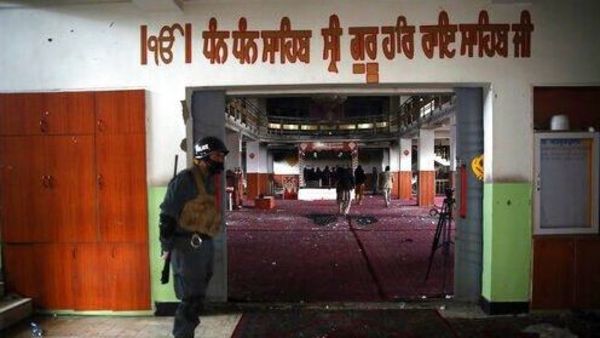
The terrorist attack on a Gurdwara at Kabul on 25th March, left 27 Sikhs, including women and children dead and many wounded. In an intolerable twist to this monumental tragedy, Swaran Bir Singh has released a video on Facebook titled: “ISIS or RAW — Who killed Afghan Sikhs,” from the platform of 5K Broadcasting in which he is making bizarre allegations of this attack having been carried out by the terrorist organisation Islamic State-Khorashan (IS-K) at the behest of Indian Intelligence Agency, Research & Analysis Wing (RAW). Singh further says that RAW acted on orders from the Rashtriya Syayamsevak Sangh (RSS).

This absolutely weird logic put forward by Swaran Singh runs as follows. “ISIS is funded by RAW; hence, ISIS attacks on Sikhs is supported by RAW; RAW is supported by the Indian government and the government is supported by RSS, hence, RSS is behind the attack on Sikhs in the Kabul Gurdwara.” Swaran Singh offers no proof for this absurd logic. He has no documentary or any other form of evidence to substantiate his claim. 

Anti-India propaganda on similar lines is also being done by Gopal Singh Chawla, a Pakistani Sikh who has links with Khalistani organisations and was earlier the President of Pakistan Gurdwara Prabandhak Committee. Chawla chose a news report about one of the terrorists involved in the Gurdwara attack being from Kerala as the primary tool for his vicious propaganda.

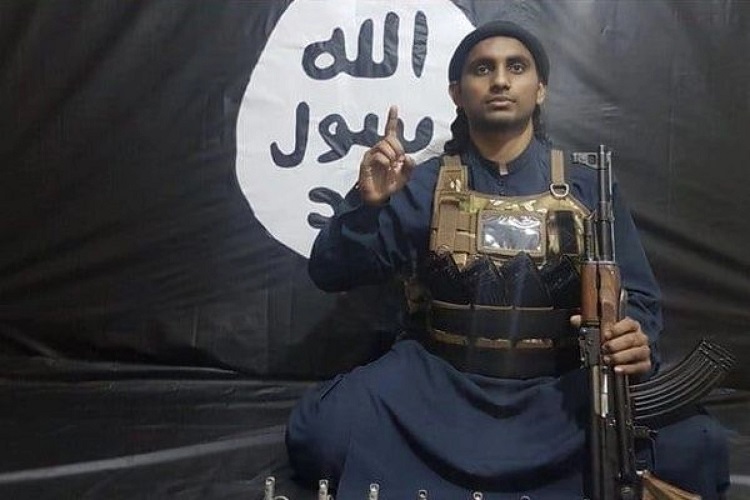
Abu Khalid Al-Hindi was identified by terrorist organisation ISIS as the one who carried out Kabul Gurdwara attack on March 25.

After the Kabul Gurudwara attack on March 26, the ISIS posted in its propaganda magazine Al Naba, the photograph of a terrorist whom they call “Abu Khalid Al-Hindi.” He has been identified as a radicalised Muslim youth  from Kerala whose actual name is Muhammad Muhsin. He left the country to join ISIS and was believed to have been killed in a Drone attack in Afghanistan last year.

In a You Tube video titled “Who is Master Mind Suicide Attack of Gurdwara Sahib Kabul?” uploaded on the Shahid Shabbar Official, Chawla has described this terrorist as the master mind of the attack and further espoused a disgusting theory that the person was trained as a terrorist in Kerala by the Indian government and then sent to Afghanistan to target Sikhs. He also openly alleged the RSS of being the perpetrator of this attack. He went on to emphasize that that Sikhs are the biggest well wishers of Muslims who reciprocate the sentiment in equal measure.

It is not difficult to identify a well laid out propaganda campaign behind the two similar messages emanating around the same time from two different parts of the world. While the first objective was to drive a wedge in the relationship between Sikhs and Hindus, the second was to move away focus from the fact that planning and execution of terror attack on Kabul Gurdwara was being traced back to Pakistan.

Statements by the government of Afghanistan suggest the hand of Pakistan- based Haqqani Network and also Pakistan-based terrorist organisation Lashkar-e-Toiba (LeT) in the attack. The leader of IS-K in Afghanistan is 43-year-old Mawlawi Aslam Farooqi, a Pakistani Pashtun who was initially recruited into the LeT in 2004. He was sent to Afghanistan in 2007 and ultimately transferred permanently to the ISIS. Hundreds of others from Pakistan terrorist organisations like the Lashkar-e-Jhangvi and Tehreek-e-Taliban Pakistan were also been similarly delegated to the ISIS. Farooqi became the head of IS-K  due to his roots in the LeT and the influence of Pakistan’s ISI on the ISIS.

It is quite apparent that Pakistan maintains links with all terrorist organisations operating in the Islamic world and provides to them trained manpower, shelter and strategic advice. When seen in this context the choice of a terror attack on a Sikh Gurdwara or a Hindu Temple in Afghanistan to further personal interests becomes understandable.

It is notable here that Hindus give as much reverence to teachings of Guru Nanak Dev Ji, to all Gurus of the Sikh religion and also to the Holy Guru Granth Sahib as they give to their own Holy scriptures and religious practices. The RSS, in particular, derives ideological inspirations from teachings of the Sikh Gurus and the Holy Granth. RSS has held countless seminars, talks and discussions on the teachings of Guru Nanak Dev Ji all through the celebrations of the 550th Birth Anniversary of the Guru; it has also published many books, brochures and other forms of literature that have been widely circulated among its worldwide cadre.

It is also notable that opening of the Kartarpur Corridor, a revered place of pilgrimage for Sikhs, was taken to conclusion by the BJP-led government whose leader Prime Minister Narendra Modi has his ideological base in the RSS. That Prime Minister Modi has particular respect for Sikh community is well known; he has one Sikh lady in his cabinet and another Sikh as Minister of State with an important independent portfolio in his government. This constitutes more than adequate representation of the community in Modi’s government. Recently he cleared the names of 312 Sikh foreign nationals that previous governments had blacklisted for anti-India activities.

The Citizenship (Amendment) Act, 2019, (CAA) recently enacted by the government of India is designed to ease citizenship process for the minority communities of Hindus, Sikhs, Christians, Buddhists and Jains residing in Afghanistan, Pakistan and Bangladesh where they are being subject to extreme persecution on religious lines. The persecuted Sikh community of Afghanistan and Pakistan are likely to derive maximum benefit from this legislation and they will be able to stay in India as proud citizens of the country. Surprisingly, several other political parties that wish to position themselves as the well wishers of Sikhs are opposing this legislation tooth and nail.

Among those killed in the Kabul Gurdwara attack on 25th March was an Indian Sikh national, Tian Singh. There were two more Sikhs, Shankar Singh and Jiwan Singh, who were killed in the carnage but only the deceased Tian Singh is being identified as a citizen of India. It seems that the other two are among the many hapless persons who have migrated to India but are still awaiting citizenship. The widow of Sardar Tian Singh had requested for the mortal remains of her husband to be brought back to India.

It is to the credit of New Delhi that it managed to have the bodies of these three Sikhs transported to India within a week. Their cremation was done by their families in India. The cremation of Tian Singh was attended by Hardip Puri, Union Housing and Urban Affairs Minister. “These unfortunate deaths and the impunity of these attacks are a grim reminder of the persecution which religious minorities face in some countries in our neighbourhood…… the world needs to act now. The perpetrators of this heinous attack have to be brought to justice,” said Puri in a tweet after the cremation.

A few statements issued by some fringe elements will not cause any kind of a dent in the very strong and deep relations that all communities maintain in India, especially the Sikhs and the Hindus. While there is no reason to be overly concerned it is necessary to  remain vigilant and take timely action to stop spread of vile, untruthful false and evil propaganda that is designed to sow seeds of distrust between Sikhs and Hindus. The allegation of RAW being the controller of a terrorist organisations like the ISIS cannot be allowed to go uncontested by the government of India. The matter should be raised at appropriate international levels.

J&K’s new domicile law is regressive. Fix residency period to 5 years

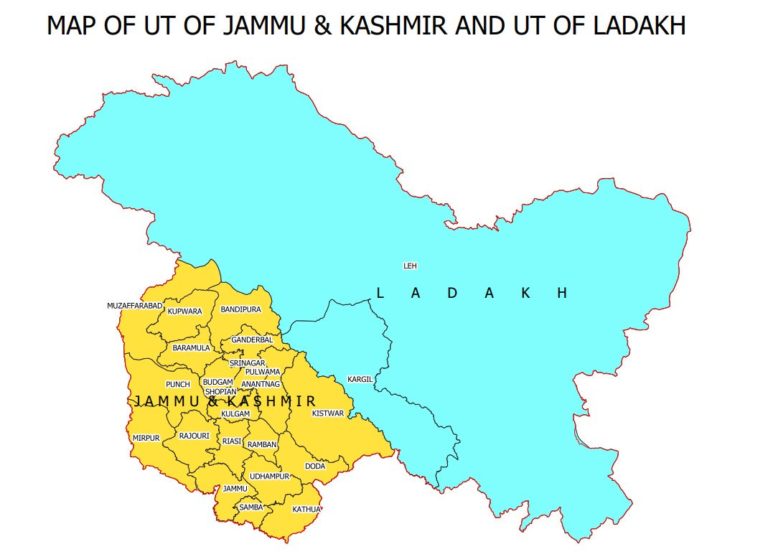
A lot is being said about new domicile laws or rules that have been framed for the Union Territory (UT) of Jammu & Kashmir. There is a large number of people who are opposed to them. They are advancing many arguments against these laws.

A friend asked me why I had not written on the issue. Well, I just did not feel like doing so and that was the basic reason. Besides, I am anyway against prescription of any domicile reservations. As such, it seemed that my not writing on the issue was not needed perhaps.

Let me begin by stating last things first. Let me say it again. I am aghast that a residential period of 15 years has been prescribed for getting domicile of the UT of Jammu & Kashmir. I feel this is unwarranted and should have been, let us say, only five years.

Why? Why not? Maharaja Hari Singh had issued two sets of State Subject laws, one on April 20th 1927, and the other on June 27th 1931. The period of residency prescribed by him was only 10 years. What justifies a period of 15 years to get a domicile certificate?

Let us talk of the conditions prescribed for getting the UK or US citizenship. How much is the period of residency prescribed for getting that? Please check. Countless people from India, doctor couples, other professionals, are waiting for acquisition of citizenship there. Why should the period of residency prescribed be 20 years there? Or even more.

Something like what is followers by a good number of Arab nations where people can stay for donkeys’ years. Still be treated like donkeys, fit only for working and not for citizenship. Were Permanent Resident Certificate (PRC) laws of J&K state inspired by these laws? May be. How long does it take for refugees in Germany, UK or France to get absorbed in those societies? Is it 15 years by law? If that happens, the refugees arriving in the Western nations in 2006-07 would still not be citizens there. Please check again.

Everywhere else a good number of people argue for making acquisition of citizenship easy. Oh, not when it comes to Jammu and Kashmir. Why? “Special Status Syndrome” at play here and in full flow.

Name any major city or cities of India in which people from Jammu or Kashmir do not own properties. Name some top notch hotels of India in which people from J&K don’t own shops. Name some tourist attractions of India where there are no people from J&K. Well, Jalandhar, Ludhiana, Chandigarh, Delhi, Agra, Lucknow, Bhopal, Ahmedabad, Bangalore, Indore, Mumbai and countless other cities have people from J&K domiciled there. There is no city in which students from J&K are not to be found.

Yes, a good number of them studying outside J&K on scholarships provided by New Delhi. This has been going on for last several years. Certainly, more than six years as the Modi government had taken charge on May 26, 2014.
Despite that, most of these students, their parents, as also relatives, would let out howls in protest when someone talks about giving people from outside the union territory of J&K it’s domicile. How very shameless and ironical it is! Perhaps there is no limit to being selfish and absolute blindness when self-interest destroys all reasoning.

The West Pakistan refugees came to J&K in 1947. A residency of 10 years (as prescribed by the Maharaja) would have made them eligible for domicile by mid 1957, give or take a couple of months. The Valmikis were brought in 1957 and by 1967, or early 1968, they should have been absorbed in the state of Jammu and Kashmir.

The women of the state, their spouses and children, should have enjoyed all the rights of State Subjects ab initio. It was a gender discrimination of the worst kind which denied them these rights.

Gorkhas fought for the defence of the state, right from 1947, or even earlier. Yet, these soldiers were expected to sacrifice their lives in the line of duty without domicile rights in J&K. All these enumerated above are some examples of unfair, unjust laws.

Indeed, some laws barred them all. But these laws were totally unjust and were scrapped on August 5, 2019. Good riddance. The state was converted into a Union Territory on the same day. Very good. From October 1947 to August 2019, J&K was a state and that status and concession granted to it failed to integrate it fully into the Indian Union. Only “I, me and myself” were the apparent policies that drove it’s polity.

Now, nothing conceivable can change the changed status and changed laws in a hurry. So, brace up and be loyal Indians. Forget dreaming about winning back so-called “Special Status” till at least the next Lok Sabha elections due in April-May 2024. The alternative choice of fomenting troubles is always open. If India could deal with insurgency, secessionist ideas, countless killings and more, so would it be doing to keep J&K an “integral part of the nation” as it has done so far.

The Central government should be bold and cut down the period of residency needed to get domicile of J&K to 5 years, and not peg it at 15 years as per the new domicile laws. We have paid a heavy price for mollycoddling wrong policies and using velvet glove where iron fists were needed. No more. Period.

Pakistanis kidnap a bride from her marriage in Washuk, Balochistan

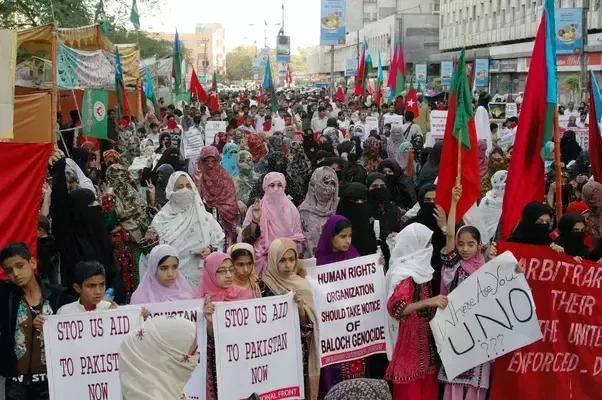
Even in these times when the world is fighting with Coronavirus pandemic, the Pakistani regime continues to terrorize innocent Baloch people. Pakistanis have abducted a bride from Shinger in district Washuk. The hapless bride was kidnapped during her marriage ceremony.

Local sources in Balochistan told News Intervention that Pakistan Army nurtures Death Squads that commits innumerable atrocities on Baloch freedom fighters, pro-independence activists and parties. A couple of days ago, Haji Ghulam Qadir, commander of Pakistan Army-sponsored Death Squad along with his nephew Zain Jan and other associates attacked the marriage ceremony of Ms. Shabana who is the daughter of Abdul, and then forcefully abducted her from the marriage ceremony.

The two cars on which these Death Squad monsters came to kidnap Ms. Shabana had Pakistan’s flag mounted upon them.

Pakistan Army and Pakistani regime continue to commit nefarious crimes against women in occupied Balochistan that includes enforced disappearances, kidnappings, torture, rapes and killing on a daily basis.

Days before the kidnapping of Ms. Shabana from Washuk district, Pakistani regime had arrested nine persons from the Kech district. In fact, Pakistani forces along with its secret agencies raided the Balnigor, Dasht Jathani Bazar areas of Kech district and randomly arrested nine persons.

These nine individuals who were arrested illegally by the Pakistani forces include Rahmat son of Khudadad, Saddam son of Rahmat, Chakar son of Abdul Samad, Abdul Hameed son of Mohammad Issaq, Bakhshi son of Sayad, Jumma son of Ahmed, Niyaz son of Shambey, Rahmdil son of Shahmurad and Muhktiyar son of Khan Mohammad. These nine Baloch individuals have now been “disappeared”.

During these kidnappings the Pakistani forces also looted Baloch houses and tortured women and children.

World’s silence about gross human rights violations by Pakistan in Balochistan has only emboldened the Pakistan Army and its rogue intelligence agency ISI who continue to commit severe atrocities across Balochistan. The number of “missing persons”, “enforced disappearances”, abductions, rapes and murders are increasing every day in Balochistan such that the Pakistani regime is innovating newer ways to terrorize the hapless Baloch people.

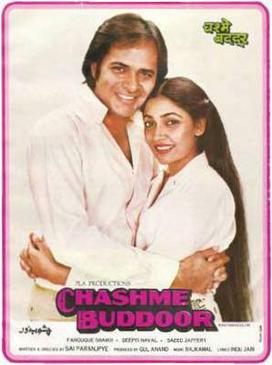
‘Chashme Buddoor’ (1981) review: Enduring nostalgia

The banality of daily chores in the current lockdown has its own advantages. It makes you crave for something interesting to best utilise the free time you have. I decided to catch some classic Hindi films from the 80s and the first deliberate choice was Sai Paranjpye’s brilliant film Chashme Buddoor.

Released 39-years-ago in 1981, the light-hearted comedy wafts a cool breeze of nostalgia, so typical of Delhi’s languid summers, whenever you watch it. The film was shot at some familiar locations in Delhi, including North Campus of Delhi University, Talkatora Garden, Defence Colony, Lodhi Gardens, Mandi House and Tughlakabad Fort and gives an ample view of the beautiful landscape of less crowded and greener Delhi in the 80s.

Interestingly, the year 1981 saw several big budget multi-starrer films like Kranti, Laawaris, Kudrat, Ek Duje ke liye, Naseeb, Yaarana, Kaalia, debut films of Kumar Gaurav Love Story and Sanjay Dutt’s Rocky, still, Chashme Buddoor, went on to celebrate its silver jubilee and was loved by the audience.

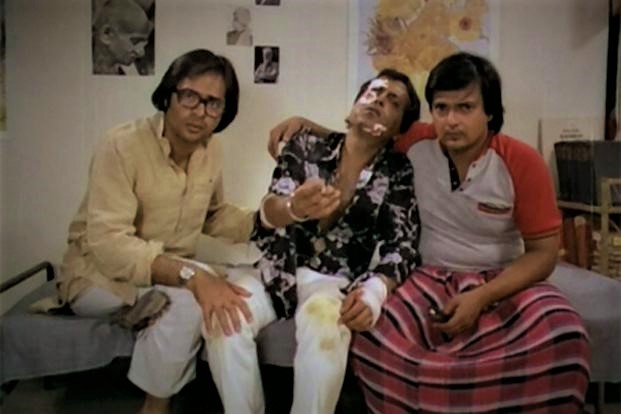
Sai Paranjpye’s directorial brilliance is magical in the opening scene of the film, where we are introduced to the three main protagonists. Enjoying a great camaraderie, in a messy, smoke-filled Defence Colony barsati, the three bachelors, Siddharth (Farooque Shaikh), Jai (Ravi Baswani) and Omi (Rakesh Bedi) are relaxing as they did not go home during the summer vacation. However, they have their own plans. The first few minutes of the film makes one realise what the three youngsters are upto and despite having different tastes and preferences they are bonding well, from shared cigarettes to segmented walls with pin-ups of voluptuous women. While Omi and Jai are always on the lookout for their next ‘shikar’ (prey), Siddharth is studious type, who wants to pursue his Phd in economics.

The female lead Neha (Deepti Naval), is a petite, girl-next-door with a calm demeanour.  Other memorable characters of the film included Neha’s adorable daadi (Leela Misra) and the brilliant Lallan miya (Saeed Jaffrey), the neighbourhood paanwaala who shares a special bonding with the three young men. It is a delight to watch how a lovable paanwaala not only scold them for not giving his money but is also a friend and well-wisher, with whom they can share their secrets.

The real charm of the film lies as much in the ordinariness and simplicity of the plot, as in the realistic portrayal of the characters and narrative. While, Omi and Jai make several efforts to know Neha’s whereabouts to woo her – both of them fail miserably to impress her.  Surprisingly, Siddharth succeeds after a chance meeting with Neha, when she visits his room as a salesgirl. Initially, while Siddharth tries his best not to entertain her, but soon relents. She then insists on demonstrating the product. Neha’s sales pitch “Chamko. Kapdon ke liye behtareen sabun. Baar baar. Lagatar. Chamko” becomes the talking point for themduring the wait time for Chamko detergent powder to clean the towel. Meanwhile, Neha discloses her interest in music and about her music classes.  Soon, Siddharth and Neha meet again and love blossoms. When Omi and Jai come to know about Siddharth and Neha’s romance, they get worried as they think Neha would reveal their secrets and the treatment they got at her house. Watching Omi and Jai coming up with comical ideas to split the two lovebirds and then trying to bring them together with help from Neha’s daadi, makes it a predictable climax but that doesn’t take away the interest to watch it.     

Sai Paranjpye’s eye for details and her attempt not to overplay the emotional melodrama, makes it a fantastic narrative. The subdued romanticism of the 80s, in the film, looks beautiful when Siddharth and Neha go out on their first date and both share their secrets, with a sheepish smile and grin, gradually becoming comfortable after the initial embarrassment.

The casting of the film is perfect. Ravi Baswani, who made his acting debut with this film, came with a comic timing that was simply amazing. Rakesh Bedi’s boyish insouciance as a chubby would-be poet, brings laughter at his every dialogue. Both of them made it a delight to watch the way they mock at each other, and through their innocent mischiefs brought the humour alive on the screen. Baswani and Bedi were later also nominated for the Filmfare award in the category – best actor in comic role. In contrast, Farooq Shaikh, played his role as a sober and studious Siddharth with remarkable restraint and ease.

There are several scenes in the film, where Paranjpye comes out brilliantly as a storyteller, with an eye on the minute detailing. Be it the Chamko scene, when Farooq Sheikh brings a besan ladoo for Deepti Naval in a cup, or in the brief interaction of Leela Misra with Omi and Jai, where she endearingly suggest them to put a few photographs of God also on the walls adorned with pin-ups of actresses and then also in the parody of hit songs used by Paranjpye  to poke fun at Hindi films. The background score and sound effects further add to the comic timing of the actors. The music is good. From the slapstick “Pyaar Lagaavwat Pranay Mohabbat” to classical numbers like “Kahan Se Aaye Badara” and “Kaali Ghodi Dwar Khari, songs are worth remembering.

Even after four decades, Chashme Buddoor stands out for its genuineness, honest storytelling and an engaging yet simple approach to filmmaking. Puerile attempts made by some filmmakers to copy it have failed ignominiously. The original remains fresh and unmatchable, evoking enduring nostalgia and romance.

Modi detractors are writing fictitious stories to derail India’s fight against Coronavirus

World is at war with the novel Coronavirus. And the pandemic due to this Chinese virus has created an unprecedented war like situation. In these times when people have come together to fight the global pandemic and buried their political and ideological differences, albeit temporarily, there’s a large section of media, social media warriors, filmmakers, sadist-comedians and self-proclaimed intellectuals who derive extreme pleasure by putting a spanner in the humanity’s herculean efforts to contain this lethal disease.

Unfortunately a large majority of these self-serving sadists are Indians or they are of Indian origins. This sadist bunch had expected widespread chaos and lakhs of deaths in India due to the novel Coronavirus. As India continues to contain the pandemic to a large extent much to the relief of millions of Indians, it has surely upset the plans of this sadist coterie. And this cabal is out with its knives. They have now resorted to their tested technique. Deceit.

The cabal shamelessly defends Tabligh-e-Jamaat despite clinching evidence that they deliberately spread Coronavirus across the country. Selective amnesia and selective pruning of messages are their key weapons. The coterie knows what to pick and what to leave in a communiqué, news report or an announcement. And if this communiqué is from PM Modi then this group carefully selects a few words or sentences to drive home their point.

Attendees of Tabligh-e-Jamaat’s Markaz have spread the Coronavirus in different parts of India. The Tabligh congregation was attended by thousands of people who stayed together in Nizamuddin, Delhi from March 1 to 15. (Photo: PTI)

“India is not testing enough people,” “India is suppressing Coronavirus cases,” “There are not enough ventilators and India should order ventilators from China,” “WHO says India needs to ramp up its efforts to fight with the pandemic” “India is not following WHO guidelines,” these are some of the phrases that this coterie keeps shouting out.

Enough.

Let me come straight to the point. India is a country with a population of 1.3 billion (130 crore) and let’s be clear that no medical preparation will be enough to combat a pandemic of this magnitude. The number of hospitals, health care centres (primary, secondary and tertiary) are grossly inadequate in India. Several studies point that even during normal times we have a shortage of over six lakh doctors and twenty lakh nurses. Ditto for lab technicians and other paramedical staff.

Further, India’s 130 crore population compares with 6 crore population of Italy, France’s 6.5 crore population and UK’s 6.7 crore. The population of US is 33 crore and Singapore has a minuscule population of 58 lakh. Despite a much lower population than India and superior healthcare facilities Italy, Spain, France and UK, among others have been brought down to their knees. Such is the impact of this novel Coronavirus (read biological weapon) that even United States of America, the world’s sole superpower, is struggling to cope up.

In this perilous scenario prevention is the only weapon for a nation with 130 crore people. And this is exactly what Prime Minister Narendra Modi has been doing. Modi knows it quite well that we have to nip this deadly Chinese virus in the bud, else Covid-19 will become the albatross around India’s neck. But this is easier said than done. Mobilizing and motivating 130 crore people is a task in itself. In the initial days, Indians did not take the Coronavirus threat seriously. Modi announced Janata Curfew on March 22 and requested countrymen to clap from their windows as a gesture to thank all the doctors, nurses, medical staff, bank employees, sanitation workers etc. Along with expressing nation’s gratitude towards our frontline warriors it raised awareness amongst Indians about the gravity of threat due to Coronavirus.

Even when India expressed solidarity with its doctors, the sadist-coterie screamed that Modi’s irrationality has put India under grave risk of Covid-19. “When country needs to import ventilators and conduct tests Modi is asking Indians to clap,” they yelled.

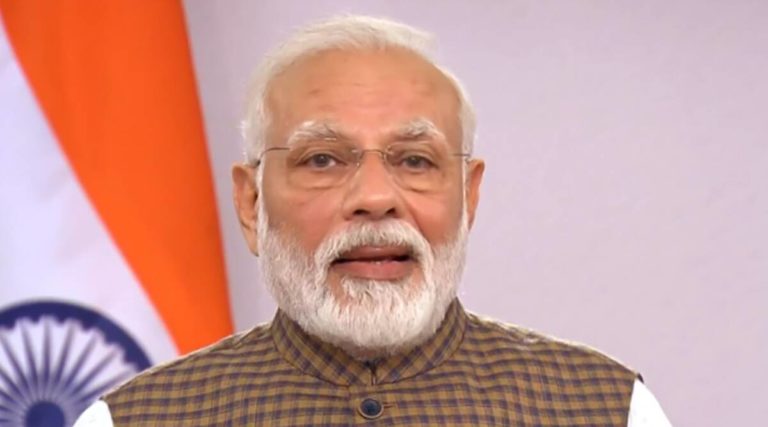
Thereafter, entire country was put under complete lockdown from March 25. It’s been more than a week since lockdown in India, and despite Covid-19 cases remaining under check, news has now begun pouring in about severe psychological stress among otherwise healthy individuals. It’s happening only because this kind of isolation is unprecedented in recent human history. Now, to uplift the mood of nation and to make each one feel that they are not lone fighters in this battle, PM Modi has requested that individuals need to stand on balconies, doors or windows of their homes on Sunday April 5, and light diyas, candles or torches. Modi has explained in clear terms that this is only to make everyone feel that entire India is a participant in this war against Coronavirus.

But the coterie is out once again. They cite WHO’s recommendations to argue that India is lagging behind China in putting brakes on Coronavirus. The coterie must know that the current Director-General of World Health Organisation (WHO) Dr. Tedros Adhanon is equally responsible for this Coronavirus pandemic as is China. Dr Tedros is an Ethiopian politician who had been involved in a major cover up about the lethality of this virus. Dr Tedros continued to defend China’s communist dictators till March until it became impossible to defend. This is the key reason why Coronavirus epidemic has evolved into a global pandemic.

Also, China has grossly under-reported Covid-19 deaths. Official deaths reported by China stand at a mere 3,326, which is absolutely wrong. Just one statistic exposes China’s lie. During January and February, three top mobile operators in China — China Mobile, China Unicom Hong Kong and China Telecom lost over 21 million (2.1 crore) subscribers. This is extremely unusual and point towards a staggering high number deaths due to Covid-19 in communist China.

PM Modi understands these shenanigans. Yes, we are short of ventilators but we also lack doctors who can monitor them, and even if we get millions of testing kits there are hardly enough pathologists to test 130 crore people for the novel Coronavirus. Yet we need to keep up our fight. Modi knows India needs to chart its own course. Modi has formed a Coronavirus task force where each minister responsible for a state takes feedback from district nodal officers of the districts who in turn get feedback from the ground medical staff such as the doctors and paramedical professionals. All this is done every day through video conferencing and feedback from the ground is being implemented in real time. Over 30 scientists and doctors are leading Modi’s task force on Coronavirus and monitoring the ground situation on real time basis. If India has managed to keep the spread of Covid-19 under control it is precisely for this reason. But is this enough? Certainly not. India is a billion plus nation and even football stadium size hospitals are not going to be enough.

But at the same time Modi also needs to uplift the mood of Indians who are feeling helpless sitting inside their homes. The nation needs to shed pessimism so that it hits the ground running whenever the lockdown is eased. Lighting of diyas, candles or torches is not about celebration rather a steely resolve that the entire country stands united in this fight against global pandemic.

J&K’s new political party and its contradictory ‘outlook’

Jammu and Kashmir’s new political party called JK Apni Party (JKAP) is very much in the news. Only a fortnight ago its delegation comprising twenty four members called on the Home Minister Amit Shah. If JK Apni Party (JKAP), the new political party inspired by senior Kashmir advocate-politician and former Deputy Chief Minister of PDP, Muzaffar Hussain Baig with Altaf Bukhari as the handle, is the replication of Bakhshi Ghulam Muhammad and his National Conference, then the fate of JKAP and its leadership will be nothing different from the fate that visited Bakhshi. Congress propped up Bakhshi and Congress dumped him later, thus exposing the state to what it is facing since 1990. Will BJP behave differently, is the baffling question.

The emergence of a new party, the amalgam of disgruntled, ambitious and self-seeking legislators of de-popularized parties and the lumpen, was a natural corollary to the political void that has gripped J&K ever since the surfacing of Jamat-i-Islami promoted jihadist movement in Kashmir along with its ramifications. In that sense, Altaf is not far away from the truth that “circumstances warranted the formation of a new political party in J&K,” as he has put it.

However, his statement to the press more than a week ago, which has received wide coverage, is disappointingly archaic and bundled in ambiguities and inaccuracies. There is hardly any cognizable symptom that he has wriggled out of the traditionally notorious Kashmirian mindset of putting hard realities under the rubric of soft semantic code.

Let us be precise. He defines JKAP as “a regional party with a national outlook.” Fantastic semantics isn’t it, but it has no takers. The core of the Kashmir issue is a fathomless void between the “region and nation.” The big majority of the region viz. Kashmir Valley and newly carved cut Chenab Valley, want secession from the Union; Jammu wants either separate state or integration into the Indian Union, and the border regions of Rajouri and Poonch districts are indecisive and in limbo because the Gujjars and Bakarwals are apprehensive of dark future if detached from India, and finally the internally displaced people being the indigenous people of the valley want a separate homeland within the valley. How is Bukhari’s Apni party going to reconcile these diametrically conflicting interests with national outlook? Please be a realist and stop vague statements.

Again, the famous phrase of Abraham Lincoln is very oddly borrowed by Altaf. Who are the commoners he is alluding to? If the valley people and leadership were the commoners, they would not have brought the situation to such a pass in which Indian forces needed to protect the grave of Sheikh Abdullah from being vandalized by those very people who followed him for forty long years and won the struggle of ousting the Dogra rule. Who would we consider commoner among the people of the three regions and sub-regions and how? Valley population being altogether Muslim never accept themselves as commoners because Islam does not include its people among the commoners. Islamists are different people with different ideology and different destination. That is what the history of Islam says.

Pragmatically speaking, Kashmir is not in a political void as Bukhari thinks; rather it is in a perfect political frame. Kashmiris and their political leadership invited foreigners to help them replace law and order in the valley with anarchy, lawlessness and barbarism and ethnic cleansing. They got what they wanted and they are happy with it. Had they not been, they would have revolted against it. They reconciled to it for three decades and are determined to continue the joys and pleasure of decadence. This is the destiny that people of Kashmir have been cherishing and what justification has Altaf to recommend deviation from it.

Altaf has mentioned three primary aims of his newly founded party. First is the restoration of Statehood. He needs to be a realist, which either he is not, or he pretends not to be. Statehood of J&K had to be dismembered essentially and solely because the Kashmir Valley majority government and legislature with pronounced pro-communal orientation discriminated Jammu and Ladakh regions so ruthlessly that they left no option for the Union government but to dismember the state. The statehood will never be revived because Jammu region will be lost to it for all times to come as has the Ladakh region. Therefore our suggestion to Altaf would be please do not try to drag the dead horse and do not mislead the people any more. You are wearing a very thin transparent attire by asking for the revival of the state. Forget that and let people everywhere stay in a sober mood.

The second objective of JKAP as stated by the leader is the protection of domicile rights. This has already been conceded by the Home Minister Amit Shah at the time of tabling the reorganization bill. There is nothing wrong in asking for domicile rights and we support it. However, the question is that domicile rights have to percolate down to the regional and sub-regional levels as well. What right has the people of Kashmir Valley to purchase village after village in Jammu region and build dozens of exclusively Muslim localities all around the peripheries of Jammu city but at the same time disallow Pandits to resettle in the Kashmir Valley? Domicile rights are acceptable only if regional and sub-regional dimensions of law are accepted. Similar is the case of job reservations. It is for the JKAP leadership to consider how safe the Kashmiri settlers in different parts of the country will be in the wake of the party demanding domicile rights for its people.

The third objective is of supporting “dignified return of the Kashmiri Pandits.” This is the repeat-in-repeat rhetoric voiced by all previous leaders, governments and legislators, which is only fake and false. Kashmiri Pandits just laugh at it. Mr Altaf knows and let me reiterate that the return of the Kashmiri Pandits is a priority issue not with him, not with the state, or the central government and not with any political party in India. It is definitely a priority with the Ummah, with the Caliphate and the Muslim world. He knows it and we need not substantiate the issue. By raking up the issue of return of IDPs (internally displaced persons), he will be playing with fire. Pandits will accept nothing short of a separate homeland in the valley. Those who threw them out shall have to pay a price for their sins.  No power in the world will stop them from achieving that demand. The UN Human Rights Charter allows it. The Pandits know that the Indian government will not allow it because its political mind is surcharged with vote bank strategy. The homeland demand of the Kashmir Pandits destroys the very basis of the false and ramshackle ideology of winning the Muslim vote bank by sacrificing the interests of the Pandits. Pandits want homeland because they want their identity and political empowerment and will not survive as underdogs or the “other”. What Altaf should say is that the Pandits will return to their separate homeland in the valley because they have been wronged and reparation has to be made.   

Altaf says he has to talk to Delhi. As long as they are on the same page, their talks will go on but when the pages alter, the story of Bakhshi Ghulam Muhammad will reappear.

In the final analysis, Altaf has to decide whether he has to continue with clear and decisive political perception or with duplicity and taqiyya meaning non-transparency. The ball is in his court. Our sincere advice to Altaf will be to make good diagnosis of the ailment and then propose medication. If he is really caring for the people he should forget all programmes and undertake only one and that is of rationalizing the criminalized, fundamentalized, indoctrinated and polluted minds of the people of Kashmir. He can take a cue from the life and works of late Bakhshi Sahib. Doctor does the diagnosis first and medication next.