Home Blog Page 395

Indian Citizenship Act Amended; Home Minister allays fear of Muslims being targeted

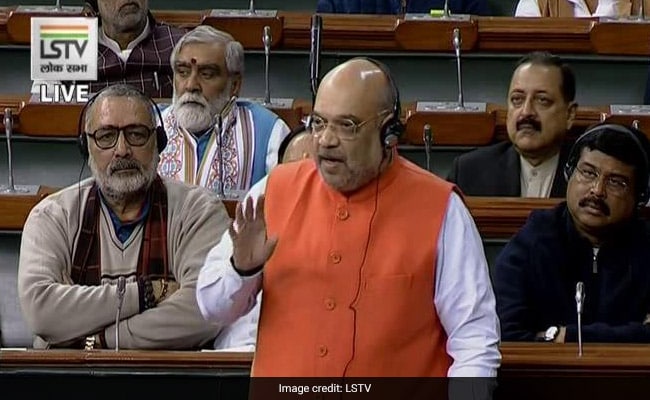
The Citizenship (Amendment) Bill 2019, which seeks to grant Indian Citizenship to persons belonging to Hindu, Sikh, Buddhist, Jain, Parsi and Christian communities on ground of religious persecution in Pakistan, Afghanistan and Bangladesh, has been passed by both the houses of the Parliament.  Rajya Sabha passed it Wednesday, while it was passed in the Lok Sabha on 9th December. Union Minister for Home Affairs, Amit Shah while introducing the Bill in Rajya Sabha, said that the Citizenship (Amendment) Bill 2019, will give a new ray of hope to persons belonging to Hindu, Sikh, Buddhist, Jain, Parsi and Christian communities who have migrated to India after facing persecution on the grounds of religion in Pakistan, Afghanistan and Bangladesh.

Shah reiterated that the Bill is not against any Minority in India and the rights of each Indian Citizen will be equally protected. He said that Narendra Modi government is committed to protect rights of each citizen of the country. The only religion that Modi government follows is the Constitution of India. He added, “We are not here only to run the government but to solve the genuine problems of the common man”.

Replying to the debate, Shah said that the Bill is aimed at giving a dignified life to these people who had suffered religious persecution for decades by granting Indian Citizenship to them, if they fulfil conditions for grant of citizenship. The Home Minister said that grant of citizenship will be from the date and year of the entry into India and all the cases and legal proceedings against them would be closed, besides protecting their business and trade interests on an equal footing.

Home Minister said that while no where does this bill target India’s minority community, no illegal immigrants would be allowed to stay in the country at any cost. He also underlined that population of minorities in the Islamic States of Pakistan and Bangladesh had reduced considerably over the years, as they were either killed or forced to change their religion, and thus were forced to flee to India. He said that partition of India on religious lines and subsequent failure of the Nehru-Liaqat pact of 1950 in protecting the rights and dignity of the minorities in Pakistan and Bangladesh are the reasons for bringing this Bill. He added, “Had this bill come 50 years ago, this situation would not have arisen. The biggest mistake in history was partition of India on religious lines. The CAB was in our manifesto and the people gave us a resounding mandate in 2019, thus it is the solemn resolve of this Government to fulfil its commitment”.

Responding to the questions on why only three countries were considered and why Muslims were not included in this bill, Shah said that at different points of time in the past, citizenship had been given to refugees coming from countries like Uganda, Sri Lanka. Then, refugees coming from Pakistan, Bangladesh and Afghanistan were not considered. He stated that the process of awarding citizenship to refugees has been undertaken by different governments in the past on case to case basis from time to time, on reasonable qualifications to Article 14. This time the case of refugees fleeing religious persecution from these three countries has been considered through this Bill, which is not unconstitutional. He also informed that more than 560 muslims from these three countries have been granted citizenship in the last 5 years. Further, he added that the previous UPA government granted citizenship to 13000 Hindus and Sikhs only but Modi government is giving citizenship rights to 6 persecuted minorities, including Hindus and Sikhs.

Shah said that there is no political agenda behind this bill, as the government is only concentrating on ending the sufferings of lakhs of persecuted refugees fleeing these three countries. The government had brought this bill in 2015 also but could not get it passed. Hence, it is clear the bill has never been brought by the government with any intention of gaining political mileage in an upcoming election. Neither is the definition of secularism narrow, the Modi Government sees this issue holistically. All the minority communities being persecuted on religious lines in these countries have been included. Muslims are not included as they do not face religious persecution in these Islamic countries. He reiterated that Indian citizens of Muslim community do not need to fear anything, as this bill would not affect their citizenship in any way. He requested the opposition not to do politics on this issue and divide people on communal lines. “This Bill aims at granting rather than taking away someone’s citizenship”, he stressed.

Allaying the apprehensions of the people of North-Eastern regions, Home Minister said that the linguistic, cultural and social identity of the people of the region would be preserved and this Bill contains the solution to the problems of the people of these States, as amendments have been incorporated after marathon deliberations with various stakeholders from North East for last one month. He also assured the people of Sikkim that the Bill would not affect their rights in any way. The issue should be seen as a humanitarian one, beyond political ideologies, he added.

Shah said that the provisions of the amendments to the Act would not apply to tribal area of Assam, Meghalaya, Mizoram or Tripura as included in the Sixth Schedule to the Constitution and the area covered under ‘The Inner Line’ notified under the Bengal Eastern Frontier Regulation, 1873. Shri Shah informed that Manipur has been brought under the Inner Line Permit (ILP) regime through a Gazette Notification today. The Bill also seeks to amend the Third Schedule to the Act to make applicants belonging to the said communities from the aforesaid countries eligible for citizenship by naturalisation if they can establish their residency in India for five years instead of the existing eleven years.

Assuring the people of Assam that their linguistic, cultural and social identity would be preserved, the Home Minister lamented that a Committee under Clause 6 of the Assam Accord (1985) was not constituted for over three decades till Narendra Modi Government came at the centre. Reiterating the Government’s commitment to protect and preserve the rights of the indigenous people, Shri Shah urged the Committee to submit its report at the earliest to the Central Government for effective steps to be taken to fulfil provisions of the Accord.

The Home Minister said that this Bill contains provisions to grant Citizenship on reasonable grounds to refugees facing religious persecution in the above three countries, which in no way go against any provision under the Constitution of India and does not violate Article 14. He also reassured that no provision of Article 371 would be violated by this Bill.

Talking about another amendment to the Act, Shah informed that the Bill seeks to amend section 7D so as to empower the Central Government to cancel registration as Overseas Citizen of India Cardholder, after providing a reasonable opportunity of being heard, in case of violation of any provisions of the Citizenship Act or any other law for the time being in force.

Cinema has an impact on people’s thought process: Deepika Padukone

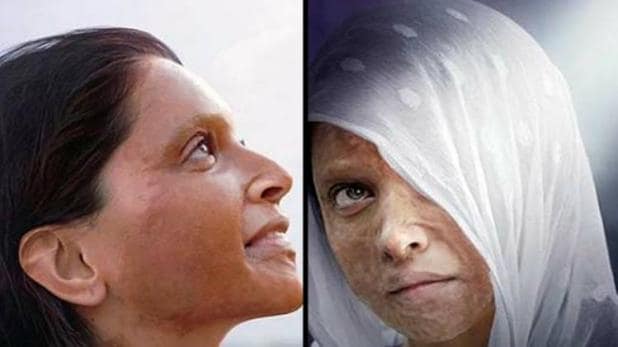
Bollywood superstar Deepika Padukone believes cinema is a powerful medium and no one can deny its influence over society. She was speaking at the trailer launch of her film “Chhapaak”, in which Deepika plays the role of an acid attack survivor. The film is inspired by the life of acid attack survivor and activist Laxmi Agarwal. The film is directed by Meghna Gulzar.

When asked whether it was the time for people to introspect what they put on screen, Deepika said, “I can’t speak for everybody. (But) You can’t shy away from the fact that cinema does have an impact on youth, society, on the way we dress, the way we think. What everyone makes of that opportunity is for everyone to decide individually.”

The actor said she has herself understood the importance of this over a period of time. “I’m not going to claim that I’ve had this realisation right from the start of my career, it’s something I’ve grown into and learnt and understood over a period of time.

“It’s not that if you’re socially responsible then it’s going to be a serious, hard hitting movie. No. ‘Piku’ said so much but it was still entertaining. It’s not that if you do socially responsible films then they can be a certain type. They can still be told in an entertaining, engaging manner,” she said.

At a time when the influence of pop culture is under scanner, with Bollywood films and songs coming under the spotlight for romanticising stalking and normalising the lack of respect for a woman’s consent, Deepika said cinema has an impact on people’s thought process.

The film also stars Vikrant Massey, who believes it’s important to have a social, collective responsibility, not only from the makers but from people at large. “I absolutely believe in the fact that cinema is a reflection of the society, the times we live in. If we ask this question to makers, writers and creators, about making responsible cinema, somewhere we need to ask ourselves If we are responsible enough in our day-to-day life…,” he added.

“Chhapaak”, a co-production between Meghna, Deepika and Fox Star Studios, is scheduled to be released on January 10.

Nature: Light stored in new memory devices by scientists

Scientists, in a December 6, 2019, report in Nature on the finding of the ability to transmit information in a silicon chip, not simply traditionally with electrons but, with photons.

The “light signals” or photons were “squeezed” or transmitted through the silicon chip in order to “read and write data,” i.e., to process information as photons in place of electrons.

Information defined as a change in state from one to another with the change as a selection reduction to one state over an array of possible other previous choices.

The hypothesis is such that with these developments; there will be an increase in the rapidity of the processing of the information in silicon circuits based on the speed of light, of c.

Conventional computers with the same software but with photons trapped and run through the circuitry would process the information far faster than simply electrons in the same traditional silicon circuits.

The light mechanism used is pushing, so to speak, photons through fibre-optic cables as carriers of information, which is much faster than electrons and, in fact, the fastest speed known in the universe – outside of the literal expansion of space at the same time as the light is travelling, but this simply changes the referential frame of the speed.

Light has a large wavelength. There is commentary in the short article on the utilization of both forms of information transfer – electron and proton – in order to transmit the information in a traditional electronic circuit, which remains an impressive proposition.

As reported, “Harish Bhaskaran at the University of Oxford, UK, and his colleagues designed a tiny dual-signal data-storage device. Both electrical and light signals can be used to read data stored on the device, as well as to write information on it.”

The size of the device is important based on the type of information processing proposed by the physicists, the researcher, here. With the compression of the light pulse, it is separate into “miniscule channels running between gold electrodes and silicon–nitride components. A computer memory cell made of a germanium-based compound sits at the channels’ intersection. Either electrical pulses delivered through the gold electrodes or light pulses focused by the channels can change the device’s ‘state’, allowing for data storage.”

In short, channelization or separate streams of the pulses of light made from the singular input with the separate channelizations changing the state of the circuit and, in turn, changing the state for data storage. It is a differentiation for the creation of information, which is stored.

Source: https://www.nature.com/articles/d41586-019-03740-9.

Academic source: Plasmonic nanogap enhanced phase-change devices with dual electrical-optical functionality

BY NIKOLAOS FARMAKIDIS, NATHAN YOUNGBLOOD, XUAN LI, JAMES TAN, JACOB L. SWETT, ZENGGUANG CHENG, C. DAVID WRIGHT, WOLFRAM H. P. PERNICE, HARISH BHASKARAN

SCIENCE ADVANCES29 NOV 2019 : EAAW2687

Photo by Brian Kostiuk – @BriKost on Unsplash

North American Science, Skepticism, and Secular Humanism 1 – Proportion Premises to Findings: or, Extraordinary Claims Require Extraordinary Evidence

0

James A. Haught was born on Feb. 20, 1932, in a small West Virginia farm town that had no electricity or paved streets. He graduated from a rural high school with 13 students in the senior class. He came to Charleston, worked as a delivery boy, then became a teen-age apprentice printer at the Charleston Daily Mail in 1951. Developing a yen to be a reporter, he volunteered to work without pay in the Daily Mail newsroom on his days off to learn the trade. This arrangement continued several months, until The Charleston Gazette offered a full-time news job in 1953. He has been at the Gazette ever since—except for a few months in 1959 when he was press aide to Sen. Robert Byrd.

During his six decades in newspaper life, he has been police reporter, religion columnist, feature writer and night city editor; then he was investigative reporter for 13 years, and his work led to several corruption convictions. In 1983 he was named associate editor, and in 1992 he became editor. In 2015, as The Gazette combined with the Daily Mail, he assumed the title of editor emeritus, but still works full-time.

He writes nearly 400 Gazette editorials a year, plus personal columns and news articles. Haught has won two dozen national newswriting awards, and is author of 11 books and 120 magazine essays. About 50 of his columns have been distributed by national syndicates. He also is a senior editor of Free Inquiry magazine. He is listed in Who’s Who in America, Who’s Who in the World, Contemporary Authors and 2000 Outstanding Intellectuals of the 21st Century. He has four children, 12 grandchildren and nine great-grandchildren. For years, Jim has enjoyed hiking with Kanawha Trail Club, participating in a philosophy group, and taking grandchildren swimming off his old sailboat. He is a longtime member of Charleston’s Unitarian Universalist Congregation. Haught continues working full-time in his 80s.

Here we talk about the proportioning of claims to the evidence.

Scott Douglas Jacobsen: As these portions of the blog, not the news or the political commentary, of the News Intervention publication devote themselves, mostly, to educational projects, and as the editorial responsibility, for me, exists in North America and in science issues, this educational series will cover a historical and current perspective on the convergence of three areas: science, skepticism, and secular humanism, as you have a long history in these traditions. 

Traditions better equipped collectively to provide more accurate images or pictures of the world than many other ones on offer in the current paradigms frozen in forgone centuries. Antiquated epistemologies and false ontologies forced ignorantly from one generation to the next as The True Way and The Truth (epistemology and ontology) rather than something within a sea of competing ways of knowing and things known of lesser and greater quality relative to one another, in the goal of ascertainment of the truths of reality.

Let’s start with some of the basic Humean notions taken by the late astrophysicist Dr. Carl Sagan and others – including members of the Committee for Skeptical Inquiry or Skeptical Inquirer – in the form of evaluation of the most extreme claims about the nature of the world – mystical-magical claims about the world as opposed to technical-natural ones. Where did the phrase “extraordinary claims require extraordinary evidence” originate in content and in phraseology?

Jim Haught: Back in the 1700s, Scottish skeptic David Hume wrote that miracle claims cannot be believed, because they lack enough trustworthy evidence.  In 1808, Thomas Jefferson wrote in a letter: “A thousand phenomena present themselves daily which we cannot explain, but where facts are suggested, bearing no analogy to the laws of nature as yet known to us, their verity needs proofs proportioned to their difficulty.”  In 1814, Laplace reportedly said that “we ought to examine [inexplicable claims] with an attention all the more scrupulous as it appears more difficult to admit them.”  In 1899, Theodore Flournoy contended that “the weight of evidence for an extraordinary claim must be proportioned to its strangeness.” In the 1970s, Science magazine editor Philip Abelson reportedly was first to use the phrase: “extraordinary claims require extraordinary evidence.”  Science hero Carl Sagan gave it wide popularity in his Cosmos television series, and it became known as “the Sagan Standard.”

Jacobsen: How does this best reflect a scientific, skeptical, and secular humanistic perspective about the world?

Haught: It simply means: Don’t swallow bizarre stories — supernatural stories — without solid proof to support them.

Jacobsen: How does that view differ markedly from the religious and supernaturalist perspective on the nature of reality writ big?

Haught: Religion depends upon blind acceptance of magic tales supposed revealed by some prophet or ancient scripture — without any evidence whatsoever.  This approach is unacceptable to intelligent, modern, scientific-minded people.

Jacobsen: Thank you for the opportunity and your time, Jim.

Haught: Keep the faith, baby.

Photo by Nathan Anderson on Unsplash

Pakistan Army and its Romance with Louts and Islamists

On December 2nd, an angry mob besieged the office of Dawn in Pakistan’s capital, held its staffers hostage for three hours and misbehaved with the Dawn TV employees when they arrived there. The reason? A report carried by this daily which mentioned that Usman Khan, the London Bridge attacker was a “man of Pakistani origin,” which despite being a statement of fact still agitated a section of Pakistanis with a misplaced sense of patriotism.

Though opposition political parties did come out strongly in support of the media and criticised the besieging of Dawn’s office, yet it’s apparent that their sole intention was political posturing. Media coverage was subdued and this incident hasn’t generated much discussion. But then, why should it? After all, the whole incident went off peacefully and the protesters didn’t physically harm the staffers or cause damage to any property. Furthermore, the law enforcing agencies didn’t have to resort to use of force to disperse the crowd as negotiations with the protesters did the job. So, since this was a classical illustration of the old adage that ‘all’s well that ends well’, why unnecessarily make a hullabaloo?

But though the local administration and police may be patting themselves on their backs for having amicably diffused a potentially volatile situation, the modus operandi they adopted raises several questions. Firstly, one isn’t sure whether the organisers had obtained prior permission to hold this protest. But since media reports reveal there was no presence of police or local administration officials at the site when the crowd besieged the Dawn office, it’s obvious that local administration officials and the police were unaware of this protest. In addition, the administration would have under no circumstances allowed the protest to be held outside the gates of the Dawn office in the national capital!

Therefore, it appears that prior permission for this protest wasn’t taken by the organisers and since this makes the protest unlawful, it should have spurred arrest of the organisers. But unfortunately, this wasn’t done and instead, the authorities chose to commence negotiations with law breakers in a bid to call off an illegal protest, which is a disturbing thought. In the end no one knows who had organised this protest and whether the protesters’ demand of an apology from Dawn was accepted by the authorities.

Yet, it would be incorrect to indict the local administration and police for mollycoddling louts who held Dawn staffers hostage for three long hours, because it was the Pakistan Army that set this precedent.

Readers would recollect that in November 2017, a three week long countrywide strike organised by various religious groups was called off after the Pakistan Army brokered a settlement. What came as a surprise was that Maj. Gen. Faiz Hameed of the Inter-Services Intelligence (ISI) was the one who signed the agreement in the capacity of ‘guarantor’. A bigger surprise came when videos surfaced in which Maj. Gen. Azhar Navid Hayat of Punjab Rangers was seen distributing money filled envelopes to protesters and saying “This is a gift from us to you” and in an obvious effort to placate them even going to the extent of saying, “Aren’t we with you too?”

Pakistan Army boasts of its unconditional commitment to military professionalism and soldiering. But what defies explanation is how can a General fall so low as to not only publicly identify the army with protesting religious groups but also try to ‘buy’ their support by distributing cash and act as a tout in brokering agreements between the government and such groups. But whatever be the reason, the undeniable fact is that it’s the Pakistan Army itself that has set the precedent of employing ‘quick-fix’ methods of achieving normalcy by appeasing dissenters. Though very effective in the short term, this policy is fraught with danger as its continued use emasculates rule of law. Also, by encouraging those in power to take the path of least resistance, it finally ends up compromising the government’s determination to impose its writ.

The Pakistan Army has mastered the art of behind the scene manipulation of the country’s domestic and external policies, but it has intelligently avoided any direct involvement. But under Gen. Qamar Javed Bajwa, the army seems to be getting inextricably involved in political affairs. In April, Director General Inter-Services Public Relations (DG-ISPR) Maj. Gen. Asif Ghafoor conveyed a warning to PTM (Pashtun Tahafuz Movement) –an ethnic social movement, in mafia style during a press conference by saying, “Their time is up!” In the recent “Azadi March,” DG-ISPR again tried to intimidate protesters by stating, “We do not want conflict with our institutions. But we also want to see them to stay neutral. We give two days to the institutions to decide if they will continue to support this government.”

On this issue, Jamiat Ulema-e-Islam-Fazl (JUI-F) chief Maulana Fazlur Rehman’s observation that such politically loaded statements violate neutrality of the army has merit and his view that “This statement (of DG-ISPR) should have come from some politician and not from the army,” conveys a very pertinent message. Logically speaking, this should set alarms bells in Rawalpindi ringing, but one wonders if the Pakistani Generals will take some time off from planning how to run the country and introspect on its increasing involvement in politics!

Tailpiece — Why should what Pakistan Army doing inside its own country bother an Indian, the DG-ISPR would ask. His query is valid. And the answer is simple: The people of both India and Pakistan are being held hostage to Pakistan Army’s ill-considered devices that have consistently sabotaged rapprochement between the two countries. As it is, by its continuing patronage of terrorist groups in J&K, Pakistan Army has already created an atmosphere that’s unfavourable for talks. Now, by pampering hardliners, the army is only strengthening the clout of the anti-Indo-Pak dialogue lobby. This will make it difficult for Islamabad to create public consensus for engaging with New Delhi, because such pressure groups perceive Islamabad’s confidence building measures and cordial diplomatic overtures not only as unpardonable compromises but also a complete “sell-out”!

Rawalpindi’s pandering to fringe groups and negotiating with louts is strengthening factions which are averse to Indo-Pak amity and since this is affecting normalisation of Indo-Pak relations, Maj. Gen. Ghafoor sahib, it is the policy of appeasement being by followed by your army that becomes a genuine cause for concern for every peace lover, irrespective of his or her nationality!  

On Human Rights Day let’s pledge complete constitutional democracy for Jammu & Kashmir

0

On December 10, the world celebrates the Human Rights Day. This date coincides with the adoption and proclamation of the universal declaration of human rights by the United Nations General Assembly in 1948.

For many years, in Kashmir, this day has been marked by protests. On this day, the Hurriyat Conference, a minuscule separatist segment in the Kashmiri political landscape invariably attempts to project the fallacy of the Indian state as an oppressor of human rights. Last year, in 2018, it spread out its activities over one week from December 3 to December 10. All of this was done at the behest of Pakistan, with all finances provided by them.  

Such fallacious attempts by the separatists have not elicited any results so far because they are based on a subjective view and posture on the sensitive issues of Human Rights (HR) violations in Kashmir. It is for this reason that the protests have always been a classic case of being, “full of sound and fury, but signifying nothing.”

In the present scenario, where a sincere attempt is being made by the government of India to usher absolute freedom and democracy in the region by removal of draconian, inhibiting and unconstitutional legislations like Article 370 and Article 35A, there are many voices, led by Pakistan, that are raising the bogey of human rights violations. These voices have vested interests, mostly financial in nature.

It is to the credit of New Delhi that it correctly appreciated  the possibility of some outside powers leveraging the changed structure in the state to create dissension and disruption and took precautionary steps by imposing certain restrictions and by detaining a few among the leadership who were identified as trouble makers.

The world has understood the good intentions of the government of India and has remained steadfast in support of the same. The overwhelming international perception is that change in the political structure of the region is an internal matter for India that should not elicit any outside interference. On the issue of detentions and restrictions, the world is content with the assurance that these have been necessitated to maintain peace in the region and, being temporary in nature, will be removed as soon as the situation stabilises.

The government has stood by its word and most restrictions have been removed. Many of those detained have been released while some remain in custody; they will also be released as soon as the situation is found to be conducive. The state has witnessed a peaceful transition where many had predicted and also threatened widespread violence and mayhem if any attempts were made to change its constitutional status. The world has been watching very closely and is not unaware of the developments. That the international leadership has remained quiet is a vindication of the steps taken by the government.

The issue of human rights violations by terrorists has plagued Kashmir ever since the advent of foreign sponsored terrorism in the state. Highly respected persons like the devout Mirwaiz Mohammad Farook, separatist leader Abdul Gani Lone and several others were not spared by the terrorists. They were brutally murdered despite being unconditionally committed to the cause of self-determination. Surprisingly, the separatists and other such leaders who are today eloquent about the region being suppressed have never criticised these cold blooded and senseless murders. Such forces have been seeing human rights violations when legitimate counter-terrorist operations are being conducted by security forces, but they tend to ignore the abduction and killing of innocent Kashmiris as cases deserving strong condemnation. They have been very prompt in ordering shutdowns to protest against the killing of terrorists in encounters but have remained mute spectators when innocents are killed or injured by terrorists.

However, the gruesome manner in which the terrorists have been murdering and endangering the lives of civilians and using crowds as their cover to attack security forces is the actual benchmark on which the human rights violations in Kashmir need to be considered. India is sensitive about this threat to citizens of the country and has taken all necessary steps to ensure their safety and security. The fact that the number of operative terrorists in the region has reduced drastically due to sustained operations by Indian security forces needs to be seen as a big success achieved by the state in protection of the human rights of the people.

It cannot be denied that the Kashmiri people have faced certain violation of the rights in the period of turmoil, even being incessantly checked on the streets is a violation of human dignity. The people have suffered immensely in the sad situation which thus evolved. The fact of all of this being an outcome of the advent of terrorism which led to the establishment of a security dragnet to challenge the same cannot be overlooked. Both aspects have to be considered in tandem.

Despite the monumental challenges being faced due to foreign-sponsored terrorism, India has always complied with and respected internationally recognised human rights. Such an approach is in concert with the age old ideology of peaceful coexistence and respect for human values that form the fundamental principles of the country. The world is quite aware as to who the actual perpetrator of human rights violations are and paid-stooges in the information domain cannot change this reality.

On Human Rights Day, India needs to stand as one and take a solemn oath to do whatever is possible to wrest the beautiful land of Jammu and Kashmir and its people from the foreign sponsored shadow of the gun and to ensure that the people enjoy the fruits of democracy and freedom, as is their right under the constitution of the country. A consolidated effort in this direction that involves the people, the government and the civil society is bound to accrue positive results.

Prime Minister emphasizes on the role of effective policing for women security

While addressing the 54th DGsP/IGsP Conference in Pune Prime Minister Narendra Modi shared his views on key aspects of national security. He was addressing the valedictory session of the Conference which concluded on December 8. The Prime Minister also emphasized on the role of effective policing in making sure that women feel safe and secure. He urged the heads of police departments to carry forth the spirit of the conference to the lowest level-from state to district to the police station (thana).

Commending the Conference for generating good inputs for policy planning and implementation, Prime Minister laid emphasis on emergence of concrete outcomes from the finalized action points. While appreciating the meticulous efforts made by the country’s police forces for maintaining general peace and tranquility in the country and ensuring normalcy, he said that we must not forget the contribution of their families who stood firmly behind them. At all times, he said, they must strive to improve the image of the police force to inspire confidence amongst all sections of society including women and children.

After listening to the presentations given by different state police forces, Prime Minister mentioned that a comprehensive list of best practices could be prepared and adopted by all the states and UTs. He further commented that technology provides us with an effective weapon to ensure pro-active policing that factors-in the feedback of the common man.

Prime Minister concluded his remarks by recognizing the pulls and pressures confronting the police officer in the day to day discharge of duties. However, he said, that whenever they are in doubt they should remember the ideals and the spirit with which they appeared for the civil services exams and continue to work in national interest, keeping in mind the welfare of the weakest and poorest sections of society.

In the three-day conference, eleven core groups were formed for holding brain storming sessions on key aspects of internal and external security such as terrorism, naxalism, coastal security, cyber threats, combating radicalization and narco-terrorism etc.

The Prime Minister also awarded the President’s police medals for distinguished service to officers of the Intelligence Bureau.

Worst drought in Africa in 100 years: World’s largest waterfall runs out of water

For decades Victoria Falls, where southern Africa`s Zambezi river cascade down 100 metres into a gash in the earth, have drawn millions of holidaymakers to Zimbabwe and Zambia for their stunning views.

But the worst drought in a century has slowed the waterfalls to a trickle, fuelling fears that climate change could kill one of the region`s biggest tourist attractions.

While they typically slow down during the dry season, officials said this year had brought an unprecedented decline in water levels. “In previous years, when it gets dry, it`s not to this extent. This (is) our first experience of seeing it like this,” Dominic Nyambe, a seller of tourist handicrafts in his 30s said outside his shop in Livingstone, on the Zambian side.

“It affects us, because … clients … can see on the Internet (that the falls are low) …. We don`t have so many tourists.”

Data from the Zambezi River Authority shows water flow at its lowest since 1995, and well under the long term average. Zambian President Edgar Lungu has called it “a stark reminder of what climate change is doing to our environment”.

As world leaders gather in Madrid for the COP25 to discuss ways to halt catastrophic warming caused by human-driven greenhouse gas emissions, southern Africa is already suffering some of its worst effects — with taps running dry and some 45 million people in need of food aid amid crop failures.

Zimbabwe and Zambia have suffered power cuts as they are heavily reliant on hydropower from plants at the Kariba Dam which is on the Zambezi river upstream of the waterfalls. Stretches of this kilometre-long natural wonder are nothing but dry stone. Water flow is low in others.

Netflix to focus on more localised content; 3,000 crore investment to scale up operations in India

Major OTT player Netflix has big plans for the Indian market in the coming years. It plans pump in another ₹3,000 crore before the end of 2020 to scale up operations in India. The funds will be spent on creating more localised content and widen its subscription base in India. Globally Netflix has 160 million subscribers. This was shared by the founder and CEO of Netflix, Reed Hastings, at a media summit in New Delhi.

The service currently offers 24 feature films and 16 web series. More content is being outsourced as well. Two of Bollywood’s big names, Karan Johar and Shah Rukh Khan, are associated through their production houses, Dharmatic Entertainment and Red Chillies Entertainment respectively. Some of the new shows to be added to Netflix in India include ‘Ghost Stories’, a sequel to last year’s Lust Stories; Tribhanga, starring Kajol; Dibakar Banerjee’s Freedom; and Atul Sabharwal’s Class of ’83, produced by Red Chillies.

The Netflix CEO sees more investments being made by all the OTT players in the Indian market in the coming days, including the existing ones like Amazon Prime and Hotstar and the new entrants like Apple TV+ and Disney+ about to be launched soon.

Hastings pointed out a few programmes on their platform that have been very successful. He mentioned romantic comedy Little Things, crime drama Delhi Crime and animation series Mighty Little Bheem — all content coming out of India. He disclosed that the last named, Mighty Little Bheem, has been so popular that as many as 27 million homes outside India had watched the show.

Hastings concurred with the general opinion that the OTT players need to have a self-regulatory mechanism in place and said Netflix believes in complying with the local laws in whichever country they operate in.

In India, Netflix has around 100 people working for them at their Mumbai office and another 1,000 engaged in creating content.

PM Modi has given the highest priority to Northeast: Jitendra Singh

The Union Minister of State (IC) for Development of Northeastern Region ( DoNER), Minister of State in Prime Minister’s Office, Personnel, Pension and Public Grievances, Atomic Energy & Space, Dr. Jitendra Singh has said that Prime Minister Narendra Modi has given the highest priority to Northeast and to state like Nagaland in the last five years. He was speaking at the ongoing Hornbill festival at Kisama near state capital Kohima.

Addressing a colourful cultural programme, Dr. Jitendra Singh, while stating that Prime Minister Modi visited Northeast more than 30 times in five years, said the Prime Minister has described Northeast as new engine of New India. He said because of the Prime Minister’s personal indulgence and personal outreach, northeastern culture, food, dance and music have reached every part of the country.

While stating that Nagaland has become the ambassador of Northeast for the rest of India through the medium of Hornbill festival, Dr. Singh said the festival has become a new torch bearer of a new cultural journey of northeast which is going to unite entire India with a message from a state like Nagaland.

Earlier, Union Minister of State (IC) for Youth Affairs & Sports and Union Minister of State for Minority Affairs, Kiren Rijiju also attended the ongoing Hornbill festival. Addressing a cultural programme at Kisama, he said the Prime Minister of India is giving special emphasis for Northeastern Region and for the Naga people. He said the Act East Policy is taking shape. Rijiju added that basic infrastructure, which is the foundation for better development, is being laid and in the next few years we will see the result.

Maintaining that Nagaland has the potential to become one of the hub for adventure activities, ShriRijiju said besides sports, his ministry wants to promote adventure activities in Nagaland to ensure that youth are engaged in gainful employment.

Pointing out that Hornbill festival has become a symbol of Northeast India, the Minister also assured to extend help to promote indigenous sports of Northeast.

Various Cultural troupe, dressed in their colourful traditional attires, performed songs and dances during the event.