Home Blog Page 398

India attaining GDP of $5 Trillion by 2024-25: Myth or Reality?

What must be the tangible economic policies and what necessary actions are needed to fulfill government’s ambitious target?

CSS Rao is a Senior Development Economist and an Eminent Member of the Royal Institution of Chartered Surveyors, London (MRICS).  He has authored several monographs based on extensive involvement in various economies, macro-finance and international banking. Rao speaks to Mahua Venkatesh on the present state of Indian economy, prescriptions for growth and economic reforms that could position India as a global leader. Excerpts:

Mahua Venkatesh: What do you think are the reasons for this economic slowdown even after the slew of reform measures undertaken during the last three months?

CSS Rao: The growth rate ought to reflect commensurate benefits, improving levels of shared economic prosperity and greater financial inclusion. Now, if these are not being experienced, any rate of growth put forth is purely of academic value.  

Some of the principal fundamental contributory factors for decline in GDP growth rate in India during recent years despite reforms include the following:

  1. Demonetization in 2016 crippled the entire economy, which has not yet recovered. It could take at least another three years to regain normalcy, provided major further corrective measures are initiated now.
  2. The banking sector is in deep distress, saddled with a $200 billion equivalent of accumulated bad loans, which has severely dented the balance sheets of most banks. As a result, banks are unable to lend. Consequently, the flow of credit to industry, agro sector, services etc. is far below desired levels. This has led to a major drop in manufacturing and services.
  3. There has been a steady withdrawal of FDI, reflecting reduced desire by foreign institutional investors’ (FII) and transnational corporates to invest in India.
  4. Reforms have been inadequate, discordant and belated and the authoritarian style of administration has served to dampen and dis-incentivise entrepreneurial drive and private sector investment.

Unless all these are corrected, GDP growth cannot improve.
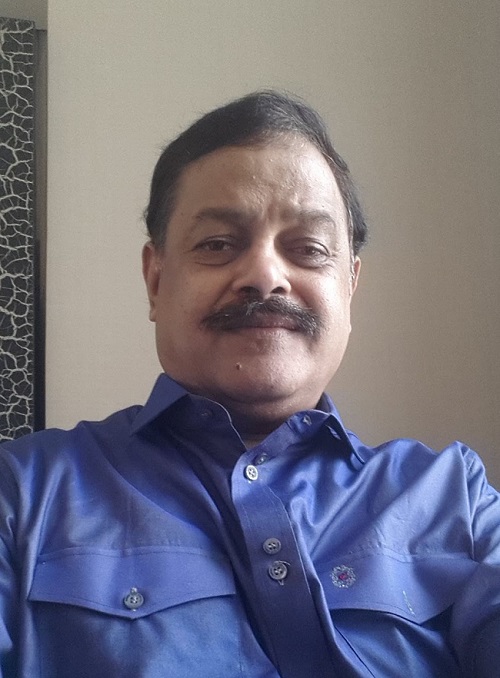
CSS Rao, Senior Development Economist

MV: Do you think a cut in personal income tax rate will spur consumption and thereby boost economic growth?

CSS Rao: Income tax rate cut is a tool of fiscal policy used by central governments worldwide to encourage economic growth. However, the impact and benefit of such rate cut is generally experienced after a dwell of nine to twelve months, because the entire process of growth in consumption — spurred by the increased spending capacity in the hands of citizens requires to be matched with corresponding increase in manufacturing and supply — takes that much time.

Further, significant growth in the national economy can be achieved only with a whole basket of well-planned corrective and supportive measures, not just by deploying one or two tools of monetary / fiscal policy.

MV: How do you think rural demand can be pushed?

The future of India lies in its rural sector due of its size and relatively untapped status up to the present time.  Rural demand can be stimulated by taking the following important measures:

  1. Increasing long term government investment to support growth of the agro-sector. 
  2. Encouraging larger participation by millennials in this sector via technology-driven yield enhancement programmes. Developing more and more value added agro-based industries closer to farms that can offer processed and ready to use packaged products across the nation along with a thrust on exports. This move has the additional merit of seriously discouraging people from migrating to urban areas in search of employment, thus preventing baneful migratory flux to cities.
  3. The retained earnings of such rural populace will serve to enhance their spending (and saving) power, which will in turn spur demand in rural and semi-urban regions of India for real estate, various consumer goods and services etc. which in turn will lead towards an improvement in the standard of living of the rural masses.
  4. State and central governments must concurrently focus on development of rural infrastructure such as roads, bridges, dams, renewable energy projects, waste recycling projects, low cost but good quality housing and related facilities, etc.  Interestingly, all of these initiatives have the inherent potential to dynamically generate large volume of sustainable employment in skilled, semi-skilled and unskilled categories.
  5. Increase education and training facilities by implementing modern skill development centres in every district — with adjunct facilities for practical training, manufacturing and marketing of end products and services as well as residence of faculty and trainees — covering trades which have local relevance and are technology driven, employment oriented courses. Supporting self-employment and start up ventures would form an integral part.
  6. Significantly boost support to the livestock industry including both upstream and downstream industries, which have the ready potential to spur gainful employment, income generation and  potential towards sizeable contribution to GDP.
  7. Construction of a series of old age homes and day care centres in every district, which has tremendous potential to generate life-cycle sustainable employment in various trades. Importantly, this also helps to address another vital issue of great national importance viz., care of our elder citizens, especially in low and middle income strata, considering the vast ageing population of our country.
  8. Providing attractive tax benefits to large corporates and MNC’s coming forward to “adopt” notified districts in each state, and proactively participating in its socio-economic development is something the government must consider.
  9. Enhancing scale and a range of fiscal incentives in respect of investments made towards rural development following a geographically graded approach to promote backward and far flung areas is also important.  

MV: Why isn’t private investment picking up?

CSS Rao: Reasons attributed to above problems answers this question. In addition, it may be stated that the present disincentives to private sector investment and pursuit of spirited entrepreneurship have been significantly caused by the authoritarian style of national administration, with constant fear of punishment or retribution daunting the private sector, whether it is large scale or MSME in manufacturing and services.  Tax reforms with a modern outlook is most important.  All laws must be stringent yet citizen friendly and compliance must be greatly simplified.

MV: Job creation has been dismal. What should be done to create jobs?

CSS Rao: This is certainly one of the biggest areas which requires priority attention by the government.  Sadly, the present unemployment rate in India stands at 6.1%, which is a 45-year low. This simply cannot continue.

About 12.8 million new entrants come into the employment market each year in our country.  Most of them remain un (der) employed.

For employment to rise, manufacturing and agro sector needs to grow rapidly.  Core sectors such as steel, cement, energy, infrastructure needs to grow at a minimum of 8-10% annually. This is simply not happening for reasons cited above.

Moreover, superior skills have to be imparted to millions of youth aspiring for jobs. Textbook knowledge does not provide working skills any more than reading a book on cookery can impart culinary skills.  

  1. Enhance skill development. The outdated ITI’s (Industrial Training Institute) are an apology for training.  Modern skill development centres must be created in every district of every state with utmost urgency, with due planning and care to encourage local talent and promote superior working skills combined. Of course, with the backing of proper theoretical knowledge to understand the why and the wherefore of every practical task in any trade.
  2. Promote rural industries especially in agro-sector, as stated above.
  3. Introduce modern concepts in large scale collective farming including mechanised and automated processing of large volume farm yields, by optimizing land holding and land utilisation.
  4. Extensively promote the age old co-operative sector. This works well.  Encourage multi-cropping and other techniques to boost yield per hectare.

MV: Do you think merging banks at this point makes sense? Or will it create more complications?

CSS Rao: The merging of banks started when the subsidiaries of SBI were reverse merged with the mother bank SBI, followed by the unification of certain PSU (public sector undertaking) banks in recent years. For over a decade, I have been advocating PSU bank mergers in national interest and in their own.

In my earlier recommendations, I have spoken of just six PSU banks pan India, and a reasonable number of large, medium and small private sector banks and co-operative banks to meet the needs of a growing economy.  The value of such a move is to rationalise operations, enhance efficiency, reduce costs significantly without reducing employment (except VRS-voluntary retirement scheme), with each of the six banks concentrating on the development of large geo-territory assigned to them, such as north, west, east, south, central and north east India and/or grouped by respective states and union territories.

This is the future of banking.    

Such a progressive move will not create complications. The resistance that may come from employees arises from a fear of job loss. This should be safeguarded by the government through re-skilling wherever feasible so that those desirous of pursuing new career options can do so.  If not, the popular route of VRS is always open to them.
Reserve Bank of India. (Representational picture)

MV: Do you think the banking sector needs more aggressive reform measures?

CSS Rao: Rs 958 billion bank frauds reported in just six months past is proof enough that the present system is dangerously deficient. The need of the hour is recapitalisation of banks, introduction of appropriate new regulations to seriously deter NPAs (non-performing assets) and bank frauds which are so rampant till date, improvement in absorption of modern banking practices and digital technologies — all leading to improved health of the balance sheets of banks must become a reality very soon. 

NBFCs and banks in the co-operative sector have been a source of great embarrassment in recent years, their dismal performance caused largely by wilful mismanagement and fraud are matters of grave concern. This requires urgent redressal concurrently with RBI assuming a more stringent governance role to oversee the conduct of all banks and financial institutions in India.

MV: Is there a need to reduce government stake in public sector banks below 51% ?

CSS Rao: Frankly No, because with the consolidation of PSU Banks as recommended above, ownership and control of PSU banks must always remain with the government of India, for reasons of monetary control as well as administrative expediency.  This is non-negotiable.  However, the quality of professional management at senior and middle levels of these banks must be significantly improved, in order to ensure a great future for this primordial sector of our economy.

MV: Was it a good idea to seek reserves from RBI? Despite the RBI transferring Rs 1.76 lakh crore to the government, there has been no sign of economic revival. Why?

CSS Rao: It is well known that central banks are always operationally independent of the central government.  It is not prudent for the central government to have sought the stated amount from RBI. Apart from financial impropriety, it overtly signals the underlying weakness of the national economy.

This money rightfully belongs to RBI and must remain so.

If the government of India launches some really large projects of national importance which also represent good business models with attractive yields to investors, then, the government can place a persuasive communication before RBI (and to other prominent institutions) to consider investing in bonds issued by the entities promoting such new projects.  In such case, it becomes an attractive investment opportunity to RBI, which it is expected to consider. This is a more laudable approach to national development than the central government ‘compulsively appropriating’ large monetary resources belonging to RBI ostensibly to meet fiscal deficits arising inter alia from  funding welfare programmes which usually seek  to deliver self-serving political mileage, which, in my considered view, is against national interest and therefore incorrect.

MV: Finally, do you believe the much publicised target of India reaching a GDP of $5 trillion by 2024-25 is practically attainable? What are your recommendations if India needs to achieve this target?

CSS Rao: The size of India’s GDP stands at $2.7 trillion for fiscal 2018-19.  The confirmed annual rate of GDP growth is currently about 5%. At this rate, India’s GDP would be in the range of–
$2.83 trillion for fiscal 2019-20;
$2.97 trillion for fiscal 2020-21;
$3.12 trillion for fiscal 2021-22;
$3.28 trillion for fiscal 2022-23;
$3.44 trillion for fiscal 2023-24;
$3.61 trillion for fiscal 2024-25.
If the desired target of $5 trillion is to be met by 2024-25, the annual rate of GDP growth must be at least 10%.  [This presumes calculations at today’s exchange rate, which is incorrect.] So, this unrealistic target is in the realm of wishful thinking, especially considering the state of the world economy which is threatened by impending economic depression, ongoing trade wars, political uncertainties in major geographies, paucity of mega scale monetary resources including large scale FDI required for India’s exponential growth, demographic make-up, and so on.

A GDP of $4 trillion by 2024-25 would be a realistic target to attempt, provided all conditions are favourable and a complete range of effective reforms are indeed implemented.
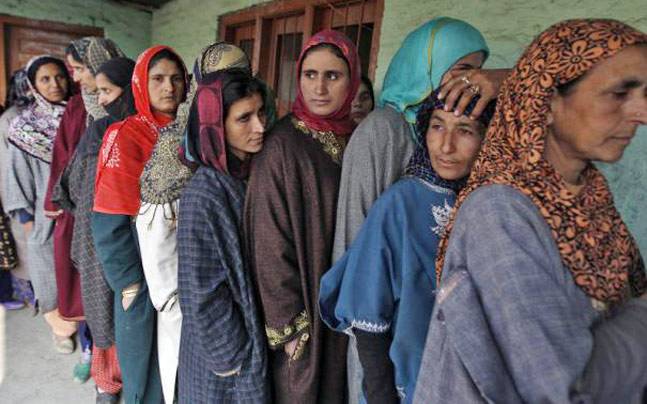
Women empowerment in J&K: Course set, now build up the momentum

0

“Five women from Jammu and Kashmir pass out from OTS and become 0fficers of Indian Army.” It’s this kind of news heading that one wishes to see from the Union Territory of Jammu and Kashmir in times to come. Why only the Army, one would like to see women playing a dominant role in fields like medicine, law, corporate, administration, media etc.

The foregoing is very much in the realm of possibility considering the massive boost to education given across Jammu and Kashmir over the last few years. At a cursory count the state now has new IIMs, AIIMS, IIMCs and a host of others institutions, over and above its existing education infrastructure. Modern Indian women are known to leverage such facilities to the maximum and there is no reason that the young ladies of Jammu and Kashmir will not do so.

The women of the state have every reason to feel empowered and confident now that the shackles constraining them have been removed. The major constraint was that women, under the state Constitution of Jammu and Kashmir and due to provisions of Article 370 and Article 35A, were being denied full-fledged rights to land and property in the state. Such women who were state subjects but married a person who was not a state subject had to forfeit legal and ancestral rights to their own property in the state. The legislation passed by the parliament on 5th August, sets aside this proviso and gives all those women, who have married non-state subjects, full right over their land and property.

Notwithstanding the foregoing, there’s a lot of ground to be covered so far as full empowerment of women in the state is concerned. According to statistics, women fare poorly in workforce percentage parameters in comparison to other states of the country. In urban areas the share of female population in workforce stands at a miniscule 14.4%; in rural areas it is slightly better at 26.3%. In comparison, neighbouring Himachal Pradesh boasts of a women work force in urban areas of 44.82%. Lack of employment opportunities along with low levels of education are the biggest culprits in keeping women socially deprived and facing inequality.

There is some serious work underway to empower women in the Union Territory. The outgoing Governor, Satya Pal Malik paid a lot of attention to this aspect. He reconstituted the Governing Body of Jammu and Kashmir Women Empowerment Society (JKWES) for implementing various schemes and programmes related to women in the state.


Women who belong to deprived and poor segments of society can now apply for loans from the Rashtriya Mahila Kosh (RMK) which will be provided at minimum interest to assist in setting up small businesses. Support to Trainees and Employment Programme (STEP) will provide training to rural women in agriculture and allied sectors, like dairy, handloom, etc. The Swayam Sidha Women Empowerment Programme (SWEP), an integrated scheme for women’s empowerment is designed for formation of women into Self Help Groups (SHGs). Benefit and empowerment for women is also bound to flow from the flagship central schemes like Beti Bachao Beti Padhao; Sakhi, the Nirbhaya fund generated One Stop Centre Scheme for security of women; Swader Greh, for rehabilitation of women and other women centric initiatives being run as part of digital India, Skill India etc. 

Such forward looking schemes are likely to usher a positive change in comparison to the cosmetic treatment given to the matter by the previous state governments. The Mehbooba Mufti-led government abolished stamp duty on the sale of property registered in the name of females, in what it termed as an incentive to encourage families to register their properties in the name of their female family members. A noble thought indeed, but, the former chief minister failed to factor in the fact that no family would register property in the name of women in view of the draconian provisions of Article 370 and Article 35A that limited their rights to property as explained above. 

There is a need to take this noble thought process of women empowerment ahead with motivation coming from all segments of society, be it the family, civil society, role models, seniors and intellectuals among others. Workshops and seminars should be organised at various levels, awareness campaigns on job and business opportunities should be held, especially in villages. Research on the subject should be commissioned in universities to identify best practices in taking forward the noble venture. A conscious attempt has to be made to bring the women of the region at par with rest of the country.

Exploitation of women in the work place is a universal malady; special attention needs to be paid to this aspect so that women as well as their families feel safe while going out to work. It also has to be ensured that working women are not exploited in terms of wages. In short, everything possible should be done to build confidence levels of women and encourage them to forge ahead.

Women, along with their children, have remained the most vulnerable victims of the environment of foreign sponsored terrorism and militancy in the region. They have witnessed the degeneration of their otherwise enlightened society leading to a perceptible increase in domestic violence, humiliation and harassment. The Indian Army has very well understood the trauma being faced by the women due to debilitating shadow of terrorism. In response it has given, for more than three decades now, special attention to their needs though the medium of its welfare initiative –Operation Sadbhavna. The government would be well advised to study the model for women empowerment followed by the Indian Army by its Operation Sadbhavna and carry it forward. 

A sustained effort to ensure empowerment of women in Jammu and Kashmir with required momentum, can, within a short period of time make women important stakeholders in every segment of society. Such a situation will go a long way in ensuring much needed stability in the region.

‘Hockey Match Joke’ & Pakistan’s Foreign Policy

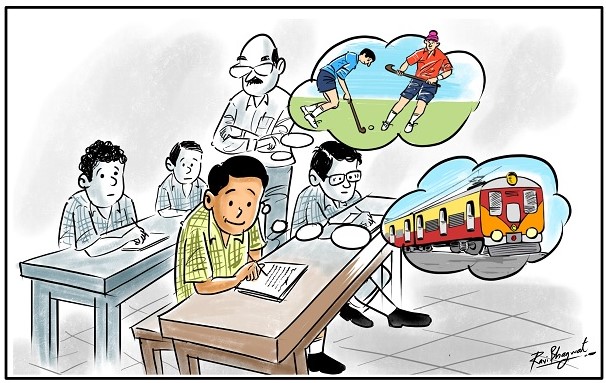
It’s a very old joke that would probably have remained forgotten had it not been for Islamabad enacting it out so often. For those who haven’t heard it, the joke goes like this: A student who was weak in English language got a ‘sure-shot’ tip from his friends that the subject of the essay in the upcoming exams would be about witnessing a hockey match. So, he looked up numerous English guidebooks and after finding a sample essay on this topic, got down in real earnest to memorise the same. But on the day of the exams he was aghast when he saw the question paper because instead of being asked to write about a hockey match for which he had so assiduously prepared, the topic of the essay was ‘a train journey’! 

While his friends who had tipped him off about the essay topic looked on in pure horror, he appeared to ponder for a moment as though he was collecting his thoughts and then commenced writing furiously without stopping as if there would be no tomorrow. After the exam was over, his friends asked him as to how come he was able to write so confidently and so much on a topic he hadn’t prepared for. He replied that though initially shocked, he had no problem as he had started off his essay by mentioning that he had got onto a train, but after covering a little distance it came to an abrupt halt as the engine had developed some fault. Then he wrote that on looking out from the window of the stationary train, he saw that a hockey match was being played and thereafter faithfully regurgitated all that he had learnt by rote. To ensure that he did not miss out mention of the subject matter in his conclusion (which was a must those days), he added that just as the hockey match finished, the engine fault was rectified and he thereafter proceeded on his train journey!

Many amongst the younger generation would find this joke woefully lacking in ‘wit-content’. But when one sees how desperately Islamabad tries to juxtapose anti-India rhetoric in each and every situation and occasion (often with disastrous results), one is automatically reminded of this hockey match joke!

Wasn’t it extremely naïve of Pakistan’s Education Minister Shafqat Mahmood to behave just like the protagonist in the above cited joke by trying to expect that he would actually succeed in his attempt to internationalise the Babri Mosque issue during the general policy debate of the UNESCO General Conference? Doesn’t his side-splitting attempt to try and peddle anti-India tirade by alleging that Indian Supreme Court’s decision on the Ayodhya issue was not in line with UNESCO’s values of religious freedom bears an uncanny resemblance with the hockey match and train journey joke? But, why single out the poor Education Minister when many others at the helm of affairs in Pakistan too are making a laughing stock of themselves!

Two and a half months ago, during the 4th South Asian Speakers’ Summit on ‘Achieving the Sustainable Goals’ held in Maldives, Pakistani delegate Qasim Suri surprised everyone by raising the Kashmir issue. However, instead of being debated (as an over-optimistic Islamabad had probably thought), not only was his out-of-context statement summarily rejected, but according to reliable sources, the Pakistani delegation was also told to confine itself to the agenda and Maldivian Speaker Nasheed assured India that all references to Kashmir would be expunged from the records! The net result was that while Islamabad gained nothing, Indian delegates got the opportunity of using this forum to remind the world of Pakistan Army’s horrific brutalities against the innocent people of erstwhile East Pakistan in 1971 and human rights excesses in Pakistan-occupied Kashmir (PoK)!

Remember how just like the student in the joke who tried to connect a train journey with a hockey match, Pakistan Foreign Minister Shah Mehmood Qureshi too thought that he could get away by linking resolutions passed by UNSC on Kashmir with provisions of the Indian constitution while submitting an official complaint to its President Joanna Wronecka. However, the initial confidence that he was oozing suddenly seemed to vanish when UNSC President answered media queries on the same with a terse “No comments,” reply. Qureshi’s cockiness was perceptibly missing just before the UNSC ‘closed door’ meeting when he told the media that “Giving vent to emotions is easy and raising objections is much easier. However, it is difficult to understand the issue and move forward. They are not waiting for you with garlands in their hands.”

Then we have Pakistan’s Prime Minister Imran Khan who seems to be working overtime trying to live up to his ‘Prime Minister of U-turns’ moniker. He kept saying that while Islamabad has always been keen on dialogue with India, it was New Delhi that had upped the ante by escalating tension along the Line of Control (LoC). But what Khan hasn’t been able to explain is that if Islamabad is really so committed to dialogue, then why did his government unilaterally downgrade diplomatic relations with New Delhi? Furthermore, if he genuinely wants unconditional talks to “resolve all outstanding issues, including that of Kashmir,” then why has he declared that “unless they (Government of India) lift curfew in Kashmir and rescind the revocation of Article 370, there is no chance of negotiations”?

Despite all its shortcomings, the hockey match joke has been made eternal, thanks to Pakistan!

Postscript In a surprising reversal of roles, while Prime Minister Imran Khan is speaking on matters military like the increasing probability of a nuclear war, by declaring that “Reality of Kashmir was neither changed by an illegal piece of paper in 1947, nor will any other do it now or in future,” Pakistan’s Army Chief Gen. Qamar Javed Bajwa appears to have adorned the Prime Minister’s hat. But then, this isn’t something unusual in Pakistan.

The politicians are making a fool of themselves by trying to use anti-India sentiments and the Kashmir issue as the ‘master key’ (like the hockey match in the joke), under the erroneous belief that it will give Islamabad a chance to spew anti-India venom anytime and anywhere. However, the cake goes to the Inter Services Public Relations (ISPR) for confusing one and all by stating that “Pakistan never recognised the sham of Indian efforts to legalise its occupation of J&K through Article 370 or Article 35-A decades ago, efforts which have now been revoked by India itself.” One is tempted to ask Gen. Bajwa that if your country never ‘recognised’ Articles 370 and 35A of the Indian constitution, then why all this ruckus over its abrogation?

We will free Balochistan at any cost: Dr Allah Nazar Baloch

What would you expect in a place that is endowed with $1 trillion worth minerals, precious metals and natural gas? Peace, Prosperity and Affluence? Well, if the region is Balochistan, all you can see is brazen loot of natural resources, murder of Baloch men and rape of Baloch women. Why? Because Pakistan invaded and occupied Balochistan in 1948 and since then it has continued to loot the region’s natural resources and commit worst forms of human rights abuses. And this brazen plunder of minerals, murders, rapes and abductions across Balochistan takes place under direct orders from Pakistan’s deep state.

Gold, copper, black pearl, precious stones, chromite and natural gas are abundantly available in Balochistan. The total mineral and oil wealth of Balochistan has been estimated at around US $1 trillion. In addition, it has a long and strategically important coastline that connects to the Strait of Hormuz—an important shipping route in the Persian Gulf. It’s this mineral wealth, natural resources and strategic location that makes Balochistan the cash cow for Rawalpindi and Islamabad.

In 2015, Pakistan and its ally China launched the CPEC (China-Pakistan Economic Corridor) that has mega infrastructure projects worth $46 billion. The CPEC infrastructure projects also include the ambitious plan to connect China’s Xinjiang Autonomous Region with Balochistan’s Gwadar port. A mega-infrastructure project of such magnitude was expected to create jobs and spur development, but Balochistan continues to be robbed off its minerals and CPEC has only hastened the plunder of Balochistan’s natural resources. The project cost in CPEC has increased to $60 billion today and yet instead of development trickling down, the rapes and murders have only increased across Balochistan.

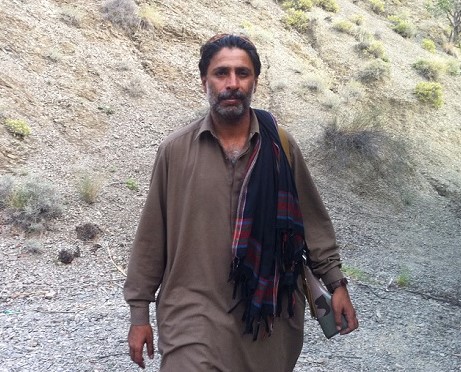
“China is plundering the Baloch national wealth in Saindak Gold and Copper Project with both hands. CPEC has its benefits in Panjab (province of Pakistan) while Balochistan has been made the ground for its garbage, climate change and obviously the Baloch genocide,” Dr Allah Nazar Baoch pro-independence leader of Balochistan told News Intervention. Dr Allah Nazar heads the Balochistan Liberation Front (BLF) that has been fighting for Balochistan’s independence for several years. He explained that the CPEC is just a shrewd plan to loot the national wealth of Balochistan.

“Yes, CPEC is a huge plan to change the demography of the Baloch nation and to bring the Panjabis (of Pakistan) to exploit the Baloch resources along with China. Baloch nation is resisting it and will make it an unsuccessful project. The Baloch independent struggle continues and is heading towards its destination. We will get our freedom at any cost,” Dr Allah Nazar said emphatically.

“… our enemy (Pakistan) has gathered all of its resources and invited its allied forces by cheaply bargaining our national resources to crush our national struggle. In this situation continuing the struggle is itself a sign of conscious and a living nation. Today, the world has already acknowledged the fact that Pakistan in league with China has been engaged in carrying out unparalleled atrocities in Balochistan. In this hardest period, not only did the Baloch maintain their existence, but have also overpowered all the imperialistic campaigns of the enemy. The military was forced to get out of their barracks and be deployed across Balochistan. This indicates the defeat of our enemy and is a sign of clear victory for us,” Dr Allah Nazar explained further.

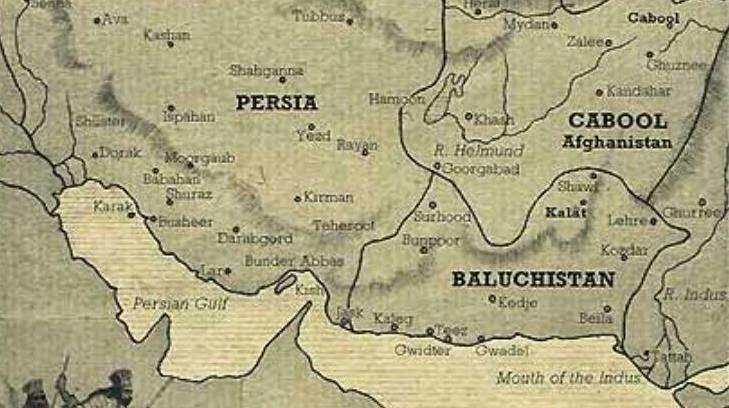
Ancient map that shows Balochistan as an independent nation.

Baloch are fierce nationalists who have now taken upon themselves to free their nation from the illegal occupation of Pakistan. They see the CPEC as a sell-out of Balochistan to China in a backdoor and devious policy devised by the Pakistan Army. Baloch youth have upped the ante to free their nation and are willing to endure harsh terrain, hunger, thirst and extreme weather. “…the support of the Baloch nation, the sacrifice by our youth and their invincible determination for the desired destination provides us a level of energy that no power of the world can defeat,” said Dr Allah Nazar Baloch.

He reiterated that Balochistan’s national struggle goes on with the support and power of their people. “Today, I want to make one thing clear that Pakistan created bloodshed to crush this movement, dishonoured our women, thousands of Baloch were put into torture cells, millions of families are displaced, thousands of Baloch are in exile. The entire Balochistan nation is paying a heavy price. Whosoever betrays the sacrifice of Baloch nation and bargains the Baloch people’s blood for personal gains then the Baloch nation, history and Baloch national struggle will certainly fix their accountability,” Dr Allah Nazar Baloch said, his determination firm and resolve rock solid.

Declare War on Pollution the Beijing Way

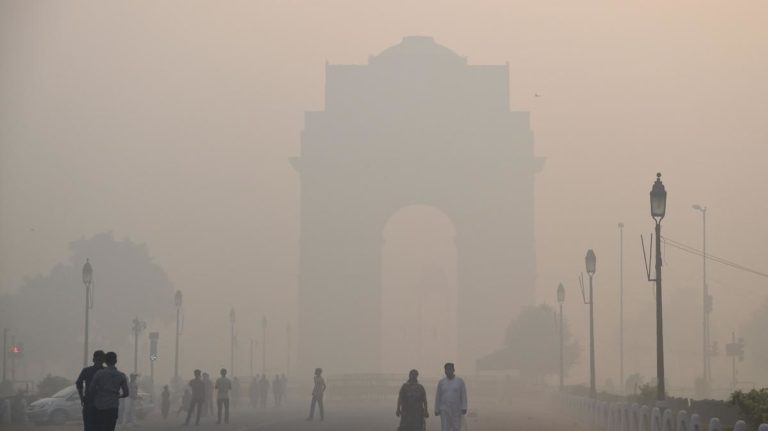
The toxic hell of Delhi is an example of inertia and lack of future thinking by the people responsible for the governance of this region. The city has always been polluted, more so in the autumn and winter season when this landlocked region transforms into a poisonous gas chamber. Despite the rising AQI (Air Quality Index) in Delhi every subsequent year to hazardous levels, no concrete intervention has taken place. We have wailed and clamoured and the government put in some half-hearted measures in response that remain ineffective. A pall of gloom has settled permanently over the city with a perpetual grey sky and deadly smoky air. It clears partially but settles back again. An alarming situation but the system to control it seems lackadaisical.

In 1998, through the Environment Pollution (Prevention and Control) Authority (EPCA), some impressive first-generation actions were taken against pollution in Delhi, like converting the total state transport fleet of Delhi to run on Compressed Natural Gas (CNG), along with converting autos and taxis. It was a significant step and a big intervention; however, its impact was lost by the year 2010. An increase in population in the NCR and a massive jump in the number of vehicles to almost 10.9 million in 2018 led to a spurt in emissions.

Despite increased awareness among the people and rulings by the apex court, there seemed to be inertia regarding the deteriorating air quality and any initiative to combat it effectively was lost in passivity. Yes, some monitoring and measuring systems were enhanced but that’s about it.  

We have come to a situation where we need to think of directly intervening in the process of clean air creation like China is doing.

In the 1990s, Beijing and Delhi were on the same page with both cities challenged by pollution. Today, Delhi’s pollution levels are touching hazardous levels but Beijing has managed to cut pollution through considerable air management. Beijing’s pollution story is a lesson for any nation, their war-like approach to fight pollution since the 1990s is a model for us to emulate.

If we can spend our national wherewithal for non-productive ventures like tall ornate towers, statues and buildings then we certainly can invest for clean air in the capital city, because millions of people are at health risk. We seem to compete with China in every other way, why not be humble and start following and adopting its exemplary work to curb pollution for the greater good.

What is the Beijing model?

China has taken a leap of faith towards fighting the pollution challenge head-on. Its air purification project is not a passive one; it is active and decisive, and based on 20 years of trial and errors to curb pollution. The government in Beijing set an Action Plan that included specific targets such as restricting the total number of vehicles in Beijing to six million by the end of 2017, reducing coal consumption by 80% by 2020 and meeting annual average PM 2.5 concentration of micrograms per cubic metre (µg/m3) by 2017. In 2016, Beijing’s environmental watchdog imposed fines totalling $21.8 million. Beijing has also undertaken a massive greening programme; over a period of five years, about 4,022 hectares of urban green space was created. The surrounding provinces such as Tianjin, Hebei, Shandong, Shanxi and Inner Mongolia coordinated and implemented a joint action plan to reduce pollution in Beijing. The seriousness with which the Action Plan was executed really paid off for the whole region.

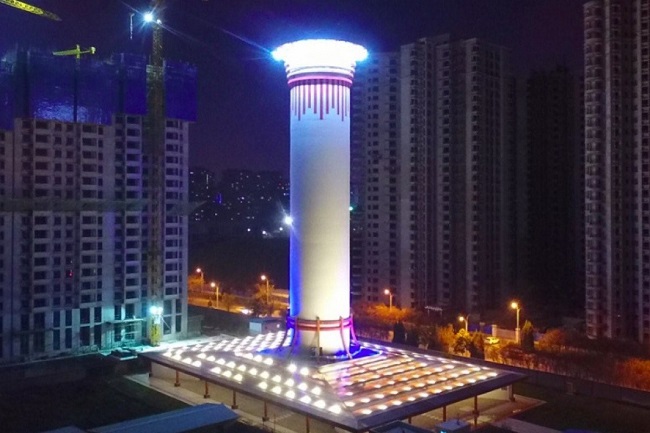
They also promoted new innovations in green technology by going to alternative energy sources and reducing their dependence on coal and fossil fuels. They constantly tried new ideas such as the experimental smog tower of over 100-metre (328 feet) in northern China, said to be the biggest smog tower in the world, which has made a remarkable difference in an area of 10 square kilometres. Lead researcher Cao Junji says the tower is capable of producing more than 10 million cubic metres of clean air per day, adding that on severely polluted days smog is reduced to “moderate levels”.


Smog Tower in China. This smog tower can produce more than 10 million cubic metres of clean air per day.

China has introduced anti-pollution measures across 28 cities. It has also increased its investment in clean energy from $7.5 billion in 2005 to more than $101 billion a decade later. This is in addition to investing $44 billion in overseas clean energy projects, according to the Institute for Energy Economics and Financial Analysis.

China’s air management, particularly in the Beijing-Hebei region, is enhanced by monitoring and evaluation of pollution sources. It is checked through comprehensive legal standards and strict environmental law enforcement. The pollution levels are controlled by direct government actions against non-performing authorities, by economic policies, public participation and good co-ordination by all agencies. 

India needs to have an action plan in place that incorporates ‘sharp teeth’ in the legislation against polluting entities, measures and time-bound plans to make the capital region smog-free, construction of large smog towers and greening large patches within the city. Joint coordination between neighbouring states and Delhi is a must to combat pollution because cities are not sealed boxes and turbulence in the city air is affected by pollutants emitted by nearby regions. Blame games are passé; we need strict pollution laws and fines to deter the polluting sources.

The best way forward is to look for a successful template and execute it without delays. We have to declare war against pollution the Beijing way.

Golden Jubilee edition of IFFI opens in a star studded gala ceremony

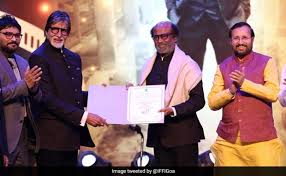
In the luminous presence of two stalwarts of Indian cinema – Amitabh Bachchan and Rajinikanth, the golden jubilee edition of the International Film Festival of India got off to a mesmeric start at Panaji, Goa.  Ending the long wait of cinephiles across the world, 50th International Film Festival of India kickstarted in all its glitz and glamour.

At a grand ceremony hosted by the master of entertainment Karan Johar, the great doyen of Indian cinema Amitabh Bachchan and the ‘Thalaiva’ of Indian film industry Rajinikanth flagged off the extravaganza and announced the festival open, in the presence of Union Minister for Information & Broadcasting Prakash Javadekar and other official dignitaries. Rajinikanth was conferred the ‘Icon Of Golden Jubilee Award’ for his outstanding contribution to Indian cinema, a first time award beginning with the 50th edition. One of French cinema’s defining faces actress Isabelle Anne Madeleine Huppert was conferred with the Lifetime Achievement Award.

The Union Minister for Information & Broadcasting, Prakash Javadekar while speaking at the inaugural ceremony said that single window system introduced by the government will attract more international filmmakers to shoot their films in India. “ India has lots of scenic and beautiful shooting sites for national and international films but shooting at these locations requires around 15-20 permissions. Government is now preparing for single window arrangement which will take care of all the permissions and it will benefit places like Goa, Leh-Ladakh and Andaman & Nicobar,” he said.

Javadekar pointed out that films, IT and music are India’s soft power and we have to take it forward. “Every film and character leaves a long lasting imprint on our mind and it has the power to change our thoughts and mood” he said. He added that the audience for Indian films is growing by leaps and bounds and people across the world really like to watch Indian movies even in China.

“Many good films of the world will be showcased in this film festival and it will be a tribute to former Goa Chief Minister Manohar Parrikar,” the Minister said.  He mentioned about a film in the festival which has been made by local artists of Goa based on the lives of visually impaired people.

Receiving the ‘Icon of Golden Jubilee Award, Rajinikanth expressed his happiness to receive the prestigious award from Amitabh Bachchan. He dedicated the award to all the producers, directors and technicians who worked in his films, his fans and people of Tamil Nadu.

Amitabh Bachchan expressing his happiness in being honoured stated, “I have no words to express my gratitude to IFFI for honouring me and having a retrospective of my films.”

Earlier, walking the Red Carpet of IFFI 50,  Shri Amitabh Bachchan said, “ Films have always been an integral part of our social life. To have a festival of this magnitude in Goa  exposes the Goans to what happens in the international world and also gives them an opportunity to meet and mix with people”.

The Secretary Information and Broadcasting Ministry, Shri Amit Khare mentioned the noteworthy highlights of this year’s festival and noted the tremendous change in the last 50 editions from a participation of 23 countries in 1952, to 76 countries this year.

The Chief Minister Dr. Pramod Sawant said that the IFFI package this year is an interesting mix of leisure and entertainment. “ IFFI bridges the gap between India and international film industry and provides the opportunity to explore the cinema,” he said.  “We should not forget the objectives of cinema as the mirror of our time and the reflection of our society,” he added.

Lights and luminaries of film industry such as world known Cinematographer and Chairman of IFFI International Jury John Bailey; Indian film maker, and Chairman of Indian jury Priyadarshan and other jury members of Indian and International jury, Maria Lemesheva, Head of Russian delegation, graced the opening ceremony. A host of celebrities sashayed the red carpet, adding to the pomp and gaiety of the function.

As the festival glitters in its golden glory, former Goa Chief Minister late Manohar Parikkar, the man who made IFFI synonymous with Goa, was given a befitting tribute at the opening ceremony by screening a short film depicting his contribution to IFFI. Legends of Indian film industry Ramesh Sippy, N. Chandra and Shir P.C. Sreeram were honoured at the inaugural ceremony. 

The inaugural ceremony of the festival also saw various senior official dignitaries such as Union Minister for AYUSH, Shripad Naik, Union Minister of State for Environment, Forest and Climate Change Babul Supriyo, Secretary, Ministry of Information & Broadcasting Amit Khare, Prasar Bharati Chairman A. Suryaprakash, Central Board of Film Certification Chairman Prasoon Joshi, Additional Secretary, Ministry of Information & Broadcasting, Atul Kumar Tiwari, Festival Director Chaitanya Prasad, and Vice Chairman Entertainment Society of Goa, Subhash Phal Desai.

Prakash Javadekar released the commemorative postage stamp of 50th IFFI at the function. The inaugural ceremony also witnessed some enthralling audio visual performances which kept the audience spellbound through the evening. Noted music singer and composer Shankar Mahadevan and his band won the hearts with a spectacular performance that put the cinelovers and spectators in a frenzy. When rhymes and rhythms from different parts of India juxtaposed with the beats of international sounds, it was a treat for the audience.

The festival opened with the Italian film ‘Despite the Fog’ directed by Goran Paskaljevic. The cast and crew of the film also participated in the screening. Around 7000 delegates are participating in the golden edition of IFFI.

 The 50th International Film Festival of India 2019 will witness over 200 acclaimed films from 76 countries, with Russia as the country of focus. It also includes 26 feature films and 15 non feature films in Indian panorama section. More than 10,000 people and film lovers are expected to participate in the golden jubilee edition.The festival ends on Thursday 28 November, 2019, in Panaji, Goa.

Sir David Attenborough to get Indira Gandhi Peace Prize for 2019

The Indira Gandhi Prize for Peace, Disarmament and Development for 2019 will be conferred on renowned naturalist and broadcaster Sir David Attenborough.

His name was selected for the prize by an international jury chaired by former president Pranab Mukherjee, the Indira Gandhi Memorial Trust announced on Tuesday.

“Few individuals have come to be as identified with the well being of our planet, of all living creatures, and their relationship with human beings, as Sir David,” the Trust said in a statement.

The trust also stated that the prize was awarded to Sir David for a lifetime of doing more to reveal the wonders of the natural world than perhaps any other individual, and for tirelessly working to awaken humankind in the need to preserve and protect the biodiversity of the planet.

Suman Dubey, secretary of the trust, said Attenborough had tirelessly worked to “awaken humankind to the need, to preserve and protect the biodiversity on our planet, to live in a sustainable and harmonious way with all life, and to stop being what he has called: ‘a plague on earth’.”

Sir David’s work has received widespread recognition across the world. Apart from his knighthood, he has received awards from the Royal Geographical Society, UNESCO’s Kalinga Prize, the Micheal Faraday Prize, the Descartes Prize and Fellowship of the Royal Society, and several Emmy and BAFTA awards.

Philosophical and Historical Foundations of American Secularism 11 – Gibraltarians: Climbing to the Top from the Top

0

Dr. Herb Silverman is the Founder of the Secular Coalition for America, the Founder of the Secular Humanists of the Lowcountry, and the Founder of the Atheist/Humanist Alliance student group at the College of Charleston. He authored Complex variables (1975), Candidate Without a Prayer: An Autobiography of a Jewish Atheist in the Bible Belt (2012) and An Atheist Stranger in a Strange Religious Land: Selected Writings from the Bible Belt (2017). He co-authored The Fundamentals of Extremism: The Christian Right in America (2003) with Kimberley Blaker and Edward S. Buckner, Complex Variables with Applications (2007) with Saminathan Ponnusamy, and Short Reflections on Secularism (2019).

Here we talk about the nature of democracy, polyarchy, plutocracy, and the founding and present of the United States.

Scott Douglas Jacobsen: In the context of the classism and racism found from the founding of The United States of America, one of the more salient facts in alignment with these titles for generalized analyses of the nature of American democracy amounts to the limit of democratic norms in place, where America was not a ‘democracy’ at the founding inasmuch as a plutocratic polyarchy. White, aristocratic, land-owning, slave-owning, formally educated, and males-as-men running the show from the top down. 

The road upwards for wanting to be free was rather easier for those climbing to the holy ground of more power and privilege found at the Temple Mount at the top of the societal mountain. How have these threads of racist assumptions and classist assertions re-asserted themselves generation after generation in American society in which some aspects of the plutocratic polyarchy have been beaten back while others remain? 

In a manner of speaking, we can scorn some aspects of the founding – and their ongoing legacy – while praising numerous American ideals and progressive developments over time for a wider ethical consideration into a broader moral tribal consideration. How have secular and humanistic ideas been tendencies in thought in American history with greater emancipation and better opportunities for all, at times and over time?

Dr. Herb Silverman: You refer to America as a plutocratic polyarchy at its founding. Let’s first define our terms.

A “plutocracy” is a government ruled or controlled by people of great wealth and income, while “polyarchy” means “rule by many,” and is a government ruled by more than one person (in your case, people of great wealth). A polyarchy may or may not be a democracy. A democracy is a government by all the citizenry who choose their leaders by voting for them in elections.

The founding fathers chose not to have a democracy. Some favoured a democratic popular vote for the president while others argued that Congress should pick the president. Their compromise is known as the Electoral College, a small number of people selected by the masses to vote for president because the founders did not trust the population at large to make the right choice. In modern practice, the Electoral College is a formality. Most electors are loyal members of the party that selected them, and wind up voting for that party. The Electoral College was also part of a compromise to satisfy small states. Each state had at least as many electoral votes as they had representatives in Congress, which means that no state could have less than three votes. In a small state like Wyoming, each elector represents 70,000 votes, while in California each elector represents 179,000 votes.

The Electoral College was not the only Constitutional limitation on direct democracy. States were permitted to ban women entirely. Slaves, of course, were not allowed to vote. However, there was a controversial “three-fifths compromise,” in which black slaves would be counted as three-fifths of a person for the purpose of allocating representatives and electors. This compromise was made to ensure that Southern states would ratify the Constitution. After the Civil War (1861-1865), the 14th Amendment to the Constitution in 1868 abolished the three-fifths rule and granted former male slaves the right to vote, while the 19th Amendment (1920) gave women the right to vote.

While America is not now as much a plutocratic polyarchy as at its founding, a case can be made that we are more of a plutocratic polyarchy today than in years past. The wealthiest one percent of American households now own 40 percent of the country’s wealth. The top 0.1 percent own about 25 percent, which is more than the bottom 90 percent owns. This was not the case under President Theodore Roosevelt (1901-1908), known as the “trust-buster” for preventing or eliminating monopolies and corporate trusts. He applied the Sherman Antitrust Act of 1890 to break up the largest railroad monopoly, Northern Securities Company, and regulated the largest oil company, Standard Oil. He also broke up other monopolies. Roosevelt said, “We had come to the stage where for our people what was needed was a real democracy; and of all forms of tyranny, the least attractive and the most vulgar is the tyranny of mere wealth, the tyranny of a plutocracy.”

Today, most Americans are entitled to vote, but there has been intimidation by those in power against voting by poor people, African-Americans, and immigrants. Many eligible people don’t vote because they think that their vote doesn’t matter. It’s true that most Americans have little influence over the policies our government adopts, especially those at the lower end of the income spectrum who are effectively disenfranchised. Congressional representatives pay little or no attention to their opinions. Moving up the income ladder, influence increases slowly, but it’s only at the very top that it has a real impact (plutocracy). Politicians of both parties receive substantial financial support from corporations, whose leaders demand that politicians reciprocate with favourable policies, including tax breaks that help increase the donors’ wealth.

As far as secular and humanistic ideas, I think secular humanists have always been on the side of the better angels of our nature. Humanists have opposed racism and misogyny in America. On the other hand, some people who say we need to “Make America Great Again” hearken to the days of white privilege when they could discriminate against those of a different race and those who had non-Christian religious beliefs or no religious beliefs. They would also like to use their privilege to take away rights from gays and lesbians. Secular humanists are fighting against a plutocracy of powerful white evangelicals who want to turn America into a Christian nation, instead of the secular nation we are. White evangelicals represent the base supporters of our Republican president. I know some atheists and humanists who consider themselves Republicans, but I have yet to meet one who supports President Donald Trump.

Jacobsen: Thank you for the opportunity and your time, Dr. Silverman.

Photo by Davorin Pavlica on Unsplash

New customs regulation will ease manufacturing and exports from India

Recently, India lost a case filed by USA before the Dispute Settlement Panel of World Trade Organisation (WTO) while defending its policy of providing incentives to exporters under various schemes such as the Export Promotion Capital Goods (EPCG), Merchant Export Incentives Scheme (MEIS) and Special Economic Zones (SEZ) among others as these were not found to be compliant with WTO rules on export subsidies.

It seems that the government of India saw this happening and therefore, as an immediate step to guard the interest of country’s trade and industry the Central Board of Indirect Taxes & Customs (CBIC) recently issued customs non-tariff notification no. 69/19 (N.T) on 1st October, 2019 notifying Manufacture and other Operations in Warehouse (no. 2) Regulation, 2019.

As per the provisions of this new custom regulations, any new or existing factory or even a part of it can be setup or converted into a ‘bonded warehouse’ under the customs laws, wherein any manufacturing activity can be carried out along with other operations.

Bonded warehouses are well secured infrastructure facilities licensed by the customs authorities under the customs laws, wherein imported goods can be custom cleared from port of arrival and kept without payment of applicable import duties and taxes.  

Although such bonded warehouses have existed since the Regulations of 1966, there is a substantial change under the new regulations. Now goods manufactured in the bonded factory known as ‘resultant goods’, when moved to any Domestic Tariff Area (DTA) would be permitted on payment of applicable import duties only on the goods imported, warehoused and used in the resultant goods. On the total value of the resultant goods when removed from the bonded factory to DTA, only GST as applicable would be required to be paid as is being done for all goods manufactured in factories which are located in DTA and the resultant goods would also be allowed to be exported from bonded warehouse directly.

This new regulation opens opportunities for the manufacturers to import capital goods (machinery), raw materials, components/parts, as bonded goods under the customs laws wherein import duties and taxes on such goods warehoused would not be collected until removed to DTA. This would also help manufacturer exporters doing away with cumbersome and compliance heavy Export Promotion Capital Goods (EPCG) authorisation and advance authorisation procedures.

With manufacturing in bond scheme, the supply chain logistics, payments of duties and taxes, compliances and all such related aspects of procurement of goods from domestic market, imports from abroad from bonded warehouses, SEZ/FTWZ can now be well planned in order to save costs and time overruns for trade and industry.

The new regulation, like SEZ laws, although late in time, is path breaking paving way forward for the industry and trade to align with developed world systems. The new regulation truly brings aspects of ease of doing business on ground for trade and industry and it is WTO compliant as well.

Trade and industry should make full use of the new regulation and increase exports from India.

So far as export incentive scheme MEIS is concerned, perhaps the government should look at utilizing the tried and tested WTO compliant drawback scheme, the government should also look at increasing the drawback rates to ensure that no part of duties and taxes is exported as this would also help in ease of doing business.

Optimists say “Better late than never”.

Pakistan Army believes in serving their nation through Fauji Foundation!

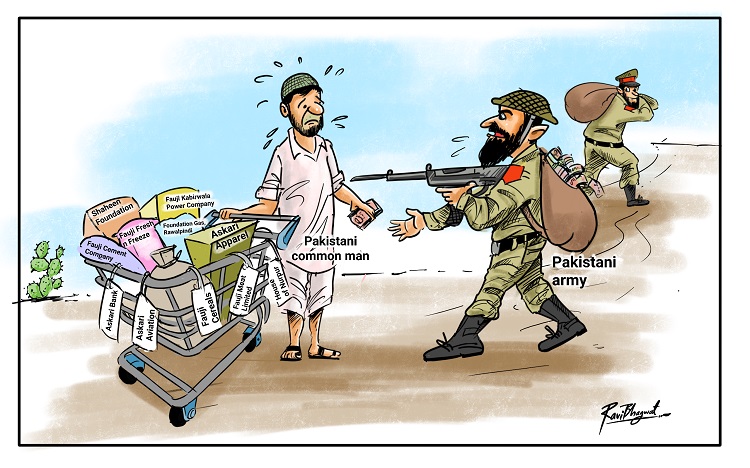
Ever since I came across a news item last year about a UN report that mentioned Pakistan being amongst the top 80 happiest countries of the world while India trailed far behind, I tried to determine as to what could be the reasons for this unexpected finding. Because on the face of it, it doesn’t make any sense because the people of Pakistan themselves have been vociferously complaining all along of how, barring their army, all other government institutions in the country are either defunct or compromised. So, even though hard to accept, but it’s obvious that the key to Pakistan’s impressive ‘happiness quotient’ lies in the yeoman services that the Pakistan Army is extending to its citizens through the Fauji Foundation and Army Welfare Trust.

The truth is that the people of Pakistan have more than one reason to thank their Forces, because it’s due to the army that they get a blissful sleep at night! Having sound sleep is a major indicator of happiness and there’s no doubt that the people of Pakistan get better sleep than their eastern neighbours. But the reason for Pakistanis getting a peaceful sleep isn’t restricted to the assurance that their army will thwart the nefarious designs of a hegemonistic Hindu nation. It’s more because of the sumptuous dinner comprising kebabs prepared with the excellent quality meat sold by Fauji Meat Limited and the soft naans (bread) made from the of best quality grains distributed by Fauji Foundation Experimental and Seed Multiplication Farm that have been nourished by Fauji Fertilizer Bin Qasim Limited and cooked over LPG supplied by Foundation Gas, Rawalpindi.

But it’s not the tasty food alone that brings sound sleep and pushes up the happiness index. There are many other equally important factors and it goes to the credit of Pakistan Army that it takes full care of all of them. With fans, coolers and air conditioners running on electricity supplied by Fauji Kabirwala Power Company Limited or another such army run subsidiary to beat the heat, coupled with the confidence that the roof of their bedroom won’t suddenly cave-in since Pakistanis bought the cement from Fauji Cement Company Limited, getting a good sleep is but natural! Similarly, starting the day with a wholesome breakfast of tasty cereals purchased from Fauji Cereals along with the famous ‘House of Nurpur’ brand of butter, milk (ultra-heat treated, pasteurised, low fat or even flavoured) and cheese from Fauji foods undoubtedly brings cheers to the people of Pakistan, making them a much happier lot!

The official website of Fauji Foundation run by the army accepts that it “is amongst the largest business conglomerate in Pakistan, but Pakistan Air Force and Navy are also running their own commercial empires called Shaheen Foundation and Bahria Foundation respectively. Besides providing good quality foodstuff, the Pakistani armed forces run foundations touch the lives of virtually every Pakistani. If you are looking for a job abroad, there’s the Fauji Foundation run ‘Overseas Employment Services’ to help find you one and if you get the job, you can always depend on Askari Airline or Askari Aviation run by Pakistan Army to fly you to your destination.

Keen to invest in stock markets? Well, try Army Welfare Trust (AWT) Investments and for security solutions just contact Fauji Security Services, Rawalpindi.

The elite and glitterati needn’t despair because the Pakistan Army has thought about them too. For those who want to spend some quality time with friends at a ‘happening place’, Army Welfare Mess and Blue Lagoon Restaurant in Rawalpindi is the right place. Want to turn your neighbours green with envy? Buy your wardrobe from Askari Apparel Lahore and if you wish to park your money without fears of the bank going bankrupt, just try Askari Bank. Book banquet at Askari Lagoon in Faisalabad run by Army Welfare Trust to show your class, make a statement by hiring bodyguards from Askari Guards Limited as it’s the only security company that has government permission to use AK-47s all over Pakistan. You can make your mark by buying a commercial space in Lahore’s 500,000 sq. ft Askari Tower developed by the army or hosting an exotic Italian dinner with the wide variety of pasta and vermicelli produced with foreign collaboration by Fauji Infraavest Foods Limited followed by desserts prepared from IQF (Individually Quick Frozen) fruits marketed by Fauji Fresh n Freeze!

But Pakistan Army doesn’t believe in resting on past laurels and in its ongoing efforts to further enhance happiness level of the people, Inter-Services Public Relations (ISPR), the public relations wing of Pakistan armed forces has even entered the Lollywood (Lahore film industry). Titled, Kaaf Kangana, this ISPR project is a romantic drama that is bound to enthral domestic audiences for two reasons: One, it has an ‘item number’ that will surely titillate the male viewers. Secondly, by tweeting that the item song (performed by Pakistani actress Neelum Muneer) depicts an Indian girl in the movie, Director General ISPR Maj Gen Asif Ghafoor has ensured that the clergy isn’t scandalised seeing a scantily clad nymphet dancing in gay abandon or the domestic audience ridden with guilt for leering at someone who belongs to their own community!

TailpieceWhile the people of Pakistan may be happier than Indians, but with Ms Muneer saying that she did the ‘item number’ in Kaaf Kangana “only because this movie is a project of ISPR” and declaring that “Pakistan key liye meri jaan hamesha hazir hai,” (I’m ever willing to lay down my life for Pakistan), it appears that Pakistanis are too eager to prove their patriotism.